2.0

2.0.jpg

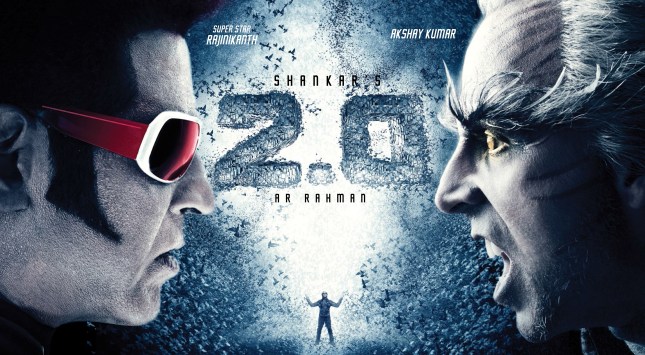
Shankar’s 2.0 is an amazing visual spectacle with incredible special effects and jaw-dropping action, but despite all the thousands of Rajinikanths, clouds of flying mobile phones and an unusually charismatic Akshay Kumar as the villain of the piece, it fails to fully impress due to a garbled and, at times, dull story. Not that the lack of a credible story really matters for a large-scale Superstar movie, but the transition between one incredible VFX scene to another really needed some sort of rationale to develop a relationship with the characters and bring in some suspense. And 2.0 just doesn’t have that connection. No matter how good Rajinikanth and Akshay Kumar are in their roles, or how truly magnificent the visual effects are, at the end of the day for me the film needs a little more soul.

The film opens with mobile phones suddenly gaining a life of their own and zooming off into the sky all over Tamil Nadu. These opening sequences are excellent as Shankar shows just how pervasive mobile phone use is, including the moment when we see an entire family all staring at their phones just as the father announces that of course he spends quality time with his family. Everyone is here – those obsessed with taking selfies, people using their phone for work, for family connections, even one man using a mobile phone as a plaything for his child, and it for a time it seems that Shankar might be making a statement about overuse of mobile phones. But it’s not that simple.

Naturally Chennai is thrown into total chaos by the “great mobile phone disappearance” but the problems are only just beginning. A massive cloud of mobile phones transforms into a bird’s talons and starts ripping cell towers out of the ground, prominent mobile carrier company owners are attacked and a gigantic bird, formed out of mobile phones starts attacking people in the streets. This is seriously inventive stuff, and Shankar has allowed his imagination free rein to create magnificent visuals that really are spectacular, while the fast-paced action just never stops.

Dr Vaseegaran (Rajinikanth) is aided this time round by an android called Nila (Amy Jackson) whose body proportions are reminiscent of a Barbie doll, but who does at least get the chance to show off her superhuman skills in the battle against the villain, Pakshi Rajan (Akshay Kumar). Pakshi Rajan is an eminent ornithologist who ends up suiciding after he fails in his attempts to stop the radiation from mobile phones killing off his beloved birds. Thanks to ‘negative energy’ and all those dead birds, he somehow transforms into an entity capable of animating mobile phones, and sets out to destroy the humans who have caused all the problems in the first place. There is a flashback sequence that paints Pakshi Rajan as an environmental hero with Akshay Kumar playing him as an old, broken man who wears baggy cardigans and weeps for a dead sparrow – so naturally he’s a more sympathetic character than the self-absorbed Dr Vaseegaran. And that’s part of the problem I have with the entire film. Dr Vaseegaran seems to simply want to bring Chitti back to life, and show off his new-fangled invention to save the day, while Pakshi Rajan has a legitimate issue and a real crusade that’s easy to support. So, when Chitti arrives on the scene, it actually appears that he’s fighting on the wrong side since Pakshi Rajan doesn’t come across as a bad guy until much later.

Thankfully when the 2.0 reboot Chitti takes over, his swagger and snappy dialogue helps lift the second half, ably helped by the excellent visuals and inventive ways that a cell phone can be used to kill. Pakshi Rajan develops a villain-worthy sneer and his casual disregard for the thousands of people who end up having to dodge bullets and large pieces of football stadium during the finale does start to make him seem a least a bit nastier. Team Chitti though has an equal disregard for bystanders and finally pulls a stunt with pigeons that’s even more vicious than all of Pakshi Rajan’s gory killings. That has the effect of making Pakshi Rajan actually seem more moral than Team Chitti despite his murderous tendencies. To try and compensate, the last scene makes some attempt to promote Pakshi Rajan’s cause while still chastising him for killing so many people, but it just doesn’t work, although the final action sequences are brilliantly done.

I’m not usually a fan of Akshay Kumar, but he is impressive here and he does an excellent job of humanising Pakshi Rajan and giving him an almost plausible reason to attack mobile phones. I also appreciated his bird-like mannerisms when he transforms into a giant birdman and his dedication to the role by using feathers for eyebrows. For the most part he simply screams at the camera in bird form, but during the flashback sequence he does display the demeanour and despair of a broken man very well.

Rajinikanth is on screen for most of the film in one or more of his different characters – Dr Vaseegaran, Chitti or 2.0. He is as charismatic as ever in every appearance, although Dr Vaseegaran is even more annoyingly self-absorbed here than he was in Endhiran. Despite playing a robot, as Chitti and his alter ego 2.0, Rajinikanth gets to display plenty of personality and each time he appears he brings life and energy to the screen. Thankfully the annoying Sana only appears as a whingey voice over the phone this time round, while the rest of the cast only appear briefly, either to be killed by Pakshi Rajan or as part of the government trying to cope with the crisis. Sudhanshu Pandey appears as Dhinendra Bohra, the son of Bohra from Endhiran, but this seems to be a real wasted opportunity and his character isn’t well utilised despite a promising start.

I’m not sure exactly what Shankar was trying to say here – if indeed he was trying to say anything at all. Could this be a film against mobile phones and the way they have come to take over our lives? Is there really an environmental message here about radiation and the dangers purportedly associated with cell towers? It’s all rather muddled and the emotional back-story for the villain doesn’t help matters either. However, as an all-out action adventure 2.0 works well enough. A.R. Rahman’s music is used sparingly throughout the film, although there is one montage song and a dance track over the end titles, which is fun. Thanks to Rekhs for the excellent subtitles (in yellow too, so very readable) and kudos to cinematographer Nirav Shah for making the regular shots just as good as the VFX. Yes, most of the money has been spent on the effects in this film, and little on the screenplay, but given the end result I’d say overall it’s money well spent. I didn’t see the 3-D version, but even in 2-D the effects are simply superb and for that alone the film really does need to be seen in the cinema. For the rest, Rajinikanth is excellent, Akshay Kumar totally nails being a murderous birdman, Amy Jackson does well as an animated robot, and best of all with this plot, no-one was using their cell-phone during the show. That’s definitely a win!
Destiny: The Tale of Kamakura

The Japanese Film Festival is on in Melbourne and I’ve found lots of gems to enjoy in this year’s programme.

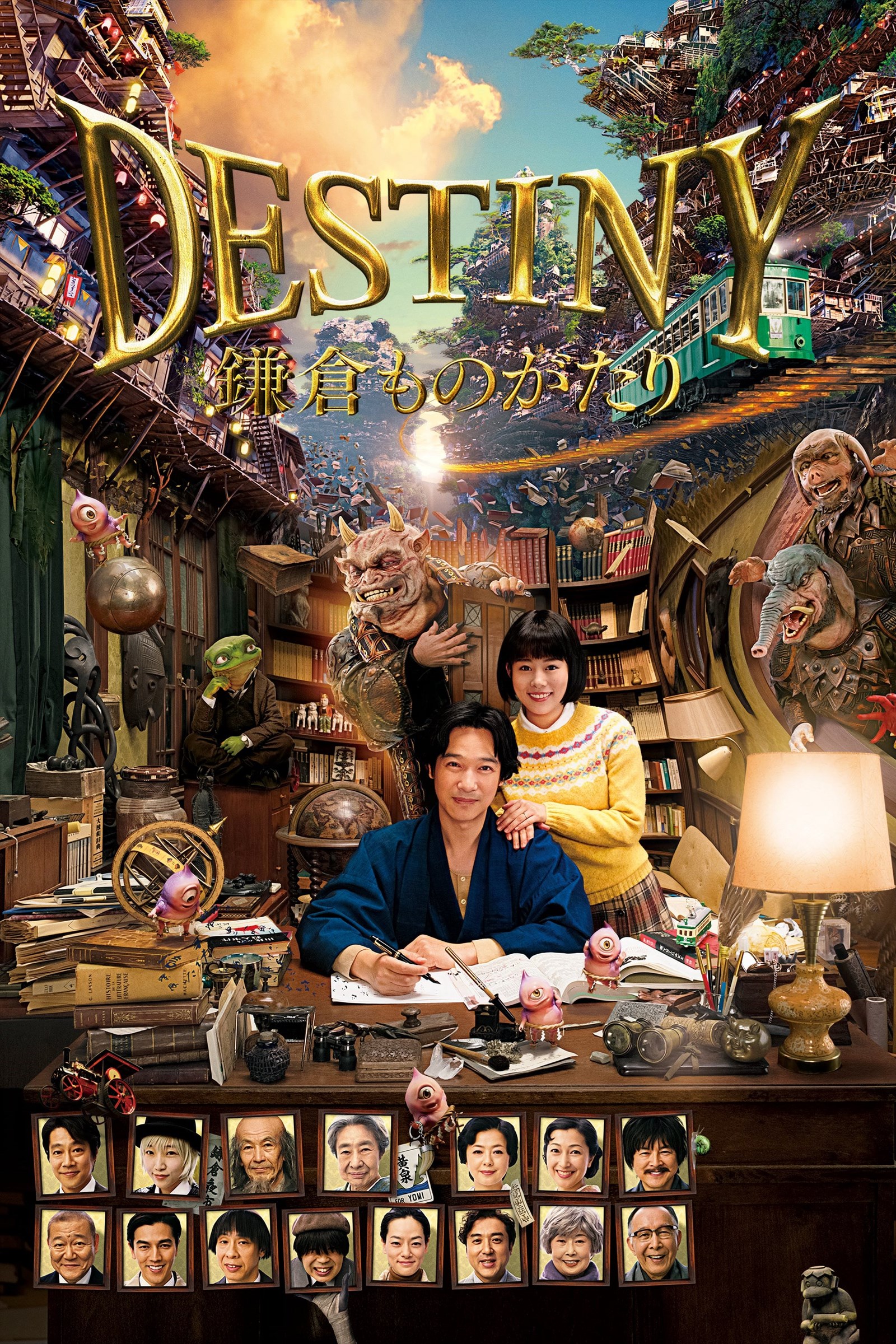
Yamazaki Takashi’s adaptation of Saigan Ryohei’s manga, Destiny: Kamakura Monogatari, is beautifully odd and charming.

Akiko (Takahata Mitsuki) moves to Kamakura after marrying Isshiki Masakazu (Sakai Masato), a popular author. The town is unusual, and there are supernatural creatures living alongside the human residents. Akiko is a high spirited and curious young woman, and she generally enjoys her new home and the strange goings on. However an entity from the underworld takes an uncomfortable interest in her, a bad luck god sneaks into the house, and things start to go very wrong. She is separated from her husband all too soon. But Masakazu is Kamakura born and bred, is matey with a grim reaper, and he finds a way to travel to the underworld to rescue Akiko’s spirit.

The film is as much a rom com as it is a fantasy. Akiko is quite a bit younger than her husband Masakazu, and she is worried she won’t be able to be a proper wife to a fancy author. He is a little worried about his precarious work situation, how she will settle in, and if she will be able to deal with the supernatural. They are both quirky characters and the actors sometimes go for energy over subtlety. But I was won over by their mutual affection and sense of fun. Sakai Masato is wry and charming, unless Masakuzu has a deadline. Then he becomes a panicky work avoiding child, obsessed with toy trains. Masakuzu also has a side line in helping the police with hard to solve cases, and they act as small episodes within the story, showing more about the village and how things operate between the communities.

Akiko learns some household tips from elderly and enigmatic Kin (Nakamura Tamao) and finds out more about the mysterious side of Kamakura. She is generous and impulsive, and that is both a curse and a blessing, quite literally. Takahata Mitsuki plays Akiko as wide eyed and a bit too perky, but she has an endearingly goofy energy that plays well off her co-stars. I particularly enjoyed the quieter scenes between the couple when they were just happy to be together, and the warm contentment was palpable. She wants to do the right thing for her husband and that gives her strength to make some hard choices. And when they are separated, she stays strong because she has faith in their love.

I liked Ando Sakura as the administratively overwhelmed and under-resourced grim reaper. It’s quite a change of pace from her amazing performance in Shoplifters (the film that had me crying in public at MIFF earlier this year). This grim reaper is kindly disposed towards humans, fancies clothes at the more garish end of the all black wardrobe spectrum, and seems to enjoy having local celeb Isshiki Masakuzu as a new friend. Masakuzu’s mate Honda (Shinichi Tsutsumi) strikes a deal with her and his story takes quite a turn. Again, his story is about family and regrets as much it is about magic or gods. The bad luck god Binbogami (Tanaka Min) is loud and blustering but develops a soft spot for Akiko who treats him like a welcome guest. Guests are god, after all.

The visual effects are often jawdroppingly lovely, and I think anyone would want to go to Kamakura as a result. Every shot counts, and some things that seem to be a bit of whimsy become more meaningful later in the film. Scenes at the Goblin Market were both magical and relatable, with a blend of real world and supernatural. Little creatures scuttle in the background, or ramble around in Akiko’s garden apparently unnoticed and unremarked. The yokai can look very elaborate and non-human, but some blend in quite well unless they choose to reveal themselves. The underworld is where the effects skills get a serious work out, creating a vast expanse of structures and landscapes with incredible detail. I love that they catch a train to get there, and the journey on the way in was gorgeous. Getting out was a bit less relaxed!

I was in the right mood for a feel good film with tons of charm, and this was perfect.

Badhaai Ho (2018)

The Kaushiks live in a cramped old apartment in a colony overflowing with other lower middle class families. Priyamvada (Neena Gupta) runs the household and her husband Jeetu (Gajraj Rao) is a ticket inspector on the railways and sometime poet. They have two sons, 20-something Nakul (Ayushmann Khurrana) and stroppy teenager Gular (Shardul Rana), and Jeetu’s overbearing mother (Surekha Sikri). After a particularly trying evening, tired of keeping the peace, Priyam retires to her room. Jeetu reads his latest poem to try and sooth her hurt feelings. The poetry, the stormy night, the emotion…one thing leads to another. And 19 weeks later, the Kaushiks find out Priyam is pregnant.

When people find out about the pregnancy, reactions are varied to put it mildly. The GP and his wife are supportive of Priyamvada but give Jeetu the side eye as though to say he should have been more careful. The boys are just horrified that their parents still have sex, and are embarrassed by their degenerate behaviour. The mother-in-law goes full harpy mode and criticises Priyamvada, saying she is no better than she ought to be. And the gossip mill goes in to overdrive as news spreads.

Jeetu tells Priyamvada he’d prefer she had an abortion, but she won’t contemplate that option. He gently tries to make her see the downside, but says finally it’s her body so it should be her decision. Good man, Jeetu. I really enjoyed seeing an older couple as the focus of the story, and Neena Gupta and Gajraj Rao are wonderful. They are both conditioned to defer to their elders and maintain the peace. She looks elegantly middle aged, her face showing gentle lines and character. He is sweetly reticent, all business and stingy as hell on the surface but secretly romantic.

I loved a scene at a family wedding where he manoeuvred his way to be close to her in a photo, his face alight with booze and proud affection. The female relatives and wedding guests are less happy with the pregnancy and make free with their remarks, tormenting mild-mannered Priyamvada. Neena Gupta was quietly compelling but easily switched to perfectly timed comedic beats. Seeing Jeetu and Priyam navigate their way through a life changing surprise, their relationship, and all the reactions was highly engaging without being overly dramatic. It was disappointing when the film shifted focus to Nakul and his girlfriend as their relationship is one you see in every other film. I liked seeing the often invisible people get their time front and centre.

In the midst of all the talk of reproductive rights and safe sex, the male characters’ idea of masculinity rarely strays from the often toxic manly man stereotypes. Jeetu is in demand as a fertility coach among his peers, asked to counsel a troublesome nephew who remains childless despite two marriages. The nephew is introduced dancing enthusiastically to a Sridevi hit song as onlookers make snide comments. Gular is considered to be fine once he has beaten up a bully and asserted his masculinity. Nakul made fun of an impotent friend and hides lest he be on the receiving end. His jokes are funny, in a mean spirited and rehearsed way, but it is kind of telling that his friends are really frenemies. The men seem less supportive and rarely get real in their conversations with each other. The women bitch and bicker but ultimately they seem to get that family is what it is and in the end all they may have is each other. And bingo.

Ayushmann is delightful as the sooky, moody manchild Nakul who is the centre of the universe. His timing in the dialogues and his physical reactions are just about perfection, and when Nakul isn’t brooding he has a goofy energy that lights up the screen. But Nakul is an entitled dick and everything is about him. Everything. And although I was happy to see some character growth, I grew tired of the perfection of reformed Nakul, Best Son Ever. Even when the baby is born, he makes it about him. I just never really got why the boys were so horrible. Shocked, sure. But feeling betrayed – why!?! When the film detoured over to focus on him and Renee, I did lose some interest. On the upside he and Sanya Malhotra are great together and also do some excellent eyebrow choreo in the big production number, Morni Banke, that closes the film. I love an all-in end titles extravaganza!

Sanya Malhotra is charming but Renee is a little under-written, a standard issue modern girl. I liked that she has a career and that she straight up called Nakul out on some things. But when her supposedly progressive mother, played by the elegant and considered Sheeba Chaddha, criticises the Kaushiks and Nakul fires back, Renee breaks up with him. It seemed a bit convenient for the plot given her previous behaviour, but I didn’t care so much about that relationship. She has appealing looks and energy, and was a good match for Ayushmann.

Jeetu’s mum likes an orderly world where people pay attention to god and their elders, but she might not be as backward as she seems. Surekha Sikri is over the top as cantankerous Dadi at first, but when restraint was needed she wound it back nicely. Dadi helped demonstrate the strong familial love and support that helped the Kaushiks get through everything. Mostly by demanding maximum forbearance from everyone around her.

I was so relieved that Priyamvada is not simply fodder for tacky jokes, despite the dreadful poster designs. Writer Akshat Ghildial and director Amit Ravindernath Sharma deliver humour, pathos, social critique and a warm respect and affection for most of their characters. I like a good slice of life middle class social comedy and this delivers in spades. A great cast, a smart screenplay, and beautifully immersive visuals make this a delight to watch.