Sarkar

I held out on watching Sarkar til a couple of years ago. I’m ambivalent about Ram Gopal Varma films. When he is good, he is terrific. But he has wasted some interesting ideas and great actors in projects that seem to be more about RGV than making a film (like RGV ki Aag, and that film all about Mahie Gill’s cleavage). I’m also on the fence about Amitabh Bachchan in this late career phase. He’s made some bad film choices (like Boom!) and not always acted to his ability. But Sarkar combines a focussed and controlled RGV with a complex performance from Amitabh and the result is a dark and gripping film.

Subhash Nagre (Amitabh) is an old school mafia lord. He believes in family, honour and loyalty. He isn’t painted as really good or sympathetic but he has a certain integrity, an old fashioned set of rules that he adheres to and that he upholds. Nagre is connected to his community and neighbourhood, and thinks of the social cost as well as the profit and loss numbers. His people worship him, gathering outside his mansion to catch a glimpse of their Sarkar. They come to him when the system fails them, and he is their justice. Amitabh looks picture perfect. He creates a focal point in every scene with his stillness and his gaze. I found I was almost hypnotised by him, drawn to watching Subhash’s reactions no matter what else was happening. There is a carefully controlled rage in some scenes that is far more unnerving than any histrionics would have been.
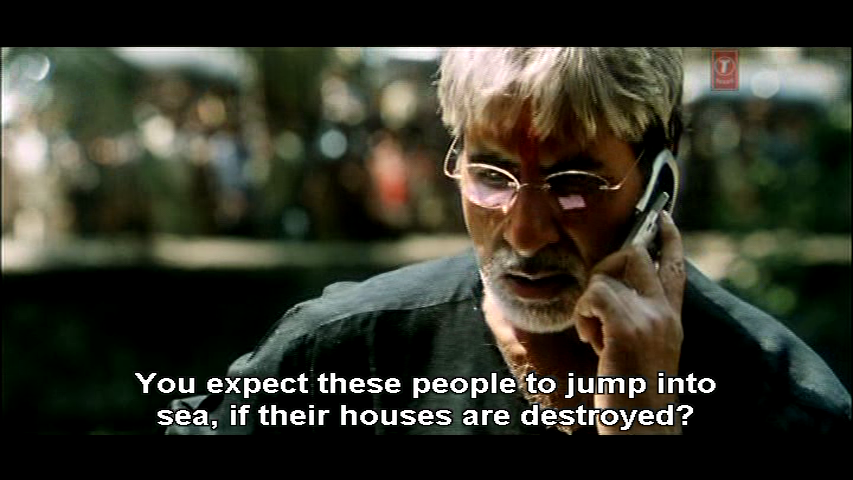
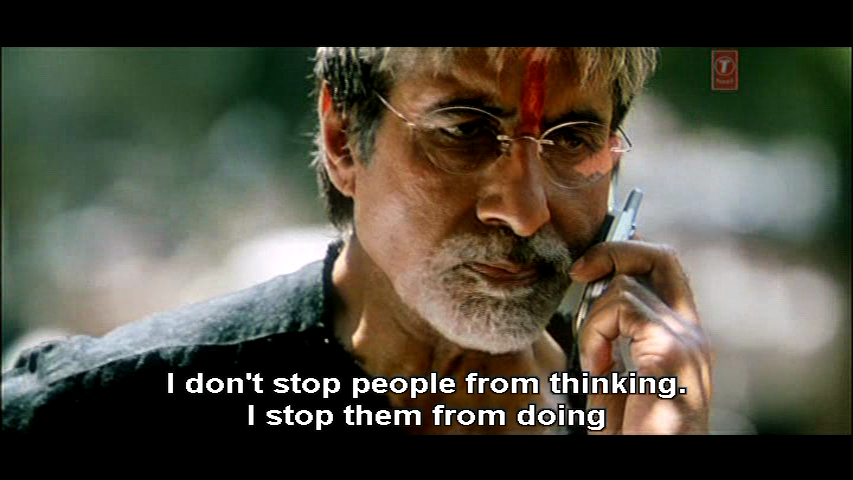
While Subhash acknowledges that he operates outside the law, he says ‘I do what is right for the people’. When people come to him asking for solutions, he accepts their obeisance with little expression. He makes a semblance of not wanting people to touch his feet etc but I wondered what would happen to anyone who dared not to. Some scenes are accompanied by a religious chant(Govinda Govinda featuring Amitabh’s vocals) showing the deification of Sarkar. There are glimpses of the monstrous ego behind the facade, the steely will that does not tolerate opposition or failure, and the carefully checked anger. We also see the family man and affectionate grandfather. Subhash Nagre is a complex man and he is a master strategist. Amitabh shows all of these nuances without being too actorly and I was watching the character, not the performance.

Subhash Nagre is challenged from within and without his family. Rashid (Zakir Hussain) is the new type of criminal. His decisions are all commercial and he has no empathy or reserve. He is not the kind of man Subhash is used to. There is no whitewashing of how Nagre makes his money, but the clashes hinge on honour and intent. He will not budge from his principles. His enemies know that to remove the man they must first destroy his reputation.
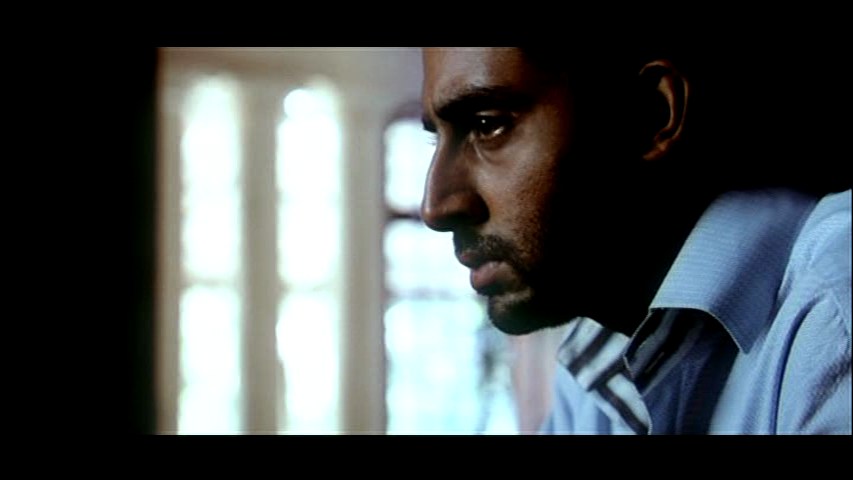
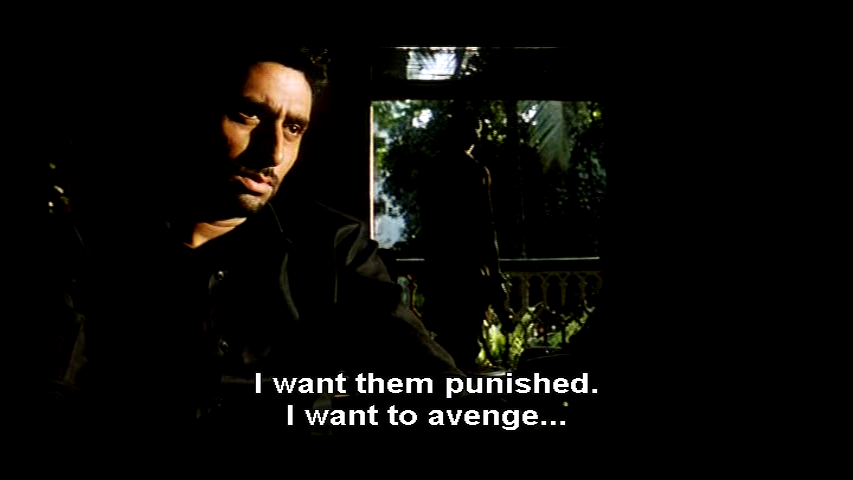
Son Shankar (Abhishek Bachchan) returns from the US. Baby B has a role where doing an impression of his dad is actually appropriate. Initially believing that his father simply helps others, his eyes are opened to the realities of the family business. In a conversation with Pooja (Katrina Kaif) they refer to the Sarkar empire as a parallel government, supporting the people and doing what is right, not just what is legal. Shankar is appalled at how his father is portrayed in the media. He is the golden boy, the one his father wanted to keep clean and safe from the business. The focus and decision making Shankar used in his corporate life are now applied to his family concerns. He is a quick learner and he will do what it takes.
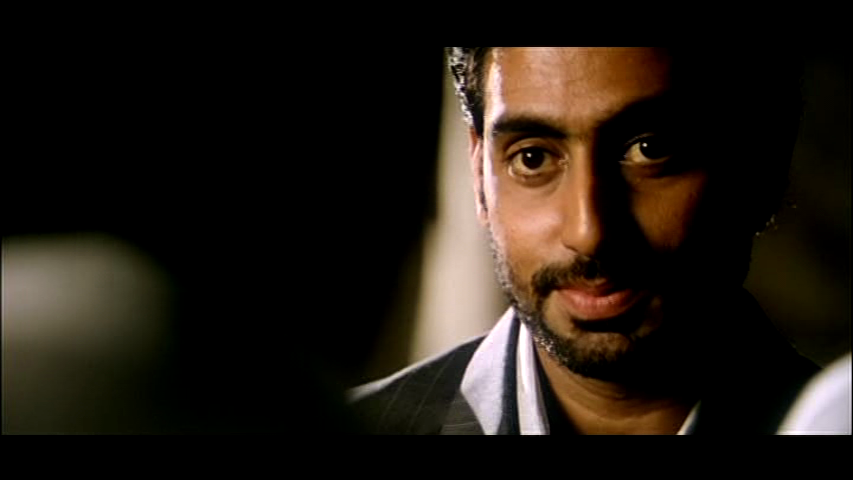
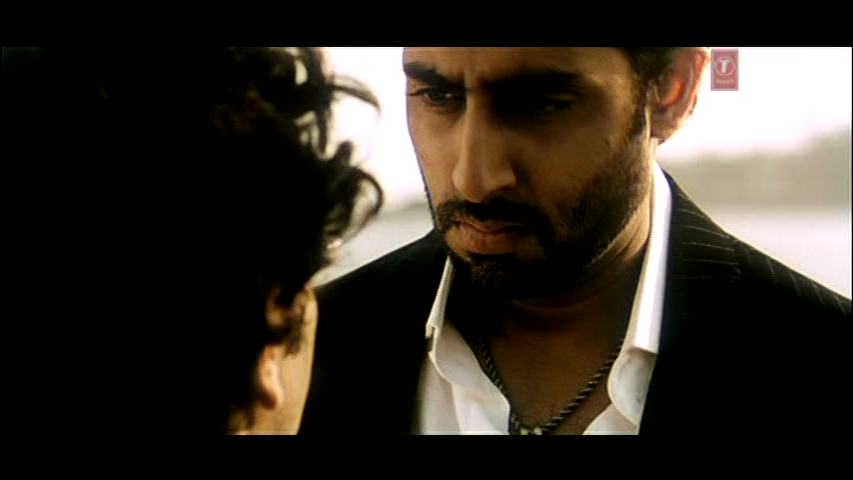
Abhishek is not completely convincing but he does structure his performance well. Initially Shankar is relaxed and engaging and his body language is more open. As he is drawn more into the threats to his dad, he assumes more of Subhash’s mannerisms and strategies. Abhishek’s face becomes less expressive, he speaks more slowly and moves more deliberately. And he is ice cold, like his father.

Vishnu (Kay Kay Menon) is the son most like his father in ambition, but lacking focus and self control. The tension in father-son relationship is well depicted as Vishnu challenges his father’s authority and decision making. The dynamic between Shankar and Vishnu is also fraught as Vishnu desperately wants to be taken seriously, to be the next Sarkar. Quick to flare up or retaliate he has no ‘off’ switch and only intermittent self awareness.
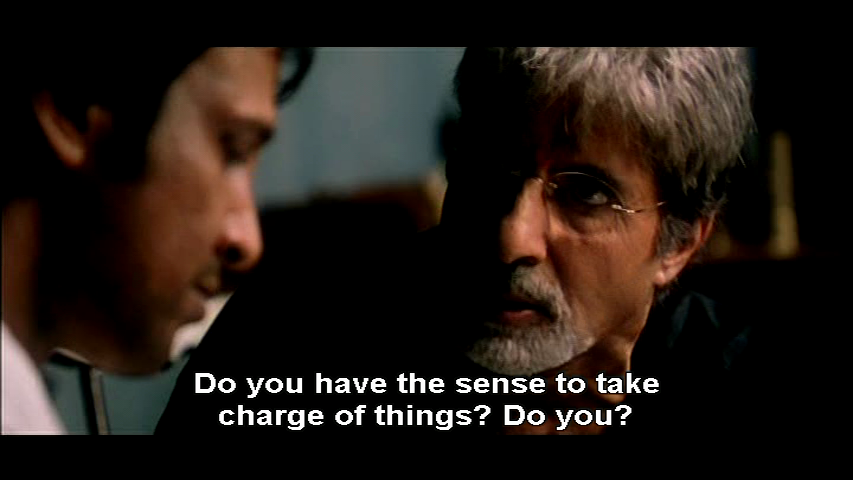
The pain of rejection drives him, and makes him vulnerable to manipulation. Vishnu is co-opted by his father’s enemies, and spirals into confusion, hate, anger and regret. He is an oddly sympathetic character despite committing some of the most heinous acts. I think that is due to the complex and changing emotions Kay Kay invests him with. Kay Kay is expressive and emotional where Amitabh is smouldering control.

The Nagre mansion is a world away from the glaring light and sound of the streets. It is almost timeless, and full of shadows and silhouettes. All around there are men at arms working out and waiting for trouble. The family live in a small pocket of domesticity within the encampment. It’s a bit claustrophobic, but also serene and sometimes beautiful. It is the price Nagre pays as he needs to be safe but accessible to the people who give him his status.
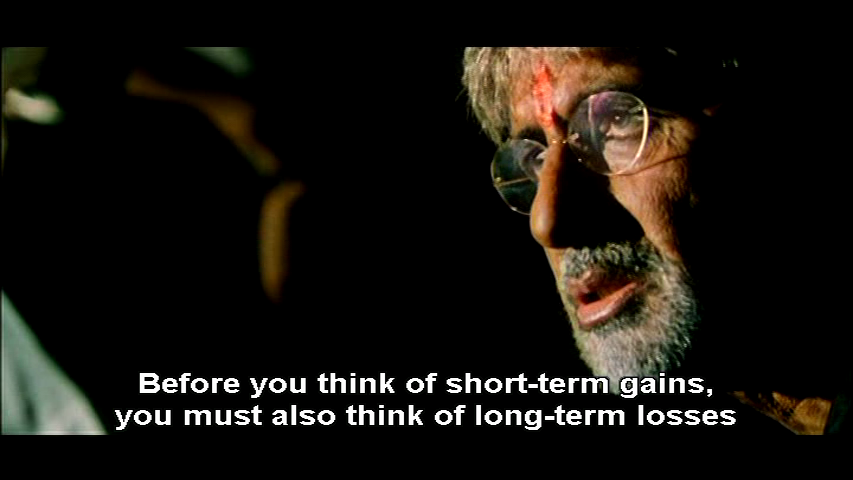
All around Mumbai there are shadowy figures in dark room havings meetings and plotting Subhash’s downfall. The story is well written by Manish Gupta, and gains in intensity as more deceptions unfold. Kota Srinivasa Rao is the repulsive Selvaramani, chortling his way through schemes and double crosses. His idea of honouring a friendship is requesting a quick death for someone. Anupam Kher has a small role as an anti-corruption politician and still manages to try and upstage everyone with a hammy death scene. Raju Mavani as Vishram Bhagat is the everyman type of villain – he seems perfectly reasonable yet he is calculating and meticulous in scheming to dethrone Nagre. Telugu actor Jeeva as Swami is less successful. His mannerisms and dialogue delivery are hammy, and while I believed he was a serious threat his wig didn’t convince me at all.

Supriya Pathak delivers a good performance as the mother watching her son go off the rails and placing her family in deadly jeopardy. Tanisha is likeable as Avantika, the foster daughter who is in love with Shankar. Katrina Kaif is not entirely terrible as Shankar’s American based girlfriend Pooja. But the women in Sarkar are background – providing all the support systems and needs for the menfolk, but not often in the spotlight. These relationships are important, and there is a lot of affection between family members but the men take care of business while the women take care of the men.

The visual design and camerawork throughout Sarkar is excellent and reinforces the drama and emotion. The majority of the film is shot in tight close ups, making the characters the focal point. When things move out into a broader shot, the background detail and bustle of extras and locations gives a strong real world flavour. Amar Mohile’s music is dramatic but not intrusive and the sound effects and orchestration are very effective.

It’s a fairly grim movie. There are lots of unlikeable characters and they do some despicable things. But it is such an accomplished film and just drags me in to that world. Every time I see it Amitabh reminds me yet again of why he is such a legend. Sarkar Raj was a worthy sequel, and builds on Sarkar very well. I’m cautiously looking forward to Department to see if RGV and the Big B can do it again in a different story. 4 stars.
Heather says: This isn’t one of my favourite Amitabh films despite the fact that I think he plays the part of the aging gangster well.  I think the problem is that the story of the film doesn’t engage my interest until near the end and I just don’t care enough about any of the characters to want to know what happens to them. However it does have some good points and the end is almost worth sitting through the preceding hour and a half. I do like how cold and clinical Amitabh appears and that his ruthless Don does have a more compassionate side. However that’s not enough to make me like him and since he’s not a malicious criminal either I don’t find him very interesting to watch.  His son Vishnu is more engaging and Kay Kay Menon’s performance is good enough to make me feel at least some aversion for his sleazy character, but Abishek as Shankar is incredibly wooden and quite tedious throughout. The most enjoyable scenes in the film for me are those with Selvar Mani and Virendra Swami, partly because Kota Srinivaso Rao and Jeeva both put in a very good performances and because those two characters do have some personality. The rest of the cast are all fine, and in fact many of the support actors draw my attention much more than the main leads. However I have no idea why Katrina Kaif bothered to turn up as she may as well not have been there for all the impact her character had on the story. I thought her role was fairly pointless and much better reasons could have been used for Shankar’s initial reluctance to help his father.

There are a lot of meaningful pauses and significant looks throughout the film which make it even slower. I was distracted looking at the set dressing (which was excellent!) and when there was dialogue found that I was concentrating on understanding the Hindi and trying not to look at the subtitles, rather than watching the action. The film itself is well shot and the general idea of the story is interesting, but the characters are so lacking in any type of appeal that it never really connects.  It’s not even that I found them dislikeable, they were just rather dull.  I give Sarkar 3 stars, mainly for the ending and a convincing if uninspiring performance from Amitabh.

Rachcha

Rey! 3am and we were still discussing Charan’s amazing hair, his dedication to bringing the cape back and the total masala fun of Rachcha.  Another adventure without subtitles, we saw it with an appreciative audience notable for the number of women attending. Usually we hear a high pitched squeal of fandom and look around to see a dude in a suit. But Charan seems to bring the ladies out, and we can see why. There’s plenty of action, excellent choreography and at least for Charan, some superb costumes. Charan channels Chiru in his own inimitable style and with a nod to the camera that says he knows what we’re thinking, while Tamanna holds her own in both the dancing and drama stakes.

The film starts with the opening banner of Mega Supergood Films and, since any reference at all to the word ‘mega’ had the audience screaming, ensured that we were deafened right away. After a flashback involving young Raj, a significant necklace and the extremely dramatic death of his parents, we learn that present day Raj (Ram Charan) is being brought up by comedy stalwart M.S. Narayana and his wife (Sudha). ‘Betting’ Raj spends his days, well, betting and when his adopted father needs a liver transplant it’s the ‘logical’ way for him to raise money. He accepts a wager with James (Ajmal Ameer) to make the daughter of a rich businessman fall in love with him. Raj and James have a history involving a train, 2 cars and a game of chicken, so Raj is not without some reservations, but his situation is desperate.

Chaitra (Tamanna) is that rich girl. Chaitra never seems to go anywhere without her escort of 2 motorbike outriders, 4 SUVs and various bodyguards, so it’s a real challenge for Raj to approach her at all. Luckily he has accomplices (a flock of comedy uncles) so Raj is able to attend to the serious business of flirtation. In one of the many fun tributes to Chiranjeevi sprinkled through the film Raj infiltrates her medical college to the strains of Shankar Dada MBBS and all the collar popping and swagger that goes with it. Naturally it doesn’t take long for Chaitra to appreciate the well styled hair and many charms of Raj. Or does she? Tamanna is a very capable actress, and she does get a bit more to do in Rachcha than we expected. Unfortunately she does get a few scenes where she seems more like an escaped mental patient as she marvels at waterfalls, flowers, a fence painted yellow etc.


As we knew from Badrinath, Tamanna has a great imagination for song costumes and accessories. Raj appears in a couple of full length capes and with a number of scarves. At one stage we thought perhaps she had been expecting a hero more famous for his multiple layers of singlets, shirts, jackets and scarves, but Charan wore it all with aplomb. The curse of the blind stylist only seems to strike at Tamanna but does strike hard and often. The constant mini skirt and short shorts outfits were not particularly flattering, and the choreography and camera angles didn’t help.

Mani Sharma’s songs aren’t brilliant musically speaking, but the picturisations are awesomely entertaining and the choreography is excellent. The costume teams go all out (poor Tamanna) and the dancing is infectiously energetic and engaging. Charan just gets better and better. He has a good musicality and a sense of the overall appearance of a song. He doesn’t fall into the trap of substituting too many tricks and gymnastics for dancing. It’s a pleasure to watch him, and his facial expressions in the songs are highly entertaining. Tamanna is his match in energy and expression.

The two actually dance together rather than just using the heroine purely for her glamour quotient and it feels like a real partnership. There isn’t any sizzling chemistry but more of a camaraderie which works well enough to make their romance acceptable, especially considering the rather dubious origins in a bet.

Chaitra’s father Bellary (Mukesh Rishi) is not impressed by Raj and when the pair escape he sends for the big guns in the form of Dev Gill in manic villain mode. You can tell he is insane because he wears a coat inspired by Noddy and Big Ears or a high school production of Pirates of Penzance. He had a pathological attachment to this coat and he never appeared without it. This diluted his menace considerably as we giggled uncontrollably every time we saw him.

The second half explains the real reason for the  bet, and sets up the climax. The flashback episode is too long but it leads up to an excellent fight. The action scenes are brilliantly choreographed, using Charan’s physical skills to great effect. Raj was a resourceful and efficient fighter, usually going for the classic ‘kick em in the nuts’ approach rather than anything too impractical. Although he used a flaming wheel and even threw a motorbike at his atttackers in one scene so he was never dull. Sampath Nandi toyed with the audience when he put Charan, Dev Gill and a helicopter in one scene, teasing with the possibility of a Magadheera replay. Rather sensibly the director chose to leave Charan on the ground and let him deal with his problems the old-fashioned way – with a very impressive axe.

There is a pointless appearance by Ali. Brahmi, Venu Madhav and Srinivasa Reddy were moderately amusing in their roles and at least the story did have a flimsy reason for their presence. Srinivasa Rao Kota, Nasser, Raghu Babu and various others turn up and do their usual thing. Satya Krishnan makes a small appearance in a fun women vs men backyard cricket match, and there are some really enjoyable little moments with minor characters. We have to give a big shout-out to the backing dancers and the rather listless ‘dance students’ for their efforts. The comedy and subplots were all more or less tied to the main story which helped keep things moving along. The audience dissolved into hysterics when a man at a roadside restaurant knocked back his drink and then picked up a chicken and sniffed it. Granted that alone was pretty funny, but we did wonder if perhaps there was a reference there that we didn’t spot?

There were plenty of references throughout the film to Chiranjeevi movies and Charan wears a number of outfits that are pure Chiru style. White trousers, black socks and white loafers made a come back, as did loud shirts and colour blocking. He has his father’s mannerisms down pat and it added another dimension to the film to see how many of these tributes we could pick up. And we think it is a smart way for him to deal with the pressure of expectation – he is always compared to his father, so why not own those references and play them with his own style. We were a little disappointed that the significant necklace (which Chaitra could only discover late in the story) meant that Charan kept to a rather modest look, but Vaana Vaana with the dancing in the rain was some compensation.

We have now seen both the original Vaana Vaana from Gang Leader and this remix on the big screen, and the Mega Men certainly know their way around a rain song!

Rachcha is Charan’s vehicle and he delivers a full mass performance that is exciting and very watchable. Tamanna got plenty of cheers from our audience for her dancing and at her speech just before the climax. The songs and fights are so well executed that they had us cheering along too. It’s a visually pleasing film, and has a sense of fun in amongst the action and drama. The story is a familiar one, very much inspired by the type of films Chiru made back in the day, but who says that’s a bad thing? Despite a plethora of comedy uncles, Sampath Nandi delivers a fun and entertaining film that we both want to watch again.

3

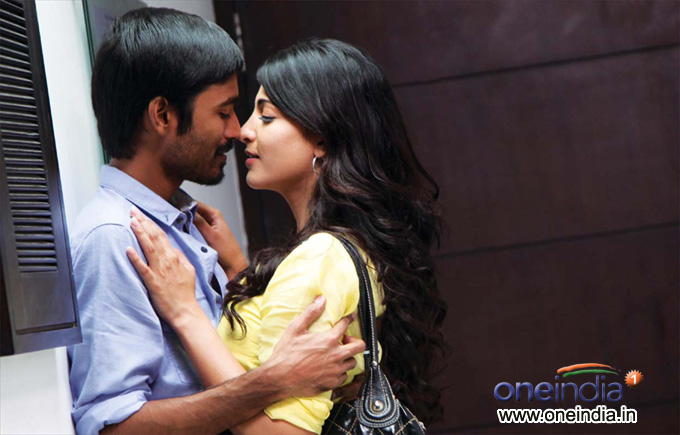
I’m a big Dhanush fan and since Shruti Haasan had impressed me in her last Telugu film, I was excited with the prospect of seeing them together in 3. In addition I wanted to see how Aishwarya Dhanush would approach her first film considering she had worked with one of my favourite directors, Dhanush’s brother Selvaraghavan on Aayirathil Oruvan a few years ago. The hype surrounding 3 since Kolaveri Di became such a hit seems likely to have been the reason that this was the fourth Tamil film to be shown here in Melbourne with subtitles and I really do hope that this trend continues. So it was with high expectations that I headed in to watch 3 and while the film as a whole didn’t quite meet them, the first half surpassed them easily.

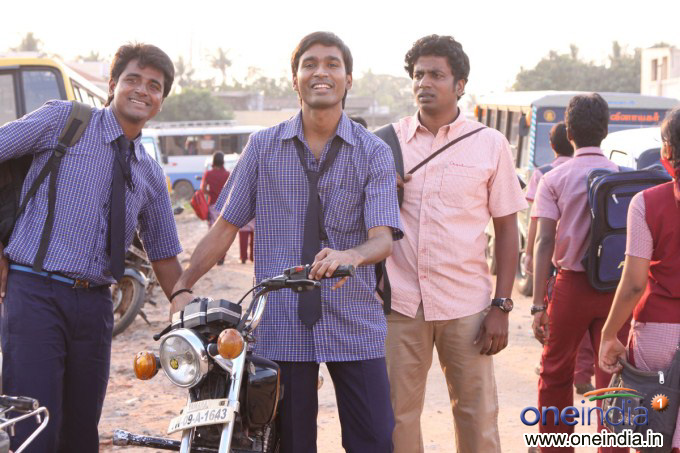
3 follows the lives of Ram and Janani who first meet while they are both at school and relates their romance through three stages of their life together. The two leads somewhat surprisingly don’t look too out of place in school uniforms and certainly with their attitudes and mannerisms they are convincing as high school students. But the real star of this part of the story is Siva Karthikeyan as Ram’s friend Kumaran.  The interactions between the two friends are very natural and the dialogues between the two as Kumaran deals with Ram’s sudden infatuation are snappy and very funny. They had the whole cinema in stitches and it was fantastic to be able to understand and laugh along with the audience for a change.

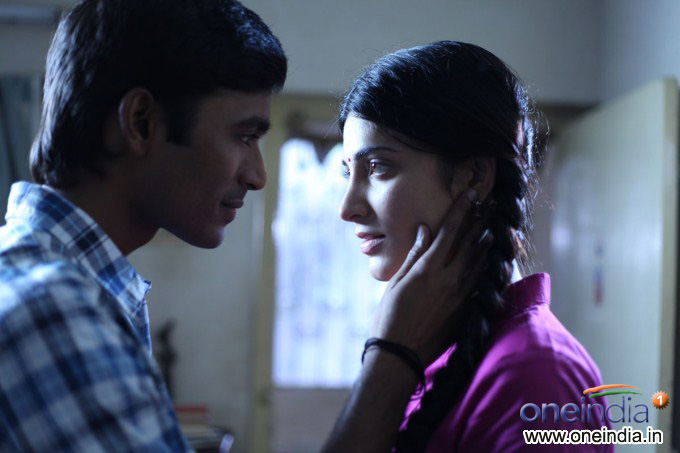
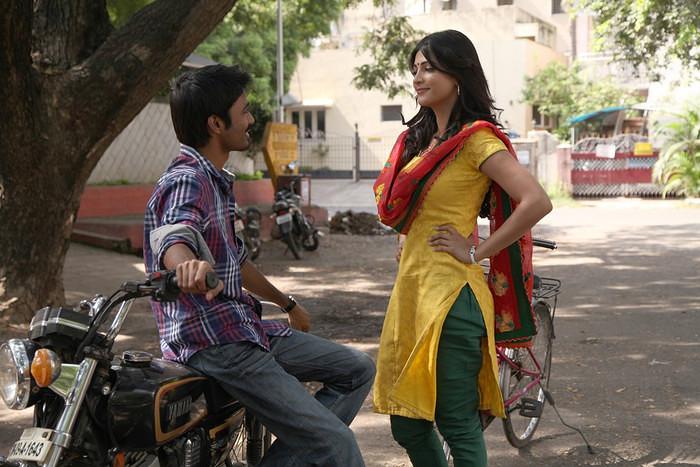
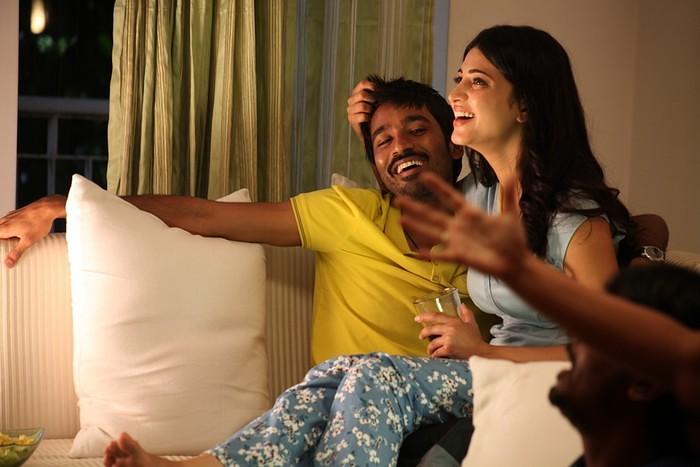
The love story progresses with the usual hurdles in the form of parents and familial expectation. Janani’s family are preparing to move to the USA and she has to deal with the prospect of leaving Ram just as she has realised her feelings for him.  Shruti Haasan excels here as the young girl infatuated with her lover but struggling to conform to her family’s wishes and she finally makes a decision in spectacular style. The young actor playing her sister is also very impressive and overall the romance is beautifully developed. Shruti and Dhanush have great chemistry together onscreen and their relationship progresses very naturally. The interactions between Ram and his father (Prabhu) were also very genuine and well written with plenty of humour and a real sense of the sincere relationship between father and son.

However the promise of the first half doesn’t carry through to the rest of the film. I can appreciate that Aishwarya wanted to show a total contrast in the second half but it gets carried to extremes and the screenplay starts to drag as the melodrama goes into overdrive. The film starts with a dead body and Janani in mourning before moving into flashback mode, so we all know that there isn’t going to be a happy ending – well this is a Tamil movie after all, but the story just doesn’t make sense.

Janini spends most of the second half crying and Shruti Haasan is not an actor who can cry prettily, so the excessive amounts of sobbing become wearing very quickly. The assured and determined young woman of the first half totally disappears and while it is likely a much more realistic reaction it doesn’t make for such interesting watching. Kumaran has also vanished from the story and Senthil takes over as the concerned friend trying to help. While Sunder Ramu puts in a good performance his character is generally less convincing as most of his actions aren’t consistent with the family relationships shown in the first half. Dhanush puts in another amazing performance but it’s a role he has done shades of before in Mayakkam Enna and Kadhal Kondein so while impressive, it does feel a little overdone in the last scene. The general idea of the twist in the story is good but it seems let down by the over the top screenplay and some very dodgy medicine and ethics.

What does work well is the music. Anirudh Ravichander’s background score fits the screenplay very well and the songs are well placed within framework of the film. Kolaveri Di is certainly not as expected and although there are a few odd moments, specifically with a blonde tourist, it generally succeeds and adds a bright moment to the otherwise very heavy second half.

The first half of 3 is a delight to watch and for that reason alone I think it is worth seeing in the cinema. The support cast are all excellent and while Shruti Haasan does overact later on, Dhanush is as impressive as ever with a very convincing performance. The film is let down by an unconvincing and over dramatic second half but there is still much to enjoy. As a friend remarked on twitter, if only the second half had matched the first this would have been a perfect film. It’s still good, and an impressive debut by Aishwarya Dhanush, but it could have been even better.