
A new year, a new Bunny film, and this one is a lot of fun. Trivikram has come up with a different slant on a traditional storyline around babies swapped at birth, and then adds in an unusual father/son dynamic on top. Murali Sharma gets to act his heart out, the support cast are terrific and Bunny is on top form throughout. Yes, Ala Vaikunthapurramuloo is a little slow to start and there are a few mis-steps initially, but there is much to enjoy in this mix of family drama, action and romance.
The movie opens with two babies being switched immediately after birth. The rich Ramachandra (Jayaram) and his wife Yasu (Tabu) end up with the son of Valmiki (Murali Sharma) and his wife (Rohini). There is some history between the two men as they used to work together until Ramachandra married the boss’s daughter and ended up running the business. Valmiki has ended up working for his old friend and is resentful and bitter about the situation as he feels it’s luck rather than talent which has given Ramachandra his success. The only people who know about the switched children are the nurse, who meets with a tragic accident and falls into a coma, and Valmiki. Sadly no significant jewellery, birthmarks or songs, but obviously film aficionados will instantly recognise the nurse’s coma as potentially important!
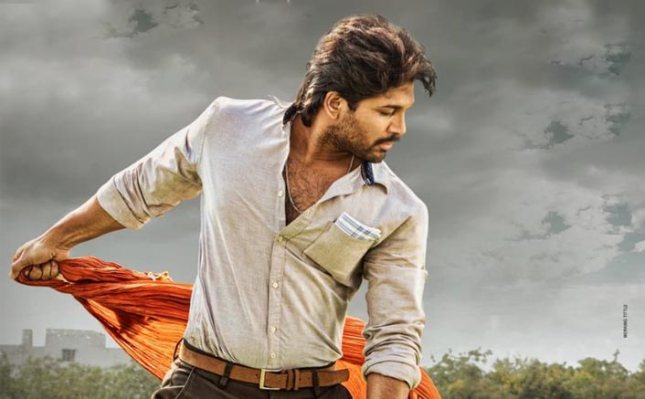

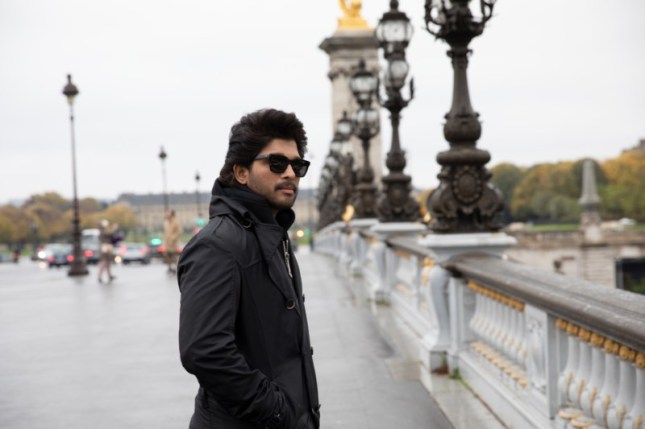
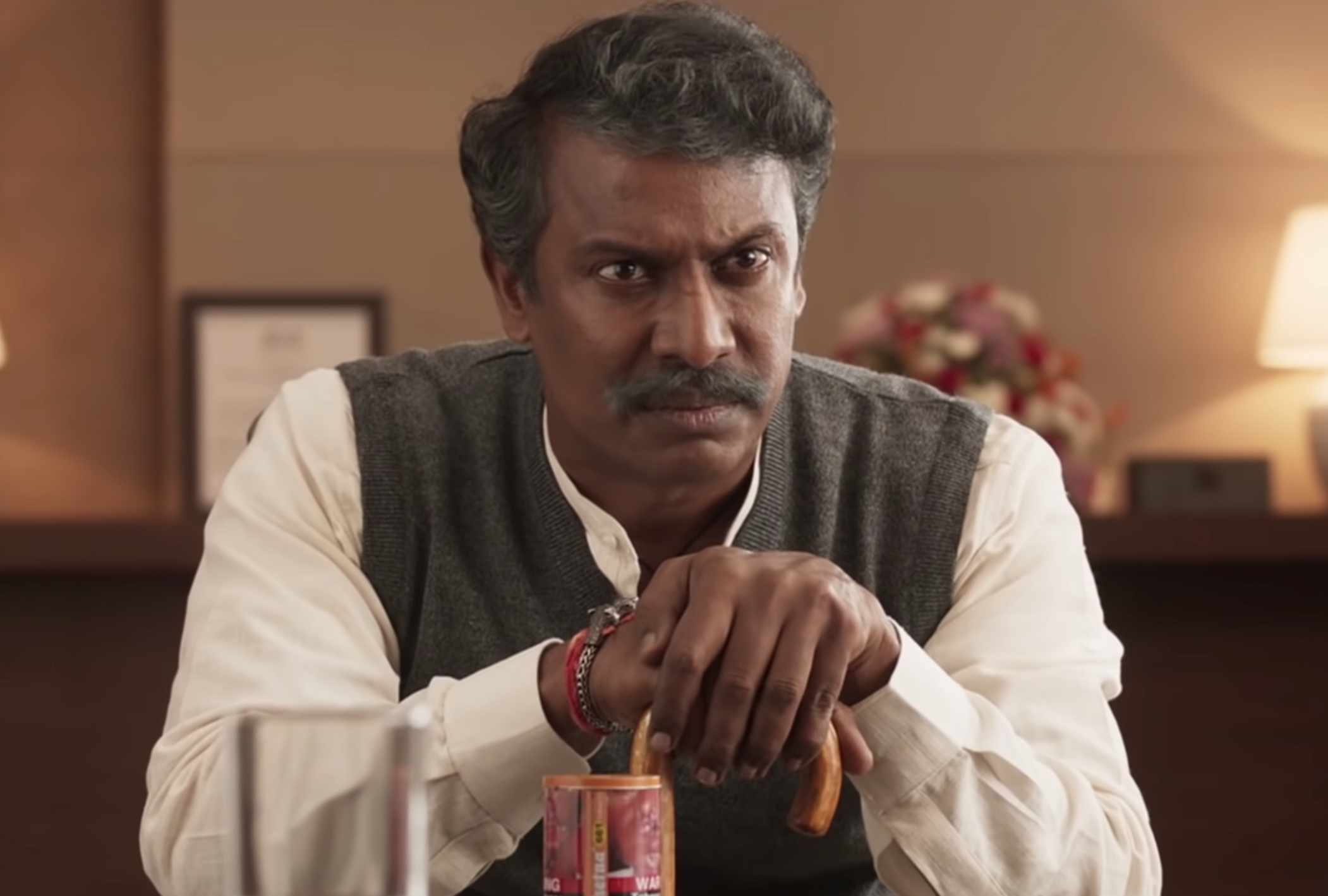
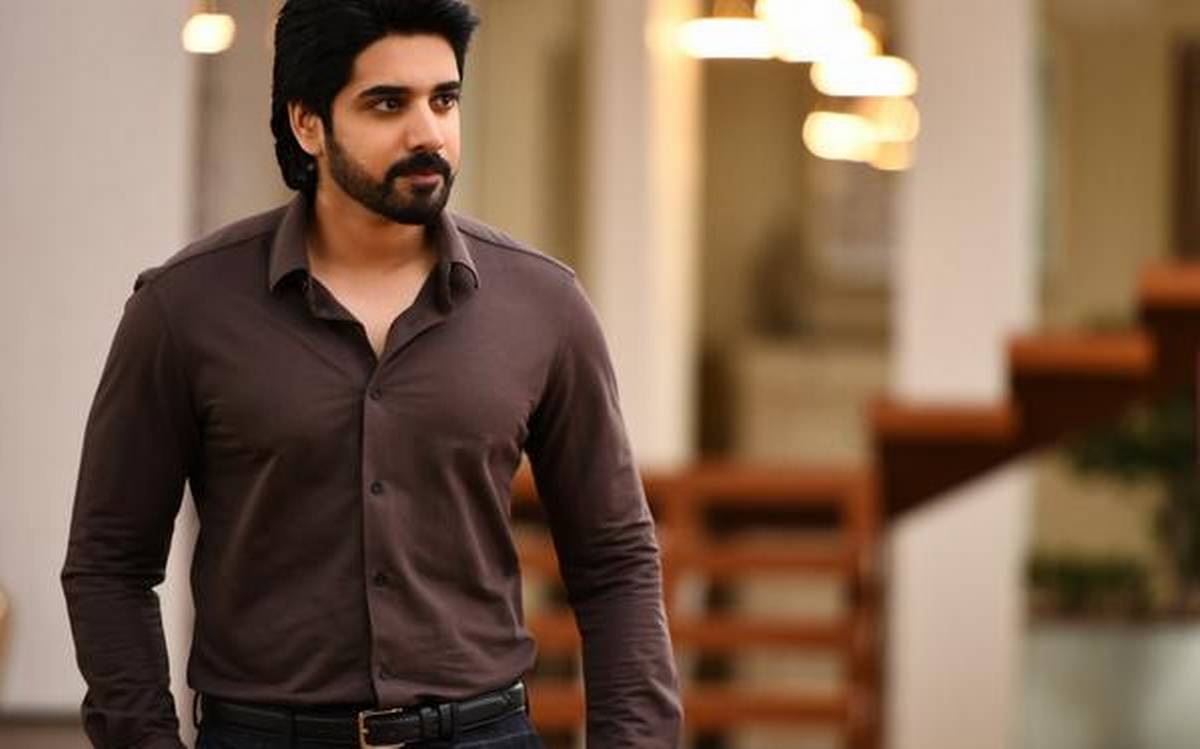
The film then moves to the present day where nature has trumped nurture and Raj (Sushanth) has grown up to be quiet, hesitant and totally unable to replicate his father’s business success. Meanwhile, despite Valmiki’s antagonism, Bantu (Allu Arjun) is smart, canny and very capable, although he does have one flaw – he always has to tell the truth. There is some very well-written conflict between father and son as Valmiki treats Bantu badly, while Bantu tries everything he can to get any sign of approval at all from his father. Meanwhile, Ramachandra is desperate to get Raj involved in the business, but it’s something for which he shows no aptitude, instead demonstrating positive disinterest. Thrown into this mix is Appala Naidu (Samuthirakani) and his son (Govind Padmasoorya) who are out to grab some of Ramachandra’s company for themselves. Appala Naidu is a thug who runs the docks, while his son is more sophisticated but obsessed with the idea of taking over Ramachandra’s business.
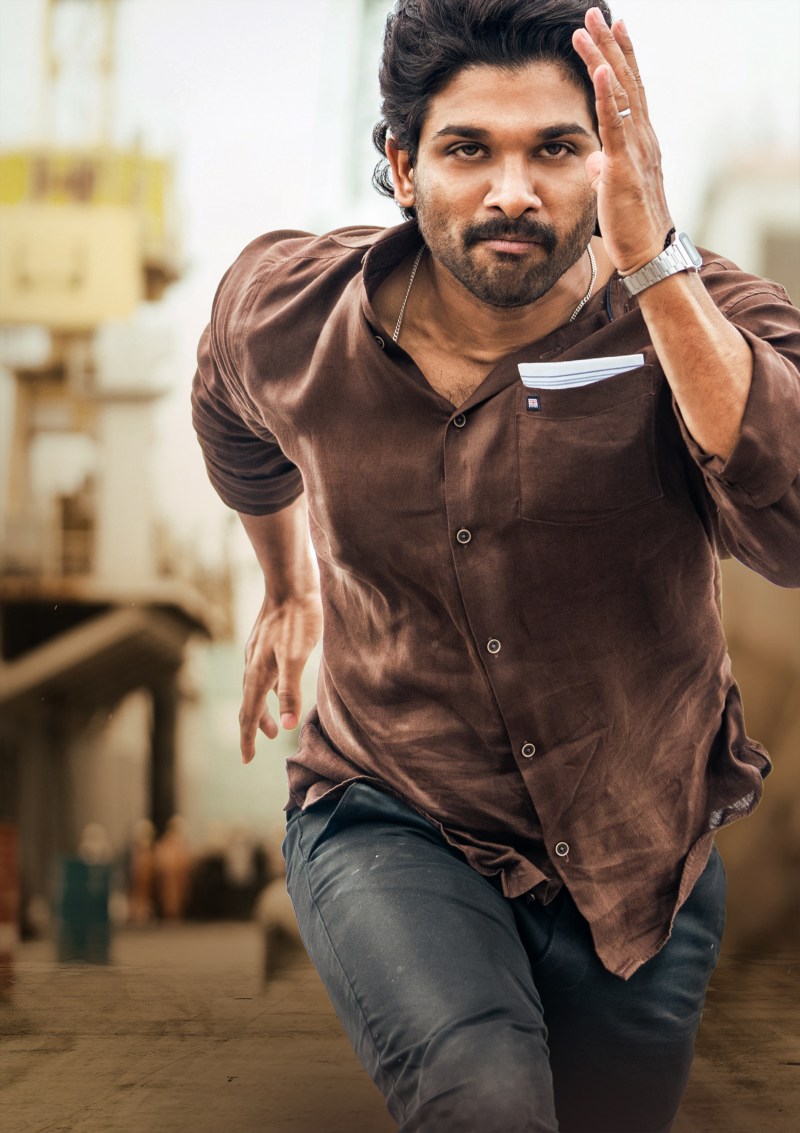

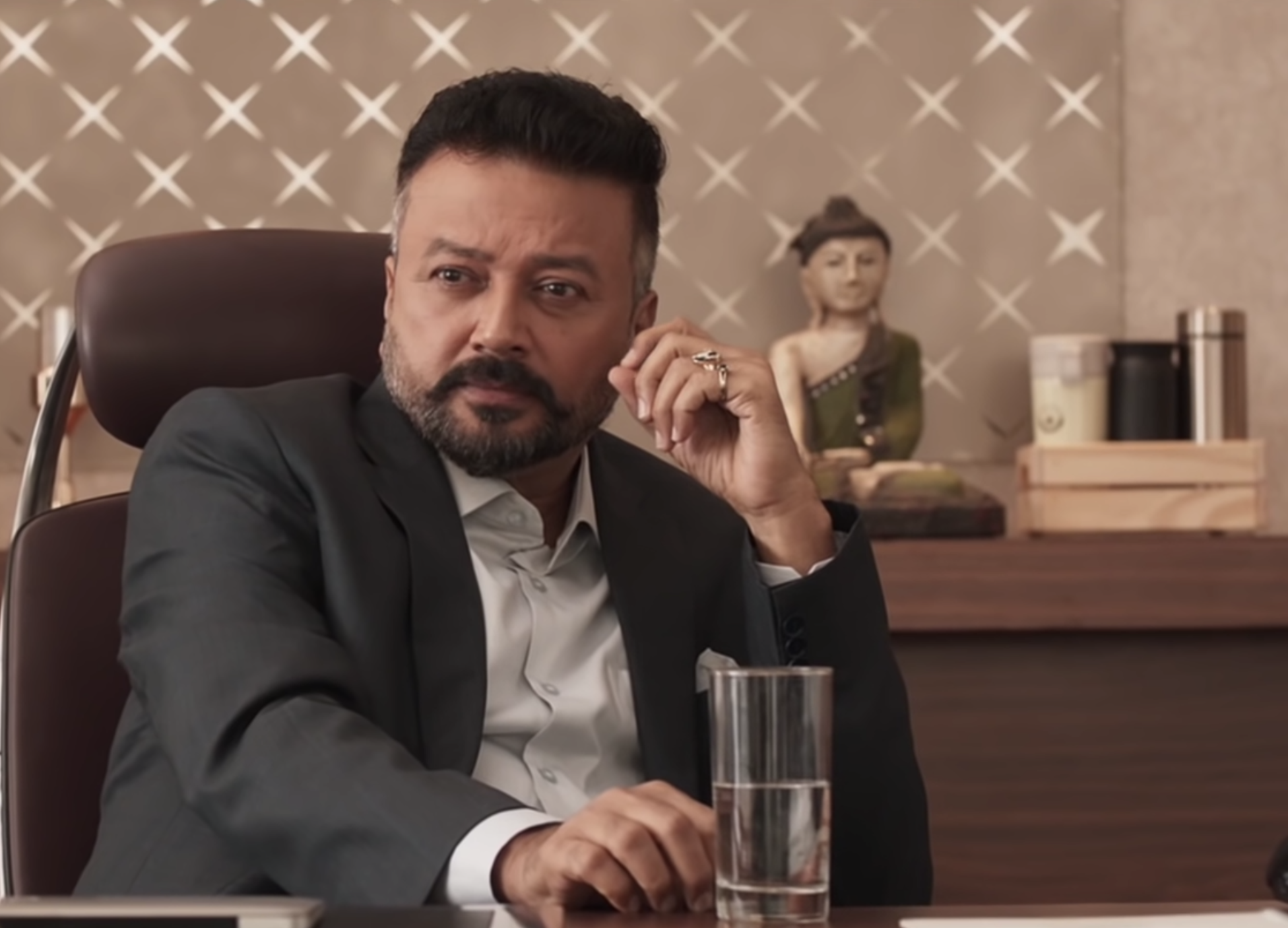
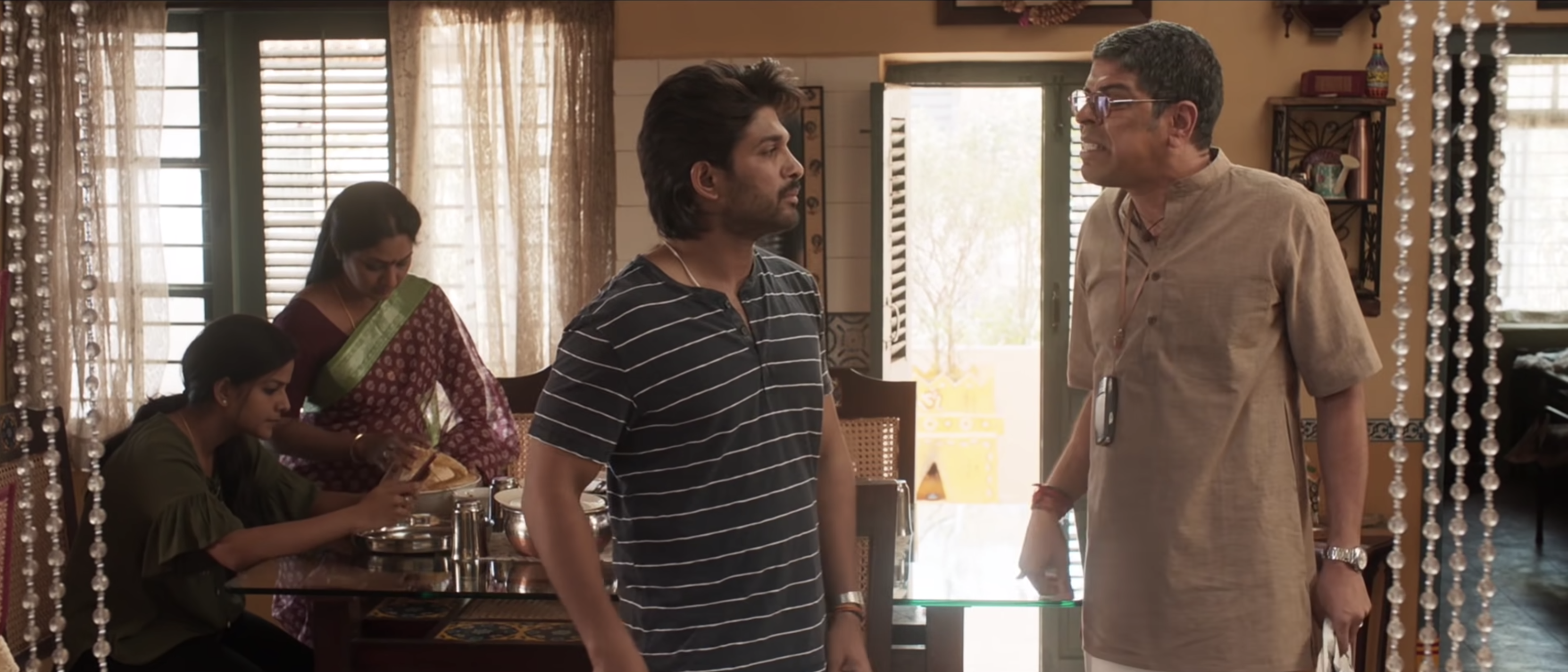
What lifts this movie above being simply yet another masala pot-boiler, is the relationship between Bantu and his father Valmiki. The sheer nastiness of Valmiki and his determined mistreatment of Bantu is cleverly done and well contrasted with Valmiki’s servile attentiveness when working with Ramachandra. Murali Sharma is simply brilliant here and his total lack of remorse for his actions, the fate of the nurse and his treatment of Bantu is perfectly portrayed along with his innately selfish nature. And while Murali Sharma is outstanding, Bunny too is superb in these interactions, displaying nuanced emotion and plenty of depth to his character. There is a beautiful moment after Banto finds out the truth that really is emotionally perfect, and Bunny plays it brilliantly. Naturally the estranged sons and their various families need to be reunited but it’s not quite that simple. While Bantu fights his way past Valmiki and gradually charms Ramachandra and his father-in-law Aditya Radhakrishnan (Sachin Khedekar), the family is dealing with a number of problems. There is conflict between Ramachandra and his wife, his brother-in-law is cheating and stealing money from the company, and Raj’s inability to deal with Kashiram is also causing problems.
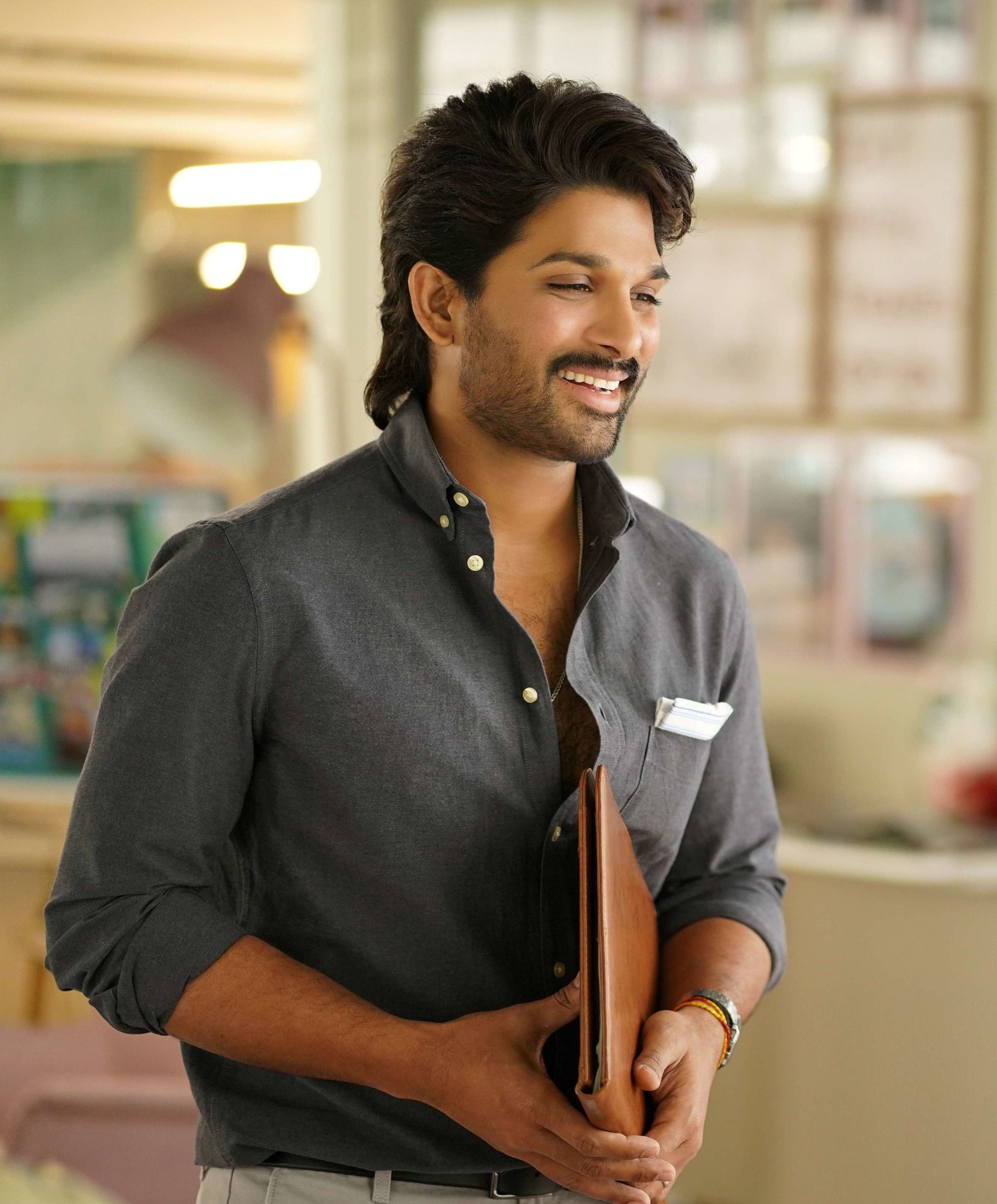
As Bantu becomes involved with the family, Trivikram tones down the comedy and OTT action for some good solid family drama that’s written for maximum emotional effect. It works because the characters are well realised and each acts true to themselves, making the emotions more real and adding to the story.
What doesn’t work quite as well is the romance angle. Mainly this comes from the odd introduction of Amulya (Pooja Hegde) as Bantu’s boss in a new job. When he first meets Amulya, Bantu can only see her legs and is unable to lift his eyes above her skirt level for much of the first half of the movie. For a film that then goes on to talk about it is wrong to fight with women and then treats Yasu’s character so well, this is a significant step back to outdated ideas of ‘comedy’ and ‘romance’. With the odd start, despite good chemistry between Bunny and Pooja Hegde, the love story always feels just a little off, not helped by Pooja’s initially ‘strong business woman’ persona fading into the background as Bantu starts to work for Ramachandra and she is relegated to being simply ‘the love interest’. The film really didn’t need a love track for both Raj and Bantu, especially when Trivikram tries to muddy the waters here too and just succeeds in making both Pooja Hegde and Nivetha Pethuraj appear insipid.
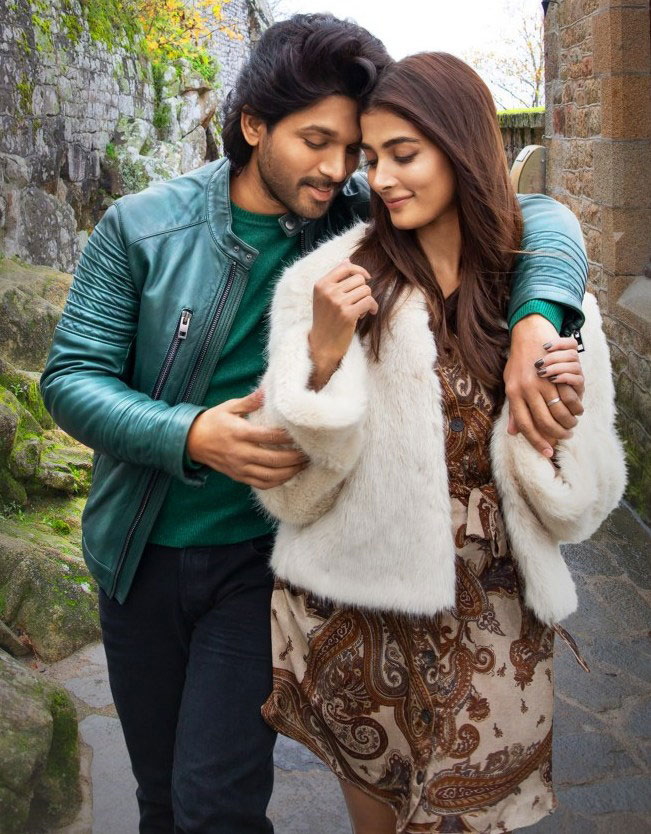
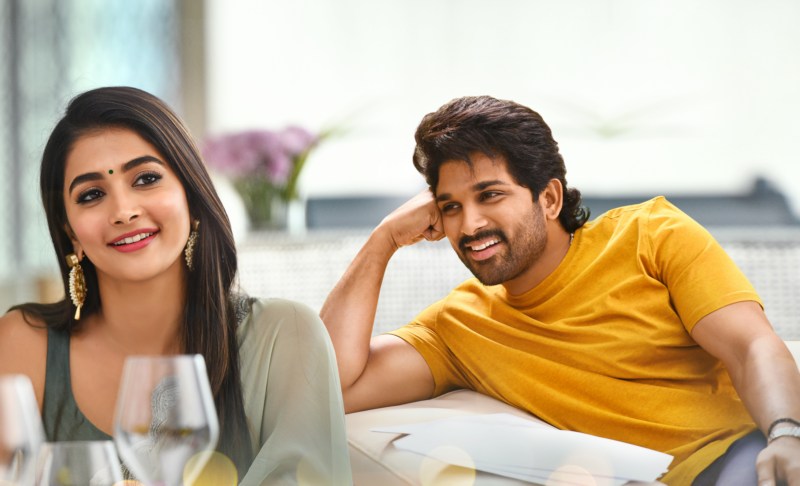

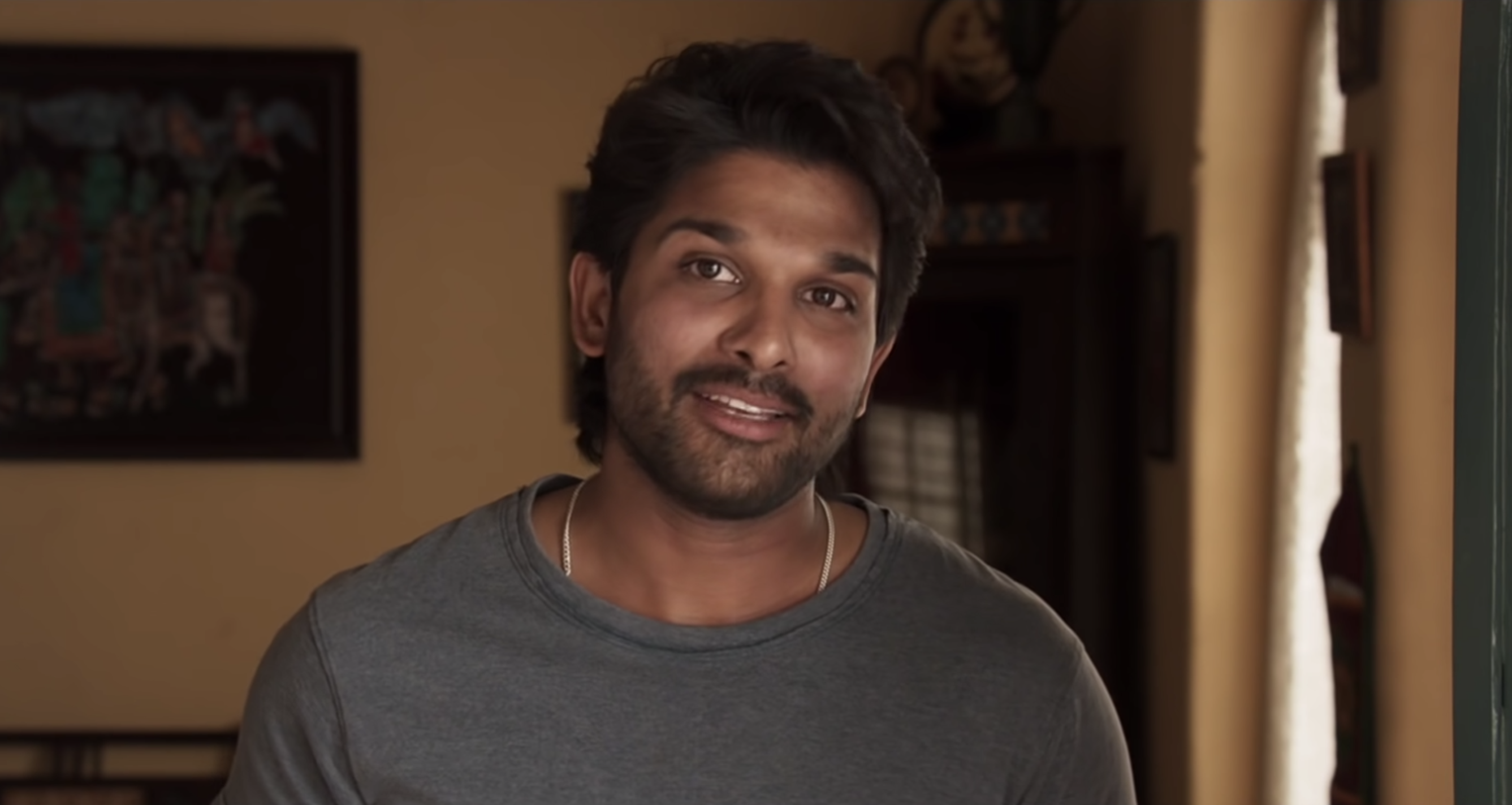
Even with the incredibly strong performance from Murali Sharma, this is Bunny’s film from start to finish and he really is superb throughout. The stylish star manages to pull off a mullet (just) and despite a distinct lack of hair continuity in the film, he does look very good indeed, especially in the songs. As always Bunny’s dancing is outstanding, but his acting matches up to his footwork skills, and he does an excellent job in the more emotional moments. His comedic timing is also very good, while a scene in the boardroom where he pays tribute to a number of Telugu films heroes is just brilliant! Bunny’s acting has definitely matured, even in comparison to his last hit with Trivikram, S/O Satyamurthy, which I feel was his previous best performance to date. Here Bunny shows good emotional depth, well-executed action and a real sense of commitment to the character that pays off and makes Bantu appear a genuine and appealing person, rather than just a filmi character.
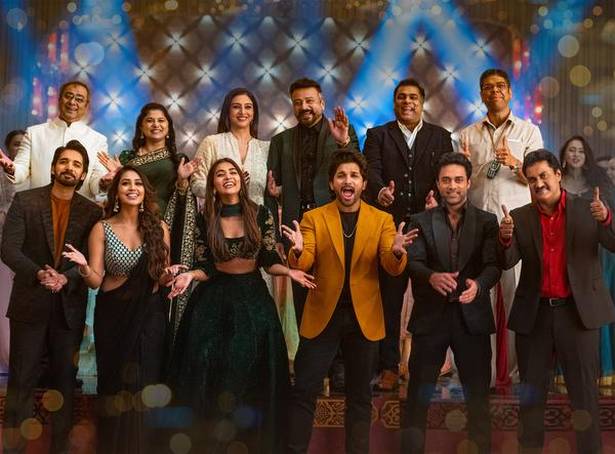
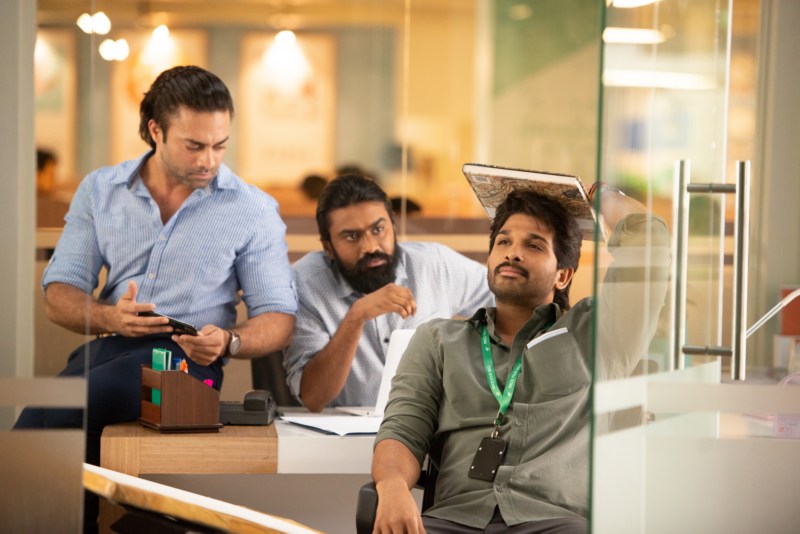
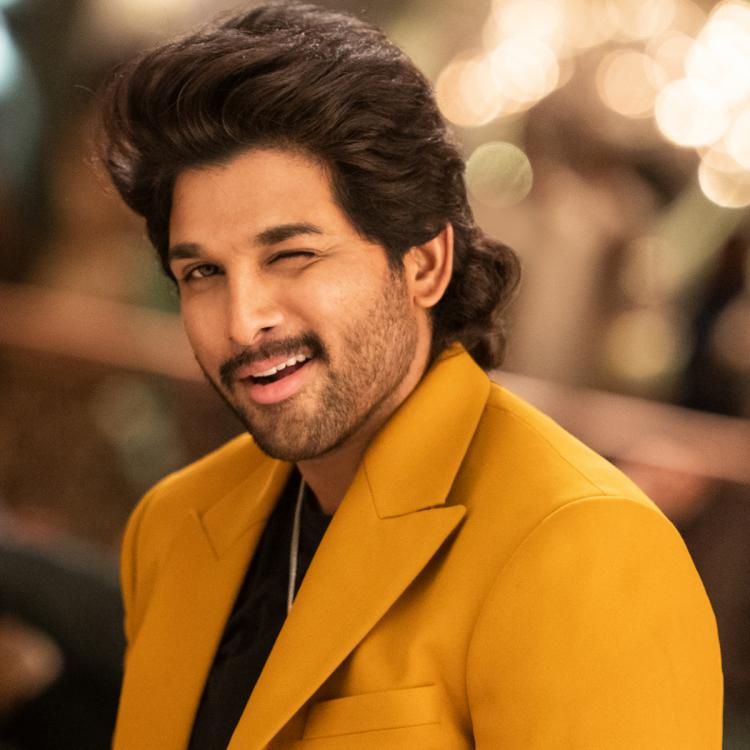
The dance sequences are excellent, and I loved the attention to detail in many of the songs, like the random background dancers in Butta Bomma who pop up hula-hooping from time to time. The music from S. Thaman is also great and suits the film too. The songs are really catchy even if the lyrics are occasionally a bit odd (maybe a subtitling issue?) and the background score helps lift the emotional moments in the film. There is a real who’s who of support cast as well. Naturally Brahmi pops up, just in a song this time, but we also get Navdeep and the sadly underused Rahul Ramakrishna as workmates of Bantu, Cinemachaat favourite Ajay as one of Appala Naidu’s thugs, Rajendra Prasad as a police officer and Brahmaji as a businessman trying to buy Amulya’s business. Tabu is beautiful and grace personified as Yasu, while Jayaram and Sachin Khedekar are both excellent. Unfortunately, Rohini doesn’t have very much to do as Bantu’s mother and his sister (Vaishnavi Chaitanya) also has a very limited role, which is a shame as it would have been interesting to see their family dynamic developed more. However, there is already a lot happening in this film, and perhaps it’s just as well that the drama is mostly limited to Ramachandra’s family.

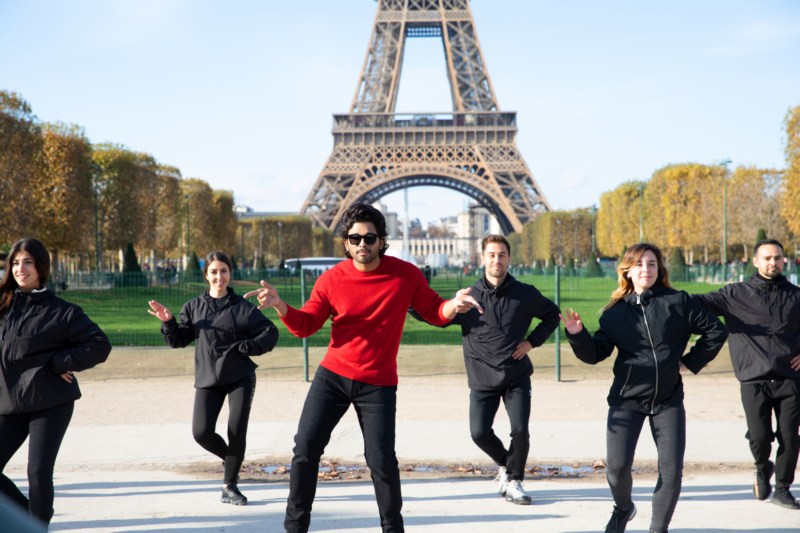
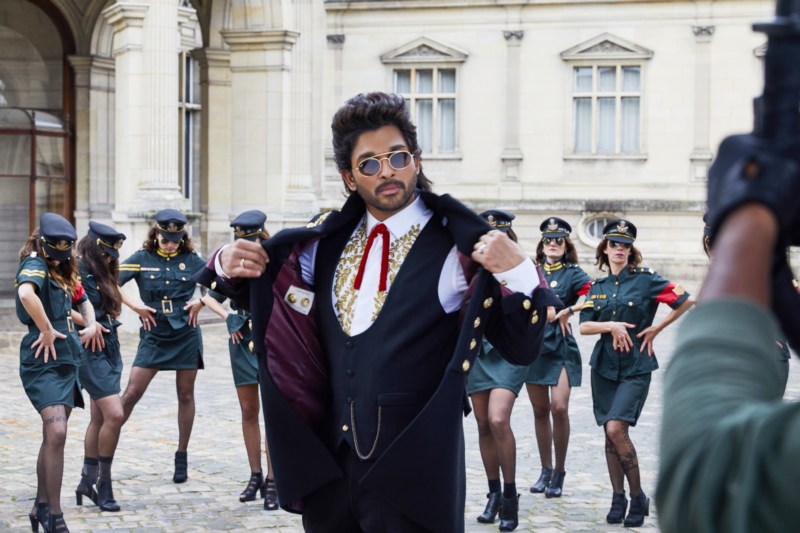
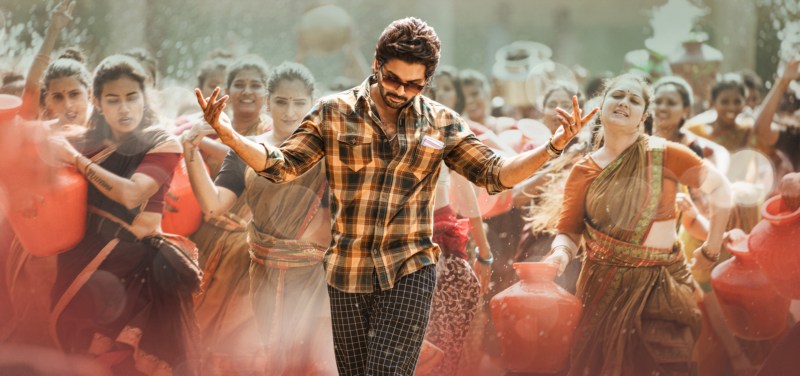
Although the basic story is nothing new, the way Trivikram has developed the characters of Bantu and Valmiki is different, especially when mixed in with the family drama of Bantu’s real father. While all the necessary components are here – songs, drama, action sequences and even the luke-warm romance, it’s having a good story that really makes Ala Vaikunthapurramuloo such a worthwhile and entertaining watch. I really enjoyed this film and would recommend it as a fun film, perfect for the holiday season.





 Cinema Chaat