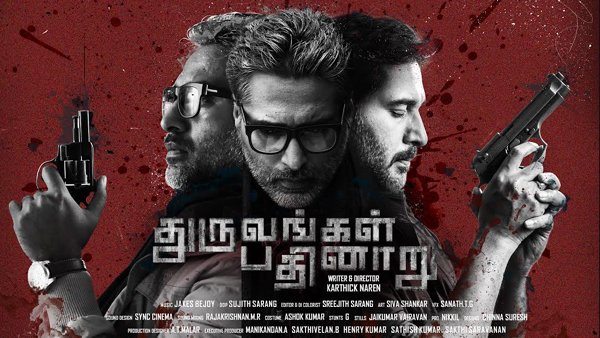
Dhuruvangal Pathinaaru

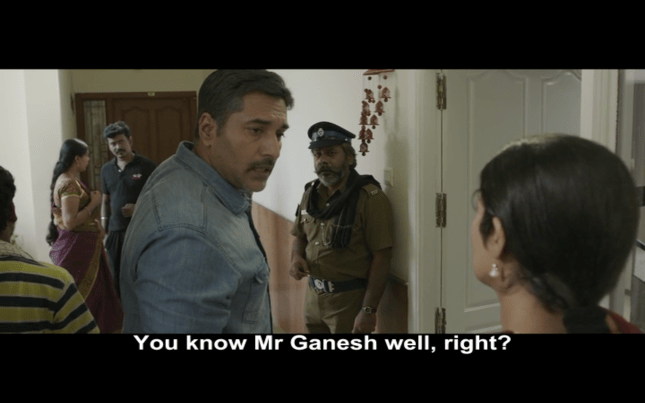
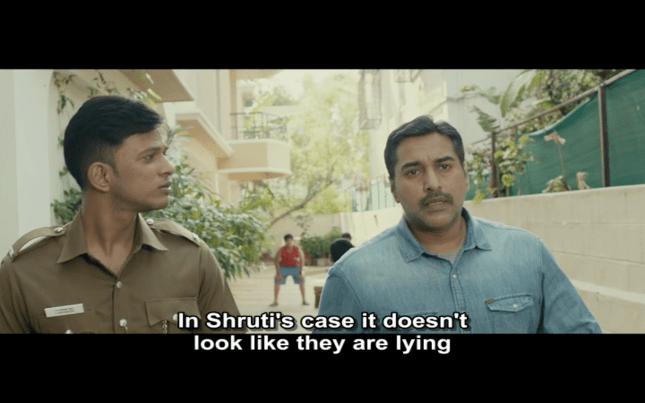
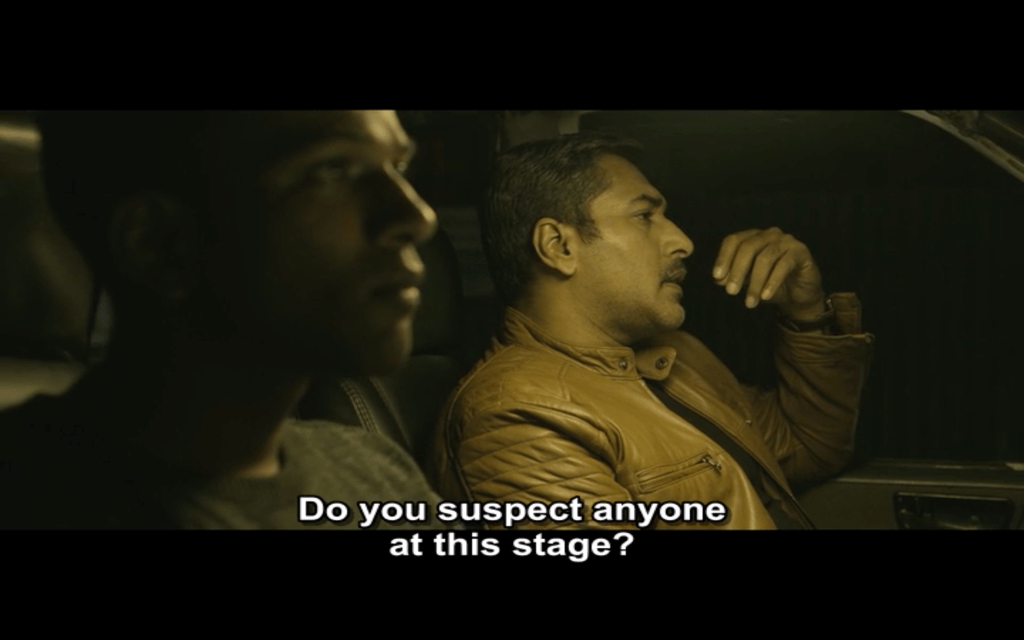
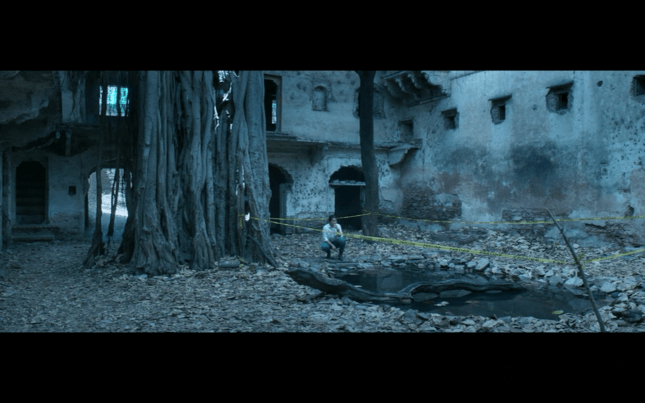
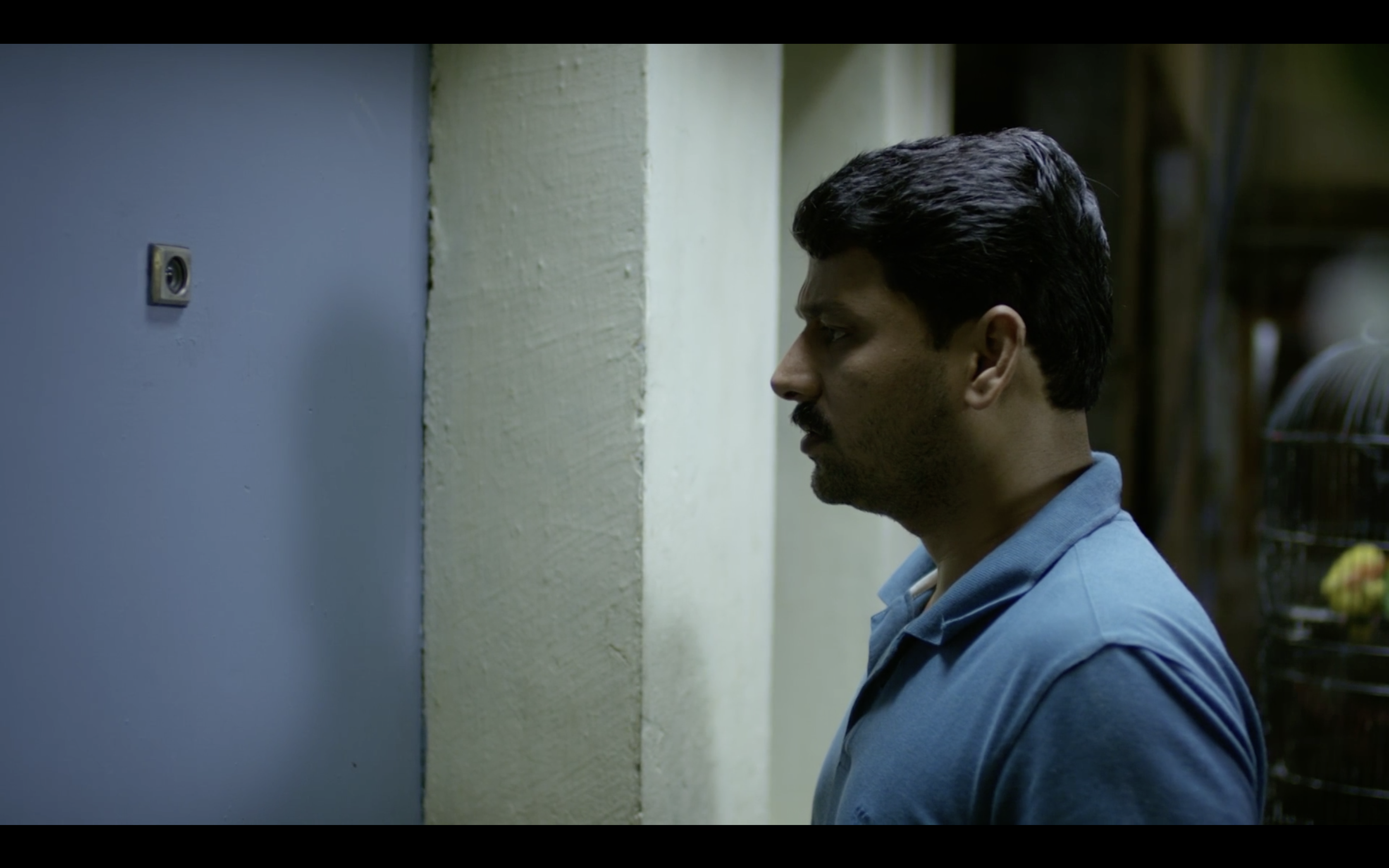
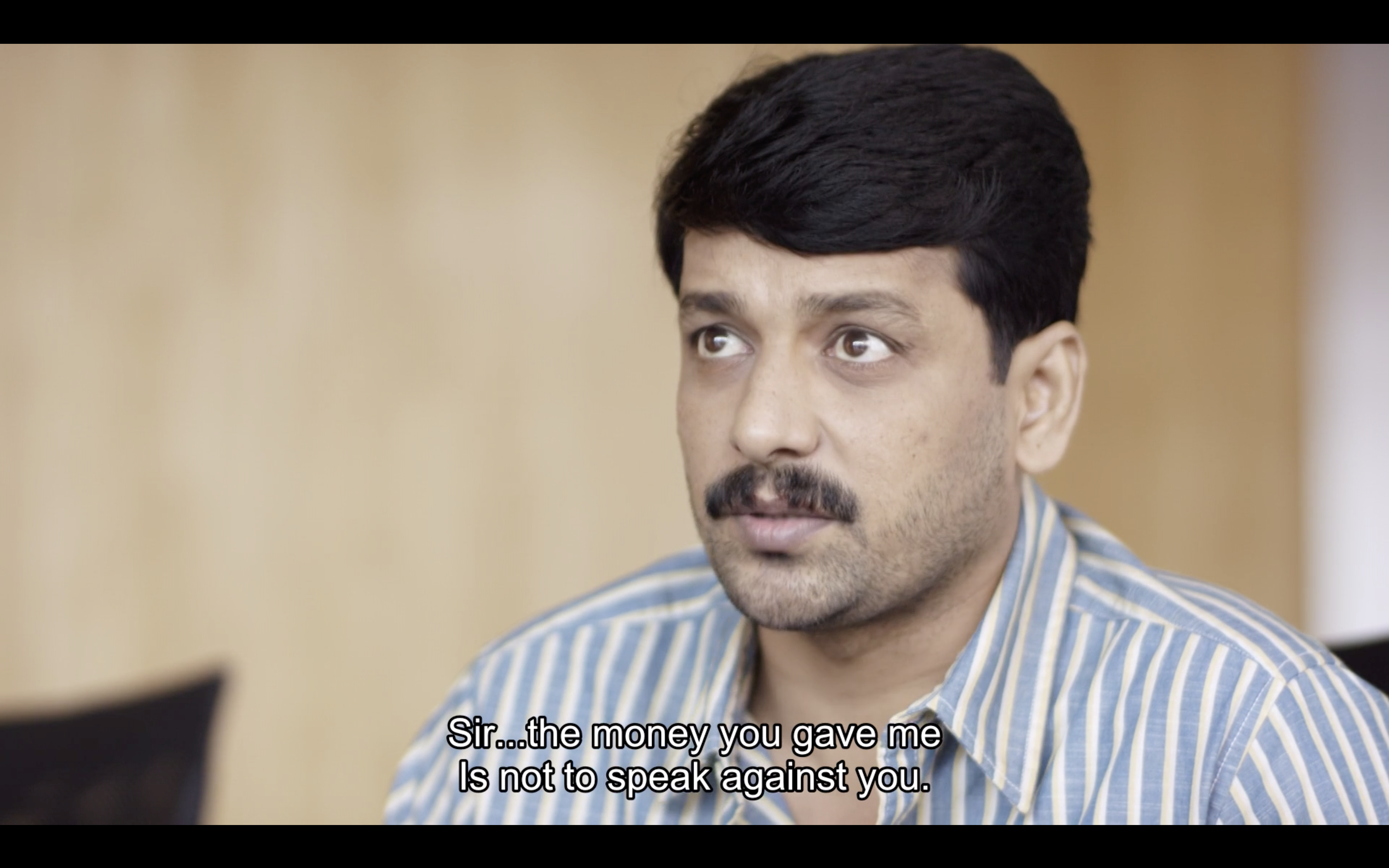
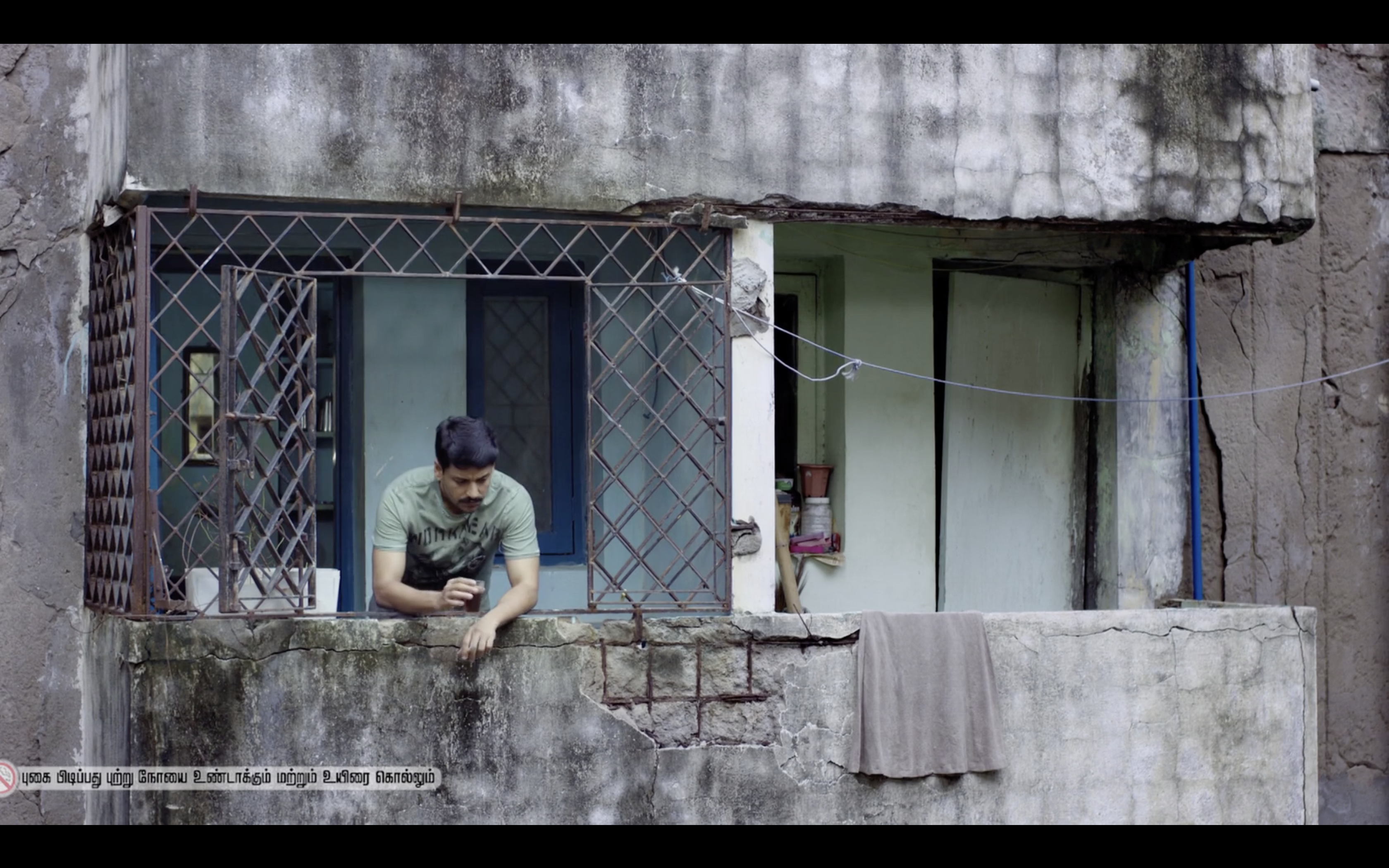
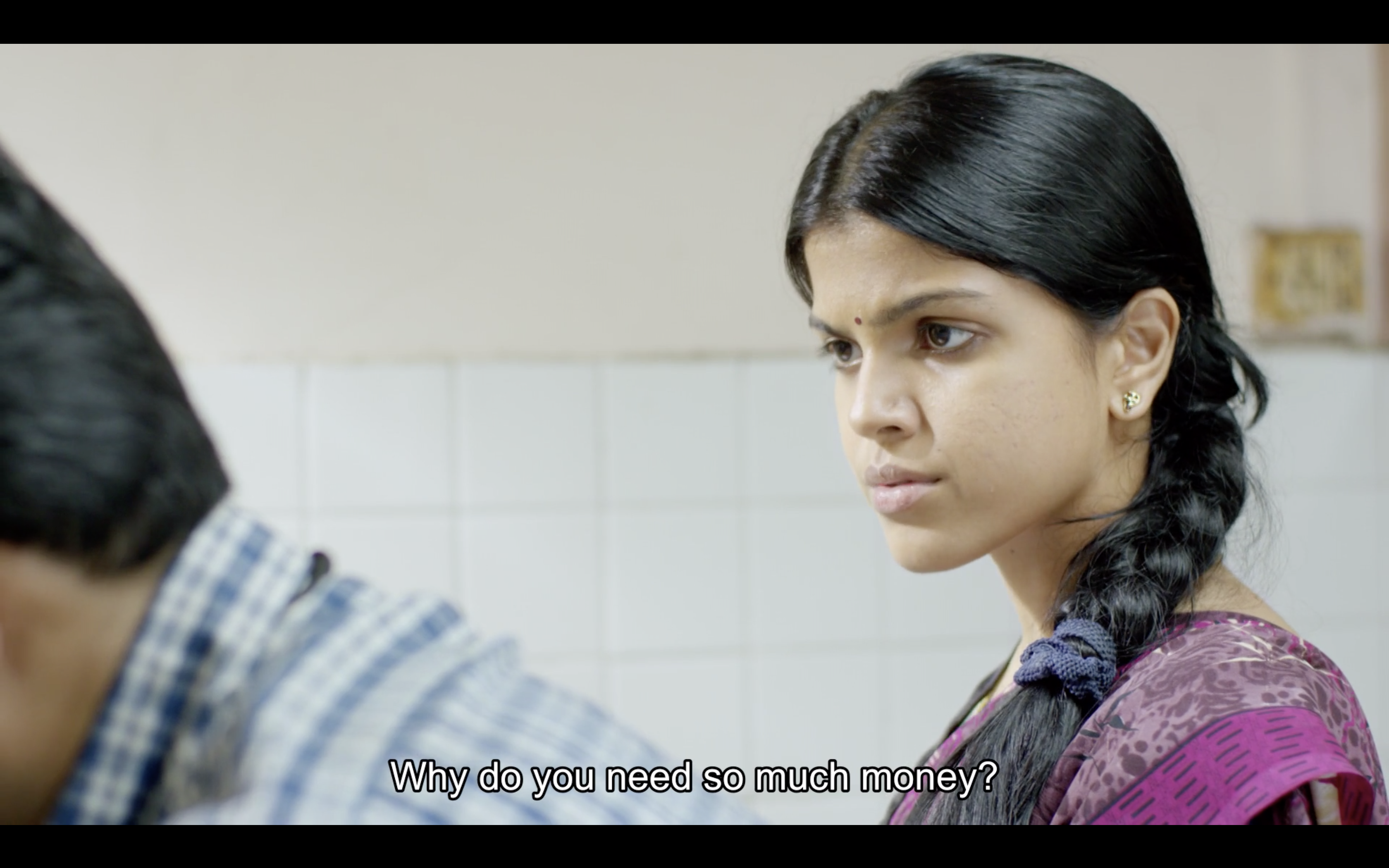
Karthick Naren’s debut film is a police procedural thriller that twists and turns its way through retired cop Deepak’s memories of his final case. The story slowly builds up over time and the pieces all finally start to come together as Deepak relates his murder investigation to a young wannabe cop. The answers are kept well-hidden until the end, adding tension and intrigue to the tale. Although the final reveal isn’t as satisfying as it could have been, overall this is an excellent first film and one well worth revisiting before the release of Karthick Naren’s highly anticipated Naragasooran. 

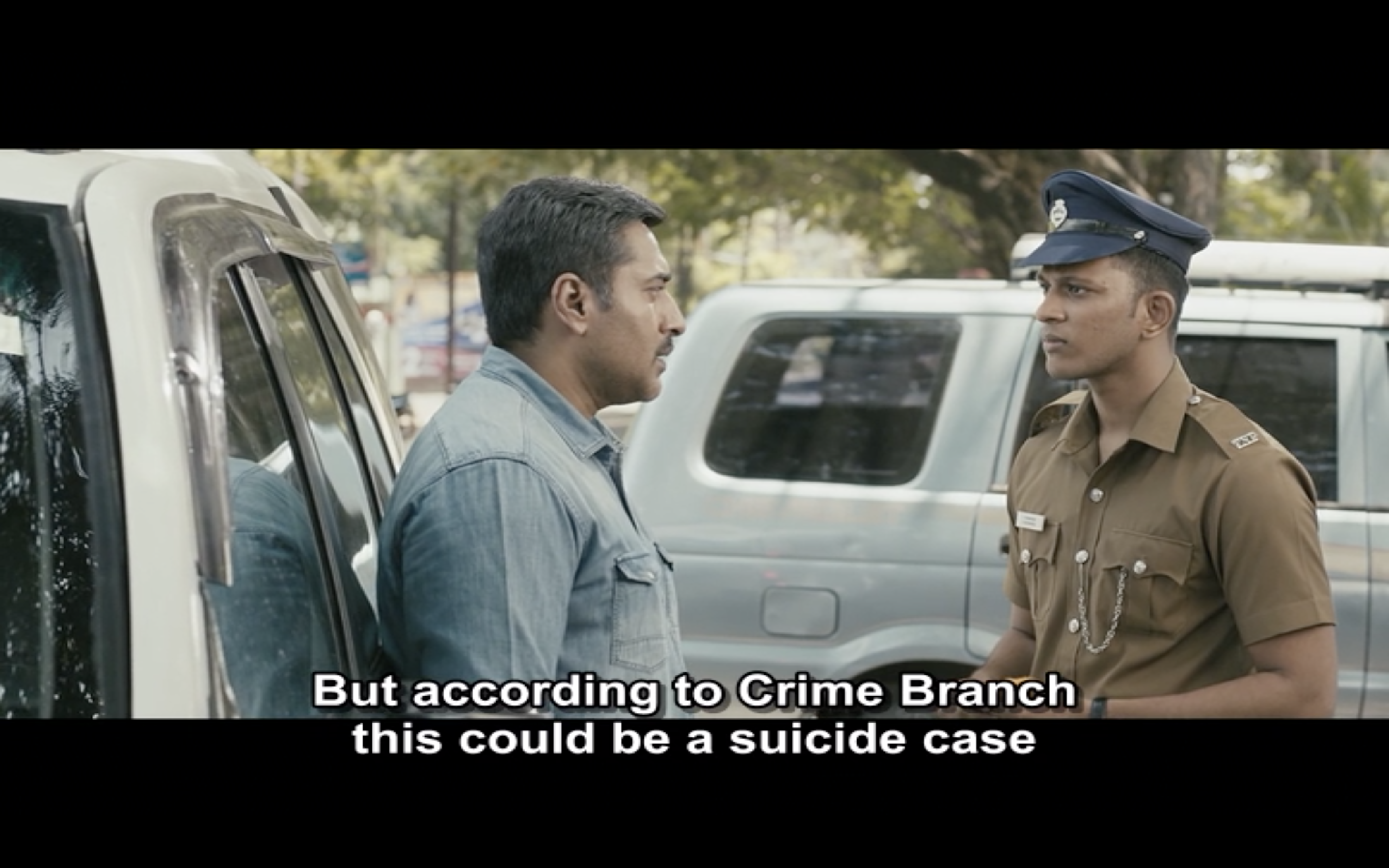
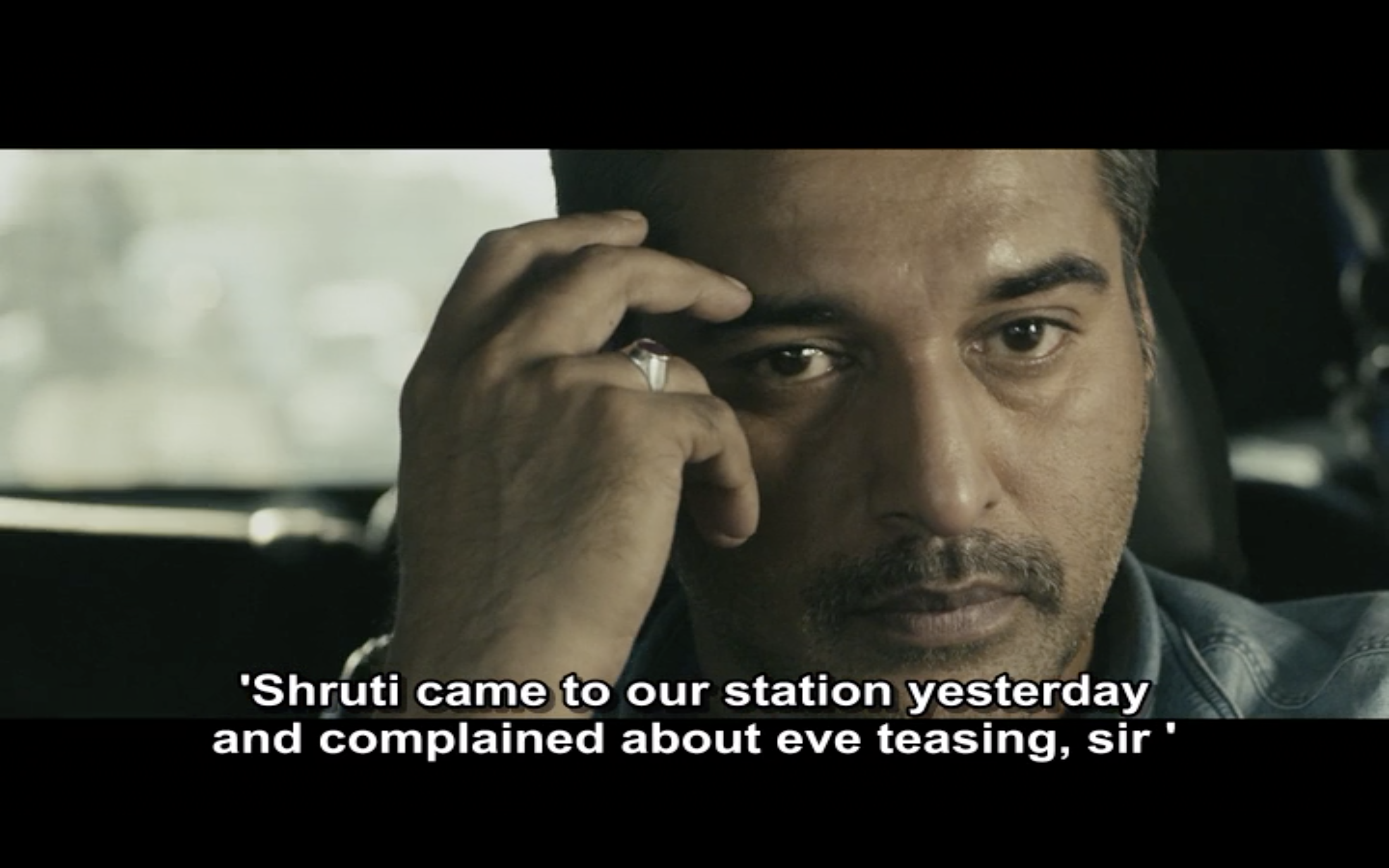
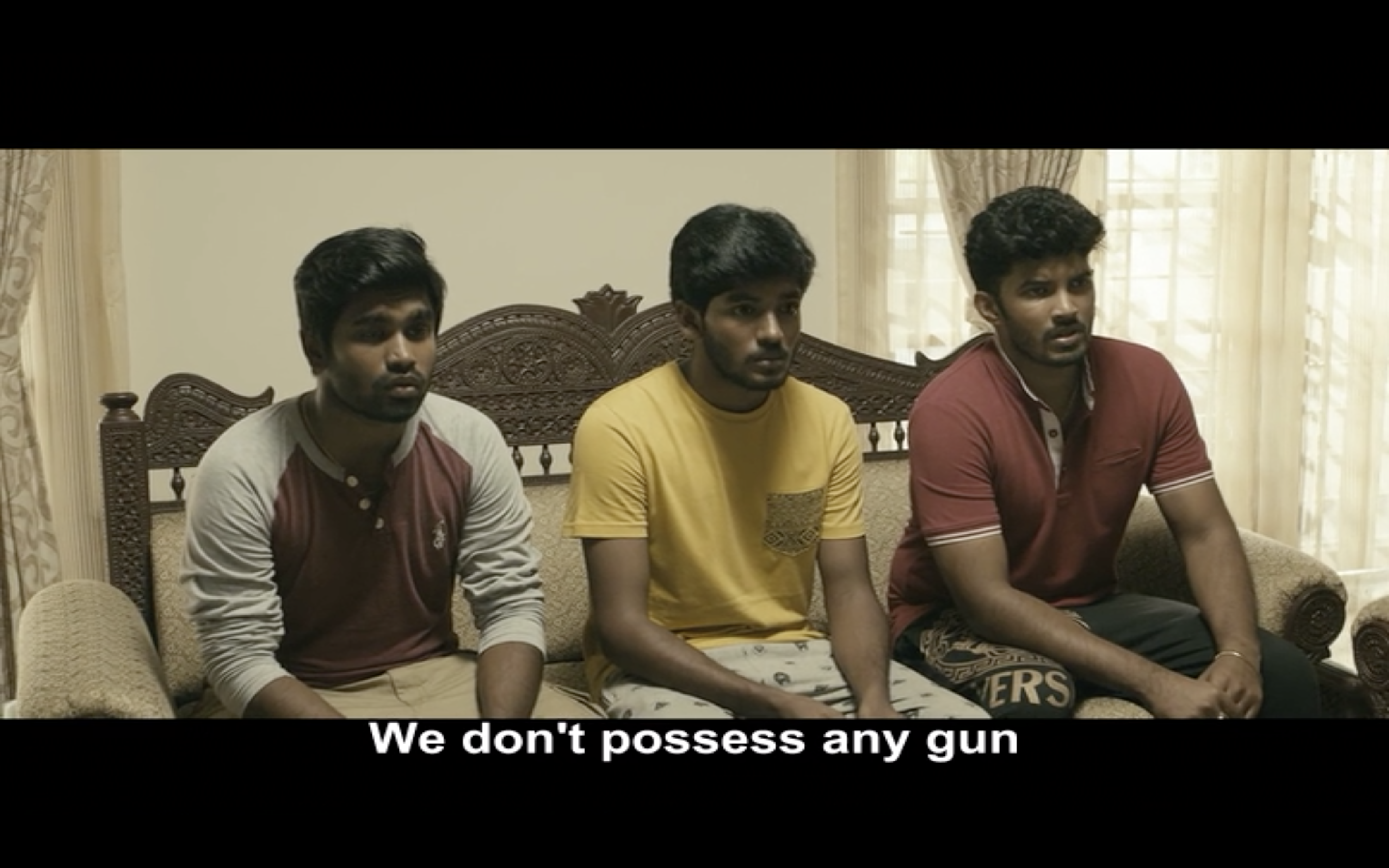
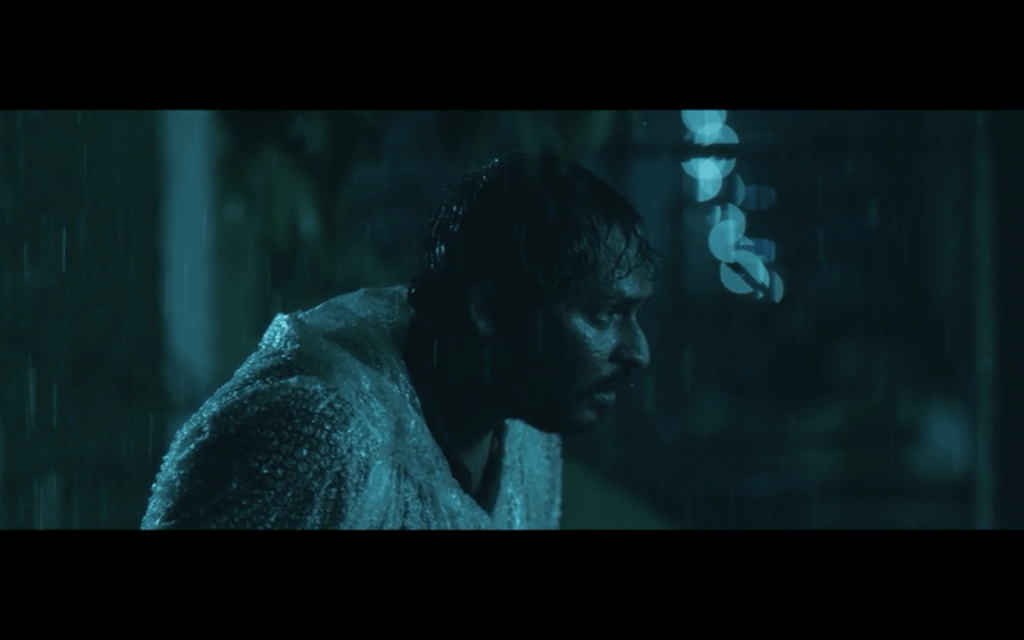
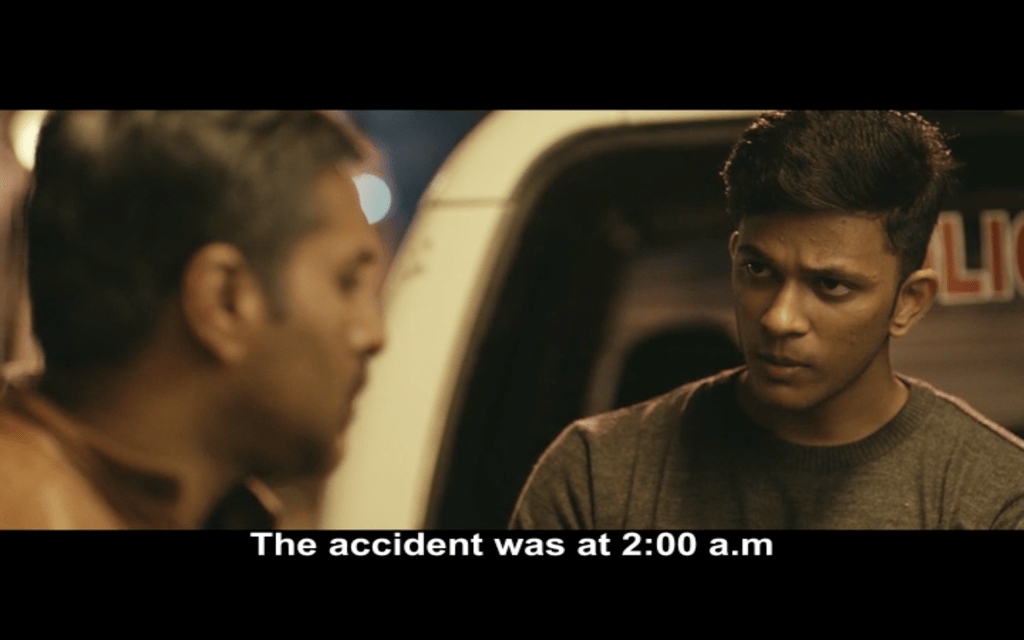
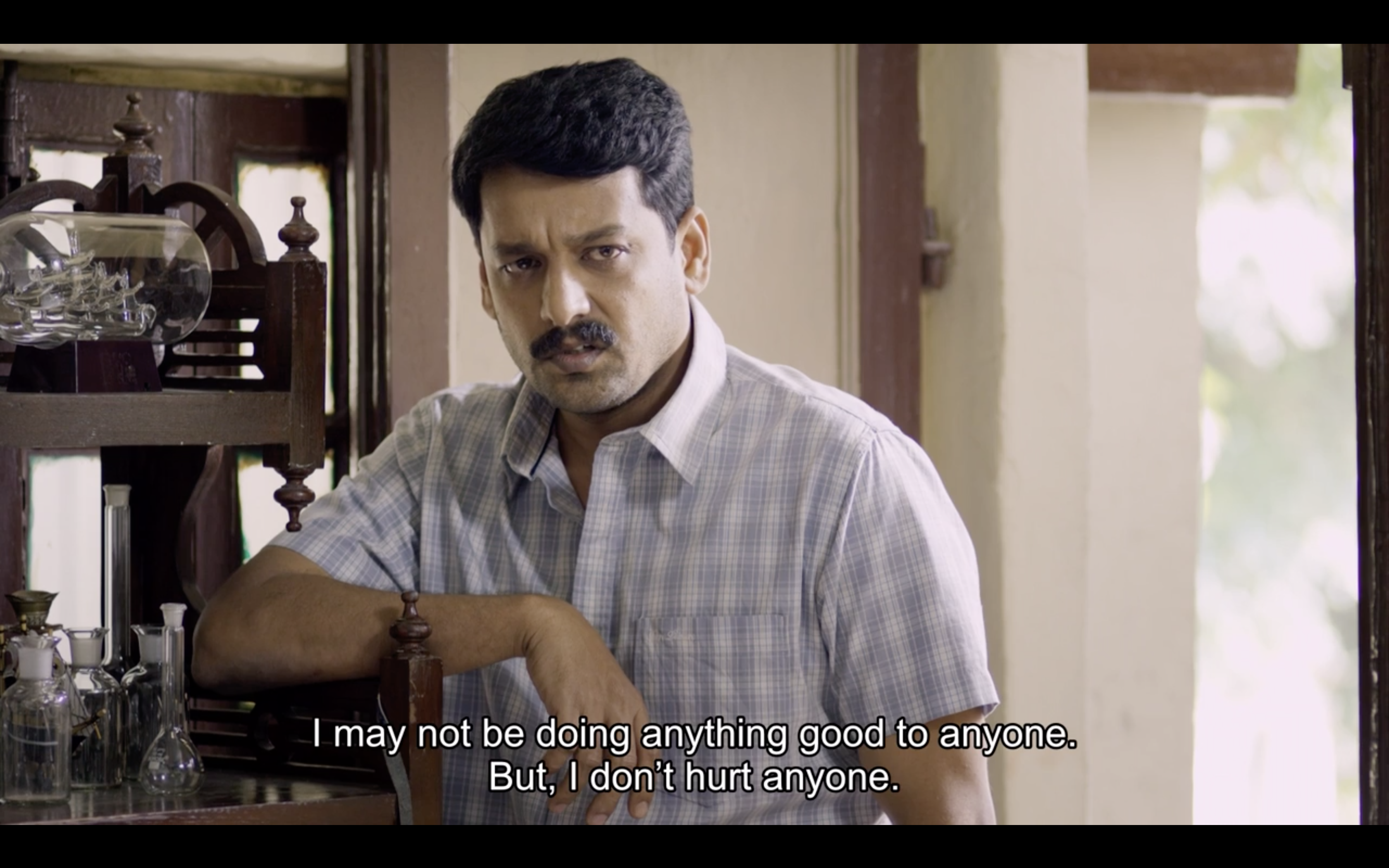
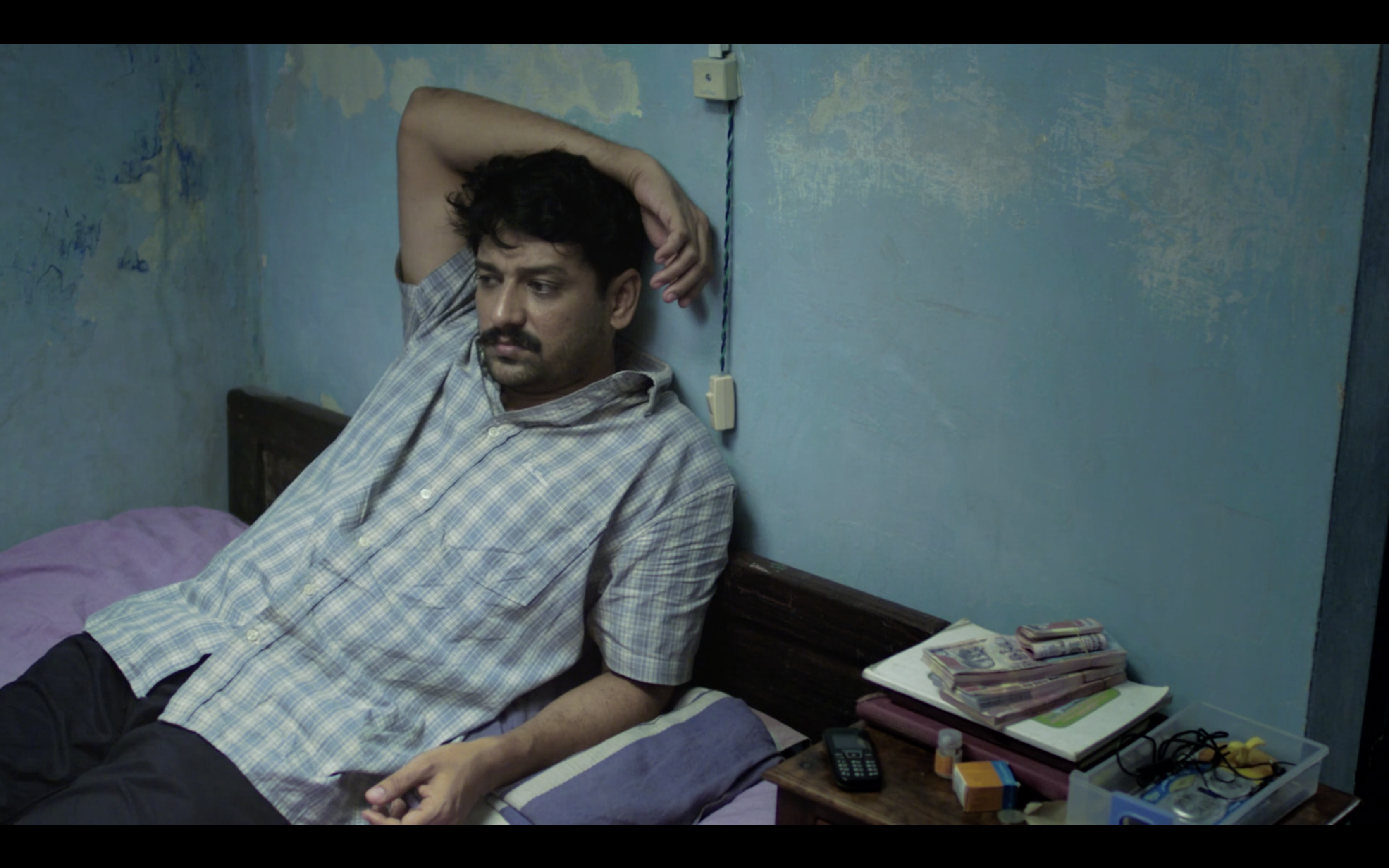
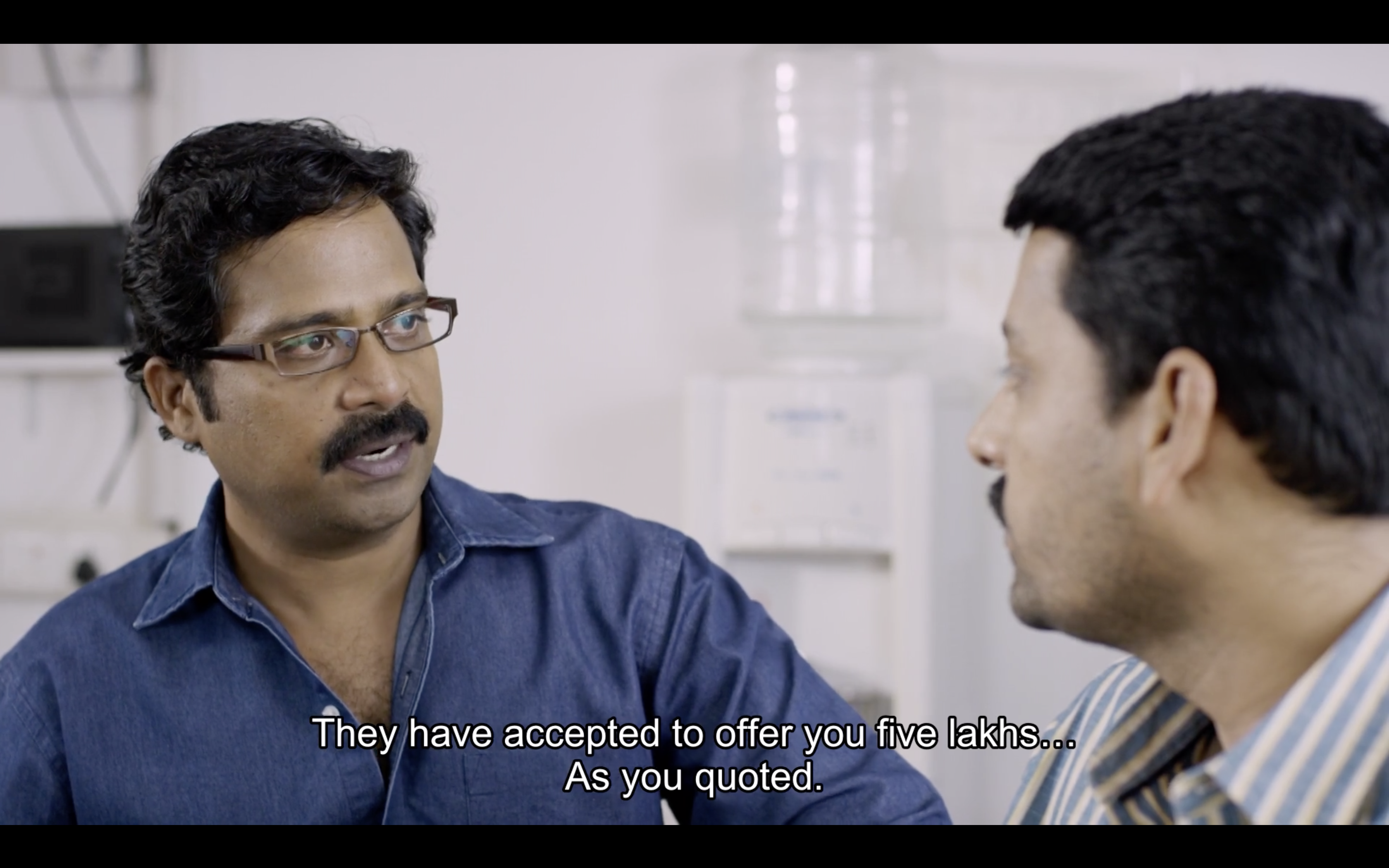
The film begins with Deepak (Rahman) meeting the son of a friend in the police force. The idea is to try and dissuade him from joining up by relating the events that led up to Deepak’s enforced retirement after a serious injury. Once the scene is set, the film then moves into flashback mode to relate the events from 5 years ago, starting with a traffic accident on a wet night in Coimbatore. Three friends out driving hit and kill a pedestrian, but rather than calling for the police, they pile the body into the boot of the car and head for home. Mano (Praveen) and Melvin (Karthikeyan) are easily led by Fabian (Santhosh Krishna) who makes all the decisions and explains to them why they need to hide the body. Fabian is an arrogant rich kid with delusions of importance in his area, while Mano and Melvin are hangers-on with apparently no minds of their own. However, their reputation in the area is bad enough that the police investigation immediately targets them when a body is found near the park the next day.  
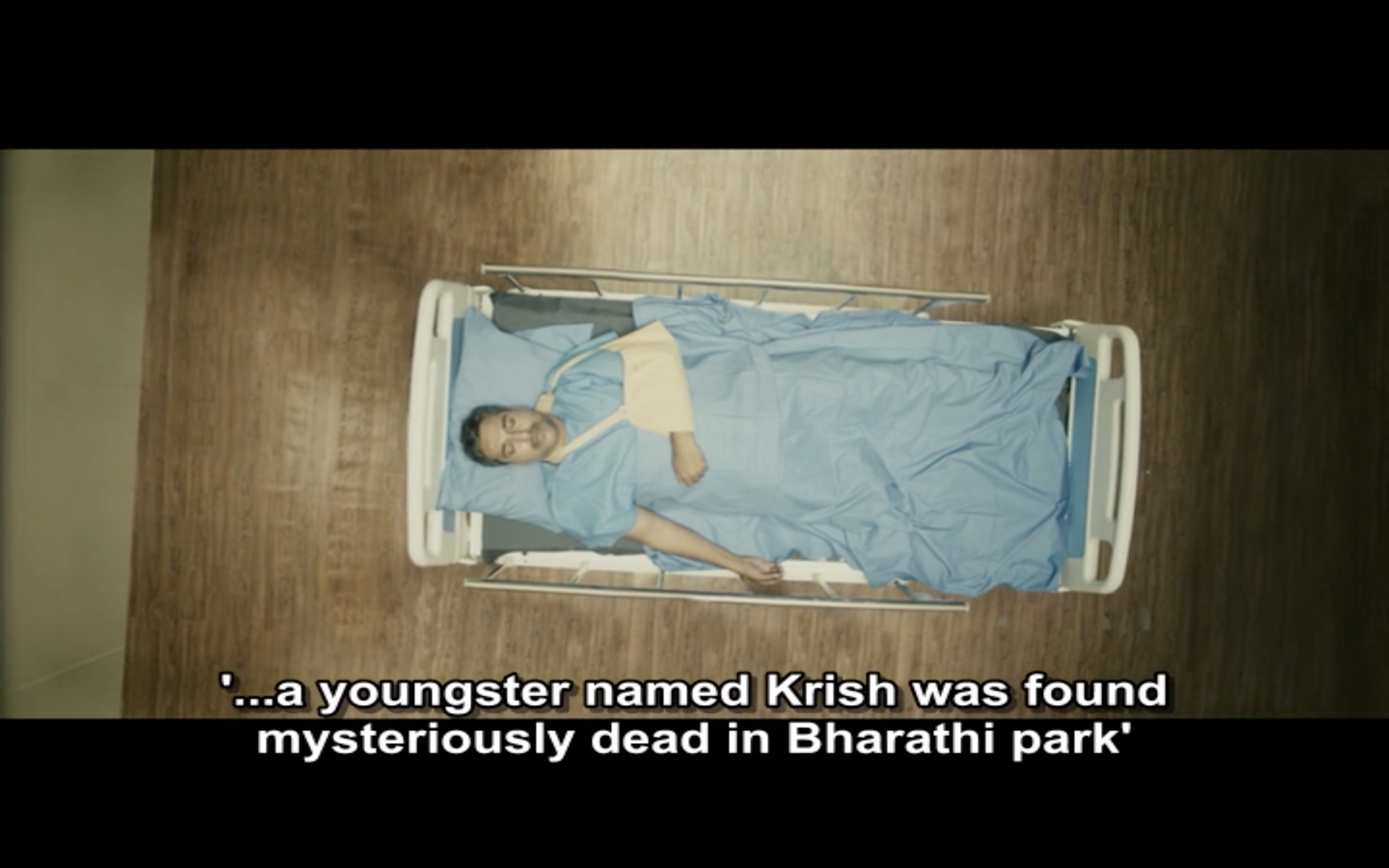
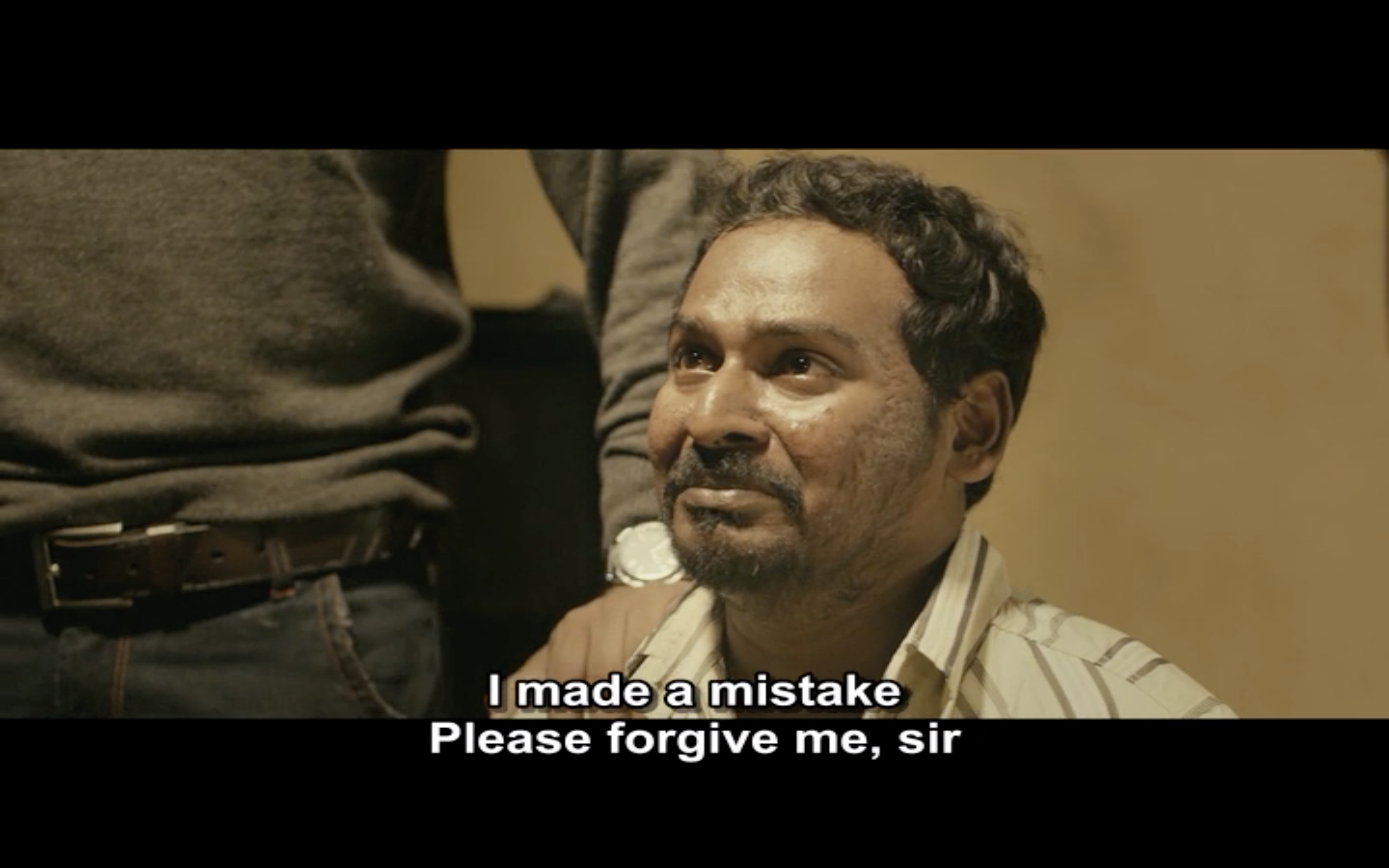
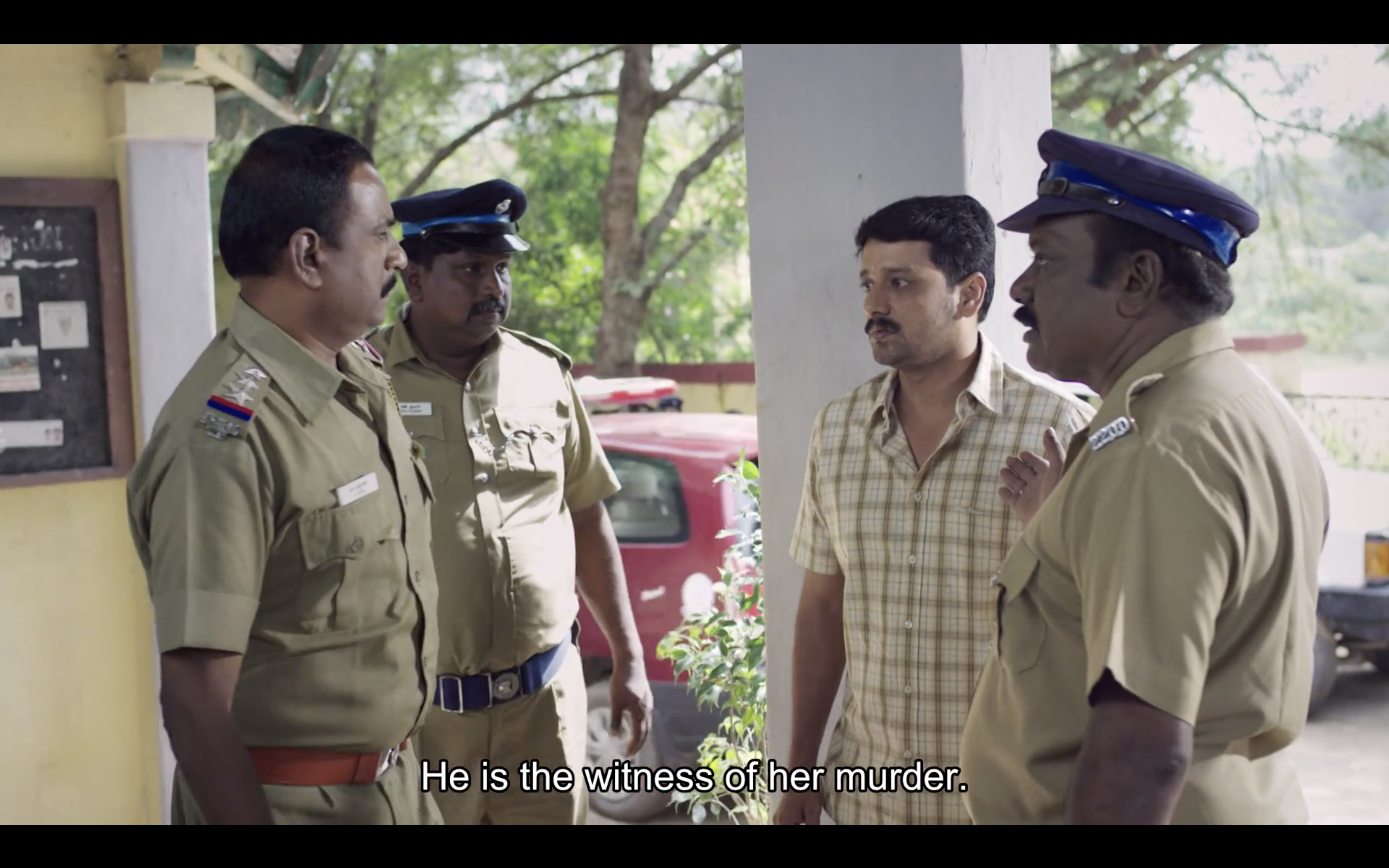
The murder victim has been shot, and although Deepak suspects Fabian is concealing something, he doesn’t believe he was involved with the murder. At the same time, the police are alerted to the disappearance of a young woman from a nearby block of flats where they find the murder victim’s blood on the wall. With the help of Sergeant Rajan (Pradheep) and his young colleague Gautham (Prakash Vijayaraghavan), Deepak starts to unravel the events that led to the car accident, the disappearance of Shruti (Yashika Aannand), the murder of Krish (Vinod Varma) and eventually to his own injuries. 
The case is convoluted, and there are plenty of twists in the story, including the disappearance of the accident victim’s body from Fabian’s car. There is also the puzzle of Shruti’s friend Vaishnavi (Anjana Jayaprakash) who reports her disappearance but seems to have lied about the time of her arrival in Coimbatore, and then vanishes when Deepak tries to find out why she concealed the truth. Throughout it all, what impresses is the matter of fact approach to the investigation while the realistic addition of mistakes and missteps by the investigating officers keeps a level of confusion that adds to the mystery. There is an ongoing issue with Deepak’s mobile phone for example. Firstly, he forgets to take his phone home, which means that no-one can contact him about the murder. Then he has an issue with his phone charging and has to use Rajan’s phone, while various other officers are frequently uncontactable by phone. Other mistakes occur because junior officers either forget to notify Deepak of a new finding, or simply dismiss evidence because they don’t think it sounds relevant. 
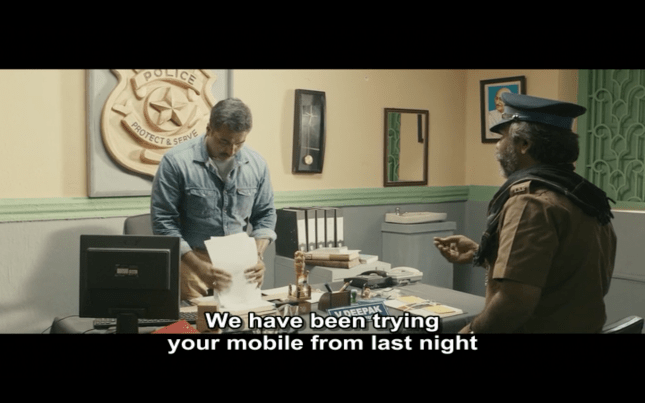
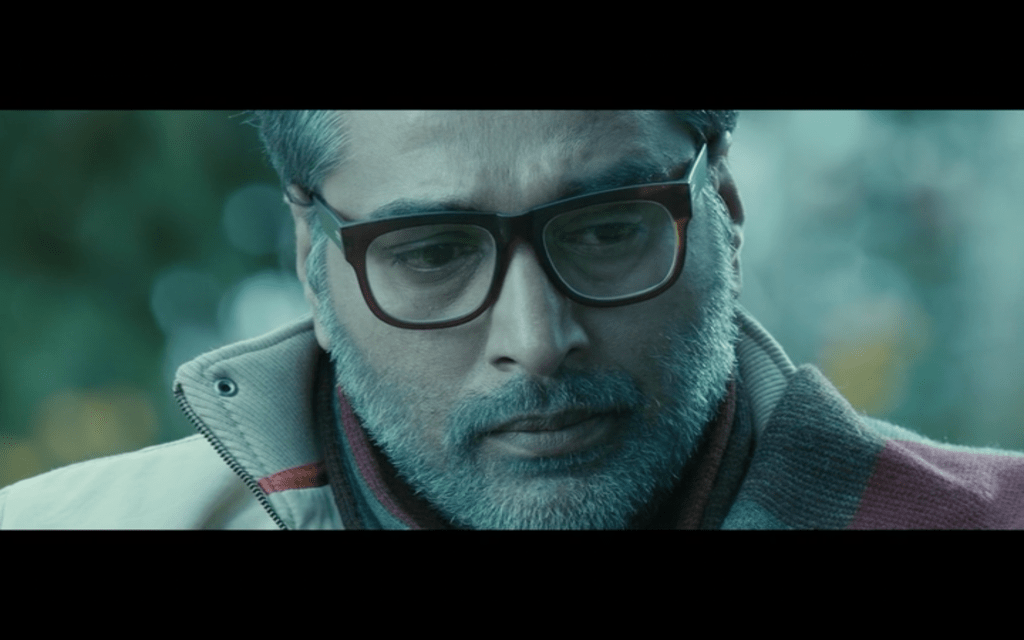
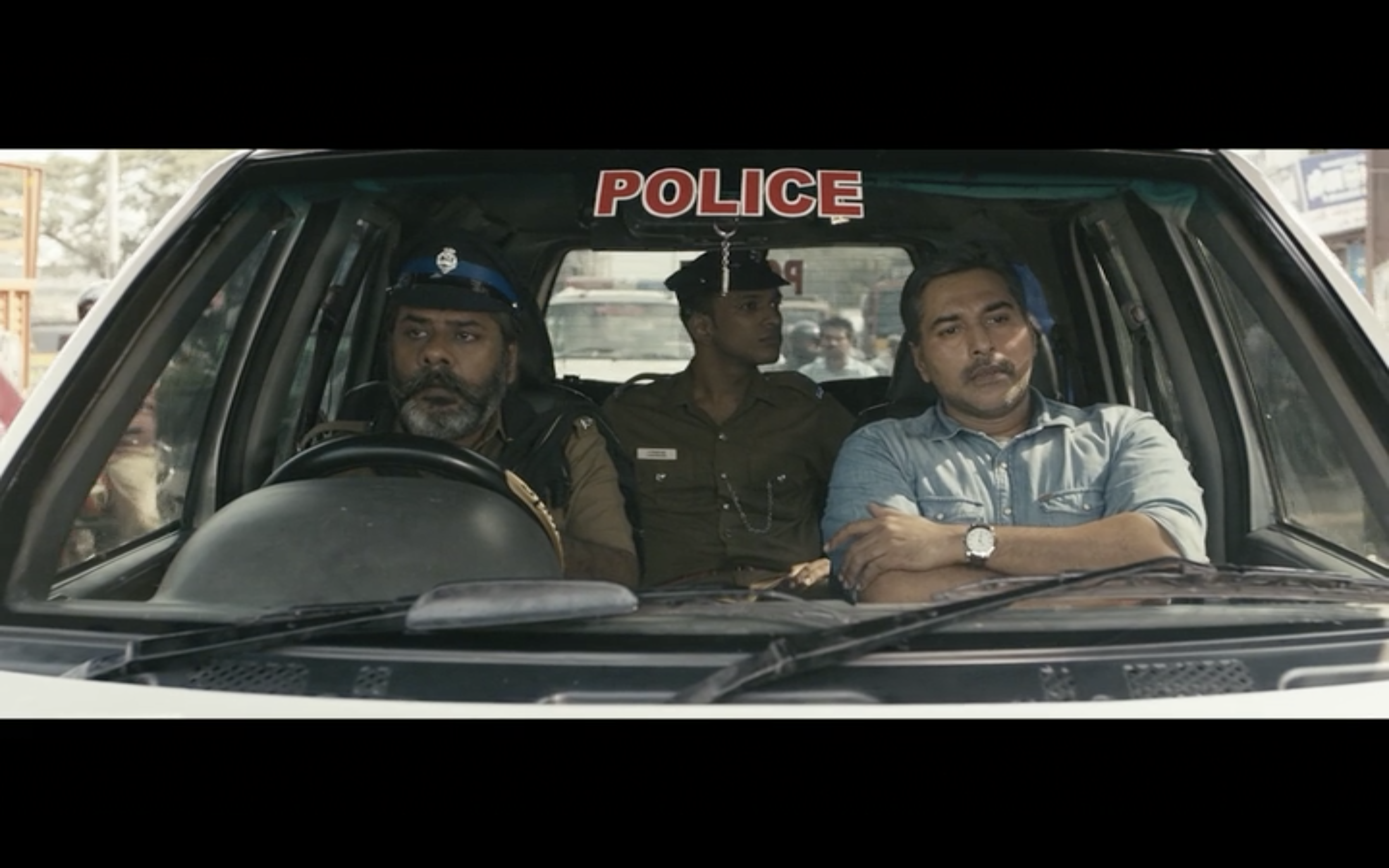
Rahman is excellent as Deepak, and his relationship with Prakash Vijayaraghavan as the young Constable Gautham provides a steady grounding for the narrative. Rahman is all businessman cop, there is no wasted emotion, and the case proceeds in a dry, but not dispassionate manner. There is plenty of concern for the missing girl, frustration about the lack of progress, but also some humour and camaraderie between the investigating officers. I love the attention to detail in each scene. The staging is perfect, from the tank of topical fish in Shruti’s apartment to the small vignettes that take place in the background in almost every external scene. As Deepak is talking to colleagues on the phone, Shruti’s neighbour and his wife are having a heated discussion in the background. It makes the following query from Rahman if Vaishnavi can stay with them more meaningful, along with the glance the neighbour gives his wife at the same time. 
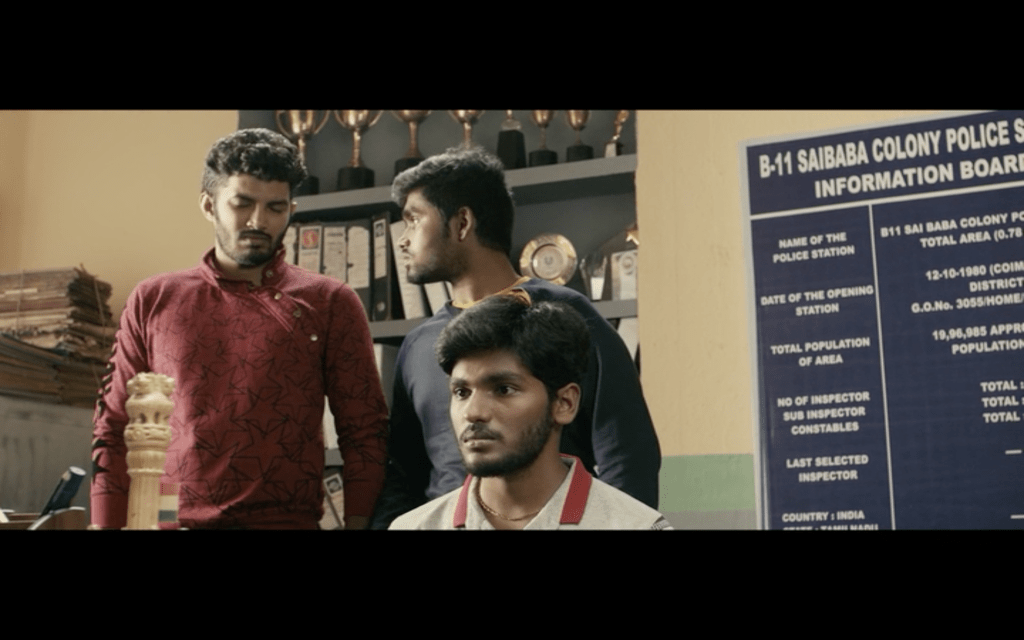
My only real quibble with the film is the ending, which doesn’t flow on as well as Karthick Naren likely hoped. The idea behind the final reveal is good, but the relationship between Deepak and his visitor (Ashwin Kumar) has been too passive to make the final scenes feel as realistic as the rest of the film. Too, I have an issue with the explanation resting on ‘emotions’. Each act was supposedly carried out as a result of strong emotional turmoil, but to me that feels too much of a cop out. Normal people may feel angry, or rejected or any one of the other explanations given here, but that isn’t an excuse to just do whatever they want. While most of the actions depicted here are fairly usual for any murder mystery, they are not normally justified in any way except by saying that the perpetrator was a criminal. The end here suggests that a number of heinous acts can be explained, if not quite excused, by pushing some of the blame onto the victim and the way that they reacted to quite inexcusable behaviour. It’s a small point, but I think a dangerous one, to suggest that the victim has some culpability in a case such as the one depicted here.  

Without this final explanation, I think this would have been a much more satisfying film and one that I could whole-heartedly endorse. As it is, I think it’s technically very good, the performances by Rahman and Prakash Vijayaraghavan well worth watching, and the story intriguing and smartly developed. Overall, Dhuruvangal Pathinaaru is a well-constructed and captivating thriller, that was a well-deserved success for Karthick Naren and bodes well for his next venture. With a less socially disturbing message at the end this would have been a 4 star film, but as it is, for me it’s 3 ½ stars.

Mardaani 2

With the cinemas closed here in Australia, it seems a good time to catch up on some films I missed last year. Mardaani 2 only had a short, limited run in Melbourne, which is a shame because this is a good solid crime thriller that plays to its strengths. Once again Rani Mukerji is excellent as the tough cop who won’t let prejudice stand in her way but Vishal Jethwa is just as good as her adversary. With only a few missteps, and a face-paced and relentless storyline, Mardaani 2 steps up to the mark as a satisfying sequel to the first film.

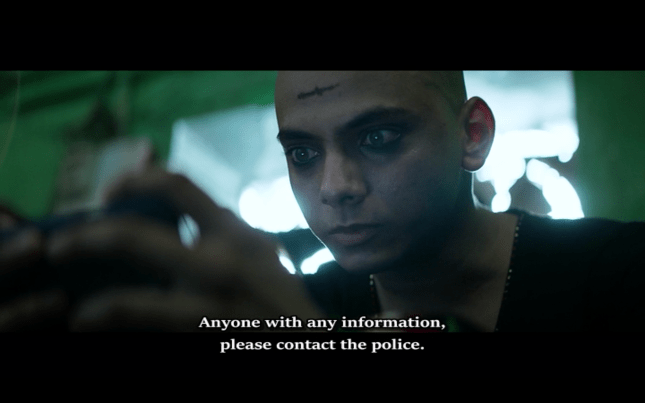
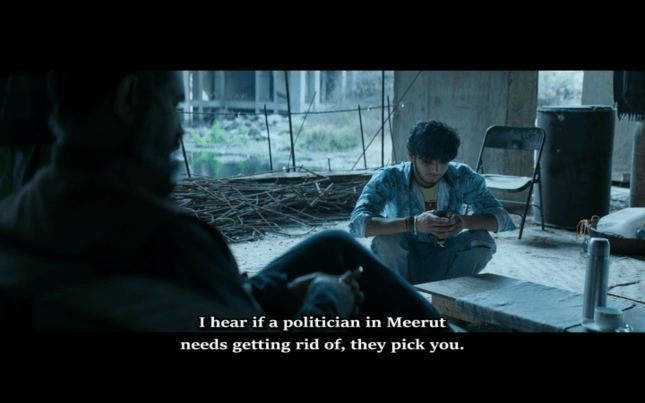
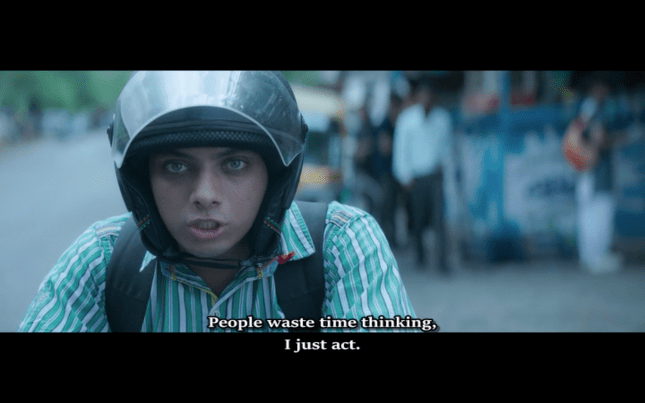
Mardaani 2 pits SP Shivani Shivaji Roy (Rani Mukerji) against a serial rapist who’s also an assassin for hire and a complete psychopath to boot. At the start of the story, Sunny (Vishal Jethwa) has been hired by local politician Panditji (Prasanna Ketkar) to eliminate rivals to his preferred candidate for upcoming elections. But as well as being an efficient hitman, Sunny is a particularly nasty rapist who tortures and murders his victims before staging their bodies to be found by the police. The character seems an extreme amalgam of misogyny, violence and psychosis, but his reasons for targeting his victims are chillingly realistic. 

Sunny has a problem with strong confident women whom he sees as a threat, which basically says all we need to know about his own mental health issues. Vishal Jethwa swings between terrifying normal and completely insane in the same way that you imagine most rapists are able to present a normal face to society and hide the monster within. The only disappointing feature is that Sunny frequently breaks the fourth wall to speak to the audience. It feels off and doesn’t provide any further insights into his character by using this method to reveal his thoughts. Writer/director Gopi Puthran could just as easily have made the character talk to himself, or confide in his victims which would have made more a more reaslitic scenario. Too, some of the ways in which Sunny is able to evade the police and snatch his victims seem unlikely. Sunny involves himself closely in the investigation too, some of which is well done, but there are other elements, such as his attack on a young witness, that seem rather far-fetched and filmi. Still, for the most part, the character is written to capture the terrifying reality of some men’s attitudes towards women and does get across the message that this is in no way acceptable in to-days society.

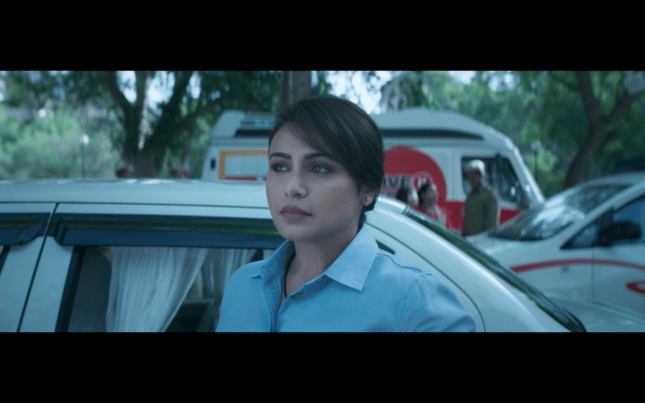
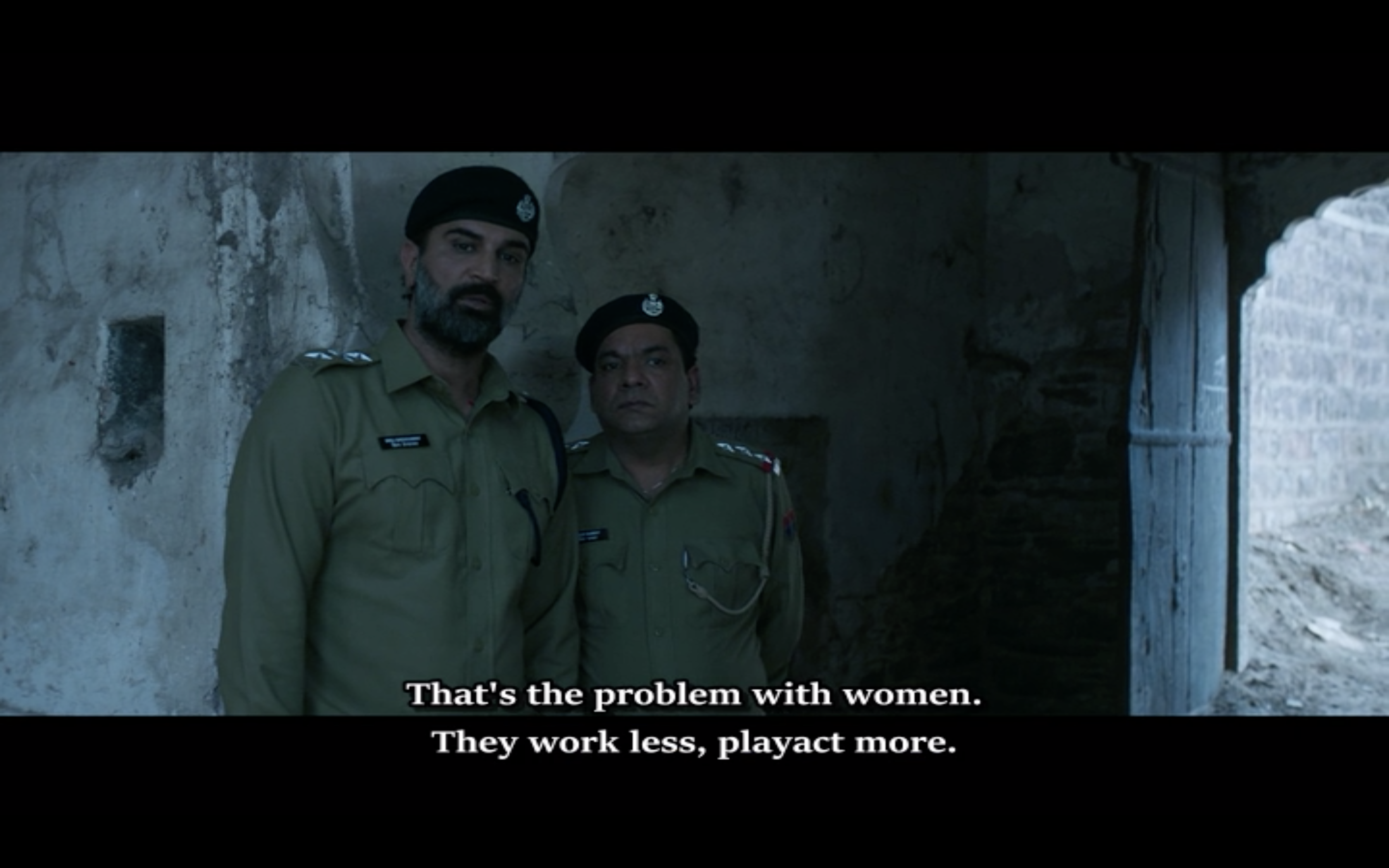
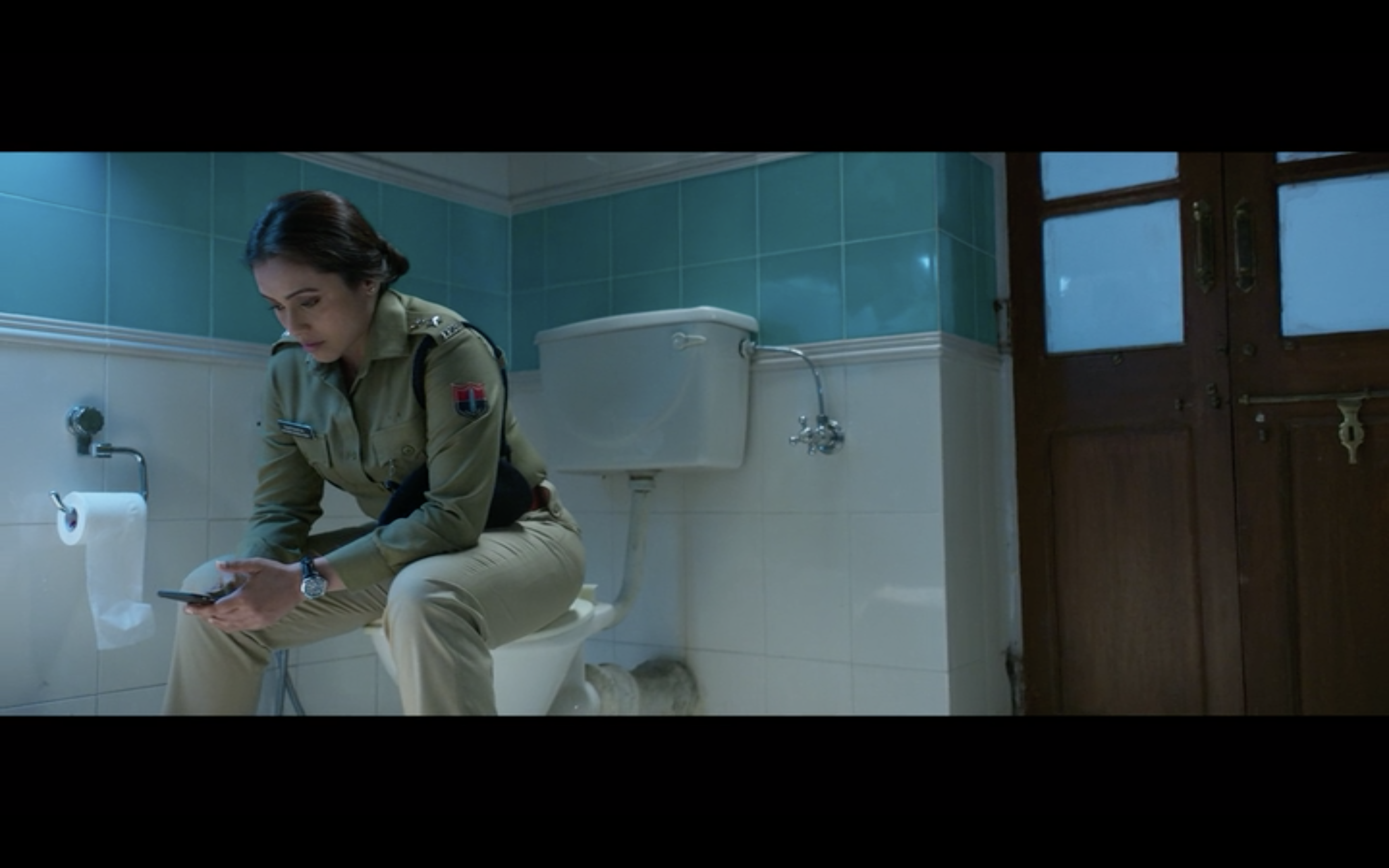
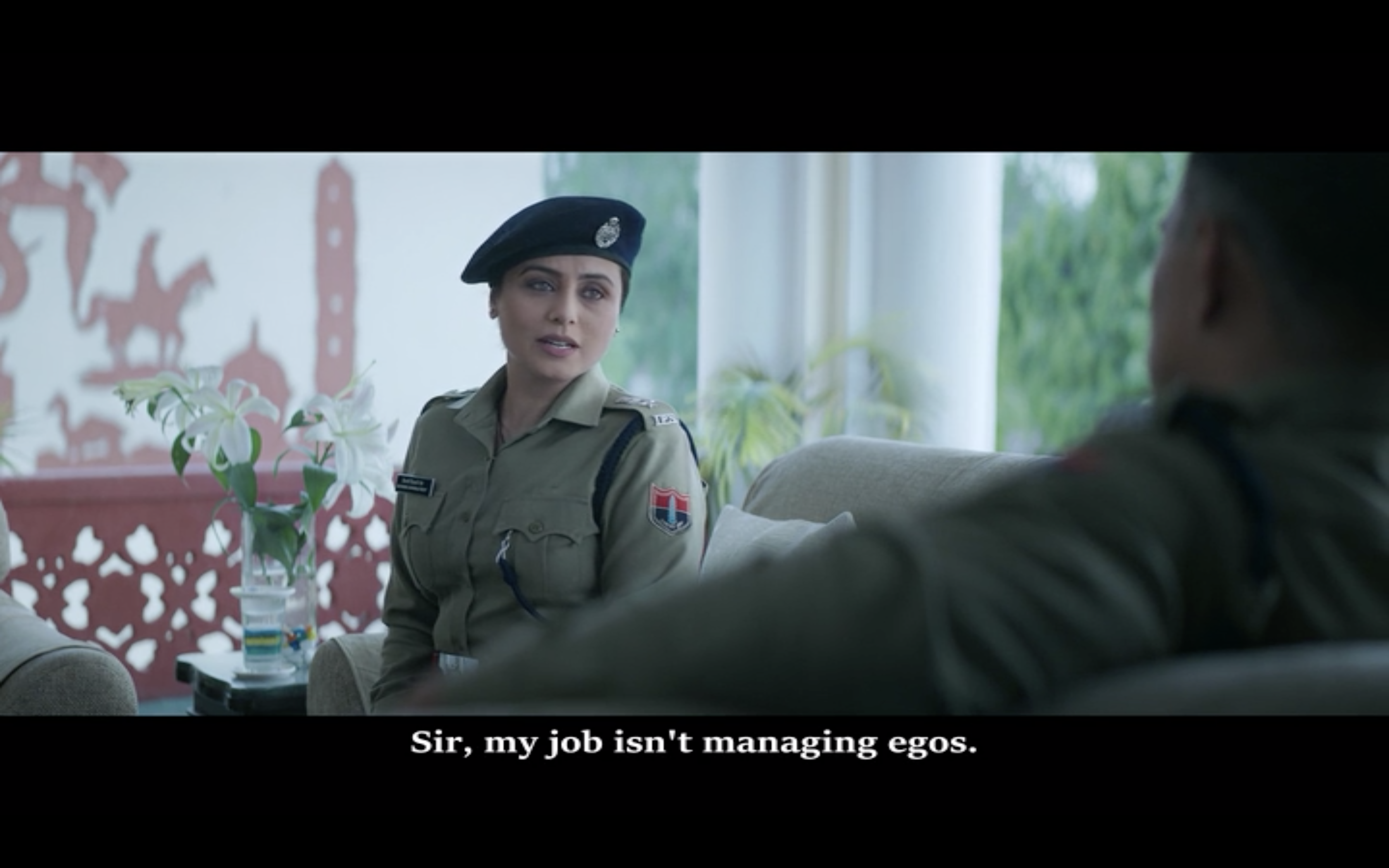
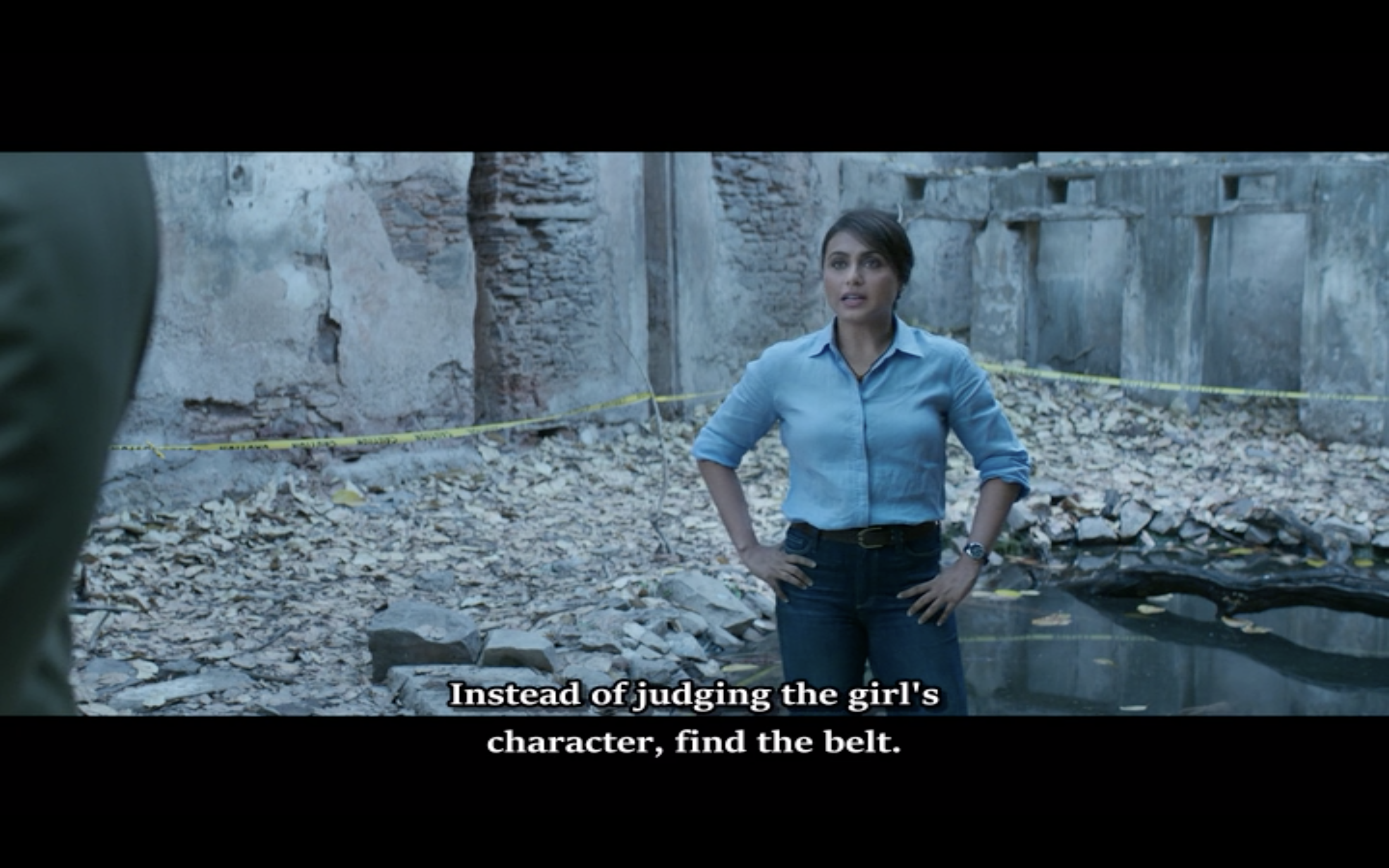
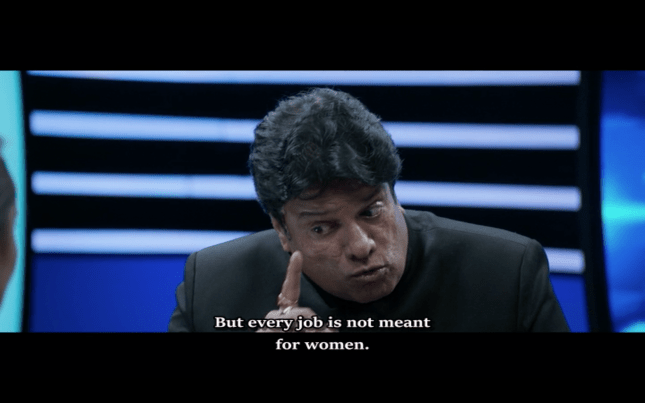
As in Mardaani, Rani Mukerji’s police officer is cool, calm and frighteningly competent. There are none of the ego-stroking flights of fancy that tend to accompany male actors in these roles and Shivani isn’t portrayed as a superwoman. She has issues and problems, mostly created by the misogyny around her, but she works through these by being competent in her job. There is friction with one of her senior officers, Shekhawat (Sumit Nijhawan) which is realistic and adds another layer of tension to the action. The media also play a part, and one of the most memorable scenes occurs when Sivani appears on a talk show to refute suggestions that her gender makes her less suitable for her job. It’s a powerful performance that is a little undermined by the host’s silent acceptance of her speech (I’ve seen Indian talk shows, and everyone seems to yell over each other with no respect for anything other than their own opinion!), but the emotion generated is sincere and inspiring. What also works well are the small touches of humanity that Shivani displays. She treats her team like real people, and has a moment of quiet contemplation in the bathroom, while a quick conversation with her niece online reminds us that she has a life and a family outside of the investigation. Through it all Rani puts in a powerful performance that fills the screen with her presence, and ensures that the drama is completely captivating throughout.

The subject matter is one that occurs frequently in India cinema, but here there is no sensationalism and Gopi Puthran treats the victims reasonably sensitively. I don’t think it’s necessary to show images of victims, but at least here the focus is on the violence that the women had to endure and serves to accentuate the brutality of the murders. John Stewart Eduri’s background music also fits well into the film and serves to enhance the suspense and action. I also liked the location of the film, and really appreciated being able to see somewhere other than Delhi, Mumbai or a generic regional area. The film is set in Kota, Rajasthan, and I enjoyed the glimpses of the city and colourful Rajasthani costumes that serve as a backdrop to the action. It’s peripheral to the story, but did make the film feel fresh and interesting to be in a more novel location. 

Mardaani 2 has more focus on male privilege and the plight of women compared to the first film, but it’s perhaps even more relevant to-day. The misogyny is also simply part of the story, part of what Shivani has to face and deal with every day, which ensures that the film doesn’t ever feel preachy or antagonistic towards men. It’s just the day to day reality of Shivani’s job, and part of society. The inclusion of rape statistics at the end is horrifying, but perhaps, like the film itself, will raise more awareness of the massive problem India, and indeed the world, has with such crimes. But despite all of this, Mardaani 2 isn’t just a film trying to educate the audience about crimes against women. At heart it’s a thriller, and there are all the usual elements; car chases, dramatic escapes, police raids on silent darkened buildings and thrashing of suspects. It’s well-paced with plenty of suspense and surprisingly violent for a Hindi film. I really enjoyed Mardaani 2 and I hope this becomes a franchise with a few more outings for SP Shivani Shivaji Roy, although I would like to see her tackle a different type of crime if we do get another sequel. Worth watching for Rani, Vishal Jethwa and the exciting storyline. 4 stars.
Kuttrame Thandanai (2016)

After Kaaka Muttai, M. Manikandan’s second film is a crime thriller where the sole witness to a murder is a man who is gradually losing his vision. Despite some dodgy medical diagnoses, the story itself is gripping with the identity of the murderer kept hidden right until the end. With plenty of twists and a great performance from Vidharth in the lead role, Kutrame Thandanai is an interesting film that deserves a second glance.

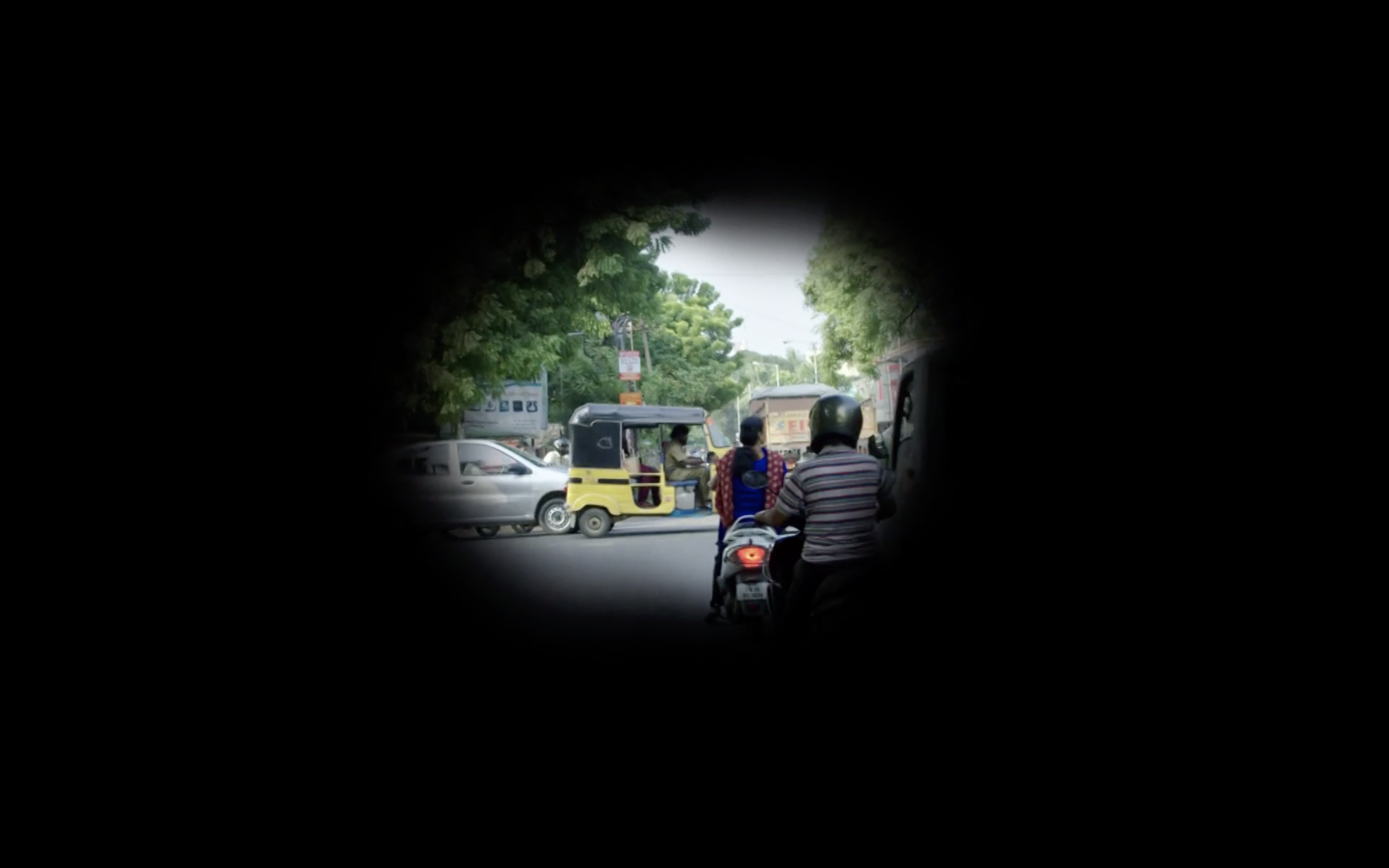
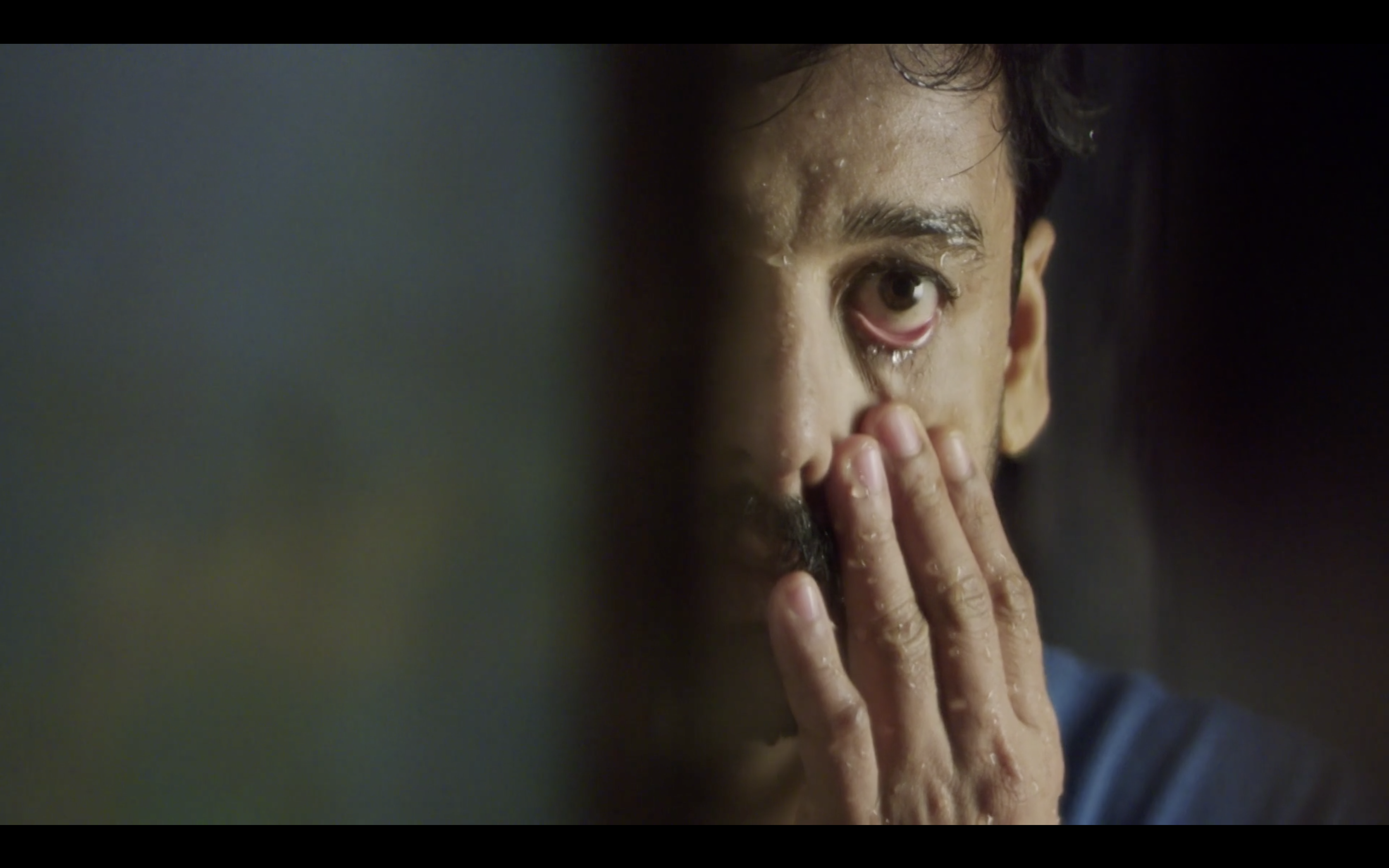
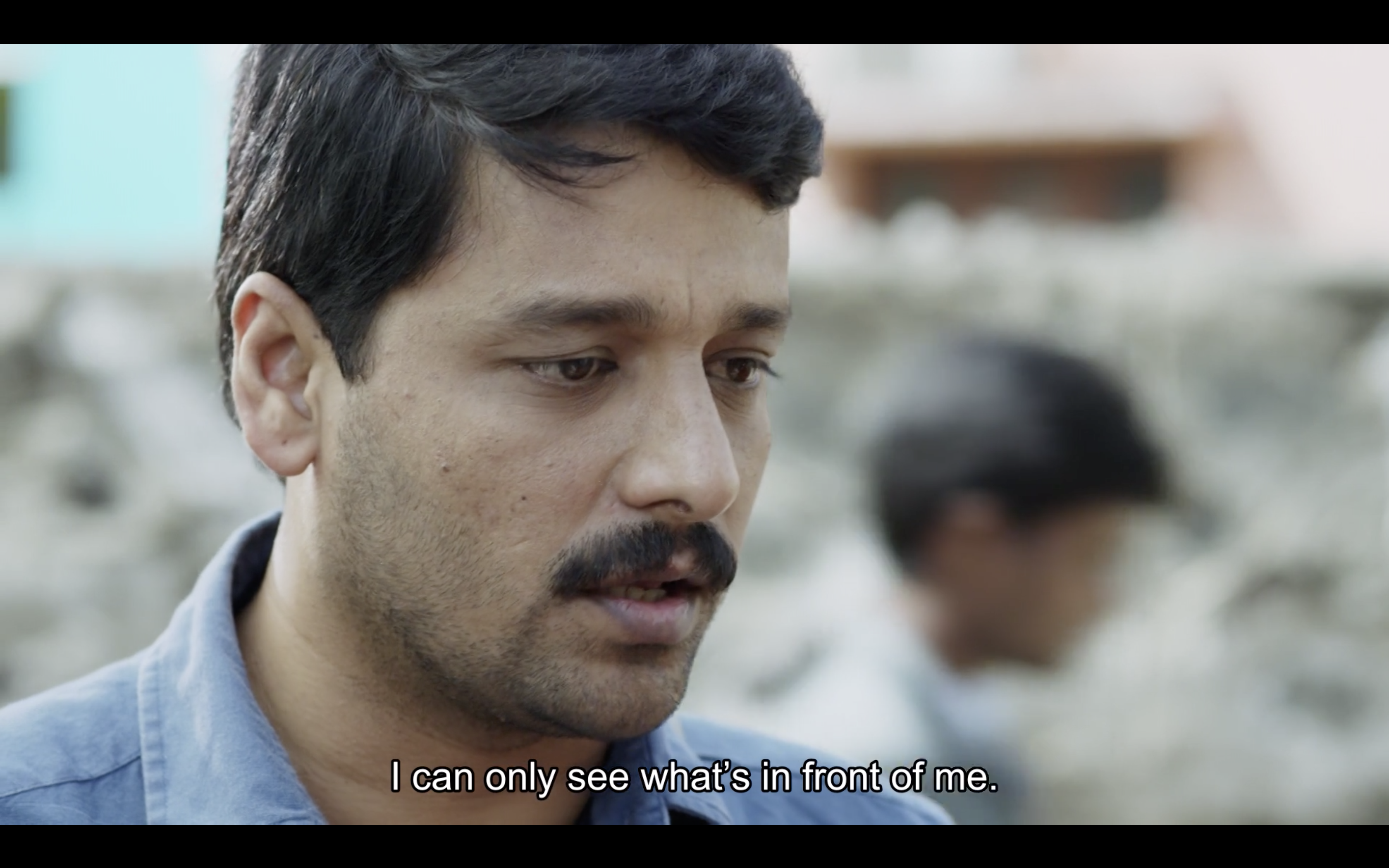
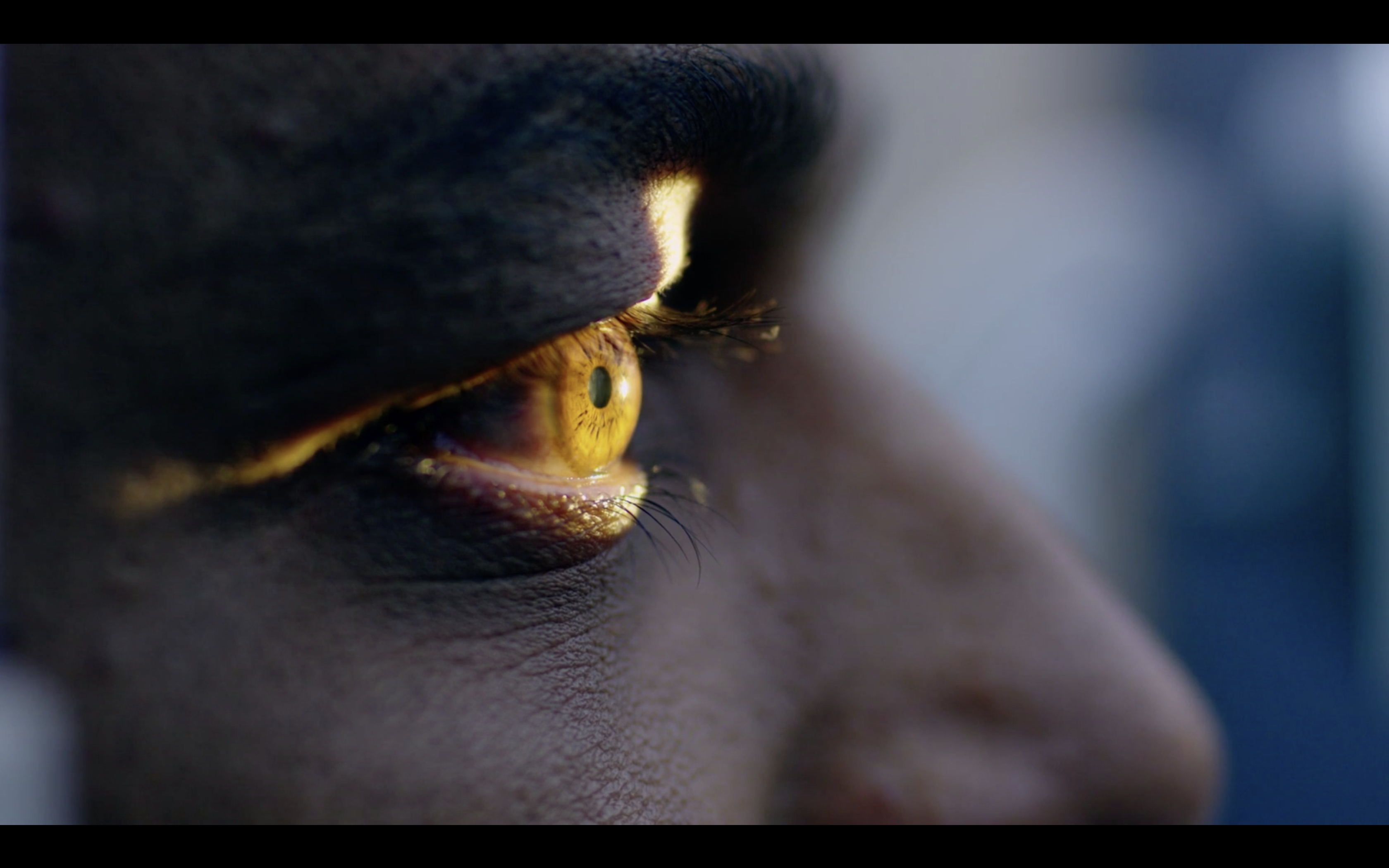
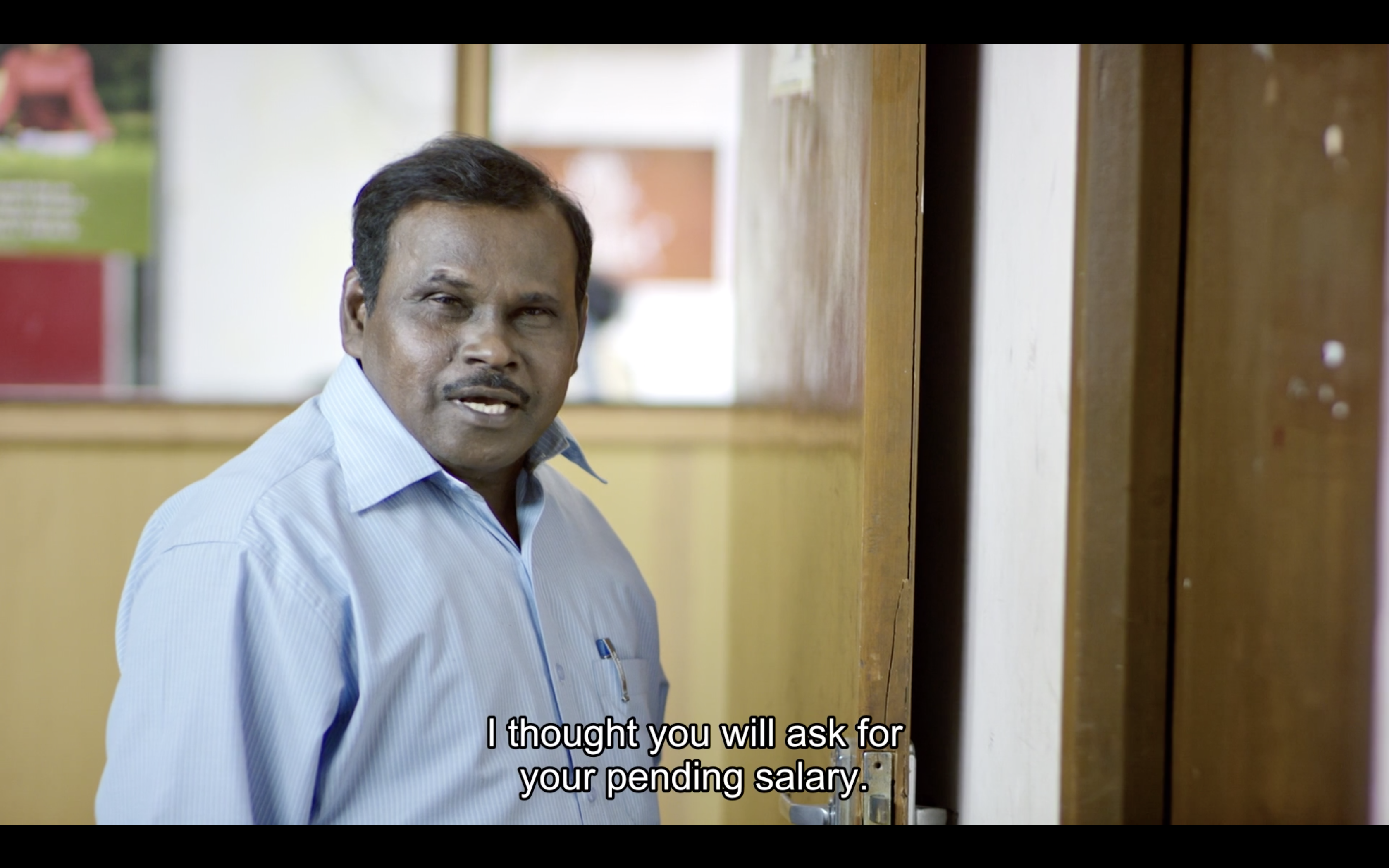
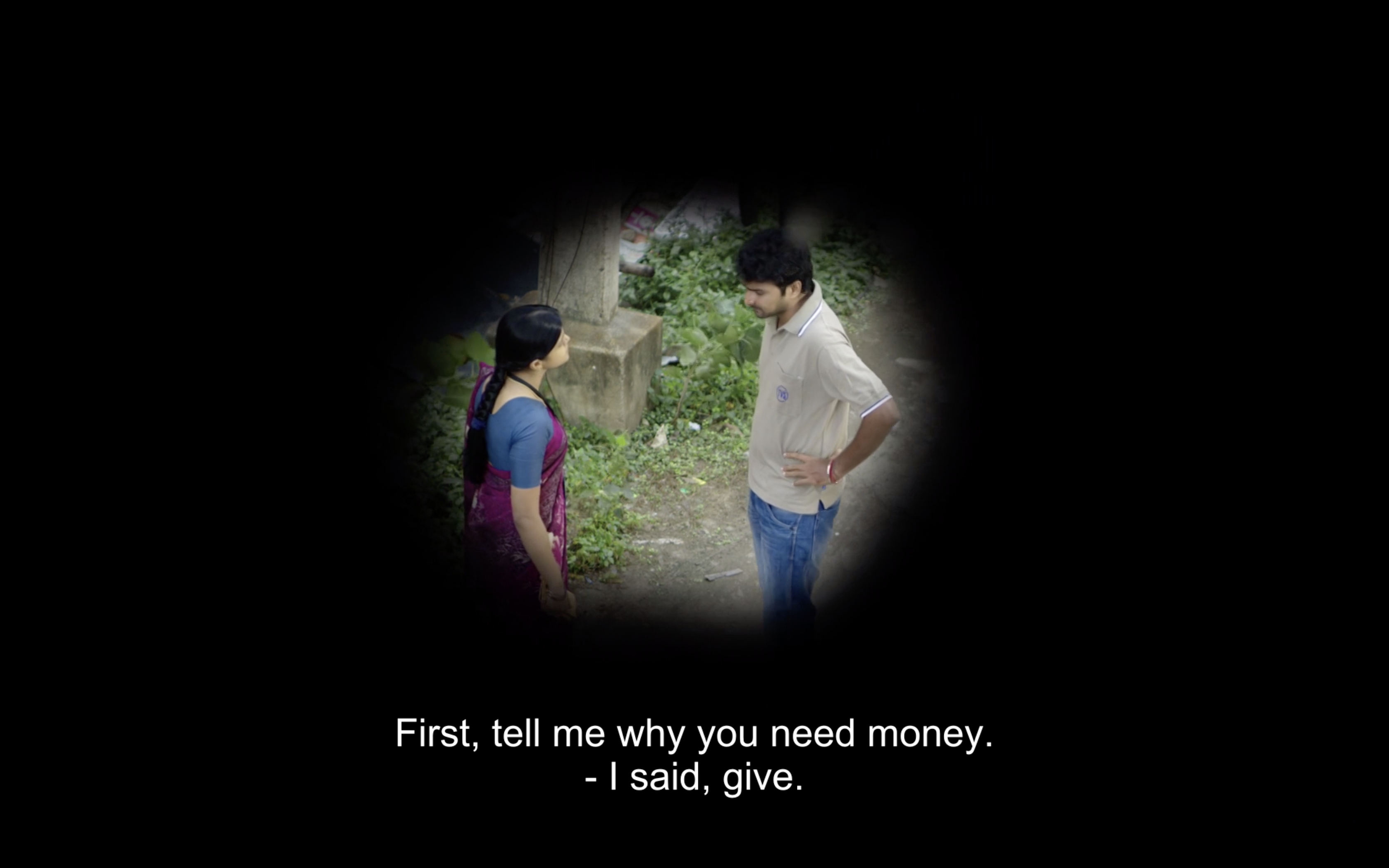
Right from the start we learn that Ravi (Vidharth) has a problem with his eyes. He has tunnel vision (due to retinitis pigmentosa according to his ophthalmologist), but the retinal image shown does not show the condition, and the symptoms don’t quite match up either. Ravi is told that he needs an eye transplant to ‘cure’ his problem, which is also impossible (there is no possible way to treat the retinal damage from retinitis pigmentosa), but the sum of money he needs for the operation becomes the central point of the story. The camera often shows Ravi’s view to accentuate his limited vision, which works effectively to help understand his very real problems.
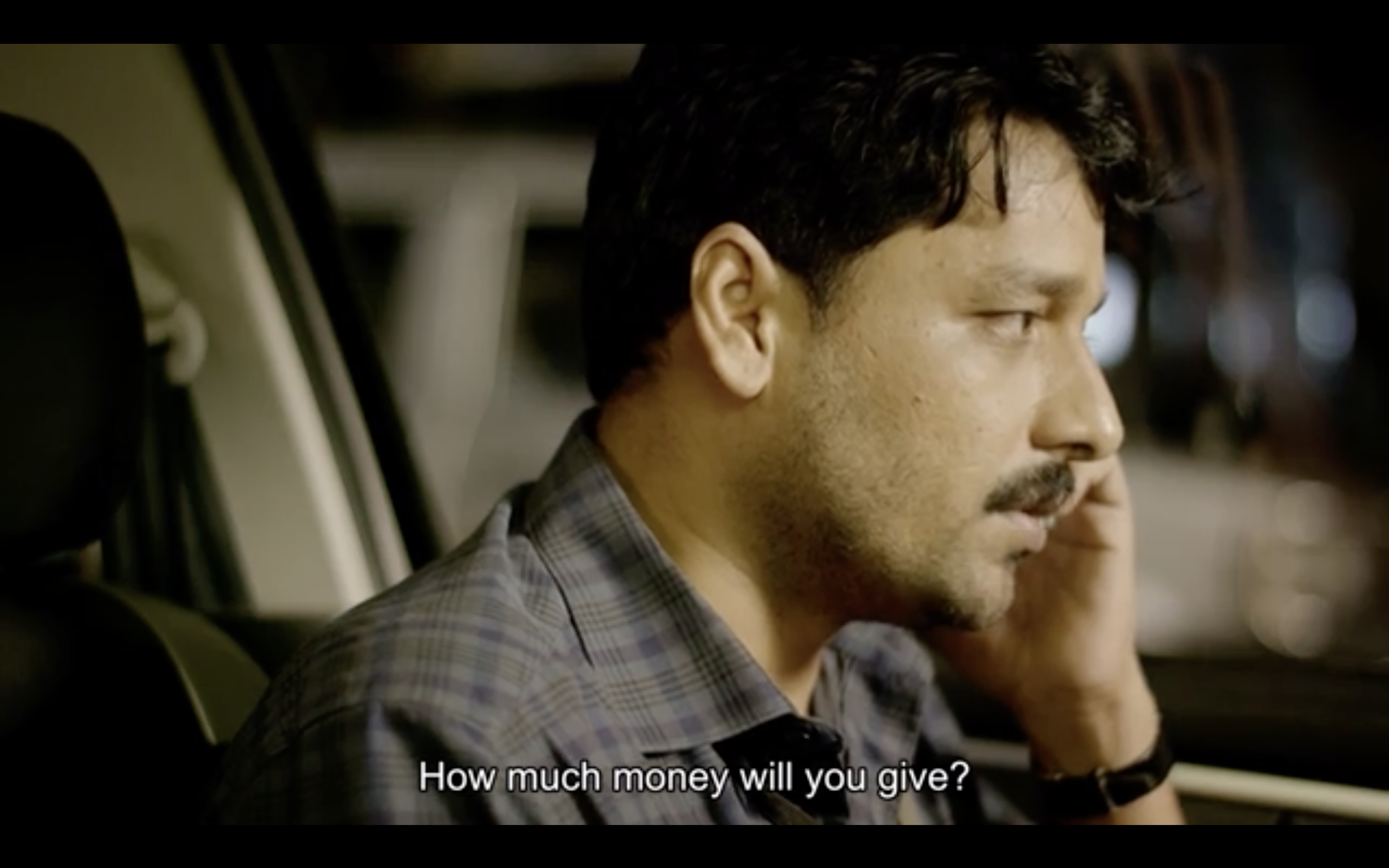
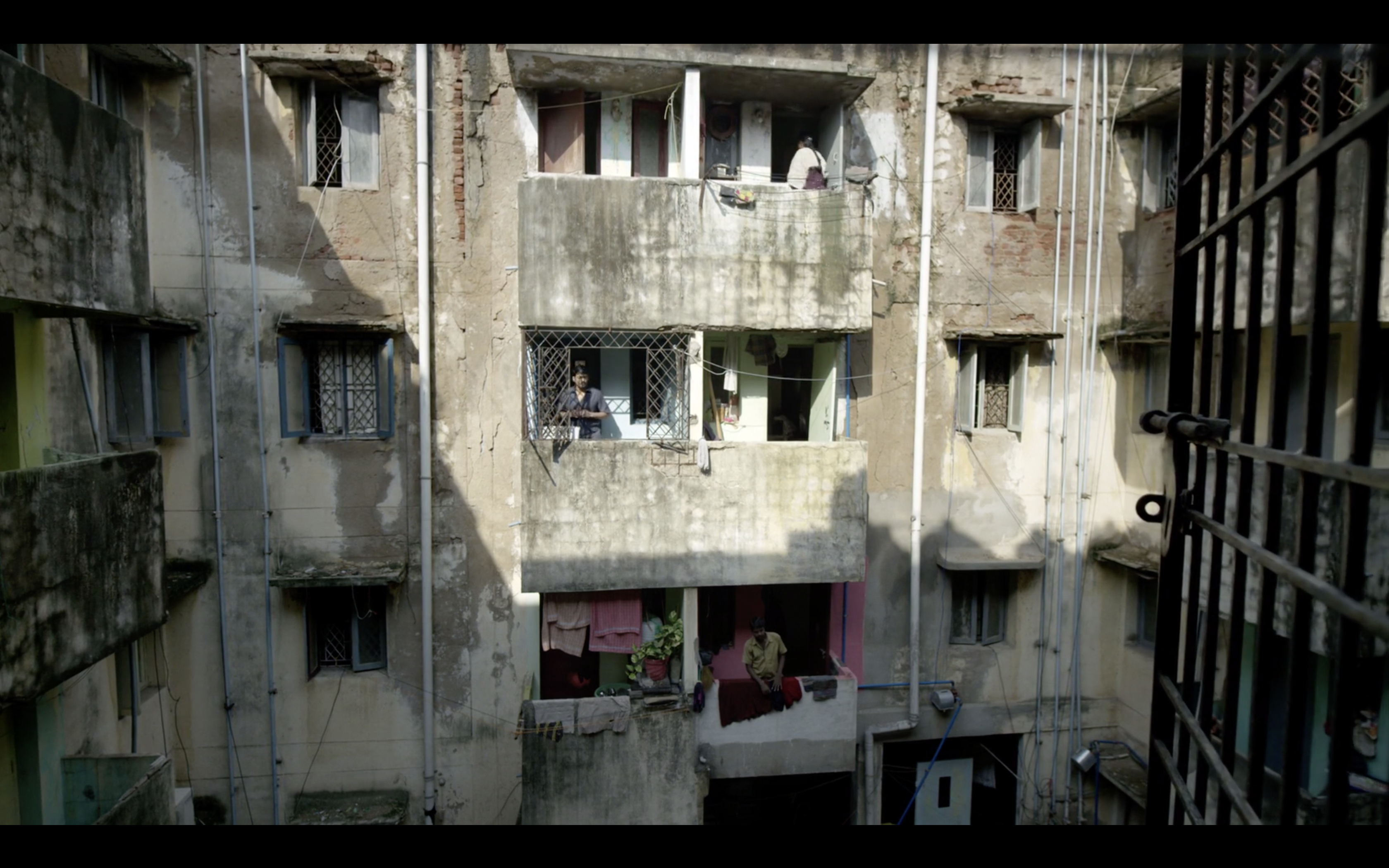
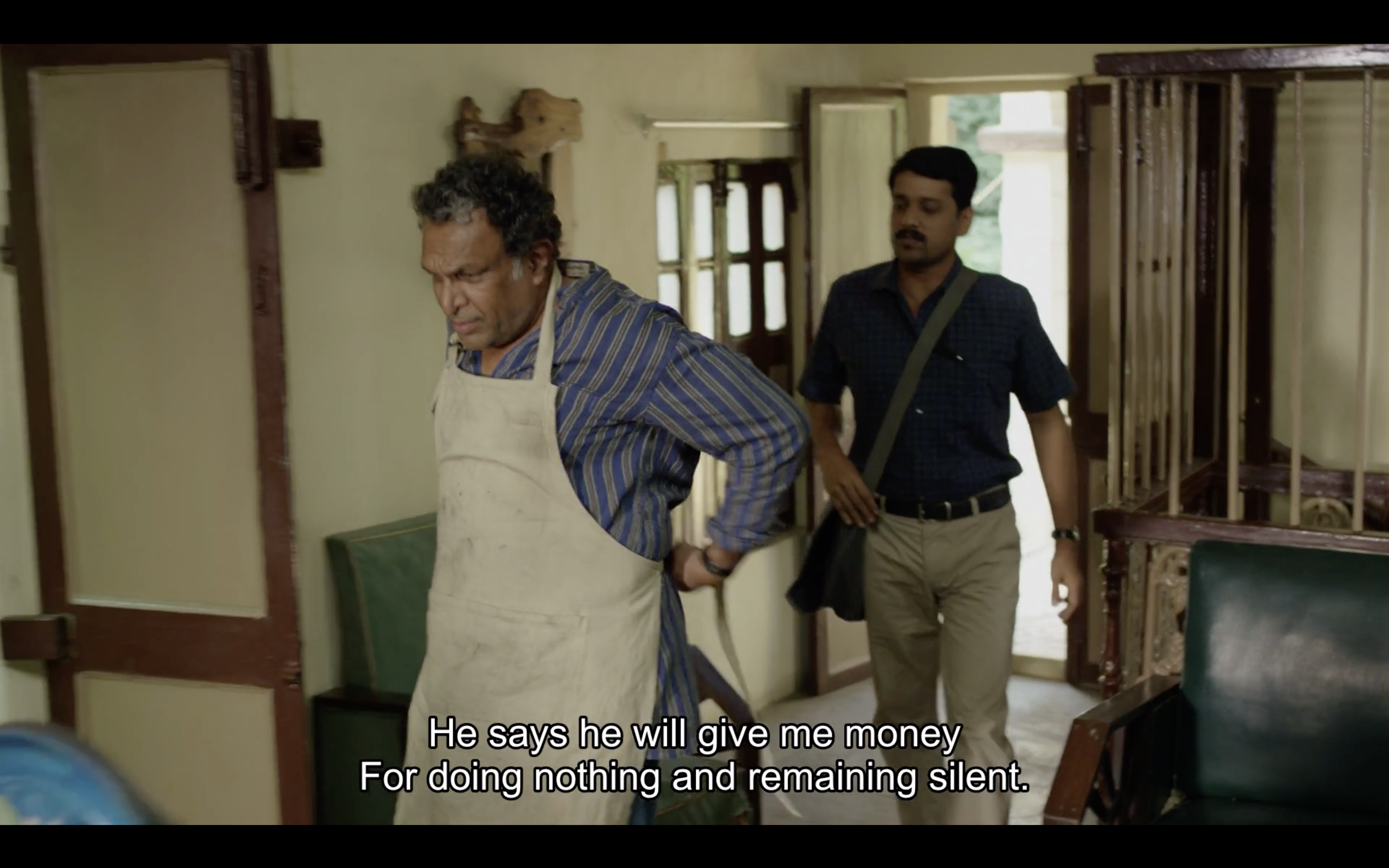
Ravi works as a collector for a credit card collection office, where his co-worker Anu (Pooja Devariya) appears to have a crush on him, and as a result smooths his relationship with the manager (George Maryan). As his vision is getting worse day by day, Ravi starts to try and raise the money for his operation. He starts by trying to get a loan at work, but the amount is much too large. A glass-blowing friend (Nasser) is also unable to give him the money he needs, and it seems that Ravi is doomed to eventual blindness with the added misery of no longer being able to drive and at risk of losing his job. But then a girl who lives in his block of flats is murdered. Ravi sees a young man Arun (leave her apartment in a rage, and subsequently meets an older man at the scene. But which is responsible for the murder? 

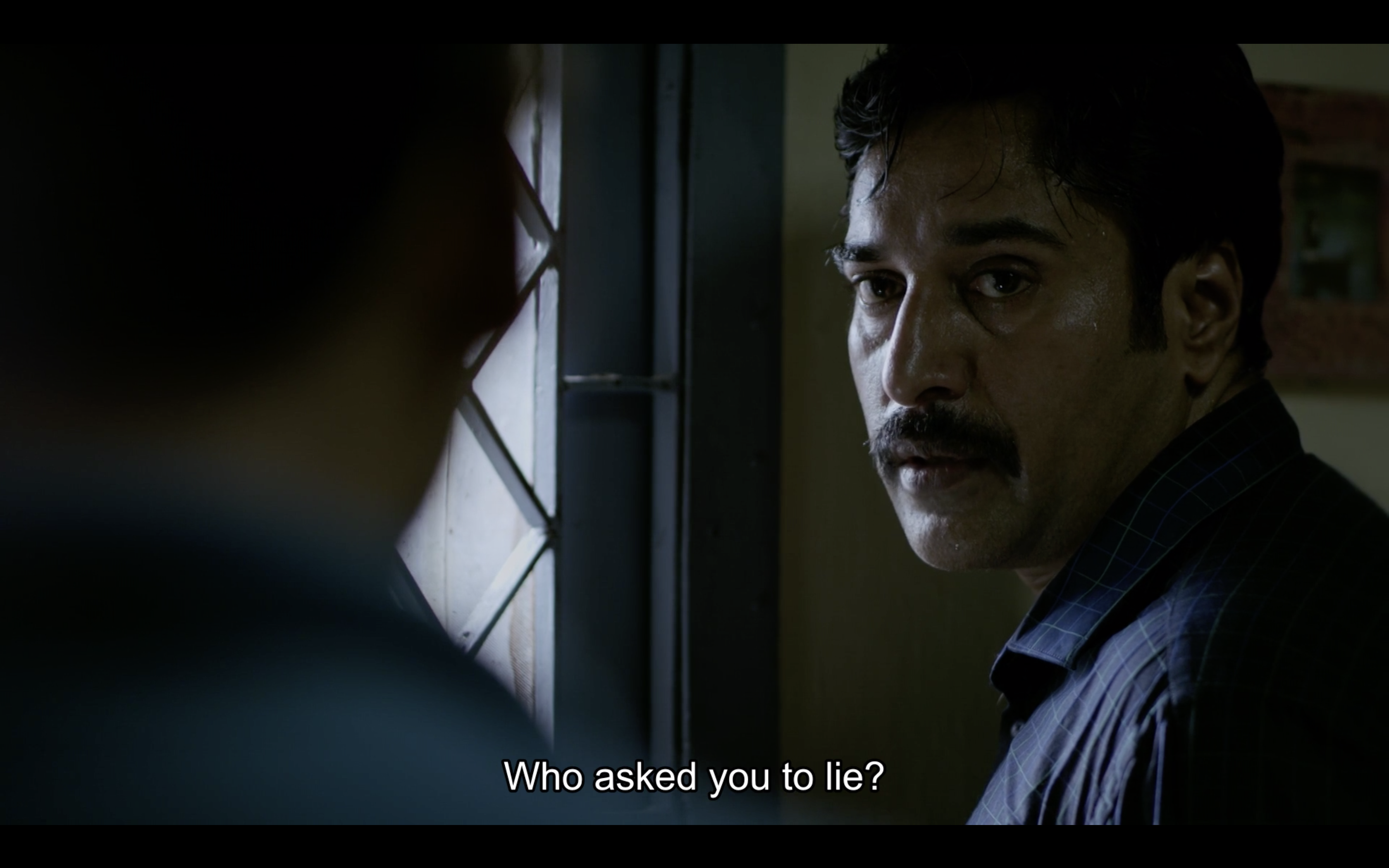
As first Vijay Prakash (Rahman) and then Arun’s father offers Ravi money for his silence, it seems possible that he might be able to fund his operation at last. But in his search for what he needs, Ravi has to turn his back on justice for the murdered girl, Swetha (Aishwarya Rajesh). It’s a moral dilemma and writers M. Manikandan and Anand Annamalai have built the story around the question of moral ambiguity. Either of the two men could potentially be responsible for the murder, while Ravi is blackmailing them for his silence. There are also questions raised about the morality of the health service, which demands payment in full before even putting Ravi onto a waiting list for his operation. Even the other residents in the building appear to have double standards, being reluctant to speak to the police and get involved, but discussing Swetha’s death among themselves. There is also the issue that Swetha was being visited by several men, with an unspoken but inferred social agreement that she had contributed to her own death. The police are the least morally corrupt in the entire story, as they continue to look for justice for Swetha, despite being hampered by uncommunicative residents of the apartment block, and a general lack of clues. 

The crime is treated rather lightly, and the plot instead focuses on Ravi and the gradual change in his ethics as he becomes ever more desperate for money. Is it OK to demand money for his operation from a man who may potentially be a murder. As more details are revealed, Ravi’s actions become ever more questionable as we find he know who the real murderer is, and yet continues to auction his silence to the highest bidder. His actions also cause consequences for those people that he drags into his scheme, although these are only seen from Ravi’s point of view. Essentially the film shows how selfish we become when faced with a problem such as Ravi’s blindness. Not only is he losing his sight, but he’s also unable to see anything other than his own problems.

Although Kutrame Thandanai doesn’t have the instant appeal of Kaaka Muttai and the plot is also slow to develop, it does have great characterisations. It does take a long time before the crucial murder and the blackmail story also develops later in the plot, but what I like is the moral ambiguity that threads through the entire story. The characters are inherently normal people with the usual mix of corruption and innocence, and what works well is the way that we only tend to see their reactions through Ravi’s eyes. There is a good sense of Ravi’s thought processes and why he decides on blackmail as the solution for his problems, even though this is possibly the worst decision he could make. Vidharth puts in a great performance that ensure we see Ravi as a typical low-income worker who is desperate to save his sight and therefore his livelihood. I really like how he stops driving when told to do so by the doctor, but then makes more questionable decisions when faced with the potential to change his fate. In real life, many patients would not do the former, at least not until they have worked through the consequences, but few would decide to follow Ravi’s later decisions. Here too, Nasser works well as Ravi’s sounding board and source of moral counsel, even though he doesn’t really seem to understand the reality of Ravi’s vision loss. The cast all provide solid support and although Aishwarya Rajesh only has brief appearances, she still makes an impression while Pooja Devariya ensures that her character is memorable for all the right reasons.

Ilaiyaraaja’s background music is beautiful and soars above the grimy streets that M. Manikandan captures so well. The ambiguity of the characters is well depicted and the story raises many questions about morality and how it applies in different situations. Ravi’s tunnel vision is literal, but also applies to many of the other characters in the way they view the world as well as to Ravi’s own interpretation of his situation. Interesting and more complex that it first appears, Kutrame Thandanai is a worthwhile watch and highly recommended. 4 stars.