Arrambam (2013)

poster 1

Arrambam is yet another Southern Indian film to use Mumbai as its backdrop, but really this action thriller could be set anywhere and still have the same impact.  Although there are a few Mumbai landmarks seen, the story is less about the location and more about the motivations behind the lead character’s quest for revenge, so despite Om Prakash’s excellent cinematography the background just isn’t important.  The action takes off immediately from the opening frames and there’s no time to take a breather until well into the second half. It’s fast, furious and best of all lots of fun as Ajith and Arya take on corruption in politics, the police force and basically just about everywhere!  There’s an excellent extended guest appearance from Rana Daggubati and even Nayanthara gets a chance to get in on the action and show off her ruthless side.  On the minus side, the songs aren’t too inspiring and there are a few gaping plot holes, but there is enough going on to make Arrambam an entertaining mass masala flick despite the lack of logic.


ArrambamArrambamArrambamArrambam

The film opens with a series of bomb blasts in Mumbai, and Police Inspector Prakash (Kishore) is charged with tracking down this Mumbai, and Police Inspector Prakash (Kishore) is charged with tracking down this latest terrorist.  The man they are looking for is Ashok Kumar (Ajith), who has an unusual recruitment scheme to enlist the help of computer expert Arjun (Arya).  Also involved in Ashok’s master plan are his sidekicks Maya (Nayanthara) and Mango (Krishna) who assist Ashok with kidnapping Arjun and forcing him to hack into a number of computer networks.

Arrambam

Despite this rather inauspicious beginning, Arya’s character actually adds some light relief to the film, starting with a flashback sequence to explain why Ashok targeted him in the first place.  This features Arya heavily made up and wearing a fat suit as a stereotypical computer nerd at college.  Even with his daunting appearance and apparent flatulence, Arjun is still pretty popular due to his ability to hack into the college computer system and change grades as required for the other students. However when he encounters Anita (Taapsee Pannu) and decides that she is his soul mate, he’s inspired to exercise and loose the flab.

During a rather disconcerting song where a now trim and fit Arjun sprouts blue wings for no apparent reason, he manages to woo the girl and ends up heading to Mumbai for a job interview.  One which doesn’t turn out anything like the way he expected.  Arya still keeps the nerd mentality even though he’s updated his fitness levels and appears suitably geeky throughout while also managing to keep up with the action.  It’s helped by his choice of T-shirts, but he gets the attitude right and his lack of awareness of the world around him is absolutely classic. Taapsee is ditzy and rather shrill as his reporter girlfriend but thankfully she’s not on screen often enough to be too annoying.


ArrambamArrambam


While Ashok keeps telling his various victims to ‘keep it simple’, he himself makes things incredibly complicated by kidnapping Arjun and using threats against Anita to force Arjun’s compliance.  The first half keeps the thrills coming as Arjun attempts to escape and inform Inspector Prakash about Ashok and his criminal activities while trying not to endanger his girlfriend.

But of course that’s only part of the story and the second half involves a long flashback where Ashok’s motives are explained and suddenly the tables are turned.  The fast pace of the first half isn’t maintained and the film slows down considerably in the second, but there are still some good action sequences including a shoot-out sequence with Ashok’s old partner Sanjay (Rana Daggubati) and a high speed boat chase in Dubai.

Arrambam

Ajith is in his element here and writer/director Vishnu Vardhan has kept Ashok’s character deliberately ambivalent while making sure he has plenty of charisma and charm.  Ashok punctuates the end of his sentences by putting on his sunnies (which at least lets you know the conversation is over), and he is always über cool and classy despite his terrorist activities.  The relationship between Ajith and Arya also works well although the sequences with Rana and Ajith stand out as some of the best in the film.  The camaraderie between the two actors feels very genuine and it’s easy to believe that they are long term friends and partners with their teasing banter and rapport during police operations.

ArrambamArrambam

While Taapsee really is the drama queen the corrupt Home Minister Rane (Mahesh Manjrekar) describes, many of the other female roles have a strong presence.  Nayanthara gets to threaten, bluster and fight in many of her scenes and does an excellent job, keeping her fight sequences realistic and looking suitably athletic to carry it all off, while Suman Ranganathan is also very good in her small role.  I’m always happy to see Atul Kulkarni pop up although his role as the chief of police doesn’t really give him much scope here, and the rest of the supporting cast are equally kept mainly in the background.  Although I like Yuvan Shankar Raja’s soundtrack, the songs don’t work well in the film mainly because they disrupt the flow of the story. The item song featuring Akshara Gowda is particularly painful and seems completely pointless since it really doesn’t suit her character of the home minister’s daughter at all.  I don’t think that such a fast paced action thriller needs any songs other than the background score but at least the Holi song had more energy and made a little more sense in the context of the story.

Overall, I really enjoyed Arrambam.  It’s fast paced, slick and stylish with plenty of action and I loved that one of the female characters was involved in the mayhem too. You go girl! The excitement and tension of the first half isn’t sustained through the second, but with Rana added in to the mix the action is still full on. Worth watching for Ajith and Arya as long as you can ignore the lack of logic and just sit back and enjoy the ride!

Ajith boat

Nayakan (1987)

Nayakan

This film has been on my ‘must see’ list for a while but it proved very difficult to track down a copy.  Even then I ended up with a Telugu dub without subtitles, and when I did manage to download subs they were somewhat selective in the translation, declining to translate any of the Hindi, and a bit hit and miss with the rest. However they did at least provide translations of Ilaiyaraaja’s wonderful songs which are definitely high points of the film.  Nayakan is one of Mani Ratnam’s earlier films, and is the movie that brought him to the attention of the cinematic world outside the Southern film industry.  It’s based on the story of Varadarajan Mudaliar, aka Vardhabhai, one of the notorious gangsters who controlled the underworld in Mumbai during the 70’s and 80’s.  There are also shades of Coppola’s The Godfather, but essentially Nayakan is a very Indian story, full of emotion and seeped in the violence and grime of the slums of the city.  Kamal Hassan won a National Award for his performance as did P.C. Sriram for cinematography and Thotta Tharani for best art direction, all of which were very justly earned.  The film also features Saranya Ponvannan in her screen début and a generally notable cast including Nasser, Janagaraj, Delhi Ganesh and Tinnu Anand.  But above all this is Kamal Haasan’s film and he is riveting in a stand-out performance which sees him grow from a young man to an ageing don in the slums of Mumbai.

NayakanNayakan


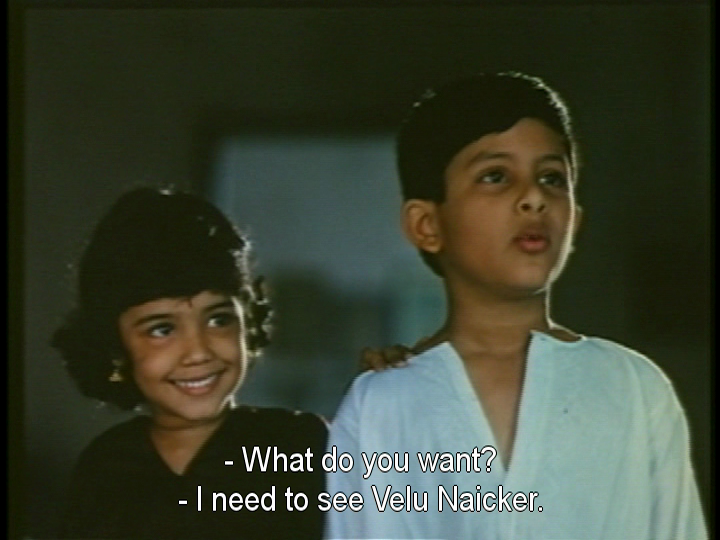
The film starts with the young Velu Nayakar being used by the police to track down and kill his father, a prominent anti-government unionist. It’s a brutal introduction and it’s certainly apt as the film doesn’t shy away from showing the violence associated with the underworld.  The poignant refrain of Thenpaandi Cheemayile comes from the beating the young child suffers, and the song is reprised throughout the film to underscore the importance of pivotal scenes in Velu Nayakar’s life.  This clip shows two of the versions and, although they both occur much later in the film it’s not really the song rather than the images I wanted to include.  However it is worth noting the cinematography and the way P.C. Sriram uses light so effectively in these two snippets.  The song is sung by Ilaiyaraaja and Kamal Haasan himself.

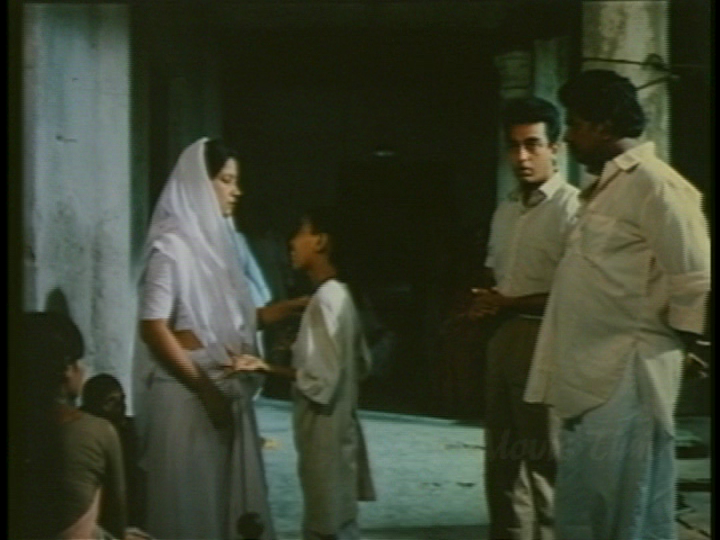
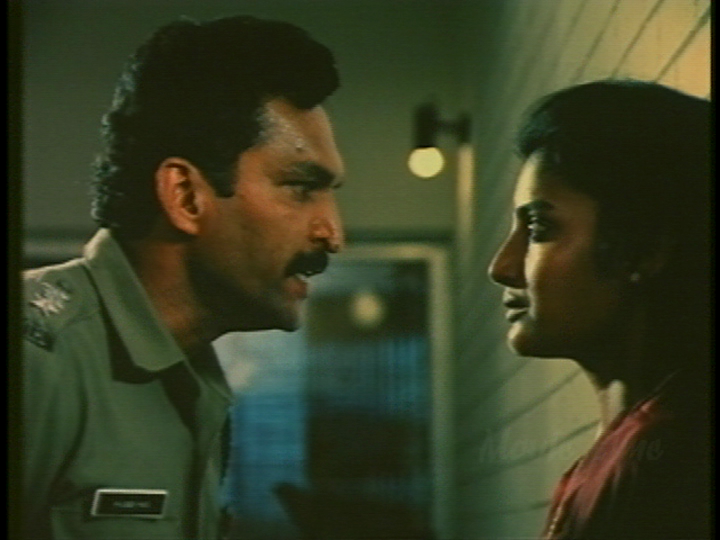
Velu arrives in Mumbai and is adopted by a small time smuggler who instils in Velu the concept that any slightly less than legal act isn’t wrong if it helps someone.  Over time Velu starts to stand up for the rights of the Tamil people who live in the slums, but it is the murder of his adopted father by a police officer that tips the balance and sets him against the law as he takes his revenge.  However even this act is tempered when Velu comes to understand that the dead police officer has a mentally retarded son and he gives Kelkar’s widow money to ensure that both she and her son will survive.

NayakanNayakanNayakanNayakan


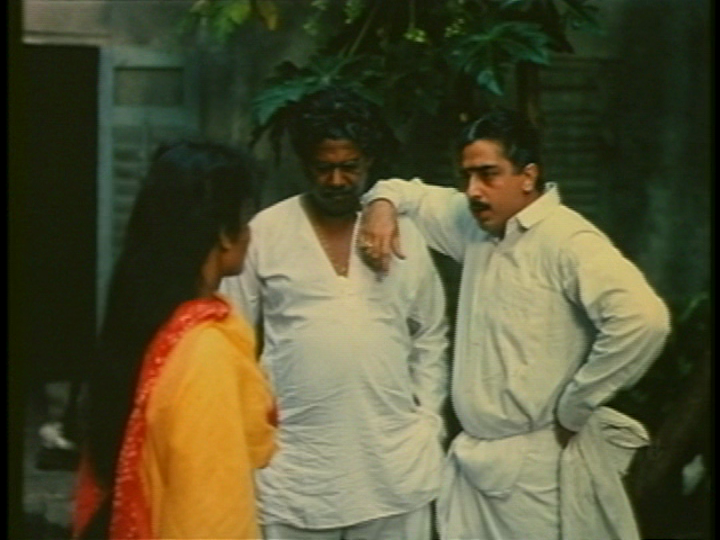
This dichotomy occurs throughout the film where Velu is shown as a very human character who smuggles and murders but also helps out when members of his community are arrested or when a child is seriously ill.  He’s a man who makes mistakes and pays dearly for them, but he’s also someone who is trying to make life just a little better for the people around him.  One such instance is when the slum is about to be bulldozed to make way for a factory.  Velu organises a gang of the locals and goes to the developer’s house, tearing it apart to drive home the point that these are people’s homes which are being destroyed, not just a piece of land. It also looks like a lot of fun as the gang rips apart furnishings and throws furniture from the roof!

NayakanNayakan


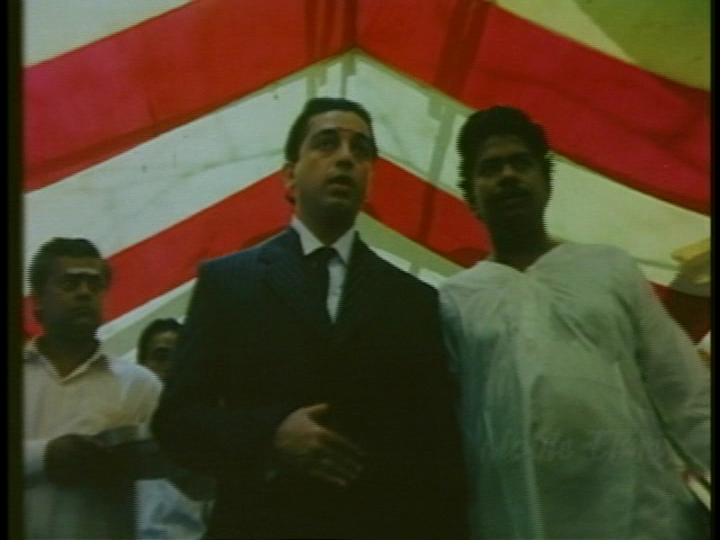
Velu isn’t a don who drives around in the cavalcades of vehicles more commonly seen in Southern Indian films, but instead he has a fleet of ambulances and lives in a house which is easily accessible for the people of the slum, making Velu Nayakan a more realistic and believable character.  There are a few odd moments however, such as an item-style dance number on a boat, and an instance where Velu does appear to be channelling the Godfather given his choice of natty pin-striped suit.  

NayakanNayakan


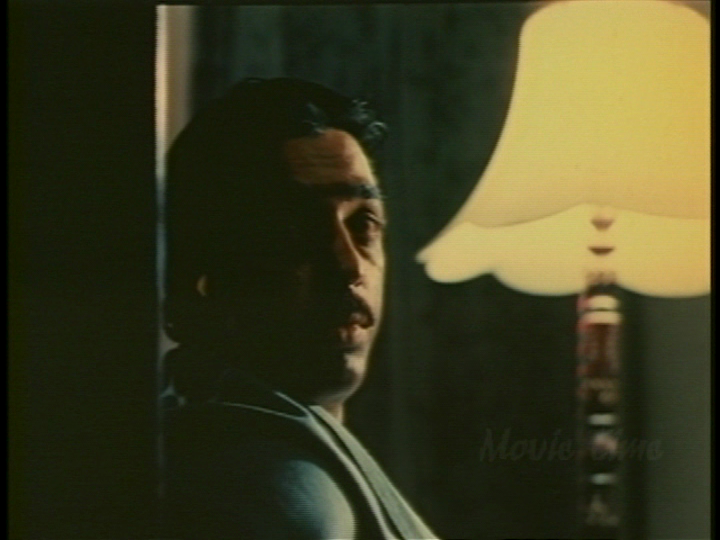
More commonly however the dim lighting and traditional dress suit the more modest and unassuming Velu, who seems more embarrassed than anything by the adulation he receives.

Mani Ratnam’s screenplay is most effective in describing the relationships between Velu and the other characters, in particular those of his immediate family.  His first meeting with Neela (Saranya Ponvannan), who becomes his wife, is beautifully acted and filmed as the two meet in a brothel.  Velu and his friend Selvam (Janagaraj) end up at the brothel after smuggling success and while Selvam appears to have been there before, Velu looks a little more uncomfortable and out of place.  He does manage to enjoy this great song though before heading upstairs for some more intimate amusement.

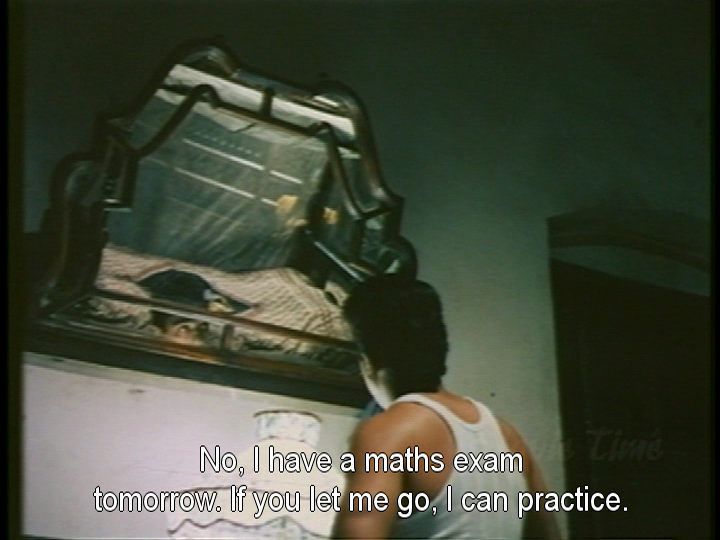
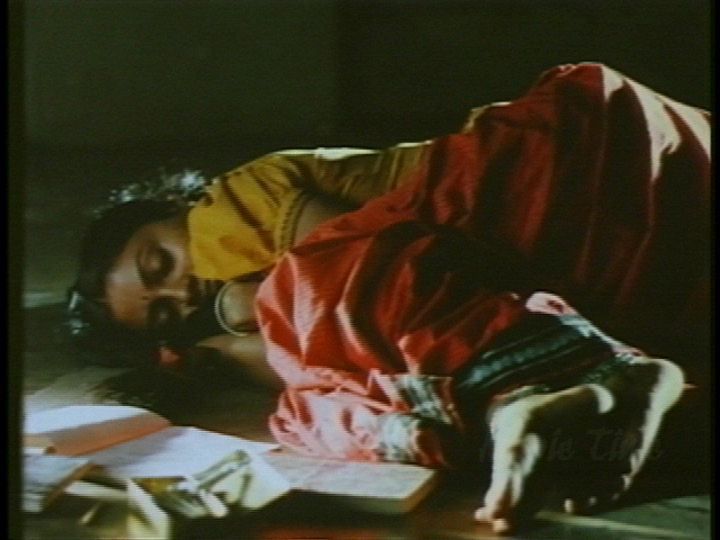
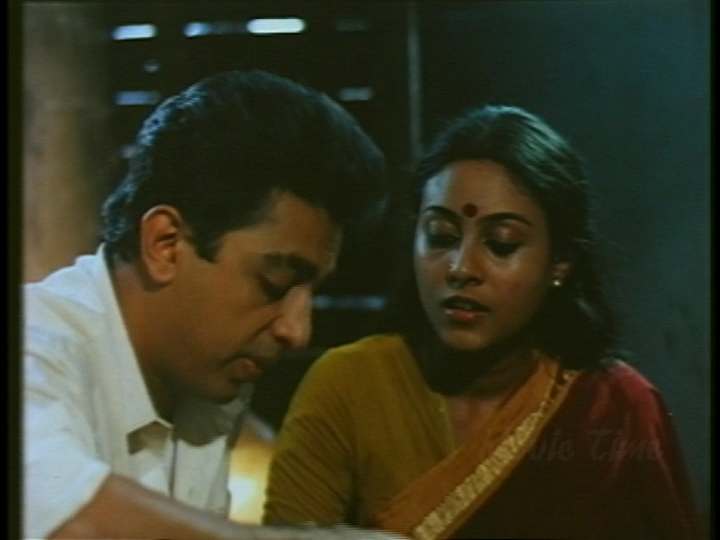
When Velu gets upstairs, Neela is waiting in the room and almost the first thing she does is ask if she can leave early to study for her exams.  Velu’s reaction is as awkward and confused as would be expected and Kamal Haasan shows this in his indecision as to whether he should lie on the bed or sit on the chair as she studies.  Even his hesitancy the next morning, when he’s not sure if he should wake Neela or not, nicely illustrates Velu’s more compassionate side and this is brought out again when the couple do eventually marry.  Saranya is dignified as Neela, despite starting out in a brothel and she brings a very warm and sympathetic presence into the harsh reality of the slums.

NayakanNayakanNayakanNayakan


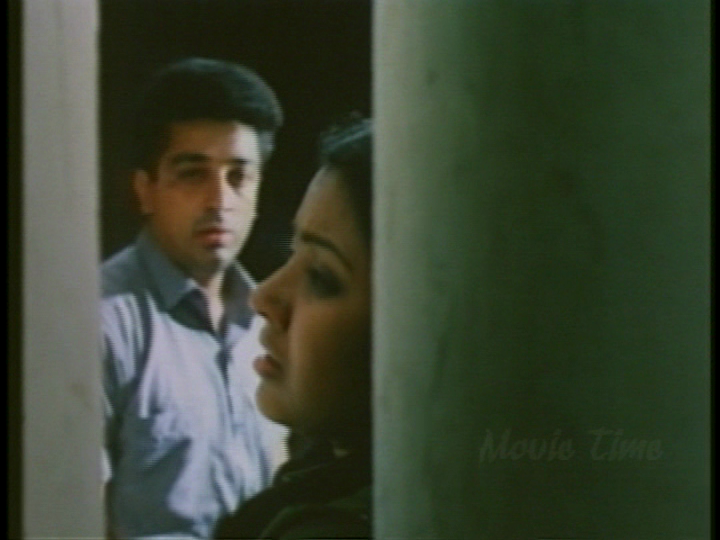
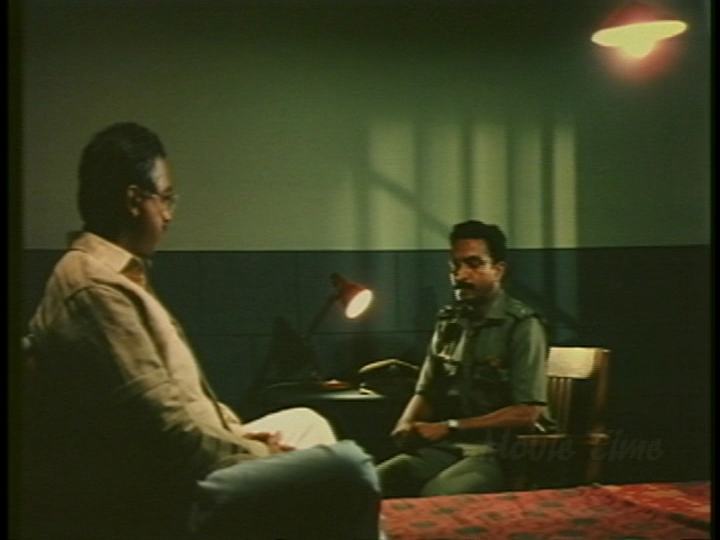
P.C. Sriram makes good use of the set here as initially Velu stands in the light while the mirror shows a shadowy figure through the curtains of the bed in the darkness of the room beyond. It’s very effective and throughout the film there is a similar use of light and shadow with many shots framed by pillars, doorways or other architectural features.

NayakanNayakanNayakanNayakan


The best scenes in the film are those between Velu’s son Surya (Nizhalgal Ravi) and daughter Charumati (Karthika).  Surya hero worships his father just as much as do the local people in the slum, and he wants nothing more than to be like him. He stands in for his father when a member of the community comes to Velu for help and he sees nothing wrong with the life of a gangster.  However Charu has a very different opinion and eventually she leaves her father after some very emotive scenes where Charu repudiates her father’s lifestyle.  She feels that his style of life is entirely wrong no matter how many people he helps, and Velu is helpless in the face of her rejection.  Kamal Haasan and Karthika are absolutely brilliant together in these scenes and also later on when Charu turns up later married to Velu’s new nemesis, the new Assistant Commissioner (Nasser).  Charu refuses to allow her father to see his grandson in another tear jerker moment, although the most poignant scene in the film between Velu and his grandson is reserved for the end.

NayakanNayakan


There are many small moments and clever touches in the film which make it so enthralling.  From the joy seen at the Holi celebrations to the despair when Neela dies and her sari unravels in Velu’s hands, each scene is full of little details which add to the drama.  Kamal Haasan provides much of the emotion and driving force in the film, but all the actors are excellent even in the minor roles. Tinnu Anand deserves special mention for his small but important role as Ajith Kelkar, the grown up mentally retarded son of the police officer, and Nasser is very effective in his short time on screen towards the end of the film.

Beautifully haunting music, gritty realistic scenes and an outstanding performance by Kamal Haasan make this a film well worth hunting down, and it really deserves to be restored and released with English subtitles.  Nayakan is an absolute classic from Mani Ratnam, and it’s one I thoroughly recommend. A full 5 stars.

Shahid

Shahid

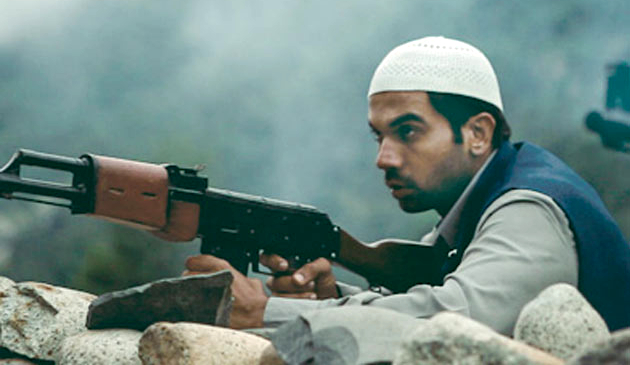
I didn’t know much about human rights lawyer Shahid Azmi before watching Hansal Mehta’s film, and I’m not entirely sure that I know a lot more about the real man even after watching.  There is a disclaimer at the start, which flashes past very quickly but suggests that the film is a dramatised version of events in the life of the murdered lawyer rather than a strict doco-style exposé.  But whatever the true story, the film is a fascinating look at a man who refused to back down and spent most of his career standing up for people who would otherwise never have had a voice.  Shahid may be a romanticised and somewhat sanitised account, but it still delivers its message and brings the Indian judicial system squarely into the limelight.

Court sceneShahid

The film starts with the end of Shahid Azmi’s life, at the moment when he is shot by persons unknown in his office.  It then moves immediately back several years to the early 90’s when a young Shahid is caught up in the violence of an attack on his community in Mumbai.  As a result Shahid ends up in a terrorist training camp, although the why and how he got there is never shown and the whole episode is quickly glossed over during the credit sequence.  However Shahid’s revulsion at the violence of the camp is clearly shown although his escape from the over-zealous terrorists is only briefly mentioned.  On his return to his family, Shahid is arrested and eventually tricked into signing a confession which results in time spent in jail.  Interestingly Kay Kay Menon plays one of his mentors in the jail, which seemed odd since I’m more used to seeing him play a more negative role.  However, he’s very effective in the role of War saab who persuades Shahid to make the most of his time in jail and get an education.

Shahid Shahid

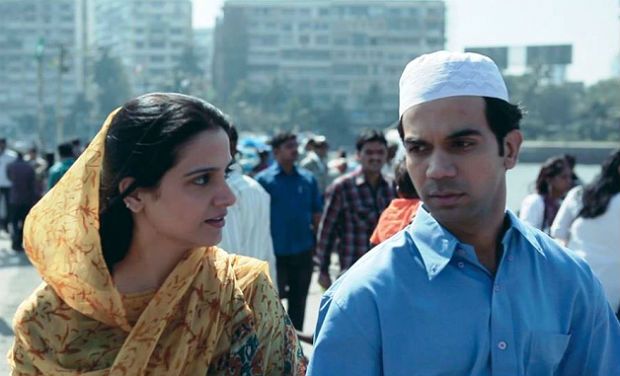
This he does, finally becoming a lawyer and taking on cases for clients like his younger self – people with no money who have been imprisoned on terrorist charges without any real evidence.  It’s compelling viewing, mainly due to an excellent performance by Raj Kumar Yadav who is charismatic and very believable as the passionate young lawyer.  He starts off small and works for a criminal lawyer Maqbool Menon (Tigmanshu Dhulia) which is where he meets Mariam (Prabhleen Sandhu), a client who needs help with a property case.  In the process of fighting her case, Shahid falls in love and this is the only part of the film that feels in any way filmi, as the two walk along the beach and share some classic Bollywood romantic moments together.

Prabhleen Sandhu starts off well, but after her marriage I expected her to show more frustration with Shahid’s absorption with his career but instead she is very passive.  Mariam also doesn’t show much fear or apprehension about the death threats made to her husband, and the couple’s final showdown feels contrived compared to the rest of the film.  This could just be down to the writers, but her performance was stilted in parts, particularly in comparison to the other actors.

ShahidShahid

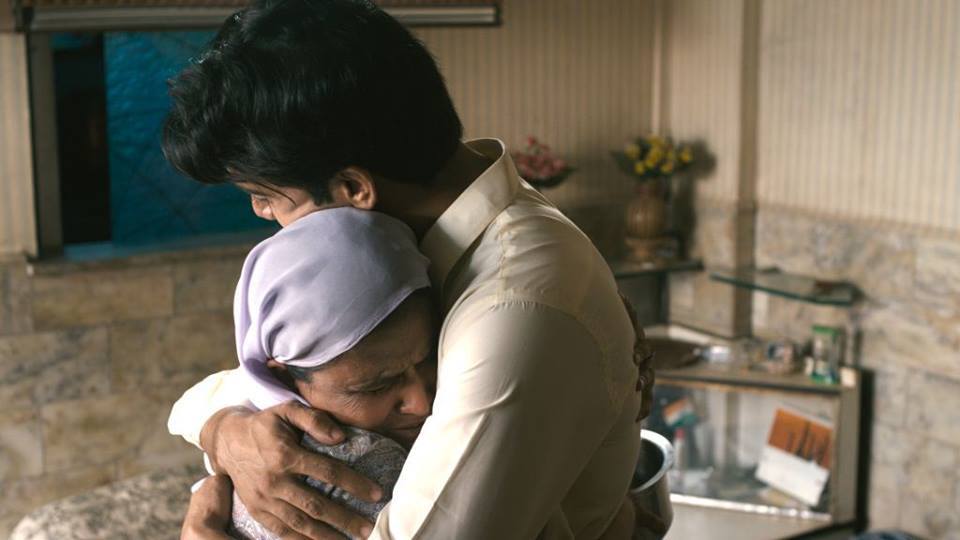
Mariam is divorced with a young son and Shahid is reluctant to tell his more traditionally minded mother about his marriage.  Baljinder Kaur is perfectly cast here as Shahid’s mother and I loved how she managed to keep her family under control, even when they were all grown up.  Mohammed Zeeshan Ayyub is also excellent in the role of Shahid’s brother Arif, and his frustration at always being the one left to look after everyone else is eloquently portrayed. Ayyub is another great actor who seems to have appeared in a number of good roles this past year and has the knack of making even a small role memorable.

Shahid

Although Hansal Mehta makes us sympathise with Shahid by showing his early struggles and his family life, the director doesn’t shy away from portraying his weaknesses.  Shahid’s reluctance to tell his family about his new wife is shown as a flaw and he also has a general tendency to ignore problems by burying his head in the sand and hoping they will just go away.  These failings do make him a more human and vulnerable character and contrast well with his more decisive and determined attitude when in court. Raj Kumar Yadav gets under the skin of a crusading human rights activist in the second half of the film and his passionate arguments are stirring and though-provoking.

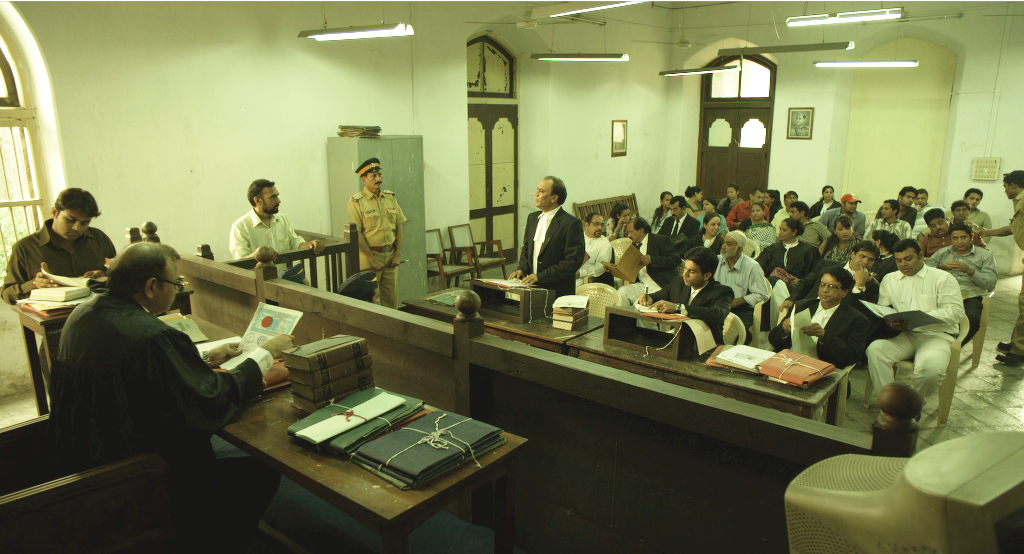
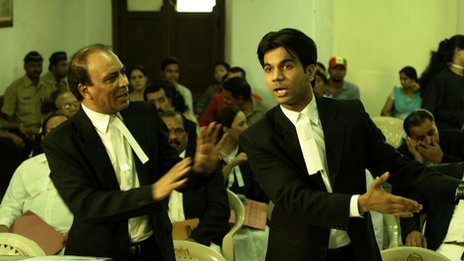
It’s another plus for the film that the court scenes appear realistic, set in dingy surroundings with harried looking judges. A case with a suspected terrorist shows the accused under guard in a metal cage,and only the various legal representatives allowed in the room which I can imagine is exactly how these trials are actually conducted. The verbal battles between Shahid and the various prosecutors, including his old employer Menon are also excellent and keep up the momentum of the film without getting bogged down in Shahid’s oft-repeated mantra “justice delayed is justice denied”.

Shahid

This is a well-made film with sensible and mature treatment of its subject matter.  There are a few stumbles with Shahid’s early life and perhaps a little too much time spent on his developing romance, but on the whole this is a fascinating glimpse into the life of a man who took on the Indian legal system on its own terms and won. I do think it would have benefited from a more documentary style approach and additional information on Shahid Azmi’s cases would have made it seem less of an idealised account.  However it’s still a worthwhile attempt at a serious biopic, and with excellent performances, realistic situations and an intelligent script it’s definitely one I recommend watching.