Malliswari (1951)

Malliswari-MalliswariB.N Reddi’s Malliswari is a film that almost every Telugu film fan praises as a masterpiece and a must see. It is so disappointing to see (and hear) the appalling state of the available copies, and also vexing that it is nigh impossible to buy on DVD. I would have loved subtitles. From the little I could pick out with my miniscule vocabulary, the dialogues seemed sensible and not overly filmi and the songs all seemed to fit in beautifully as an extension of the narrative.

Malliswari and Nagaraju grow up together in their peaceful rustic village. She calls him a monkey and he calls her a cat, but all the casual insults don’t mask their deep affection for each other. As Malliswari matures, her materialistic mother decides to nip the relationship with poorer Nagaraju in the bud. A chance encounter brings Malli to the Maharaja’s notice. In return for considerable payment, her mother hands Malliswari over to the palace as a Rani Vasam.Rani Vasam are forbidden to see or speak to men, and there was a lot of rigmarole for Malli even to see her mother and uncle. Nagaraju loses the plot, Malli mopes, but true love will not be torn asunder. When the king discovers Nagaraju and Malli have broken his rules, the penalty is death.

The female cast is superb and they all play off each other so well. Apart from Bhanumathi in the lead role, there is Kumari as the Maharani, the actress who plays Nagaraju’s mother, Rushyendramani as Malli’s mother and T.G Kamala Devi as Malliswari’s attendant Jalaja.

Based on the (rather thin) plot summary I found, I was expecting the men in the film to drive more of the action. I’m happy to be wrong about that. I wouldn’t describe this as feminist or ahead of its time, but the women are interesting and pursue their own goals and dreams. Malli is recruited into the palace against her will, but she is there because of her art as well as her beauty and is shown respect. Malli’s mother isn’t an evil shrew – just a materialistic woman who may even be motivated by wanting her girl to have an easier life. Jalaja isn’t a brainless servant, and while she and Malli become close she still cautions her against following her heart. And the enigmatic Maharani with a passion for art seems to be the real power inside the palace.

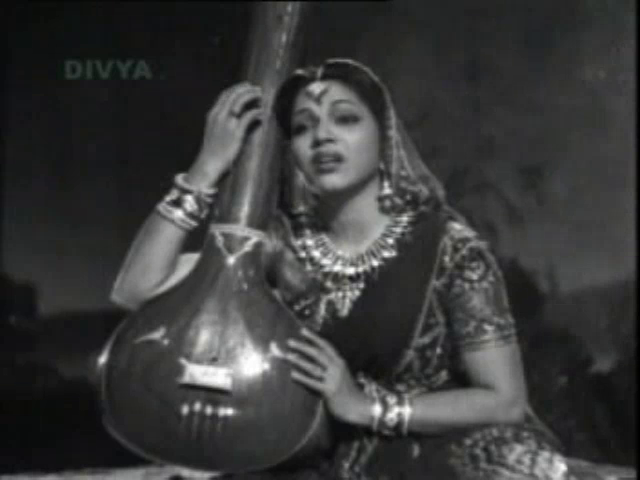
This is Bhanumathi’s film from the moment she steps into view. She gives Malliswari warmth and vivacity and is equally convincing when Malli feels sad and isolated. Her rapport with NTR is evident and I liked that Malli and Nagaraju seemed like friends as well as childhood sweethearts. In addition to her fine acting Bhanumathi also sang for herself (as did T.G Kamala Devi).

Her voice is beautifully expressive, and having the same voice for both dialogue and songs was wonderful as the songs are an integral part of the story and needed that same strong characterisation. When Malli is separated from her loved ones she yearns for happier times and for her bava, and her grief is as immediate and heartfelt as her joy had been. What I really liked was that even when Malliswari felt at her lowest ebb, she never completely gave up. There was always a spark of the vibrant and feisty girl we first met.

While NTR’s Nagaraju is important to Malli, he is often peripheral to the action so doesn’t dominate the screen as he has in other more hero-centric fare. His scenes with Bhanumathi are quite lovely and NTR’s doe-eyed charm is dialled up to the max. During a storm they take shelter in an old building, enjoying the adventure and singing to while away the time. It’s not a doom and gloom first love. When Nagaraju leaves home to make his fortune only to return and find Malli gone, he falls in a heap. Nagaraju ends up in a cave, sculpting Malliswari’s likeness and letting his hair get out of control as his clothes degrade to shreds. I found NTR’s portrayal of grief more theatrical than Bhanumathi’s and while I felt her pain I wanted to give him a bit of a slap and tell him to do something sensible instead of wallowing. I did a bit of eye-rolling in the final scenes where Nagaraju declared to the king that Malliswari was his life and he couldn’t give her up – I reckon the result had already been decided by the queen, and was based on her regard for Malli, not all the manly posturing. But this is a romance and since the chemistry and relationship building is so good, everything else diminishes.

The support cast is hard to identify due to the paucity of detail available but I did manage to put some names to faces. I thought I had identified the actress in a small but challenging role as Nagaraju’s mother, but I was wrong – so if you know her name, please share! She is a servant to Malliswari’s family and so is often a silent observer of goings on and has little dialogue to express her feelings. When she fears Nagaraju is dead or lost to her she cracks up (so that seemed to be a family trait) and goes a bit over the top, but is set to rights when her boy comes home and they can have a good cry. I recognised T.G Kamala Devi from Patala Bhairavi. I looked up her filmography and was amazed and quite delighted to see she was a billiards player, and won the Indian Womens title twice – when she was in her 60s! Doraiswamy (another familiar face, this from Devadasu) is the inarticulate father who regrets sending Malliswari away but doesn’t stand up to his wife. Kumari looks the part as Maharani Tirumala Devi, exuding confidence and a subdued energy in her scenes. Plus she gets to wear some stunning bling. I should mention Baby Mallika and Master Venkata Ramana who played the young Malliswari and Nagaraju. Both were lively and playful, and matched the adult stars well in terms of looks and mannerisms. I also liked the gossipy village ladies who always seemed to be at the well, passing comment on everyone else.

The set design is very pretty but is quite generic. I felt the actors were the real focus and the sets provided an appropriate backdrop. I really liked the episode at the fair as it was attractively shot and showed more of Malli and Nagaraju’s personalities, especially in a scene with a fortune teller. There was even a man in a bear suit. The music is outstanding, as it should be in a film about a singer. There are over a dozen songs in the film and composer Saluri Rajeswara Rao employs a range of styles to fit the scene and emotional tone. The songs are placed well and are a logical extension of the drama so they reinforce the actors characterisations. Music is always present, whether as a childhood favourite, a soulful plea to the heavens, a performance given for royalty or a simple work song to speed the day along.

There are several uploads of the full movie on YouTube and other sites. The official running time is 194 minutes but I haven’t managed to find the full version – most are missing around 20 minutes but not always the same 20 minutes. The sound and picture quality on every copy I have found is subpar. But if you can persevere with the technical issues, this is a beautiful film and a firm favourite of mine. Bhanumathi is superb, NTR is a perfect foil for her, and B.N Reddi blends everything into a very charming story with love and music at its heart. 5 stars!

Megabirthday 2014


Megabirthday2014

Another year, another Megabirthday just around the corner! We’ll be celebrating things Chiru related during August and of course you’re invited.

Pop over to the Facebook page *points at link on righthand side of page* and vote for one of the topics I’ll be writing about, or leave your ideas in the comments. Current suggestions (courtesy of Liz and Katherine) are:

  • Chiranjeevi’s cowboy years
  • The many hues of Chiru – a study in colour (but how to pick just one colour?)
  • Chiranjeevi the Serious Actor

Join in by posting on your own blog, let me know, and I’ll collate and publish the links. Or just watch for the #megabirthday2014 hashtag on Twitter and have a chat about all things Chiru. Like this.

If your eyes still work after the 2m 44s mark, check out those boots! And those moves.

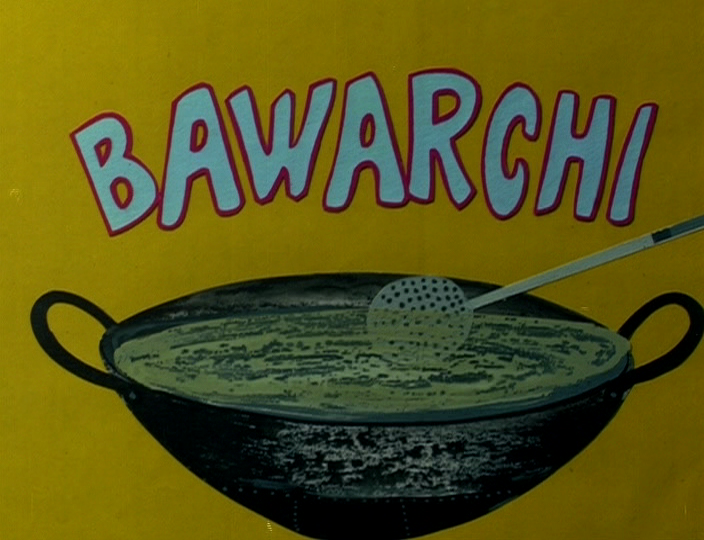
Bawarchi

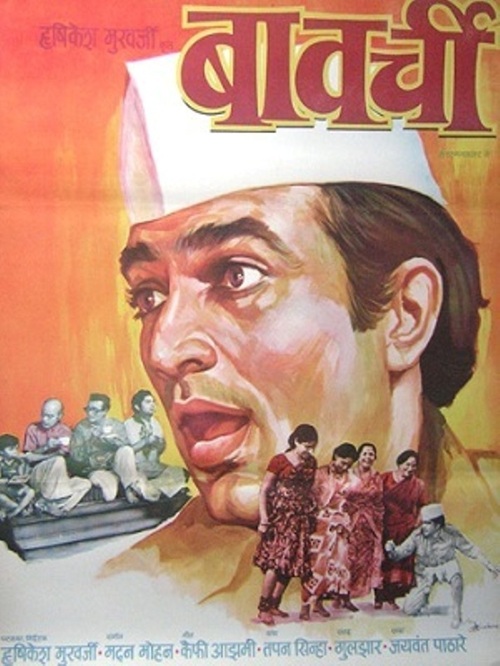
BawarchiBawarchi is simply a charming film and one that always makes me smile, even though it’s heavy on moralistic aphorisms and homely words of wisdom. Rajesh Khanna plays the cook who takes on the task of transforming a dysfunctional and argumentative family with his simple outlook on life; although there are numerous hints throughout that he may not be quite what he seems. The strengths of the film are the all-star cast who all fit into their roles perfectly and Gulzar’s well written dialogues that ensure the petty family disagreements are realistic and believable. Hrishikesh Mukherjee’s screenplay is based on Tapan Sinha’s 1966 Bengali film Galpa Holeo Satyi and Sinha is credited as the writer for Bawarchi. For anyone trying to track them down, both films are available on Youtube, although sadly the original Bengali film seems to only be available without subtitles.
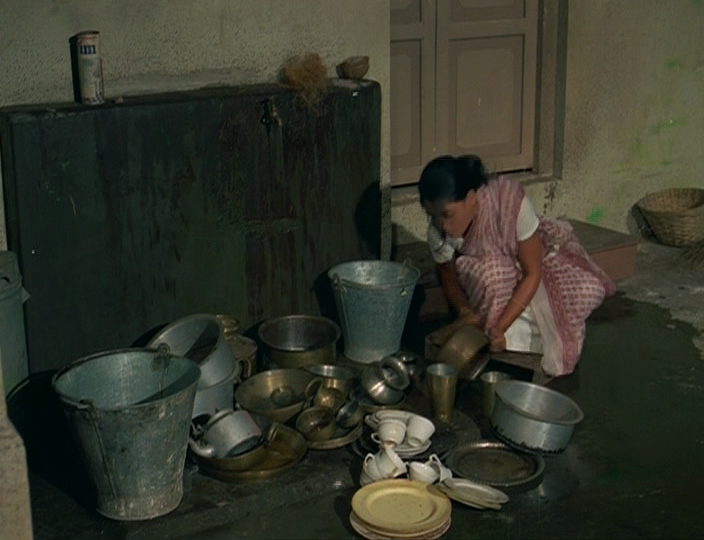
The story revolves around the household’s transformation from an unhappy and argumentative group of people to a caring and considerate family. Along the way there are songs, a dance competition and even a romance thrown in for good measure. I love the opening graphics which use the cooking theme to good effect, but there are only a few before Amitabh Bachchan takes over, announcing the credits against a rather oddly static red curtain, and carries on with a voice-over introducing the various characters in the drama. Firstly there are the fractious Sharma family members who live in the ironically named Shanti Niwas.

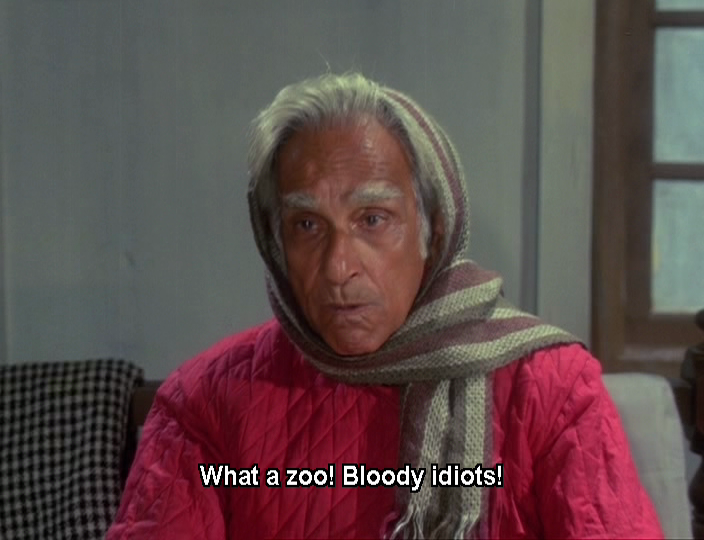
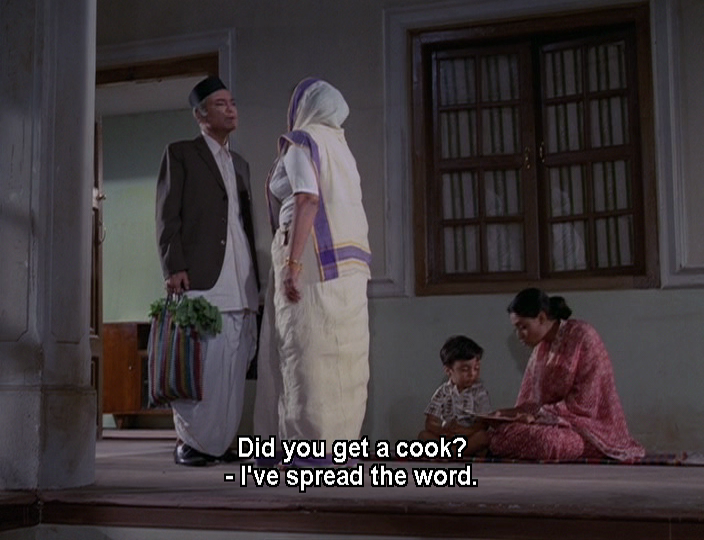
BawarchiBawarchiThe never-ending conflict in the house means that the family cannot keep their servants, which in turn leads to further discord and argument. As the story opens the family are in the process of losing their last servant – the family cook – who has decided to move on despite his new job paying less. The family is ruled by the ageing patriarch Shivnath Sharma (Harindranath Chattopadhyay) who complains about his sons, his daughters-in-law and the lack of a decent cup of tea in the morning.

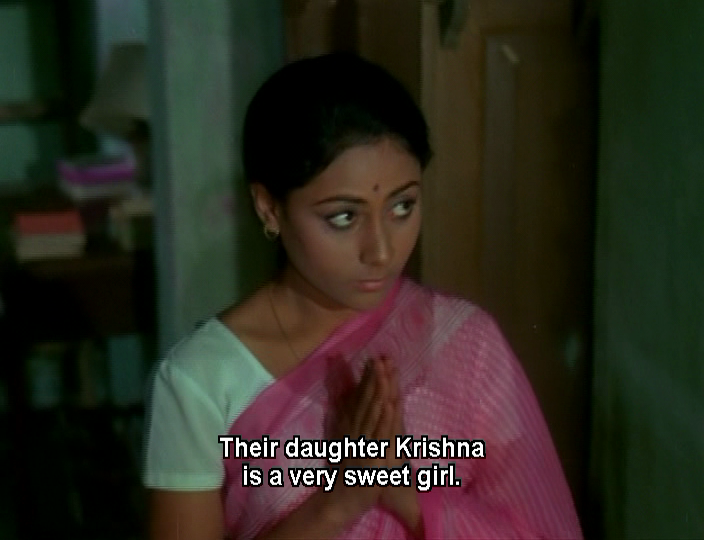
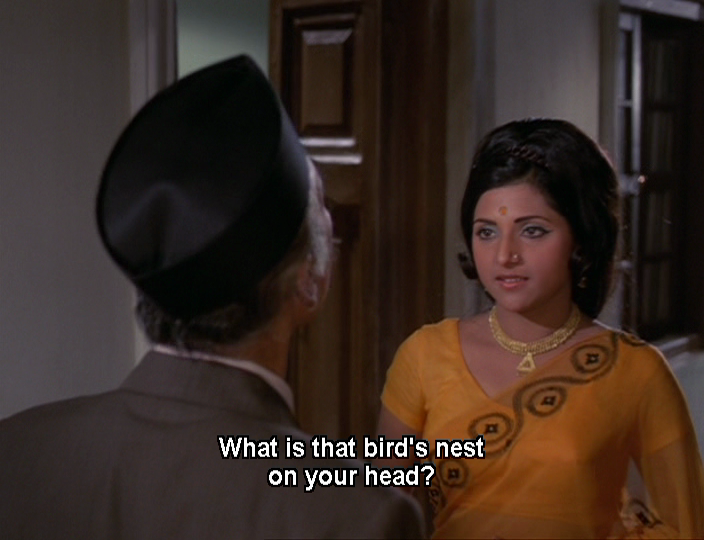
BawarchiBawarchiDespite his grumpy demeanour he is the only person in the house to think about the welfare of his late second son’s orphaned daughter Krishna (Jaya Bachchan as Jaya Badhuri). Harindranath Chattopadhyay is perfect here and his complaints are used to good effect to illustrate the trivial nature of most of the family disagreements. Krishna is at everyone’s beck and call, and yet she has a pleasant and sunny disposition which leads her to wait on everyone with a smile and not much thought of her own comfort. Just as well perhaps since no-one else thinks about her comfort at all.

BawarchiBawarchiAlso in the house are Shivnath’s eldest son Ramnath (A.K. Hangal), his wife Seeta (Durga Khote) and their daughter Meera (Mansiha). Ramnath is a harried clerk whose family life is impacting on his work. To combat his woes and possibly also to help him deal with his complaining wife and daughter he also drinks, although this actually makes him more pleasant to deal with, so perhaps it’s not entirely a bad thing. Seeta complains of her gout which makes her unable to help with the various household chores, while Meera is just plain lazy although she does get out of bed for her dance lessons.

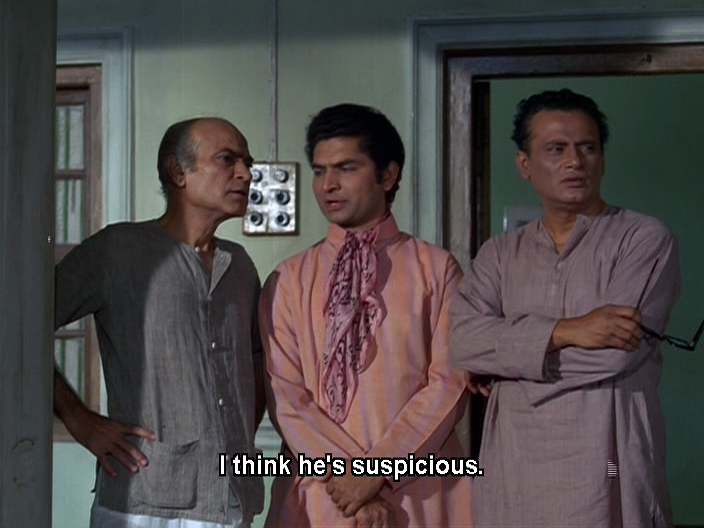
BawarchiBawarchiShivnath’s third son Kashinath (Kali Banerjee) is a rather pompous school-teacher who lives in the house along with his wife Shobha (Usha Kiran) and their son Pintoo (Master Raju).

The last member of the family is Shivanth’s youngest son Vishwanath (Asrani) aka Babbu, a music director for films who, as Krishna so aptly puts it, copies English songs, adds Hindi lyrics and records them. It’s just one of the examples of tongue-in-cheek poking fun at the Hindi film industry which Hrishikesh uses to add some more gentle comedy, almost as if he’s letting the audience into a big filmi secret, even as he himself still sticks to type of BW conventions he mocks during the film.

BawarchiBawarchiBawarchi - ShobaBawarchiThe final two characters in the drama are Meera’s dance teacher Guruji (Paintal) and Krishna’s tutor Arun. Arun is Krishna’s love interest but their romance is only a small part of the story, although it does become more important towards the rather clunky end of the film.
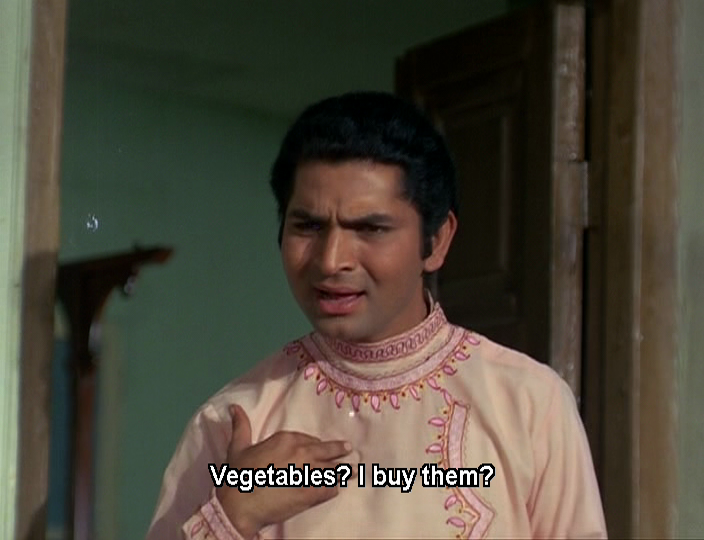
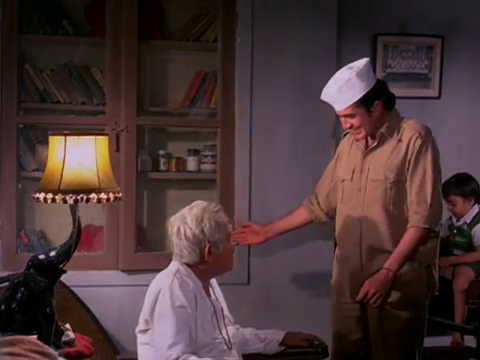
The family squabbles are based on their own selfishness, and none of them wants to take on the responsibility of looking for new servants. Into this unhappy household steps Raghu (Rajesh Khanna) who just appears on the doorstep one day volunteering to be their new cook.

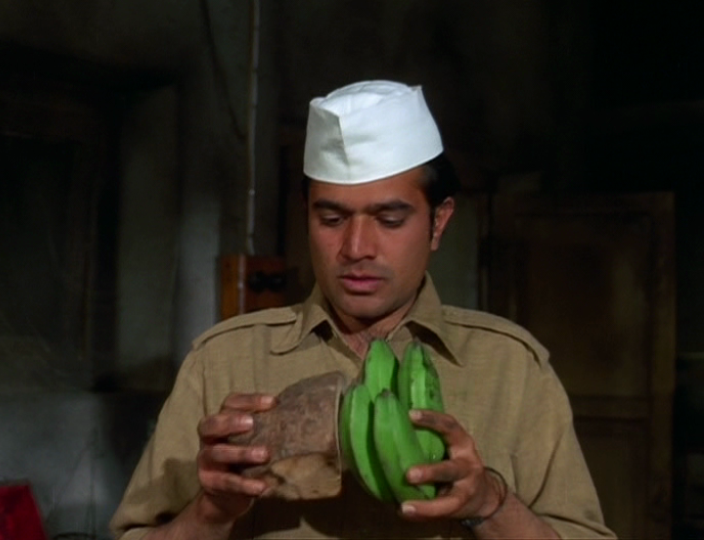
BawarchiBawarchiBawarchiBawarchiRaghu seems to be the answer to everyone’s prayers as he insists in a low salary, cooks amazing food and also has talents as a philosopher, singer, composer, and dance instructor to name but a few. Raghu seems to be a gift from the gods as his unfailing happiness and good cheer start to have an impact on the family, as does his willingness to tackle even the most demeaning of tasks.  This is a man who does the ironing – nothing else needs to be said!
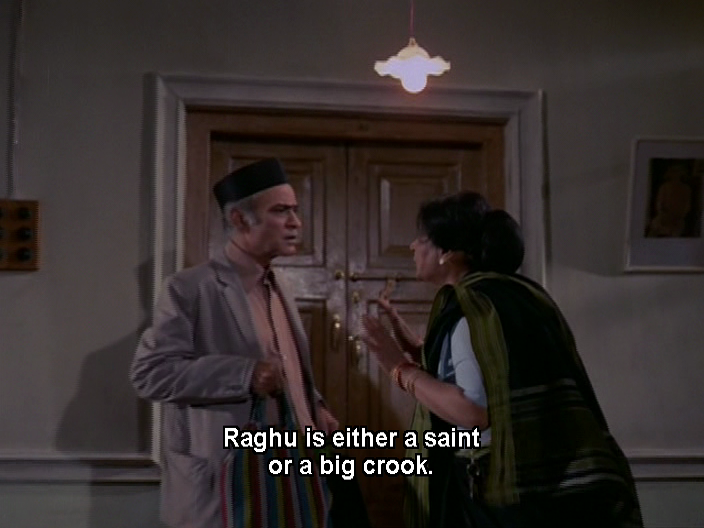
Raghu does however seem to have an unhealthy interest in the large box chained under Shivnath’s bed.This happens to contain the family jewels, and added in to reports of a thief in the area makes Raghu’s sudden arrival more than a little suspicious. However his ability to cook and his constant stream of knowledge about anything and everything soon make him indispensable to the family.

Bawarchi - happy songsBawarchiBawarchiBawarchiRajesh Khanna plays Raghu as a cheerful and somewhat bossy servant and he uses this relaxed outspokenness to stop the stream of advice from becoming too preachy. Despite his constant chirpiness Rahgu never seems too sickly sweet to be true, something which is helped by the suspicion that he may in fact be a thief and is simply putting on an act. Most of the films I’ve seen with Rajesh Khanna have been romances, but there is something very special about those few films where he doesn’t play the typical hero. Here he has an irrepressible twinkle in his eye and such a beautiful smile as he guides the family to an actual ‘peaceful abode’. It’s a wonderful performance and Rajesh Khanna is definitely a large part of why I love this film.

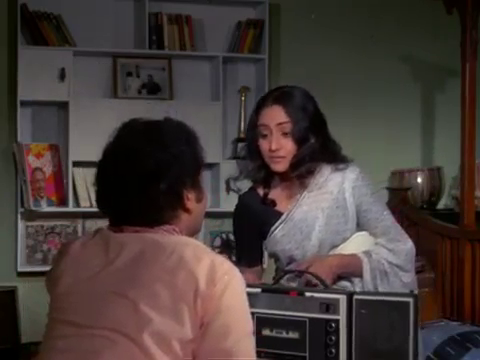
Just as amazing though is Jaya Bhaduri as she portrays shy innocence and naiveté with ease, and yet makes Krishna a normal down-to-earth person, trying to do her best with the lot she has been given. She’s sweet and natural with her grandfather, properly demure and respectful to her aunts but cheekily mischievous with her youngest uncle.  It’s hard to believe that this was one of the early films in her career as she definitely holds her own with the rest of the more experienced cast.

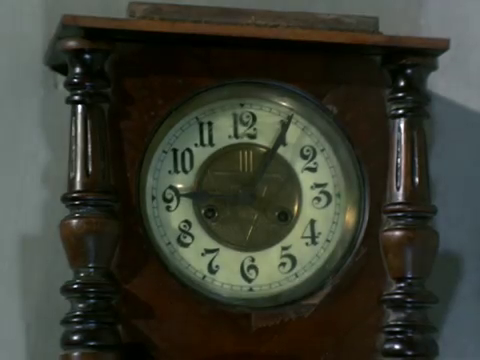
I also love the sets here which make the house look homely and lived in.  The locked case is impressive in it’s ‘look at me – I contain something valuable’ obviousness but there are also some wonderful lamps and clocks and Babbu has some very cool looking records on his shelf.

Bawarchi - the caseBawarchi - clockBawarchi - lampBawarchiThe only let-down in the film for me is the end, which seems a little too contrived as Raghu creates a rather unsophisticated solution to the final family problems. I feel it’s a little too simplistic considering some of the earlier scenes and the way Raghu’s character has evolved. However it’s a small quibble, particularly when the rest of the film is so enjoyable.  Bawarchi is definitely recommended for those times when you want to escape into a wholesome family drama that’s guaranteed to make you smile. 4 stars.