Dhada

It seems to have been a very long time since the last Telugu film release here in Melbourne, so we were quite delighted to hear that Dhada was showing this weekend. Despite the negative reports, we headed in to the city for another ‘adventure without subtitles’.

The film opens with a parkour chase sequence across, over, around, through and between various buildings, bridges and major highways. It’s very well done with great cinematography and editing, and is an excellent introduction to Vishwa (Naga Chaitanya). He’s just graduating from college in some unspecified city which we think might be supposed to be in the USA, or possibly Russia. It’s hard to tell from the accents of the English speaking cast who seem to be mainly of Eastern European origin but since the cops are wearing US style cardboard badges and US flags we’re going to go with the States.
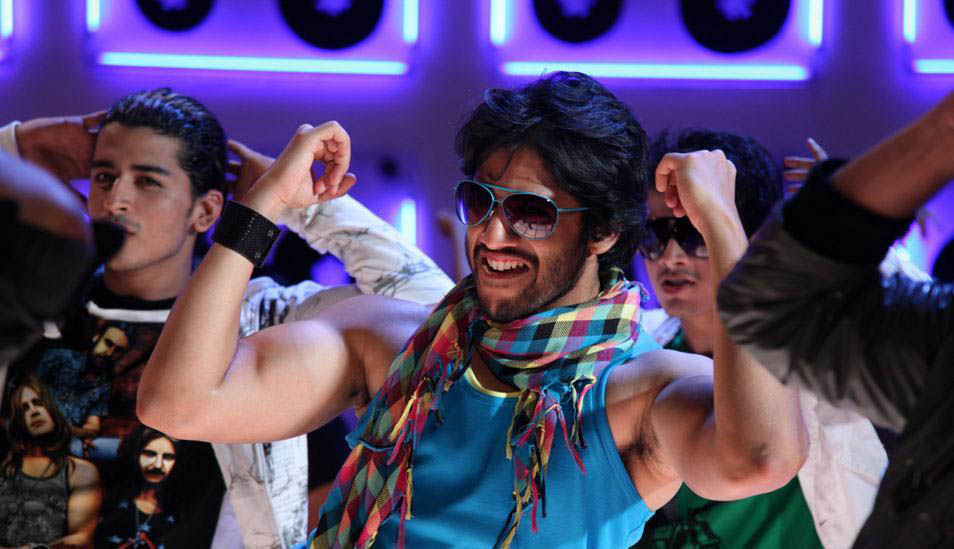
Vishwa lives with his elder brother Rajiv and Rajiv’s wife Preethi.  He fancies himself as a modern day hero, and cannot help rescuing a tearful girl running from a pack of thugs. In the course of the rescue he manages to set free another 99 girls who were rather conveniently loaded in trucks in the same car park. This doesn’t endear him to local mafia don RD (a wonderfully over the top Rahul Dev), who was just about to close a deal selling the girls (all 100 medically certified virgins) on to white slaver Kelly Dorjee (almost his equal in the over the top evil stakes).

Around the same time Vishwa has spotted, and instantly fallen in love with, Ria the daughter of a millionaire (Mukesh Rishi) who doesn’t have any time for her. She spends her days on a chaise longue in the wine cellar surrounded by bad polystyrene replicas of classical sculpture, either watching old 8mm film of herself and her mother or developing pictures she has taken of parents and their children, and generally feeling sorry for herself. The mother was played by the excellent Satya Krishnan and it was such a shame she only had a tiny role.

Vishwa has a classy idea of a date which involves taking Ria out on the back of a motorbike, stealing a bottle of wine along the way (drinking and driving and no helmets– tsk tsk!), to a a bare knuckle fight (which judging by the spectators’ apparel seems to occur some time in the early part of last century) and finally to a club based in a ship. Strangely they seem to travel back in time again when a bunch of 1930’s styled shoe shine boys arrive aboard the Titanic styled set to join in the song and dance number, the seriously catchy ‘Telugu Bengali English Marathi’. It was an odd blend, especially with the random and bored looking audience including one beaming Sikh guy. Vishwa and Ria do lots of flirting before he drops her back to her dull party, and her fiancé, two minutes before her stated deadline. Ah yes – the fly in the ointment is that Ria’s father has promised her to Amit, a local businessman with a commitment to shimmery suits, who isn’t impressed at all with Vishwa.
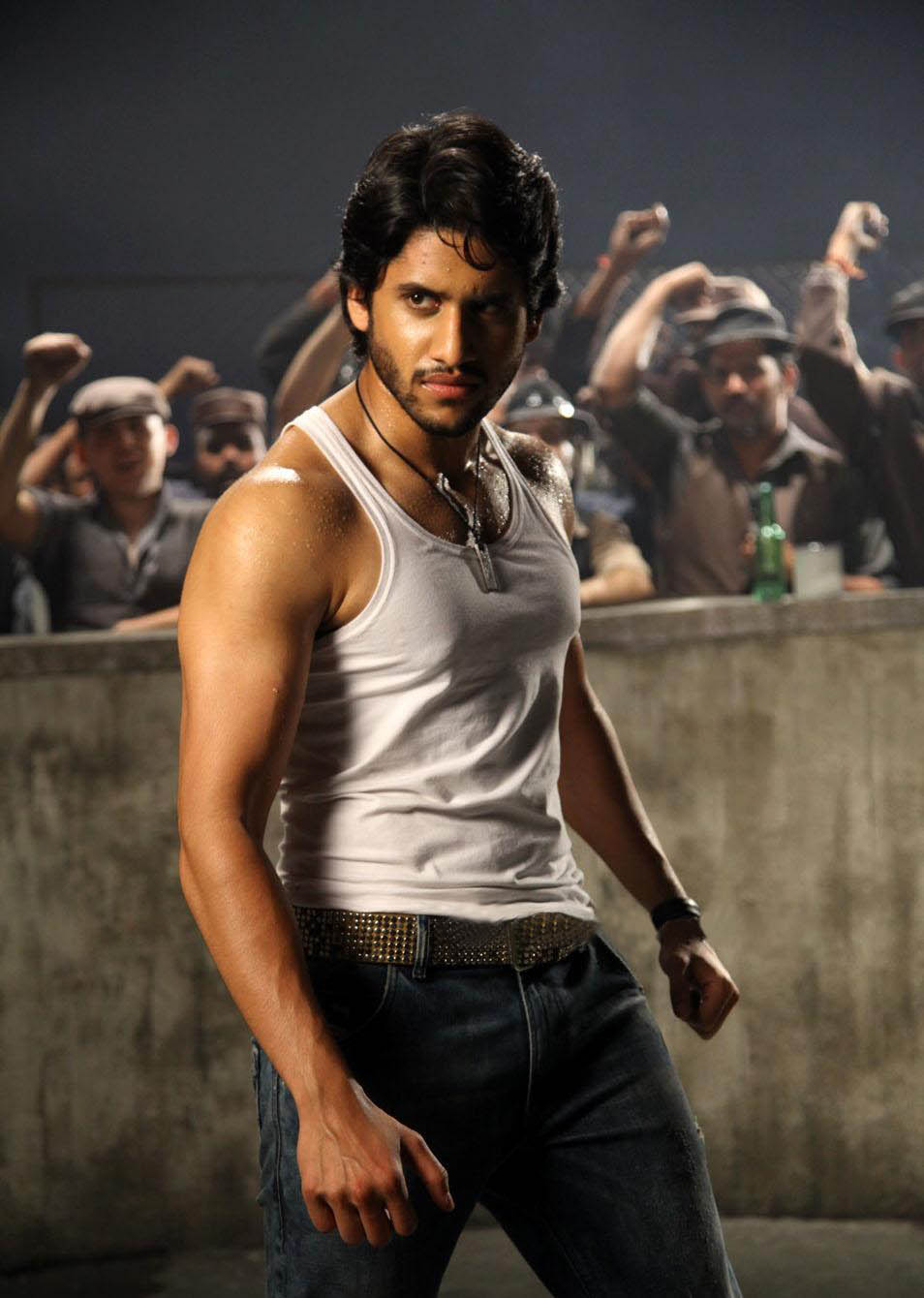
There are more chases and excellent fight scenes as RD’s younger brother closes in on Vishwa seeking revenge for their lost millions in the white slave trade. There is the obligatory twist in the tale as Rajiv reveals his entanglement in the mafia web. There is an excellent flashback scene to the two boys growing up, and we learn that Vishwa has always protected his big brother, sometimes in spectacular fashion.  Ria becomes a hostage and Kajal was good at being unconscious. It’s all up to Vishwa to save the day – can you ever doubt that he will? Would a man lacking self confidence wear so much pink?
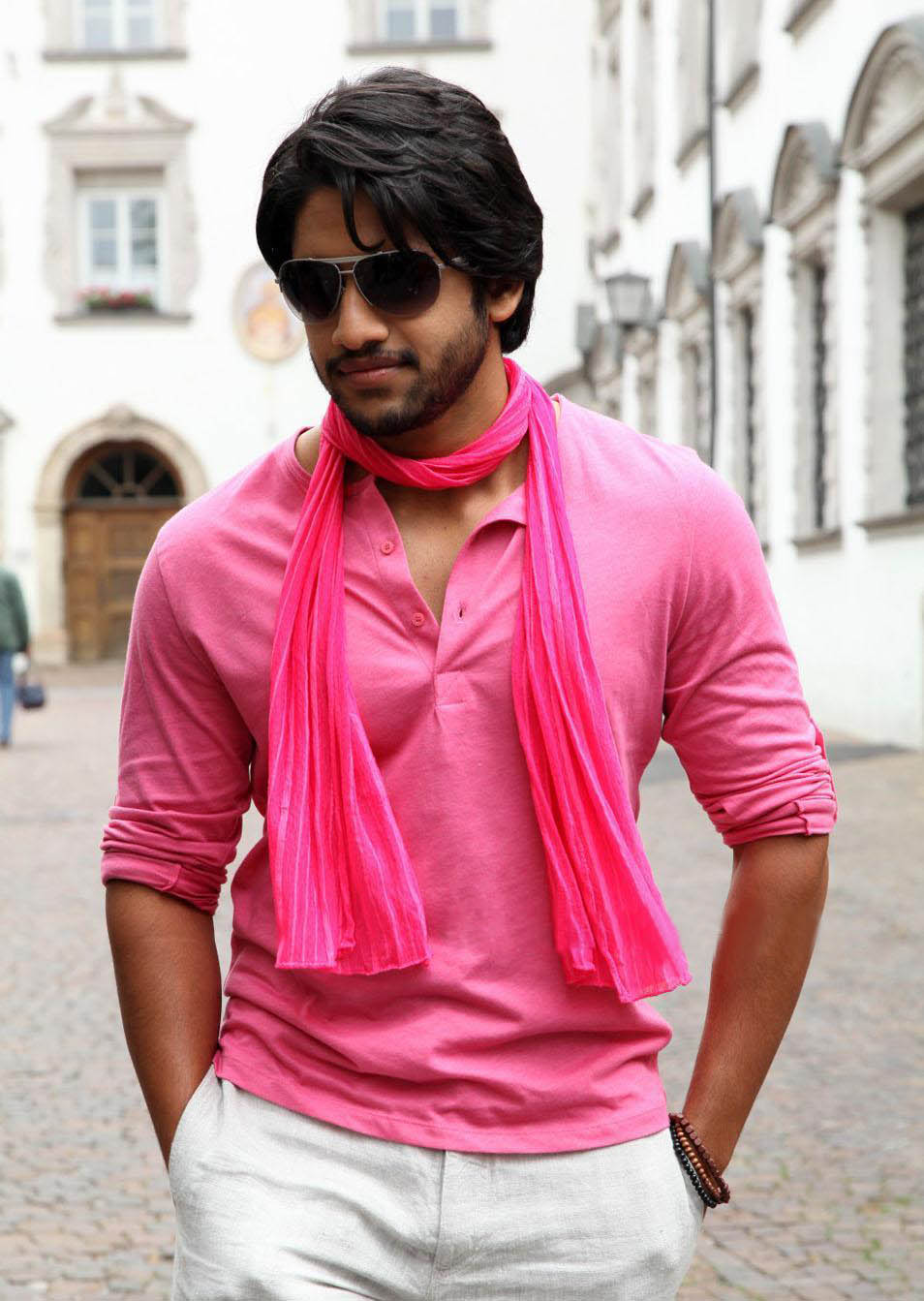
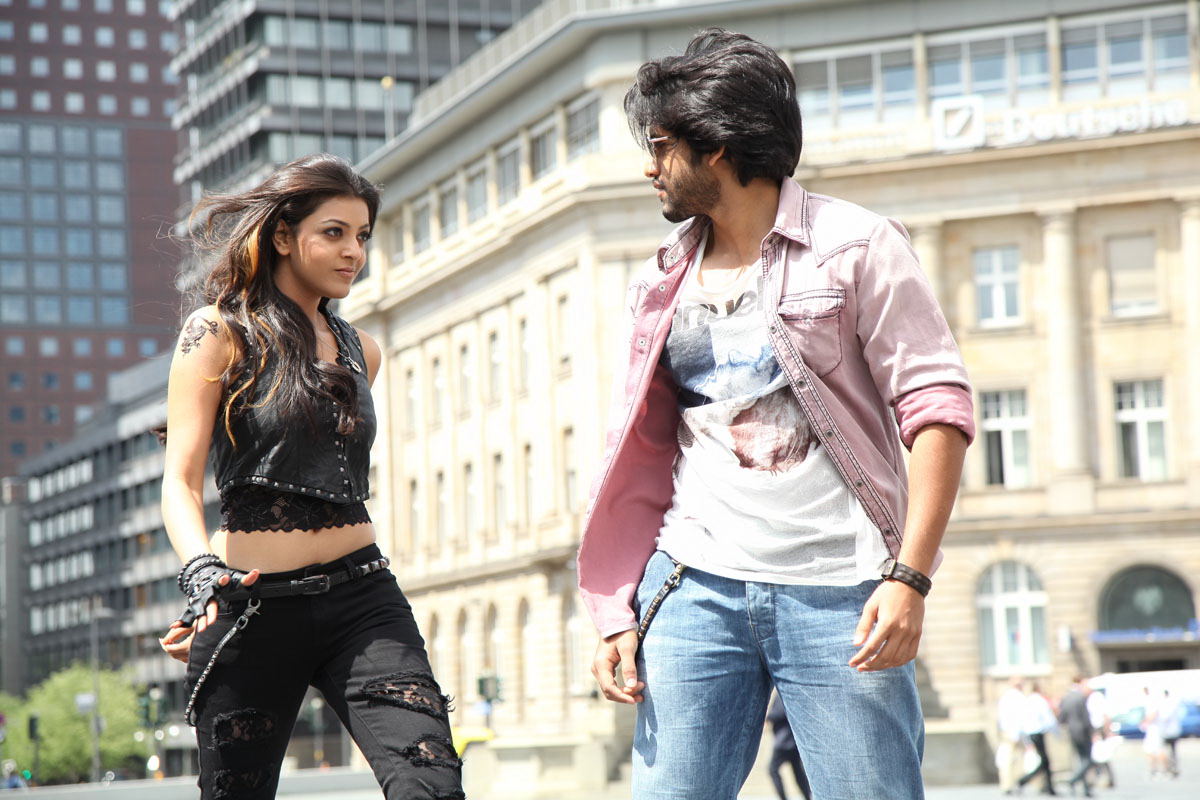
The film looks fantastic and the direction is confident and visually accomplished. The styling is good and both Chaitanya and Kajal look the part. Except one of the hairdressers seems to have a grudge against Kajal and gave her an absolutely terrible fringe. In fact, we suspect we have seen that wig before, when it appeared as The Wig in Shakti. She looks much better in her emo rock-chick look, or Aishwarya Rai wannabe avatar, although losing the blue contacts would have been even better. Vishwa’s fantasy versions of Ria in one song also included Foreman Ria (in hard hat and high-vis overalls), Police Ria and Skanky Carwash Ria so her wardrobe team were kept busy. Chaitanya has a wonderful collection of slightly sparkling superhero and James Bond T-shirts which we were delighted to see he felt were entirely appropriate for day wear.
Chaitanya has developed as an actor, and it’s obvious he has worked hard and really improved his dancing. He handled the demanding action sequences well, and the multiple camera angles and slo-mo replays meant he had to deliver in those scenes or they wouldn’t have worked at all. He does look rather embarrassed by a few of his outfits, but by the time we get to the lilac satin band-leader costume he seems to have become resigned to his fate. The lurid checked lunghi in the final song doesn’t faze him at all but he seems to suffer from Thrust Reluctance.

He’s also committed to the wet look throughout the film, indulging in a number of activities guaranteed to keep him slightly soggy.

Rahul Dev is excellent as the evil RD and his execution of a rival involving a prosthetic leg was rather special. Although Kelly Dorjee doesn’t turn up quite as often he makes up for it by some inspired sneering behind his ever present sunglasses.

But that’s all the good stuff.  The story is weak and the white slave trade link pathetic. The comedy with Brahmi, Ali and various others all falls very flat and mainly involves racist and sexist jokes. It’s all unnecessary and not even remotely funny. Venu Madhav is mildly amusing but totally unnecessary as is MS Narayana. The pace of the first half is too slow as time is spent on laborious set-ups and establishing characters who lacked substance or who disappeared. There were silly errors; in the Super 8 film of baby Ria and her mother, there is someone in shot using a digital video camera. And don’t get us started on Hair Continuity – it was all over the place (literally).

Chaitanya is more amusing in some lighter moments than any of the ‘comedians’ and those scenes suited the masala action style of the film much better. Dhada is style over substance. But it’s worth a watch for the well executed fight scenes and nicely picturised songs from a reasonably appealing soundtrack. Not a great film, but not a terrible one. And if you take nothing else away from Dhada, the phrase ‘Smoking is injurious to health’ became even more ominous.
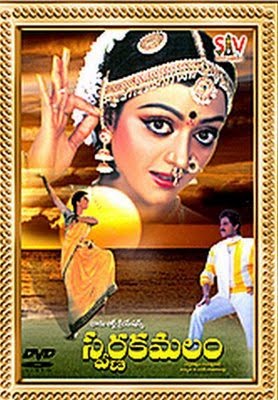
Swarnakamalam

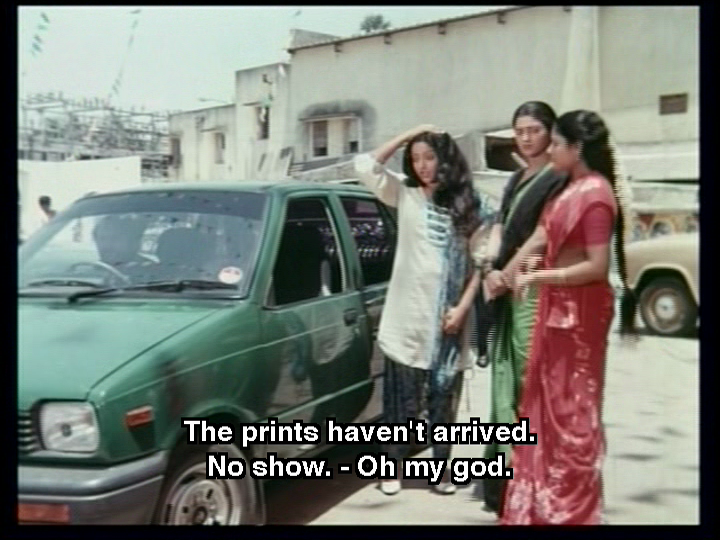
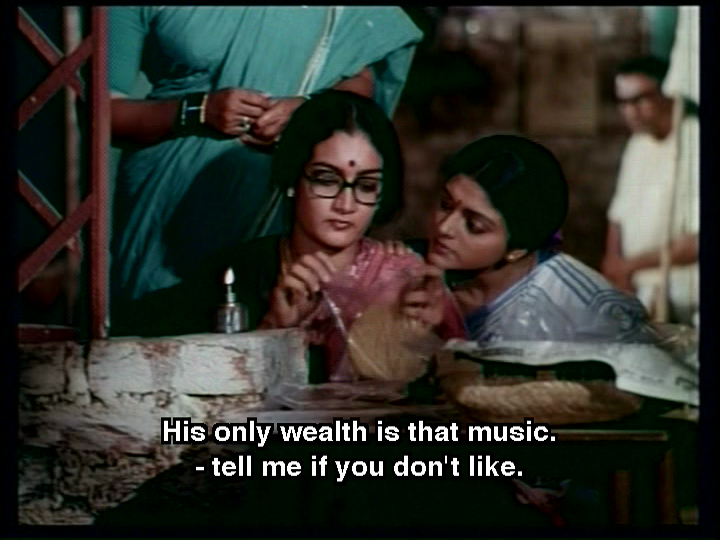
Swarnakamalam has been highly recommended by several readers and other friends, and I saw Bhanupriya’s dances in the film on Minai’s excellent blog. I really like Venkatesh and Bhanupriya. They are appealing, both are good actors, and I always enjoy seeing them on screen. K. Vishwanath wrote and directed, and while this contains several themes in common with his earlier Sagara Sangamam, this is a far less satisfying film. There is some great dancing and a nice domestic setting that helps build the sense of who these people are. But I don’t wholeheartedly like the lead characters and I have issues with several points in the story. My DVD is mostly subtitled but occasionally I guess the subtitle team nipped out for a coffee or something and a few chapters were left untouched. Happily these were mostly scenes involving Tinku the annoying child sidekick, but perhaps there was something essential that I did miss.

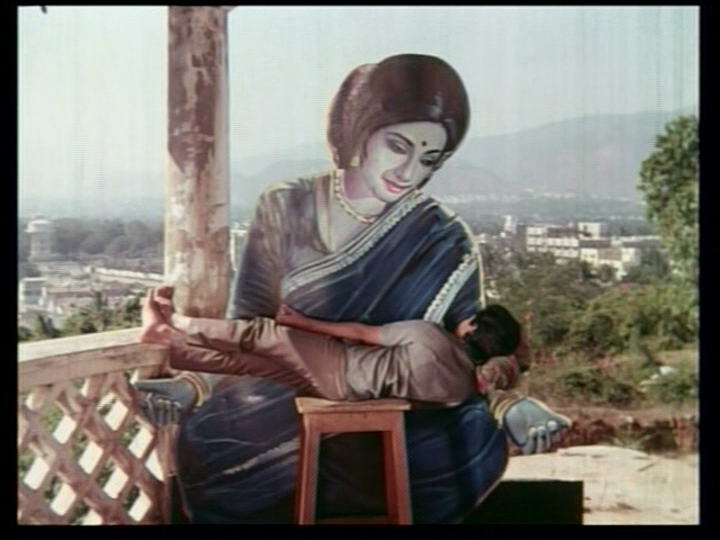
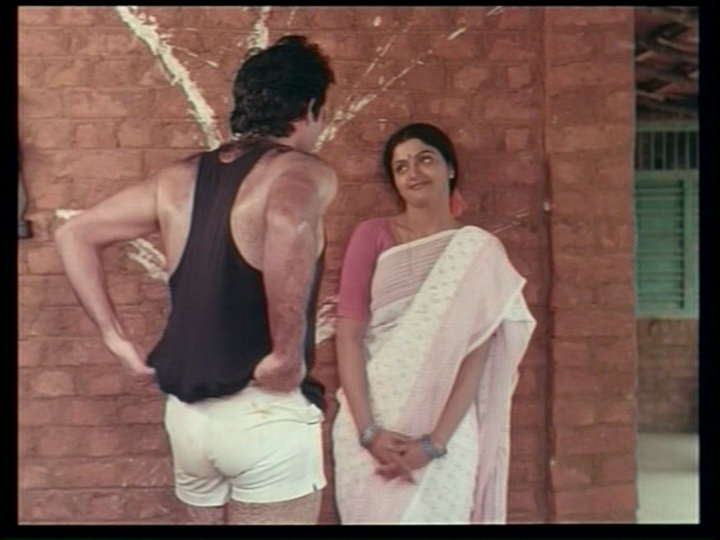
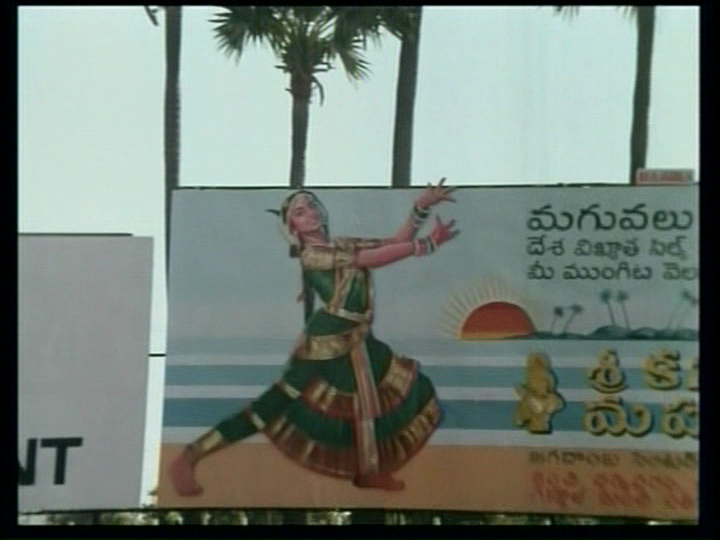
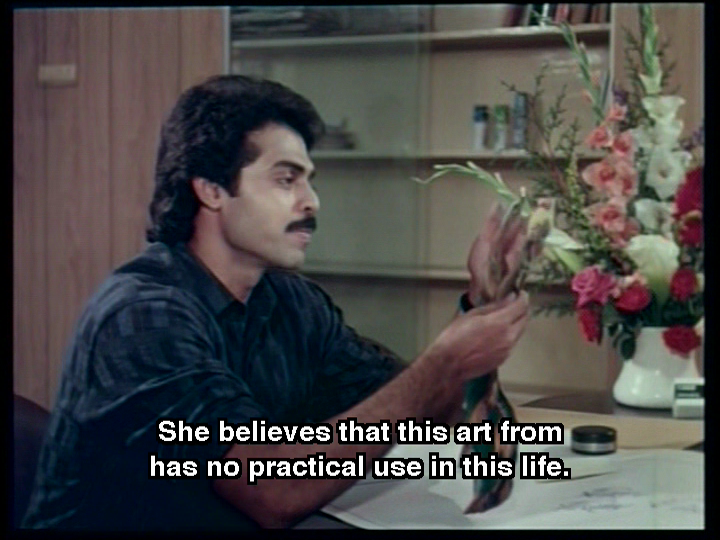
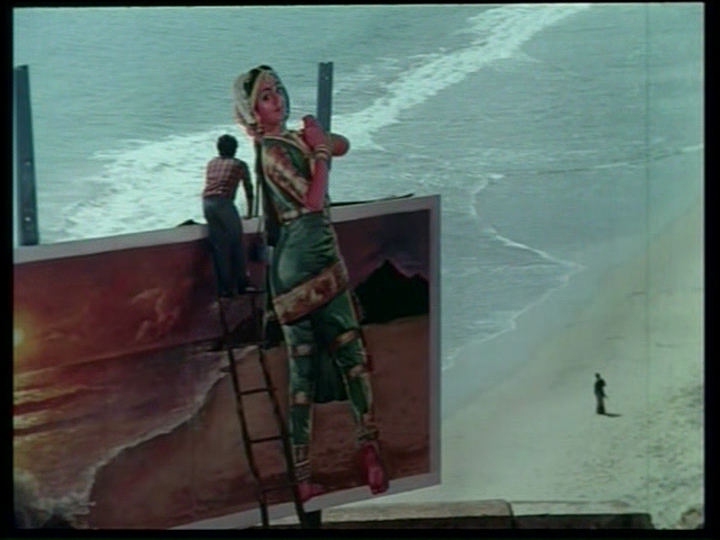
Venkatesh is Chandrasekhar. He is introduced as an artist who paints cinema hoardings and billboards. He has a sidekick, annoying young Tinku, and seems to get by from day to day. He cons his way into renting a room from a pious couple, and initially his character seems to be a bit shady. But as time goes by he seems to have contacts all over town, knows everyone, and can facilitate pension and passport applications. Venkatesh is a really likeable actor. He always seems to be acting with his co-stars rather than acting for the camera, and I love watching him in ensemble scenes as he never seems to switch off when he is in the background. Although I did find myself thinking ‘Oh it’s a good thing his back-hair is distracting me from the too short shorts’. See if you agree!

It’s a shame Chandrasekhar is quite unappealing once the superficial charm is taken out of the equation. He is controlling and a bit of a bully. He always knows best, and pushes people to do what he wants.

He also seems to be quite obsessed with Meenakshi and paints multiple hoardings with her image, and has loads of photos of her strewn about his studio which is a bit creepy. From his rooftop terrace he can see into his neighbours compound.

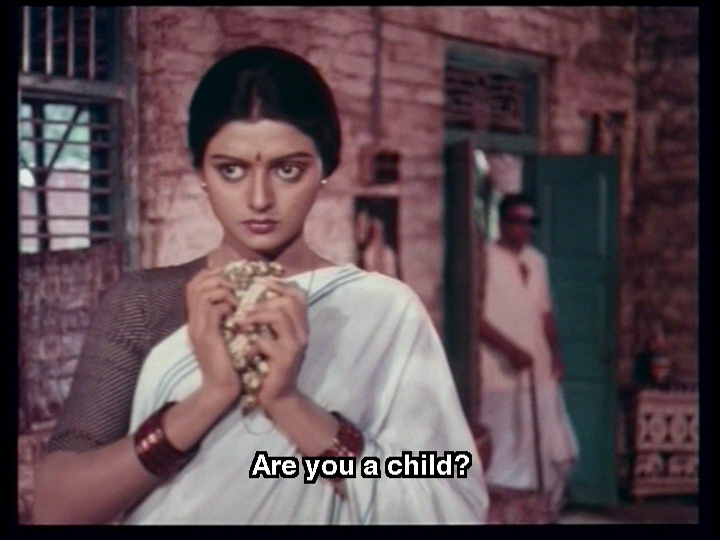
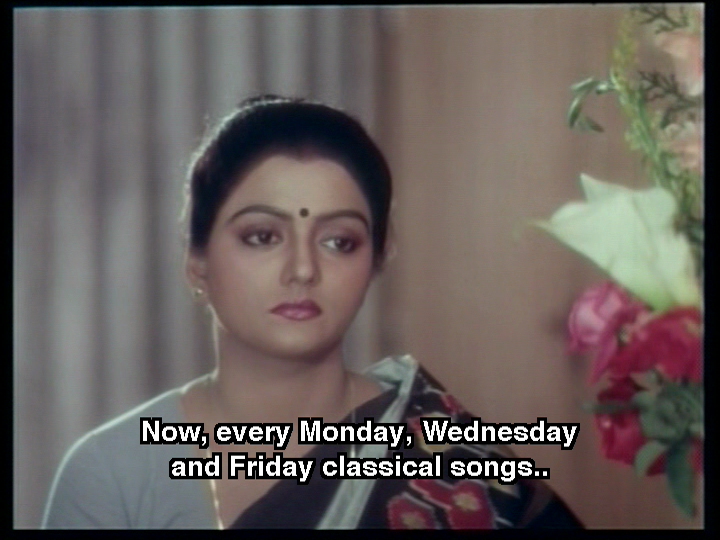
Bhanupriya is Meenakshi, the girl next door. She is the daughter of a celebrated dance guru, and lives in genteel poverty. She doesn’t see the point of dance as it doesn’t put food on the table. Her sister Savitri (Devilalitha) works tirelessly making and selling snacks, and singing with their father. Meenakshi just wants to escape the artistic life and get a job that pays for life’s necessities and a few luxuries. Of course, everyone around her seems to know better. Even allowing for the pressure, Meenakshi is a brat, and seems like a very young teenaged girl. She is sly, sneaks off to the movies and other outings,  and tries to get out of dancing by staging various misfortunes but never speaks to her father about her reservations. Once her father passes away, Meenakshi gets a job and seems to be set to stand on her own feet and live the life she wants. She is strong enough to confront Chandrasekhar about his actions but not strong enough to stop him from interfering.

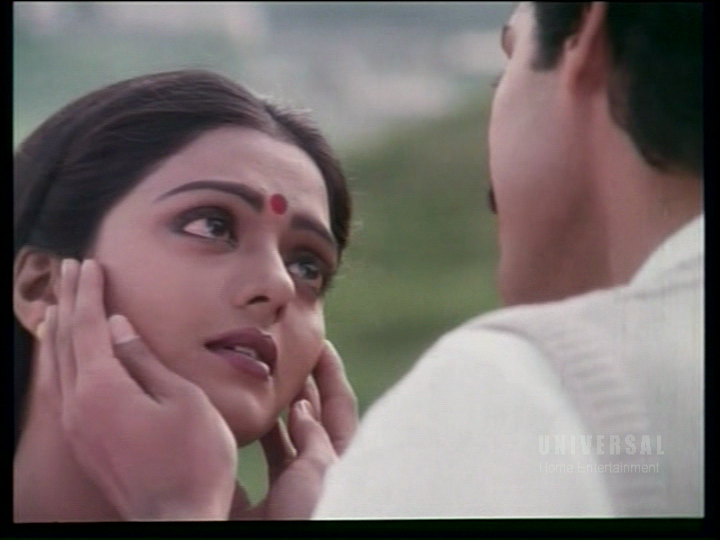
Bhanupriya is beautiful, and I loved the songs that featured her excellent dancing. But there was something about Meenakshi that I just couldn’t like as much as I wanted to and I blame that on the writing for her character. This is one of my favourite songs. I enjoy the way Bhanupriya is initially cranky about having to practice but seems to enjoy dancing more as the audience builds.

The supporting cast are mostly members of the household or compound. There is a pleasantly disorganised informality in the way characters wander in and past each other’s houses and share chores. I loved the set dressing that included little details like the knick knacks in the house.

Savitri and the landlord’s son have a nice romantic sideplot that made me happy as theirs seemed like a genuine partnership founded on mutual affection and respect and they were nice people. There is a comedy sideplot involving Sri Laxmi and her unfortunate husband, and it was tolerable if not hilarious. Tinku, the annoying child sidekick, does have some nice scenes where he is copying Meenakshi’s dance, and becomes very focussed and joyful. The uplifting power of music and dance permeates the film.

Director K Viswanath is known for his message films. But the message in Swarnakamalam seems to get a bit scrambled. Initially we are presented with the ideal of classical art, pure and beautiful. Bureaucrats are criticised for not paying pensions to senior artists and giving them their due respect. But then the message seems to be that art cannot be forced, it must come from the heart and be allowed to adapt lest it stagnate, so there is approval for Meenakshi’s rejection of her artistic heritage. Then Chandrasekhar decides that Meenakshi is born to be a classical dancer despite her own views and badgers her into performing, has her fired from a job she enjoys as it is supposedly beneath a great dancer and generally insists she be his perfect artist according to the ideals of culture and tradition.

Meenakshi wants to dance when and as she feels like it, not as her whole life or for her living. She is railroaded into becoming a cultural performer in a fancy hotel and then Chandrasekhar sets her up with a wealthy American dancer and patron who wants Meenakshi to tour the US.  After a very emotional scene where she learns to value her father’s legacy and embraces the dance, admitting that dancing with love and commitment would make her happy and fulfilled, she is forced to choose between Chandrasekhar and success.

Chandrasekhar wrote Meenakshi a letter to read at the airport as she was about to set off on tour. He writes that no one else but him would ever tolerate Meenakshi’s lying and misbehaviour, no one else but him would force her to be a great dancer and every time her anklets chimed that was his voice, the voice of a man who loved her. I found it really manipulative in forcing a choice that didn’t have to be a choice. Why shouldn’t she have love and artistic success?

So the whole great art as its own reward idea seemed to go out the window, as did the independence of the artist. The message seems to be it’s OK to stalk someone, then bully them into a career they don’t want, until they realise they do want it, then you pull the rug out from under them. Venkatesh and Bhanupriya did have a lovely rapport on screen, but my liking for their performances is just for their acting,  and not the characters behaviours.

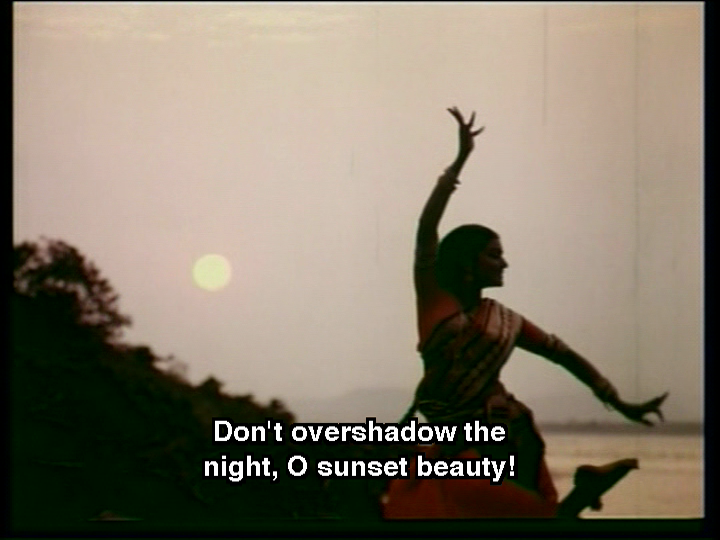
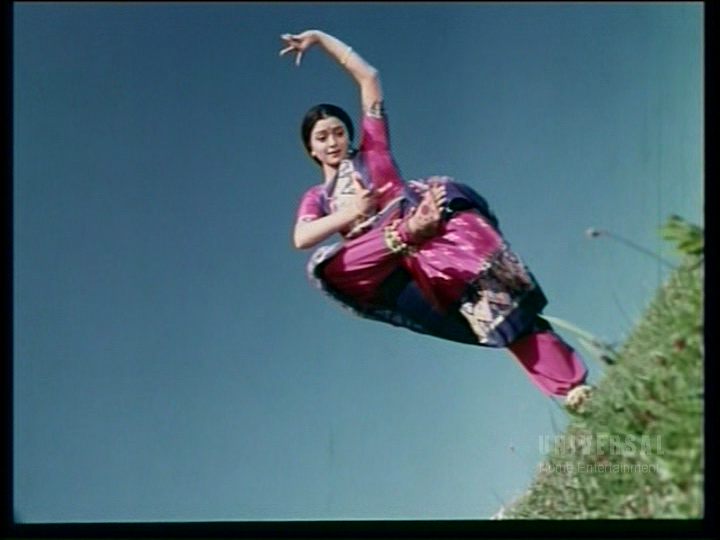
On a purely visual level, Swarnakamalam is gorgeous. The songs are delightful, and allow Bhanupriya to show off her skills and a range of beautiful classical dance costumes, and Venkatesh shows off his strolling and knitwear modelling in some beautiful locations.

The framing of the dance scenes is meticulous and Lok Singh made the most of the scenery and the beautiful lines of Bhanupriya’s dancing. The music by Illayaraja is perfect for the context and the subtitles for the songs did offer some additional insights as well as being lovely.

Watch it for excellent performances and beautiful dancing, sadly not matched by the story or characters. I just can’t warm to the film, but I love the songs. 3 stars.

Heather says: This is a beautifully pictured film which focuses on the art of Indian Classical dance and to a lesser extent Carnatic music. I love the two sisters, Meenakshi and Savitri, and their very genuine interaction. It makes it very natural that the only person Meenakshi conveys her discontent to is her sister. Savitri’s placid nature means that she is happier and more settled, but she accepts Meenakshi’s view and does her best to help her attain her dreams after their father dies. This relationship and that of the two girls with their father makes a very solid foundation to the film. Enter Venkatesh as Chandrasekar – the interfering neighbour. If I was Meenakshi, I don’t think I would have had as much patience with Chandrasekhar’s meddling in my life. Although it’s clear that he has her best interests at heart he is determined to make her conform to his view of her. The film tries to point out that you have to have passion and belief in order to truly excel, and I’m not sure that Meenakshi really does have what it takes. She enjoys dancing for herself but doesn’t enjoy performing so it does seem cruel that everyone keeps forcing her, when all she wants is a normal life. I also agree with Temple that it was very stalker-ish for Chandrasekhar to paint her picture everywhere. I found that really creepy, especially considering that he was essentially also watching her all the time.  Savitri’s relationship seems much more genuine and is more enjoyable to watch develop. Top marks as well for showing the landlord’s son playing the violin properly. It makes me cringe every time I see someone massacring a violin on screen and this is a lovely change. Even if he isn’t actually playing the notes that we heard!

Despite my quibbles with Chandrasekhar’s character, I thinkthatVenkatesh was excellent in this role. He was passionate and devoted and really looked the part. Due to dodgy subtitles I didn’t get a clear idea of his relationship to Tinku but it was effective to have the comedy mainly between Chandrasekhar and Tinku rather than the usual obtrusive and subsequently unfunny ‘comedy track’. The humour between the couple with the wife devoted to blessing everyone was also funny and well integrated into the movie.

The standout of the film though is the dancing, and Bhanupriya was fantastic in these scenes. It was interesting to have real life dance guru Sharon Loven in the film, although her character didn’t really make much sense in the context of the rest of the story. The whole trip to America idea felt tacked on as a reason for Chandrasekhar and Meenakshi to finally admit what they felt for each other. I have 2 copies of this film and since they both had patchy subtitles and wouldn’t play right to the end I was quite frustrated by the time Meenakshi left for the airport. I watched the climax online with no subtitles and would love to know what was written in that last letter since Meenakshi’s decision at the end might make more sense to me. I was hoping she would leave and make a life for herself in America where she would finally be able to choose to do what she wanted to do. Still, the film looks beautiful and both the dancing and the music are excellent. Worth watching for those alone. 3 ½ stars.

An Open Letter on the Subject of Filmi Snake Identification and Research

The hallowed halls of the Academy of Applied Filmi Snake Research and Ethics are buzzing with the latest controversy. Our visiting snake expert responds to the (unfair, unjust and unreasonable) criticism levelled at her work by an anonymous  weasel professor. 

Professor,

I am gratified that you have provided the opportunity for further discourse and academic debate in response to the Filmi Snake Spotter’s Field Guide (The Guide)  in your comment about Beth’s scholarly analysis of the snake film Naag Lok.  Before I provide some additional comments in relation to the criticisms levelled at my work, I would also like to acknowledge the contribution of Beth (Illinois, 2011) to the evidence base of filmi snake identification.  As you noted, the principles of scientific rigour to which she has adhered, are laudable and set a new standard in the field.

Whilst Beth (ibid) has certainly identified two new areas for research in the roles of the transformative snake skin lens overlay and the serpentine tikka, I would like to draw your attention to some comments in the introductory section of The Guide:  (a.) “In this guide we will illustrate only a small sample of the many hundreds of filmi snake species featured in sub continental movies” (p. 1.)  and (b.) “Although scientific validation has been undertaken through consultation with both acknowledged experts and enthusiastic amateurs in the area, hypotheses are always subject to revision with an expanded evidence base.”

It is important, I believe, to acknowledge the audience for whom one is writing.  Whilst perhaps it can be argued that the scope of The Guide is broad, as explicitly stated, the intention was the provide some basic, yet practically helpful information, thus providing some guidelines and structure for filmi snake identification, for both professionals and lay persons alike.  At no point, I would like to emphasise, was The Guide touted as an exhaustive monograph.

I would specifically like to address the assertion that omissions of reference were made to the characteristic of venom and the role of the mongoose in filmi snake identification.

1.  Venom

Far from neglecting the role of venom in filmi identification, it is important to note that the results in this area are sufficiently inconclusive at this stage, for exclusion from The Guide.

The sample at the current time is simply too small to achieve any acceptable level of statistical significance.  Observational data suggests that venom may be a useful indicator, but we have conflicting information about both the impact of gender on venom, as well as some conflicting data about colour of venom (though it appears that venom is on the colour spectrum of clear to blue-violet).  The two things that the data demonstrates as emerging trends are (i) that all bodily fluids of the filmi snake appear to be venomous. And (ii) filmi snakes, unlike non-filmi snakes, appear to be able to suck their venom out of any fimi-snake victim and restore life (the Reverse Suck Manoeuvre).

2.  The Mongoose

The inclusion or exclusion of the role of the mongoose is indeed a vexed one.  As part of the extensive consultative process with a number of scientific and government authorities prior to the publication of The Guide, a submission was received form the Royal Society for the Prevention of Cruelty of Animals requesting that no reference be made to the role of the mongoose because of the clear instances of both mongooses and snakes being hurt, and even killed, in the course of filming snake movies.  Their substantial and compelling body of research suggests that publicity in these areas increases the likelihood of recurrence (to a 0.01 level of statistical significance).

This of course, posed a significant ethical dilemma regarding to the need for open scientific debate versus the need for a responsible approach to animal welfare.  In consultation with a number of eminent ethicists, it was determined that the scientific debate was best placed to occur in professional and academic snake forums rather than in a more populist publication like the Guide.  On that basis, the decision to omit was resolved.  For the edification of the scientific community however, a forthcoming article on the subject has been submitted and accepted for publication in the Journal of the Academy of Applied Filmi Snake Research and Ethics.

I hope this letter goes some way to addressing some of the concerns expressed about the perceived shortcomings of The Filmi Snake Spotter’s Field Guide and serves to further contribute to the spirit of open discussion and debate in the important area of filmi snake identification and research.

jenni