Mooga Manasulu (1963)

Mooga Manasulu-title

Mooga Manasulu is a reincarnation romance directed by Adurthi Subba Rao and starring Savitri and Akkineni Nageswara Rao. Some time ago I asked around for reincarnation film recommendations, and several people mentioned Milan (Hindi, 1967). While tracking that down, I discovered Mooga Manasulu is the original. I slightly prefer the Telugu original to the Hindi remake although I like both films. The music by K V Mahadevan is just lovely and I think the cast has a small edge over their Hindi counterparts.

I seem to have a higher melodrama tolerance in reincarnation films. Perhaps it is because the core theme allows that the end is not the end so even if tragic events occur, there is still a chance for characters to have the life they deserve or at least get a do over.  When I know the outcome of a story I tend to focus more on the characters and how they get to that resolution. Mooga Manasulu’s strength is in the lead actors and their characterisations, some determined forays into scenery chewing notwithstanding. I do find the acting a little dated and stylised, but that is the same when I watch most films from the 50s and 60s in any language.

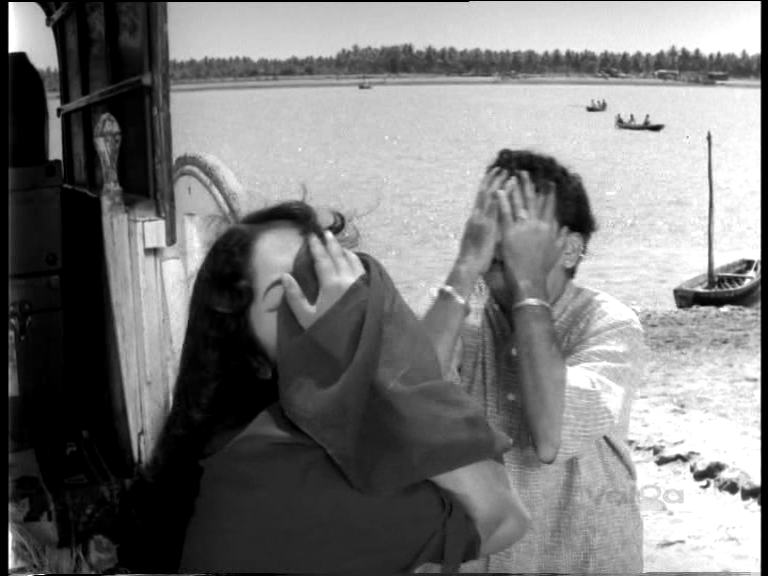
The film starts with newlyweds Gopi (ANR) and Radha (Savitri) leaving for their honeymoon. En route Gopi has flashbacks and recognises landmarks. His past comes back in a rush and he narrates the story to Radha, also present in that past life. So in effect, it starts with a happy ending and that helped tide me through. They meet Gauri (Jamuna) who had played such a role in their past, and is now an old woman waiting for death. The story shifts to the past and we relive the love triangle. ANR has a nice rapport with both actresses and it was easy to empathise with the three characters over their circumstance if not their actions.
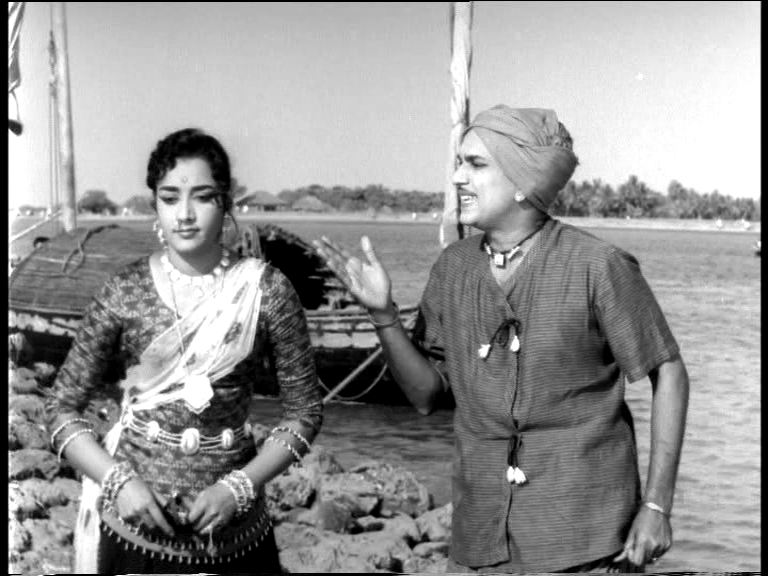
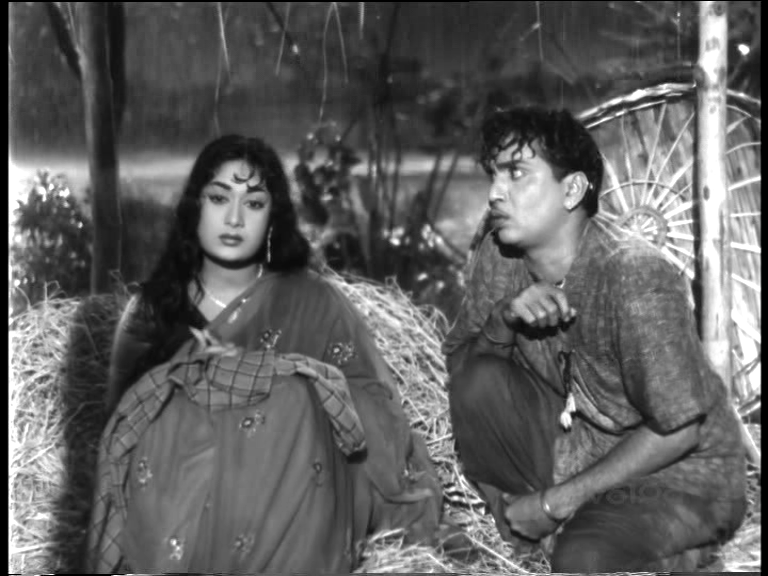
Mooga Manasulu-Gopi and GowriMooga Manasulu-ANR and Savitri

ANR looks every inch the middle class city boy in his modern life, and is charming if a bit over the top as past life Gopi. The present day frames the core events so Gopi the orphan boatman is the central figure. He is simple, occasionally verging on stupid as is often the case when ‘simplicity’ is being portrayed. But by and large ANR doesn’t overdo the wide eyed naivete too much. There is a clear difference between Gopi playing dumb to irritate Gauri and Gopi being genuinely clueless. He is argumentative and brotherly with Gauri, showing an affectionate but not romantic interest. Gopi is keenly aware of the gulf between himself and Radha but has an innocent idealistic love for her. They sing together and he presents her with a flower every day. He might pine for years after she marries, but he has no genuine expectation of being the groom.
Mooga Manasulu-SavitriMooga Manasulu-Radha and Rambabu

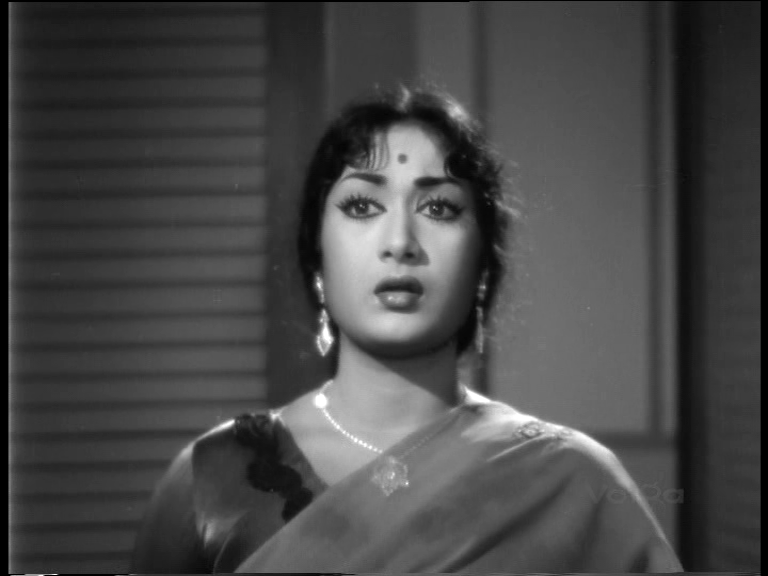
Savitri is Radha. She is a very proper young lady but she has a definite personality and doesn’t take nonsense from swoony college boys.I enjoyed Savitri’s facial expressions when her suitor Rambabu was waxing lyrical about letting her win a singing competition. Her response – do what you like, I’ll win it anyway. Savitri maintains a sweetly neutral facial expression while often her eyes tell a different story. In many ways Radha is the initiator in her largely imaginary relationship with Gopi. She steals his food, she buys him clothes and sits on the floor with him. She knows the rules and decides which ones to break. Her love for him is more romantic where his affection is idealised and a bit abstract.

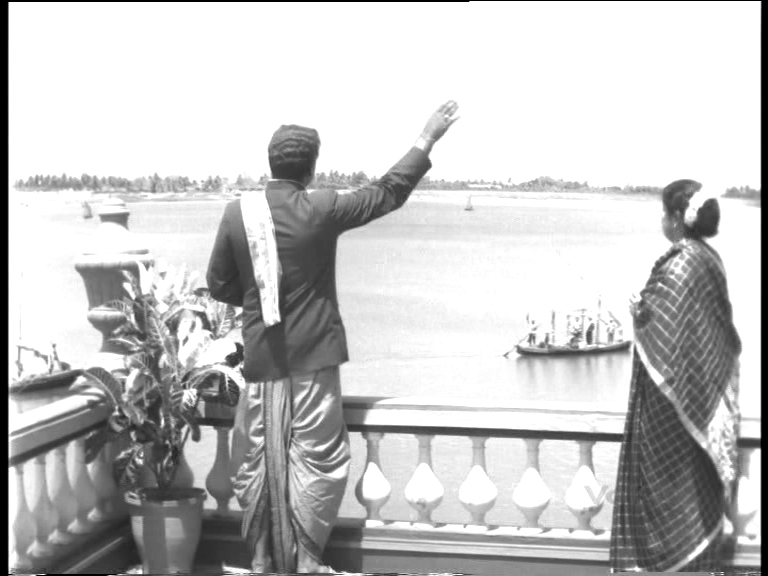
In song fantasies she imagines Gopi surrounded by balloons – that can only be love! But she does as her family wishes, and marries and moves away (ferried, of course, by Gopi). When she returns she is a widow and Gopi is devastated that her life has taken such a turn.

Mooga Manasulu-marriedMooga Manasulu-leaving home

Mooga Manasulu-double the woe

I tried to be sympathetic but the reactions of Gopi to Radha’s misfortune and her grief at his horror were just a bit too much. But it is a melodrama. Their closeness is the talk of town and that is bad news for all.
Mooga Manasulu-Jamuna as GauriMooga Manasulu-Gauri looks after Gopi

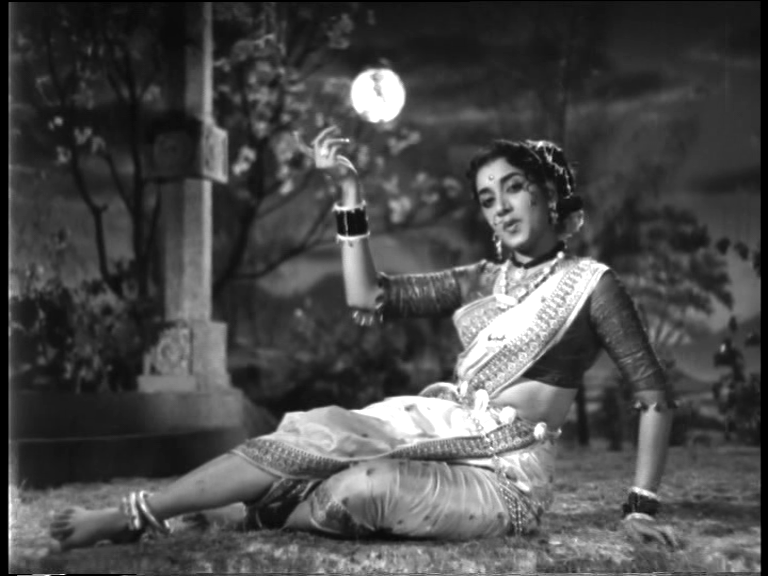
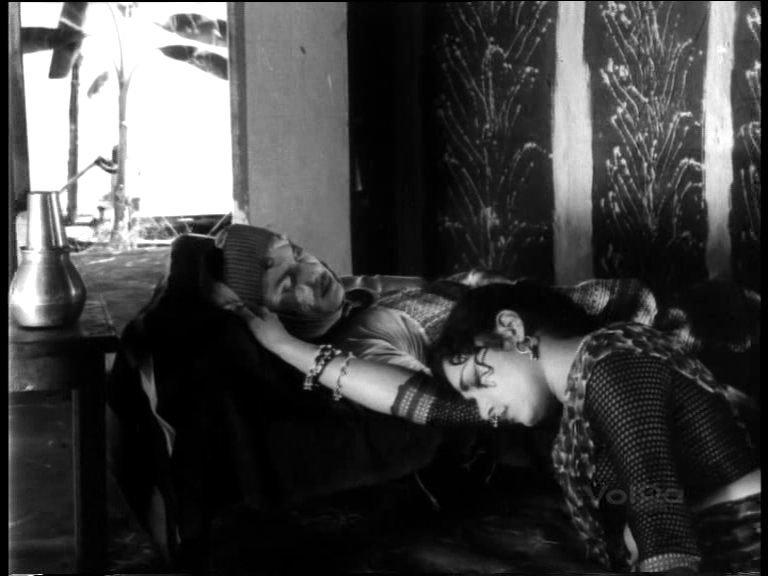
Thank heavens for Jamuna as at least someone could dance a bit to the wonderful songs. (Reincarnation does nothing to improve my low montage and weepy duet tolerance.) Gauri is determined to marry Gopi and had things gone to plan, she would have. Jamuna is occasionally grating as Gauri is so loud and childish but like Gopi, a lot of her acting up is done for effect. She does have a sensitive side and seems more of a young woman and less of a silly girl when Gopi is beaten up and needs care. Gauri is also the object of lust for Radha’s uncle Rajendra (Nagabhushanam) and he is not fussy about whether she consents or not. She had no luck at all with the men in her life, and her decision making was not always helpful. Her impulsiveness inadvertently brings doom upon Gopi and Radha, and she cannot stop the backlash. Gauri is overshadowed by the connection between Gopi and Radha, yet her role is pivotal and Jamuna really holds her own. In fact, she went on to reprise the role in the Hindi version along with Sunil Dutt and Nutan.

While there are lashings of impassioned dialogues, there is also a strong visual language underscoring the events too. There are recurring motifs of lamps, flames and lights that recall the momentary flickering that is a human lifespan.
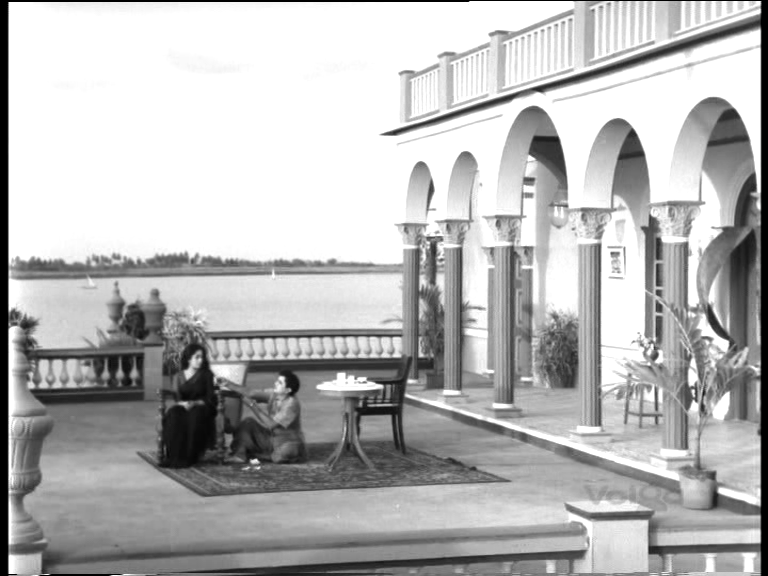
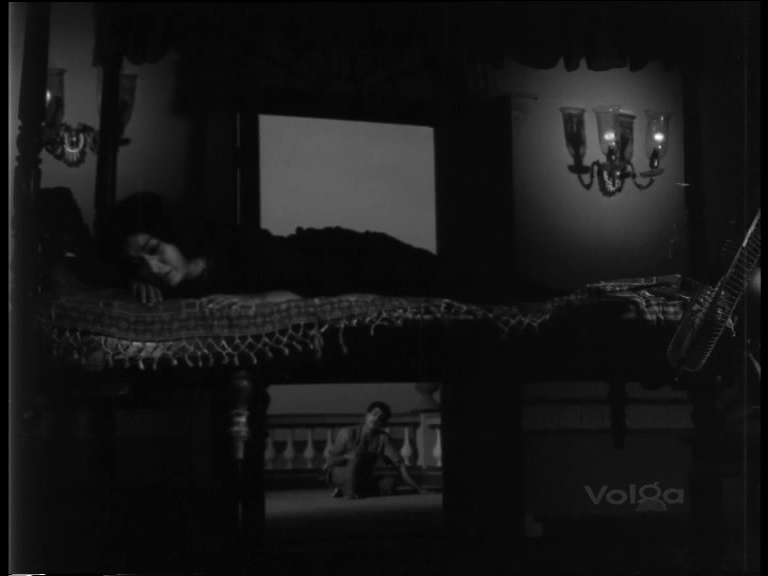
Mooga Manasulu-sorrowMooga Manasulu-misery

Some things are shown rather than told – when Radha pinches Gopi’s tiffin instead of her own as a means of putting herself closer to him. And it is just so pretty to look at. Whoever was in charge of boats had their hands full as in the background of almost every scene there are sailboats gliding along the Godavari. Gopi tells Radha that the Godavari is his mother and will always carry him safely in her hands. There is a drowning in the film, and while the actual scene is a bit clumsy and not at all convincing or perilous looking, it resonates with the constant presence of the river in the characters’ lives.
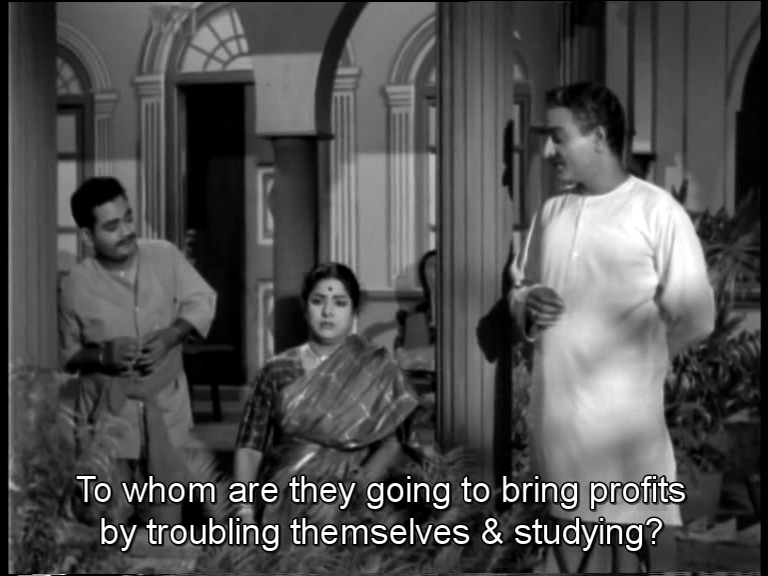
Mooga Manasulu-Radhas family

The support cast are minor in terms of characterisation although they do instigate some key incidents. I did enjoy Suryakantham’s turn as the not very wicked stepmother.
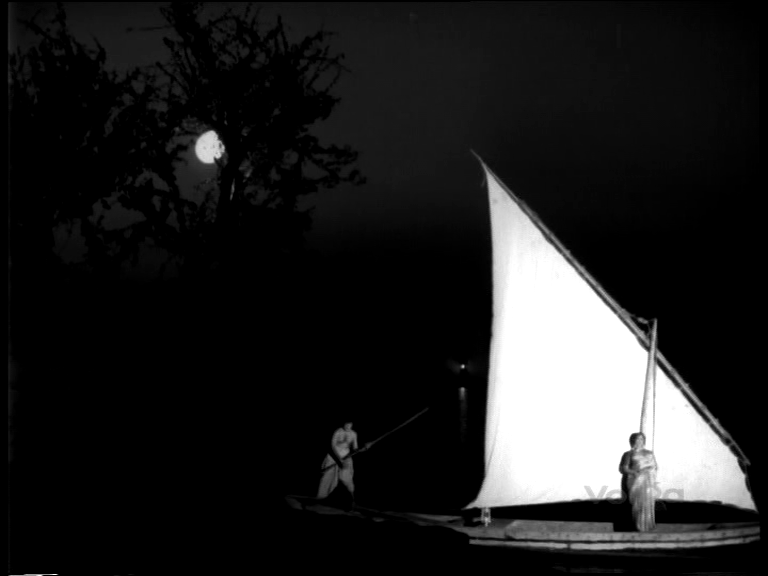
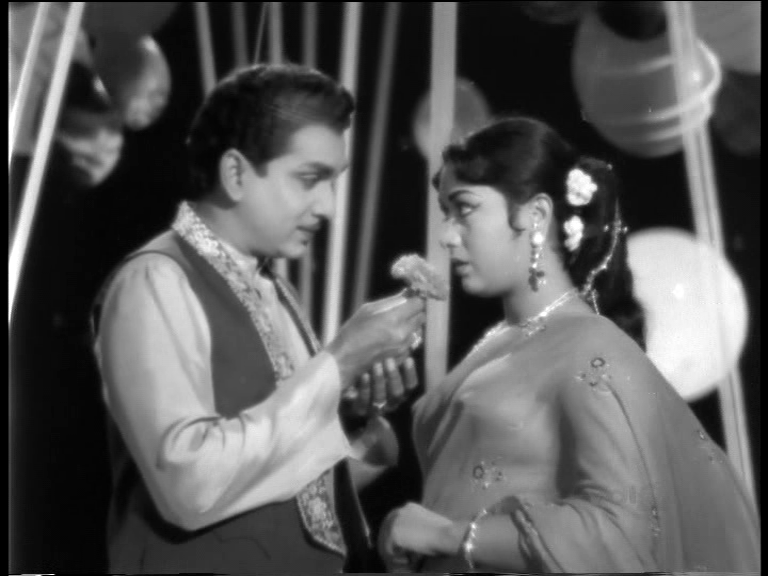
Mooga Manasulu-Gopi and RadhaMooga Manasulu-balloons

The soundtrack by K V Mahadevan  is delightful and suits the mood and characters perfectly. I couldn’t locate subtitles for the songs but from all accounts the lyrics are still highly appreciated. The songs amplify what is happening in the drama rather than breaking from the narrative. The picturisations are lyrical and moody often enhancing the feeling of impending disaster.

See this for the excellent lead trio,  if you like your melodrama laid on with a trowel, or the notion of recalling a past life appeals. 3 ½ stars! (Deductions for excessive Nahiin Face)

This slideshow requires JavaScript.

Nijam

Nijam_title

Nijam (Truth) is an odd film. It is far too long, contains some truly repellent characters and the story requires maximum elasticity from your Disbelief Suspenders. And yet I find it draws me in. Produced, written and directed by Teja, Nijam deals with truth, corruption and the eternal Telugu film question of justice. Nijam won several awards and there were a few good films released in 2003 so I guess this really resonated with the audiences.

Nijam_Rama

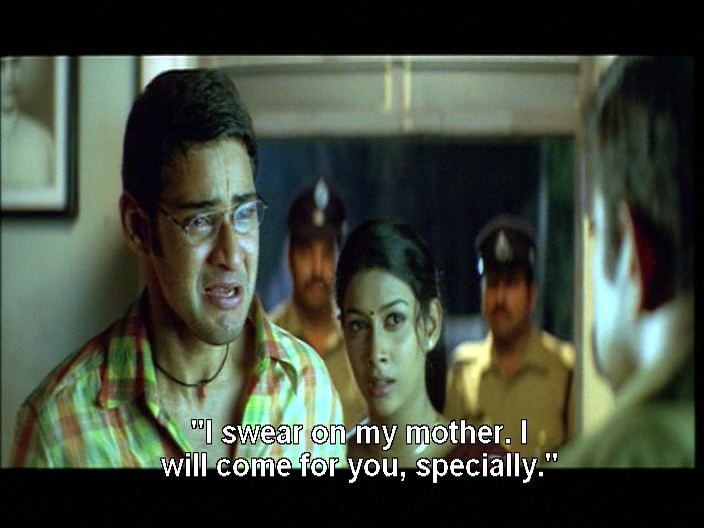
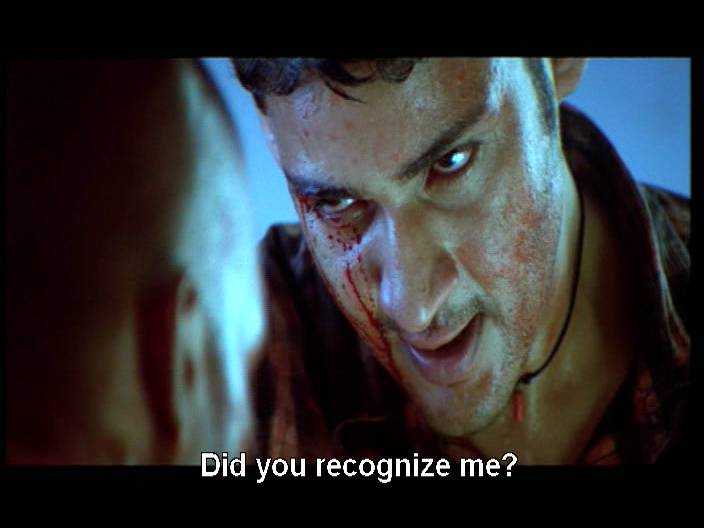
Mahesh Babu is Rama, a shy studious weakling with no visible heroic qualities (apart from being fair skinned and irresistible to women). He idolises his fireman father (Ranganath) but it is the women in his life who really mould Rama’s character. His mother (Rameshwari) is a strong willed and protective woman.  His neighbour Janaki (Rakshita) is also strong willed and is determined to get her hands on Rama. The first 90 minutes or is just preamble to the real crux of the story and could have been condensed considerably. Following a run in with local heavy Devudu (Gopichand), Venkateswarlu is framed for murder. He is innocent but the police, especially Brahmaji, are corrupt and the process does not favour the truth.  Rama has to pay bribes just to visit his father and is asked for payment by a witness who could clear his dad. Brahmaji lets Devudu in the cell to take his revenge on Venkateswarlu and things start to go crazy. Rama discovers his father has been injured and tries to get him out of jail. At every turn people ask for bribes to do what is right or, even worse, just to do their job. Rama runs from pillar to post trying to raise the money he needs in time to save his father. Brahmaji colludes in an elaborate scheme to ensure Venkateswarlu dies outside of the jail. Rama is devastated by his father’s death but his mother is enraged. She decides her son will take revenge on those who lied and starts him on a training montage to build his strength and skills. She helps him choose targets in the same way she used to help with his schoolwork. Rameshwari accompanies him on missions and is active in taking vengeance. Things come to a head when Rama and his ma come to the attention of CBI officer (Prakash Raj) and the unhinged and homicidal Devudu.

Nijam_Rama is helplessNijam_baby faced killer

Rama is a challenging character as he spends half the film being a nerdy nobody and then becomes an invincible hero. Mahesh shows the transition well although I struggle to believe he was as affronted by the sight of a female ankle as his gasping and shrieking was intended to convey. He was vulnerable and a bit pathetic as Rama, while there were glimpses of a more aggressive side under his peaceful exterior. He modified his body language and posture as well as his voice to project that less threatening image. Early scenes are often played for laughs, a strong contrast to what is to come. There is a steep trajectory from a scuffle at the police station to the final bloody conflict where he uses anything and everything at his disposal. Mahesh certainly has the intensity to make it seem that this transformation could happen. Rama is firmly a mummy’s boy and that relationship was sustained, adding another dimension to the hero-on-a-mission.

Nijam_breakfastNijam_Rameshwari gives the orders

Rameshwari is very good as the mother. She doesn’t take nonsense from anyone, but she had a softer side too. There were some really nice domestic moments in the first half of the film. As soon as her husband dies she starts to think of how she can continue to live in the world that has so betrayed her family. The answer is to change the world and she gets on task immediately. This is such an unhealthy parent child relationship but the film wants us to understand that they were forced to become serial killers because corrupt society and the law did not allow them to remain innocent. She never repents of her actions but is worried about how it might impact her beloved son. The film ends with her being congratulated for being a righteous woman and building the future of the nation. A future built on serial killer vigilantes? Oh well, as long as they only kill the bad people…

Nijam_Rakshita

Rakshita was not bad but she had a thankless and poorly written role. I’ve read several reviews that think Janakis’s harassment of Rama is some manifestation of a woman owning her sexuality and should be celebrated. Some of those reviewers would be the first to cry ‘creepy/rapey/stalker’ when a male character behaves in the same way so I am not sure why they think this is a good thing. The whole drawn out gag with her pressing her breasts against Rama and teasing him with her newspaper padding went on for far too long. She does get a few good lines and I liked that she was unafraid, but I’m not sure if that was bravery or lack of self awareness. This song (which I could only find online in the Tamil version) is quite amusing though as Rama rebukes Janaki for behaving as though he is hers for the taking.

I eventually warmed a little to Janaki a little. She stops just being irritating and does some practical and smart things which was a relief. While I like seeing a heroine with more to do than look pretty this is not really a character I want to see more of.

Nijam_Gopichand

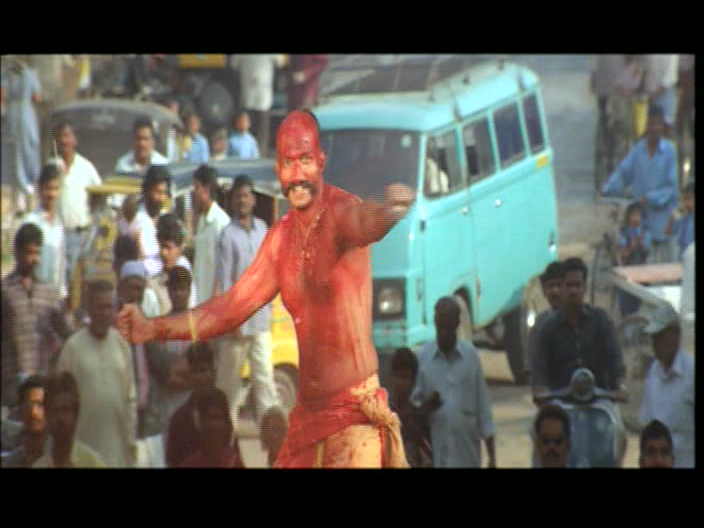
Gopichand is over the top yet effective as psycho Devudu who believes he is a god. He killed his boss Sidda Reddy (Jayaprakash Reddy) because Reddy took Devudu’s girl Malli (Raasi). He killed Venkateswarlu because Malli’s brother was accidentally killed in their confrontation. When he wasn’t getting all hands on with Malli he killed and killed and killed. Gopichand really goes for it boots and all, and Devudu creates some of the most striking visuals as his mania incorporates religious motifs.

Nijam_Malli

Malli is his equal in murderous intent and has no qualms about sticking a knife into Rama when the chance presents. She is another of the driving forces in Nijam – the women who decide who and what must be punished.

Nijam_The whiteboard

Prakash Raj is the honest and competent police officer set to track down the mystery serial killer. Nobody does authoritarian with heart of gold as well as Prakash Raj. His character is a voice of sanity and reason, but then makes a decision that is totally at odds with his stated goals of upholding the law. Justice seems to be about intent and not actions.

The design of Nijam is one of its strengths. The houses and local markets all look realistic enough and the big set pieces for songs and fights are well shot. Red is a significant colour and not always as a tide of blood washing across the screen.  Red can be the blessing of vermillion or the pain of chilli powder in a wound. It’s all quite intense.

Nijam_a metaphorical snake perhaps

The songs often seemed out of place, especially once the death toll started to rise. The flirty duets gave way to more emotionally loaded songs but they interrupt the flow and slow the film down even more. The songs are shared out among the cast so everyone gets a chance to strut their stuff.

The pace is so slow it often feels like the story is happening in real time. It’s not a film I rewatch often but I think this is one of Mahesh’s stronger performances and more unusual roles. Teja just needed a bit more discipline when it came to editing and trimming down his screenplay. As a plus,  it does have strong female characters – I just don’t like them very much. 3 stars!

Mirchi

Mirchi-Movie-PosterMirchi is a mass action romance revenge saga, offering few surprises in the story but with great casting and some solid performances. Writer/director Koratala Siva gets bogged down in a long flashback and loses the momentum a bit towards the second half, but generally moves along at a reasonable clip from fight to song to romance to fight and back again. Like many mass films, it starts light and fluffy but then the body count starts to rise so you do need to be a bit gore tolerant to fully enjoy Mirchi.

Jai (Prabhas) is an architect in Milan. He meets Manasa (Richa Gangopadhyay) and saves her from some thugs. They become friendly and he learns of her family – dominated by a violent assortment of men living in a big old house – and Jai decides to fix her life. Of course, Jai has an ulterior motive for wanting to reform her family, and that is revealed through a very long and detailed flashback. Jai is the son of Manasa’s family’s enemy, Deva (Sathyaraj). How can Jai reform her family, reclaim his place with his own estranged family, eliminate any enemies who refuse to comply and oh yes – what will happen to Manasa when he is reunited with his first love, Vennela (Anushka Shetty)?

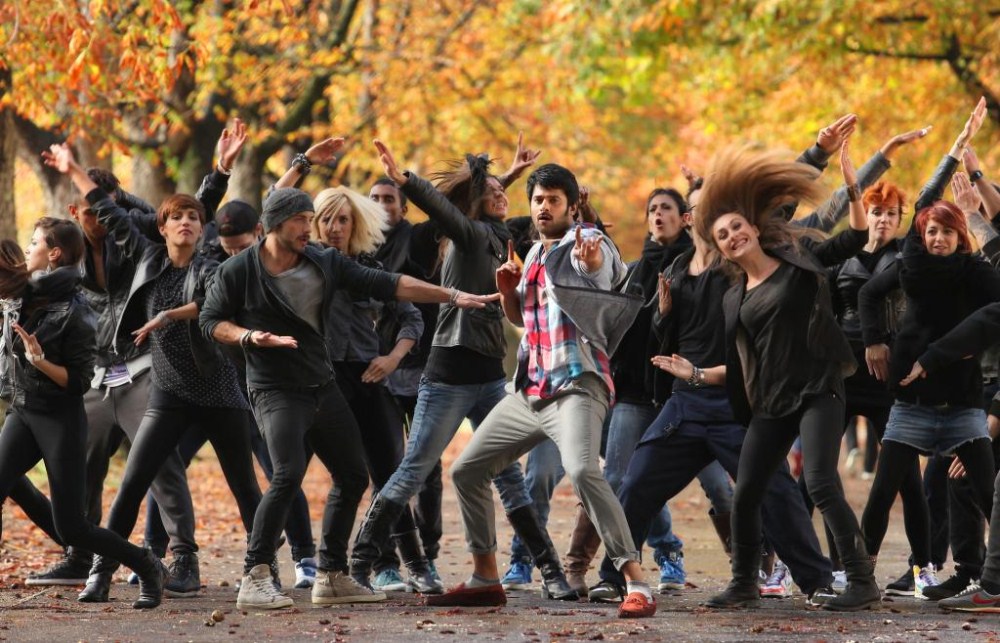
mirchi_movie_prabhas dancersprabhas-mirchi

Prabhas is made for this kind of role. Jai is a nice guy, although of course he can kill evil doers with a single blow. Prabhas has such a likeable screen persona and the action scenes are well within his capability. He has nice chemistry with both leading ladies although as the story unfurls there is little ambiguity about who he would choose.  There is not a lot of complexity or nuance, but the role contains enough variety to give Prabhas a bit to work with. Jai does have to find a way that doesn’t totally rely on revenge and violence so there is a clear before and after in his character. One of the highlights is the slightly more prominent roles given to some supporting actors, and those scenes give Prabhas more scope for lighter moments. Jai’s relationship with his father is played out nicely too, showing the slightly more sympathetic side of the feud.

Favourite That Guy Subbaraju is Manasa’s brother. He is first seen pursuing some unfortunate bloke through college and delivering a serious beating. But Jai can see that apparently all he needed to give up his bullying ways was … discovering girls. Yes, Subbaraju got in touch with his sensitive side after dancing to Moves Like Jagger with the girl who fancied him. Who knew Maroon 5 was good for anything? But if that’s what it takes to get a good looking bloke to eschew dismemberment and take up flirting, well then I suppose that is not a bad thing. This dance outbreak also had the effect of making him dress better, pay his rent on time and generally improve his manners.  From then on he spends the rest of the film on the phone to the girl, very coy and giggly as he mouths what I can only assume are dialogues along the line of ‘no you hang up…no you…no you hang up first’ and the like. Silly but amusing, and nice to see him in a slightly different role.

Mirchi-Jai and Manasa

Richa has a one note character so there isn’t much she can do with Manasa, although she and Prabhas have nice rapport and that helps make the growing friendship between the characters more credible. Once the terribly long flashback starts, she is sidelined and pretty much disappears until the last couple of minutes. Anushka gets more investment from the screenplay as the feisty village belle Vennela. She sets her cap at Jai and he happily succumbs, colourful dance numbers and all. Until disaster strikes on their wedding day.

Sampath Raj has a prominent role as Manasa’s uncle, a nasty piece of work who bullies the entire household and believes he can heal his paralysed father by despatching selected enemies in front of him. Another That Guy, Adithya, plays Jai’s uncle, an old school type who believes in sorting out issues with a machete. Adithya doesn’t get the same opportunity to show off his acting range but he does get ample chance to flash a bit of leg. Supreet and Ajay make an appearance in the second half as muscle for Manasa’s family and the violence escalates towards a fairly brutal ending.

Sathyaraj and Nadhiya are good as Jai’s estranged parents and there are lots of other familiar faces. Brahmanandam does his usual thing and luckily has minimal screen time in the latter section of the film where comedy would have been misplaced. His scenes had the audience howling with laughter, but as this was another Adventure Without Subtitles that all went over my head. Satyam Rajesh, Raghu Babu and others do what they do in a film that relies on ‘types’ more than on characters.

The soundtrack is fun and the picturisations are sometimes spectacular (Darlingey and Mirchi in particular). Devi Sri Prasad seems to know his audience, and the crowd response to the songs was great. The choreographers generally concentrate on the possibilities afforded by Prabhas’ lanky frame and enormous wingspan.

Despite what you may think based on that selection of images, Prabhas largely escaped the worst efforts of the blind costume designer, apart from one inexplicable t-shirt with braces attached. And there is an unwavering commitment to ugly acid wash denim throughout. But I do have to ask – the Keytar? Really design team? What were you thinking.

Mirchi is a good formulaic timepass. It has a good cast delivering the minimal requirements of the script, along with well structured action and song sequences. If you’re a fan of Prabhas or the mass action genre, it’s well worth a watch.  Plus  if you like medical moments only possible in Indian films, then this is for you.