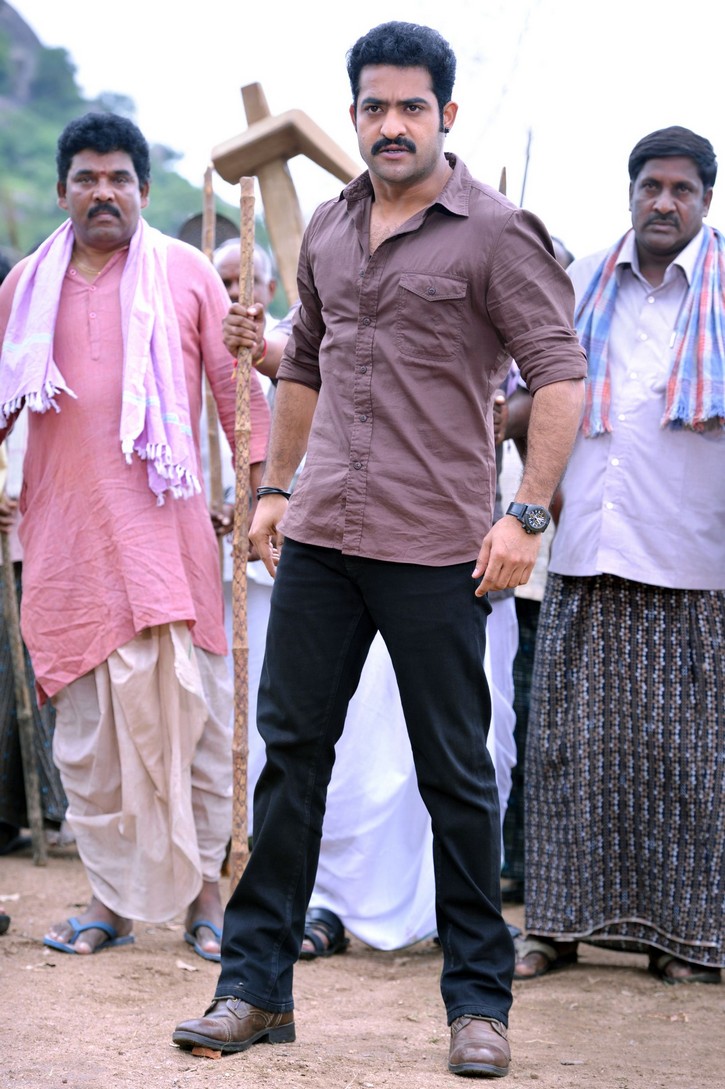
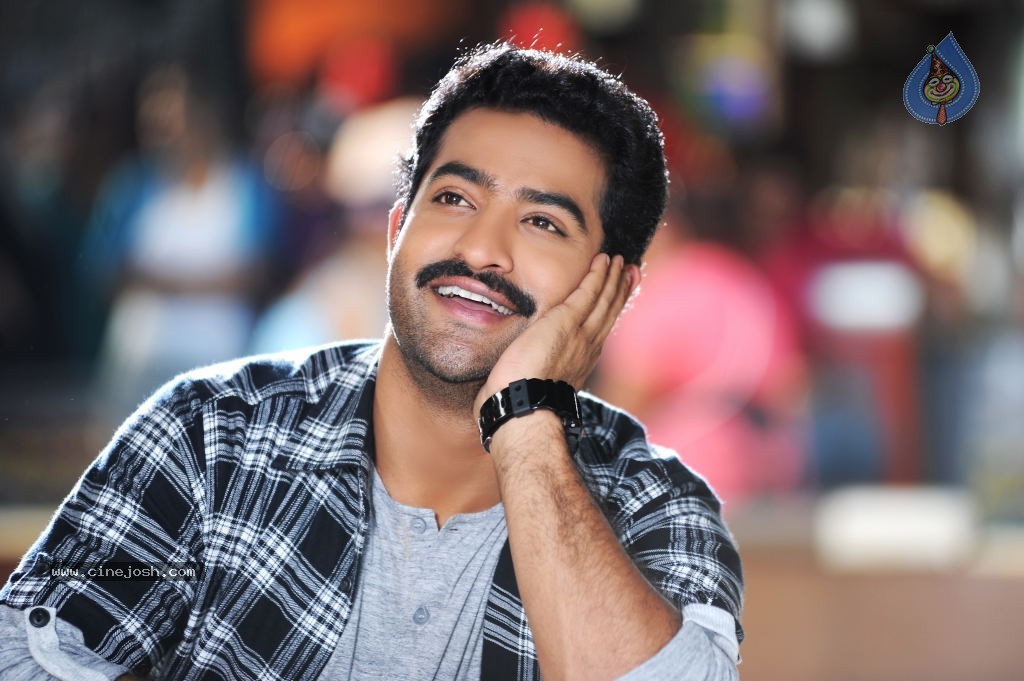
Desamuduru (2007)

Desamuduru

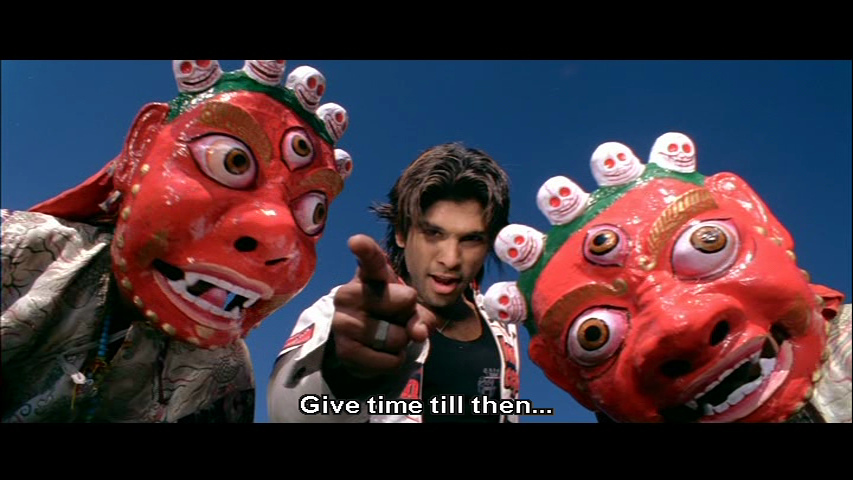
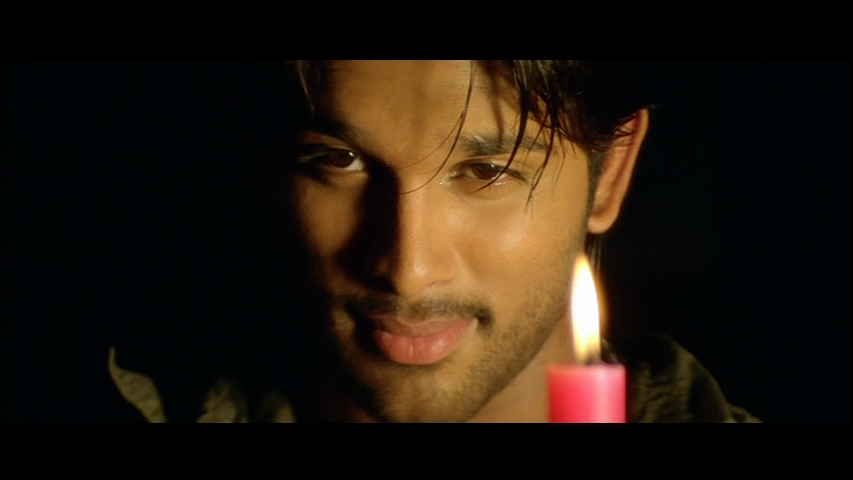
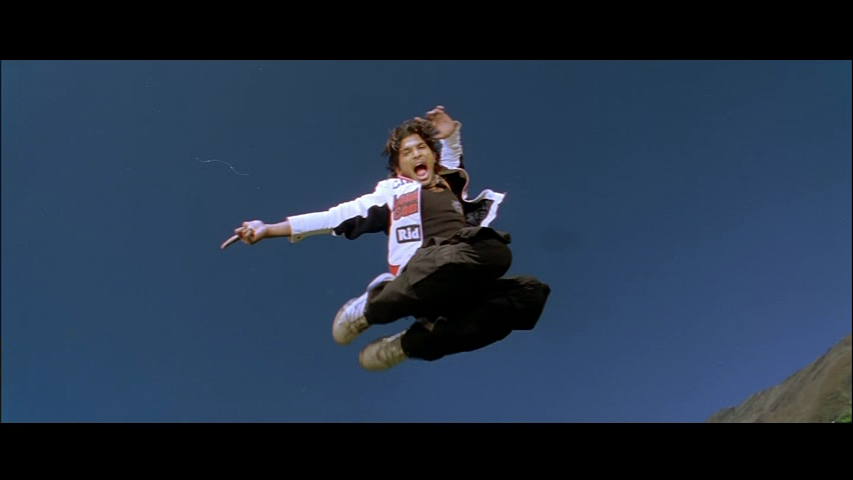
There are a number of reasons why I love this film, although they can be summed up easily as plenty of Allu Arjun and dancing! A lot of work has gone into showing off Bunny’s six-pack throughout the film, and I definitely approve.  In addition, there are some great fight scenes (where Bunny follows the Salman Khan principle of removing your shirt wherever possible), Cinema Chaat favourites Ajay and Subbaraju appear as villains, and it’s one of the very few films where Hansika doesn’t irritate me to the point of switching off.  And there is of course this:

Don’t be put off by the picture – there is nothing of Ali in this clip!

The appeal of Desamuduru definitely lies with the cast and their energetic performances rather than a good storyline or even well-written and believable characters – because it doesn’t have either of those.  Desamuduru was Puri Jannaadh’s follow-up to Pokiri, and perhaps after such an exceptional effort, he just ran out of new ideas.  The plot is paper thin and the story follows a well-used formula without anything novel in the execution.  Perhaps as compensation, the director ups the pace, meaning that the lack of a storyline tends to vanish in the constant confusion of fight scenes and action shots.  At least the high energy ensures that Desamuduru has mass appeal, even if it doesn’t rise to the dizzy heights of Pokiri.
DesamuduruDesamuduru

DesamuduruDesamuduru


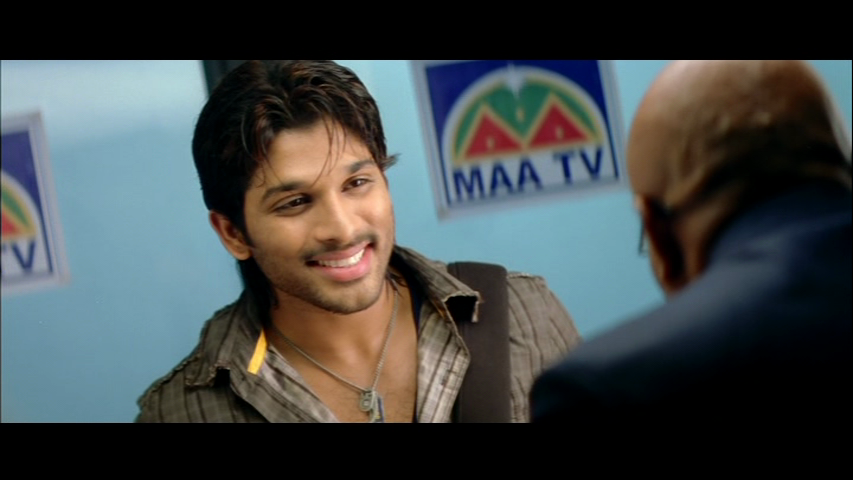
Bunny’s Bala Govind is an arrogant young TV reporter working for his father on the crime beat with Maa TV.  He has a basic idea of what is wrong and right – for instance, killing people is wrong.

Desamuduru

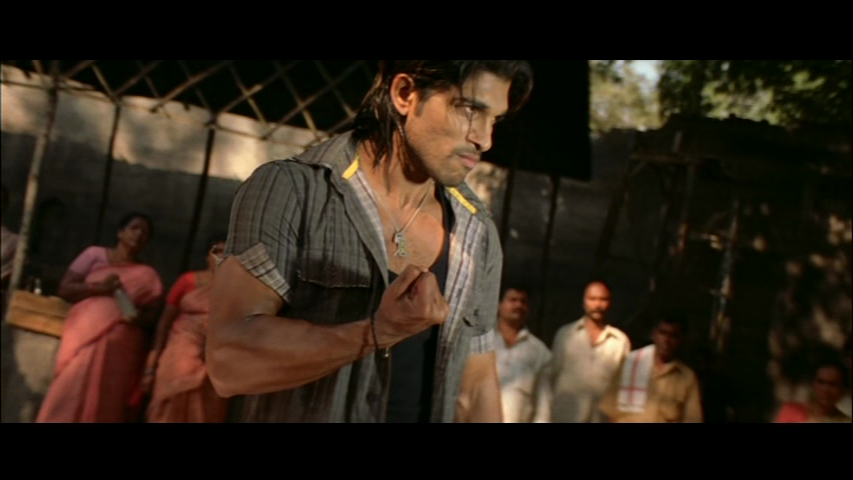
But beating them up within an inch of their lives is apparently perfectly OK.
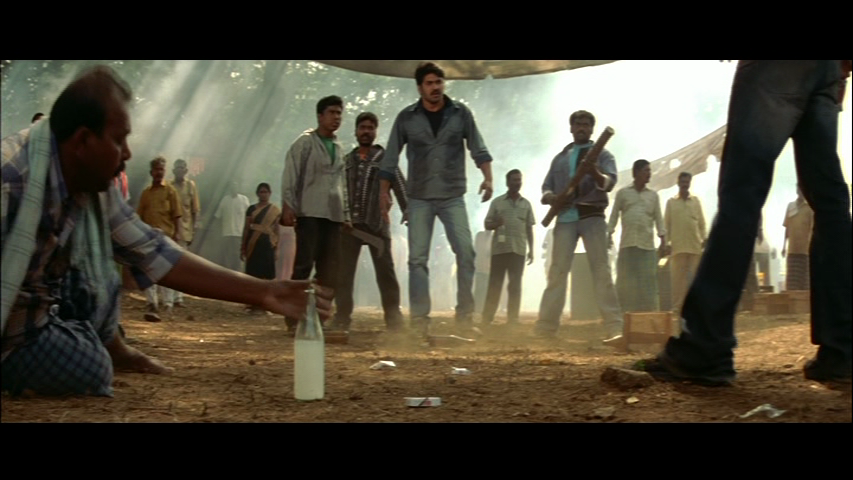
DesamuduruDesamuduru


Some of the detail in these scenes is excellent – I love how the drunk pulls his bottle of booze out of harm’s way, and how Bunny’s shirt slowly rips as he flexes his muscles – classic!

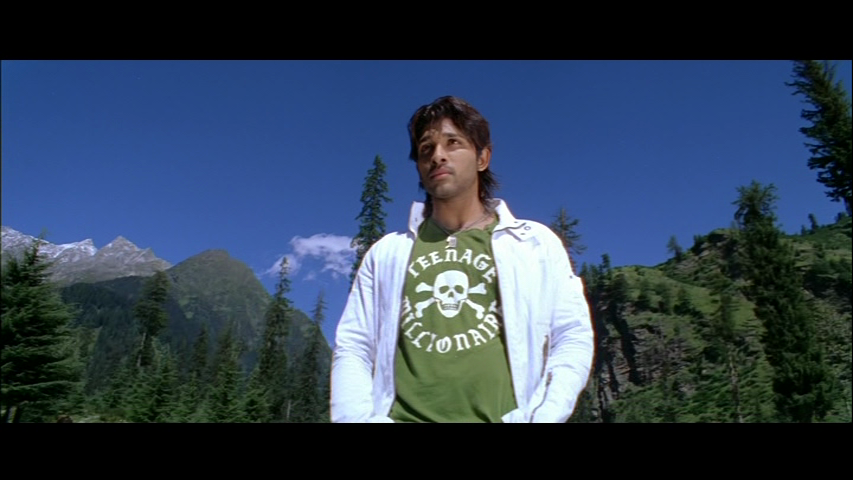
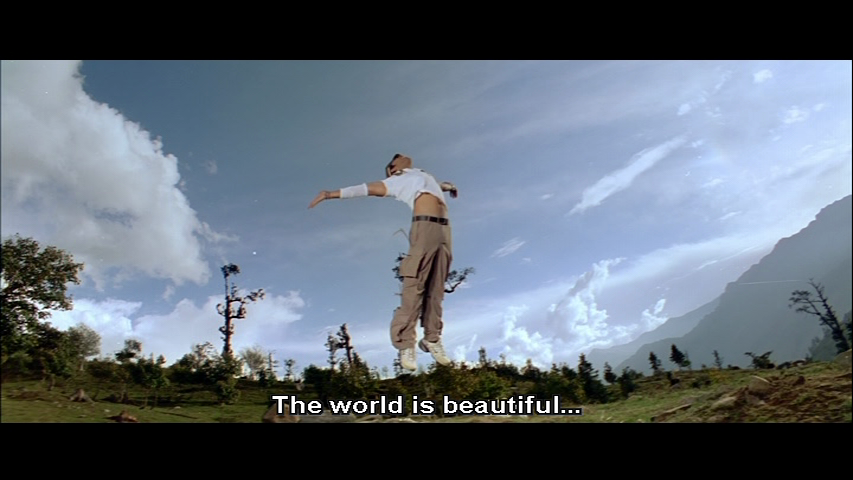
Bala’s latest altercation ends up with Murugan (Subbaraju) in hospital and Bala under threat from Murugan’s father and local gang boss Tambi Durai (Pradeep Rawat).  Bala however escapes to film a travel program in Kulu Manali – a little bit of a change from crime reporting, but apparently travel is where Bala feels he has his calling. Anyway, swapping the mean streets of Hyderabad for the mountains of Himachal Pradesh seems perfectly reasonable, especially when there is a gang of Tamil thugs baying for blood as incentive.  Plus it means we get this song along with a backdrop of snow-clad hills and slightly bemused looking locals.

Bala has a traditional Telugu approach to love – see, instantly fall head over heels, stalk and wear the girl down until you can convince her to marry you.  Sigh.  This time the unwilling heroine is Vaishali (Hansika Motwani) who is a Sanyasin and appears completely uninterested in Bala despite his total belief in his own irresistibility. The rest of the word sees Vaishali as a demure and quiet Sanyasin, but this is how Bala see her, which seriously makes me question his fashion sense even in fantasy dance sequence land.

Hansika is surprisingly OK here in a role that doesn’t require her to do very much.  I didn’t particularly  like or dislike her the first time I saw this film, but compared to subsequent appearances I think this is one of her better performances.  She looks suitably demure at the beginning as a Sanyasin and manages to bop around reasonably convincingly in the songs.  Later on in the second half when the romance quotient is reduced to almost zero, she continues to hang in there, and acts appropriately wimpy in the subsequent fight scenes.

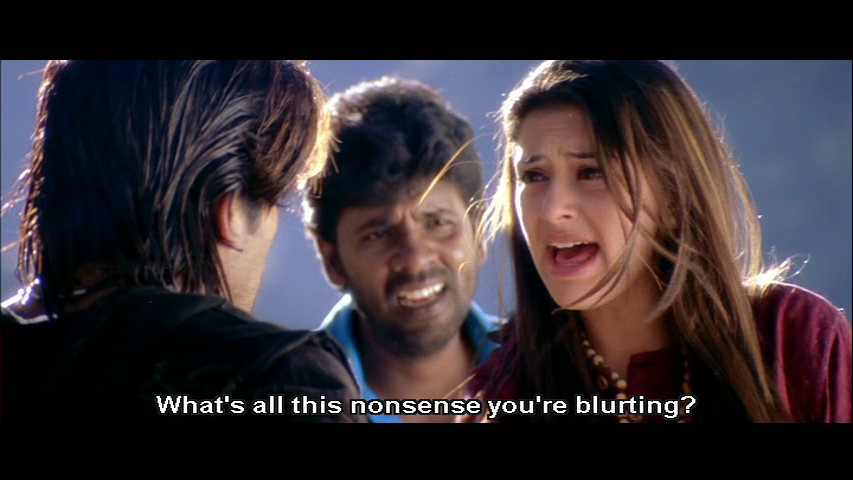
DesamuduruDesamuduru


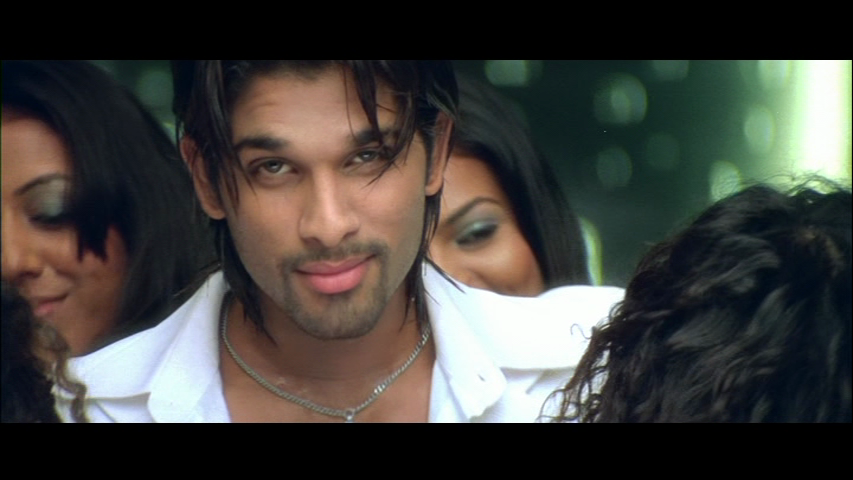
There isn’t a lot of chemistry between her and Bunny, but some of that is down to the plot, particularly since no sooner does Vaishali declare her love than the film switches back to action and fight scenes rather than playing up the romance.  At least that is until we get to the ultimate fan-girl song in Manusuley.  Even the song’s similarity to Dil Se helps bump up the heat factor and when you add in Allu Arjun drenched in litres of oil smouldering at the camera it definitely reaches sizzling hot! Except I tend to think: all that sand with all that oil – ouch!

Bunny at least seems to be thoroughly enjoying himself throughout.  He looks very happy to be surrounded by a bevy of beautiful girls in the songs, and in a number of the scenes with Subbaraju and Ajay I’m convinced that they ended up ROFL most of the time.  It’s one of my favourite things about Bunny that he seems to be perpetually about to crack up, so I end up smiling every time – even if it’s totally inappropriate.
DesamuduruDesamuduruDesamuduruDesamuduru


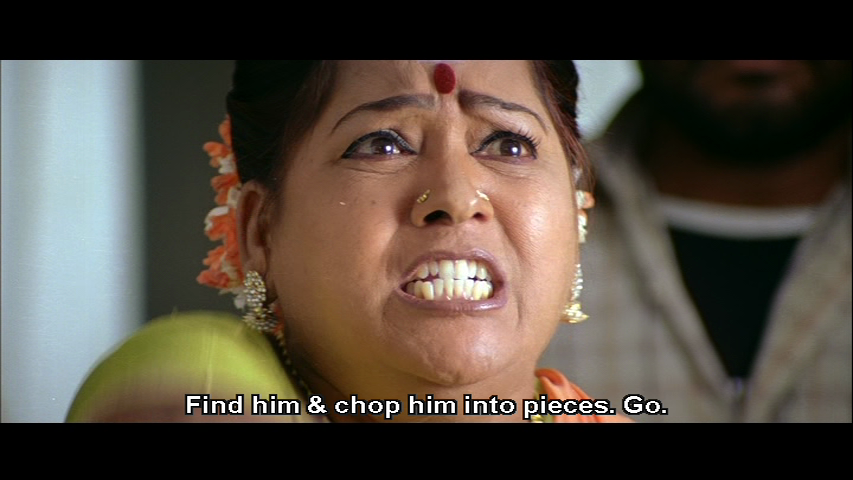
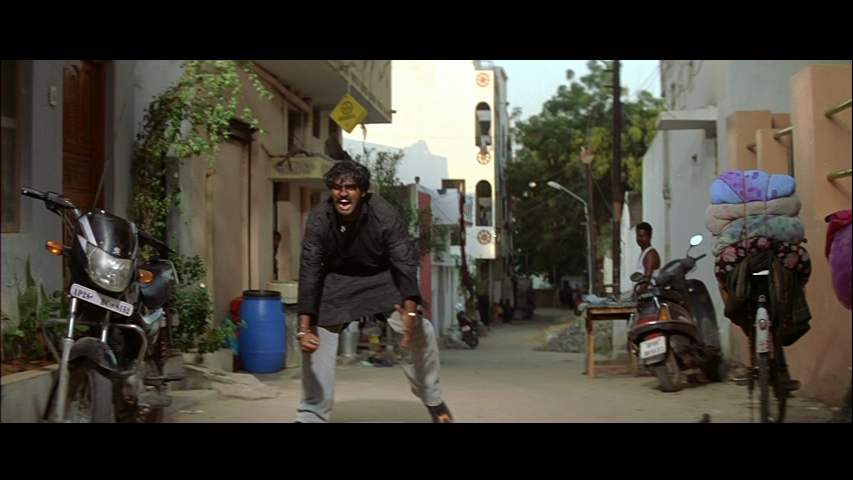
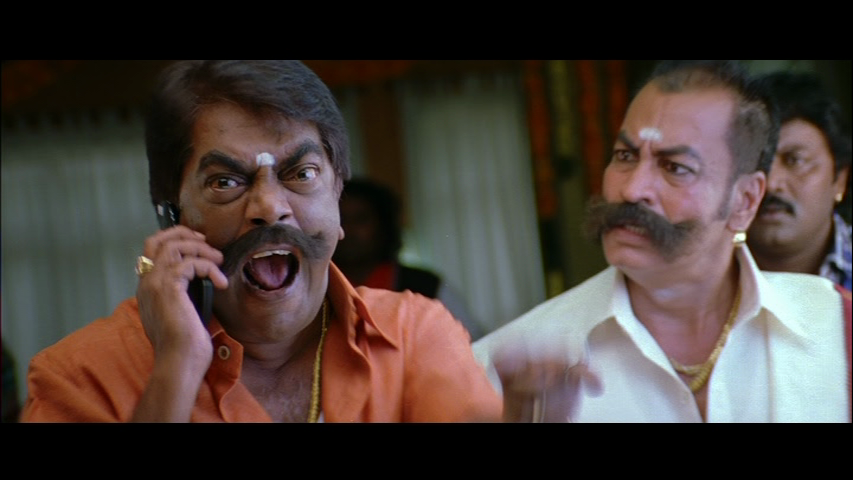
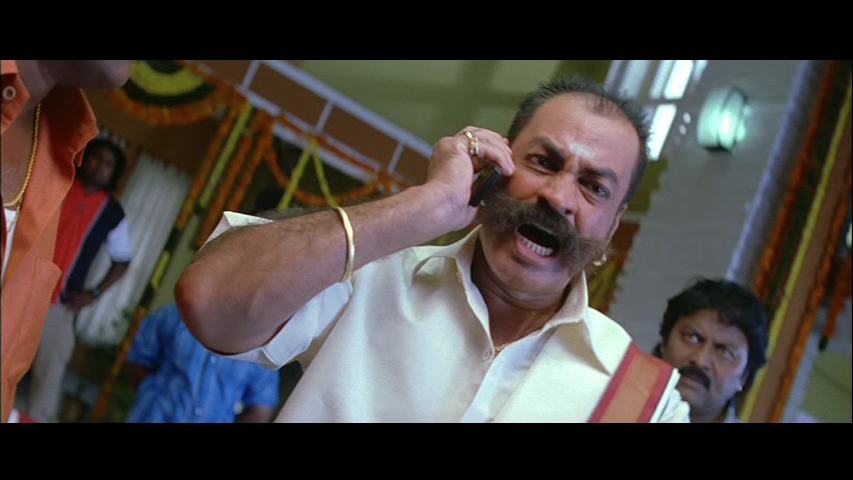
There is a tedious comedy track involving Ali which starts out bad and just gets worse as it goes along, but thankfully that’s it for comedy uncles.  Much better is the comedy provided by the altercations between Subbaraju and Bunny, and the histrionics provided by Telangana Shakuntala as Murugan’s evil mother.  Jeeva also does his evil henchman sidekick while Ajay is excellent as a thug who cannot talk and adds both to the mayhem and the comedy in equal measure.  It all adds up to a lot of this – Reeey!!
DesamuduruDesamuduruDesamuduruDesamuduru


A number of the fight and chase sequences are excellent with some good choreography and wire work,  and it’s just a shame that they aren’t connected together by a better storyline.  There is of course the obligatory item number featuring Rambha which pops up at an odd time and doesn’t add anything at all to the film, but it’s a least one more opportunity to watch Bunny dance.

Desamuduru is a hodge-podge of a film which relies on a charismatic cast, fast action (and even faster dance moves), along with the appeal of beautiful scenery in Manali .  It’s a film I watch over and over again, just for the songs and Allu Arjun’s dancing.  Not just for those shirtless scenes – of course not! It’s not a film for everyone but if you can leave your brain at the door and just sit back for the ride there is plenty to entertain – although judicious use of the FF button makes it even more enjoyable.  Desamuduru gets 2½ stars for story and execution, but 5 stars for enjoyment and re-watch potential!
DesamuduruIt sure is!

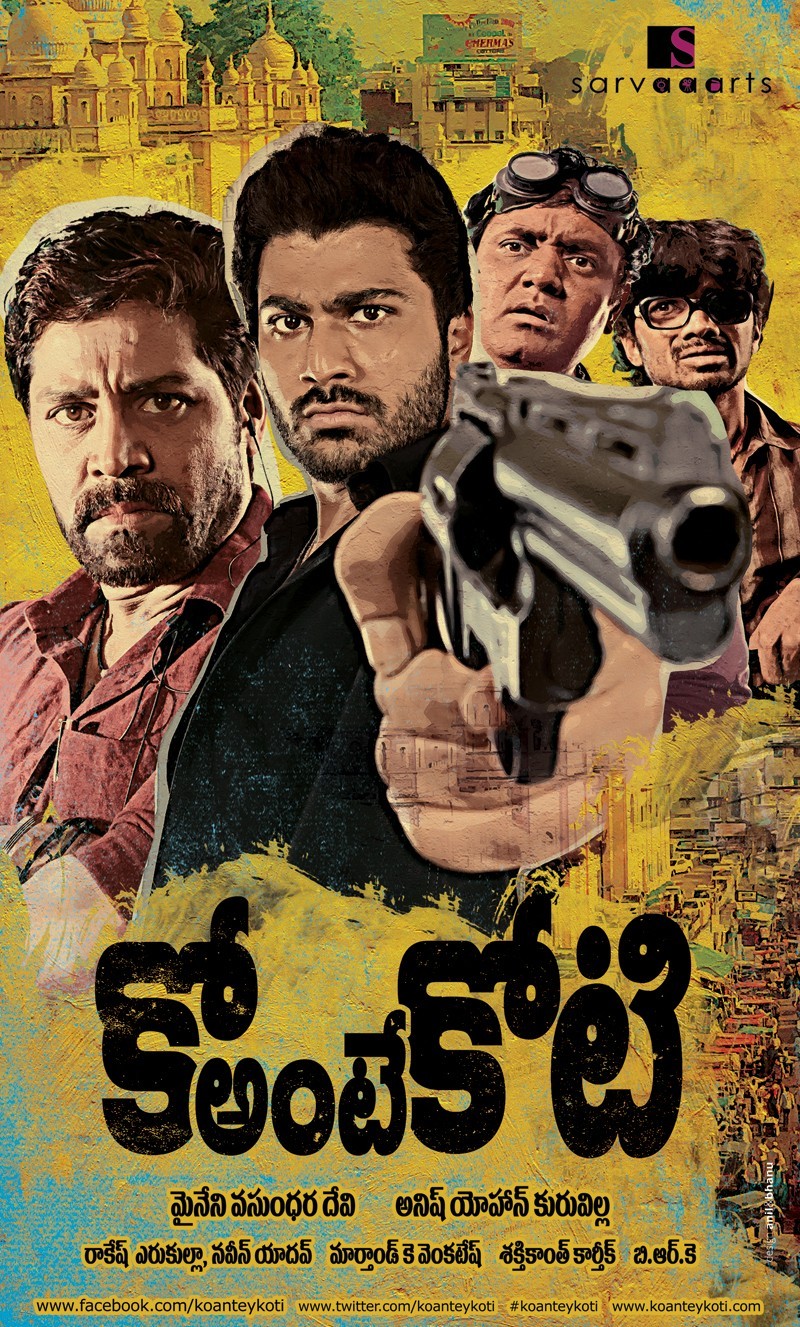
Ko Antey Koti

Ko-Ante-Koti-

The vintage heist genre has been reinvigorated by the likes of Steven Soderbergh, Guy Ritchie, Choi Dong-Hoon, Abhinay Dey and Akshat Verma. Anish Kuruvilla adds his own stamp with Ko Antey Koti.

The rules of heist films require that the target must be audacious and the very elaborate plan must rely on split second timing and specialist skills. There will be loads of characters with unique talents and many of them are disposable. There must be at least one despicable villain who must have a grievance with the hero. Subplots abound, as do betrayals.  Add family or romantic tensions, a heap of flashbacks, and you’ve got the basics.

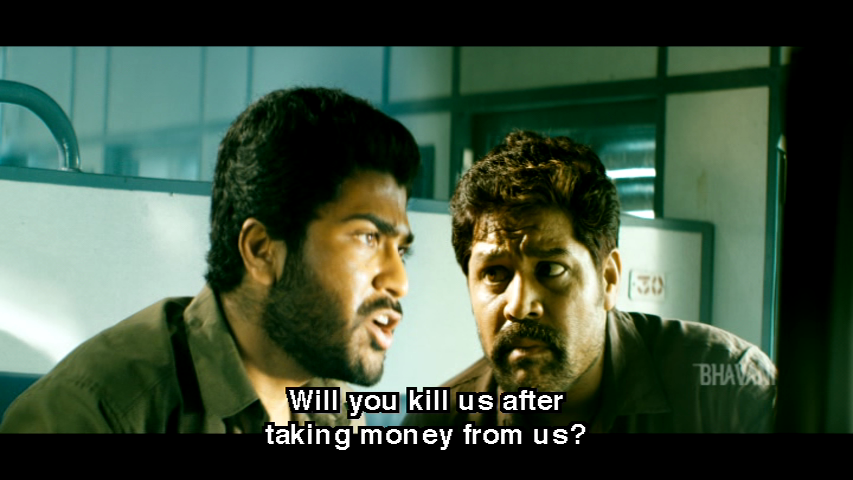
Ko-Antey-Koti-Sharwanand and SrihariKo-Antey-Koti-tired of running

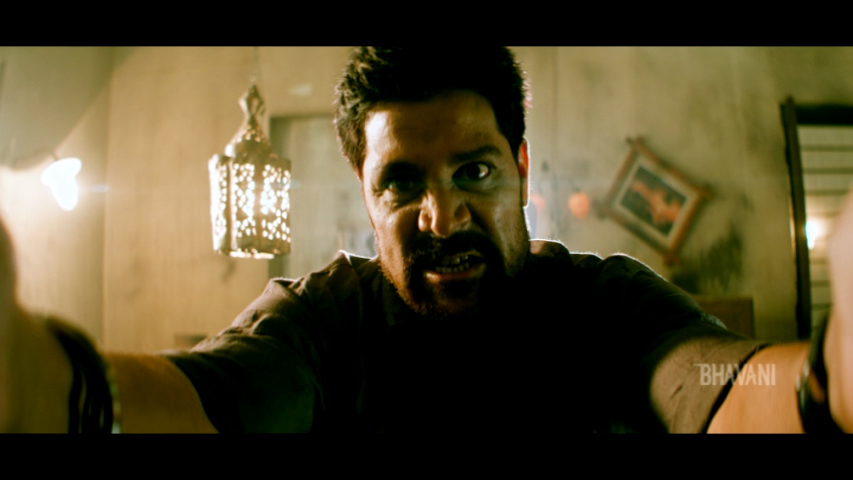
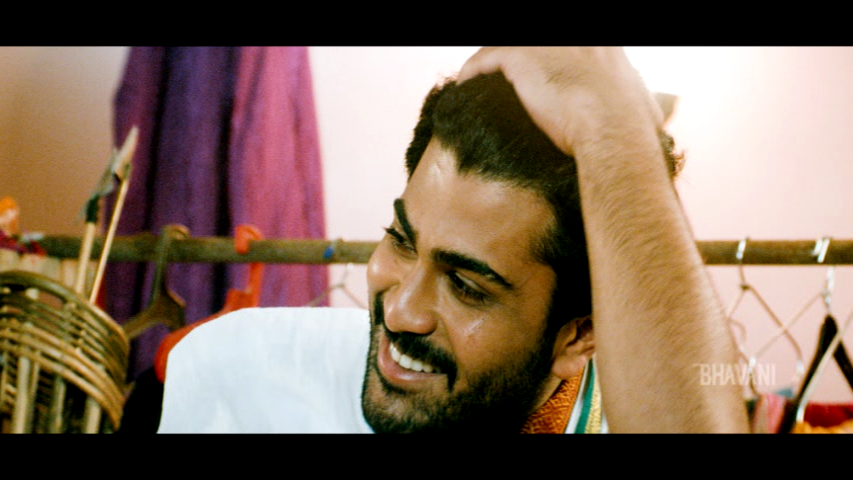
Sharwanand is one of my least favourite Telugu actors but I will grudgingly admit he is improving a bit. He was terrible in the tedious Gamyam (I refuse to let Heather give me my DVD back), he had moments of adequacy in Prasthanam, and he manages to be convincing as Vamsi most of the time. Vamsi seems to be a criminal through lack of motivation to do anything else rather than any commitment to being an outlaw. Sharwanand is perfectly fine in conversational or romantic scenes. When he has to convey powerful emotions he seems to pause for an instant before deciding what expression to use, and so he seems stilted. Having said that, he has good rapport with Priya Anand and their scenes flow very nicely. He generally plays Vamsi as grumpy and whiny, so his lighter moments with Sathya and the troupe or with Chitti and PC are quite endearing.

Ko-Antey-Koti-Sathya rehearsingKo-Antey-Koti-happy times

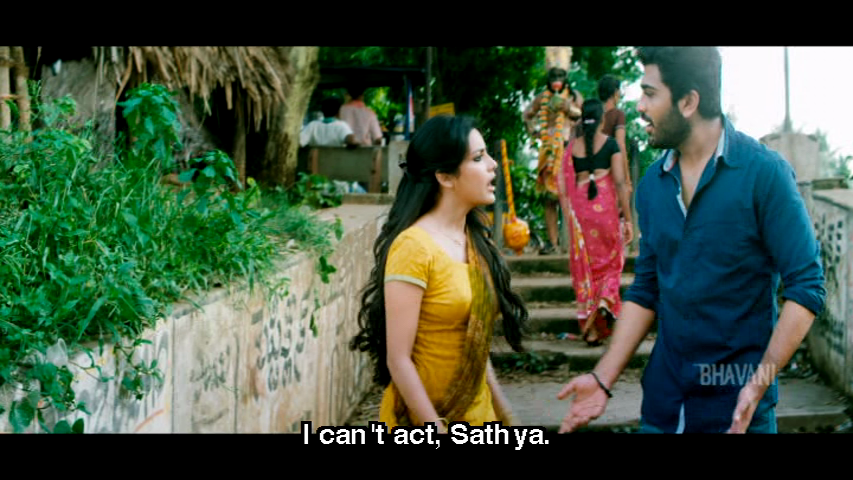
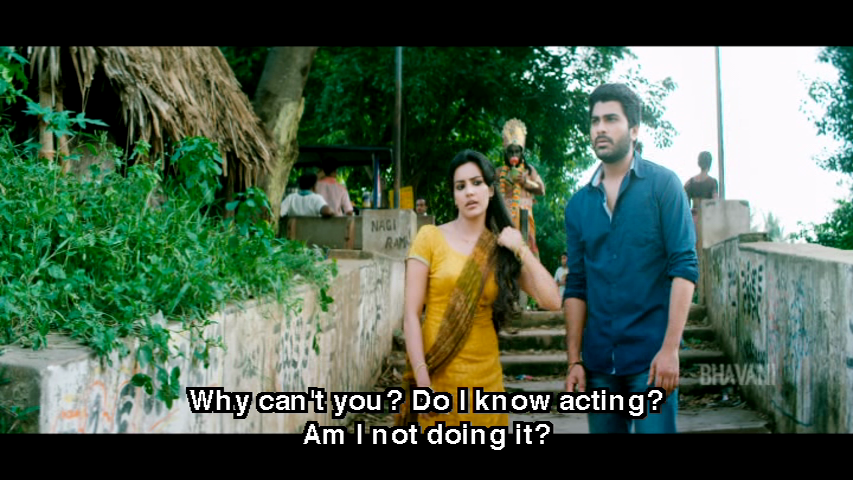
There are few Indian cinema leading ladies that look as though they really could travel by public transport or know their way around a kitchen. Go on. Picture Katrina Kaif catching the 86 tram. Priya Anand has a freshness and natural vivacity that plays to great effect in this role. Sathya is a slightly unusual heroine by Telugu film standards as she has a brain and uses it. She is voluble and a bit too inclined to Do Good through street theatre, but her chatter is often a tactic to bulldoze over any objections.

Ko-Antey-Koti-can't actKo-Antey-Koti-acting

People find themselves doing as she asks even though they had no intention of agreeing. I’m not convinced that her dance students would learn much, but the kids seemed to enjoy leaping about with her. Sathya’s determination to lead a socially responsible life makes sense when more of her family story emerges. Her relationship with Vamsi is complicated by a shared connection neither knows of. The past is hard to escape, even when it isn’t your own.

Ko-Antey-Koti-Maya and the wigKo-Antey-Koti-Maya is angry

The late Srihari is the criminal mastermind, Maya. Maya is crude and has no love for anything except money. He uses people to get what he wants and has no compunction about terminating an association. Srihari dominates the confrontational scenes with total ease. This works quite well considering Vamsi and the other sidekicks are supposed to be relatively unthreatening. I questioned why he would hire so many idiots but all became clear. Srihari gives Maya a plausible charm, as long as you don’t look too closely at the calculating eyes. And you forgive the dodgy wig. It’s another in a long line of bellowing patriarchal figures for Srihari but he brings it and Maya is a despicable man.

Ko-Antey-Koti-Priya AnandKo-Antey-Koti-Vamsi

The romance between Sathya and Vamsi is developed in ways that are credible yet still entertaining. One of the things I liked most about Kuruvilla’s Avakai Biryani was the way relationships grew and were strengthened through shared small moments, and he is similarly detailed in this story. Even the romantic sideplot with Chitti and a prostitute was funny and a little touching. Sathya helps Vamsi because he needs help, not because she is smitten with insta-love for The Hero. She chooses to be a happy and good-natured girl, and her open heart allows Vamsi the opportunity to see himself as he could be if he made different choices.

Ko-Antey-Koti-sparksKo-Antey-Koti-proposal

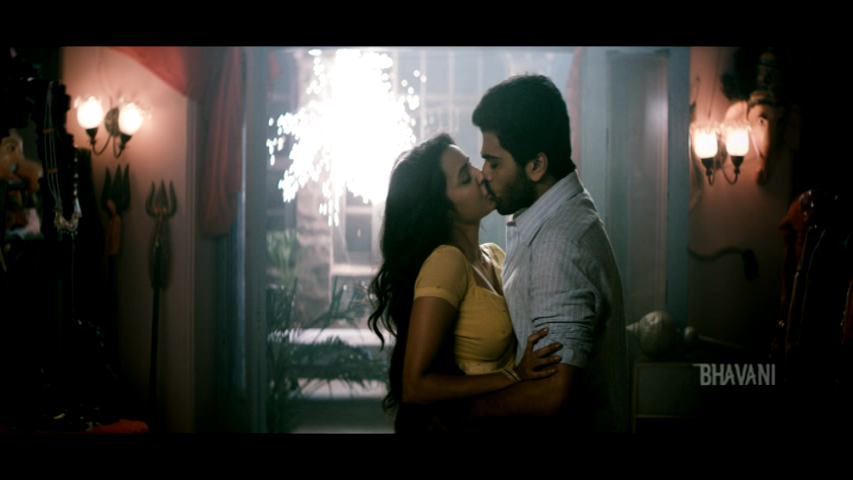
Anish Kuruvilla added some fun flourishes. Sparks literally fly when the couple kiss and no filmi cliché is overlooked as they prance through a gloriously pretty montage. Vamsi acts the part of an actor and proposes on stage, being more honest in his pretence than as himself.

Sex is treated in a non-scurrilous manner. Sathya was actually wearing more fabric when swaddled in her bedsheets than in any of her sarees. I cheer for a heroine who doesn’t have to die immediately after she sleeps with her boyfriend, and it is refreshing to see consensual and mutual attraction between the lead characters.  I also liked that Vamsi acknowledged Sathya’s right to have some input into a critical decision. It wasn’t a grand speech, but a moment that showed their pragmatism and trust in each other.

Ko-Antey-Koti-seedyKo-Antey-Koti-Sathya and Vamsi

Cinematographers Erukulla Rakesh and Naveen Yadav captured the different worlds the characters inhabit. The light is harsher and the shadows deeper in Maya’s criminal milieu, places full of twists and turns, the suggestion of hidden watchers. Vamsi and Sathya fall in love in a much more colourful and soft setting, a rural paradise and open skies that give space for dreams. The final scenes are in an arid landscape as everything is laid bare and no secrets remain. I really liked the styling of the seedy nightclubs, the squalid apartments, the activity humming through the street scenes. There is a strong sense of place and a modern feel to the sharp edits and angles.

Ko-Antey-Koti-PC and ChittiKo-Antey-Koti-comedy

The abundance of incidental characters can mean that characterisations are sketchy. Gluttonous PC (Nishal) and scrawny, one-eyed Chitti (Lakshman) play it as broad as can be. There is no subtlety. Perhaps because of my allergy to Indian film comedy, I was not even slightly sad to see some sidekicks bite the dust early on. If someone minor has a tragic backstory or is the butt of all jokes, do not bet on that character making it to intermission. Corrupt policeman Ranjit Kumar (Vinay Verma) is on the trail of the stolen goods and has his own grudge against Vamsi and Maya. He is a type rather than a realistic or subtle interpretation, but that wasn’t a drawback. The fun of this genre is the guessing and double-guessing rather than delving into a layered psyche.

The songs are used very well and to an extent they amplify characters’ inner lives. I was not overly impressed by the picturesque wandering and montages – I like a big dance number or two. Shakti Kanth has chosen to use different styles of music that match with the action and help build the atmosphere.

It’s refreshing to see a boys own adventure have interesting female characters. There is a little more realism to some of the relationships and there are some gorgeous visuals. The comedy sidekicks are neither funny nor interesting so I tuned out while they were doing their thing. I’m still not convinced by Sharwanand but Priya Anand and Srihari are great. Kuruvilla juggles the elaborate setup and flashbacks in a structured way that feels dynamic but is still logical so I never felt I lost the internal timeline. He’s a realist, especially about traffic and human nature. Well worth a look, especially if you like a more urban gritty thriller. 3 ½ stars!

Ramayya Vastavayya (2013)

Ramayya Vasthavayya

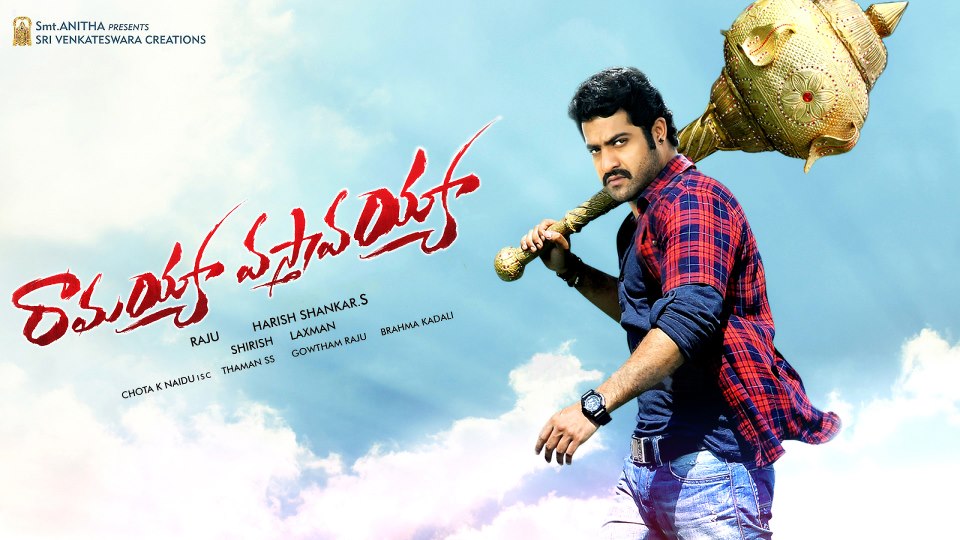
It seems like a very long time since the last NTR Jr. film and since I read some speculation about Tarak’s ‘new look’ I was interested to see exactly what Harish Shankar had come up with.  However the ‘new look’ is really just the old look, except for the odd moment on horseback which I admit was pretty cool.  And there were some groovy new shades.  But otherwise Ramayya Vastavayya sticks to the same old formula with the usual faces reprising roles they have played a million times before. Ultimately not even the actors seem to be able to rustle up much enthusiasm and although Tarak and Samantha both work hard and deliver good performances, the film is still let down by the clichéd storyline and stereotypical characters.

Ramayya VasthavayyaRamayya VasthavayyaRamayya Vasthavayya


The first half of the film is generally entertaining since it focuses on the developing romance between Nandu (NTR Jr) and Akshara (Samantha).  The romance aspect was perhaps enhanced by the fans behind throwing rose petals along with the usual strips of paper, but at least it made for a pleasingly more fragrant trip back to the old Chinatown cinemas in Melbourne.  As I’ve come to expect (yawn), Nanu sees Akshara one day while hanging out with his buddies at a coffee shop and falls instantly in love.  Akshara is not quite so sure and the ensuing comedy as Nandu tries to win her heart with a variety of schemes is amusing enough to overcome the usual discomfort of the’ stalking = true love’ theme.  

 Ramayya VasthavayyaRamayya Vasthavayya

Rohini Hattangadi pops up as an aunt of some sort to Akshara and her older sister and although her role is small and fairly gratuitous she still steals the limelight every time she appears.Presumably to appeal to a wider audience, there are numerous references back to classic films, the most blatant being Tarak’s entry scene.  Most of these are fairly obvious and seem contrived to ‘fit’ into the storyline, and I’m sure there are more that I missed (hopefully more subtle) by not understanding the dialogue.  

Samantha looks gorgeous and there is only one attempt by the notorious Telugu shoe designer to make her look ridiculous so I’m presuming she must be a favourite with wardrobe.  However, Akshara is a standard Telugu heroine, whose only purpose is to make the hero look good and is otherwise completely one dimensional, which seems a complete waste of Samantha’s talents. Still, she does get to dance and there is good chemsitry between Samantha and NTR Jr. which makes their interactions more enjoyable to watch.

Tarak’s Nandu seems a fairly typical hero – there are the requisite commanding dialogues laced with a modicum of modesty and comedy, excellent dancing skills and the ability to defeat numerous opponents by the mere flexing of a muscle or two accompanied by a snarling grimace.  As always, Tarak delivers exactly what is expected of him with plenty of animation and charisma, but since he’s playing the same character he has played in his last few films it feels stale and completely predictable.  The only really up side are the songs which feature better than usual choreography and excellent dancing from both Tarak and the backing dancers.  I loved the addition of spectacles as part of the costumes for one of the songs and the music by S. Thaman was generally catchy and effective, and at least better than the recent crop of new releases.

Ramayya Vasthavayya

After the interval, Nandu moves on from bouncing people off wall, floors and sundry items of furniture to hacking people apart with increasingly bloodier and even more poorly choreographed fight scenes.  I’m not sure who is responsible for the action for Ramayya Vastavayya, but they seem to have taken inspiration from episodes of Tom and Jerry rather than anything that remotely resembles a feasible fight scenario.  The gore content rises but it’s so ridiculous that even the various severing of limbs has little impact, particularly since the fights are so obviously staged and formulaic to begin with.

Ramayya Vasthavayya

The second half also moves the action to the countryside for Akshara’s sister’s wedding and attempts to explain the antipathy between Akshara’s father Nagabhushanam (Mukesh Rishi) and two assassins (Ajay – yay!) who tried to kill him at the beginning of the film.  This involves a lengthy flashback with Shruti Haasan as Nandu’s previous fiancée Amullu, but it’s dull, overlong and Shruti and NTR Jr. have absolutely zero chemistry together.  To make matters worse, P. Ravi Shankar appears as a stereotypical evil and lecherous politician with mannerisms straight out of the ‘Villains for Dummies’ handbook and, inevitably, Kota Srinivasa Rao appears as his equally evil father. Doesn’t he ever get tired of playing the same role?  Adding to the stereotypes, Tanikella Bharani appears as Amullu’s father, Saranya Ponvannan as her mother and M.S. Narayan briefly appears in a throwaway role which adds absolutely nothing to the plot.  Harish Shankar tries to evoke American crime shows by tying together moments from the first half with explanations later in the film, but it looks clumsy and is generally ineffective.

Ramayya VasthavayyaRamayya Vasthavayya

Ramayya Vastavayya disappointingly doesn’t cover any new ground and Harish Shankar sticks to a very well-worn formula without adding anything novel.  With such a tired screenplay and an abrupt change of pace in the second half, it’s really only the songs that appeal despite generally good performances from the actors.  NTR Jr. is as good as ever, but even with his energy and the appeal of two heroines Ramayya Vasthavayya is really a film solely for the fans.  Still, it’s worth watching at least once for the dancing, which is excellent and much better than the film deserves.