47 Rojulu

47 Rojulu poster

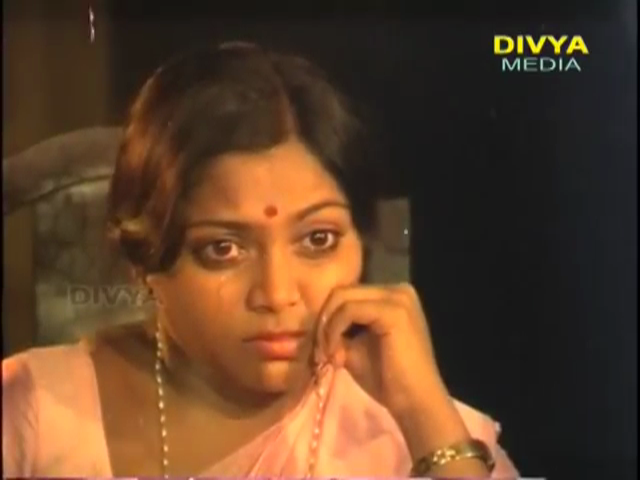
K Balachander’s 1981 film 47 Rojulu is a study of domestic abuse, and I found it uncomfortable to watch. It’s melodramatic yet has a ring of realism, largely due to Jayaprada’s characterisation of Vaishali, and the often quite graphic violence. Chiranjeevi stars opposite in a negative role, and he doesn’t hold anything back.
47-Rojulu-Saritha

The story is told in flashback, through the device of a visiting actress (Saritha) who comes to talk to Vaishali as preparation for a film. I have only seen this in an unsubtitled print, and it is a dialogue heavy film, so at first I was a little confused by the flashback structure. However, the emotional tone and pitch of the drama comes through loud and clear and I had no trouble in following the main story.

Vaishali (Jayaprada) and her brother are coming home from seeing Shankarabharanam (I think) at the cinema when she sees a wedding taking place. Kumar (Chiranjeevi) is discussing marriage with his parents and next thing you know, he is getting married to Vaishali. All looks fine until after the ceremony when he gets the wedding photographer to give him the film, and exposes all the rolls. Why wouldn’t he want pictures of his wedding day? He seems quite keen on the wedding night and wasn’t forced into the marriage (apart from some gentle parental coercion). Also a little odd, he tests to see if she can speak English. Soon after the wedding they move to France.

At first things seem fine. Kumar shows off the house in the countryside outside Paris, and introduces his naïve bride to heating, sliding doors, supermarkets and televised sports. They live in a cosy modern flat on the ground floor, and a woman called Lucy lives upstairs.

Then one day Kumar is chatting to someone in French and introduces Vaishali as his sister. Hmmmm. Of course she has no idea as she speaks only Telugu. It is clearly a lie when he says Lucy (Anne Patricia) is just a friend. There is an awkward dinner, with Lucy completely unaware Vaishali is married to Kumar and with Vaishali confused by who this woman is and why she acts so familiar with her husband. Lucy seems happily oblivious although she does realise Vaishali isn’t comfortable around her. And then one day Vaishali, overwhelmed by her unease and distrust, searches Lucy’s apartment and finds a wedding photo – of Kumar and Lucy.

If Vaishali asks any questions about their domestic situation, Kumar puts her down so she will feel ignorant and shut up. He cuts her off from any other Indian people in the area, and he is her only source of information. She loses her confidence, she feels stupid and disgraced, and she has no one other than Kumar. When she does a runner to Paris by herself, Kumar drags her home and burns her hand on a hotplate as punishment. It’s quite sad that Lucy tries to comfort her ill ‘sister-in-law’ when she is unwittingly part of the problem. Jayaprada does a great job of showing the changing emotions and moods of the abused wife. She really likes Kumar and her marriage when he is in a good mood, and Vaishali seems to excuse his early outbursts by blaming herself or thinks it is just because he is tired or stressed. Her growing realisation that she is in trouble and that her marriage is a sham is sad to watch.

Kumar does spend quite a lot of time with Vaishali (he doesn’t have a job as such) and seems affectionate and caring. They do the tourist thing around Paris, enjoying the sights and making fun of some fashionable locals. How he thinks he can keep hiding the truth is beyond me.  Kumar justifies and rationalises – he sees no reason why he can’t have it all, and no compunction about hurting either of the women.  He has an impulsive warmth which can be appealing, but that can swiftly turn to rage and brutality. His behaviour escalates from verbal nagging and bullying to physically attacking Vaishali.

In one sickening scene of what is essentially marital rape, he withholds her letter from home to coerce her into having sex. And when Vaishali falls pregnant he starts to really lose the plot as he sees his perfect life crumble. He seems to insist on a termination and certainly there is no baby later in the film, although how and if it was her choice isn’t revealed as far as I can tell. Chiranjeevi gives a strong and complex characterisation of a loathsome man. I certainly didn’t find the Chiru Mega appeal made the situation any more palatable, but his layered performance allowed me to empathise more with Vaishali’s disillusionment as she came to terms with the deception.

Some isolated and precarious locations seem intended to convey fear or dread, and I was certainly yelling at Vaishali to be careful, especially in one rooftop scene. Kumar abandons her in a forest at one stage, and tears the mangalsutra from her neck before leaving her in a park on another occasion. He uses her isolation and the unfamiliar surroundings to reinforce her caged existence. He also takes her to see a show of an ‘adult’ nature (to the Pink Panther theme music – how saucy) to prove his point that love and sex were different in France, but she is utterly repulsed by the spectacle. The cosy apartment that she loved on first sight becomes a prison.

The drama is almost claustrophobic as it all takes place in Vaishali and Kumar’s tiny world, so the support cast is small. Sarath Babu arrives late in the piece as Telugu speaking Dr Shankar, who becomes aware of Vaishali’s predicament. Ramaprabha is a petty thief who is hated by the wardrobe department and who gets Shankar involved in the situation. The plot manipulations required to get them into position don’t really stack up, but I was relieved to see Sarath Babu regardless. There is something very salt of the earth and reliable about him in these secondary good dude roles. And I was happy  that once Ramaprabha’s character understood Vaishali’s situation, she reached out to help. Anne Patricia is not the best actress ever, but I felt sympathy for Lucy and was glad to see how her storyline played out.

Some things didn’t quite fit with the realism of the initial set up. Who travels with an electric hotplate or element just on the chance they will want to burn their spare wife? The songs added nothing to the narrative development so I would have left them out, or kept them as background. And the final chase was dramatic but didn’t make much sense, logistically speaking.

47-Rojulu-not interested

Lest this all sound too grim, back in the present day Saritha asks about the doctor, sparking an outburst from Vaishali. It seems she feels marriage is not essential for a good life.  Hear, hear!

This is a difficult film for me to watch as I find the subject repugnant and to be honest, I prefer a Chiru I can cheer for. I do appreciate the nuanced and sympathetic but not sentimental portrayal of women and relationships. 4 stars!

Life is Beautiful (2012)

Life-Is-Beautiful-Poster

I’m not sure whether Life is Beautiful needs to be an hour shorter or about 5 hours longer. Sekhar Kammula’s observational style might play out better as a mini-series than a film as while not a lot really happens, neither do we get much insight into some of the large ensemble of characters. And understanding more about them might have made all the difference when, for want of a better word, things go a bit stupid.

Sreenu, Chinni and Sathya move to a Hyderabad housing development to stay with relatives when their mother (Amala Akkineni) tells them she needs to take a work transfer for a year. It’s clear their aunt just tolerates them, and the rich aunty (Surekha Vani) next door doesn’t want to know the kids. But where Gold Phase has shiny cars and swimming pools, the B Phase colony is rich in characters and goodwill. Money causes all manner of tension, but mostly between those who value work and self-improvement over those take their privilege for granted. In a similar vein, the film contrasts the superficial gated enclosure of Gold Phase with the more organic sense of community in B Phase where sharing is second nature.

The B Phase kids expect to work to make their own way. Chinni is trying to get into a prestigious English school and Sathya (Rashmi Sastry) is preparing to study medicine. Nagaraj helps new neighbour Laxmi (Zara Shah) to find a job so she can continue her engineering studies, and his lack of education and prospects is a recurring theme. Sreenu (Abhijeet Duddala) soon meets Nagaraj (Sudhakar Komakula) the local cool dude and Abhi (Kaushik Darbha), a sweet-natured geek. Cousin Paddhu (Shagun Kaur) is pretty and confident, and keeps Sreenu on his toes. They’re all good hearted and fundamentally optimistic, and friendship comes easily. It’s not hard to like them and I enjoyed watching them grapple with coming of age and growing responsibility.

I really like that the girls are interested in finding the right life partner not just a hot hero, and that their parents are broadly supportive of their right to do so (if not of their choices). I’m not as happy with some of the films tricks to get the girls to realise who they love. There is an odd decision to make Paru (Shriya Saran) have a gimmicky epiphany, as though she was incapable of understanding her own feelings without a billboard sized clue. And I couldn’t really get on board with her ‘I must win Miss India to fulfil my mother’s dying wish’ thing.  I didn’t think Ajay (Vijay Sai) was really a bad guy, but he had a different view of sex and relationships so Laxmi found herself fleeing what she saw as overly determined advances. It seemed she was being punished for straying from Nagaraj and B Phase. Nagaraj has a reverse snobbery about educated people and blames Laxmi for the encounter. And once a boy has decided he likes a girl, that girl should only do what he says or face harsh criticism. Maybe it is just an illustration of how it is easy to be liberal when you’re comfortable, but how people under pressure can revert to type. Maya (Anjala Zaveri) was being harassed by a sleazy caller so the boys actually use their education to catch the culprit. But then their biggest problem seems to be that he is a Gold Phase guy and shouldn’t be allowed to ogle their local hottie while they may do so at their whim. When Maya comes to bail the lads out at the police station, they seem shocked that women can Do Thinking And Other Good Stuff Too. So it’s a mixed bag but the women are distinct and interesting characters and that was pleasing.

The youngsters various relationships absorb most of the film, but they all have families and other issues to deal with. Sreenu and his sisters find out the real reason for their mother’s absence – a reason that made me furious and considering whether to pull the plug on the movie – and have to think hard about what to do with their lives. On the other hand, Abhi and his mum have a really nice relationship. She knows he is a bit weird and nerdy but she loves him for his quirks, and he is super smart and appreciative of her support. Paddhu is caught between her snobby parents expectations and her own heart, plus a dithering Indian Filmi Boy, but she is not a pushover and nor are they villains. Friends help friends, and sometimes friends force friends to confront things they might try to avoid.

Language is both a conduit and barrier. Chinni is denied a place in school because she doesn’t speak English, although she is eloquent when speaking Telugu. Nagaraj tells new neighbour Laxmi that Telangana speakers aren’t formal, they speak from the heart. I couldn’t pick up on the nuances of language in the conversations about Andhra and Telangana speech, although I assume that would resonate with the local audience.

The cast are largely novices and they generally do quite well. Of the young actors, Kaushik and Shagun Kaur were my favourites maybe because they played sunny characters and seemed genuine. I smiled when I saw them and could easily overlook a couple of wobbly acting moments. Amala Akkineni is the largely absent mother, and while I like her performance a lot I had strong reservations about the plot manipulation tied to her character. Shriya Saran is very natural as Paru, the It Girl of Gold Phase, pretty and a princess. And she shows a different side in her scenes with Abhi and the guys where she is at ease, genuine, and friendly.

I don’t like the songs. Especially the English lyrics in this one. It is Eurovision level bad.

My test for whether a song enhances a film is simple. I imagine the sequence, replacing the filmi song with Boston’s More Than A Feeling – a truly naff song which is all about itself. If it works just as well as the movie song I reckon the film could have done without. Obviously if there is excellent dancing, great costumes, or Chiru, I don’t question the validity of the musical interlude.

The song montages are well put together and do help amplify the mood and inner feelings. The locations and set dressing are lovely to look at and the details help flesh out the characters living in the various houses and streets. C Vijay Kumar has collaborated with Sekhar Kammula on several films and their styles mesh very well. He knows how to get the most out of fields, trees and rooftop terraces.

Kammula uses some cheap and cheesy effects which is at odds with his predilection for slice of life stories featuring the unexceptional middle class. Animated hearts when the scruffy boy dog fell for the ritzy lady dog was mildly funny but then there was the magic at the wedding, the magic at Miss India…the (bad and nonsensical) magic. While David Copperfield need not worry about losing his day job, it was nice to see Anish Kuruvilla acting. And Anish, if you don’t like being a character actor you could always, I dunno, direct another film. Just a thought.

I really like Sekhar Kammula’s films, even though I have a few issues with his horrible taste in music and addiction to animated effects, as he can tell simple stories well. While Life Is Beautiful is meandering and low on drama, I do like the characters and the glimpses into their lives. 3 stars!

Life-is-Beautiful-the moral

Gopala Gopala (2015)

film poster

Gopala Gopala, so good I watched it twice! Well, actually I would do that more often for more films if Melbourne had an extra show, which is what happened this week with Gopala Gopala. But it is a fun film and I enjoyed watching Venkatesh and Pawan Kaylan in their first movie together. I haven’t seen either the Hindi version of this movie, or the original Australian film that inspired both and that could be one of the reasons why I enjoyed Gopala Gopala as much as I did. I’ve read that this Telugu remake follows the original faithfully and as a result it may only be worth a watch if you haven’t seen OMG, or like me feel that Pawan Kalyan as God seems a more plausible choice than Akshay Kumar.

The Gopala of the title is a shopkeeper who decides to sue God when his insurance claim is rejected following an earthquake that has destroyed his livelihood. The insurance company representative points out that Gopala has signed the contract that lists (in small print) the exclusions for his insurance, including an ‘Act of God’ and since no-one else but God could have caused the earthquake, Gopala is out of luck and out of compensation. It’s a nice idea, even if the term act of god is a legal construct rather than anything remotely religious, but the film works on the premise that either God does not exist and therefore the insurance company has to pay, or God was responsible and the onus of care rests with his agents on Earth. Along the way the film questions the morality of the various religious orders and their representatives, but is clear throughout that despite Gopala’s own personal disbelief there is actually no question about the validity of God in any of his incarnations. It’s the charlatans and irrational customs that come up for criticism and the writers throw in some good questions about morality in general for later contemplation.

Venkatesh pitches his character perfectly as a non-believer who makes his living selling Hindu statues and religious artifacts even though he finds the rituals and superstitious involved in worship ridiculous. Just as much of a con in fact as his ordinary tap water masquerading as authentic water from the Ganges. His shady dealings aside, at heart Gopala is a compassionate man who is shown to indulge in random acts of kindness and generally feels some compassion for people less fortunate than himself. The problem here though is that his good deeds come across as rather contrived given the way they are somewhat haphazardly inserted into the narrative. However Venkatesh mixes his skepticism with obvious tolerance for his wife’s idiosyncrasies and his salesman has plenty of charm mixed in with his complaints, making Gopala a generally likeable character.

His wife however is Gopala’s polar opposite in all things religious. Meenakshi (Shriya Saran) prays to any and every possible God and shrine while falling for every piece of chicanery she sees during her devotions. I’ve mentioned before that Shriya seems to be better in roles that require her to have long hair, and she stays true to that judgement here, giving a good performance as a devoted wife and mother in every sense of the word. Although Shriya doesn’t have a lot of scope in her role, her presence does add grace and a human face to the otherwise random devotees who face Gopala’s scorn. Somewhere in the middle is Otthu (Krishnudu), Gopala’s assistant in his shop who prays to the gods and follows the rituals but is the one who suggests a religious trip to Varanasi will be the perfect time to stock up on cheap artifacts to sell at inflated prices back in Hyderabad. Krishnudu has good comedy timing but apart from funny early scenes he is also relegated to the sidelines once God appears to help Gopala in his quest for justice.

Ah, yes, God.

Gopala GopalaPawan Kalyan makes his grand entrance as Krishna just before the interval, and his presence immediately enriches the story and lifts the energy of the film. The reaction in Melbourne was loud and enthusiastic both times I saw Gopala Gopala, which somehow seems rather appropriate for the appearance of a deity, even if he doesn’t arrive with the classic blue skin and associated regalia I expected. The role suits Pawan Kalyan’s restrained delivery style when not in full action mode, and his Krishna is a little distant but very charismatic. As may be expected from a divine being he offers guidance rather than direct intervention and is often cryptic in his dialogue, although his explanation of why bad things happen to good people sounds like classical political spin. Gopala never asks any of the big questions (such as why just his shop was destroyed – would have been my first question. That and where do all the lost socks go?) but that makes the relationship between the two feel more genuine and does stay true to Gopala’s persistent disbelief in an all-powerful deity.

The film does slow down a little in the second half when Gopala takes the assorted bunch of priests and swami’s to court but Mithun Chakraborthy, Posani Krishna Murali and Diksha Panth are all good in their respective roles as unethical leaders of their temples and organisations and the comedy helps to keep things moving along. Mithun as Leeladhara Swamy in particular has an impressive collection of idiosyncrasies although all three are so obviously corrupt and self-aggrandising that it seems hard to believe they would lower themselves to appear in court. Gopala is an equal opportunity plaintive and also summons representatives from the Muslim and Christian churches, while receiving help from lawyer Akbar Bhai (Murali Sharma) and determined opposition from Shankar Narayana (Ashish Vidyarthi) who has the unenviable task of representing the religious leaders. Interspersed with all the courtroom drama there are a number of songs by Anoop Rubens which are mainly fairly upbeat and fit into the narrative well. My favourite is a beautiful flute piece, but this runs a close second, particularly since it includes both Venkatesh and Pawan Kalyan dancing.

While Gopala Gopala is often rather simplistic with characters painted a little too black or white, Kishore Kumar Pardasany has made an entertaining movie that includes a discussion of superstition in religion without getting bogged down in dogma and matters of faith.   Pawan Kalyan and Venkatesh Daggubati have great chemistry and work well together while the rest of the cast provide excellent support and good comedy. This really was much better than I expected and is definitely well worth a watch – or two!