Kalyana Vaibhogame

Kalyana-Vaibhogame

I hadn’t originally planned to see Kalyana Vibhogame during the film’s brief appearance in Melbourne, but changed my mind when I discovered that a friend has a brief cameo role. Naturally I then had to see the film! I also really enjoyed watching Nandini Reddy’s previous film Ala Modalaindi so had reasonable hopes for a good story and interesting characters, but unfortunately Kalyana Vibhogame never quite hits the mark. At best it’s a bit of a mixed bag since, although it’s a well-worn storyline with frequent clichéd situations, there are also likeable characters and the comedy is generally funny. However the terrible ending ensures that the film is memorable more for what didn’t work, rather than for what did, and that’s disappointing.

Like many films that feature a love story where the starting point is the marriage of the main characters, there are a lot of contrived episodes to get the couple hitched. Shourya (Naga Shourya) works as a gaming designer with plans to move to the USA, but is being pressured by his parents to get married before his grandmother dies. Shourya has a good relationship with his grandmother so the real driving force behind his impending nuptials seems to be his mother (Aishwarya), although she never comes up with any particularly believable reason behind her attempts to force her son into marriage.  So right from the start it’s difficult to see exactly why Shourya feels that he can’t just say no, move to the USA and live the life he wants to lead.

Divya (Malavika Nair) on the other hand has her autocratic father (Anand) to deal with, whose overbearing attitude does at least give a convincing reason why she agrees to consider marriage. Divya talks up a good resistance when she speaks to her mother (Raasi) but isn’t able to follow through on her threats of independence when she speaks to her father. I liked the contrast between Divya’s day to day life as a medical graduate where she’s completely in control and then her inability to stand up to her father and his expectations. It’s more believable than Shourya’s situation and Malavika Nair is convincing and realistically hesitant in her role.

After meeting, Shourya and Divya plan to get married and then straight away apply for a divorce, reasoning that once they move to Hyderabad they will be out from under their parents influence and will be able to do what they want. However we know it’s never as simple as that. The pair enjoy their relative freedom but are constantly having to act the part of devoted newlyweds as their inconvenient families keep showing up. Nandini Reddy even throws in a Punjabi family friend who comes to live in their building with all the expected standard Punjabi jokes, just when the story was starting to improve.

And that’s the problem. There are some good dialogues and the relationship between Shourya and Divya doesn’t entirely follow the expected path. The inclusion of Shourya’s young brother who has Down’s syndrome is brilliant and a fantastic addition to the story. But then there’s another stereotypical character or trite and hackneyed attempt by Shourya to get Divya’s father to respect his wife and daughter, and the film loses pace once again. There is also never any real intimacy developed between the two characters which makes it even more unbelievable when they realise that they do love each other. When did they ever have a chance to fall in love? (Apart from in the songs of course!)

When it’s Shourya, Divya and their friends the film feels fresh and interesting, but once the families appear it’s back into well charted waters and the clichés just keep coming. The end in particular is too ridiculous to take seriously, despite an attempt by Divya’s mother to make a point about women’s rights which is completely overshadowed by the absurdity of the timing and the melodramatic events leading up to her declaration.

Even with the tired storyline, the actors all do a good job and to some extent that makes up for the deficiencies in the screenplay. Naga Shourya fits the part of a young professional and apart from his inability to stand up to his mother, his character is the most believable of the lot. He’s a typical guy – likes showing off, going out with his mates and chasing after pretty girls. Shourya also does well in generating sympathy for his character, painting him as basically a good guy at heart with a generous and respectful nature, and staying true to this portrayal throughout the film.

Although Divya too is a likeable character and Malavika Nair is excellent, the initial promise of her character isn’t fully realised. Divya seems to lose the gumption that let her enter into the deception in the first place and doesn’t seem to make the most of her situation in the same way as Shourya’s character. Granted she is female and is a doctor, but I expected to see the confident Divya of the early scenes in some of the interactions with Shourya, and instead she seems more immature and somehow diminished by the relationship. It’s like that tired cliché that after marriage the girl has to settle down, wear a sari and become the perfect wife. It’s not quite as bad as that here, but the impression is that Shourya is improved by his marriage while Divya seems to lose something of herself.

Overall Kalyana Vibhogame attempts a modern update of an old story but doesn’t  quite manage to pull it off. Although the characters start with a fresh outlook on life and matrimony, in the end the film follows a familiar path until the oddly overly dramatic finale. There are good dialogues, great performances and plenty of well written comedy which together do mean the film is worth a look, it’s just disappointing that there are frustratingly outdated stereotypical characters in abundance as well and as a result the film doesn’t engage as much as it should.
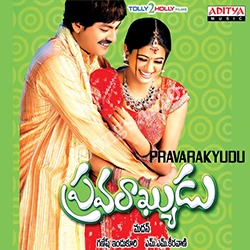
Pravarakhyudu

Pravarakhyudu-poster

I’m quite fond of hero uncle Jagapathi Babu and I always find Priyamani worth watching. They definitely make this more watchable than the material warrants, although I did enjoy the relatively low key look at relationships in this romantic comedy. The comedy is the unfortunate bit.

Recently returned from the US, Sasi (Jagapathi Babu) is taken out to meet many prospective brides. He is an educated man and his funky glasses impress, but he seems to struggle when presented with a modern opinionated woman who has ideas about her own life. But one day, while driving in the country, Sasi is drawn to a woman he sees working in a field. His friend Ravi (Sunil) tells him that is because she looks like his legendary ex-girlfriend Shailaja (Priyamani).

We are hurtled into the past where Sasi wears his hair in a down do, and everyone looks years too old to be an undergraduate student. Shailu is arrogant and none too kind to her suitors, humiliating one by reading his letter out to her friends while he listens. But she has a point that she shouldn’t have to reciprocate just because a guy likes her. Sasi tells her guys don’t like her because she is good at studies and things, it’s just because she is hot. Shailu is offended as she believes her superior qualities make men fall for her. Cue shower scene (for Shailu, of course).

Sasi sees romance and sex as biologically necessary but love is just a stupid human invention. At a temple festival Shailu sees only the beautiful spiritual celebration while Sasi spots the couples taking advantage of the crowd to cop a feel. She is intensely irritated by him yet seeks him out all the time (she knows she does both things and that annoys her too), and he seems quite unruffled although it’s obvious he is attracted to her. When a fellow student threatens suicide by jumping from a water tank, Shailu challenges him to do something to break up the crowd and their encouragement of the wild behaviour – so he kisses her. He sees it as a tactic to draw the crowds’ attention and stop them encouraging the boy to jump, but Shailu starts to see all of his past actions as hints of his love for her.

Shailu tells all her friends she loves him just as he arrives to laugh it off as a bit of silliness. Shailu insists that he is lying to conceal his heart, and a rainy goodbye is on the cards. Question – why did none of the friends run for shelter? Or use the handy umbrella lying there. Or just give them some privacy? Shailaja goes to transfer out of college, but he says he will leave and does. There is a lot of Goodbye Forever in this film.

Back in the present day Shailu is the very strict principal of a ladies college and gets introduced with a jaunty chorus of “Lady Hitler!” Oh dear. But she does wear some nice sarees. And I do question that one of her perceived negative characteristics is that she gets security to beat up eve teasers outside the college. Is that really worse than eve teasing? Anyway. Her school had been looking for a Zoology lecturer and Sasi just happens to be a world famous Zoology lecturer.

Will Sasi ever overcome his intimacy issues that he says stem from not being breastfed as an infant? Will Shailu ever get off her high horse? Please. Nothing is impossible when you have an entire college stationery cupboard at your disposal.

Sasi turns into a mansplaining fauxmenist at times, usually to prove Shailu wrong. So I sometimes found myself agreeing with what he was saying even as I was itching to give him a tight slap for being such an arse. According to this film women feel empowered once a man, most likely Sasi, has told them how and when they may do so. But then he tells a girl she is at least partly responsible for a boy trying to kidnap her so you know Sasi really is a Telugu film hero, albeit one low on biffo and machetes. Jagapathi Babu manages to play off that tension between genuine good guy and insufferable know it all very well. He has a likeable screen persona and he is a good actor. He cannot dance to save his life and generally refuses to even try, preferring enigmatic walking, jazz hands and occasionally fighting with the air around him. Although with lyrics like”her booty is bigger than a Mercedes Benz. Baby baby baby, she’s my best friend”, I can understand he may not have felt inspired.

While she gets a slightly better deal out of the soundtrack, Priyamani has a challenging role in some respects. Shailu is often extreme and inflexible, although she is clearly not a bad person. But having been humiliated once by Sasi, she has a dim view of humanity and believes she needs to keep herself and her students safe from those bad boys.

Shailu’s character bears the burden of silly decisions (and a few dodgy outfits) for the sake of getting the plot to where writer-director Madan wanted it. But Priyamani brought her own presence and nuance to the piece. Both she and Jagapathi Babu added their own touches to the roles and their rapport and interactions helped me find enough to respect in both characters that I could overlook the worst. There was more of a Much Ado About Nothing vibe to the relationship than a Taming of the Shrew and I enjoyed some of the verbal sparring.

Unfortunately there are the tedious comedy tracks. Brahmi is in his element as a slimy teacher and does have the occasional good one liner. Ali is at his sleazy worst in an appalling racist, sexist, and homophobic skit set during a school trip to South Africa. Hamsa Nandini plays a glamorous married teacher with an eye for the professor, and is effectively coquettish as she irritate Shailu into fits of jealousy. Sunil is inoffensively amusing as Sasi’s mate Ravi, and does his usual bewildered shtick.

I like the leads, and am slowly working my way through as many of their films as I can track down.  Both the story and style of the film are quite engaging, and the fast forward button was made for those moments when Ali suddenly appears in tribal getup. See this if you like the idea of a slightly quirky hero with a smart and articulate woman, or just want a bit more talking and less killing in your mass fare. Plus a lion. 3 ½ stars!


Kanche

Kanche

Varun Tej takes on the role of a soldier in the Second World War so effortlessly in Kanche that it’s hard to believe this is only his second movie. His performance is one of the highlights of a film that has at its heart a simple love story but uses a more ambitious setting to deliver a deeper social message based on the literal and psychological ‘fences’ of the title.  The story starts in Thirties India and moves to the battle torn landscape of Italy during the Second World War using flashback sequences to keep the focus on Dhrupati Hari Babu (Varun Tej) and his romance with Seetha Devi (Pragya Jaiswal). It’s an unusual backdrop for an Indian film and despite a tendency towards melodrama in the second half Kanche is one of the better films I’ve seen this year and well worth catching in the cinema if you can.

The story starts when Hari meets Seetha while they are both studying in Madrasapattinam and Hari is working part-time as a waiter in a social club. Hari is outspoken but respectful with a twinkle in his eye, while Seetha is the perfect lady, always looking absolutely stunning in elegant saris, sparkling jewellery and perfect make-up. I was a little surprised at how liberal her thinking was for a wealthy and presumably somewhat sheltered girl in 1936, but Pragya has just a touch of aloofness which gives more authenticity to her role and she certainly looks the part. The couple have sparkling chemistry together and the romance moves along with a freshness that belies the familiarity of the story. Varun plays Hari with the perfect mix of serious scholar and carefree larrikin to make him an appealing character, and gives an immediate contrast with later scenes where he is more introspective and self-contained as a soldier in the Indian Army.

Although Seetha is from a royal family and Hari is the son of the local barber, their romance blossoms while they are away from home. When they return from college however their relationship seems doomed to failure since social norms decree that Seetha must marry a man from her own class. Seetha and Hari try to enlist the help of Seetha’s brother Eeshwar Prasad (Nikitin Dheer) but he is firmly on the side of tradition and opposes the match almost more vigorously than Seetha’s father. Nikitin plays Eeshwar with a permanent sneer that looks painful to maintain and becomes almost comical with each reappearance. There are whiffs of a more rational and intelligent man but they don’t seem to be able to make it past the facial grimace and Eeshwar is too one dimensional to be completely convincing here. Sowcar Janaki has more scope as Seetha’s mother, trying to get her daughter to conform while at the same time acknowledging that as a woman she has little influence and no effective assistance to offer. I love the subtle message that Krish adds here about the role of women in Indian society which is just as effective as his more obvious statements about social divides later in the film.

The class divide isn’t enough drama for Krish though, and he adds in inter-caste rivalries in the village which increase the tension and lead to literal fences being constructed alongside the invisible social barriers to keep different groups of villagers apart. The village is split by class, caste and gender which makes for a lot to expect Hari to fix in the final half of the film!

The romance is told as flashback sequences interspersed with events on the battlefields in Italy and although the love story follows a predictable path, the rest of the film is rather more unexpected. Eeshwar is now Hari’s commanding officer and still hasn’t lost the sneer or his enmity towards Hari although the two avoid each other as much as possible. Krish doesn’t fall into the trap of making Eeshwar a vindictive bully and Nikitin does a better job in these scenes, making Eeshwar an honourable and decent man behind the curled upper lip. As events unfold, Eeshwar is forced to depend on Hari when he is captured by the German army along with the other commanding officers. Hari and a few other soldiers set out to rescue them but find themselves confronted by Nazi atrocities in a small town they pass through and need to adjust their plans accordingly.

There are a number of more subtle messages that are almost lost as Krish hammers home the point that anything can be achieved through co-operation and mutual trust. The camaraderie between the soldiers – British and Indian – is unexpected and an interesting counterpoint to the more usual rivalry and prejudice seen in other films. Hari’s letters to Seetha also provide a different view of the war and her unseen presence provides support for Hari as he struggles with the realities of the conflict.

One of my pet hates in films with foreign characters is the usually poor quality of the performances, however here the actors are good and generally appropriately cast. The commanding German officer and a family of bakers in a small Italian village are particularly effective and add credibility to this part of the film, while the various British soldiers are also all good in their roles.  The dubbing is however not as successful with a definite miss on some of the British army accents making the British General sounding more like an East End butcher rather than an officer of the British Army. There is also some confusion with the Italian villagers who speak variously in oddly accented Italian and German, although this is mostly drowned out by the Telugu voice-over. Still, overall the foreigners are much better than usual and are convincingly part of the film storyline rather than simply extras in the background for added flavour.

The pace in the second half is slower and the particularly in the final scenes the action becomes overly dramatic where less really would have been more compelling. The end is also heavy on the films message of peaceful co-existence through mutual respect and tolerance, even adding a baby called Hope just in case there could be anyone who missed the point. However despite the awkward melodrama and overly drawn out final fight scene, the story is still powerful and Varun is impressive right to the end. Definitely an actor to look out for.

With good performances, an interesting story and some clever dialogue, Kanche demonstrates Krish’s ability to think outside the norms of Telugu cinema and deliver another great film. Don’t miss it!