Paruthiveeran

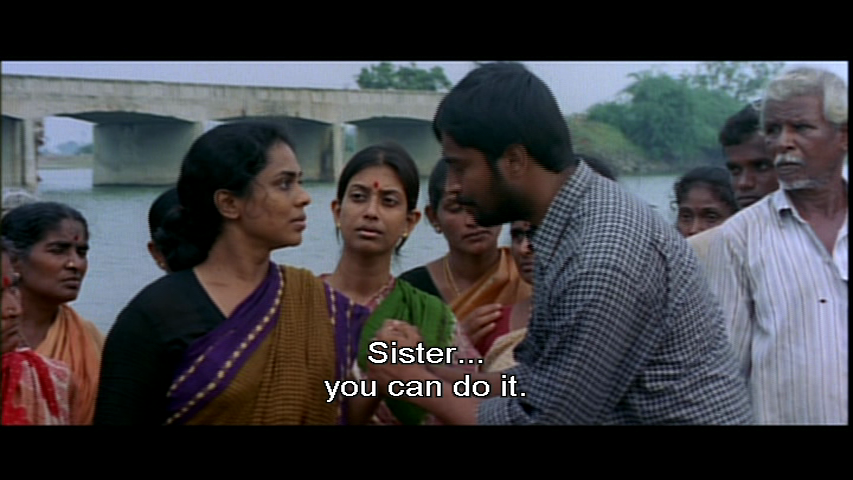
The film opens at a temple festival, full of colour and music. The camera draws the eye in through a range of points of view, creating the feeling of being part of the milling crowds. It’s all very colourful and entertaining, and then the knives come out. We’re in a place divided by caste and old grudges, where the police are the law but not the authority.

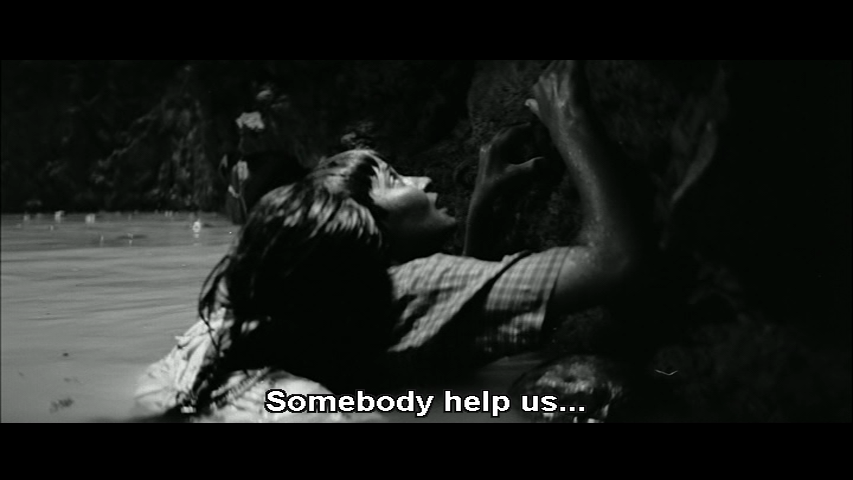
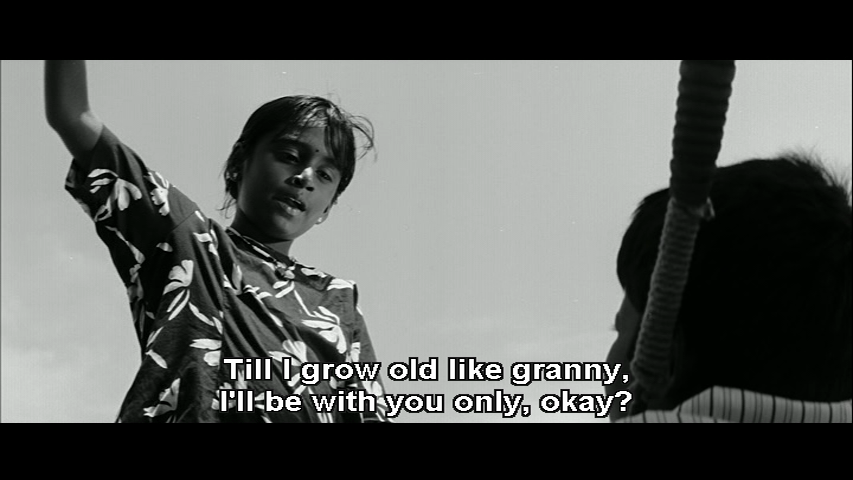
In a black and white flashback, a young girl is pushed into a well. Her cousin, Paruthiveeran, helps to keep her alive, and an obsessive love is born. The children become friends and promise to be together always, even after they grow up.  Soon Muthalagu tells anyone who will listen and everyone else as well, that she will marry Paruthiveeran and only him.
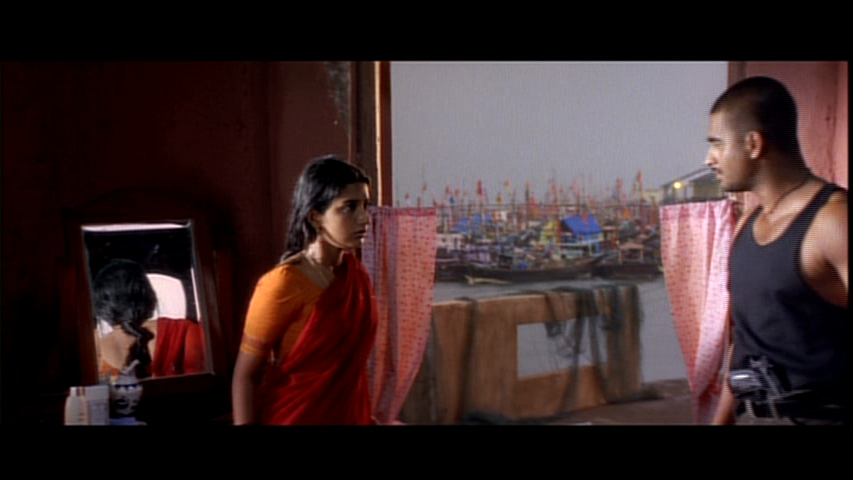
Back in the present day Paruthiveeran, or Veeran, played by Karthi (knife wielding ne’er do well from the opening sequence) and Muthalagu (Priyamani) are still in the village. What will happen to a strong willed girl who refuses all other offers and stands up to her father? Why would she want Veeran who is a drunken womaniser, not interested in her and not particularly attractive? Priyamani and Karthi make the melodrama more compelling than it might seem.

There are lots of spoilers ahead so if you really don’t want to know, please stop now.
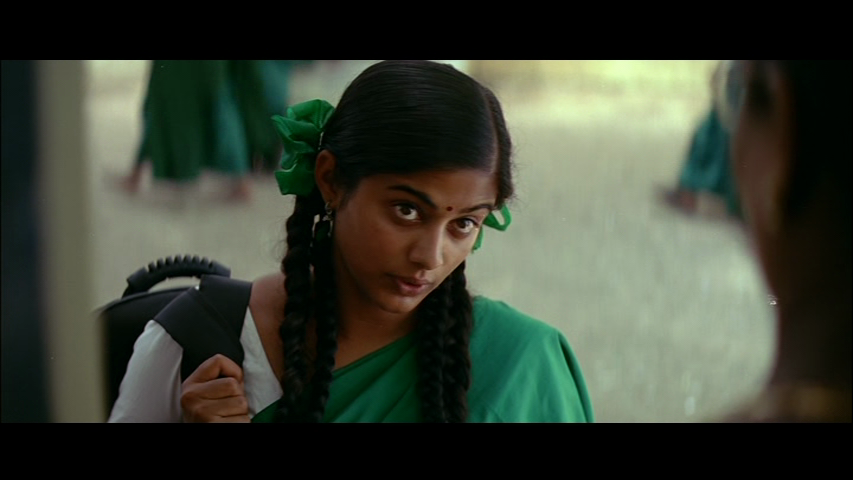
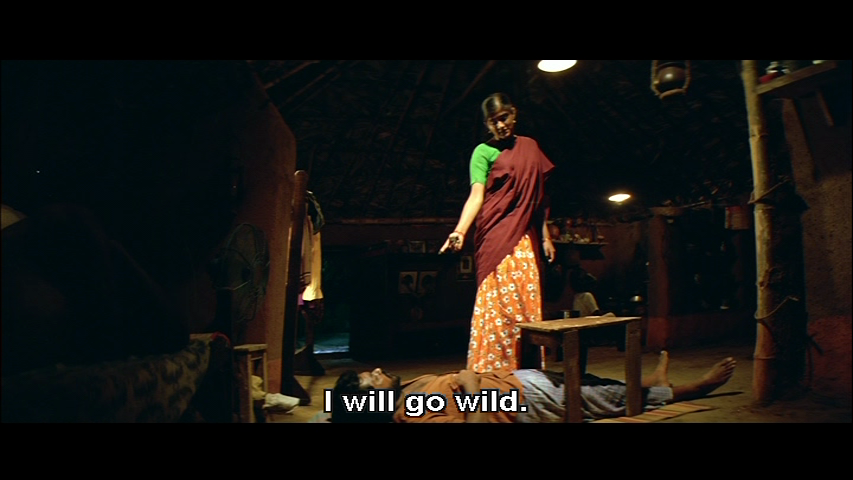
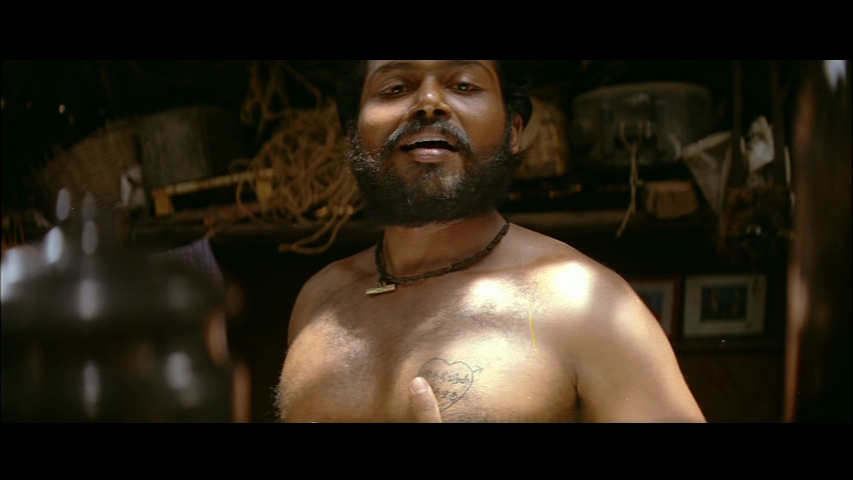
Muthalagu is an interesting character, and not your usual romantic girly heroine. Priyamani’s performance is totally convincing, even as I was rolling my eyes at some of her character’s choices. Muthalagu is complex yet single minded and while I couldn’t see myself ever obsessing over Karthi, I could believe that she was.  She is beaten and verbally abused by both of her parents but will not flinch, and even threatens her father in return. Her teachers and others keep asking why she wants to throw herself away on a man who is usually in jail, why she would deliberately fail 4 years of school so she can postpone being married off. She takes poison rather than marry another man. She drugs Paruthiveeran, ties him to his bed and tattoos her name on his chest.
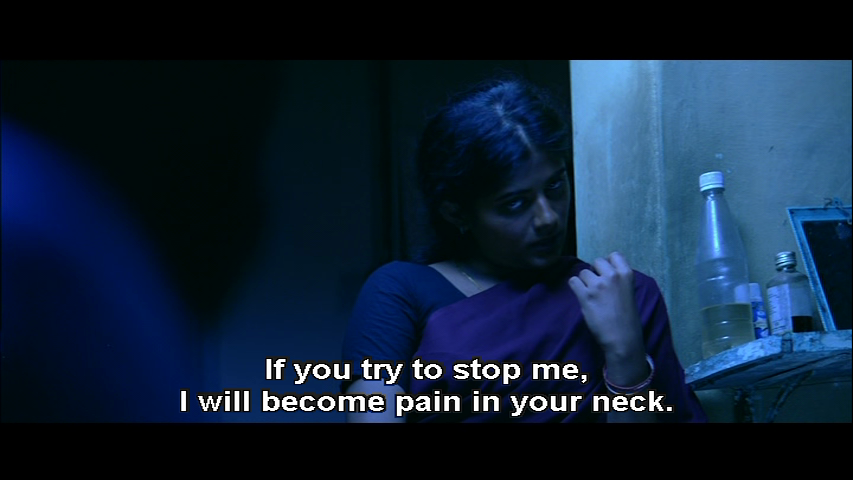
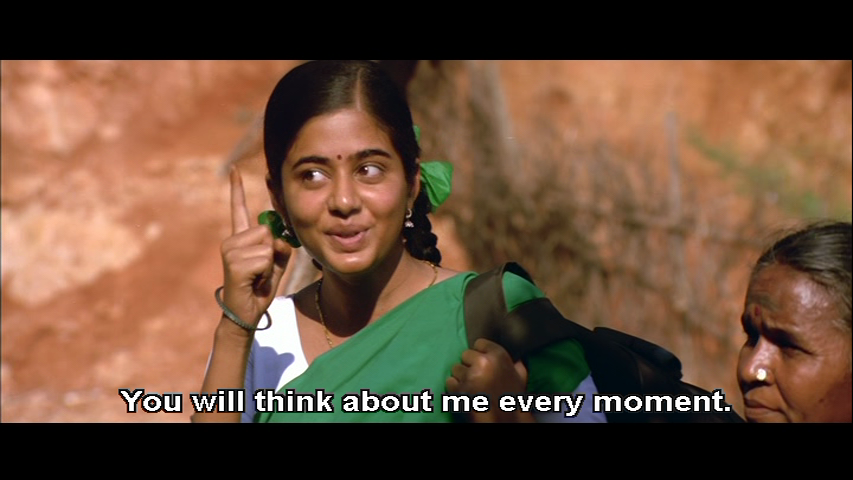
This is not a shrinking violet, but nor is she a crazed caricature. She knows everyone is talking about her, but she never tries to hide her feelings or make any pretence. She believes Paruthiveeran is her fate, they are meant to be together and she will not break her promise to him or to god. There is no swaying her, not even his protests can persuade her.
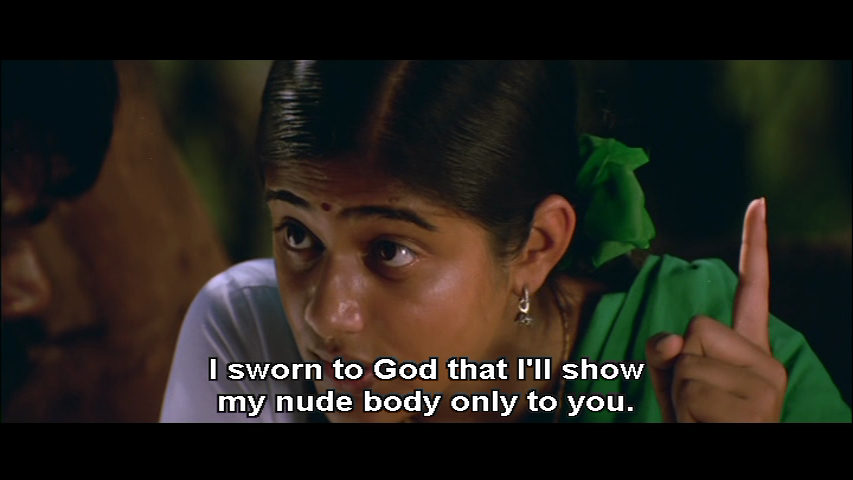
It’s not a glamorous role – most of the time Priyamani is in plaits with the scrubbed face no makeup look. She doesn’t try to make crying look pretty; she lets the anger and frustration burn through. Her body language and facial expressions really capture a mix of arrogance and uncertainty. When Muthalagu smiles, she is a radiant young girl in love. Priyamani has been praised to the skies for this role and bagged a number of awards, and I can see why.

Karthi did his best in his debut to give his character some depth.  Veeran is a bully and a bit of an idiot, his only ambitions seem to be to upset local dimwit Douglas and to commit a big enough crime to go to Madras prison.
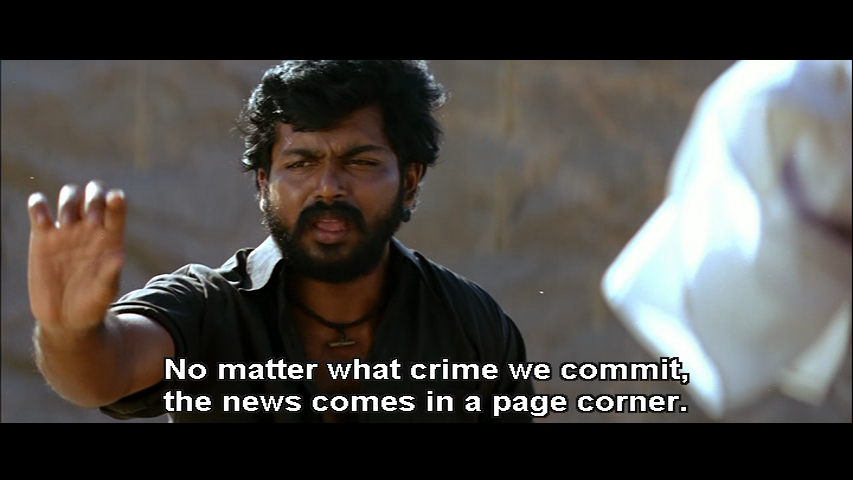
He spends a lot of the film hanging around with his equally useless uncle Sevvalai (Saravanan), getting into fights, avoiding Muthalagu and shagging an assortment of women (some paid, some volunteers). He basically steals a prostitute from some local men (he gives her back when he is done), and is asked to share one of his girls with them one day – a throwaway line that will have repercussions. He rejects and humiliates Muthalagu time and time again, and he is as frustrated by her obsession as she is by his resistance.I did enjoy his visible transformation to the semi-domesticated boyfriend; once again, ruler straight side parted hair seems to be the Good Boy indicator. But how good can he possibly be? Well, he does get that tattoo amended to have both their names enclosed in a heart so I suppose that is a commitment.
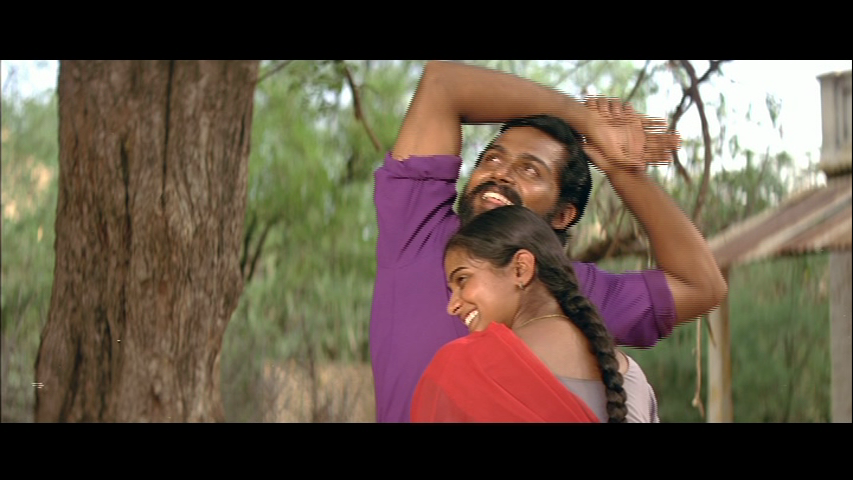
Once the two admit their now mutual feelings, the film starts to go off the rails a bit in search of more dramatic tension.  The family feud gains intensity, caste violence takes the stage and some of the characters seem to go out of focus. There is another flashback sequence that explains the origin of the family enmity, but I didn’t think such detail was all that necessary.

The film builds to a finale that is both highly melodramatic and somehow shockingly real. Deciding to make a break from the village and start a life together, Paruthiveeran hides Muthalagu in his shack and leaves to protect his uncle. Unfortunately, that sleazy guy from the prostitute episode sees her and decides it is time to claim his dues. After a horrible gang rape sequence that is disturbingly matter of fact, Veeran comes back to find her dying. I don’t think this is a case of a ‘bad girl’ being marked for death – Muthalagu died because of Veeran’s actions and who he was, and she didn’t seem to be subject to a directorial judgement by Ameer Sultan. The death scene was well written, and not at all sickly sweet. Muthalagu’s parting words to Veeran are a demand for some kind of explanation as to how she could have waited her whole life, and ended like this. And I was asking the same thing. Veeran decides he must cover up the dishonour to his love, and perhaps also use her death to have one last shot at her father.  What he did startled me and while it made a sort of sense, the ick factor was high. Karthi did reasonably well with the extremely emotional scenes, but it was in the quieter sorrowful moments that he really convinced. It was quite unnecessary that we got an eyeful of Karthi’s butt in the final scenes but whoever pre-ripped his clothes was very determined. I am sparing you the sight.

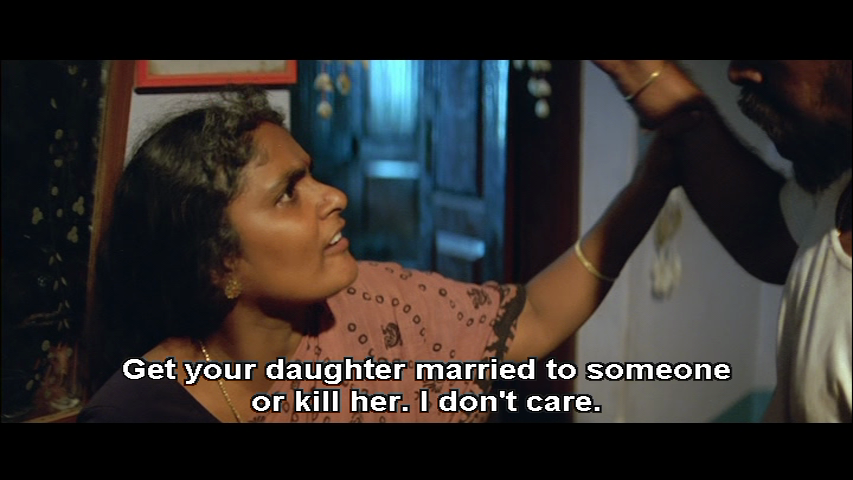
The support cast are very good – they look and sound the part and this isn’t a glossy view of country life. I wasn’t so taken with the little girl who played young Muthalagu. Her voice was a monotone buzz that grated, but her expressions were fun and she managed to be precociously flirty and still a child. Saravanan as Sevvalai is good but doesn’t get much to do apart from support Karthi. The grandmother and mother (Sujatha) in Muthulagu’s family are intense and their performances are high on energy but not overly histrionic. I really felt the tension in her family, and it made the typical family disapproval scenes much more compelling.
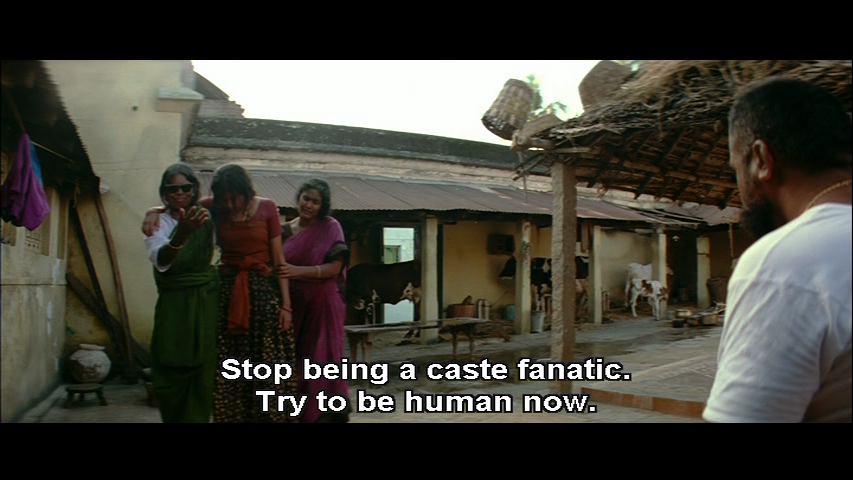
Yuvan Shankar Raj’s soundtrack is excellent. Some tracks sound as though they are sung by traditional singers rather than studio artists, and I think that works really well in building the sense of place. The rural setting is very picturesque and appealing, and the cinematography captures both the energetic village life and the open countryside.

The flashbacks took up too long, and the ending is what I have come to think of as typically ‘everyone dies or lives unhappily ever after Tamil romance’. I’m never very happy about the depiction of rape in films, but I think this was given some weight and treated as an assault, not a justly deserved punishment. It was not made to be the girls fault, despite what her rapists may have said, and I appreciated the writing that made the scene compelling. Priyamani is the reason I picked up the DVD in the first instance, and her performance is remarkable. I don’t imagine I will feel the need to watch it again anytime soon, but I did like seeing great acting, a strong female character and some interesting relationships on screen. I give it 3 and 1/2 stars.

Boss Engira Baskaran

Tamil comedy is not my usual choice of film. I think comedy is the hardest genre to understand in a foreign language and often doesn’t translate well unless it’s purely physical. Even then, cultural differences often mean that what is funny to the writer just leaves me baffled. But Boss Engira Baskaran was recommended to me by my local Tamil DVD store as an entertaining film and I have to say – it’s actually pretty funny!

Arya plays Baskaran, commonly known to his friends and associates as Boss. He’s a happy go lucky guy who has never managed to pass his final school exams and has no gainful employment. Although he goes back each year to re-sit along with a group of other regular ‘failures’, he would have passed years ago if he only put as much energy into actual learning as he does into his attempts at cheating. His best friend, Nallathambi (Santhanam) runs a barbers salon which he acquired as a result of his rather unconventional marriage. Baskaran spends most of his time hanging out with his friend at the salon and generally making a nuisance of himself. In the course of his latest attempt to pass his final English exam he meets Chandrika who coincidentally is the sister of the girl his sensible veterinary brother Saravanam is trying to marry.

Despite the way in which Baskaran meets Chandrika and his subsequent idiotic antics, Chandrika seems fine with the idea of marriage. Perhaps she sees something in Baskaran that I don’t but he doesn’t seem like much of a catch for a well educated girl with a good job and excellent matrimonial prospects. It could be that this is part of the comedy that I just don’t get, but for whatever reason she encourages him in his quest to win her hand.

To get the girl Baskaran has to try and persuade her father that he would be an acceptable husband, despite the fact that her father obviously despises him. His sister in law and the rest of his family point out that as he is unemployed and has no qualifications he has no chance of getting her father to approve.  He leaves home determined that within 6 months he will have enough money to organise his sister’s wedding, an endeavour which he feels will demonstrate to his potential father in law that he is a responsible person who can support his daughter.

Baskaran hits of the idea to run a tutoring college for students who are re-sitting their school exams. After all, it’s a topic he feels he knows a lot about. To start the business he borrows money from the local loan shark Velpandi – Rajendaran in bad guy persona. Needless to say things don’t exactly go to plan with the college and Baskaran runs around trying various ploys to make his project a success. 

The film slows considerably in the second half and although there are some amusing moments, I don’t find most of the scenes in the school funny. The pace picks up again towards the end, although the final scenes fail to match the comedy in the rest of the film. The ending feels tacked on more as an afterthought to tie up all the loose ends. Jiiva has a special guest appearance as Chandrika’s fiancée and its possible that I may have found this funnier if I’d seen M Rajesh’s previous film Siva Manasula Shakthi and had an idea about the previous relationship between the two actors – but then again maybe not.

Most of the comedy is based on the dialogue with the best lines reserved for Nallathambi.  Santhanam does an excellent job in the delivery of these as far as I can tell and he steals the show when he appears. There were quite a few references to old films and older film songs which I’m sure were all very significant.  I think I felt much the same as a Bollywood virgin must have when watching Om Shanti Om! However, it was still funny even if I only caught a few of these – such as the salon being called Thala and Thalapathy, and the appearance of Rajnikanth’s Annamalai at a significant point in the story. I appreciate that unlike many recent Hindi films, or the often relatively unfunny comedy track, none of the humour is based on bodily functions or toilet humour. M Rajesh wrote as well as directed the film and deserves praise for his funny script and screenplay.

Arya is surprisingly good as Baskaran. Having seen him in more serious roles in Varudu and Madrasipattinam I wasn’t sure how he would deal with a much more light-hearted character but he manages to impress.  His facial expressions are more animated than I remember from previous films, his comedic timing is mostly good, and overall he strikes the right balance between ineptitude and stupidity for his character. Nayantara on the other hand is a bit of a disappointment. I expected more from her after her performance in Yarada Nee Mohini, but she seems very lifeless and there is no chemistry between her and Arya. Some of this may be due to the rather one-dimensional characterisation of Chandrika who just seems to be there as the love interest and nothing else.

While Saravanam mainly plays the straight man to his brother there is still a lot of comedy in his role and Panchu Subbu is believable as the respectable vetinarian. Vijayalakshmi looks beautiful in her role as his wife Nandhini and brings a touch of grace and dignity to the film. I must look out for her in more films as she had such a lovely presence on screen.  Chitra Lakshmanan as the father of Nandhini and Chandrika is a little too over the top, but his character is in keeping with the more typical Tamil comedy style for the father of the bride and he does well enough with this role. 

What works best is the first half of the film and the interactions between Bhaskaran, his brother and his friend.  A better end would have helped, but I was impressed at just how well the comedy did translate to a non Tamil speaker. A film worth watching as a funnier than usual comedy with an excellent performance by Santhanam and a totally different side to Arya. 3 ½ stars.

Aayutha Ezhuthu

A little bit of research informs us that Aayutha Ezhuthu was supposed to be a call to the youth of the nation to take up politics and generally to encourage political awareness. We really don’t know if this was true, since this film seems to show that life in politics is apt to be short, violent and fraught with danger. In addition, the wily politician who sets up the main characters seems to be thriving through his various corrupt dealings, so perhaps the film serves more to show what the problems are within the system. Aayutha Ezhuthu uses the converging storylines of three characters to set the scene and their subsequent interactions form the rest of the story. As the story unfolds the film becomes more of a straight ‘good guys’ vs. ‘bad guys’ although it’s not totally clear who exactly are the ‘good guys’ here.

The film opens with three main characters following their own storylines in traffic on a bridge. The same scene is shown from the viewpoint of each of these three and, after each vignette, we are shown that same character’s life in the few months prior.

First we meet Inba, played by Madhavan in an uncharacteristically brutal role for him.  He is a thug, who works for his brother mainly ensuring a local politicians campaign runs smoothly. Inba beats his wife and almost casually chooses violence over any other form of social interaction. Inba’s current employer, Selvanayagam the local politician played by Bharathiraja, is the spider in the centre of the web.  He employs Inba to police his rallies, and is in direct conflict with the second character in the drama, Michael.  Through their involvement with each other, the third, Arjun is drawn into the fray.

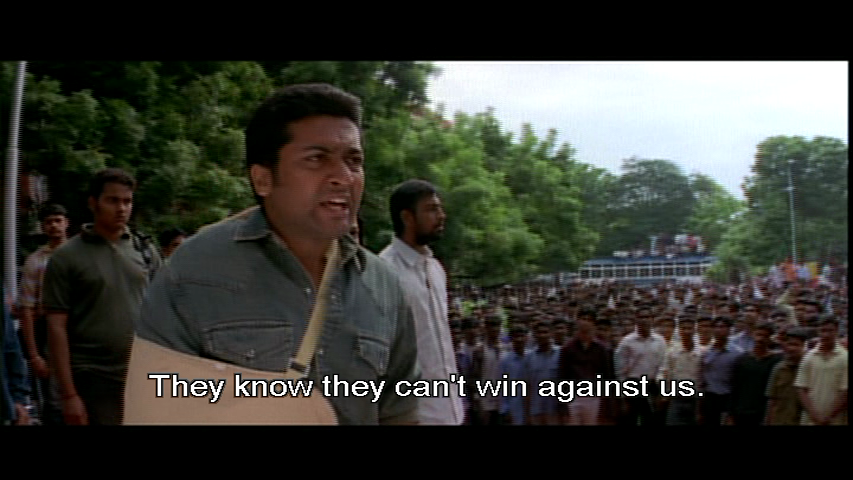
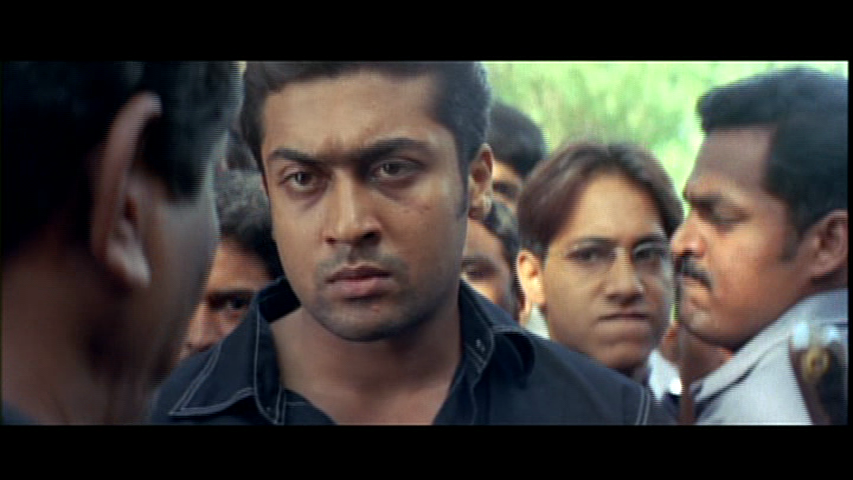
Suriya plays Michael Vasanth, a student, apparently a mathematical genius and also a political activist.  Not for him the more normal student methods of agitation such as demonstrations or debates, he prefers to be more direct in his approach and encourages retaliatory action.  This brings him into direct conflict with Selvanayagam and thus ultimately with Inba.  Suriya also seems out of place in his role.  He is muscular and obviously powerful, which doesn’t fit the image of a serious scholarship winning student.  His solution to problems faced by local villagers seems to be almost as confrontational as Inba’s violent tactics.  He appears belligerent and selfish as we see him brush off his mother’s concerns and treat his girlfriend badly. Although it is quite conceivable that students will use such extreme tactics, as has frequently been seen in many countries of the world, this approach just felt wrong with these characters. Perhaps this was partly an issue with the subtitles which may not have conveyed the dialogues accurately, but Michael came across as a very unpleasant character and his political aspirations felt more self-serving and less for the public good than perhaps was intended.

The final character in the drama is Arjun, played by Siddharth.  A playboy who has just finished his studies and plans to head to the US, Sid at least seems to fit the role he has been given.  His approach to life seems much more in keeping with his character and his pursuit of Meera, while typically filmi does feel much more genuine than Michael’s relationship.  By a series of coincidences all three are on the same bridge at the same time.  Inba uses this opportunity to get rid of Michael by shooting him, which sends him falling into the river past Arjun’s shocked gaze.

The storylines all converge at this point, and the aftermath of the confrontation is played out to its bloody and somewhat inevitable conclusion given the arrogance and brutality of the main characters.

What are much more interesting about this film are the female characters.  Although she is regularly abused by Inba, his wife Sasi is a very strong personality who is determined to wean him away from his brother’s influence and stop his forays into crime. Their relationship is very realistically portrayed by Meera Jasmine who is fantastic as the battered wife. Despite her family’s objections to her husband, Sasi enlists them to help get Inba a job, so she obviously has great powers of persuasion.  Madhavan’s scenes with her are the best in the film and she was very compelling in her performance. Trisha in her role as Meera is less of a driving character, but she is part of the reason why Arjun changes his playboy ways as he slowly falls in love with her.  She is convincing and effective in the initial scenes, but towards the end of the film she appears to be sidelined. Esha Deol plays Geetha, who is involved with Michael.  There is a lot of potential in their relationship as he doesn’t want to get married and asks Geetha to move in with him instead.  This opportunity to look at the issues surrounding marriage and commitment is squandered as the theme is never really developed further.  Geetha lies to her parents and to Michael’s mother and never really becomes anything other than the woman in Michael’s life.

However these three women, as well as the various female characters that stand for election in the story, seem to be at least an attempt to show women as other than just the pretty wife, girlfriend or daughter.  There is more meat to their roles here, although it’s not sustained and ultimately only Sasi makes a lasting impact.

Because of the belligerence behind Michael’s actions it’s hard to see him as one of the good guys.  The virtual worship of him by the other students contributes to the impression of arrogance and he imposes his will on everyone around him without any seeming thought to the consequence.  Despite his thuggish ways, Inba appears as the more sympathetic character as he is genuinely trying to change his ways, but cannot get out of the cycle of violence he has lived with all his life.  The supporting characters all seem to have their own agendas as well, keeping the whole feel of the film as one of corruption and deceit.  The only genuine people seem to be the villagers caught up in the struggle for their village. While the film tries to be a statement on youth and politics, the end result seems to disregard Michael’s supposed motivation and political ambition and highlight the futility of anything other than corruption and violence as a means to achieve and hold on to power.  The secondary plot line of Inba’s attempts to escape his violent lifestyle is much better handled. While Meera Jasmine is the standout performance, both Trisha and Esha Deol ultimately aren’t given enough screen time to be effective.  A special mention for Sriman who played the character of Dilli, and was excellent in his role as Inba’s conscience.

Heather says: I really didn’t like this film.  For me it may have worked better if the casting of Madhavan and Suriya had been the other way round.  I found that Suriya didn’t fit the image of a student at all. He is too old and not convincing, while Madhavan in his role switches between mayhem and maniacally happy.  This didn’t seem to fit either the characters lifestyle or generally bleak prospects.  As a man recently released from prison, with a pregnant wife and no real job aspirations other than working for his brother, the ‘crazy happy’ was difficult to swallow.  Some of this was to show the reason why his wife stayed with him, and indeed some of these scenes were much less overdone.  This may have been a directorial decision as Abhishek Bachchan appears very similar in his characterisation of Beera in Raavan. I stuck with the film mainly because of the relationship between Inba and Sasi which was very well portrayed. Siddarth’s character was also quite watchable, and overall the story was interesting, but I was very tempted to fast forward every time Suriya was on screen. I have liked him in the other films I have seen him in and was horrified by him in this.  I really wanted his character to die as quickly as possible, just so that I did have to suffer through his flexing and belligerence.  I wish I had liked this film more but thought it was a potentially good story that for me was ruined by bad choices in the cast and poor directorial decisions. 2 1/2 stars from me.

Temple says:  This is another film that, like Leader, is well made but not likeable. I have issues with the character of Michael and his immunity from consequences. Everyone around him is made to pay for his activism but he escapes with a few flesh wounds. Surya was unappealing as he seemed to show only the arrogance of Michael and gave me nothing to respect in that character. Unlike Heather, I really liked Madhavan’s performance in this. I thought he really made sense of Inba and Sasi’s relationship, and showed the complexity of his character. He was boyishly impulsive, and casually brutal in turns. He showed the pressure Inba felt to be a man’s man and ignore his wife unless they were behind closed doors. Their relationship was compelling as Meera Jasmine showed the gamut of attraction and repulsion depending on which side of her husband’s nature was dominating.  I didn’t get the impression he was ‘crazy happy’, he was just a thoughtless guy who wanted what he wanted, and was happy so long as things ran his way. I thought the whole cast, with the exception of Surya, did a good job and made the most of their roles. I did have to laugh (a lot) at the idea of Esha Deol teaching French though! So, while I don’t like the inherent message that corruption is OK as long as you say you mean well, I do think this film was compelling and well made. The only disappointment was the lack of follow through on what seemed to be interesting roles for women. 4 stars from me.