Anbe Sivam

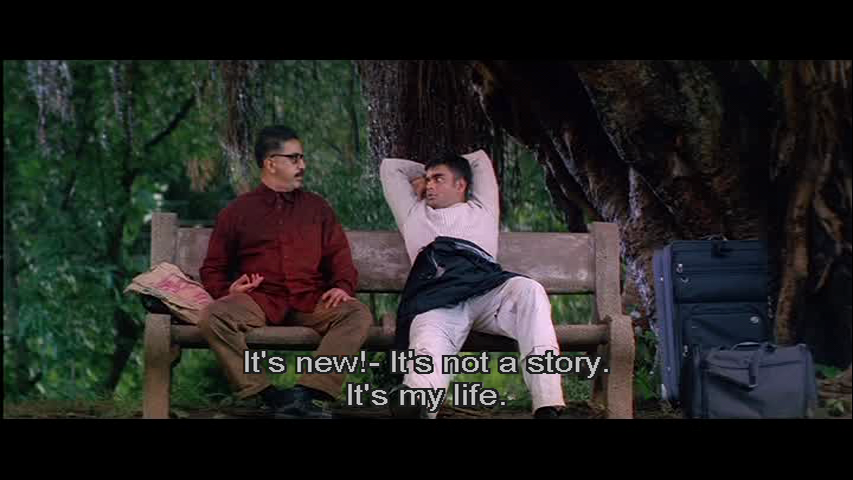
Anbe Sivam is a film that many people recommended to me and since it stars two of my favourite actors, it was one I quickly moved up the ‘to be watched’ pile. The film has as its basis the themes of politics and religion, but it doesn’t take itself too seriously and there is plenty of comedy along with all the drama.  The viewer is taken on as much of a journey as the two protagonists and although the film details their endeavours to make their way to Chennai it’s not just the physical travel which is explored. The film was directed by Sundar C while Kamal Hassan wrote the screenplay and even sang on a couple of the songs. Anbe Sivam has a more unusual storyline for a Tamil film, and although there are one or two clichéd characters and a few unlikely coincidences, overall it’s an entertaining watch. Kamal Hassan and Madhavan make a great team and both give excellent performances.

The film starts in Bhubaneswar airport in Orissa where Anbarasu (Madhavan) and Nallasivam (Kamal Hassan) are stranded due to the rains. Anbarasu works as a film maker in the world of advertising and since he despises the part of his name which refers to love, he prefers a shortened from of his name A. Aras. Initially Aras mistakes the bespectacled and physically handicapped Sivam for a terrorist wielding a pipe bomb, when in fact Sivam is armed with nothing more deadly than a cucumber.

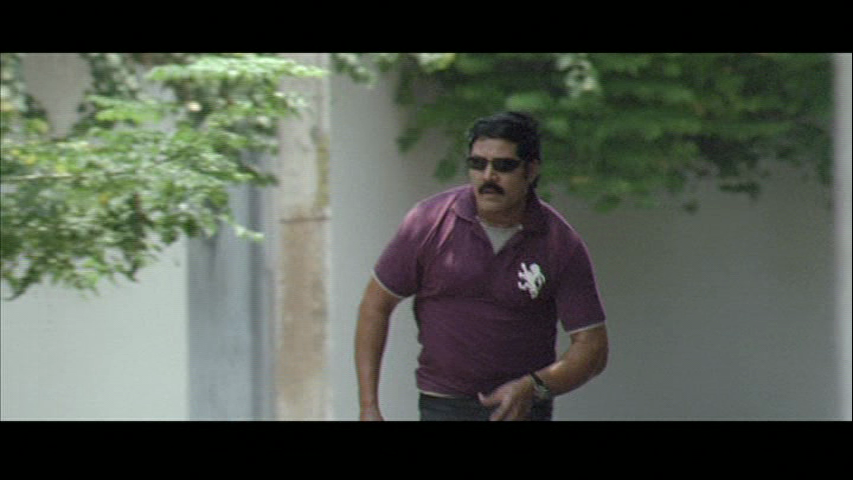
A.Aras is as much of an idiot as his name sounds. He’s arrogant, quick to make judgments and quite convinced that he is always right. Sivam is a man afflicted with a paralysed right arm, one leg shorter than the other and an abundance of facial scars following an accident. He also has thick glasses and a facial tic which impressively Kamal Hasan manages to keep going throughout the whole movie. However, after his confrontation with the authorities Sivam explains to Aras that most terrorists don’t look like him at all, but instead are more likely to look handsome like Aras.

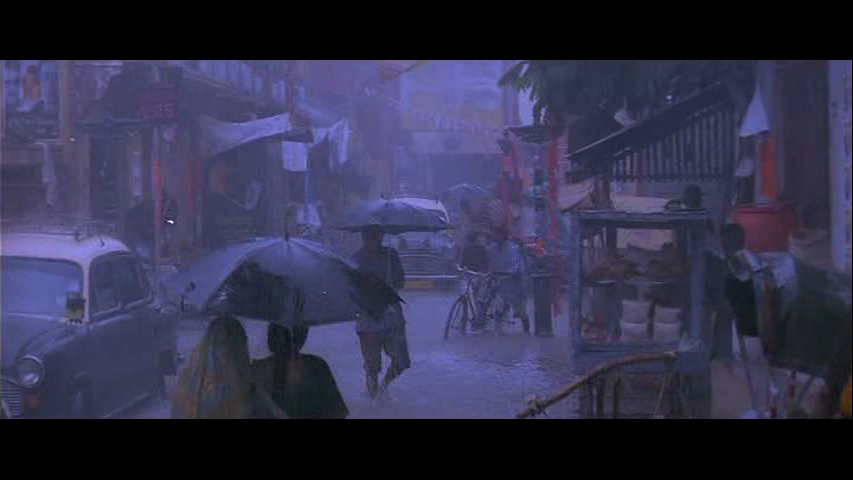
After all flights are cancelled Aras ends up unwillingly sharing a room with Sivam. Although Aras sneaks out early the next morning he still doesn’t manage to evade his unwelcome travelling partner as Sivam catches up to him in a flooded train station. Again Sivam comes to the rescue of the more impetuous Aras and aids him in his onward journey to Chennai. There are some beautiful shots throughout the film and the scenes here of the rain drenched streets and the countryside from the bus are excellent.
The duo end up taking a bus and a train on their quest to get to Chennai and along the way Sivam is unfailingly cheerful, chatty and full of unsolicited advice which drives the more reserved Aras crazy. Aras distrusts  Sivam and is rude and even callous in his continual attempts to get rid of Sivam, but his efforts backfire every time. This leads to a lot of comedy which, although often quite slapstick, is well-integrated into the story and is really quite funny. The conflict between the two allows discussion of their opposing views on almost every topic but most commonly Sivam’s communist beliefs. The dangers and benefits of globalisation and multi-national companies are touched on while the clash between Aras’s belief in capitalism and Sivam’s in socialism is an ongoing theme.
As they wait for the train back to Chennai, there is a long flashback which explains some of Sivam’s beliefs and how he came by his disabilities. An unscarred and healthy Sivam organises and takes part in street plays as a way to spread his message of equality and rights for workers. The main person ridiculed in these street plays is the rich and outwardly religious industrialist Kandaswamy Padayachi who is in conflict with Sivam as he refuses to give his workers adequate pay. Sivam meets his daughter Balasaraswathi and after some initial conflict the two end up falling in love. She persuades Sivam to paint a picture in her father’s factory as the fee for his art work will help fund further communist activity. His painting cleverly includes a large amount of communist imagery and I was intrigued to learn that both this scene and the painting itself were influenced by Diego Rivera’s mural at the Rockefeller Centre. Dolce and Namak’s excellent review notes a number of links between Dali’s work and the imagery depicted throughout the film too.

This part of the film is however the least satisfying and goes on a bit too long. Kiran Rathod is rather unsatisfactory as the rich daughter although I can’t decide exactly why, but she never engages any sympathy for her character. The love story seems very trite and there is no chemistry between the two actors here at all.Nasser as Kandasamy Padayachi is a typical evil factory owner although the duality of his evil deeds while continually offering prayers to Shiva was an interesting trait. There is a rather odd fight scene with Sivam using an umbrella as a weapon which doesn’t quite fit with the rest of the story although it is well choreographed. An earlier scene where the theatre group’s performance is broken up by the police is much more realistic and convincing, and this later confrontation seems unnecessary and more contrived. However the flashback does give insight into why Sivam looks at the world with his glass half full attitude despite his disabilities.

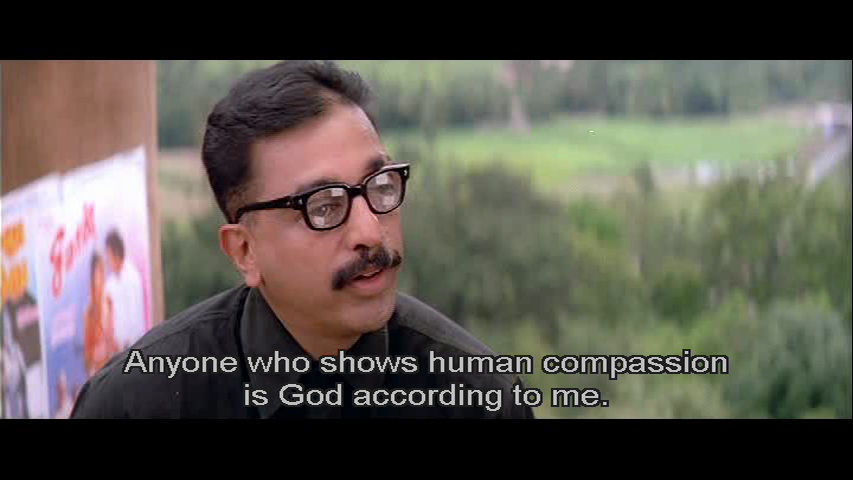
As the rest of their journey unfolds, Aras gradually becomes more compassionate, eventually becoming involved in the struggle to save a young boy’s life following a train accident. Sivam explains his belief that anyone who shows compassion and love to their fellow-man is themselves a god turning the more usual statement ‘God is Love’ neatly around. The last scenes are particularly powerful and moving and Sivam’s unfailing goodness does give the impression that he may indeed be a god. Albeit a flawed and very human one.
What really makes this such a good film are the performances from Kamal Hassan and Madhavan. Kamal Hassan plays Sivam with humility and warmth as a basically good man, but one who is not above playing tricks on his travelling partner. He’s also expressive and vehement in his role as an activist but rather more obtuse when it comes to personal emotions. The change in his character as a result of his injuries is very well depicted and despite his many irritating habits, Sivam is a very sympathetic character. Madhavan does well to hold his own against such a performance from Kamal Hassan. He has a great sense of comedic timing and his scenes with Kamal Hassan are compelling. Sivam is the person you really don’t want to sit beside you on the bus and Madhavan’s increasing frustration and anger is understandable and totally believable. His gradual change as he is exposed to the realities of life in rural India is also convincing and well portrayed. Perhaps the only odd note is his sudden desire to adopt Sivam as his older brother as this seems a rather sudden jump from just wanting him at his wedding. The coincidence that both men love the same woman is also a little unbelievable but for the purposes of the story I’m willing to ignore it. Uma Riyaz Khan appears in a small but very effective role as Mehrunnisa, a member of the theatre troupe and Santhana Bharathi is also well utilised as Padayachi’s enforcer. Both characters have more involvement with the story than first appears and I really enjoyed their contributions. The music by Vidyasagar doesn’t stand out particularly but it does fit well into the film and the songs seem to flow very naturally out of the dialogue. The title song, which appears as a recurring theme, is the most effective and haunting. This clip is fairly graphic and does reveal quite a bit of the story around Sivam’s injuries so skip it if you don’t like blood or don’t want to know more about what happens.

Anbe Sivam is a film I’ve now seen three times and I get more out of it on each viewing. Everything seems to have a second meaning, and that duality is reflected in the fact that the main characters are all known by two different names. It’s a fascinating film and it raises some interesting questions about love and the nature of God. I add my recommendation to all those people who advised me to watch it. 4 stars.

Naan Mahaan Alla

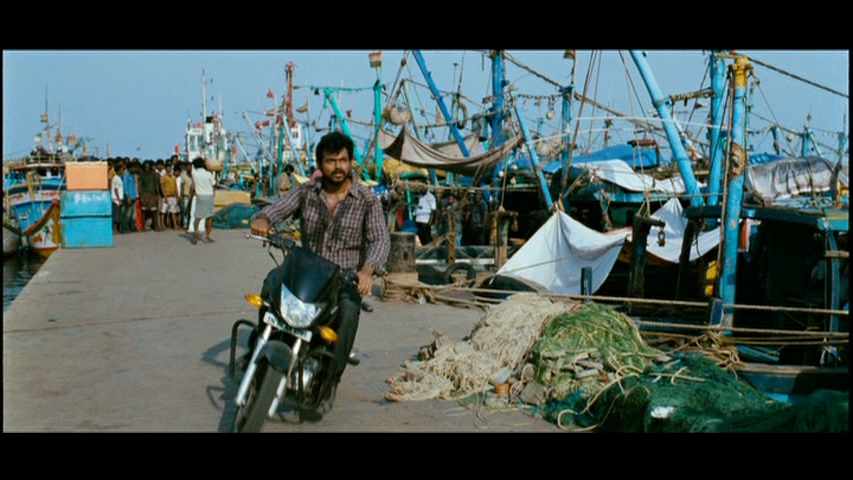
Naan Mahaan Alla is the fourth film release for Karthik Sivakumar (aka Karthi) and the second for writer director Susindran. The film starts off as a romance but ends up as more of a crime thriller, with Karthi’s character the main connecting factor.  As such, it’s very much a film of two halves and I find it disjointed as a result. However there are some good moments as Karthi puts in a strong performance and Kajal is entertaining while she is around.  I like that the film is set and filmed in downtown Chennai, as it means there are locations that I recognise from my trips to the city. It makes parts of the film feel more realistic, and considering it’s supposed to be based on a true incident is probably  Susindran’s intention.

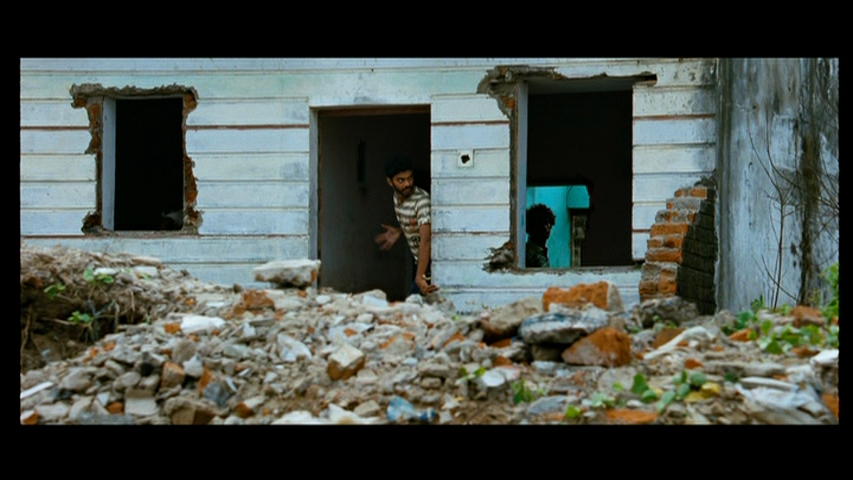
It starts with an attack and implied gang rape of a girl by a group of pot-smoking, drunken college students who seem to routinely indulge in these vices. The attack occurs by the beach and the use of buildings apparently damaged by the tsunami for this adds to the bleakness and harshness of the scene .

Up to this point it looks as if the film will be a gritty crime drama, but after this short but brutal introduction, the film switches gears completely and concentrates on the romance between Jeeva (Karthi) and Priya (Kajal Agarawal).  The two meet at the wedding of a mutual friend and Jeeva is immediately enamoured with Priya.

Priya is  intrigued by Jeeva’s practical and down to earth manner and the two quickly progress to a relationship. There are complications though. Priya’s father is a lawyer and isn’t impressed by his potential future son in law, despite agreeing that if Jeeva gets a job he will reconsider their possible marriage in 6 months time.  In a rather unlikely scenario he goes so far as to call in crime boss Kutty Natesan to ‘persuade’ Jeeva to look elsewhere. This technique fails when Jeeva and Natesan end up becoming friends, which is just as unlikely but does give Jeeva a much needed ally in the second half of the film.

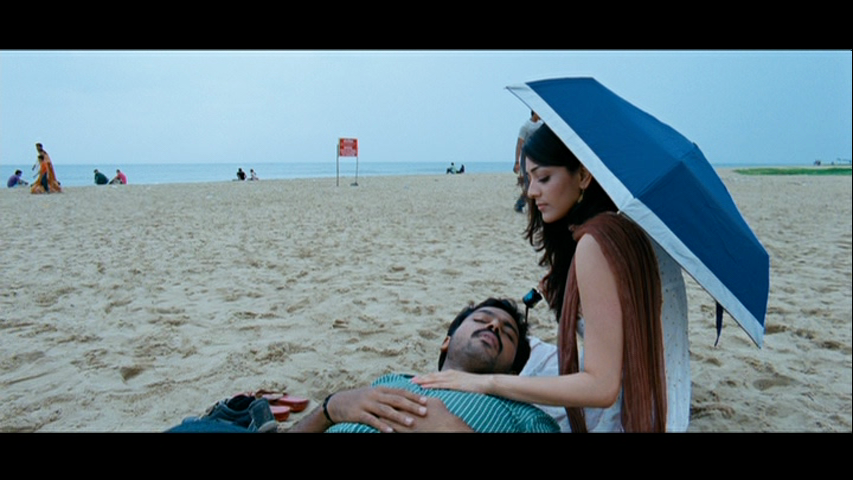
The romance between Jeeva and Priya is sweet and more realistically depicted than usual for a filmi love story. Kajal and Karthi have good chemistry with each other and their relationship is convincing in its simplicity. There is perhaps a little too much time spent establishing that Jeeva is a nice guy, blowing kisses at babies and buying chocolate for sick kids, but Karthi does a good job with his guy-next-door role. Kajal is lovely, looks the part and never has to dance which, along with a generally good wardrobe selection, makes her look more elegant.  I really like her here and it’s a shame that she doesn’t have more to do, although I do appreciate that Susindran didn’t just add in a heroine to make her another victim later on in the film.

Having set up the relationship between Jeeva and Priya, post interval the story switches back to the gang of youths from the opening sequence and basically ignores the romance for the rest of the film. Interestingly Susindran reportedly found a few of the actors he cast as the students when they were standing on a street in Chennai, although Vinod Kishan has played the role of a murderer before as  the young Suriya in Bala’s Nandha. Despite, or perhaps as a result of their collective lack of experience, the guys playing the murdering students really were effective in their roles as ruthless, callous killers and Susindran’s selection process seems to have worked. There is another first time actor, as the role of Natesan is played by cinematographer Arulhdass who also does a great job in front of the camera.  However despite good performances by all involved, the story starts to lose its way in the second half as there are a number of inconsistencies and gaping holes in the plot.

Jeeva’s father is a taxi driver and gets involved in a peripheral way with the gang’s abduction and murder of yet another girl and her partner.

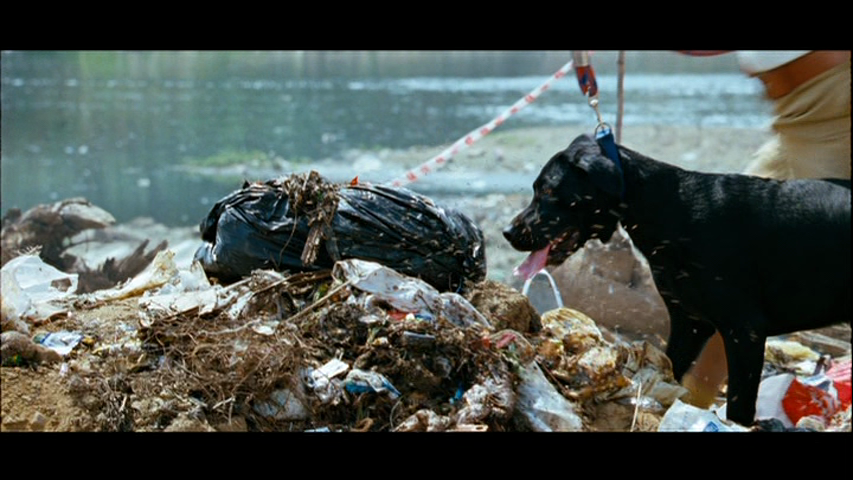
The gang dismember the bodies and throw them into the local tip in various separate bags. The guys don’t seem to be at all disturbed by chopping up two bodies, one of whom is supposedly a friend (unlike similar scenes in the 1994 film Shallow Grave which has my favourite realistic body disposal scene) and are also not concerned about betrayal by each other. Perhaps a bit more depth to the characters of the students here would have helped to make the story more convincing but as it is they appear only as disposable and interchangeable as all villains seem to be. Despite all their efforts, it’s not long before the police discover various body parts, although there is no mention of why the investigating officers decide to look so closely at the tip.  It looks as if they use a local dump to film the search and discovery scenes here and it’s so vivid with the flies and piles of rubbish that I could almost smell it.

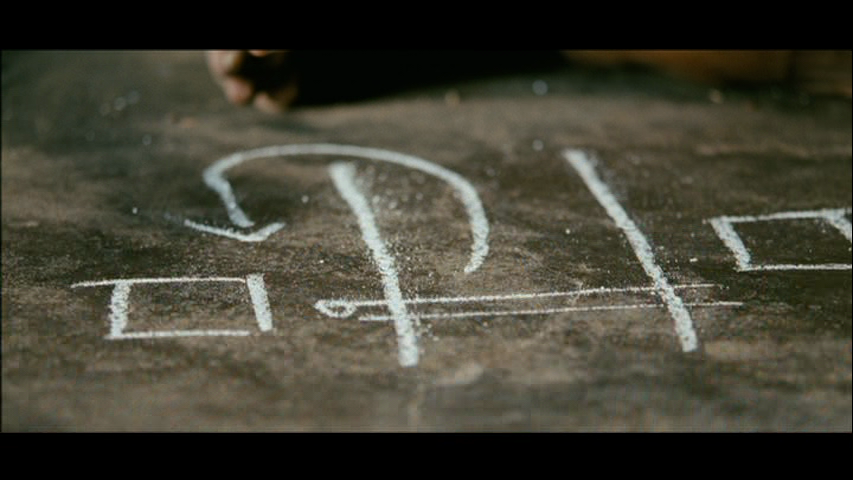
The gang decide that Jeeva’s father may be able to identify them so take the rather drastic step of organising his murder. Unlike their previous crimes, for this one they need the Dhana’s uncle, a plan drawn in chalk on the floor and a cyanide painted shard of glass.  It all seems excessive and the set up for the murder takes up a lot of the second half. The issue of Jeeva’s father recognising them seems too contrived as the gang appear more self-centred and focused on entertaining themselves rather than concerned. Besides, if Dhana just cut his hair I’m pretty sure he would be much less memorable.

The plan (which apparently could only have been thought of by one of 4 master criminals in all of Chennai), does work and a devastated Jeeva takes it on himself to discover the identity of his father’s killers. Karthi is just as good here in the action sequences as he was in the earlier romantic scenes even though he’s now in a different film and seems to be playing a changed character.

It seems as if Susindran couldn’t decide if he wanted to make an action thriller or a romance. Rather than combining the two together he splits the film into two distinct stories with very different approaches which means that neither is particularly satisfying. I think that the romance in the first half works better than the action of the second as the interactions between Jeeva, Priya, their families and friends are well depicted. Of course that could also just be because I prefer a romantic storyline, but while the action starts off well it just becomes too fanciful to maintain the suspense. It’s hard to believe that by himself Jeeva could take on a gang of youths who’ve managed to eliminate some of the top rowdy’s in Chennai, and for me his final actions don’t fit at all with the characterisation developed earlier in the film.

Despite the issues I have with the story, there are a number of good points to the film and a number of very well shot scenes. For a change there isn’t an irritating comedy track, and the performances by all the actors are consistently good. Jayaprakash as Jeeva’s father Pragasam does appear to be an older version of his son with similar views and approach to life, and the relationship between the two is well portrayed. There are only 3 songs in the film but the music by Yuvan Shankar Raja is beautiful. More would have been good, although the background score is also excellent.

The idea of trying to make a film around the crime statistics from any major city in the world to-day is a good one but the depiction of the characters and the development of their part of the plot doesn’t live up to the promise of the initial opening scenes. Susindran tries a different approach and while his picturisation of the seedier side of Chennai falters, Madhi’s cinematography does reveal a more realistic take on the city. Worth a watch at least once for Karthi and Kajal, and skip the second half if you want to avoid the violence and unlikely storyline. 3 ½ stars

Temple says: Considering all the rape and murder going on, I found this film surprisingly tedious. I think the problem was Karthi’s character or performance as to me it was more like a succession of performances than a rounded character with depth or variation. Jeeva started out a smart mouthed manipulator and charmer who could talk his way in and out of trouble, before suddenly becoming a total innocent who believed everything he was told and had none of the insight he had earlier demonstrated, then he was a breathless and gushing fan of an admitted killer, the next incarnation was a serious young man who had learned the value of money through just a small taste of having to shop and pay bills, and finally he became the invincible and implacable hero. None of these segments felt connected with the others, and I was completely disengaged from his character after a while. I’m not sure whether it was the performance or the writing that missed the mark – I think both, although I have liked Karthi in other films. The first half is all about the romance and Kajal is quite effective as the likeable but kind of stupid heroine. Priya is indecisive and eager to please so never knows or voices what she really wants – a flaw Jeeva points out several times as he also tells her what to do.  Kajal and Karthi have nice chemistry, but as Priya disappears for the second portion of the film, there is no point getting too attached to the lovey-dovey pair.

The crime and revenge plot is also patchy. The gang is initially shown as a bunch of drug fuelled opportunists under the leadership of a psycho.  Somehow despite their poor impulse control they manage to cobble together and execute a ridiculously complex plan to eliminate Jeeva’s dad.  The finale is too long, too improbable and as I couldn’t relate to Jeeva it lacked emotional intensity.

The performances are mostly fine, it’s a technically well made film, but it’s a bit hollow for me. 2 stars.

Saroja

Saroja is a fairly standard thriller with a decent dose of dramatic tension thanks to some very good performances and loads of visual flair. I ordered the Tamil DVD but was sent the Telugu dub, which apart from the obvious difference also cast Srihari instead of Jayaram in a pivotal role. I quite like Srihari as an actor, and as I speak neither language subtitles are subtitles, so I was happy enough. I’ll be referring to characters by their names in the Telugu version.

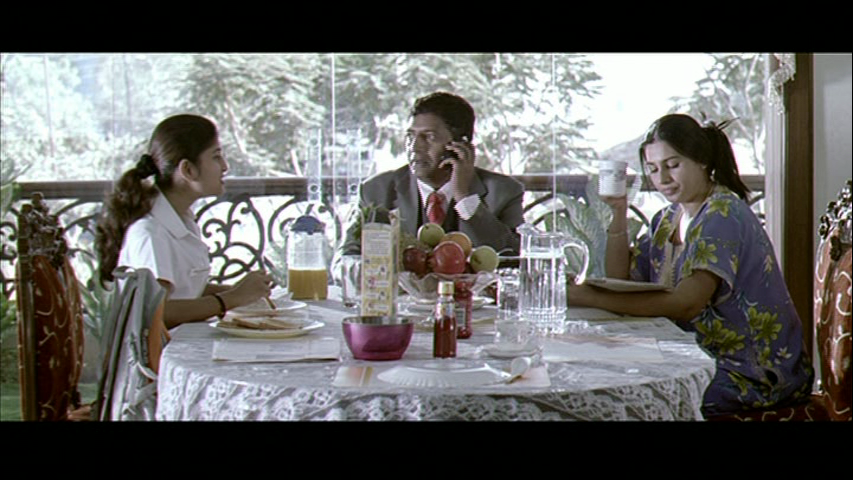
Prakash Raj is Viswanatham, a successful Hyderabadi businessman. He is a self centred man, in an uneasy marriage and not giving his teenage daughter Saroja as much attention as he gives his breakfast.

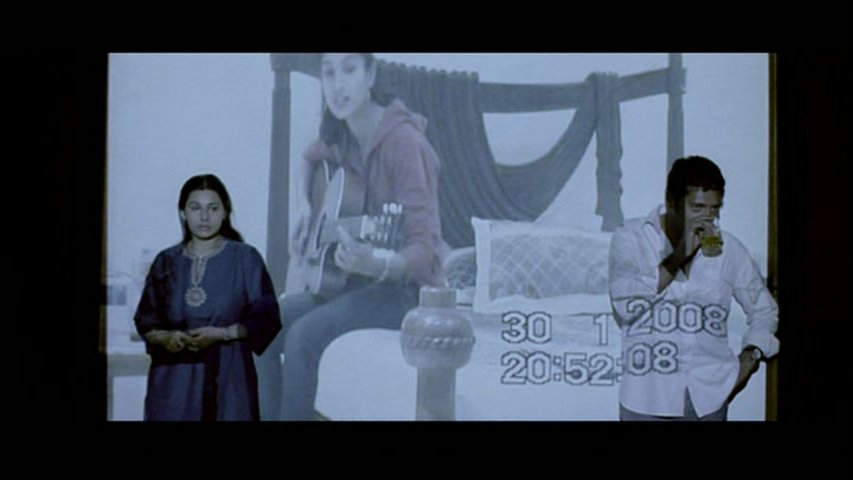
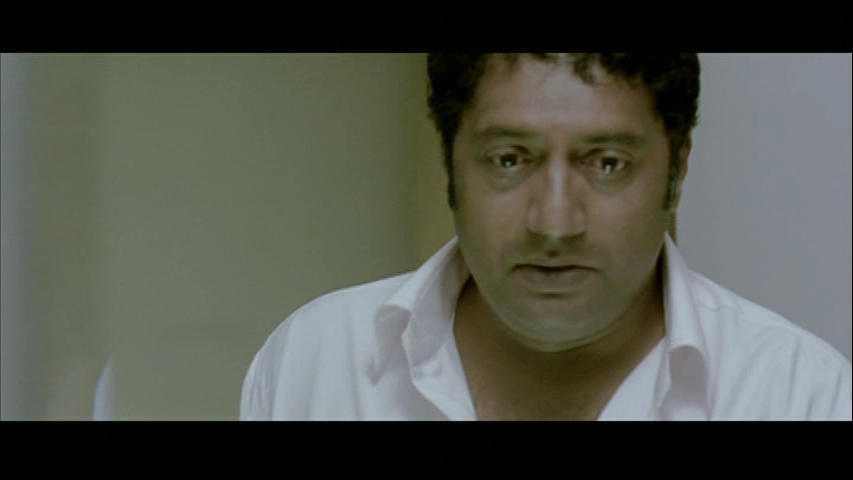
That is until Saroja (Vega), is kidnapped. It’s one of my favourite Prakash Raj performances as he conveys fear, despair and regrets with only a scant amount of dialogue. His reactions and expressions are just perfect. There is a scene where he and his wife are watching home movies of Saroja. They can’t look at each other as they have an intimate conversation that is realistically awkward and painful.

The depth of characterisation established so simply helped me care about what happened to Saroja since it meant so much to her father.

Saroja gets an intro song about girl power and the evils of alcohol, which she delivers after sneaking out of her window to get to the gig. She is largely absent until late in the film as the drama is centred on the police operation to find her, but her character is established as resourceful and independent.

Srihari is Viswa’s friend Ravi, a charismatic policeman who takes on this very personal case. Srihari running isn’t exactly a greyhound so the chase scenes had me worried, but he is an authority figure and pillar of strength. Ravi orchestrates the police activity to recover Saroja and is on hand to witness the devastating effect the kidnapping has on his friend. There is a bit more complexity to his role than just a standard crusading cop though and Srihari and Prakash Raj share some excellent eye to eye moments. I don’t really buy his excuse for something he does, but it wasn’t a big deal overall.

There is a second storyline that will collide with the straightforward police procedural. It centres on a group of friends, totally unrelated to Viswanatham and his concerns.

Vaibhav is Rama Swamy.  The girl he loves (Kajal Aggarwal in a brief appearance) gets engaged to his friend Ajay. He is trying to make the best of his lot and comes across as a moody but not unpleasant guy. Ajay (Shiva) is a soap actor who thinks he is a little more special than he is, and tries to get by on what he considers to be charm. He gets some of the better intentionally funny lines as he cites his TV serial commitments as a reason for avoiding anything he doesn’t want to do. Rama’s older brother Renga Swamy (SP Charan) is the average guy – happy, married with a daughter, middle class, comfortably podgy. Premji Amaren (brother of the director) is the comic relief, Ganesh, and almost every time he opened his mouth I wanted to kill him. To be fair, his straight dramatic scenes were good and a few of the jokes were funny.  Every time he saw a pretty girl, badly dressed angels would cavort around her, and the angels got grumpier as they had to keep reappearing for different girls.

But the comedy track mostly involved Ganesh acting stupid and grimacing wildly. If you find a man screaming his lungs out at the sight of a rat, or telling everyone loudly why he has to be quiet, funny maybe you’ll like him more than I do.

The boys set out on a roadtrip from Chennai to Hyderabad to go to a one day match. After driving for a few hours, including about 257 snack and pee breaks as well as a run in with Brahmi, they are delayed by a major road accident and decide to take an alternate route.

The storylines intersect when the guys take a wrong turn in the dark and end up in a spooky factory complex occupied by the imposing Sampath (Sampath Raj) and his gang, who have Saroja captive. The adrenalin rises from this point until the film’s conclusion as the boys try and extricate themselves from their perilous situation and accidentally seem to be rescuing the girl. There is always time for a dance break though! Kalyani (Nikitha) and Sampath entertain the troops and I have to say seeing all the bad guys in a dance number was a lot of fun.

The ‘heroes’ and the baddies are ordinary guys and the fights and chases are consistent with that. There are no amazing flying leaps and stunts, but there is a strong feeling of the fear and effort in those scenes which is amplified by the lighting and composition of the shots and Saravanan’s cinematography is impressive. Even when things got less believable, the characters remained true to themselves and didn’t develop superpowers. There is some question in my mind as to how well these guys could navigate an unfamiliar place in the dead of night, but whatever. I thought Vega was convincing and in most scenes looked like a school girl. There were signs of a romantic attraction between her and Ram that I thought was a bit not right in view of their character ages. It’s just a fleeting thing but was it necessary for it to be there at all?

The Yuvan Shankar Raja (Venkat Prabhu’s cousin – what a family) soundtrack is good and the range of musical styles supports the full span of the drama. While the songs are well placed in the story, I’m not sure all the picturisations were necessary. The montages sometimes caused a break from the overall mood as they were even more stylised than the rest of the film. The direction relies on gimmicks but that visual interest and excitement helped to give a standard plot a bit of freshness. The story doesn’t completely rely on the visuals so I didn’t feel it was too glossy for its own good. The performances, especially Prakash Raj’s, are compelling on their own.

It’s a film where the outcomes probably won’t surprise anyone, but the way those things happen might. If you want a modern looking comedy/drama/thriller that’s not too heavy on gore and showcases some good character actors, give this a go.  4 stars!

Heather says: Saroja has all the right ingredients to make a good film with an interesting story, excellent cast lineup and snappy dialogue. But it suffers a little from a very long set up with perhaps too much detail in some scenes and not enough in others. There are also a few scenes where the action takes place in poorly lit sets and I found it very hard to tell what was going on. However, once past the slow beginning, it’s a very enjoyable watch as it blends comedy with action and drama in a way that is rare in Tamil cinema. I do like the way the action is preceded with a date and time stamp in the opening sequences as it gives the feel of an American cop show and plants the idea that time is important. Although perhaps this isn’t followed up quite as well in later scenes. The introductions to the various characters are generally good, but I would have preferred director Venkat Prabhu to spend a little more time with Saroja’s family. It is clear that Viswanathan is caught up in his work and doesn’t have time for his daughter, but I think a little more information about the family dynamic would have made their characters more sympathetic. It took more time to get a feel for Saroja and her father as a result, although this may very well have been intentional, as we learn about the family as the film goes on, just as the four friends do.

The interaction between the friends is well done, and feels very realistic. Perhaps it’s not quite as realistic though that they remain undiscovered sneaking around the bad guys’ lair with all of their arguing and long conversations. But the comedy in these was good and the story was well played out in these scenes. The action sequences, at least those that are visible, are also well choreographed and there are some really good ideas in the execution of the various fight sequences.

I liked the twist at the end which I did not see coming at all, although I thought the justification by the villain was rather weak. In it for the money alone might have worked better, but it was still a good ending. I also enjoyed the comedy with Ganesh seeing angels appearing around pretty girls. All of the four characters worked well for me as they each had some endearing character traits and some really off-putting ones – just like in real life. They seemed like much more normal guys than typical filmi heroes which makes the film more interesting to watch.

This is the first of Venkat Prabhu’s films I’ve seen and it’s inspired me to find his others. I’d say skip over a lot of the set-up and then sit back to enjoy a really good action comedy. 3 ½  stars.