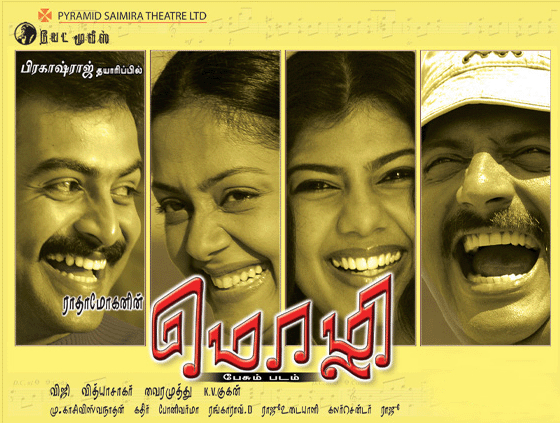
Mozhi

Mozhi starts with some beautifully animated music unfolding across the screen and it’s an excellent lead in to a romantic comedy that never hits a flat note. With a cast featuring Prithviraj, Jyothika, Prakash Raj and Brahmi along with very competent support actors it’s an absolute treat to watch and the story, although simple, provides plenty of scope for their combined talents.  There are plenty of genuinely funny moments along with a few tear-jerkers, but it’s the characters and in particular the bromance between Prakash Raj and Prithviraj that really stands out and makes this film something special. The two have great chemistry here and whether they’re at work together or out celebrating, their relationship feels warm and genuine, and this sincerity underlies the entire movie.
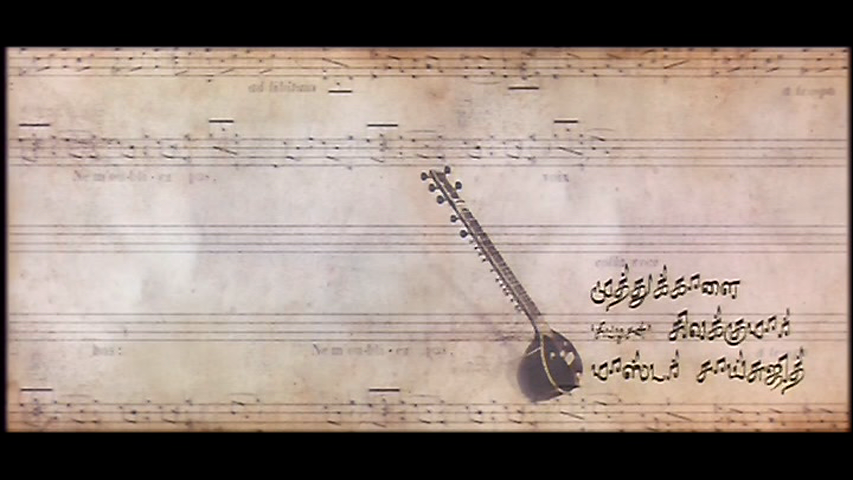
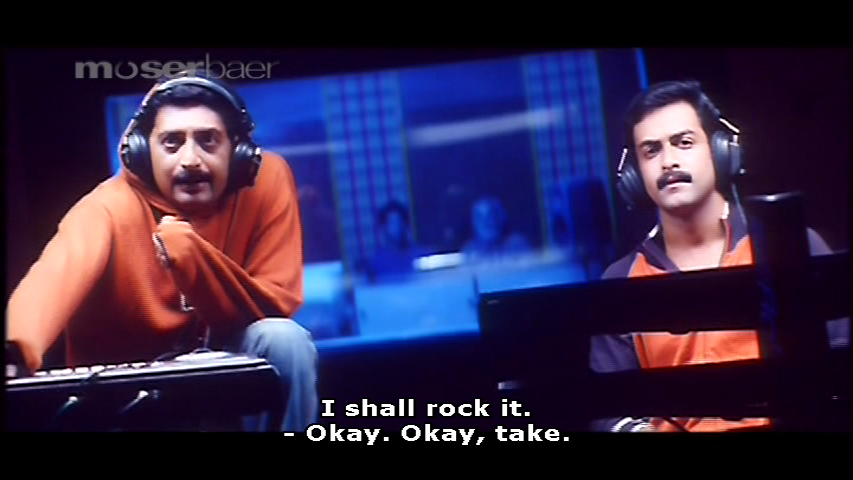
The film tells the story of the romance between Karthik (Prithviraj) and Archana (Jyothika) but woven through is the relationship between Karthik and his best friend Viji (Prakash Raj) as well as glimpses into the lives of other people in their apartment block. Karthik and Viji work in the film industry under Vidyasagar; also the name of the real-life music director and composer for the film. I love that Tamil cinema uses the film industry as part of the background setting without making it glamorous or over dramatic, but instead portrays the work as just another job – albeit rather a well-paid one. Karthik and Viji are seen adding music to a film clip and director Radha Mohan uses this opening scene to beautifully illustrate the difference when a silent scene is set to music. This becomes significant later on as the story develops and it’s a technique throughout the film to add more depth and layers to the characters.
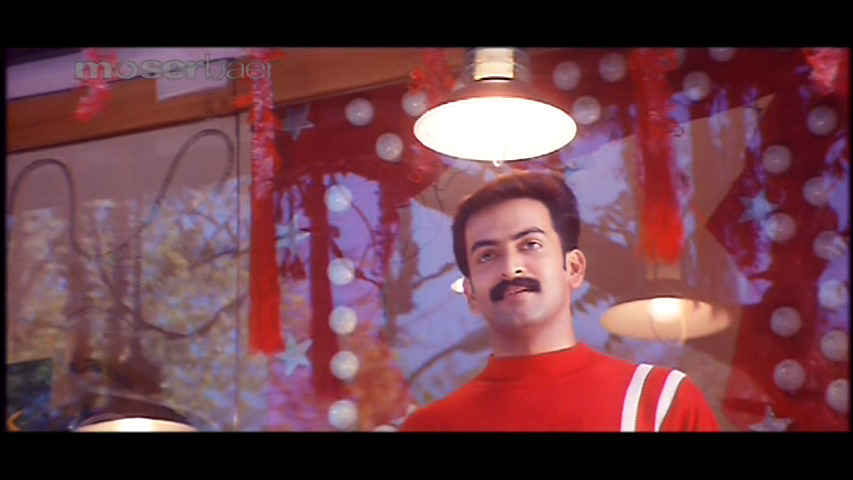
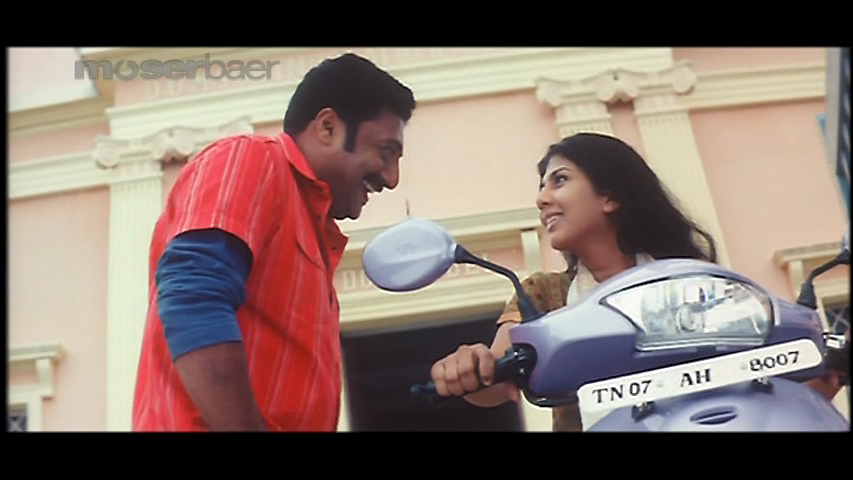
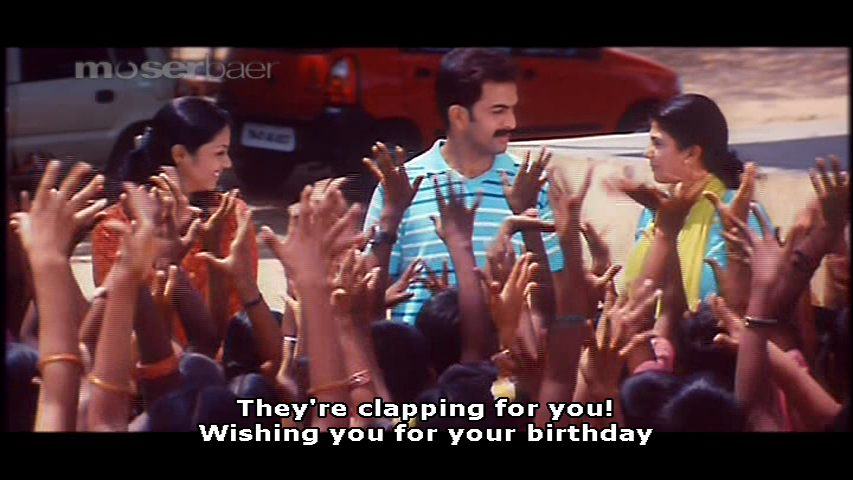
Karthik and Viji move into an apartment together in a block of flats managed by V. Ananthakrishnan (Brahmi), and almost straight away they are at odds with the flat manager as he informs them that bachelors are strictly not welcome. This sets up some of the comedy in the film but for a change Brahmi’s role is fairly substantial and he’s not the main focus of the humour. Instead Prakash Raj and Prithviraj handle most of the comedy between them, and they do an excellent job. One of my favourite scenes is where they both repeatedly crack-up in a lift after visiting Brahmi in hospital, but there are so many funny scenes with the two together and they both seem to be having a great time. This is such a good song with both of them dancing and again, they seem to be thoroughly enjoying themselves.

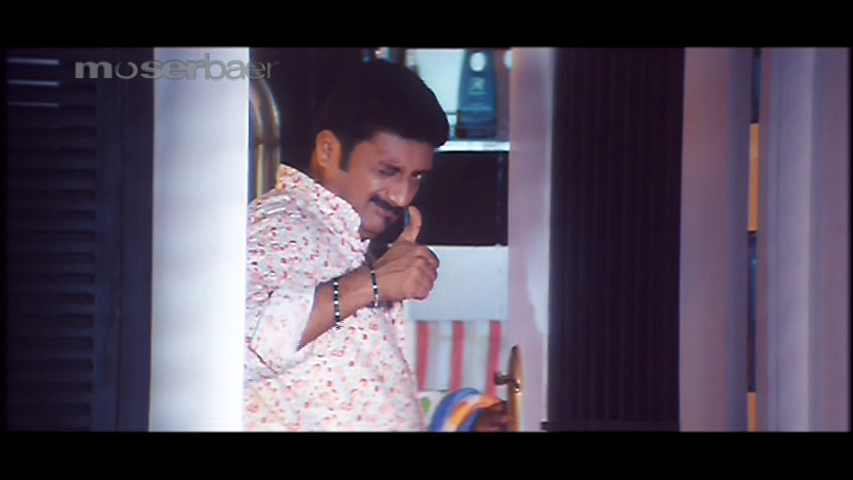
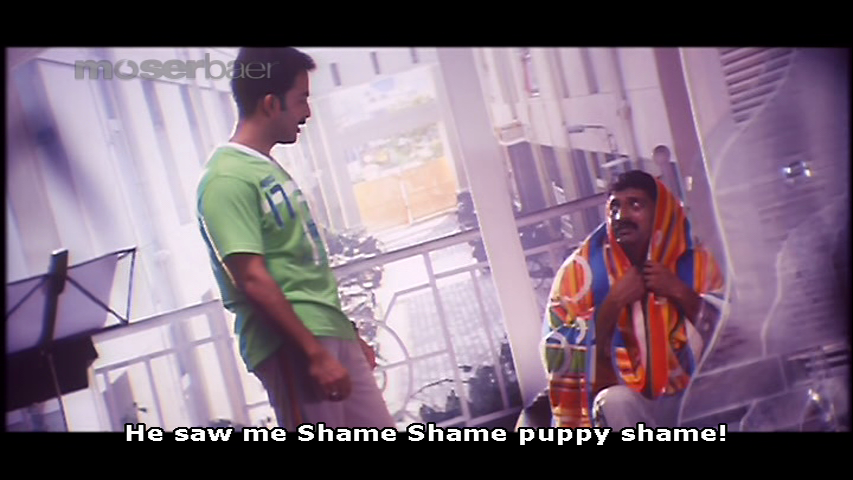
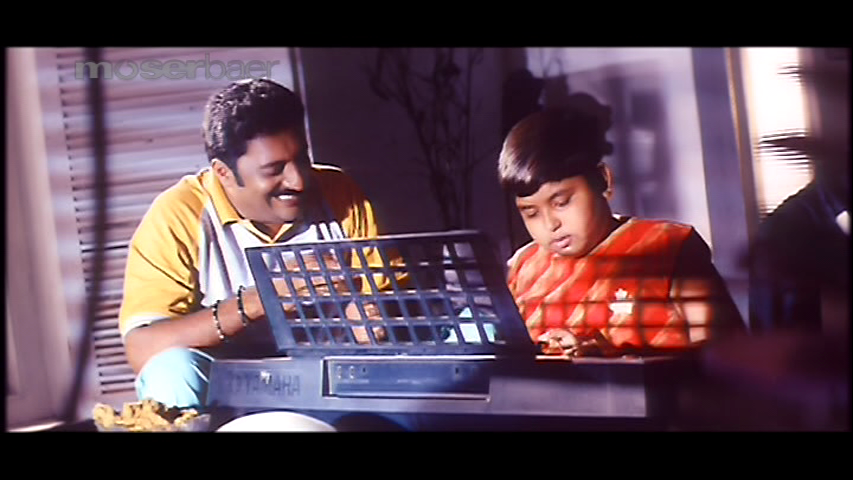
Another bonus comedy moment is watching Prakash Raj wearing only a towel dancing in gay abandon to the strains of Hava Nagila,the consequence of which also gave me a new Indian idiom to add to my vocabulary! Apologies for the poor quality of the screen caps, but the film quality isn’t great and Prakash Raj just doesn’t stop!

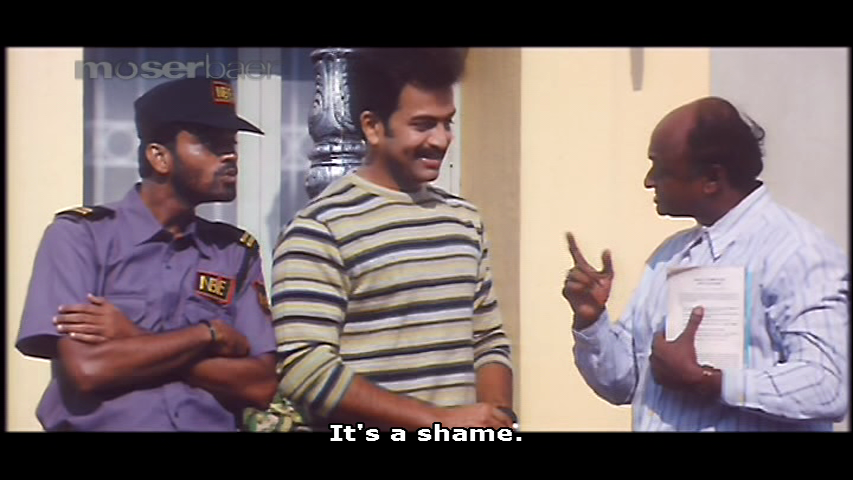
Dismayed at the prospect of losing their flat which they have very snazzily decorated with some fantastic sculptures, the two conspire to get round Ananthakrishnan. The obvious answer is for one of the two to get married, but Karthik is a romantic and believes that he will see lights and hear bells when he finds his true love. While Viji is more sceptical he’s not in any rush to get married either so the two try various strategies to ingratiate themselves with the landlord.  Along the way they meet some of the other characters in the building and with each vignette more of their personalities are revealed. It makes for an air of realism in the film as the various other inhabitants go about their usual daily routines. The security guard (Balaji), Ananthakrishnan’s level-headed wife Janu (Sriranjani) and his gluttonous son add some more comedy along with Preethi (Neelima Rani) who has eyes only for Karthik. M.S. Bhaskar plays the role of a professor whose mind has been stuck in the eighties since experiencing a personal tragedy and his sad story is used to reveal more of Karthik’s own generous nature.  Everyone’s little idiosyncrasies are all used to good effect and each character has something to add to the story.
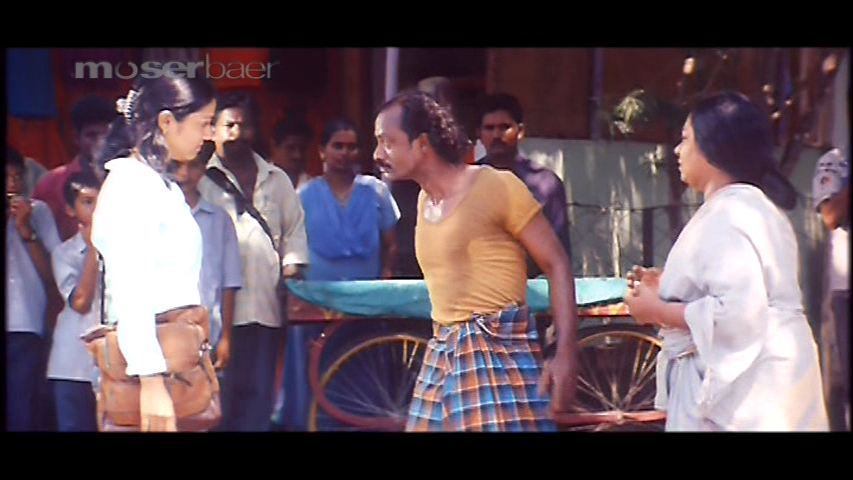
Karthik first sees Archana in the street beating up a vegetable seller for abusing his wife. It’s an unusual introduction and as well as being the only fight in the whole movie, it’s a pleasant change for the hero to admire the heroine’s dishooming capabilities. Karthik gets his lights and bells and immediately falls in love with Archana which is one of the few totally filmi moments.
After the delight of finding that Archana lives in his block of flats, Karthik discovers that she is a deaf-mute who has a major chip on her shoulder after her parents’ marriage fell apart. In an effort to learn more, Karthik meets Archana’s friend Sheela and learns sign language to be able to communicate. However the path of true love doesn’t run smoothly and Karthik is left teary and broken-hearted as Archana firmly refuses to entertain the thought of marriage.

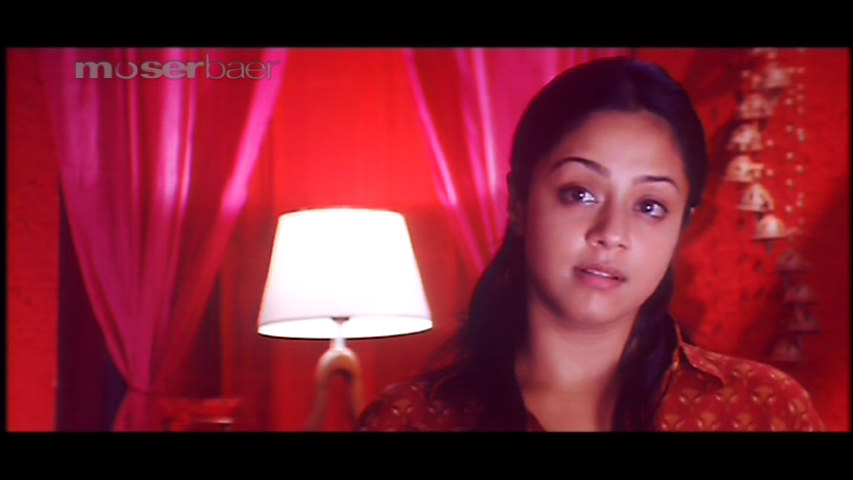
This was Jyothik’s last role before she retired from acting and it really seems such a loss when she brings such a rich characterisation to her role as here. Jyothika uses her incredibly expressive eyes and various facial expressions to convey her feelings and nicely avoids the temptation to overdramatise to get her message across clearly. It’s impressive to watch Archana’s character develop as she doesn’t have any dialogue in the film and everything is communicated by expressions and gestures. And yet it’s clear to see Archana slowly evolves from a very angry and bitter young woman into someone who learns to see past her own insecurities. Karthik tries to understand her world and help her understand his, but since he goes about this by having Viji stuff his ears full of cotton wool it’s perhaps not surprising that he ends up totally misunderstanding her.

Apart from her ever present anger and commitment issues, Archana is portrayed as a very normal young woman with a steady job who just happens to be deaf and dumb. It’s a different take on disability and Archana’s perception that she is just a person who ‘speaks’ silence rather than a language of words is interesting.  Karthik’s acceptance of Archana with all her flaws and prickly nature is a measure of his maturity and common sense and if his enthusiasm leads him to make mistakes in their relationship, he is able to rethink and change his approach. All of which makes them seem like any typical young couple which makes it easy to understand and connect with their feelings. While Prakash Raj is excellent as Karthik’s friend, Swarnamalya is perfect as Sheela. Her character’s practicality and common sense serve as a contrast to Archana’s more emotional responses but she is still very sweet and looks beautiful as the romance between her and Viji develops.
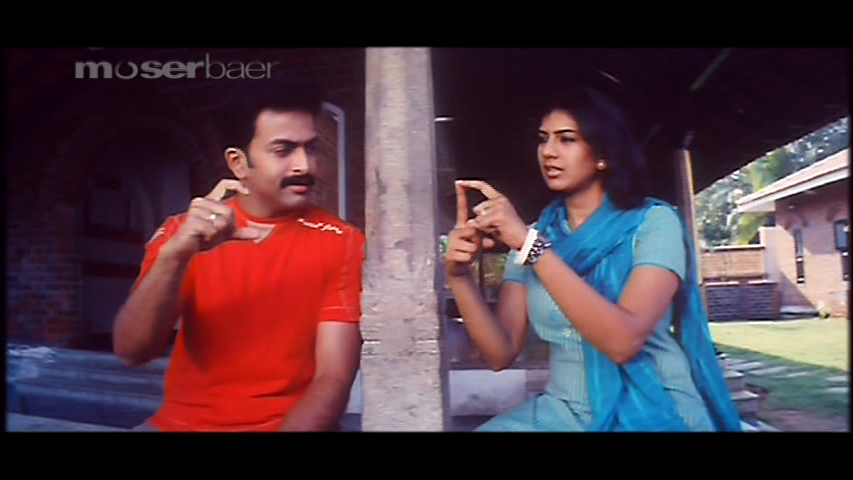
There is so much I love about this film. The characters are wonderful and there are so many well-written scenes with clever and snappy dialogue. The songs are beautiful and this is probably my favourite melody while the picturisation neatly sums up the relationship bewteen Archana and Karthik.

Despite only recently having acquired the DVD with subtitles (and a very big thank-you to Temple and Suja for the recommendation), Mozhi has quickly become one of my favourite films and I’ve watched it numerous times already. It’s very funny and it makes me laugh time after time, but there are plenty of poignant moments too which keep the film very balanced. Excellent performances from all involved and an interesting storyline make this a very watchable film that I highly recommend. 5 stars!

Temple says:

There are many things I really like about Mozhi, and one is the very appropriate theme of language and communication. Jyothika in particular is wonderful at conveying so much by expression and sign, showing that language isn’t just about words.  So there are lots of really nice moments of communication and understanding or misunderstanding.

Prakash Raj is a delight, and I always like to see him do a bit more than his usual Prakash Dad or Prakash Bad roles. But this is Jyothika’s film in my opinion. She owns every moment she is on screen, and Archana is such a vivid character as result of her seemingly effortless performance. I was almost annoyed when Archana started to ‘speak’ via voiceover when Karthik found he understood her as she was so good at communicating without words. I’m not convinced by Prithviraj – I find he ranges from bland to adequate, and he only seemed to shift gears in a couple of scenes in this film.  Some of my reservations are down to the writing as everything is a bit too neat and too easy for Karthik. He adapts to people’s quirks and differences with barely a pause for breath, everyone instantly believes him and helps him with Archana, he learns sign language very quickly and with few errors, and almost turns into Mother Teresa. Archana’s personality was so complex and real that Karthik was flimsy in comparison, and he didn’t show much depth until quite late in the film.  Archana’s friend and colleague, Sheela (Swarnamalya) was a much more interesting character. Archana and Sheela were both bright capable women, and were a good balance for each other. The bromance between Viji and Karthik was a bit hit and miss due to me not finding Karthik particularly believable but has its moments. I was much happier when Viji found someone else to love (even if her wedding outfit was completely hideous)!

Unfortunately most of the comedy is dire. I found myself speculating, quite against my will, as to what Brahmi could have seen when Prakash Raj’s towel dropped that would have him almost hospitalised with conniptions. There are fat jokes, Prithviraj hamming it up in a wheelchair and other really dumb schoolboy stuff that was tedious and unnecessary.

See it for an interesting story idea, Jyothika in brilliant form, and Prakash Raj kicking his heels up in a fun role. 3 1/2 stars.
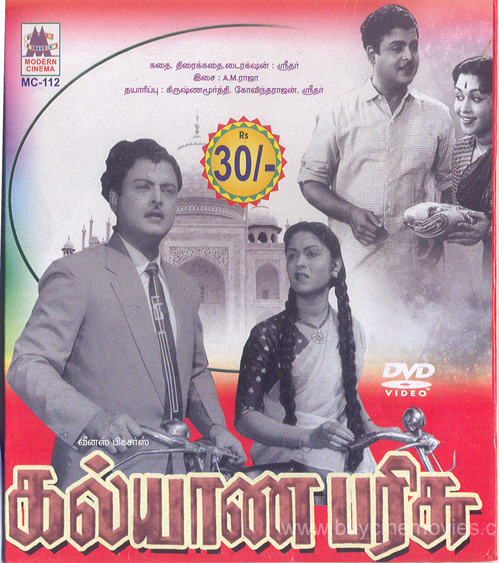
Kalyana Parisu

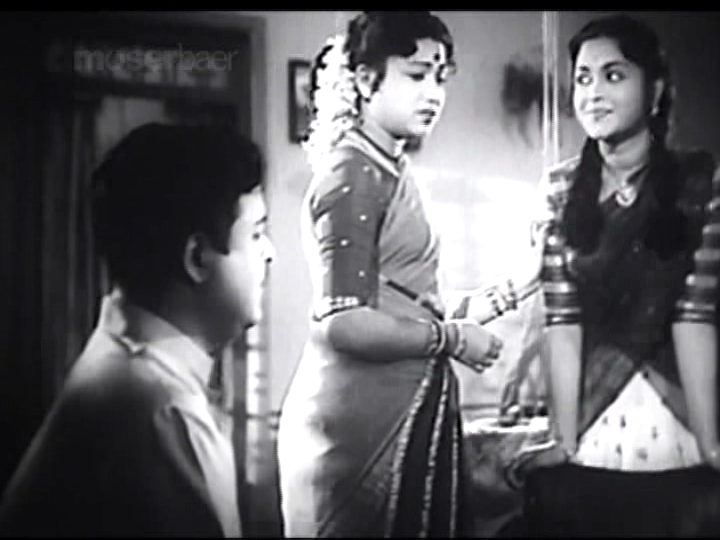
Kalyana Parisu (The Wedding Present) is the 1959 debut film by prominent director C.V. Sridhar. It features Gemini Ganesan, B. Saroja Devi and Vijaykumari in the lead roles but also has notable appearances from Akkineni Nageshwara Rao and K. A. Thangavelu amongst others. While at times the overly dramatic story tends to dip into farce, there is still much to enjoy in this love triangle about 2 sisters who both fall in love with the same man.

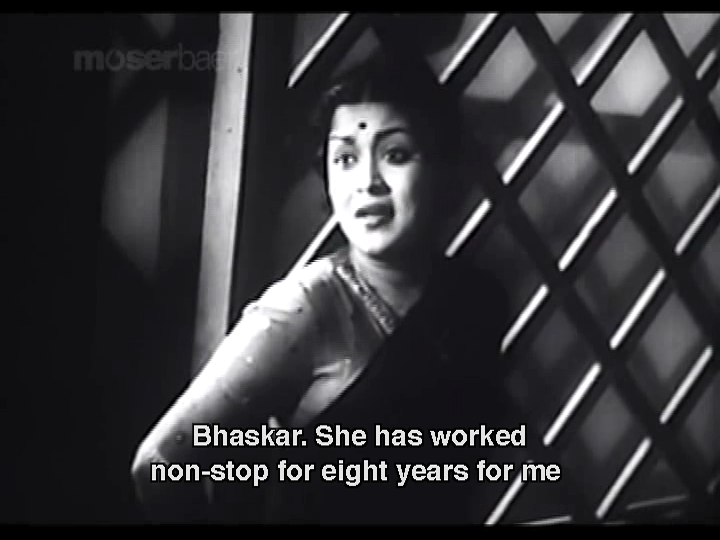
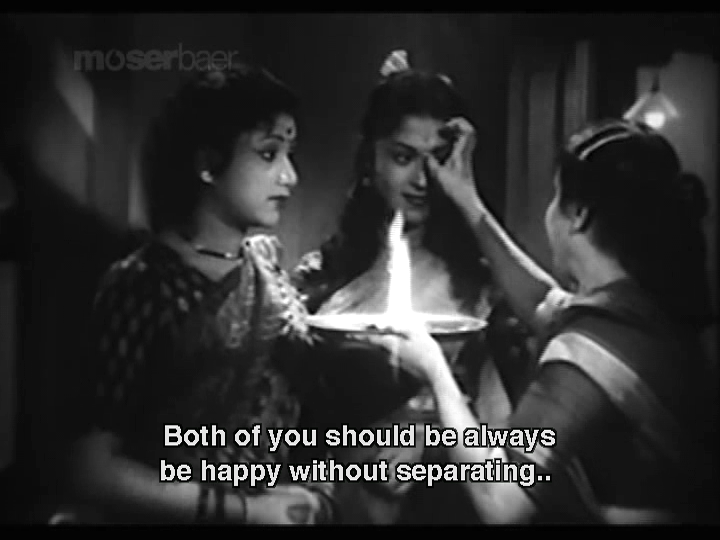
The film opens by introducing the two sisters and their mother who all live together. Vasanthi (B. Saroja Devi) is a successful college student and has a sunny and often mischievous disposition. Her elder sister Geeta (Vijaykumari) is more shy and reserved and is the breadwinner of the family through her work as a seamstress. To supplement their income the family decide to rent out the top floor of their house and end up with Bhaskar (Gemini Ganesan) as a lodger. Vasanthi and Bhaskar have some previous history as they were both at college together and the two indulge in some mild flirtation. This soon blossoms into romance and Vasanthi has dreams of marrying Bhaskar just as soon as she can get her elder sister married, that being the natural order of things.

However Bhaskar falls ill and in nursing him back to health, Geeta also falls in love with the handsome lodger. Once Vasanthi discovers her sister’s ambition she is thrown into confusion and has to weigh up her Geeta’s sacrifices to ensure Vasanthi could continue her studies against the dream of marrying Bhaskar.

After a lot of sighing, chest-heaving and general melodrama, Vasanthi decides to sacrifice her love for her sister and persuades Bhaskar that he should marry Geeta. Bhaskar also indulges in yet more sighing, chest heaving and melodrama before finally agreeing to the marriage. Geeta has no idea about her sister’s true feelings and Vasanthi manages to keep her tears under control until the deed is done and the married couple are on their way to Coimbatore.

However, as she would have realised if she’d stopped to think about it, all that Vasanthi has managed to do is make three people miserable instead of just one.  Geeta struggles to cope with a husband whose indifference she cannot understand while Vasanthi tells her suitor Raghu (ANR) that she cannot bring herself to love another man. The situation spirals even more out of control when Vasanthi ends up moving in with the couple and their young son after the death of her mother. Everything just gets more and more melodramatic as the tension between the two sisters’ increases and it becomes obvious that not everyone is going to make it to the end of the movie. Don’t expect a happy ending!

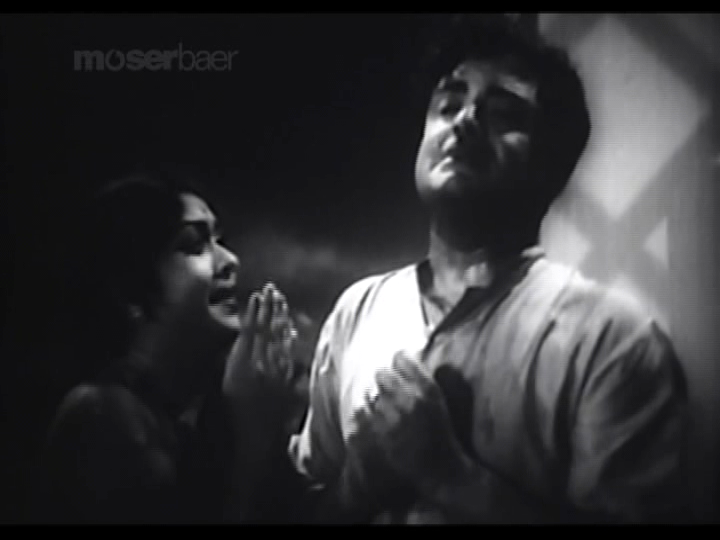
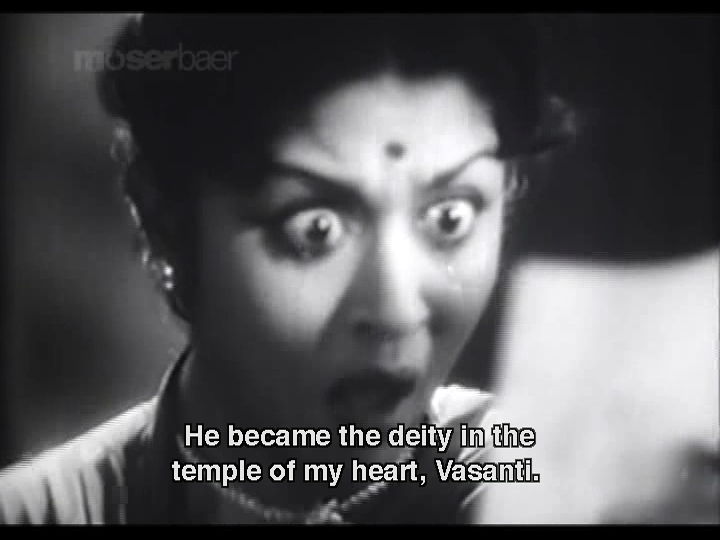
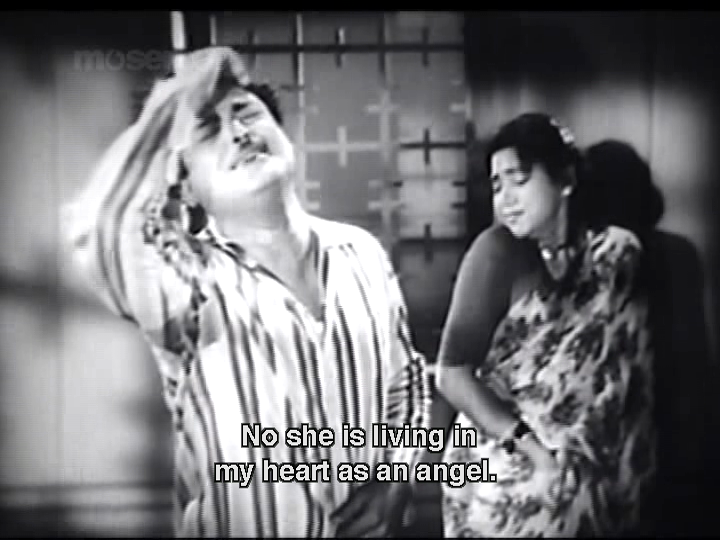
The very sweet love story which opens the story is lovely and shows exactly why Gemini Ganesan earned the titles of the King of Romance. Saroja Devi looks absolutely stunning and the two have plenty of on-screen chemistry. But as much as I love a good romance, what really appeals to me about this film is the totally over the top drama and good old fashioned histrionics that everyone indulges in. Once the two sisters are in conflict, every statement and every action have dramatic consequences all of which require much chest heaving and drama queen poses. When Vasanthi walks into a room where Bhaskar is sitting, he stands and moves to pound his head against the wall. When Vasanthi is reading a letter she reads a line and then pauses to grimace at the camera and clutch her chest in anguish! It’s wonderful and the three main leads make the most of the opportunity to chew the scenery as hard as they possibly can. Rather more unusually, the comedy track is notable for its comparable restraint and both K. A. Thangavelu as Sampath and M. Saroja as his wife Malini provide some quite welcome relief from all the drama.

Most of the film is concerned with the relationship between the two sisters and how this changes with the introduction of Bhaskar into the dynamic. Both Vasanthi and Geeta show great rapport in the early scenes and the gradual erosion of their bond is well portrayed. Although the idea of making such a sacrifice for your sister seems ludicrous to-day, director C. V. Sridhar does his best to show that Vasanthi felt she was making the right decision for a young girl at that time. Geeta’s jealousy and suspicion of her sister is nicely developed and her emotional rollercoaster is almost as wearing for the viewer as it seems to have been for Geeta. Bhaskar becomes less effective as the conflicted husband as the story goes on as his inability to put aside his feelings for Vasanthi and concentrate on his wife makes him seem rather weak. I do hope that the young child playing the role of Bhaskar and Geeta’s son managed to escape without any longstanding mental scars as he often seemed to be stuck in the middle between some quite realistic shaking and shouting.

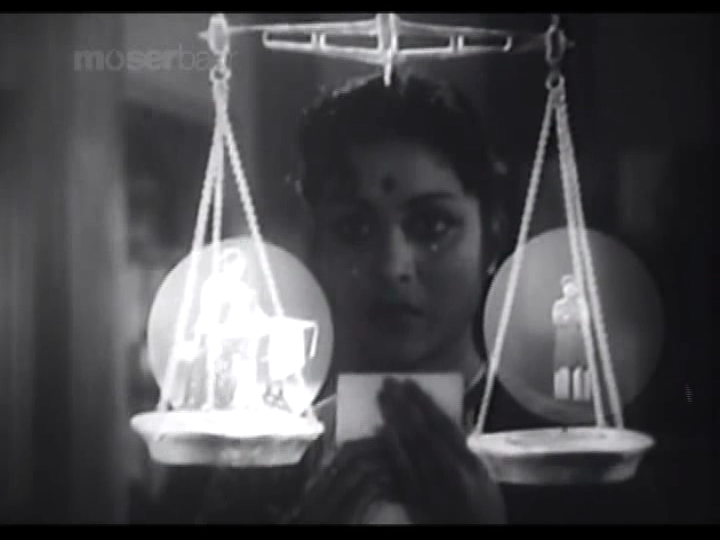
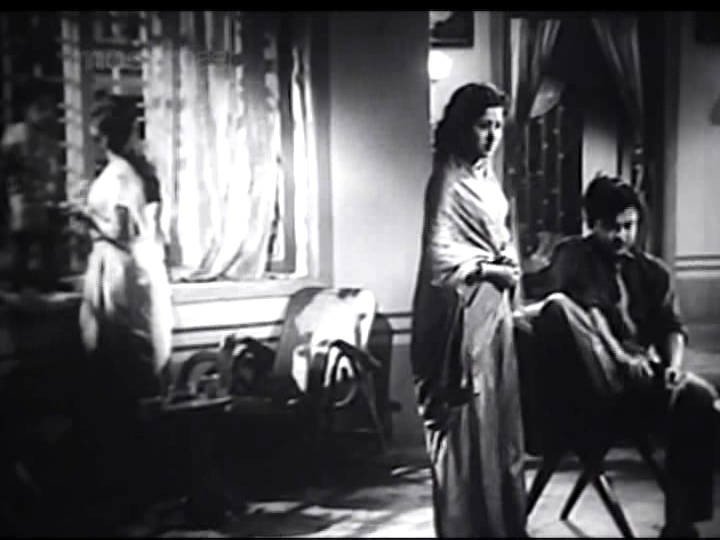
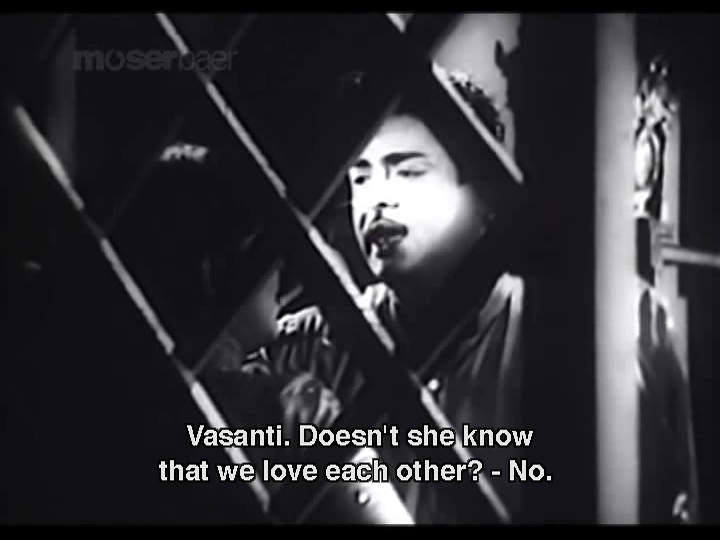
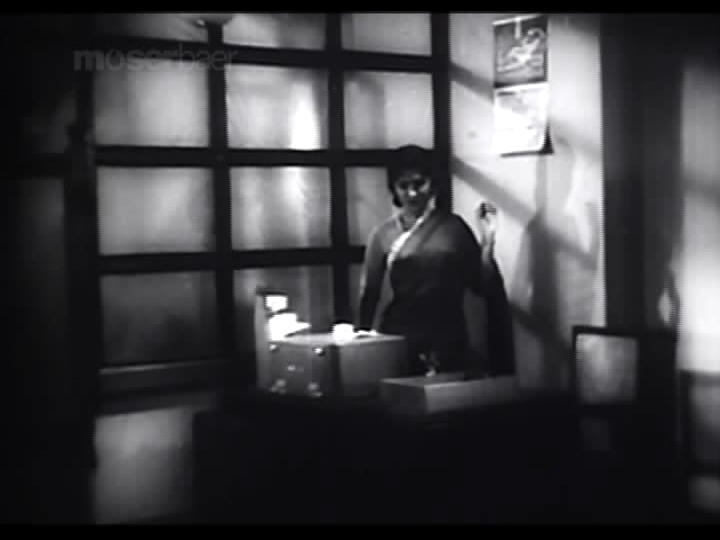
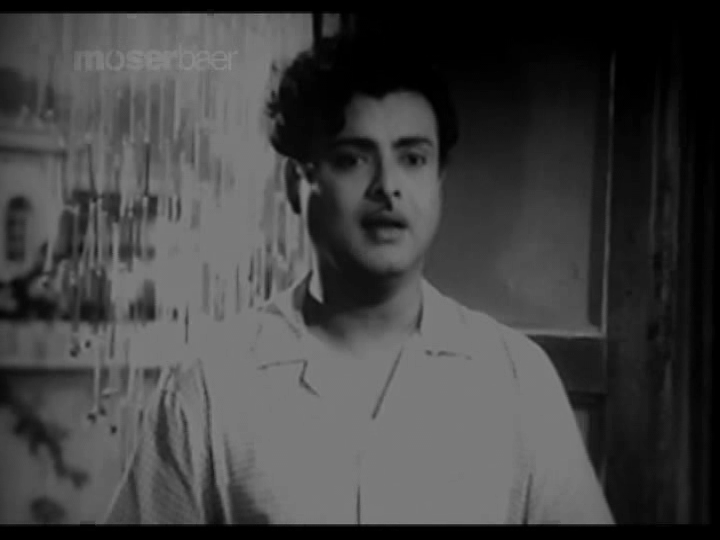
The film is beautifully shot and it’s a shame that the print has deteriorated in quality making the image difficult to see at times, although that may just be my DVD. C. V. Sridhar uses the shadows and the various shapes made by screens and windows to good effect, often enhancing the oppressive feeling. There is also a significant plant which grows taller as romance blooms but withers away and dies when Bhaskar and Vasanthi break up. I do enjoy the way nature is a stand in for so much in Indian cinema.

The music by A.M Rajah is lovely and there are some beautiful songs. One of my favourites is this one which is part of the celebration of  Seemandham for Geeta when she goes home to have her baby.

Kalyana Parisu was a big hit on its release and certainly gave an indication that C.V. Sridhar would be a director to watch in the future. It was remade a number of times by C.V. Sridhar in other languages using a number of the same cast, and ANR took on the role of Bhaskar in the Telegu remake the following year. Nazrana, the Hindi remake starring Raj Kapoor and Vyjayanthimala also starred Gemini Ganesan playing the role of Vasanthi’s potential groom. It’s not a film I would watch again and again, but is one for those days when a slice of melodrama is required. All the lead actors are excellent, slightly excessive histrionics aside, but in particular Kalyana Parisu is worth watching for Saroja Devi who really shines. 4 stars.

3

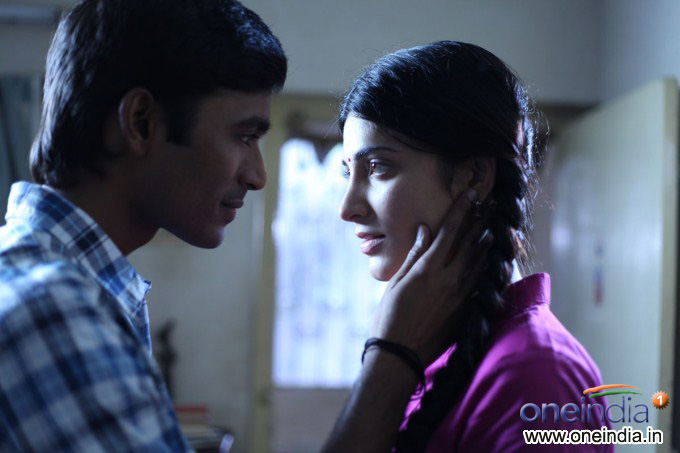
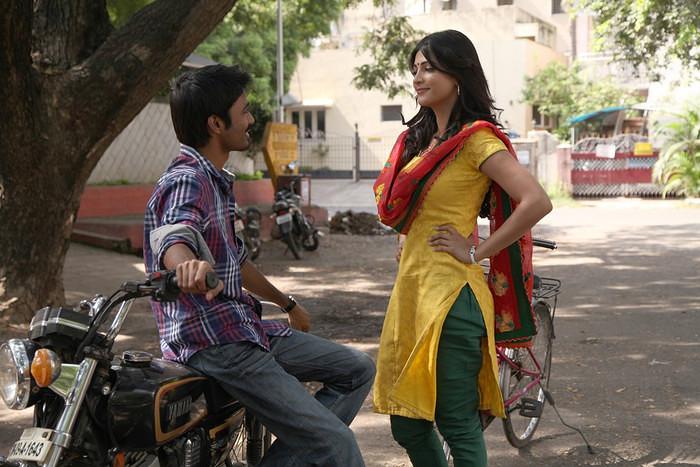
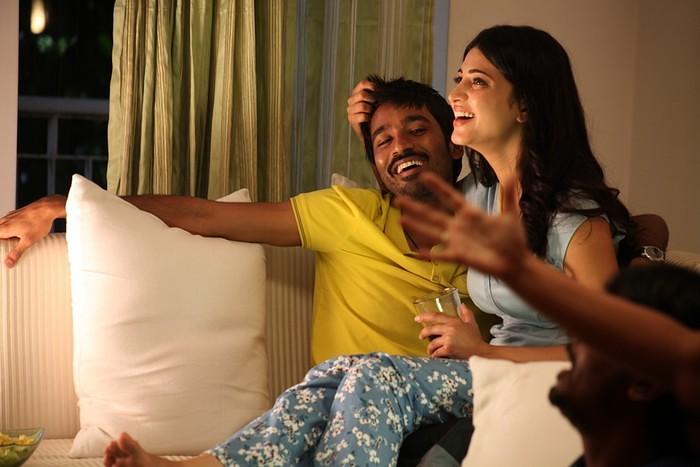
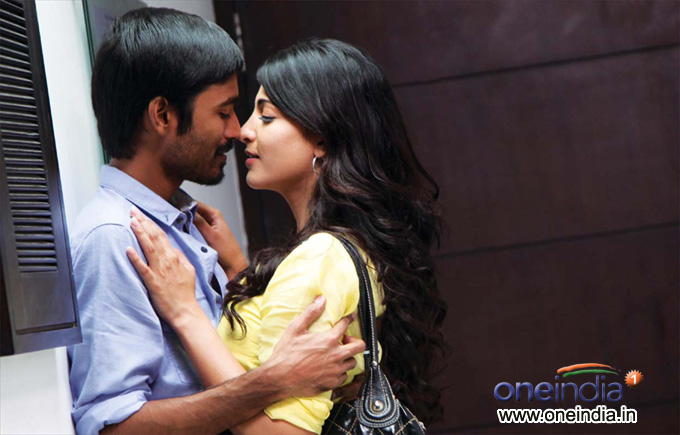
I’m a big Dhanush fan and since Shruti Haasan had impressed me in her last Telugu film, I was excited with the prospect of seeing them together in 3. In addition I wanted to see how Aishwarya Dhanush would approach her first film considering she had worked with one of my favourite directors, Dhanush’s brother Selvaraghavan on Aayirathil Oruvan a few years ago. The hype surrounding 3 since Kolaveri Di became such a hit seems likely to have been the reason that this was the fourth Tamil film to be shown here in Melbourne with subtitles and I really do hope that this trend continues. So it was with high expectations that I headed in to watch 3 and while the film as a whole didn’t quite meet them, the first half surpassed them easily.

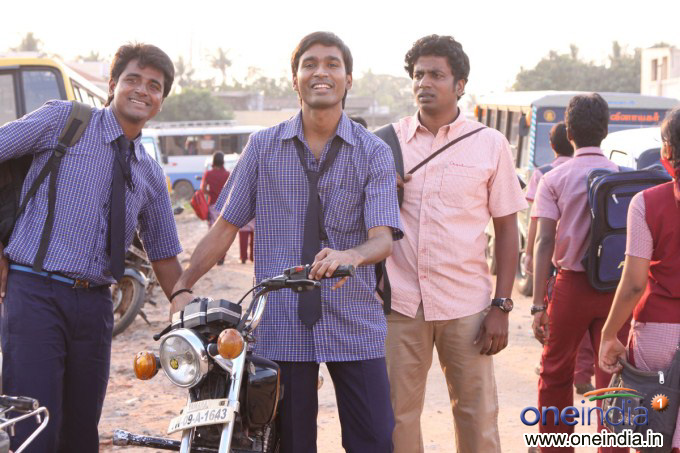
3 follows the lives of Ram and Janani who first meet while they are both at school and relates their romance through three stages of their life together. The two leads somewhat surprisingly don’t look too out of place in school uniforms and certainly with their attitudes and mannerisms they are convincing as high school students. But the real star of this part of the story is Siva Karthikeyan as Ram’s friend Kumaran.  The interactions between the two friends are very natural and the dialogues between the two as Kumaran deals with Ram’s sudden infatuation are snappy and very funny. They had the whole cinema in stitches and it was fantastic to be able to understand and laugh along with the audience for a change.

The love story progresses with the usual hurdles in the form of parents and familial expectation. Janani’s family are preparing to move to the USA and she has to deal with the prospect of leaving Ram just as she has realised her feelings for him.  Shruti Haasan excels here as the young girl infatuated with her lover but struggling to conform to her family’s wishes and she finally makes a decision in spectacular style. The young actor playing her sister is also very impressive and overall the romance is beautifully developed. Shruti and Dhanush have great chemistry together onscreen and their relationship progresses very naturally. The interactions between Ram and his father (Prabhu) were also very genuine and well written with plenty of humour and a real sense of the sincere relationship between father and son.

However the promise of the first half doesn’t carry through to the rest of the film. I can appreciate that Aishwarya wanted to show a total contrast in the second half but it gets carried to extremes and the screenplay starts to drag as the melodrama goes into overdrive. The film starts with a dead body and Janani in mourning before moving into flashback mode, so we all know that there isn’t going to be a happy ending – well this is a Tamil movie after all, but the story just doesn’t make sense.

Janini spends most of the second half crying and Shruti Haasan is not an actor who can cry prettily, so the excessive amounts of sobbing become wearing very quickly. The assured and determined young woman of the first half totally disappears and while it is likely a much more realistic reaction it doesn’t make for such interesting watching. Kumaran has also vanished from the story and Senthil takes over as the concerned friend trying to help. While Sunder Ramu puts in a good performance his character is generally less convincing as most of his actions aren’t consistent with the family relationships shown in the first half. Dhanush puts in another amazing performance but it’s a role he has done shades of before in Mayakkam Enna and Kadhal Kondein so while impressive, it does feel a little overdone in the last scene. The general idea of the twist in the story is good but it seems let down by the over the top screenplay and some very dodgy medicine and ethics.

What does work well is the music. Anirudh Ravichander’s background score fits the screenplay very well and the songs are well placed within framework of the film. Kolaveri Di is certainly not as expected and although there are a few odd moments, specifically with a blonde tourist, it generally succeeds and adds a bright moment to the otherwise very heavy second half.

The first half of 3 is a delight to watch and for that reason alone I think it is worth seeing in the cinema. The support cast are all excellent and while Shruti Haasan does overact later on, Dhanush is as impressive as ever with a very convincing performance. The film is let down by an unconvincing and over dramatic second half but there is still much to enjoy. As a friend remarked on twitter, if only the second half had matched the first this would have been a perfect film. It’s still good, and an impressive debut by Aishwarya Dhanush, but it could have been even better.