Margarita, With a Straw


Margarita, With a Straw

Shonali Bose’s 2014 film follows Laila (Kalki Koechlin) as she navigates her way through the usual rites of passage that mark the transition to adulthood. The difference here is that Laila has cerebral palsy and spends most of her time in a wheelchair. It’s rare to find a story about a disabled protagonist that’s not about overcoming great adversity, but Margarita with a Straw is simply a look at Laila’s life as she navigates her way through college. Laila may have some physical limitations, but her dreams and desires are those of any young person and she doesn’t let her disability stand in her way as she moves to New York to go to college, embarks on a same-sex relationship and starts to take control of her life. The film does have a few flaws, but with strong performances from Kalki Koechlin and Revathy, and a generally upbeat approach, it’s definitely well worth a watch.

Bose based her story on her cousin who also has cerebral palsy and the film was made in consultation with an Indian based disability agency, ADAPT which ensures the situations seem true to life. The issues Laila faces are mainly due to problems with accessibility, such as when the lift at her college isn’t working and she needs to be carried upstairs, or when her wheelchair gets bogged down in the snow in New York. For the most part Laila is a regular student and her family encourage her independence, seeing her disability as just part of Laila rather than as a liability that will hold her back.

Laila is a student at college in Delhi where she has a number of friends. Sameera (Shuchi Dwivedi) plays guitar for a rock band and Laila writes lyrics for their songs, partly because she loves music but she also has a crush on the lead singer Nima (Tenzin Dalha). However, when she reveals her attraction, his awkward response devastates Laila to the point where she feels she cannot continue at college. Luckily for her, at this point she receives an offer to study in New York and over the objections of her father, but with the support of her mother, Laila moves to the US and a new chapter in her life.

While at home Laila experimented with her developing sexuality, including surfing pornographic websites, masturbating and becoming intimate with her friend Dhruv (Hussain Dalal) who is also in a wheelchair. All of this is shown in a very matter of fact way and I can’t remember any Indian film dealing with developing sexuality in such a realistic manner, let alone one that approaches it from the viewpoint of someone with a disability. The film deserves recognition for that as well as the authentic manner in which the friends interact. Dhruv broaches the idea that Laila has ‘normal’ friends simply to try and ‘fit in’, but Bose shows her isolation as the group chat and jam outside while Laila is left alone inside in her wheelchair. These scenes are sensitively handled without ever showing Laila as self-pitying or becoming overly sentimental, which makes the situations realistic and plausible. Also well done is the reaction of Nima when faced with Laila’s attraction which seems completely typical of any adolescent when faced with a declaration of love from someone they like, but are not attracted to in a romantic way. Although these are small moments, the film is made up of many such scenes which ensure the story is about Laila and not about her disability.

Laila’s move to New York brings her into contact with an attractive fellow student Jared (William Mosely) but this time Laila is more careful after her experiences with Nima despite Jared’s seeming interest in her. However, Laila then meets Khanum (Sayani Gupta) after getting mixed up in a demonstration and their friendship develops into an intimate relationship. Khanum is blind and Sayani Gupta is good in her portrayal of someone who cannot see, but unfortunately for the most part, her character is superficial and poorly developed. Khanum appears to exist only as a means to allow Laila to explore her independence, and their relationship generally feels clunky and odd.

The film is most successful in exploring the family relationships, particularly Laila’s relationship with her mother (Revathy). Laila’s desire for independence and privacy ensures there are moments of conflict, while Revathy is excellent as a mother trying to reconcile her need to protect her daughter with the realisation that Laila needs space to grow. Towards the latter half of the film Bose tries to cram too much in to this relationship including an unnecessary illness and a rather forced scene where Laila reveals her bisexuality to her mother, but where she keeps it simple it makes for some excellent and emotional cinema.

Kalki Koechlin does an amazing job with her portrayal of someone with cerebral palsy although it does seem a shame that there wasn’t a disabled actor playing the role. The level of disability she portrays does fluctuate a little throughout the film, but overall her body language is good and convincing while the emotional highs and lows are well done.  My DVD includes a ‘making of’ which does give some insights into the difficulty of portraying the character, and it’s to Kalki’s credit that she has invested so much time into getting her characterisation of Laila right. Revathy is also excellent while the rest of the supporting cast are also good. Kuljeet Singh doesn’t have much to do as Laila’s father, but he is fantastic in the emotional scenes near the end and really impresses by how well he conveys strong emotions so subtly.

Overall, Margarita, With a Straw is an unconventional film that may be a tad uneven but succeeds due to the excellent performances and strong emotional content. Bose paints a sympathetic picture of a young woman with cerebral palsy without dwelling on the disability, but rather focusing on the issues that everyone faces as an adolescent, whether able-bodied or not. Laila’s journey towards acceptance, by her family and by herself, is often funny, frequently emotional but always engaging. 4 stars.

Margarita, With a Straw

Mom (2017)

Mom

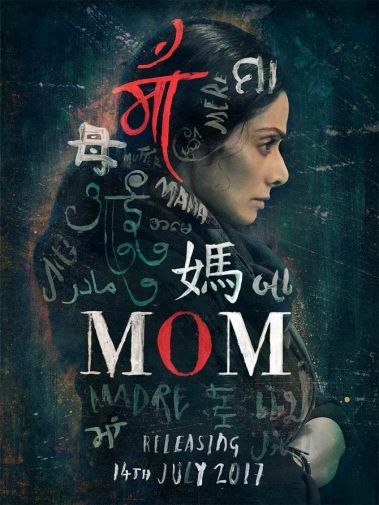
Mom starts out with an interesting take on the step-mother/daughter relationship but takes a turn midway to end as a standard revenge film with a haphazard second half and an overly mawkish finale. Thankfully Sridevi is outstanding as the mother hell-bent on revenge, and Sajal Ali, Nawazuddin Siddiqui and the rest of the cast are all excellent, making Mom better than average, despite the film’s flaws.

The first half of the film explores the tension between Devki Sabarwal (Sridevi) and her step-daughter Arya (Sajal Ali). Arya is the daughter of Anand (Adnan Siddique) and his first wife, and she bitterly resents Devki for taking her father away from her and her memories of her dead mother. Although Devki and Anand have been married long enough to have a child of their own, Arya still isn’t reconciled to her step-mother and the resulting acrimony affects every moment the family spends together. Adding to the tension is the fact that Devki is a teacher and Arya is a student in her class which allows Arya to continue the teacher/student formality even when they are at home by always addressing her step-mother as ‘madam’. The difficulties of dealing with a moody and resentful teenager are compounded by Arya’s animosity towards her stepmother, while Anand is caught in the middle trying to keep the peace. Generally Anand is a passive character who drifts along seemingly not too bothered by his daughter’s rudeness which I presume is to allow Devki the space to take centre stage later in the film. However, the relationship between Devki and her step-daughter is handled well with the family dynamic appearing authentic and the dialogues realistic, and perhaps it’s not too far a stretch that Anand avoids the situation at home rather than getting too involved.

Everything changes one night when 18-year-old Arya goes to a Valentine’s Day party at a farmhouse and doesn’t return home. She is abducted by four men in a black four-wheel drive, and Ravi Udyawar brilliantly builds and maintains the tension as he switches between a frantic Devki desperately trying to contact Arya by phone and horrifically effective overhead shots of the vehicle slowly cruising along deserted roads. The soundtrack adds to the sense of menace and there is a chilling, heart-stopping moment as the car stops and the men change who is driving. It’s horrifying because we know what is happening but all the more effective as nothing is ever shown of the violence until Arya is dumped at the side of the road.

Reading about the film and watching the trailer I was worried that Mom might go down the route of so many films about rape but Ravi Udyawar gets this part of the film totally right and sensitively handles an assault which is too often inappropriately sensationalised or set up to blame the victim. The anguish and despair felt by Devki is also well portrayed, as is Arya’s reaction, while for a change the police are rather more sympathetic although the process of gathering evidence does seem fatally flawed.

When the courts offer little in the way of justice, Anand puts his faith in an appeal and a more rigorous series of tests, while Devki has a more practical approach to her daughter’s rapists gaining their freedom. Anand’s reaction here does seem rather less plausible, but to some extent does fit with his earlier ‘ostrich in the sand’ approach to his daughter. Devki is aided by a private detective, Daya Shankar Kapoor aka DK (Nawazuddin Siddiqui) who is sympathetic to her mission. But with detective Mathew Francis (Akshaye Khanna) suspicious of Devki and Arya still as distant as ever, it seems that Devki has set herself an impossible task when she sets out to seek revenge.

Devki is shown as a strong character right from the beginning. She promptly and efficiently deals with an unpleasant incident in her classroom and appears determined to break down the barriers between herself and Arya, despite her step-daughter’s frosty attitude and carefully maintained distance. Sridevi looks radiant too while the scenes between her and Adnan Siddiqui have a genuine warmth and easy affection that speak of a good relationship. After the assault, her reaction to her daughter’s injuries is wonderfully histrionic but perfectly apt for the situation while her trepidation and uncertainty come across clearly as she embarks on her revenge. However, the screenplay doesn’t help here as DK insists that they meet in secret and the pair then proceed to arrange rendezvous in conspicuous public places where they speak to each other without seeming to take any precautions at all. Even the association with DK seems rather unlikely given their first meeting, but Nawazuddin Siddiqui runs with it regardless and manages to give his character plenty of appeal despite his slightly disreputable appearance. His DK is a more sympathetic character than first appears and he is excellent at conveying his own horror and understanding of the situation to Devki. The dialogue between the two tries to give some rationale for Devki’s actions and there is plenty of symbolism included during their meetings, but it’s really the performances from the two actors that allow any suspension of disbelief and make it even vaguely possible that Devki could act as she does.

Akshaye Khanna does the best he can with the role of the police officer assigned to Arya’s case but his character has little to do and doesn’t seem to know which side he should be on either. Mathew Francis seems to be a capable enough office but his investigations are only shown briefly and he never seems to be a serious threat to Devki’s plans. I also have some issues with the portrayal of transgenders and the completely evil nature of Abhimanyu Singh as one of the perpetrators which seems too over the top in a film that already has plenty of extreme emotion.

Anay Goswamy’s cinematography is excellent and the music from A.R.Rahman evocative and perfectly suited to each mood of the film. Where the film falls down is in the predictable nature of the second half and its failure to address the topical issue of violence against women except by suggesting the usual vigilante payback as the way to go. Naturally it makes for a more exciting film this way, but it would have been more satisfying to see more of the family’s reaction, more of Arya’s own story and her father’s struggle for justice. Better too, if Ravi Udyawar had stuck to the fractured relationships and the impact of assault, rather than following the well-trodden path of failed justice and pay-back. Even the scenes of revenge (as clichéd as they are) are glossed over swiftly and the police investigation relegated to a few brief dialogues with a bizarre about-face by Detective Mathew Francis appearing out of the blue, just in time for the film climax. Sridevi is always worth watching, but her co-stars here are all equally good, even though Girish Kohli’s screenplay limits their contribution to the story. Worth watching for the excellent performances, technically good presentation and well executed first half, just don’t expect anything more than a typical masala ending.

CityLights (2014)

CityLights

In his reworking of Sean Ellis’s award winning social drama Metro Manila, Hansal Mehta moves the story from the slum areas of Manila to the seedy streets of Mumbai. It’s a tale of grinding, remorseless poverty and the desperation such hardship brings, but there are some lighter moments too and the film morphs into a crime drama about half way through. City Lights is perhaps not quite as effective as the original in telling the story of a young naïve family and their move from the country to the city in search of a better life, but what the story has lost in adaptation is more than made up by the strong performances from the lead actors Rajkummar Rao, Patralekha and Manav Kaul.

City LightsCityLightsCityLightsCityLights

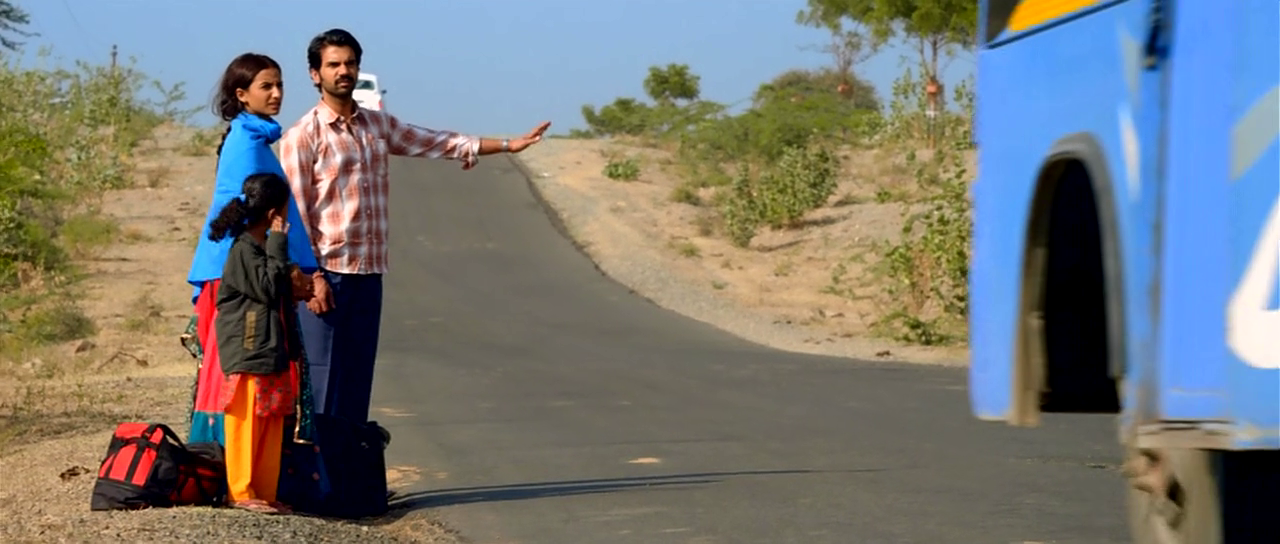
The story opens in Rajasthan where Deepak Singh (Rajkummar Rao) has a clothing shop in a small town that he is forced to close when he cannot afford to pay off his debts.  Since there appears to be no hope for any work in his village, he sets off for Mumbai with his wife Rakhi (Patralekha) and small daughter Mahi. Rakhi is reluctant to move, once in the city she seems less naïve than Deepak so perhaps she is well aware of the difficulties of trying to live in Mumbai, but ultimately she has no say in the decision. These first few scenes are full of light and laughter, and in just a few brief moments Hansal Mehta paints a picture of a happy family where there is a lot of love and hope that better days will come.

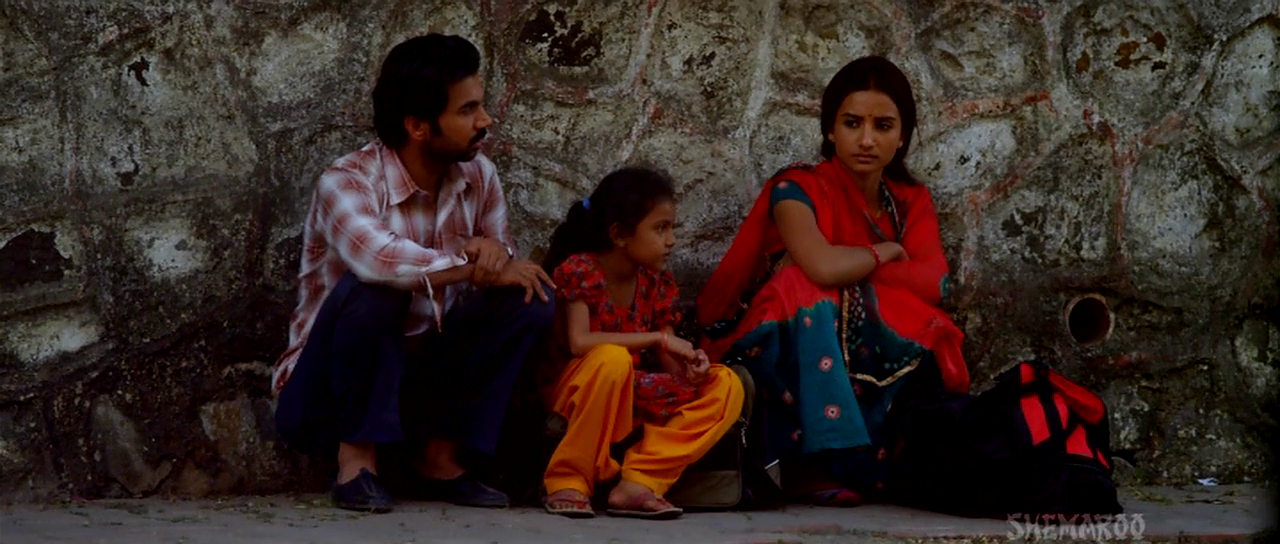
Deepak plans to meet a friend from his army days in Mumbai, but when Omkar fails to turn up at the railway station the family has to find their way in the big city alone. After being swindled out of what meagre funds they have, a chance meeting with a bar dancer leads them to a temporary refuge in a half constructed building.  While Deepak spends his days trying to find any kind of a job anywhere, Rakhi manages to get employment as a dancer in a bar. However this is not work she finds easy to reconcile with her conscience and she continually struggles with the leers of the men and their attempts to get more from her than she is willing to give. Deepak too is not happy about his wife’s job either, but the family is in such desperate straits that he has no other option but to let Rakhi work. Both actors do a fantastic job here of getting the depth of their emotions across using facial expressions with excellent body language and minimal dialogue.

Although their situation seems unlikely to improve, the couple never give up hope, even if it’s a very compliant and resigned kind of hope. There are no impassioned speeches or battles against authority here, but rather calm acceptance of their place in society and the belief if they just keep trying then eventually God will provide a solution for them. It’s frustrating viewing at times when Deepak is unable to push himself forward when looking for work and Rakhi cannot put aside her inhibitions to make more money when she is dancing, but they are simple everyday people and Hansal Mehta portrays them just the way they are. No more, and no less.

Their blind faith appears to work and things start to look up when Deepak gets a job as the driver for a security firm. The money seems good, and Deepak’s new partner Vishnu (Manav Kaul) even offers the family a place to stay. However Deepak comes to realise that his new partner had an ulterior motive for recommending him, and it is Deepak’s innocence and naiveté that got him the job rather than his previous army experience. Vishnu has a plan which needs the co-operation of his partner, and he’s been waiting for an innocent like Deepak to manipulate into following his commands. Deepak is reluctant, but when Rakhi loses her job in the bar it seems as if he has no other option but to go ahead with Vishnu’s plan if he wants to make sure his family survives.

Rajkummar Rao and Patralekha both suit the role of poor immigrants to the city. They both look skinny and malnourished with beaten down postures and downcast eyes, and both achieve that calm acceptance that extreme poverty seems to bring. It’s only with each other that they seem able to look straight ahead and even then Rakhi rarely looks her husband in the eyes. Both exude innocence effortlessly, even in the rather ham-handed treatment of their love scenes, and Rajkummar Rao in particular never puts a foot wrong. Manav Kaul is also excellent in a role that gives him plenty of opportunity to develop his character. He’s the man who knows the ways of the city, and is patently more sophisticated and knowledgeable than his partner from the country. He has a wife and a mistress, but despite his city veneer he also deeply resents the people whose money he delivers every day and despises his own circumstances. In his way, Vishnu is just as desperate and defined by his poverty, even if it’s not as extreme as that experienced by Deepak and Rakhi, and Manav Kaul does an excellent job with the characterisation.

The film does have a couple of songs which are either used over montages of the couple’s life in the city, or to highlight certain moments in their lives. The problem is that the music and lyrics are overly dramatic, particularly in scenes where the actors have already displayed plenty of genuine emotion and the music ends up detracting from rather than enhancing their performances.  The track below which plays over Rakhi’s dancing and Deepak’s drinking in a bar does work better, but most of the other songs are too loud and intrusive to suit the action. The film is also very dark at times; to the point where it is difficult to see what is happening let alone the actors expressions, while the final climax seems rushed and too contrived compared to the rest of the story.

These small issues aside, the film is an insightful look at the dark side of Mumbai and the realities of living in unrelenting poverty as Hansal Mehta successfully translates Sean Ellis’s story from the Philippines to Indian soil. Rajkummar Rao is definitely the standout as he once again completely immerses himself in his character and delivers an amazingly realistic and believable performance as he did in Shahid. Manav Kaul and newcomer Patralekha are also impressive in a film that raises questions about morality, ethics and poverty even if it does turn a tad Bollywood at the end. 3½ stars.