Udaan

Udaan was the first Indian film in seven years to be selected for the ‘Un Certain Regard’ section at the Cannes Film Festival, and also won the Best Audience Award and Best Music Score at the Giffoni Film Festival. Sadly the film didn’t have a cinematic release in Australia, which is unfortunate as I think it is the best Hindi film I have seen so far this year. Overall Udaan is a simple story brilliantly told with some fantastic performances by the young and inexperienced leads.

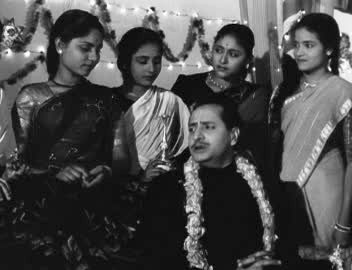
Rohan is a seventeen year old who has been at boarding school in Shimla for 8 years. In that time he has not been home, nor has his father or any of his family visited him. His friends are his surrogate family and they follow the ‘all for one and one for all’ motto. Their various escapades, including a late night trip out to see am adult movie, result in their expulsion from the school and Rohan has to finally return home to Jamshedpur. His father barely acknowledges his arrival at the train station, not speaking a word, and leaves Rohan to drag his trunk across the platform and up the stairs into their flat  by himself. 
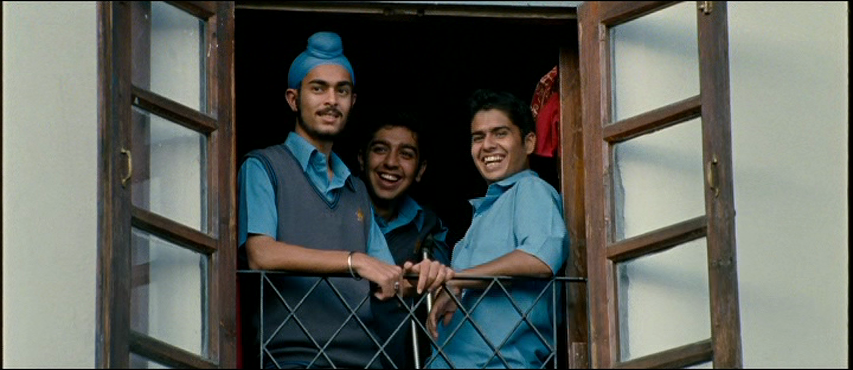
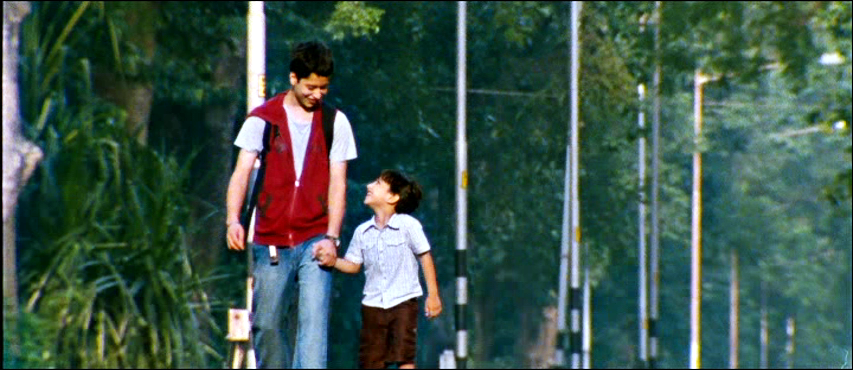
Once home, Rohan finds that while he was at school his father had married again and he has a six-year-old step-brother Arjun. The relationship between them is off to a bad start as neither knows of the others existence, and as the bigger and older brother, Rohan totally pushes Arjun aside. 

Rohan’s relationship with his father, never a happy one, deteriorates further as Bhairav Singh decrees that Rohan will work in his factory in the morning and attend engineering college in the afternoon.  Rohan wants to be a writer, and throughout the film we hear his poems and stories. When he is looking after his step-brother in hospital, everyone crowds around to hear his stories, so we believe that he really would be able to make it as a writer despite his young age.  Engineering however is not his calling and he struggles continually. He tries to be the son his father wanted and perseveres with his studies, but he is only seventeen and the lure of his writing is too strong to be ignored.  He skips school to sit in the fields and write, so inevitably fails his courses.  
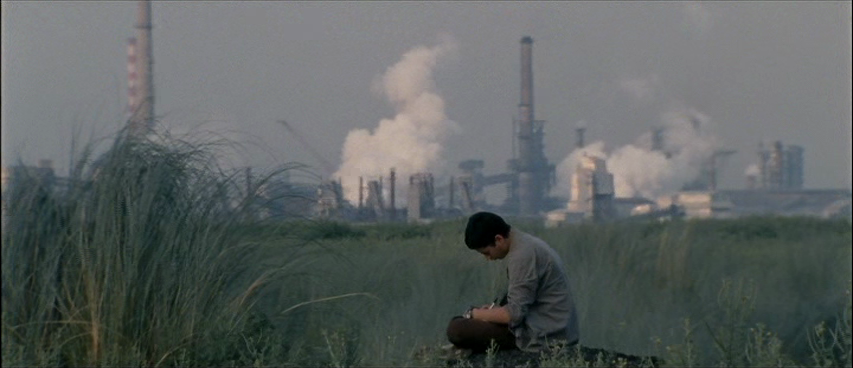
His father is an authoritarian bully, an alcoholic, and is determined that his son will follow in his footsteps and take over the foundry.  He is continually disappointed by Rohan’s seeming failures and physically and verbally abuses him.  He also forces Rohan to run and train with him daily, trying to mould him into the man he wants him to become.  His treatment of his younger son is equally appalling and results in the two step-brothers finding some common ground. Bhairav has a younger brother, Jimmy who has a happy but childless marriage, and he becomes an ally for Rohan in his attempts to get his father to accept his writing.  But Jimmy has issues of his own with his brother and cannot stand up to him when it comes to the two boys.  Rohan rebels by stealing his father’s car and heading off to the bars in Jamshedpur where he goes drinking with some new friends. Rohan has to decide if he will stay, become an engineer and end up like his father, or leave to try to realise his ambition.  As his step-brothers fate also seems to lie in his hands, this is not an easy decision to make.

For me, the film works so well because Rohan’s dilemma is very realistically portrayed.  Like most of us, he wants his father to approve of him and he tries very hard to win this approval.  He can remember how much his mother loved him, and is desperate for some feeling from his father. Rohan’s rebellions seem very typical of a teenager, and his reaction to his step-brother rings true.  The issues of alcoholism and abuse are dealt with in a very matter of fact way.  There is no attempt by director Vikramaditya Motwane to either sensationalise or underplay the brutality and cruelty in the relationships between Rohan, Arjun and their father. The harsh reality of the story is allowed to speak for itself and it is to the director’s credit that the film is such a moving and poignant story.  

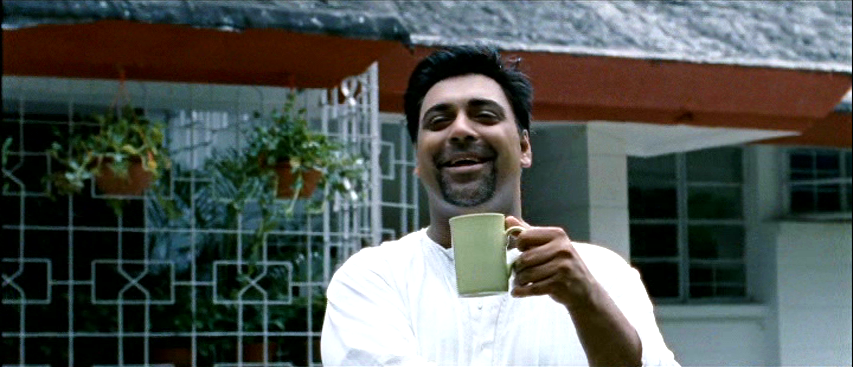
The performances by Rajat Barmecha as Rohan and Aayan Boradia as Arjun are extraordinary.  Both are flawless in their roles and we really feel the developing relationship between them.  For such young and inexperienced actors they have given truly excellent performances. The experienced actors also can be credited with some very good acting. Ronit Roy is fantastic as Rohan’s father, Bhairav Singh.  He keeps his expressions grim when dealing with his sons and while at work, but is animated, smiling and laughing with his friends. His alcoholism is always hidden from the rest of the world and he keeps his treatment of his sons an equally well guarded secret. Ronit Roy manages to convey so much of his character through these basic themes and with minimal changes in his expressions. Ram Kapoor also does a great job with his role as Jimmy.  He manages to make his character affable and ineffectual with some nicely underplayed acting.

The film has plenty of symbolism, which gives it a very European feel. The school as Shimla is set in the forest, and the transition on the train to the industrial sights of Jamshedpur makes a sharp contrast.  Shots of Rohan’s father are often framed by the barbed wire fence surrounding their home, and his scenes are often dark and heavy in feeling.  My favourite of these moments is probably Rohan’s T-shirt which states Love Happiness, but when he sits down it folds to read Lose Happiness. An excellent find by the wardrobe department!  The music by Amit Trevedi won an award at the Giffoni Film Festival and is beautiful and haunting.  Although often part of the background, a number of the songs also serve to move the film forward and are very well placed to do this. The last song is just perfect and a lovely memorable end to the film. 

There is nothing to find fault with in Udaan.  The screenplay by Vikramaditya Motwane and Anurag Kashyap is excellent, and the dialogue, going by my basic Hindi and the subtitles, seems appropriate for the story.  A sad film, but one which touches the heart and I totally loved it. 5 stars.  Heather
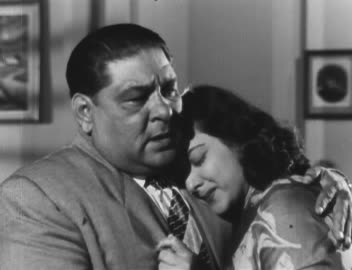
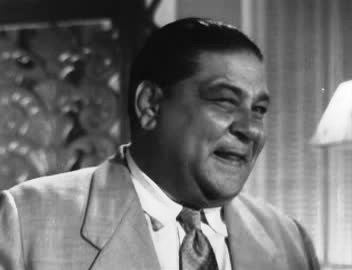
Chori Chori (1956)

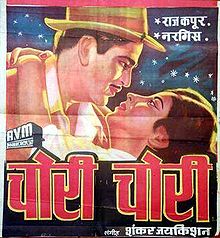
I grew up watching RKO and MGM musicals, and have always loved that kind of film with snappy dialogue, lush soundtracks, stylised visuals and excellent casting. I am a bit resistant to the remake in general – I tend to think that if a film was great first time around, why mess with it. So I was surprised by how much I like Chori Chori. It is ‘inspired’ by the 1934 Frank Capra film ‘It Happened One Night’ starring Clark Gable and Claudette Colbert, and has the legendary jodi of Nargis and Raj Kapoor at the fore, directed by Anant Thakur. Chori Chori seems to me to be the perfect balance between slick Hollywood and heart on sleeve Bollywood.

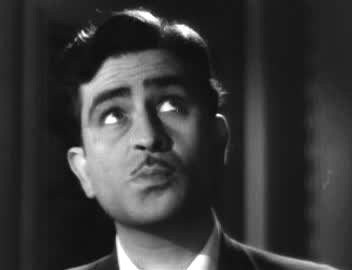
One of my great friends often says ‘Raj Kapoor was sleazy…and not in a good way’ which never fails to crack me up and is the thing that pops into my head when I see him.  I didn’t ‘get’ Raj Kapoor til I saw this film and drew the connection to the Gable style of Hollywood hero that used equal measures of smarm and strong-arm to win the day. I’m still not a huge fan, but I can at least glimpse what it was that makes him such a significant figure in the Hindi film industry.

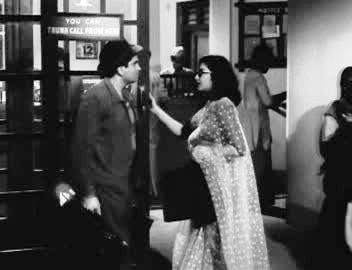
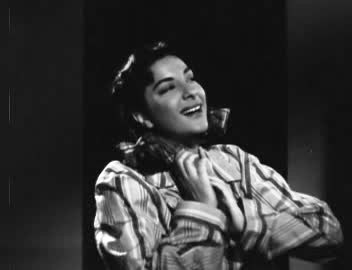
Nargis is Kammo – spoilt daughter of the super wealthy Ghirdarilal (Gope). She is determined to marry the dashing pilot Suman (Pran!) but her father is sure Suman is only after the dollars not his daughter. She jumps ship and swims to shore, determined to make her way to Bangalore and Suman’s arms. I have to say she showed some moxy in pawning a diamond ring to fund her travels, but the white net sari she bought with the proceeds struck me as wildly impractical for a long bus trip.

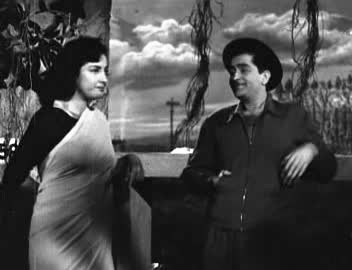
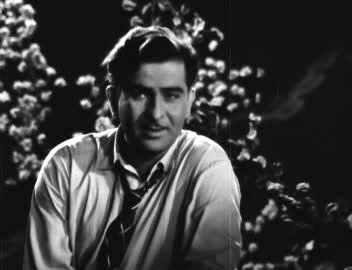
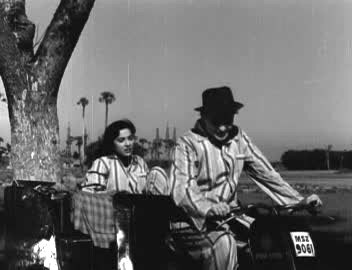
Also bound for Bangalore is struggling journalist Sagar (Raj Kapoor). The two loathe each other on sight and of course we know that can only mean true love is round the corner. Sagar is reluctantly drawn into helping Kammo, caught by his chivalrous nature, curiosity and later by his attraction to her. He wears a western suit and hat, slightly the worse for age, and his look could have been lifted straight from Hollywood Central Casting. He represents the heroic battler, trying to make a decent living while keeping his morals intact. He cuts a deal with Kammo – he will help her get to Bangalore and Suman, and he will reap a financial reward when he sells his story.

Ghirdarilal places adverts offering a reward for anyone who returns Kammo to him. Thus there is ample opportunity for a host of minor characters (including Johnny Walker) to join the treasure hunt, and a catalyst for throwing the sparky leads together.

As they travel incognito, scenes cut away to Suman who is shown to be a gold-digger with an eye for dancers. This is not bad for the viewer as we get to enjoy a very nice classically inspired dance, but we already know which man Kammo should marry.

Kammo and Sagar miss their bus, and continue to travel together under the pretence of being married. Raj is only carrying a small valise and yet I lost count of how many pairs of stripy pyjamas he seemed to have packed. Mind you, Nargis seems to amass a decent collection of saris along the way so it’s probably only fair that Sagar has an extensive range of sleepwear. The pyjamas were quite significant in ‘It Happened One Night’, but rather than share a single pair of pjs this couple get matching his n hers. Lots of them. Perhaps the wardrobe team had the day off when someone came up with Kammo’s alluring night attire.

They encounter suspicion and adversity and their own growing feelings. Sagar wanted the story and maybe the money, and Kammo wanted Suman – neither of them wants to acknowledge what is changing between them. They offer each other small kindnesses – the loan of the ubiquitous pyjamas, a blanket thrown towards a sleeping Raj – and lots of snark. The dialogue by Agha Jani Kashmiri is sharp and delivered with perfect timing. These two really are a match for each other and the chemistry is sizzling.

It’s all quite predictable down to the last twist and turn but it is still compelling. Nargis is stunning in her portrayal of the feisty Kammo. She isn’t afraid to articulate her feelings for Sagar, whether in song or dialogue, and challenges his reticence. In one scene, heartbroken Kammo walks through a storm and Nargis exudes grief so profound it outshines all the environmental theatrics. It is a bit irritating, although perfectly in tune with the era, after such an independent start Kammo appears to realise she should never have defied her father or left her home, although that may be her own idea of a necessary penance.

Kammo’s relationship with her father was perplexing. Kammo was spoilt rotten and certainly lacked for nothing in the material sense. He locked her up to stop her marrying Suman and really did not believe that anyone would marry ‘baby’ for anything other than his money. He was devastated when she disappeared but trusted Kammo to tell him as much as she wanted to on her tearful return. So I kind of blame Ghirdarilal for making Kammo susceptible to Suman’s flattery as she was seeking approval she didn’t get at home. But he also made her the kind of brat that needed a reality check. Oh these filmi parents!

Raj Kapoor seems content to mostly allow his leading lady to dominate, and is fairly low key. Until the puppet song which I think was designed to allow him to release all the repressed over-acting. He spouts a lot of philosophy about the joys of the simple life, which seems to impress Nargis. I’d have more faith in that if Sagar had ever lived anything other than a simple life and so could make a valid comparison, but I’m a cynical viewer not a filmi heroine.

A disquieting note throughout is the equation drawn between marital status and the individuals’ threshold level for physical violence. One scene has a landlord test whether Sagar and Kammo are married by smacking Sagar around. The fact that he doesn’t flinch is accepted as proof he must be married to her! Slaps fly in this film, and while they are generally shown as a symptom of passion, it’s still a bit disconcerting and causes me to remind myself this is the 50s. For those wondering, Nargis lands some excellent shots, which I enjoyed, but on the downside the women in Chori Chori are generally portrayed as the aggressors in domestic violence.

The music is used to perfection in this film. Each song acts to illuminate the innermost thoughts of the characters singing or those observing the performance. Shankar-Jaikishan have the perfect big band sound for the romantic duets, and the orchestration is lush as befits this story. The songs show a range of musical influences and are very well integrated into the narrative. And who doesn’t swoon just a bit on seeing Asha Bhosle, Lata Mangeshkar, Manna Dey and Mohammad Rafi all on a soundtrack?

The classic visual devices from ‘It Happened One Night’ appear throughout Chori Chori – particularly the wall Sagar creates in their shared rooms by draping a blanket over a rope, those stripy pyjamas, and the cramped bus trip. It’s a fairly faithful remake, adapted to suit its audience’s sensibilities, and the changes don’t weaken the story.

Raj and Nargis are stunning and deliver beautifully nuanced performances. With the frisson of their legendary affair in mind, the romance on screen seemed that much more compelling as I wondered what was acting and what was revelation. The film has style, beautiful cinematography, lovely songs and strong performances. I give it 4 stars! Temple


Australian Festival of Travel Writing: the road to Tollywood

The Australian Festival of Travel Writing wrapped up last night after three days of fantastic and interesting panel discussions and workshops. I was invited to represent our blog to discuss ‘Bollywood Stories and Contemporary Indian Cool’.

Our panel moderator Roanna Gonsalves was charming and elegant, and made the panel all feel at ease. She injected some style into proceedings, wearing a beautiful blue and cream sari that contrasted with the Melbourne monochrome wardrobe.  I will admit I googled her before we met and I was very impressed by her writing. Go look at her site.

Shalini Akhil shared some moving and funny reminiscences of how Bollywood touched on many ‘firsts’ in her life, including her first time going to the cinema by herself. What was the film that made such a mark on her life? Surakksha. Still not clear? Well, Gunmaster G9 may ring a bell. Here is a clip Shalini thoughtfully sent me afterwards:

Mitu Bhowmick-Lange gave the audience a quick history of Hindi cinema, how it has changed and the development of stories set overseas that reflect the NRI experience. She ended with a song filmed in Melbourne, My Dil Goes Mmmm from Salaam Namaste, which Mitu also line produced.

And I have no idea what I said. It was lovely to look at the audience and see Heather and other friends sitting there nodding emphatically at everything I mentioned, but that’s what great friends do. Thanks guys! I blathered on but I did manage to get 3 short clips of a minute or so each into my presentation. I really wanted to show why masala films have had such an impact on Heather and me and why we love to watch them. The audience seemed particularly taken with the South Indian film clips, and we may have a few more Magadheera converts! So what did I woo them with?

Helen!

MAGADHEERA!

Rajni!

The organisers were fabulous and really set me at ease, and Heather and I got some very nice comments afterwards.  It was a fun thing to do, and I am delighted that we were asked to participate.

Thanks all!

Temple