Neel Kamal (1968)

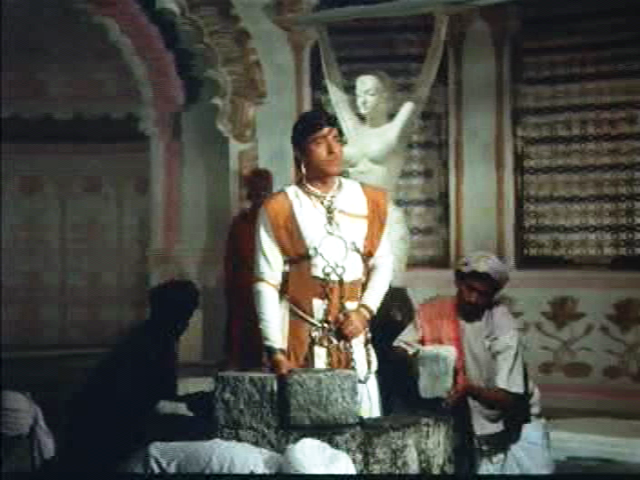
Rajkumari Neel Kamal (Waheeda Rehman) is in love with poet/architect/sculptor Chitrasen (Raaj Kumar). He designs a Rang Mahal for her father, and as a reward asks the king to give him Neel Kamal.  Instead he is walled up alive, and the king forbids anyone to mention Chitrasen ever again.

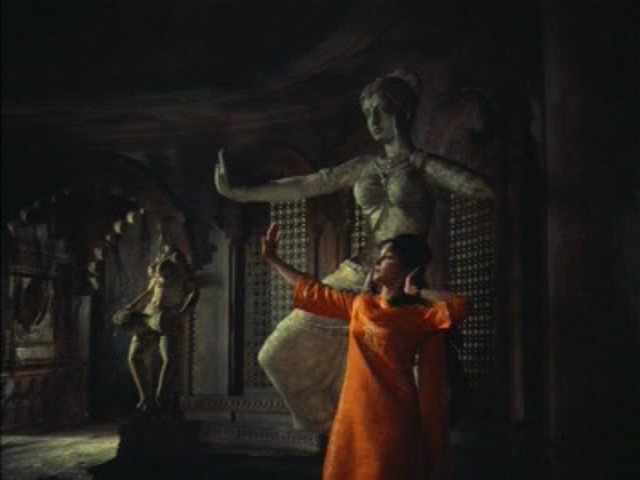
Sita Raichand (Waheeda Rehman) is a nice girl and good student. On a school visit to the ruins of the Rang Mahal she is overcome by a phantasm of music and dance. Thereafter she is afflicted with sleepwalking and has no recollection of why or where she goes.  She just has time for a very fun musical number before the drama kicks into melodrama.

She is lured out into the night by a voice, a voice beseeching his love to return.  Sita is the reincarnation of Neel Kamal, and Chitrasen is still waiting for her.
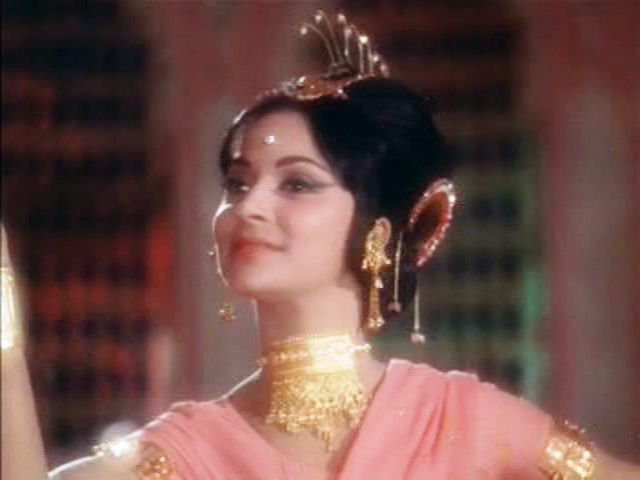
His voice is impassioned and yearning. This song is used in many scenes, and I particularly like this a cappella version.

The somnambulism is dismissed as something that may ruin her reputation and so needs to be hushed up rather than treated.  Her wedding is arranged with the help of a friendly local guru (David Abraham). As the doctor breezily assured Sita’s father, once she was busy running a household and looking after children she simply wouldn’t have time for any psychological affliction. Poor Sita. The name alone gives a clue that she will be tested over and over.

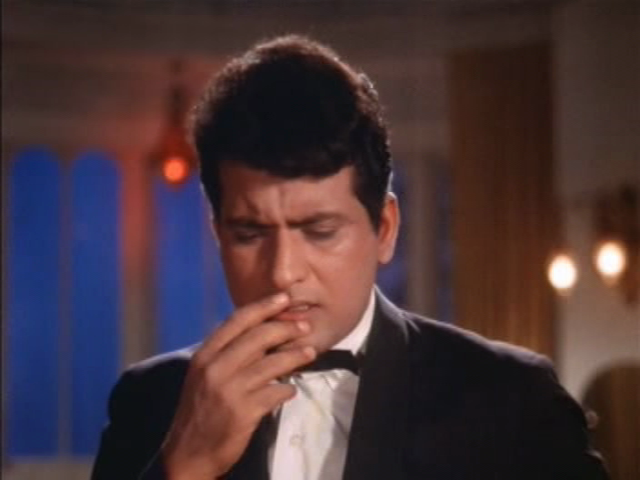
She marries Ram (Manoj Kumar) and moves in with his mother (Lalita Pawar) and sister Chanchal (Shashikala). Her sleepwalking continues, and no one seems to care about why or what is happening apart from the potential damage to their prestige. Ram is the kind of hero who instantly believes the worst of his wife just because his Ma says so. I have to admit Sita’s ability to walk, accessorise and elegantly drape a saree in her sleep may have made me suspicious, but surely they could have discussed it. Manoj Kumar is adequate but not overly interesting as Ram. I spent most of his scenes waiting for him to do the hand over face thing, but the closest he got was a half hearted effort (at 1 hour 28 minutes if you need to know).
Their relationship, apart from all the judgemental and non helpful rubbish, is affectionate and quite passionate. With Sita’s romantic choices limited to a dead man or a mummy’s boy, I was pleasantly surprised to see her in a more or less happy marriage.  Of course, this also makes her suspect in the eyes of the mother-in-law. If she likes sleeping with her husband there’s no telling what else she might be up to. The floozy!

The Thakurin and Chanchal are the real baddies in this tale, not poor ghostly Chitrasen. Like Cinderella’s ugly stepsisters they take every opportunity to harass and punish Sita, casting her actions in the worst possible light. The word ‘slut’ featured often in the subtitles. Adding to Sita’s woes, Ram goes away on work (after promising a doctor not to leave her alone ever) and the Thakurin sacks all the domestic staff putting Sita to work running the house.
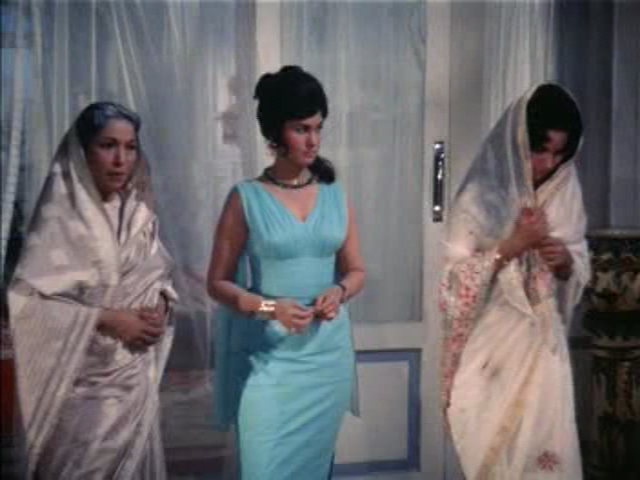
Shashikala is great as Chanchal. She seems to relish her mean character, and her mockery of husband Girdhar (Mehmood) is cruel but funny. All the love (or the pheromones) in the air seems to have quite an effect on Chanchal. She seems destined for dissatisfaction as Girdhar is not quite the soul of passionate romance. Mehmood is both useless and pivotal to the drama. His ‘comedy’ is not even slightly amusing, but the hen-pecked loser of a husband is the one who finally takes action. I like Mehmood in the right doses, but this is not him at his best. Lalita Pawar’s character is more obsessed with izzat than about just tormenting her daughter in law but she teams up beautifully with Shashikala to be really horrid. And they are so mean – they even take all of Sita’s lovely clothes!

Although both Ram and her father profess to love Sita very much, neither of them seems to trust her at all. They easily believe the worst, or refuse to see the evidence in front of them. Neither man seems to place as much importance on her health and well-being as they do on her honour and how it reflects on them. Mr Raichand (Balraj Sahni) eventually makes an attempt to help his daughter but Sita by name Sita by nature; she refuses to fail her ‘test’ by leaving.

Sita is not a doormat though. She is strong although, in my opinion, misguided. She could go back to her father, but lots of dialogue about izzat and a weepy pre-wedding song seems to preclude that. She tries to mend her relationship with Ram, and asserts her rights as his wife, but he doesn’t support her when it counts. The ‘haunting’ by her past life love is really well executed. It is a gradual process, wearing down her energy and resilience so that it is easier for her current day bullies to best her.  Her nocturnal wanderings place her life in danger more than once, and she is often tired and confused by day.  Waheeda possesses an elegant beauty that cannot be disguised by a dowdy old saree. She shows the exhaustion and suppressed emotions as Sita struggles to make sense of it all, as well as the happy, radiant young woman in love. I really like her performance even though Sita is one of the characters I might occasionally like to slap some sense in to.

Raaj Kumar is not an attractive man, but his performance as Chitrasen is quite compelling.  From his brief appearance in the opening of the film he somehow makes a strong enough impression that Chitrasen is very present in the rest of the story. The loss and confusion he feels as he lingers in the space between life and death is palpable. He tells Sita that he was killed for love, but couldn’t die because of that love. He reminds her over and over of who he was to her, and tries to make her recall their life and the happiness they had. On the downside, he is not a dancer. And there are not enough artfully placed pom-poms in the world to distract from that. Warning – the following clip contains flashes of nipple (his).

Ultimately Neel Kamal/Sita can’t continue being torn between two lives. Will the past be too strong for Sita? And if Chitrasen wins his Neel Kamal, what happens to Sita? And what will happen with Ram and Sita and their marriage?

Despite finding much of the story quite trying, I really do enjoy this film. I’m not sure how to articulate this other than to say it is an engrossing and atmospheric film with the supernatural and reincarnation aspects flavouring the everyday drama. The sets are stunning, with ornate design and statuary, very nice chandeliers and excellent moody lighting. My DVD looks terrible in screencaps or I would inflict many many more interior design details on you. Waheeda’s performance is lovely, her costumes are beautiful and suit her character. The music by Ravi builds a mood of love and regret and Mohd Rafi is just perfect as the voice of loss and sorrow. It’s a pleasure to watch, even though I occasionally want to slap a few people rather hard.

I do have to make some small deductions for Ram being so annoying, the poor mental health practices, too much teary self sacrifice, and some witless comedy.  3 ½ stars!

Heather says: I was a little disappointed by this film. The opening credits led me to expect something a little more eerie and the lack of any spooky ghosts or macabre happenings was a bit of a letdown. Then the movie skipped forwards in time and any hopes of suspense were totally lost when no-one seemed to really care why Sita was sleepwalking or where she was trying to go. Since I also knew why she hearing a haunting melody and wandering around there was no suspense in these nightly outings either. I really got very little sense of atmosphere from the film apart from in the first rendition of the beautiful tujko pukare mera pyar song. To compensate for the rather pedestrian story though there were some wonderful performances. Manoj Kumar was very appealing as Prem even if his character did seem to be a bit of an idiot at times. Waheeda was beautiful and periodically did manage to get across the confusion and mental disruption than Sita was experiencing. However, like Temple I was frustrated by her continual acceptance of the abuse from her mother-in-law and sister-in-law without even attempting to either explain her problem or object to their treatment of her. It made her character a bit of a wet blanket which I don’t think was the intent. I also found that the story veered off into overly dramatic scenes and declarations just when it would have been more effective to cut the melodrama and concentrate on the more simple interactions between Prem and Sita. The worst issue though was the constant interruption of the main story by the characters of Mehmood and his wife. Although I love Mehmood, and some of his scenes with the excellent Shashikala were genuinely funny, these breaks in the main story totally disrupted the flow of the film for me.

I loved the opening scenes though and Raaj Kumar was fantastic as Chitrasen. He had so much charisma and it was a shame that there was little interaction between him and Waheeda until near the end, as they did some have convincing chemistry together. I was a little surprised at how attractive he was here actually as I can’t think of another film I’ve seen where he had the same appeal. But I am now looking for more!

The best part about this film was undoubtedly the music. The melodies are beautiful and both Mohammad Rafi and Asha Bhosle are at their wonderful best in the duets. Although it’s not a film I would particularly watch again, except for those opening scenes with Raaj Kumar, I love the music and keep playing the songs. 3 ½ stars (which is mostly for the music and a half star extra for Raaj).
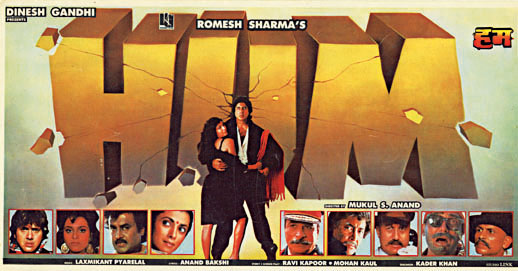
Hum (1991)

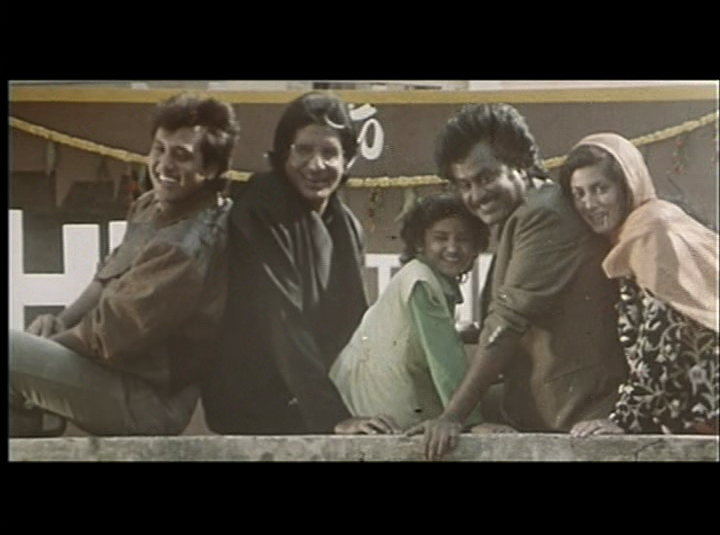
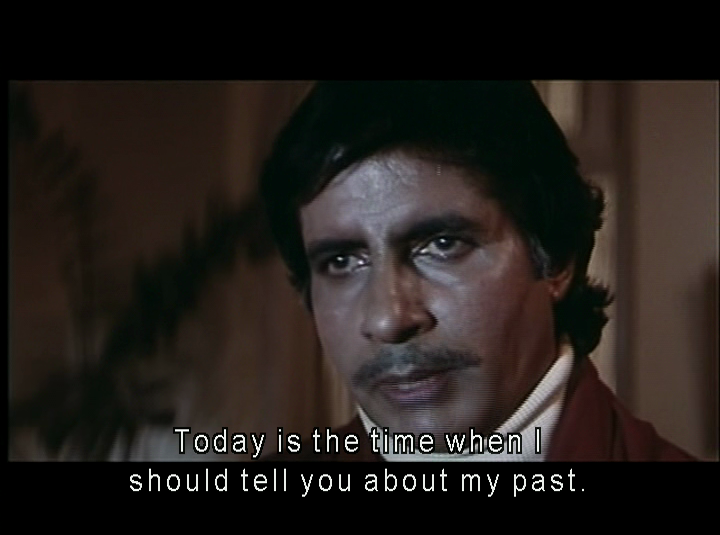
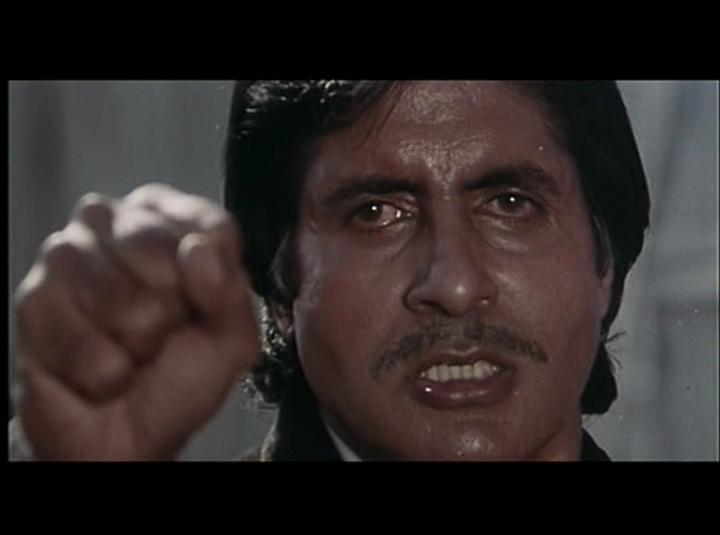
The late director Mukul S. Anand made 3 films with Amitabh Bachchan in the early nineties; Agneepath, Khuda Gawah and Hum. Although my favourite is Khuda Gawah I do have a soft spot for Hum which has a veritable who’s who of actors from the time including Rajnikanth, Govinda, Kimi Katkar, Anupam Kher and Danny Dengzongpa. The story combines the angry young man from Amitabh’s heyday with the sensible and authoritarian father figure he went on to portray in his later movies  and he does a good job of transitioning between the two personas. The film was a big hit at the time, and although it does drag a little in the middle, it’s still a great performance by Amitabh as the man whose past comes back to haunt him.

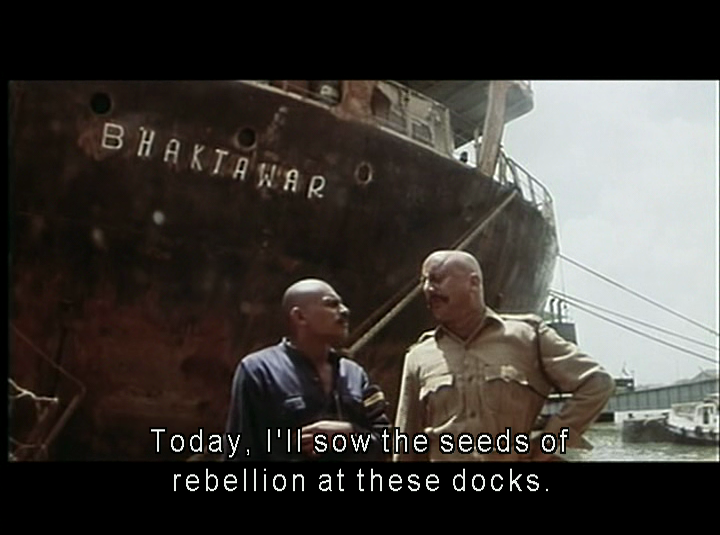
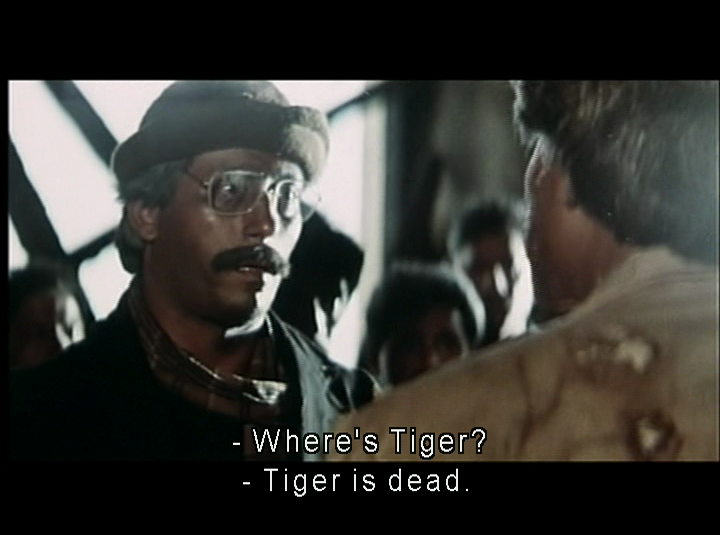
The movie starts as fairly typical masala fare. All round bad guy Bakhtawar (Danny Denzongpa) rules over the docks in Mumbai, treating his workers as slaves and killing anyone who dares to go against his despotic will. Despite his general dissatisfaction with this regime, Tiger (Amitabh Bachchan) extorts money from the workers for his father Pratap (Deepak Shirke), who in turn works as an enforcer for Bakhtawar and struggles to keep the peace between his son and his employer.

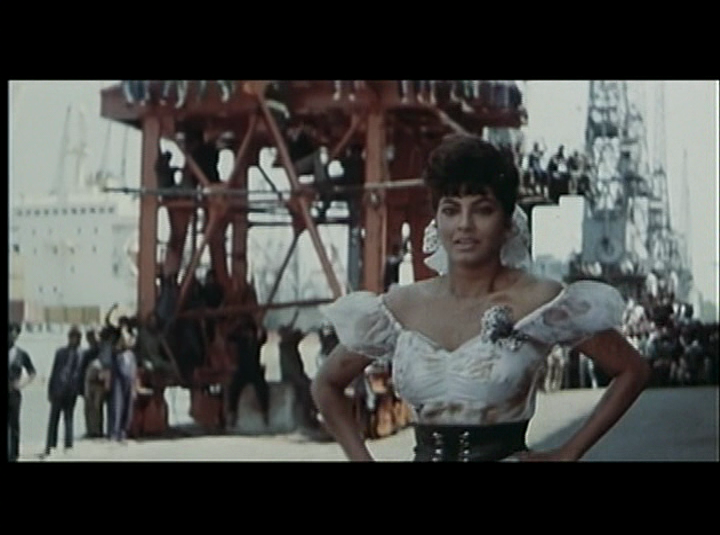
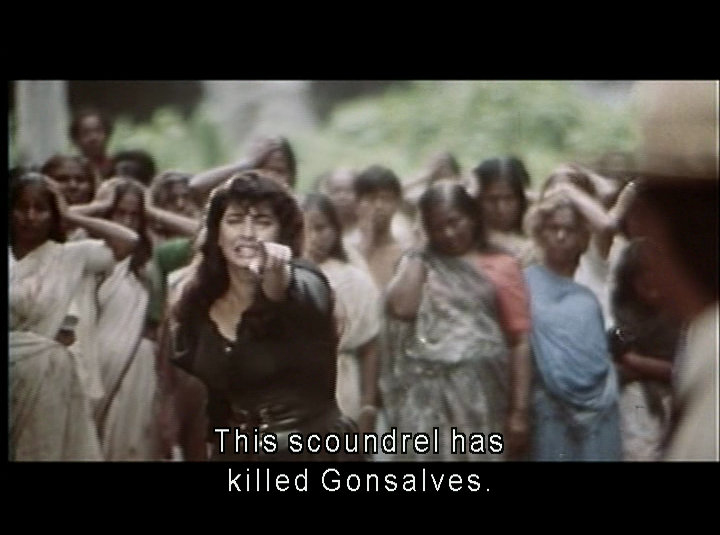
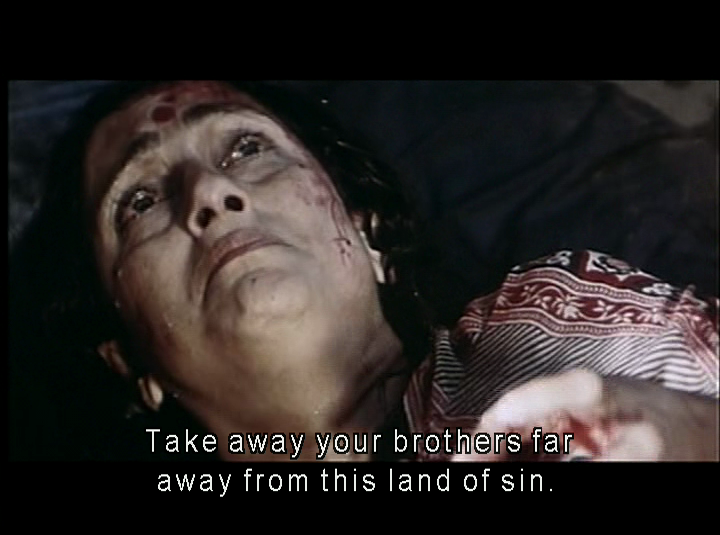
Tiger is in love with Jumma (Kimi Katkar) and the two have a rather stormy relationship, although we don’t get to see very much of them on-screen together. During one rebellion Tiger’s best friend Gonsalves (Romesh Sharma) is killed by Bakhtawar and in the subsequent fall-out Tiger’s father and step-mother also die, leaving two young step-brothers in Tiger’s charge.

Tiger immediately sets out to kill Bakhtawar in revenge but is stopped by Inspector Girdhar (Anupam Kher) who has his own agenda, and has set up the whole situation by playing Gonsalves and his revolutionaries against Bakhtawar and his gang of thugs. Girdhar intercepts Tiger and convinces him to fulfil his dying step-mother’s wish and take care of his young brothers while leaving the police to deal with Bakhtawar. In the confusion Girdhar and his faithful sidekick Havaldar Arjun Singh break into Bakhtawar’s safe and steal everything. To cover up their crime they set fire to Bakhtawar’s house, killing his wife and children in the process. At the same time they arrest Bakhtawar and send him to jail, while finally Girdhar blows up the train carrying Tiger and his brothers to eliminate any possible witnesses of his crime.

It’s all action in the first half of the film! Amitabh plays his classic role of the angry young man as only he can, even though he looks his age here and actually looks older than his supposed father and step-mother. But there is so much emotion and energy behind the character that apart from moments where the angled lighting shows up the wrinkles, it easy to put aside disbelief and accept Tiger as the slightly tarnished but still heroic saviour of the poor.

The first half of the film also features Laxmikant-Pyarelal’s classic song Jumma Chumma De De. Chinni Prakash won the Filmfare award for best choreographer in 1992 for his work on this. I’m not sure why the men have mugs of foam, although I presume it’s meant to represent beer and the water hose does seem a little excessive, but do enjoy what is actually a good song.

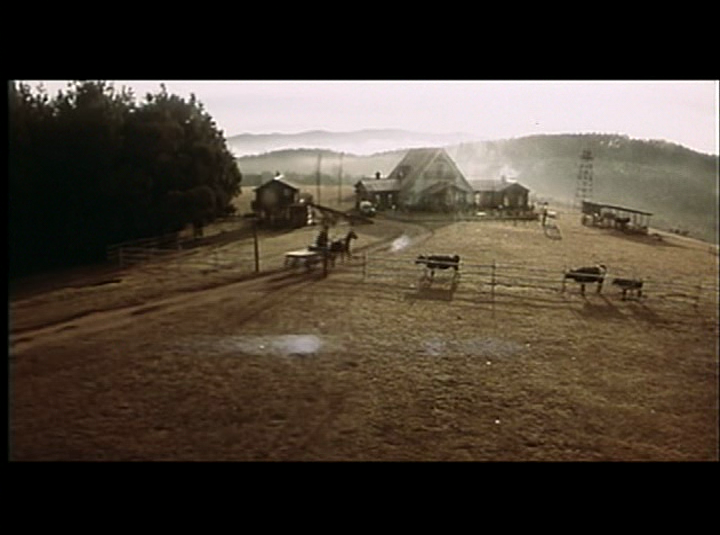
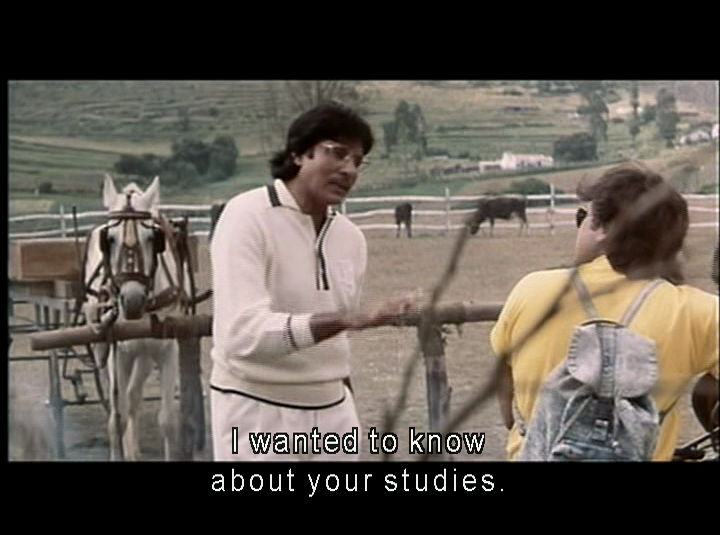
The second half of the film shows an older Tiger (we can tell because he now wears spectacles) who goes by the name of Shekhar and is a respectable farmer and timber merchant in Ooty. Kumar (Rajnikanth) is a police officer and is married to Aarti (Deepa Sahi) with a young daughter Jyoti. The youngest brother Vijay (Govinda) is a student pursuing Anita (Shilpa Shirodkar), the beautiful daughter of General Rana Pratap Singh (Kader Khan). Neither of the two brothers seems to have any memory of their time in Mumbai and both regard their step-brother as a rather staid and authoritarian figure, whose rules they generally ignore.
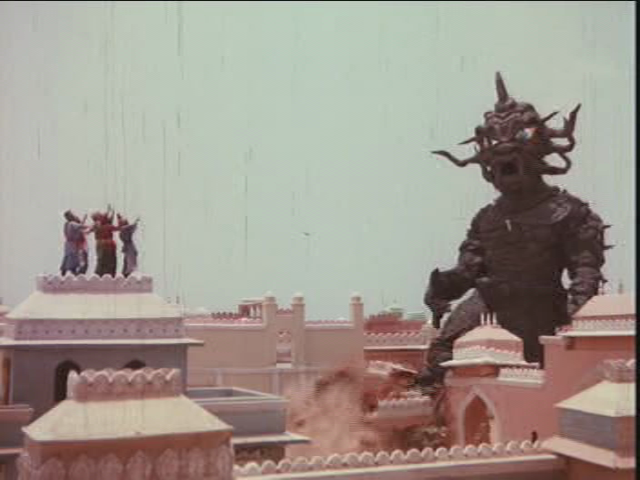
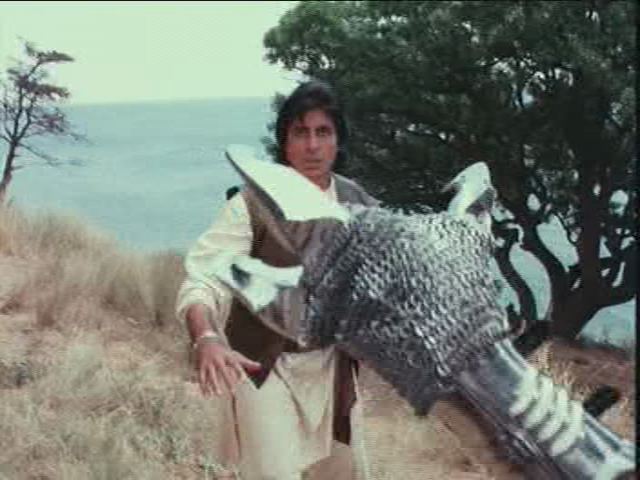
Meanwhile, Jumma has managed to overcome her early life and is now a successful actress while Girdhar and Havaldar are living well on their stolen riches and selling tanks from their base in Bombay.

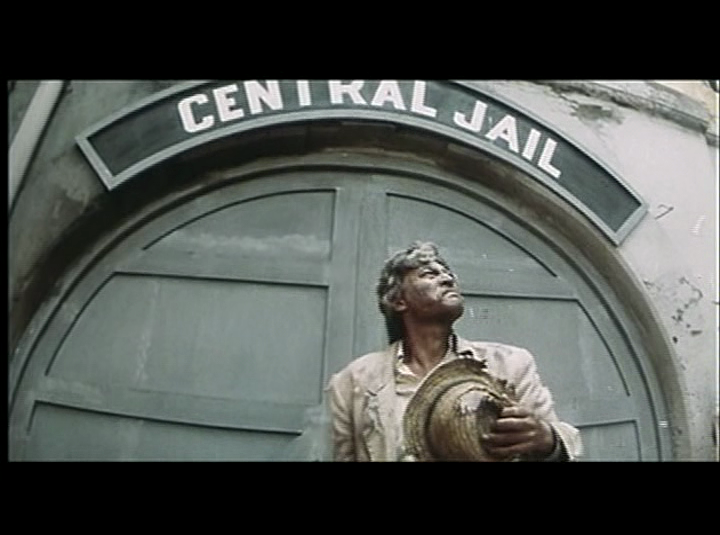
The middle part of the film tends to drag as it concentrates on the unity of the family and a rather involved romance track with Vijay and Anita slows the pace considerably. There is an unconvincing and unnecessary thread where Girdhar finds a duplicate General as the original has refused to buy his tanks and the whole character of the renegade Captain Attack would have been best avoided.. But things pick up when Bakhtawar is released from jail, still wearing his now rather grimy white suit, desperate for revenge on Tiger for the death of his family. As Shekhar’s past catches up with him, everyone ends up in Bangalore together before somehow managing to get back to the Bombay docks in record time for an exciting and action packed showdown.

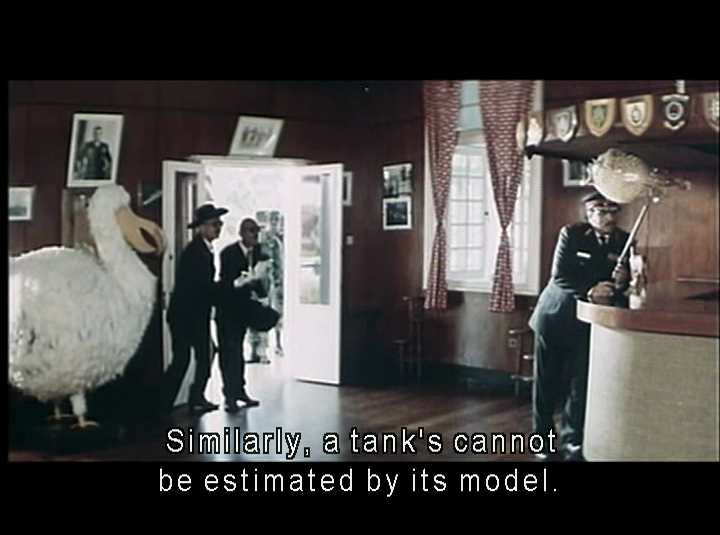
There are some things that are just never explained. Why there is a giant stuffed dodo in the army officers’ lounge, or a type of puffer fish above the bar we will never know.

Amitabh suits the role of the older Shekhar much better as he finally looks the correct age. His realisation that his somewhat shady past has finally caught up to Shekhar is brilliantly portrayed and the re-emergence of his Tiger character is excellent. Who knew that all it takes to become an efficient and competent fighter again is a shake of the head and a tiger’s roar! While Rajnikanth has a limited role as Kumar, the scenes where he faces off with Shekhar are excellent and the two actors are very natural together. Govinda is good as the more innocent Vijay, but as his character is there more to add comedy and some light-hearted romance he makes less of an impact. However he does have the best ever disco dance/fight scene and I do like his Crocodile Dundee inspired outfit.

Danny Denzongpa can always be relied on as a villain and here he brings depth and character to the role of Bakhtawar. He contrasts the money obsessed businessman with scenes of the family man, although even here his basic nastiness is still clear. As the revenge obsessed ex-prisoner his conviction that Tiger is still alive somewhere is perfectly shown as the driving force behind his increasingly agitated behaviour. The whole character of Bakhtawar is very well written and I like the way flashbacks to his family’s deaths help humanise him and make Bakhtawar more three-dimensional than the typical Hindi film villain.

Anupam Kher’s Girdhar is a much more buffoonish character and although his initial scenes as the police inspector are good and at times almost menacing, he becomes more irritating and cartoonish as the film progresses.  Deepa Sahi is the best of the actresses and also has the most convincing role as Kumar’s wife. Her attempts to look after the entire family struck a chord, although I wouldn’t have been as happy as she is to be fobbed off with the very annoying song that the family sing together at opportune moments. The music by Laxmikant-Pyarelal is generally good, although apart from Jumma Chumma De De none of it is particularly memorable.

This is a masala film that reaches back to some of the classic Amitabh films of the early eighties and he delivers a great performance throughout. Although there are some flaws in the film, particularly in the middle section, there are plenty of great action scenes and excellent performances from the rest of the cast. Worth watching for Amitabh and Danny Denzongpa who steal the show. 3 ½ stars.

Temple says:

On paper, this looks like it should be really good. It has a great cast and many of the required masala elements. And I really like a good socialist masala. Sadly, it fails to live up to that promise on almost every count. Mukul S Anand directs with a leaden hand and what little zest resides in the story is overwhelmed by clunky plotting and some poor casting.

Amitabh didn’t really convince me as Tiger – not just on his physical appearance, but his performance. He had some great moments, especially when Tiger was just hanging around shooting the breeze or drunkenly trying to warn Jumma’s brother, but he sometimes looked like he was just going through the motions of his patented Angry Young Man. Shekhar suited Amitabh’s air of authority, but was so relentlessly dour. Rajnikanth is cast as an airhead policeman, too dumb to know if the gun he lets his daughter play with is loaded. He just isn’t frivolous enough, and Kumar doesn’t get much to do. Rajnikanth and Amitabh share a nice rapport, but what a waste of a fine actor. Govinda’s role was totally unnecessary and I wondered if Vijay was added in just to have a dancer in the cast. Kimi Katkar is introduced by having her chest heave into view and that is all you need to know about Jumma. The only thing I recall about Deepa Sahi is a scene where she apologises for her inability to cope with the brothers’ demands and they basically reassure her that she’ll get better at housework with practice. There is a terrible family song, and many trite ‘together we five fingers make a fist’ speeches. I’d rather be an orphan! Danny Denzongpa is excellent but Bakhtawar is sidelined for the middle of the film so the best bad guy is largely missing. Anupam Kher is both comic relief and villain, and does neither well. The comedy track is hammy and misguided, and he doesn’t portray Girdhar with enough menace. The plot goes off the rails a bit when Girdhar carries the story and Anupam Kher’s performance does nothing to help the situation.

Hum is tedious and ponderous where it needed to be a fizzy blend of melodrama, action and humour. It’s a sad misuse of some excellent talent and resources. 2 stars.

Ajooba (1991)

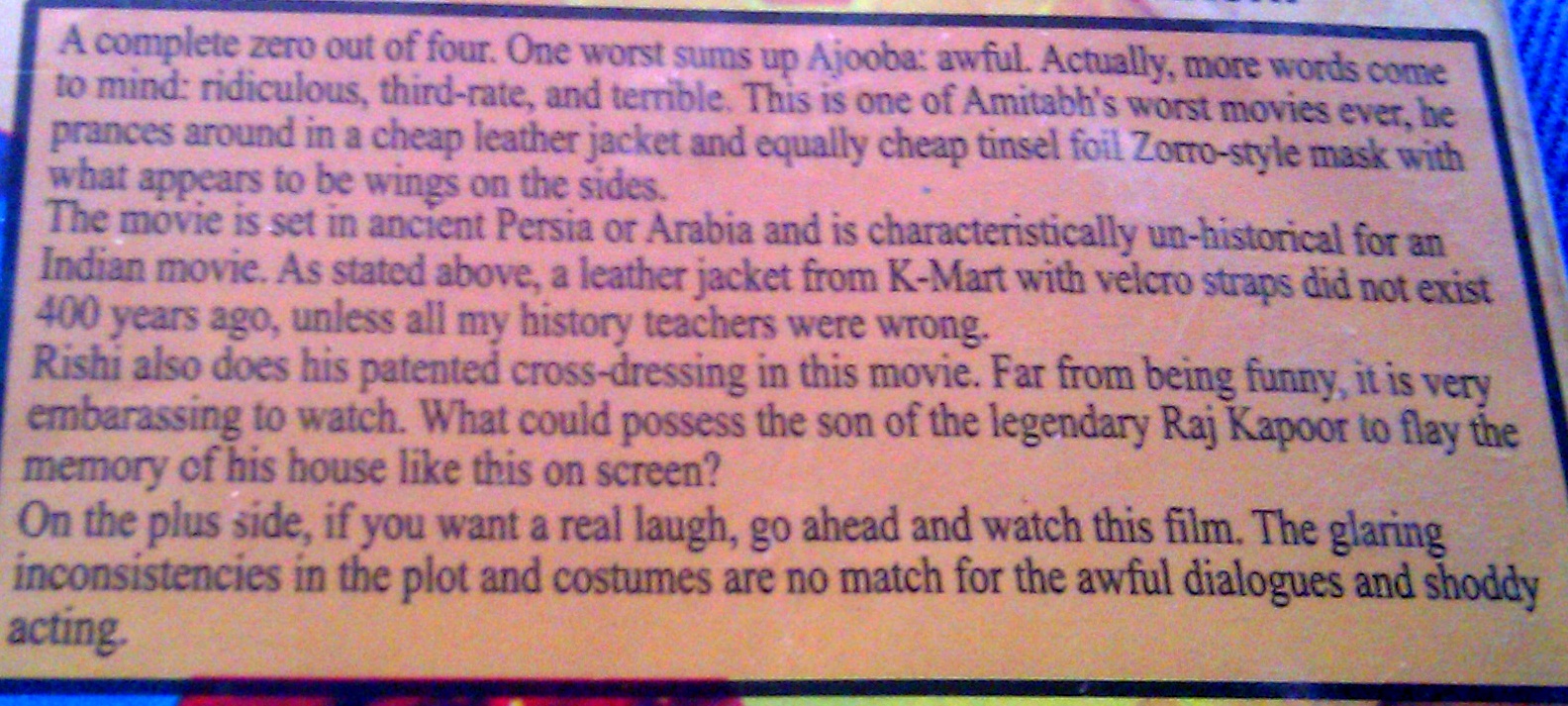
Ajooba is always near the top of my list of favourite So Bad It’s Good films. Before we get started, I must share with you the very enticing blurb from the back of my DVD (click on it to enlarge the image):

Irresistible!

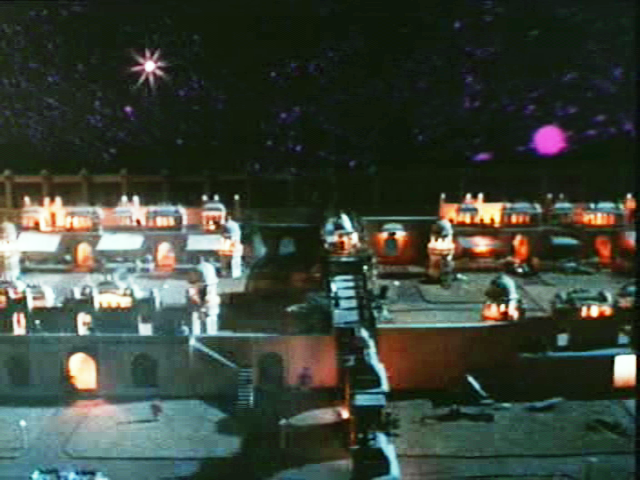
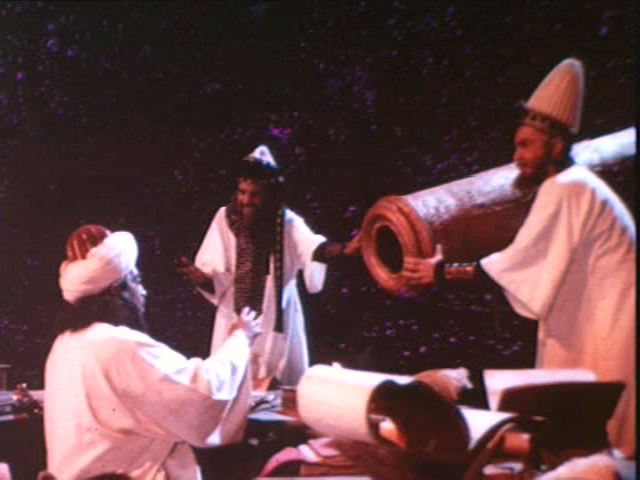
What better way to start some Christmas entertainment than with a mysterious star in the East?

And some wise men.

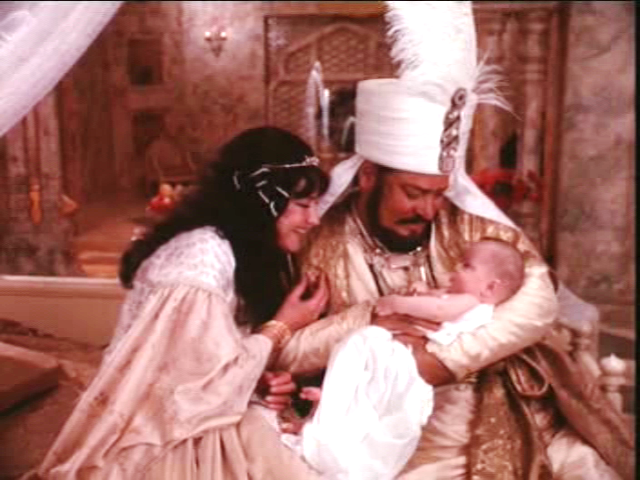
And a baby boy.

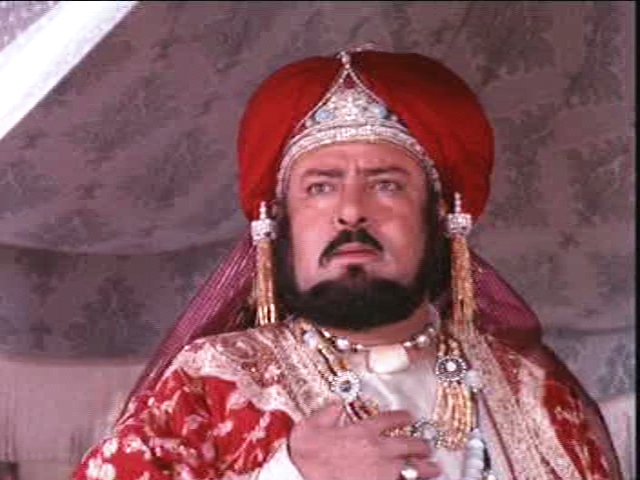
Surely this outfit just screams ‘Christmas Bauble’ (or according to Beth, ‘Mughal beach ball’).

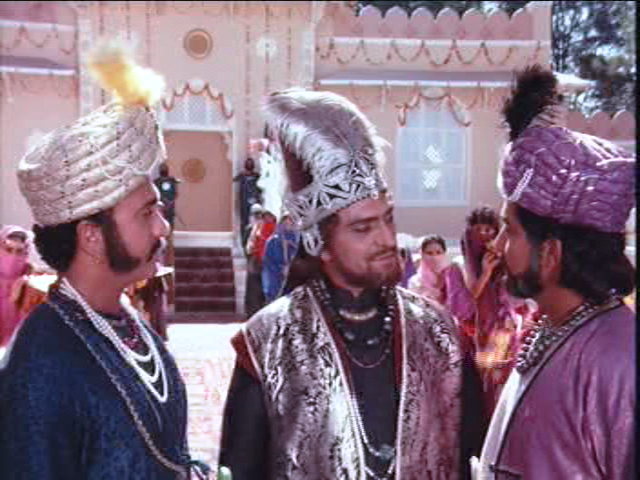
Ajooba is a masala film masquerading as a magical sword and sandal romp. It is replete with a masked hero, a devil worshipping usurper, a good magician and his feisty daughter, sea monsters and so much more, made with enthusiasm rather than skill. While it may not be the story of Christmas, it is a miracle that Amitabh Bachchan and Rishi Kapoor agreed to grace this film by Shashi Kapoor. I think it shows how much they loved him. Ajooba was quite a venture; expensive and a Russian co-production, so it seems like something Shashi felt strongly about making.

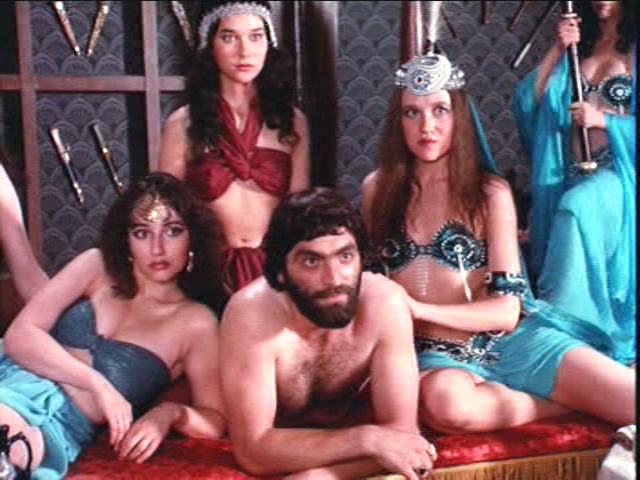
Once upon a time in Baharistan, the Sultan (Shammi Kapoor) and his wife (Ariadna Shengelaya) had everything they could want … except a son. Finally, after some magical intervention to protect the unborn child, an heir was born. Hurrah! The people rejoiced with a fun Laxmikant-Pyarelal number. There’s lots of colour and movement including a display of dazzling (ahem) magic, and a dance-off between a kind of skanky snakey dance and some Kathak-ish guys.

Amir Khan (Saeed Jaffrey) is a good magician. I use ‘good’ in the sense of not using his powers for evil, not as an endorsement of his skills.

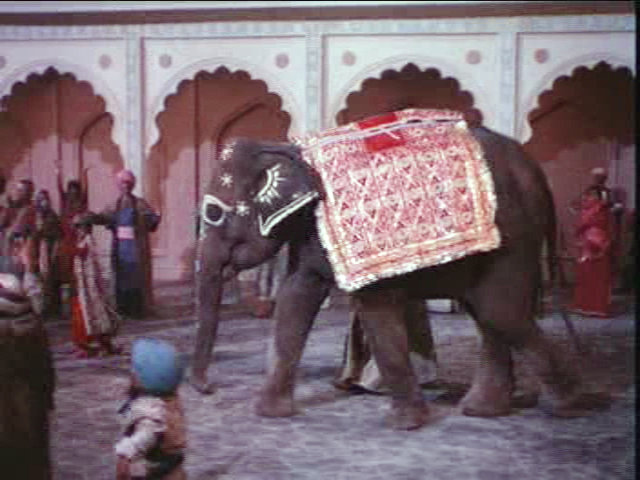
The most impressive thing about his elephant trick is that the elephant looks like it is wearing dark glasses (perhaps it knew this film was not a great career move and was in disguise).

The evil Vizier (Amrish Puri) attacks the toy boat of the Sultan and Malika. The royal family is scattered, each believing they are alone in the world. Malika is blind, the Sultan loses his memory, and their baby is presumed drowned.

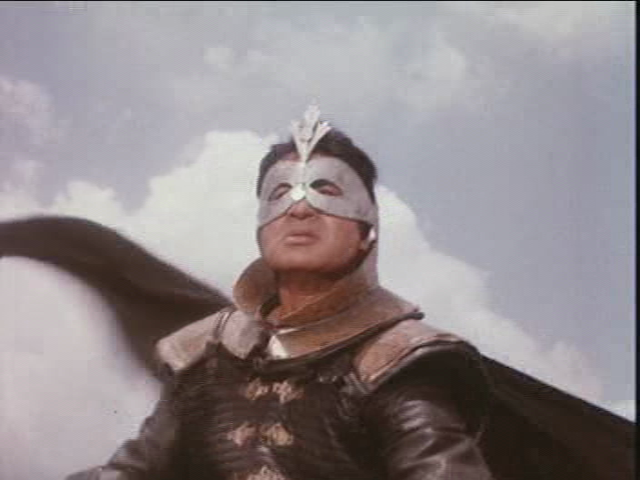
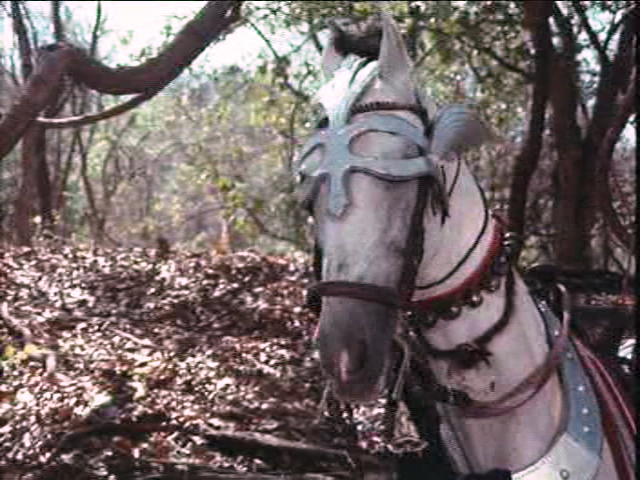
Rescued by a dolphin, raised by a kindly blacksmith, unaware of his real parentage, Ali (Amitabh Bachchan) undergoes years and years and years of training to become the hero who can free his people. Well, those people who are still left after 30 odd years of brutal oppression. Maybe it was the costume that held him up, especially creating a cunning disguise for both Ajooba and horse.

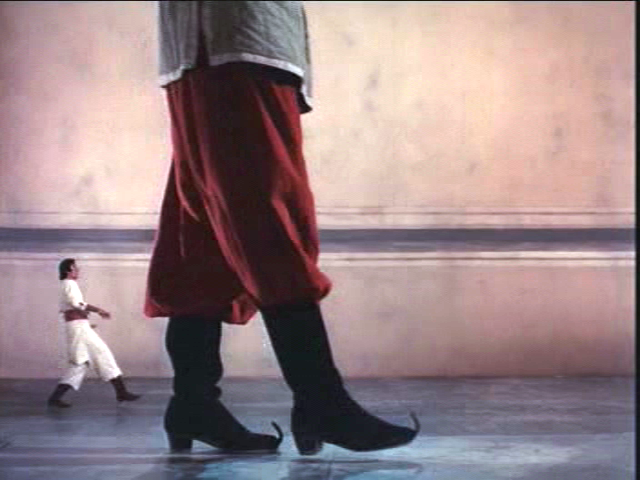
Why something as silly as a tin mask will be so detailed and finished with little flourishes when so much else is left half-baked is part of the charm. It doesn’t save the idea from being daft, but it is fun to look at. There is a serious design flaw. Did you spot it?

With the Vizier in power, life is tough for the simple folk of Baharistan. They still have their picturesque outfits but Amrish Puri and his brother-in-law Shah Rukh (Dalip Tahil) pillage and plunder as the mood seizes them.

With all of his evil deeds to draw on I expected the Vizier to have better material for his catch phrase, but he sticks to ‘Shaitan Zindabad!’. It is clear that he is bad and so are all his associates.

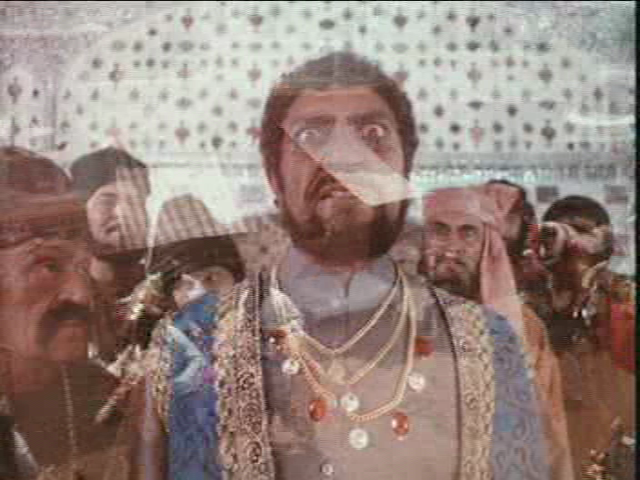
The evil shtick gets a little monotonous despite Amrish Puri’s eyeballs giving it their all.

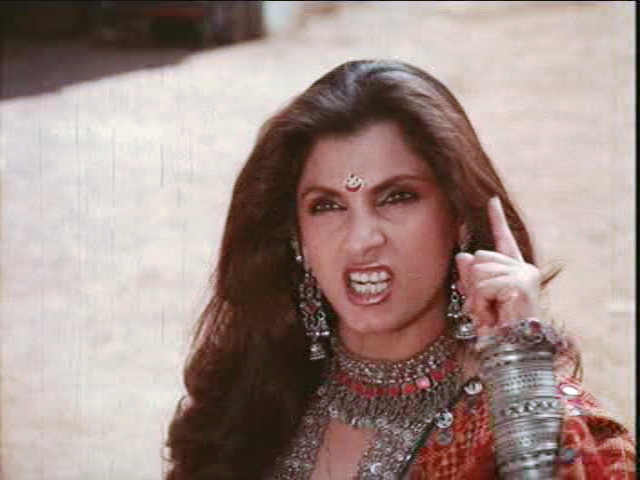
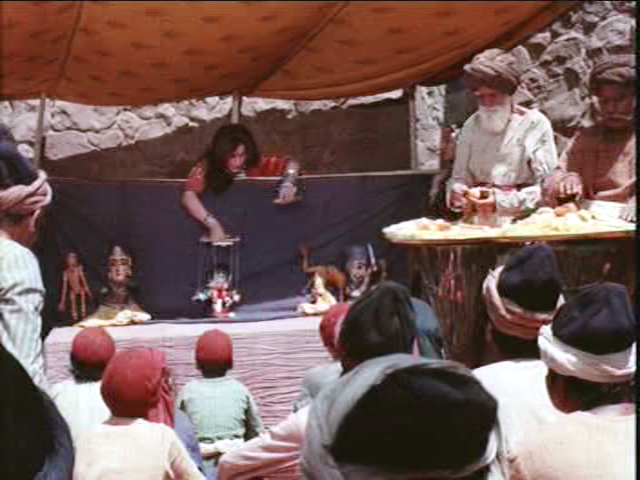
When Amir Khan is imprisoned, he sends messages back to his family in Hind by talking to birds. Luckily his daughter Rukhsana (Dimple Kapadia) can communicate with animals so she sets off on a rescue mission, leaving her mother (Sushma Seth) behind. Rukhsana works as a puppeteer in the bazaar and I liked that she had a plan to both support herself and give a cover story as she was searching for her dad.

Baharistan is not the place for a single lady, and it doesn’t take long before she needs rescuing. Repeated rescuing. Ajooba becomes somewhat tired of this damsel in distress, but she sees through his flimsy disguise (amazing!) and of course that means true love.

Rishi Kapoor is Hassan, the local Romeo who falls for the Princess Henna (Sonam). That’s about as much character development as you get. I liked Rishi and Amitabh together, and they have a fun song as the romantic Hassan tries to get repressed Ali to talk about love.

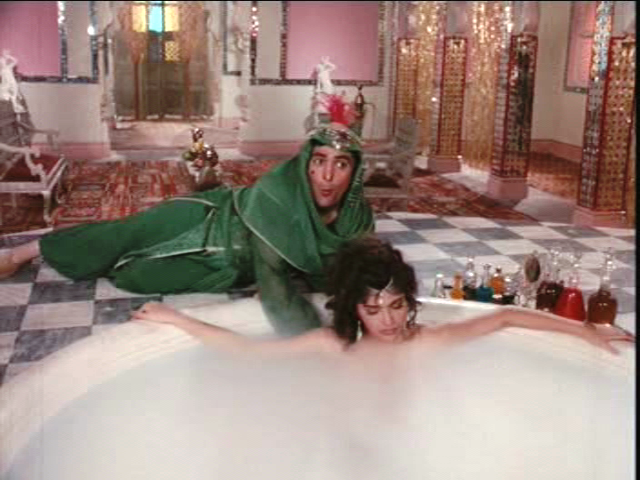
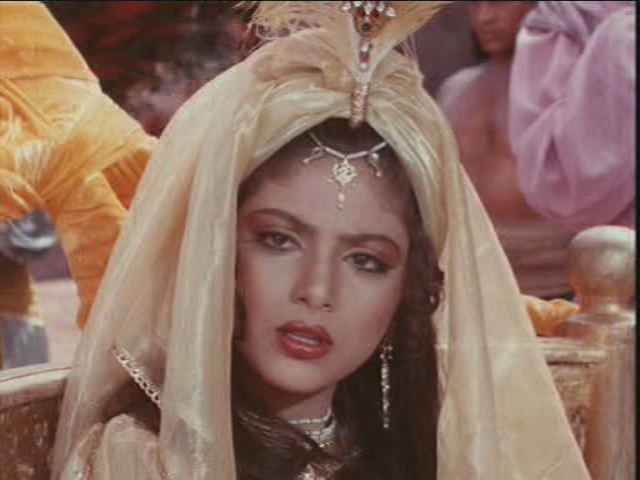
But I lost interest as Rishi detours into drag and sleazy antics and Sonam does little more than this:

The romances play out as you would expect, and Dimple and Amitabh make the more interesting couple (though that is not saying much). Ali does wrestle a tiger to rescue Rukhsana and Amir Khan from the dungeons so that added a level of commitment.

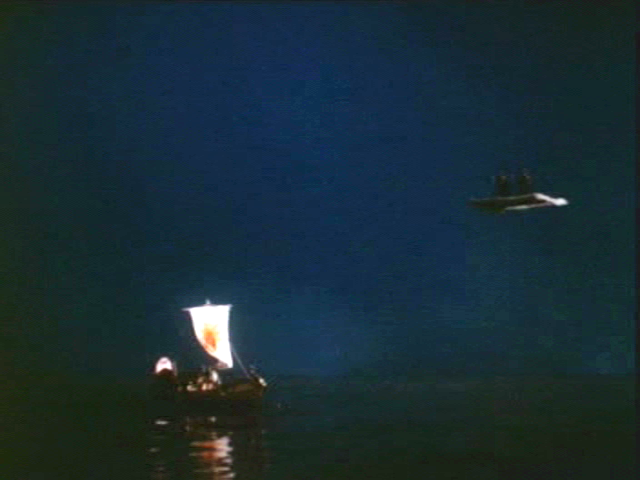
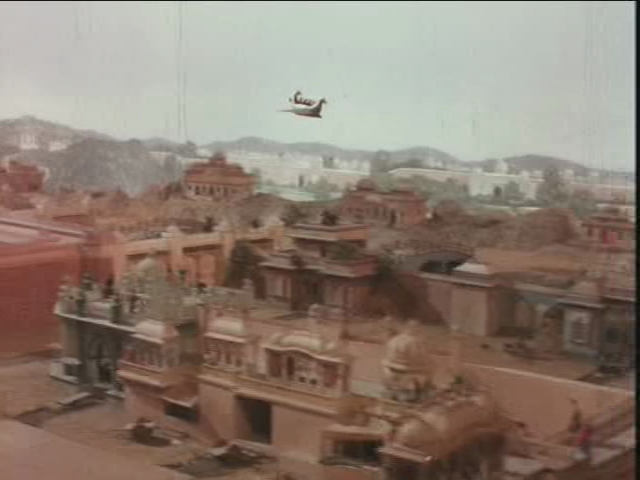
Of course in a fairytale there are trials and tribulations before good can triumph and that means special effects! If only someone had told Shashi Kapoor. The visual effects are quite poor and while it is part of the cheesy fun, I do wish they had done a little better. Beth did ask why a flying gondola was employed in one scene and I think it is because the maximum passenger load for a flying carpet would have been exceeded.


And there are some odd lapses and inconsistencies. When Ali’s sister needs to give him an urgent message, she wends her way through dim corridors and finally  a concealed passage which opens into Ali’s secret training ground. It’s an open field next door that anyone could see. And when Ali and Hassan are chained up with Malika and the blacksmith awaiting Certain Death they are rescued by a sea monster…or are they? Four people in chains, three sets of chains are cut. What about your foster dad Ali????

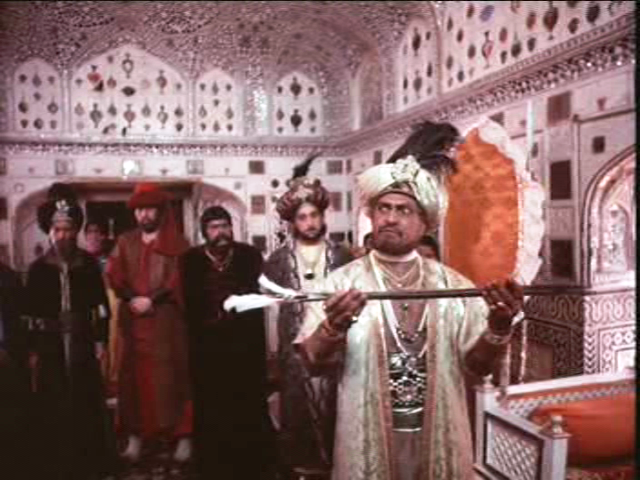
I recognised so many faces in the background. Memsaab as usual provides a more rigorous acknowledgement of the supporting artists so you should go read her post. But just think – Dara Singh, Sushma Seth, Rajendranath, Narendranath, Tej Sapru, Bob Christo just to name a few!  The locations and sets are delightful, and enhance the fantasy and poetic flavour. The art direction is batty at times, but this is a pleasure to watch.

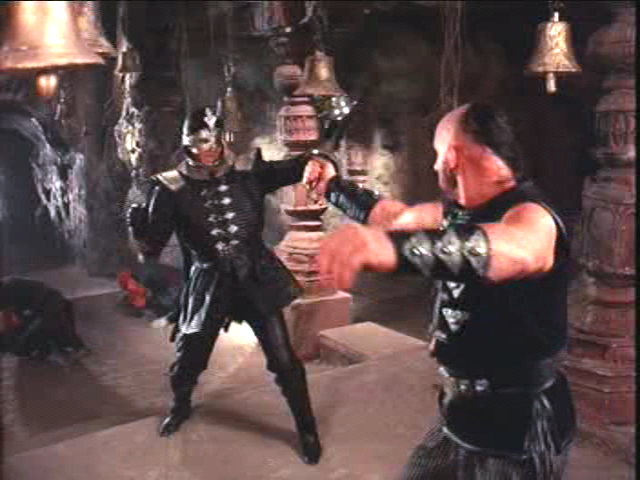
The streets of Baharistan are always full of colourful locals ready for a backflip or bellydance. The fight scenes are OK without being amazing, flying carpets or no. But there is a brilliant episode in a temple with Amitabh swinging from bell to bell to dishoom Bob Christo and rescue Shammi – it is epic and silly and I love it. The final battle gets everyone to Baharistan and there are reunions and expositions all over the place.

I absolutely love that in the climax fight, once people realise Ajooba is Ali is the long lost prince, everything pauses briefly so the onlookers can have a chat amongst themselves about how he is related to everyone and what his title is. Never mind the big glowing sword, or the evil sorcerer – is he your cousin? And is he married?

Ajooba’s heart is pure masala gold and I have enormous affection for it. 4 stars for entertainment alone!

Merry Christmas!