Aa Dinagalu

Aa Dinagalu (Those Days) was one of the films recommended to me by the very helpful Jay at Kannada store  and it was an excellent pick. The film is based on experiences from the life of former gangster turned writer ‘Agni’ Sridhar and is an interesting depiction of life in the Bangalore underworld of the eighties. The gangsters are not glamorised at all, but are shown as real people with plenty of faults and eccentricities which ultimately lead to their respective downfalls. It’s not all about the gangsters though, as Aa Dinagalu also tells the story of a romance between two young people and how they end up being drawn into the gangsters’ world. The film won numerous awards including best director for newcomer K. M. Chaithanya, who does a great job here with the simple story.

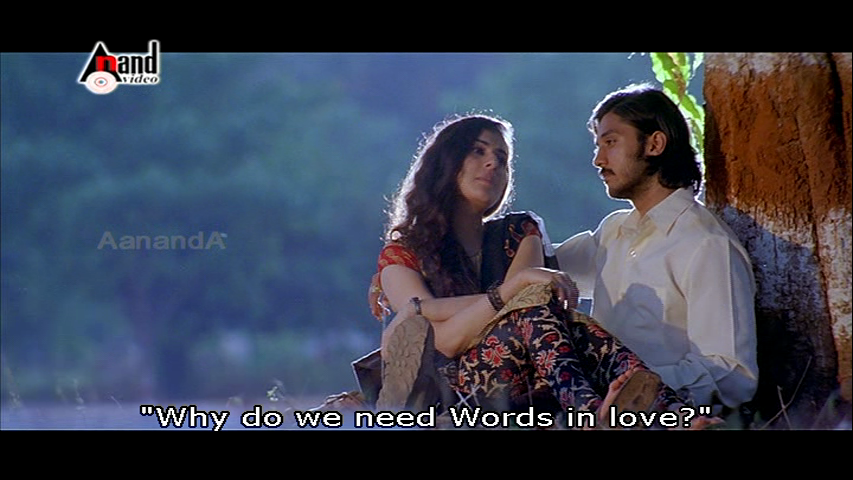
The film starts with Chetan (Chetan) and his girlfriend Mallika (Archana) discussing how best to approach the topic of their marriage with Chetan’s family. They come from very different backgrounds; Chetan works for his high caste, rich, industrialist father, while Mallika’s is from a farming background and works as a dance instructor. Chetan is so enamoured of Mallika he thinks that his father will only need to meet her to be won over, but he has reckoned without his father’s determination that his only son should make a good match and certainly not marry a girl who is of a lower caste, let alone a few months older – the horror!
Girish Naik (Girish Karnad) has no compunction about hiring local gangster and current head of the Bangalore underworld Kotwal Ramachandra (Sharath Lohithashwa) to scare Mallika off, but the plan backfires when Chetan turns up just as the rowdies start to threaten Mallika. Chetan has inherited his father’s determination and decides to find out exactly why his girlfriend has been targeted by the city’s biggest don.

At the same time Kotwal’s main rival Jairaj (Ashish Vidyarthi) has just been released from 10 years in jail. In the seventies, Jairaj became the first don in Bangalore with the help of the chief minister and the politicians of the time, but during his enforced absence from the underworld his position was filled by Kotwal. On his release, Jairaj determines to get back his empire and destroy the upstart Kotwal in the process. Added in to the mix is ‘Oil’ Kumar (Achyuthan) who has a rather unusual opinion of the gangsters, especially considering he is paying protection money to both gangs. Oil Kumar is also working with police inspector Shivraj to get rid of both dons, perhaps planning to take their place and certainly maximise his profits. It’s all very businesslike and chilling as the gangsters approach their various henchmen to organise hits and deliver warnings while the police stand by and wait for the eventual winner to emerge.
After confronting his father and realising that he won’t back down, Chetan decides to try and get rid of Kotwal himself and approaches Jairaj for help. He’s young, rich and foolish so the gangster doesn’t take him seriously and brushes him off. However Chetan has links to the underworld through his childhood friend Sirdar who works for Kotwal’s gang. Through Sirdar he meets Bachchan and his friend Sridhar (Atul Kulkarni) who, despite working for Kotwal, are happy to conspire against him. Chetan gets dragged deeper and deeper into the underworld and the film changes focus from the love story to the conspiracy to kill Kotwal as it reaches the climax.

It’s a compelling story and it’s told very realistically without glorifying the gangsters or the violence in any way. At the end everyone has to pay for their actions, although the police seem to get away with their brutal methods of interrogation without any censure. The gangsters are shown to be primarily motivated by greed and Kotwal freely admits to Chetan that he only took on his ‘love affair’ because of the money he was paid. It’s a sordid and very unromantic view of the underworld.

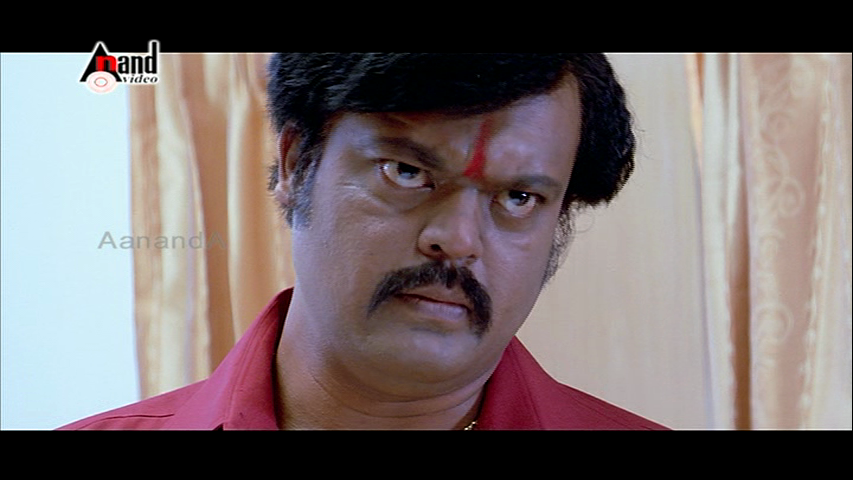
Sharath Lohitashwa is outstanding as Kotwal and brings his idiosyncrasies and odd superstitions to life. Kotwal is a hunted man with barely controlled hair who lives in perpetual mistrust of everyone around him, apart from his chief lieutenant Shetty. He’s frightening in his detachment as he slashes the odd bystander just to increase his reputation and equally unnerving as he unburdens himself to Chetan and reveals just how dangerous he really is. Sharath Lohitashwa makes Kotwal a driven man with strange beliefs and he’s very scary indeed. I don’t think he ever smiles throughout the entire film and he just exudes menace in every frame!

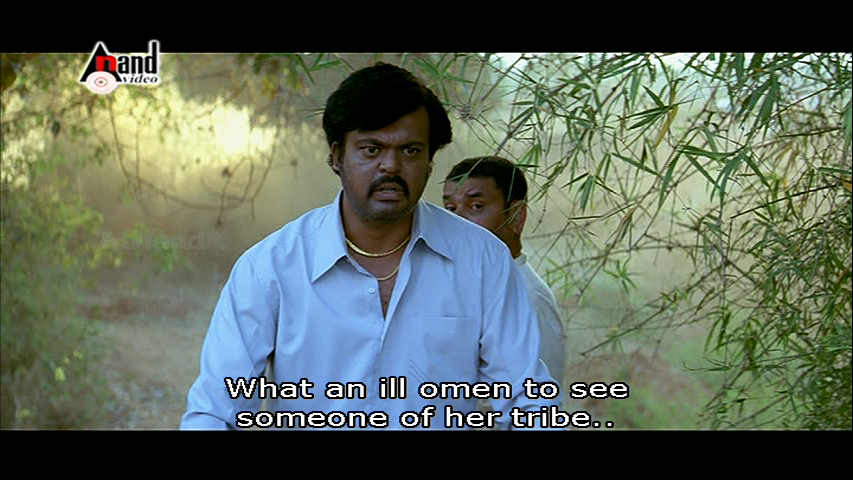
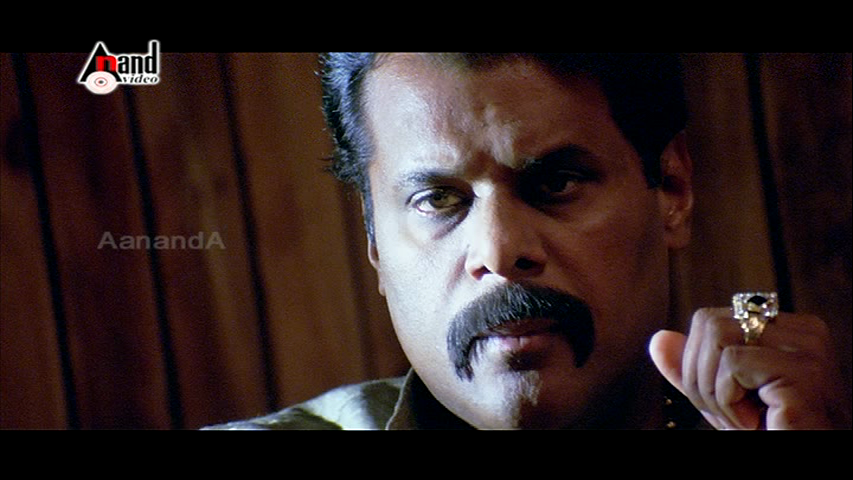
Ashish Vidhyarthi is excellent as the more ‘typical’ gangster Jairaj; typical at least in the way that gangsters are often portrayed in films. He has the requisite seedy headquarters full of thugs extorting money and information from various unlucky individuals and corrupt officials bribing him for his support. Jairaj seems to be motivated by ego just as much as money, and he is ultra-confident, secure in his reputation and trusts the men around him. Quite a contrast to the more paranoid Kotwal, and Ashish Vidhyarthi gets Jairaj’s mix of arrogance and self-awareness just right.
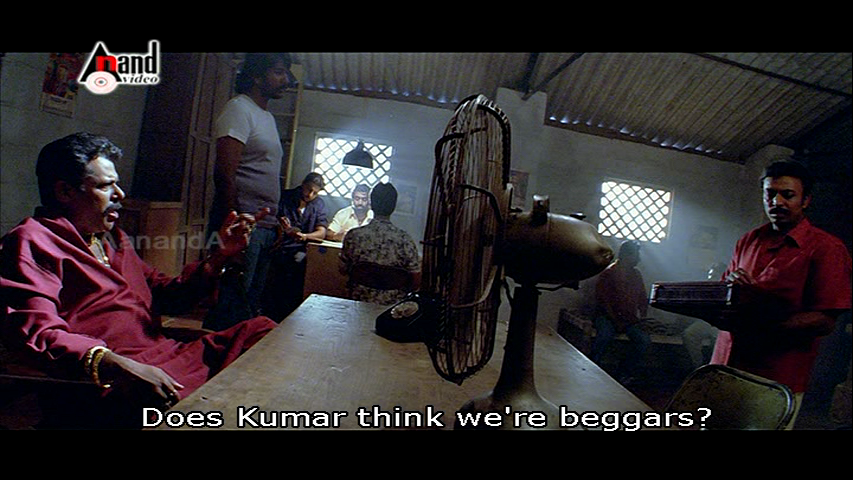
It’s the dichotomy between the two men and the constant rivalry and suspicion between their gangs which keeps the film interesting. The various henchmen are all well cast and deliver convincing performances, especially Dinesh Mangalore in his role as Shetty. Unusually there are no big fight scenes in the film and the violence is generally implied rather than shown, serving to demonstrate the criminal activities of the gangsters rather than acting as mass entertainment. The threats of violence are however frightening in themselves and there is no doubt that the thugs are prepared to carry these threats through if necessary.

It’s noteworthy how the narrator Sridhar is portrayed as standing aloof from the others which I interpret as an inevitable consequence of writing your own story. However much Sridhar wants to keep to the truth it’s only natural to show himself in as good a light as possible, even if he doesn’t come away as totally squeaky clean either. Having watched this film I’ve been trying to track down a copy of his autobiography in English as the interviews I’ve managed to find are fascinating, and the rest of Sridhar’s story seems equally intriguing, but so far I haven’t managed to find it.

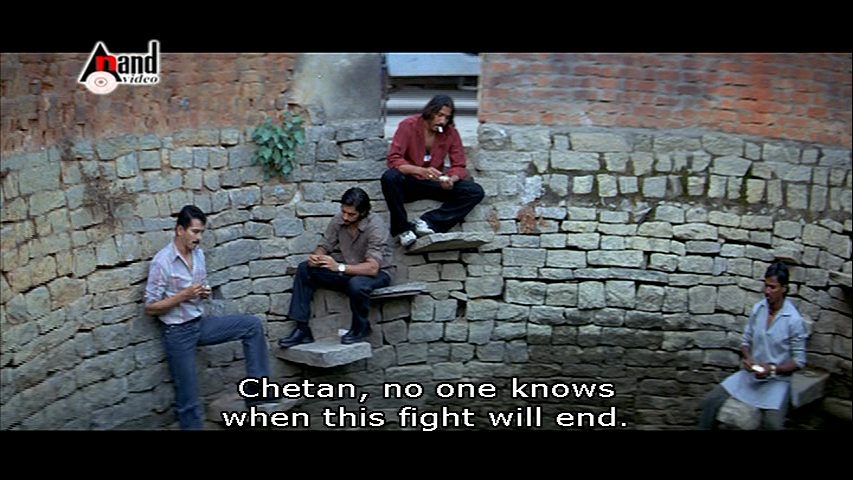
Sridhar is not a member of Kotwal’s gang and as we learn early on, hangs around with Bachchan to exact revenge on Kotwal for crippling his brother some years earlier. He’s shown as being much more intellectual, playing chess and reading books in English, and acts as the moral compass for the others. Sridhar, Chetan and Bachchan are generally depicted as more compassionate and likeable characters presumably to give their final actions more validity, but I do like that they still have to face the legal consequences of taking the law into their own hands and that there is no real winner in the end. Chetan’s youth makes him more impetuous and less afraid of the consequences of hanging around with gangsters and this is well shown by the young actor.

Archana gives a convincing portrayal of a young girl in love who is happy to support her lover until the situation gets too out of control. She really does look terrified and her decision to leave Chetan when she discovers his involvement with known gangsters rings true. While Chetan’s devotion is perhaps a little overdone at times, I think that Mallika’s character is well written and she acts true to her nature throughout.

The film is beautifully shot by cinematographer H. C. Venu although I doubt that the conspirators did meet in such wonderfully photogenic places as the inside of wells and underneath statues.
Although the film starts with a fairly standard story of thwarted romance, it quickly evolves into something much more interesting and the slower pace suits the gradual build-up of menace. There are only two songs in the film and both are well placed to show the romance between the young lovers and not get in the way of the action. The music by Ilayaraja is beautiful and evocative and seems to suit the time period, although it’s the lack of mobile phones that I think places the film in the eighties.

Chaitanya has vividly brought Sridhar’s screenplay to life and I really loved the way the various characters all bring something quite individual to the mix. It’s an interesting story that’s realistically depicted and I recommend it as an intriguingly different and worthwhile watch.  4 ½ stars.
Mynaa

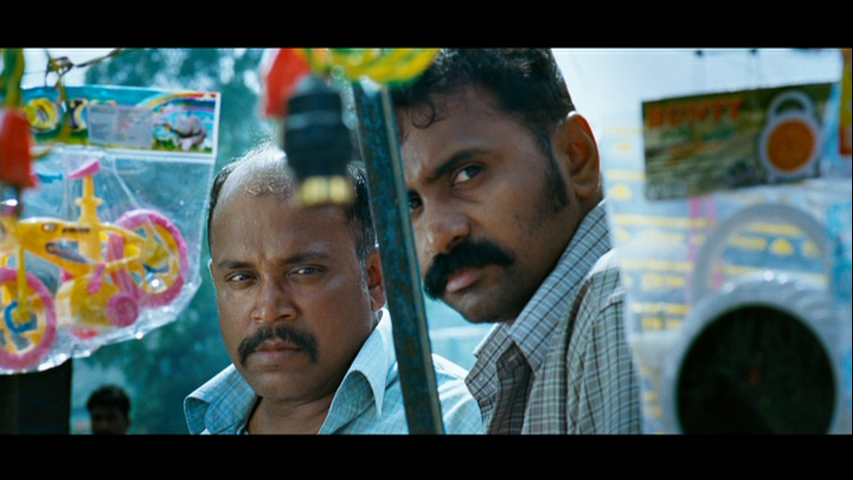
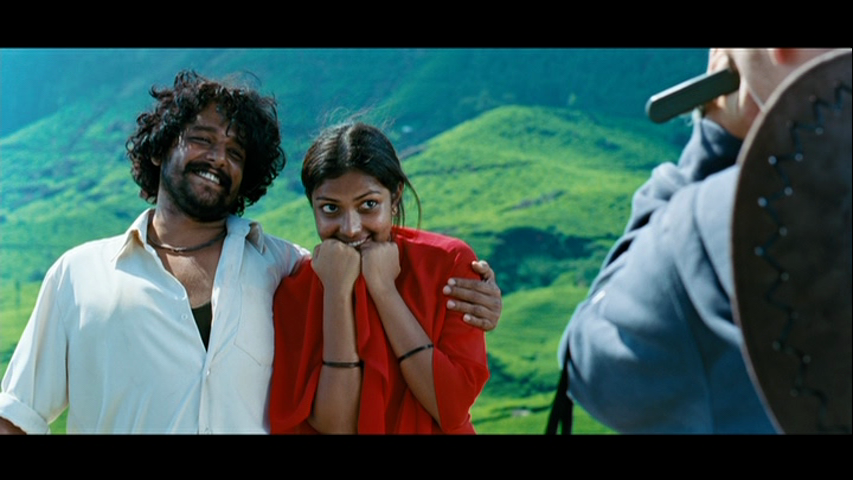
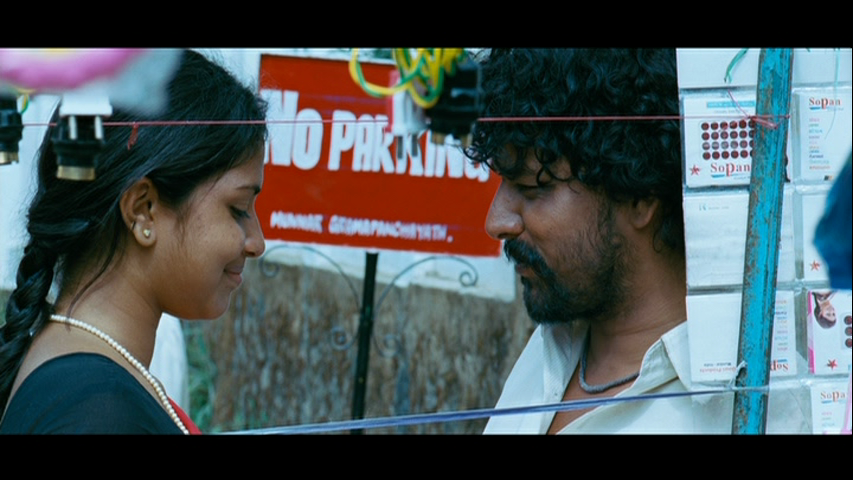
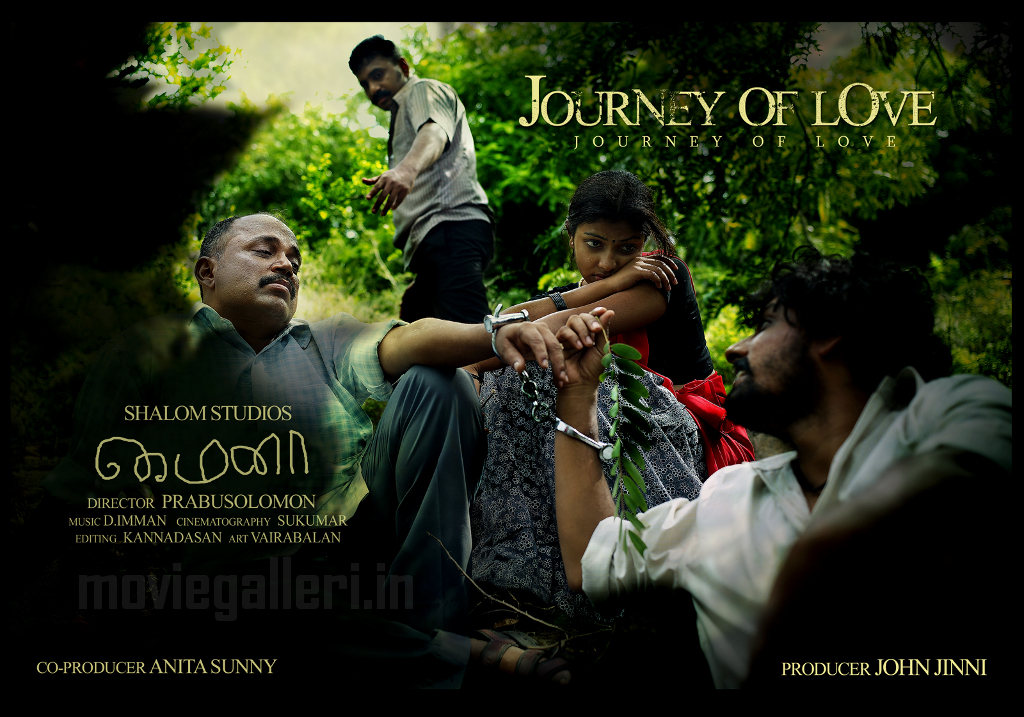
I first saw Mynaa on a flight to the UK and loved it. Although it’s a simple and fairly unexceptional love story, it’s made appealing by excellent performances from the lead actors and by the warts and all approach to village life depicted by director and screenwriter Prabu Solomon. The film is set in the lush green hill country around Munnar and Theni to the west of Madurai and beautifully shot by cinematographer M. Sukumar to make the most of the landscape. It’s a slow-paced story but the tempo suits the rolling hills and innocence of the youthful lovers.

The story starts with Suruli in jail recounting how he first met the love of his life, Mynaa. In a flashback sequence we see how Suruli takes charge of Mynaa and her mother Kuruvamma after they are thrown out into the street, taking them to his village and finding them a place with an elderly neighbour. Mynaa considers Suruli to be her saviour and is totally devoted to him despite his ostracism from the other village kids. Suruli is just as committed to Mynaa, taking her to and from school and giving the family the money he earns as a labourer. I don’t know who the child actors are who play the young Mynaa and Suruli, but their characterisations are spot on and they are both excellent. Suruli is a bit of a thug even as a child and totally disrespectful of authority but he is completely smitten by Mynaa, while she follows Suruli’s every move with devoted puppy dog eyes.

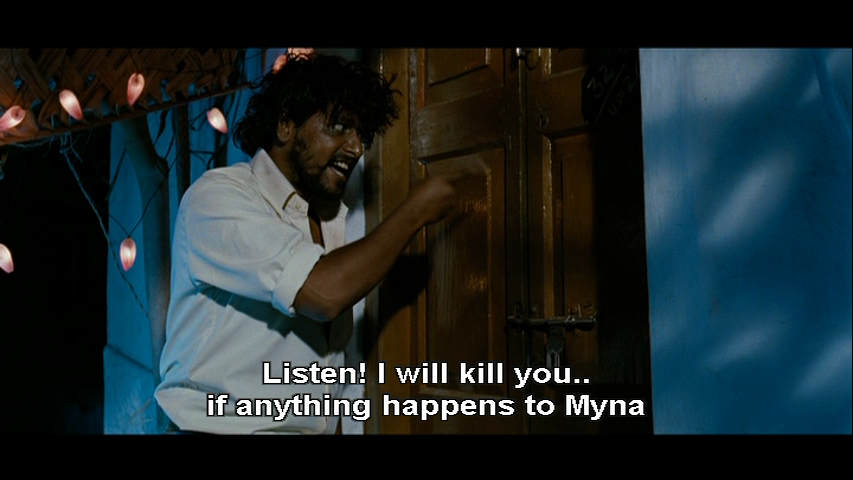
Despite everything that Suruli does for the family, Mynaa’s mother decides to marry her to an educated man from Dubai whose family live in a nearby village. Suruli is outraged and since he’s a man with a very short fuse, the decision drives him to physically attack Kuruvamma and threaten to kill her. This leads to his 15 day jail sentence and Kuruvamma takes the opportunity of Suruli’s incarceration to arrange Mynaa’s wedding. However Suruli learns of the impending ceremony in time and uses the distraction of a Diwali function in the jail to make good his escape.

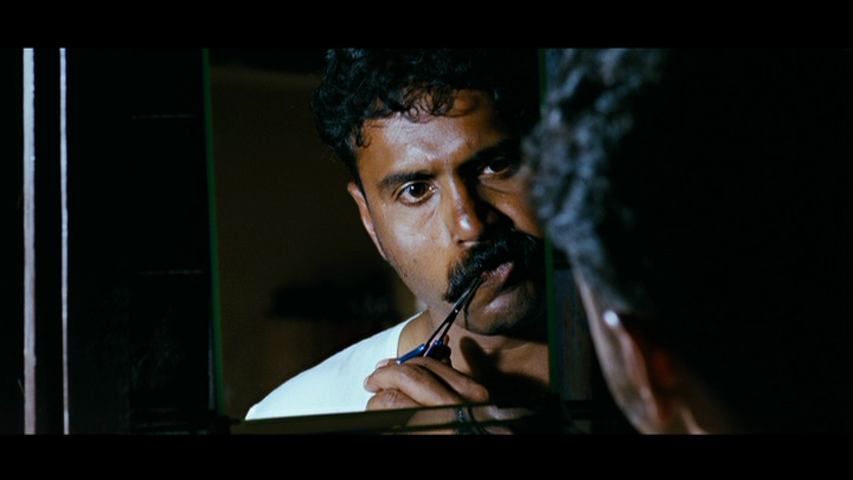
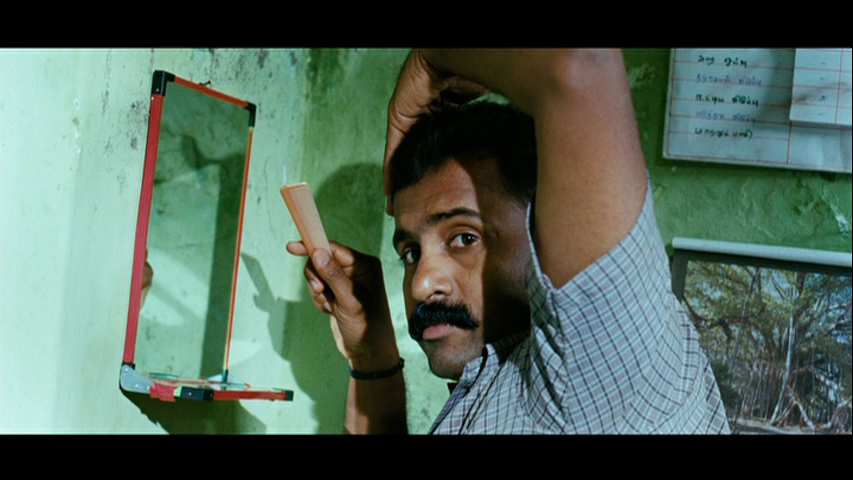
Baskar, the man in charge of the jail has his own set of problems as his wife Sudha is demanding that he takes her to Madurai to spend Diwali with her family. Baskar is a fastidious man, and I like the way he takes time with his personal grooming whenever possible.

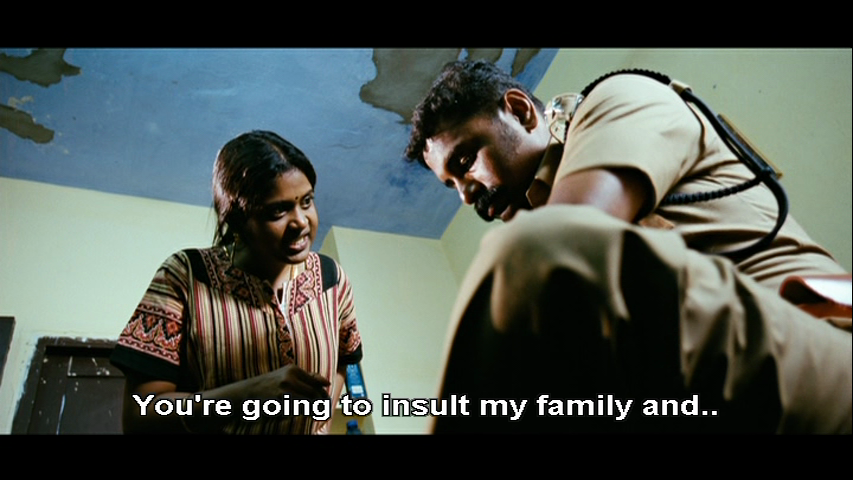
This is such a contrast to the scruffy and unkempt Suruli and illustrates the many differences between the two men. Sudha’s family are frustrated by Baskar’s seeming indifference to his wife, although it seems to be more dedication to duty rather than deliberate disregard. Sudha is portrayed as a wilful and spoilt woman who is self-absorbed and totally uninterested in her husband’s work, while Baskar seems unable to communicate with her and doesn’t even seem to try. His difficult marriage may be just one more reason why Baskar is eager to head off into the hills to capture the escaped prisoner.

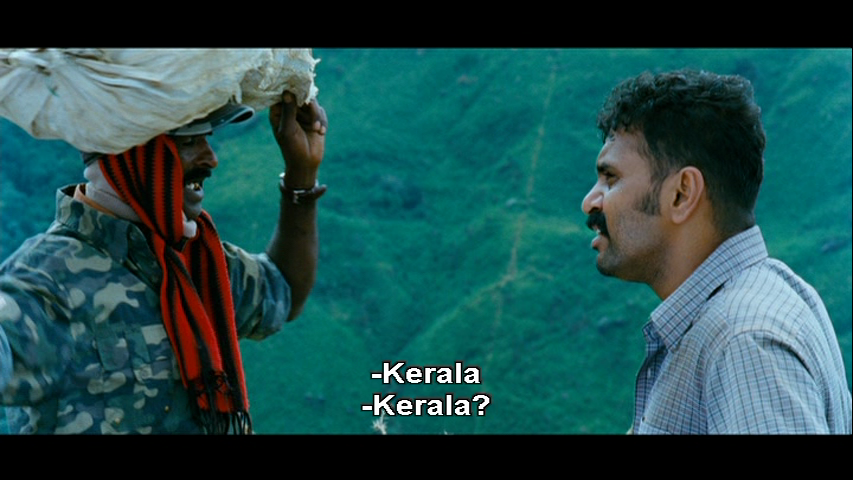
Baskar sets off with another policeman Ramaiah and discovers that finding and recapturing Suruli is the just the start of his problems. On the way back to the jail they undergo various mishaps including being chased by elephants and losing their way to such an extent that they end up in Kerala. To add to Baskar’s woes, Mynaa has eloped with Suruli and her presence is a distraction plus he has to deal with constant phone calls and threats from his increasingly shrill wife and her angry brothers.

The journey deals with the evolving relationship between the young couple and the jailers as the romance lets Baskar and Ramaiah see Suruli in a new light. Of course it’s a Tamil film, so you know it’s not going to end well, but the climax has a twist which isn’t quite the one I was expecting. There is time for a light-hearted song on the bus though.

Apart from the excellent performances, what I really like about this film is the realistic depiction of village life. It’s certainly not a rural idyll. Prabhu Solomon seems to take an almost casual approach to the violence which occurs frequently throughout and is often directed against the women in the film.  Suruli is not a nice person at all despite his obvious adoration of Mynaa, and he beats his father and anyone else he thinks has been disrespectful about Mynaa or their relationship. His attacks on Kuruvamma are disturbingly brutal and her willingness to kill her daughter to avoid the stigma of a marriage to Suruli is equally shocking. Ramaiah and Baskar are just as casual about beating the prisoners and have no compunction against terrorising Mynaa to get to Suruli. There is quite a contrast between these violent scenes and the sweetly romantic moments between Suruli and Mynaa.

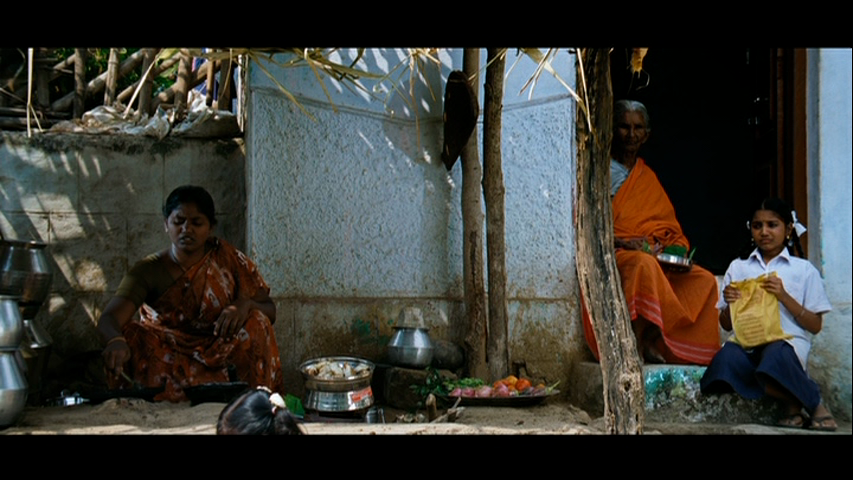
The intimacy of life in the village is well captured and I enjoyed the ceremony surrounding Mynaa’s coming of age when she reaches puberty. Every aspect of village life is captured and I love the framing of the shot below which includes the villagers getting ready for the Diwali celebration as well as the action between Maayi and his son. Prabhu Solomon keeps these celebrations firmly in our minds as there are fireworks and crackers everywhere the travellers stop, fuelling the frustration and anger felt by Baskar and Ramaiah as they are missing out on their own family celebrations. The interplay between Ramaiah and Suruli as they are handcuffed together is excellent and Thambi Ramayya excels in his portrayal of the hapless policeman. His character provides the comedy relief in the film and he’s although the humour is generally funny and doesn’t intrude into the action sequences, some of it could quite easily have been skipped without losing any of his character’s appeal.

Newcomer Sethu is steady as Baskar and plays his character very straight, which makes it more effective when he does break out and lose his temper with Suruli. It also provides some basis for the very final scenes of the film where Baskar seems to lose control again, although I don’t think his actions there are quite as believable as earlier in the film.

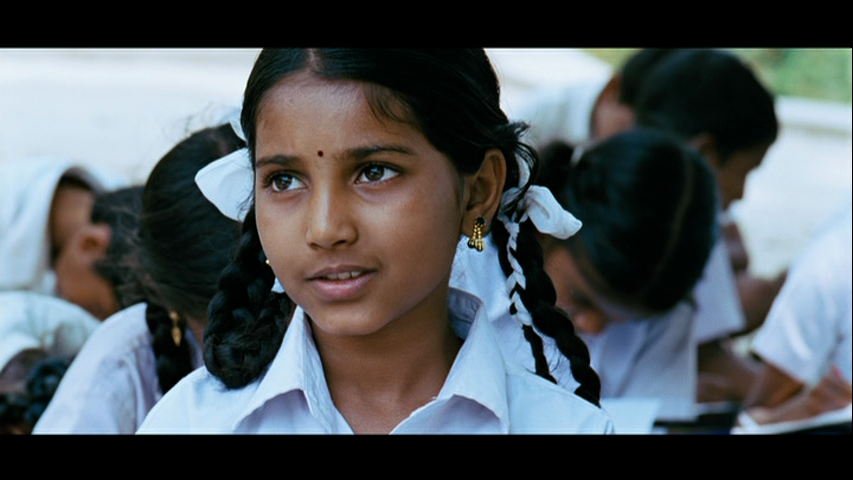
Amala Paul appears to be almost make-up free and really does look the part of a young village girl. Her eyes are incredibly expressive and she gives a convincing portrayal of an adolescent girl in love. Mynaa’s scenes with her mother are full of emotion and Amala ably conveys her character’s idealistic hopes and dreams as well as her doubts and confusion over her future with Suruli. It’s a very impressive performance, and from seeing her in other films I think she’s an actor to look out for.

Vidharth is also excellent as Suruli. He has apparently appeared in a few earlier films as a thug, and he does have that definite rowdy look with his tousled hair and scruffy beard. He excels in the scenes where he is angry and violent; however he is just as good in his romantic scenes and totally believable as an obsessed lover. As well as the great performances from the four leads, the support actors are all very good. Poovitha in particular is well cast as Mynaa’s mother and Sevvalai is excellent as Suruli’s malicious father Maayi. The performances add depth and layers to the simple story and are very effective in portraying a slice of village life.

The film has a lovely soundtrack with songs and music by D. Imman who has worked with Prabhu Solomon on his previous films. My favourite is the beautiful title track  which also has some stunning location shots.

Although it’s not a novel story, the presentation and rural setting are more unusual and while there may be some shades of other village based dramas like Paruthiveeran, the story here has a simpler feel with more naive characters. Overall it’s a well made film although I do think it would have benefitted from a little more editing and possibly one less song. Having worked in rural villages just like this in India and traveled along some very similar tracks, I felt very much at home with the characters and their surroundings which probably enhanced the appeal of the film for me. It’s worth watching for a realistic slice of village life, beautiful scenery and excellent performances. 4 stars.

Temple says

I agree with Heather that it is a nice film to look at with a pleasant soundtrack, but Mynaa isn’t a travelogue or documentary about rural custom, so I wanted more on the story and character front. Spoilers ahead so do the needful if you don’t want to know.

Film makers run a risk when they kill off the central characters at the end of the movie, especially when the genre is romance and the whole story hinges on that relationship. Will I feel the journey was worth it once I get to the end and they’re all dead?

The romantic tragedies I feel succeed fall into two broad categories. There are ‘doomed due to external forces, family or history’ films like Reshma Aur Shera or Maro Charithra (1978 version). These love stories carry a sense of inevitability and it is clear that at some point love will intersect with fate. There is heightened tension as the viewer knows the probable outcome, often before the characters seem to. Then there is the ‘I hope they make it’ type of film like Paruthiveeran. People may be at odds with family or society, but there is no mandatory death sentence. There are well realised characters that evoke affection or antipathy and have some shades of grey. In each of those examples the characters and relationships developed over the course of the story, drawing me closer, and I found the conclusions harrowing.

There are rare glimpses of something between Mynaa and Suruli but not enough to make it work as a romantic love. The relationship seemed more the obsession of a dim-witted man for a passive girl, and nothing that made me want them succeed against the odds. Amala Paul has pretty eyes but, since Mynaa spends at least 80% of her time snivelling and waiting for someone else to save her, I can’t say she had much acting scope. Suruli only has capacity for one idea in his head at a time. The writing seems to have only given Vidharth that one dimension, and he didn’t do a lot to develop the role. The settings looked natural and it was a shame that so many of the supporting characters were cardboard cut-outs, stamped ‘good’ or ‘bad’ with little else to define them as it undermined that realism. I stopped caring about what was going to happen, despite a high level of random incident and disaster.

Prabu Solomon’s direction is as clunky and clichéd as his writing. There is often little reason for things to happen or people to react (or overreact) as they do. The final scenes are rushed and gratuitously graphic. I felt that the ‘everyone dies’ climax was lazy writing and there could have been many other equally unhappy endings instead.

For my money, there is much more value and emotional insight to be found in films like Ala Modalaindi and Avakai Biryani that are entertaining and still tug the heartstrings. Seeing a woman kicked and stomped to death doesn’t qualify this as a sweet but pointless love story, and the writing overall fails to make the characters memorable or engaging enough for it to be a gripping romantic tragedy. 2 stars.

Vettai

After a lot of confusion about the date Vettai would actually release in Melbourne, the film finally made it onto a screen in one of the chain theatres on Saturday night. And it was well worth the wait! For anyone a little unsure, there are at least 3 reasons to see this film.

  1. Madhavan and Arya onscreen together (surely the perfect pairing!).
  2. English subtitles – even the songs (something that not even every Hindi film can manage).
  3. And the absolute winner – there are no comedy uncles!

It’s a really funny film with great one-liners but no separate comedy track since the humour comes from the two main leads. From some of their previous films I knew that both actors were good in comedic roles, but the two of them together make for some of the best and funniest comedy I’ve seen in a Tamil film. Add in two very strong female characters and an assortment of stalwarts in the support cast, and it all adds up to some great masala entertainment.

It’s a tale of two brothers. Madhavan is Thirumurthi, the elder of the two, and basically a wuss. He is upset by violence and is unable to stand up for himself in a fight. Luckily he has his younger brother Gurumurthi (Arya) to do this for him. No matter what the situation, Guru will come running to his rescue at the call of ‘Thambi’ but especially if it involves the chance to be involved in a major punch up. It’s a twist on the more usual story where the elder brother rescues the younger, and their relationship forms part of the comedy in the film. Although Madhavan could have played Thiru as a total coward, he makes him more timid and sensitive rather than just frightened, while Arya’s Guru is more caring and perceptive than first appearances would seem.

After the death of their father, Thiru allows himself to be ‘persuaded’ to become a police officer and thus follow in the family tradition. After his training, he is posted to Thoothukudi district where two gangs of rowdies are feuding with each other and generally terrorising the town. As the newest police officer, Thiru gets roped into dealing with Annachi (Ashutosh Rana) and Mari (Gaurav) although in reality it’s Guru who takes care of his assignments while Thiru basks in the praise of his fellow officers.

Sisters Vasanthi (Sameera Reddy) and Jayanthi (Amala Paul) are introduced by an excellent song where they discuss the ideal husband – no pencil thin moustaches and no big bushy historical ones either seems to be quite a reasonable requirement to me. It’s beautifully shot by cinematographer Nirav Shah and it’s great to have a song with just the two lead actresses by themselves. Vasanthi meets Guru after an incident in the street and despite their initial clashes Guru advises his brother that she would make him the ideal wife. Meanwhile Guru falls in love with the rather less acerbic Jayanthi although the two have to negotiate the obstacle of a potential NRI groom (Rajeev Ravindranathan) picked out by Vasanthi for her sister.

The second half is a little darker and the fight scenes become more intense and threatening as Annachi and Mari try everything they can to get rid of Thiru. Annachi attempts to terrorise Vasanthi which doesn’t work at all, and his next ploy to kidnap Guru and force Thiru into submission backfires as spectacularly as expected. The final showdown is brilliantly executed and it’s great to see the two heroines with important roles to play in the climax rather than being shuffled off or used solely as victims.

Although the story itself is fairly predictable and there are some rather large plot holes, overall Vettai is great fun. Madhavan and Arya have fantastic chemistry together as the on-screen brothers and both seem perfectly cast. Madhavan looks slightly over-weight and’ soft’ which befits his character although later on in the film he does buff up a bit as he starts to fight back. And yes, I did enjoy those scenes! Madhavan has some great expressions as he shows how flattered Thiru is by the respect he gets purely as a result of his uniform and contrasts it with his horror at the violence he sees around town. He gets it just right to make Thiru a sympathetic character rather than solely a figure of fun as he tries to dodge the rowdies and accept the lavish praise from his boss.  Nasser is hilarious here in a cameo role as Thiru’s over enthusiastic superior officer and makes the most of his short time onscreen.

Arya is literally a one-man army and looks amazing as he punches his way through entire gangs of rowdies, but still has time to rescue an injured dog. What style! He keeps his facial expression very deadpan during some of his funniest dialogues, but there is a gleam in his eye and he totally looks the part of the ultimate bad boy. He’s a force to be reckoned with in every respect. Guru’s protectiveness of his older brother is really very sweet and underneath the tough exterior it’s obvious that he really cares. The brothers’ relationship is very well written by Lingusamy, but it’s the performances that make it come to life and give the film such a solid base to build the story.

Sameera Reddy and Amala Paul are both very good in their roles. Sameera’s Vasanthi is a very strong and forceful character and she manages both the comedy and the drama equally well while establishing good chemistry with Madhavan. Amala Paul was very impressive in Mynaa (the only other film I’ve seen with her) and she’s equally good here. Her character has excellent rapport with Guru and there is plenty of sensuality in her portrayal without resorting to skimpy outfits. There is one song where she had Western clothes but the hemlines are kept reasonable and the outfits fairly respectable (by film standards at least!). Other than that, both sisters have some stunning outfits and look absolutely beautiful throughout.

I really like the songs by Yuvan Shankar Raja and they seem to suit the overall feel of the film. Sadly Madhavan really only dances in the first song, but Arya more than makes up for that with some great moves in the others.  Amala Paul just manages to keep up with him. The fight scenes are well choreographed, and although Ashutosh Rana isn’t a very villainous villain, his various side-kicks and henchmen are plenty vicious and nasty instead. Vettai is a film that balances the action, comedy and romance very well, and the star power of the leads makes it a step above a standard masala flick. I loved it and thoroughly recommend watching!