Ugramm (2014)

Ugramm

A new discovery this weekend – Kannada films are being shown in Melbourne!  I found out about the weekend screening of Ugramm thanks to a message from my Hindi group and Roopesh at Kannada Movies Melbourne.  What’s even better is the news that there are more Kannada releases planned for later on in the year, and if the crop of recent films from Bangalore are anything to go by, they will definitely be worth catching on the big screen.

Ugramm is an action thriller that released in India back in February and has since become a major hit for director Prashanth Neel and its stars Srimurali and Haripriya.  Interestingly for me, the film starts with the story of the reincarnation of Vishnu as the half-man, half-lion Narasimha and provides an explanation of the title, which the film website tells me means ‘momentous anger induced by a great period of tolerance’.  I appreciate that Kannada has one word that says all of that so simply and it does sum up the storyline quite handily too.

Ugramm

After the initial animated explanation there is more background as a young Agastya witnesses his father’s death at the hands of a gangster, and begins his friendship with another young boy, Bala.  At the same time Jai Jagadish (as the heroine’s father) is forced to leave India after exposing the smuggling and criminal activities of gang-leader turned politician Shivarudra Lingaiya (Avinash).  So having set the scene, it’s time for action!  And there is plenty of that.  The modern-day story starts when Nitya ((Haripriya) leaves her father in Sydney to visit her mother’s grave in India.  No sooner does she get off the plane, than gangsters intent on settling the old score with her father kidnap her.  Luckily for Nitya, Agastya (Srimurali) arrives just in the nick of time to rescue her, and ends up taking her home to stay with his mother – what else could he possibly do?

Ugramm

Naturally our hero Agastya is a one-man fighting machine, who knows how to hit his victims so that they go down hard and stay down.  The fight scenes against a succession of different gangsters are completely over the top, but they are well choreographed and Srimurali is suitably grim as the reluctant hero.  That’s the whole ‘momentous anger induced by a great period of tolerance’ bit. The body count is high as many faceless gangsters are repeatedly smashed to the ground to the accompaniment of loud and intrusive background music.  However, like similar scenes in most Telugu movies, the violence is a little too cartoonish to take seriously.  Best of all are the moments where the last few villains standing turn tail and run rather than face Agasta and his momentous anger.

Ugramm

Meanwhile, in between the fight scenes, Nitya has to learn how to cook while dealing with a way of life completely different to how she grew up.  Romance blossoms as Nitya gets instruction in the names of different vegetables from Agastya, and even persuades him to help her cook.  Although Haripriya’s role is relatively small, her character is better developed than most heroines, and she does get the chance to be more than just a pretty face.  Since her character was a girl raised in Sydney I was expecting some totally inappropriate wardrobe choices, but for a change the costume department got it just right.  Haripriya is also a lovely dancer, and I was particularly impressed by her ability to dance convincingly in flip-flops.  There are a few brief glimpse in this song.

There is a brief comedy track based on two other guys living in the house, but I didn’t quite understand exactly what their relationship was to Agastya and his mother, and no subtitles meant that most of it passed me by.  It must have been funny though, as the rest of the audience were laughing at their antics.

The second half moves away from the developing romance between Agastya and Nitya to explain Agastya’s past and how he ended up working as a mechanic and resisting fighting unless there is no other choice.  The fights here are more menacing and there are some genuinely disturbing scenes as gangsters wreak havoc on the locals in the town of Mughor.  There are a plethora of different gangs and they are all equably interchangeable, particularly since a pre-requisite for gang membership seems to be a bad eighties style perm, and an inability to see that attacking Agastya is bound to turn out badly.  Agastya’s youthful friend is another gangster Bala (Tilak Shekar) and the second half focuses on their relationship and the reasons why Agastya finally moved away and got out of the gangster business.

Ugramm

While the tale of a gangster redeemed is not particularly novel, Ugramm delivers a few new twists and overall the story is well told with excellent characterisations and good performances from the main leads.  The added complication of Nitya and her back story helps keep the story from being overcome by the action sequences and actually helps keep everything moving long.  The support actors are also impressive with Atul Kulkarni appearing briefly as  Shivarudra Lingaiya’s son Dheeraj (although I couldn’t quite understand the importance of his character), while Padmaja Rao is good as Agastya’s mother.

Ugramm

Although the background music is at times overwhelming, mainly because it is just too loud, the songs by Ravi Basrur are good and well-placed in the narrative to provide a breathing space from the high energy action scenes.  The film also looks amazing, perhaps not surprising since cinematography is by the well-known Ravi Varman, although the addition of black screens in between the action is distracting and does disrupt the flow at times.

Ugramm is a well made gangster film that does perhaps overdo the violence, but makes up for it with a good storyline, sharp editing and excellent performances.  Definitely well worth a watch for fans of the genre, although if you didn’t manage to catch it at the weekend here in Australia that will mean waiting for the DVD.  Unless of course the recently reported remakes in Telugu and Tamil release here first!

Madras Cafe

Madras Cafe

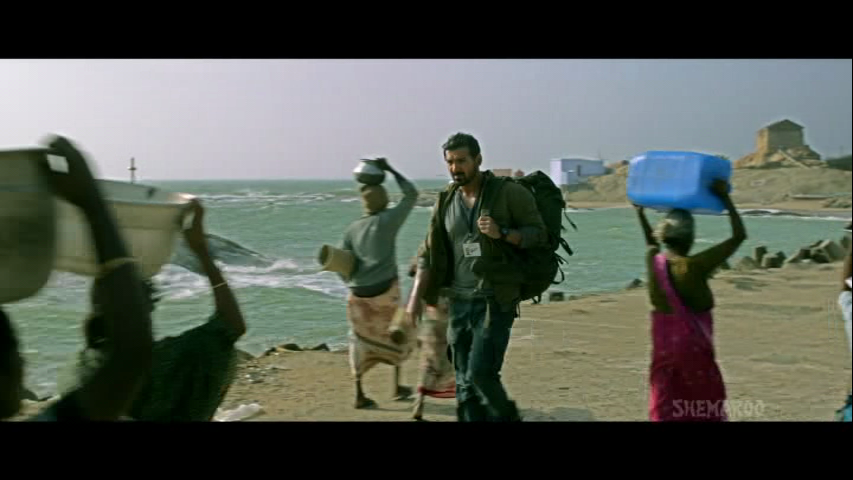
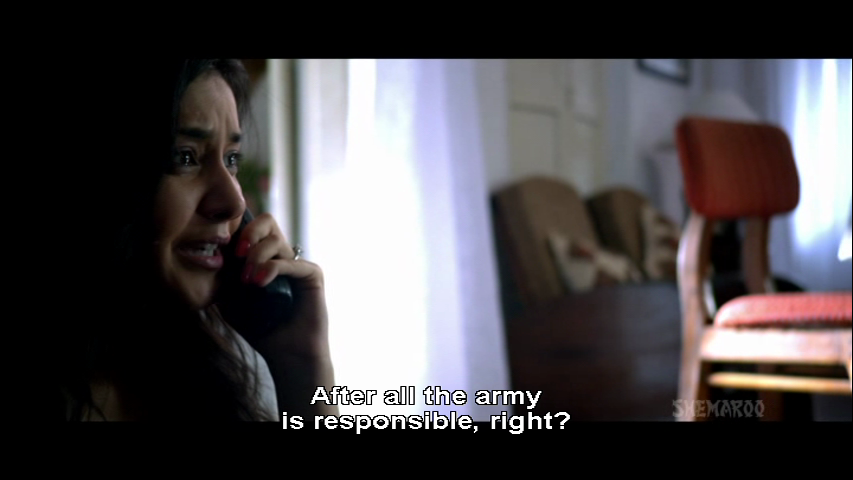
I’m not normally a fan of films that deal with the subject of war, but I found the combination of Shoojit Sircar as director and the backdrop of the conflict in Sri Lanka intriguing enough to warrant watching Madras Cafe.  The film is a world away from his last film, Vicky Donor, but Shoojit Sircar shows a similar attention to detail in this realistic and gritty political thriller.  The film begins with a disclaimer which states that Madras Cafe is a work of fiction, but even with the little I know about the Indian involvement in the Sri Lankan conflict, the story seems heavily influenced by real-life events of the time.  The story deals with the build-up to the assassination of the Indian ex-Prime Minister and owes more to Hollywood drama than the more usual Bollywood tale of an Indian army hero who single-handedly saves the day.  As a bonus, John Abraham is more convincing than expected in the lead role and his performance, along with some excellent cinematography make Madras Cafe well worth a watch.

Madras CafeMadras Cafe

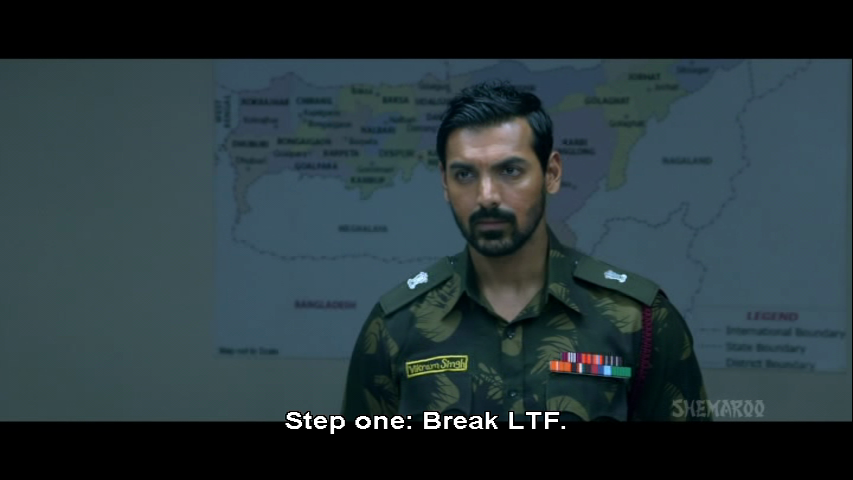
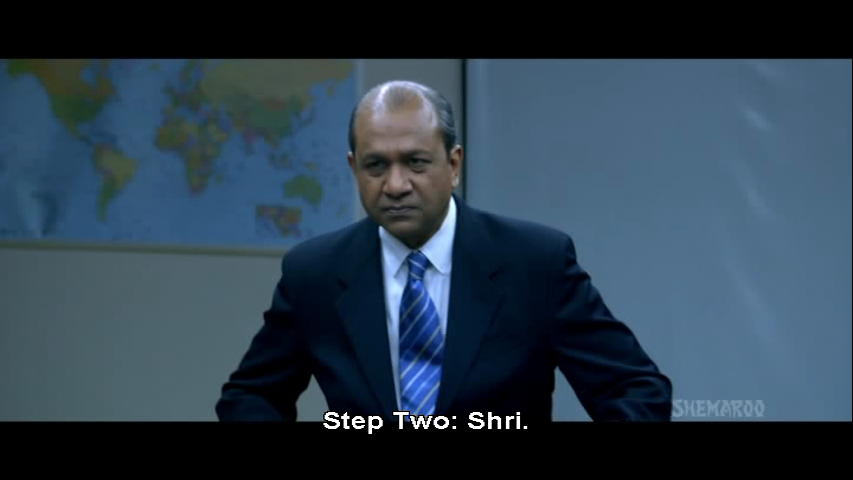
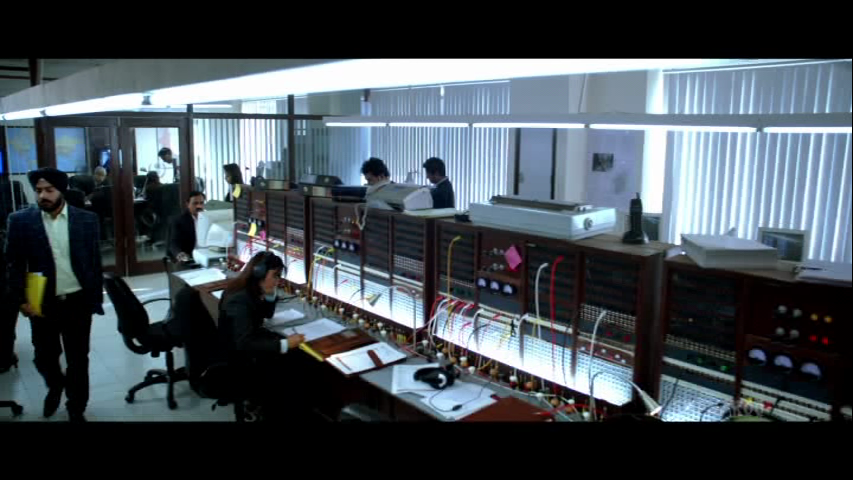
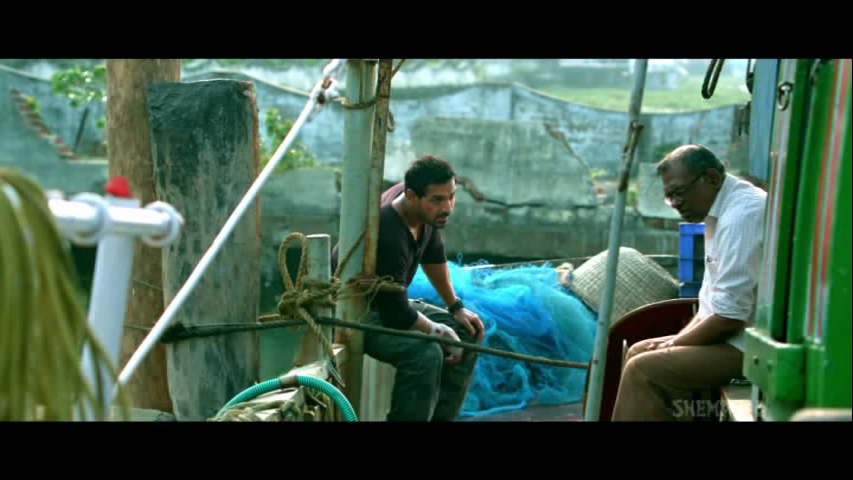
The first half of the film sets up the story, starting with a fairly graphic depiction of the atrocities committed against the Tamil people leading eventually to the development of armed resistance.  It is at times confusing as numerous characters are briefly introduced before the action moves quickly along, but once the whole cast is assembled the story settles down to describe the events leading up to the Prime Minister’s resignation and eventual death.  John Abraham plays the role of Major Vikram Singh, a RAW agent sent to Sri Lanka to ensure elections to secure the peace process go ahead.  To this end he has two aims, to move support away from the head of the Tamil Liberation Force (LTF) and instead to promote the more acceptable (to India) Shri, leader of the Tamil political party TPA.

Madras CafeMadras Cafe

Madras CafeMadras Cafe

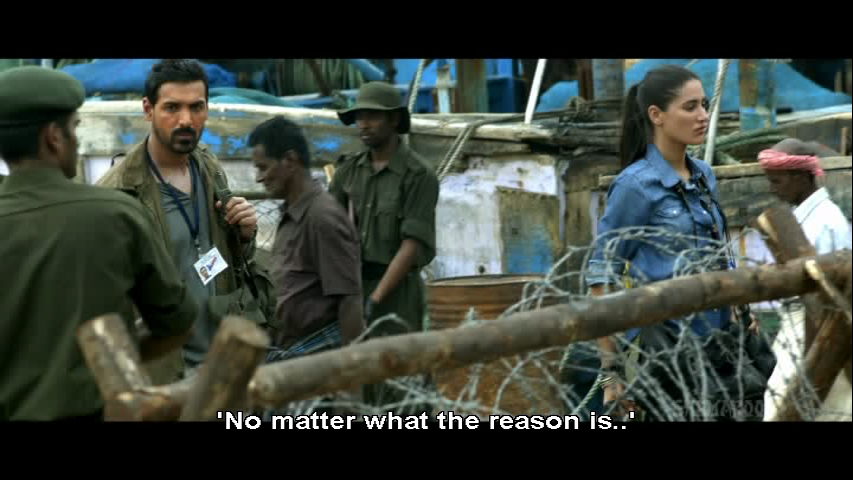
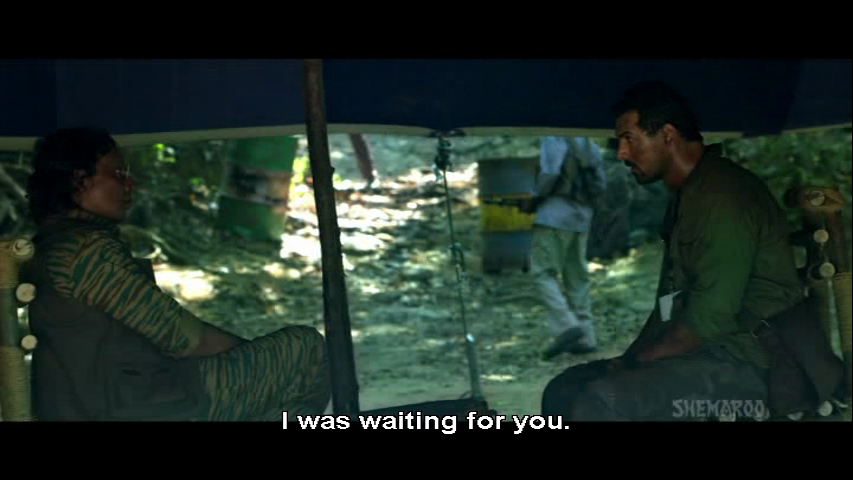
The LTF is led by the charismatic Anna Bhaskaran (Ajay Ratnam), who is ably supported by his inner cadre of Pandyan (Johnson Manjali), his Intel chief; Mallya (Arijit Dutta), deputy leader and army commander; and Rajasekharan (Dinesh Nair), spokesperson and arms dealer. Vikram manages to meet up with Shri (Kannan Arunachalam), who demands weapons for the fight against the LTF, but the mission to deliver these goes wrong and the weapons end up in the hands of the rebel force. Vikram suspects that someone in the Indian RAW group has betrayed them, and so begins a cat and mouse game to identify the traitor while attempting to keep the peace process on track.  During his mission Vikram meets Jaya (Nargis Fakhri), an American journalist based in London, who is in Jaffna to report on the plight of the refugees.  Jaya has a number of informers and sources, who later prove important contact points for Vikram, but otherwise her role seems fairly pointless and not helped by Nargis’s lacklustre performance. The initial meeting between Jaya and Vikram suggested that there may be some conflict between the two over nationalism and journalistic integrity, but this never materialised, perhaps because there is already plenty of conflict onscreen.

Madras CafeMadras Cafe


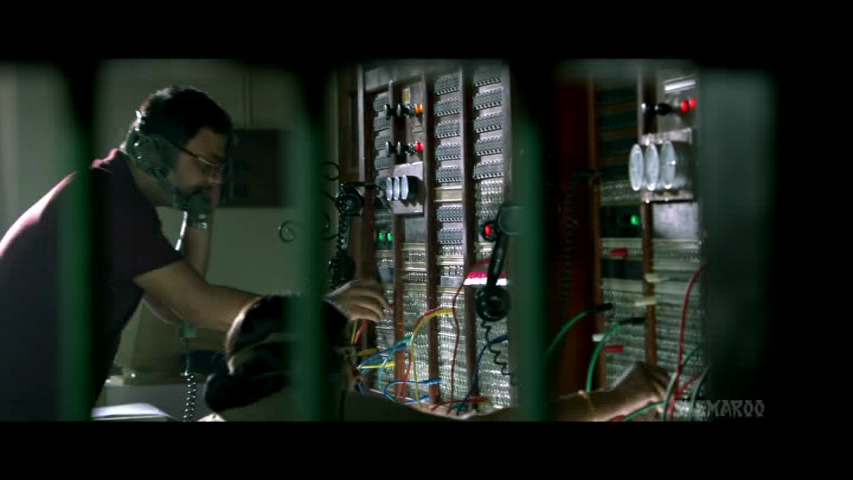
While the traitor is still providing the rebels with details about the Indian army plans, Vikram’s colleague S.P. (Rajeev K. Panday) intercepts wireless transmissions that provide details of an LTF plot to kill the former Indian Prime Minister during his campaign for re-election.  The assassination plot is developed during meetings between Anna’s representative Rajasekharan and nameless Western corporate executives who meet in the Madras Cafe.  The last half hour of the film moves into overdrive as the clock ticks down and Vikram and his boss Robin Dutt (Siddartha Basu) desperately try to put all the pieces together before their time runs out.

Madras CafeMadras CafeMadras CafeMadras Cafe


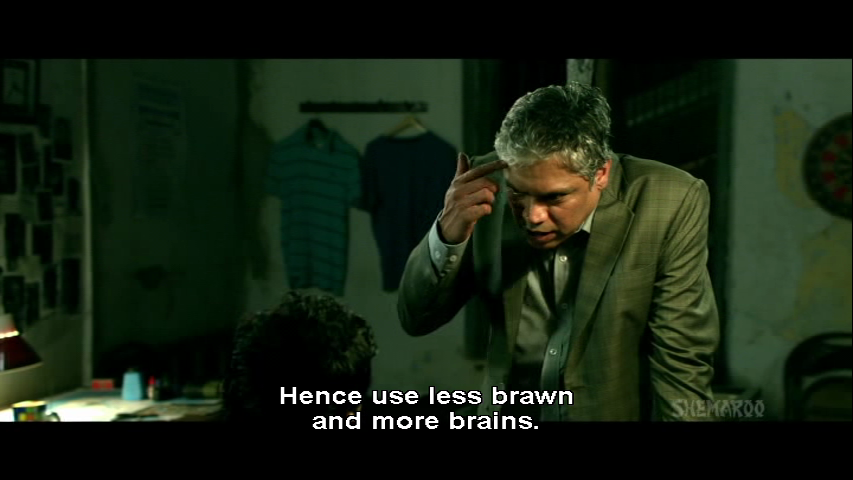
The screenplay by Somnath Dey and Shubendu Bhattacharya is realistic and gripping, even if you don’t know much about the original story – in fact it may be better if you don’t.  Excellent performances by most of the lead actors, including Prakash Belawadi as Bala, the Indian head of operations in Sri Lanka help to paint a plausible picture of the events leading up to the final assassination.  The pace does pick up in the final half hour although in general the film is kept understated, with a subdued performance from John Abraham, suiting his role as an undercover agent.  He’s perhaps a little too muscular and brawny to be 100% convincing, as I expect undercover agents to be more wiry and less memorable, but his mannerisms and emotions are much better than his previous films and seem fitting for an army officer.  At least there is none of the dreadful melodrama and over the top emoting which often seem to be required for a ‘hero’ role.

Madras CafeMadras CafeMadras CafeMadras Cafe

On the other hand Nargis Fakhri seems completely miscast and never convinces as a war reporter, while her appearance seems even more outlandish than in Rockstar. Rashi Khanna does a better job in her role as Vikram’s wife and the large supporting cast all are well suited to their roles with some excellent individual performances from the various cabinet members, Sanjay Gurbaxani as the Prime Minister and the members of the LTF cell in Madras.

Madras CafeMadras CafeMadras CafeMadras Cafe

The film looks beautiful despite the subject matter, and the cinematography by Kamaljeet Negi is superb.  There are contrasts between shots of beautiful countryside and scenes of complete devastation caused by the conflict.  The framing is excellent and often characters are shown hemmed in by their surroundings, just another way of showing there is no escape from the consequences of war. My only complaint is that the same two helicopters seem to make their way into a few too many shots, but since I always associate the sound of a helicopter with an army presence (from my childhood growing up in Northern Ireland) this just added more realism for me.

Madras CafeMadras CafeMadras CafeMadras Cafe

There are no songs as such in the film, but the background score by Shantanu Moitra is hauntingly beautiful and fits the imagery well.

Madras Cafe is not a film for everyone and at times is more of a documentary than a drama, however the subtle build-up of tension and attention to detail make for compelling viewing – even if I kept thinking that surely an undercover operative in Jaffna would speak Tamil!  A beautifully shot and well-made film, Madras Cafe is a fictional account that aptly illustrates the horror of conflict and the civilian cost. 4 stars.
 

Mankatha

Mankatha

I missed Mankantha when I was in Chennai due to limited time and sold-out shows in my usual cinemas – which I guess was a good indication that the film would be worth seeing.  Venkat Prabhu’s fourth film does feature his usual crowd of young actors, but also stars Ajith Kumar in his fiftieth film – it’s all about the numbers!  Mankatha is an action thriller based around the theft of illegal gambling money and features so many twists and turns that at times it’s hard to keep up with just who’s double-crossing who.  Although there are a few leaps of faith required to fully engage with the plot, overall the pace of the action and an excellent performance from Ajith in a negative role make the film well worth a watch.

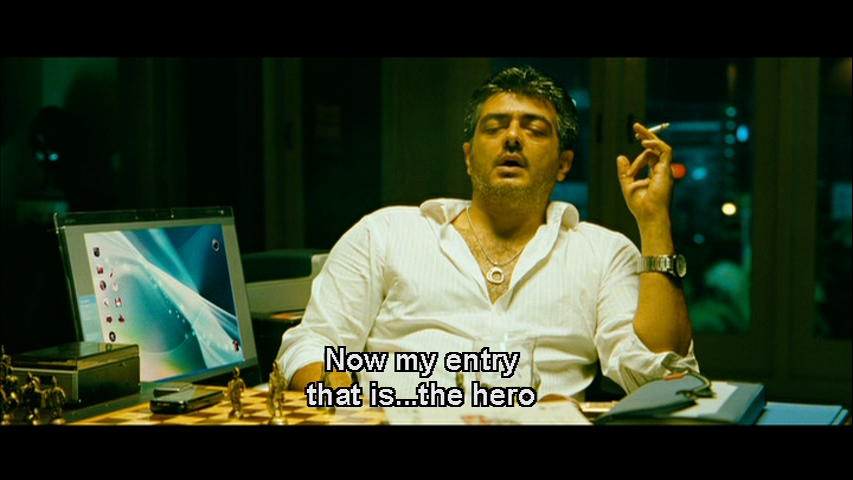
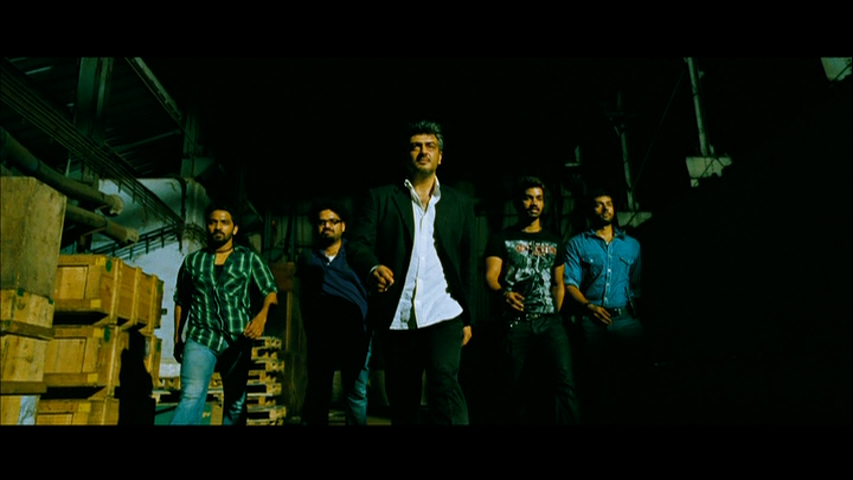
The story starts with Ajith as Police Officer Vinayak Mahadevan, landing onto the screen in a typical Tamil Hero entrance style (i.e. unlikely appearance from out of nowhere) to prevent what appears to be a corrupt police execution of smuggler Faizal (Aravind Akash).  The lines are blurred right from the start – is Vinayak a hero, fighting corruption and gambling despite being suspended from duty for saving Faizal, or does his drunkenness and casual infidelity  point to even bigger character flaws and a tendency to flout the rules for his own benefit?  Each subsequent scene makes the conundrum more difficult to solve, and this ambiguity runs throughout the action in the first half.  It’s not until much later in the film that Vinayak’s true character becomes apparent (or does it?) and his real motives are revealed.

Ajith entranceMankathaMankathaMankatha


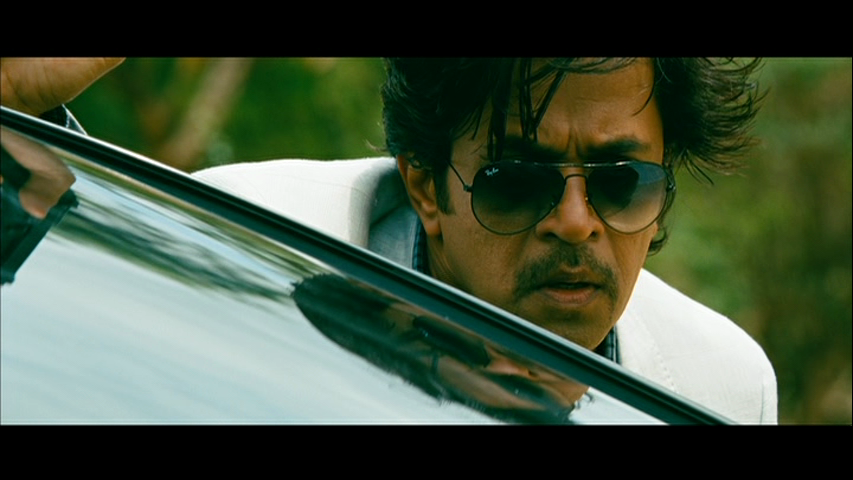
Then there is ‘Action King’ Arjun, who appears as Prithviraj, the head of a special task force entrusted with stamping out illegal gambling on cricket matches after the head of the anti-corruption squad Kamal Ekambaram (Subbu Panchu) commits suicide due to his own gambling debt.  However Kamal isn’t dead, but instead reappears as one of the investigative team, a detail which I kept expecting to have some relevance, but it never actually does.  Arjun is very OTT in his action scenes, made even funnier by his terrible floppy hair, but otherwise delivers  a generally straitlaced and relatively heroic portrayal of a senior police officer intent on stamping out gambling.

ArjunMankathaMankathaMankatha

Vinayak, one night stands aside, is in a relationship with Sanjana (Trisha), the daughter of Arumuha Chettiyar (Jayaprakash).  Chettiyar runs the illegal gambling network in Mumbai along with various other illegal activities, and he also just happens to be the man who employs Faizal.  Was this good planning by Vinayak, or just a coincidence?

MankathaMankatha


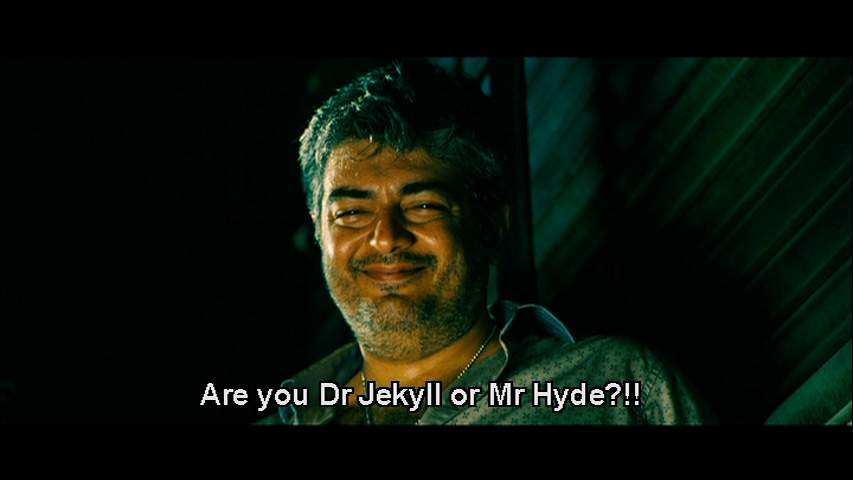
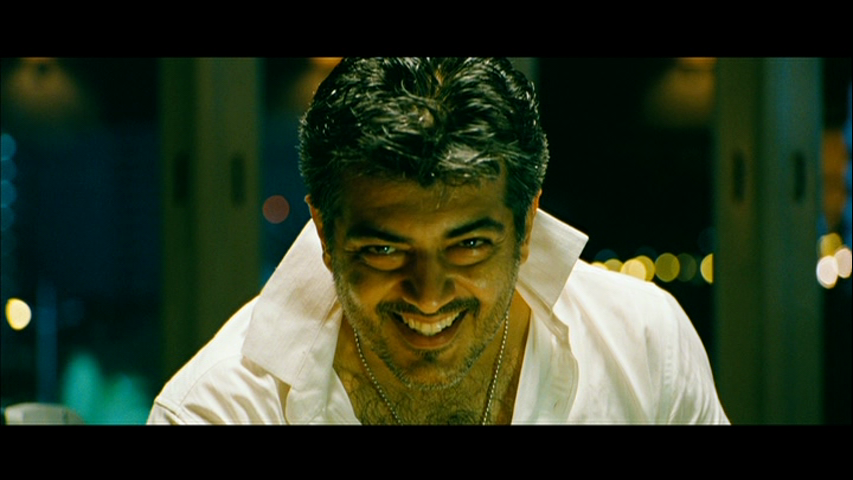
Since Vinayak apparently turns a blind eye to Chettiyar’s illegal activities the question then follows, is this all part of an undercover plan to infiltrate the gang and bring down Chettiyar or does Vinayak really not care about his potential father-in-law breaking the law beyond the opportunity to pocket a few bribes?  It’s hard to tell, as Ajith makes the most of his devastatingly cheeky grin and ever more crazy persona to keep everyone guessing his true motives.

MankathaMankatha

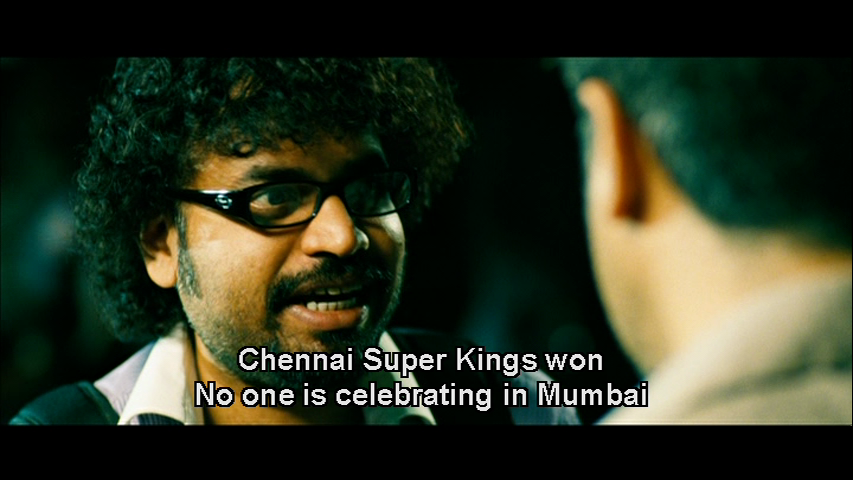
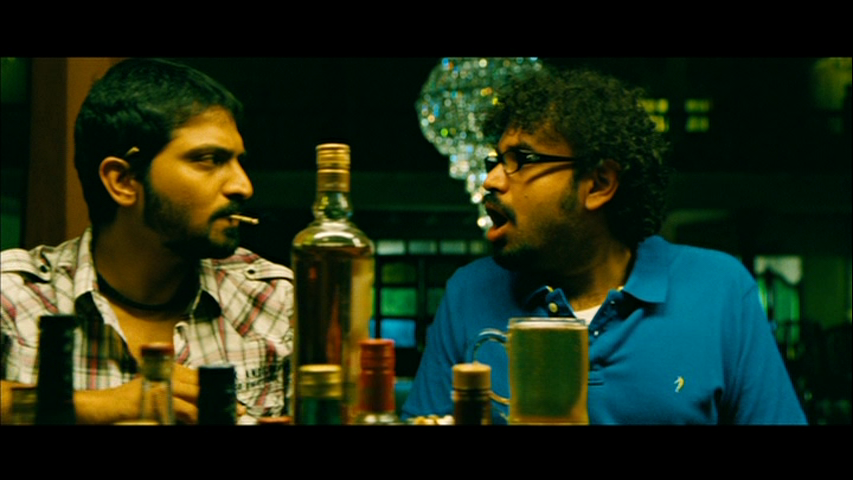
Meanwhile, Chettiyar’s henchman Sumanth (Vaibhav) is in cahoots with local Sub-Inspector Ganesh (Ashwin Kakumanu) and bar-owner Mahat (Mahat Raghavendra) to steal the gambling take from the IPL final.  Mahat ropes in his friend from home Prem (Premji Amaren) who just happens to be an IT expert as well as a terminal idiot.  A little of Premji’s humour here goes a long way and less really would have been better, but cleverly developed group dynamics and good performances from the rest of the gang help keep the story on track.  In due course, Vinayak finds out about the plot which just happens to coincide with his own plans to loot the money, and the conspirators end up joining together to steal $5 billion in US dollars.  While some of the heist details require a major suspension of disbelief, the rest of the story deviously pits everyone against each other with  betrayals, plot twists and unexpected revelations, which mean it’s necessary to concentrate and pay attention to work out just who is allied with who at any given time.

MankathaMankathaMankathaMankatha


While the guys get all of the action and pretty much all of the storyline, there is very little for Trisha and the other female characters to do.  Anjali has perhaps the next most realised role as Sumanth’s wife, but her only value is as a bargaining tool later in the story.  Andrea as Prithviraj’s wife and Lakshmi Rai have even less of a role, and almost all of the female roles could have been eliminated without making any real ripple in the story.  The songs are also mainly superfluous although the soundtrack by Yuvan Shankar Raja does have a few memorable tracks.  This is probably the best choreographed, although the visual effects for Vaada Bin Laada are worth a look too (watch out for the plane on the wall that takes flight).

Ajith is definitely the star of the show in a negative role that must have been a hoot to play.  He spits venomous lines with great joie de vivre, throws in plenty of bleeped out profanity and his crazed megalomania is wonderful to behold.  He has great chemistry with Arjun and the two take control of every scene they are in.  However Vaibhav is also notable and the other cast members all provide solid performances.  While the focus is on the action there is also some nifty camera work from Sakthi Saravanan, including a great shot of some boys playing cricket in the slums while Vinayak chases down Sumanth.

MankathaMankatha

Mankatha is not the most convincing heist film, and it would definitely benefit from trimming some of the excess in the form of unnecessary songs and peripheral characters, but it succeeds in entertaining which after all is the main purpose of cinema.  I loved the twists and turns and appreciated Ajith’s excellent demonstration of just how to keep everyone guessing while Arjun tries his best to convince everyone that he is the hero.  It’s amusing and doesn’t take itself too seriously which makes for an enjoyable watch. 3 ½ stars.