Baahubali 2: The Conclusion

Baahubali-2-Poster

In the lead up to possibly the biggest Telugu film release this year, the question I wanted to know wasn’t so much, ‘why did Kattappa kill Baahubali?’, but rather, was Baahubali 2 going to be worth the wait? And the answer has to be a resounding yes! Rajamouli breathes new life into the traditional story of sibling rivalry and dynastic disputes, ensuring that The Conclusion is every bit as exciting as The Beginning. There is the same epic scale, fantastical scenery and gravity-defying action sequences plus plenty of Prabhas and Rana in fine flexing form. Best of all, this time round Anushka gets to prove that’s she’s just as much of a warrior as the guys and she completely kicks butt as the beautiful princess Devasena.

Rajamouli’s commitment to blood and gore starts right from the opening credits where a number of key events from the first film are loving re-created as CGI ceramic statues – including a torso and detached head with spiralling blood. You just know it’s going to be spectacular when even the opening credits have such exquisite attention to detail – and it just keeps on getting better.

Logically, the film begins where we ended last time, with Kattappa (Sathyaraj) relating the story of his father to Mahendra Baahubali (Prabhas). Straight away we’re swept back into the flashback and the conundrum of who will rule Mahishmati – Amarendra Baahubali (Prabhas) or Bhallala Deva (Rana Daggubati)? Although at the end of Part 1 Sivagami (Ramya Krishnan) declared that Amarendra would be King, Bhallala is still plotting and scheming along with his father Bijjaladeva (Nasser) ensuring that the path to the throne is likely to be littered with dead bodies. Once Amarendra leaves for a whistle-stop tour of the kingdom before his coronation, the way is clear for Bhallala to plan his brother’s downfall and even if the story is relatively predictable, it’s how we get to that final betrayal that really matters.

On his tour, Amarendra travels through the vassal kingdom of Kuntala where he meets Devasena for the first time and falls in love. The romance is beautifully developed, from the moment when Amarendra sees Devasena wielding a sword and is completely smitten, to a sequence where, in the middle of a battle, he teaches her how to fire multiple arrows at the same time. It all unfolds very naturally with little of the sexism of the previous film – this is a more equal partnership and both treat it as such right from the beginning. Anushka is completely mesmerising as Devasena and has as much arrogance and belief in her own self-worth as Sivagami, ensuring that the two have some powerful clashes that almost outdo the fights on the battlefield. Here is all the back story we wanted that explains how Devasena could survive for those 25 years chained in front of the palace with her all-consuming desire for revenge. My favourite part is Devasena’s reaction to Bhallala’s sleazy commander-in-chief when he harasses the women at a temple. She believes in swift and pertinent justice, which got a huge cheer from the cinema and totally won me over to her side for the rest of the film.

Ramya Krishnan is wonderfully regal as Sivagami, ruling in declarative sentences and still disinclined to believe that her son could possibly be evil. Rajamouli gives Sivagami the chance to show a little maternal guilt over her clear preference for her nephew over her own child, making her seem just a little more human. Later, she has doubts and struggles to reconcile her perception of Amarendra as the ‘perfect prince’ with his combative stance when he dares to question her decisions about Devasena. Some of her choices seemed a little unlikely when compared to the wily and competent ruler from Part 1, but factoring in her determination to uphold the law and the universal truth that a mother tends to believe her child, her decisions are within the realm of possibility at least.

Another big plus is CinemaChaat favourite Subbaraju as Kumara Varma, Devasena’s cousin. Although his character is initially played for laughs, there is a serious side too, as despite not being a fighter or showing any signs of a courageous heart, under Amarendra’s influence he finds the strength to fight back when necessary. In Rajamouli’s world, heroism is infectious and it’s not just the god-like heroes with super-human endurance who can make a difference, ordinary people can stand up and fight too. The theme continues when the film moves back to the present day, although not so well-defined, but it’s good to see a move away from a completely hero-centric storyline and more substantiative support characters.

I adore Prabhas and he is completely amazing in both roles here. As Amarendra he is fierce and combative, but also shows off his comedic skills along with a more romantic side to his character when he meets Devasena. The fight scenes are superb and I like that Amarendra has a handy, portable, travelling axe that is more effective than expected – it’s also a nice contrast to Bhallala Deva’s more ostentatious lawnmower of death and massive telescopic mace. Amarendra also shows commitment to science and engineering, taking the first steps to introduce Mahishmati to an industrial age with various contraptions he builds. Some of these are more practical than others, but obviously the skill is genetic since his son comes up with some similarly inventive ideas when faced with the challenge of attacking the city walls back in the present day. There is plenty of shirtless flexing too, although Prabhas mostly keeps his chest under wraps until later in the second half when he has to compete with Rana!

Of course, the strength of any hero is only as good as the villain he faces and Rana is excellent as the devious and amoral Bhallala. This time he is more obviously evil and deliberately choses the nastiest method he can to undermine Amarendra’s reputation with his mother. He’s also still a magnificent warrior, and the final battle scene with Mahendra in the present day is powerful and compelling as the two slug it out in front of the massive golden statue.

The final conclusion in the present day is fairly short and seems somewhat rushed with little dialogue or preparation before Baahubali heads off to tackle Bhallala. Disappointingly, Avanthika (Tamannaah) only has a very brief appearance during the final battle and no significant interaction with Baahubali at all. I like the symmetry between the start and the end of the film with Devasena’s fire-walk for justice, but I would have preferred a little less flashback and more of Baahubali’s reaction to his origins before the final battle. That battle is awesome, but also seems to finish rather abruptly, so I’m hoping (probably in vain) that we might perhaps get a Baahubali 3 that does delve into the relationships of the present day a little more.

I enjoyed M.M Keervani’s music, although I was too caught up in the visuals and catching the subtitles to really appreciate the full scope. However Hamsa Naava and Dandaalayyaa are both beautiful on the big screen and I loved the martial theme of Saahore Baahubali.

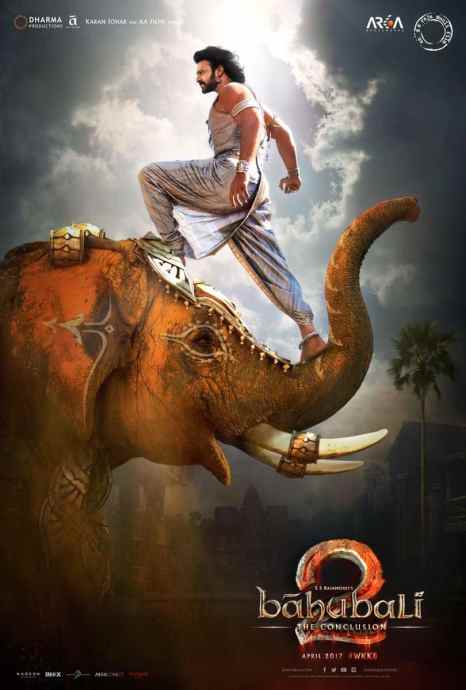
The visuals are stunning and although the CGI isn’t as slick as a HW production, it still looks amazing due to the sheer scale of the images. Although there may not be a waterfall this time, instead there is a beautiful palace in Kuntala, a stunning boat that turns into a flying swan surrounded by cloud horses and a totally epic coronation where a cast of thousands almost bring down the palace with their enthusiasm for Baahubali. The action too is on a grandiose scale. Aside from the titanic battles, Amarendra Baahubali surfs on the back of cows with flaming horns, rides on an elephant and fights almost without even looking at his opponents. It’s truly epic, particularly when combined  with the uplifting themes that justice will prevail and real courage comes from those who believe in truth. With amazing ability to draw you so completely into his world, Rajamouli delivers another enthralling story that needs to be seen on the big screen to fully appreciate his vision. Don’t miss it!

Temple says:

Well, now we know where all those engineering grads with filmi connections end up…They built the kingdom and weaponry of Baahubali 2!

The thing I have long admired about Rajamouli is that even when I know what is going to happen, he crafts the drama and visuals so beautifully that I still care enough to be on the edge of my seat. It was a big ask to follow up the cliffhanger of the first film and not lose the dramatic propulsion to the finale and largely, he nailed it. There are some draggy bits but they weren’t actually dull so I didn’t mind having a bit of leisure to admire the design and occasional flourishes of whimsy. Finally, a director who gets how and when to use a swan boat (even if it looks like a top heavy chicken), and what a fantasy sequence can look like when you don’t try and make it all from painted polystyrene! I do wish they’d done something about Nasser’s rubber chicken claw hand though.

Prabhas is a delight, giving his characters both gentle goodness and a steely core, with the bonus of excellent nonchalant posing. Rana makes Bhalla a despicable and venomous man, but not completely incomprehensible in his motivation. I liked their dynamic together, and they just go all in on the fight scenes. Anushka is one of my favourites and I was so excited to see her character given some depth and competency, as well as all the usual accoutrements of a kickarse heroine. I think Prabhas can evince chemistry with anything or anyone, but Anushka gave Devasena such a liveliness that their scenes crackled with life. I actually didn’t mind that Tamannaah only appeared to kill a few baddies at the end. Based on the first film, she just didn’t stand up to Anushka or Ramya Krishnan and Avantika wasn’t integral to this part of the epic. I was glad she reappeared as a warrior though, not simpering in a sari. Subbaraju did a bit of simpering and flouncing so I guess he made up for that, with his OTT posturing settling into a more genuine will to do the right thing. And what is not to admire about Ramya Krishnan, who has been a charismatic and slightly terrifying presence in films for so long. She is amazing and Sivagami is a great fit for her.

Despite all the Ye Olden trappings, this is a pure masala film. The classic themes of family, orphans, loss, justice being separate from law, duty, and insta-love are all there. Rajamouli knows these conventions and tropes and he is so deft at throwing them into new and glittering configurations. He coaxed some truly epic characterisations out of his modern day urban kid actors, and allowed some of the old hands to shine. Yes there is some dodgy CGI and yes some actors are less impressive than others but it just works. Trust me.

Don’t nit pick. See it on the biggest screen you can. Enjoy!

Pa Paandi (aka Power Paandi)

Pa Paandi

I watched Dhanush’s directorial debut in Mumbai which meant no subtitles, but the story came across clearly despite a few dialogue heavy scenes. It’s a sweet tale about an older man and his quest for meaning in his life after his non-conventional ways annoy his son one too many times. There are a few overly sentimental moments, but the film succeeds thanks to excellent performances from all involved, a better than average soundtrack and the novel premise of a sexagenarian hero who still packs a punch!

Rajkiran is Paandian Pazhanisami aka Power Paandi, a retired film stuntmaster who has a shelf full of memories after working with the great heroes of Tamil cinema. I love that he is introduced in true filmi style and throughout the film his characterisation is similar to a typical modern day hero – this in spite of the fact that he is in his sixties and retired.

Paandi lives with his son, daughter-in-law and their two children, but unintentionally creates tension in their house with his activities in the neighbourhood. Paandi is a born meddler, whether it’s helping his young neighbours find true love or facing off with the local drug dealers, he can’t seem to help but get into trouble. His son Raghavan (Prasanna) prefers a quiet life and is constantly at odds with his father, prompting Paandi to remember similar incidents from Raghavan’s childhood. It’s a good illustration of how the power in their relationship has shifted over the years and how Raghavan now looks at his father as more irresponsible than his own children. However, for the most part Raghavan is tolerant of his busybody father although it’s clear he resents the extra work caused by his father’s attempts to ‘help’, while his wife does her best to keep the peace. The conflict between the generations is at times clichéd and overdone, but for all that there is a simple sincerity to the relationship, helped by the contrast in Paandi’s friendship with his young neighbour that bolsters the story in the first half.

For his part, Paandi is aware of how he frustrates his son and attempts to keep out of his hair by getting a job. His previous experience in the film industry leads him to try his hand at acting, with Gautham Menon providing a cameo as the exasperated film director trying to make Paandi to deliver his lines. Paandi then goes back to what he knows best and his success in an action scene allows him to relive the past glories of his youth. This is beautifully written to show just how much being appreciated, even in such a small way, means to Paandi. Here is an older man with plenty of experience and much to offer the world, but he has been made to feel irrelevant and unwanted by his family. When Paandi completes his sequence in one take, the accolades of the other stuntmen and the praise of the director (Stunt Silva) are all balm to Paandi’s ears and reaffirm his worth, despite his advanced years. Suddenly he has reason and meaning to his life again and the years drop away.

However, this success is short-lived, as Paandi cannot resist a fight with drug dealers that results in yet another trip to the police station and a more serious argument with Raghavan and Prema (Chaya Singh).  In the aftermath Paandi decides to leave on his treasured bike to search for something to bring meaning back into his life. A chance encounter with a group of similarly aged bikers on the road solidifies his quest into a search for his first love Poonthendral (Revathi).

Naturally there is the obligatory flashback to Paandi’s past – but despite the clichés the romance adds to the story and gives deeper dimension to the character of Paandi. Madonna Sebastian is charming as the young Poonthendral, while Dhanush’s young Paandi does seem exactly the sort of youth who will grow up to be the ageing hero of the first half. The romance is simply told, and it works well with good performances from all of the support cast including Vidyullekha Raman as Poonthendral’s cousin.

When the film moves back into the present day Dhanush seems to hit his stride as director, and the final scenes are well written and effectively filmed to ensure empathy with Paandi and Poonthendral. Revathi is wonderful here and gives her character poise and respectability with just a smidge of mischievousness that makes her instantly likeable. It’s inevitable that we want Paandi to succeed with his romance and there is only one ineptly placed fight in a car park that mars the final half of the film.

The best part of the film for me is the tongue-in-cheek approach to Paandi’s character as a modern-day hero. The usual filmi standards apply, so that Paandi is as quick to get into a fight as any other hero, and similarly with just one blow of his fist he can effortlessly knock the villains into the middle of next week. Rajkiran is excellent in the role and has plenty of charm and enthusiasm, making Paandi a likeable character despite his tendency to solve problems with his fists and his occasional naiveté. The mix of kind-hearted grandfather, lonely retiree, soul-searching wanderer and rejuvenated suitor is well blended with a natural progression that works well as the story develops. One of my favourite moments is after the reunion when Paandi messages Poonthendral on his phone while hiding under the bedclothes. The young man of the flashback is re-captured in that instant, but it’s the experienced older man who turns up on Poonthendral’s doorstep asking why she hasn’t replied.

There are some dips into obvious sentimentality as Dhanush pushes the lack of appreciation for elders by the younger generation, but for the most part he lets the characters just get on with the story. There is also a tendency for the first half to resemble a TV series rather than a movie, but these wrinkles are smoothly ironed out in the second half of the film and overall Dhanush has produced a good directorial début. Perhaps it’s a consequence of working with experienced actors, or possibly as an actor himself Dhanush knows how to get the best from his performers, but everyone here seems perfectly cast and the performances are all excellent. Even the two young actors Chavi and Raghavan are good in their roles and Rinson Simon is superb as Paandi’s young neighbour. The music is good too with Sean Roldan’s background score and songs fitting both the modern and the flashback sequences well.

Writing with Subramaniam Siva, Dhanush has produced a good masala blend with plenty of feel-good vibes for his first film. While technically the film has a few issues, the story works well and the choice of an older hero makes the film individual enough to rise above other romances. Worth watching for Rajkiran, Revathi and the premise that even at the age of 64 it is still possible to find your true-love.

Nagara Haavu (1972)

Nagarahaavu

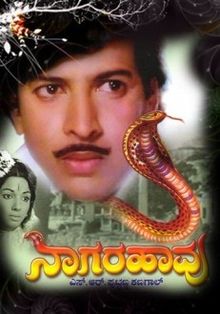
Nagara Haavu is a classic film from Kannada cinema featuring Vishnuvardhan in his first lead role. Director Puttanna Kanagal based his 1972 screenplay on three novels by T.R. Subba Rao, telling the story of an angry young man, his love affairs and his relationship with his old primary school teacher, who seems to be the only one who has any patience with his outbursts. The film is set in the 1950’s and although many of the social conventions are now outdated, there are some that still apply to-day; while Ramachari’s struggle against conformity continues to be a popular theme in modern cinema. At almost 3 hours Nagara Haavu is a bit of an epic, but it’s an interesting film to watch and essential viewing to anyone interested in the evolution of cinema in Bangalore.

The film begins and ends with the same images of rocks and the sun viewed through a red filter, presumably an indication that despite the tumultuous events portrayed, by the end nothing has actually changed. The young Ramachari of the opening scene is a rude and angry child with terrible hair, who grows into a rude and angry young man, still with a terrible haircut. This time perhaps he has reason for his anger since his teacher instructs him to remove his trousers when he is caught cheating at college. It seems rather extreme, but Ramachari (Vishnuvardhan) has a reputation as being a bad student and his reaction is even more over the top. He decides that if he is considered to be villainous, then he will become villainous, going to his professor’s house and smashing the windows. Not content with this wilful destruction of property, Ramachari then ties Shyamrao (Lokanath) to a lamppost and leaves him there overnight to the horror of Tungamma (Leelavathi), Ramachari’s old schoolteacher’s wife. And me! How he avoids being arrested is baffling!

Ramachari seems to be angry with everyone and everything, but the reason for his apparently all-consuming rage is never fully explained. It may be partly due to frustration with his religious parents who revere God above all else, and seem to have little time for their son. Possibly his anger is a reaction to being forced to study when he clearly has no interest or aptitude, but whatever the reason, Ramachari has a well-deserved reputation for belligerence in his home town.

The only person who seems to have any time for Ramachari is his old schoolteacher Chamiah (K.S. Ashwath) who has practically adopted Ramachari and considers him to be his son. His wife Tungamma also has a soft spot for the troubled youth and between them they act as mentors and advisors whenever Ramachari finds himself (yet again) in trouble. The relationship between Ramachari and Chamiah is well written and excellently portrayed by Vishnuvardhan and K.S. Ashwath through both the good and the bad times. There is real warmth between them, and Vishnuvardhan does an excellent job of capturing the respect and love that Ramachari feels for his mentor. For his part, K.S. Ashwath is compassionate and stern as required while making it clear that he can see beneath the surface anger to the possibility that Ramachari represents. The dialogues between the two are the best parts of the film, as Chamiah tries to instruct Ramachari how he should behave in society, while Ramachari does his best to point out the double standards and hypocrisy that make him rebel against convention.

Ramachari’s best mate is Varadha (Shivaram), a man who knows the value of product, and who happens to have a beautiful sister Alamelu (Aarathi). When Alamelu is harassed by local sleaze Jaleel (Ambareesh) her brother is too much of a wimp to do anything, so he recruits Ramachari to deal with the problem. Ramachari has seen Alamelu, so his price for helping her dissuade her unwelcome suitor is to marry her himself. Neither Varadha nor Alamelu have any problem with this plan but it’s a different story for Alamelu’s parents who have no desire to marry their daughter to the local rowdy.

There is much drama when Alamelu steals away to tell Ramachari of her impending marriage to someone else and it’s up to Chamaiah to persuade Ramachari that Alamelu’s parents should decide her fate. After much emoting, Ramachari is eventually persuaded that sacrificing his love is the noble thing to do although it’s clear that Chamaiah doesn’t believe this at all and is simply bowing to conventional wisdom and the presumed dictates of society.

This has serious consequences for Ramachari’s relationship with Chamaiah when he later discovers that instead of living in luxury, Alamelu has been forced into a life of prostitution. This could have been one of those terribly over-dramatic scenes so common in seventies Bollywood, with Alamelu dying rather than continue to live in shame, but instead Puttanna Kanagal gives her a beautiful song and impassioned speech where she says that she wants to live! OK, she’s not happy, but it’s better than the usual attempt at suicide at least. There is also a lovely moment of symmetry too when this time it’s Alamelu who walks away from Ramachari and sacrifices her love for his sake. It’s all wonderfully melodramatic as Alamelu recites her story to Ramachari beside a red-lit fountain.

After Alamelu is married, Ramachari is pursued by Margaret (Shubha), a girl from his class in college who is determined that he should fall in love with her. She is portrayed as being more modern, chasing after Ramachari shamelessly, wearing Western clothes and declaring her love quite openly. Margaret seems to get away with all this because she is Christian and the daughter of a single mother – which is apparently all we need to know to realise that she is no better than she should be. Once again Chamaiah is recruited to break up the relationship as Margaret’s mother Mary (M.N. Lakshmi Devi) has much bigger plans for her daughter while Ramachari’s parents are mortally offended at the idea that their son would marry a Christian. The question is, will Ramachari listen to his long-time mentor or has he lost faith after what happened to Alamelu?

There is plenty of over-the-top drama in Nagara Haavu and some of the best ‘death stares’ I’ve seen for a long time. Everyone overacts like crazy, Ramachari throws chickens at Margaret after she teases him in class, her mother accuses him of rape, while Chamaiah clambers over rocks trying to find Ramachari to drag him off to apologise to the latest person he has offended. All apparently part of a normal day in downtown Chitradurga!

As well as showing the relationship between a troubled youth and his kindly teacher, the film paints a picture of a dysfunctional society where appearances and prestige matter more than love and happiness. Chamaiah believes that Ramachari just needs time to mature and indeed he becomes a more responsible person when he is allowed to leave college and work for a wage. The rest of the town however brand him a troublemaker and don’t allow him the opportunity to ever become anything else. No matter how much Chamaiah tries to fit Ramachari into the role that society demands, he is never going to conform, particularly when Chamaiah realises just how shallow and self-centred society has become.

Nagara Haavu is deservedly classed as a classic film with good performances, a well-written story and engaging music from Vijaya Bhaskar. Despite the length, the film doesn’t drag and is a fascinating look at times past, society attitudes (and fashions!) and family dynamics of the time. Some thing have changed, but many of these issues are still a concern even now, making the film relevant and not as outdated as it first appears. The dialogues might seem stilted, but the ideas behind them are valid and used to good effect. I enjoyed Nagara Haavu and recommended watching it for Visnuvardhan, Aarathi and K.S. Ashwath, the excellent screenplay plus beautiful shots of Chitradurga and countryside. 4 stars.