Anegan

Anegan

Somewhat ironically I had to wait until I got back to Australia to see KV Anand’s latest film despite spending the last few weeks in Tamil Nadu.  I was keen to see Dhanush in a triple role, since the trailer looked promising and three times as much Dhanush can only ever be a good thing! I also loved both Ko and Ayan, and was hopeful that Anegan would be a return to KV Anand’s earlier form after the disappointment of Maattrraan. And overall I wasn’t disappointed with Anegan. The first half is a little slow, and Dhanush’s really quite terrible wig in his first incarnation is rather distracting, but the second half is much better with an improvement in the main relationship and some good plot twists. Although the story doesn’t really get going until after the interval, catchy songs, some stunning visuals and an entertaining story make Anegan well worth a trip to the cinema.

Anegan opens in Burma of the early sixties and tells of a romance between a Tamil labourer Murugappa (Dhanush) and the daughter of a high-ranking official Samudhra (Amyra Dastur). It’s all fairly typical stuff, including a damsel in distress and daring rescue scene, secretive meetings in full public view and the stiff parental opposition you would expect. What never fails to amaze me is how young Dhanush can appear to be when required – a shave plus a bad wig and suddenly he looks sixteen. Here he appears younger than his co-star despite her giddy antics and plaited pig-tails, and maybe that’s why the romance never seems to sizzle. It’s not the best start for a love story that is supposed to be strong enough to span time and involve a number of reincarnations, but there is a sweet song and at least the lead pair look reasonably cute together. Naturally fate intervenes when the military coup forces most of the Tamil workers to leave Burma and Samudhra tries to escape her abusive family by tagging along with the general Indian exodus.  However Samudhra’s escape is foiled by Mallika (Aishwarya Devan) who is jealous of Samudhra’s relationship with Murugappa and things don’t end well for the star-crossed lovers.

Fast forward to the present day, where Madhu (Amyra Dastur again) is undergoing regression therapy to help her deal with the stress of her job in a large gaming company in Chennai.  The story of Murugappa and Samudhra is revealed to be her ‘memory’ of a past life and Madhu is convinced that the different incarnations of Murugappa she remembers mean that he is her soul-mate, and that they are destined to finally be together. The previous lives she remembers all have the two separating in quite horrible circumstances, generally involving murder and death, but this possible outcome doesn’t seem to worry her at all. Instead Madhu’s only concern seems to be that she hasn’t managed to meet her ‘soul-mate’ so far in her current lifetime.

Naturally that is remedied almost immediately and Madhu meets Ashwin (Dhansh again), an IT expert, also working for the same company. Yet again he’s from a lower class family but unlike Madhu, Ashwin has no memories of a past life and very little interest in Madhu other than as a work colleague. But soon event start repeating – Ashwin steps in to save Madhu from serious injury, and co-worker Meera (Aishwarya Devan again) is a potential rival for Ashwin’s affections, while Madhu is relentless in her pursuit of Ashwin as her long-lost love.

For most of the first half Madhu is erratic and completely annoying as she veers between bratty rich girl behaviour and total mental instability, although I put most of her crazy psychotic behaviour down to the drugs she is taking from her therapist mixed with the natural remedies from the family’s guru. Her attitude makes her a rather unlikeable character for most of the first half and her attempts to convince Ashwin that they are MFEO should have been enough to see him run for the hills. But instead he seems to suffer from a similar mental disorder and for no particular reason at all (unless it’s her inherited millions – which would at least make sense!) Ashwin decides that he’s in love with Madhu.

Thankfully Madhu becomes somewhat less irritating in the second half. The film moves back in time again while she relives her past life as Kalyani which turns out to be one of the best parts of the film. Perhaps the effect of the wigs wears off after prolonged exposure, but Dhanush’s Kaali is vibrant and likeable while Kalyani is less naïve than Amyra’s other incarnations, leading to some definite sparkage between the couple. The present day scenes also step up a pace in the second half as Ashwin and Madhu work with Commissioner Gopinath (Ashish Vidyarthi) to find out what happened to Kali and Kalyani and Madhu’s boss Ravikiran (Karthik) starts to take an interest in his employee’s mental deterioration. Dhanush is excellent throughout and makes his three separate characters (four if you include one who only appears in a song) quite distinctly different personalities. Murugappa is sweet and innocent, Kaali is a rough and tough rowdy with a heart of gold while Ashwin is the quintessential computer nerd, who still manages to fight like a pro, filmi style. Ashwin provides the thread that binds them all togther, but the most successful is Kaali, and Dhanush looks as if he is having the time of his life dancing and singing through the streets in a mesh singlet!

Anegan is a good blend of romance and action with a reasonable thriller element woven into the story, and generally strong characterisations. There are a few totally unrealistic moments, Madhu speeding through the traffic in Chennai is one (hah! nope – couldn’t happen in Chennai traffic!), and the attempts to make Ravikiran a hip and trendsetting boss fall rather flat, but mostly the screenplay from KV Anad and Subha works well.  Amyra is rather overshadowed by Dhanush and her theatrics in the opening scenes are particularly wearing, but she does improve as the film progresses. Aishwarya Devan is better is her small role  and it’s a shame she didn’t have a longer time on-screen. The rest of the supporting cast including Jagan as Ashwin’s friend and Mukesh Tiwari as Madhu’s uncle are all good, and Om Prakash ensures the film looks stunning with the scenes in Burma particularly well shot. Harris Jayaraj’s songs fit the film well and the background music is also excellent. Overall the film mixes plenty of action, comedy, suspense with the romance, and even if the story is fairly predictable the different incarnations of the lead characters ensure the story feels fresh and engaging. Anegan may not be quite in the same league as Ayan, but it’s definitely a large step in the right direction and well worth a watch –  and not just for the multiple incarnations of Dhanush!

47 Rojulu

47 Rojulu poster

K Balachander’s 1981 film 47 Rojulu is a study of domestic abuse, and I found it uncomfortable to watch. It’s melodramatic yet has a ring of realism, largely due to Jayaprada’s characterisation of Vaishali, and the often quite graphic violence. Chiranjeevi stars opposite in a negative role, and he doesn’t hold anything back.

47-Rojulu-Saritha

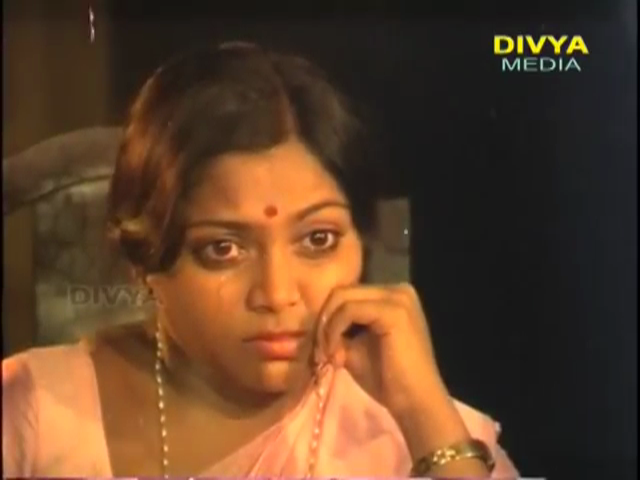
The story is told in flashback, through the device of a visiting actress (Saritha) who comes to talk to Vaishali as preparation for a film. I have only seen this in an unsubtitled print, and it is a dialogue heavy film, so at first I was a little confused by the flashback structure. However, the emotional tone and pitch of the drama comes through loud and clear and I had no trouble in following the main story.

Vaishali (Jayaprada) and her brother are coming home from seeing Shankarabharanam (I think) at the cinema when she sees a wedding taking place. Kumar (Chiranjeevi) is discussing marriage with his parents and next thing you know, he is getting married to Vaishali. All looks fine until after the ceremony when he gets the wedding photographer to give him the film, and exposes all the rolls. Why wouldn’t he want pictures of his wedding day? He seems quite keen on the wedding night and wasn’t forced into the marriage (apart from some gentle parental coercion). Also a little odd, he tests to see if she can speak English. Soon after the wedding they move to France.

At first things seem fine. Kumar shows off the house in the countryside outside Paris, and introduces his naïve bride to heating, sliding doors, supermarkets and televised sports. They live in a cosy modern flat on the ground floor, and a woman called Lucy lives upstairs.

Then one day Kumar is chatting to someone in French and introduces Vaishali as his sister. Hmmmm. Of course she has no idea as she speaks only Telugu. It is clearly a lie when he says Lucy (Anne Patricia) is just a friend. There is an awkward dinner, with Lucy completely unaware Vaishali is married to Kumar and with Vaishali confused by who this woman is and why she acts so familiar with her husband. Lucy seems happily oblivious although she does realise Vaishali isn’t comfortable around her. And then one day Vaishali, overwhelmed by her unease and distrust, searches Lucy’s apartment and finds a wedding photo – of Kumar and Lucy.

If Vaishali asks any questions about their domestic situation, Kumar puts her down so she will feel ignorant and shut up. He cuts her off from any other Indian people in the area, and he is her only source of information. She loses her confidence, she feels stupid and disgraced, and she has no one other than Kumar. When she does a runner to Paris by herself, Kumar drags her home and burns her hand on a hotplate as punishment. It’s quite sad that Lucy tries to comfort her ill ‘sister-in-law’ when she is unwittingly part of the problem. Jayaprada does a great job of showing the changing emotions and moods of the abused wife. She really likes Kumar and her marriage when he is in a good mood, and Vaishali seems to excuse his early outbursts by blaming herself or thinks it is just because he is tired or stressed. Her growing realisation that she is in trouble and that her marriage is a sham is sad to watch.

Kumar does spend quite a lot of time with Vaishali (he doesn’t have a job as such) and seems affectionate and caring. They do the tourist thing around Paris, enjoying the sights and making fun of some fashionable locals. How he thinks he can keep hiding the truth is beyond me.  Kumar justifies and rationalises – he sees no reason why he can’t have it all, and no compunction about hurting either of the women.  He has an impulsive warmth which can be appealing, but that can swiftly turn to rage and brutality. His behaviour escalates from verbal nagging and bullying to physically attacking Vaishali.

In one sickening scene of what is essentially marital rape, he withholds her letter from home to coerce her into having sex. And when Vaishali falls pregnant he starts to really lose the plot as he sees his perfect life crumble. He seems to insist on a termination and certainly there is no baby later in the film, although how and if it was her choice isn’t revealed as far as I can tell. Chiranjeevi gives a strong and complex characterisation of a loathsome man. I certainly didn’t find the Chiru Mega appeal made the situation any more palatable, but his layered performance allowed me to empathise more with Vaishali’s disillusionment as she came to terms with the deception.

Some isolated and precarious locations seem intended to convey fear or dread, and I was certainly yelling at Vaishali to be careful, especially in one rooftop scene. Kumar abandons her in a forest at one stage, and tears the mangalsutra from her neck before leaving her in a park on another occasion. He uses her isolation and the unfamiliar surroundings to reinforce her caged existence. He also takes her to see a show of an ‘adult’ nature (to the Pink Panther theme music – how saucy) to prove his point that love and sex were different in France, but she is utterly repulsed by the spectacle. The cosy apartment that she loved on first sight becomes a prison.

The drama is almost claustrophobic as it all takes place in Vaishali and Kumar’s tiny world, so the support cast is small. Sarath Babu arrives late in the piece as Telugu speaking Dr Shankar, who becomes aware of Vaishali’s predicament. Ramaprabha is a petty thief who is hated by the wardrobe department and who gets Shankar involved in the situation. The plot manipulations required to get them into position don’t really stack up, but I was relieved to see Sarath Babu regardless. There is something very salt of the earth and reliable about him in these secondary good dude roles. And I was happy  that once Ramaprabha’s character understood Vaishali’s situation, she reached out to help. Anne Patricia is not the best actress ever, but I felt sympathy for Lucy and was glad to see how her storyline played out.

Some things didn’t quite fit with the realism of the initial set up. Who travels with an electric hotplate or element just on the chance they will want to burn their spare wife? The songs added nothing to the narrative development so I would have left them out, or kept them as background. And the final chase was dramatic but didn’t make much sense, logistically speaking.

47-Rojulu-not interested

Lest this all sound too grim, back in the present day Saritha asks about the doctor, sparking an outburst from Vaishali. It seems she feels marriage is not essential for a good life.  Hear, hear!

This is a difficult film for me to watch as I find the subject repugnant and to be honest, I prefer a Chiru I can cheer for. I do appreciate the nuanced and sympathetic but not sentimental portrayal of women and relationships. 4 stars!

Shatranj (1969)

Shatranj 1969

Shatranj is proud as punch to be another in a long line of ‘so crazy it almost makes sense’ Indian spy thrillers. S.S. Vasan appears to have a healthy aversion to restraint, and with a top notch cast and Shankar-Jaikishan providing the music, there is no reason to be reticent.

Jai (Rajendra Kumar), also known as The Indian is an international man of mystery. He seems to have full time employment searching the globe for Indians being held captive by foreign governments who shall not be named. He is asked to find Meena (Waheeda Rehman) and her mum (Achala Sachdev) who have decamped to Another Country That May Not Be Named and show no signs of coming home. Amir (Mehmood) and Salma (Helen) are on the side of Good, Susie (Shashikala) is a stylish Bad girl and stunts and schemes abound. Jai travels to Hong Kong and thence by boat to The Mysterious Land With No Name. I do wonder where it could be.

Many hijinks ensue as Jai plays merry havoc with his adversaries General Ko Lum, Zing (or Singh, depending on the subtitle team’s mood and level of nationalist fervour), Chang, Lee Jung, the constantly knitting Madame Chun Qing Lee, et al. If only there were clues as to which country this could be set in. Maddening.

I am lacking the Rajendar Kumar Appreciation Gene but he does OK as Jai, generally playing for laughs rather than milking the drama. Jai has a well provisioned den and a comedy sidekick, proof that he is no novice in the international spy game. There is an over reliance on blue contact lenses in lieu of a proper disguise, but the wig department got to de-mothball a few favourites. Rajendra Kumar cannot, nay should not, dance but he is upbeat and energetic which is something I suppose. He has no chemistry whatever with Waheeda Rehman and she knocks herself out trying to emote enough for both of them in the romantic scenes.

Meena is a good girl and both Jai and her mum think that means she is too sweet and dumb to ever tell her the truth. Apart from the picturesque moping, Waheeda gets some excellent dance numbers and that gives her a chance to show Meena as cheeky and energetic rather than the limp tearstained captive. Waheeda has just the right expression of patient misery for Meena.

And her ‘I’m a hot peacock in sparkly pants with an eye for the ladies’ expression is also memorable.

Among the things I love most about vintage spy thrillers are the lengths to which they go to explain things, and the excellent interior design and fashion. There was either a commitment to ensuring mutual understanding  or total lack of imagination going on when they handed out the codenames. Jai was The Indian, the guy in dark glasses is Mr Dark Glasses and Shashikala in her wig is Miss Golden Hair. The plots and doublecrosses are explained loud and clear, often with a side of comedy mime from Mehmood. There are truly excellent telecommunications devices and an amazing screen of secrecy.  Things light up, go whoop-whoop and beep-beep, and stick on moustaches and rubber masks are a dime a dozen. Is it a truly secret lair if people see you ducking in and out via the revolving secret door? Really?

Helen and Mehmood look like they enjoy working together. Maybe they’re just amazing actors.  Mehmood gets to confuse the spies watching Jai, so the real Jai can sneak over to rescue the ladies. I do like that Mehmood always answers the phone and top secret radios with Alooooooo rather than the traditional Hellohellohello. Amir is both a bumbling fool and a competent gentleman’s gentleman (or beloved lackey). I like Mehmood best when there isn’t too much of him and because there is so much everything else, he is neatly contained.

Helen is Salma, a very charming and fun sidekick burdened with the sad fate of loving Amir (Mehmood). On board a ship between Hong Kong and The Unidentifiable Country, Helen flamencos like a mad thing which is an excellent cover as no one seems inclined to enquire too closely as to her career plans or immediate spy type objectives. Jai tells her to go undercover at his hotel, as (what else) a cabaret dancer. When he arranged to be introduced to her as Shin Raz, a businessman, Salma simply purred “A businessman? How boring!” and sauntered away with a cheeky smile. It’s a great fit for Helen, and she doesn’t have to die to be redeemed as she is already on the side of the angels.

The songs are a sheer delight. Whether used in snippets to set a mood or full on production numbers, the music is a highlight. Even Mehmood gets a share of the musical goodness in one of my favourite dances with Helen, plus a strange mournful dirge about charity that suddenly grows a poppy guitar melody.

And how about that? Yes I know that song is a direct copy of South Pacific but Rogers and Hammerstein missed an opportunity to have the devil bunnies and snake ladies in their musical. Although I’m very OK with missing out on the high pitched screechy ethnic stereotypes. And it even works as part of the narrative, as Meena bemoans her fate as a lonely stranger in a strange land (the one that cannot be identified).

If you only watched the songs you might think this was a film about a man with dozens of children, multiple wives who were all cabaret dancers, and a drunken stalker addicted to bad disguises. So you really need to see the whole thing and appreciate the verve and dedication to the craft of the spy film. Shatranj never fails to put a smile on my face. 4 stars!