Engeyum Eppothum

Engeyum Eppothum

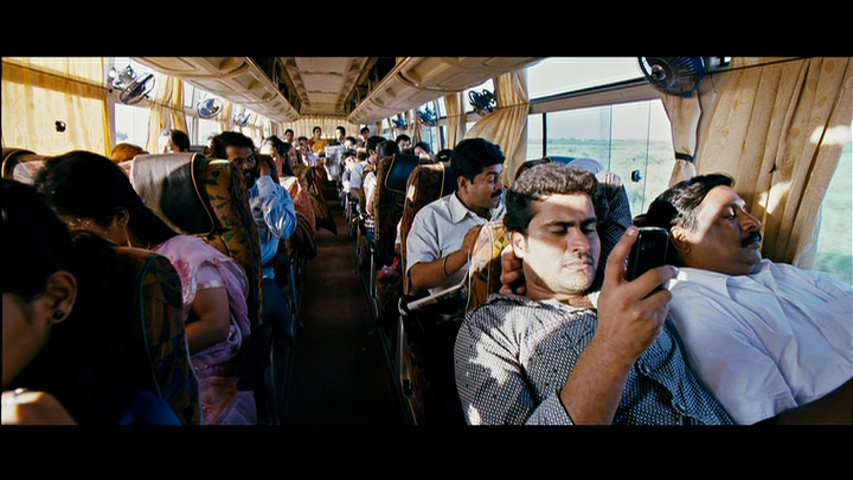
Engeyum Eppothum starts with a fairly gruesome bus crash, so it’s clear straight away that there isn’t going to be a happy ending – particularly since the rest of the film is a flashback of events leading up to the fatal accident.  However the journey to get there is just as important, and on the way to the death and mayhem there are a couple of enjoyable love stories that make you wish that there was actually going to be a happy ending.  One of the stories is set in Trichy, and it always makes me happy to see the city on screen, especially when they seem to have filmed in a number of places I recognise.  It’s the same with the bus station in Chennai, which also looks very familiar, and the whole film brings back memories of travelling by bus in India – although thankfully without the horror ending. One of the buses is a private bus running from Chennai to Trichy, while the other is a government bus travelling in the other direction, and the four main leads are passengers on one or other of the two.  Flashbacks introduce the four and tell their story in the lead up to the accident.

Engeyum EppothumEngeyum EppothumEngeyum EppothumEngeyum Eppothum

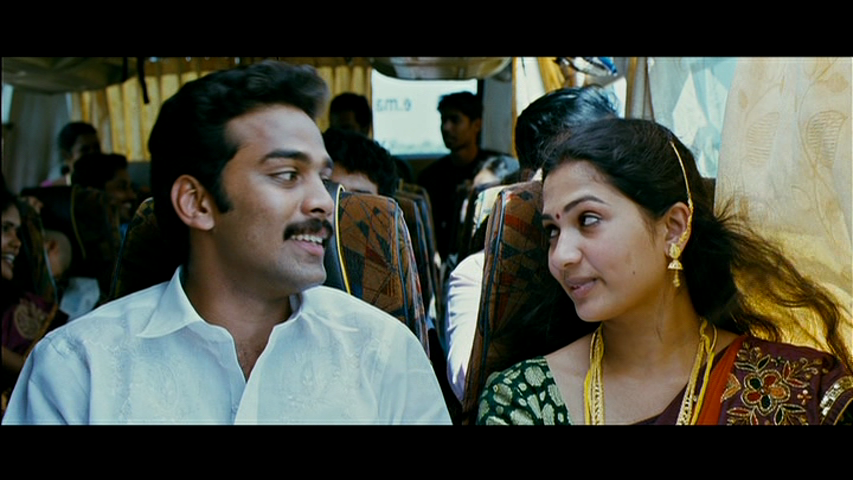
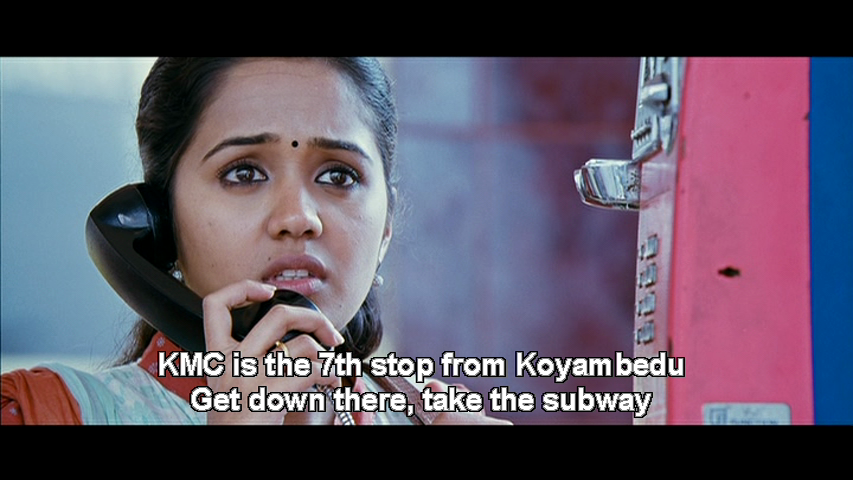
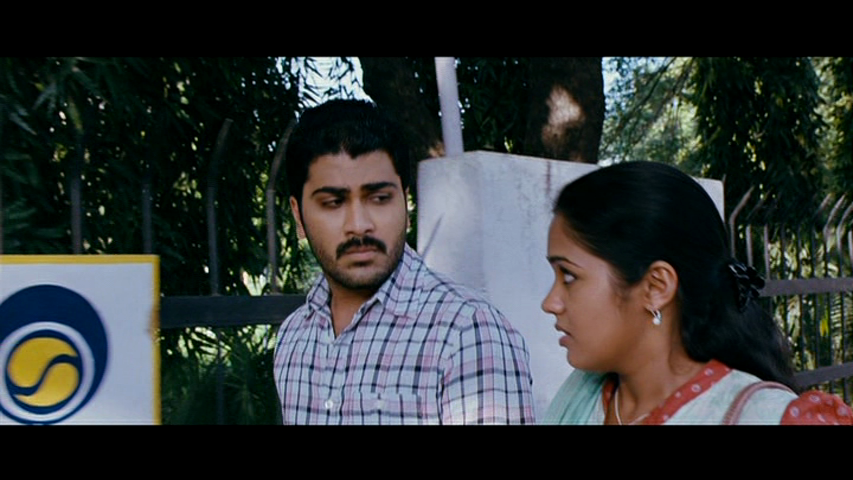
Amudha (Ananya) arrives in Chennai for a job interview, but is completely at a loss when her sister fails to pick her up due to a family emergency.  Luckily for her though, Gautham (Sharwanand) just happens to be dropping a friend at the bus station and Amudha manages to persuade him to show her to the bus stop.  She’s so totally lost in the city that despite her suspicions of him, Gautham ends up spending the whole day taking her to her interview, waiting for her and then taking her to her sister’s house.
Engeyum EppothumEngeyum Eppothum

Ananya plays the mistrustful girl from the country flawlessly here which is mainly why this love story feels so real.  Her mannerisms, and the way she relies on her sister’s instructions rather than believe Gautham when he tells her it is time to get off the bus are perfect ‘small town girl in the big city’ behaviours which I recognise from my own move from the country.  Her reaction when she sees girls in tight Western clothes is just perfect, as is the way she behaves in a restaurant when Gautham finally manages to persuade her that he is really quite harmless.  Her character is very well written to show the awe and trepidation of being somewhere where everything is unfamiliar, and Ananya does a fantastic job of portraying all that angst along with the wonder and amazement.

Engeyum EppothumEngeyum Eppothum

Sharwanand seems very wooden and unemotional in contrast, and while that does work to some extent for his character, there is very little emotion, and nothing to suggest that he would go to Trichy to look for Amudha later.  There really needed to be more open engagement with Amudha and at least some reaction to her character which doesn’t occur until near the end of the film when it is all a bit too late.

Engeyum Eppothum

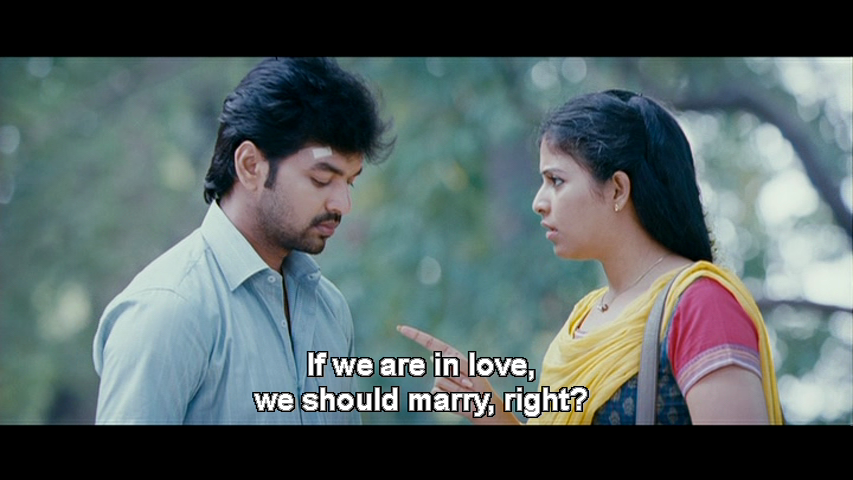
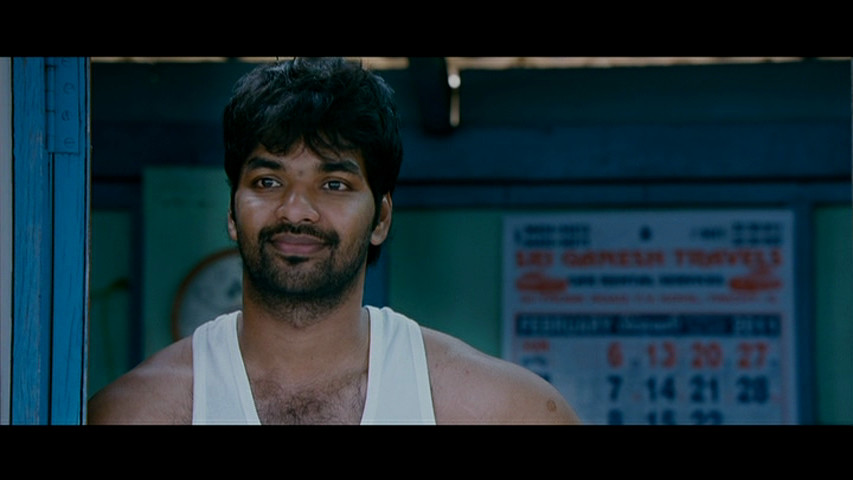
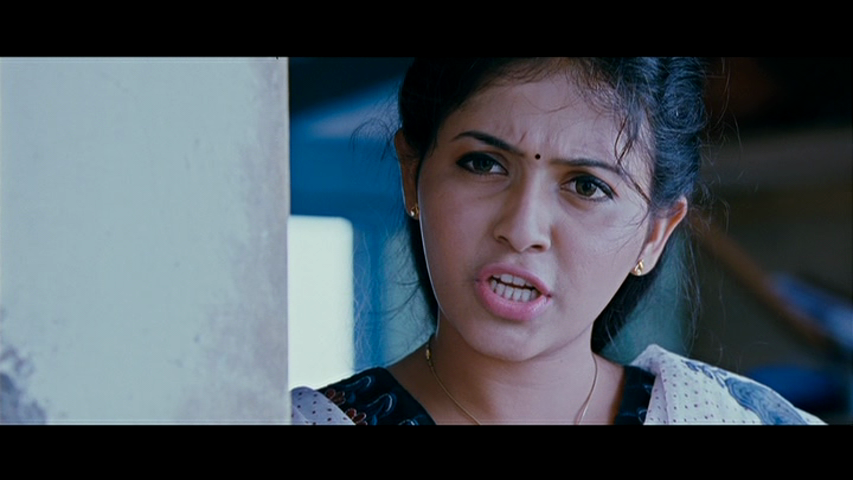
Engeyum EppothumThe second romance is set in Trichy where Kathiresan (Jai) watches Manimegalai (Anjali) every morning as she gets ready for work.  I love that this takes place in the back streets behind the Rock Fort Temple and that they meet in Mukkambu Park (both places that I know very well), which makes their romance seem that little bit more real to me.  Kathiresan has a good job, but is also from the country and is rather shy.  Rather than approach Manimegalai, he is content to watch her from a distance and co-ordinate his shirt colour to whatever she happens to be wearing that day.  This is a little known but obviously effective form of courtship, since Manimegalai does indeed notice his wardrobe choices.

Manimegalai doesn’t have the same reticence problem at all.  She is forthright and downright bossy, forcing Jai to skip work to meet her, sign up for organ donation and confront her previous suitor.  Naturally she’s a nurse.  Their story the best part of the film and Anjali steals the show with admirable support from Jai.  He is perfect as the quiet young man, completely swept away by Manimegalai and totally out of his depth.  And yet he still adores her and that comes across plainly in Jai’s body language and facial expressions.

Engeyum EppothumEngeyum EppothumEngeyum EppothumEngeyum Eppothum

It’s a fantastic performance but he is still upstaged by Anjali.  She is superb, from her initial domineering persona to the ruthlessly efficient nurse who manages to keep it all together in the aftermath of the crash.  It gives her final breakdown more impact too, and suddenly Kathiresan’s devotion makes perfect sense.  Throughout the romance both Jai and Anjali have good chemistry together, and as their love story develops their characters also acquire depth and back-story which also makes their relationship more convincing.
Engeyum EppothumEngeyum EppothumEngeyum EppothumEngeyum Eppothum

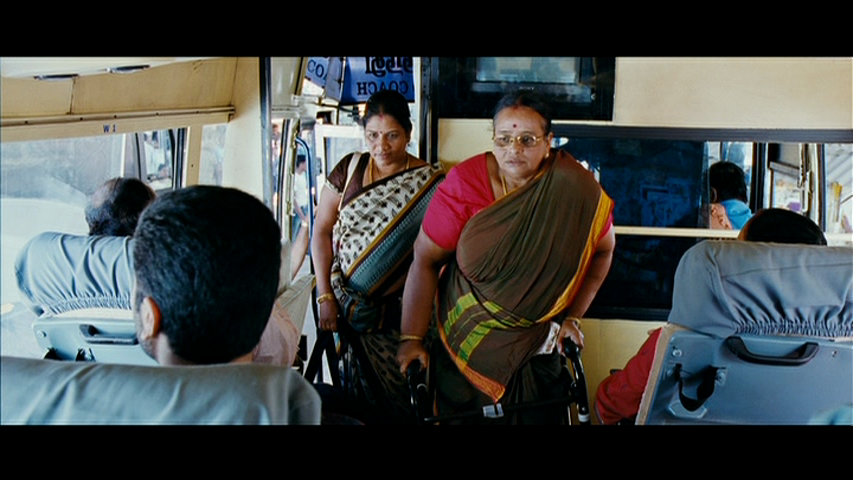
Woven through the film are small vignettes about other passengers on the bus which, while emphasising the point that every stranger has a story to tell, do make the film seem more of a road safety video.  Still, the developing romance between two students and the various other interactions between the passengers help round out the film and make the final scenes more engaging.  The bus crash is unnecessarily graphic with severed limbs and gore in abundance, none of which really adds any more to the story.  The crash alone would have been catastrophic enough and director M. Sarvanan does drive home the road safety message with a very big hammer.

Thankfully, with much of the subject matter being the accident, there are no big song and dance numbers and most of C. Sathya’s music is used to move the story forward with montages of the two couples.  The film title translates to Anytime, Anywhere and seems to relate to both romance and tragedy – you can meet your soul mate where and when you least expect to, and disaster can strike in exactly the same way.  As such, the film plays on the very normality of every scene, any of which could happen to anyone at any moment and the characters are all very normal, everyday people.  It’s a simple story and yet insightful, and one that resonates with anyone who has ever sat on public transport and wondered about the stories of their fellow passengers.  4 stars.

The Lunchbox

The Lunchbox

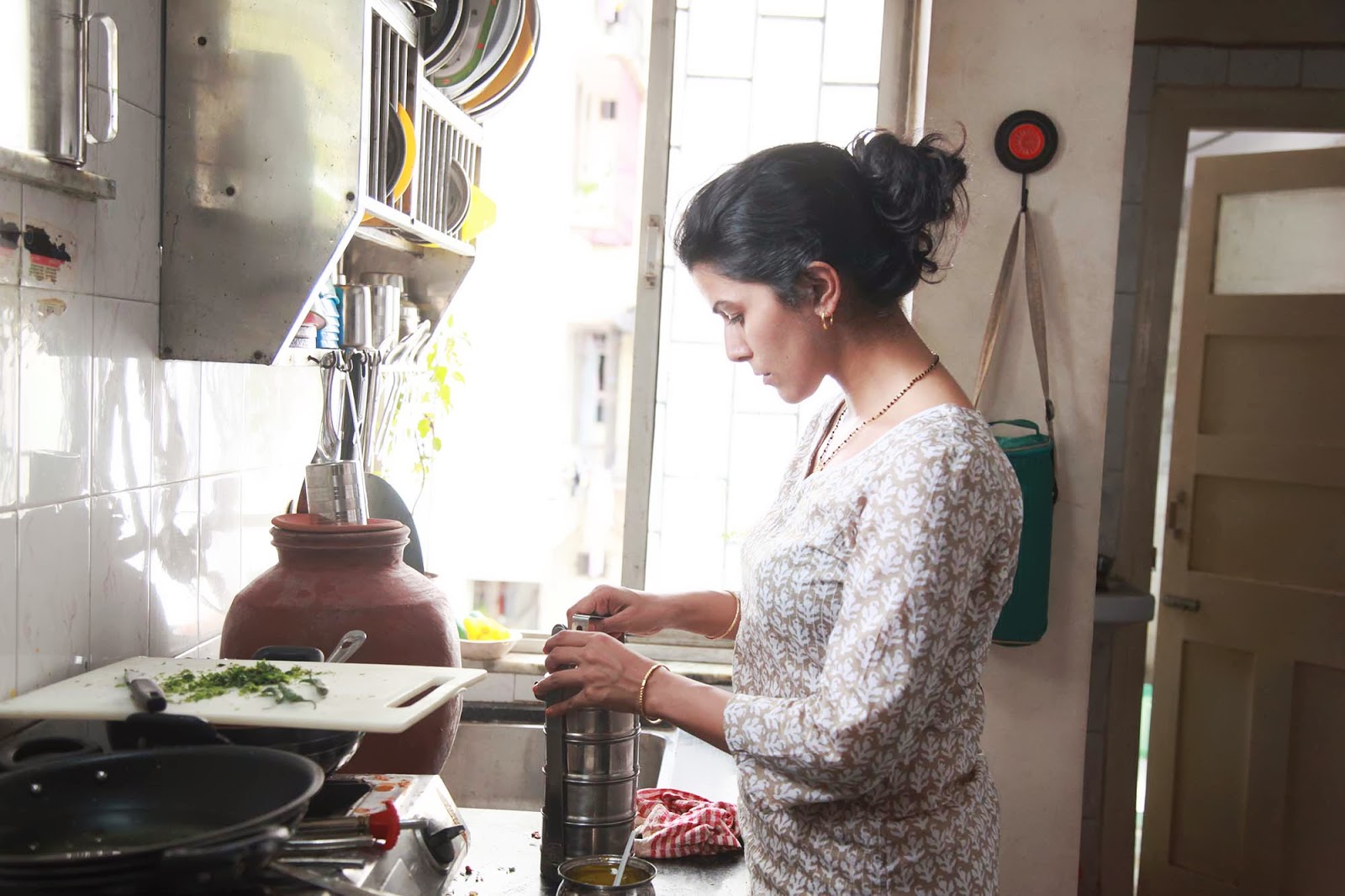
The story of The Lunch Box is charmingly simple – a mistake in the delivery of Ila’s carefully cooked lunch for her husband marks the beginning of a relationship with a curmudgeonly accountant on the cusp of his retirement – yet it opens up the complexities of life in Mumbai and how easy it is to be lonely in a city of millions.  As the story gently unfolds it showcases the famous Mumbai Dabbahwallahs and their phenomenal achievement of delivering thousands of tiffins across the city each day.  Watching the system in action, perhaps the hardest thing to swallow about the film is that a lunchbox repeatedly does go astray, although perhaps there is some redemption in the fact that is consistently it is misdirected to the same person every time. I’m happy to believe such an aberration is possible though, since it does make for an excellent story.

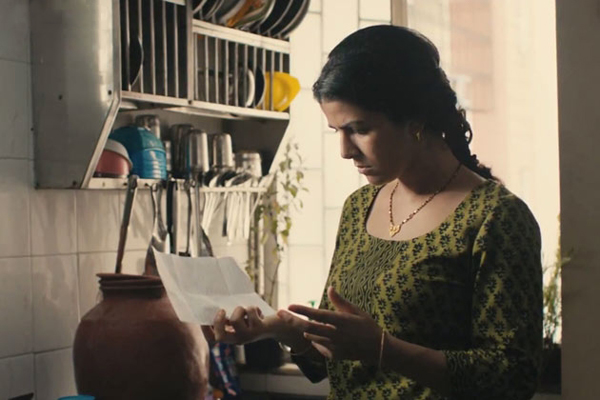
Ila (Nimrat Kaur) is trying to use the old adage that the way to a man’s heart is though his stomach as she struggles to get her workaholic husband (Nakul Vaid) to notice her.  She’s ably assisted in her endeavours by her upstairs neighbour, Mrs Despande (Bharati Achrekar) who supplies spices and recipes along with useful homely advice.  We never see Mrs Despande, but only hear her voice as she shouts down instructions or sends down a basket of supplies, although there is the added bonus of hearing her music – a selection of evergreen Bollywood tunes. As we learn later, her story is also one of isolation, but Mrs Despande seems to have come to terms with her life while her presence seamlessly adds another layer to influence Ila’s own indecision.

The Lunchbox

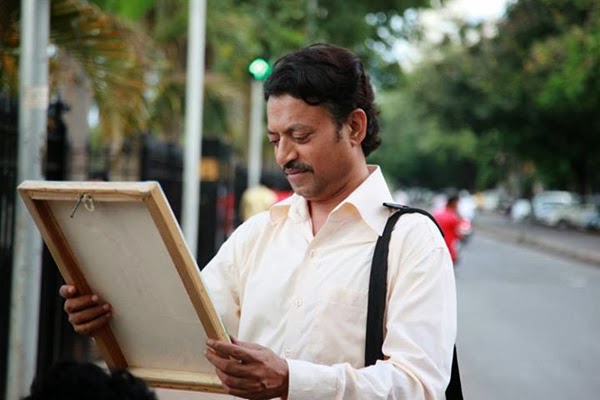
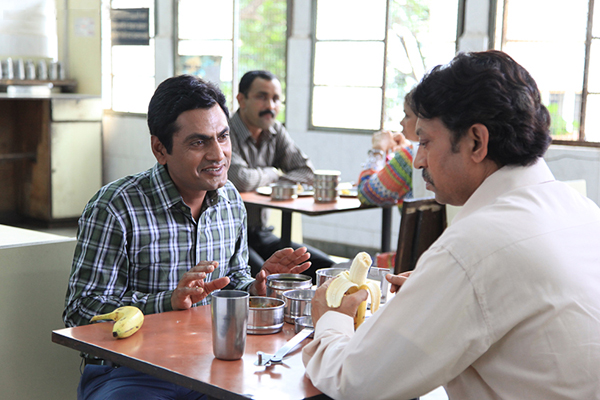
Meanwhile, Saajan Fernandez (Irrfan Khan) is just biding his time until retirement.  However in the lead-up to his departure, he’s been saddled with the younger Shaikh (Nawazuddin Siddiqui), a tiresomely happy replacement for his own efficient and silent procedures. As the story unfolds Saajan’s loneliness and Ila’s relative isolation become apparent, despite various encounters each experiences during the day.  Saajan’s nightly smokes on his balcony while he watches a family enjoy their communal dinner are the perfect example of his solitude, while Isla’s constant round of household chores perfectly show the constraints of her life.

The LunchboxThe Lunchbox

It’s not at all depressing though.  Saajan and Ila exchange notes every day along with the tiffin, and there is plenty of humour in their written exchanges.  The developing relationship between Saajan and the increasingly demanding Shaikh also provides some comedy, but as it turns out there is more to Shaikh’s character than just comedic relief and he has an important role to play.  Needless to say, Saajan’s silence at work is slowly eroded by Ila’s tasty lunches and Shaikh’s puppy-like demeanour as he clamours for attention and follows Saajan around everywhere.   Perhaps more unexpected is Ila’s realisation that she is responsible for her own happiness, beautifully understated in a scene with her mother (Lillete Dubey) after her father’s death, and gradually developed as the story progresses.

The LunchboxThe Lunchbox

It’s the small touches that make the film so enthralling.  Irrfan Khan says more with his contemplative silences and the quirk of an uplifted eyebrow, than many films manage with an entire screenplay. Although the focus is on ordinary people and their ordinary lives. Ritesh Batra captures some extraordinary moments on film.  The claustrophobia of Mumbai’s crowded trains echoes the self-imposed limitations of Ila’s small kitchen while Saajan’s neatly organised desk speaks volumes about his personality.  As their lives open up to more possibilities, so too their physical surroundings become less constrained and both start to interact more with the world around them.

The LunchboxThe Lunchbox

Irrfan Khan and Nimrat Kaur are both fantastic in their respective roles, creating depth and interest in their characters as each slowly develops throughout the film.  They both fit their characters so well that this just wouldn’t have been as compelling viewing without them. However Nawazuddin Siddiqui is just as good, particularly as his story evolves and we learn more about his background, while there is able support from the rest of the cast.  The screenplay, written by début director Ritesh Batra along with Rutvik Oza, is beautiful in its simplicity, with plenty of unexpected turns in the path and a particularly well thought out ending.

The Lunchbox

Overall it’s a very upbeat story and a breath of fresh air in an industry that is too often obsessed with Hollywood action wannabes and South Indian remakes.  The film has featured in many international film festivals, including Cannes, and I saw it here at the Indian Film Festival in Melbourne. That was a packed showing, perhaps due to Suhasini Maniratnam’s recommendation at her Masterclass and the film received a very positive reception.  The Lunchbox is scheduled for a more widespread release in Australia later this year, and I wholeheartedly recommend watching – you won’t be disappointed!

The Hidden Fortress (1958)

the-hidden-fortress-movie-poster-1958-1020506994

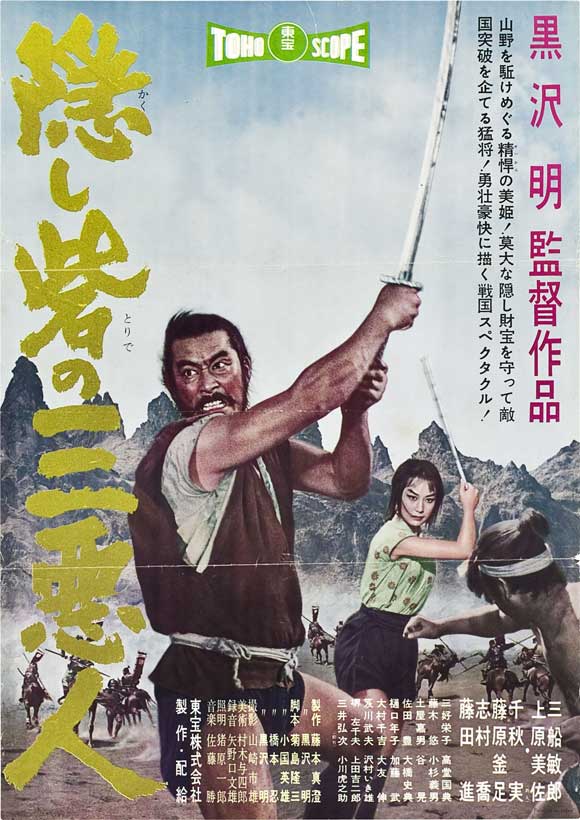
Akira Kurosawa’s story can be summed up simply.  Two greedy peasants are persuaded with the promise of reward to escort a man and woman across the border and smuggle a load of gold hidden inside firewood. However, they do not realize that their companions are actually a princess and her general and that the gold is intended to help Princess Yuki rebuild her clan. There is action and humour, greed meets idealism, relationships are tested and altered, and everyone learns a little along the way.

Hidden Fortress (or Kakushi-toride no san-akunin) is cited as one of the inspirations for Star Wars, and there are numerous comparison reels and articles available online if you want to learn more. While that was one of the reasons I first saw the film some years ago, it isn’t what I remember it for. This is an action packed adventure with great characters, a ripping yarn told with a splash of verve and wit. Just my cup of tea.

Hidden Fortress was also Kurosawa’s first film using the then new widescreen technology and he makes the most of his locations and staging. Using grand outdoor sets to bring a sense of realism to the background, plus Kurosawa’s own exceptional editing skills, this is almost an immersive viewing experience with nothing to break the sense of watching history unfolding. There is something about seeing a vast crowd of extras in a battle scene and knowing they were all real people, not CGI additions. It makes the epic seem even more so. In fact the camera shakes a little in a mass prison break scene, presumably from the vibration of hundreds of men running down the stairs. Kurosawa (and his cinemataographer Kazuo Yamasaki) can swoop from wide expanses and grandeur down to the small personal moments easily overlooked and forgotten.

On another level, the film may also be an ode to Toshiro Mifune’s thighs. Despite wearing the Edo period equivalent of shorty short shorts, General Rokuroto Makabe is an imperious leader of men. He tracks peasants who stumbled over some of the Akizuki clan gold and cons them into helping him. He torments them, seeing them as weak and venal with none of the ideology or purpose befitting a true warrior. But he comes to value their street smarts and knack for self-preservation.  Mifune is a charismatic actor with a robust presence. He turns in a well judged performance in a film that provides a great showcase for his charismatic alpha male persona. His horseback chase and subsequent duel is wildly suspenseful, with the camera barely able to keep up, yet you know Rokuroto will win because he just looks invincible. And seeing the general participate in a fire festival dance with dour determination to pass for a local peasant having fun was amusing.

Misa Uehara is Princess Yuki, a feisty princess in disguise trying to survive and rebuild her family’s domain. For some reason this disguise also involves short shorts but nothing too unladylike. She appears to be unfeeling but is keenly aware of the sacrifices that her people have made and the burden that places on her.  Another character says of her that she is more masculine than she is a girl, and she is certainly more competent and independent than many a movie damsel in distress was ever allowed to be. Although fleeing for her life, Yuki also gets to experience the real world for the first time in her 16 years and she finds it quite enchanting when she can put her cares aside.

She sees good and bad in people, observes poverty and other social woes. She is generally cool and decisive but doesn’t lack empathy so I found her interesting and sympathetic. I wondered whether her decisiveness was a sign of great leadership or just typically teenaged black and white thinking, but generally Yuki does the right thing. Yuki wins people’s loyalty as they believe they can trust in her integrity and not just because she has Rokuroto Makabe and his sword at her disposal.  Uehara’s timing and reactions are excellent, especially in scenes where Yuki is pretending to be a mute. Apart from being limiting to an actor, that also places the character in extra jeopardy as she is limited in her ability to respond without breaking her cover. Her dancing at the festival was an expression of joy and release, an affirmation of the strength that could come if she survived the fire.

The story is largely told through the squabbling peasants Tahei (Minoru Chiaki)and Matashichi (Kamatari Fujiwara). They are repellent and a little endearing by turn.  They roam through the post war landscape complaining bitterly that they didn’t get to make a profit despite all their (alleged) hard work. They seem to have no loyalty or principles beyond making a buck and will turn on each other at the drop of a hat. While these Everymen bring a lot of the comedy to the film they also provide the contrast between rarefied aristocratic living and a more dog eat dog perspective. The first time they see Yuki, they follow thinking a girl alone in the forest would be easy. Later on the journey, despite now knowing her as a travelling companion, they see Yuki asleep and draw lots for who should go for a walk and let the other one rape her first. When the chips are down, they cling to each other and eventually see the bigger picture. Given that most of their dialogue is moaning and crying, both actors do well to give their characters such vivid and distinct personalities. I didn’t mind seeing them suffer, but I would have wielded the editing scissors a little more in their direction.

Hidden Fortress-Hyoe Tadokoro

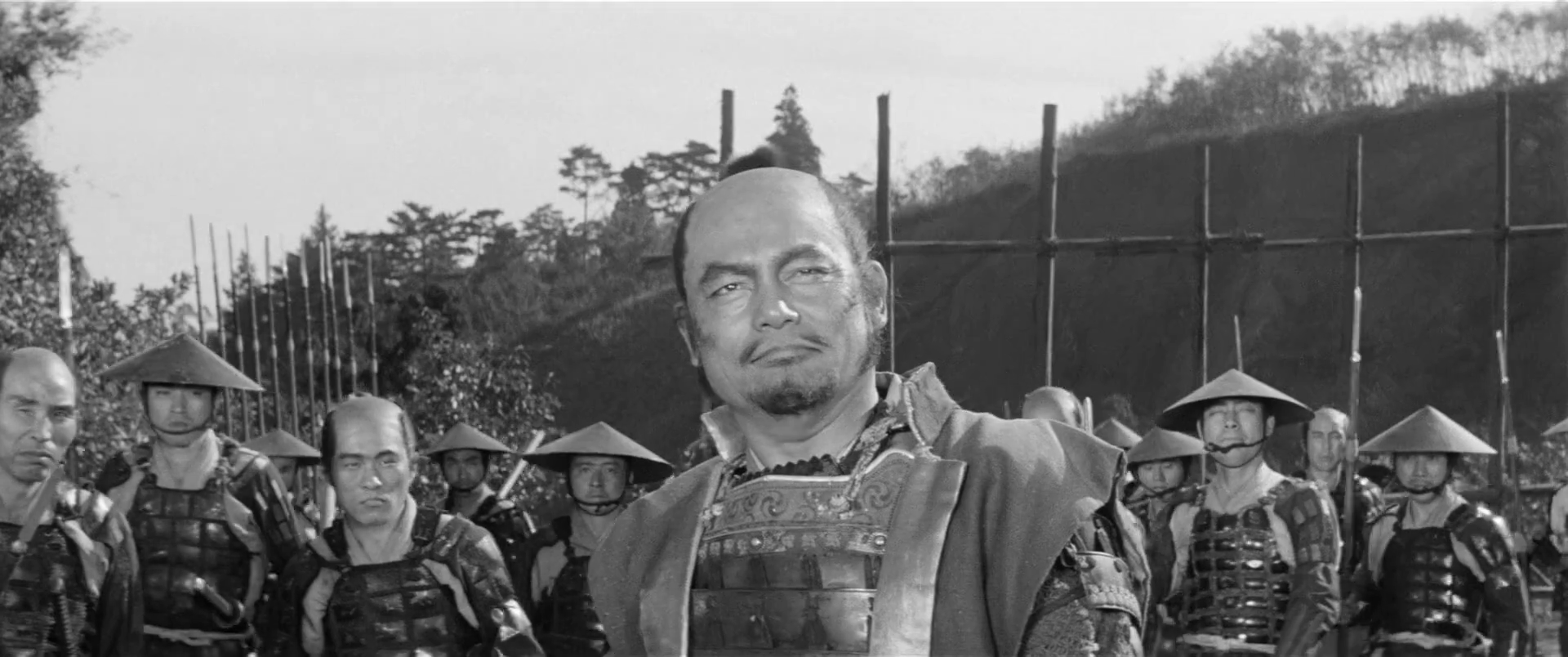
Susumu Fujita has a small but significant role as Hyoe Tadokoro, an old adversary of Rokoruto Makabe. His wry expression conveys volumes as he squares up against a respected foe and tries to face down the blazing indignation of Yuki.

I was thrilled to see this included in ACMI’s recent Samurai Cinema program and to have the opportunity to see it on a big screen for the first time.  It is a tale of derring-do, the grand visuals still place the human element at the forefront and the characters are easy to invest in. Well, maybe not the comedy peasants so much. 4 ½ stars!