
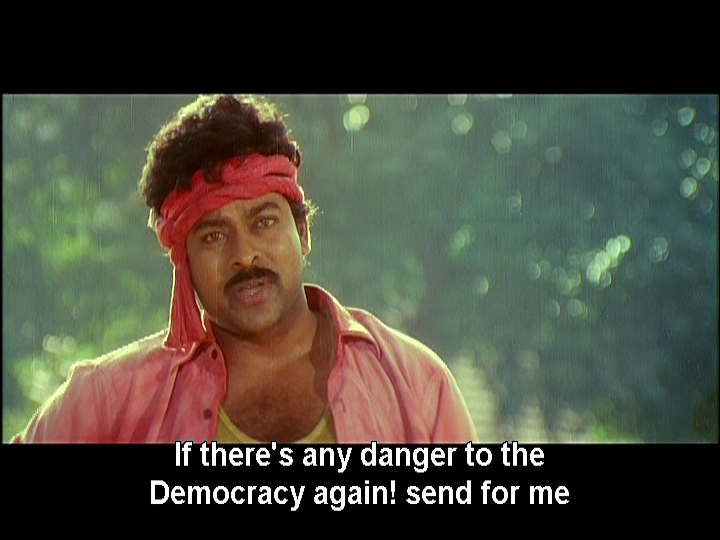
Muta Mestri is a masala film with a message, featuring Chiru with director A Kodandarami Reddy, and dialogues by the Paruchuri brothers. Overall the blend of ideas and drama and action is balanced. The action is full throttle, the dancing energetic, the ladies outfits are frequently hideous and the message is generally one I can get on board with. What works, works well but there are some heavy handed moments and a few assumptions around values that left me cold.
 Chiranjeevi is the very patriotic Subhash Chandra Bose, the ‘Labour Contractor’ at a local market. He gets an excellent introduction when Sukkamma bets Brahmi a nudie run that the porters can’t unload waiting trucks in less than 10 minutes.
 Whenever Bose arrives by bike, he just lets the bike careen off into the distance. It oozes confidence and a dash of silliness which is perfect for this role. Oh and she loses the bet.
The market is a harmonious community of men, women, Hindus and Muslims all working together. There are some statements to the effect of unity equalling strength.

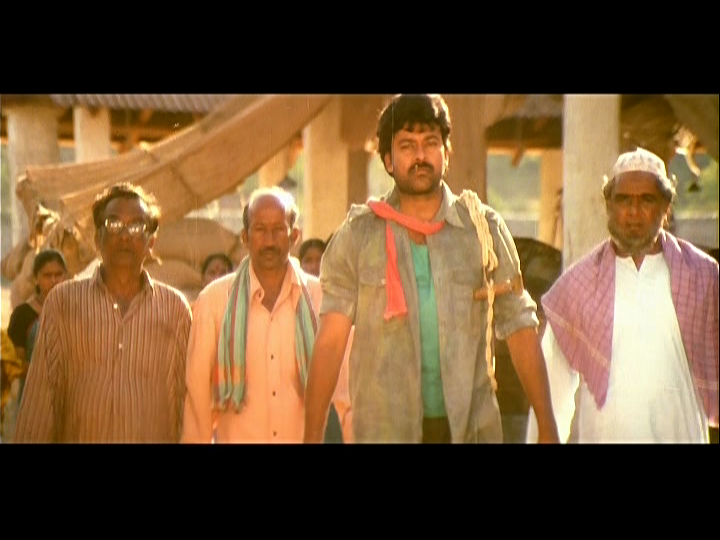
Allu Ramalingaiah plays a teacher who educates the children about Independence, Gandhian principles and the like and regulars Brahmi and Ali lurk in the support cast too. It’s the India that should be, according to the vision of this film. Kasim is one of the more prominent support characters and he and his son are well liked. They celebrate their Hindu friends’ festivals and the Hindus respect and understand Muslim religious practice. Indeed, knowledge of prayer times sparks a crucial plot development towards the end of the film. Diversity is shown as beneficial, not just something to be tolerated.
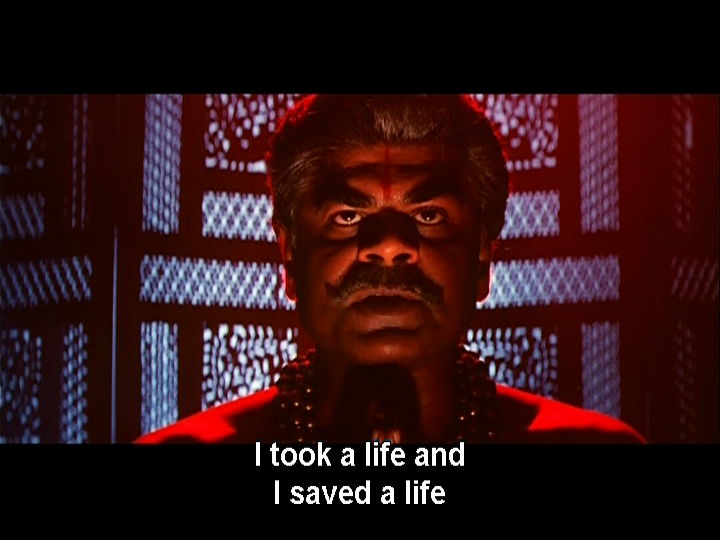
Atma (Sharat Saxena) is the villain of the piece. He is more of an ascetic style of villain, believing he has a relationship with god that allows him room to negotiate indulgence for bad deeds. He wants to use the land the market is on for a new development. The market folks turn to Bose for help and he stages a non-violent protest outside Atma’s house.

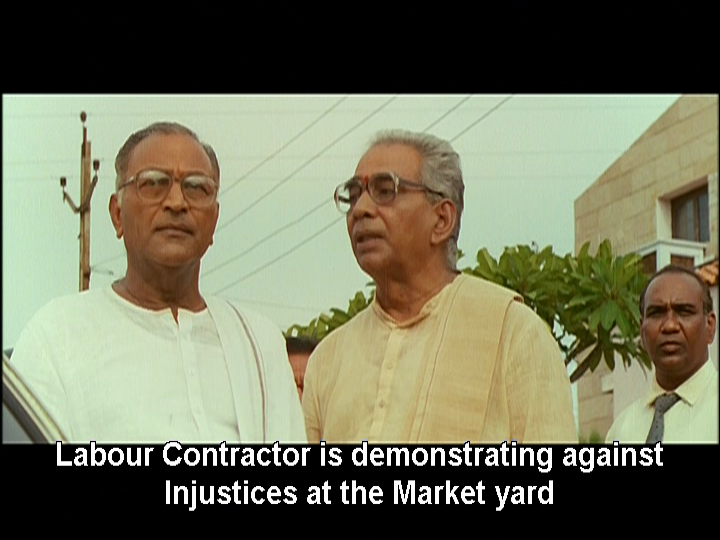
Bose allies with MLA Sundaraiah and the CM (Gummadi) and eventually moves into politics – a position that Atma wanted for his son Dilip. Dilip is the kind of baddie who pulls up outside a school and plays loud crappy music to drown out the pure sweet sound of innocent school children singing the national anthem. And adding insult to injury, he then dances badly in the street. Obviously Bose wil deal with him severely.
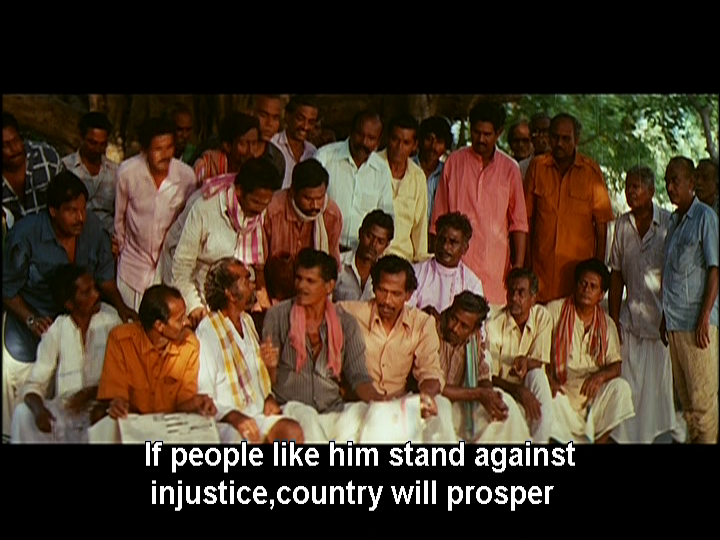
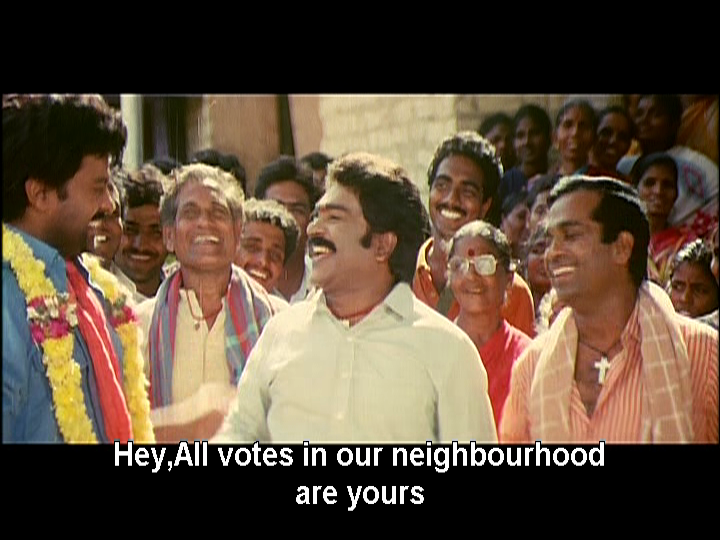
Bose brings a direct and action oriented approach to politics. There is a great sequence of Bose being wheeled from one photo op to another with the emphasis on being seen to feed orphans or plant trees rather than actually doing it. Bose reprimands his advisors and starts making his own decisions based on what he sees as right. He upsets the applecart and the CM loves him for it, as do the people. This is a major theme in the story and there are recurring examples. The film also makes a point about the quality of people in politics, and the shift from people who wanted to change the world to those who just want to profit from it. People have a responsibility to try and fix things, not just leave them for someone else to clean up. For all the idealism Bose spouts, it’s a deeply cynical film.
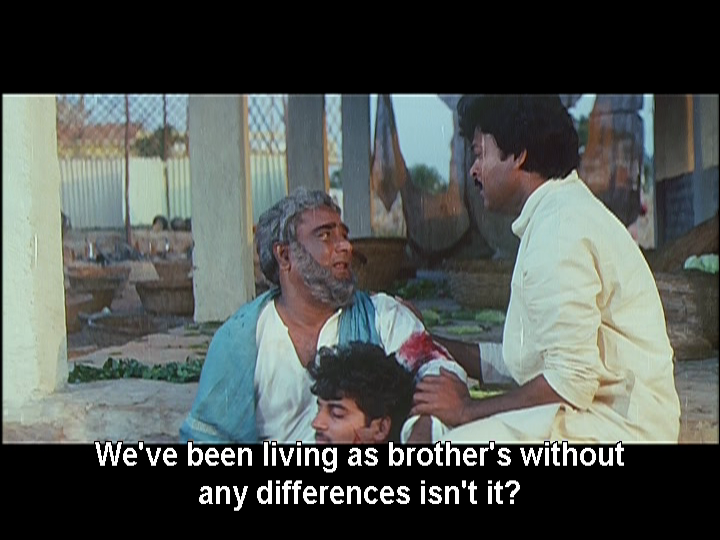
Atma realises that the only way to hurt Bose is to attack his loved ones and discredit him. Bose realises that he can’t sort out Atma while he is part of the government. It is a similar idea to the cop/vigilante issue raised in other films. Justice is located outside of the legal system and good men can do illegal things as long as they are doing them for the ‘right’ reasons.

The action scenes are energetic and impressive, and Chiru is in excellent form. The fights are fast and athletic, and suit his character’s style. Actually, Bose has multiple fight styles and uses them to entertain people watching him belting the daylights out of the baddies. I liked Bose’s interactions with the other guys at the market and Chiru has a gleam in his eye when he gets into the rousing speeches. His dancing is excellent, and especially when he has the opportunity to go for it. A lot of the comedy is Bose bumbling his way through the intricacies of political life, and the hassles of being a chick magnet so it isn’t too intrusive even if it is very silly. Chiranjeevi looks great in simple working attire, although he does veer into acid wash denim territory which is less pleasing. The song costumes are an outlet for the frustrated wardrobe team. I keep saying this, but Chiranjeevi is such an accomplished actor. He finds opportunities to give his character more depth and complexity than a mass film may require, making the overall result more engaging and credible.
There are some things I took issue with. Bose’s sister Jhansi gets home late from college and because he sees the neighbours watching, Bose slaps her. There is a tearful repentance that follows, and the upshot is that avoiding reputational damage is the responsibility of women. That scene will come back to haunt Bose in a major way but it left a bad taste in my mouth, especially when Jhansi basically apologised for making him feel the need to hit her. Grrrr. At the same time, Bujamma (Meena) is very forward in chasing Bose and there is no penalty for that. So his sister has to be perfect and virginal but he will marry who he chooses and think no less of her for trying to get her hands on him before the wedding. Sigh.


All of the females in the film are given short shrift. Bujamma is, as Bose repeatedly tells her, loud, crass and stinks of fried food from her snack stall. She keeps trying to transform herself to be more like what he wants but cannot change her nature. Some of it is quite funny, as in a challenge to stay silent for 24 hours, but some of the dialogues are just plain mean. Meena is pretty and lively enough as Bujamma although her performance is a bit grating. Kalpana (Roja) is Bose’s secretary, and as Bujamma sees her the main rival for Bose. Roja doesn’t get much to do apart from stand around and look decorative although she is afflicted with ‘comedy’. Brahmi decides to help Bujamma keep Bose and Kalpana apart by telling Kalpana that after six…she’d better watch out.


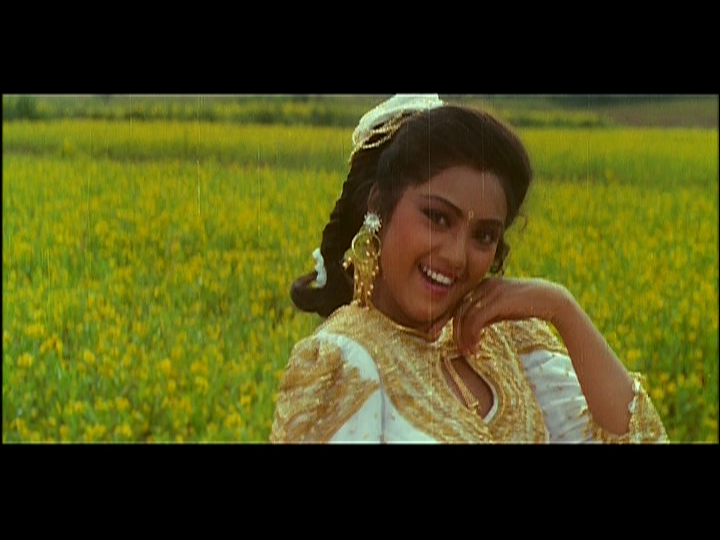
Despite that excellent piece of advice, it’s a stupid and unnecessary diversion as Kalpana keeps fantasising about Bose’s possible sexual advances and fainting all over the place. Although it did lead to this song:
She seems to think that was a nightmare. Ahem. (Note – if you want the film on DVD, the Moser Baer DVD doesn’t include that song but the EVP one does.) Koti’s music is not particularly memorable but the picturisations and costumes made an impression. If that isn’t enough costume WTFery for you, please be my guest:

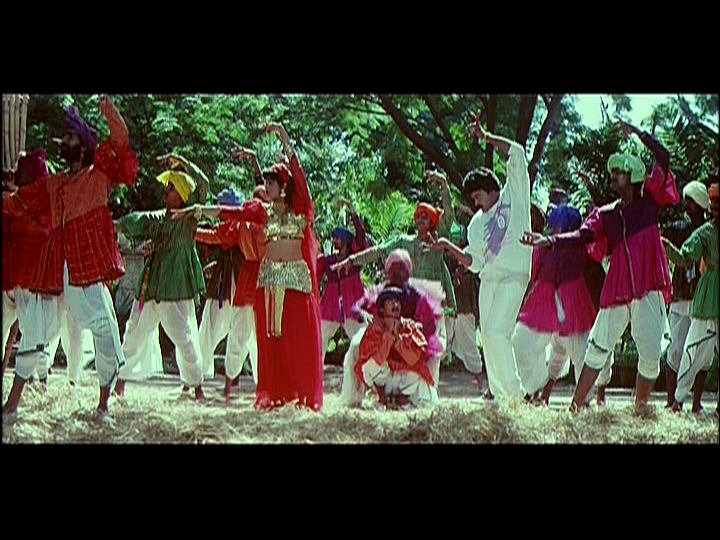


Despite an escape plan that uses a detailed model, Bose catches up and Atma and Dilip are dealt with in excellent and elaborate style.
If ‘cross-country arse-kicking’ was an Olympic event, Bose would have taken gold (and possibly also silver and bronze). Justice is done, at least for some.
It’s an entertaining enough film, but not quite enough to make me want to watch it too often. There is some substance lurking under the cheese, but I have issues with the treatment of Jhansi in a film that was otherwise very positive about equality and community. See it for Chiru’s dancing, the outfits and the come-uppances. 3 ½ stars.





 Cinema Chaat