Arjun

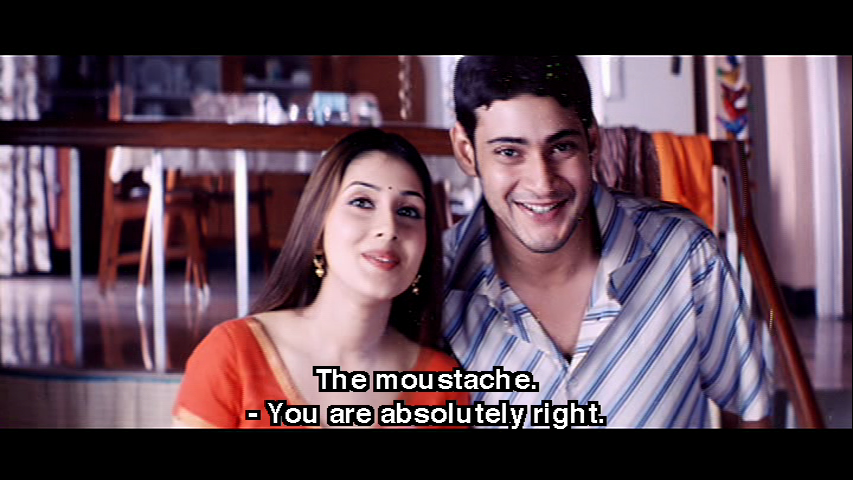
 Arjun opens with a bleeding and intense Mahesh Babu staring down the camera. We see a bloody blade, and a gang of rowdies running towards him as he waits in a downpour of rain. It’s a gripping start.
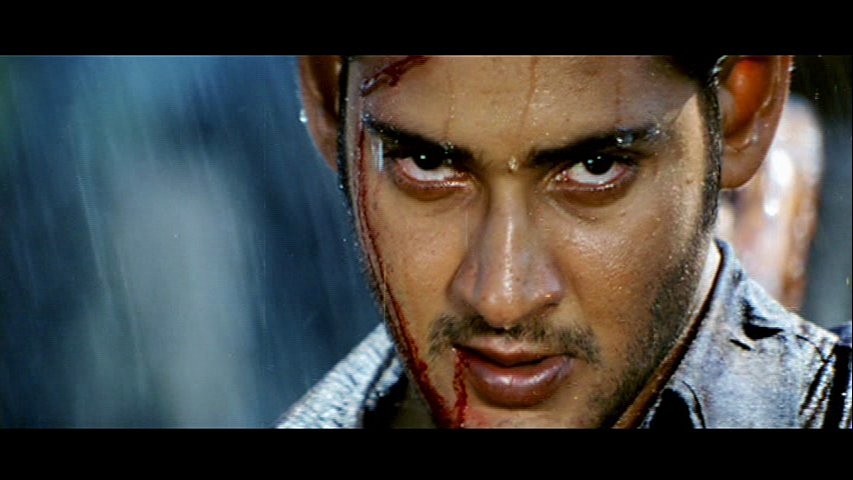
Which then gives way to a happy inspirational song and a flashback. After he kills those rowdies of course. A flashback narrative structure can often diminish the drama as the viewer knows the end point. In this case, Gunasekhar uses the form to heighten the tension. While things had obviously gone wrong, the details emerge gradually. We know Mahesh is waiting to deal with his enemies, but it takes time to discover who they are and what has happened.

Often in a big star vehicle, the supporting characters are mere sketches. But Gunasekhar has populated the film with memorable people played by excellent actors.  As in the previous Mahesh/Gunasekhar project, Okkadu, there is a strong web of relationships that makes it much more engaging. Arjun (Mahesh) is a protective twin determined to look after his sister Meenakhi (Keerthi Reddy). He isn’t one of those sociopath heroes who exist in isolation. There is a pleasantly lived in look to the family home, his office worker parents wear slightly dowdy clothes, and their story is firmly middle class. It’s refreshing to have a hero with a family and to see a sister be more important than a prospective girlfriend. But they are not angels.

Dolce – this is for you!
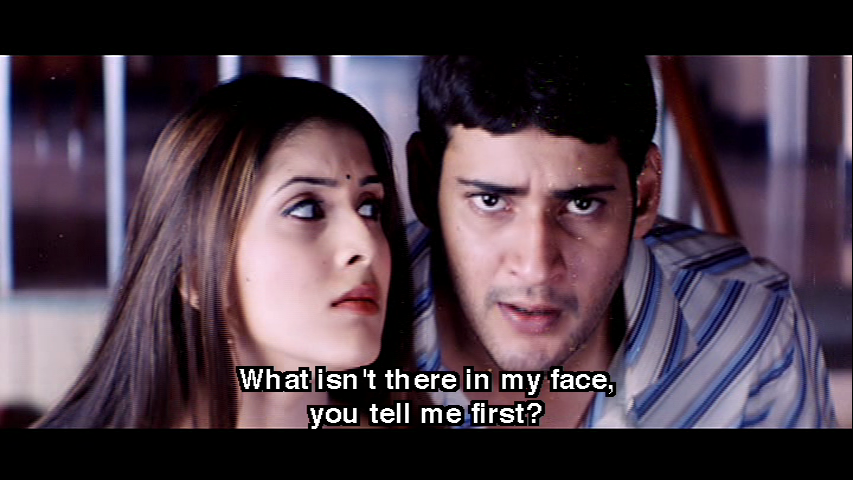
As always, a film hero who kills bad guys is not doing anything really wrong so we needn’t be troubled by morality. But there does seem to be recognition that there are always consequences. Certainly there is a different rule for the baddies, and especially if they kill good people.

Prakash Raj is Bala Nayagar, a Madurai based bigwig. His wife, played by the still striking Saritha, is his perfect life partner Andal. She knows what he likes to eat, his moods, and when to kill people who annoy him. When their son Uday (Raja) wants to marry college sweetheart Meenakshi they are furious as his engagement to a rich girl had been fixed. The couple are enthusiastic but only moderately successful killers, and many of their schemes to remove Meenakshi fail to comedic effect.
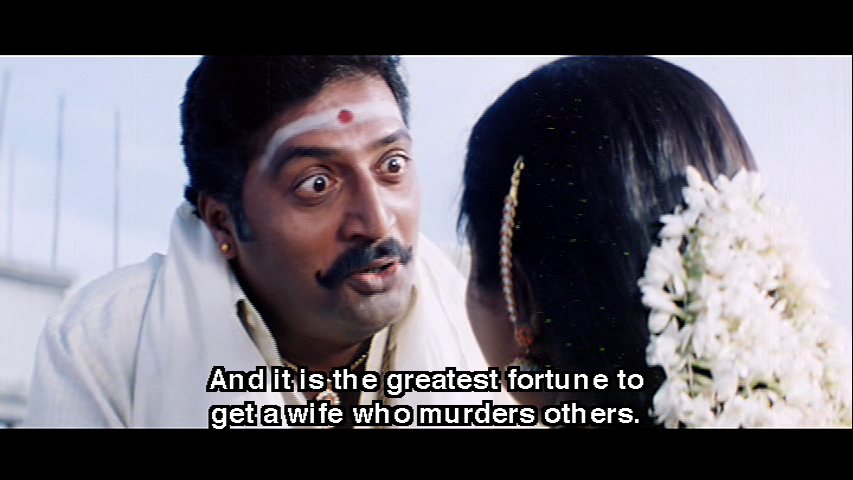
Saritha and Prakash Raj seem to have a side bet on who can out-over-act the other and are great fun. But despite the often ludicrous shenanigans, they each have an intensity that makes them genuinely menacing at times. Prakash Raj can turn from jovial to chilling calculation in a blink and Saritha is his match.

Mahesh also crosses paths with Rupa (Shriya) – a very annoying girl who invites her own downfall by….blowing a kiss at him. Yes! This cannot be allowed without some form of payback. How dare she! The only way honour can be satisfied is if he stalks her, then harasses her until she marries him.
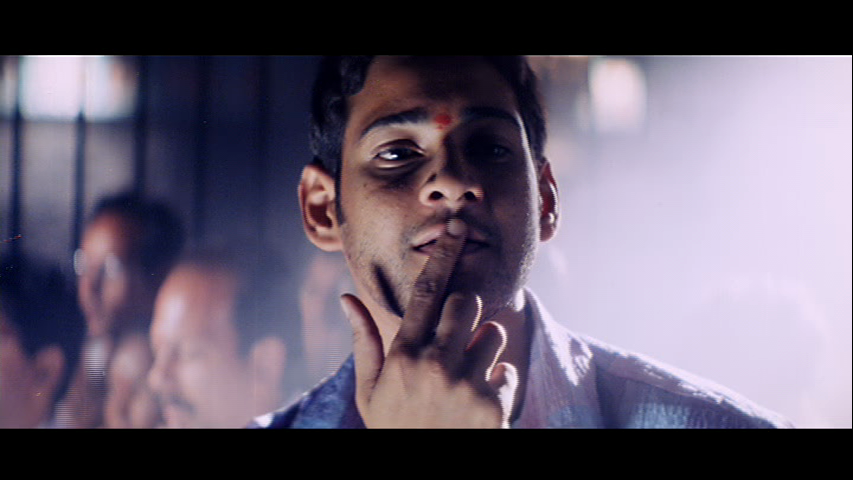
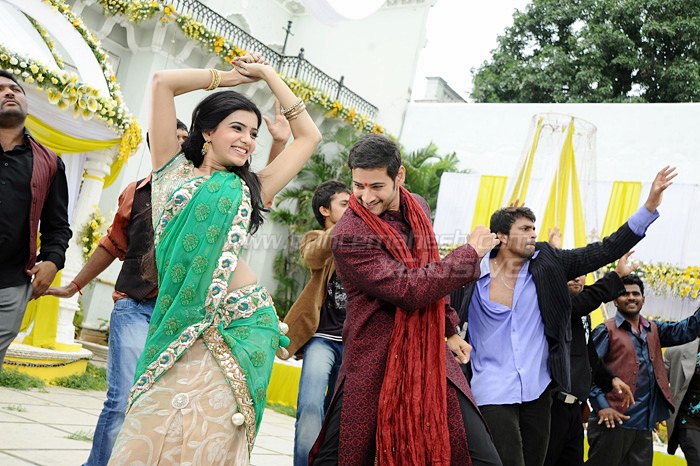
The romances play out very differently. Meenakshi and Uday love each other but neither feels they can upset their parents’ plans. Arjun lays down the law – Meenakshi will not elope and if Uday wants her, he has to tell his parents and all must be done out in the open. This is how he introduces her to the Nayagars. The song gets full points for colour, movement and excellent use of locations. Plus – parrot costumes.

There is a theme of blood being thicker than water, and even before things start to take a turn, Arjun is determined not to abandon his sister once she is married. Meenakshi is in peril, often unaware of the danger and even defending her in-laws much to her twin’s dismay. Keerthi Reddy has a nice rapport with Mahesh although her role dwindles once she enters her in-laws home. She has some intense scenes as she shows her pain at her brother’s actions. Although Meenakshi is often passive, it rarely seems that she is passive through a lack of sense. As with some other characters in the film, it is a blend of mass genre cliché and soap opera – this time damsel in distress mixed with modern bride meets traditional family. The parallel of Meenakshi as a divine being and as his sister is not lost on Arjun. The goddess gives comfort and support when his sister turns away, and maybe a small nudge of coincidence.

Of course, Rupa lives in Madurai with her domineering dad (Tanikella Bharani). Arjun’s pursuit of Rupa at first seems more about putting her in her place than any romantic attachment, but it is amusing. I am also grateful to the subtitle team who kindly explained the wordplay.
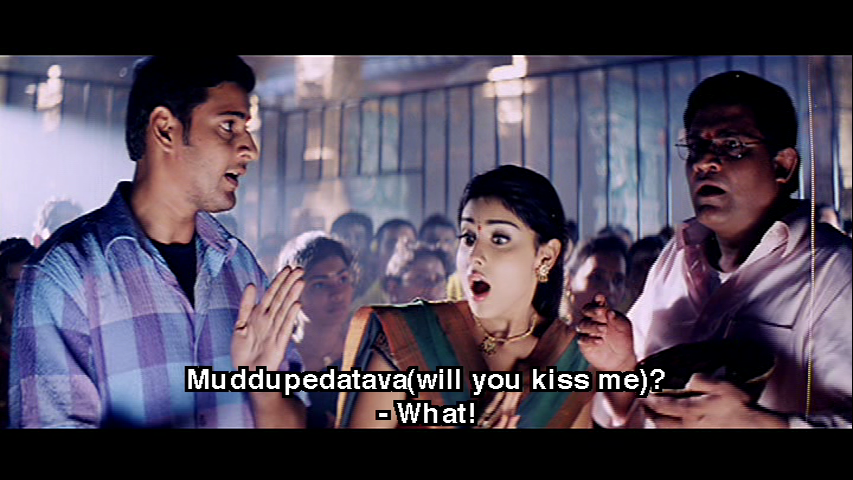
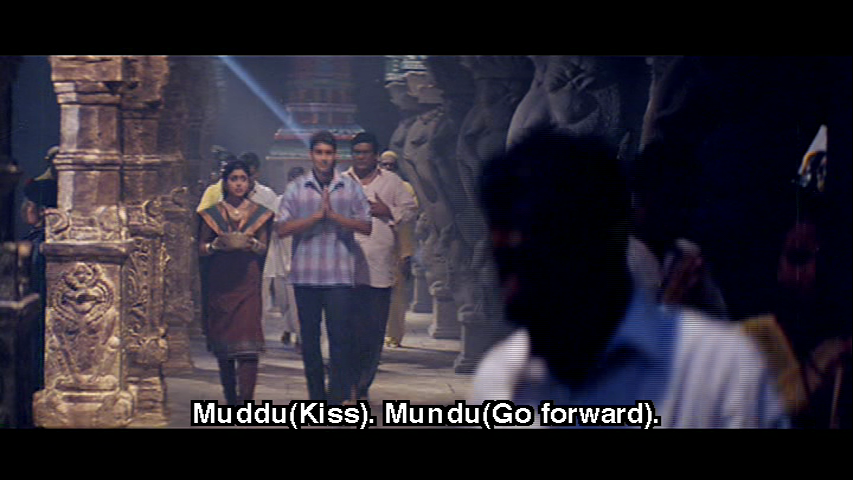
Rupa is a really silly character but she does gain appeal over time.  She offers to help Arjun when he is at a low point, which makes him see her in a new light (perhaps the light of her doing what makes him happy). Shriya gives a very energetic performance, initially edging onto the Genelia Manic Pixie Dream Girl scale but kind of endearing once she settles. One thing I like about Shriya is that she never seems overawed by her co-stars, and she just goes for it and claims her bit of the screen. She withstands a varied but determined assault by the wardrobe team in the songs. As a couple she and Mahesh have some chemistry but mostly they seem to have fun in their dances. This is my favourite of their duets, choreographed by Lawrence.

Mahesh is superb. His anguish over Meenakshi and his playfulness with Rupa are equally believable, and no one emanates fury like he does. Thanks to a thoughtful screenplay, Mahesh has room to act as well as showcase his heroic chops.

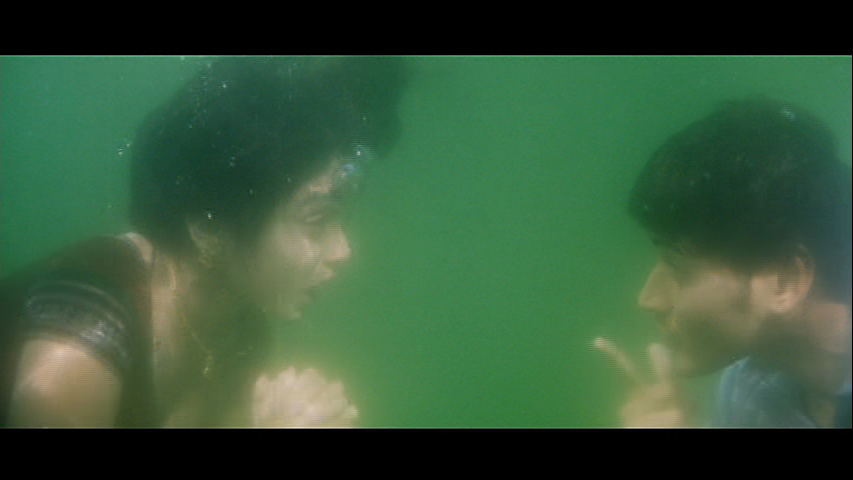
He uses his lanky frame and the baby faced killer stare to great effect. Some scenes with Meenakshi were really emotional, and he showed the conflict and worry that drove Arjun. It helped give the eventual denouement a much greater urgency and sense of consequence. It also made his super killing powers seem almost believable as it was clear Arjun was desperate to protect his sister at any cost. He did seem to wear more layers of shirts as the film progressed. Was this a visual representation of his attempt to stave off external threats? Or just a change in the weather? But his shirts were not the only item of clothing to make me look twice.

The excellent fights directed by Vijayan range from almost lyrical to frenetic. Even his mother gets Arjun to sort out bad guys for her so his skill and bravado have some basis in the story and aren’t just a post-interval acquisition. Arjun has a fairly laconic style, always looks like he knows he will win, and he can fight under water which is very handy indeed.
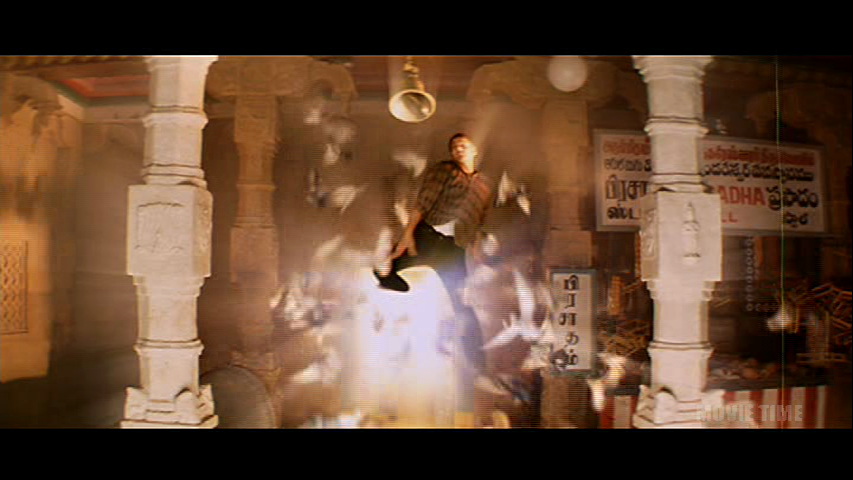
Admittedly, I have doubts about why no one can see him in what seems to be a fairly clear pool, but whatever. The climax of the film is dramatic, suspenseful, over the top and totally improbable but completely compelling.

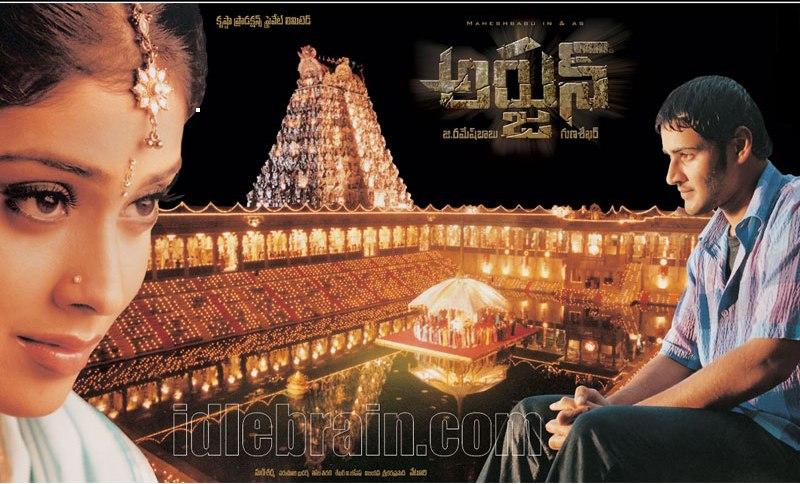
The Madurai set has stunning architecture and decorative flourishes and the crowds provide concealment, camouflage and distraction. The film combines the lush visuals of the temple set with opulent interiors, the intense jewel like colours of silk saris and excellent lighting. The camera work and edits are in keeping with the tone of each scene. The CGI, while a bit dodgy, was used for maximum impact. The soundtrack is OK but I remember the picturisations more than the music so I wouldn’t say Mani Sharma had done anything outstanding.

See this for fine actors, great visuals, exciting action and of course a hero you can count on. Mahesh delivers – Arjun is a winner! 4 ½ stars.

Heather says: While I didn’t enjoy this as much as Temple I think it’s an interesting story and the relationship between Arjun and his sister is well developed. Mahesh is excellent as the faithful brother who will do anything to keep his sister safe and happy and it’s really his performance which makes this more than just a run of the mill action film. I also liked Kirti Reddy  as Meenakshi and thought her early scenes with Arjun were convincing in showing the rivalry and the affection between the two

I did find it a little incredible that Arjun’s mother Kamala was quite happy to set her son up to face a room full of rowdy’s and then walk away and leave him to it.  While I appreciate her faith and confidence in her son, I’m more inclined to agree with Meenakshi’s view that it wasn’t a very responsible attitude for a parent to have. It was a quite a novel approach though and as Temple mentioned, did set up the fight scenes for the rest of the film very well.

I loved Prakash Raj here as the father intent on marrying his son to his best advantage, but he was totally outdone by Saritha as his wife. She was fantastic in her obsession with the 1001 crore dowry and her expressions as she was either murdering someone or extorting her husband to murder were brilliant. Combined with Kamala, this has to be the film with the blood-thirstiest mothers I have seen and they both added a totally new dimension to the filmi ma character. I loved them!

On the negative side though, I couldn’t understand the point of Shriya’s character at all. It doesn’t help that I really don’t like her as an actress, but the plot with Rupa seemed to be stuck on as an after-thought. I don’t think a romance was necessary, particularly since her character had no relationship to anyone else in the plot, and it could have been omitted without any disruption to the rest of the story. My irritation with Rupa in this film was inversely proportional to the amount of clothes she was wearing. In the opening sequence while she was teasing Arjun wearing skimpy clothes she was incredibly annoying and I really hated the first song with her. Later on, when she was more modestly dressed in a sari I was better able to ignore her and her presence wasn’t quite as grating.

While the main story of Meenakshi’s marriage and murderous in-laws was engaging and the action thrilling, there was a little too much fluff in the rest of the story for me to become totally engaged with the other characters. A winner in terms of Mahesh’s performance and worth seeing how Gunasekhar proves Arjun can walk on water. 3 ½ stars.
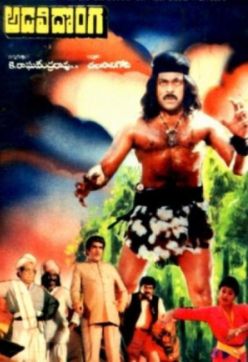
Adavi Donga

Adavi Donga is difficult to really capture in mere words. As I watched it, I kept wondering if Chiranjeevi was already the Megastar, because this is not the kind of film that I imagine would really enhance an actor’s reputation. This was an adventure without subtitles, but the visuals speak volumes. My  copy is a dodgy quality VCD so my images will not do it justice, but I have sourced some short clips to help bring Adavi Donga to life. No dear reader, don’t thank me yet!

Sharada, always so elegant and striking, is Vasundhara. She opposes the local bad guy, animal poacher and underpayer of vegetable growers, Rao Gopal Rao, and his idiot son.

He is slimey and not always just in the comedic manner you might expect from the wigs.


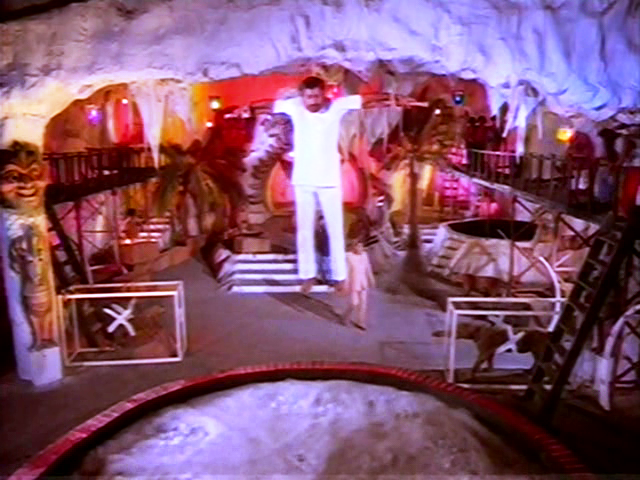
Look at what happened to the last person who crossed him! And consider the well appointed lair and excellent lighting effects. He also has a gang of brightly attired poachers, and Allu Ramalingaiah as a shady advisor and factotum.

Rao Gopal Rao frames Vasundhara’s husband for murder, and at the dramatic height of that incident, she stashes her recently tattooed infant son in the forest fully intending to come back when it is safe.  Unfortunately for her, the lad is discovered and adopted by an elephant and taken into the jungle.

I was delighted to find that the jungle was populated by lots of exciting animals like tigers, lion cubs, monkeys, antelope, peacocks and… fluffy white bunnies.


Some things made me question where the rabbits fit into the food chain. They had no protective camouflage or colouring – Stupidity or fearlessness? Were they just a convenient snack for local carnivores or something more sinister?

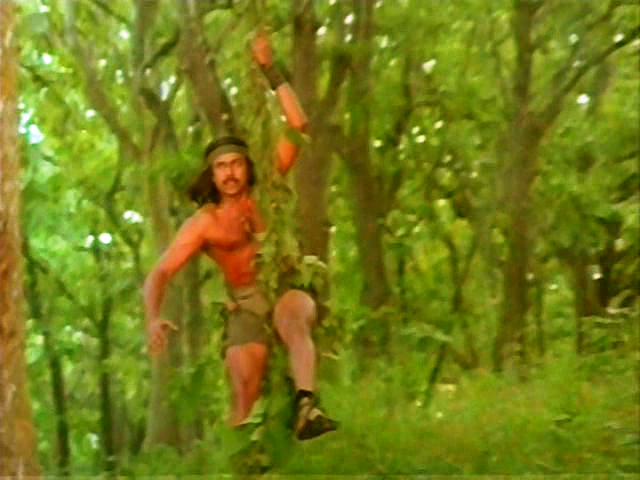
Sharada is left alone and angry. Vasundhara is a strong woman with a vengeful streak tempered by her principles. Her policeman brother, played by Kongara Jaggaiah, refuses to believe that her husband is innocent and doesn’t seem too fussed about the lost baby. Of course the boy grows up to become Chiranjeevi, a Tarzan character with a wardrobe comprising several loincloths and an array of matching sandals, who lives completely unnoticed in the not very distant jungle.

Radha has some strange ideas about jungle appropriate attire, although I guess pleather would be fairly hardy as fabrics go.

The poacher gang try to kidnap her, possibly in an attempt to force her to marry the idiot son. But Chiru cannot resist the piercing shriek of a maiden in distress and comes to her aid. She flees, leaving her cassette recorder behind. And that changes everything. I liked that the elephant mother seems appalled to find her human child dancing to some random disco rubbish. Sadly the damage has been done and Chiru goes in search of the pretty lady. This choice leads him into a world of floral curtains and scary reflections.


Radha certainly liked what she saw. The yodelling over Chiru’s arrival in this song is quite marvellous. Someone took their Tarzan tribute seriously.

Radha staged another incident to attract Chiru’s attention. She didn’t count on being chased into the jaws of a crocodile by a lethargic tiger, and of course Chiru arrives in the nick of time having been alerted by her robust screaming. I do like a good crocodile wrestling scene! He takes her to his treehouse and she seems to recover quite quickly considering her leg had been gnawed half off. But why didn’t Radha seem to notice the rabbits hopping all around her?

Chiru’s treehouse had an elephant operated elevator which at first surprised me – I mean, Tarzan needing a lift? How many city gals did he bring home? But then I realised the lift was possibly for the benefit of the bunnies who were sharing the penthouse treehouse with Chiru. Did the elephants have their own interpretation of bunny rug? What was their purpose? How on earth did the rabbits persuade so many creatures to do their bidding? Why do I care ?

Chiranjeevi’s idea of flirting with Radha is amusing rather than smouldering. He steals her bra, covers himself in a leopard skin and crawls around growling, gets his monkey to take a Polaroid of Radha while she is changing clothes and generally behaves like a hormonal teenager.

The romance between Chiru and Radha draws the attention of Rao Gopal Rao. His machinations place Chiru in danger, which allows for some excellent vine-swinging, and the elephants intervene to go find Sharada and reintroduce her to her son. Quite why it took so many years to do this is not clear, but maybe they just weren’t ready for him to leave home. It took Radha, resplendent in pleather pedal pushers, to reunite the family with a clever visual demonstration of the parent child relationship.


They quickly adjusted to this new family dynamic and the elephants helped Sharada break Chiru out of police custody. She is a very resourceful woman.

After a bit of divine intervention and maternal coaching, Chiru becomes Kalidasu. He starts wearing suits and accessorising with scarves. He also quickly develops an amazing mastery of rhetoric. Sharada imbues him with her own strong principles and he is the perfect son.


She is still crusading against the poaching and other villainous goings on. I liked the villains lair, apparently accessible only via secret rail tunnel, or the truck loading bay. Despite all the secrecy, Sharada and the local ‘tribe’ seem to be able to wander in as they please.


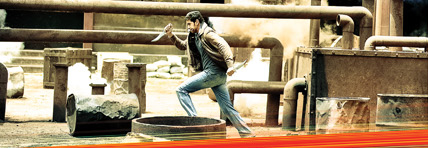
Naturally the bad guys refuse to be warned off by Sharada or by Chiru. He is outraged at seeing his former jungle friends sold for skins and tusks, although he was no tree-hugging conservationist  in his previous jungle existence. An assassin is sent to kill him. This role, if not the outfit, would have been perfect for Bob Christo. Please pay particular attention to the Wolverine style claws made from apple peelers.

Other pleasing details include the abundance of  fake ‘taxidermy’ in the villain’s house. What were they thinking?

The commitment to that theme continues into a song.

The songs (music by Chakravarthy) are kind of fabulous and completely excruciating.

The final showdown takes place in the villain’s lair and poor Chiru is faced with a terrible dilemma. Rescue his recently freed father from this?

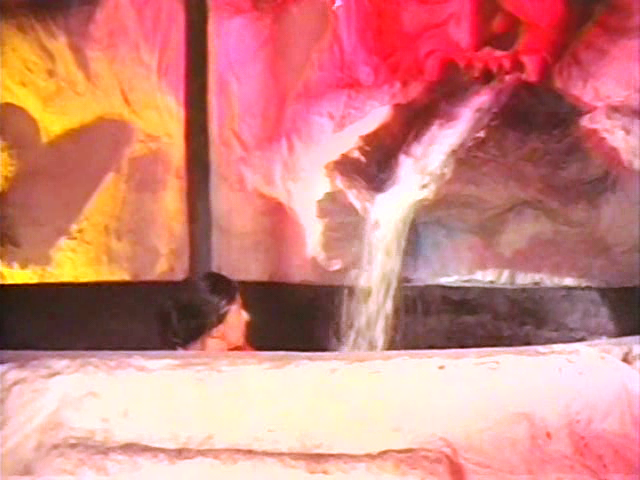
Or save his mother from this?

And how to help anyone when he is trapped? And with evil henchmen tearing his clothes off?!? Oh the humanity!


Director K Raghavendra Rao wraps things up neatly, if not terribly sensibly, and there is excellent utilisation of the elephants. There is so much fabulous wardrobe, a ridiculous plot that merrily disregards any inconvenient logic, and very appealing performances by Chiranjeevi and Sharada. A must see for Tarzan fans, Chiru fans, rabbit fans and anyone who ever wanted to know which sandals go best with a loincloth. While not a great film, this is So Bad It’s Really Very Good.  3 stars!

Dookudu

Another Adventure Without Subtitles! Dookudu is the much awaited release for ‘Prince’ Mahesh Babu and we knew it would be huge. We arrived early for the 8.30pm show, which gave us the opportunity to watch the staff deal with the problem of getting the first show crowd out through the 700 or so people crowding into the small foyer. Once people emerged, the waiting audience clapped and cheered them like they were rockstars, and it was a very festive atmosphere. As one lady said  – why come to the cinema unless you’re going to have a good time?

It was about 10pm before the film finally started, not that anyone was complaining. There was plenty of cheering, accompanied by the sounds of tearing newspaper, as everyone got ready for Mahesh’s appearance.  There was discussion about whether there might be the odd flash of elbow (Yes there was, and even a glimpse of princely tummy) and just how many shirts can Mahesh Babu wear and still manage to fight? (There is apparently no limit to what Mahesh can do, or how many shirts he can wear.)

The film starts with politician Shankar Narayan (Prakash Raj) who is so well loved by the people that we know he’s heading for a gruesome end. Sure enough he’s attacked and left for dead by his rivals who include Kota Srinivasa Rao, Sayaji Shinde and various other Telugu film baddies. Somehow Shankar survives, in a coma and hidden in a secret location, and he finally comes round some years later to a changed world. His son Ajay (Mahesh) is a policeman rather than a politician as his father had planned, a number of his friends and colleagues are dead and the family have moved out of their old house. However the doctor instructs Ajay not to shock or distress his father in any way, for example by telling him the truth, as this will be bad.

Mahesh is introduced in full throttle action hero style, complete with title song. He takes on a room full of bad guys with nothing but his comic timing, guns and a whole lot of biffo.  Ajay is a super cop – invincible and fearless. He is also quite prepared to play outside the legal system if that is what it takes. After one such scene we did have a quick discussion about the omnipresent singlet under all the layers of shirts, and whether it was actually bulletproof. Whatever the reason, the bad guys consistently fail in their efforts to eliminate our hero, while he has no such issues dealing with them. Mahesh can convincingly portray a furious rage in a very low key acting style, and he is also more than capable of bantering dialogue with the comedy uncles. It’s a role tailor made for him, and while he wears his police uniform a little on the baggy side the character is a perfect fit.

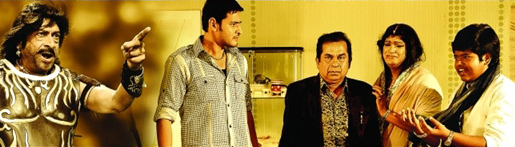
Ajay does a deal with Brahmi who’s taken over their house and in the process convinces him that he’s taking part in a reality TV show which forms a large part of the comedy in the film. Ajay pretends to be a politician and keeps his life as a policeman secret from his father, while all the time plotting revenge on his fathers attackers. It’s no wonder Ajay is always on a short fuse – he must be exhausted from all the pretending. And the killing.

Ajay finds out through another investigation that mafia boss Nayak (Sonu Sood) was involved in the assault on Shankar. It looks at first as if Sonu is about to reprise his role in Ek Niranjan as the stylish and psychotic villain, but sadly his wardrobe fails to deliver. Despite the nice cravats and the random and occasional application of grey to his hair and moustache, Nayak is a subdued and fully clothed villain who just loves his little brother a bit too much.  We enjoyed the Sheila ki Jawani dance break and we think Sonu did too, but it was shortlived. Most of the posturing is left to his faithful sidekicks played by Ajay and Subbaraju. That’s fine with us since they’re both Cinema Chaat favourites and we did enjoy watching the satin shirted Subbaraju try to mime to his boss that Mahesh was really an undercover policeman. Oh for a pen when you need one…

Along the way, Ajay takes his gang of trusty colleagues to Turkey, apparently just so he can say ‘Operation Istanbul’ as there is no other discernible reason for the location. He meets Prashanthi (Samantha), a fashion designer and, unknown to him, daughter of his clownish boss (Nasser). While Ajay and Prashanthi have the usual confusions before falling in love there is no substance to Samantha’s role and she’s soon side lined. There is little chemistry between Samantha and Mahesh, maybe because they spend hardly any time together on screen. Samantha looks beautiful, and wears whatever the costume department have dreamed up. That seems to be her sole purpose in the film as she doesn’t actually do anything.

There was more comedy with M S Narayana and one very funny skit where he took off a number of films including Magadheera and Robot. A little comedy can go a long way, but here it was integrated into the main story and with Mahesh adding to the comedy dialogue there were parts that were very funny, even to us non-Telugu speakers. The rest of the audience were roaring with laughter throughout the speeches. Master Bharath put in an appearance too. Was he necessary? Probably not. And yes there were some unfortunate stereotypes masquerading as comedy, but for the most it was entertaining.

The supporting cast was very strong, if largely underutilised. Shafi, Tanikella Bharani and Sudha had little to do, and Satya Krishnan was given maybe one line of dialogue. It’s a big budget film when you can hire some of the best and then not do anything with them!

The action sequences are excellent, and it’s hard to go wrong with a good impaling. Sreenu Vaitla has come up with several ways of illustrating the ‘eye for an eye’ concept, all of them extremely gory. The camera work and special effects were great and added impact on top of the already impressive stunts. We enjoyed the flashes of lightning when Ajay was beating Nayak to a pulp, and the changes of tempo in the film speed that underpinned the dramatic tension.

The song picturisations were less successful, and the songs by S.S Thaman are not so memorable on their own. Mahesh can dance reasonably well so it was disappointing not to see more use being made of his skills, and we wondered who decided it was a good idea to give him Abhishek Bachchan’s choreography. Chulbuli Chulbuli was spectacular with plenty of feathers and some enthusiastic backing dancers, although clearly ‘inspired’ by Kilimanjaro. The nightclub song lacked a good item girl but made very good use of the male backing dancers, grinning madly in satin pants and ruffles,  and had a giant guitar shaped light-up floor so that was pleasing. We must also congratulate the set designer for the impressive selection of chandeliers and lamps, especially the chandelier in the hospital ward.

Dookudu has a charismatic hero in a strong if silly storyline, and it is a technically excellent film in the mass entertainment style. It might not be the greatest film ever made, but it was  really fun to watch, especially with the awesome Melbourne audience.