Chithiram Pesuthadi

ChithiramPesuthadi

Chithiram Pesuthadi is the first Tamil film I’ve seen that thanks a roller skating stadium in the opening credits.  So – possibly not one of director Mysskin’s typically dark stories based on crime and murder then?

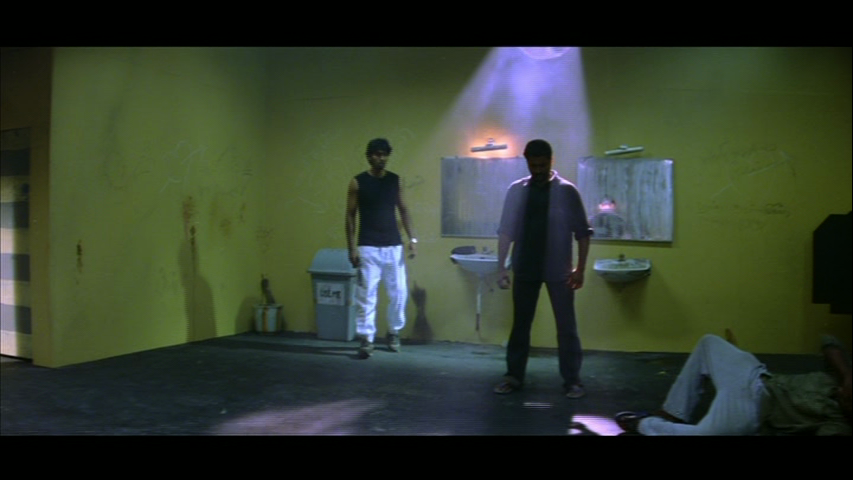
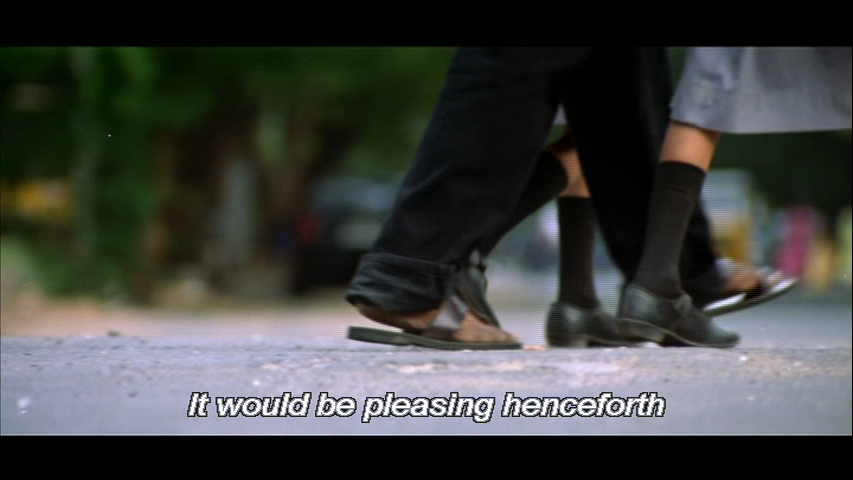
Well, no.  Chithiram Pesuthadi is billed as a love story, but even in this first film from Mysskin there are plenty of fights, numerous gangsters and an underworld theme added into the plot.  The features that I’ve come to expect from Mysskin’s film are also present, although less frequently here than in his subsequent films, but his trademark low angle shots of feet and a few odd camera angles from above still appear.  Despite the underworld theme, in many ways this is typical love story where a boy from the wrong side of the tracks falls in love with a middle class girl and there are numerous obstacles to overcome. However there are enough fresh features to keep the story interesting, while Narain and Bhavana share good chemistry together, which makes the love story a little more believable than usual.
Chithiram PesuthadiChithiram Pesuthadi

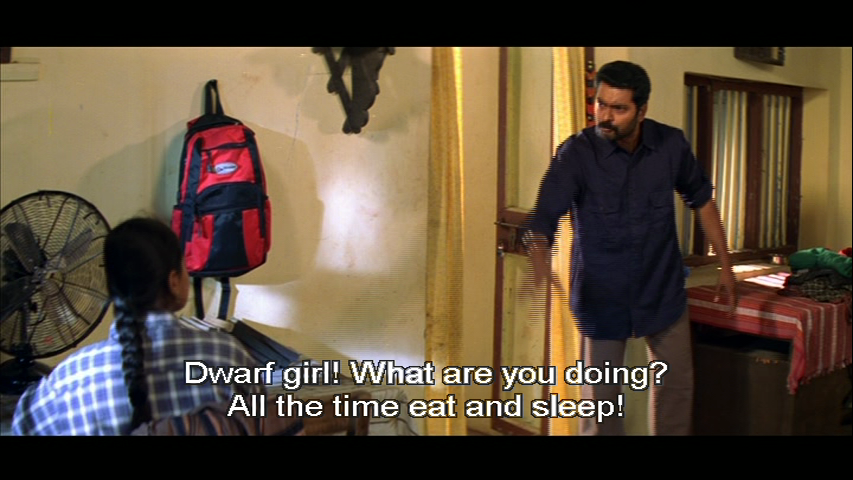
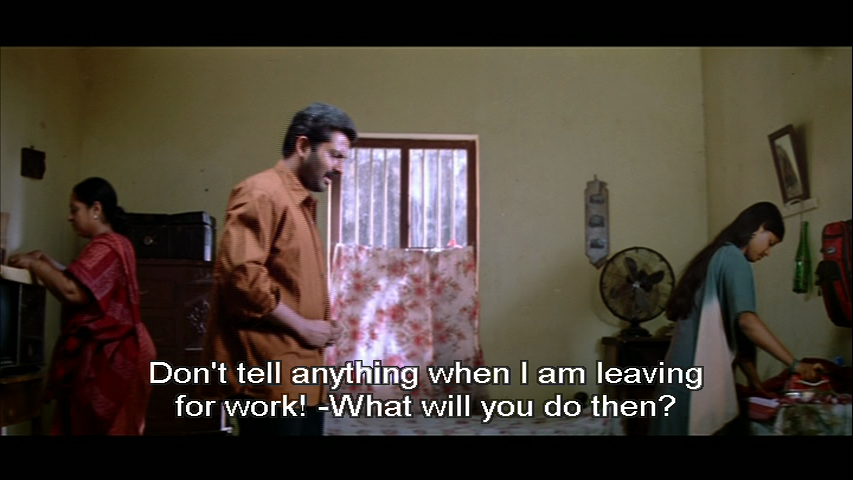
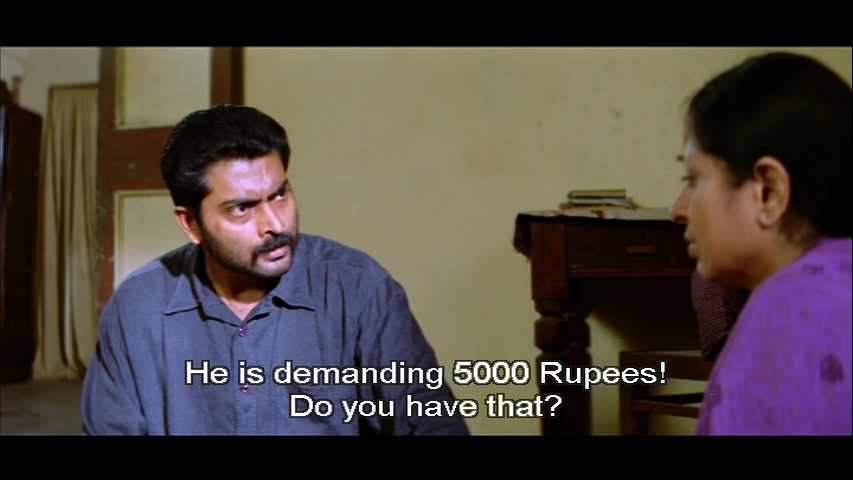
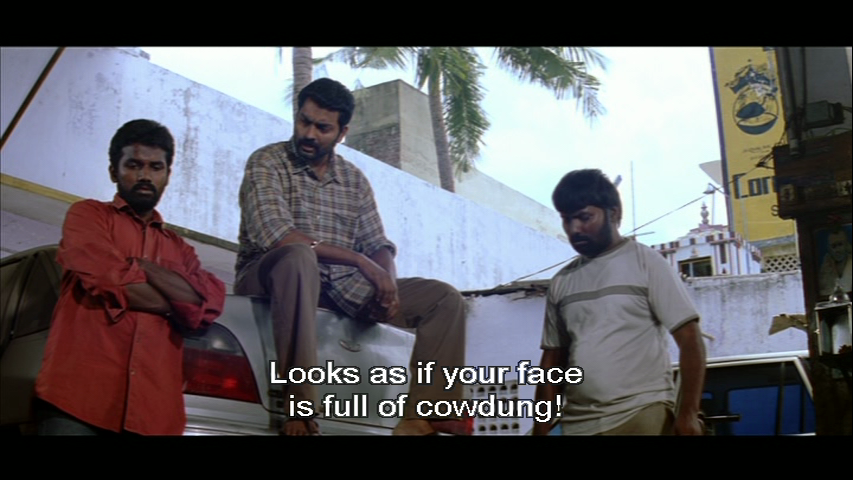
Thiru (Narain) is an angry man. He’s angry about the bribes he has to try and pay to get a job, he’s angry at his mother because he feels she prevented him from completing his education (which would have helped him get a job) and he’s angry at his sister because she needs money to finish her education (which means he has to get a job).  This rage makes him an excellent an somewhat ruthless fighter, and when he inadvertently rescues local don Annachi’s son from a beating, he ends up recruited as a general enforcer and thug on call.  The job with Annachi (Kadhal Dhandapani) allows him to vent his rage on a variety of hapless victims, although this doesn’t seem to improve his general disposition.  However there is more to Thiru than his frequent flashes of temper suggest.  He has his own code of conduct which he tries to adhere to, he has three loyal friends who respect him and despite his tantrums at home Thiru is trying his best to support his mother and sister.
Chithiram PesuthadiChithiram PesuthadiChithiram PesuthadiChithiram Pesuthadi

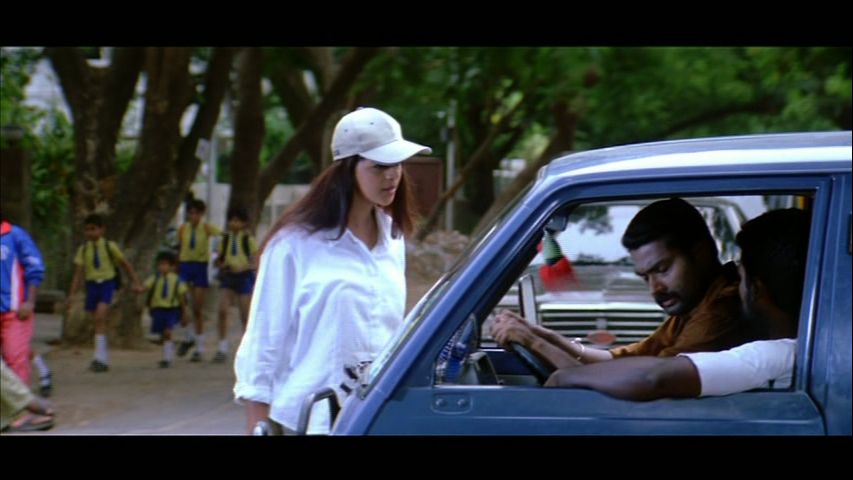
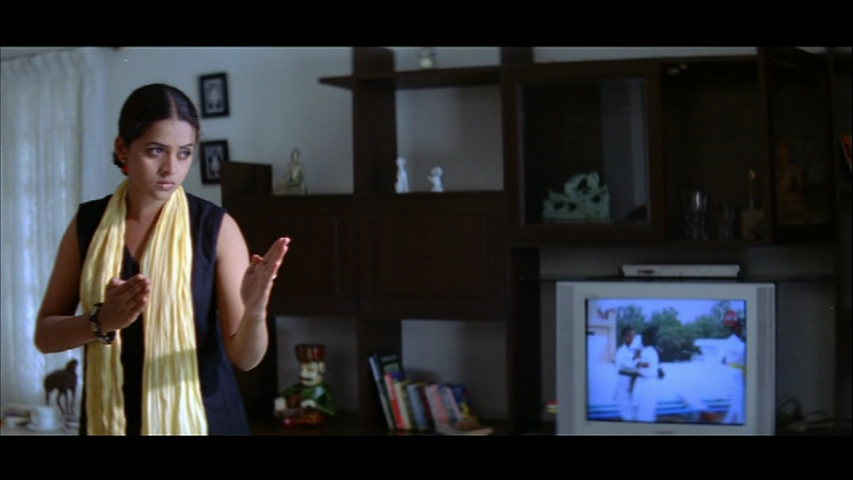
Inevitably, Thiru clashes with a girl who is equally angry, although Charu (Bhavana) doesn’t seem to have any real reason for all her aggression.  She lives with her father and works alongside her uncle in an organisation which promotes the health and welfare of orphans. Charu is a crusader and is ready to leap to the defence of anyone she feels might need her support, whether they want it or not. This leads to several clashes between her and Thiru, whom she sees as a nasty vicious thug.
Chithiram PesuthadiChithiram Pesuthadi

Thiru on the other hand doesn’t seem to think much about her at all, until finally one day he starts to see her in a different light.  Either that or he develops severe indigestion – it’s hard to decide from his expression but I’m pretty sure he falls in love.  Either way, we end up with this amazing song which, although it’s the ‘falling in love’ song in the film, it doesn’t seem to have anything much to do with love and romance.  Unless of course, I’ve missed some kind of symbolic significance in the way Narain is dressed as a Roman carrying a goat – or the many other bizarre situations in this song!

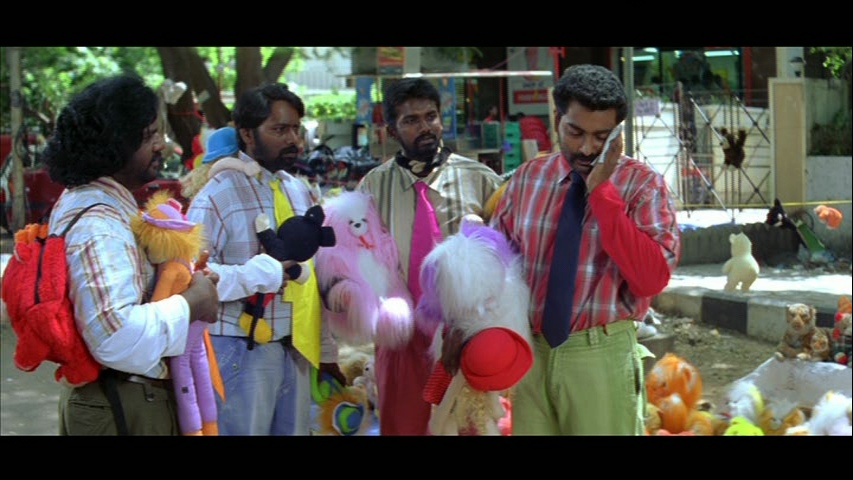
Naturally Charu also changes her mind about Thiru and without even a sniff of parental opposition the two end up setting a date for the wedding.  Of course Thiru’s decision to give up his life of crime and sell stuffed toys by the side of the road instead may have helped win over Charu’s father. But only, I suspect, if he didn’t actually see Thiru and his friends in these shirts.
Chithiram PesuthadiChithiram Pesuthadi

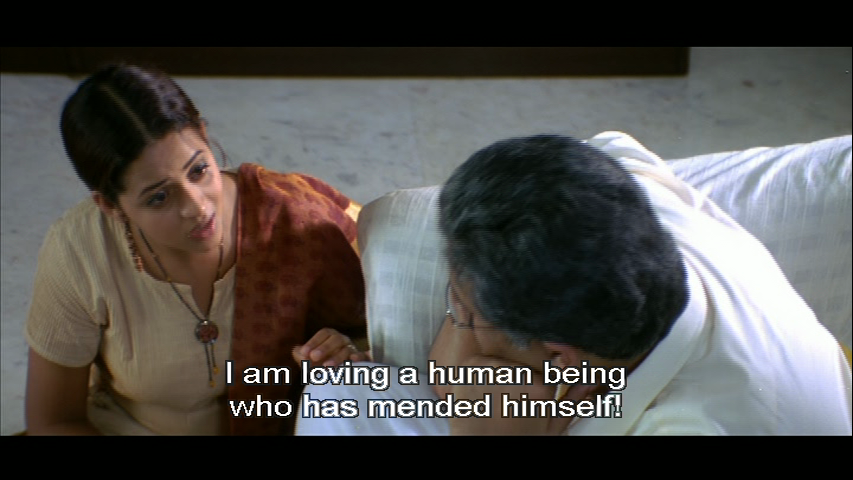
Charu and Thiru appear set for a life of wedded bliss when suddenly Mysskin appears to remember that this is a Tamil film and various tragedies beset the lovers.  But here again, Mysskin diverges from the traditional path and allows both of his characters to behave badly.  Both are selfish and unpleasant, although of the two, Thiru does get painted in a slightly kinder light.

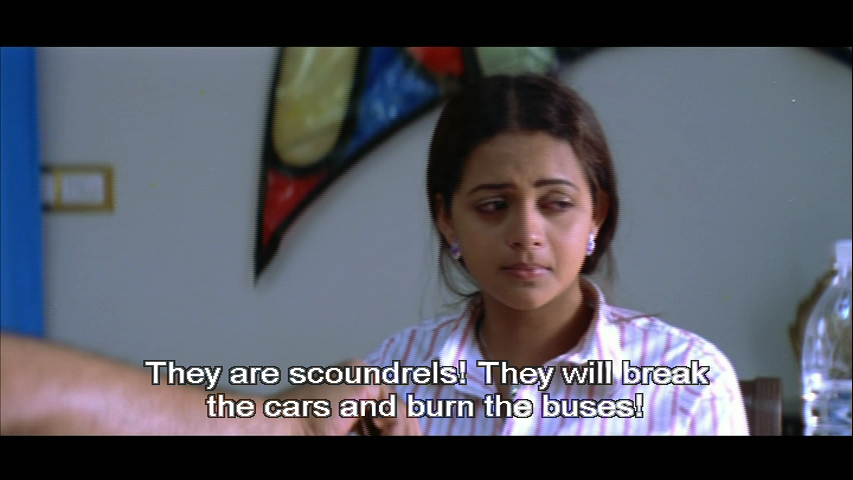
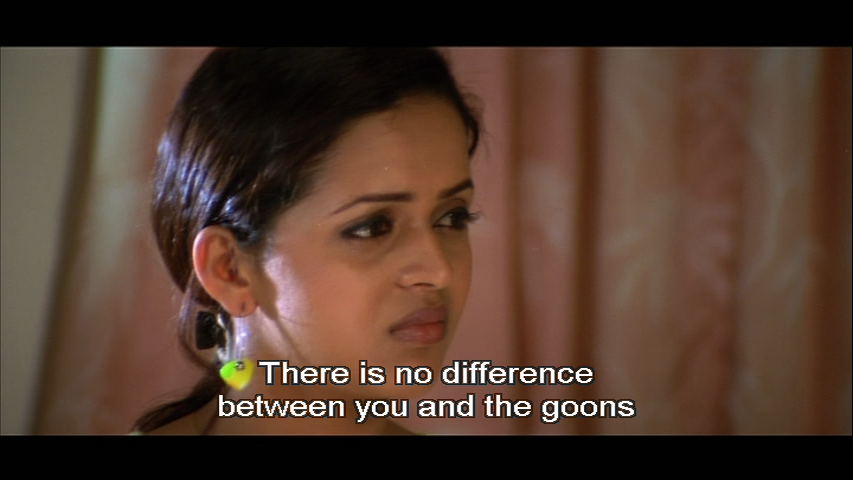
Charu is abrasive, obnoxiously rude to her father and dangerously confrontational throughout.  When her relationship falters, she blames everyone but herself which showcases the immaturity of her character perfectly.  Bhavana does an excellent job and even manages to create sympathy for her character’s challenging persona.  Most importantly she cries convincingly and looks generally unglamorous and suitably ‘girl-next-door’ for the role. I found it quite impressive that she made me care about what happens to Charu (even if only superficially), as I really didn’t like the character at all.
Chithiram PesuthadiChithiram Pesuthadi

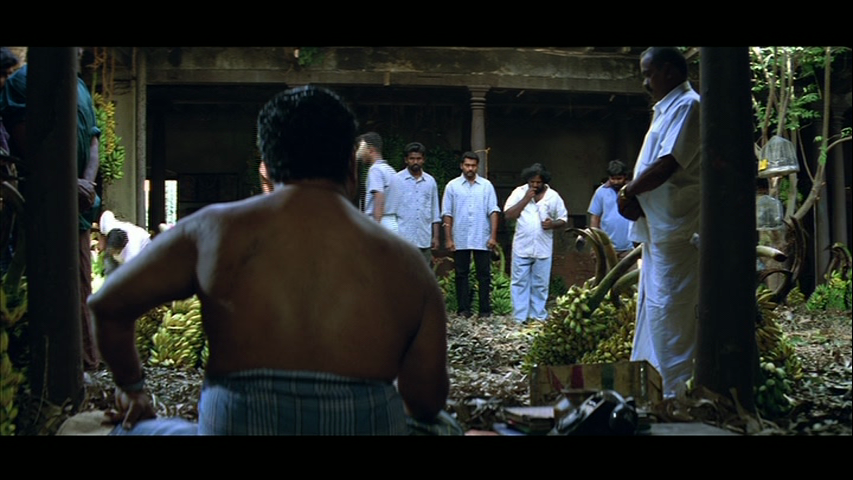
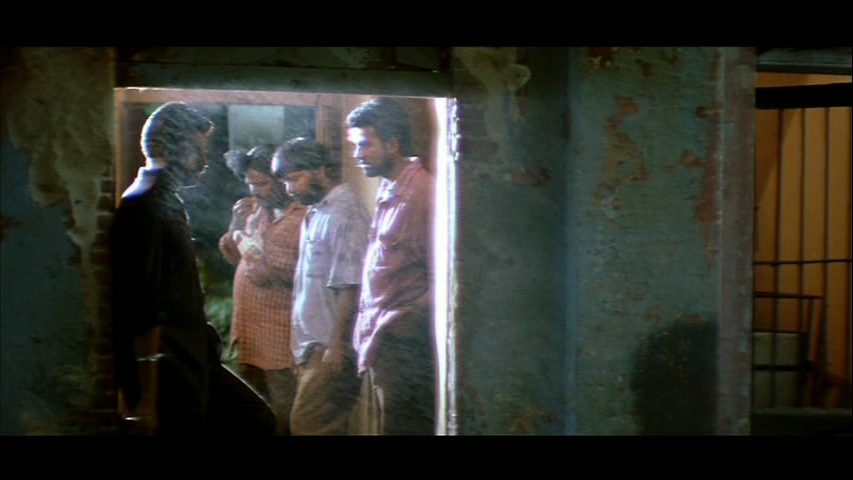
Narain also puts in a good performance, although he’s helped by the fact that his character is a little more sympathetic. Thiru is a man of contradictions and occasionally Narain splits his personality a little too much so that angry Thiru becomes too much of a caricature.  However his Thiru is likeable despite the angry outbursts and casual violence. Thiru’s loyal friends are equally impressive, with each developing a distinct personality through the use of just a few little quirks in their limited time onscreen.  I love how one of them is always eating – no matter how serious the situation or how inappropriate, he always has some food in his hands.  There are plenty of similar little touches that make the characters feel more real, including the way Annachi rules his area from his banana yard, discussing deals and deaths in between the more mundane day to day activity of selling fruit.
Chithiram PesuthadiChithiram Pesuthadi

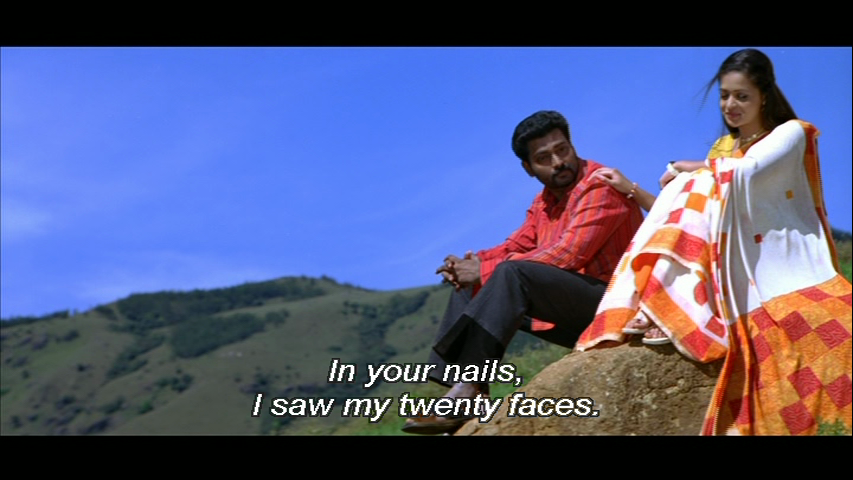
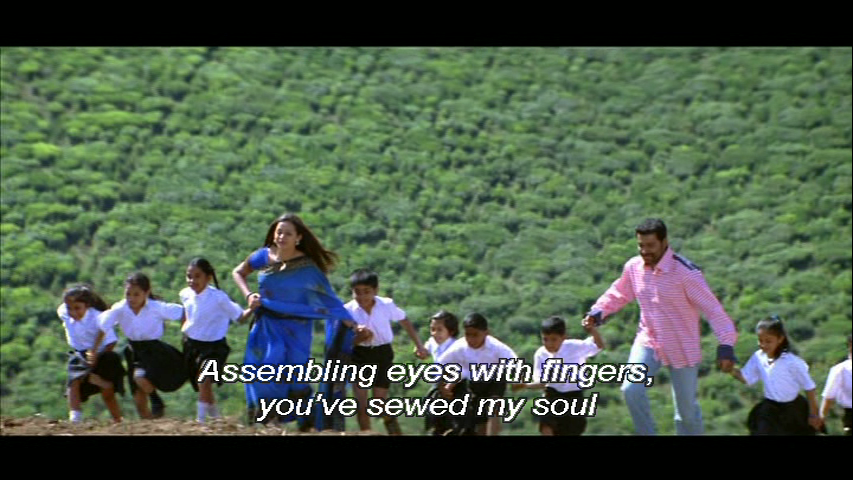
While the story develops smoothly, the songs seem to be added rather haphazardly and don’t always add to the film.  There are also some very bizarre translations –  I have no idea what assembling eyes with fingers is all about, but it does sound interesting.
Chithiram PesuthadiChithiram Pesuthadi

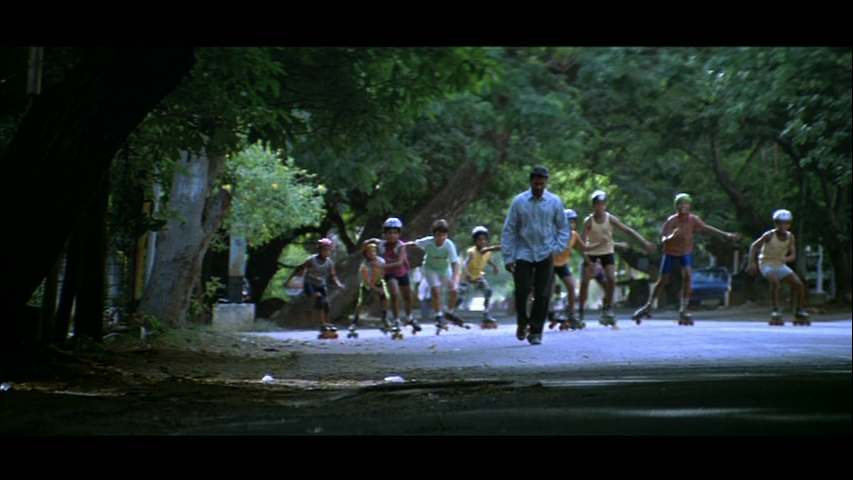
And of course the roller skaters!

Chithiram Pesuthadi

There is a better than usual item number with Malavika, but again it wasn’t really necessary, and most of the songs appear to be used more because songs are expected rather than as a way to further develop the story.

Overall Chithiram Pesuthadi is an impressive début by Mysskin and illustrates why he has gone on to become such a successful director.  He has the ability to spin a good yarn and keep the plot interesting, even with unlikeable protagonists and relatively dark themes.   Good performances, a new twist on an old story and some clever character development combine to make Chithiram Pesuthadi well worth a watch, and definitely a cut above most other first films. 4 stars.

Irandam Ulagam

Irandam Ulagam

Selvaraghavan can always be counted on to take a different approach, and this time he heads into fantasy for a tale of love so great that it could transcend worlds.  It all sounds fine, inspirational maybe; except that the love between the characters never feels passionate enough to even inspire a short trip across town, let alone across worlds.  The execution of the story is also clumsy with the action jumping between two love stories without any apparent commonality, except that Arya and Anushka are the two actors in both cases. Irandam Ulagam is disappointing on many levels; even more so because there are flashes of a good story, some engaging ideas and even a few entertaining moments hidden among all the dreary dialogues.  And as if that wasn’t enough, seriously, how is it even possible to make Arya look this bad?

Irandam Ulagam

In this world there is the romance between Madhu Balakrishna (Arya) and Ramya (Anushka). Initially it’s a one-sided affair as Ramya feels that in Madhu she has found her Mr Right, but doesn’t know how to approach him. And then when Ramya does finally ask Madhu to marry her and is gently refused, she immediately decides instead to marry the man her parents have selected. Presumably because giving Madhu a chance to recover from the surprise proposal and perhaps give him time to find out something about her would be too much to expect! Madhu does however eventually fall in love with Ramya, and follows her to a medical camp to try and win her back before her wedding takes place.  After building Madhu up as a wonderfully caring man who looks after his disabled father (one of the best scenes in the film), Selva doesn’t seem to find anything odd in the concept that Madhu would recklessly dump his family responsibilities and job as a lecturer to follow a woman who blows hot and cold and generally doesn’t seem to have any idea what she wants from him.  Ramya is tedious in her indecisiveness and by the time the lifeless romance does manage to reach some form of conclusion it’s hard to care in any way about either Ramya or Madhu.

Irandam Ulagam

In the other world Varna (Anushka again) is a Xena kind of gal, who can swing a sword and take care of herself in a society where woman are definitely second class citizens.  Here Arya is Maruvan, a drunken buffoon who wants to fight in his father’s army, but is woefully inept even when sober.  Inexplicably he decides that Varna is the woman for him and after some heroic action does finally manage to win her as his wife.  Except that it’s not the idyll he was perhaps expecting but is more a constant combat as Varna can’t stand him. So not much love there either.  Not really looking good for a story all about grand passion that can span the stars.

Irandam Ulagam

Both characters played by Arya are wishy-washy with few redeeming features.  Although Madhu is a kind-hearted man, he’s rather dull and has no chemistry whatsoever with his co-star.  Maruvan seems to have been based on Shrek, which at least suits the fairy-tale landscape, but his transition from drunken village idiot to invincible warrior is just a little too instantaneous to be believable.

Irandam Ulagam

Anushka gets a better deal with Varna who at least has some personality, but Ramya is another weak character.  There is nothing endearing about Ramya to explain why Madhu would sacrifice everything to be with her, and nothing about their love story which suggests passion or grand desire. And that’s the problem. To believe in a love so great that it transcends everything there needs to be evidence of that love – and it just isn’t here.

Irandam Ulagam

The soundtrack by Harris Jayaraj is excellent, but the songs are completely out of place and don’t seem to fit the narrative, although that may be due to the rather woeful picturisation.  There are however a few moments where the choreography is different enough to almost work, if there were just a few more steps and a little less awkward shuffling.  Even the background score by Anirudh Ravichander is a disappointment as it’s frequently loud and intrusive, and doesn’t seem to suit the storyline particularly well either.

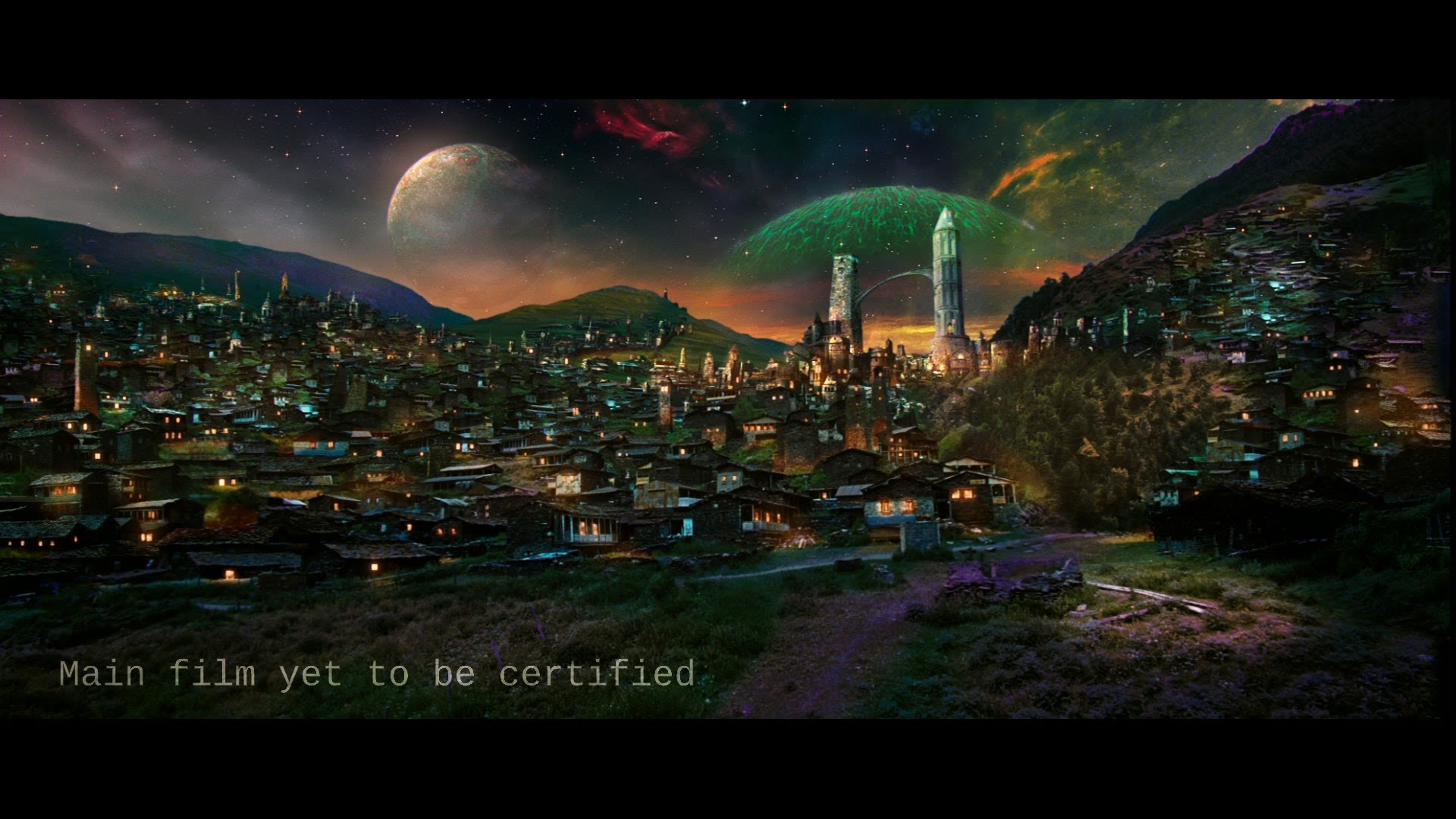
The special effects are fine, although nothing too spectacular.  They do create a different world, and the creatures such as the amazing ‘lion’ produce a fairy-tale atmosphere, enhanced by the fantastical fighting skills of our hero.  However I did keep thinking that if those planetary bodies were really that close in the sky then the gravitational field would have been completely different – which was a little distracting at times.

Irandam Ulagam

Irandam Ulagam needs a passionate and believable romance to make Selvaraghavan’s concept of true love convincing, but the lack of chemistry and any emotion between the main characters results in a failure to bring the idea to life.  Considering that Selva’s last film Mayakkam Enna was laden with emotional drama and desire, it’s strange that he seems to have missed out on this crucial ingredient here.  The story has the potential to offer more and the concept of a world without love is intriguing, but there is nothing to draw you in and generate interest in the characters. Even the performances by two normally engaging actors are laboured and unappealing.  The only thing I can recommend is the soundtrack, otherwise sadly I have to put Irandam Ulagam down as a miss.

Nayakan (1987)

Nayakan

This film has been on my ‘must see’ list for a while but it proved very difficult to track down a copy.  Even then I ended up with a Telugu dub without subtitles, and when I did manage to download subs they were somewhat selective in the translation, declining to translate any of the Hindi, and a bit hit and miss with the rest. However they did at least provide translations of Ilaiyaraaja’s wonderful songs which are definitely high points of the film.  Nayakan is one of Mani Ratnam’s earlier films, and is the movie that brought him to the attention of the cinematic world outside the Southern film industry.  It’s based on the story of Varadarajan Mudaliar, aka Vardhabhai, one of the notorious gangsters who controlled the underworld in Mumbai during the 70’s and 80’s.  There are also shades of Coppola’s The Godfather, but essentially Nayakan is a very Indian story, full of emotion and seeped in the violence and grime of the slums of the city.  Kamal Hassan won a National Award for his performance as did P.C. Sriram for cinematography and Thotta Tharani for best art direction, all of which were very justly earned.  The film also features Saranya Ponvannan in her screen début and a generally notable cast including Nasser, Janagaraj, Delhi Ganesh and Tinnu Anand.  But above all this is Kamal Haasan’s film and he is riveting in a stand-out performance which sees him grow from a young man to an ageing don in the slums of Mumbai.

NayakanNayakan


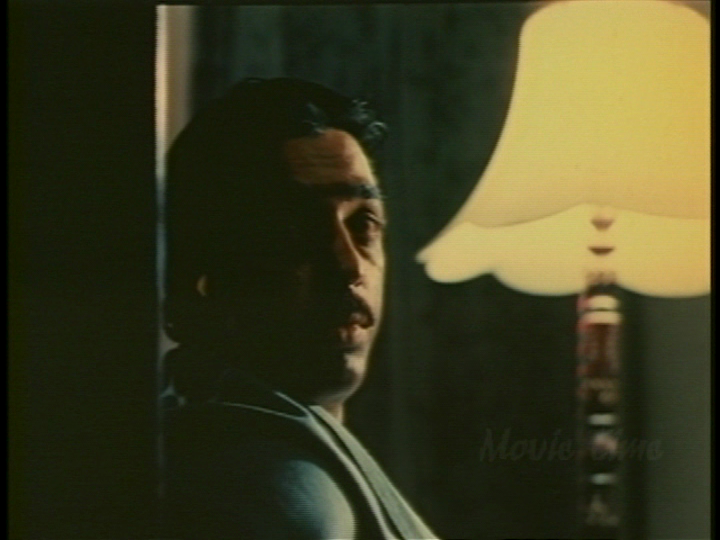
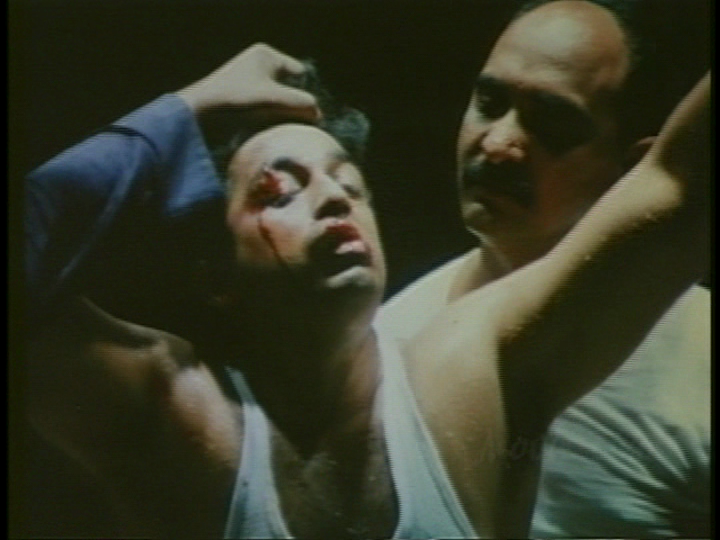
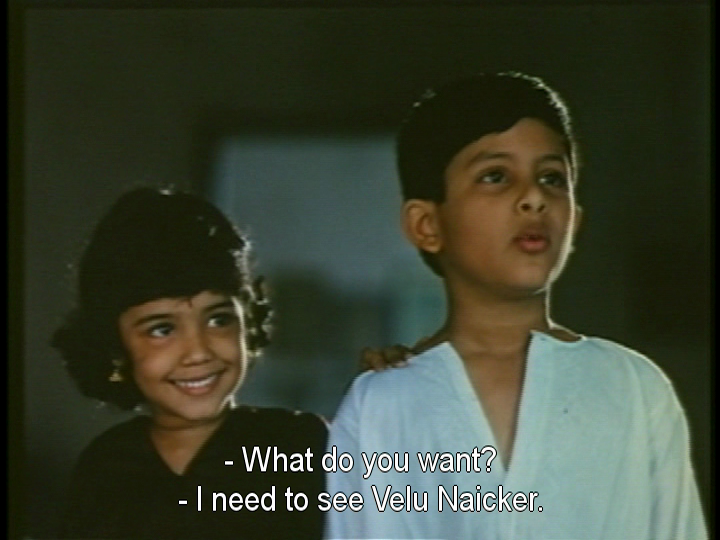
The film starts with the young Velu Nayakar being used by the police to track down and kill his father, a prominent anti-government unionist. It’s a brutal introduction and it’s certainly apt as the film doesn’t shy away from showing the violence associated with the underworld.  The poignant refrain of Thenpaandi Cheemayile comes from the beating the young child suffers, and the song is reprised throughout the film to underscore the importance of pivotal scenes in Velu Nayakar’s life.  This clip shows two of the versions and, although they both occur much later in the film it’s not really the song rather than the images I wanted to include.  However it is worth noting the cinematography and the way P.C. Sriram uses light so effectively in these two snippets.  The song is sung by Ilaiyaraaja and Kamal Haasan himself.

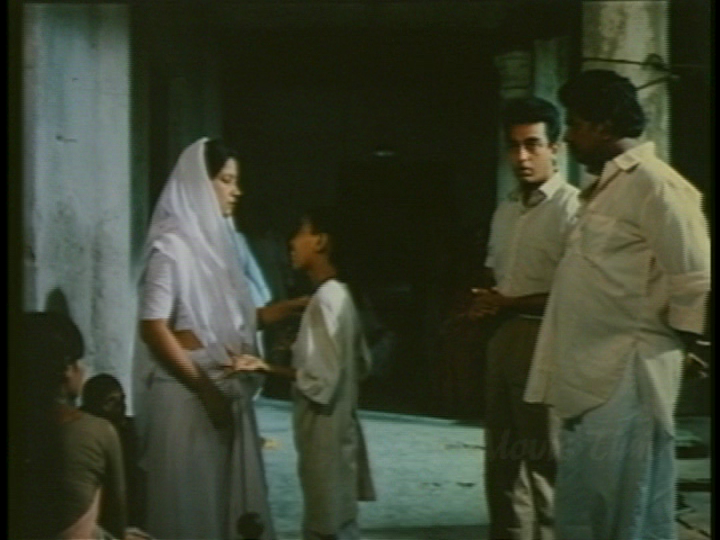
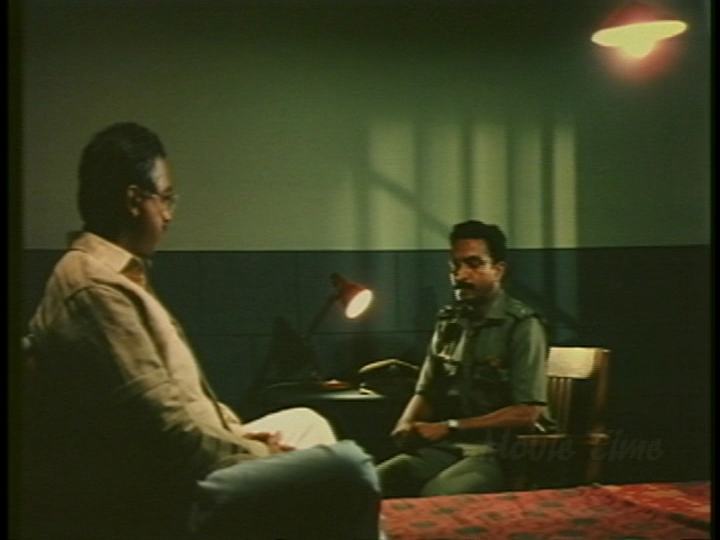
Velu arrives in Mumbai and is adopted by a small time smuggler who instils in Velu the concept that any slightly less than legal act isn’t wrong if it helps someone.  Over time Velu starts to stand up for the rights of the Tamil people who live in the slums, but it is the murder of his adopted father by a police officer that tips the balance and sets him against the law as he takes his revenge.  However even this act is tempered when Velu comes to understand that the dead police officer has a mentally retarded son and he gives Kelkar’s widow money to ensure that both she and her son will survive.

NayakanNayakanNayakanNayakan


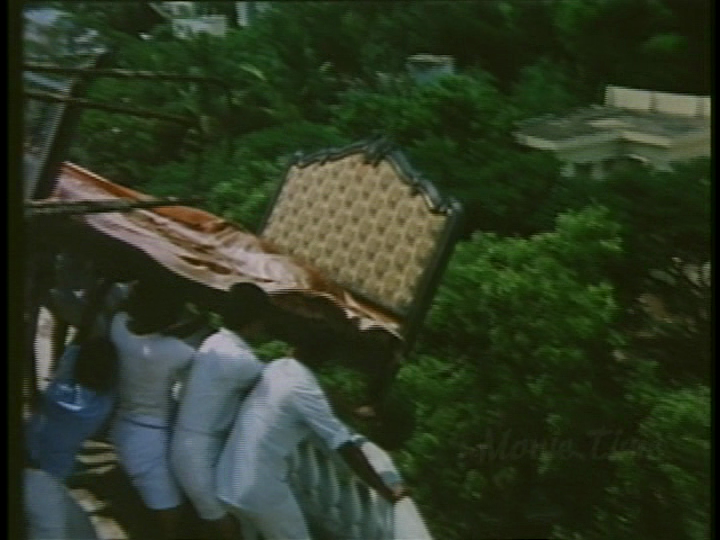
This dichotomy occurs throughout the film where Velu is shown as a very human character who smuggles and murders but also helps out when members of his community are arrested or when a child is seriously ill.  He’s a man who makes mistakes and pays dearly for them, but he’s also someone who is trying to make life just a little better for the people around him.  One such instance is when the slum is about to be bulldozed to make way for a factory.  Velu organises a gang of the locals and goes to the developer’s house, tearing it apart to drive home the point that these are people’s homes which are being destroyed, not just a piece of land. It also looks like a lot of fun as the gang rips apart furnishings and throws furniture from the roof!

NayakanNayakan


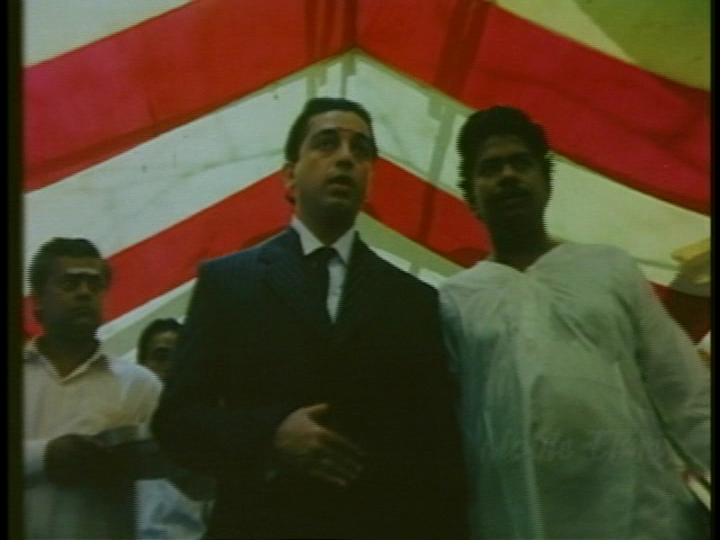
Velu isn’t a don who drives around in the cavalcades of vehicles more commonly seen in Southern Indian films, but instead he has a fleet of ambulances and lives in a house which is easily accessible for the people of the slum, making Velu Nayakan a more realistic and believable character.  There are a few odd moments however, such as an item-style dance number on a boat, and an instance where Velu does appear to be channelling the Godfather given his choice of natty pin-striped suit.  

NayakanNayakan


More commonly however the dim lighting and traditional dress suit the more modest and unassuming Velu, who seems more embarrassed than anything by the adulation he receives.

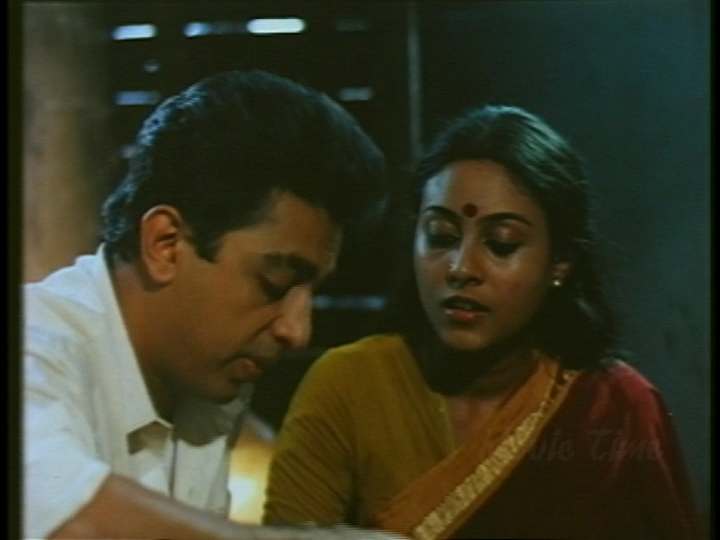
Mani Ratnam’s screenplay is most effective in describing the relationships between Velu and the other characters, in particular those of his immediate family.  His first meeting with Neela (Saranya Ponvannan), who becomes his wife, is beautifully acted and filmed as the two meet in a brothel.  Velu and his friend Selvam (Janagaraj) end up at the brothel after smuggling success and while Selvam appears to have been there before, Velu looks a little more uncomfortable and out of place.  He does manage to enjoy this great song though before heading upstairs for some more intimate amusement.

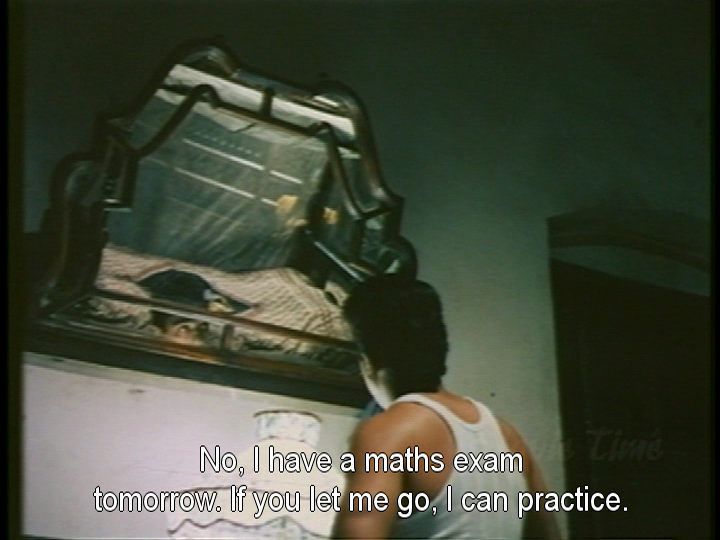
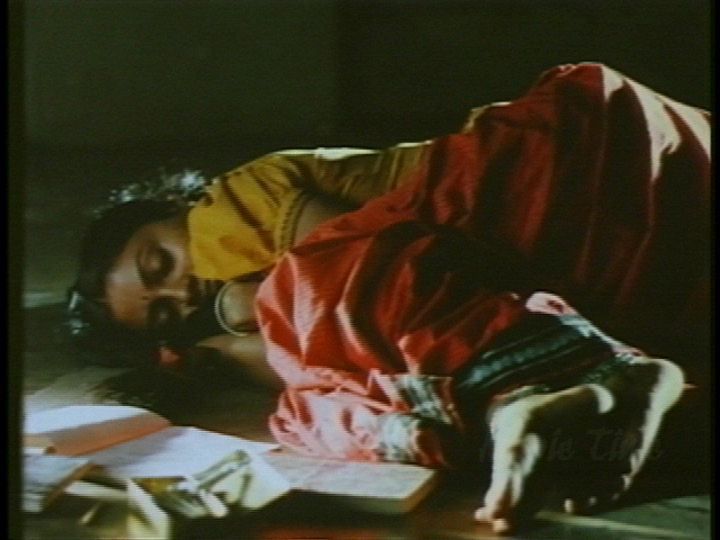
When Velu gets upstairs, Neela is waiting in the room and almost the first thing she does is ask if she can leave early to study for her exams.  Velu’s reaction is as awkward and confused as would be expected and Kamal Haasan shows this in his indecision as to whether he should lie on the bed or sit on the chair as she studies.  Even his hesitancy the next morning, when he’s not sure if he should wake Neela or not, nicely illustrates Velu’s more compassionate side and this is brought out again when the couple do eventually marry.  Saranya is dignified as Neela, despite starting out in a brothel and she brings a very warm and sympathetic presence into the harsh reality of the slums.

NayakanNayakanNayakanNayakan


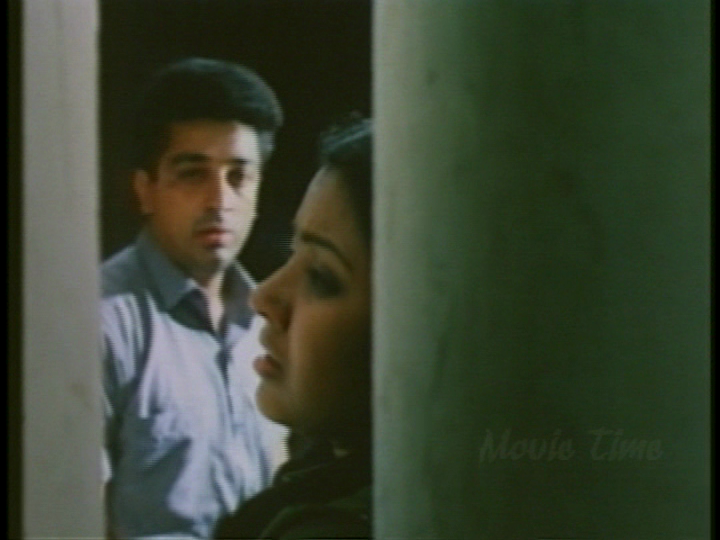
P.C. Sriram makes good use of the set here as initially Velu stands in the light while the mirror shows a shadowy figure through the curtains of the bed in the darkness of the room beyond. It’s very effective and throughout the film there is a similar use of light and shadow with many shots framed by pillars, doorways or other architectural features.

NayakanNayakanNayakanNayakan


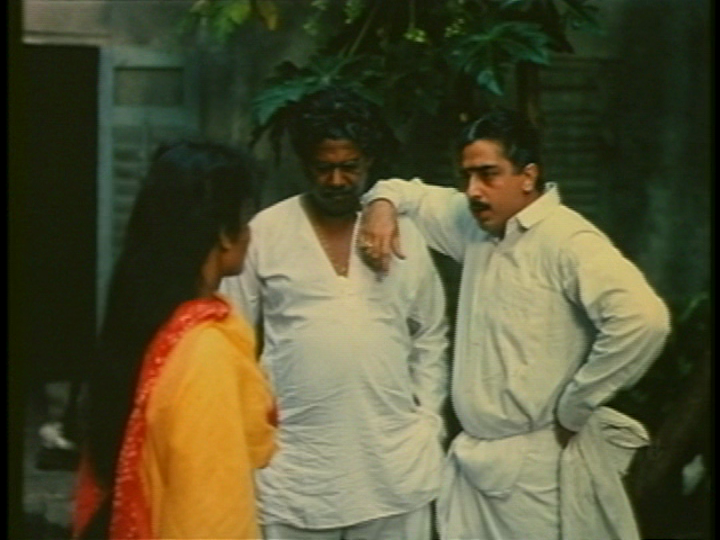
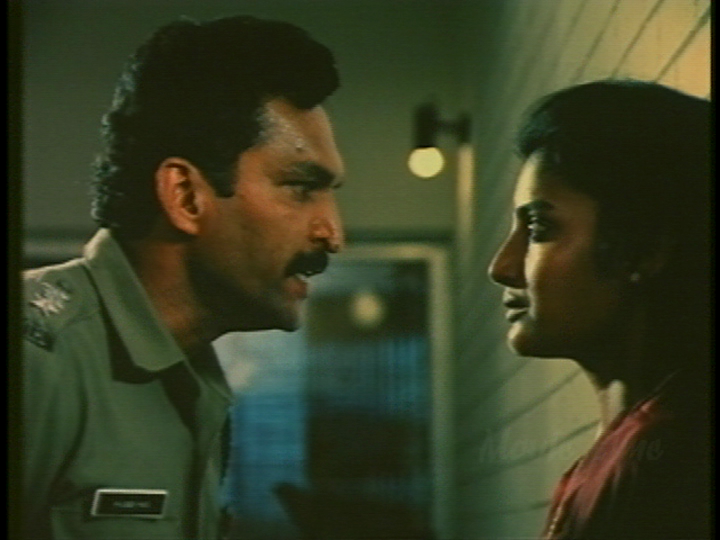
The best scenes in the film are those between Velu’s son Surya (Nizhalgal Ravi) and daughter Charumati (Karthika).  Surya hero worships his father just as much as do the local people in the slum, and he wants nothing more than to be like him. He stands in for his father when a member of the community comes to Velu for help and he sees nothing wrong with the life of a gangster.  However Charu has a very different opinion and eventually she leaves her father after some very emotive scenes where Charu repudiates her father’s lifestyle.  She feels that his style of life is entirely wrong no matter how many people he helps, and Velu is helpless in the face of her rejection.  Kamal Haasan and Karthika are absolutely brilliant together in these scenes and also later on when Charu turns up later married to Velu’s new nemesis, the new Assistant Commissioner (Nasser).  Charu refuses to allow her father to see his grandson in another tear jerker moment, although the most poignant scene in the film between Velu and his grandson is reserved for the end.

NayakanNayakan


There are many small moments and clever touches in the film which make it so enthralling.  From the joy seen at the Holi celebrations to the despair when Neela dies and her sari unravels in Velu’s hands, each scene is full of little details which add to the drama.  Kamal Haasan provides much of the emotion and driving force in the film, but all the actors are excellent even in the minor roles. Tinnu Anand deserves special mention for his small but important role as Ajith Kelkar, the grown up mentally retarded son of the police officer, and Nasser is very effective in his short time on screen towards the end of the film.

Beautifully haunting music, gritty realistic scenes and an outstanding performance by Kamal Haasan make this a film well worth hunting down, and it really deserves to be restored and released with English subtitles.  Nayakan is an absolute classic from Mani Ratnam, and it’s one I thoroughly recommend. A full 5 stars.