Engeyum Eppothum

Engeyum Eppothum

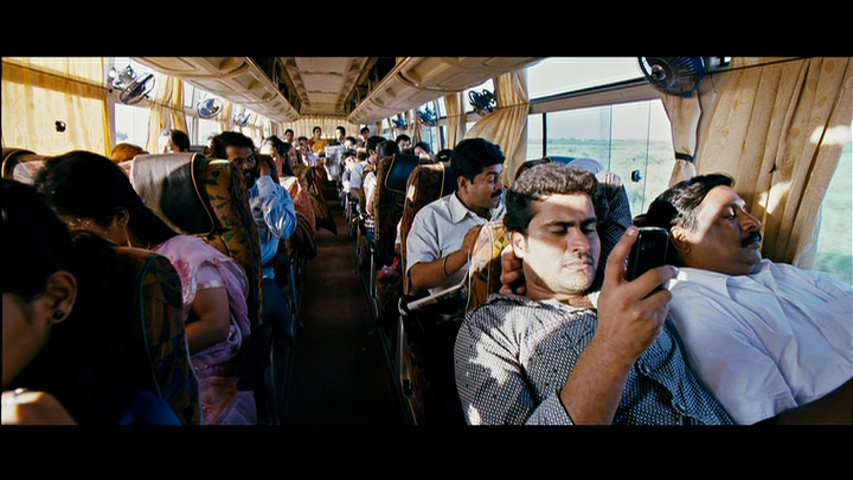
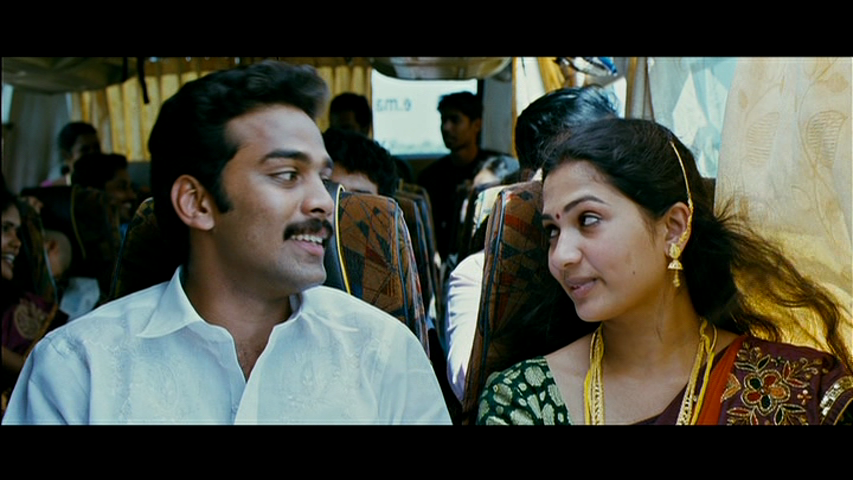
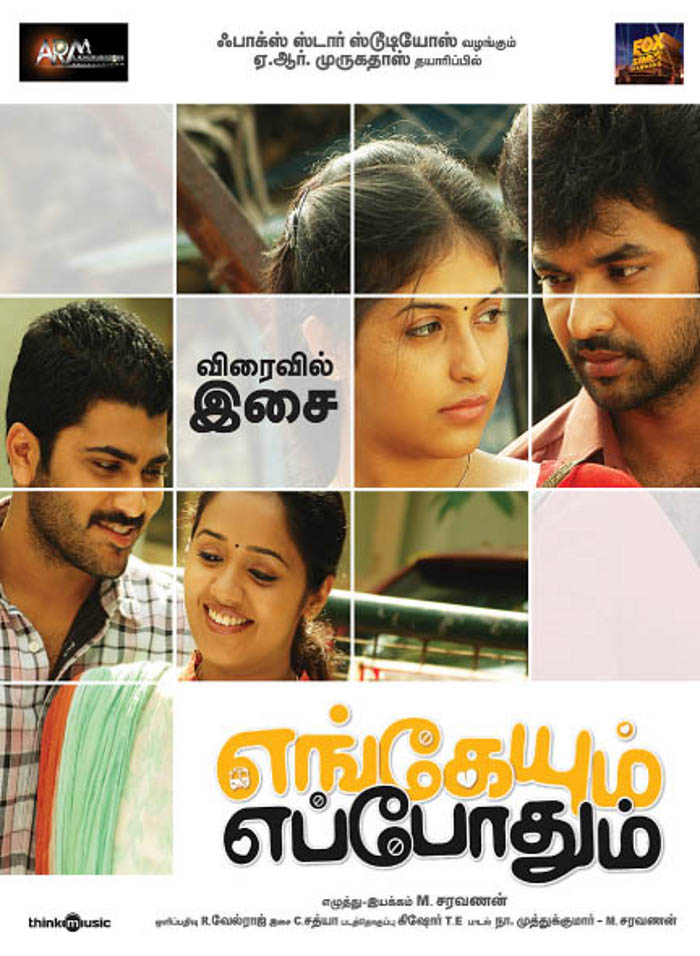
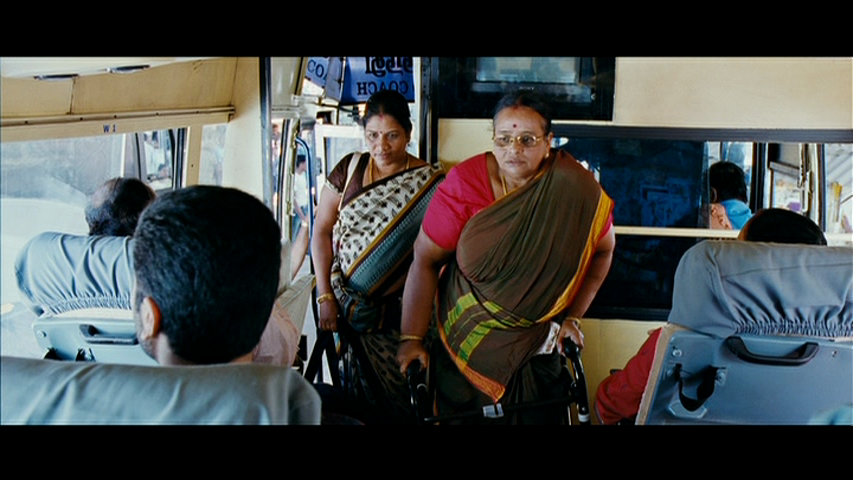
Engeyum Eppothum starts with a fairly gruesome bus crash, so it’s clear straight away that there isn’t going to be a happy ending – particularly since the rest of the film is a flashback of events leading up to the fatal accident.  However the journey to get there is just as important, and on the way to the death and mayhem there are a couple of enjoyable love stories that make you wish that there was actually going to be a happy ending.  One of the stories is set in Trichy, and it always makes me happy to see the city on screen, especially when they seem to have filmed in a number of places I recognise.  It’s the same with the bus station in Chennai, which also looks very familiar, and the whole film brings back memories of travelling by bus in India – although thankfully without the horror ending. One of the buses is a private bus running from Chennai to Trichy, while the other is a government bus travelling in the other direction, and the four main leads are passengers on one or other of the two.  Flashbacks introduce the four and tell their story in the lead up to the accident.

Engeyum EppothumEngeyum EppothumEngeyum EppothumEngeyum Eppothum

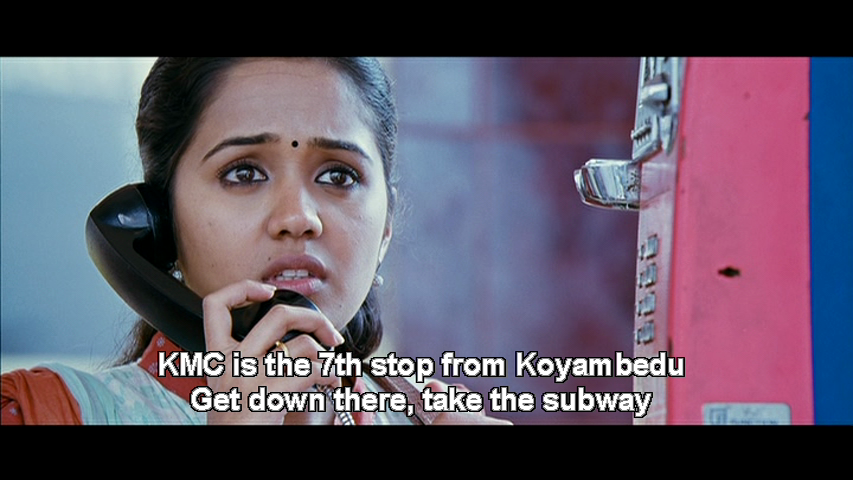
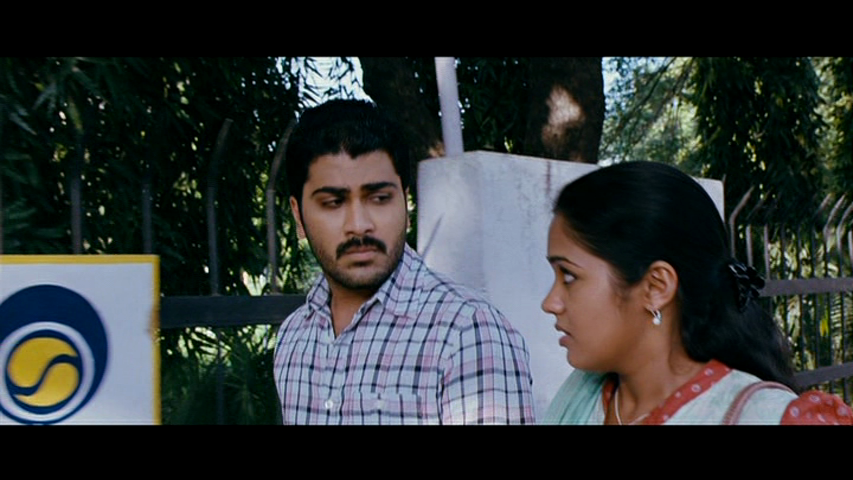
Amudha (Ananya) arrives in Chennai for a job interview, but is completely at a loss when her sister fails to pick her up due to a family emergency.  Luckily for her though, Gautham (Sharwanand) just happens to be dropping a friend at the bus station and Amudha manages to persuade him to show her to the bus stop.  She’s so totally lost in the city that despite her suspicions of him, Gautham ends up spending the whole day taking her to her interview, waiting for her and then taking her to her sister’s house.
Engeyum EppothumEngeyum Eppothum

Ananya plays the mistrustful girl from the country flawlessly here which is mainly why this love story feels so real.  Her mannerisms, and the way she relies on her sister’s instructions rather than believe Gautham when he tells her it is time to get off the bus are perfect ‘small town girl in the big city’ behaviours which I recognise from my own move from the country.  Her reaction when she sees girls in tight Western clothes is just perfect, as is the way she behaves in a restaurant when Gautham finally manages to persuade her that he is really quite harmless.  Her character is very well written to show the awe and trepidation of being somewhere where everything is unfamiliar, and Ananya does a fantastic job of portraying all that angst along with the wonder and amazement.

Engeyum EppothumEngeyum Eppothum

Sharwanand seems very wooden and unemotional in contrast, and while that does work to some extent for his character, there is very little emotion, and nothing to suggest that he would go to Trichy to look for Amudha later.  There really needed to be more open engagement with Amudha and at least some reaction to her character which doesn’t occur until near the end of the film when it is all a bit too late.

Engeyum Eppothum

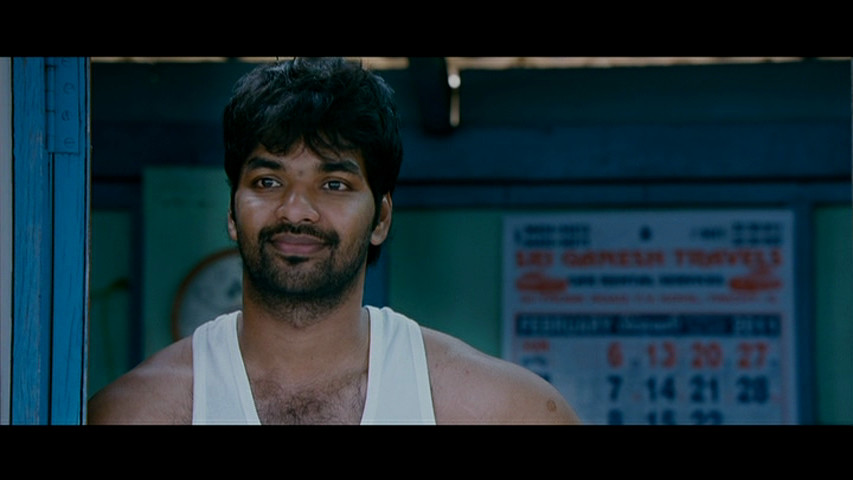
Engeyum EppothumThe second romance is set in Trichy where Kathiresan (Jai) watches Manimegalai (Anjali) every morning as she gets ready for work.  I love that this takes place in the back streets behind the Rock Fort Temple and that they meet in Mukkambu Park (both places that I know very well), which makes their romance seem that little bit more real to me.  Kathiresan has a good job, but is also from the country and is rather shy.  Rather than approach Manimegalai, he is content to watch her from a distance and co-ordinate his shirt colour to whatever she happens to be wearing that day.  This is a little known but obviously effective form of courtship, since Manimegalai does indeed notice his wardrobe choices.

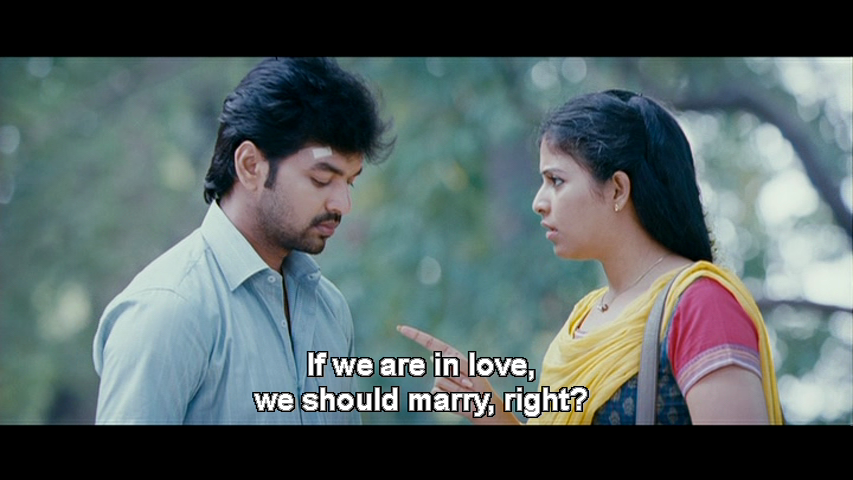
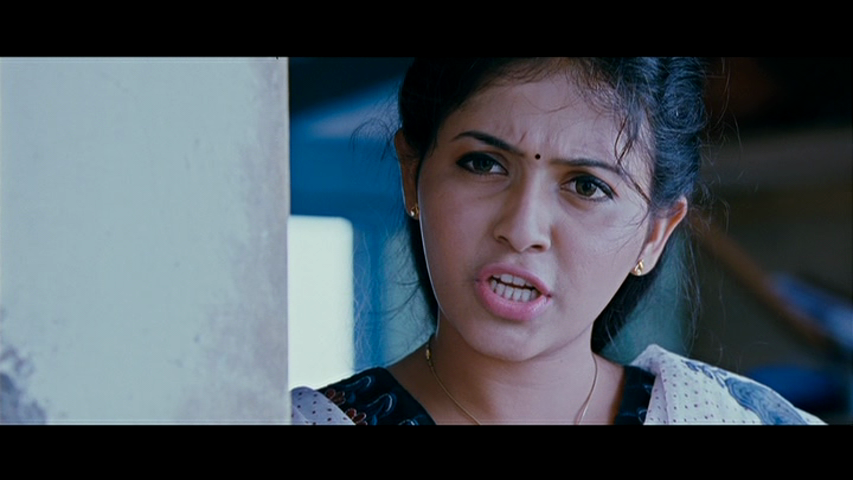
Manimegalai doesn’t have the same reticence problem at all.  She is forthright and downright bossy, forcing Jai to skip work to meet her, sign up for organ donation and confront her previous suitor.  Naturally she’s a nurse.  Their story the best part of the film and Anjali steals the show with admirable support from Jai.  He is perfect as the quiet young man, completely swept away by Manimegalai and totally out of his depth.  And yet he still adores her and that comes across plainly in Jai’s body language and facial expressions.

Engeyum EppothumEngeyum EppothumEngeyum EppothumEngeyum Eppothum

It’s a fantastic performance but he is still upstaged by Anjali.  She is superb, from her initial domineering persona to the ruthlessly efficient nurse who manages to keep it all together in the aftermath of the crash.  It gives her final breakdown more impact too, and suddenly Kathiresan’s devotion makes perfect sense.  Throughout the romance both Jai and Anjali have good chemistry together, and as their love story develops their characters also acquire depth and back-story which also makes their relationship more convincing.
Engeyum EppothumEngeyum EppothumEngeyum EppothumEngeyum Eppothum

Woven through the film are small vignettes about other passengers on the bus which, while emphasising the point that every stranger has a story to tell, do make the film seem more of a road safety video.  Still, the developing romance between two students and the various other interactions between the passengers help round out the film and make the final scenes more engaging.  The bus crash is unnecessarily graphic with severed limbs and gore in abundance, none of which really adds any more to the story.  The crash alone would have been catastrophic enough and director M. Sarvanan does drive home the road safety message with a very big hammer.

Thankfully, with much of the subject matter being the accident, there are no big song and dance numbers and most of C. Sathya’s music is used to move the story forward with montages of the two couples.  The film title translates to Anytime, Anywhere and seems to relate to both romance and tragedy – you can meet your soul mate where and when you least expect to, and disaster can strike in exactly the same way.  As such, the film plays on the very normality of every scene, any of which could happen to anyone at any moment and the characters are all very normal, everyday people.  It’s a simple story and yet insightful, and one that resonates with anyone who has ever sat on public transport and wondered about the stories of their fellow passengers.  4 stars.

Kochadaiiyaan

Kochadaiiyaan Taking Superstar Rajni and turning him into an animated action hero is certainly novel and Soundarya deserves praise for breaching the boundaries of Tamil cinema and attempting something as different as motion capture animation. With Deepika Padukone as the heroine and experienced actors such as Jackie Shroff and Nasser in supporting roles, the potential is certainly there for something amazing but despite all the innovation and obvious hard work, Kochadaiiyaan doesn’t quite deliver.  K.S. Ravikumar’s story isn’t the problem. It’s a swashbuckling period adventure with enough substance to fill a couple of hours comfortably with a few credible twists in the tale.  The dialogue also seems fine, even when subtitled, and the characters are reasonably convincing within the storyline.  It’s more basic than that – the real issue here is that animation is just not as good as the real thing. Kochadaiiyaan The film tells the story of Rana (Rajinikanth), who left the kingdom of Kottaipatinam as a child and ended up as the army commander of rival nation Kalingpuri.  A flashback in the second half explains Rana’s background as the son of legendary warrior Kochadaiiyaan (also Rajinikanth) who was himself betrayed by the King of Kottaipatinam.  In between there are battles, betrayals, social justice as Rana frees slaves, and of course some romance with Princess Vadhana (Deepika Padukone).  Rana is a rather more subdued character for Rajnikanth, despite his heroic looks and charismatic style with Princess Vadhana and the swash and buckling only really starts to take off when Kochadaiiyaan appears in the second half.  Maybe it’s a case of getting more used to the style, but the film is livelier after the interval, and Kochadaiiyaan appears more splendidly heroic than his son. Kochadaiiyaan I have to admit I’m not a fan of this ‘almost life-like’ animation.  I found Polar Express creepy and much prefer my motion capture as a dash of CGI in films such as Lord Of The Rings and Transformers, or as complete fantasy like Shrek and Despicable Me.  While motion capture gives characters a relatively life-like appearance, it’s not real enough to be able to convey emotion convincingly and the lack of facial expression is disturbing, as nothing looks quite ‘right’.  It’s hard to generate any empathy with the characters despite the attempts at laughter and tears, especially when some of the smiles look more like grimaces.  It also doesn’t help that the animation here is variable, with some characters, such as the young Rana and his brother Sena appearing almost unfinished with strangely elongated limbs and disjointed necks, while the horses and elephants appear very clunky when in motion. Kochadaiiyaan Another casualty of the animation process is the dancing, which ends up appearing jerky and awkward much of the time.   It also looks a little odd to have large numbers of dancers completely in sync in the background – rather than looking impressive it just looks strange and almost sinister.   However, on the plus side, the costumes by Neeta Lulla are stunning with amazing attention to detail, which likely would not have been possible in real life.  That also applies to most of the action scenes which just wouldn’t have been possible with real actors and animals.  Peter Hein is credited as the action co-ordinator but his talent with co-ordinating fight scenes doesn’t translate well to animation.  The  scenery is generally spectacular though with  plenty of grand palaces and surreal gardens, although there are a few times when the background just looks  rather bland and unfinished.  I hadn’t heard the film soundtrack before watching the film, but the music by A.R.Rahman, is  one of the highlights and suits the rather grandiose and somewhat sweeping scale of the story.

Kochadaiiyaan

I would have preferred Kochadaiiyaan if the CGI had been limited to the background, enhancing the fight  scenes and sprucing up the scenery, while the actors played their roles instead of  using motion capture animations.  Although the downside would be that quite a number of the scenes would have to be less extravagant, it could have made for a more engaging film. However, setting aside the animation issues  I still did mostly enjoy the film, mainly due to the tale of Kochadaiiyaan and the music. The end of the film leaves a sequel likely and I hope that does happen, although the animation  issues do need to be addressed in any follow-up film.  Kochadaiiyaan is probably best watched by Rajinikanth fans but if you can cope with the animation it may be worth a watch, even if only to see the first complete motion capture Indian animation film.

Mankatha

Mankatha

I missed Mankantha when I was in Chennai due to limited time and sold-out shows in my usual cinemas – which I guess was a good indication that the film would be worth seeing.  Venkat Prabhu’s fourth film does feature his usual crowd of young actors, but also stars Ajith Kumar in his fiftieth film – it’s all about the numbers!  Mankatha is an action thriller based around the theft of illegal gambling money and features so many twists and turns that at times it’s hard to keep up with just who’s double-crossing who.  Although there are a few leaps of faith required to fully engage with the plot, overall the pace of the action and an excellent performance from Ajith in a negative role make the film well worth a watch.

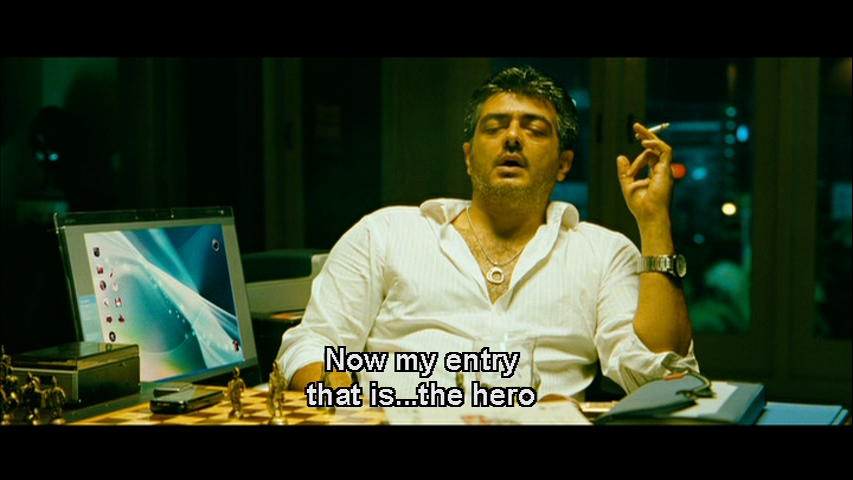
The story starts with Ajith as Police Officer Vinayak Mahadevan, landing onto the screen in a typical Tamil Hero entrance style (i.e. unlikely appearance from out of nowhere) to prevent what appears to be a corrupt police execution of smuggler Faizal (Aravind Akash).  The lines are blurred right from the start – is Vinayak a hero, fighting corruption and gambling despite being suspended from duty for saving Faizal, or does his drunkenness and casual infidelity  point to even bigger character flaws and a tendency to flout the rules for his own benefit?  Each subsequent scene makes the conundrum more difficult to solve, and this ambiguity runs throughout the action in the first half.  It’s not until much later in the film that Vinayak’s true character becomes apparent (or does it?) and his real motives are revealed.

Ajith entranceMankathaMankathaMankatha


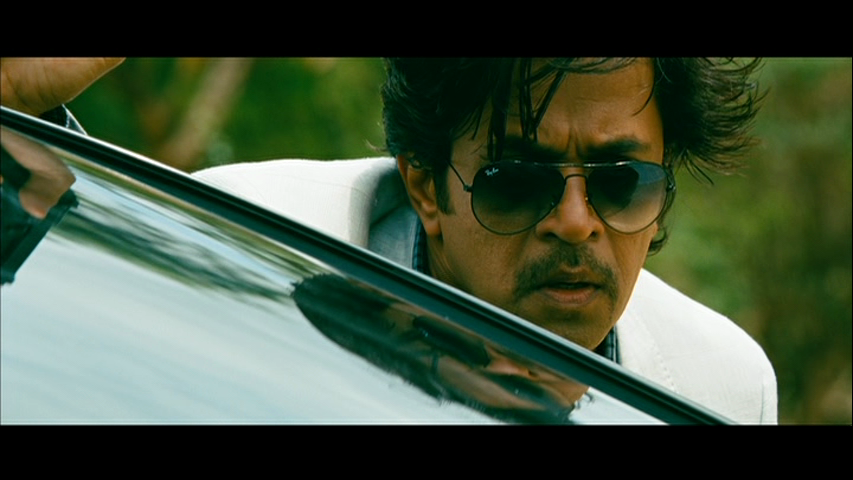
Then there is ‘Action King’ Arjun, who appears as Prithviraj, the head of a special task force entrusted with stamping out illegal gambling on cricket matches after the head of the anti-corruption squad Kamal Ekambaram (Subbu Panchu) commits suicide due to his own gambling debt.  However Kamal isn’t dead, but instead reappears as one of the investigative team, a detail which I kept expecting to have some relevance, but it never actually does.  Arjun is very OTT in his action scenes, made even funnier by his terrible floppy hair, but otherwise delivers  a generally straitlaced and relatively heroic portrayal of a senior police officer intent on stamping out gambling.

ArjunMankathaMankathaMankatha

Vinayak, one night stands aside, is in a relationship with Sanjana (Trisha), the daughter of Arumuha Chettiyar (Jayaprakash).  Chettiyar runs the illegal gambling network in Mumbai along with various other illegal activities, and he also just happens to be the man who employs Faizal.  Was this good planning by Vinayak, or just a coincidence?

MankathaMankatha


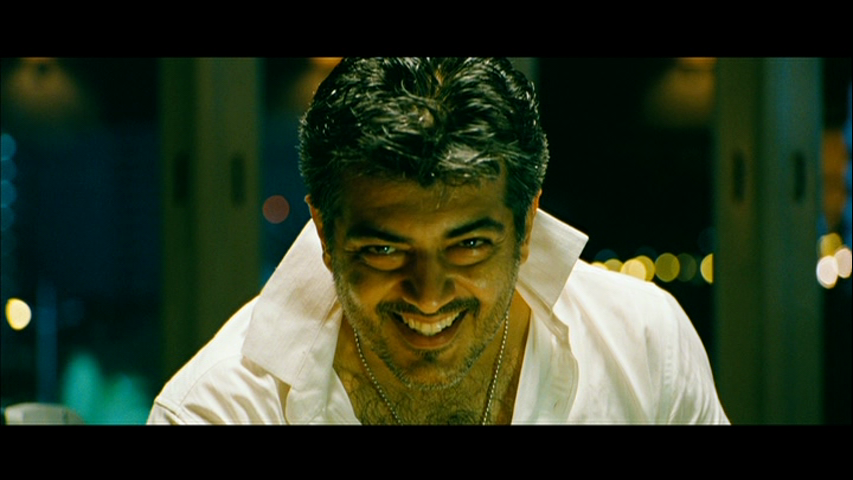
Since Vinayak apparently turns a blind eye to Chettiyar’s illegal activities the question then follows, is this all part of an undercover plan to infiltrate the gang and bring down Chettiyar or does Vinayak really not care about his potential father-in-law breaking the law beyond the opportunity to pocket a few bribes?  It’s hard to tell, as Ajith makes the most of his devastatingly cheeky grin and ever more crazy persona to keep everyone guessing his true motives.

MankathaMankatha

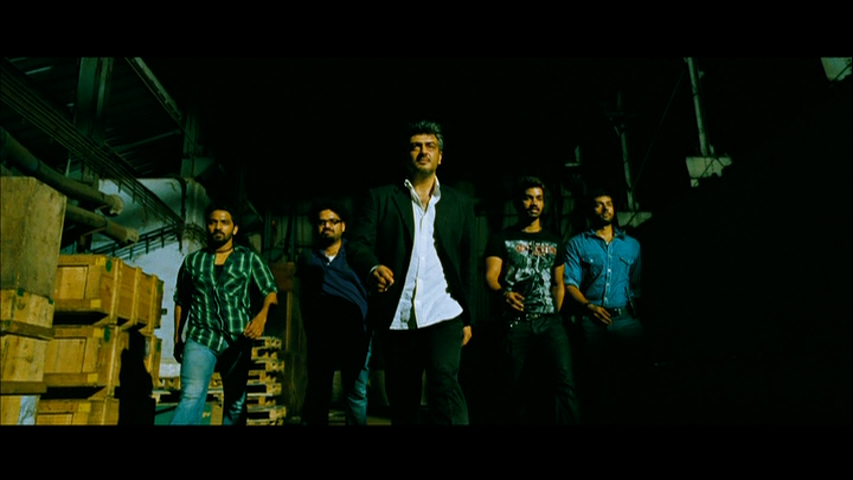
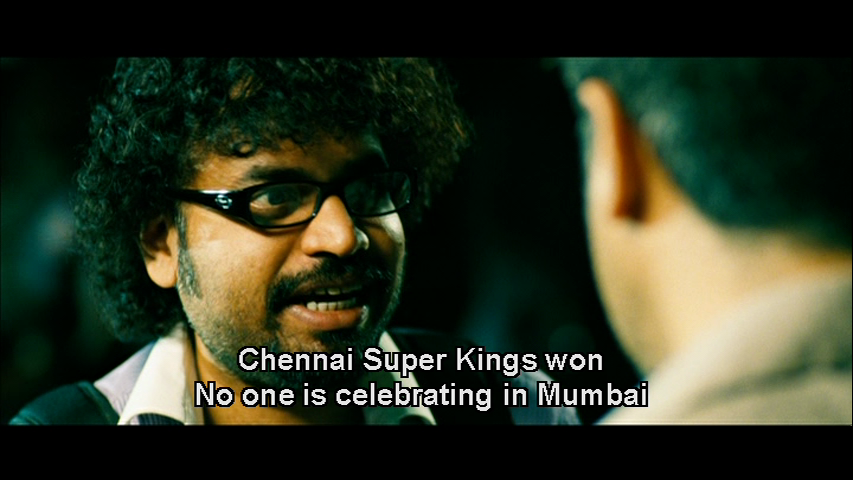
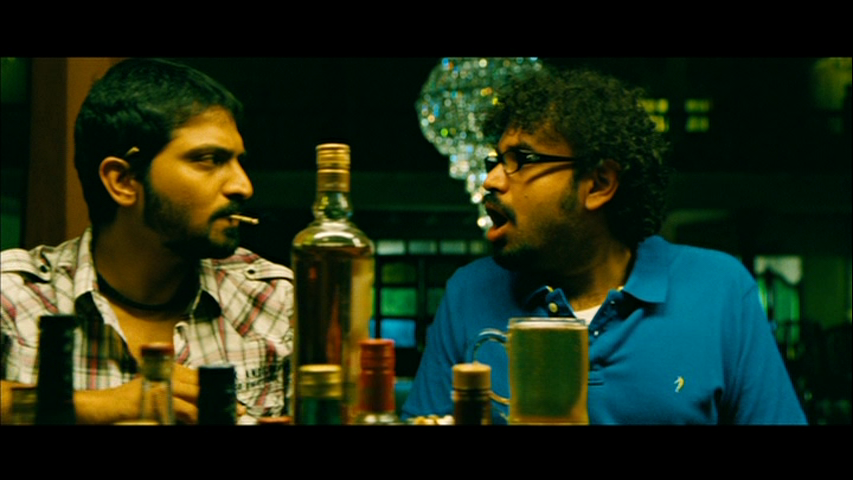
Meanwhile, Chettiyar’s henchman Sumanth (Vaibhav) is in cahoots with local Sub-Inspector Ganesh (Ashwin Kakumanu) and bar-owner Mahat (Mahat Raghavendra) to steal the gambling take from the IPL final.  Mahat ropes in his friend from home Prem (Premji Amaren) who just happens to be an IT expert as well as a terminal idiot.  A little of Premji’s humour here goes a long way and less really would have been better, but cleverly developed group dynamics and good performances from the rest of the gang help keep the story on track.  In due course, Vinayak finds out about the plot which just happens to coincide with his own plans to loot the money, and the conspirators end up joining together to steal $5 billion in US dollars.  While some of the heist details require a major suspension of disbelief, the rest of the story deviously pits everyone against each other with  betrayals, plot twists and unexpected revelations, which mean it’s necessary to concentrate and pay attention to work out just who is allied with who at any given time.

MankathaMankathaMankathaMankatha


While the guys get all of the action and pretty much all of the storyline, there is very little for Trisha and the other female characters to do.  Anjali has perhaps the next most realised role as Sumanth’s wife, but her only value is as a bargaining tool later in the story.  Andrea as Prithviraj’s wife and Lakshmi Rai have even less of a role, and almost all of the female roles could have been eliminated without making any real ripple in the story.  The songs are also mainly superfluous although the soundtrack by Yuvan Shankar Raja does have a few memorable tracks.  This is probably the best choreographed, although the visual effects for Vaada Bin Laada are worth a look too (watch out for the plane on the wall that takes flight).

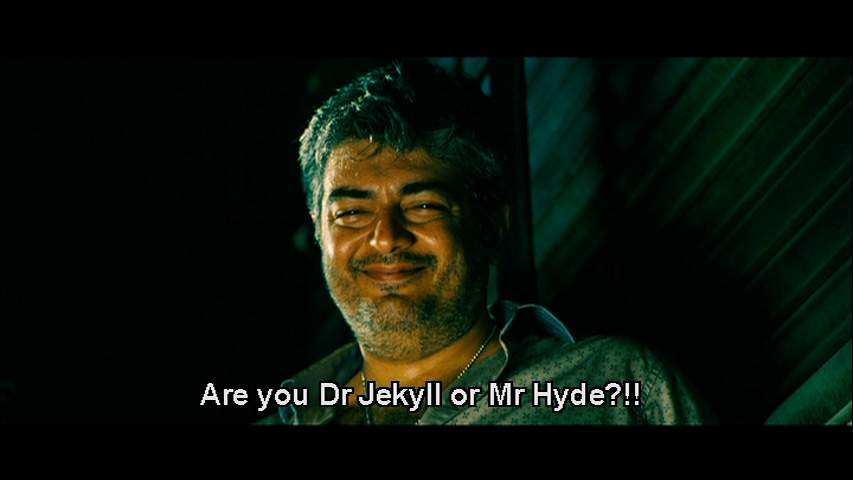
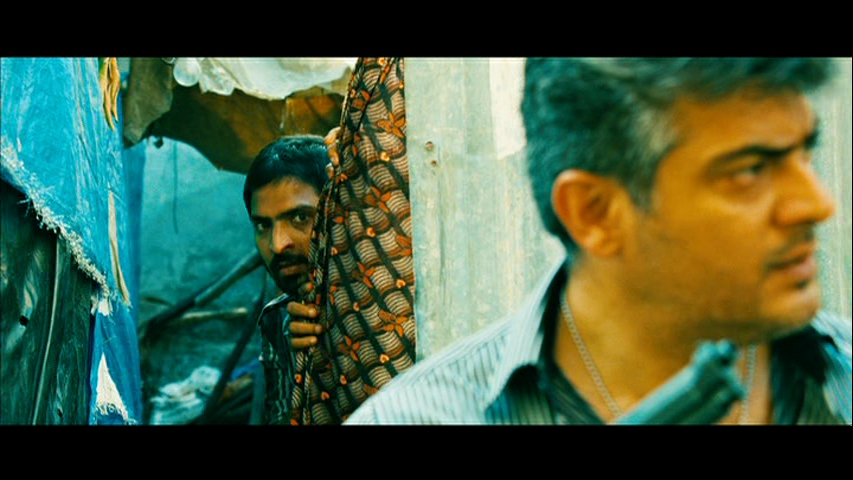
Ajith is definitely the star of the show in a negative role that must have been a hoot to play.  He spits venomous lines with great joie de vivre, throws in plenty of bleeped out profanity and his crazed megalomania is wonderful to behold.  He has great chemistry with Arjun and the two take control of every scene they are in.  However Vaibhav is also notable and the other cast members all provide solid performances.  While the focus is on the action there is also some nifty camera work from Sakthi Saravanan, including a great shot of some boys playing cricket in the slums while Vinayak chases down Sumanth.

MankathaMankatha

Mankatha is not the most convincing heist film, and it would definitely benefit from trimming some of the excess in the form of unnecessary songs and peripheral characters, but it succeeds in entertaining which after all is the main purpose of cinema.  I loved the twists and turns and appreciated Ajith’s excellent demonstration of just how to keep everyone guessing while Arjun tries his best to convince everyone that he is the hero.  It’s amusing and doesn’t take itself too seriously which makes for an enjoyable watch. 3 ½ stars.