Lootera is a restrained and melancholy romance, a love story between two flawed adults set against turbulent times. Based on O Henry’s story ‘The Last Leaf’ it is a quiet and introspective film for the most part, with few false steps by writer/director Vikramaditya Motwane.
It’s the 1950s. A rich Zamindar and his consumptive daughter Pakhi live in their ancestral village and seem oblivious to the impending change to their legal status. Varun, an archaeologist, arrives to help excavate a site near the family temple. Love blooms between the daughter and outsider, and their wedding is arranged. But Varun is not what he seems, and betrayal and ruin intervene. Summer turns to winter and Pakhi’s life is torn apart. Time passes before she and Varun cross paths again and Pakhi wants some kind of justice, some reparation for all she has lost.


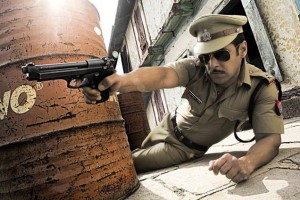
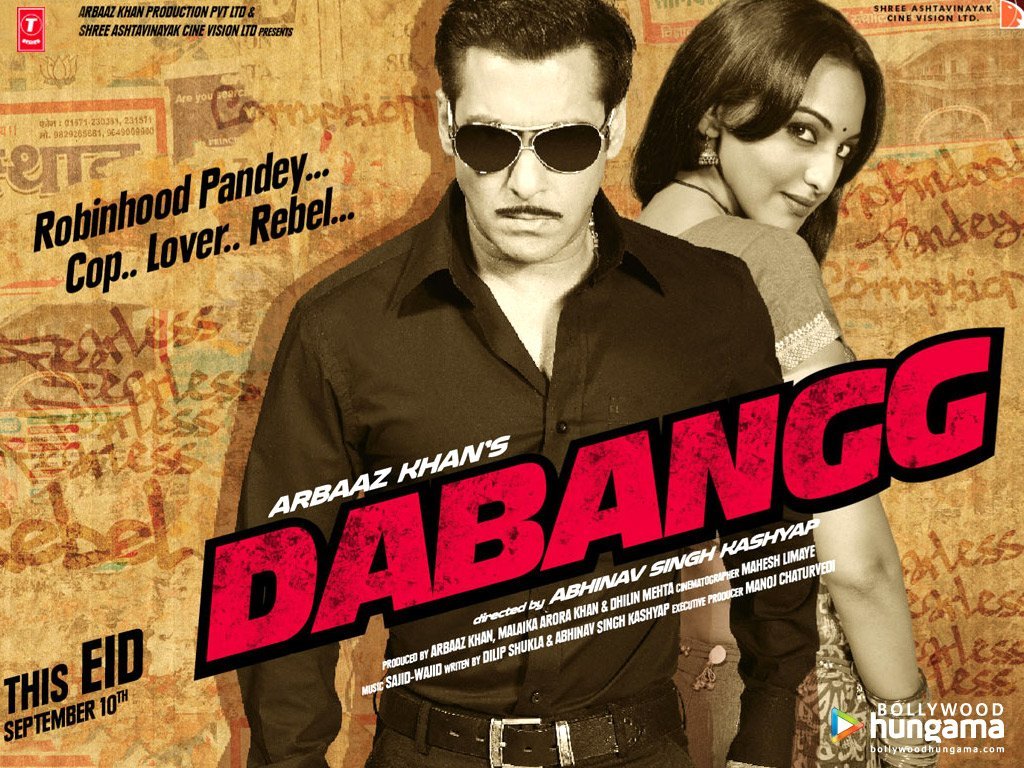
Prior to this I had only seen Sonakshi Sinha in Dabangg and an appearance in OMG Oh My God so I hadn’t seen a lot of her acting skills put to the test. She is exceptional as the indulged rich girl Pakhi. Her romance with Varun (Ranveer Singh) develops immediately but slowly as Pakhi finds ways for them to spend time together. There is very little dialogue and Sonakshi builds Pakhi’s character through her expressions and deportment. In one scene Varun is driving Pakhi home and in the space of seconds Sonaskhi’s sparkling eyes and smile conveys flirtatiousness, amusement at his reaction and quiet joy at her own happiness. Pakhi never hesitated to lie to get what she wanted, but she was not a truly bad person, just a girl whose father indulged her every whim. In the first half of the film Pakhi wears rich colours and pretty light cotton sarees with delicate decorations. She dreams of being a writer and can only see a future in which she is happy and fulfilled.
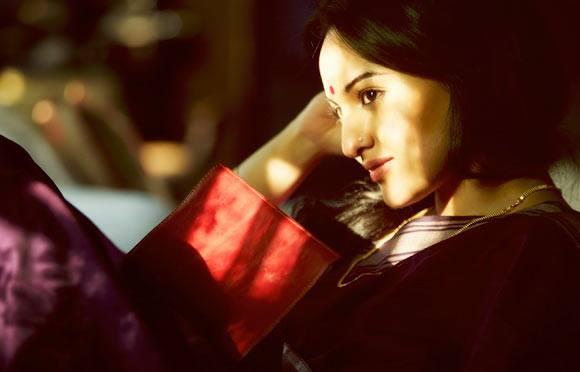
Once things take a turn for the worse, she moves to Dalhousie. The cold bright mountain exteriors and the dim interiors frame her in darkness as do the dark maroons and blacks that she wears. Sonakshi seems weighed down and heavier in her tread, her eyes and her speech. Death is looming and Pakhi does nothing to prolong her own life. She can’t write, she can’t move past the loss of her father and home. She is just waiting.


Ranveer Singh is Varun. He is not exactly what he seems and nor is his friend Deb (Vikrant Massey). They are thieves and the Zamindar is their latest target. Based on his previous roles, I didn’t expect such restraint and internalised emotion from Ranveer. Varun comes across as someone who knows what he wants but is overwhelmed by fear and obligation. He tries to break things off with Pakhi in an effort to not make the eventual betrayal any worse but really, the damage had been done. He is a very modern creature and lives in a dog eat dog world, his sharp edges a contrast to Pakhi’s romantic softness. Varun is always wary, and Ranveer shows the struggle between heart and logic, and the ever present tension of being ready for things to go pear shaped. Varun’s character doesn’t transform as Pakhi’s does, but he reveals more of his true self over time. There is a definite sense that Varun could be a decent enough guy in all but his means of earning, but his ingrained drive for self-preservation would override any finer feelings.


Ranveer and Sonakshi have great chemistry together. Their characters are sometimes confused, sometimes unpleasant but mostly just relatable in their uncertainty and hopes. The initial relationship between Pakhi and Varun is flirty but heartfelt and both actors show the deepening of feelings through small gestures and their gaze. When they met again I could believe Pakhi’s conflicted feelings towards Varun as she was also coming to terms with her own mortality. Varun saw a chance to do something right finally. It wouldn’t change how he had betrayed her before, but he could fight to let his better nature prevail this once. It’s an intense relationship, passionate and at times fuelled by anger as well as love. Sonakshi looked perfect as a beauty from the 50s and Ranveer was a modern wide boy, each visually representing the changing tide of society.
The story is dominated by Pakhi and Varun although there is a small and effective support cast. Shirin Guha and Arif Zakaria are very good in the summery first half. The charismatic Adil Hussain and ever reliable Divya Dutta make strong appearances in the dramatic conclusion.
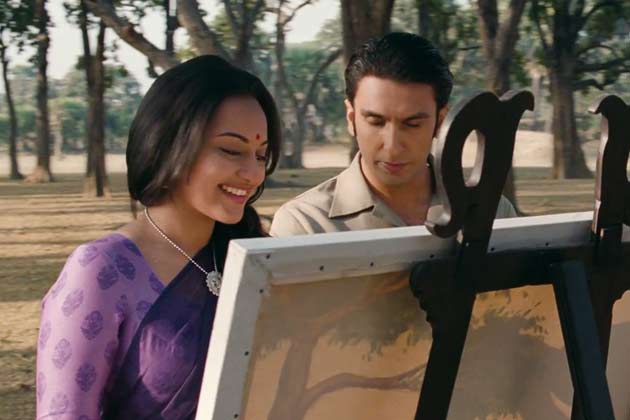
I saw this with a friend who hadn’t read the O Henry story and she asked if there was a clear link, and there is albeit only a small part of the narrative. It is when the film is closest to the story that I think it shows weaknesses. A clumsy conversation along the lines of ‘Can you paint leaves?’ ‘Why yes I can’ occurs early on. There is a needless scene of Ranveer dangling from a tree branch after nearly falling that was surely only there to show him off as a ‘movie hero’. It was a momentary lapse from the beautifully internalised character based tone that made Lootera so engaging.
I’ve never been a big fan of Amit Trivedi and his emo guitar tweedling. The soundtrack works best in the first half where the music reflects a more optimistic and celebratory mood (e.g. Sawar Loon). Once things got more dramatic I found the songs a little intrusive and unnecessary.
The camera work (under Mahendra J Shetty) and set design is very beautiful yet not ostentatiously so. I rarely felt distracted from the central action yet the locations and scenery gave a richness and depth to the sense of place. I did find myself admiring the architecture and layout of Dalhousie in one pivotal scene but I can only watch a chase scene for so long before my attention wanders!
Lootera requires patience as the story is shown rather than told. There is minimal dialogue so there is nowhere for the actors to hide, and they deliver beautiful characterisations. That is not to say the characters are inarticulate – there are some excellent dialogue driven scenes. Motwane’s intelligent direction gives his actors the time and space they need to breathe life into the story. I thought his much lauded Udaan was a very average film that garnered praise more for the subject than the execution so I was hesitant about Lootera. But it is a beauty. Highly recommended, especially if you’ve been feeling the dearth of interesting adult lead characters in Hindi films and want a more layered and complex set of relationships.

 Cinema Chaat