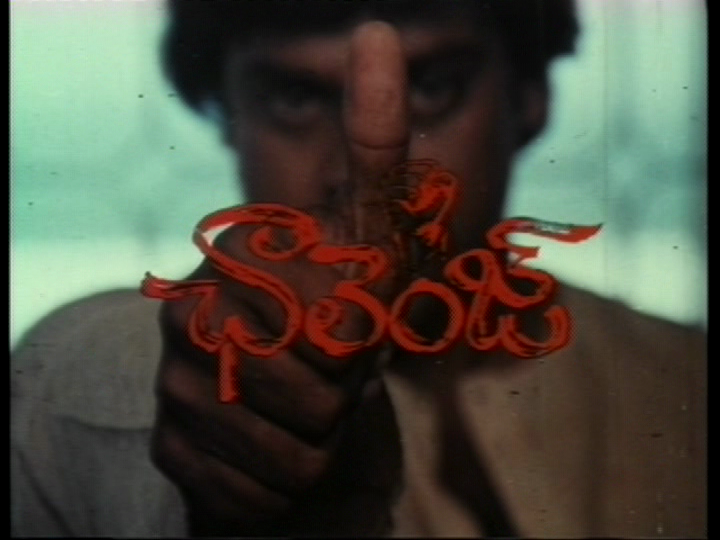
Challenge (1984)

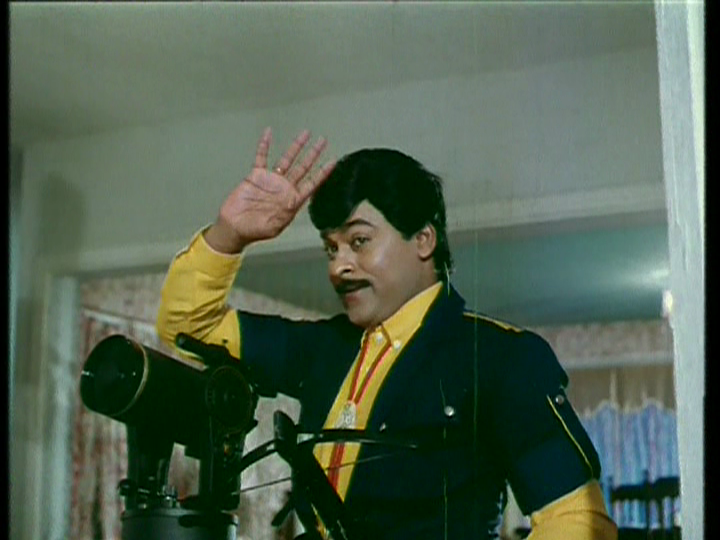
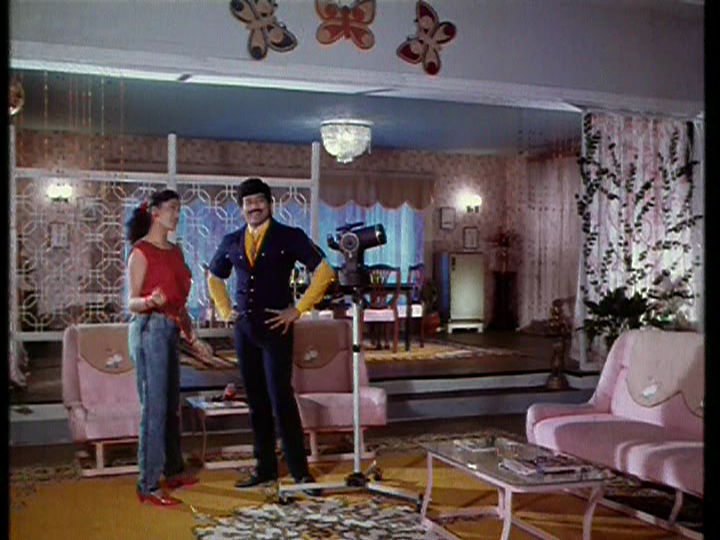
Although the title conjures images of martial arts films and to me sounds as if it should be about a physical fight, Challenge begins rather conventionally with a dying mother whose son is desperate to get her medicine. However it quickly evolves into a more social drama as Chiranjeevi’s ambitious young entrepreneur Gandhi bets rich industrialist Ram Mohan Rao that he will make 50 lakh in 5 years despite his unemployed status. With Rao Gopal Rao, Vijayashanti and Suhasini Maniratnam along for his journey from rags to riches the film touches on poverty and unemployment, workers’ rights and even industrial espionage as Gandhi rises to his Challenge.

The opening scenes introduce Gandhi as a smart but penniless man who isn’t the type to back down or give up easily.  After his mother dies, he uses his intelligence to wheedle money for her funeral from Ram Mohan Rao’s daughter; but for all of his brain power Gandhi isn’t very canny and is easily swindled out of his windfall by the hospital mortuary attendant (Sai Kumar).

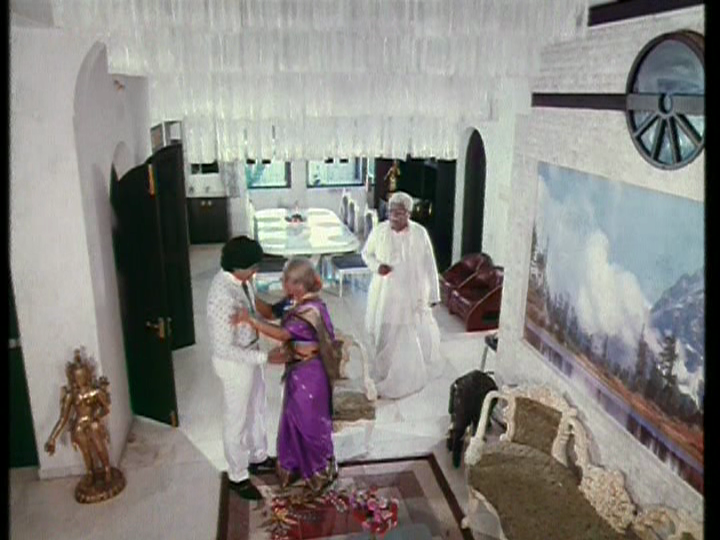
Although this introduces Mohan Rao and his ‘money can buy anything’ approach to life as well as his beautiful and more compassionate daughter Harika (Vijayashanti), both the money and Gandhi’s speech to the attendant become important towards the end of the film. I haven’t been able to read Yandamoori Virendranath’s original story but the screenplay uses a number of such incidents where apparently trivial events are used to illustrate different facets of Gandhi’s character and their importance to the plot only becomes apparent later on. It’s all very cleverly done, and I did have to go back and re-watch some of these early scenes to pick up on all the details, although perhaps I was just a little distracted by Chiranjeevi’s dancing!

Gandhi is a graduate with a first class degree and somehow feels that this means the government owes him a job. In fact he’s quite belligerent about his lack of employment but is rather taken aback when Lakshmi (Suhasini Maniratnam), a girl he has rescued from the river, takes him to task about his attitude.  It turns out that Lakshmi is a graduate herself, but rather than complaining about the lack of opportunity is working in a number of different jobs to maintain her independence. Her basic belief is that it’s more important to earn a living than worry about the status of the job and since she has such a practical and pragmatic attitude also sees no problem with offering space in her house to Gandhi. Although Gandhi is initially shocked by the suggestion that he should move in with a single girl, Lakshmi solves the problem by telling him not to think like a woman which quickly stops his objections. This song is another daydream and I do like how Suhasini gets to dance on Chiru’s back!

Gandhi ends up applying for a job with Ram Mohan Rao but at the interview is humiliated by the company owner, who is furious that Gandhi sent in his application without a stamp. However Gandhi is just as angry about the trickery used in the job advert and goads Ram Mohan Rao to such an extent that he challenges Gandhi to prove that money is not important. Gandhi vows that he will earn 50 lakh in 5 years and such is his belief that Gandhi will lose, Ram Mohan Rao promises the hand of his daughter Harika in marriage if Gandhi succeeds.
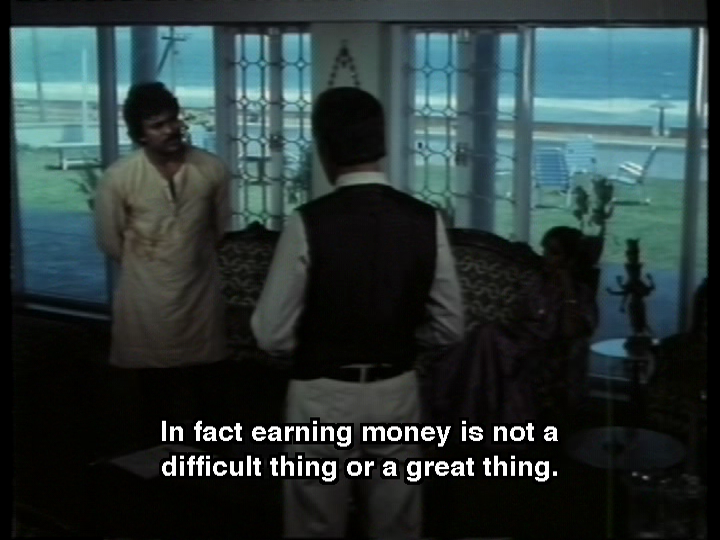
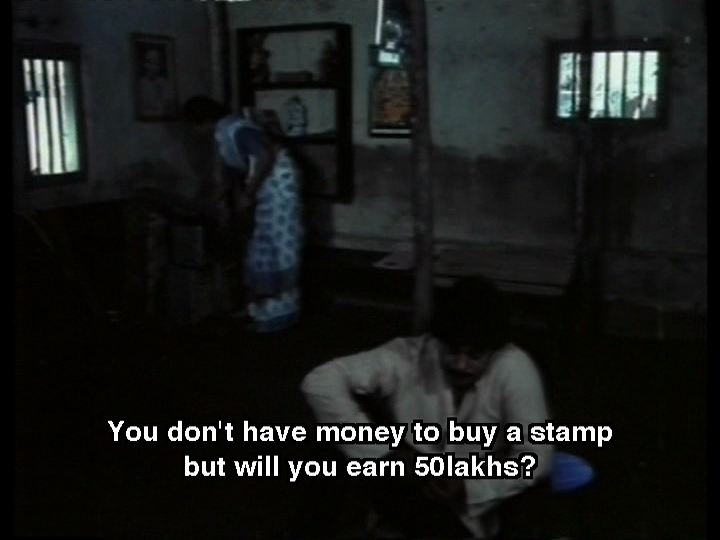
Game on then!

Gandhi makes the important distinction that he will make the money legally, although not necessarily honestly and with a coin he has been given by a beggar woman, he begins his rise to riches. However, as he becomes wealthier his attitude changes and he becomes more and more fixated on the money until nothing else, including his relationship with Lakshmi, seems to matter. Indeed it’s not even the money, but rather beating Ram Mohan Rao which becomes the driving force behind Gandhi’s various plans. This then is the real challenge –can Gandhi stay true to the ideas and principles he had as a poor man or will the power of wealth corrupt his values?
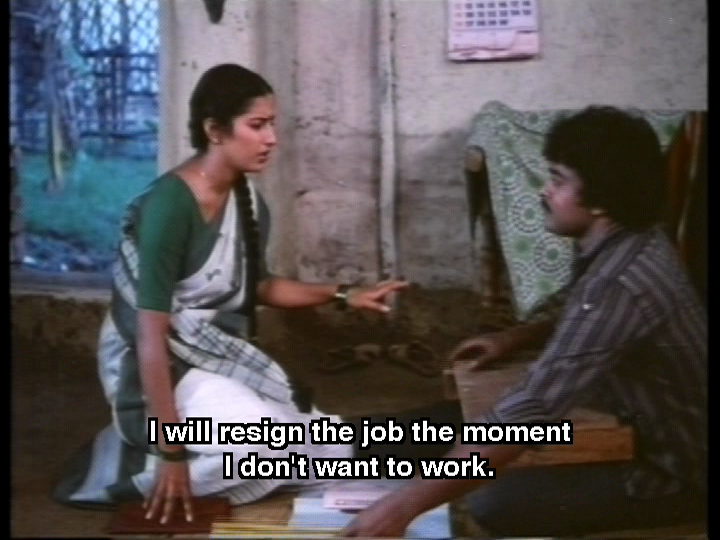
Lakshmi isn’t the only woman having some issues with Gandhi’s wager. Harika is initially appalled at her father’s pronouncement but as she meets with Gandhi, she gradually falls in love with him (who can blame her!) and she actively starts to help his cause. Since Ram Mohan Rao’s first action was to rip up the contract and set his goons after Gandhi, Harika has plenty of work to do in foiling her father’s plans to ruin Gandhi’s various business ventures. While Gandhi seems determined to win the bet and therefore marry Harika, he is still living with Lakshmi – although the two seem to have a strictly platonic relationship. To add more confusion, Lakshmi’s brother Hanumantha Rao (Gollapudi) and his wife Priyamvada (Silk Smitha) move in with Gandhi and Lakshmi. Hanumantha is secretly working for Ram Mohan Rao, while Priyamvada has designs of her own on Gandhi which seem to involve a rather short red toga and a rendezvous in the desert!

Chiranjeevi is riveting as Gandhi and his portrayal of the drive and determination with which Gandhi meets his various challenges feels authentic. Chiru made me believe in every aspect of Gandhi’s moral and physical struggle and I think this is one of his best performances.  A. Kodandarami Reddy has done a great job of developing such a complex story and has put a lot of detail into the characters of Gandhi and Laxshmi to make me feel every moment of their struggles. It’s a good story too and although there are a few points that require a little suspension of disbelief, the basic theme echoes stories of personal achievement that do occur in real life. The other lead actors are all excellent.  Suhasini is perfect as the strong-minded Lakshmi and she makes the most of her well written dialogues. Rao Gopal Rao is suitably villainous as Ram Mohan Rao and although Gollapudi is fairly irritating when he tries to be funny, he doesn’t appear often enough to make it a problem. I surprised myself and recognised a young  Rajendra Prasad, who has a small but important role as one of the graduates Gandhi employs as he builds his empire. Vijayashanti looks incredibly beautiful but her character is more than just the glamour element and she too has a strong role to play.

The songs by Ilayaraja are another highpoint. Generally they represent fantasies by the various women in Gandhi’s life and the upbeat music and dancing make a good contrast with the more grim reality of the story. Vijayashanti gets the best costumes and also probably the best line in the film – Mind it! Again it’s a shame that the film isn’t in better condition but at least Challenge is available with subtitles even if they appear at times to be rather literal.

I loved this film and it’s a great way to celebrate Megabirthday! Watch for what really is an outstanding performance from Chiranjeevi and his co-stars in a cracking good story. 4 ½ stars.
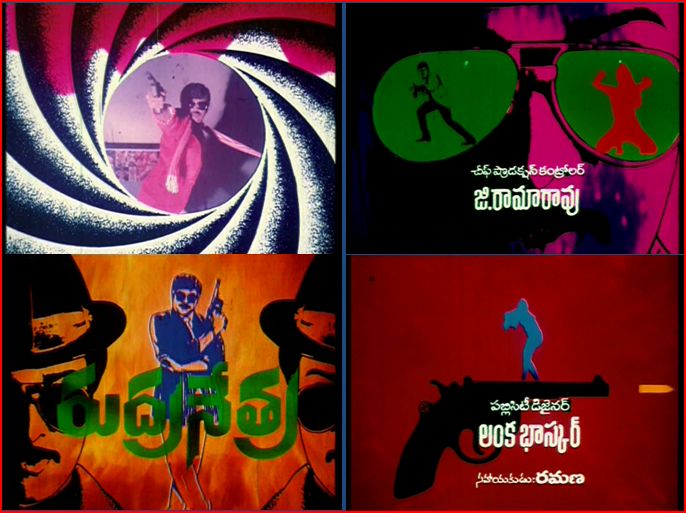
Rudranetra

Rudranetra is silly masala fun that starts from the assumption that more is more. Drawing on Gunmaster G9 more than Bond, it gallops along in dazzling and hilarious style.

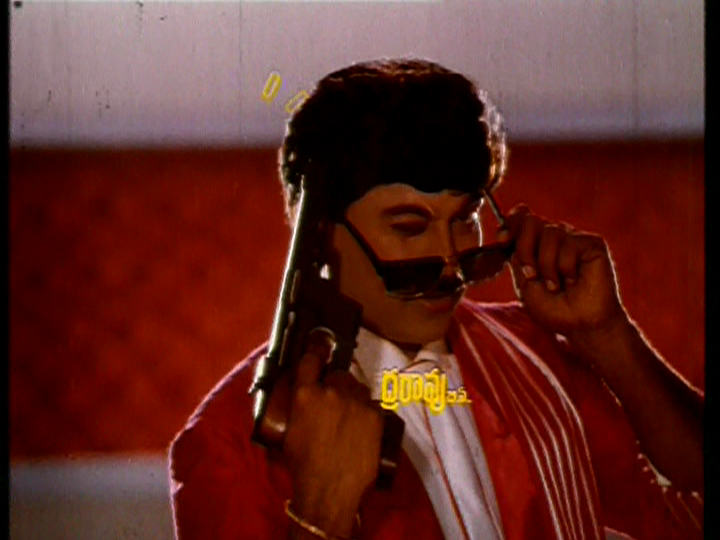
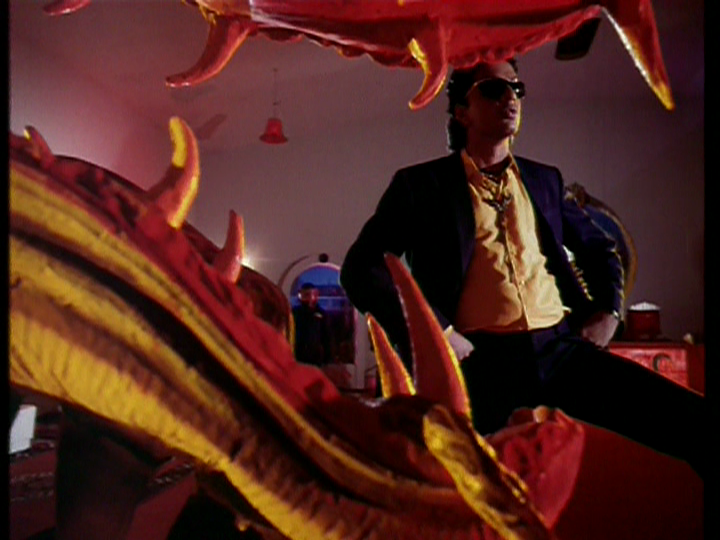
Chiranjeevi stars as Agent Netra who saves the world from evil, but does nothing to rid us of lycra and lurex. There are multiple villains and heroines, silly catchphrases, overcomplicated schemes, foreign locations, strange gadgets, horrific outfits and memorable design. This was another Adventure Without Subtitles but who needs words when this visual assault is coming at you?

Agent Netra (Chiru) investigates a shady businessman (Rao Gopal Rao) whose real business is in creating some kind of drug. Netra is killed in a confrontation with the next crimelord up the foodchain, Mr Kyun (Raghuvan). Agent Prathima (Vijayashanti) takes over and vows to solve the case for her lost love. She visits some associated bad guy (Nutan Prasad), and finds Yadgiri, a Netra lookalike, working in his home. She persuades Yadgiri to pretend to be Netra. Despite wearing a stealthy red and gold ensemble she is captured and taken to an underwater drug manufacturing plant guarded by men in Michael Jackson Thriller suits. I’m not sure but I think Netra was never really dead and was pretending to be Yadgiri who pretends to be Netra. It really doesn’t matter, as Chiru rescues Prathima very stylishly.

They try get to Rao Gopal Rao through his eldest daughter Rekha. Unfortunately, some pictures get swapped and Chiru acidentally sets his sights on the younger daughter – Hansalekha (Radha), who had obviously incurred the wrath of the costume designer. He decides to sweep her off her feet, and frankly who can blame her for giving in quick smart. Well, I have some doubts about a man who shoots you with a suction-capped arrow and love letter that looks like it was written by an 8 year old with her ‘My Little Pony’ crayons.

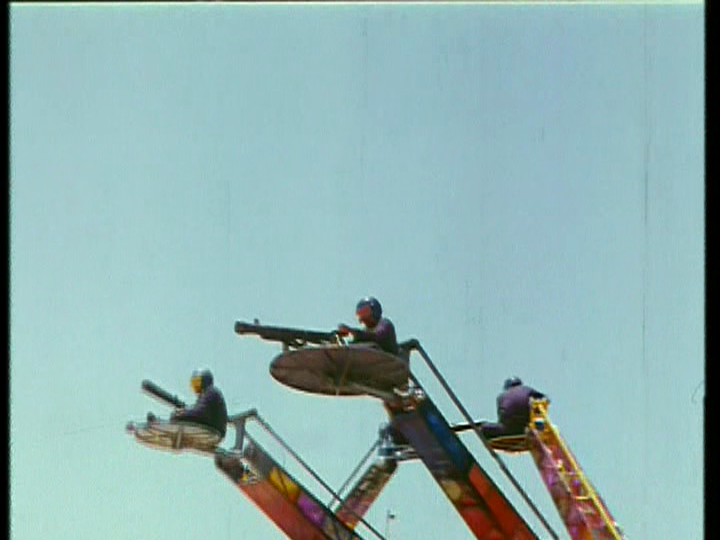
Which is the perfect style for Lekha. There is no respite from her horrible outfits until she mistakenly thinks she is pregnant (to Netra) and starts wearing sarees. Netra breaks up with Lekha and pursues Rekha but to no avail. It turned out poor Rekha was not the villain’s real daughter and he was just using her as a human guinea pig for his drug testing. He really is bad! And who but an evil man would order a child fired out of a circus cannon? (OK I admit, that idea does have some appeal, but I wouldn’t actually do it.) A daring trapeze rescue and fight by Netra ensues. What with one thing and another Netra finds his way to the top villain, Mr Kyun’s dad – Black Eagle!

Will Netra save the world? Will someone save Radha from the vengeful costume designer?

Well, you can’t have everything.

Any film with Chiru playing a triple role will get my attention. Especially when his idea of secret agent work attire is this:

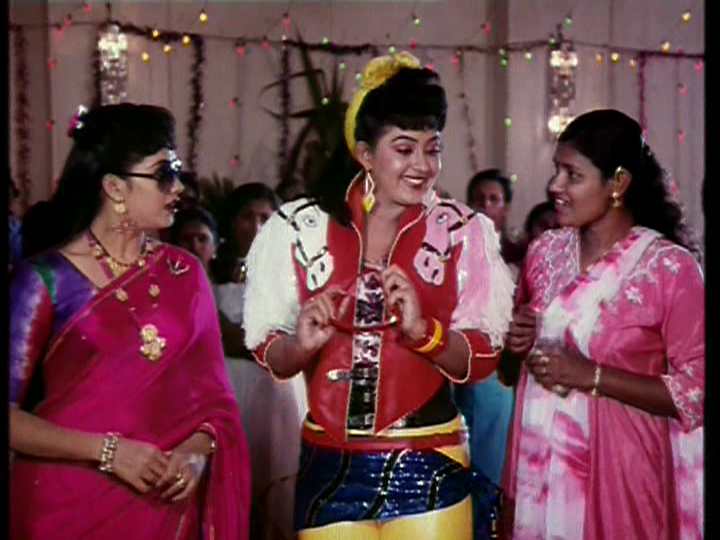
Poor poor Radha. I shall let the pictures tell that story.


Vijayashanti gets a slightly better everyday wardrobe but doesn’t get away without a few feathers and sequins. Generally Prathima is the smarter more resourceful female, and can hold her own in a carefully choreographed fight.

The villains have truckloads of style.

Rao Gopal Rao firmly believes in world domination and colour matched lurex shoes for all his ensembles. His lair is more functional than iconic, in keeping with his pragmatic and cold blooded style. He even kills his not-really daughter Rekha once she is of no use.

Then there is Mr Kyun whose catchphrase is ‘Mr Kyun is always a question to yoooooooou’. He is a bit disappointing visually, but makes up for it with cheesy English dialogue and being pure evil.

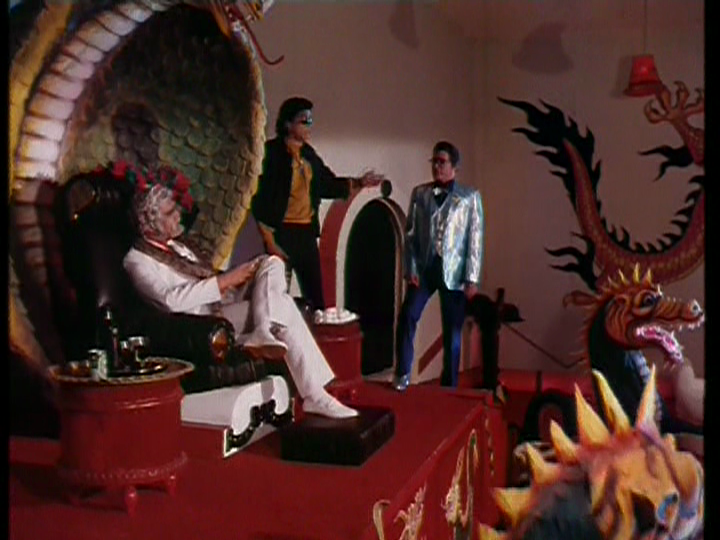
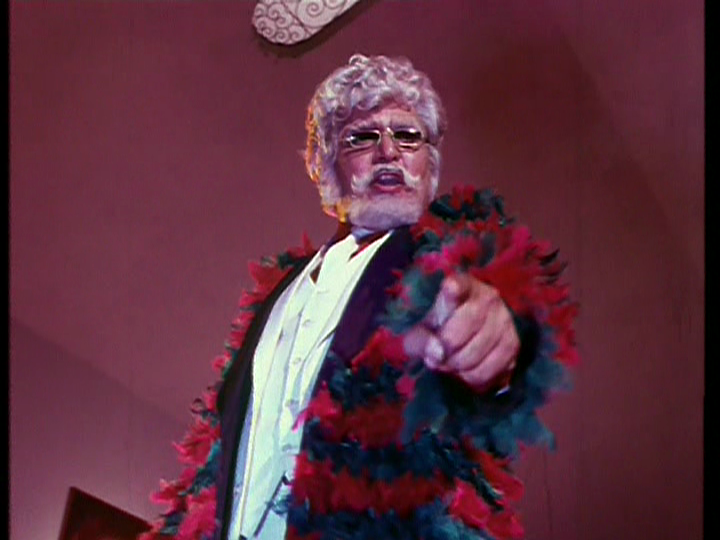
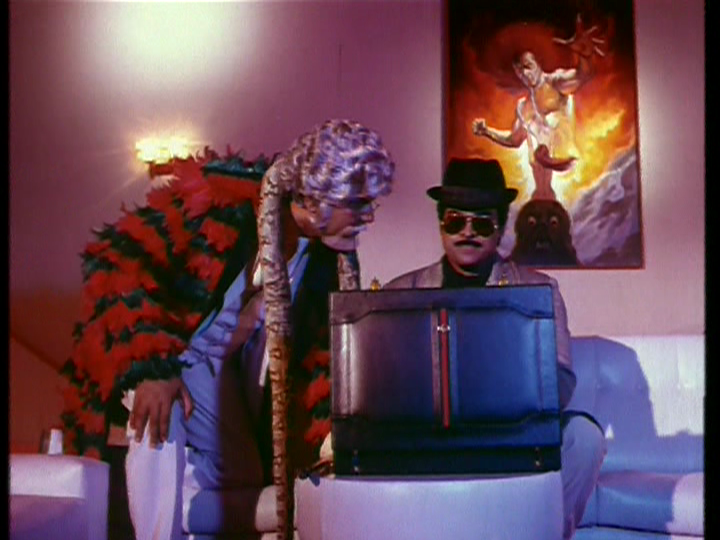
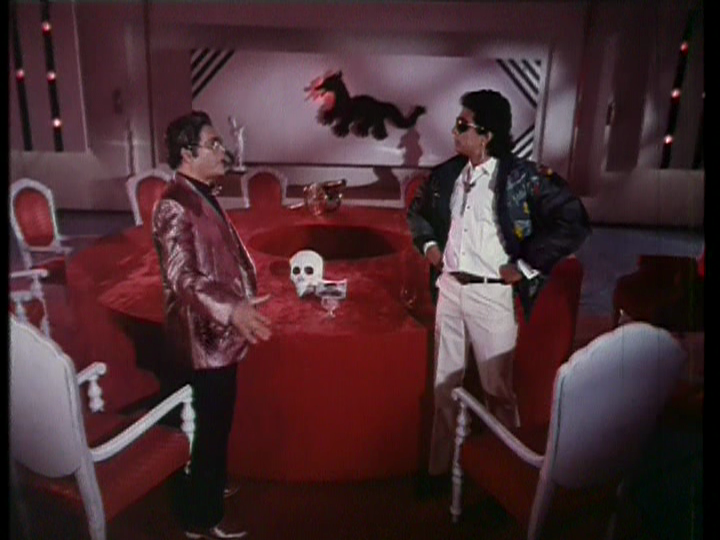
Black Eagle is confused. Why else would he be in a dragon themed lair? Accessorising with snakes?

Perhaps this outfit is intended to make him more Eagle-y, despite the boa as boa.

His catchphrase varies from ‘Black Eagles loves you’ to ‘Black Eagle hates this’. You know you’re on a winner when the villain talks about himself in the third person. His minions look like Lego men and are about as handy in a fight.

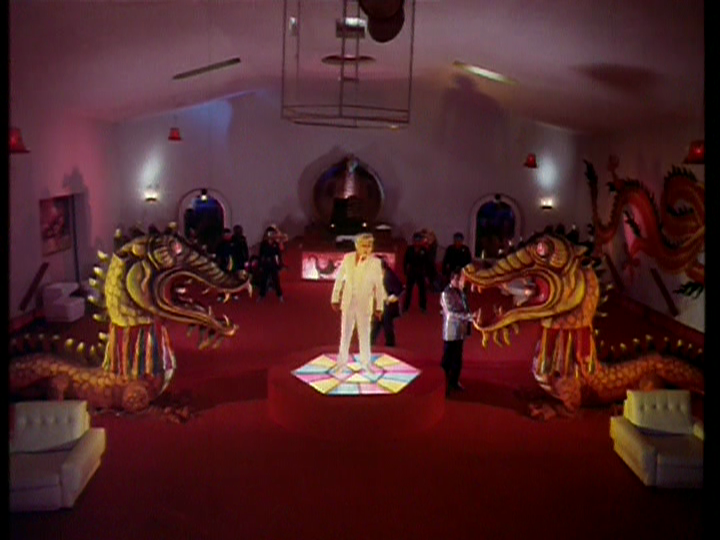
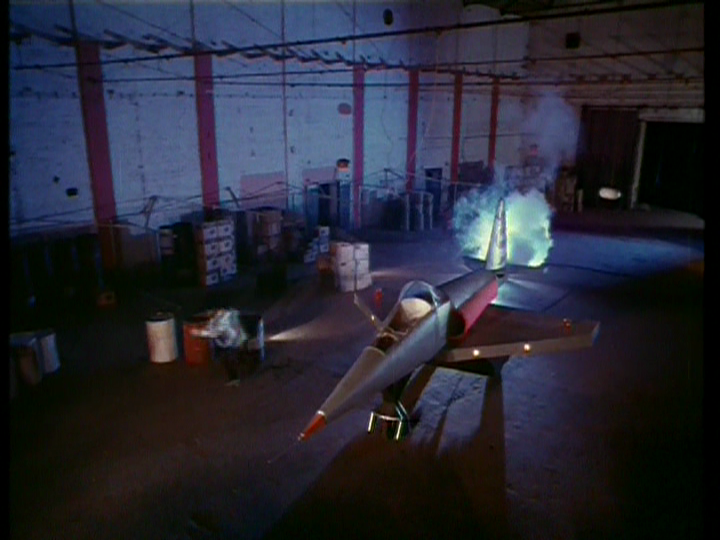
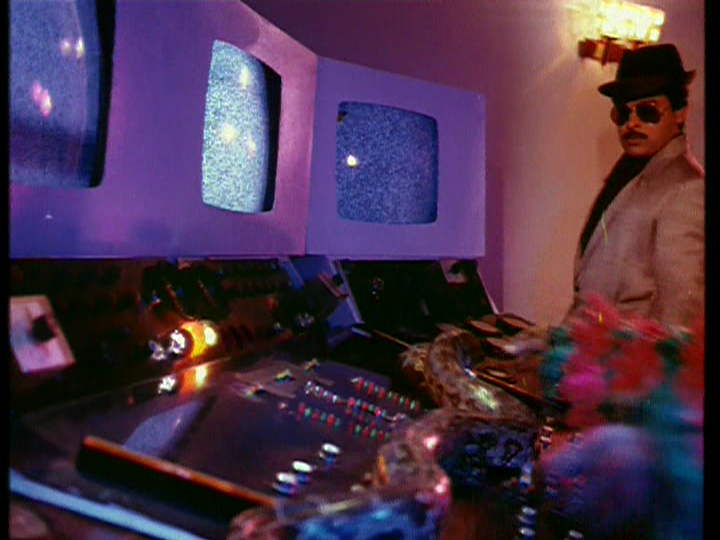
It also makes for excellent espion-tertainment when the gadgets are abundant. Black Eagle has a ‘death bell’, which has a disco floor, and two dragons that bong the ‘bell’, which kills the prisoner (unless the prisoner is Netra). Black Eagle and Mr Kyun have built a rocket to launch their killer bees or lethal gas or drugs (there is evidence pointing to all as a possibility) but neglected to acquire the “destruction gadget lock” so that created a delay. There are fake planes, underwater lairs, exploding guns and lots of cool stuff along the way before we get to the top secret circus tent rocket control centre.


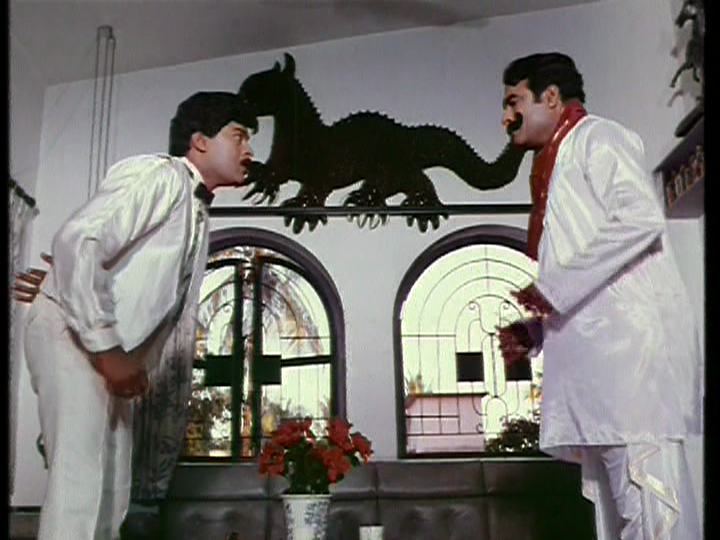
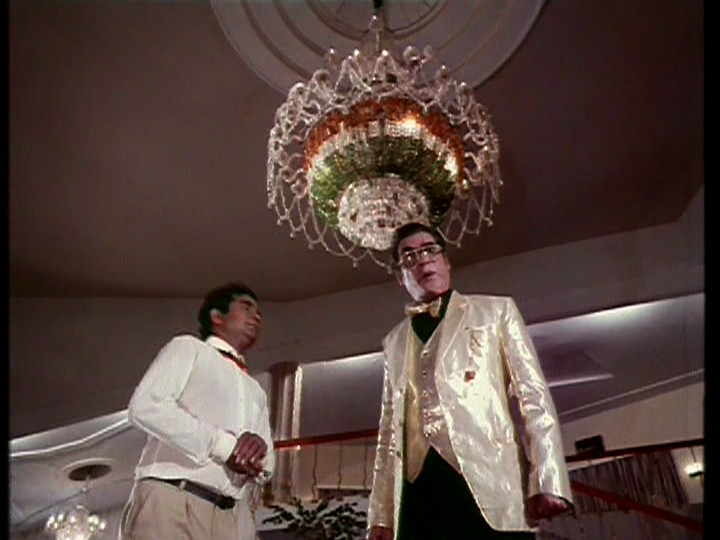
The interiors are all quite special and no wall is left unadorned. This dragon appears in several other vintage Telugu films, and turns up both in a lair and Netra’s own house. Was it the height of style? Or just recycling? There is also a pleasing commitment to chandeliers throughout, including a song in a lighting showroom.


There is a comedy track. Brahmanandam is not it, despite being a bumbling sidekick to Rao Gopal Rao. The comedy happens in Malaysia and Singapore and involves some very unfortunate ethnic stereotypes, an annoying child and a comedy uncle in garish shirts. The only good thing about the comedy is that they get someone to take Lekha’s pulse and determine that she isn’t really pregnant. There is a fun scene where hotel staff (who look like actual hotel staff roped in for the day) chase Rao Gopal Rao through the complex shouting ‘Look Madman!’ and ‘Stop Madman stop!’

This is not Illayaraja’s finest work but the songs are pleasant enough if you watch them with your eyes closed. There is a puzzling lack of orchestral support in the climax scenes. It sounds like they forgot to write anything, the band had gone home, and in a panic they asked a bunch of blokes in the studio to vocalise heroically. This is the result  – and you’ll get to see Chiru in excellent fighting form, plus the death bell! I don’t think I was supposed to be laughing so hard I cried.

Rudranetra is a whirlwind of colour and movement. See it for the cheese, stay for the Chiru! At best, 2 stars for quality but a full 5 for entertainment and effort.

Happy New Year!

Heather says: This is such a totally fab film that it’s hard to believe it was made in 1989, at least that is until you get to the satin frocks with mutton sleeves and excessive amounts of frills and flounces. Otherwise it’s very much 70’s style Bond, although mainly without the actual style. The plot is ridiculous and I kept getting the various women confused until Temple pointed out that Radha always had the most garish outfit in any particular scene. Every time I thought the costumes couldn’t possibly get any worse, the costume department managed to go that really bit further, add in a little more bright canary yellow and dig out the worst hair ornaments I think I have ever seen. Bravo!  I do have a lot of admiration though for anyone who can carry out top-secret surveillance in shiny satin which really is quite an achievement.

It was also a real plus to see the whole of the dragon creature that appears so briefly (and only its feet) in Attaku Yamudu Ammayiki Mogudu, not to mention the number of dragons that are everywhere in Black Eagle’s lair – so why not Black Dragon then – hmm? The whole film looks so amazing that it’s hard to keep track of the story and not get distracted by the visuals. Thankfully though, even without subtitles, it all makes sense in the end, or at least as much sense as I think it was ever meant to, and the climax is really excellent. Overall a really fun watch, although probably best watched with another Chiru fan for best effect. 3 1/2 stars.

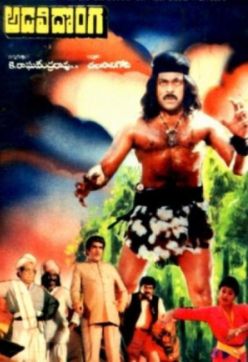
Adavi Donga

Adavi Donga is difficult to really capture in mere words. As I watched it, I kept wondering if Chiranjeevi was already the Megastar, because this is not the kind of film that I imagine would really enhance an actor’s reputation. This was an adventure without subtitles, but the visuals speak volumes. My  copy is a dodgy quality VCD so my images will not do it justice, but I have sourced some short clips to help bring Adavi Donga to life. No dear reader, don’t thank me yet!

Sharada, always so elegant and striking, is Vasundhara. She opposes the local bad guy, animal poacher and underpayer of vegetable growers, Rao Gopal Rao, and his idiot son.

He is slimey and not always just in the comedic manner you might expect from the wigs.


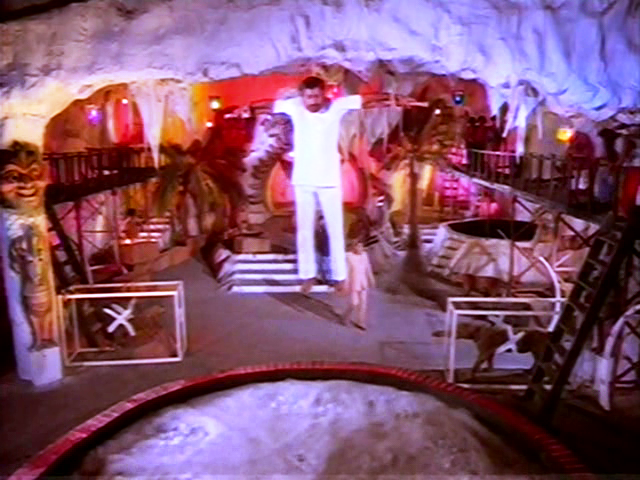
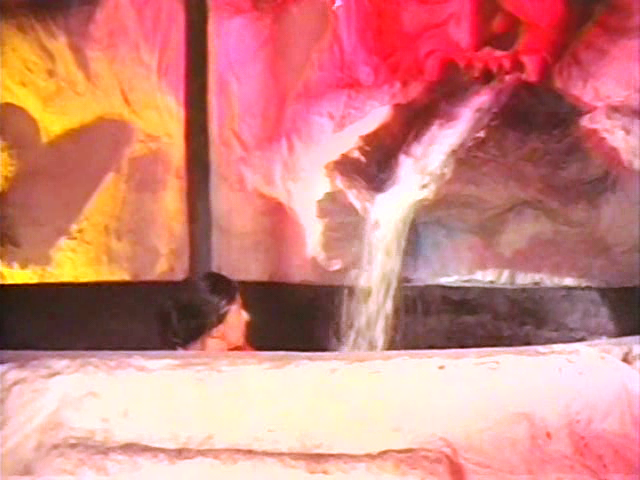
Look at what happened to the last person who crossed him! And consider the well appointed lair and excellent lighting effects. He also has a gang of brightly attired poachers, and Allu Ramalingaiah as a shady advisor and factotum.

Rao Gopal Rao frames Vasundhara’s husband for murder, and at the dramatic height of that incident, she stashes her recently tattooed infant son in the forest fully intending to come back when it is safe.  Unfortunately for her, the lad is discovered and adopted by an elephant and taken into the jungle.

I was delighted to find that the jungle was populated by lots of exciting animals like tigers, lion cubs, monkeys, antelope, peacocks and… fluffy white bunnies.


Some things made me question where the rabbits fit into the food chain. They had no protective camouflage or colouring – Stupidity or fearlessness? Were they just a convenient snack for local carnivores or something more sinister?

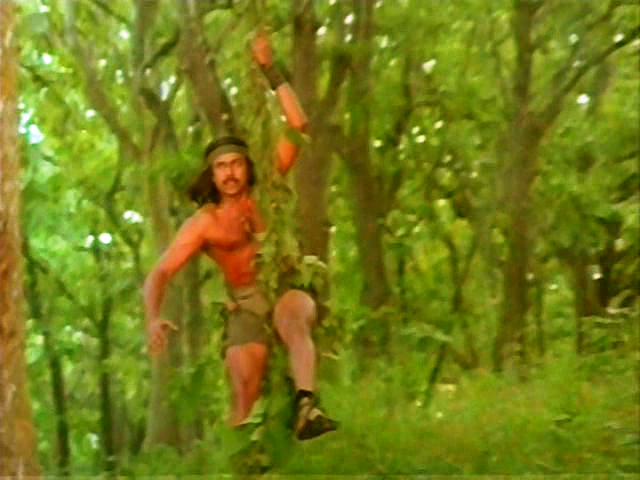
Sharada is left alone and angry. Vasundhara is a strong woman with a vengeful streak tempered by her principles. Her policeman brother, played by Kongara Jaggaiah, refuses to believe that her husband is innocent and doesn’t seem too fussed about the lost baby. Of course the boy grows up to become Chiranjeevi, a Tarzan character with a wardrobe comprising several loincloths and an array of matching sandals, who lives completely unnoticed in the not very distant jungle.

Radha has some strange ideas about jungle appropriate attire, although I guess pleather would be fairly hardy as fabrics go.

The poacher gang try to kidnap her, possibly in an attempt to force her to marry the idiot son. But Chiru cannot resist the piercing shriek of a maiden in distress and comes to her aid. She flees, leaving her cassette recorder behind. And that changes everything. I liked that the elephant mother seems appalled to find her human child dancing to some random disco rubbish. Sadly the damage has been done and Chiru goes in search of the pretty lady. This choice leads him into a world of floral curtains and scary reflections.


Radha certainly liked what she saw. The yodelling over Chiru’s arrival in this song is quite marvellous. Someone took their Tarzan tribute seriously.

Radha staged another incident to attract Chiru’s attention. She didn’t count on being chased into the jaws of a crocodile by a lethargic tiger, and of course Chiru arrives in the nick of time having been alerted by her robust screaming. I do like a good crocodile wrestling scene! He takes her to his treehouse and she seems to recover quite quickly considering her leg had been gnawed half off. But why didn’t Radha seem to notice the rabbits hopping all around her?

Chiru’s treehouse had an elephant operated elevator which at first surprised me – I mean, Tarzan needing a lift? How many city gals did he bring home? But then I realised the lift was possibly for the benefit of the bunnies who were sharing the penthouse treehouse with Chiru. Did the elephants have their own interpretation of bunny rug? What was their purpose? How on earth did the rabbits persuade so many creatures to do their bidding? Why do I care ?

Chiranjeevi’s idea of flirting with Radha is amusing rather than smouldering. He steals her bra, covers himself in a leopard skin and crawls around growling, gets his monkey to take a Polaroid of Radha while she is changing clothes and generally behaves like a hormonal teenager.

The romance between Chiru and Radha draws the attention of Rao Gopal Rao. His machinations place Chiru in danger, which allows for some excellent vine-swinging, and the elephants intervene to go find Sharada and reintroduce her to her son. Quite why it took so many years to do this is not clear, but maybe they just weren’t ready for him to leave home. It took Radha, resplendent in pleather pedal pushers, to reunite the family with a clever visual demonstration of the parent child relationship.


They quickly adjusted to this new family dynamic and the elephants helped Sharada break Chiru out of police custody. She is a very resourceful woman.

After a bit of divine intervention and maternal coaching, Chiru becomes Kalidasu. He starts wearing suits and accessorising with scarves. He also quickly develops an amazing mastery of rhetoric. Sharada imbues him with her own strong principles and he is the perfect son.


She is still crusading against the poaching and other villainous goings on. I liked the villains lair, apparently accessible only via secret rail tunnel, or the truck loading bay. Despite all the secrecy, Sharada and the local ‘tribe’ seem to be able to wander in as they please.


Naturally the bad guys refuse to be warned off by Sharada or by Chiru. He is outraged at seeing his former jungle friends sold for skins and tusks, although he was no tree-hugging conservationist  in his previous jungle existence. An assassin is sent to kill him. This role, if not the outfit, would have been perfect for Bob Christo. Please pay particular attention to the Wolverine style claws made from apple peelers.

Other pleasing details include the abundance of  fake ‘taxidermy’ in the villain’s house. What were they thinking?

The commitment to that theme continues into a song.

The songs (music by Chakravarthy) are kind of fabulous and completely excruciating.

The final showdown takes place in the villain’s lair and poor Chiru is faced with a terrible dilemma. Rescue his recently freed father from this?

Or save his mother from this?

And how to help anyone when he is trapped? And with evil henchmen tearing his clothes off?!? Oh the humanity!


Director K Raghavendra Rao wraps things up neatly, if not terribly sensibly, and there is excellent utilisation of the elephants. There is so much fabulous wardrobe, a ridiculous plot that merrily disregards any inconvenient logic, and very appealing performances by Chiranjeevi and Sharada. A must see for Tarzan fans, Chiru fans, rabbit fans and anyone who ever wanted to know which sandals go best with a loincloth. While not a great film, this is So Bad It’s Really Very Good.  3 stars!