1 Nenokkadine

nenokkadine-poster

I love Sukumar’s Arya 2, I think Mahesh is a very good actor, the story had been talked up and the budget was huge with lots of big sets and fancy locations. Unfortunately 1 Nenokkadine is more like two films thrown together than a cohesive whole  – one a complex psychological thriller and one a mass shoot ‘em up blow ‘em up. I can’t avoid one big spoiler although I don’t want to discuss the plot in much detail. But ultimately Sukumar fails to fully capitalise on either the big idea or the big star.

Note: I didn’t get to see this in a cinema as the screen caught fire at the first show and that was that! (No one was hurt.) Since I tried to see this legally but was prevented by an act of god, I wasn’t conflicted about using more dubious means available until the DVD releases.

Anyway. What to believe when the hero is an unreliable narrator? This should have been an interesting conundrum but unfortunately 1 Nenokkadine is full of holes and the direction is clunky.

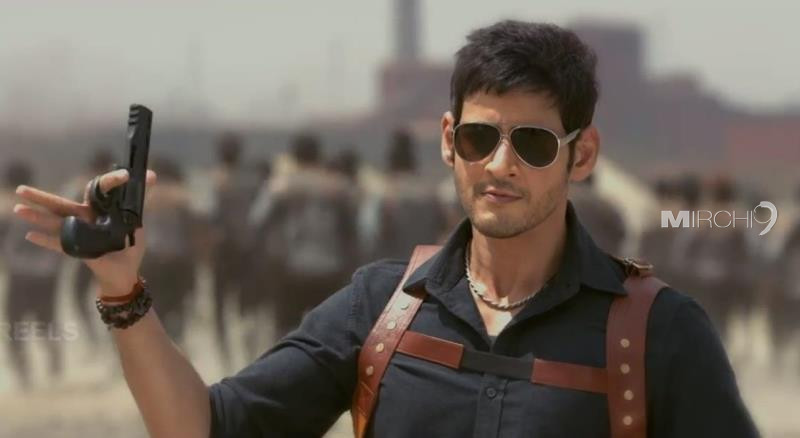
Gautam (Mahesh) is a rockstar. He is prone to nightmares and constantly on guard against the men who killed his parents and want to finish him off. When Gautam sees one of the men in the audience of his show, he takes off initially in fear but then in pursuit and kills the guy. Gautam turns himself in to the police, clearly disturbed but aware he has done something wrong. He was chased by Sameera, apparently some kind of production staff on the show who is also a journalist and squealy fangirl. She films the fatal encounter and reveals the truth about Gautam – he was hallucinating the whole thing. There was no other man, no fight and no stabbing.  Gautam’s backstory finally emerges when he ingeniously tracks down Nasser who says he was a cab driver 20 years ago…And that sends them off to London and the high adrenalin second half of the film. And yet once again, nothing is as it seems.

Mahesh is very good and his dramatic scenes really do have urgency, conveying  Gautam’s pain and frustration. The scenes where Gautam is hanging on by a thread, fighting his inner demons, are so well acted but often undermined by the direction. Mahesh can do a lot with silence and minimal histrionics but Sukumar lays on tricky visuals where he could have just let the performance breathe. There is zero chemistry with Kriti Sanon, and their romance was of the desultory insta-love variety, an obligatory element. A hero with integration disorder opens up a lot of possibilities for turning mass film tropes inside out. But there is little logic, and so much bad filmi medicine, that the mental illness almost becomes irrelevant. Gautam is a man who cannot trust anyone and is out for personal revenge. Now he learns he cannot trust himself. How had he functioned for the last 20 odd years if he was prone to such vivid and realistic delusions? Why had no one around him noticed anything odd given he had ‘killed’ before? There was no reason for him to be a rockstar other than as a change of image for Mahesh, so why not have more fun with the new career? And it takes everyone far too long to unravel the screamingly obvious Significant Clue.

Kriti Sanon’s Sameera takes about half the film to find her feet, partly because she is a fairly ordinary actress and partly due to the patchy writing. Sameera lies, confuses Gautam, and finally says she is doing it all to cure him because she loves him. Yeah, whatever.  And the idea that if you love someone you have to believe them takes no account of mental illness which by definition means a person may struggle to have awareness or control of their thoughts and resulting actions. I would normally complain about drugging the heroine but I was as ready as Gautam to have a break from her.  Luckily one day Sameera recalls she is a journalist and so should be capable of thinking and research. Maybe she found her brain when she swapped handbags. She starts to put together the attacks on her, the men following Gautam, things, and links it back to the underworld don (Kelly Dorjee).

Comedy rears its ugly head as Gulab Singh (Posani Krishna Murali as a London based Sikh taxi driver) is tasked with facilitating Gautam’s revenge logistics. Pradeep Rawat, Kelly Dorjee and Nasser are the main supporting actors and deliver their usual reliable standard of performances.

The songs are an interruption and do nothing for the plot. Kriti Sanon prances about in micro shorts all the time so Aww Tuzo Mogh Kortha wasn’t an excuse for a skinshow, although she did also get some guitar fondling into her repertoire. The English lyrics are horribly cheesy, especially for You’re My Love, and nobody seems to be having fun. But don’t take my word for it.

Mahesh has very similar choreo for every song so that was a bit lacklustre too.

Peter Hein puts all the right elements into the action scenes but repetition and sluggish editing sap the energy. How could a chase involving jet skis, boats, a parasail and hydro jet packs be tedious? There are also some things that are glossed over (e.g escaping from an underwater car) where they either lacked budget or an idea of how to extricate the hero from his impending doom. Sukumar is trying for a psychological edge but replaying a shot of Kelly Dorjee throwing a can into a bin multiple times to show Gautam thinking of using the rubbish as physical evidence is just painful.

The locations are used well, and the film looks beautiful. There are some really nice touches that add style and even humour. Mahesh’s son Gautham appears as young Gautam (those ears! Instantly recognisable).The threat of Indian fans forming a mob is enough to get the police to rethink keeping Gautam in jail, but then everything else functions as though the Belfast police are identical to the Andhra police so what is the point of that cultural in-joke? It’s all very disjointed and seems to have been written by committee. Oh but Nasser’s flashback wig is a doozy. I think it is the poorer cousin of The Wig from Shakti. And for the hardcore  Mahesh fans, yes he does a shower scene so you will see naked upper back. The glimpses of princely elbow are now old hat so no need to mention there are approximately 437 of those throughout the film. I think our friend The Mahesh Fan would approve of the brainy specs. Oh you want proof?

In a good psychological thriller once the twist is revealed the story should be enriched, and the viewer should be able to re-interpret scenes with their new knowledge. I think films like The Prestige and even Sixth Sense did that extremely well. Sukumar couldn’t make his own mind up about the film he was making so ended up with an overly long muddle that wouldn’t completely satisfy either full-on Mahesh fans or the psycho-drama audience.

A schizophrenic film about schizophrenia. 3 stars (mostly for Mahesh).

Heather says:

I enjoyed this film despite a few fairly obvious plot holes and a relative lack of logic at times. Most exciting for me were the scenes shot in Northern Ireland since this is where I grew up and, Game of Thrones aside, it’s rare that I get to see my home country on screen. There was something slightly surreal about watching Mahesh Babu run across Carrick-a-rede bridge, past Scrabo tower and wander through the streets of Whitehead, particularly when you know just how far apart those places are in reality! That aside, there is much to enjoy in Nenokkadine. Mahesh is in ultra-brooding mode with his fierce intensity somehow out of place for a supposed rock star. That’s probably my main question – why make him a rock star? Where are his security people and minions to run and pander to his every whim – if he’s as famous as implied here then he does seem to travel very light. His performance however is excellent and as the story unfolds it becomes ever more believable that he has a mental illness with his intense and chilly stare.

Apart from the scenes in Northern Ireland (which I have now forced my entire family to watch) I love when a frog hops away from the fight and the action sequence in the bathroom is fantastic.  Peter Hein comes through again! Thankfully there is no annoying separate comedy track to detract from the thriller nature of the story and although the romance wasn’t particularly well realised at least it did give a respite from all the brooding. Nenokkadine is a good attempt at a rather more psychological thriller and while parts of the story are familiar at times, overall I do like the way Sukumar thinks. I love his tendency to make his heroes somewhat damaged and their flaws make them more interesting (Arya 2 is still my all time favourite Telugu film) but at least for this film I would have liked him to branch out a little more from Telugu formula and ditch the songs. I know that’s odd coming from me, since I usually want more songs, but dance numbers just don’t work particularly well in a thriller, and here the tension falters every time the action is disrupted by a song. However, I still did enjoy Nenokkadine and I’d recommend it as a rather more sophisticated thriller from Sukumar and for the excellent performance from Mahesh. 4 stars.

Kaaviya Thalaivan (2014)

Kaaviya Thalaivan

Kaaviya Thalaivan sounded promising. A character driven drama set in the world of Tamil theatre in the 1920’s should have been exactly my kind of film, but despite excellent performances from all the  actors and A.R.Rahman’s expressive  soundtrack, the story is frustratingly predictable with little of the expected melodrama. The beautiful costumes and period sets cannot compensate for a very pedestrian telling of the rivalry between two actors and the ups and downs of a theatre company in the years before Indian Independence.  However, at least there are great costumes and stunning sets, and even if the story is disappointingly flat there are plenty of moments of brilliance from the individual actors which do make Kaaviya Thalaivan worth a watch.

The film is semi-narrated by Gomathi Nayagam Pillai (Prithviraj) who is sent as a young boy to train as an actor with Thavathiru Sivadas Swamigal (Nasser). During their travels, Sivadas Swamigal takes in a young orphan beggar called Kaali – later to rejoice in the name of Thalaivankottai Kaliappa Bhagavathar (Siddharth). Gomathi and Kaali become friends in a fairly standard ‘protecting from bullies, blah blah blah heard a million times before’ storyline. Now that familiar track wouldn’t matter if their developing relationship was told with any supporting emotion, but Gomathi runs through the story as if it’s a reading exercise in class and the identity of the protagonists is a matter of great indifference to him. Naturally then, it doesn’t matter to the audience, and Gomathi’s attitude appears more as boastful self-importance rather than genuine compassion for a young orphan.

From children to young men in the theatre company is a matter of a few moments and the two seem to be at least notionally friends at this point. Their different personalities are defined by a moment in the wings as they watch the hero Bhairavan (Ponvannan). Gomathi voices his desire to be just like Bhairavan while Kaali recognises the flaw’s in both the performance and the man, and instead aspires to be like their guru – Sivadas Swamigal.  It’s not unexpected then when Sivadas Swamigal chooses Kaali to be the hero for the company’s next production, or that this sews the seeds of resentment in Gomathi for his ‘humiliation’ which is really all in his own mind.

Gomathi  seems to take it as inevitable that he should resent Kaali for his success, without having any better reason to do so  than his own sense of self-importance. That could have worked as motivation if it had been developed in any way, but instead the rivalry is treated as a given and no further explanation is necessary. While Gomathi is silently angry, Kaali is blithely oblivious and embarks on a ridiculously straightforward romance with Rangamma (Anaika Soti), the local lord’s daughter. Kaali has little difficulty accessing Rangamma’s rooms, which should realistically been a little more heavily guarded, and no-one other than Gomathi seems to suspect anything, despite the heavy-handed flirting that goes on between the two during stage performances.  At least finally there is some passion and vitality to the characters, although not so much between Kaali and Rangamma but rather in an excellent scene where Sivadas Swamigal confronts Kaali about his love affair. Both Nasser and Siddharth are over-emotional and sufficiently melodramatic to suit the story at this point, while Prithviraj gets a chance to be nastily spiteful. However it’s a small oasis of theatricality, and the story quickly reverts back to a more plodding pace once Rangamma is out of the picture. That’s actually a shame since Anaika Soti does well with the limited role and looks beautiful in the songs. I would have liked to see more of her, but Kaali needs to have a reason for his life to turn pear-shaped and losing Rangamma works relatively well.

The final character in the drama is Ganakokilam Vadivambal, aka Vadivu (Vedika), a dancer and singer who joins the company and replaces the more traditional male actors in the female roles. Vadivu is in love with Kaali, but he only has eyes for Rangamma, while Gomathi pines in the wings for Vadivu who barely seems to notice him. It’s a situation that should be full of jealousy and passion but is instead treated clinically without any of the emotional drama that would have made the characters more effective. Again there is no justification for Vadivu’s ever more extreme devotion to Kaali, and although there is a little more substance behind Gomathi unrequited love, it doesn’t seem realistically likely to survive in the face of Vadivu’s determined rejection. However both Vedika and Prithviraj are good enough actors to generate some plausibility in their relationship and the tension between the two does become somewhat more palpable as the story develops. Without Prithviraj this really wouldn’t have had anything like the same impact, but he really does do a good job with very limited dialogue and little opportunity to demonstrate exactly why he feels the way he does.

Vasanthabalan also adds in a Nationalist thread to the plot which seems to be an unnecessary complication when more detailed development of the story and more in-depth characterisations of the three protagonists would have worked just as well, if not better. Once Kaali becomes a Nationalist, that too in a matter of moments while in prison, his fate is sealed and the ending is as predictable as expected. As Kaali, Siddharth comes away looking the best of the cast, partly because his character has more scope and inherent drama, but mainly because he really does an excellent job with the role. His performance is flawless and particularly in his scenes with Nasser there is a definite sense of the arrogance and self-confidence that underlies Kaali. Siddharth also nails the hurt and despair when Kaali is let alone in the world and his scenes with Nasser are superb. More of these and less of the bland romance would have been much better. Prithviraj and Vedika do as best as they can  within their limited roles and there are times in the second half where both get more of an opportunity to show more depth, but they are hampered by a lack of motivation for their characters actions which makes them too one-dimensional to be truly effective.

It’s perplexing that a film set in and all about theatre could end up so lifeless and devoid of melodrama, but that is exactly the problem with Kaaviya Thalaivan. I really wanted to like this film as I appreciate the attempt by Vasanthabalan to tackle something different,  but I just couldn’t engage with the characters and was completely frustrated by the lack of any reasonable justification for their actions. I know that’s my usual rant but it is so very noticeable here in a film where the motivation really should be key to developing the drama. However, the film looks amazing, Siddharth is fantastic and the music and songs are excellent. It’s a visual feast even if there is no substance to the spectacle and for that alone the film deserves to be seen and at least once.

Aagadu (2014)

Aagadu

After the major disappointment of missing 1-Nenokkadine, it felt as if it had been a very long time since I’d been able to indulge in the wonders of Mahesh on the big screen. As an added bonus Aagadu was being shown in my local cinema, the wonderful single-screened art deco Astor, which has the luxury of a dress circle and velveteen-couches for lounging while waiting to get into the auditorium. Plus the bonus of subtitles!

Going to the Astor is always an ‘experience’ and even more so for Mahesh.  There were massive posters with accompanying garlands, samosas for sale in the foyer, and even that rarest of things – allocated seating! Regular visitors to Telugu film nights in Melbourne will understand what revelation this was – no pushing and shoving to get in and try to find a seat that hasn’t been ‘saved’ by the first twenty people through the doors? Not this time! First night, first show and there was an orderly ticket collection queue, a leisurely stroll to your seat (with ushers!) and plenty of time to soak up the atmosphere with the sell-out crowd.

Aagadu

Aagadu sees Mahesh reunited with Dookudu director Srinu Vaitla, although the partnership doesn’t deliver such an entertaining film this time round.  Along with a number of familiar faces in similar roles, the usual mass themes pop up time and time again, so the plot feels tired even before it gets past the first half hour.  Still, it starts off well enough. Young Shankar is rescued from the streets by Police Inspector Raja Ram (Rajendra Prasad) who adopts him into his household based on Shankar’s non-tolerance approach to crime. Naturally this family relationship doesn’t last long, and Shankar is cast off by Raja Ram in suitably dramatic fashion after taking the blame for something he didn’t do.

Aagadu

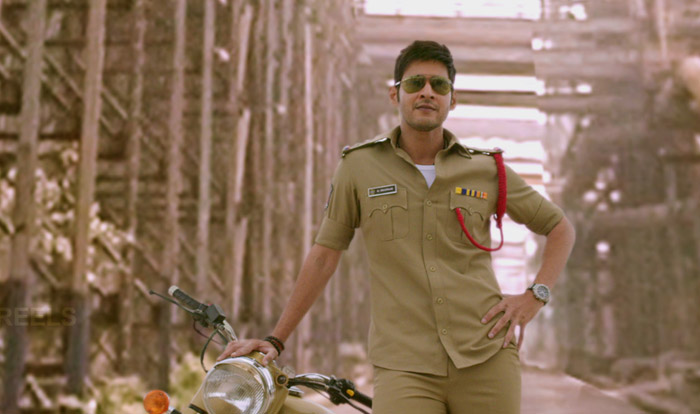
Despite these early troubles Shankar follows in his adopted father’s footsteps and grows up to be ‘Encounter Shankar’; a man so feared that the mere mention of his name is enough to turn big, bad gangsters into quivering cowards.  As expected once he appears on-screen, Mahesh Babu throws villainous thugs around with gay abandon while indulging in snappy dialogues and keeping his uniform creases sharp. Mahesh is in his element here and it shows. He looks even more baby-faced than ever as he single-handedly beats various thugs into submission and revels in his indestructible super-cop persona.  Pretty similar to the way he did in Dookudu really.  The opposing gangsters have learnt nothing and still tend to attack one at a time (they can’t ever watch any movies or they would know better), and there are plenty of barrels, containers, and various other items for them to crash into. The outcome is always a forgone conclusion but it is the getting there that counts, and the action scenes are excellent.

Aagadu

Encounter Shankar is sent to Bokkapatnam, where crime lord Damodar (Sonu Sood) is terrorising the locals and keeping the police firmly under his own control. Sonu Sood seems a little off his game here and is never quite menacing enough to be the big bad movie villain needed to offset Mahesh’s heroic cop. An early attempt to give him a ‘quirk’ falls flat and apart from one or two moments of sneering he’s a bland and relatively innocuous character.  Srinu Vaitla seems determined to include as much humour as possible, but his inclusion of the gangsters into the comedy motif works against any possible build-up of menace and just isn’t particularly funny.  Even Damodar’s gangster lieutenants are roped in with Raghu Babu, Posani Krishna Murali and Prabhas Seenu dropping their initial villainous personae for dumb comedy routines that do nothing to help the story.

AagaduAagadu

There is more comedy in the form of M.S. Narayana who is reasonably amusing as a data broker, although the best comedy moments go to Mahesh as he befuddles the villains with reprises of his own movies.  These gangsters really don’t seem to get out to the cinema much!  The usual suspects turn up in the support cast including Nasser who seems wasted in a role as a mildly corrupt cop, while CinemaChaat favourite Ajay fares a little better in a more serious than usual role and Vennela Kishore has a reasonable role as Encounter Shankar’s main assistant.  Brahmi turns up late in the film and it says a lot that he is sorely needed to bring some relief into an otherwise dull and predictable second half.  He plays a broker who ends up as the fall guy for the police operation, but it’s really just the usual slapstick with the addition of a reasonably funny dance mix from recent films, although even that seems a copy of a similar scene from Dookudu.

Aagadu

Tamanna plays the love interest and starts off as a relatively feisty character that seems to have potential. Unfortunately it doesn’t last, and after she succumbs to Shankar’s trite dialogue she is rewarded by relegation to appearing only in the songs.  There is absolutely zero chemistry between Tamanna and Mahesh but she does get to wear some pretty skirts and twirl around mountains and deserts while Mahesh does some enigmatic walking, so it all works out OK in the end.  I liked the soundtrack and the catchy songs are all well-choreographed and pictured, often with some very enthusiastic backing dancers.  Shruti Haasan makes an appearance in a rather athletic item number which got just as many cheers as Mahesh’s entrance, but Bhel Puri has some of the best costumes.  The backing dancers get to morph from Marvin the Martian to Jack Sparrow while Mahesh sports his classic shirt and jacket combination, although I’m not so sure about his red number with go-faster white stripes.

Overall Aagadu is disappointing, as Srinu Vaitla rehashes ideas from his previous movies and includes too much comedy and an excessive amount of punch dialogue in his formulaic screenplay.  The first half is entertaining enough, but the second half drags until the fast, final showdown which is over almost before it begins.  Mahesh is very watchable and almost manages to carry the entire film with his charismatic screen presence, but even his excellent performance and the best attempts of the rest of the cast aren’t enough to lift Aagadu above average. Best watched in a packed cinema with a large group of Mahesh fans, but in their absence, still worth watching for Mahesh, good action scenes at the start and the songs.


Temple says:

Aagadu is similar to other Mahesh films, particularly Dookudu, only longer and much less entertaining.

I found the first half quite dull as the slapstick and comedy uncles piled up and yet the plot never shifted gears.  The ‘comedy’ is broad and overstated – not Mahesh’s finest work. He can be very funny but Aagadu plods along, reusing the same shtick too many times, and Sankar lacks the sarcastic spark Mahesh has brought to other films (like Khaleja or The Businessman). The excessive punch dialogues were meant to be a running gag, but instead seemed a gratuitous reminder of how many other good films I could have been watching instead.  And it’s not an easy film for a new fan as the jokes are very Mahesh-centric, including a nice tribute to his dad, and would largely go over the head of anyone who wasn’t familiar with the oeuvre. The second half is more successful as Sankar FINALLY starts enacting his plans for revenge. Plus I quite enjoyed seeing Brahmi get slapped around. If I had to watch his tedious antics, I was glad to have the vicarious satisfaction of the tight slap.

Despite high production values the CGI work is often poor, both in execution and judgement, and breaks the effect of otherwise excellent action choreography. There is one scene where suddenly Sankar is CGI’d onto a tabletop during a fight and he may as well have been surrounded by a dotted line with a legend saying ‘cut here’. And the subtitles, much as I appreciate the effort, were a bit dodgy. ‘Frightended’ was a highlight, and anarchy had clearly swept through the personal pronoun department. Although I liked the description “Pant. Shirt. Shirt. Shirt.”as I think that is indeed how Mahesh dresses.

Well, at least the Astor has excellent choc-tops. And I hope that nice man The Mahesh Fan and I were talking to after the movie found his way to Doncaster.