Nandalala

Nandalala

I’m a big fan of Mysskin and have been slowing working my way through his earlier films whenever I can track them down on DVD. However I put Nandalala at the end of the queue, since it’s a change of direction from his more usual crime thrillers and didn’t sound like my cup of tea. But I should have known better. Nandalala is still very much a Mysskin film with a focus on the dark side of human nature, although this time there are some lighter moments scattered among the social commentary of the film. Even better, Mysskin himself makes an appearance in this film as one of the lead characters and does almost as good a job in front of the camera as he does on the other side.

Essentially Nandalala is a road-trip film with a young boy and a mental patient who has escaped from an asylum both searching for their mother, although their reasons for doing so are very different. Aside from their own journeys, both physical and metaphorical, along the way they meet up with an interesting mix of characters that serve to illustrate the joys and the difficulties of life in rural India. Although it does move at a slow pace, perhaps to go along with the walking pace of the journey, Nandalala is a beautiful film with a heartfelt screenplay and is very well worth a watch.

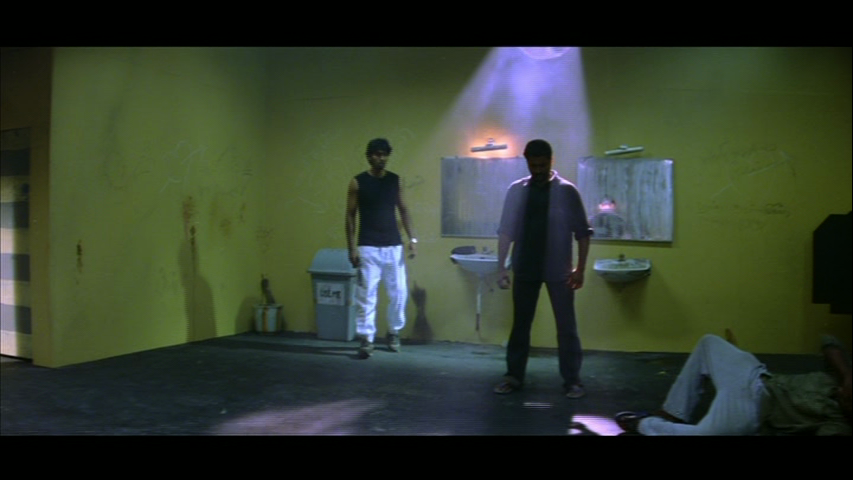
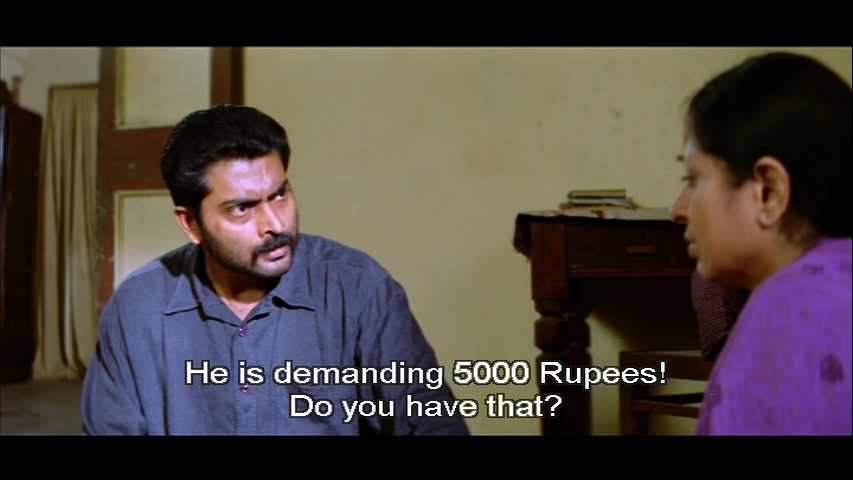
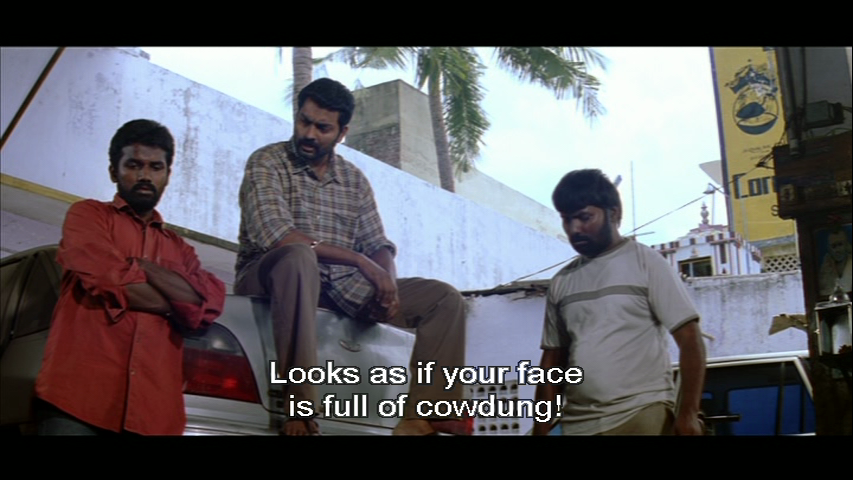
The story opens with Akhilesh, commonly known as Agi (Ashwath Ram), waiting outside his school. There are 15 seconds of silence while other pupils and their parents’ stream past his downcast head, which is an incredibly effective way to describe his isolation and give a general idea of his circumstances. When Agi does walk home, it’s to a greedy servant and his blind grandmother, both of whom need him for their own reasons. While it’s obvious he doesn’t live in abject poverty, there is little affection and no joy in Agi’s life. His most precious possession is a photograph of himself with his mother as a baby and he takes advantage of a school trip to set off on a journey to find her. Agi seems well prepared with his mother’s address, her photograph and a relatively full wallet, but he doesn’t have any real idea about how to find her. Just to make matters worse he is robbed in the local town and left without the means to buy anything let alone a bus ticket to Annaivayal. His journey seems to be over before it has started but he chances to meet up with Bhaskar Mani (Mysskin), a mentally disabled man who has escaped from an asylum and is trying to find his own mother. Bhaskar is searching for answers, wanting to know why his mother abandoned him to the mercies of the hospital staff and has never visited or contacted him. Despite their many differences, they make a good team as they travel together to find their respective mothers.

In many ways Agi is a typical young boy from a small town. He’s had a sheltered existence and his innocence and loving nature colour his approach to everyone he meets on the road. He is accepting of Bhaskar and his mannerisms, but still manages to become exasperated when Bhaskar does something particularly unhelpful, although this doesn’t change the easy partnership the two share. Ashwath Ram is excellent and plays his part perfectly throughout. His eagerness and excitement as he runs around the village searching for his mother is infectious, while his emotional ups and downs are natural and feel very honest. Agi’s guileless approach to life and his innate practicality are perhaps a little unlikely given his upbringing, but they do mirror a similar innocence and matter-of-fact abruptness in his companion.

Mysskin is surprisingly good as Bhaskar, although he does have a tendency to overact and occasionally over-emphasise some of Bhaskar’s obsessive mannerisms. Initially when in the asylum he continually runs his hand along the wall or the bars beside him in a behaviour pattern that fits well with his character’s mental disabilities, but some of his later actions seem more contrived and don’t fit as well with his mental health issues. However, he does an excellent job of portraying a child-like innocence that has an effect on everyone he meets, and if his sudden rationality at some points seems rather opportune, his moments of insanity never become too over-the-top.

The film is at it’s best when it relies on the situations the two companions find themselves in to drive the narrative, ably assisted by Ilayaraaja’s absolutely beautiful background music. There is little dialogue to draw attention away from the body language, which is much more expressive than any long speeches could ever be, and the songs are equally effective in adding depth and emotion to the film. This is a beautifully sad song that contrasts with the happy attitude of Agi and Bhaskar’s mood swings and general instability. Just perfect.

Snigdha Akolkar appears in the second half as a working prostitute whose presence adds rationality to the story. Initially she is understandably annoyed with Bhaskar and Agi when they drive away her paying customer but later events lead to Anjali accompanying the two on their quest. Her presence allows a glimpse of a softer side to Bhaskar, and gives Agi the opportunity to be just a little boy searching for his mother. It’s a powerful role despite the short screen time and Snigdha is excellent, particularly when she allows glimpses of her characters emotional fragility to escape her seemingly strong and confident presence. Nasser and Rohini also appear in small but very effective roles, and the rest of the supporting cast are all uniformly excellent and perfectly understated.

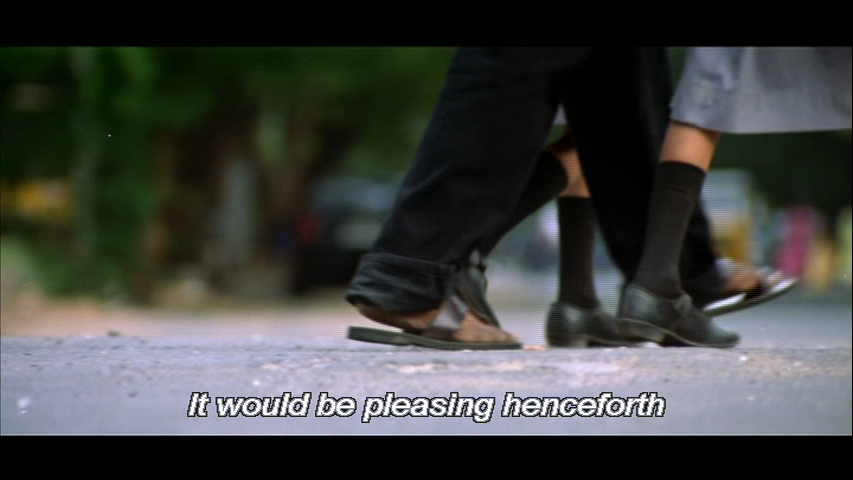
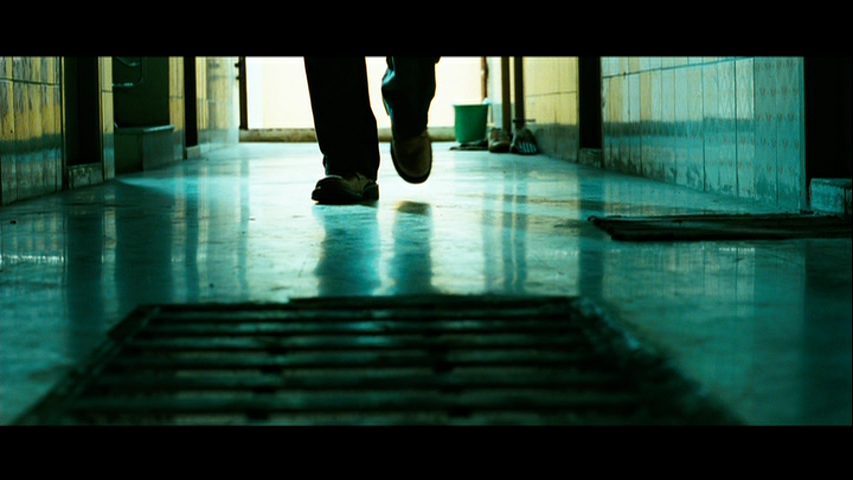
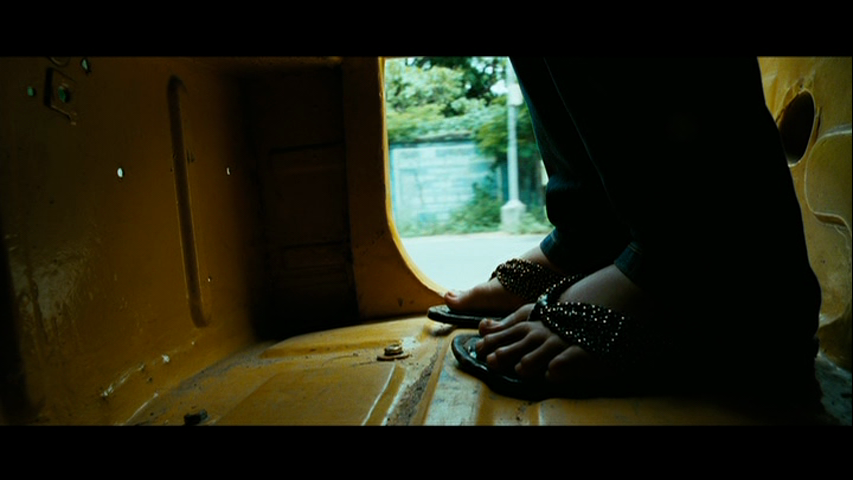
As with most Mysskin films, there are plenty of odd angles and shots of feet. This is very effective during Agi’s desperate search for his mother but also works to draw attention to the journey itself and the miles walked by Agi and Bhaskar. Mahesh Muthuswami adds his expert touch to make the countryside look sumptuous, whether it’s the plants along the roadside, the luscious green fields or the buildings and villages along the route. It is a beautiful part of the countryside, although Mysskin also points out the shady characters and quick violence that lurks amongst the idyllic scenery.

Nandalala is much better than I expected from the brief description on the DVD. It’s difficult to describe just how emotive the film is without revealing too much of the plot, but as it’s a Tamil film it’s probably obvious that there is no happy ending – or at least not completely. However the film is all about the journey and the relationship between Bhaskar and Agi, and from that point of view it is a resounding success. Mysskin excels in adding small details, such as Bhaskar’s stolen shoes that he wears back to front, that add depth and interest to his story and characters. I love this film just as much as his thrillers and am impressed that Bhaskar can turn his hand to such a different style of story so competently. It’s also commendable that he has not only written and directed the film but also acted in a major role without stealing the limelight or making it all about ‘Bhaskar’s story’. It’s probably not for everyone; there is no ‘action’, no comedy track and no big dance number, but the simple emotions and finely nuanced performances make this one for fans of more character driven cinema. 4½ stars.

Chithiram Pesuthadi

ChithiramPesuthadi

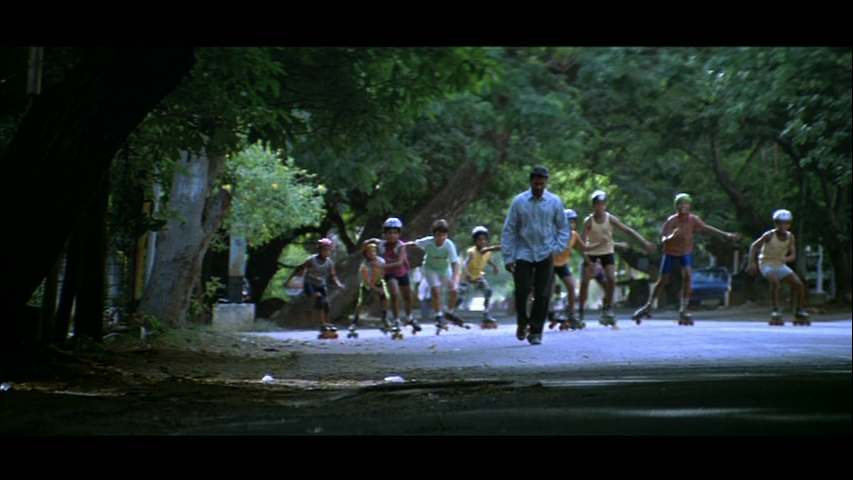
Chithiram Pesuthadi is the first Tamil film I’ve seen that thanks a roller skating stadium in the opening credits.  So – possibly not one of director Mysskin’s typically dark stories based on crime and murder then?

Well, no.  Chithiram Pesuthadi is billed as a love story, but even in this first film from Mysskin there are plenty of fights, numerous gangsters and an underworld theme added into the plot.  The features that I’ve come to expect from Mysskin’s film are also present, although less frequently here than in his subsequent films, but his trademark low angle shots of feet and a few odd camera angles from above still appear.  Despite the underworld theme, in many ways this is typical love story where a boy from the wrong side of the tracks falls in love with a middle class girl and there are numerous obstacles to overcome. However there are enough fresh features to keep the story interesting, while Narain and Bhavana share good chemistry together, which makes the love story a little more believable than usual.

Chithiram PesuthadiChithiram Pesuthadi

Thiru (Narain) is an angry man. He’s angry about the bribes he has to try and pay to get a job, he’s angry at his mother because he feels she prevented him from completing his education (which would have helped him get a job) and he’s angry at his sister because she needs money to finish her education (which means he has to get a job).  This rage makes him an excellent an somewhat ruthless fighter, and when he inadvertently rescues local don Annachi’s son from a beating, he ends up recruited as a general enforcer and thug on call.  The job with Annachi (Kadhal Dhandapani) allows him to vent his rage on a variety of hapless victims, although this doesn’t seem to improve his general disposition.  However there is more to Thiru than his frequent flashes of temper suggest.  He has his own code of conduct which he tries to adhere to, he has three loyal friends who respect him and despite his tantrums at home Thiru is trying his best to support his mother and sister.

Chithiram PesuthadiChithiram PesuthadiChithiram PesuthadiChithiram Pesuthadi

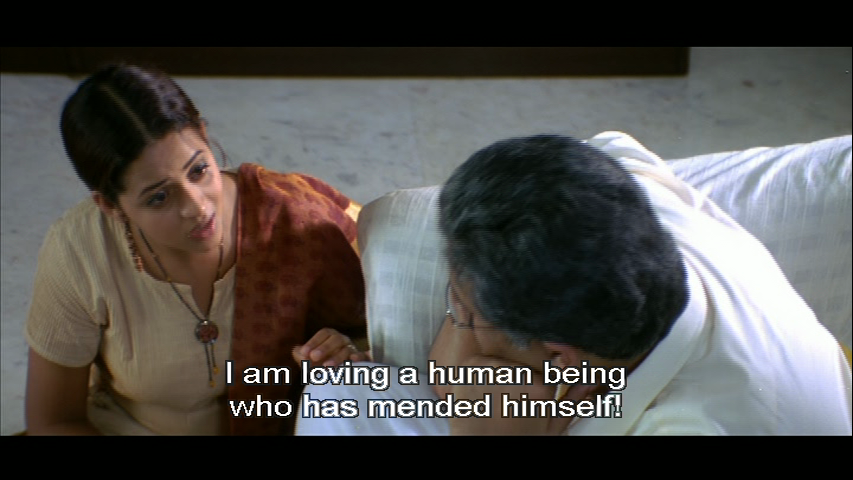
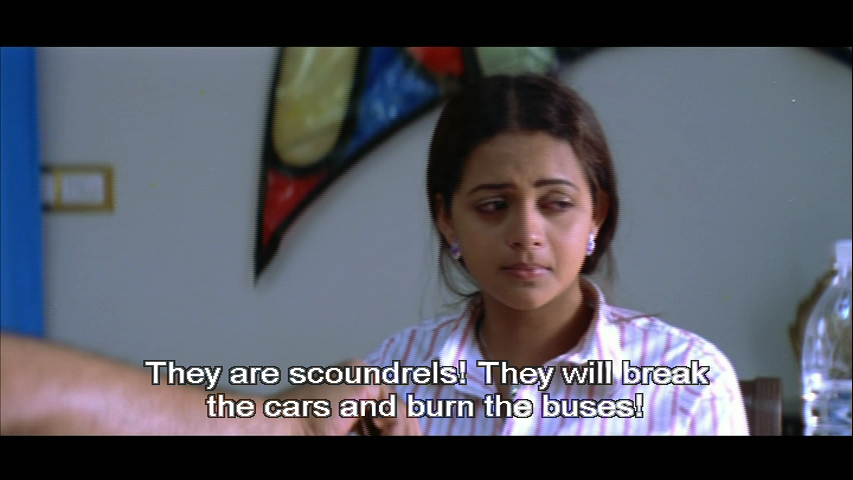
Inevitably, Thiru clashes with a girl who is equally angry, although Charu (Bhavana) doesn’t seem to have any real reason for all her aggression.  She lives with her father and works alongside her uncle in an organisation which promotes the health and welfare of orphans. Charu is a crusader and is ready to leap to the defence of anyone she feels might need her support, whether they want it or not. This leads to several clashes between her and Thiru, whom she sees as a nasty vicious thug.

Chithiram PesuthadiChithiram Pesuthadi

Thiru on the other hand doesn’t seem to think much about her at all, until finally one day he starts to see her in a different light.  Either that or he develops severe indigestion – it’s hard to decide from his expression but I’m pretty sure he falls in love.  Either way, we end up with this amazing song which, although it’s the ‘falling in love’ song in the film, it doesn’t seem to have anything much to do with love and romance.  Unless of course, I’ve missed some kind of symbolic significance in the way Narain is dressed as a Roman carrying a goat – or the many other bizarre situations in this song!

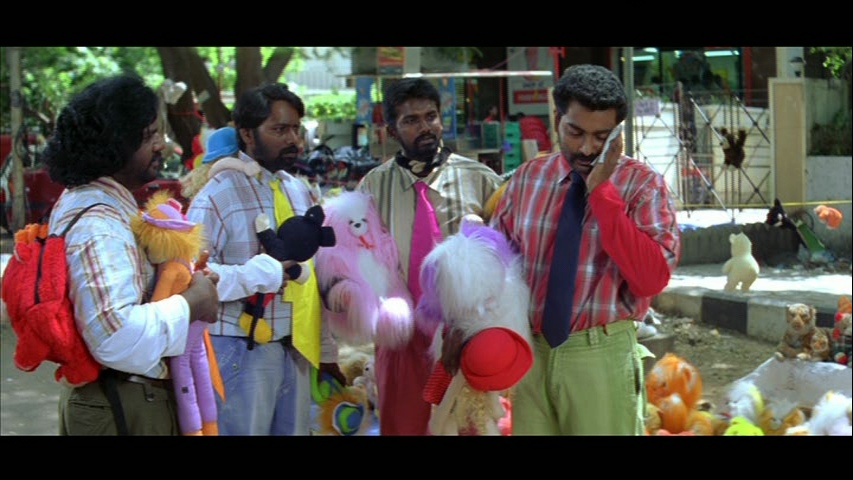
Naturally Charu also changes her mind about Thiru and without even a sniff of parental opposition the two end up setting a date for the wedding.  Of course Thiru’s decision to give up his life of crime and sell stuffed toys by the side of the road instead may have helped win over Charu’s father. But only, I suspect, if he didn’t actually see Thiru and his friends in these shirts.

Chithiram PesuthadiChithiram Pesuthadi

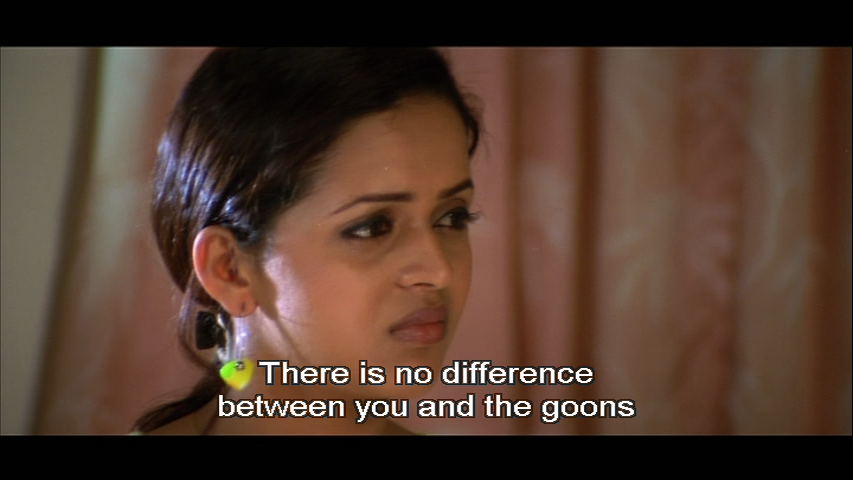
Charu and Thiru appear set for a life of wedded bliss when suddenly Mysskin appears to remember that this is a Tamil film and various tragedies beset the lovers.  But here again, Mysskin diverges from the traditional path and allows both of his characters to behave badly.  Both are selfish and unpleasant, although of the two, Thiru does get painted in a slightly kinder light.

Charu is abrasive, obnoxiously rude to her father and dangerously confrontational throughout.  When her relationship falters, she blames everyone but herself which showcases the immaturity of her character perfectly.  Bhavana does an excellent job and even manages to create sympathy for her character’s challenging persona.  Most importantly she cries convincingly and looks generally unglamorous and suitably ‘girl-next-door’ for the role. I found it quite impressive that she made me care about what happens to Charu (even if only superficially), as I really didn’t like the character at all.

Chithiram PesuthadiChithiram Pesuthadi

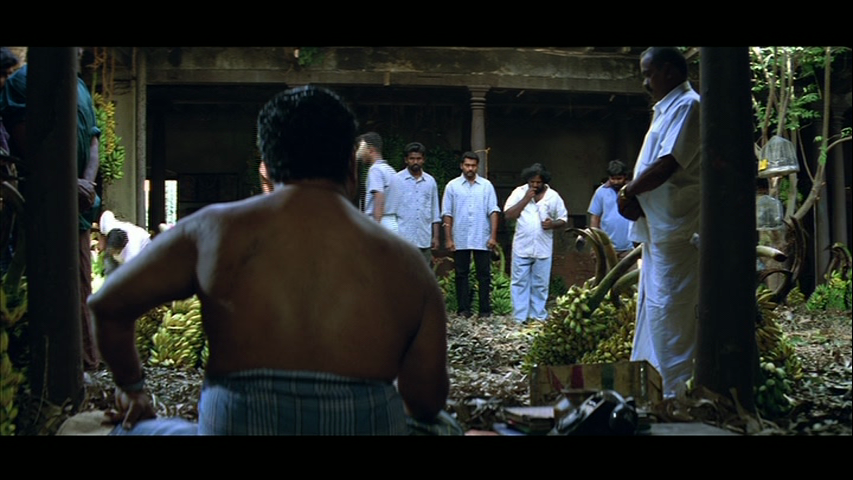
Narain also puts in a good performance, although he’s helped by the fact that his character is a little more sympathetic. Thiru is a man of contradictions and occasionally Narain splits his personality a little too much so that angry Thiru becomes too much of a caricature.  However his Thiru is likeable despite the angry outbursts and casual violence. Thiru’s loyal friends are equally impressive, with each developing a distinct personality through the use of just a few little quirks in their limited time onscreen.  I love how one of them is always eating – no matter how serious the situation or how inappropriate, he always has some food in his hands.  There are plenty of similar little touches that make the characters feel more real, including the way Annachi rules his area from his banana yard, discussing deals and deaths in between the more mundane day to day activity of selling fruit.

Chithiram PesuthadiChithiram Pesuthadi

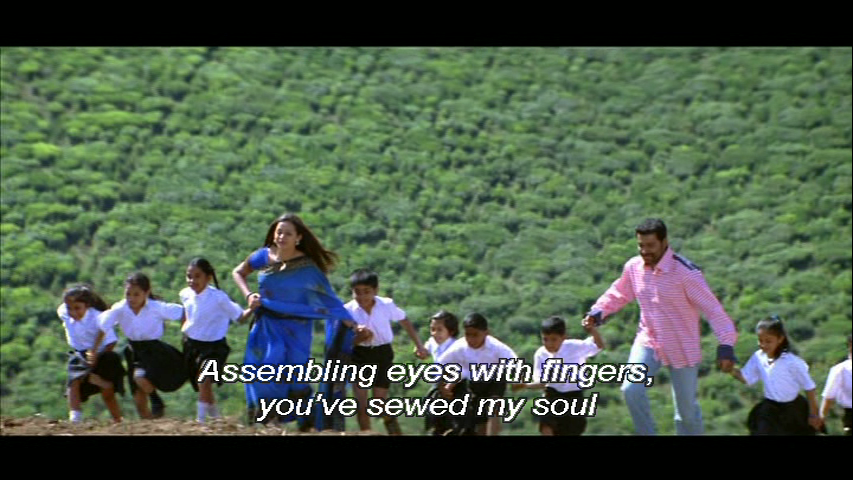
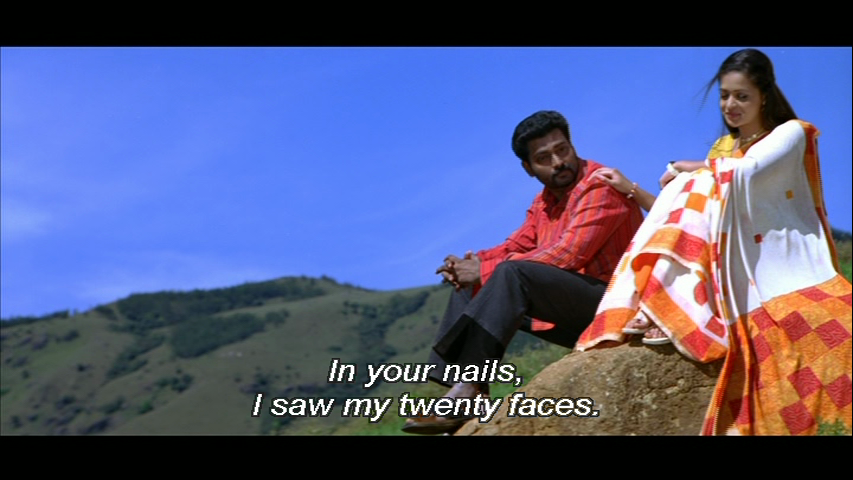
While the story develops smoothly, the songs seem to be added rather haphazardly and don’t always add to the film.  There are also some very bizarre translations –  I have no idea what assembling eyes with fingers is all about, but it does sound interesting.

Chithiram PesuthadiChithiram Pesuthadi

And of course the roller skaters!

Chithiram Pesuthadi

There is a better than usual item number with Malavika, but again it wasn’t really necessary, and most of the songs appear to be used more because songs are expected rather than as a way to further develop the story.

Overall Chithiram Pesuthadi is an impressive début by Mysskin and illustrates why he has gone on to become such a successful director.  He has the ability to spin a good yarn and keep the plot interesting, even with unlikeable protagonists and relatively dark themes.   Good performances, a new twist on an old story and some clever character development combine to make Chithiram Pesuthadi well worth a watch, and definitely a cut above most other first films. 4 stars.
Yutham Sei

After watching the excellent Anjathey I was inspired to seek out more films by director Mysskin, and Yutham Sei was the next in the pile.  Although it leans in somewhat the same direction as Anjathey it’s a slightly different take on the thriller genre and for the first half of the film at least, it’s very successful.  Mysskin excels in building suspense as the plot gradually unfolds and starts to take shape as a detailed and intriguing police procedural drama.  But after such a great beginning the second half is overly dramatic with a little too much focus on the torture and gore and not enough attention to the basic story. So what started out as a promisingly different film ends up with some major plot holes that are conveniently swept aside along with all the blood by the end credits.  However it’s still a gripping story with mainly good performances from the cast and overall Mysskin succeeds in keeping the turns and twists in the plot unexpected and surprising.
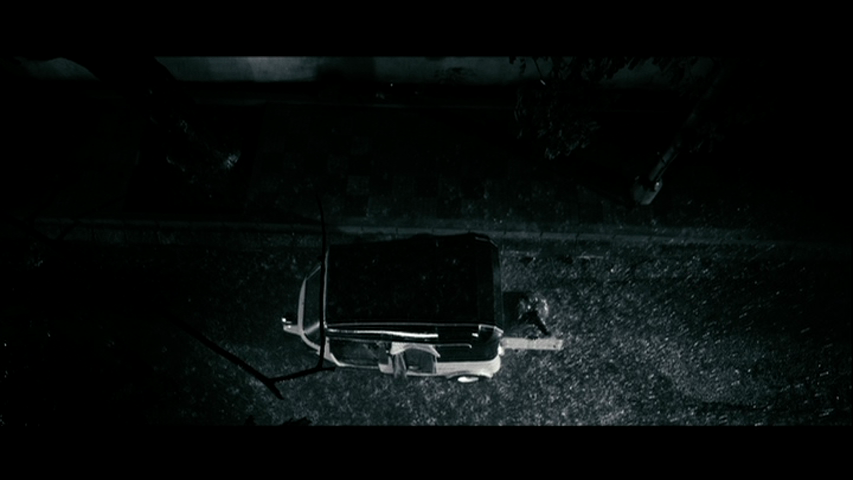
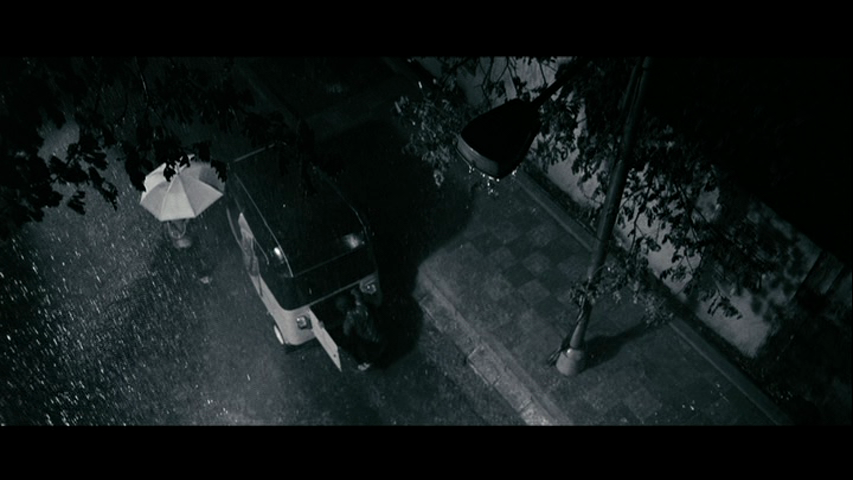
The film starts in black and white with a flashback to events which we eventually learn are critical to the plot.  There are numerous clues in these first few moments but it’s not until much later in the film that the important details and how they all fit together into the main story become clear.  This gradual reveal is the main strength of the film and the suspense is maintained by making sure that we don’t know the full story either and only learn about events at the same time as the main protagonists.

Cheran plays Inspector J. Krishnan, commonly known as JK, who is given the task of investigating a series of gruesome discoveries around the city.  Severed arms have turned up in cardboard boxes conspicuously placed in public areas but no associated bodies have been found.  JK takes on the case rather reluctantly as he wants to spend his time investigating the disappearance of his sister some three months previously.  However his boss promises to reopen his sister’s case, so JK starts the painstaking process of trying to identify the limbs and discover who and what is behind the dismemberments.

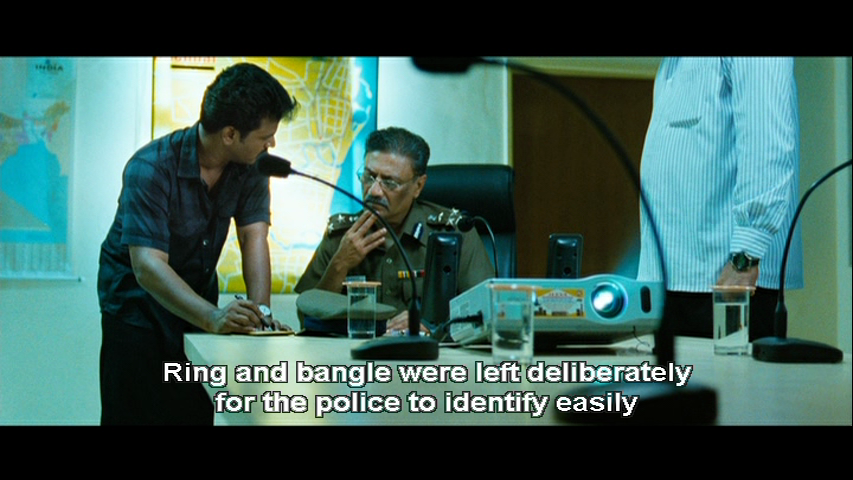
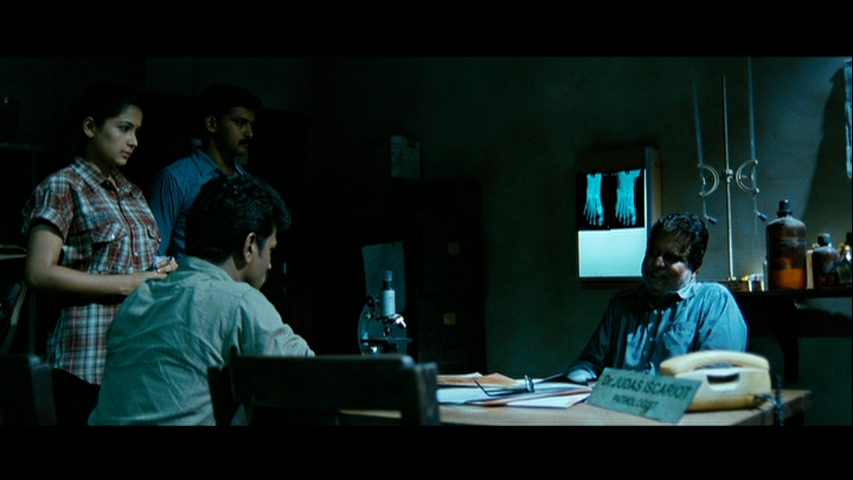
The police procedures are thorough and painstaking as, along with Sub-Inspectors Prakash and Thamizhselvi (Dipa Shah) and Head Constable Kittappa, JK questions suspects, interviews witnesses and slowly identifies the remains.  Scenes shot in the morgue are particularly effective and are a real shock to anyone more familiar with the gleaming white benches and sanitised bodies from US TV crime shows. These scenes also introduce V. Jayaprakash as Chief Pathologist Dr Judas, the chief pathologist and a crucial link in the story, although perhaps his choice of name was a little too revealing.

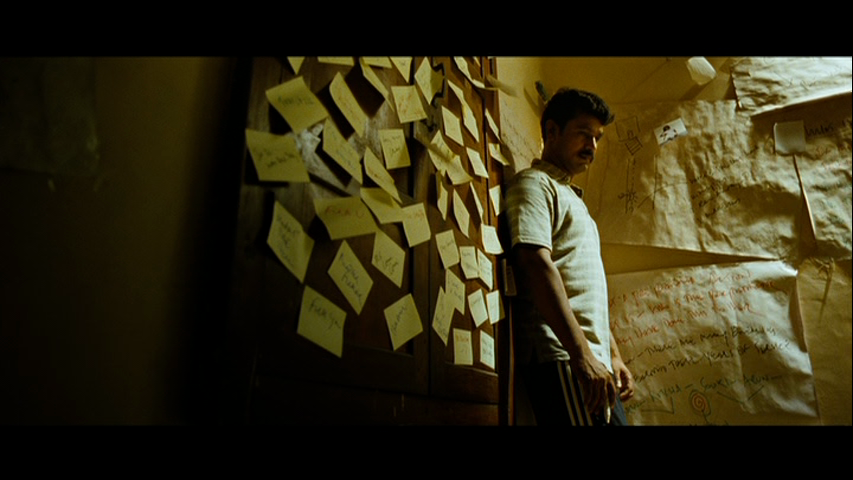
Slowly JK discovers that the severed limbs belong to criminals who are linked to a case involving the suicide of a renowned doctor (Y. G. Mahendran) and his family.  Each small piece of the puzzle is only uncovered after long and arduous investigation on the part of JK and his team and Mysskin’s characteristic methods of filming feet or only part of the scene adds to the piecemeal effect.  Cheran is excellent as JK and the difference between his decisive investigations during the day and his introspective brooding at night is captured well.  V. Jayaprakash is the other standout in terms of performance and his world-weary doctor seems to have stepped straight out of a BBC crime drama.  The other actors are all solid in their roles although there is little in the way of any character development. Considering the style of story that’s not a major problem, but it does make it difficult at times to differentiate just who is who, particularly among the villains.

Generally the second half moves more to action and the more that is actually seen to be happening rather than just implied violence, the less effective it all becomes.  So the scenes of torture and the completely over the top reaction of Lakshmi Ramakrishanan in her role as the doctor’s wife end up without much impact.  It doesn’t help that once the full story is revealed the final show down is inevitable although the almost pedestrian and petty nature of the original crime is a good touch.  Just for once though I’d like to see a police officer call for back-up before heading into an abandoned factory full of criminals and usefully breakable objects!

While most of the first half seems very carefully plotted, the second half has a number of leaps of faith and convenient discoveries which become more and more dramatic and detract from the simpler style used earlier in the film.  However on the plus side there is no annoyingly irrelevant comedy track and no tacked-on-for-the-sake-of-it romance angle so I can forgive Mysskin his tendency to over-dramatise a few scenes.  The cinematography by Sathya is excellent and keeps up the suspense with many of the critical scenes shot at night or in dim light.  Kay’s background music also adds to the atmosphere and is generally used to very good effect.  There is one song in the film, and although the placing is fine, I think it would have worked better as a short snippet rather than as a complete dance routine which does seems a bit superfluous. Impressive gold lungi though!

Overall Yutham Sei starts off like a European police thriller but ends up more like a Hollywood horror film. If Mysskin had managed to maintain the early tension and suspense right to the end this would have been a fantastic film. But even with the issues I have with the second half, I think it’s still interesting – somewhat different from the usual hero-centric Tamil action film and definitely worth a watch for the excellent development of the plot in the first half and an impressive performance from Cheran. 3 stars.