Nayakan (1987)

Nayakan

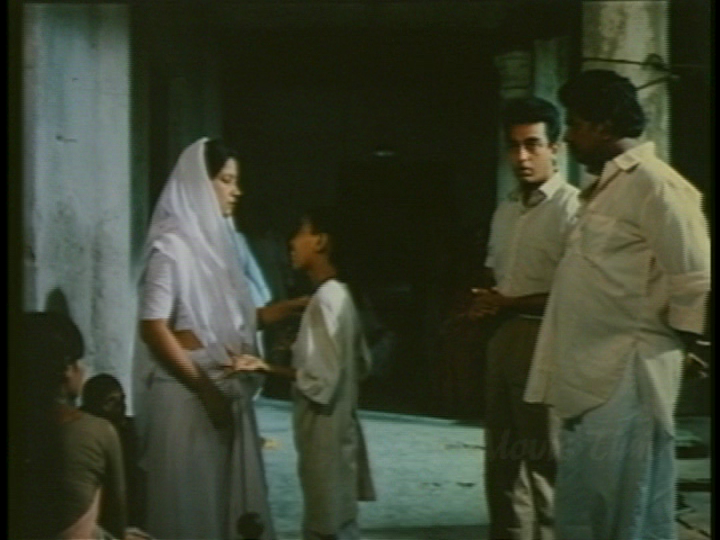
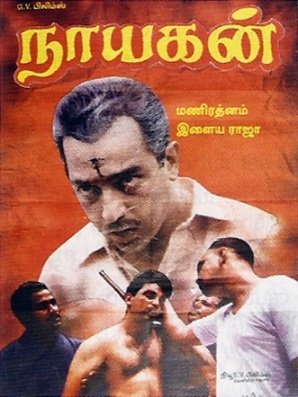
This film has been on my ‘must see’ list for a while but it proved very difficult to track down a copy.  Even then I ended up with a Telugu dub without subtitles, and when I did manage to download subs they were somewhat selective in the translation, declining to translate any of the Hindi, and a bit hit and miss with the rest. However they did at least provide translations of Ilaiyaraaja’s wonderful songs which are definitely high points of the film.  Nayakan is one of Mani Ratnam’s earlier films, and is the movie that brought him to the attention of the cinematic world outside the Southern film industry.  It’s based on the story of Varadarajan Mudaliar, aka Vardhabhai, one of the notorious gangsters who controlled the underworld in Mumbai during the 70’s and 80’s.  There are also shades of Coppola’s The Godfather, but essentially Nayakan is a very Indian story, full of emotion and seeped in the violence and grime of the slums of the city.  Kamal Hassan won a National Award for his performance as did P.C. Sriram for cinematography and Thotta Tharani for best art direction, all of which were very justly earned.  The film also features Saranya Ponvannan in her screen début and a generally notable cast including Nasser, Janagaraj, Delhi Ganesh and Tinnu Anand.  But above all this is Kamal Haasan’s film and he is riveting in a stand-out performance which sees him grow from a young man to an ageing don in the slums of Mumbai.

NayakanNayakan


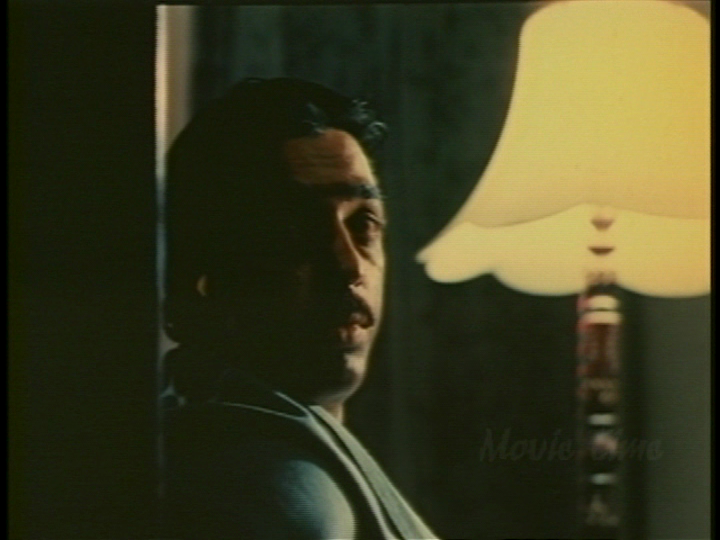
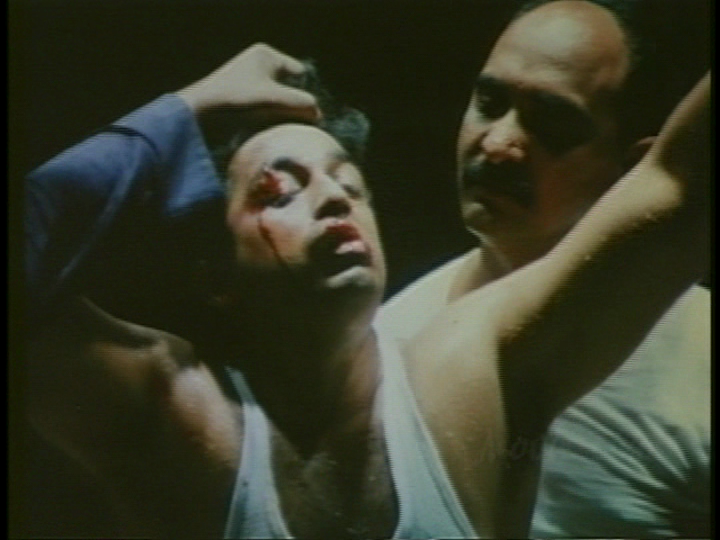
The film starts with the young Velu Nayakar being used by the police to track down and kill his father, a prominent anti-government unionist. It’s a brutal introduction and it’s certainly apt as the film doesn’t shy away from showing the violence associated with the underworld.  The poignant refrain of Thenpaandi Cheemayile comes from the beating the young child suffers, and the song is reprised throughout the film to underscore the importance of pivotal scenes in Velu Nayakar’s life.  This clip shows two of the versions and, although they both occur much later in the film it’s not really the song rather than the images I wanted to include.  However it is worth noting the cinematography and the way P.C. Sriram uses light so effectively in these two snippets.  The song is sung by Ilaiyaraaja and Kamal Haasan himself.

Velu arrives in Mumbai and is adopted by a small time smuggler who instils in Velu the concept that any slightly less than legal act isn’t wrong if it helps someone.  Over time Velu starts to stand up for the rights of the Tamil people who live in the slums, but it is the murder of his adopted father by a police officer that tips the balance and sets him against the law as he takes his revenge.  However even this act is tempered when Velu comes to understand that the dead police officer has a mentally retarded son and he gives Kelkar’s widow money to ensure that both she and her son will survive.

NayakanNayakanNayakanNayakan


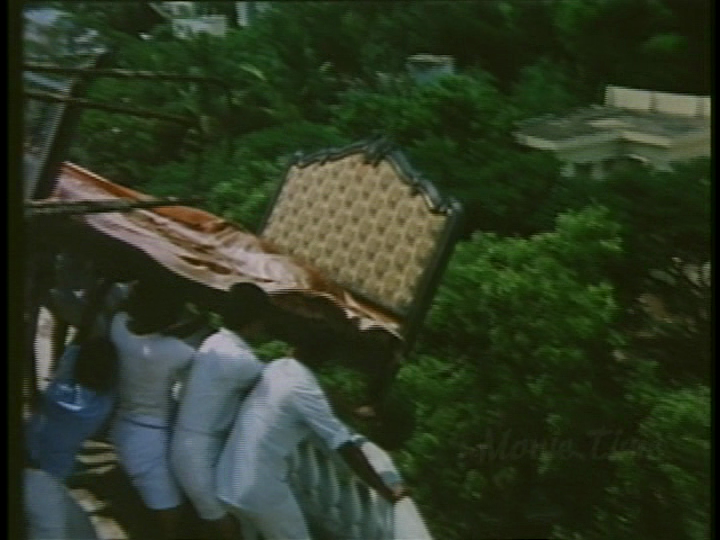
This dichotomy occurs throughout the film where Velu is shown as a very human character who smuggles and murders but also helps out when members of his community are arrested or when a child is seriously ill.  He’s a man who makes mistakes and pays dearly for them, but he’s also someone who is trying to make life just a little better for the people around him.  One such instance is when the slum is about to be bulldozed to make way for a factory.  Velu organises a gang of the locals and goes to the developer’s house, tearing it apart to drive home the point that these are people’s homes which are being destroyed, not just a piece of land. It also looks like a lot of fun as the gang rips apart furnishings and throws furniture from the roof!

NayakanNayakan


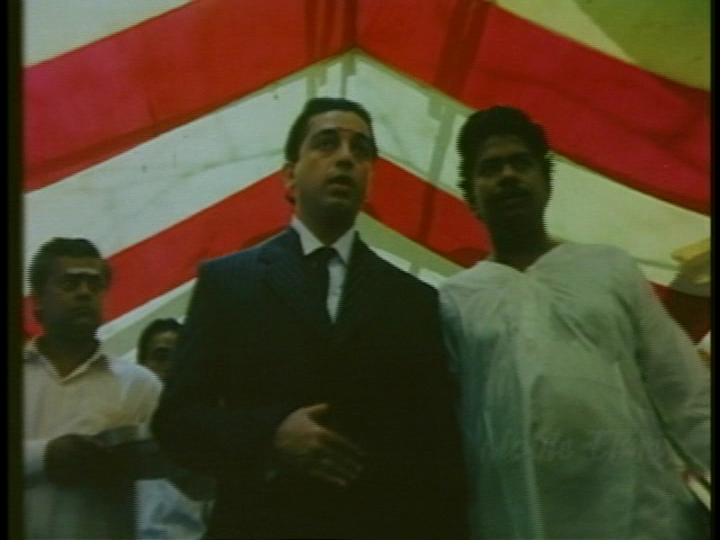
Velu isn’t a don who drives around in the cavalcades of vehicles more commonly seen in Southern Indian films, but instead he has a fleet of ambulances and lives in a house which is easily accessible for the people of the slum, making Velu Nayakan a more realistic and believable character.  There are a few odd moments however, such as an item-style dance number on a boat, and an instance where Velu does appear to be channelling the Godfather given his choice of natty pin-striped suit.  
NayakanNayakan


More commonly however the dim lighting and traditional dress suit the more modest and unassuming Velu, who seems more embarrassed than anything by the adulation he receives.

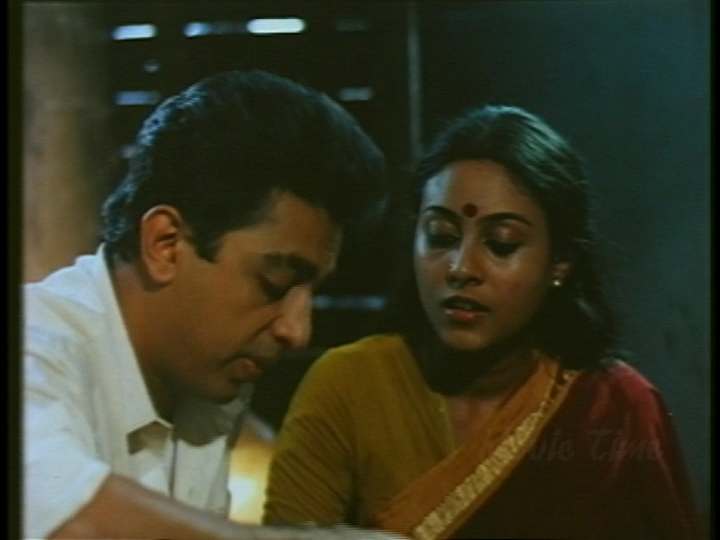
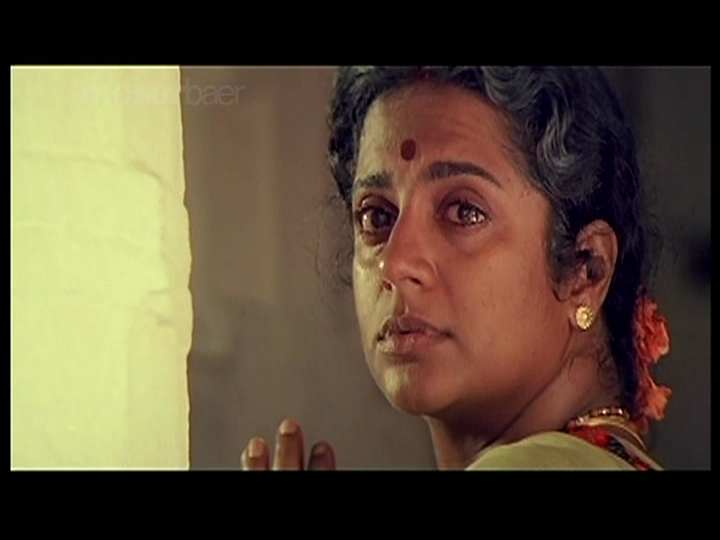
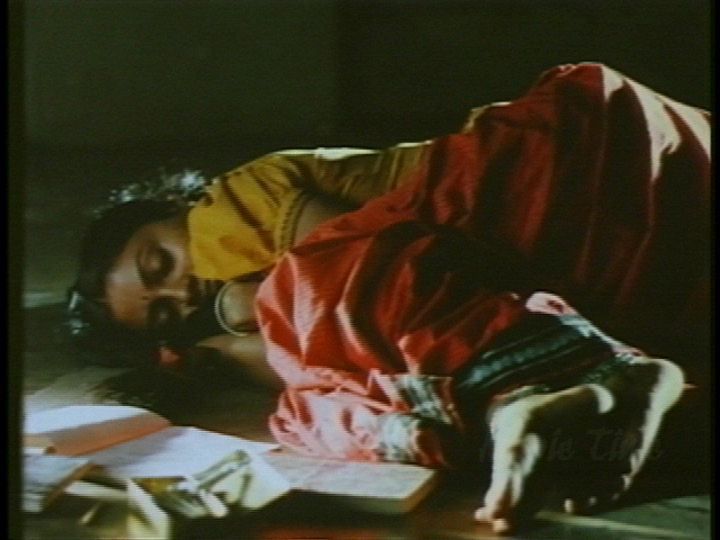
Mani Ratnam’s screenplay is most effective in describing the relationships between Velu and the other characters, in particular those of his immediate family.  His first meeting with Neela (Saranya Ponvannan), who becomes his wife, is beautifully acted and filmed as the two meet in a brothel.  Velu and his friend Selvam (Janagaraj) end up at the brothel after smuggling success and while Selvam appears to have been there before, Velu looks a little more uncomfortable and out of place.  He does manage to enjoy this great song though before heading upstairs for some more intimate amusement.

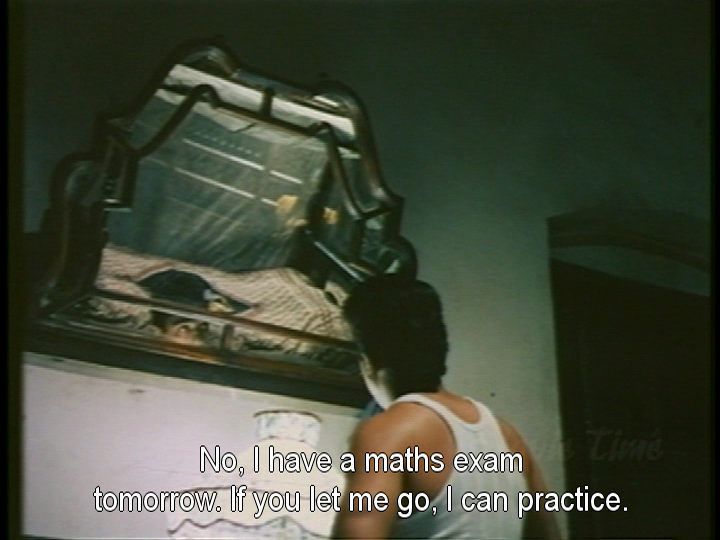
When Velu gets upstairs, Neela is waiting in the room and almost the first thing she does is ask if she can leave early to study for her exams.  Velu’s reaction is as awkward and confused as would be expected and Kamal Haasan shows this in his indecision as to whether he should lie on the bed or sit on the chair as she studies.  Even his hesitancy the next morning, when he’s not sure if he should wake Neela or not, nicely illustrates Velu’s more compassionate side and this is brought out again when the couple do eventually marry.  Saranya is dignified as Neela, despite starting out in a brothel and she brings a very warm and sympathetic presence into the harsh reality of the slums.
NayakanNayakanNayakanNayakan


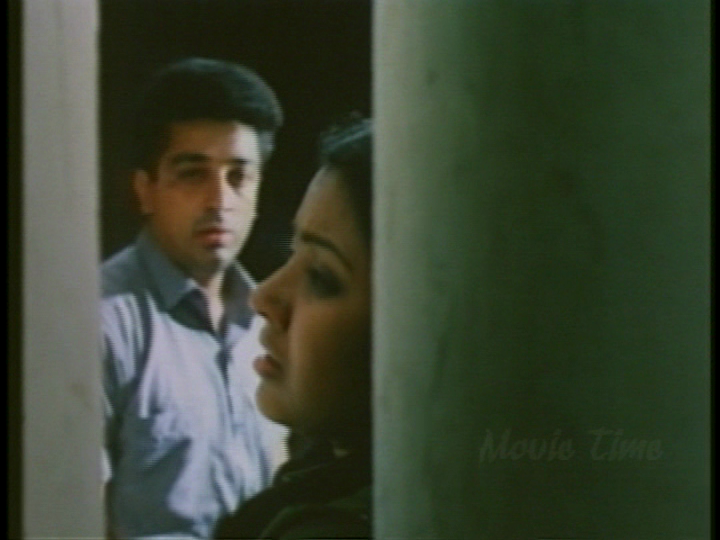
P.C. Sriram makes good use of the set here as initially Velu stands in the light while the mirror shows a shadowy figure through the curtains of the bed in the darkness of the room beyond. It’s very effective and throughout the film there is a similar use of light and shadow with many shots framed by pillars, doorways or other architectural features.

NayakanNayakanNayakanNayakan


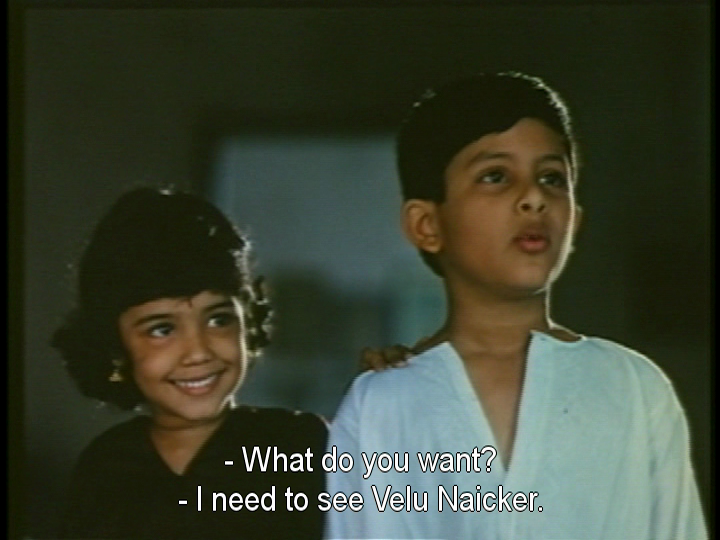
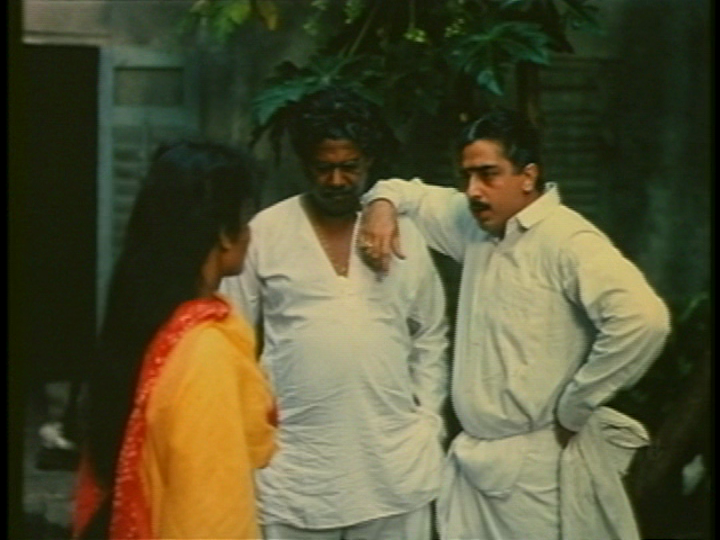
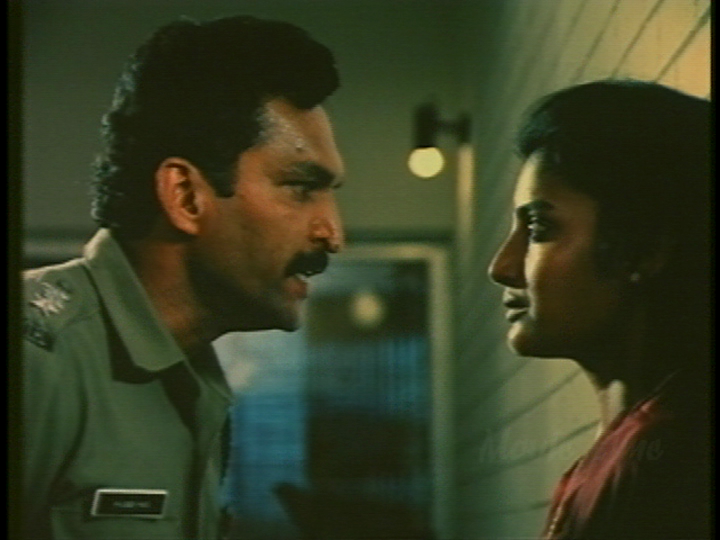
The best scenes in the film are those between Velu’s son Surya (Nizhalgal Ravi) and daughter Charumati (Karthika).  Surya hero worships his father just as much as do the local people in the slum, and he wants nothing more than to be like him. He stands in for his father when a member of the community comes to Velu for help and he sees nothing wrong with the life of a gangster.  However Charu has a very different opinion and eventually she leaves her father after some very emotive scenes where Charu repudiates her father’s lifestyle.  She feels that his style of life is entirely wrong no matter how many people he helps, and Velu is helpless in the face of her rejection.  Kamal Haasan and Karthika are absolutely brilliant together in these scenes and also later on when Charu turns up later married to Velu’s new nemesis, the new Assistant Commissioner (Nasser).  Charu refuses to allow her father to see his grandson in another tear jerker moment, although the most poignant scene in the film between Velu and his grandson is reserved for the end.
NayakanNayakan


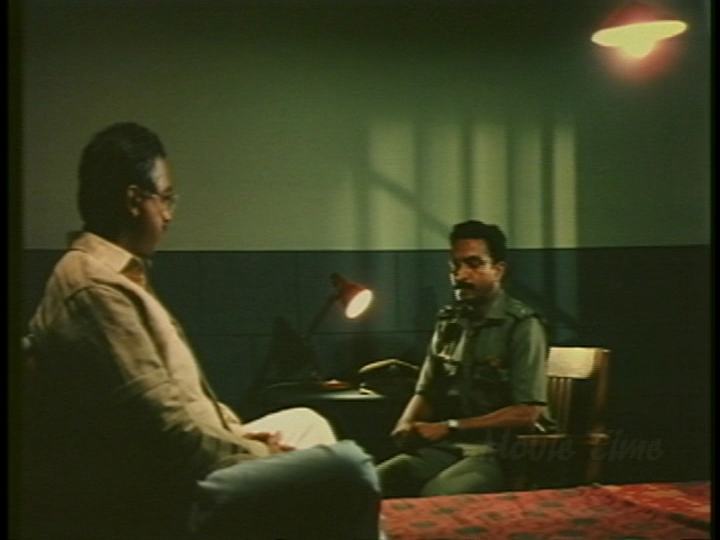
There are many small moments and clever touches in the film which make it so enthralling.  From the joy seen at the Holi celebrations to the despair when Neela dies and her sari unravels in Velu’s hands, each scene is full of little details which add to the drama.  Kamal Haasan provides much of the emotion and driving force in the film, but all the actors are excellent even in the minor roles. Tinnu Anand deserves special mention for his small but important role as Ajith Kelkar, the grown up mentally retarded son of the police officer, and Nasser is very effective in his short time on screen towards the end of the film.

Beautifully haunting music, gritty realistic scenes and an outstanding performance by Kamal Haasan make this a film well worth hunting down, and it really deserves to be restored and released with English subtitles.  Nayakan is an absolute classic from Mani Ratnam, and it’s one I thoroughly recommend. A full 5 stars.
Iruvar (1997)

Iruvar

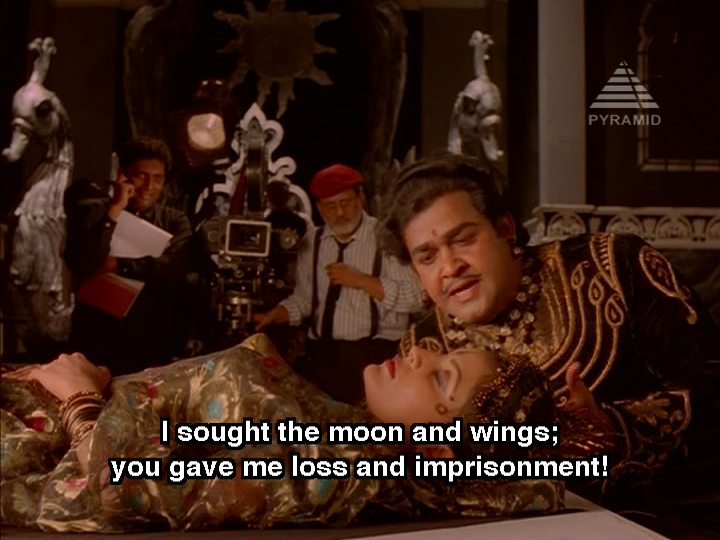
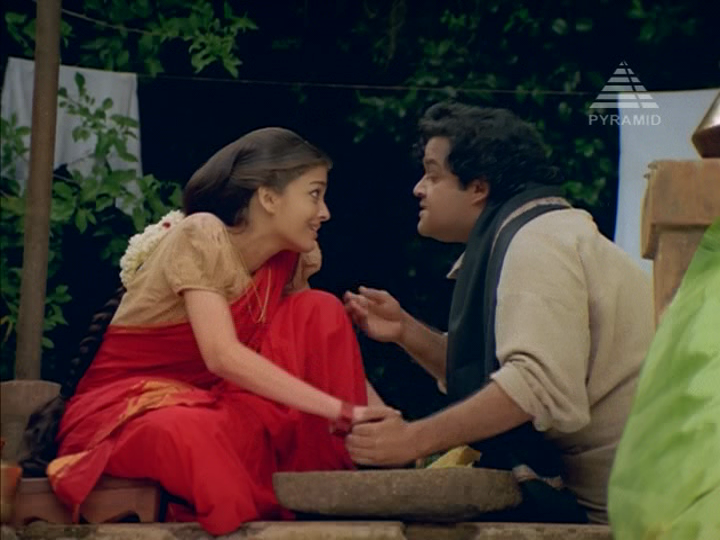
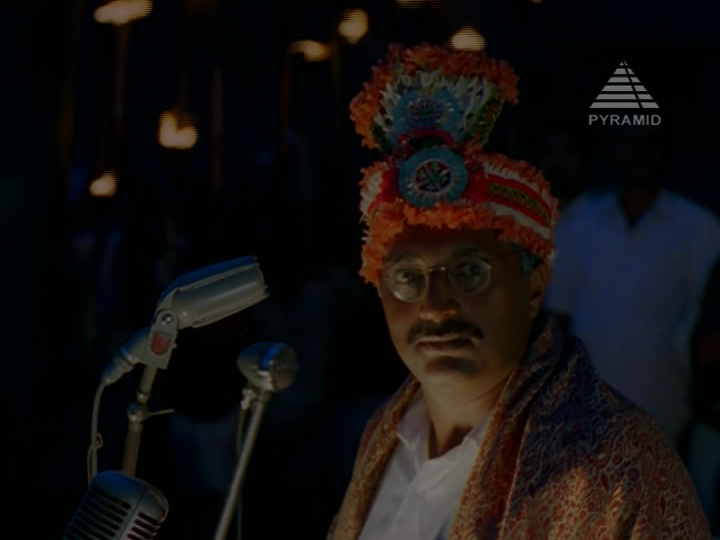
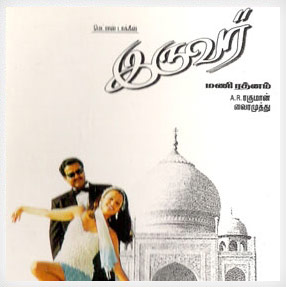
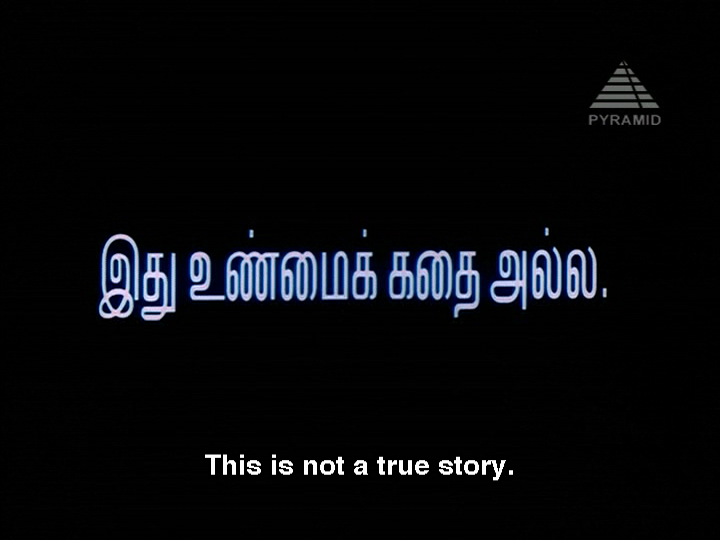
Mani Ratnam’s Iruvar is essentially a story about friendship but it manages to encompass cinema, politics and plenty of associated drama along the way.  From their first meeting in the film industry, through their membership in the same political party until Anandan and Tamilchelvam end up as rivals for the position of chief minister, the friendship between the two endures the many challenges they face.   Despite the disclaimer at the start that the film is a work of fiction, even a cursory glance at the biography of Tamil film legend M. G. Ramachandran shows many parallels between his life and that of the character Anandan (Mohanlal).  It’s also apparent that MGR’s real life political rival, M. Karunanidhi is the character Tamilchelvam, portrayed by Prakash Raj, while other counterparts from the same era are also featured in the film. Although I don’t know enough about the lives of M.G. Ramachandran and M. Karunanidhi to comment on how accurately the two characters do resemble their real life counterparts, not knowing the true events isn’t a hindrance to enjoying the film.  It’s an exceptionally well told story and features not only brilliant performances from the two leads Mohanlal and Prakash Raj but also features an excellent début from Aishwarya Rai.

IruvarIruvar

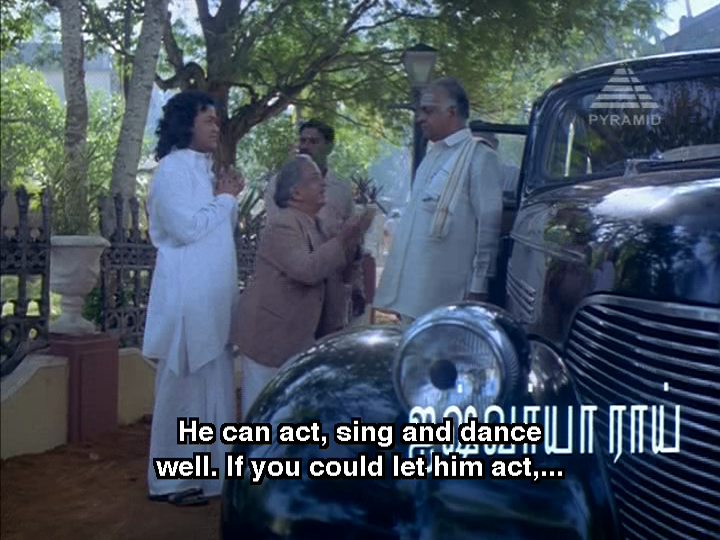
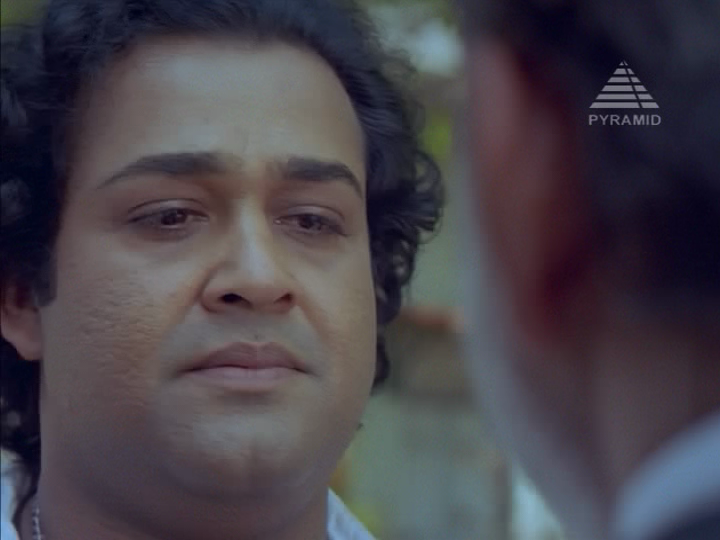
The film opens with the young Anandan (Mohanlal) looking for acting work and finally achieving his dream of becoming a film hero assisted by his friend Tamilchelvam (Prakash Raj).  The initial meeting of the two men typifies their characters.  Anandan doesn’t always seem to understand or agree with everything the poet Tamilchelvam says but he is impressed by the man’s obvious sincerity and self-belief, and asks Tamilchelvam to write his dialogues for him.  Anandan is a simplistic man who just wants a good paying job so that he can look after his mother, while Tamilchelvam is more idealistic and wants to use his words to change the world.

IruvarIruvarIruvarIruvar

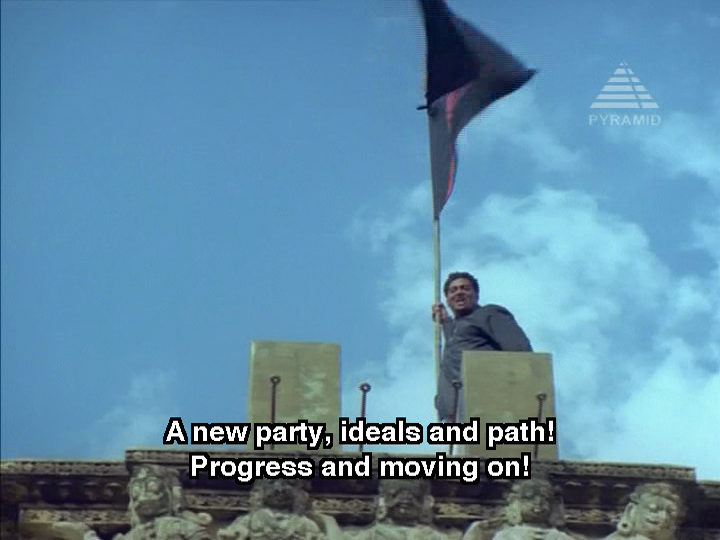
As Anandan’s star is rising in the film industry, Tamilchelvam continues to work as a screenwriter although he also becomes active in a Dravidian social party led by Velu Annachi (Nasser).  At the same time the two friends get married although Anandan is tricked by his mother into tying the knot with a local girl Pushpa (Aishwarya Rai) while Tamilchelvam marries Maragatham (Revathy), a girl approved for him by his political leader.  Despite their inauspicious beginnings, Anandan rapidly falls in love with Pushpa’s lively innocence and charm, although he leaves her with his mother when he goes back to work.  Tamilchelvam on the other hand spouts speeches about equality in marriage on his wedding night while Maragatham is more traditional and superstitious which doesn’t bode well for their future together.

IruvarIruvar

This song intersperses a romantic film song featuring Madhoo in a guest appearance with scenes from Anandan’s marriage presumably suggesting that the real-life relationship was as idyllic as the fairy-tale filmi romance.

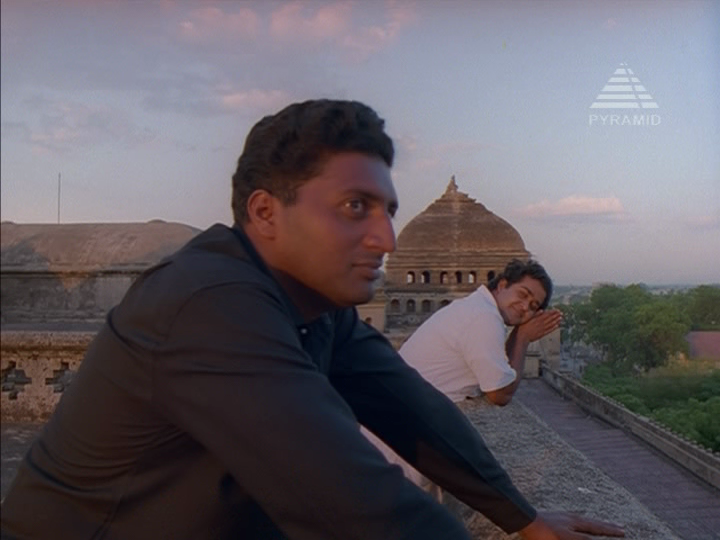
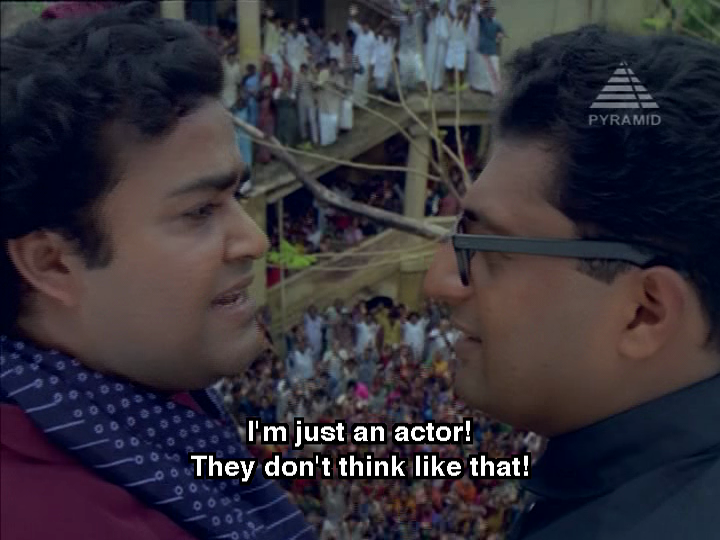
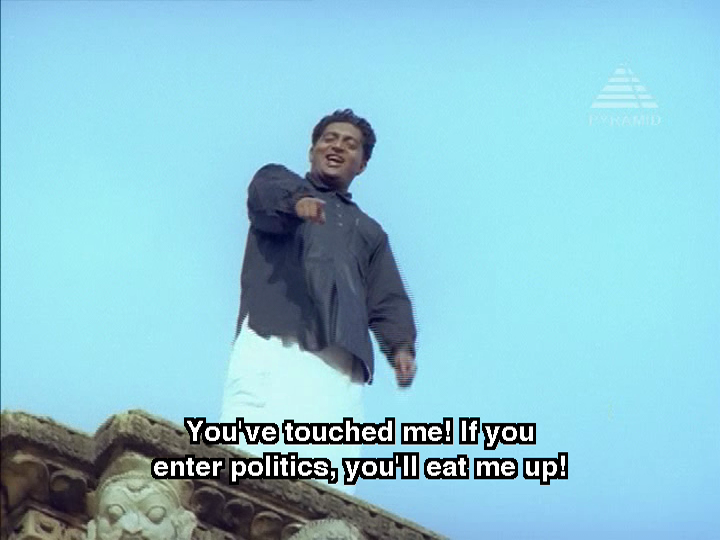
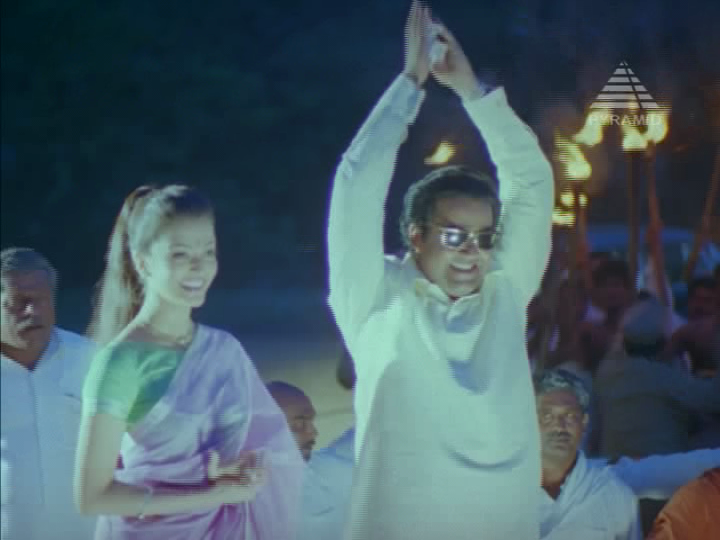
As their careers progress, Anandan becomes a star, able to draw crowds although he doesn’t appreciate his popularity until it is forcibly shown to him by Tamilchelvam.  This is demonstrated in an excellent scene where Tamilchelvam takes Anandan up onto the roof to show him the hundreds of people waiting for a chance to catch a glimpse of the film star.  Anandan’s slow recognition of his fame is perfectly played by Mohanlal, but once he has recognised the fact, he knows how to work his popularity and make the most of it.  Anandan also joins Tamilchelvam’s political party, although he is looked on with suspicion by the other party members who feel that Anandan is using the party to further his film career, while Anandan feels that his film fame is being exploited by the party to pull in more voters.

IruvarIruvarIruvarIruvar

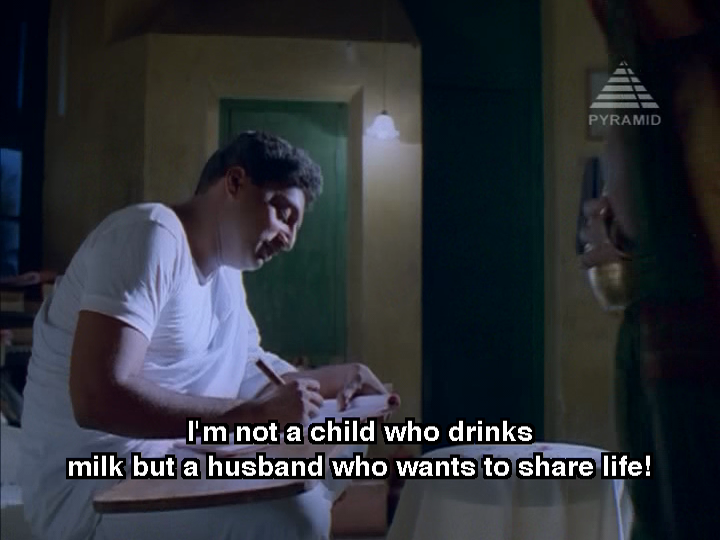
The contrasts between the two men are expertly illustrated in their interactions with each other and with the other characters.  The more idealistic and driven Tamilchelvam prints pamphlets and makes long inspiring speeches at political rallies while Anandan just declares that he wants everyone to be happy.  After Anandan’s first wife dies he marries his co-star Ramani (Gautami) almost by chance.  Ramani turns up on Anandan’s doorstep in distress, fleeing from her abusive uncle manager (Ravi) and since Anandan doesn’t seem to have much else happening that week he decides to marry Ramani to keep her out of her uncle’s clutches.  In contrast, Tamilchelvam sees Senthamarai (Tabu) at a political demonstration and arranges for her to come to Chennai to be his mistress.  Tamilchelvam is proactive and driven, and plans his life to realise his ambitions while Anandan is more reactive and laid-back, seeming to fall into his success by chance, although helped by his natural charm and talent.

IruvarIruvar

Aishwarya Rai has a double role and appears again as Kalpana, a new actress who works with Anandan despite his initial reservations, due to her resemblance to his first wife.  It’s an impressive performance from Aishwarya who is feisty and assured in complete contrast to her role as Pushpa.  She also looks gorgeous and the songs featuring her and Mohanlal are some of the highpoints in the film.  Kalpana is apparently based on Jayalitha, although seemingly only on her acting career,since the character doesn’t have any political aspirations in the film, and has an early and off-screen exit.

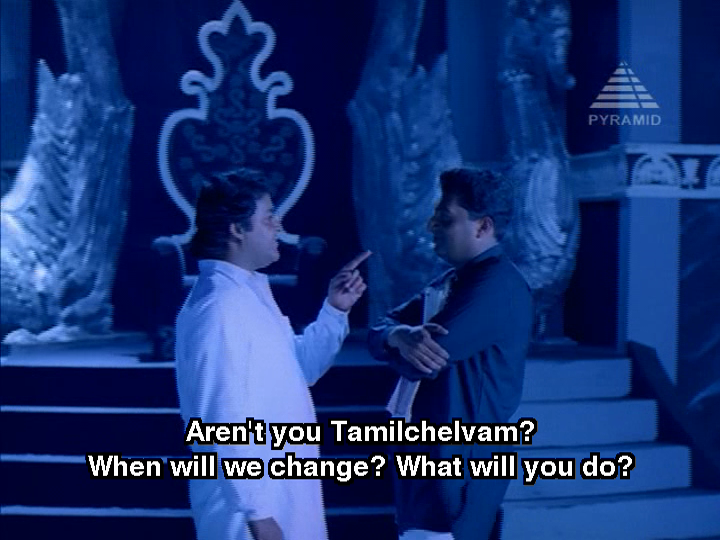
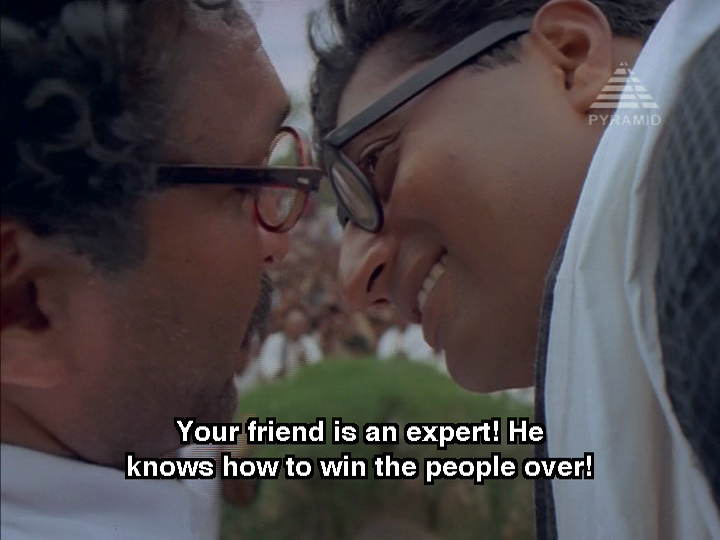
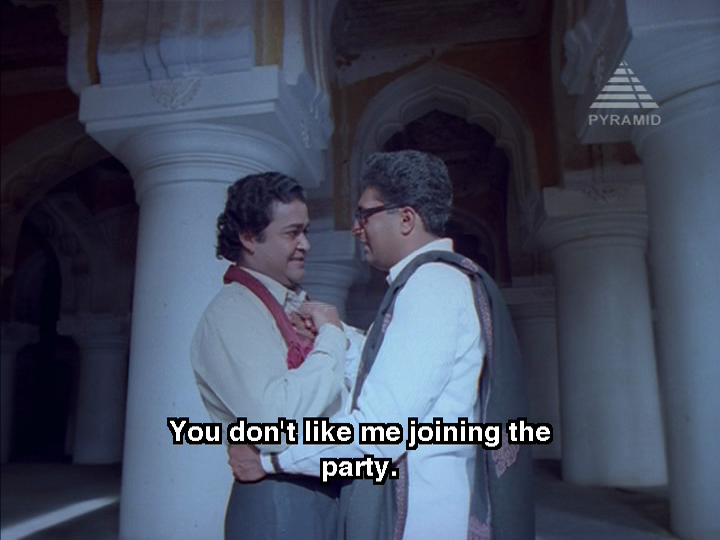
Iruvar seems to deal lightly with Anandan, using Tamilchelvan more as a contrast with the actor, although both men are treated fairly without any particular bias for one side over the other.  It’s a very human look at politics and the realities of power as these men, with their great ideals and desires to change the fate of the common man, still end up with similar policies to the previous party. Despite their eventual opposition in the political arena, Anandan and Tamilchelvan seem to be able to maintain their respect for each other, even as they battle to keep power.  Their relationship is complex and often threatened by the actions and opinions of others but both characters keep true to their basic personality, which ensures the friendship appears realistic. Mohanlal is superb as Anandan using his facial expressions to wring every possible emotion out of every scene.  He is often understated and conveys his emotions very simply but with great effect.  Prakash Raj is just as good as Tamilchelvam and his evolution from passionate young activist to elder statesman is perfectly portrayed.  The two combine together to make every moment they are on screen absolute gold. Santosh Sivan’s excellent cinematography also helps the film stand out with good use of camera angles to capture the large party rally’s contrasted with the more intimate scenes.

IruvarIruvar

I read that there was opposition to the film’s release (as might be expected given the reputations of both MGR and Karunanidhi) and certainly Iruvar has suffered at the hands of the censors.  A number of apparently stirring political speeches are muted partway through by loud music, and judging by the sudden jumps in the screenplay, a few seem to have been cut altogether.  But the relationship between the two men still comes across clearly and Mani Ratnam has drawn every possible nuance of their association in exquisite detail.  The censorship is interesting given that at one point Anandan makes a film which apparently portrays Tamilchelvam’s party in a negative light.  Tamilchelvam’s response is one that I’m sure all film-makers and reasoning adults would like to hear from more governments, particularly considering the recent issues surrounding Vishwaroopam.

Iruvar

The music and songs by A.R. Rahman are of a high quality and vary in style to illustrate the different cinematic eras encompassed by the film, although the time frame is never explicitly stated.  These range from the jazzy and more upbeat songs pictured on Kalpana to the more traditional and classically driven song Narumugayie.  Farah Khan was the choreographer which is probably another reason why the songs all work so well with all the dancers in sync.  This is probably one of my favourites as Aishwarya sparkles on the screen while Anandan and Ramani watch in the cinema. Anandan’s face as he realises Kalpana’s resemblance to his dead wife is a study in shock, horror and sheer disbelief while his wife is totally oblivious to his reaction.

Iruvar is a fascinating story about two very influential men, made even more absorbing by its basis on real people.  Although the censorship cuts do make some of the underlying details more difficult to follow, especially for those (like myself) who don’t know the true story, that doesn’t detract from the compelling nature of the relationship between these two giants of Tamil film and political history. Entertainment and education all in one – perfect! 4 ½ stars.

Thalapathi

Thalapathi was one of the first Tamil films I saw. It was before my ‘Southern Film Industry Addiction’, I barely knew who Rajnikanth was and had absolutely no idea about Mammootty. In fact I’d totally forgotten he was in this film until I rewatched it recently – thankfully I know much better now.

Written and directed by Mani Ratnam, Thalapathi is at heart much more of a masala film than his usual fare. It features most of the necessary ingredients: an abandoned child, perpetually teary mother, romance, brothers who don’t know they are related, the essential Amrish Puri as the villain and a significant article of clothing. Add to that plenty of action and fight scenes, great songs, and beautiful cinematography, plenty of classical references and it all adds up to a very full 2 and a half hours of cinema.

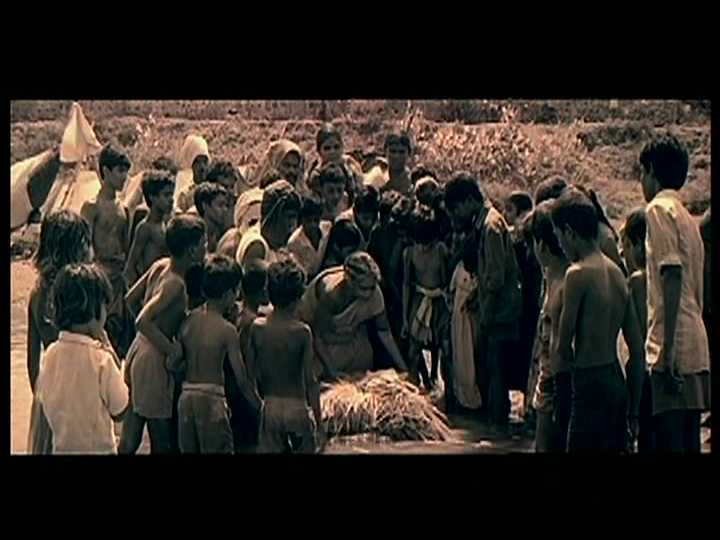
The film starts in black and white with a young unmarried girl giving birth during the festival of Bogi. The opening scenes of Kalyani’s rejection by an older woman and shots of the rural countryside serve to explain that her child has no future in such a traditional community. She puts the baby into a train in the hope that somehow someone else will give him a better life. These opening shots are some of the best in the film and it’s a shame that my copy of the DVD seems to have lost the original quality.

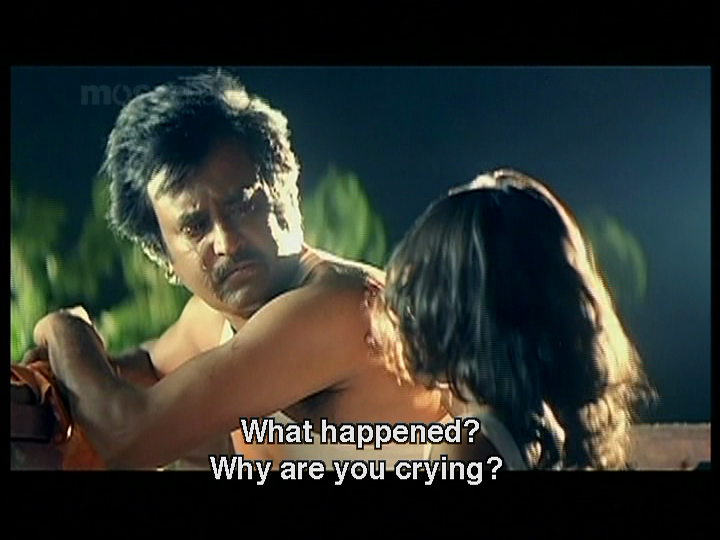
The colour kicks in with the year of 1987 when the baby has grown up to be Surya (Rajnikanth). He is a man with a firm belief in justice who is determined to help others in his community in any way he can. This often seems to be by beating senseless an offender and in the course of such action he ends up fatally injuring Ramana, one of Devaraj’s men. Enter Mammootty in a very well played role as the head of the local gang of rowdies, who initially threatens Surya with dire consequences if his man dies.

However when Devaraj finds out Ramana’s crimes, he arranges for Surya’s release from jail and tells him that his actions were right and just. I can’t say that I agree with his assessment but it makes Surya become his loyal Thalapathi and the two become inseparable. Lots of drama here, so time for a song break.

Surya’s charitable reputation helps to legitimise Devaraj’s rather more shady one and they soon rule the entire area, much to the displeasure of Devaraj’s rival Kalivardhan (a dubbed Amrish Puri). There is bad blood between these two and it’s inevitable that there will be a clash. However most of the story concerns Surya’s relationship with Devaraj and sadly Kalivardhan is only seen occasionally throughout the film. Amrish Puri in a really terrible pair of glasses isn’t as menacing as usual but manages to be evil enough just when it really counts.

In the course of his good works, Surya meets Subbu (Shobana), a Brahmin girl who falls in love with him. Perhaps it was the wolverine hair-style or the commanding way in which he demands her jewellery but she’s obviously quite smitten.

Her father wants nothing to do with a thug who has no idea who his parents were and rejects the match. In the middle of all this, Surya’s real mother ends up moving to the area when her legitimate son Arjun (Arvind Swamy) is appointed as a Collector. Kalyani has married a very understanding man who knows all about her first baby, although Arjun doesn’t know that he has an elder half-brother. The two brothers have a common sense of justice but in every other way are complete opposites. Arjun is a good and law-abiding man who is committed to cleaning up the town, although perhaps he should have started with the police corruption rather than take on the town rowdies. There are inevitable clashes between Surya, Devaraj and the police as Arjun tries to stop their version of law and justice in the town. And Kalivardhan is luring in the background adding in his malicious attempts to get rid of the pair as well. Finally the significant cloth comes to light but Surya refuses to give up his friendship with Devaraj despite discovering his brother.

Although there is plenty of action in the film, the main focus is on the relationship between Surya and Devaraj. Mani Ratnam has based it on the friendship between Karna and Duryodhana from the Mahabharata and there are a number of references to this story throughout the film. It starts out with Devaraj as the leader and Surya as the faithful follower, but as their friendship develops they each begin to change the other and the dynamic between the two has altered by the final scenes. Both Rajnikanth and Mammootty are both excellent and work well together to bring their friendship to life. It’s mainly in the little touches, such as the way they only have to look at each other to acknowledge their next venture.

Surya’s relationships with his mother, Subbu and others are important to the overall story but his character is defined by his strong sense of justice and unwavering support of Devaraj, no matter what. Even when Devaraj persuades him to marry Ramana’s widow Padma, Surya is unable to say no. Rajni has plenty of action scenes and is exuberant in these, but he also makes the most of his more dramatic moments. So much is conveyed in one particularly memorable scene in the temple, where both Suyra and Kalyani both look yearningly towards a train as they hear the distant whistle. They are both standing close together but neither have any idea who the other is and their obvious sadness is all the more poignant as a result.

Mammootty is more restrained in his role as Devaraj relies more on fear and his entourage rather than actual physical violence. He has Surya for all of that after all. His portrayal of the more corrupt and devious Devaraj is excellent and he brings a real sense of authority to the character. The other members of the cast are all very good in their supporting roles, especially Srividya who is convincing as the mother who can never forget the child she lost. I was surprised that she had told her husband about her first baby, but Jai Sankar brought a lot of compassion to his role as Arjun’s father and was very credible as a supportive husband and father.

The other standout feature of the film is the music by Ilaiyaraja. The sad Chinna Thayaval is beautiful and recurs as background music throughout the film. The other songs are all upbeat with some great dancing and I wasn’t surprised to see that Prabhu Deva was one of the choreographers.  The rather different Sundari Kannal is interspersed with some Samurai action and seems to be a tribute to director Akira Kurosawa. I haven’t included it here as it is very long and I’m a little concerned about the horses in some of the fight sequences but Rajni in a top knot is definitely worth a look.

The only issue I have with this film is that it is very violent in parts. The first fight scene with Ramana and the episodes of police torture are quite graphic and go on just a bit too long for me. But to counter that, the two leads are fantastic and really at their best, the music is beautiful and memorable, and it’s a very well told story. 4 stars.

Temple says: I like watching earlier Rajni films (and this is the 90s) as it reminds me just how good an actor he is, legend status aside. I have recently watched Darna Veera Suura Karna, so the story was fresh in my mind and I think this translation to modern gang empires was very effective. Deva and Surya are full of certainty and righteous power, and stride through the landscape looking larger than life. Mammootty and Rajni are brilliant and play off each other so well, and that’s a good thing as other elements of the story are underdone. Deva’s gang members were just a vague presence, and I don’t think I recall any of their names. They were just there for contrast and to portray Deva’s court of followers. The female characters are strong in concept but weak in presence apart from a couple of key scenes. Shobana was lovely as Subbu, which is all that was required of her,  and Bhanupriya gave an excellent and near silent performance as Padma. Srividya was good but her character was quite static and she didn’t do much more than weep so I was left wanting to see more from a woman who clearly had a complex situation to navigate. I admired Santosh Sivan’s artistry as he used light and camera angles to create a feeling that these men were almost forces of nature, and the landscapes were stunning. The fight scenes in the rain were lovingly filmed to capture the beauty of the splashing water and the bodies were more of a method of breaking the trajectory of the showers than the object of the scene. I don’t think it’s an overly violent film as many of the gory scenes are shown as aftermath rather than explicit or graphic scenes of how people got into that state. What was explicit was also shown to have consequences so it isn’t mindless violence either. It all fit into the relationship of Deva and his general with their warlike mentality. I don’t love the soundtrack, but I do like it well enough and thought most of the slower songs were excellent. I was ready to stick a fork in my ear at the umpteenth reprise of Chinna Thayaval but I blame Mani Ratnam for that as it was just relentless and overused. It’s a great action infused tale of loyalty and conflict, it looks stunning, and it features two of the best actors working in Indian cinema. 4 stars from me!