Badle Ki Aag

Badle Ki Aag is insane.

There are SEVEN children in peril as the film opens, from three different families. I had to make notes to work out who was who. Normally I might not care so much but as one of the kids grows up to be the object of love or lust for several of the others, I felt I needed to be clear on who was related to who just to stop my shrieking ‘No! What? She’s your SISTER…oh um … hang on …OK”.  So just in case you find yourself in that same position, please feel free to use this cheat sheet. Extra points if you can read it!

So much happens in the first twenty minutes that I expected the rest of the film to fizzle out, but it is packed with incident, conflict, coincidence, horrible outfits and so much melodrama I almost passed out from the effort of keeping up.

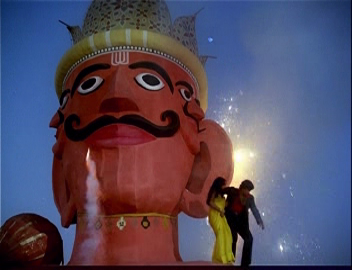
And there is little time wasted on explanations or boring logic. This song for instance has NOTHING to do with anything. I suspect it was just an excuse for Jeetu to bust out his salsa hip swivels. (Link is to the whole film but the video should start at the song. If not, zip along to 34.30 and enjoy the greatness.)

https://youtu.be/P7FvyfKTT9c?t=34m33s

I really like all the people standing around in the background – are they interested onlookers or disgruntled commuters?
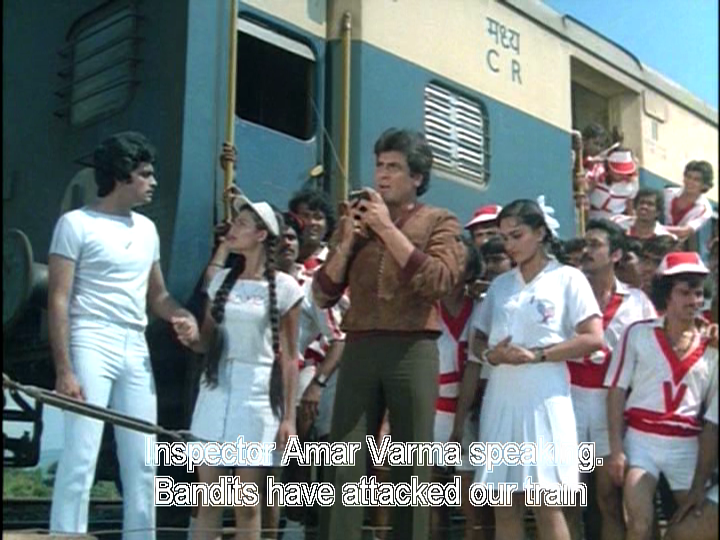
Amar is an upright and uptight policeman, the perennial goody-goody. He is quite inept despite all the dedication. Persisting with motorised transport he fails to catch crooks if they are on foot or on horseback no matter how slim their lead is. He is a poor shot, is bad at disguises and the criminal element don’t seem to fear him at all.  Even when he had Lakhan tied to a post in front of a firing squad he managed to bugger it up. Amar has a controlling streak in his personal life, perhaps because he is hopeless at his job. Jeetendra’s expressions range from “Who farted?” to “I’ll kill you all” with a touch of “Lovesick Puppy”. He is in touch with his dark side, maybe because he is forced to wear these:

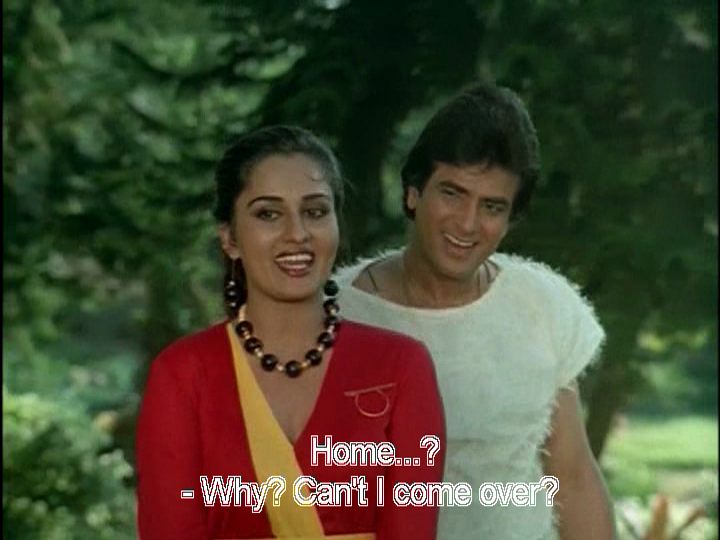
Dharmendra as Shera Singh generally looks hungover or drunk. And his wigs are terrible. (I hope they were wigs.)

Dharmendra looked bleary and puffy for most of the film, and Jeetendra looked a little the worse for wear too. Anyway, I wondered if he and Jeetendra might have been enjoying a glass or two or ten of an evening.  I’m not a big fan of Dharmendra and he is certainly overshadowed here by Reena Roy, Smita Patil and Sunil Dutt. Shera is a horrible character with no redeeming features, and I really pitied anyone who had to put up with his mood swings.

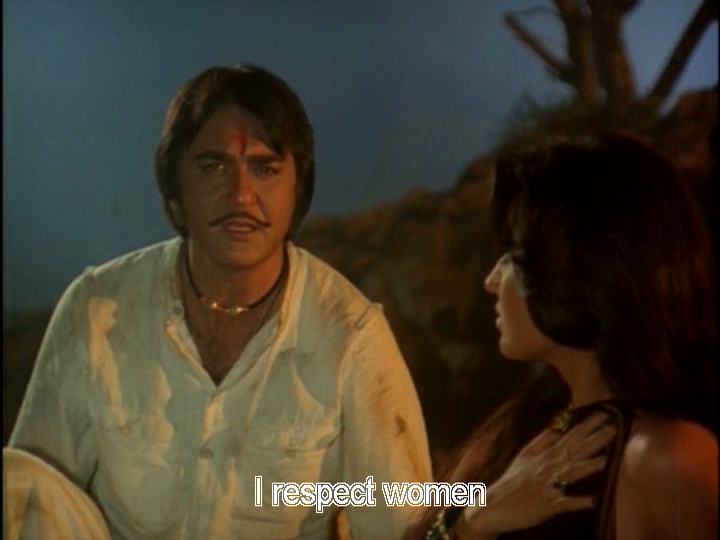
Sunil Dutt plays Lakhan in swashbuckling style and seems to have decided that since almost everyone else in the film is stupid, he will talk directly to the camera. He declaims some hilariously over the top dialogues with his typical conviction and manages to make it seem almost sensible at times. He is the honourable dacoit, protecting women and doing god’s work as he evades the law. Of course he did start his career in crime by killing a man who was assaulting his Ma. He is competent and resourceful – good in a fist fight and able to rig up a jeep as wrecking ball for a spectacular jailbreak.

Nirupa Roy is the worst mother ever. If she isn’t just plain losing her children she is warping their delicate minds with psychological torment. One minute Lakhan is her golden child and favourite tiny axe murderer, next he is being berated for his crimes. Sheesh.

Reena Roy is wonderful as Gita. Gita was adopted by a lady who seems to run a small scale brothel – and Gita only ‘dances’ so she is a virgin prostitute. Amar falls for Gita and she loves him too, but love cannot get in the way of her revenge mission. When she realises that Lakhan might put her closer to her goal she decides he might be the best prospect.
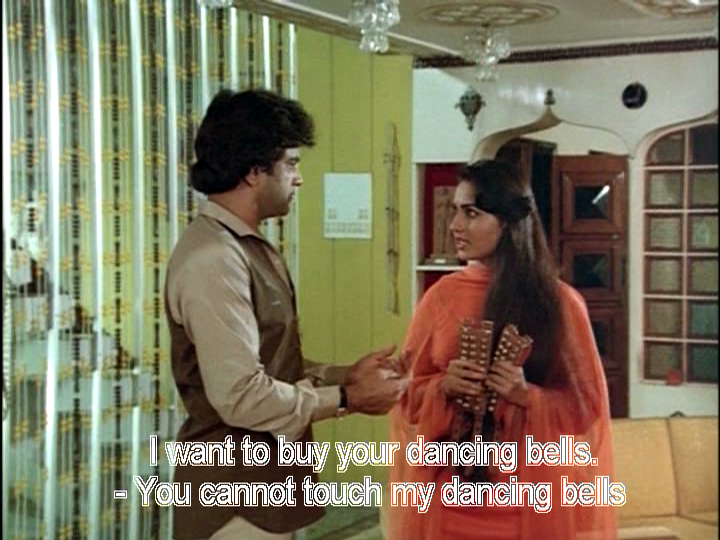
Love is less compelling than killing Rajaram. Given that her profession closes many doors to family and relationships, Gita is quite self reliant and philosophical, and doesn’t waste too much time on self pity. She doesn’t wait for the menfolk to sort out her revenge, she goes for it herself. I really enjoyed Reena Roy’s performance and she has some amazing outfits.

Smita Patil doesn’t seem entirely comfortable in this madness but seems to be so determined to deliver a quality performance regardless of the material. I felt really bad for Bijli. She had to wear fringed Annie Oakley outfits, and was hopelessly in love with Shera. What a thankless life. When she got him drunk and had her way with him, his reaction was quite insulting.

I thought he might be more circumspect considering she was a professional knife-thrower. Poor Bijli.
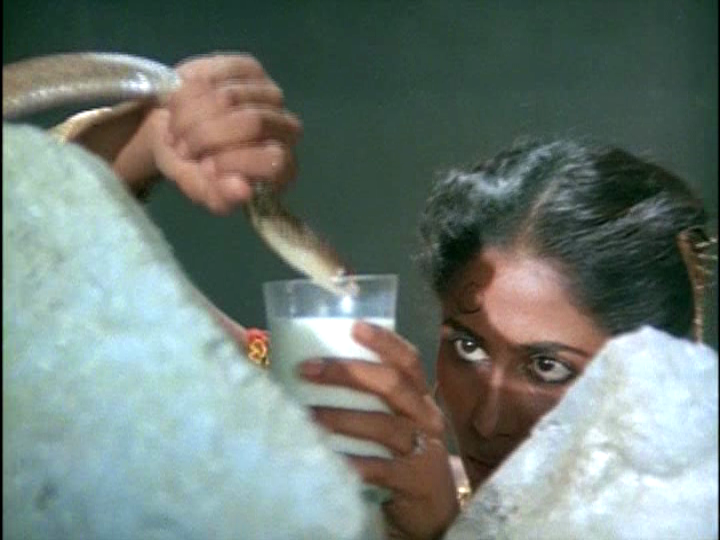
She doesn’t take rejection as the final nail in the coffin, and continues to fight for ‘her’ man.

Badle ki Aag does some things so well and others so very badly. When Gita is half drowned, Lakhan saves her but does not resort to the Shashi Kapoor school of hypothermia cure. He is a sensible man who uses a blanket to cover her body and keeps his own kit on. He is also a filmi hero so he knows that now he has touched her, he must marry her lest they both lose honour. On the downside some stunts are so ill conceived and poorly executed that they went beyond funny and into ouch territory. Especially for the horses. I liked the blatant use of plastic horses in some scenes, but then they used real ones and it looked horrific.
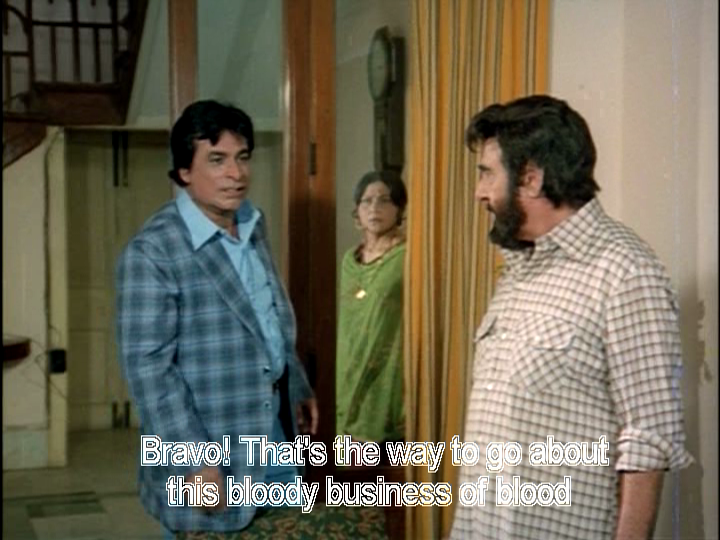
Kader Khan is double the fun as the arch villain and his twin brother, and lots of well loved character actors turn up in uncredited supporting roles.  Pran is a police officer, Om Prakash is a dithering fool with good intentions, Sulochana Latkar is a nanny and load of others from Madan Puri to Jankidas to Shakti Kapoor do their thing. Sarika was OK in her small role as Lakhan’s sister. Asha is another of the interesting women in the film – a law student who stands up against her boyfriend Suraj’s harsher views on capital punishment.

The Laxmikant-Pyarelal songs are a highlight, not just because of the costumes. Reena Roy does lots of dancing, and there is a fun qawwali with all three leading men in flimsy disguises. Most of the dances take place at Rajaram’s palace and the carpet is a sight to behold.

https://youtu.be/P7FvyfKTT9c?t=1h36m1s

Shera lives in a lair reached through a cave, but one that includes a spacious living area with silver tiled dome and chandeliers. Lakhan’s cave complex is more traditional. Rajaram’s place is a fabulous eyesore. And the costumes are just crazy. Sunil Dutt and Dharmendra are in basic white (Lakhan) and black (Shera), but everyone else seems to be at the mercy of the some very creative designers. There are crazy camera angles, amazing interiors and colour and movement everywhere you look.

Rajkumar Kohli has certainly fulfilled the commandment to be entertaining. I have a soft spot for Badle ki Aag and its cavalier disregard for facts, logic, physics and colour coordination. I highly recommend it – with a caveat regarding the horses. 5 stars for fun, maybe 3 for quality. Do yourselves a favour and watch it!

Heather says: This has to be one of the most OTT masala films I’ve seen, and I was literally reeling (and laughing hysterically) after just the first 20 minutes of mayhem. It’s no wonder that I started to get confused when all the children turned up as adults – thank heavens Temple had already told me that no-one erroneously hooked up with their long-lost sibling! But the beauty of Badle Ki Aag is that it all makes sense eventually and getting to the end is just so much fun.  I loved the fake fight scenes, the not-so-special special effects, incredibly awful costumes and fabulous dialogues. ‘I’ll take your eyes for my shirt buttons’ has become my preferred threat and I’m sure ‘Even those who have no feet leave their footprints’ will come in useful at some stage too. Every single utterance appears to be a matter of life or death and there is so much scenery chewing that it’s surprising the sets hold up under the strain. But underneath all that masala-y goodness and after getting through the truckloads of plot, there is more happening than just lost children, murder, revenge and all that velour.

There is an underlying commitment to at least some form of justice throughout the film and I liked how people finally had to pay for their crimes, no matter who they were. I also enjoyed the rather novel concept (at least in Bollywood) of a hero who was prepared to stand up and fight for woman’s rights. Lakhan’s commitment to respect women makes him a more interesting character even though I’m not a big fan of Sunil Dutt and he didn’t endear himself to me with his performance here. Jeetendra was OK, and I do generally like him in these roles, but I agree with Temple that Dharmendra was particularly irritating as Shera.  In comparison the women were excellent! Gita had a practical streak when she debated over which one of her suitors would give her the best chance to gain her revenge and I loved that she was well prepared and methodical in her approach. There had also been some thought put into Asha’s character in the way that she decided to fight injustice against her family in a different way and was studying to be a lawyer. Every female character was more than just a romantic love interest, and I did love Bijli’s knife-throwing as a means of gainful employment.

This film really does have almost everything – it’s a who’s who of the actors from the era and there is enough plot for at least 5 films! I’d recommend it for when you really need a dose of masala and don’t want logic or good acting to get in the way. 4 stars purely because it made me laugh so much!

Howrah Bridge (1958)

Hurrah for Helen!
The only thing I knew about Howrah Bridge was that it featured Helen’s famous item number Mera Naam Chin Chin Chu, and that was the reason I picked it up in a collection of classic Black and White films. Although Helen’s appearance is a highlight, there is plenty more to enjoy, including great performances by Madhubala, Ashok Kumar and Om Prakash as well as some beautiful songs featuring Asha Bhosle and Mohammad Rafi. The story moves along at a steady pace without any unnecessary diversions from the main plot and despite knowing ‘whodunit’ from the opening scenes there is still intrigue and anticipation as events don’t unfold quite as expected.

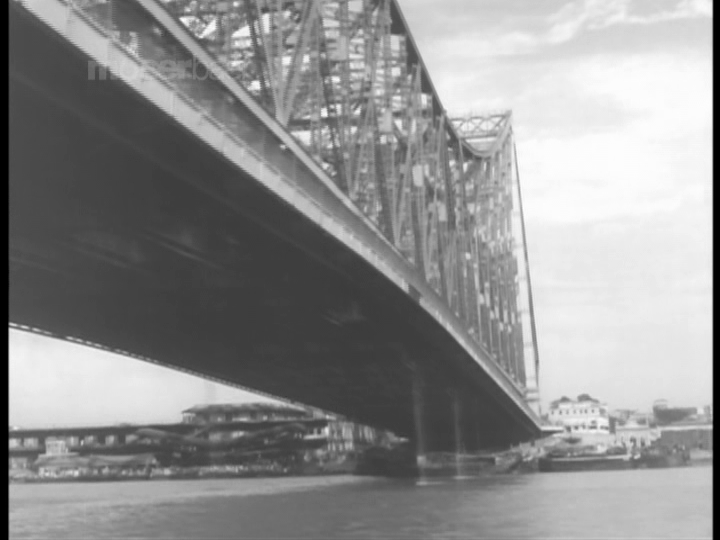
Howrah Bridge is an Indian take on film noir, although the story is perhaps not as dark and the characters less ambiguous than in the classic American films of the forties and fifties. However it follows the basic path of a crime drama with a leading lady of somewhat questionable background, and a villain who happily disposes of anyone who stands between him and his fortune. The lighting is generally subdued in film noir style and director Shakti Samanta makes excellent use of shadows to highlight the more dramatic moments in the film. While most of the action takes place in a number of seedy hotels and dimly lit streets in Calcutta, Howrah Bridge appears from time to time and looms effectively over the characters as well as providing the location for the climax chase.

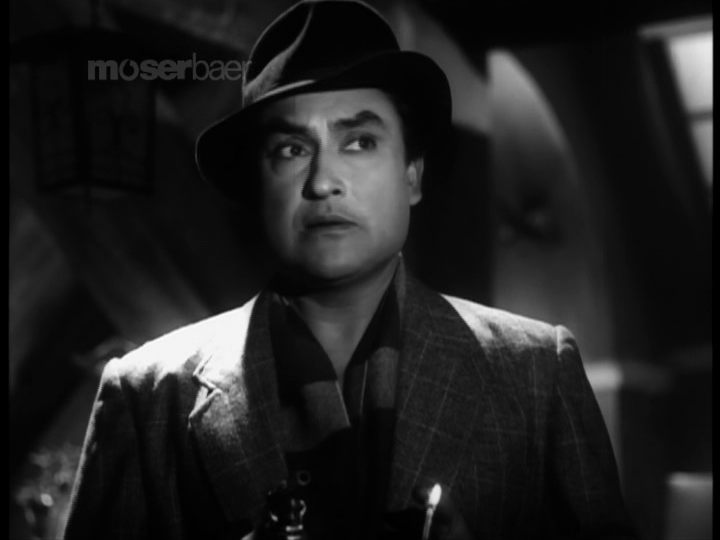
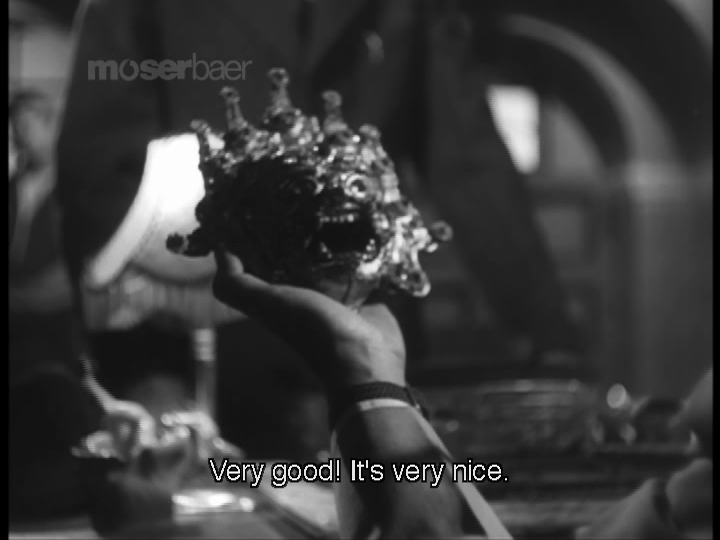
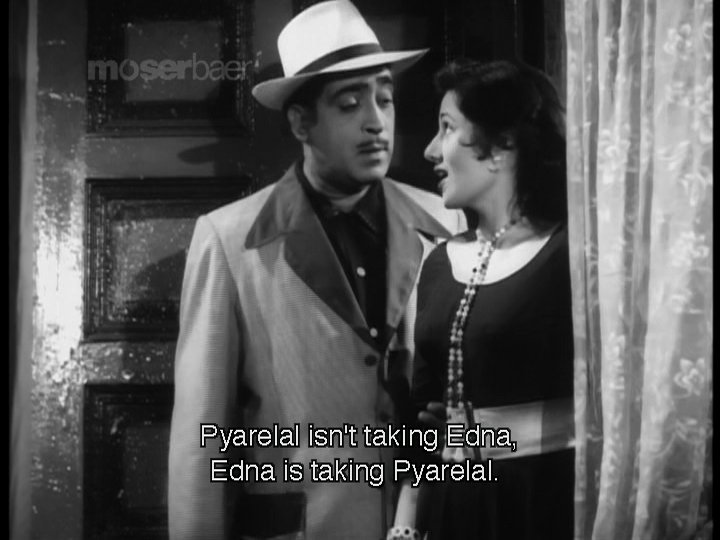
The film starts with the theft of an heirloom from Prem Kumar’s family in Rangoon. It turns out that the jewel encrusted dragon mask has been stolen by eldest son Madan (Chaman Puri), who has taken it to Calcutta to sell to the villainous Mr Chang (Madan Puri). Mr Chang wants the dragon but doesn’t want to pay for it, so he arranges for his chief henchman Pyarelal (K.N. Singh) to dispose of Madan and steal the dragon. Hearing of his brother’s murder, Prem Kumar (Ashok Kumar) heads to Calcutta to try to recover his family heirloom and en route he meets up with Uncle Joe (Dhumal) and his beautiful niece Edna (Madhubala) who sings and dances in Joe’s hotel. Prem is dismissive of Edna and her dancing while she is piqued by his resistance to her charms which gives her at least one reason to pursue Prem when she meets him again in Calcutta.

https://www.youtube.com/watch?v=LjZ0DCaPSP0

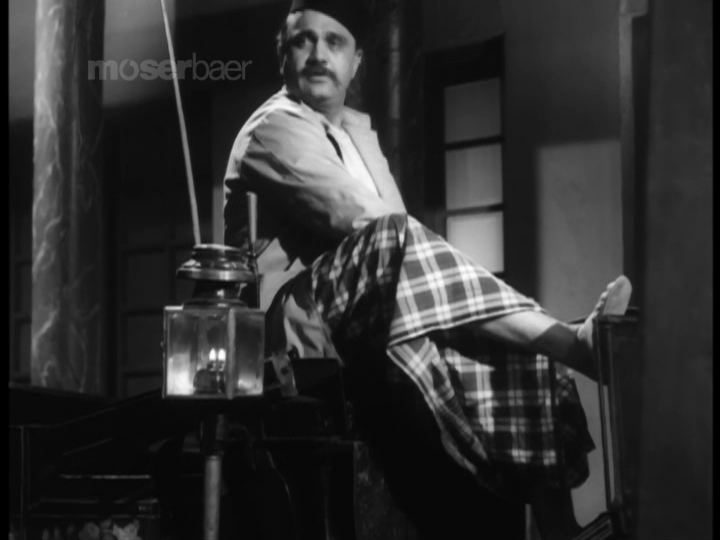
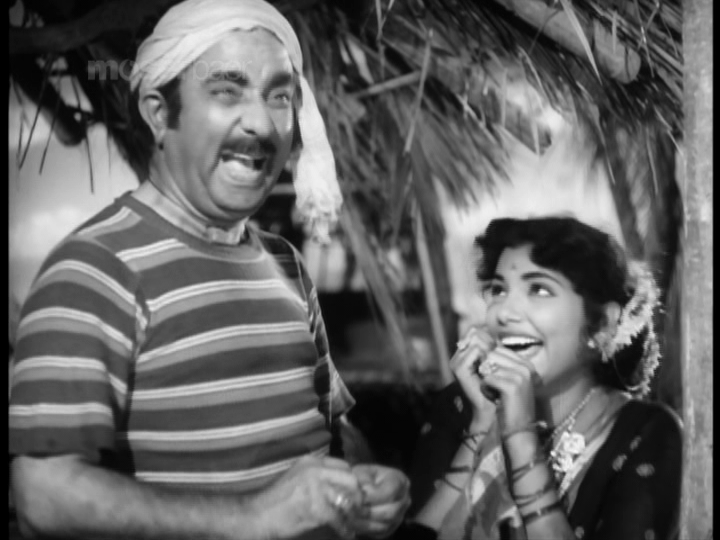
Prem hooks up with Tangewala and old employee Shyamu (Om Prakash) and together they attempt to unravel the mystery surrounding Madan’s death and the disappearance of the dragon mask. This involves Prem assuming the name of Rakesh and following in his brother’s footsteps on the night of his murder while Shyamu uses the opportunity to get commissions from as many people as possible along the way. Added in to the mix of characters are Shyamu’s opium smoking nephew Bhiku who saw the murderers on Howrah Bridge, and his cheerful fiancée Chhamia who add some more conventional Bollywood drama to the story. I always love shots of newspapers and did pause to read the other headlines and the ads!

Madhubala plays the role of an Anglo-Indian, perhaps to explain her Western style clothing and account for her less than respectable position as a singer and dancer in her Uncle’s hotel. While she doesn’t do very much dancing, she is convincing as a singer doing her best to entertain the crowd and attract the attention of Prem. She looks beautiful in swishy skirts and Chinese tunics, and gives Edna charm and vulnerability despite her profession and unsavoury connections to the local criminals.

Some of the noir element creeps in here as Edna obviously knows about the various shady deals going on between Uncle Joe and Mr Chang. Her attempts to lure Prem to the hotel seem initially to be to expose him to some theft or extortion attempt perhaps in revenge for his previous treatment of her. Prem is also less than honest as he encourages Edna’s advances to learn more about the smuggling gang run by Mr Chang and Pyarelal. But that’s about it for any noir-ish character ambiguity and rather quickly a real and genuine attraction forms between the two. After a few cups of tea and a boat trip on the river (a Bollywood staple always guaranteed to result in romance) Edna confesses her love for Prem. While Prem does take a little longer to declare his love, the relationship feels warm and affectionate with excellent chemistry between the two actors.  Ashok Kumar is always a very competent actor and here he shows his romantic side while Madhubala looks gorgeous and seems to relish her role as Edna turns sleuth and starts to help Prem with his investigation.

The other characters all fit their parts well. Madan Puri’s Mr Chang is an interesting villain and somewhat different from the usual swaggering, self-confident bully seen in most Bollywood films. He has a limp and walks with a cane, demonstrates a number of affected mannerisms and speaks Hindi softly in a high-pitched voice with a touch of an accent to accentuate his Chinese origin. Chang demonstrates a cold and callous nature when he casually orders the deaths of various lackeys he feels may be a threat but becomes agitated and afraid when he knows that the cops are on his trail. It’s an excellent portrayal and provides a good contrast to K.N. Singh as Pyarelal who plays his role as a more conventional gangster very competently. The oriental touches suit the overall look of the film and of course Helen is perfect (and looks so very young and totally stunning too) as the wonderful Chin Chin Chu when she dances in Mr Chang’s hotel.

https://www.youtube.com/watch?v=cQjXKdyp_wM

The music by O.P Nayyar fits the feel of the film perfectly and ranges from romantic duets to a very jaunty song Shyamu sings as he drives through Calcutta. Mehmood and his sister Minoo Mumtaz also pop up in a fun song at a wedding where Mehmood indulges in some excellent uncle dancing.

I really enjoyed Howrah Bridge and wasn’t surprised to find that it was directed by one of my favourite directors from this era. I liked the touches of film noir and the variation between light and shade in Chandu’s cinematography, although it’s possible some of the dim lighting may just be due to some deterioration in the film with age. Madhubala is always a pleasure to see in any film and she tends to steal the show whenever she appears. While Ashok Kumar is an actor I enjoy watching, he really does suit this type of role and I think this made me appreciate his performance rather more than usual. I was a little disappointed that despite secret doors and an intricate hiding place for his safe, Mr Chang didn’t have a suitably villainous lair, but the dimly lit room with its statues and heavy furniture was probably more in keeping with his character. It’s not the most exciting story but with excellent performances by some of the most renowned actors of the day, it’s a film worth watching for more than just Helen’s fab appearance. I give Howrah Bridge 4 stars.

Temple says:

I am a huge admirer of Ashok Kumar and have been gradually working my way through his filmography. Of course, Helen in any appearance also pushes a film up the to-be-watched pile. And I’d watch Madhubala if she was watching paint dry so I had high hopes when I first watched this. Sadly, the stars and the songs are really the only highlights for me. Ashok Kumar and Madhubala have a delightful chemistry and their scenes together crackle with life and are full of emotion. Unfortunately the story is not particularly interesting as it is obvious what will happen and who will do what. The pace is leisurely at best, and there is just not enough tension as things plod along so my attention kept skipping to what I knew was going to happen down the track. I found the villains characterisations particularly unimpressive and they lacked purpose – they were just generic bad guys and the addition of all the silly mannerisms did nothing to make Chang more credible or threatening. I do like a lot of the supporting cast, especially Om Prakash, but they generally aren’t doing enough in terms of the story to hold my interest. The songs are excellent, and Madhubala can certainly work the camera!

I watched the movie again last week and I found it quite dull. Unless Ashok or Madhubala was on screen, preferably both, or it was one of the fabulous songs I was itching for the fast forward. I am happy I have seen it as it is often referenced as a classic of its era, but it’s not a favourite for me and I think it is just an OK film. I would recommend or rewatch a number of other films released around the same time – for instance the thriller 12 O’Clock, Madhumati or for a change of pace, Chalti Ka Naam Gaadi – over this. 3 stars.

Fakira

When Katherine at Totally Filmi announced Kapoor Khazana, a month long celebration of the Kapoors, I leapt at the chance to write about some of my favourite Shashi Kapoor films. They’re not all that great but they do have a certain watchability and charm, and lend themselves to excessive screencapping in lieu of analysis.

Fakira is not a particularly good film, but it has style, panache and Shashi in a fun jaunt through masala clichés and excellent interior design. Having said it is fun, the first fifteen minutes is a bit bleak.

Fakira opens with young lads Vijay and Ajay forced to stand by and watch their parents die in a blaze caused by rowdies who are trying to cover up evidence. Shortly afterwards the boys are beaten, chased by the evil rowdies and, of course, separated.  They start new lives that will take them on very different journeys, although Vijay still has his friend Popat to hang on to. It’s all quite depressing and badly acted (I cheered each time a kid got slapped) and I think you could safely start the film about fifteen minutes in and not feel the lack. Just make a mental note to keep a lookout for a photo and a significant song. And if you hop in at the fifteen minute mark, you will see this display of Shashi’s driving style:

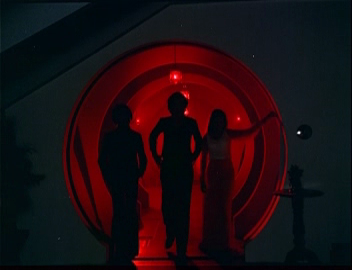
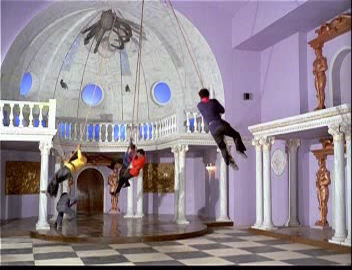
Vijay grows up to become Fakira (Shashi Kapoor!) – Master of disguise, scourge of smugglers and general ladybait. He has an excellent lair, although I have concerns about fumes from cars driving into the lounge.

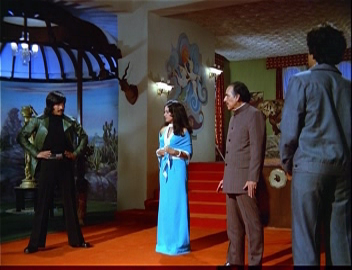
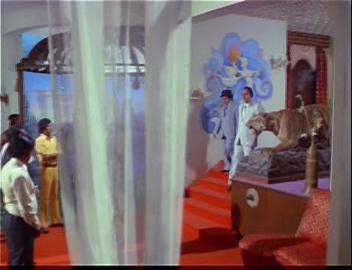
Fakira is a Robin Hood, stealing from the thieves, taking a cut and returning honest folks money. Naturally this makes him of considerable interest to both law enforcement (Iftekhar!) and law breakers (everyone else!). In fact, the bad guys also have a stylish approach to lair design right down to the bad mural and a stuffed tiger.

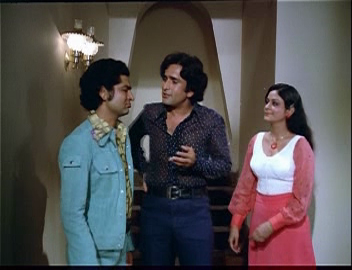
Shashi looks rather fine in this – hair at optimum curl and dishevelment, those eyelashes, tons of fab outfits and a sense of delight that he is getting paid for the dressing up.

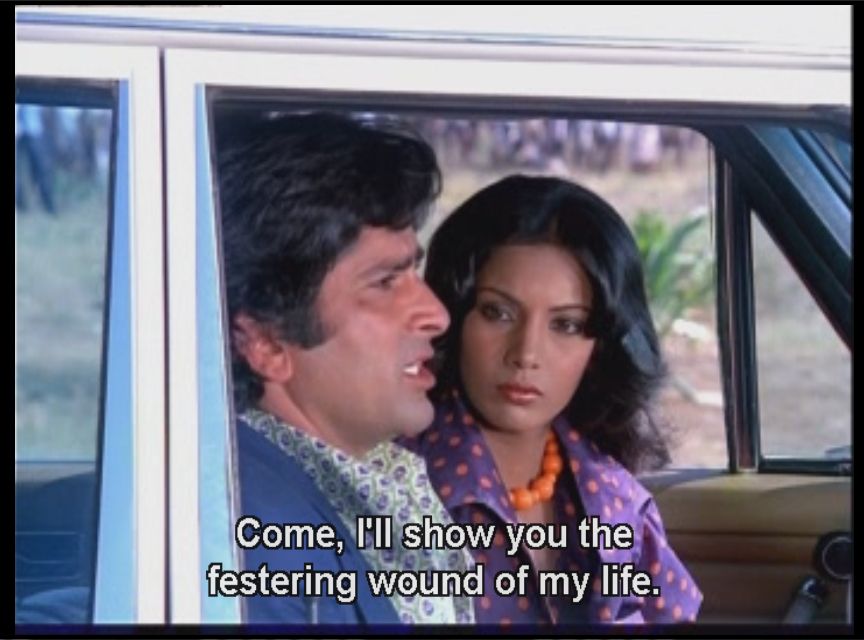
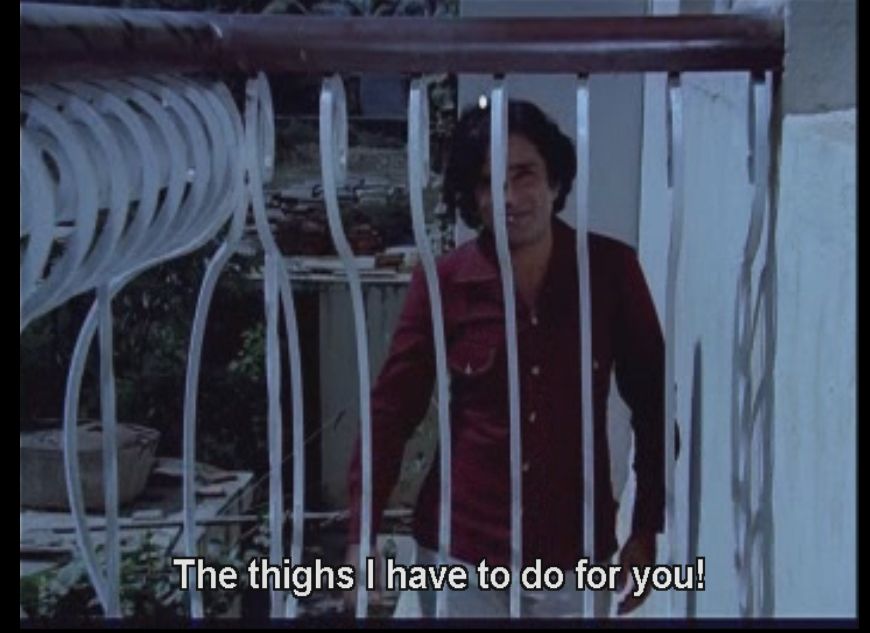
He does have a dark side though, scarred by his traumatic childhood and possibly aware the subtitle team are up to their hijinks.

Vijay/Fakira has Popat (Asrani) and Neelam (Aruna Irani) as accomplices, and relies on them as well as his fine array of disguises and stick on moustaches to protect his identity. The supporting cast are all well and truly better than this material but they approach it with a relaxed good humour that makes Fakira so enjoyable to watch. It is the ‘spirit of making do’ in action. Asrani is particularly effective as the nattily dressed sidekick with a sideline in pigeon training and pertinent quotations.

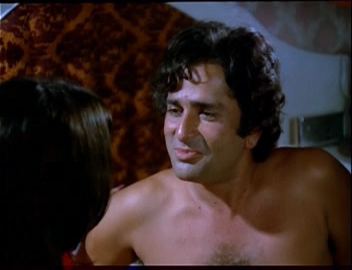
Shabana Azmi is Neeta, daughter of Iftekhar and an undercover policewoman assigned to catch Fakira. She pretends to be an orphan called Geeta and infiltrates Fakira’s lair and heart. I like Shabana in masala films as she seems as tickled by what is going on as I am. Iftekhar’s house is quite stylish for a policeman’s residence, so Fakira’s lair doesn’t seem to impress Neeta as much as it did me. Shabana gets the memorable bed breaking scene with Shashi after they are secretly married (it was an I love you I hate you I love I hate you you lied I love you forgive me I love you too quickie wedding).

Ajay becomes Toofan, the contract killer and all round menace, played by Danny Denzongpa. Toofan is hired by Chimanlal (Madan Puri), the local crimelord, to deal with Fakira. Naturally he discovers the truth, but only after a lot of enjoyable sparring and banter with Fakira. Theirs is the adversarial kind of bromance.

Neelam is in love with Vijay, and his preference for Neeta/Geeta tips her into a foolish alliance with the bad guys. I suspect there were some underlying wardrobe envy issues as Shabana got the good wife sari collection and Aruna was stuck with a puffy sleeved princess pink frock.

Fakira’s sound activated lights are used to great effect when Neelam decides to go the biffo. I know I shouldn’t enjoy a catfight this much but come on … It’s Shabana Azmi in a fight scene. You don’t see that every day.

http://youtu.be/ByI7-EOmtlg

In the last hour or so the plot turns into a series of things (in no particular order):

So you know, it isn’t a masterpiece but I find it lots of fun. I doubt it would convert anyone to Shashi Kapoor fandom, but I think it’s a good example of vintage masala entertainment. And for those who have wondered what Iftekhar and Danny Denzongpa might look like in a qawwali showdown, Fakira does provide the answer.

It’s worth it for the star cast, the dedication of the set design team and C.P Dixit’s commitment to using every trick in the masala book. 3 stars!