Pithamagan

Pithamagan is not a film for the faint hearted. Like other Bala films, it deals with society’s poorest and most disadvantaged – in this case, he delves into the world of cremators, petty con artists and drug pedlars.  And yet it’s very watchable, with excellent performances from Vikram, Suriya and the rest of the cast making Pithamagan much more than just another film about the miseries of being poor and outcast.

The focus of the film is the relationship between Chittan, an orphaned cremator and Sakthi who is a small time criminal. Chittan is born in a graveyard and brought up there by the cremator who seems to do his best for the child. However Chittan grows up to be unable to deal with society; he cannot communicate in words, and is unable to understand the basic tenets of normal behaviour.

After his guardian dies, Chittan ventures into the local town where he creates mayhem before being rescued by Golmathi, a local cannabis dealer. He ends up following Golmathi home, and since she has a kind heart and feels sorry for another orphan like herself, she helps him to find a job. This turns out to be at a cannabis farm and when it is raided by police, Chittan ends up in jail. There he meets Sakthi who also feels sorry for Chittan and tries to help him cope with life inside prison. Sakthi is a petty crook who runs street tricks and confidence games which seems to have given him a performers approach to life. He has a sunny disposition and a positive outlook despite his circumstances and occasional rather interesting dress sense.

After Sakthi is released from jail he works with Golmathi to secure Chittan’s release, and along with Manju, a student who was once victim to Sakthi’s confidence tricks, the friends then spend most of their time together. They work on improving Chittan’s appearance and behaviour, and try to get him away from the drug trade with mixed results.  However, the local drug baron has other ideas and the final conclusion is as bloody and gruesome as you might expect.

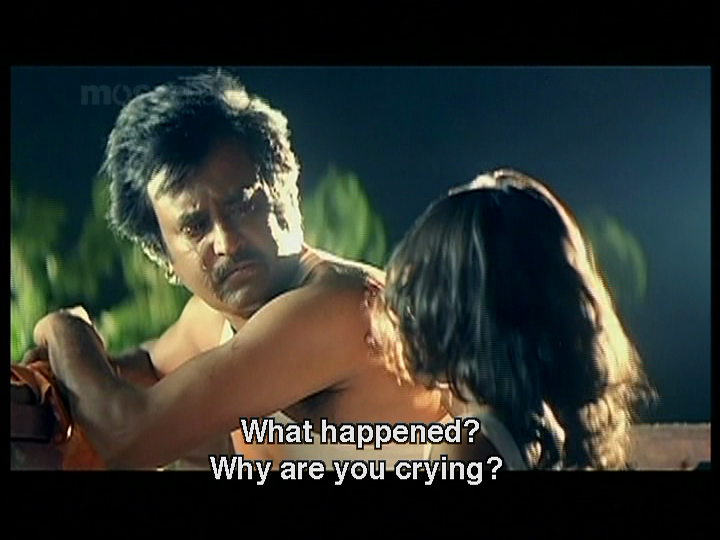
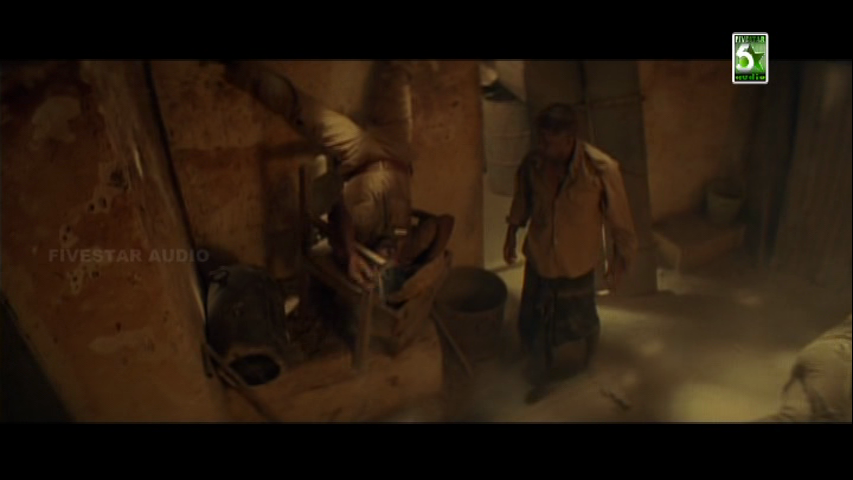
While the story itself is rather predictable, overall the film works well and this is down to the chemistry between Vikram and Suriya. Vikram seems to be able to take any disability and make it instantly realistic. I really believed that he was blind in Kasi and here he is totally convincing as the mentally disturbed Chittan. His facial expressions are just perfect and he really does appear to be totally wild and uncontrolled. It’s hard to define exactly what Chittan’s problem is, but as a scientist (and brain researcher!) I’m immediately intrigued and want to analyse the cause of his condition.  Is he simply a wild child – raised without the benefit of society and therefore unable to function within its rules? Or is it more organic and he has a functional neural developmental problem? I tend to favour the latter as the cremator who took him in was able to speak and obviously had some idea of how to interact with the townspeople. So the total inability of Chittan to communicate and relate seems to be something more than just growing up with little social contact. It also doesn’t explain why he was able to fight so well, but obviously that was essential to the plot and we can’t ask for too much realism I guess. I love that he left the policeman upside down in the shot below – the fight scenes really were good in this.
I also find it interesting that in so many of Vikram’s films, his character is somewhat crazed, and he is completely convincing each time! But as good as Vikram’s performance here is, I think that Suriya manages to equal it. This is the first film where I have really ‘got’ Suriya’s appeal. I’ve seen him in a number of films and while I thought he was good as the cop, or the good guy, or even as the bad guy, I’ve never felt that he’s been anything more than that . But Suriya is absolutely fantastic in this film. He is funny and charming, and breathes life into the story. Most of the comedy comes from Sakthi and his various cons, and without this balance Pithamagan would have been very grim indeed. Suriya’s character has plenty of flaws but at heart he is kind and his relationship with Chittan allows this side of his character to flourish.

Sakthi’s friendship with Chittan is cleverly developed throughout the story and makes it credible that the two would end up as constant companions. Chittan seems initially perplexed by Sakthi’s benevolence towards him but soon realises the benefit of a friend. And later, Chittan’s obvious jealousy when Manju is spending time with Sakthi is both childlike and logical since Sakthi has become the centre of his world.

Sangitha is perfect as Golmathi with her paan-stained lips and philosophical approach to life. Her character is another orphan and her initial pity for Chittan seems similar to how she would feel for a stray dog. But as a drug dealer and someone who is shunned by the local community (unless they want her product), she is able to empathise with his alienation and is the first person to start opening up his world. Golmathi’s emotions and reactions are all plain to see on her face which helps make her character much more sympathetic.

On the other hand, the first time I watched this film I really didn’t like Laila’s character and felt that she over played the schoolgirl. But on re-watching, I think she was supposed to be a fun character with a sense of adventure and an awareness of the possibilities of life which was intriguing to Sakthi. However I think Manju is a much less believable character than the others, and her presence is often more irritating than anything else. Initially her father seemed to be quite strict, even taking her to the jail to beg for Sakti’s forgiveness for her actions, which in itself seemed a really strange thing to do. But then later on in the story, her family seem to let her do whatever she wants, despite knowing that the man she is involved with is a convicted criminal. They do turn up to support Manju in the end, by which time it seems to be too late and is perhaps just a way to make a contrast to the other characters  whose only family is each other. Manju’s presence also provides another dynamic to the relationship between the two men since she becomes a barrier between them. But my biggest issue with her character is her inability to articulate what had happened to Sakthi, and this is a major flaw in the story for me. While I’m quite sure that in real life people become too distressed to be able to communicate, here it just didn’t seem to suit her personality, even allowing for her youth. It was also just a bit too over the top and filmi for a story that relies so much on gritty realism – at least for most of the film.

There is one other odd note, which is the protracted interlude with Simran. This completely changes the nature of the film and lasts just a bit too long. In fact it reminded me of the Hindi film Shakti, where Shah Rukh Khan turns up for an item song and ends up taking over a large part of the final scenes. While the song here is fantastic, and I love it, it stops the flow of the story and the subsequent scenes initially feel out of place as the pace abruptly changes again. But here it is anyway, since both Simran and Suriya are brilliant and it’s very funny.

I think Pithamagan is an excellent film despite a few flaws with the pacing. The friendships are successfully portrayed and the action is fast and well choreographed. Vikram’s grunting and animal noises are interesting and effective, and so much better than his singing which is absolutely brilliant in its tonelessness. I wonder just how hard Vikram had to work to make it sound that bad! The music by Ilayaraja is quite beautiful but not particularly memorable, especially since it’s often used as a backdrop for more of the story. Overall though it’s the performances that make this film worth watching and I would recommend it for Vikram and Suriya who are both outstanding. 4 stars.

Thalapathi

Thalapathi was one of the first Tamil films I saw. It was before my ‘Southern Film Industry Addiction’, I barely knew who Rajnikanth was and had absolutely no idea about Mammootty. In fact I’d totally forgotten he was in this film until I rewatched it recently – thankfully I know much better now.

Written and directed by Mani Ratnam, Thalapathi is at heart much more of a masala film than his usual fare. It features most of the necessary ingredients: an abandoned child, perpetually teary mother, romance, brothers who don’t know they are related, the essential Amrish Puri as the villain and a significant article of clothing. Add to that plenty of action and fight scenes, great songs, and beautiful cinematography, plenty of classical references and it all adds up to a very full 2 and a half hours of cinema.

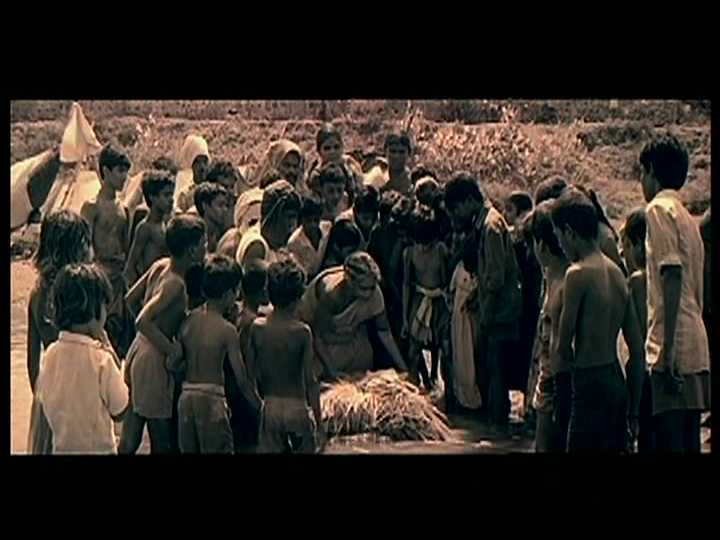
The film starts in black and white with a young unmarried girl giving birth during the festival of Bogi. The opening scenes of Kalyani’s rejection by an older woman and shots of the rural countryside serve to explain that her child has no future in such a traditional community. She puts the baby into a train in the hope that somehow someone else will give him a better life. These opening shots are some of the best in the film and it’s a shame that my copy of the DVD seems to have lost the original quality.

The colour kicks in with the year of 1987 when the baby has grown up to be Surya (Rajnikanth). He is a man with a firm belief in justice who is determined to help others in his community in any way he can. This often seems to be by beating senseless an offender and in the course of such action he ends up fatally injuring Ramana, one of Devaraj’s men. Enter Mammootty in a very well played role as the head of the local gang of rowdies, who initially threatens Surya with dire consequences if his man dies.

However when Devaraj finds out Ramana’s crimes, he arranges for Surya’s release from jail and tells him that his actions were right and just. I can’t say that I agree with his assessment but it makes Surya become his loyal Thalapathi and the two become inseparable. Lots of drama here, so time for a song break.

Surya’s charitable reputation helps to legitimise Devaraj’s rather more shady one and they soon rule the entire area, much to the displeasure of Devaraj’s rival Kalivardhan (a dubbed Amrish Puri). There is bad blood between these two and it’s inevitable that there will be a clash. However most of the story concerns Surya’s relationship with Devaraj and sadly Kalivardhan is only seen occasionally throughout the film. Amrish Puri in a really terrible pair of glasses isn’t as menacing as usual but manages to be evil enough just when it really counts.

In the course of his good works, Surya meets Subbu (Shobana), a Brahmin girl who falls in love with him. Perhaps it was the wolverine hair-style or the commanding way in which he demands her jewellery but she’s obviously quite smitten.

Her father wants nothing to do with a thug who has no idea who his parents were and rejects the match. In the middle of all this, Surya’s real mother ends up moving to the area when her legitimate son Arjun (Arvind Swamy) is appointed as a Collector. Kalyani has married a very understanding man who knows all about her first baby, although Arjun doesn’t know that he has an elder half-brother. The two brothers have a common sense of justice but in every other way are complete opposites. Arjun is a good and law-abiding man who is committed to cleaning up the town, although perhaps he should have started with the police corruption rather than take on the town rowdies. There are inevitable clashes between Surya, Devaraj and the police as Arjun tries to stop their version of law and justice in the town. And Kalivardhan is luring in the background adding in his malicious attempts to get rid of the pair as well. Finally the significant cloth comes to light but Surya refuses to give up his friendship with Devaraj despite discovering his brother.

Although there is plenty of action in the film, the main focus is on the relationship between Surya and Devaraj. Mani Ratnam has based it on the friendship between Karna and Duryodhana from the Mahabharata and there are a number of references to this story throughout the film. It starts out with Devaraj as the leader and Surya as the faithful follower, but as their friendship develops they each begin to change the other and the dynamic between the two has altered by the final scenes. Both Rajnikanth and Mammootty are both excellent and work well together to bring their friendship to life. It’s mainly in the little touches, such as the way they only have to look at each other to acknowledge their next venture.

Surya’s relationships with his mother, Subbu and others are important to the overall story but his character is defined by his strong sense of justice and unwavering support of Devaraj, no matter what. Even when Devaraj persuades him to marry Ramana’s widow Padma, Surya is unable to say no. Rajni has plenty of action scenes and is exuberant in these, but he also makes the most of his more dramatic moments. So much is conveyed in one particularly memorable scene in the temple, where both Suyra and Kalyani both look yearningly towards a train as they hear the distant whistle. They are both standing close together but neither have any idea who the other is and their obvious sadness is all the more poignant as a result.

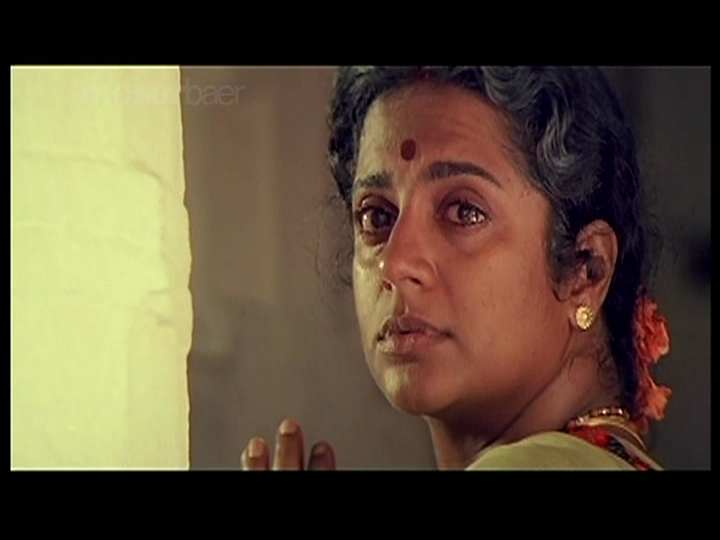
Mammootty is more restrained in his role as Devaraj relies more on fear and his entourage rather than actual physical violence. He has Surya for all of that after all. His portrayal of the more corrupt and devious Devaraj is excellent and he brings a real sense of authority to the character. The other members of the cast are all very good in their supporting roles, especially Srividya who is convincing as the mother who can never forget the child she lost. I was surprised that she had told her husband about her first baby, but Jai Sankar brought a lot of compassion to his role as Arjun’s father and was very credible as a supportive husband and father.

The other standout feature of the film is the music by Ilaiyaraja. The sad Chinna Thayaval is beautiful and recurs as background music throughout the film. The other songs are all upbeat with some great dancing and I wasn’t surprised to see that Prabhu Deva was one of the choreographers.  The rather different Sundari Kannal is interspersed with some Samurai action and seems to be a tribute to director Akira Kurosawa. I haven’t included it here as it is very long and I’m a little concerned about the horses in some of the fight sequences but Rajni in a top knot is definitely worth a look.

The only issue I have with this film is that it is very violent in parts. The first fight scene with Ramana and the episodes of police torture are quite graphic and go on just a bit too long for me. But to counter that, the two leads are fantastic and really at their best, the music is beautiful and memorable, and it’s a very well told story. 4 stars.
Temple says: I like watching earlier Rajni films (and this is the 90s) as it reminds me just how good an actor he is, legend status aside. I have recently watched Darna Veera Suura Karna, so the story was fresh in my mind and I think this translation to modern gang empires was very effective. Deva and Surya are full of certainty and righteous power, and stride through the landscape looking larger than life. Mammootty and Rajni are brilliant and play off each other so well, and that’s a good thing as other elements of the story are underdone. Deva’s gang members were just a vague presence, and I don’t think I recall any of their names. They were just there for contrast and to portray Deva’s court of followers. The female characters are strong in concept but weak in presence apart from a couple of key scenes. Shobana was lovely as Subbu, which is all that was required of her,  and Bhanupriya gave an excellent and near silent performance as Padma. Srividya was good but her character was quite static and she didn’t do much more than weep so I was left wanting to see more from a woman who clearly had a complex situation to navigate. I admired Santosh Sivan’s artistry as he used light and camera angles to create a feeling that these men were almost forces of nature, and the landscapes were stunning. The fight scenes in the rain were lovingly filmed to capture the beauty of the splashing water and the bodies were more of a method of breaking the trajectory of the showers than the object of the scene. I don’t think it’s an overly violent film as many of the gory scenes are shown as aftermath rather than explicit or graphic scenes of how people got into that state. What was explicit was also shown to have consequences so it isn’t mindless violence either. It all fit into the relationship of Deva and his general with their warlike mentality. I don’t love the soundtrack, but I do like it well enough and thought most of the slower songs were excellent. I was ready to stick a fork in my ear at the umpteenth reprise of Chinna Thayaval but I blame Mani Ratnam for that as it was just relentless and overused. It’s a great action infused tale of loyalty and conflict, it looks stunning, and it features two of the best actors working in Indian cinema. 4 stars from me!

Sagara Sangamam

I had no luck finding a subtitled version of this film (legal or otherwise), which is a shame as I think that difficulty will stop a lot of people from watching. I’m not sure where Heather got her subtitled copy from. However this is the story of a dancer, often expressed in action rather than speech and many scenes required no further explanation.

The film uses a flashback structure so we actually meet the older Balu (Kamal Haasan) first. He is a disgruntled drunk and newspaper critic who, despite all his issues, demands a high standard for dance. He writes a scathing review of the latest dance sensation Sailaja (SP Sailaja), and rather than apologise when she confronts him, belittles her by showing her how it should be done.

Young Balu is a poor boy, dedicated to dance in many forms – and a purist. He wants to be successful but is held back by his dislike of the shallow sexified version of dance that is in demand (and is perhaps dismayed by the outfits).

Balu’s world is small. He has his mother, dance, and his friend Ragu (Sarath Babu). He also meets Madhavi (Jayaprada) who is wealthy and happy to be his patron. She gives him many opportunities, and becomes more than a sponsor in his eyes.

Each episode reveals something more of Balu’s character and how he came to be in his current situation. It’s a big challenge for a film maker, and in this instance it is handled beautifully by K. Vishwanath. The fragments fall together to make a cohesive story, and it is easy to follow the narrative.

Kamal Haasan is fantastic. Since we more or less know how the story ends before it begins, it really does require a great performance to keep a viewer engaged on the way to the foregone conclusion, and he delivers. Yes, there are some dubious wardrobe moments and bizarre posturing, but they were intentionally ridiculous, being Balu’s commentary on the commercialisation of dance. Balu dances his joy, pain and despair – he dances his heart out and it is hard to look away.

This is one of my all time favourite film dance sequences and I love it for its joyous emotion, simplicity and the brilliant editing. Despite his dedication to dance as a pure art form, Balu isn’t a total stick-in-the-mud. He adds some sweet comedic flourishes dancing with kitchen utensils, and plays up to his mother who dreams of seeing Balu on stage. Madhavi is impressed too!

Life seems set and success is just around the corner so naturally, I expected a tragedy. Because he is such a perfectionist and intolerant of things that don’t fit his vision, Balu is ill equipped to deal with setbacks. He falls into a bottle after losing his mother, missing his big dance debut and then learning that Madhavi is not free to return his love (she is married to a man who looked absolutely miserable in their wedding photos). His character frustrated me greatly. I could empathise with Balu, but I really wanted him to see sense and find a way to bend before he broke.

Sarath Babu’s role was small but he is a constant and reassuring presence and instilled Ragu with an air of integrity and generosity.  I’m not entirely sure why Ragu stuck by his friend as he seemed to give endlessly to an often ungrateful sod. There were lively glimpses of Balu’s character in a couple of scenes that made me believe in the friendship, and perhaps I missed a lot in the dialogues.

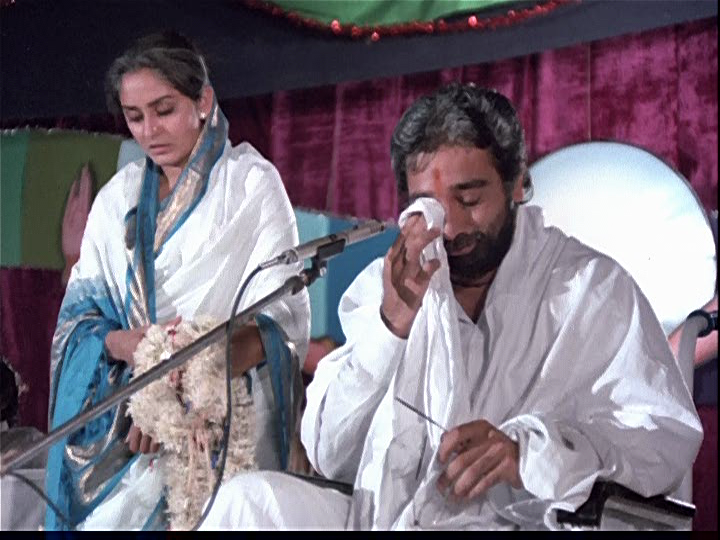
Madhavi tracks down her old friend and would be lover through the newspaper and Ragu. Her side of the story is also revealed through flashbacks. This episodic style seems apt as her love for Balu is revealed through her candid and perceptive snapshots of him long before either of them acknowledges any feelings. Jayaprada is lovely and manages to be light and funny as young Madhavi without being shrill or giggly, ably matching Kamal Haasan in the physical comedy.

She gives a sensitive portrayal of a woman who is tempted by a love she cannot act on and manages to be sympathetic despite having been, at best, deceptive by omission.

As it happens, she is Sailaja’s mother, and so Balu’s life turns back on itself as Madhavi secretly engages him as a dance teacher for the stylish but shallow girl.

The photograph motif is used a lot. One of the most moving examples is when Balu and Madhavi try to use the timer thingie to take a picture of themselves together. The photo fails and all that can be seen is a worried Madhavi and ghostlike blur of Balu. They joke that it wasn’t meant to be. Then when Madhavi departs with her husband, Balu takes and keeps a photo of the couple as a reminder to himself of what had to be. It’s one of the few pictures he takes; usually Madhavi was the one to give him beautifully composed portraits showing what he was to her.

Their reunion is full on filmi and yet simple as Madhavi confronts Balu while he is stinking drunk. Balu’s drunken cavorting avoids being a mockery of his dance despite being accessorised with a bottle, perhaps as it comes straight from his heart with no artifice. Madhavi lets Balu see her sadness and fear for him while he seems to give her an earful for not teaching Sailaja to be a better dancer. In so many ways, they haven’t changed a bit. Balu doesn’t know that Madhavi is a widow, and once more she struggles with the pressure of family against her desire to move forward with Balu in her life.

Sailaja is unhappy at this revelation about her mother’s past, but she should be practicing her dancing more than spying, and do a bit of growing up as well. Happily for her, she does come around to seeing the value in Balu’s teaching (which he does from a hospital bed). Her performance was probably the weakest for me in terms of acting, but her dance scenes with Kamal Haasan were much more satisfying. And SP Sailaja can sing, so she was certainly talented.

The structure of the story is solid, and the characters seem believable. The Illaiyaraaja soundtrack is integrated into the drama and the dances reveal so much of the characters’ inner lives they are essential to the film, not just a pleasant addition. The dance practice and performance scenes are filmed beautifully.  I can’t comment on the lyrics by Veturi or the dialogues co-written by K. Vishwanath and Jandhyala (who wrote dialogues for Aaradhana) as I just made up what I thought was happening in some scenes.

The ending is over the top but despite all the silly trappings the leads keep it (mostly) restrained to let their characters’ emotions shine through. If nothing else grabs you, this film captures some exceptional dance performances. I wish I could fully appreciate the characterisations, as I did feel disconnected at times due to my lack of language skills, but it wasn’t a huge issue.

I give Sagara Sangamam 4 ½ stars.

Heather says: This is such a beautiful film and although I keep returning to it time and time again to watch the incredible dance scenes, there is so much more to enjoy in this film. To start with the dancing, there probably isn’t anyone other than Kamal Hassan who could manage to make it all look so effortless. The classical dance scenes are superb, and even the contemporary song (with that truly hideous yellow suit) is well added in to showcase his skills. Jayaprada is beautiful in her dance scenes and S P Sailaja is excellent, but it’s still Kamal Hassan who draws my eye each time. I absolutely love the dance scene in the kitchen which is fresh, spontaneous and makes such good use of the setting.

Leaving aside the amazing dancing, this is a really well told story. An alcoholic ‘hero’ is unusual and, since I work in the field, I like that it’s a useful public health message as well. The romance between Balu and Madhavi develops slowly and naturally considering their joint love of the arts and despite the difference in their social standing. The use of photography to link the story together is cleverly done and every image adds a little more to the story. Sarath Babu is excellent as Balu’s long suffering friend, and his generosity provides a stark contrast to Balu’s increasing selfishness as he beomes dependant on the demon drink. However Raghu is not a perfect saint either since he doesn’t scruple to use Balu’s guilt against him as a way to blackmail his friend into teaching the spoilt brat Sailaja. Of course it’s all for Balu’s own good and the fact that he gets treatment for his sick wife Sumathi is a bonus. All of the supporting cast is excellent here and K. Vishwanath develops their characters in enough detail to make their actions understandable and relevant.

I really like the way each flashback occurs when something which is happening in the present triggers a memory of a past event by one of the characters. It seems very natural and helps to link the past and the present. The film is very much about the arts: Raghu is a writer and poet, Madhavi is a singer and Balu’s dream that they all perform together seems a natural extension of their friendship. It’s also an excuse to have some beautiful songs and once again Illayaraja provides music that I love and I just wish I knew what the lyrics meant.  There are a few things I don’t enjoy quite so much. There are some really ridiculous co-incidences and the last few scenes are overly melodramatic. But then again this is a film from the eighties and we all know that wasn’t a time for restraint! This is a 5 star film for me.