Gunday (2014)

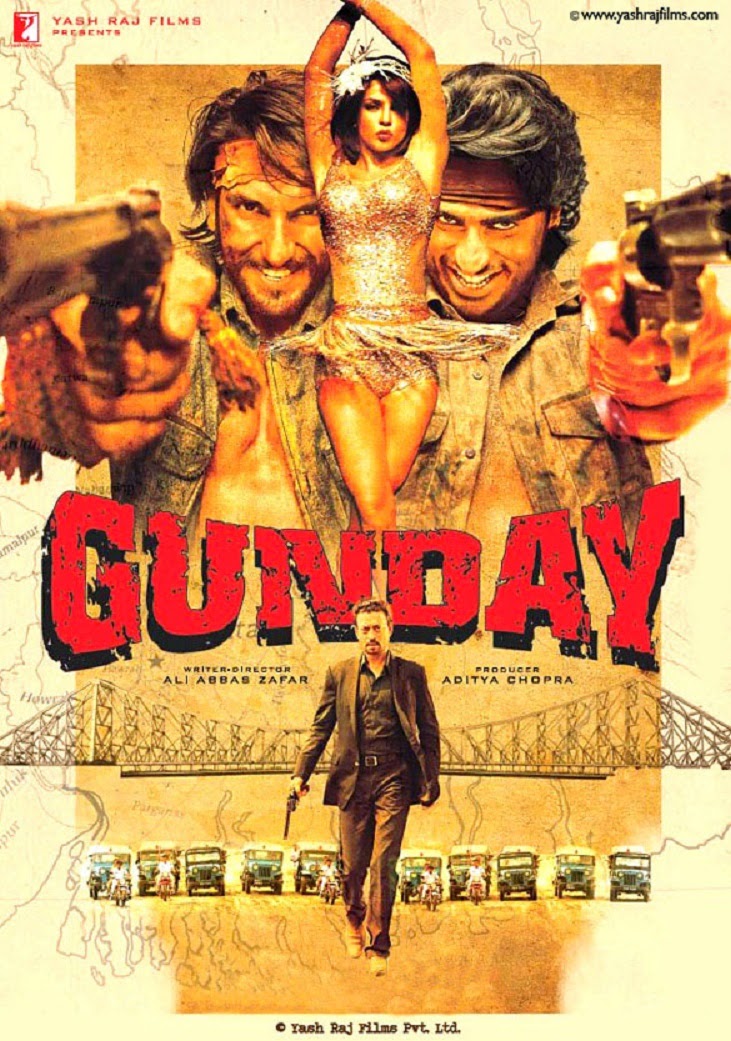
Gunday poster

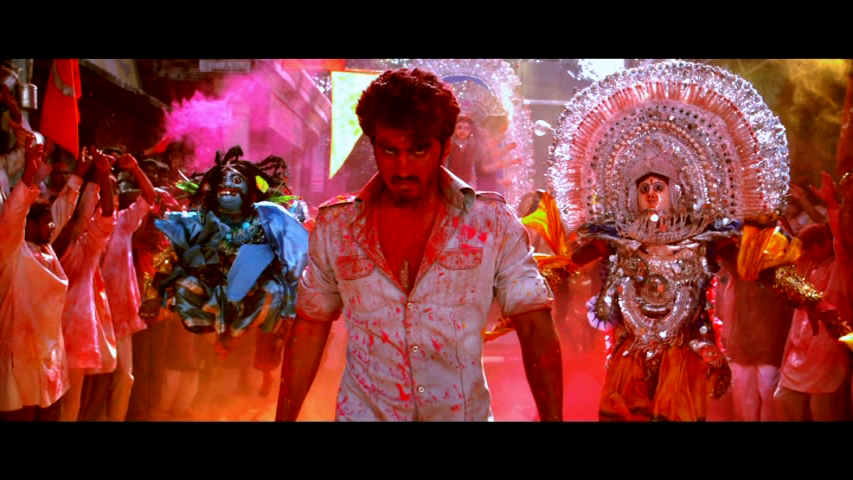
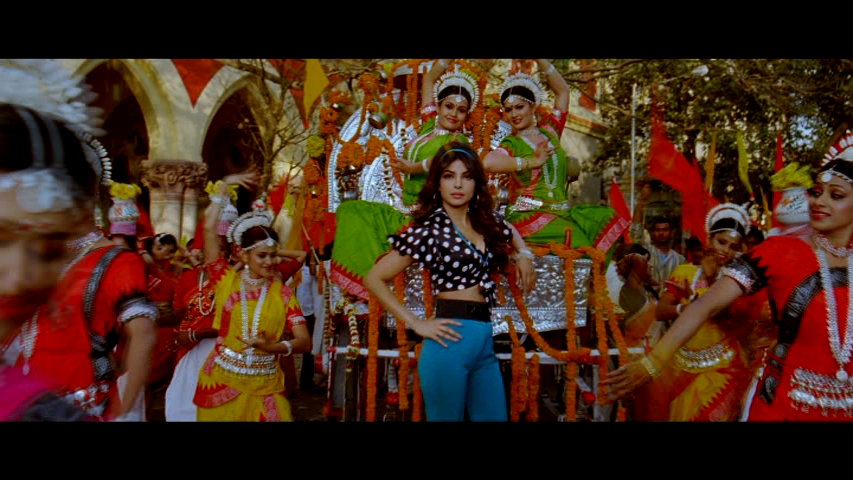
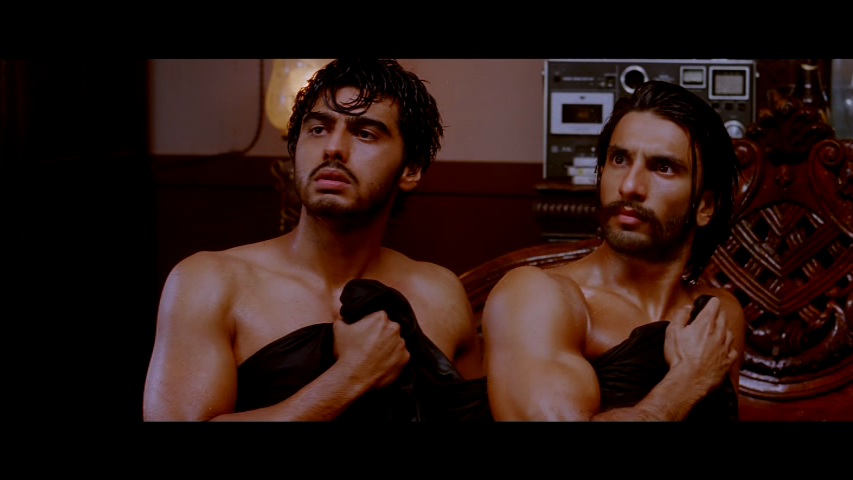
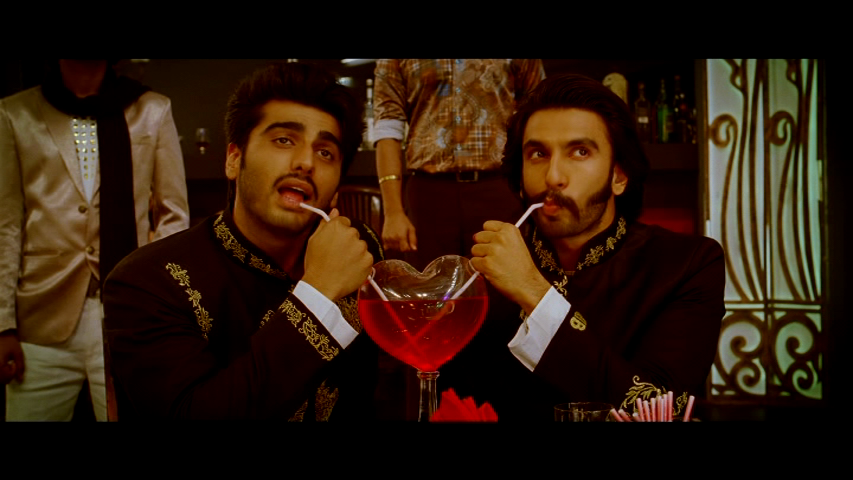
I missed Gunday in the cinema as I was in Tamil Nadu at the time of the film’s release, and it had finished its run by the time I got back to Melbourne.  It’s a film that I think would show better on the big screen to fully appreciate its boisterous lead men and riot of colourful masala, but it’s still an entertaining watch on DVD.  Ali Abbas Zafar takes us back to the buddy films of the seventies, although doesn’t quite ever manage to reach the same heights as The Shashitabh films of that era.  Still, buffed and oiled leads Ranveer Singh and Arjun Kapoor have a fine bromance while Priyanka Chopra adds glamour and style to the proceedings.  Add in some Irfan Khan and you have the recipe for a vibrant mix that is all the better for not being just another rehash of a Southern India film with a Northern twist.  There are some issues with the film; the excessive amounts of slow-mo and a bit of a lag in the second half being the major offenders, but otherwise there is plenty of colour, glamour and camaraderie to make Gunday well worth watching.

GundayGundayGundayGunday

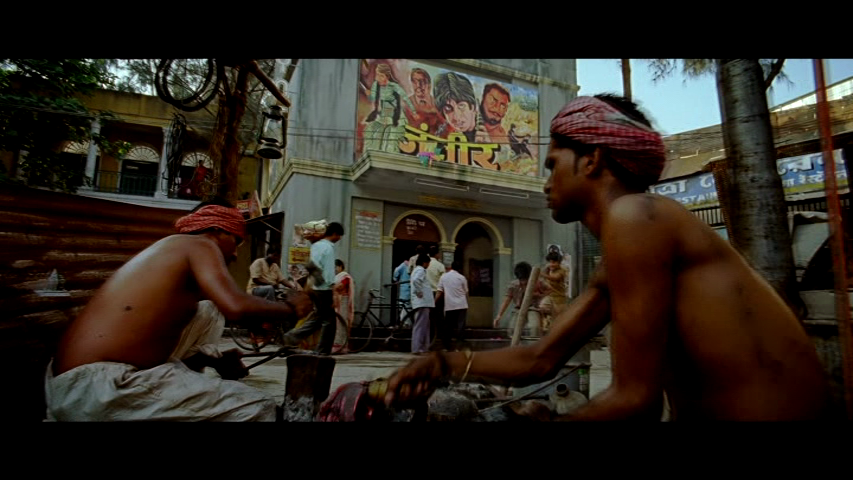
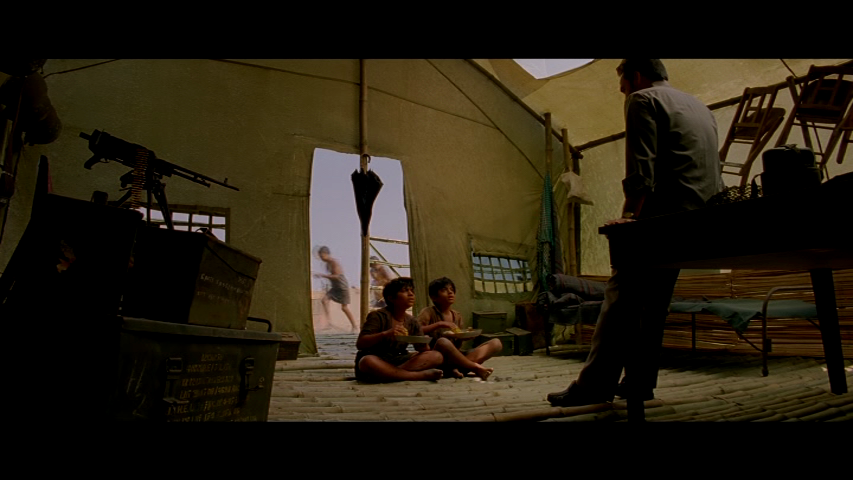
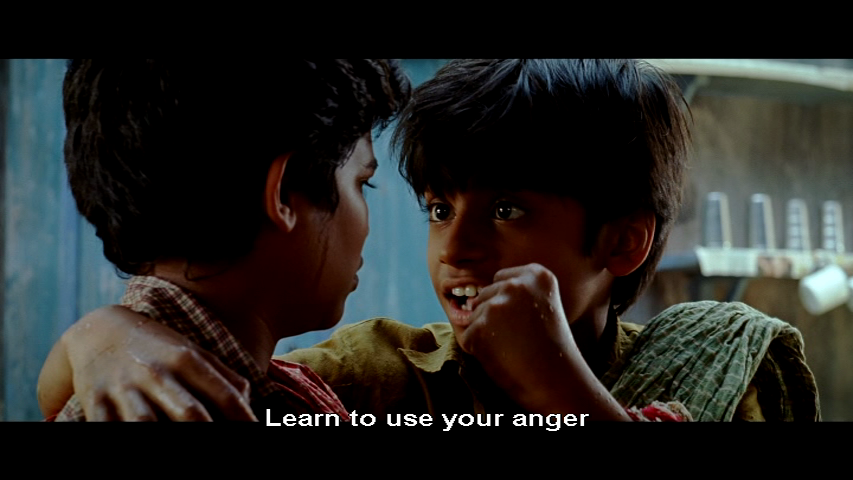
The film opens as young Bikram (Darhsan Gurjar) and equally young Bala (Jayesh V Kardak) seal their friendship in a Bangladeshi refugee camp when Bala rescues Bikram from a sleazy army guard.  The two mates have their feet set on the road to crime from an early age, acting as gun couriers in the camp and subsequently stealing and selling coal after they reach Calcutta.  Initially I thought that Ali Abbas Zafar was going to shine a spotlight on difficulties faced by Bangladeshi refugees in India, or perhaps focus the drama on child abuse, poverty or displacement due to war, but although he starts with a rejection of Bikram and Bala due to their background, apart from their own statements about the discrimination they have encountered there is little else in the film which follows this theme.  As in many seventies films, anything with the potential to be serious is glossed over and we quickly move forward a few years to the adult Bikram (Ranveer Singh) and Bala (Arjun Kapoor) and their current life of crime.
GundayGundayGundayGunday

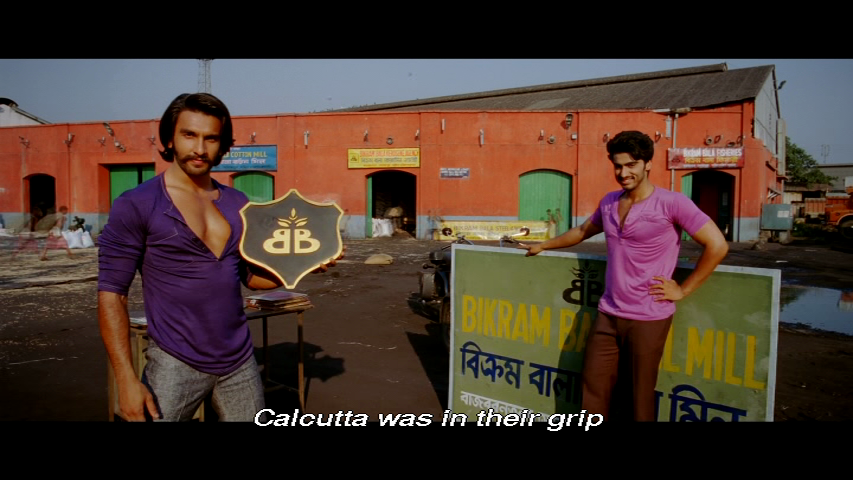
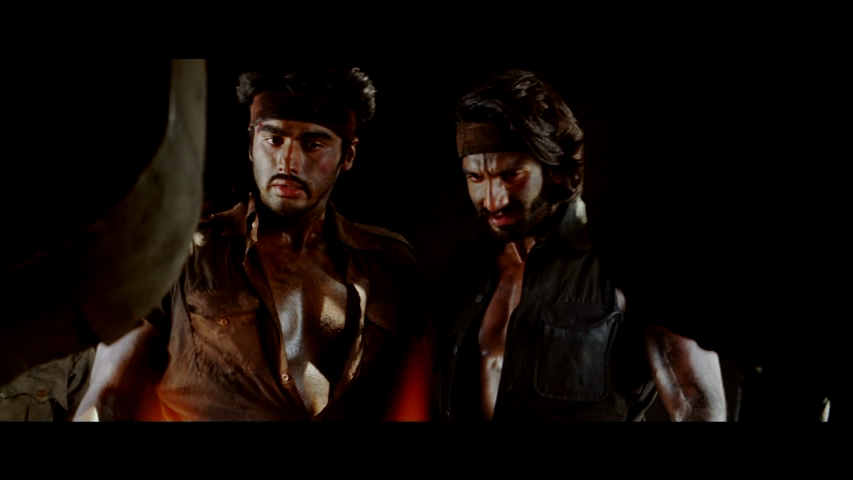
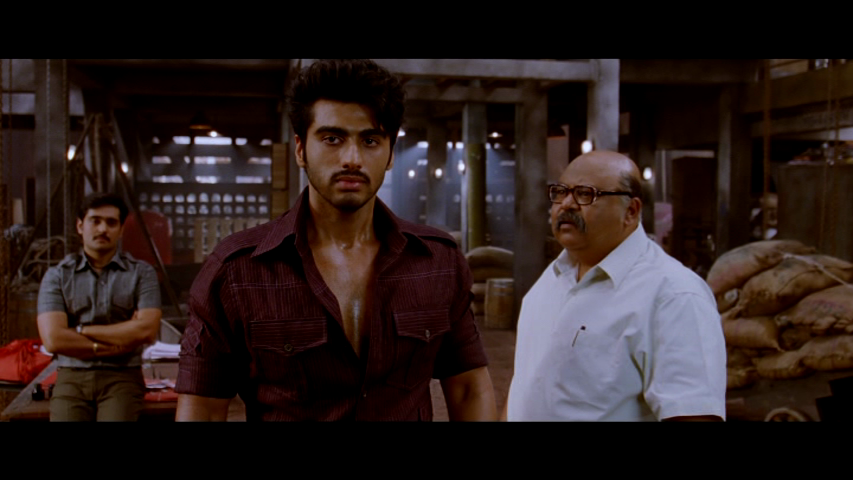
While Bikram and Bala may have started small, they have somehow worked their way up in the intervening years to become Calcutta’s biggest gangsters.  Although a gang is occasionally mentioned, their opening scenes show them working with each other to remove a local gangster and steal his coal.  There is no doubt that they are brutal killers, but as a useful side-line they finance schools and hospitals, cementing their ‘lovable rogues with hearts of gold’ personas.  The contrast is clear – dirty deeds are done covered in coal dust, while philanthropy comes courtesy of oiled chests, unbuttoned shirts and sharp white suits.

GundayGundayGundayGunday

So, having established that the friendship between Bikram and Bala is the defining feature of their lives, the scene is set for upheaval when they meet and both fall in love with club dancer Nandita (Priyanka Chopra).  But the romantic rivalry is not the only problem they face.  Assistant Commissioner of Police Satyajeet Sarkar (Irrfan Khan) is on their trail and searching for even the smallest sniff of evidence to lock the boys away for their criminal activity.  It’s a well-trodden path but mostly good performances from the cast make it a fairly enjoyable one to walk, while a few plot twists help maintain momentum.  Irrfan Khan is the standout here, and he is smooth and polished as the ACP while still maintaining a street cop vibe as he pursues Bikram and Bala.

GundayGunday

GundayGundayRanveer and Arjun have good chemistry together but individually Ranveer impresses more in his role as Bikram.  That’s partly due to Bikram’s more shaded character and Ranveer certainly has more opportunity to show off his acting skills, but he also has so much energy that he seems to explode off the screen.  It’s noticeable in the songs that Ranveer is putting in more oomph than Arjun, and the difference in energy levels causes a lull in the second half when the focus moves onto the characters as individuals rather than as a pair and attention is focused on Bala.

Bala is a more two-dimensional character and is limited by his depiction as headstrong and angry without a sense of burning injustice or any tempering balance to offset his constant rage.  There’s also a certain inevitability to Bala’s actions while Bikram seems to be more in control of his own destiny and frequently stops Bala from rushing off to do something stupid.  Bala comes across as just plain angry and Arjun’s performance occasionally slips into simply bratty and petulant in contrast to Ranveer’s slightly more mature and definitely more nuanced reactions.  However in the scenes with the two together, Arjun and Ranveer do make a likeable pair and the film relies on their jodi to keep the masala quotient high.

GundayGunday

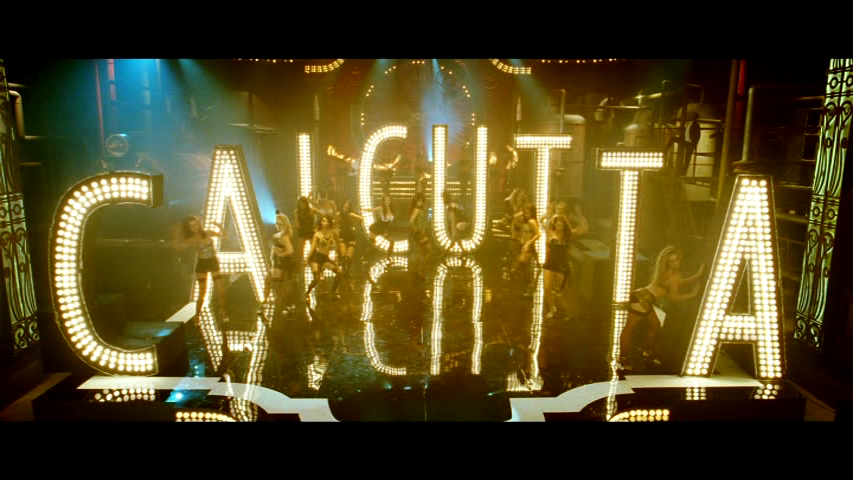
Priyanka Chopra looks amazing as the sultry singer Nandita, and Ali Abbas Zafar cleverly develops a contrast between her on stage persona and sari-clad and demure appearance when out shopping in the market.  It makes her seem more of a real person and less of a clichéd love interest although she doesn’t have much else raison d’être initially.  However as the story unfolds and she becomes more involved with Bikram and Bala there is more scope for her as an actor and she makes the most of her role in the second half.  Along with Irrfan Khan she appears as a very polished performer, while support stalwart Saurabh Shukla is effective in his small role.  The two young actors who play the gangsters as children are also impressive, hamming it up for the camera and generally fitting well into the seventies vibe.

GundayGundayGundayGunday

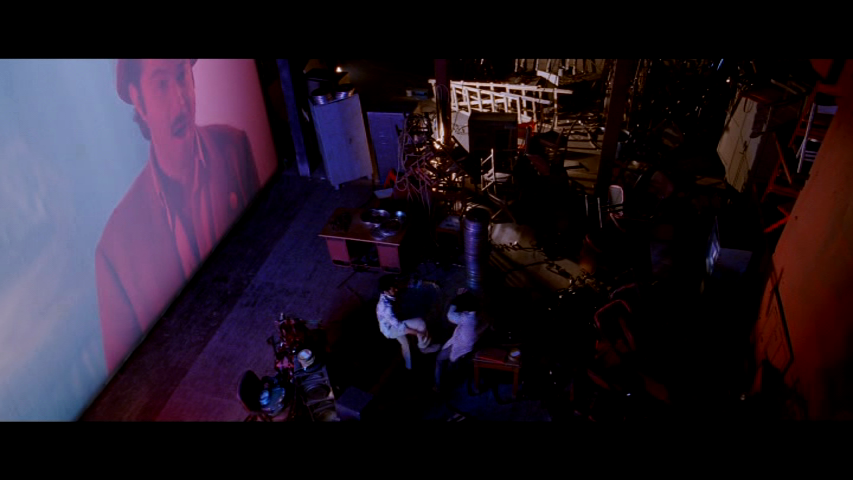
The masala feel of the story is enhanced by references to Sholay and Mr India, including a memorable fight scene to the backdrop of the later, while songs from Pakeezah and Disco Dancer in the background help settle the film firmly into its adopted era of the seventies.  The costumes also add to the cheesiness of the film, and Ranveer and Arjun are given plenty of opportunity to show off their manly chests in a variety of gaudy shirts.  Nothing to complain about there!

Although Gunday falls somewhat short of ‘classic’ masala it’s a good attempt to recreate the magic of seventies Bollywood and gives me hope that the genre is still alive and kicking.  Although the elements are all there, they don’t quite gel together to give the complete package despite good performances and plenty of onscreen chemistry between the main leads.  A little more depth to the characters would have helped, but Gunday is still a rollicking yarn that delivers plenty of action mixed up with a serving of dosti and betrayal – and that is plenty to be going on with. 3 stars.

Pistolwali (1972)

pistolwali

I often wonder how gangs of ne’er-do-wells get along before they reach the critical mass that attracts a hero to sort them out, and what it is that they do all day. Pistolwali doesn’t answer the first of those questions, but it does provide plenty to look at as you ponder whether what they do all day is make their own outfits and fight over the dress-up box.

K.S.R Doss’ Pilla? Piduga? was either dubbed or partially reshot in Hindi as Pistolwali. Both (unsubtitled) films are on YouTube so choose your poison. I have chosen to use the Hindi version as some actors and both Helen and Jayshree T appeared to be speaking Hindi and this film is all about the authenticity…Plus I understood more of the dialogue even if I couldn’t read the significant clue written in blood.

Like so many other Telugu cowboy themed revenge films, this one is set in a time and place that exists only in Telugu cowboy themed revenge films.The movie opens with Raaka (Satyanarayana Kaikala) and his gang attempting a train heist. A brightly clad cowboy (Ramakrishna as Amar) puts them out of business from his perch in a convenient tree. It’s cowboys vs cowboys and hat colour is not a reliable indicator of anything.

Maybe if we saw the floral sunhats being stolen from helpless old aunties it might be suitably Bad, but instead it just looked like a job lot guaranteed to brighten up every occasion. And there was that one guy who just painted his scalp silver. Reeka (Prabhakar Reddy) seems to have fewer marbles and fewer outfits than Raaka. He throws childish tantrums that quickly escalate into homicidal rampages. And that is the nicest thing I could say about him.

“South Bombshell” (according to the poster) Jyothilaxmi is Neelu. She is first seen cavorting in a daring swimsuit but later changes into equally fashion forward pantsuits. The villains go too far when they steal from the temple, and Neelu sets off in pursuit. She swaggers, shoots and curses like a hero rather than a heroine relying on womanly wiles, and generally she rescues herself. Jyotilaxmi wears some abbreviated costumes and gets a big dance number, but Neelu isn’t a girly girl. Neelu gets roughed up by her adversaries but how to say this… they don’t get rapey and creepy with her despite the allure of her midriff. She is a foe and they deal with her as a threat, not as a plaything. She is tough cookie and I suspect it would take a bit to outrage her modesty in any case. When Helen gives it her all in Hoga Sa Hoga, Neelu fills the time honoured role of hero looking like they’d rather be elsewhere. Although that may also be professional item girl rivalry.  Neelu has her own ideas and just goes and does her thing. Even if that includes falling through a trapdoor and wrestling a (sight impaired) tiger.  And she has a straightforward approach to relationships.

Pistolwali-Graceful

I am not sure it was desire for authenticity or just directorial cruelty that had her struggling to get on and off horses, but it looked like Jyotilaxmi did a lot of her own action scenes.

The viewer learns that Raaka is Neelu’s biological father long before she does.  Raaka raped Lakshmi and left her for dead before also maiming his friend and rival for Lakshmi’s love. She fell pregnant as a result and she and the baby were taken in by her now one-legged true love who seemed to think it was the right thing to do. He may have been grooming Neelu for vengeance as well, but he seemed like an affectionate and over indulgent filmi Daddy. Neelu was none the wiser about her parentage until quite late in the film. That might all sound a bit progressive so let me assure you that the way it was revealed to her made me deduct a lot of the good parenting brownie points.

Ramakrishna is technically the hero but Neelu overshadows Amar in all respects. He does an OK job and he doesn’t get in her way, but apart from some excellent outfits he achieves little of note. Although I did giggle at his inept dealings with the ladies. On the subject of costumes, it looks as though each main character was issued with one distinctive pair of boots and they pretty much wear them throughout. Raaka’s boots were particularly special and Satyanarayana Kaikala was suitably over the top to match. And the outfits did help a little with identifying characters in the many and varied fights and action scenes. K.S.Madhavan threw everything and the kitchen sink into the stunts. However I have to say that the plot is quite cohesive and to an extent, I would almost say logical.

The background music is a brilliant mish-mash of fuzzy surf rock and funky Hammond organ with classic cowboy guitar strumming and the odd slide whistle. The song set pieces are unashamedly random and the film has an embarrassment of item girls that all get a guernsey in featured numbers.
Jayshree T is always so perky, I love watching her dance. She always seems to wear more hair than clothes but I never see her as really skanky.


Helen and her creepy blue contact lenses appeared in a nightclub song and Jyotilaxmi got a dance in a fabulous Fauxgyptian inspired village set with what may be happy go lucky tribal cannibals. The camera is often at crotch level which is a bit confronting. But to be fair, the camera wasn’t just upskirting the ladies. Once seen, never unseen.
This is one of my favourite heroine-centric B movies from 1972 and Jyothilaxmi is perfect as the righteous gunslinger. See it if you have ever harboured thoughts of wearing a fur trimmed vest with fringed pants but weren’t sure how to accessorise, or if you want a primer on tiger wrestling for the modern lady. 3 stars!

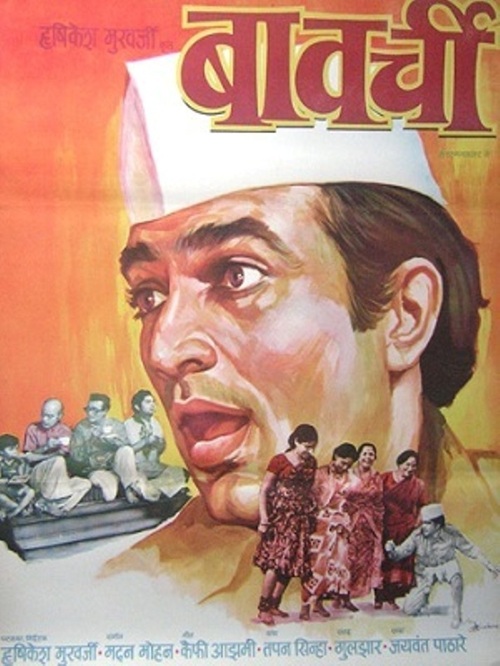
Bawarchi

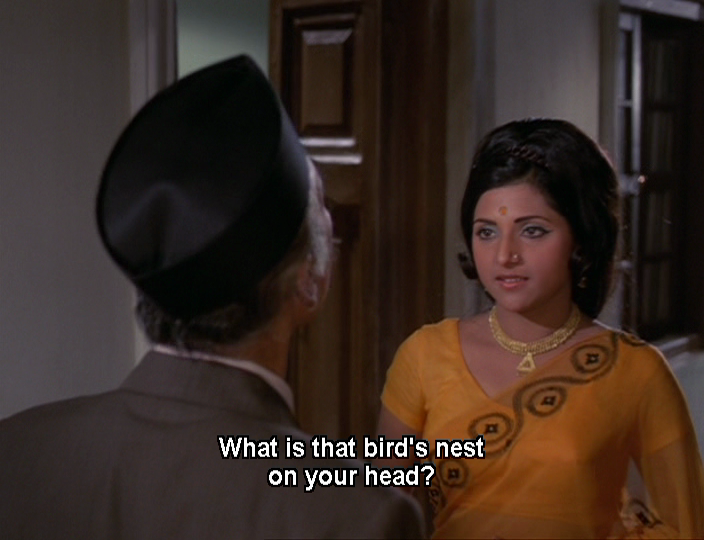
BawarchiBawarchi is simply a charming film and one that always makes me smile, even though it’s heavy on moralistic aphorisms and homely words of wisdom. Rajesh Khanna plays the cook who takes on the task of transforming a dysfunctional and argumentative family with his simple outlook on life; although there are numerous hints throughout that he may not be quite what he seems. The strengths of the film are the all-star cast who all fit into their roles perfectly and Gulzar’s well written dialogues that ensure the petty family disagreements are realistic and believable. Hrishikesh Mukherjee’s screenplay is based on Tapan Sinha’s 1966 Bengali film Galpa Holeo Satyi and Sinha is credited as the writer for Bawarchi. For anyone trying to track them down, both films are available on Youtube, although sadly the original Bengali film seems to only be available without subtitles.
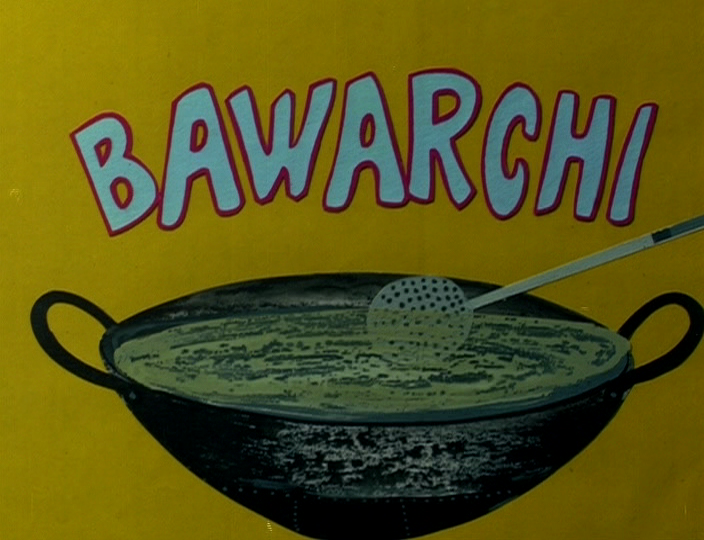
The story revolves around the household’s transformation from an unhappy and argumentative group of people to a caring and considerate family. Along the way there are songs, a dance competition and even a romance thrown in for good measure. I love the opening graphics which use the cooking theme to good effect, but there are only a few before Amitabh Bachchan takes over, announcing the credits against a rather oddly static red curtain, and carries on with a voice-over introducing the various characters in the drama. Firstly there are the fractious Sharma family members who live in the ironically named Shanti Niwas.

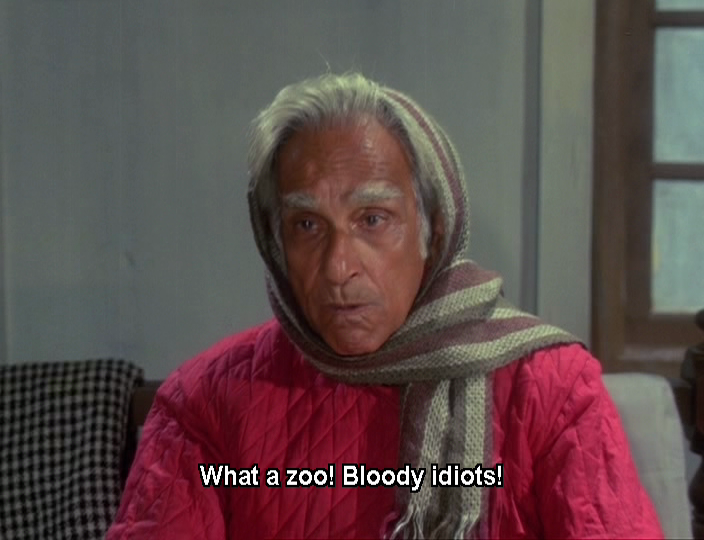
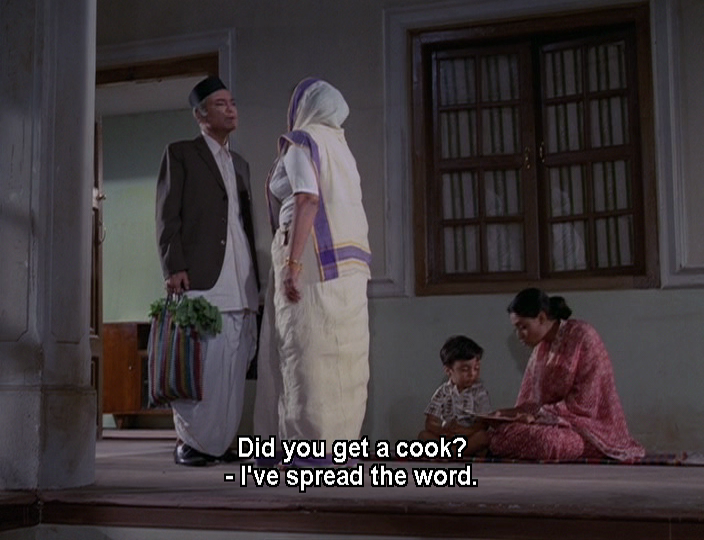
BawarchiBawarchiThe never-ending conflict in the house means that the family cannot keep their servants, which in turn leads to further discord and argument. As the story opens the family are in the process of losing their last servant – the family cook – who has decided to move on despite his new job paying less. The family is ruled by the ageing patriarch Shivnath Sharma (Harindranath Chattopadhyay) who complains about his sons, his daughters-in-law and the lack of a decent cup of tea in the morning.

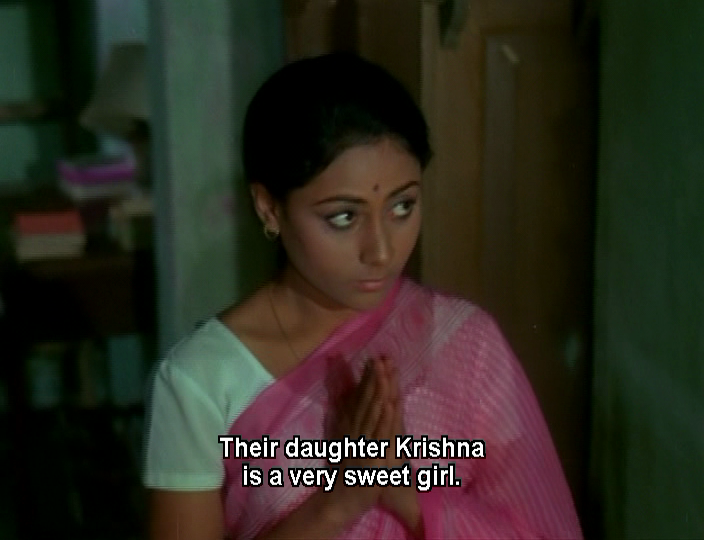
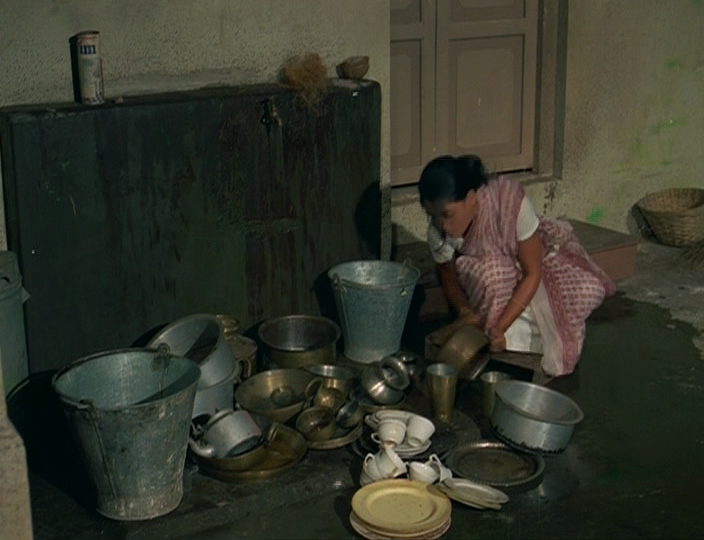
BawarchiBawarchiDespite his grumpy demeanour he is the only person in the house to think about the welfare of his late second son’s orphaned daughter Krishna (Jaya Bachchan as Jaya Badhuri). Harindranath Chattopadhyay is perfect here and his complaints are used to good effect to illustrate the trivial nature of most of the family disagreements. Krishna is at everyone’s beck and call, and yet she has a pleasant and sunny disposition which leads her to wait on everyone with a smile and not much thought of her own comfort. Just as well perhaps since no-one else thinks about her comfort at all.

BawarchiBawarchiAlso in the house are Shivnath’s eldest son Ramnath (A.K. Hangal), his wife Seeta (Durga Khote) and their daughter Meera (Mansiha). Ramnath is a harried clerk whose family life is impacting on his work. To combat his woes and possibly also to help him deal with his complaining wife and daughter he also drinks, although this actually makes him more pleasant to deal with, so perhaps it’s not entirely a bad thing. Seeta complains of her gout which makes her unable to help with the various household chores, while Meera is just plain lazy although she does get out of bed for her dance lessons.

BawarchiBawarchiShivnath’s third son Kashinath (Kali Banerjee) is a rather pompous school-teacher who lives in the house along with his wife Shobha (Usha Kiran) and their son Pintoo (Master Raju).

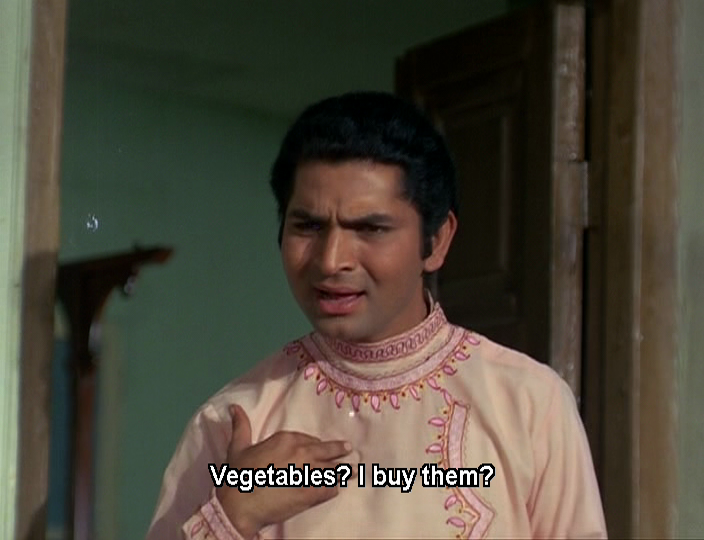
The last member of the family is Shivanth’s youngest son Vishwanath (Asrani) aka Babbu, a music director for films who, as Krishna so aptly puts it, copies English songs, adds Hindi lyrics and records them. It’s just one of the examples of tongue-in-cheek poking fun at the Hindi film industry which Hrishikesh uses to add some more gentle comedy, almost as if he’s letting the audience into a big filmi secret, even as he himself still sticks to type of BW conventions he mocks during the film.

BawarchiBawarchiBawarchi - ShobaBawarchiThe final two characters in the drama are Meera’s dance teacher Guruji (Paintal) and Krishna’s tutor Arun. Arun is Krishna’s love interest but their romance is only a small part of the story, although it does become more important towards the rather clunky end of the film.
The family squabbles are based on their own selfishness, and none of them wants to take on the responsibility of looking for new servants. Into this unhappy household steps Raghu (Rajesh Khanna) who just appears on the doorstep one day volunteering to be their new cook.

BawarchiBawarchiBawarchiBawarchiRaghu seems to be the answer to everyone’s prayers as he insists in a low salary, cooks amazing food and also has talents as a philosopher, singer, composer, and dance instructor to name but a few. Raghu seems to be a gift from the gods as his unfailing happiness and good cheer start to have an impact on the family, as does his willingness to tackle even the most demeaning of tasks.  This is a man who does the ironing – nothing else needs to be said!
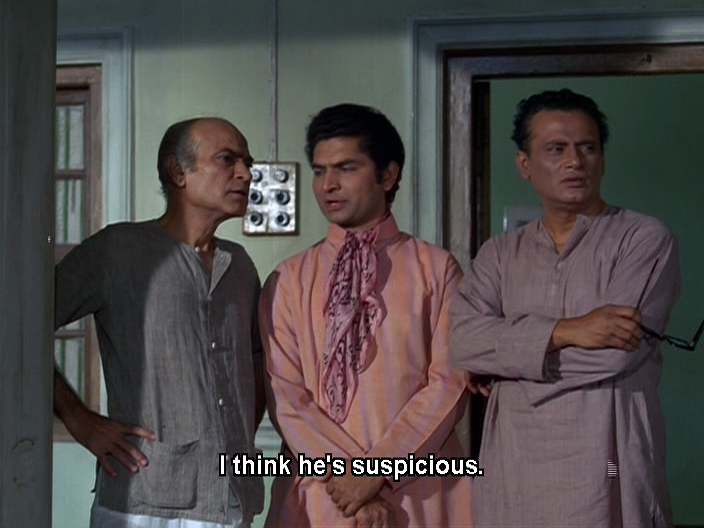
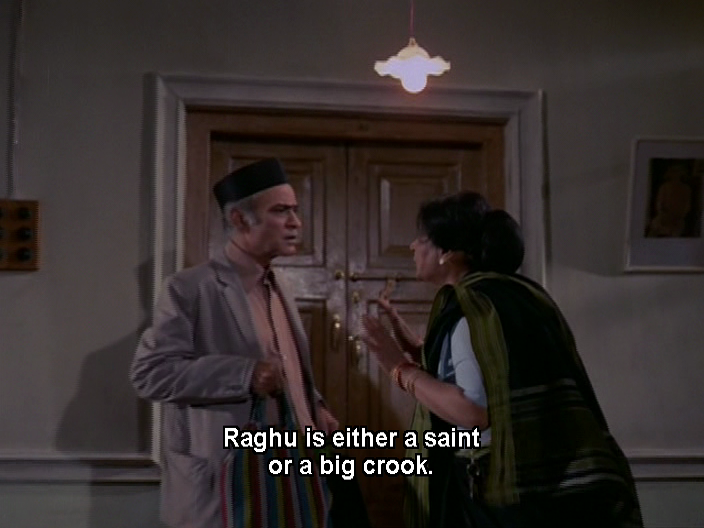
Raghu does however seem to have an unhealthy interest in the large box chained under Shivnath’s bed.This happens to contain the family jewels, and added in to reports of a thief in the area makes Raghu’s sudden arrival more than a little suspicious. However his ability to cook and his constant stream of knowledge about anything and everything soon make him indispensable to the family.

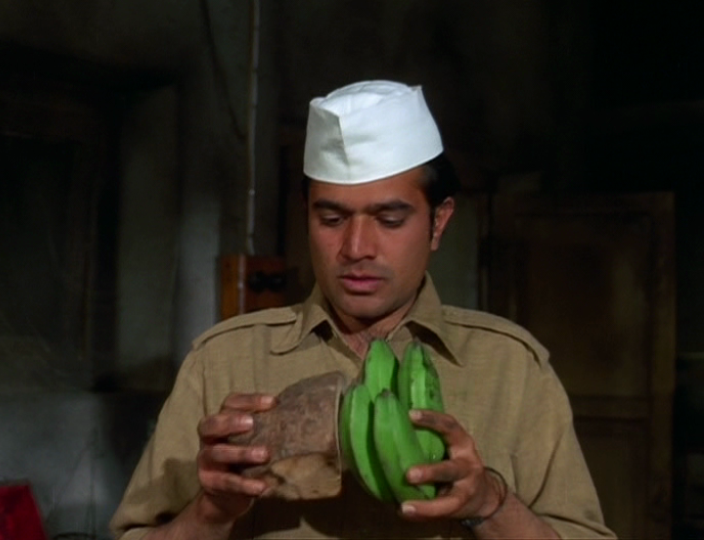
Bawarchi - happy songsBawarchiBawarchiBawarchiRajesh Khanna plays Raghu as a cheerful and somewhat bossy servant and he uses this relaxed outspokenness to stop the stream of advice from becoming too preachy. Despite his constant chirpiness Rahgu never seems too sickly sweet to be true, something which is helped by the suspicion that he may in fact be a thief and is simply putting on an act. Most of the films I’ve seen with Rajesh Khanna have been romances, but there is something very special about those few films where he doesn’t play the typical hero. Here he has an irrepressible twinkle in his eye and such a beautiful smile as he guides the family to an actual ‘peaceful abode’. It’s a wonderful performance and Rajesh Khanna is definitely a large part of why I love this film.

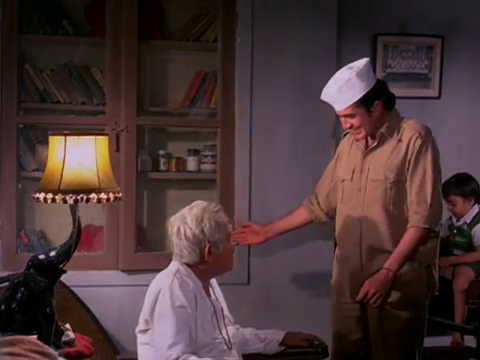
Just as amazing though is Jaya Bhaduri as she portrays shy innocence and naiveté with ease, and yet makes Krishna a normal down-to-earth person, trying to do her best with the lot she has been given. She’s sweet and natural with her grandfather, properly demure and respectful to her aunts but cheekily mischievous with her youngest uncle.  It’s hard to believe that this was one of the early films in her career as she definitely holds her own with the rest of the more experienced cast.

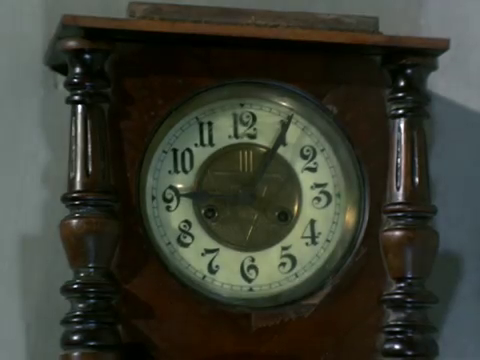
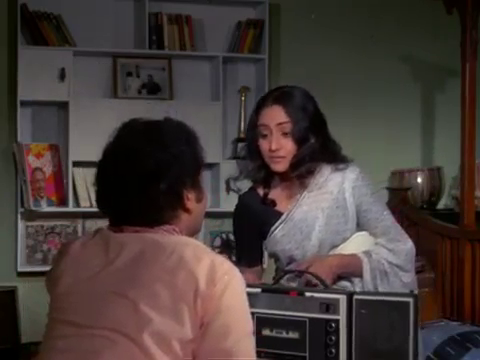
I also love the sets here which make the house look homely and lived in.  The locked case is impressive in it’s ‘look at me – I contain something valuable’ obviousness but there are also some wonderful lamps and clocks and Babbu has some very cool looking records on his shelf.

Bawarchi - the caseBawarchi - clockBawarchi - lampBawarchiThe only let-down in the film for me is the end, which seems a little too contrived as Raghu creates a rather unsophisticated solution to the final family problems. I feel it’s a little too simplistic considering some of the earlier scenes and the way Raghu’s character has evolved. However it’s a small quibble, particularly when the rest of the film is so enjoyable.  Bawarchi is definitely recommended for those times when you want to escape into a wholesome family drama that’s guaranteed to make you smile. 4 stars.