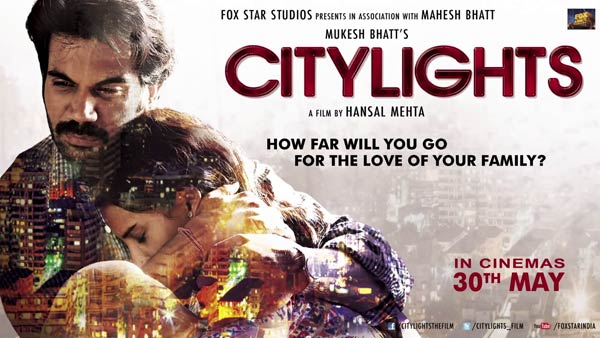
CityLights (2014)

CityLights

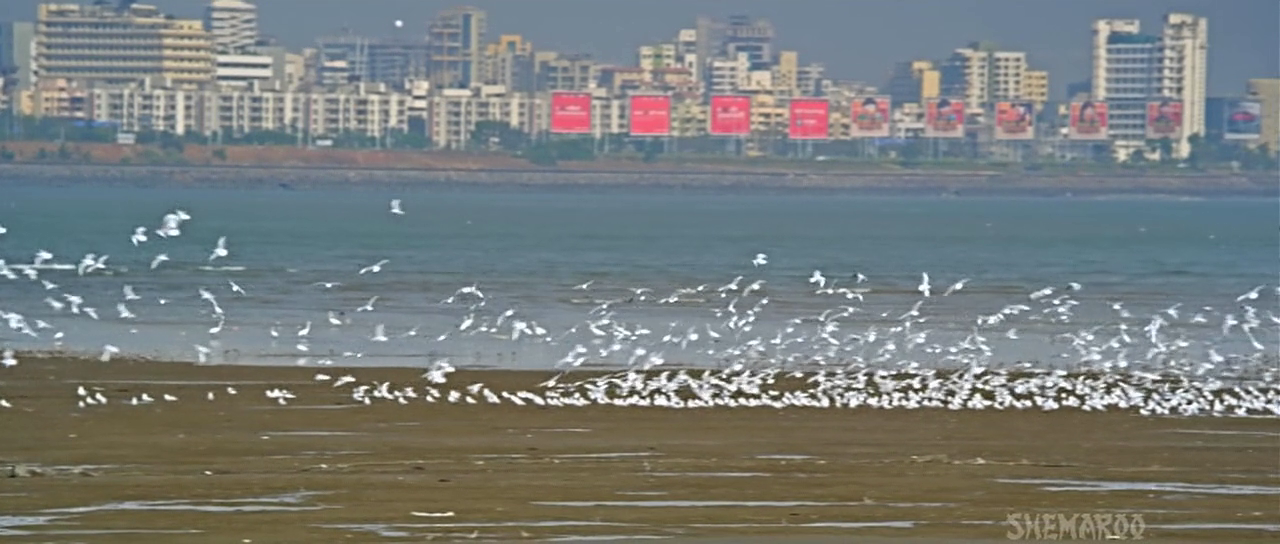
In his reworking of Sean Ellis’s award winning social drama Metro Manila, Hansal Mehta moves the story from the slum areas of Manila to the seedy streets of Mumbai. It’s a tale of grinding, remorseless poverty and the desperation such hardship brings, but there are some lighter moments too and the film morphs into a crime drama about half way through. City Lights is perhaps not quite as effective as the original in telling the story of a young naïve family and their move from the country to the city in search of a better life, but what the story has lost in adaptation is more than made up by the strong performances from the lead actors Rajkummar Rao, Patralekha and Manav Kaul.
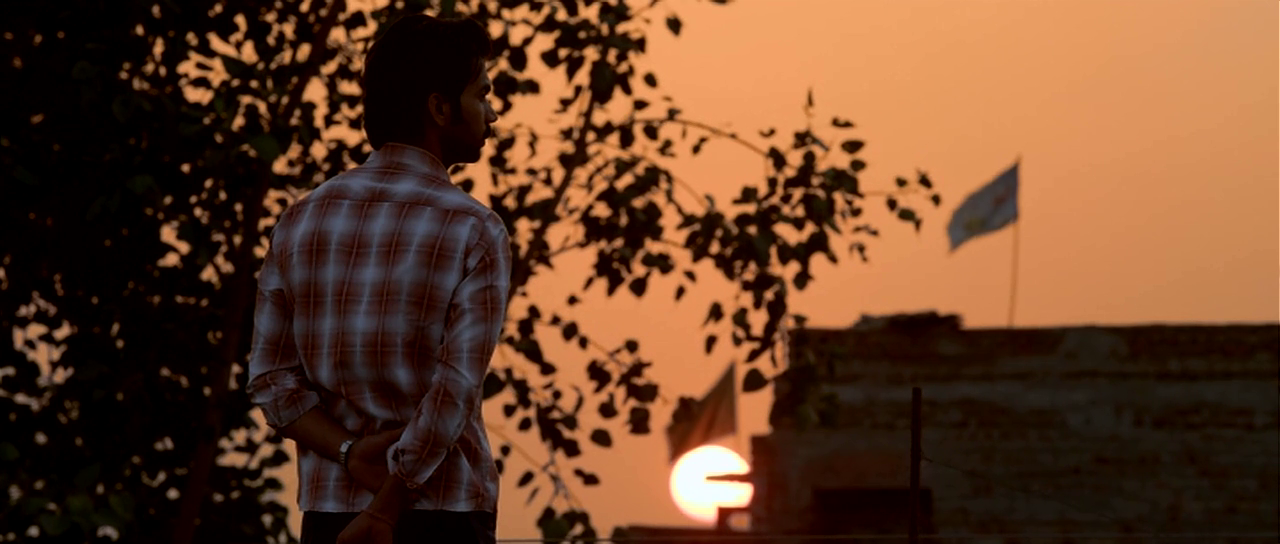
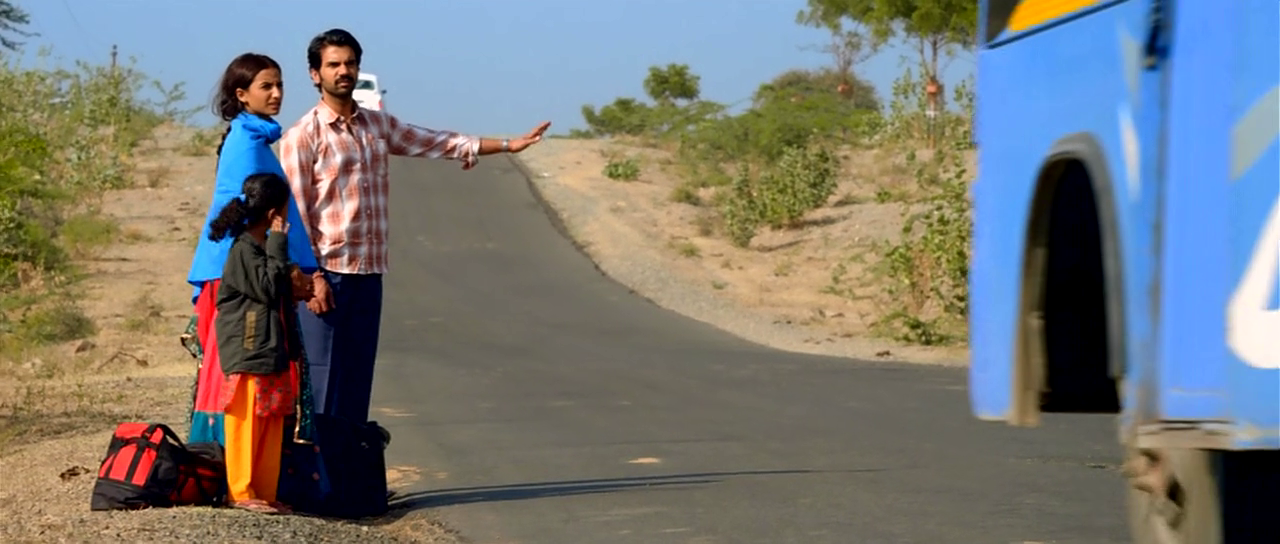
City LightsCityLightsCityLightsCityLights

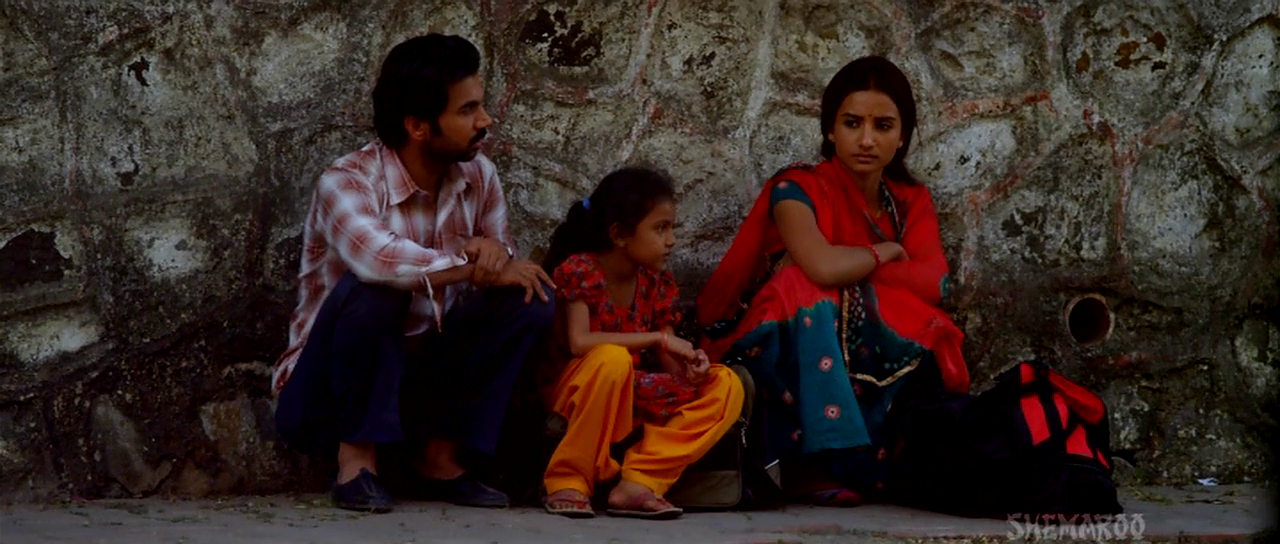
The story opens in Rajasthan where Deepak Singh (Rajkummar Rao) has a clothing shop in a small town that he is forced to close when he cannot afford to pay off his debts.  Since there appears to be no hope for any work in his village, he sets off for Mumbai with his wife Rakhi (Patralekha) and small daughter Mahi. Rakhi is reluctant to move, once in the city she seems less naïve than Deepak so perhaps she is well aware of the difficulties of trying to live in Mumbai, but ultimately she has no say in the decision. These first few scenes are full of light and laughter, and in just a few brief moments Hansal Mehta paints a picture of a happy family where there is a lot of love and hope that better days will come.

Deepak plans to meet a friend from his army days in Mumbai, but when Omkar fails to turn up at the railway station the family has to find their way in the big city alone. After being swindled out of what meagre funds they have, a chance meeting with a bar dancer leads them to a temporary refuge in a half constructed building.  While Deepak spends his days trying to find any kind of a job anywhere, Rakhi manages to get employment as a dancer in a bar. However this is not work she finds easy to reconcile with her conscience and she continually struggles with the leers of the men and their attempts to get more from her than she is willing to give. Deepak too is not happy about his wife’s job either, but the family is in such desperate straits that he has no other option but to let Rakhi work. Both actors do a fantastic job here of getting the depth of their emotions across using facial expressions with excellent body language and minimal dialogue.

Although their situation seems unlikely to improve, the couple never give up hope, even if it’s a very compliant and resigned kind of hope. There are no impassioned speeches or battles against authority here, but rather calm acceptance of their place in society and the belief if they just keep trying then eventually God will provide a solution for them. It’s frustrating viewing at times when Deepak is unable to push himself forward when looking for work and Rakhi cannot put aside her inhibitions to make more money when she is dancing, but they are simple everyday people and Hansal Mehta portrays them just the way they are. No more, and no less.

Their blind faith appears to work and things start to look up when Deepak gets a job as the driver for a security firm. The money seems good, and Deepak’s new partner Vishnu (Manav Kaul) even offers the family a place to stay. However Deepak comes to realise that his new partner had an ulterior motive for recommending him, and it is Deepak’s innocence and naiveté that got him the job rather than his previous army experience. Vishnu has a plan which needs the co-operation of his partner, and he’s been waiting for an innocent like Deepak to manipulate into following his commands. Deepak is reluctant, but when Rakhi loses her job in the bar it seems as if he has no other option but to go ahead with Vishnu’s plan if he wants to make sure his family survives.

Rajkummar Rao and Patralekha both suit the role of poor immigrants to the city. They both look skinny and malnourished with beaten down postures and downcast eyes, and both achieve that calm acceptance that extreme poverty seems to bring. It’s only with each other that they seem able to look straight ahead and even then Rakhi rarely looks her husband in the eyes. Both exude innocence effortlessly, even in the rather ham-handed treatment of their love scenes, and Rajkummar Rao in particular never puts a foot wrong. Manav Kaul is also excellent in a role that gives him plenty of opportunity to develop his character. He’s the man who knows the ways of the city, and is patently more sophisticated and knowledgeable than his partner from the country. He has a wife and a mistress, but despite his city veneer he also deeply resents the people whose money he delivers every day and despises his own circumstances. In his way, Vishnu is just as desperate and defined by his poverty, even if it’s not as extreme as that experienced by Deepak and Rakhi, and Manav Kaul does an excellent job with the characterisation.

The film does have a couple of songs which are either used over montages of the couple’s life in the city, or to highlight certain moments in their lives. The problem is that the music and lyrics are overly dramatic, particularly in scenes where the actors have already displayed plenty of genuine emotion and the music ends up detracting from rather than enhancing their performances.  The track below which plays over Rakhi’s dancing and Deepak’s drinking in a bar does work better, but most of the other songs are too loud and intrusive to suit the action. The film is also very dark at times; to the point where it is difficult to see what is happening let alone the actors expressions, while the final climax seems rushed and too contrived compared to the rest of the story.

These small issues aside, the film is an insightful look at the dark side of Mumbai and the realities of living in unrelenting poverty as Hansal Mehta successfully translates Sean Ellis’s story from the Philippines to Indian soil. Rajkummar Rao is definitely the standout as he once again completely immerses himself in his character and delivers an amazingly realistic and believable performance as he did in Shahid. Manav Kaul and newcomer Patralekha are also impressive in a film that raises questions about morality, ethics and poverty even if it does turn a tad Bollywood at the end. 3½ stars.

 

Toofan Rani (1985)

Toofan Rani-title

I’ve only been able to find this 1985 Hindi dub of the 1983 Telugu film Puli Debba, so I’ll keep referring to it as Toofan Rani. Actually, I have found this to be the case with a few Telugu B movies. For some reason the Hindi dubs have survived and are available online in reasonable condition, but finding an original is nigh on impossible. Why is this so? And forget subs. I had to make it all up as I went so please observe the usual Adventures Without Subtitles disclaimers that events may not have transpired exactly as I imagined.

K.S.R Doss has cobbled together another excellent masala entertainment chock full of his usual tricks, plus Silk Smitha, that guy Naresh who looks like someone else, Sarath Babu and assorted others, guns blazing, a handful of marbles, and some flashy karate moves. What is not to love? And Satyam’s soundtrack is funky and grungy, and just cheesy  and disco-fied enough.

Nalini and Manohar are childhood friends and spend a lot of time being dressed for school by their family retainers and frolicking in the sand dunes in their school clothes but don’t actually seem to go to school. Mahendra Chaudhury and his wife (Nalini’s parents) are murdered by a couple of goons who also set the house on fire to destroy the evidence. Side note – most of the victims have been instructed that the correct reaction to being shot is to throw your hands in the air like you just don’t care (jazz hands optional), so the death scenes can be strangely festive. The children are dispersed into the populace according to the Infant Distribution Laws of Masala Filmidom. Don’t worry if you miss this opening scene as it will be replayed several times.

Silk Smitha has the right confident physicality for Nalini, who is out to get revenge on the men who killed her parents and baby brother. Nalini has her childhood trauma flashbacks in lurid colour which may explain why her expression sometimes says migraine rather than revenge. But whether Silk is strutting her stuff in sparkly disco bike shorts or righting wrongs in a sensible khaki leather ensemble, she is ready for anything.

As she is in a film where anything can happen and frequently does, this is a very good thing. She even has to wear a saree. Killing is bad, but a heroine who looks at all the male posturing and just shrugs and takes control is good. I know I shouldn’t, but I cheered when Nalini shot someone. Naresh and Manohar were all for taking a punt on the court system but Nalini grabbed the gun and achieved her objective, refusing to be sidelined. And honestly if it had been left to the men, we’d still be chasing the baddies around the exploding hills.

Naresh is introduced at his college Karate championships in which he beats a variety of opponents with his Blue Steel approach to Karate. There is so much Karate face. It was almost as bad as actually watching Karate again. Naresh seems to be more than a bit of a narcissist. His house is full of huge pictures of himself in karate mode, including one above his bed. I was slightly sorry for Naresh as when he won the competition it sounded like only one guy bothered to clap, but maybe that was due to budget constraint in the sound department. Unbeknown to Naresh, Hariram who gave him the award was the guy who killed his parents and older sister. Do you see where this might be going?

Hariram’s daughter Archana likes Naresh. Unfortunately for the lovebirds his ma recognises Hariram and the match is OFF. Naresh broods in a most unbecoming fashion until she hits him with the truth. He then tells Archana and she tells her dad. No one really seems to understand the concept of oversharing. Hariram sends Uncle Fester to finish Naresh off. Karate ensues. In one excellent sequence Naresh kind of Harlem Globetrotters his way through a fight, using a book. Trouble is brewing!

Inspector Manohar (Sarath Babu) is now a grown up policeman, on the trail of a mysterious smuggler. He develops grave suspicions about Hariram Uncle’s revenue sources but has no idea his father was once a silver jacketed goon. Once his suspicions are finally aroused, he tries to investigate.

I could not fault Manohar’s enthusiasm for discovering whether his dad was faking paralysis but his methodology was a bit OTT, and potentially lethal. There is a vague romance between him and Nalini but it’s nothing to write home about, except they do seem to wear colour coordinated outfits. He doesn’t even twig that she is his childhood sweetheart until she tells him, and I’m not sure he should have been smiling goofily when she was about to do jail time. Maybe Manohar is just a bit rubbish at reading people

Doss pulls out all stops and throws in all the clichés from accidentally shooting your Ma, a significant birthmark, masala deathtraps, a concealed slide entrance into the lair, and skanky item stalwart Jayamalini dancing for “Arab” businessmen.

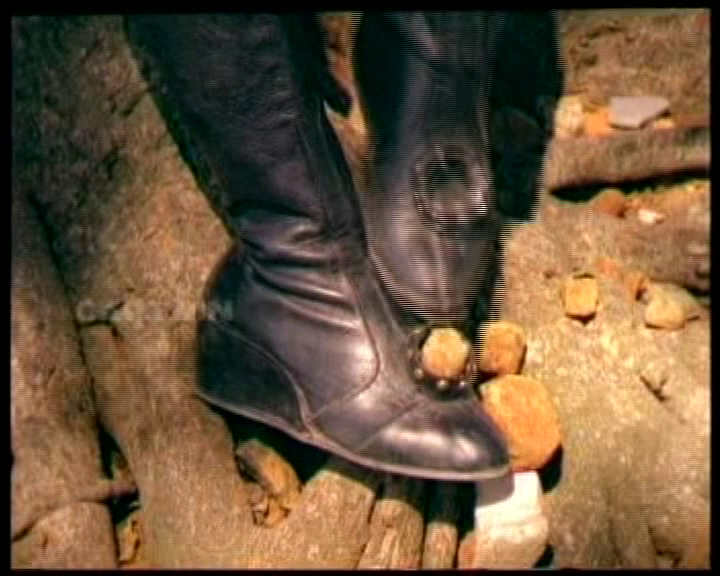
Hariram goes home from the club with that traditional filmi entertainment; the Man In The Boot. The man is allowed to escape from a well provisioned dungeon, with shirtless Simon now It as The Man In His Boot. If you were fleeing, wouldn’t you drop a stolen car off somewhere not outside your apartment? Luckily the apartment also houses Nalini! Even her boots are weaponised, and those powerful thighs can deliver a hell of a kick.

Simon attacks Nalini and in between bouts of acrobatic biffo in her stylish boudoir she tells him she is the surviving daughter of Mahendra Chaudhury and they are all In For It. He tells Hariram who tells the mysterious smuggler in the cave. Trouble is brewing! Again!

The finale is more exuberantly amusing than thrilling, but both Silk and Naresh backflip and ninja leap like crazy, there are explosions and dodgy disguises and the camera adds another layer of skewed perspectives and angles. And never forget those sensible wedge heeled weapon ready boots.

Toofan Rani-killer boots

I’m enormously fond of the Masala B Movie as they give a platform to the smaller stories and quirkier characters, all held together by the spirit of making it up as you go. Toofan Rani is loads of fun and I enjoyed seeing Silk carry a whole film rather than just do a typical bad girl dance and die. 3 stars!

Billu (2009)

Billu-title

So. If you are considering a leap onto the “original is best” Malayalam bandwagon and insist that I must see Kadha Parayumbol, please take a moment, breathe, perhaps go make a cup of tea instead. I’m perfectly happy with this film! What makes Billu work so well for me is that I have a high degree of awareness and appreciation of Shah Rukh’s career so the references and sly jabs at and by SRK really resonate. I wouldn’t have that to the same extent with a different regional cast, even if it is Mammootty in the big star role.

Priyadarshan directs a deceptively simple slice of life drama. Billu (Irrfan, in no surname mode) is a barber in picturesque Budbuda. Sahir Khan (Shah Rukh Khan in King Khan mode) is a massive movie star. Sahir suggests Budbuda as the location for the village scenes in his current project. Filming in the village was essential to the story as otherwise how would the Martian brother find his long lost sibling who was wearing a matching locket that beeped. I liked the interplay of real life and filmidom, in scenes when Sahir was enduring the plot narration, or when the villagers watched the shooting as though they were seeing life on Mars.

Mayhem erupts in Budbuda once the villagers find out that Billu and Sahir were childhood friends. Everyone wants to get an autograph, to get their brush with fame, and all the bigwigs demand that Billu introduce them to Sahir. But Billu repeatedly dodges the issue, even when his wife Bindiya (Lara Dutta) and annoying kids keep asking. Eventually the villagers start to believe he lied and accuse him of defrauding them of the gifts they had willingly pressed upon him.

Irrfan relies on his slightly oddball, rumpled, everyman persona for Billu and it works a treat. He comes across as good hearted but a little cynical, proud in himself but overwhelmed by the difference in status between himself and Sahir. Billu has told his family of a childhood friendship with Sahir, but is totally unprepared for how his village reacts when they find out. He is reluctant to contact Sahir, citing bygone time and the difference in their positions. But Billu’s inarticulate objections fall on fallow ground. It’s interesting that when Billu was negotiating with the school or others he could be quite glib, if apparently simple. Billu did go to the shooting and marvelled at the spectacle of Kareena’s duckface in Marjaani along with everyone else, but he flubbed all opportunities to speak to Sahir. I think he just wanted fate to intervene and take care of the logistics so he could see his mate without forcing himself upon Sahir.

Lara Dutta is beautiful but not too filmi glam as Bindiya. I could feel her frustration, not at being poor, but at having to be subservient and cop all the crap that comes with being seen as a beggar. Bindiya dreams of meeting Sahir and of the benefits that knowing a big star could give her family, but isn’t greedy. She just knows how things are when you’re the outsiders, and wants to take opportunities where they arise. Bindiya obviously thinks the world of Billu and it took a lot for her to actually ask him if his friendship was real. I thought it said a lot that there was no rancour in the conversation, and Billu still walked her to the school to hear Sahir speak. They had a solid relationship and as more of their backstory was revealed I had more appreciation for her.

Sahir is often absent from the action, but his presence permeates everything. I like SRK as a bad guy, and as a hero, but I especially like him as a hero who still has a healthy reservoir of cynicism alongside the cheesy entertainer reflexes (I also loved OSO). I enjoyed his character’s observations on controversy, and expectations audiences have, and his little encounters with Chaubey the guesthouse manager. Some dialogue sounded very similar to things Shah Rukh has said himself so I found the added element which may or may not be a reflection of his own views very appealing. Apart from That Speech he keeps Sahil quite sensible and vaguely amused by all the shenanigans unfolding around him, with occasional flashes of crankiness that may be caused by chafing from all the bedazzled outfits.

Sahir’s moment with Billu is quite beautiful, and so much better than the big build up that preceded it. It’s a performance I enjoy both for the overt manifestation of star power and the glimpse under the glossy veneer, and the expert manipulation by a master of crowd pleasing.

Shah Rukh’s own career is referenced extensively in posters on village walls, old movie stills and promo pictures, a montage celebrating Sahir’s stardom. The film within a film device also allowed some spectacularly silly and blinged out song concepts as they didn’t have to fit in with the plot as such, and could also use a parade of Shah Rukh’s recent-ish heroines. In every song there is a moment when he gets a goofy grin and he can’t help uncle dancing a bit despite the choreographers’ best efforts. I love it. Plus I think Evil Anthony makes an appearance.

Each shot serves to express the focal character’s universe, from set design to lighting to the framing. It’s a pleasure just to look at this film. Pritam made Billu’s songs and background music more organic than the filmi stuff, and they were accompanied by lush “real world” visuals lovingly captured by V Manikandan.

“Jaaun Kahan” is a bewildered meditation, while “Khudaya Khair” is a sweetly romantic dream that could star either your husband or Sahir Khan, mood depending. The village setting was glorious and while I’m pretty sure it was in Tamil Nadu I chose not to overthink the geography/language mash up.

The standouts in the support cast were Asrani as Naubat Chacha, a rare voice of moderation and always seeing Billu’s side, and both Om Puri and Manoj Joshi throwing their weight around as self-important and self-proclaimed VIPs. I also liked Rasika Joshi as the long suffering principal who turned out to be not such a bad old stick.

Would this film make you a Shah Rukh fan if you weren’t one already? Maybe not. But it is a departure from his Rahul shtick and there is enough of a gleam in his eye and a quirk to those famous eyebrows to make me think he had a bit of fun playing with his own image. And I’m a sucker for both sublime and ridiculous visuals. 4 stars!