Adavi Donga

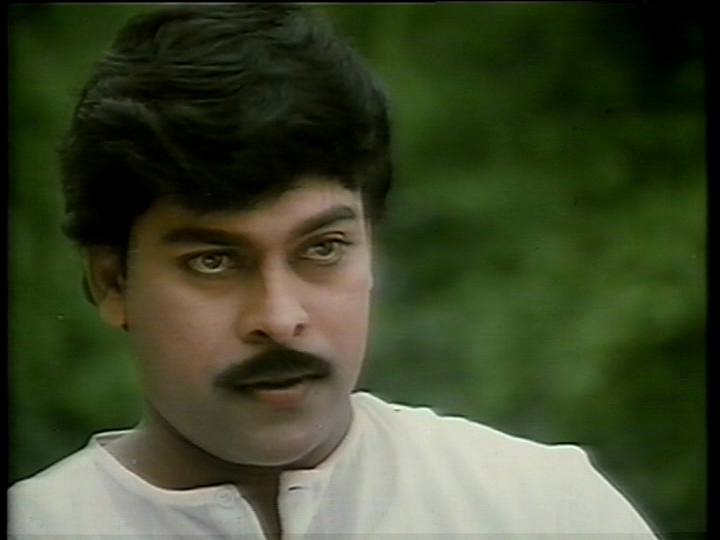
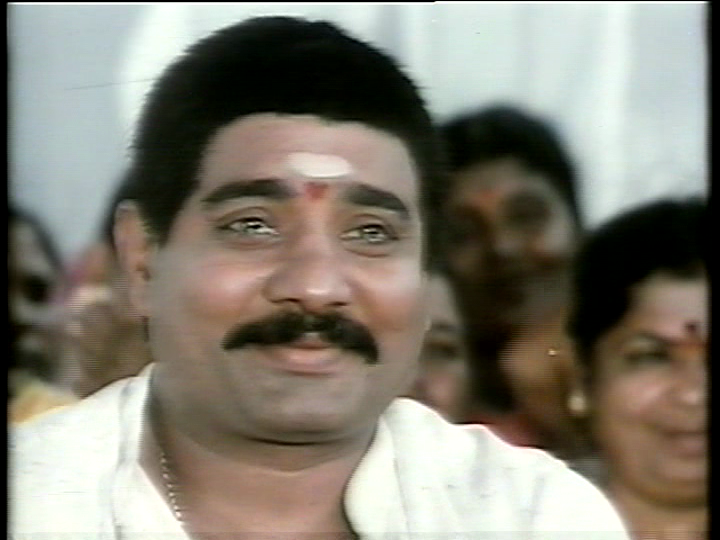
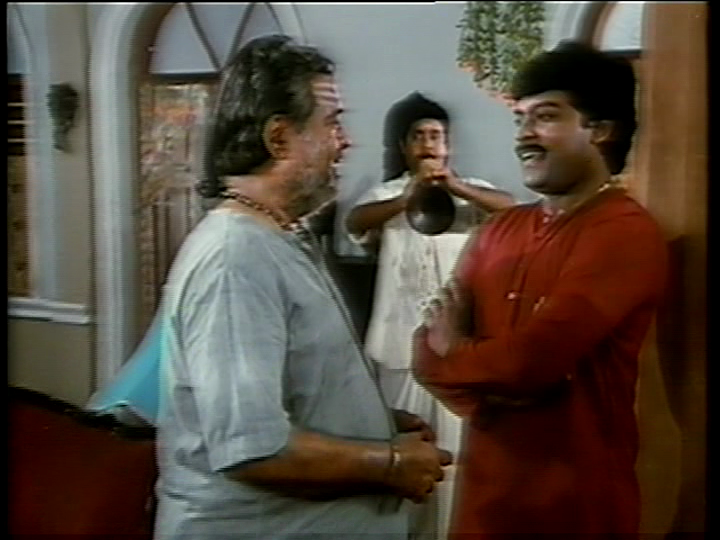
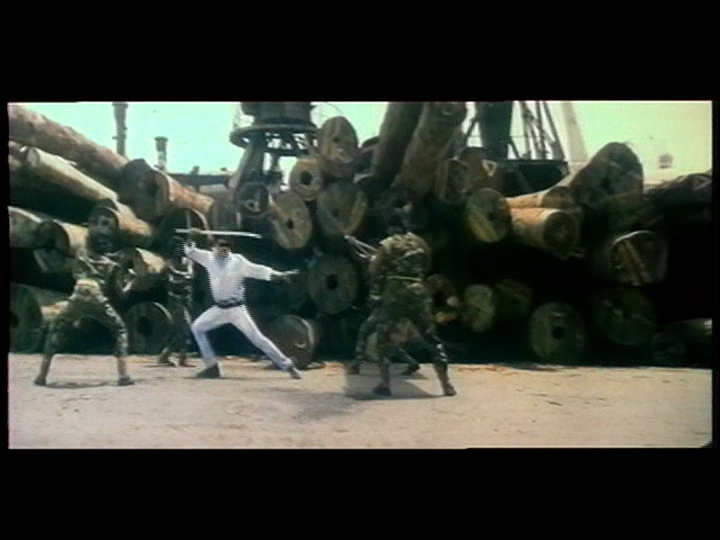
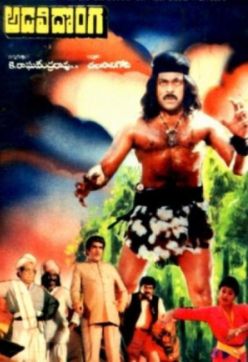
Adavi Donga is difficult to really capture in mere words. As I watched it, I kept wondering if Chiranjeevi was already the Megastar, because this is not the kind of film that I imagine would really enhance an actor’s reputation. This was an adventure without subtitles, but the visuals speak volumes. My  copy is a dodgy quality VCD so my images will not do it justice, but I have sourced some short clips to help bring Adavi Donga to life. No dear reader, don’t thank me yet!

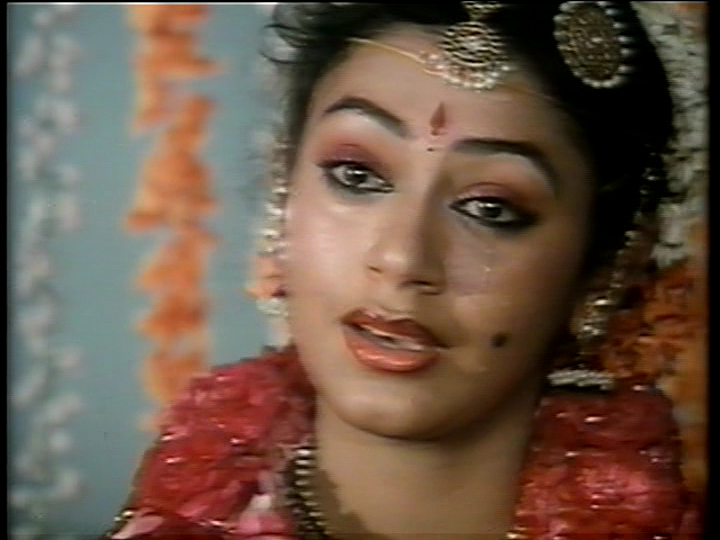
Sharada, always so elegant and striking, is Vasundhara. She opposes the local bad guy, animal poacher and underpayer of vegetable growers, Rao Gopal Rao, and his idiot son.

He is slimey and not always just in the comedic manner you might expect from the wigs.


Look at what happened to the last person who crossed him! And consider the well appointed lair and excellent lighting effects. He also has a gang of brightly attired poachers, and Allu Ramalingaiah as a shady advisor and factotum.

Rao Gopal Rao frames Vasundhara’s husband for murder, and at the dramatic height of that incident, she stashes her recently tattooed infant son in the forest fully intending to come back when it is safe.  Unfortunately for her, the lad is discovered and adopted by an elephant and taken into the jungle.

I was delighted to find that the jungle was populated by lots of exciting animals like tigers, lion cubs, monkeys, antelope, peacocks and… fluffy white bunnies.


Some things made me question where the rabbits fit into the food chain. They had no protective camouflage or colouring – Stupidity or fearlessness? Were they just a convenient snack for local carnivores or something more sinister?

Sharada is left alone and angry. Vasundhara is a strong woman with a vengeful streak tempered by her principles. Her policeman brother, played by Kongara Jaggaiah, refuses to believe that her husband is innocent and doesn’t seem too fussed about the lost baby. Of course the boy grows up to become Chiranjeevi, a Tarzan character with a wardrobe comprising several loincloths and an array of matching sandals, who lives completely unnoticed in the not very distant jungle.
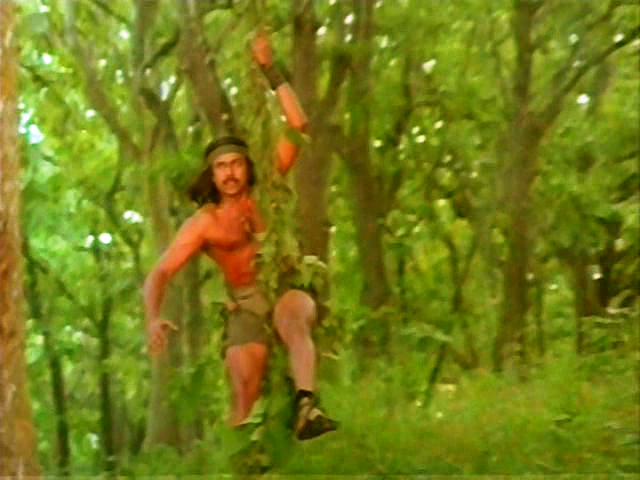
Radha has some strange ideas about jungle appropriate attire, although I guess pleather would be fairly hardy as fabrics go.

The poacher gang try to kidnap her, possibly in an attempt to force her to marry the idiot son. But Chiru cannot resist the piercing shriek of a maiden in distress and comes to her aid. She flees, leaving her cassette recorder behind. And that changes everything. I liked that the elephant mother seems appalled to find her human child dancing to some random disco rubbish. Sadly the damage has been done and Chiru goes in search of the pretty lady. This choice leads him into a world of floral curtains and scary reflections.


Radha certainly liked what she saw. The yodelling over Chiru’s arrival in this song is quite marvellous. Someone took their Tarzan tribute seriously.

Radha staged another incident to attract Chiru’s attention. She didn’t count on being chased into the jaws of a crocodile by a lethargic tiger, and of course Chiru arrives in the nick of time having been alerted by her robust screaming. I do like a good crocodile wrestling scene! He takes her to his treehouse and she seems to recover quite quickly considering her leg had been gnawed half off. But why didn’t Radha seem to notice the rabbits hopping all around her?

Chiru’s treehouse had an elephant operated elevator which at first surprised me – I mean, Tarzan needing a lift? How many city gals did he bring home? But then I realised the lift was possibly for the benefit of the bunnies who were sharing the penthouse treehouse with Chiru. Did the elephants have their own interpretation of bunny rug? What was their purpose? How on earth did the rabbits persuade so many creatures to do their bidding? Why do I care ?

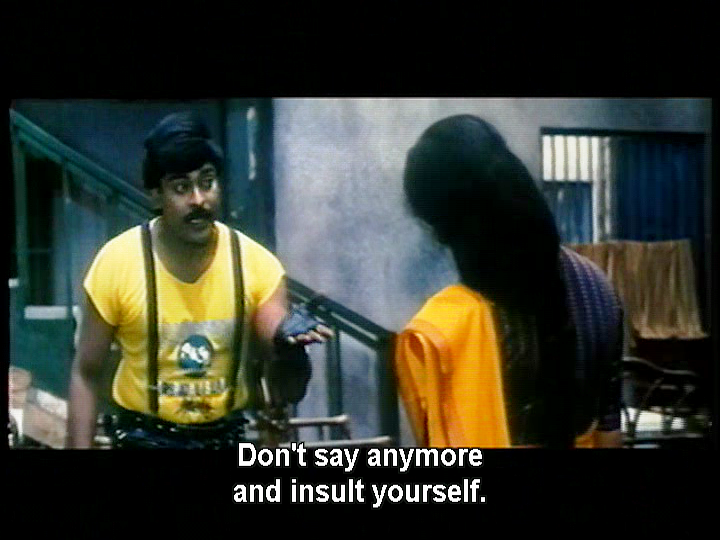
Chiranjeevi’s idea of flirting with Radha is amusing rather than smouldering. He steals her bra, covers himself in a leopard skin and crawls around growling, gets his monkey to take a Polaroid of Radha while she is changing clothes and generally behaves like a hormonal teenager.

The romance between Chiru and Radha draws the attention of Rao Gopal Rao. His machinations place Chiru in danger, which allows for some excellent vine-swinging, and the elephants intervene to go find Sharada and reintroduce her to her son. Quite why it took so many years to do this is not clear, but maybe they just weren’t ready for him to leave home. It took Radha, resplendent in pleather pedal pushers, to reunite the family with a clever visual demonstration of the parent child relationship.


They quickly adjusted to this new family dynamic and the elephants helped Sharada break Chiru out of police custody. She is a very resourceful woman.

After a bit of divine intervention and maternal coaching, Chiru becomes Kalidasu. He starts wearing suits and accessorising with scarves. He also quickly develops an amazing mastery of rhetoric. Sharada imbues him with her own strong principles and he is the perfect son.


She is still crusading against the poaching and other villainous goings on. I liked the villains lair, apparently accessible only via secret rail tunnel, or the truck loading bay. Despite all the secrecy, Sharada and the local ‘tribe’ seem to be able to wander in as they please.


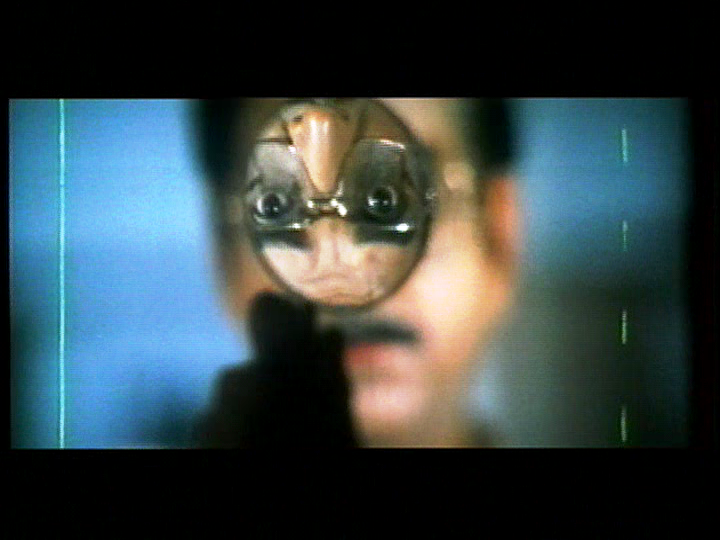
Naturally the bad guys refuse to be warned off by Sharada or by Chiru. He is outraged at seeing his former jungle friends sold for skins and tusks, although he was no tree-hugging conservationist  in his previous jungle existence. An assassin is sent to kill him. This role, if not the outfit, would have been perfect for Bob Christo. Please pay particular attention to the Wolverine style claws made from apple peelers.

Other pleasing details include the abundance of  fake ‘taxidermy’ in the villain’s house. What were they thinking?

The commitment to that theme continues into a song.

The songs (music by Chakravarthy) are kind of fabulous and completely excruciating.

The final showdown takes place in the villain’s lair and poor Chiru is faced with a terrible dilemma. Rescue his recently freed father from this?
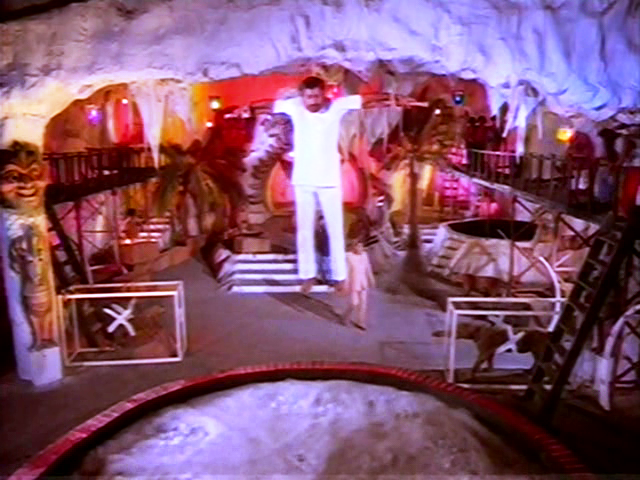
Or save his mother from this?
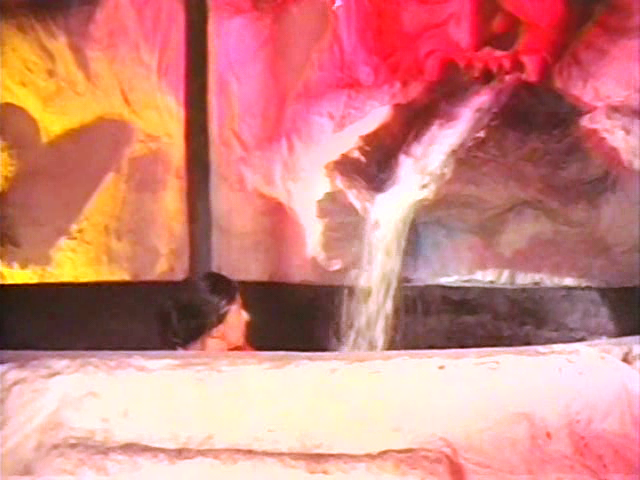
And how to help anyone when he is trapped? And with evil henchmen tearing his clothes off?!? Oh the humanity!


Director K Raghavendra Rao wraps things up neatly, if not terribly sensibly, and there is excellent utilisation of the elephants. There is so much fabulous wardrobe, a ridiculous plot that merrily disregards any inconvenient logic, and very appealing performances by Chiranjeevi and Sharada. A must see for Tarzan fans, Chiru fans, rabbit fans and anyone who ever wanted to know which sandals go best with a loincloth. While not a great film, this is So Bad It’s Really Very Good.  3 stars!
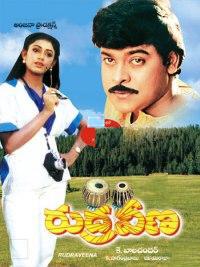
Rudraveena

Rudraveena is a quiet contemplative film, written and directed by K Balachander, about the responsibility of the individual in matters of caste and society. Chiranjeevi must have felt strongly about making this film as he produced it. I only wish someone would release a decent quality DVD with subtitles as it is just beautiful, and I know I must have missed a lot by not understanding the dialogues. Having said that, the things I don’t fully understand are more the cultural and social aspects, and that is usually not spelt out anyway. I am torn between wanting to write about every little detail and not saying anything about the story so you can discover it for yourself. I really do love Rudraveena and think it is one of Chiranjeevi’s best performances in an engaging and intelligent story.

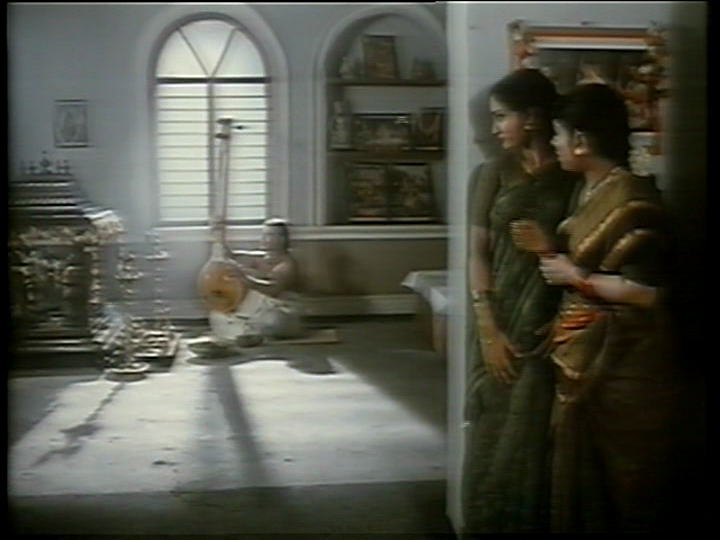
A man throws a banana towards a blind woman begging, and she accidentally knocks it away. A young Brahmin boy watches her struggle to find the fruit, but does nothing as he cannot touch her or the food that she has touched. He is troubled by her situation, but doesn’t act. Eventually someone does come to her aid, and he also gives the boy a lecture on the futility of mouthing a mantra if you do not act in accordance with the values contained in the prayers. This incident infuses the story, told in an extended flashback as Suryam (Chiranjeevi) shows a visiting minister around the apparently perfect village.

Suryam is that boy all grown up – the son of famed musician Bilahari Sastry (Gemini Ganesan). Suryam is a gregarious fellow, interested in what people do and how they live. He loves music and expresses his feelings through song, seeing it as a way of sharing and giving happiness.

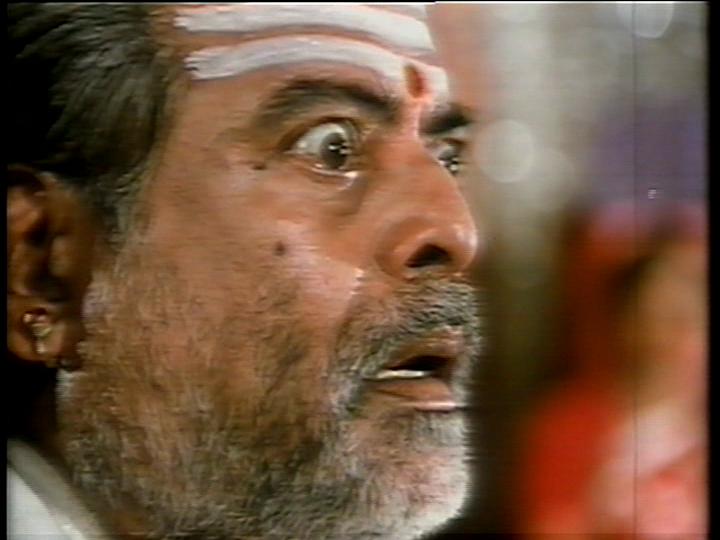
Music in the Sastry home is ceremonial, devotional and not for fun or for the people. The father is very traditional and conservative, living in strict adherence to caste rules. Bilahari Sastry raises his voice in song to drown out the pleas of someone needing help, and would rather be on time for a concert than help a dying commoner. And he pulls this face a lot:

He is a difficult man, but not a total monster. It’s obvious he has done the best he could after his wife died, and he misses her guidance or support.  There is already tension in the family purely because of the different personality types and this is heightened when Suryam meets Lalita (Shobana).

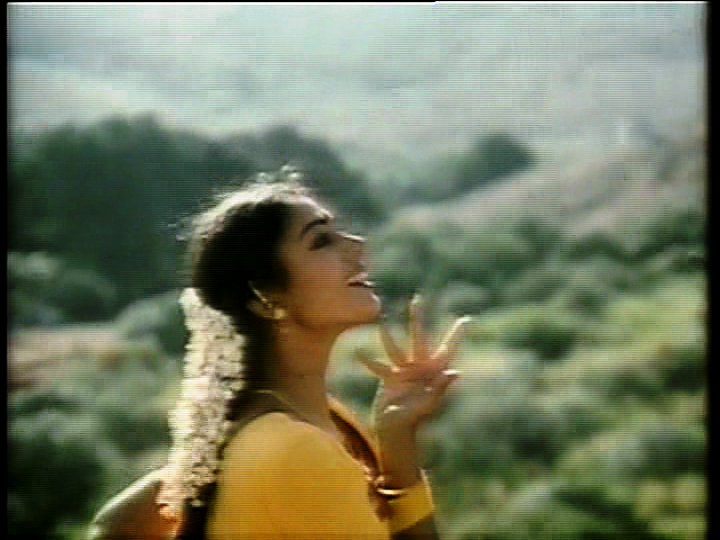
He sees her dancing on a hillside opposite a temple, ogled by men from their sacred vantage point. I think Lalita makes a point about men worshipping goddesses when women are excluded, and whatever she said it makes an impression. Suryam has a statue placed on the hilltop and is surprised to see the villagers lined up for pooja within shouting distance of a temple that didn’t include them.

Shobana has good chemistry with Chiranjeevi and although I know there is an age difference, it isn’t obvious and they look great.  Lalita isn’t a pushover to be impressed by the Brahmin boy and he doesn’t act entitled. Having the lower castes represented by the beautiful Lalita could have easily fallen more into the fairytale romance but thanks to some good writing and the excellent performance by Shobhana, Lalita is strong and individual.

Their shared love of music is another form of communication and bonding that helps this seem like a potential life partnership rather than a fluffy instant romance. Illaiyaraja’s songs are set into the narrative so they are part of the story, and the minimal dancing is in character for Lalita and Suryam so it all flows beautifully. The music is a real highlight of Rudraveena.

Their flirtation is fun as Lalita keeps Suryam guessing, which he kind of  enjoys,  and they do all those little things that are only really funny for people in the giddy stage of love. She’s not all cool and calm though, as she changes her sari five times before he arrives to visit. Lalita refuses to be cowed by Sastry’s disapproval and is clearly confident in her relationship with Suryam.

Lalita’s family are the opposite of the Sastrys. When Suryam arrives he is greeted with hugs and an extemporaneous welcome song introducing each family member and what they were doing. It’s an attractive environment for a boy who feels stifled at home.

Not that home life is all grim. Suryam confides a little in his sister-in-law about his love and she mocks him gently even as she is pleased to think he might soon marry. Prasad Babu gives an appealing performance as Suryam’s mute brother.

He is an observer of the tension in the house, and he uses music to force communication or at least momentary harmony. He is also a kind of moral compass, miming to his father that donning the trappings of religion doesn’t make you close to god if you don’t also do the right thing.

Bilahari will not tolerate what he sees as Suryam’s rebelliousness. As punishment, he takes on another student and promotes him to favoured disciple status. This guy is a fraud who pretends to be pious and dedicated but really he just wants to marry daughter Sandhya (the beautiful Devilalita). That relationship is quite nice, but the character is there more to be a contrast with Suryam who is outwardly not the ideal son but is a good and honourable man. Of course, Bilahari learns of his error eventually but he is a proud man and the damage has been done.

After yet another disagreement Suryam leaves the family home, but he doesn’t just marry Lalita and live happily ever after. Their wedding is interrupted by drunken louts out to cause him trouble, including an uncharacteristically nasty and dramatic Brahmi.

Suryam stops the ceremony rather than allow Lalita to be insulted further. He takes on a challenge to reform the village before he can marry and Lalita supports him despite her heartache. I think she is sympathetic partly because she wants to be certain that Suryam is sorted before they start a life together.

I liked that Lalita was active in the reforms, showing that a young low caste woman could be a leader too. Suryam sees that people don’t always have the motivation or resources they need, and he can help. It’s not as preachy as it sounds as he is a doer not just a talker, and is as likely to be driving a tractor as making a speech. It’s clear that he feels his position requires him to do something to raise people up rather than keeping them down. And I think there’s also a bit of wanting to show his father who was right.

Yes it is a little heavy handed at times but the romance and more fun elements provide the necessary balance.  The ending made me a little angry at Sastry jumping on the bandwagon, but you cannot get a clearer message than this:

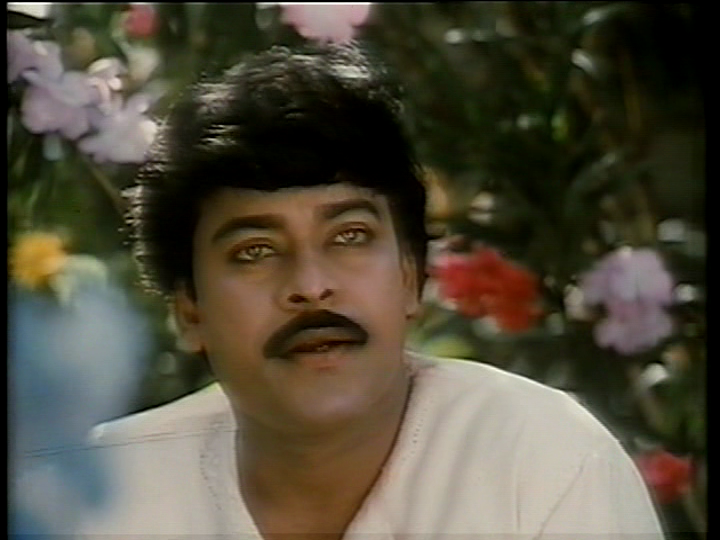
Rudraveena says people can create change by doing something in their own community, and it doesn’t have to be on a grand scale to achieve a great result. I like that philosophy and it is as fresh and pertinent today as it was in 1988. All that thought provoking material, and a sweet love story to boot. And really, if you can resist Chiranjeevi in this role I just don’t know what’s wrong with you. 5 stars!
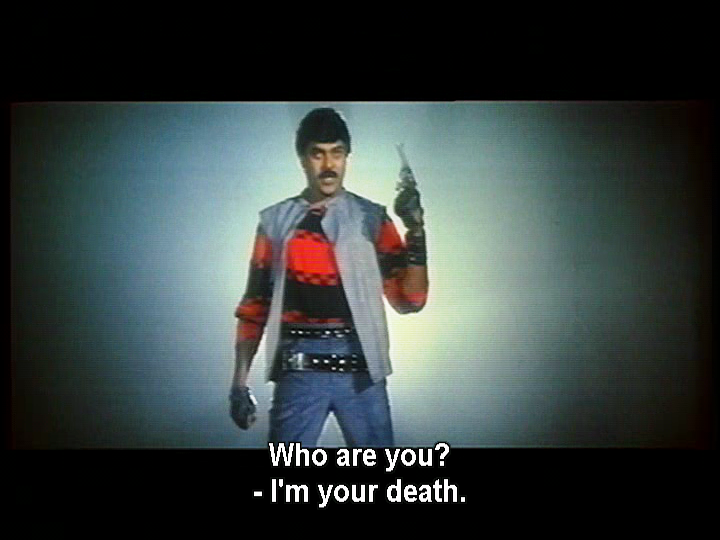
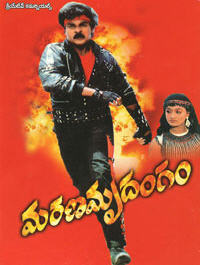
Marana Mrudangam

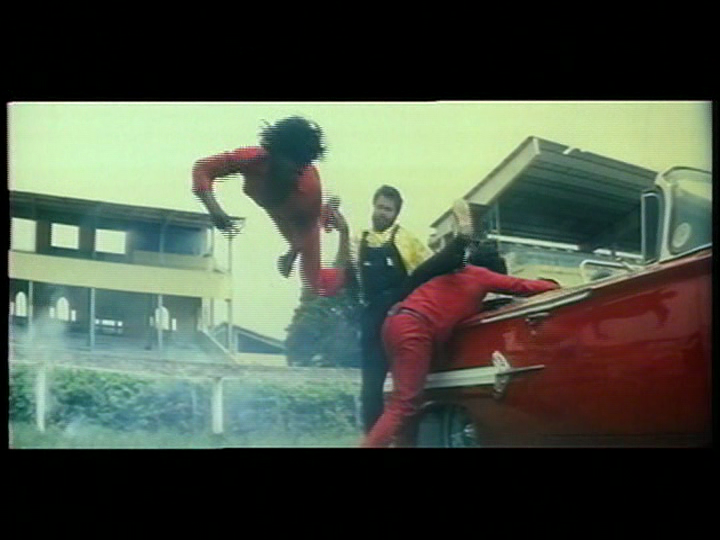
Marana Mrudangam is Chiranjeevi in his mass hero avatar – meting out justice, charming the ladies, fighting evil-doers and dancing up a storm. I never cease to be amazed by A Kodandarami Reddy’s imagination and Marana Mrudangam is full of crazy details, wild schemes, stunts and an array of dodgy looking props. Plus – Ranjeet!
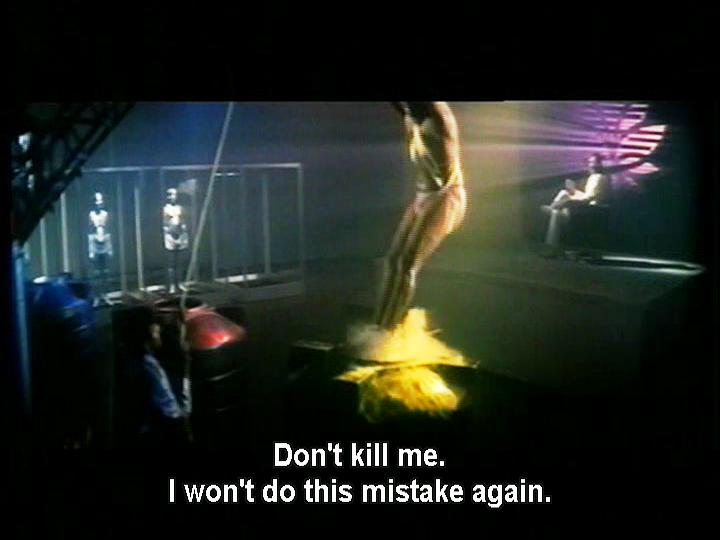
Johny (Chiru) and Billu (Nagendra Babu, Chiranjeevi’s brother) run a small restaurant/bar.

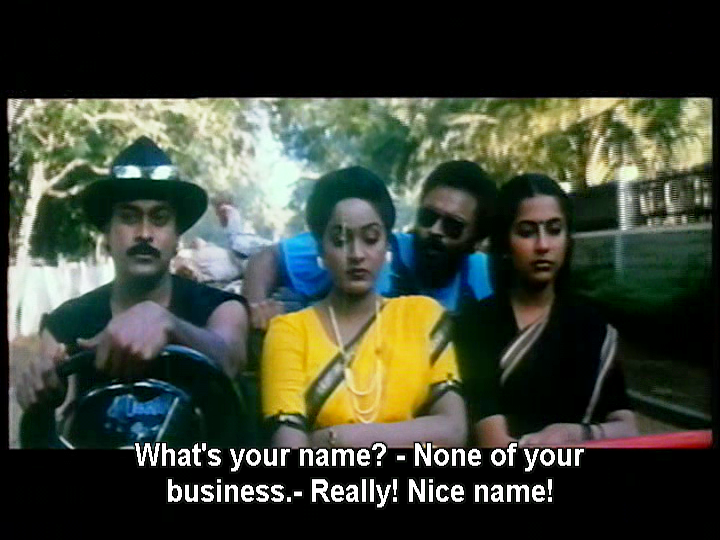
One day Johny stops to help Utpala (Suhasini) and Anusha (Radha) when their car has broken down. Utpala is a nurse, and Radha is a high powered manager of a hotel that also seems to trade in import export.

Two girls, two guys – it’s a love triangle waiting to happen. Utpala falls for Johny who has fallen for Anusha while Billu seems to fancy Utpala a little.

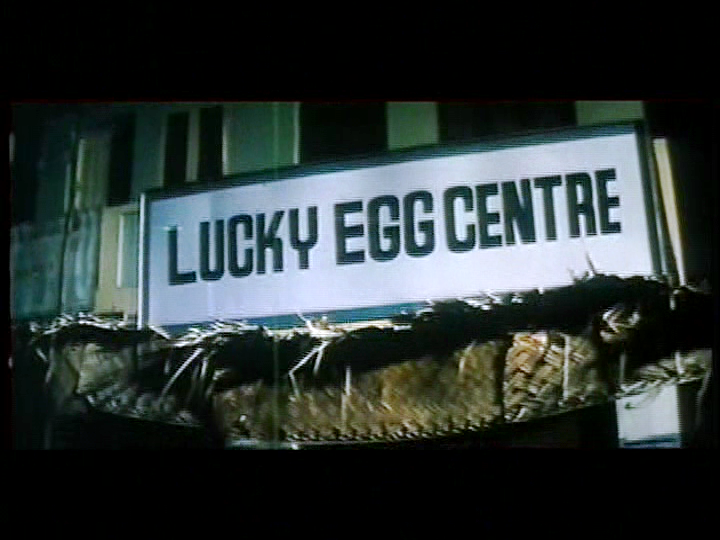
I don’t mind rom-coms when Chiru is doing both rom and com, but I was hoping for a bit more masala inspired action. Imagine my delight when Billu cracked an egg to make an omelette and found it was full of COCAINE!

No I don’t know how Johny knew how to identify cocaine. But he also knew how to track the drug back to its origin and so the thrills and spills began!

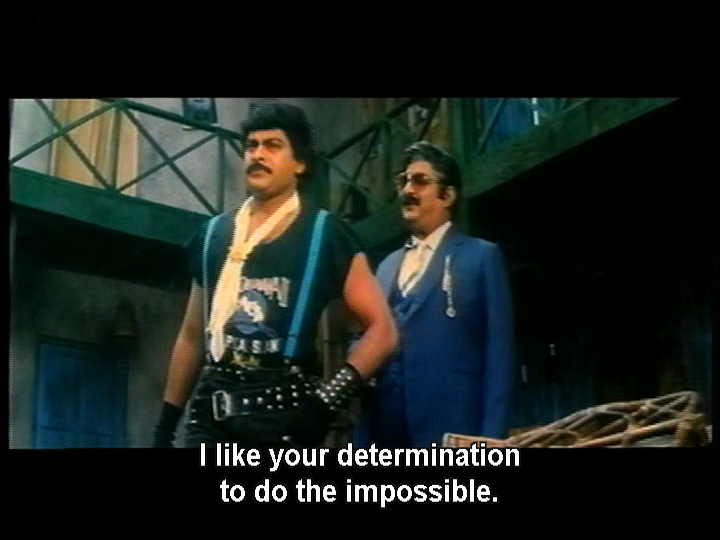
Salim (Ranjeet) is a very bad man, and not just because he wears an excessive amount of very tight denim. He is a cold eyed killer and rapist and the enforcer in Vasantdada’s (Suresh Oberoi) gang.

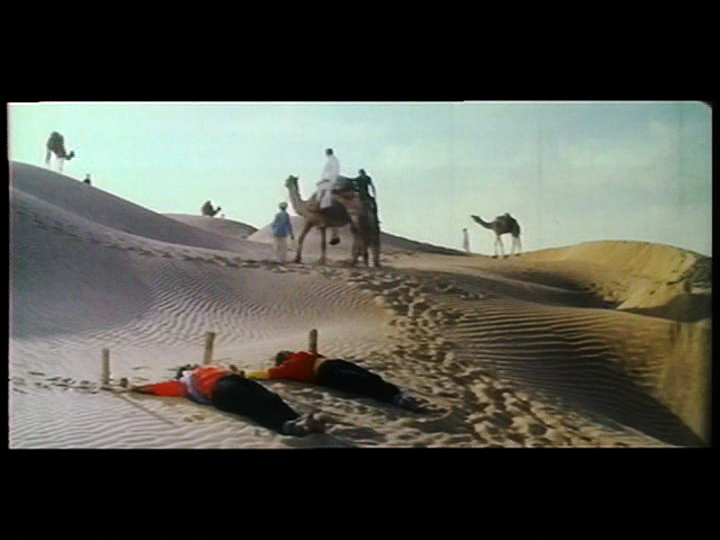
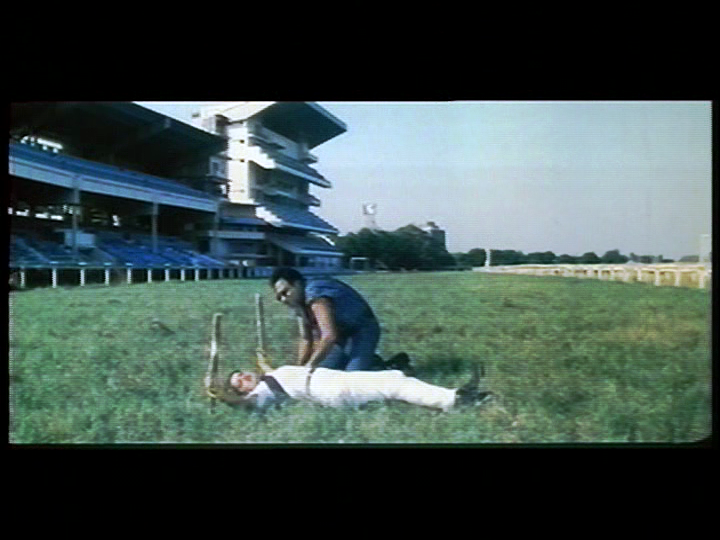
He has no impulse control and his character could be summed up as ‘Rapey’. Ranjeet also has a thing for staking people out to die. It’s neither fast nor efficient but he does persist.

Salim impersonates a policeman and lures Anusha out of her home, intending to assault her, but Johny intervenes. Utpala needs help too. Her brother fell into the clutches of Vasantdada and before dying managed to write a letter that will bring the gang down. Johny and Billu rise to the occasion and decide to eliminate the gang and get revenge for Vasantdada’s past crimes. Vasantdada’s henchmen all wear matching outfits in different styles and colours each time they appear which was a nice detail (and helped me remember which fight was which).

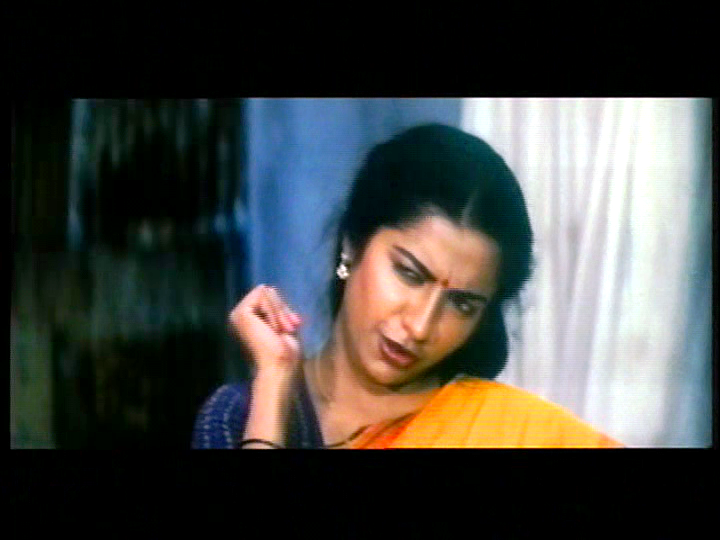
Suhasini is one of my favourite actresses and while this is a fairly small role she made an impression as the good natured and straight forward Utpala. She suffers terrible loss but is determined to do the right thing. Utpala isn’t confident to act on her own and relies on Johny and Billu for advice and to do what is needed. She has a comedy scene or two, and Suhasini is not a woman I expect to see rolling drunk on screen.  But she still looked lovely.

Anusha is a haughty heroine who doesn’t lack self-confidence at all. She is independent and determined but still needs Johny to save her on numerous occasions when having a sharp tongue isn’t enough.

And I haven’t mentioned the costumes. I think in this song the wardrobe guys were so horrified by this outfit

that they gave up on clothes for a while:

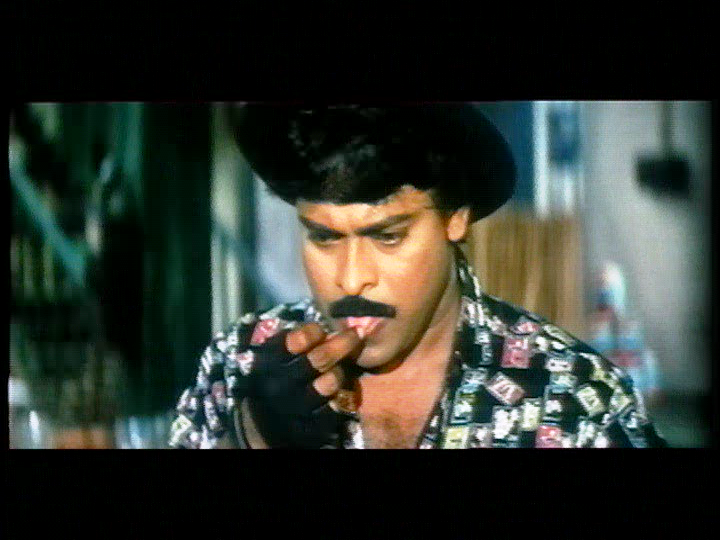
Chiru tends towards the high pants with the low belt, often doubling up on the fabric for both shirt and pants, and nicely accessorised with an eye catching array of gloves.

He opts for pleather for the big occasions, but as demonstrated in that song, costumes are not necessary for Johny to make a splash.

Chiru has better chemistry with Suhasini than with Radha, though perhaps that’s just my bias. It’s clear that the saucy Anusha is Johny’s type.

But really the focus of his performance is the heroics and that he does with his customary verve.

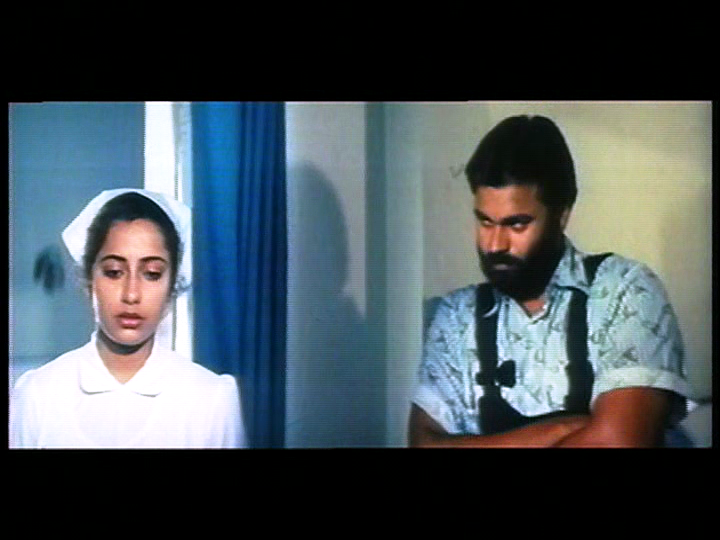
Nagendra Babu is sweet as Billu. Compared to Johny he is quiet and shy but he is handy in a fight. He favoured denim overalls and flowery shirts which added to the slightly comedic nice guy image. He is quite tall so the effect when he was flinging little bad guys around with abandon was very funny. It’s not surprising that he and Chiru have great rapport on screen and I liked seeing them bounce dialogue off each other in their scenes.

The story is based on a popular novel. The author Yandamoori Veerendranath adapted the screenplay himself and the pace and plotting is a strength of the film. There are obviously some scenes designed purely for maximum Mega presence, but Chiranjeevi manages to incorporate them all into the character of Johny so it flowed quite well.

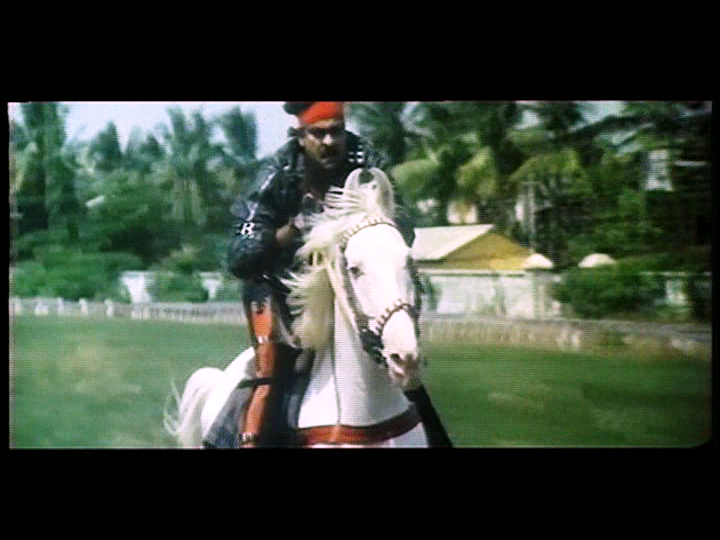
The climax of the film is fantastic but I did have a horribly sick feeling in a couple of minutes of footage involving horse stunts. I am certain not all of the horses were unharmed and suspect a couple didn’t survive. If this worries you please don’t watch from around 2hrs 5 min to 2 hrs 8 min. Before that I was delighted by one of the most ridiculous fake aircraft I think I have ever seen and there were some nifty come-uppances for the baddies.

The Illaiyaraja soundtrack is nice enough but I struggle to recall the songs without the visuals. Chiranjeevi and Radha don’t have the greatest choreography to work with but give it all loads of energy and flair. Visually the film is very striking with lots of crazy camera angles, stylised compositions and reminds me a little of some vintage 60s spy shows, albeit with acid wash denim.

Marana Mrudangam is a pacey masala entertainment, and if you are prepared to perhaps skip the horse scene, this is very good fun. And really, it was worth seeing just for the surprise of the naked Chiru chicken dance. 4 stars!