Julayi

Trivikram films tend to focus as much on the dialogue as on the action, so it was inevitable that I missed the comedy that had the rest of the audience laughing and cheering through most of Julayi. Not that it really mattered. There was still plenty of great dancing, excellent action scenes, ample screen time for my favourite actor Allu Arjun, and a relatively easy to follow (if somewhat unbelievable) plot giving another enjoyable ‘adventure without subtitles’.

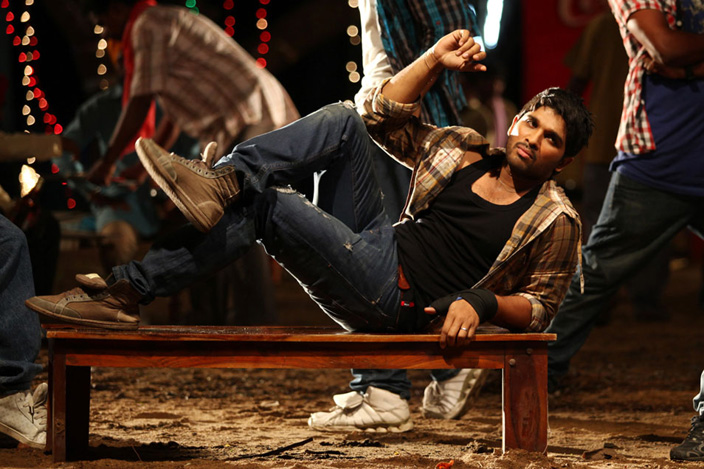
Ravi (Allu Arjun) starts as many a Telugu hero seems to do, by having an argument with his father (Tanikella Bharani in his customary role). Taking a cue from Chiru’s ‘money is easy to make’ speech from Challenge on a TV in the background, the argument seems to be based around Ravi’s lack of commitment to the conventional way to earn a living and ends with Ravi heading out to a gambling club. Since it’s raining heavily he cadges a lift, which just happens to be with a gang on their way to rob a bank. Because stopping to give someone a lift on the way to commit a major crime doesn’t seem like a risky thing to do at all – right?

Luckily for Ravi they seem happy to drop him off on a corner but that is their first big mistake. Ravi has awesome intuition, amazing powers of observation and a seemingly photographic memory and is able to lead the police to the site of the bank theft in time to partially foil the robbers’ escape. Head gangster Bittu (Sonu Sood) has already decimated his own gang, presumably to ensure a larger slice of the money, and Ravi helps lower the number still further by taking out one of Bittu’s trusted gang members (Shafi in a very brief appearance). This seems to spell war between the two, although the apparent destruction of the money and ensuring that Bittu is arrested and his plan foiled are also key contenders for the ensuing rivalry between Bittu and Ravi.

The bank heist is an odd mixture of some excellent ideas, such as the smooth way the robbers disable the cameras as they move through the building, and some gaping plot holes which just don’t make sense. This lack of logic reoccurs throughout the film where there is never any explanation for Ravi’s astounding ability to apparently read Bittu’s mind and predict how, where and when he will strike next. The police are also very ready to fall in with Ravi’s plans and have no objections any time he kills one of the gang. I was almost expecting that Ravi would be revealed as some sort of super-agent which might have explained the nonchalance towards his ever increasing body count and the willingness of everyone to follow his lead. But no, nothing quite so logical is allowed to intrude into the plot, or at least not that I could understand.

Sonu Sood is his usual impressive self as the villain Bittu, although he has a tendency to start cold and menacing but then over-do it just a tad and become almost comic. He too has amazing powers since he is able to interpret the sign language of his deaf henchwoman without even looking at what she is signing. It’s a talent she seems to share since she rarely looks at his replies either but at least she has better survival skills than the rest of the gang. To add some further complications, Bittu is collaborating with local MLA Kota Srinivasa Rao, who’s done some dodgy deal to cheat his investors and seems to be in it for the money. It’s the same crooked statesman role that Kota plays so well that now I don’t ever expect to see him without there being some dodgy deal involved.

The action moves to Hyderabad when Ravi is sent to ACP Sitaram (Rajendra Prasad) as part of a witness protection scheme. Ravi falls in love with a girl he sees at the bus-stop which results in a succession of songs, in fact almost the entire soundtrack one after the other, as Ravi attempts to win Madhu’s heart. Ileana started off well as Madhu and I liked her glasses and general look, but after Ravi takes her shopping and persuades her into contact lenses and Western clothes she just looks too thin and out of proportion. Although none of her outfits are terrible, the majority aren’t very flattering either and the curse of the Telugu film shoe designer strikes once again with a terrible pair of black boots.

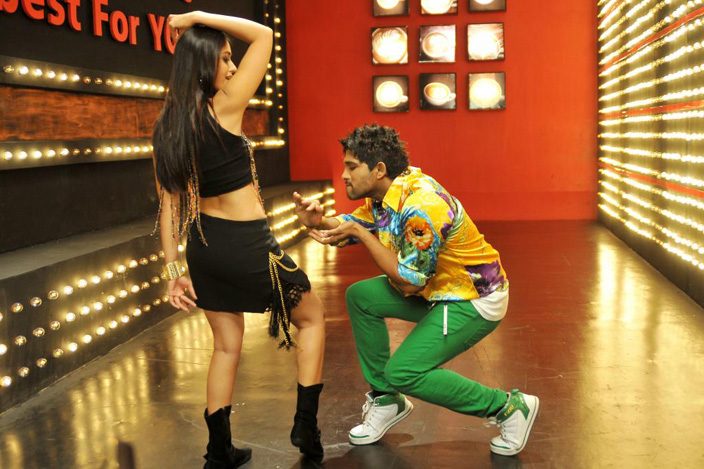
Bunny and Ileana have very little chemistry together and although there are some better moments in the songs, the romance never really takes off. The songs by Devi Sri Prasad are mainly pictured on Bunny who is energetic and wonderful to watch in better than usual choreography. For a change there are no special ‘feature moves’ – no sign of ‘the worm’ – and Bunny is given free rein to do what he does so well and just dance.  He also shows commitment to shiny multicoloured shirts which I did appreciate.
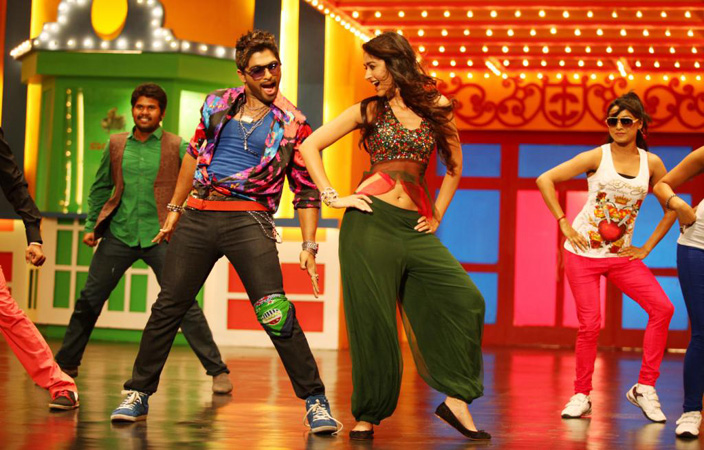
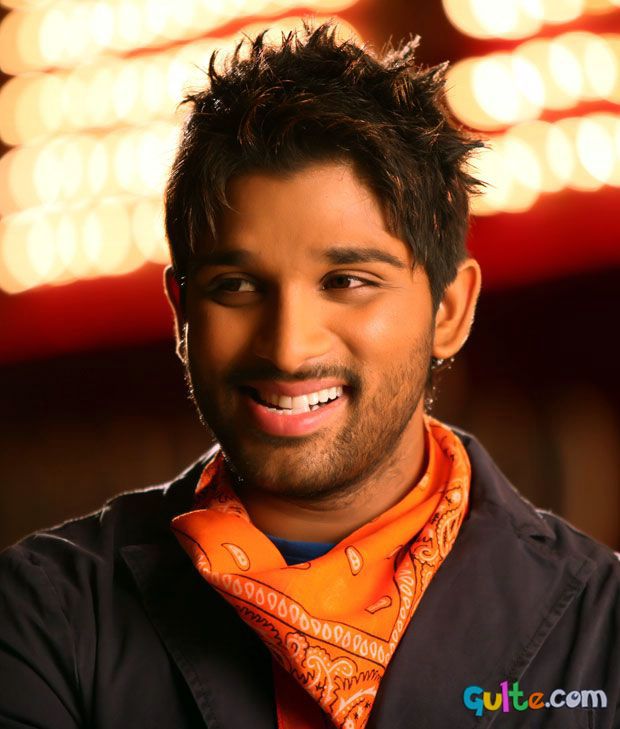
Every single possible comedy uncle turns up but thankfully their comedy is well integrated into the main plot and kept to a minimum. Trivikram seems to use most of the humour in snappy dialogues between  Bunny and Rajendra Prasad which were well appreciated by the audience. There is plenty of ‘action’ Bunny but a lot more ‘funny’ Bunny and both Allu Arjun and Rajendra Prasad work well together in these scenes. In fact the only major fail is Bunny’s hair which varies from OK in the frequent rain scenes (because it is flat and plastered to his head!) to really quite terrible with spikes at the back and flattened matting at the front. There is no hair continuity either and it becomes quite a distraction in a number of scenes as the number and position of the spikes varies – or perhaps I’m just becoming a little too obsessed. There is also the matter of his coloured contact lenses, but I’ll leave that rant for another time!
The film does look great, with some good use of locations in Dubai and reasonable special effects. The sets are also well dressed although Temple and I did have a discussion about the large assortment of really ugly ornaments that appeared on every desk. But there was commitment to family photographs and I did like the large picture of Michael Jackson in Ravi’s room. I liked the soundtrack before I saw the film and although it doesn’t sound too different from previous DSP soundtracks the music fits in with the general feel of the film. The songs could have been better paced though as there did seem to be a lot in the first half – not that I’m really complaining as watching Bunny dance is always worthwhile.

Julayi has plenty of action and strong performances from most of the cast which helps keep attention away from all the plot holes. Its slick and well filmed to make the most of Peter Hein’s excellently choreographed fight scenes. Definitely worth catching on the big screen if you can although I think this is a film that I will appreciate more with subtitles. Hopefully this doesn’t disappear into the same DVD black hole as Khaaleja and we do see a DVD release soon.

Panjaa

Panjaa’s opening titles are in bold graphic novel style with a 3D effect. Eye catching and intriguing, the confident visuals match a slick modern underworld thriller where characters are not always what they seem and life is lived in shades of grey.

There is nothing really new in the conflict at the heart of the plot, but Vishnuvardhan has tweaked things just a little and saves the film from being too familiar. I saw this in the cinema, without subtitles, when it released. While the basic plot and motivations were clear, I enjoyed seeing it again on a subtitled DVD as some of the characters’ thought processes were more accessible.

Most of the film looks to have been shot on location and it adds a note of authenticity in terms of the buildings, the lighting and the sense of place. I particularly liked the ornate architecture of Kolkata, as well as the lush green of the countryside. The colour palette is subdued and the style is pared back and modern. There is nary a plaid shirt in sight!

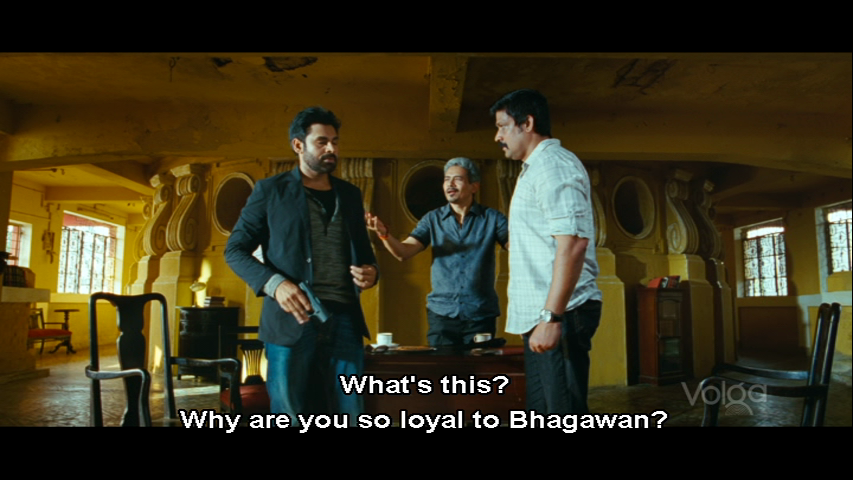
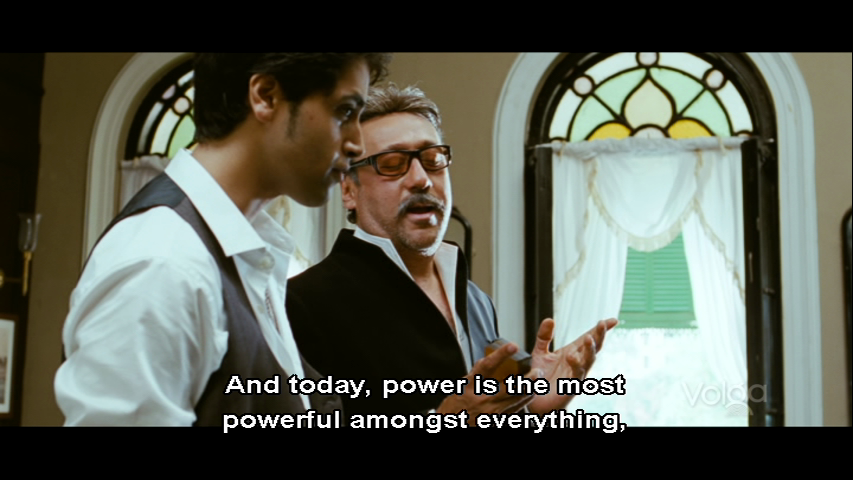
Jai (Pawan Kalyan) is the enforcer for Bhagawan (Jackie Shroff). He is a shadowy figure, always a step ahead and coolly efficient in his execution. Jai has a strong moral sense and acts according to his own notion of right and honour. He serves Bhagawan because when his mother and sister were assaulted, Bhagawan gave him justice and a refuge. But when Bhagawan’s son Munna returns from overseas, it is clear that Munna is not the kind of man Jai could tolerate, let alone support. Things escalate as Munna takes full advantage of being his father’s son.  Jai struggles between loyalty and his own code, and the need for more in his life.

Jai also struggles with the ladies. The one he wants makes him shy and tongue tied. The one that wants him is very assertive but he isn’t interested. I’m not convinced Janvi (Anjali Lavania) was necessary to the story, but it was nice to see the bad girl get to talk and think for herself. Unfortunately she ran into the brutal Munna on a bad day so it was shortlived. I like a good skanky item and this is certainly skanky.

Pawan Kalyan is a hero but Jai is almost an anti-hero. He is moral by his own lights but he is a professional killer. He is nice enough but not a good guy as such. He isn’t a dashing romantic hero although women fancy him and he doesn’t really win anything other than his own life. The final scene is ambiguous enough that it could be a vision of the future or a memory of the past so it’s not a resoundingly happy ending. Pawan Kalyan is very good as Jai. He draws the eye in all his scenes, using stillness and silence more than histrionics. His acting range easily spans Jai’s story from laid back comedy to high tension drama.

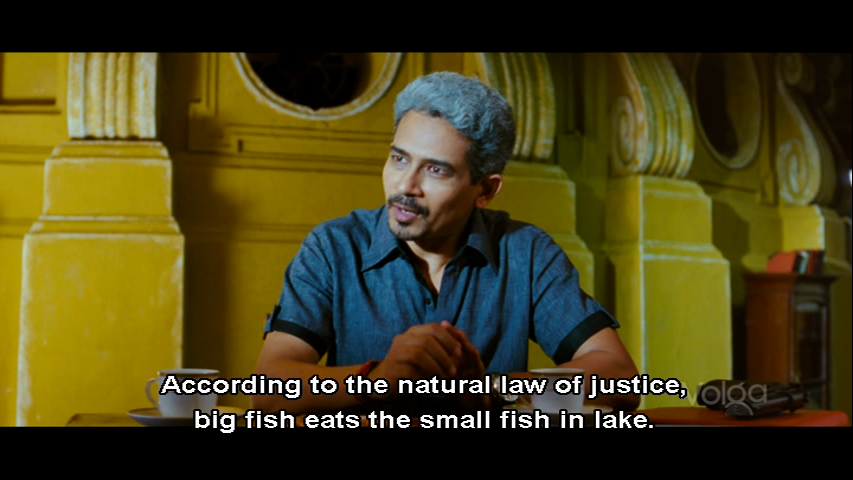
The casting is excellent. Having said that, I really do not understand the recent fad for Jackie Shroff in South Indian films. He doesn’t bring anything unique to the kind of roles he is playing, but he is adequate as Bhagawan. Munna (Adivi Sesh) is Bhagawan’s son, an overly entitled sadistic nutter. His performance is over the top but Munna needed to be hateful and I was certainly sick of the sight of him! Atul Kulkarni is excellent as rival crook Kulkarni. He conveys an intensity and intelligence that made Kulkarni seem plausible as a successful ‘businessman’. The relationship between Bhagawan, Kulkarni and Jai is revealed over time and the reactions and decisions of the main characters are consistent with what we know about them. The second tier of gangsters is represented by Tanikella Bharani as the slippery Guruvaiah and Sampath Raj as Kulkarni’s right hand, Sampath along with Amit Kumar and others in support. The interactions are well written and fairly restrained so it is possible to believe these guys can function in the real world. There are glimpses of family and other concerns that build a picture of this slice of the underworld.

Sarah-Jane Dias is Sandhya, a tree hugging good girl who turns up to work in Jai’s nursery. Yes. Jai is a complex man and has diversified his investments into a plant nursery he runs with Chotu (Ali). Jai is drawn to Sandhya and she likes him. Their relationship starts with superficial attraction and develops through time and proximity. She has a bit more going on in her life than just waiting for Jai, but she is primarily the love interest. I liked their scenes more on the second viewing as the dialogues helped show her character as smarter than her prancing around in gumboots lead me to think (although I appreciated the work appropriate clothing). Just as things looked promising, Sandhya returns home suddenly to see her sick grandmother.

The timing coincides with Jai’s need to get out of town. The rural setting puts him back in touch with his childhood self. He is looking for love and a home, the things he lost when his family was torn apart. But his past is a threat to himself and anyone close to him so he needs to resolve that while still keeping the promises he made.

The country sojourn introduces more of the excellent support cast including Subbaraju as Sandhya’s brother Ashok and Brahmanandam in amusing form as an inept local cop. I loved that this song is essentially a tirade against the greedy and cowardly policeman Paparayudu, accompanied by uninhibited dancing and some jiggly-bellied tiger men.

Ashok is a protective brother, henpecked yet determined to remain a bachelor, and no match for the smooth townie Jai or for local rowdies. He is frantic when Sandya comes home unannounced as he knows troubles from the past will be stirred up again and he wants to keep her safe.

Subbaraju gets to show off a bit more of his acting range than normal, and when he isn’t beating up baddies he has some fun scenes with the women of the household. Ashok and the rest of the family are vivid characters and very much part of Sandhya’s life.  Back in town, Chotu (Ali) was in trouble and believe it or not, I was sad to see his predicament. Despite these being small roles, the details are nicely drawn and the actors all deliver good performances. That kind of attention and care makes Panjaa quite satisfying viewing.

The comedy is not too intrusive. Pawan Kalyan doesn’t mind playing for laughs and I really enjoyed the Mega Tribute as Jai was persuaded to pose with cut-outs for a photo. Brahmi and Ali are in character roles and their shtick is part of the story so it stays on track. The fight scenes orchestrated by Shyam Kaushal are brutal but not too bloody, and highlight Pawan Kalyan’s strengths. The editing and composition of the action sequences is top notch. Everything flows quite well and there is a consistent look and feel to the whole film.

There are some flaws. The romance between Jai and Sandhya is a bit laboured and she does far too much marvelling at blades of grass and cooing at flowers. The first half takes a while to go anywhere. ‘Paparayadu’ excepted, Pawan Kalyan looked a bit lacklustre in the dancing but the choreography wasn’t that exciting either. The soundtrack by Yuvan Shankar Raja is average and the song picturisations are quite predictable but don’t detract from the film. Overall, the positives greatly outweigh these niggles.

Panjaa is a well made thriller with good performances and a cohesive story. It’s not dazzling or wildly original, but I never found it dull. It’s a quality effort and well worth a watch, especially if you’re a fan of the genre. 3 ½ stars!

Lakshyam

Lakshyam is a highly entertaining mishmash of romance, comedy, action, politics and family drama. It succeeds largely because of the casting – Jagapathi Babu, Gopichand and Anushka in particular do a fine job – and some skilful writing and direction that balance all the elements.

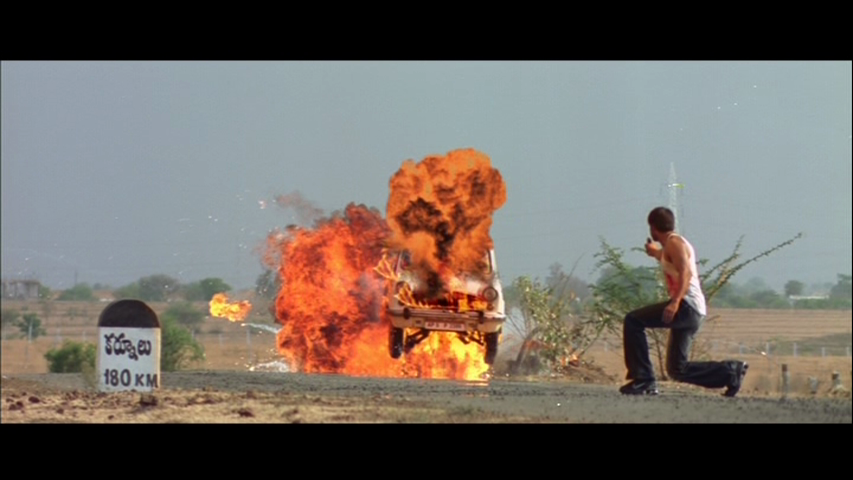
The film opens with a girl running away from her own wedding. She looks so pretty and pristine as she scoots off across town, eventually making a rendezvous with a bloody and battered man. I was intrigued by the look of happy pride on her face when he efficiently blew up a car, shot a policeman and then hopped on the back of her moped. I wondered how they got to this point, and what was going to happen next. With a bit of time travel, we get to the chronological start of the story. The film is very well constructed, and the flashback and current day sequences flow well. There are some pleasingly playful references to filmi clichés and the cast seem to enjoy the improbable shenanigans.

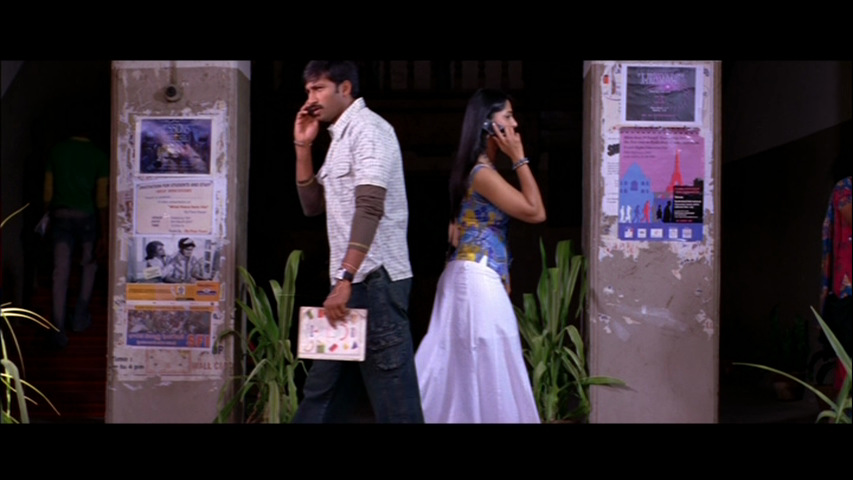
Anushka is Indu, a modern uppity type of college girl. She has a very specific list of demands for a prospective husband and seems to think it is perfectly reasonable to share this with a young child on the train. Pinky immediately decides to set Indu up with her uncle, Chandu. He has his own, very different, list of required qualities and even the kid knows it’s not likely to work.

Anushka is one of my favourite current day actresses (yes, actress not ‘heroine’), and she is quite good in this role. Her character has some silly and selfish moments, but underneath it she is a likeable young woman. At the very least she knows when to apologise for her mistakes, so she is not too bratty. Indu is a Telugu heroine so of course if anything goes wrong she is reliant on any and every man within 20 metres of her for help and a solution. But the helpless female act is balanced with Indu cheekily pretending to be a gangleader’s sister and using his name to get her own way. This leads her into conflict with the cool dude on campus, Chandu. So she calls her little train friend’s uncle to sort him out. Yes – Chandu again. So there is a romantic comedy of errors as Chandu takes on Chandu and tries to bluff his way through. The silliness is increased with Brahmi and Venu Madhav battling each other for control of the student canteen.

My reason for picking this film a while ago was that I hadn’t seen Gopichand in a lead role and I was curious. He does well and seems to be a good generalist in terms of Hero Skills. He can act a bit, dance a bit, fight a bit, and has an engaging onscreen presence. His introduction scene is vintage hero stuff – he is chained and dangling upside down in a police lockup. But with a single bound he frees himself and escapes to wreak havoc. The college romance scenes don’t work quite so well as the later more energetic action sequences but he and Anushka do have chemistry and he gets right into hamming it up. And let me applaud a song with a backup dancing Spiderman.There is not enough of it around.

Chandu and Indu eventually fall in love and actually tell each other so they then just have to deal with all the usual obstacles – telling his family, her disapproving dad, and of course a crazed psychopath who happens to be a mad inventor. Chandu also gets caught in the fallout of his brother’s activities. He is a man of action, and takes a direct approach to solving problems. Although I did like that he sometimes cowed his opponent just with a graphic description of what he would do, so had no need of the actual biffo. You can have your cake and eat it too – a non-violent solution that incorporates a violent fantasy sequence. Gopichand is well able to match the changing tone of the film from the fluffy  romance to the revenge driven action and drama.

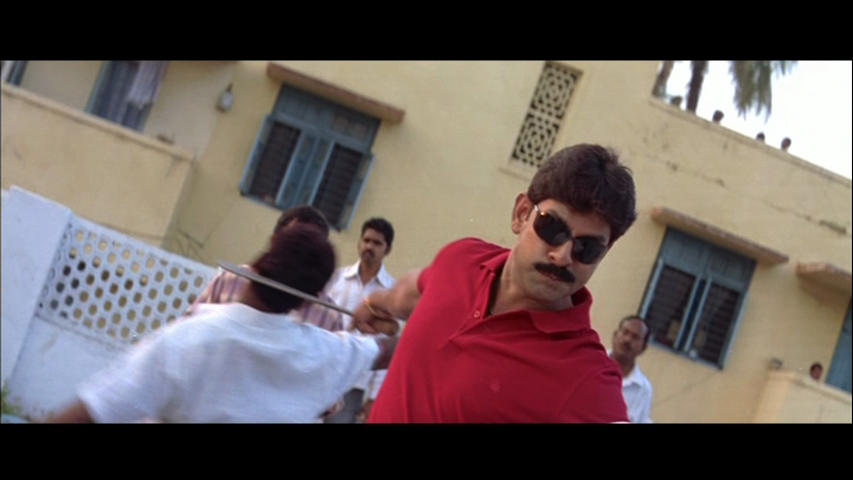
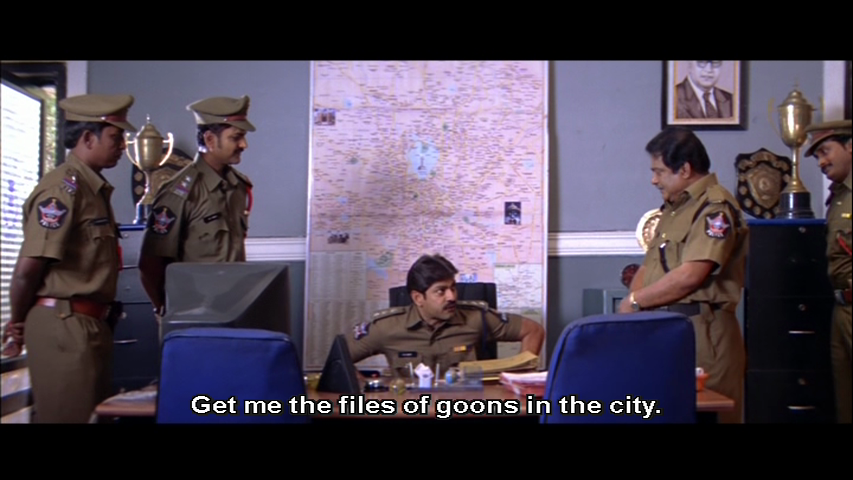
Chandu’s brother is Inspector Bose – Jagapathi Babu. He is an honest, crusading policeman and of course is wildly unpopular with the underworld. Newly transferred to Hyderabad, Bose takes on Section Shankar, Indu’s ‘brother’, a thug protected by senior police. I like Jagapathi Babu and this role is a good fit for him. Bose is a cop but also a family man and has a competitive relationship with his brother and his journalist father (Kota Srinivasa Rao) so there is lots of scope for his offbeat style.

The brothers have different approaches but are not forced into a separation or battle for whose philosophy should win, and I really liked seeing that more natural sibling rivalry. They were great mates as well as brothers, and the family scenes were fun. Bose and his wife (Kalyani) have a very affectionate relationship, and it is a nice domestic environment. But Bose also has a kickarse side and Jagapathi Babu gets his own action sequences, including some excellent use of coconuts as both defense and offense. He is also the victim of one of the most elaborate assassination attempts I can recall seeing. I was muttering “What? He’s not dead – yet? What!” as the drama kept unfurling.

It’s interesting that once again the law is shown as helpless in the face of crime and they rely on people like Chandu to get things done. Dharmavarapu Subramanyam is cast as an honest cop, and his comedic skills are used to help the story as a bumbling but good guy. Even Ashish Vidyarthi as the DIG makes it clear that the police need to rely on subterfuge to even compete let alone succeed, so there is an oddly defeatist note to the brother’s battle with Section Shankar and his corrupt cop associate (Devaraj).

I was moderately alarmed when I read the long list of ‘comedy uncles’ in the cast, but Srivas and writers Gopimohan and M Rathnam do an excellent job of balancing the story elements and allowing a lot of the humour to emerge in a more natural style. Kota Srinivasa Rao is in good form as the newsman father who believes he might possibly be in charge of his household. Venu Madhav and Brahmi have a running battle which keeps them from bogging down the rest of the story, and when they do interact with the rest of the characters it is usually fun. And there are some amusing touches – a fixer for Section Shankar has gunfire as his ringtone, one rowdy knocks himself out in a fight, and there are lots of little reactions and one-liners that liven things up.

The song picturisations are nothing out of the ordinary and neither is Mani Sharma’s music, but they are executed and placed well. Anushka is not much of a dancer although she does give her dance performances some energy and excellent facial expressions. I would say Gopichand’s natural genre might be ‘uncle dance’ and he does it pretty well. He certainly looked like he had fun dancing, and it added another degree of contrast to his vengeful brother aspect. And he seemed quite unperturbed by some of the shirts bestowed upon him.

Lakshyam does strain the credibility muscles more than a few times, but it is such an entertaining and well paced effort that I just go with the flow. The cast are good and are given characters with a little bit more depth than I expected. There are convoluted schemes, a deathtrap, peculiar decision making – all the trappings of a good potboiler. The writing is clever and kept me smiling if not laughing out loud. And the baddies got their various comeuppances in suitable style. It was all quite satisfying.

Give it a go! 3 ½ stars.