Ajooba (1991)

Ajooba is always near the top of my list of favourite So Bad It’s Good films. Before we get started, I must share with you the very enticing blurb from the back of my DVD (click on it to enlarge the image):
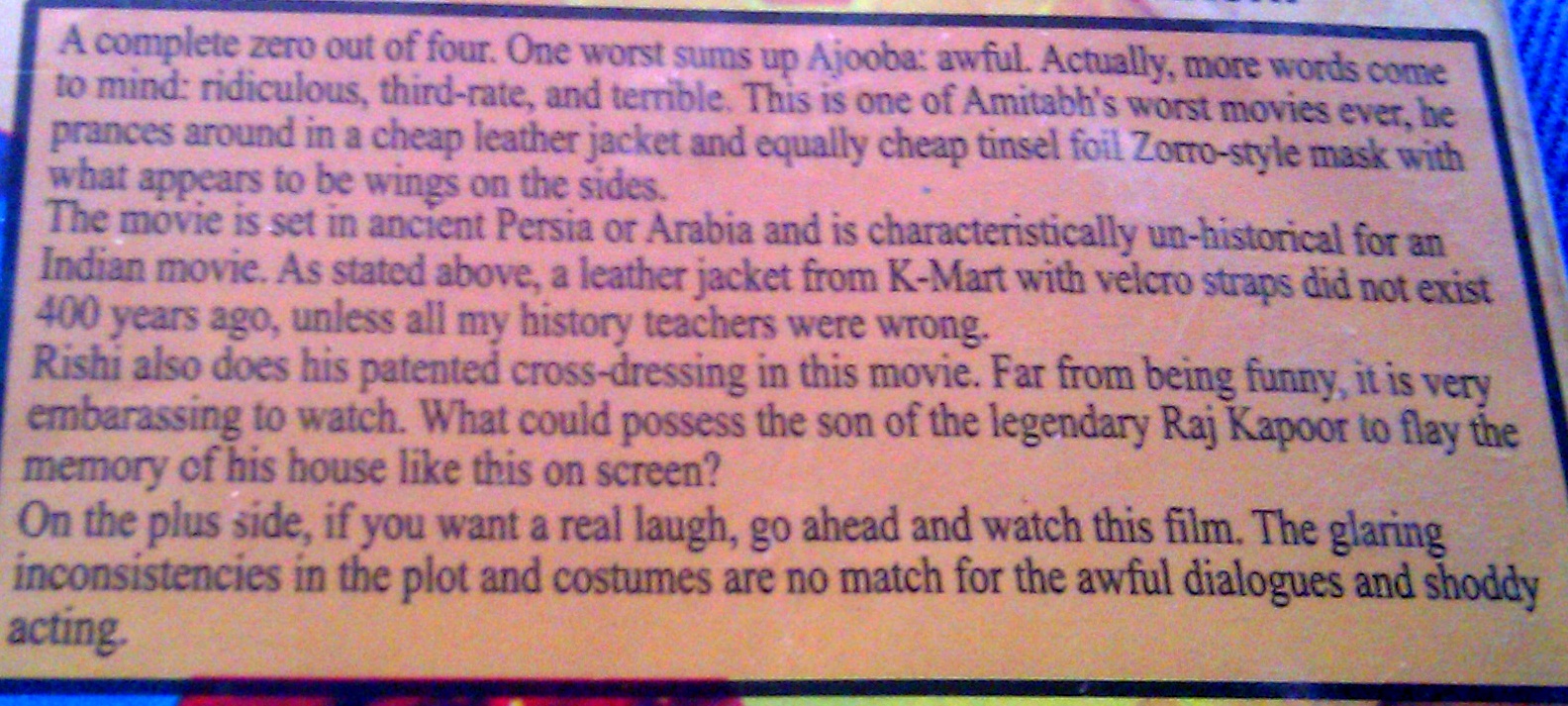
Irresistible!

What better way to start some Christmas entertainment than with a mysterious star in the East?
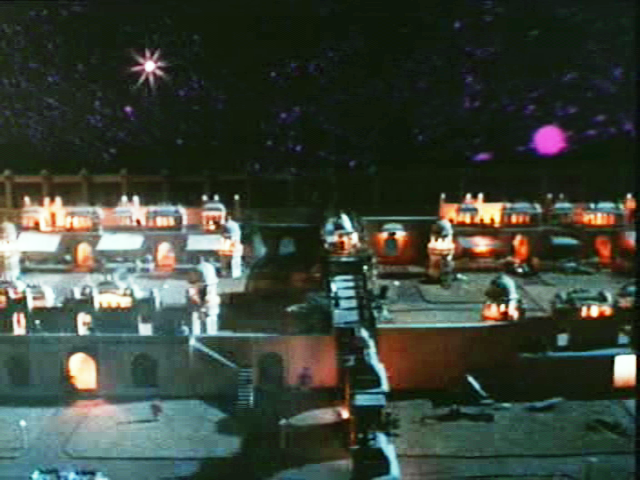
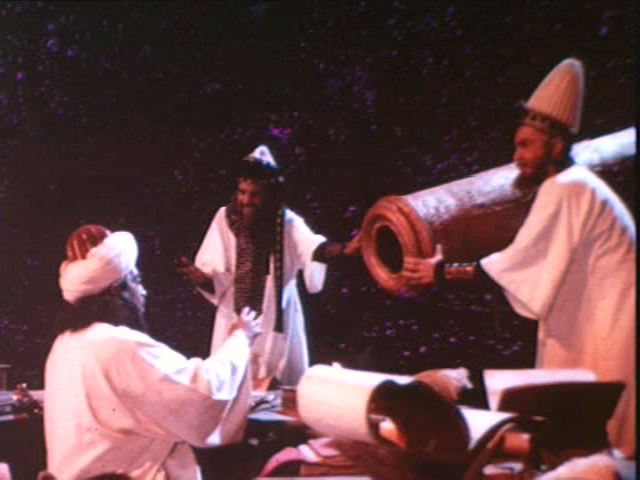
And some wise men.
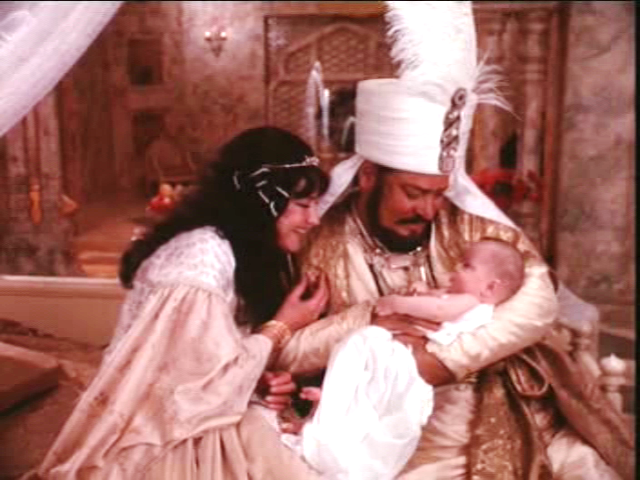
And a baby boy.
Surely this outfit just screams ‘Christmas Bauble’ (or according to Beth, ‘Mughal beach ball’).
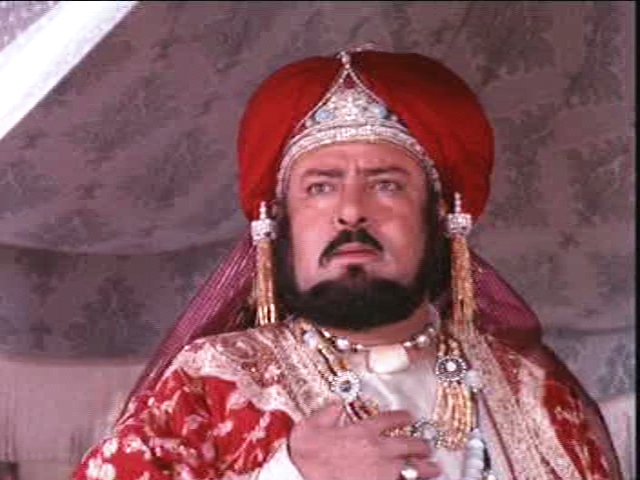
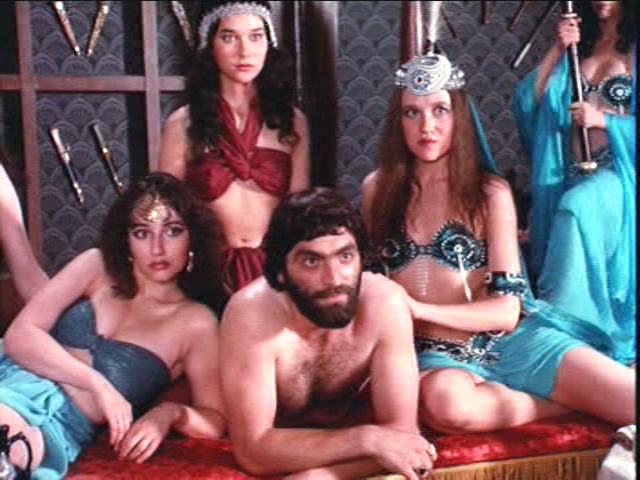
Ajooba is a masala film masquerading as a magical sword and sandal romp. It is replete with a masked hero, a devil worshipping usurper, a good magician and his feisty daughter, sea monsters and so much more, made with enthusiasm rather than skill. While it may not be the story of Christmas, it is a miracle that Amitabh Bachchan and Rishi Kapoor agreed to grace this film by Shashi Kapoor. I think it shows how much they loved him. Ajooba was quite a venture; expensive and a Russian co-production, so it seems like something Shashi felt strongly about making.

Once upon a time in Baharistan, the Sultan (Shammi Kapoor) and his wife (Ariadna Shengelaya) had everything they could want … except a son. Finally, after some magical intervention to protect the unborn child, an heir was born. Hurrah! The people rejoiced with a fun Laxmikant-Pyarelal number. There’s lots of colour and movement including a display of dazzling (ahem) magic, and a dance-off between a kind of skanky snakey dance and some Kathak-ish guys.

Amir Khan (Saeed Jaffrey) is a good magician. I use ‘good’ in the sense of not using his powers for evil, not as an endorsement of his skills.
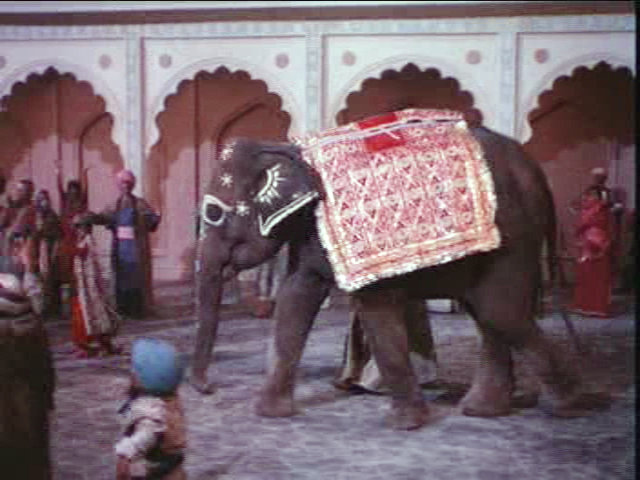
The most impressive thing about his elephant trick is that the elephant looks like it is wearing dark glasses (perhaps it knew this film was not a great career move and was in disguise).
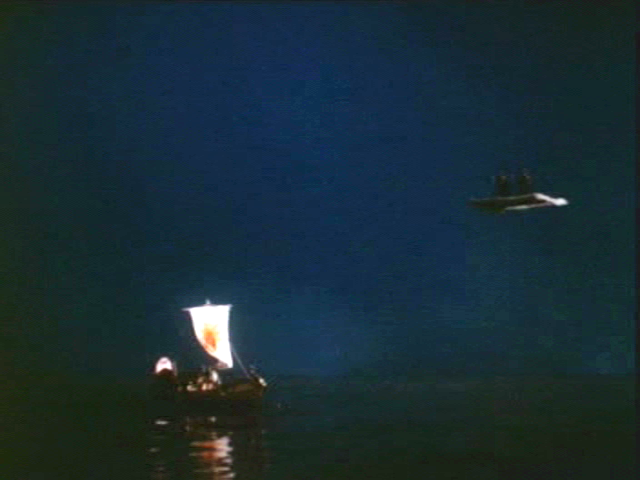
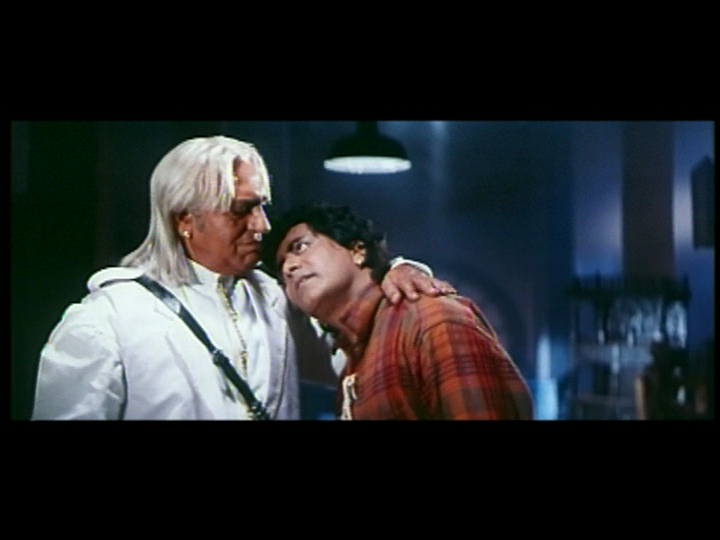
The evil Vizier (Amrish Puri) attacks the toy boat of the Sultan and Malika. The royal family is scattered, each believing they are alone in the world. Malika is blind, the Sultan loses his memory, and their baby is presumed drowned.

Rescued by a dolphin, raised by a kindly blacksmith, unaware of his real parentage, Ali (Amitabh Bachchan) undergoes years and years and years of training to become the hero who can free his people. Well, those people who are still left after 30 odd years of brutal oppression. Maybe it was the costume that held him up, especially creating a cunning disguise for both Ajooba and horse.
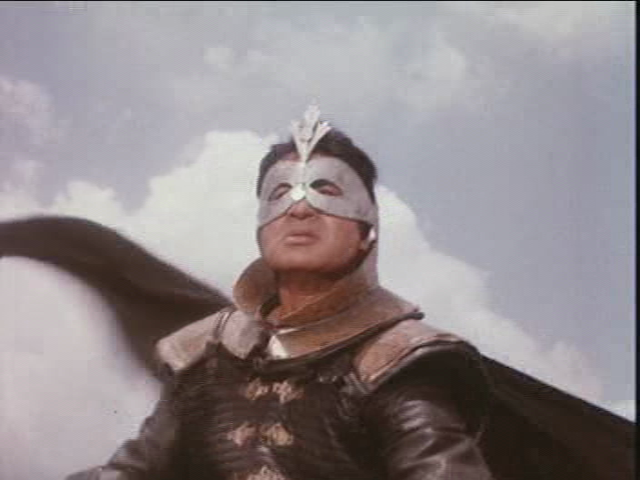
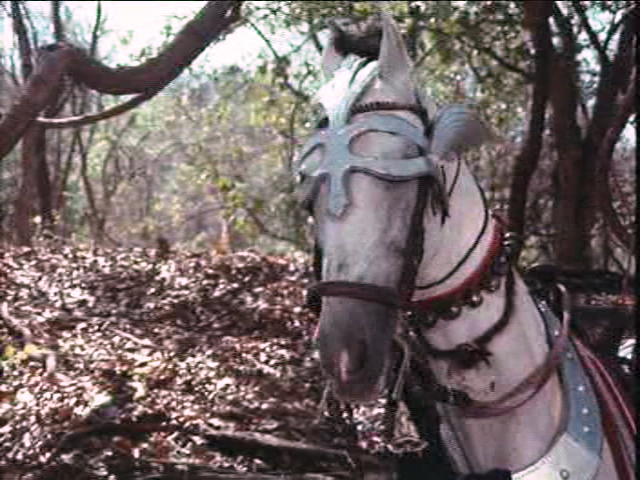
Why something as silly as a tin mask will be so detailed and finished with little flourishes when so much else is left half-baked is part of the charm. It doesn’t save the idea from being daft, but it is fun to look at. There is a serious design flaw. Did you spot it?

With the Vizier in power, life is tough for the simple folk of Baharistan. They still have their picturesque outfits but Amrish Puri and his brother-in-law Shah Rukh (Dalip Tahil) pillage and plunder as the mood seizes them.
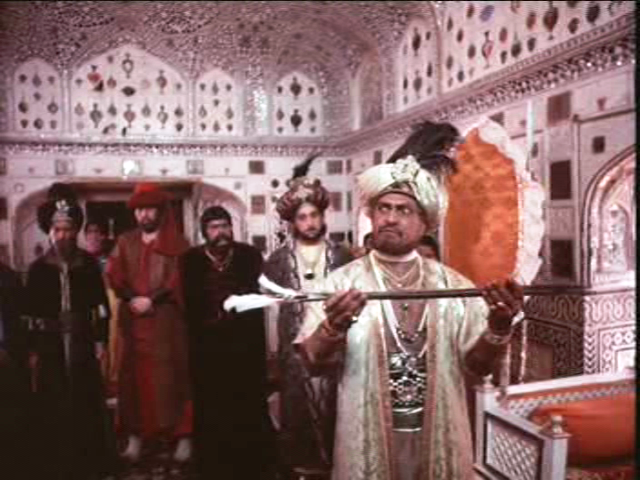
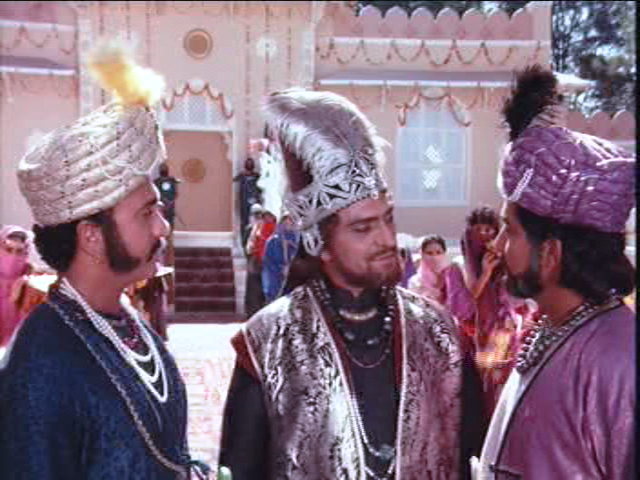
With all of his evil deeds to draw on I expected the Vizier to have better material for his catch phrase, but he sticks to ‘Shaitan Zindabad!’. It is clear that he is bad and so are all his associates.
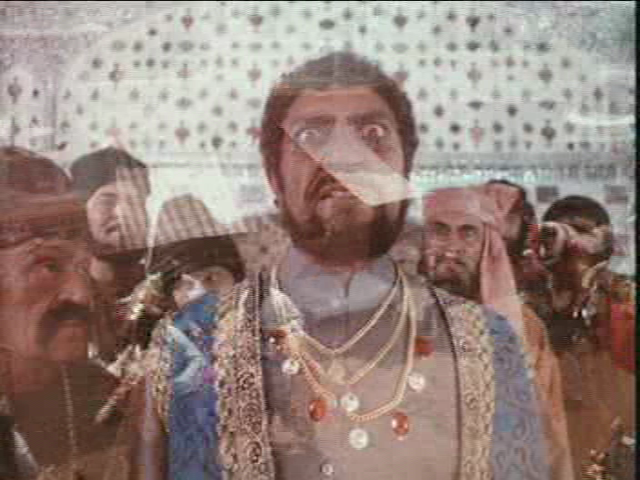
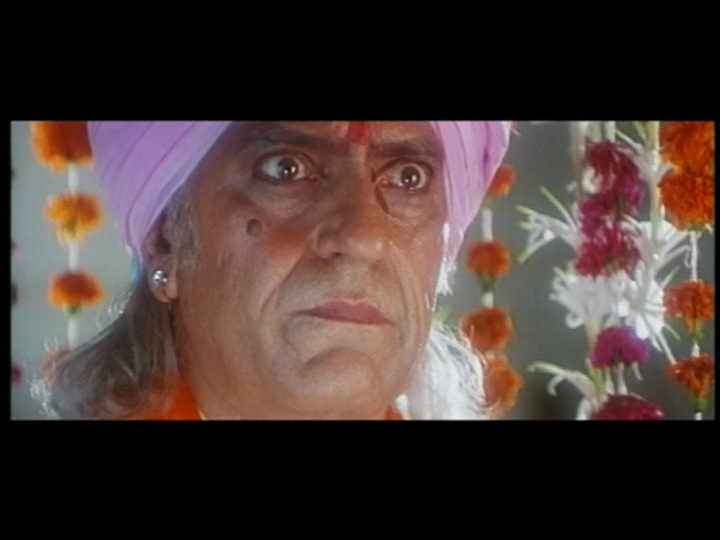
The evil shtick gets a little monotonous despite Amrish Puri’s eyeballs giving it their all.

When Amir Khan is imprisoned, he sends messages back to his family in Hind by talking to birds. Luckily his daughter Rukhsana (Dimple Kapadia) can communicate with animals so she sets off on a rescue mission, leaving her mother (Sushma Seth) behind. Rukhsana works as a puppeteer in the bazaar and I liked that she had a plan to both support herself and give a cover story as she was searching for her dad.
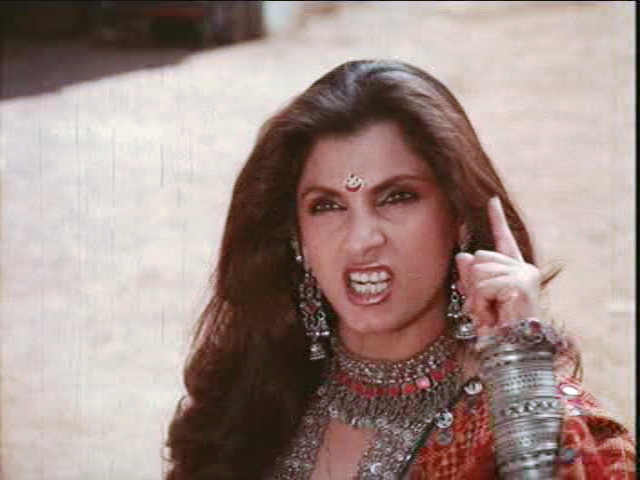
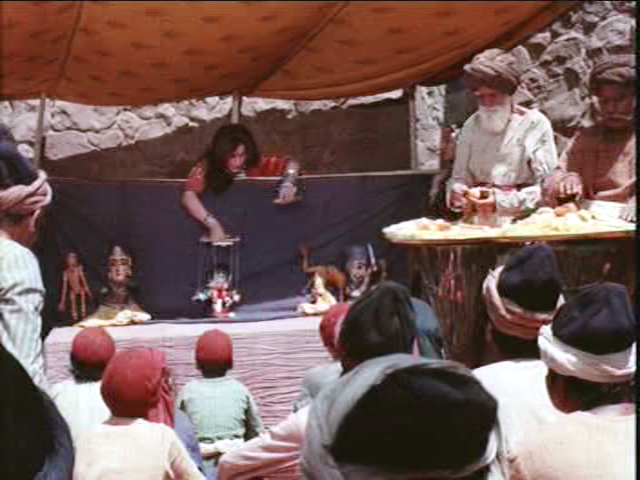
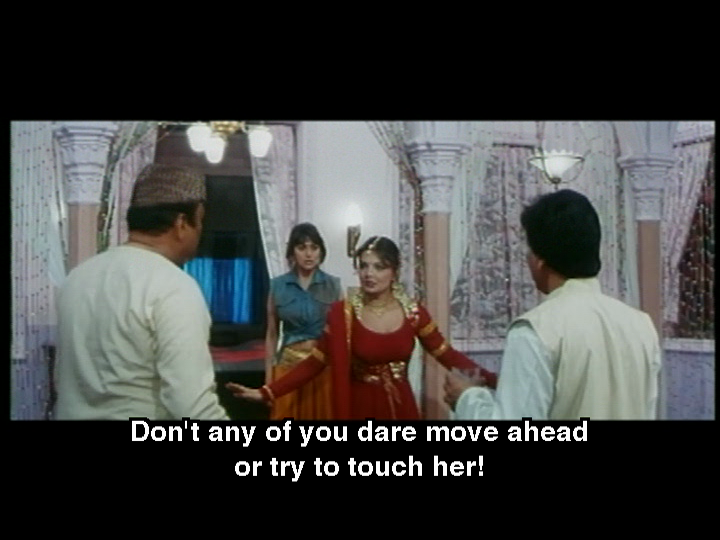
Baharistan is not the place for a single lady, and it doesn’t take long before she needs rescuing. Repeated rescuing. Ajooba becomes somewhat tired of this damsel in distress, but she sees through his flimsy disguise (amazing!) and of course that means true love.

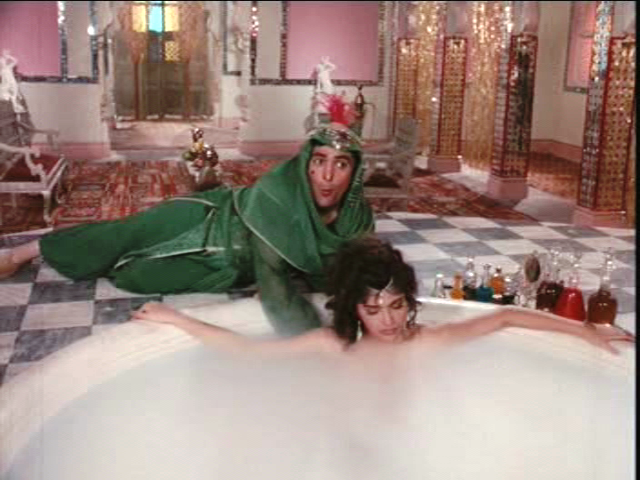
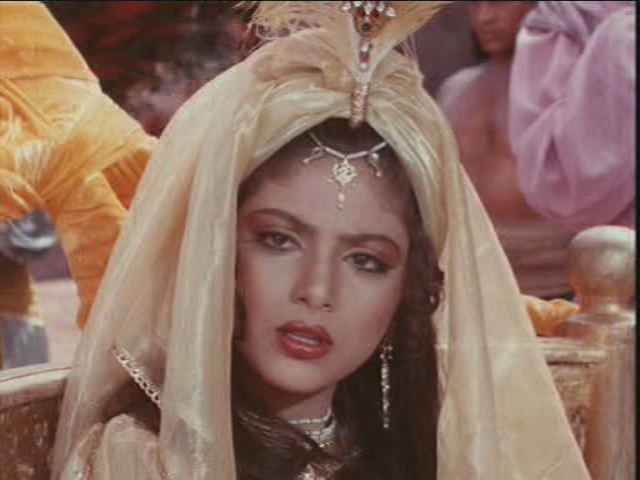
Rishi Kapoor is Hassan, the local Romeo who falls for the Princess Henna (Sonam). That’s about as much character development as you get. I liked Rishi and Amitabh together, and they have a fun song as the romantic Hassan tries to get repressed Ali to talk about love.

But I lost interest as Rishi detours into drag and sleazy antics and Sonam does little more than this:
The romances play out as you would expect, and Dimple and Amitabh make the more interesting couple (though that is not saying much). Ali does wrestle a tiger to rescue Rukhsana and Amir Khan from the dungeons so that added a level of commitment.

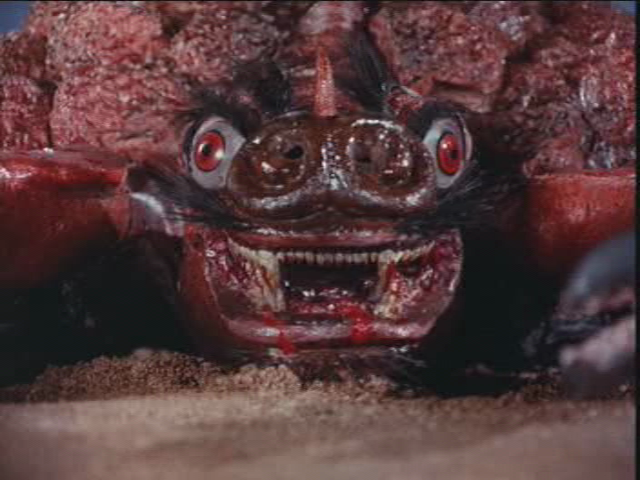
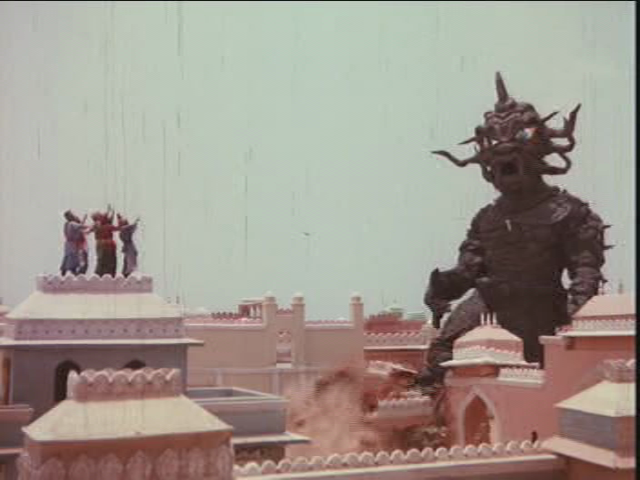
Of course in a fairytale there are trials and tribulations before good can triumph and that means special effects! If only someone had told Shashi Kapoor. The visual effects are quite poor and while it is part of the cheesy fun, I do wish they had done a little better. Beth did ask why a flying gondola was employed in one scene and I think it is because the maximum passenger load for a flying carpet would have been exceeded.
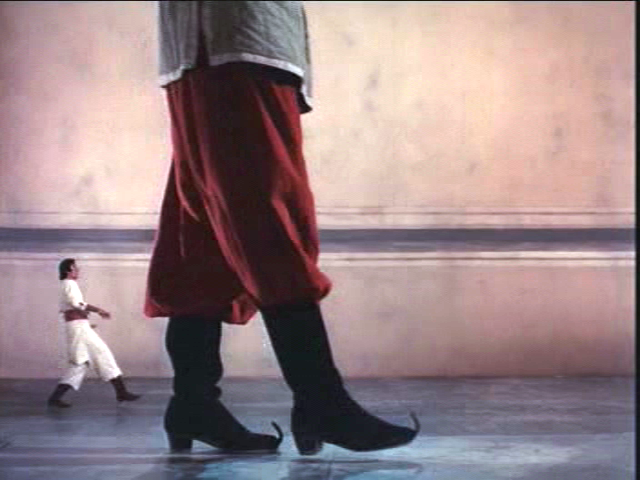
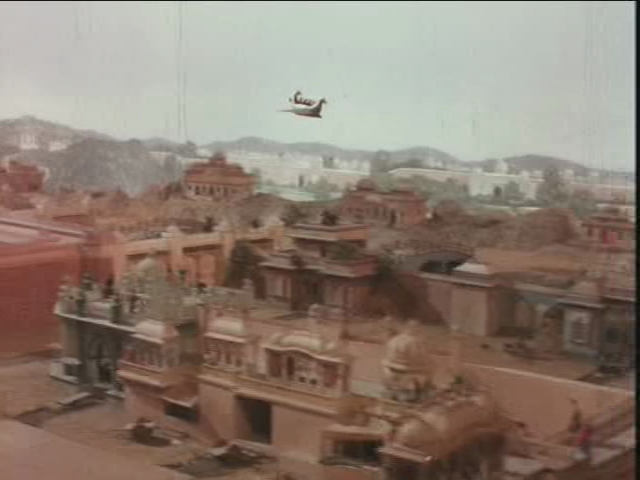


And there are some odd lapses and inconsistencies. When Ali’s sister needs to give him an urgent message, she wends her way through dim corridors and finally  a concealed passage which opens into Ali’s secret training ground. It’s an open field next door that anyone could see. And when Ali and Hassan are chained up with Malika and the blacksmith awaiting Certain Death they are rescued by a sea monster…or are they? Four people in chains, three sets of chains are cut. What about your foster dad Ali????

I recognised so many faces in the background. Memsaab as usual provides a more rigorous acknowledgement of the supporting artists so you should go read her post. But just think – Dara Singh, Sushma Seth, Rajendranath, Narendranath, Tej Sapru, Bob Christo just to name a few!  The locations and sets are delightful, and enhance the fantasy and poetic flavour. The art direction is batty at times, but this is a pleasure to watch.
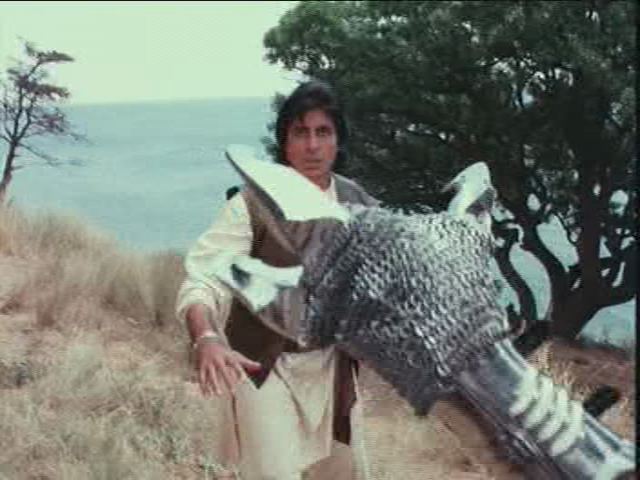
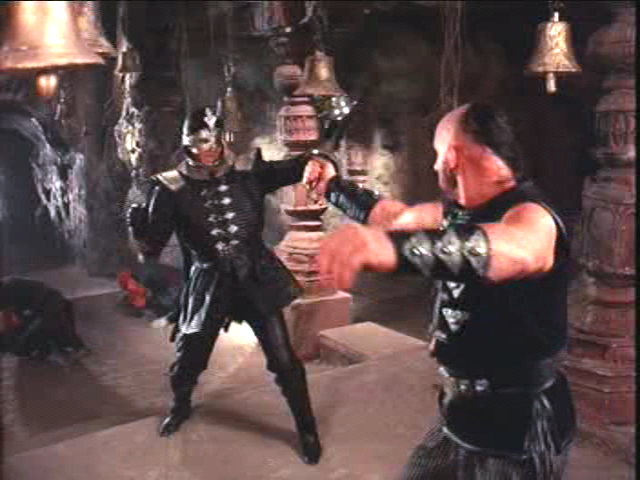
The streets of Baharistan are always full of colourful locals ready for a backflip or bellydance. The fight scenes are OK without being amazing, flying carpets or no. But there is a brilliant episode in a temple with Amitabh swinging from bell to bell to dishoom Bob Christo and rescue Shammi – it is epic and silly and I love it. The final battle gets everyone to Baharistan and there are reunions and expositions all over the place.

I absolutely love that in the climax fight, once people realise Ajooba is Ali is the long lost prince, everything pauses briefly so the onlookers can have a chat amongst themselves about how he is related to everyone and what his title is. Never mind the big glowing sword, or the evil sorcerer – is he your cousin? And is he married?

Ajooba’s heart is pure masala gold and I have enormous affection for it. 4 stars for entertainment alone!

Merry Christmas!

Koyla

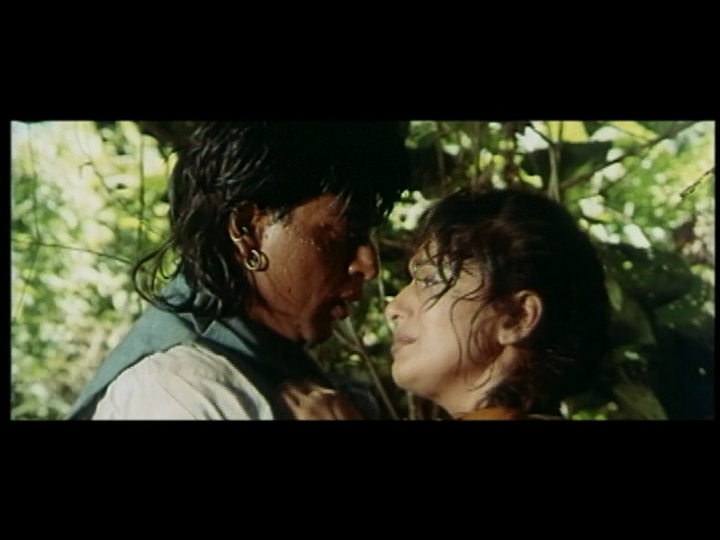
As it seems has been the case with many other people, my path to Bollywood addiction started with Shah Rukh Khan. A late night chance viewing of Dilwale Dulhania Le Jayenge on TV and I was instantly hooked. So I was slowly working my way through his older films (and loving pretty much all of them) when we had a discussion in Hindi class about films that were so bad they were good (you know exactly what I mean here!) and the subject of Rakesh Roshan’s Koyla came up. So of course after hearing the description, this became a must see film, and despite all the violence, gore and trashy OTT characters it’s fun and quite frankly an addictive film to watch. Koyla is certainly not my favourite SRK film, but hidden amongst all the craziness there are some really wonderful moments, particularly in the songs where Madhuri also shines.

But of course the main reason for watching is this:

And a bit of this:

Where to start with such a crazy film? Shah Rukh Khan is Shankar, a mute slave to the incredibly evil and megalomaniacal Rajashahib (Amrish Puri). Shankar is introduced running with the dogs he has trained and the implication is clear that Raja regards him as just another one of his well-trained animals. Leaving aside the fact that Shankar has a truly terrible mullet, as does Raja himself, there is also the very questionable decision to make Shankar wear such immense shoulder pads. It’s hard to believe this film was made in 1997 and not the mid eighties considering some of the fashion choices in this song:

Raja is obviously a bad man with his bad hair and a ’mark of evil’ mole. He also has an even more sadistic and quite insane brother Brijwa who, in trashy bodice ripper novel style, tries to drag off every young woman he encounters.

Despite an intimate relationship with his secretary Bindya, Raja is hungry for another young woman, and eventually tricks Gauri (Madhuri Dixit) into marriage. We first see Gauri frolicking around the fields with a gang of children all high after eating cannabis laddoos. Possibly this is supposed to show how innocent she is, but it’s really just very ‘what the?’ instead. She’s easily tricked when Raja sends a photograph of Shankar instead of himself as the potential bridegroom. A sadistic tyrant Raja may be, but at least he is somewhat aware of his own shortcomings as a potential groom. After a sham of a wedding, Gauri tries to escape but she’s a typical wishy-washy heroine and doesn’t manage anything effectual. Although perhaps fainting is understandable when she tears off the grooms veil to show Raja instead of Shankar! Compare and contrast:

Bindya is displaced in Raja’s affections and ends up as all fallen women do as she is disposed of into the local brothel. This treatment of Raja’s former lover starts to open Shankar’s eyes to the depravity of his owner – it’s taken him 20 years but it’s a start. When he discovers the deception behind Raja and Gauri’s marriage he feels compelled to protect her and when finally Raja kills Gauri’s brother Ashok (Mohnish Behl in a very brief guest appearance) Shankar finally escapes with her into the jungle.

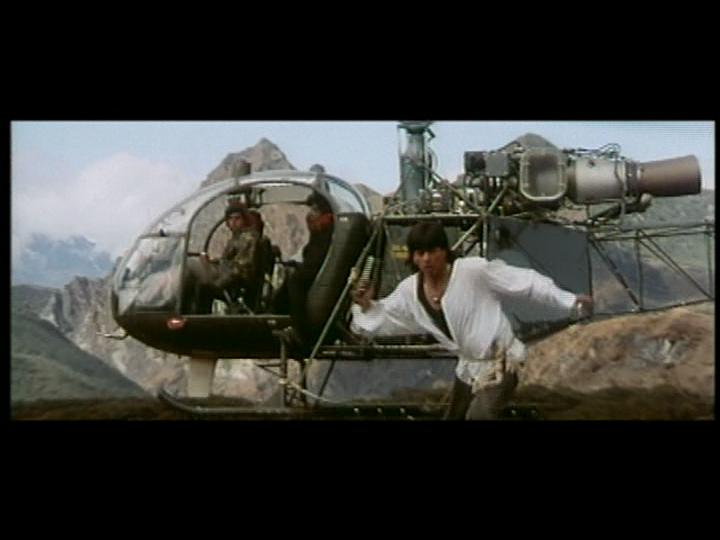
So how do you pursue your wife and slave when they have run off together? By helicopter of course! There is plenty of First Blood style action and Shankar does manage some amazingly intricate traps for a man on the run with no obvious resources. Finally Raja manages to catch up to the fugitives and cuts Shankar’s throat before sending him to his death over a cliff. Amazingly, Shankar just happens to be discovered by a local healer who sews him back up again and restores his voice as a useful side benefit. Gauri meanwhile is destined for the brothel (Raja is not a man of novel ideas), where she finds a protector in Bindya. Because of course, the impure fallen woman has to come good before she is killed in any proper Bollywood film.

There are explosions, plenty of revenge killings and bucket-loads of blood, but finally Shankar does prove that good will always win over evil, especially when good has such an excellent (and frequently used) hero run.

The story has plenty of holes and yet it all makes sense if you just ignore the questions of why and how. There is a flashback to explain exactly how Shankar lost his voice in the first place and why Raja rose to his current level of power. The end ties everything up with the greedy exposed and everyone important and still left alive is redeemed in the end, even Ashok Saraf’s irritating Vedji. This is one of the first films I saw where Johny Lever’s character had a more serious role to play and he pulls it off very well, with only one or two dips into irritating comedy as Vedji’s son and Shankar’s friend. This is probably the best song of the film featuring the two with Shankar’s friend supplying his ‘voice’.

What really does work well in this film is the slowly developing relationship between Shankar and Gauri. There is plenty of chemistry between the two, as there always seems to be with SRK and his leading lady, and they have some very heart-felt scenes particularly when Shankar has no voice and SRK is relying on facial expressions and body language alone. This is one time when SRK’s tendency to overact works very well in his favour and his emotions are excellently expressed. The gradual maturation of Gauri from frightened girl into a woman who helps fight back at the end is well handled. And of course any time Madhuri is dancing she is entrancing. The songs by Rajesh Roshan (lyrics by Indeevar) are the high points of the film and Saroj Khan has done an excellent job with the choreography in each.

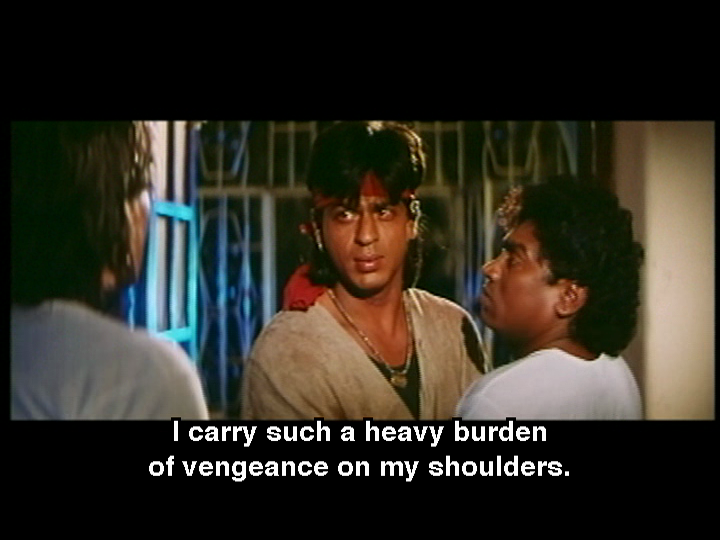
But the rest is just plenty of OTT wonderfulness and a surfeit of blood and gore with a healthy helping of revenge. The violence is too cartoonish to be difficult to watch, although there is a dark undercurrent as much of the violence is directed against women. Thankfully though, all the bad guys get their comeuppance and there is always a good song just when the death count is in danger of getting too extreme. It does have an 18 rating which I presume is as a result of the number of attempted rape scenes and general adult themes throughout, although it’s really not as suggestive as many Hollywood films. The bush surgery is excellent and I did particularly like the casts for Shanka’s broken arm and leg which imploded with no apparent ill effects when he started running. Of course he was back to full health and fighting fit in a very short time like all true heroes should be. And perhaps it’s that heavy vengeance burden that explains those shoulder pads earlier!

Koyla is not a film for the faint hearted and I wouldn’t recommend it as a must see film for everyone. But if you like your BW to have the baddest villain and the most extreme trials for a hero and heroine, then it’s definitely a film you should see. 3 stars.

Thalapathi

Thalapathi was one of the first Tamil films I saw. It was before my ‘Southern Film Industry Addiction’, I barely knew who Rajnikanth was and had absolutely no idea about Mammootty. In fact I’d totally forgotten he was in this film until I rewatched it recently – thankfully I know much better now.

Written and directed by Mani Ratnam, Thalapathi is at heart much more of a masala film than his usual fare. It features most of the necessary ingredients: an abandoned child, perpetually teary mother, romance, brothers who don’t know they are related, the essential Amrish Puri as the villain and a significant article of clothing. Add to that plenty of action and fight scenes, great songs, and beautiful cinematography, plenty of classical references and it all adds up to a very full 2 and a half hours of cinema.

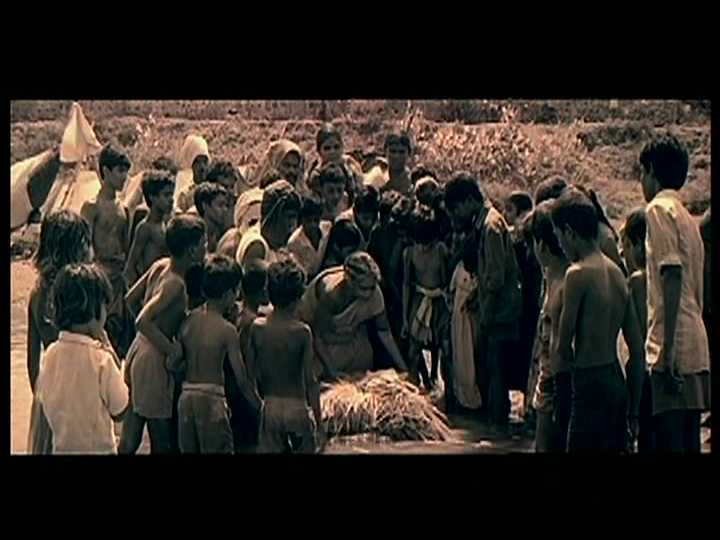
The film starts in black and white with a young unmarried girl giving birth during the festival of Bogi. The opening scenes of Kalyani’s rejection by an older woman and shots of the rural countryside serve to explain that her child has no future in such a traditional community. She puts the baby into a train in the hope that somehow someone else will give him a better life. These opening shots are some of the best in the film and it’s a shame that my copy of the DVD seems to have lost the original quality.

The colour kicks in with the year of 1987 when the baby has grown up to be Surya (Rajnikanth). He is a man with a firm belief in justice who is determined to help others in his community in any way he can. This often seems to be by beating senseless an offender and in the course of such action he ends up fatally injuring Ramana, one of Devaraj’s men. Enter Mammootty in a very well played role as the head of the local gang of rowdies, who initially threatens Surya with dire consequences if his man dies.

However when Devaraj finds out Ramana’s crimes, he arranges for Surya’s release from jail and tells him that his actions were right and just. I can’t say that I agree with his assessment but it makes Surya become his loyal Thalapathi and the two become inseparable. Lots of drama here, so time for a song break.

Surya’s charitable reputation helps to legitimise Devaraj’s rather more shady one and they soon rule the entire area, much to the displeasure of Devaraj’s rival Kalivardhan (a dubbed Amrish Puri). There is bad blood between these two and it’s inevitable that there will be a clash. However most of the story concerns Surya’s relationship with Devaraj and sadly Kalivardhan is only seen occasionally throughout the film. Amrish Puri in a really terrible pair of glasses isn’t as menacing as usual but manages to be evil enough just when it really counts.

In the course of his good works, Surya meets Subbu (Shobana), a Brahmin girl who falls in love with him. Perhaps it was the wolverine hair-style or the commanding way in which he demands her jewellery but she’s obviously quite smitten.

Her father wants nothing to do with a thug who has no idea who his parents were and rejects the match. In the middle of all this, Surya’s real mother ends up moving to the area when her legitimate son Arjun (Arvind Swamy) is appointed as a Collector. Kalyani has married a very understanding man who knows all about her first baby, although Arjun doesn’t know that he has an elder half-brother. The two brothers have a common sense of justice but in every other way are complete opposites. Arjun is a good and law-abiding man who is committed to cleaning up the town, although perhaps he should have started with the police corruption rather than take on the town rowdies. There are inevitable clashes between Surya, Devaraj and the police as Arjun tries to stop their version of law and justice in the town. And Kalivardhan is luring in the background adding in his malicious attempts to get rid of the pair as well. Finally the significant cloth comes to light but Surya refuses to give up his friendship with Devaraj despite discovering his brother.

Although there is plenty of action in the film, the main focus is on the relationship between Surya and Devaraj. Mani Ratnam has based it on the friendship between Karna and Duryodhana from the Mahabharata and there are a number of references to this story throughout the film. It starts out with Devaraj as the leader and Surya as the faithful follower, but as their friendship develops they each begin to change the other and the dynamic between the two has altered by the final scenes. Both Rajnikanth and Mammootty are both excellent and work well together to bring their friendship to life. It’s mainly in the little touches, such as the way they only have to look at each other to acknowledge their next venture.

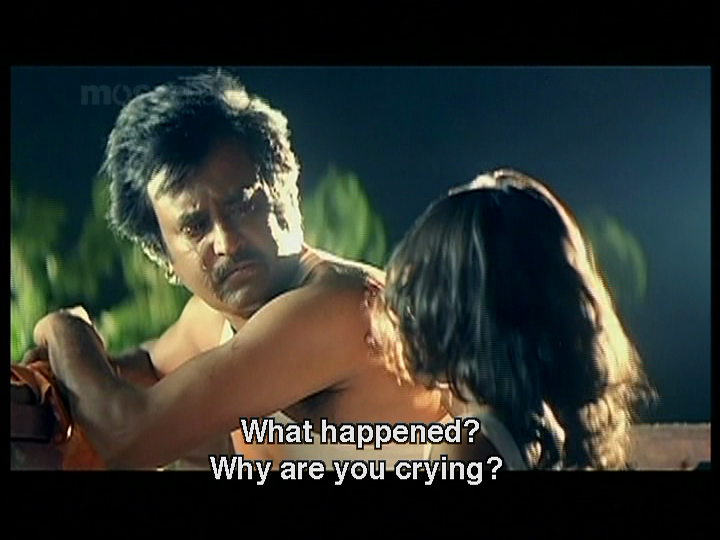
Surya’s relationships with his mother, Subbu and others are important to the overall story but his character is defined by his strong sense of justice and unwavering support of Devaraj, no matter what. Even when Devaraj persuades him to marry Ramana’s widow Padma, Surya is unable to say no. Rajni has plenty of action scenes and is exuberant in these, but he also makes the most of his more dramatic moments. So much is conveyed in one particularly memorable scene in the temple, where both Suyra and Kalyani both look yearningly towards a train as they hear the distant whistle. They are both standing close together but neither have any idea who the other is and their obvious sadness is all the more poignant as a result.

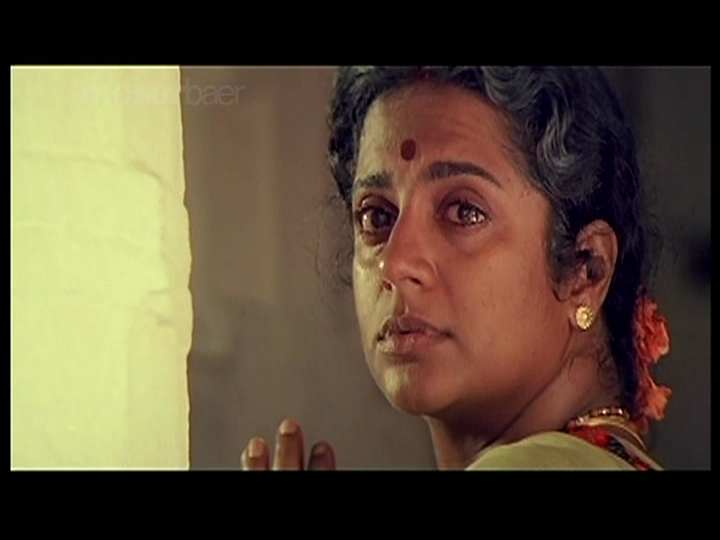
Mammootty is more restrained in his role as Devaraj relies more on fear and his entourage rather than actual physical violence. He has Surya for all of that after all. His portrayal of the more corrupt and devious Devaraj is excellent and he brings a real sense of authority to the character. The other members of the cast are all very good in their supporting roles, especially Srividya who is convincing as the mother who can never forget the child she lost. I was surprised that she had told her husband about her first baby, but Jai Sankar brought a lot of compassion to his role as Arjun’s father and was very credible as a supportive husband and father.

The other standout feature of the film is the music by Ilaiyaraja. The sad Chinna Thayaval is beautiful and recurs as background music throughout the film. The other songs are all upbeat with some great dancing and I wasn’t surprised to see that Prabhu Deva was one of the choreographers.  The rather different Sundari Kannal is interspersed with some Samurai action and seems to be a tribute to director Akira Kurosawa. I haven’t included it here as it is very long and I’m a little concerned about the horses in some of the fight sequences but Rajni in a top knot is definitely worth a look.

The only issue I have with this film is that it is very violent in parts. The first fight scene with Ramana and the episodes of police torture are quite graphic and go on just a bit too long for me. But to counter that, the two leads are fantastic and really at their best, the music is beautiful and memorable, and it’s a very well told story. 4 stars.

Temple says: I like watching earlier Rajni films (and this is the 90s) as it reminds me just how good an actor he is, legend status aside. I have recently watched Darna Veera Suura Karna, so the story was fresh in my mind and I think this translation to modern gang empires was very effective. Deva and Surya are full of certainty and righteous power, and stride through the landscape looking larger than life. Mammootty and Rajni are brilliant and play off each other so well, and that’s a good thing as other elements of the story are underdone. Deva’s gang members were just a vague presence, and I don’t think I recall any of their names. They were just there for contrast and to portray Deva’s court of followers. The female characters are strong in concept but weak in presence apart from a couple of key scenes. Shobana was lovely as Subbu, which is all that was required of her,  and Bhanupriya gave an excellent and near silent performance as Padma. Srividya was good but her character was quite static and she didn’t do much more than weep so I was left wanting to see more from a woman who clearly had a complex situation to navigate. I admired Santosh Sivan’s artistry as he used light and camera angles to create a feeling that these men were almost forces of nature, and the landscapes were stunning. The fight scenes in the rain were lovingly filmed to capture the beauty of the splashing water and the bodies were more of a method of breaking the trajectory of the showers than the object of the scene. I don’t think it’s an overly violent film as many of the gory scenes are shown as aftermath rather than explicit or graphic scenes of how people got into that state. What was explicit was also shown to have consequences so it isn’t mindless violence either. It all fit into the relationship of Deva and his general with their warlike mentality. I don’t love the soundtrack, but I do like it well enough and thought most of the slower songs were excellent. I was ready to stick a fork in my ear at the umpteenth reprise of Chinna Thayaval but I blame Mani Ratnam for that as it was just relentless and overused. It’s a great action infused tale of loyalty and conflict, it looks stunning, and it features two of the best actors working in Indian cinema. 4 stars from me!