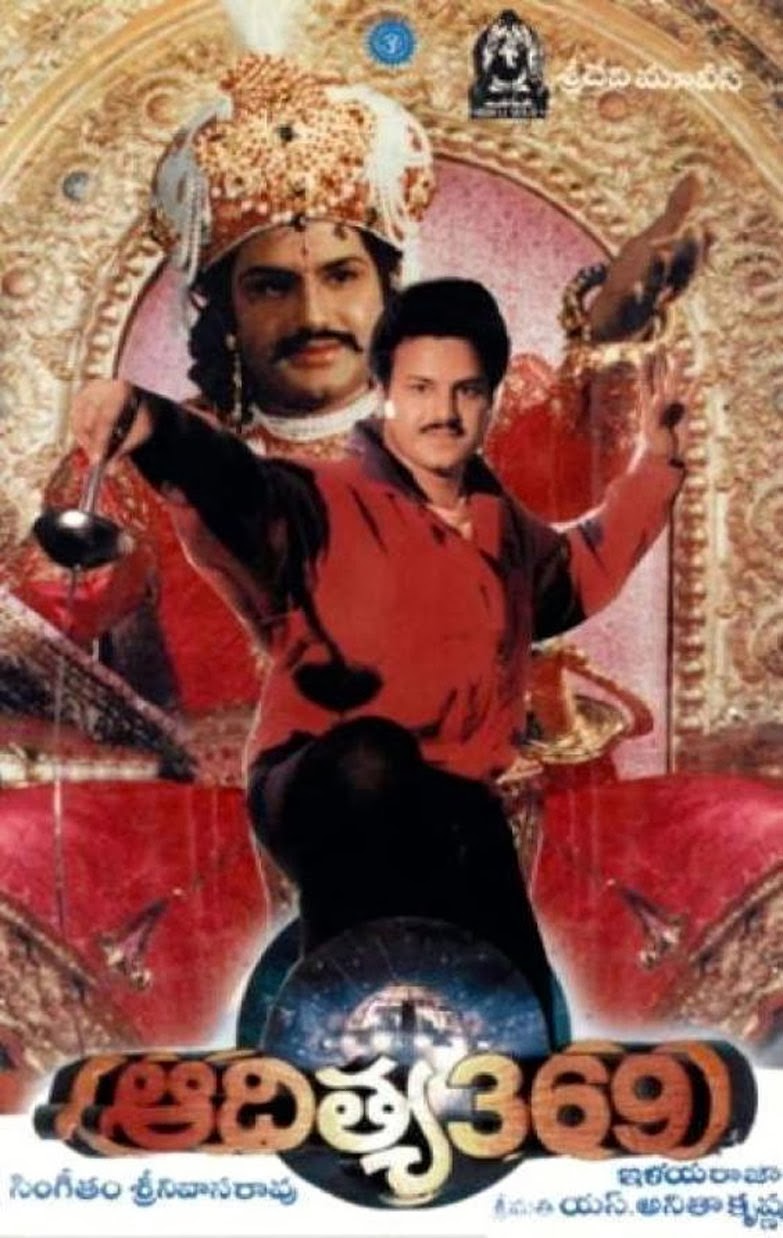
Aditya 369

Aditya 369-Poster

When I heard Singeetham Srinivasa Rao’s Aditya 369 described as ‘historical science fiction’ I was immediately curious.  It is less about science or history and more about the outfits and derring-do, but that isn’t necessarily a bad thing. The film is on Youtube without subtitles and there is a diverting but not very helpful plot summary on Wiki should you wish to swot before taking the journey. But no one in the film prepares, so please do not feel obliged.

Aditya 369-time machine

The plot goes something like this. Professor Ramdas (Tinnu Anand) is an eccentric inventor, but apparently does well enough for himself that he can support a large house and workshop and keep his daughter Hema (Mohini) in stylish polyester outfits. His life’s work is a time machine called Aditya 369. The professor takes a low key approach to security and intellectual property, allowing just about anyone to come and have a look at the machine.
Aditya 369-Amrish Puri

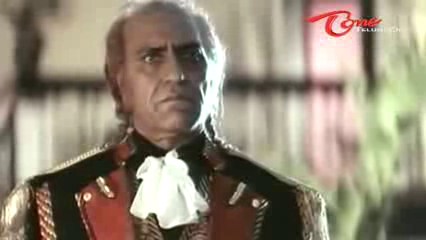
Raja Verma (Amrish Puri) is a crook with a particular interest in historical regalia and diamonds. He arranges to steal a golfball sized diamond from the local museum and replace it with a fake. Now, if you call one guard with obsessive rule observance a diligent approach to security, then this museum was world class. Young Kishore (Master Tarun) is accidentally locked in,  witnesses the theft and has to be rescued when he tries to outrun the thieves.
Aditya 369-Balakrishna and Master Tarun

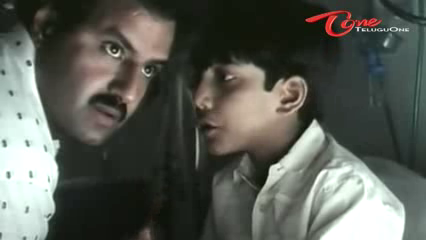
He confides in his saviour Krishna Kumar (Balakrishna) who decides to investigate.  Kishore decides to take his fellow plucky orphans on a spin in the time machine, is rescued by Krishna,  and Krishna and Hema are sent back to the past where they rescue Silk Smitha and meet Sri Krishna Deva Rayalu (also Balakrishna) and learn about the Golfball Diamond.

You know how in lots of time travel fiction the first rule is don’t change anything and don’t use modern stuff and cause ruptures in the fabric of time? When I saw the two emergency suitcases stashed in the time machine I assumed historically appropriate costumes. Well, at least the inhabitants of 1526 got an eyeful of fine 80s fashions. And listened to a boombox.

I disliked Krishna once he had landed back in time. In the presence of poets and scholars he had only ever read about, he couldn’t help but stick his oar in and go for a bit of one-upmanship. It was really tiresome and just made no sense. The dialogue seemed to go along the lines of “As you know Jim, I have an electric shaver” “Wow! Please, unknown man who says he is from another time but based on those clothes may be a nutter, tell us what to do”.

Following that sojourn in the glorious past, the crew is catapulted into the future where they nearly die from radiation before being given their own shiny space suits. To be fair to Krishna and his lax approach to historical contamination, the future people didn’t seem to have any qualms about revealing significant details that characters would not yet have experienced. But while I could understand the future people knowing their history,  I expected a bit more curiosity from the people in that past. The final scenes bring hero, villain, professor and know-all child into conflict as things almost literally spin out of control as Krishna has to rescue his friends and save the world.

Balakrishna offers his usual high energy performance. He could never be accused of slacking off, except maybe in the dances where he often relies on a slow disco strut interspersed with vigorous flailing. Krishna doesn’t have any hidden depths so what you see is what you get. The character tried my patience and I found myself looking at the sets and backgrounds rather than caring about what was happening to the people. There were a couple of sickening stunts involving horses so that further tarnished the heroics.

Aditya 369-Mohini

Mohini is adequate as Hema given that for most of the film she is just part of Krishna’s baggage.
Aditya 369-walk like an Egyptian

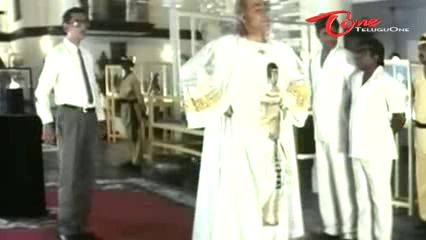
Amrish Puri does his usual villain thing with flair. Raja Verma is a bit obsessed with things that are original and authentic which may explain his Faux-gyptian style robe.  The diamond was supposed to link all the times together but that part of the plot seemed like an afterthought.

There are comedy uncles but no one else gets much of a look in with Balakrishna in a double role so that is another positive for the film. Suthivelu plays a hapless policeman who gets dragged along on the time travels, and Brahmi makes a small appearance as a scientist.
Aditya 369-henchmen

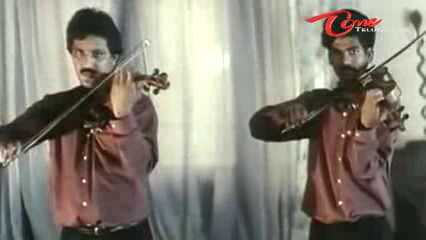
I really enjoyed Raja Verma’s gang of purple shirted thugs who carried guns in violin cases, and then played violins as background music in an interrogation scene. I think that is the first time I’ve heard the violence/violins pun in an Indian film. Tinnu Anand seems to have his own personal wind machine in all his scenes, maybe to stop him overheating from overacting.  Annapurna is Krishna’s mum although she doesn’t get to do much apart from marvel at his awesomeness.

Illayaraja’s background score is lovely. The theme over the opening credits is lush and a little eery. The songs are melodic although mostly a bit random. I did like the dance off between Silk Smitha and Mohini to settle the matter of Krishna’s honour. Well, I did until of course Krishna decided he could play all the instruments AND do the dancing.

The production design has a retro charm that sometimes made me nostalgic for TV series like Lost in Space. Terminator 2 was released in the same year and the difference in technical capability is enormous.

The “ye olden days” segment was what I would expect from any Telugu film, but the futuristic episode was more remarkable for the efforts of the wardrobe department to really feature antennas and silver lame.

Apart from that, as noted earlier, the costumes were mostly 80s mainstream fashion – lots of high-waisted denim, synthetic fabrics and big hair. And the women didn’t fare much better.

There are more things in heaven and earth than are dreamt of in your philosophy and Telugu films are a great place to find them. See this for the curiosity value of the Telugu mass hero formula applied to a different genre and for the low tech effects that have their own appeal. 3 stars!
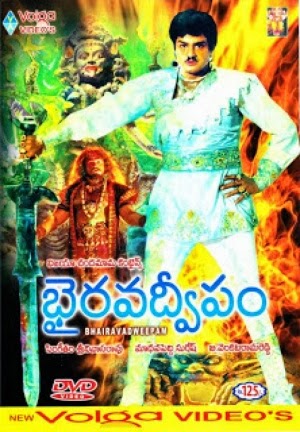
Bhairava Dweepam

Bhairava Dweepam DVD

Released in 1994, Bhairava Dweepam is a lavish lolly coloured Telugu folk tale. Writer/director Singeetham Srinivasa Rao picked up a couple of awards and the film was both a commercial and critical success. Although I found it quite entertaining, there are a few things I couldn’t help but compare unfavourably with other similar films.

Bhairava-Dweepam-Vasundhara is rejected

The story is easy to follow, which was handy as I haven’t been able to find subtitles. Vasundhara (K.R Vijaya) had a baby, probably out of wedlock but certainly not to the liking of the royal family. When she takes her son to the prince, the father in question, she is turfed out into the stormy night. She has an accident in her small unstable boat and mother and child are separated. Vasundhara is taken in by a kindly hermit who also creates a magical (poorly trimmed fabric) flower that will thrive as long as her son is also alive.

The boy is adopted by a village leader and grows up to be Vijay (Balakrishna). The people rejoiced – except that baby in yellow. Vijay and his sidekick or adopted brother, (Mohan Babu), are out and about doing what boys in folktales do when they spy Padma (Roja). Vijay is instantly smitten and sets about finding his way into the palace to spend more time with her. Unbeknownst to Padma, an evil magician also has his sights set on her. Padma is rendered seriously ill by a spell and Vijay searches for a cure. Along the way he meets his mother but they don’t yet realise their connection. She gives him a protective amulet which comes in very handy. He discovers the nefarious plot and after much travail, confronts Bhairava to set things to rights.

The story is very similar to the gorgeous 1951 film, Patala Bhairavi. And that is where the comparisons start. Where Patala Bhairavi was stunning and NTR was effortlessly charismatic, Bhairava Dweepam is a bit less magical and Balakrishna is more workmanlike in constructing his performance. The special effects in 1994 have not moved on all that much from 1951. I did wonder what my 1994 self would have thought, but in 1994 I had already seen films like Ridley Scott’s Legend (1985). While there were some things about Legend I don’t care for (Tom Cruise for starters), it did look like a magical fairytale and the unicorns are beautiful. Compare and contrast these approaches to prosthetic horse makeup.

While I appreciate the spirit of making do, even if it does result in a grumpy looking horse with feathers stuck on, I was left a little underwhelmed. It was a mixed bag and often more amusing than enchanting.

There are other sequences involving a two headed rubber chicken dragon attacking the flying bed used to whisk Padma to the villain’s cave, some tiny miniature people who help Vijay obtain a magical necklace, a mirror monster in a peekaboo green rubber suit and so much more. It is kind of great but not really good. Ajooba-esque, perhaps. And there are some horse stunts that look horrible. One scene involved Vijay using a stick to trip horses, and not all of them looked like they were going to get up. I deducted Hero points from Vijay on seeing that tactic.

Balakrishna works harder than anyone else in the cast. Vijay is in almost every scene and usually throwing himself into a duel or bounding about rescuing the princess so this is a physically demanding role. If Balakrishna had been paid per leap he would have cleaned up. Vijay helps or liberates a number of magical beings along the way, and they give him valuable assistance in his quest. Balakrishna certainly has the confident swagger down pat even if his dancing is less than impressive. But making a film that is so similar to one of NTR’s acclaimed roles and trying to replicate his style is a big ask. I thought the same when I watched Sri Rama Rajyam. There is nothing wrong with his performance, but he doesn’t have the same expressive quality or panache and so comes off as less engaging. Tarak (NTR Jr) seems to take a slightly different tack by paying a tribute to his grandfather in his films but not trying to mimic him as closely. That allows for more individuality and he has developed a kind of everyman hero persona (with phenomenal dancing skills). Balakrishna is more closely tied to the legacy and so I find it hard to appreciate him as an individual actor, at least based on the handful of his films I’ve seen. Plus he will always be This Guy to me.

Roja is the love interest, Padma Devi. Padma is your standard damsel in occasional distress. She does nothing other than look sparkly, frolic with her handmaidens and wait to be rescued from Certain Death. Roja is pretty and lively, and she handles the numerous songs and dances easily. But I think she would have spent more time in hair and makeup than having to learn her few lines. I did wonder why, since Bhairava required a virgin for his spell, no one thought about how Padma could disqualify herself.

The supporting cast are all good without being outstanding. Rambha has one of the big musical numbers as Yakshini, the owner of both magical necklace and green mirror monster. Giri Babu and Subhalekha  Sudhakar play scheming brothers (and Vijay’s relatives) who not only depose their own father but have their eye on Padma’s kingdom as well.

K.R Vijaya is good as Vasundhara and she does get a couple of quite dramatic scenes, including a classic Nahiin Face Off with Balakrishna.

The design department certainly went for it. Their philosophy could be summed up as ‘all the colours, all the time’. Vijay has an extensive wardrobe of gaudy leggings and tunics, nicely accessorised with an array of ornate boots and matching wristbands. I was particularly impressed with the outfit that had canary boots to match the yellow terry-towelling trim and headband. Perfect for the active hero! Roja is very glittery, as are her attendants. Bhairava’s island cave lair is more impressive from the outside but he does have more than the usual number of talking statues so that was something. There are comedy demons that help Vijay, and they look like something straight out of the kindergarten dress up box.

Bhairava Dweepam is entertaining enough, but having seen it twice now I don’t think I’d invest the time on watching it again. See it for a relatively recent take on the folkloric blockbuster and for the sheer energy and enthusiasm of the cast. 3 stars! (But if you’re a diehard fan of Ajooba, add an extra star!)

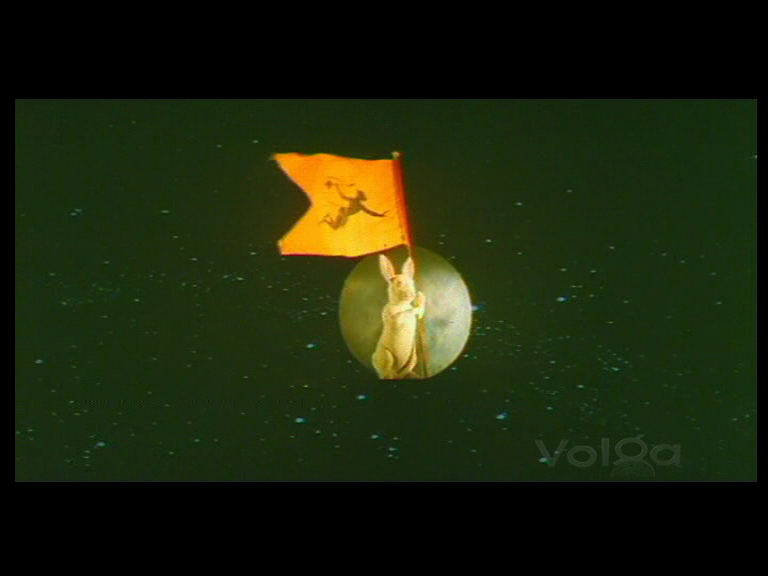
Bhairava-Dweepam-Rabbit

Also – I love this production house emblem.

Kodama Simham

kodama-simham

Chiru as a cowboy! Hidden treasure! Radha as a jungle warrior princess!
While I love a lot about Kodama Simham I am going to begin with a caveat. There are some horse stunts that turned my stomach.  If that would worry you, have the fast forward button at the ready. In a couple of scenes it did look like the horse that went down got up and ran past the camera so maybe I am overestimating the likely damage. But it is something that makes me wary of this genre, no matter what industry made the film. And it seems a bit rough when it is a horse that saves the hero at a critical point.

Kodama-Simham-Bharath wants justice

Bharath (Chiru) is a gunslinger – the good kind – picking up the bounty on criminal types. Bharath manages to upset the local purveyors of iniquity. His parents are killed, but not before his dad tells Bharath he was adopted and to go look for his biological parents. His father Dharmadev (Satyanarayana Kaikala) hid some treasure to keep it safe, but was forced to go into hiding while Bharath’s Ma was jailed. Bharath must retrieve the treasure, clear his parent’s name, and give the bad guys their comeuppance. Simples!

I’m not sure what time period this film is meant to be set in. There are few reliable fashion indicators.

Horses are the only form of transport although there does seem to be a lit-up fish tank and a jukebox in the saloon.  There are what look to be Native American styled natives, as well as a forest dwelling tribe of non-specific plumage. Plus the (possibly) cannibal cat-people guarding the hidden treasure.

There are hangings and shootings galore, and justice seems to be an individual pursuit. Well, Brahmi is the local police so I can’t blame anyone for deciding to go DYI. Bharath disrupts an auction where young ladies are being sold to men or brothels, sets the captives free with a cheery “All the best” and that seemed to be the end of that. Swapna is chased for the umpteenth time by men of bad intent and runs into the jungle, leaving her girlfriends for dead. Nice. She meets Dharmadev who tells his boys off for their lack of manners and again, that seems to be the end of that. There is a pleasing finality to some of these issues: “You’ve been told, now bugger off and don’t do it again”. “OK”. If only that worked in real life.

While the title cards said K Muralimohana Rao directed, at times I suspected the film was being ghost directed by the Hat Department. Telugu cowboy films always turn it on for the headgear, and this was a corker. Behold!

Chiru’s hero entrance starts, as it should, with his boots before the rest of him swaggers in to view.

Kodama-Simham-The bootsKodama-Simham-the treasure

Unfortunately it is hard to tell on a grainy VCD print, but in one scene if his boots aren’t bulletproof, they come close. He has a laconic style and an extensive collection of guns. But what makes him an unstoppable Hero is his self-belief and righteousness. There is a touch of Clint Eastwood in how Bharath is styled – he wears a poncho with panache (probably all that practice Chiru has twirling capes) but Chiranjeevi puts his own stamp on the role. Bharath is a dancer and a ladies man as well as a capable fighter and filial son. Directors must have count their lucky stars to get a hero who could dance and fling himself around in action scenes and do the horse riding scenes as well as being ladybait. The story builds up to an all-in confrontation, and Bharath does follow a fairly logical path to that conclusion, even if the steps along the way strain the elasticity of my disbelief suspenders.

Could one heroine suffice for such an exemplary hero? No.

Kodama-Simham-SonamKodama-Simham-Swapna and art

Swapna (Sonam ) is the mayor’s daughter. She has a penchant for making bad art and wearing terrible outfits.

Kodama-Simham-the tribeKodama-Simham-Chiru and Radha

Bijli (Radha) could probably be described as a tribal princess. She likes hunting, shooting and wearing bad outfits. There is some common ground for these ladies if only they could see it. It took me a while to place Sonam but then it hit me. The vacant stare, the pout, the head tilted on the side – She was in Ajooba! Maybe her career is worth investigating further…. Radha of course was an established heroine in South films at this time, and Bijli is the more substantial of the female roles. She looks like she had fun playing the kickarse leader and Bijli and Bharath were the main drivers of many of the revengey plans. Sadly for Bijli, Bharath seemed to be drawn to the girl who did enough stupid things that he would be kept fully occupied in saving her.

Kodama-Simham-Pran the villainKodama-Simham-Pran!

Pran is the dastardly Mayor. He is first seen reading a proclamation off a fancy silk scroll before ordering the hanging of an assortment of extras. I was so pleased when I recognised him but somewhat disappointed that he was in such a stereotypical role with little scope for him to really work his villainy. Still, Pran! Always fun to see worlds collide even if he did try and have Chiru’s eyes out with a red hot poker.

Kodama-Simham-MohanbabuKodama-Simham-Sudhakar

Mohanbabu is the pungent Suddigaali – everyone sniffs when he turns up and no one looks pleased with the result. He is a cartoonish villain but his spaced out reactions and bizarre logic made for some entertaining scenes. Sudhakar is the Mayor’s bumbling accomplice and does his usual shtick. Kannada  Prabhakar is a more flamboyant and sociopathic bad guy.

Kodama-Simham-I shall call him Jaws

There is also that guy, who looks like a) Jaws from the Bond films and b) he stole one of Chiru’s costumes. There is a villain for all seasons in this film.

This is one of the films where I wait eagerly for the songs. Every picturisation has its own kind of awesomeness, largely fabric based. Raj-Koti’s songs are fun and Chiranjeevi makes the most of the choreography.  I choose to believe his dancing on the ceiling was a tribute to Fred Astaire rather than Lionel Richie.

Sadly few of these songs are available on YouTube or the like due to the egregious copyright claim shenanigans. I cannot fathom why a company with no apparent interest in promoting or preserving the old films they allegedly own would object to short clips being shared online when they don’t have their own version uploaded. I’d get it if they were worried about loss of ad revenue, but often I am mystified. Unless they’re worried someone will try and buy a copy.

See this, if you can find a copy, for the full tilt tongue-in-cheek mass style transplanted to Cowboy Country and the pleasing commitment to justice and hats. Chiru is in fine fettle and Radha is an excellent foil. The more is more approach means you’ll never have long to wait for the next song, dance, fight, demonstration of how to transport a treasure chest across a gorge or costume change. 4 stars!