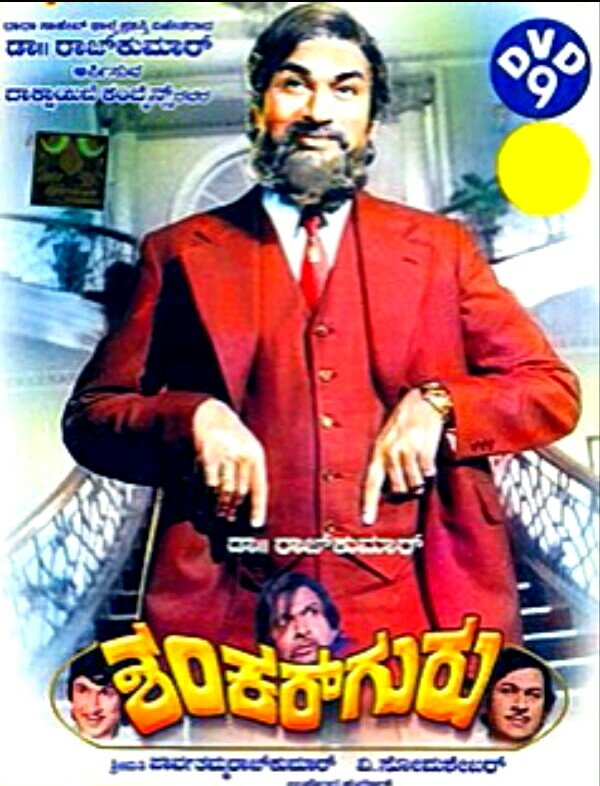
Shankar Guru (1978)

A family torn apart by murder, children separated at birth, villainous villains, a triple role for Dr Rajkumar and 3 wonderful heroines – Shankar Guru has every single masala trope and then some. With a stellar cast and convoluted storyline, M.D. Sunder’s screenplay has something for absolutely everyone. Thanks to blog reader TL for the recommendation and I agree this is a fabulous film! Oh, and if anyone thinks the brief synopsis above sounds familiar, Shankar Guru was the inspiration for Hindi film Mahaan.

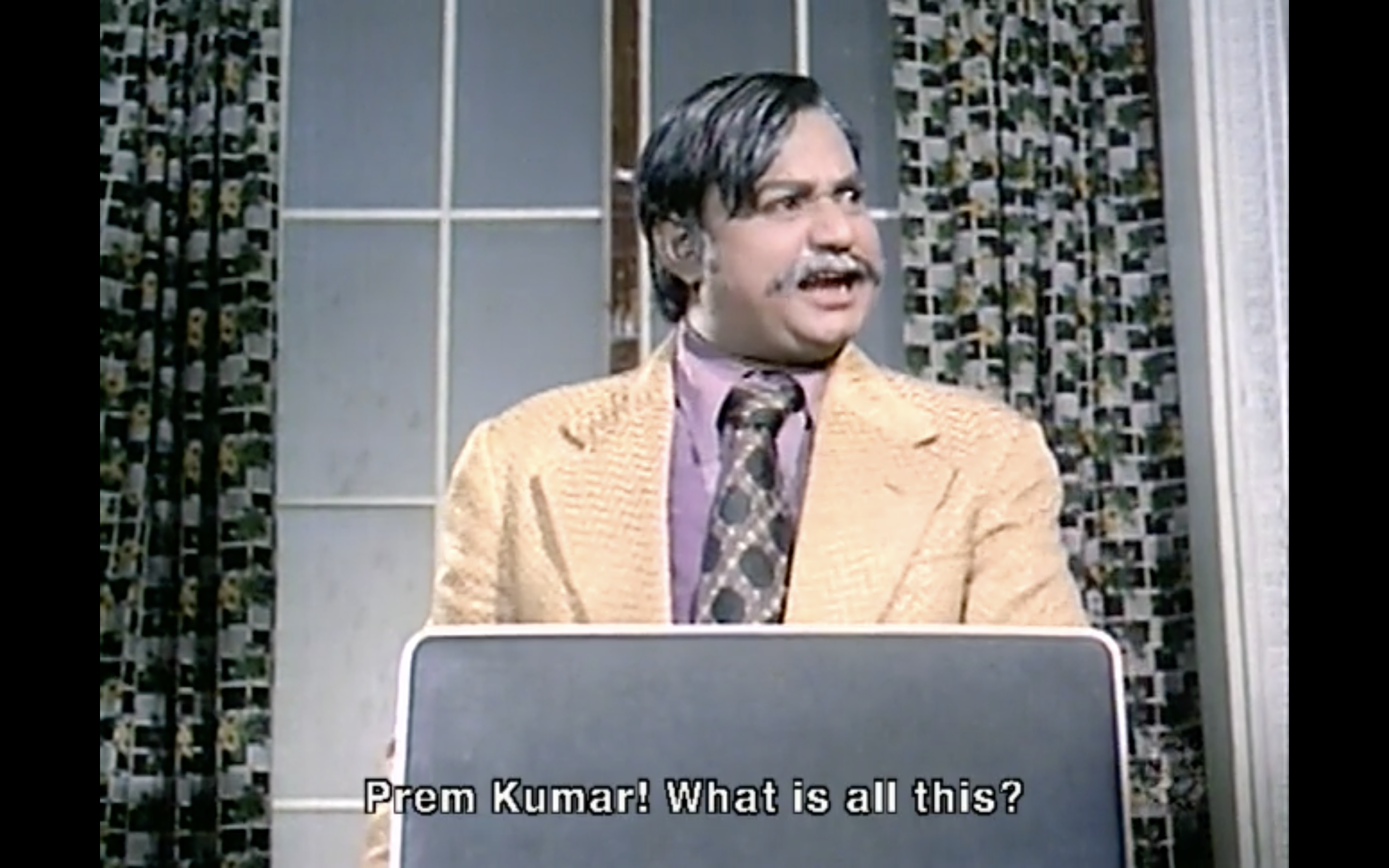
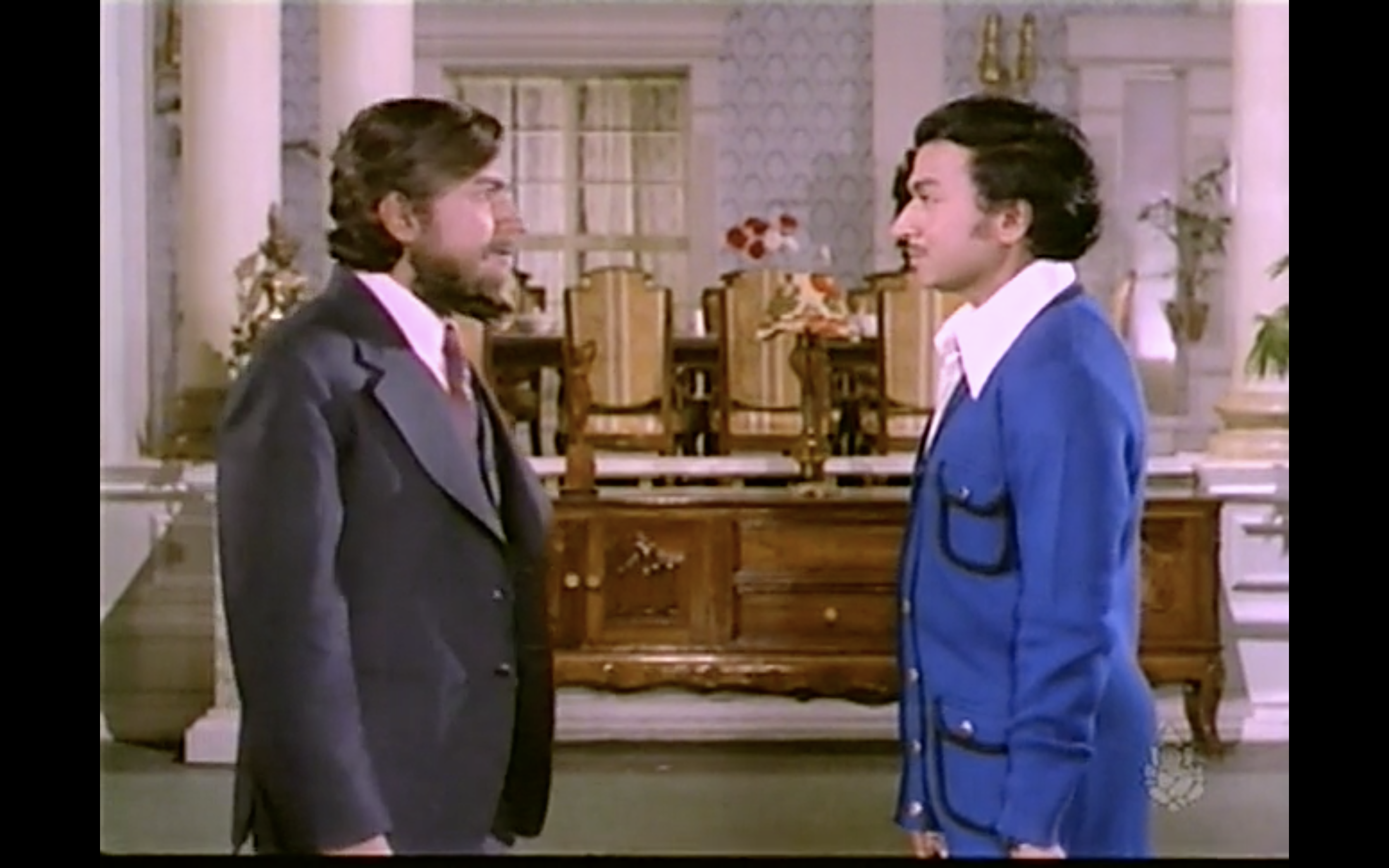
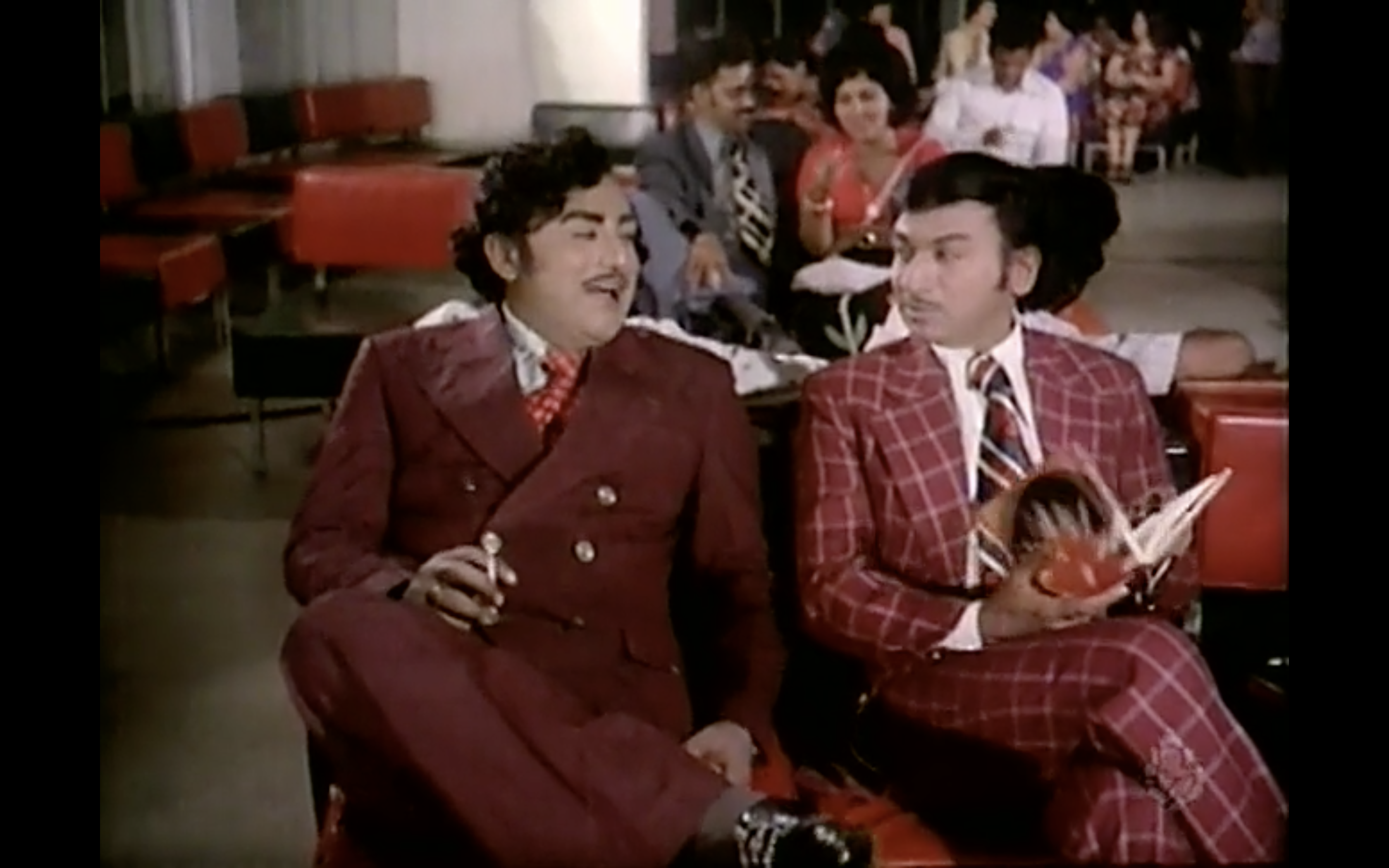
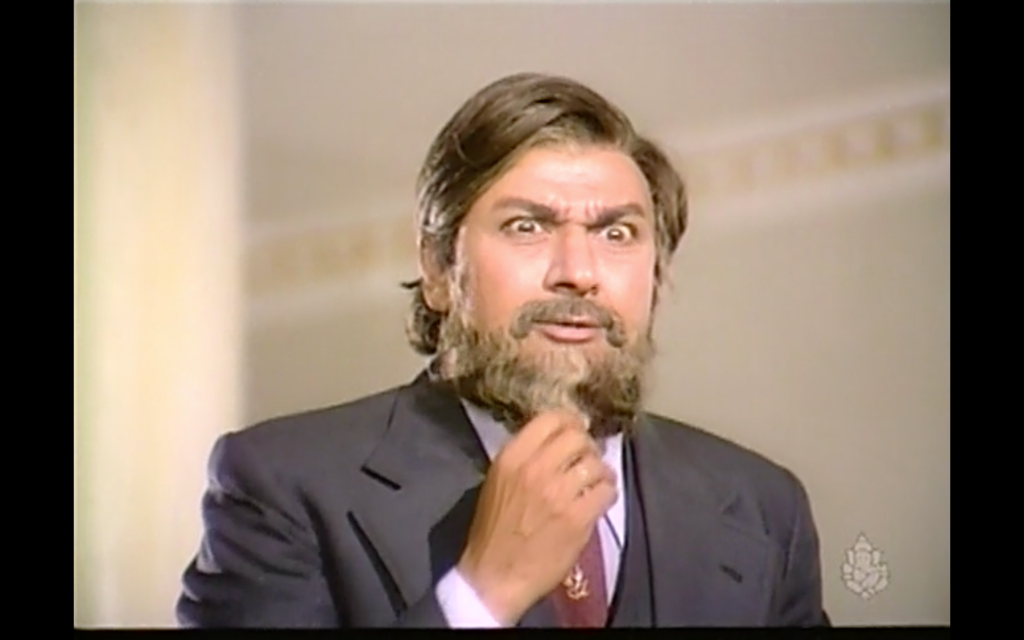
The film starts with Rajashekhar (Rajkumar) disagreeing with his business partners including Madanlal (Thoogudeepa Srinivas), a man who takes dressing to match his surroundings very seriously indeed.
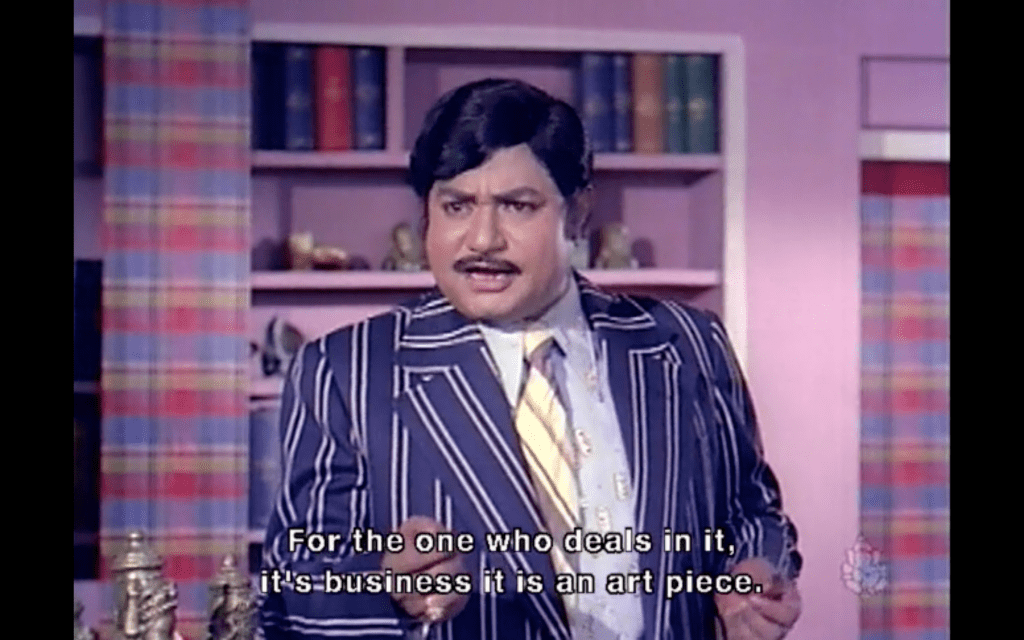
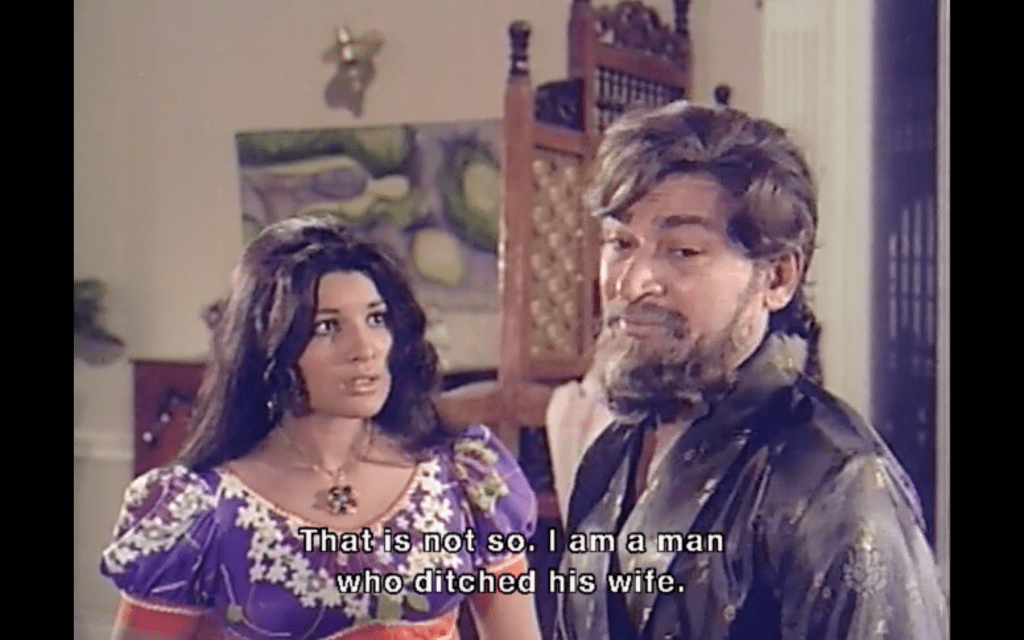
The partners want to start selling idols taken from temples overseas and Rajashekhar disagrees so vehemently that he dissolves their partnership straight away. However, in the ensuing struggle one of the potential investors is accidently killed by Rajashekhar. He immediately races home and runs for the train station with his heavily pregnant wife. But as the train pulls out of the station, only Sumati (Kanchana) is on the train with Rajashehkar left behind.
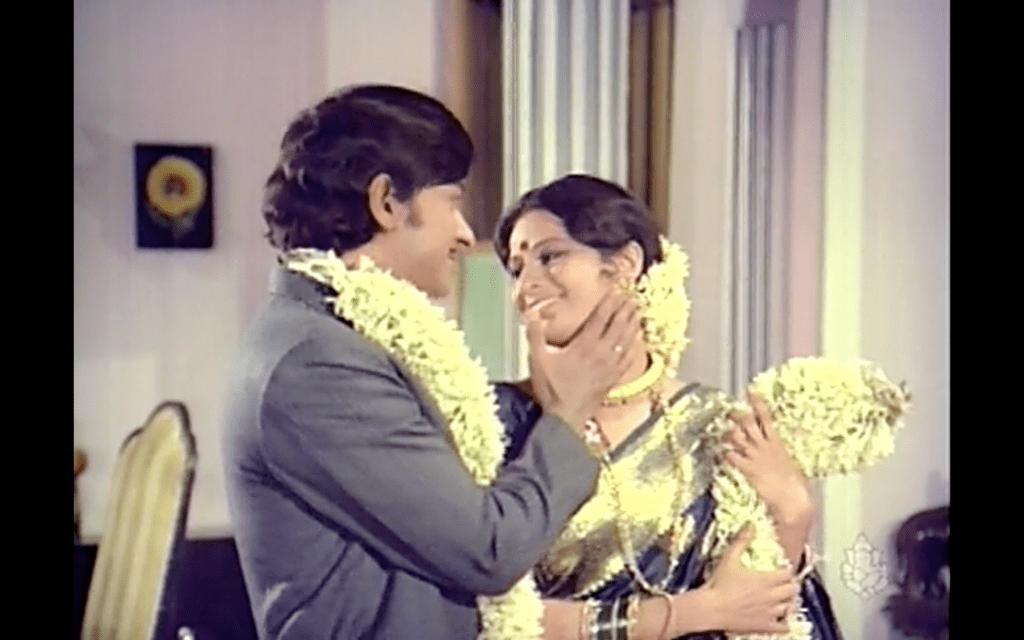
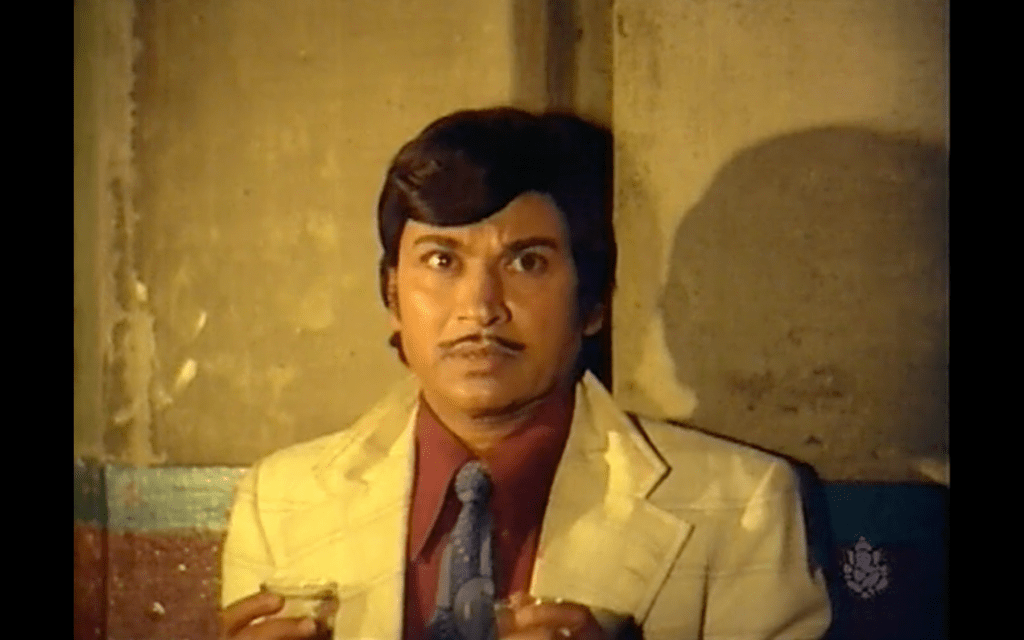
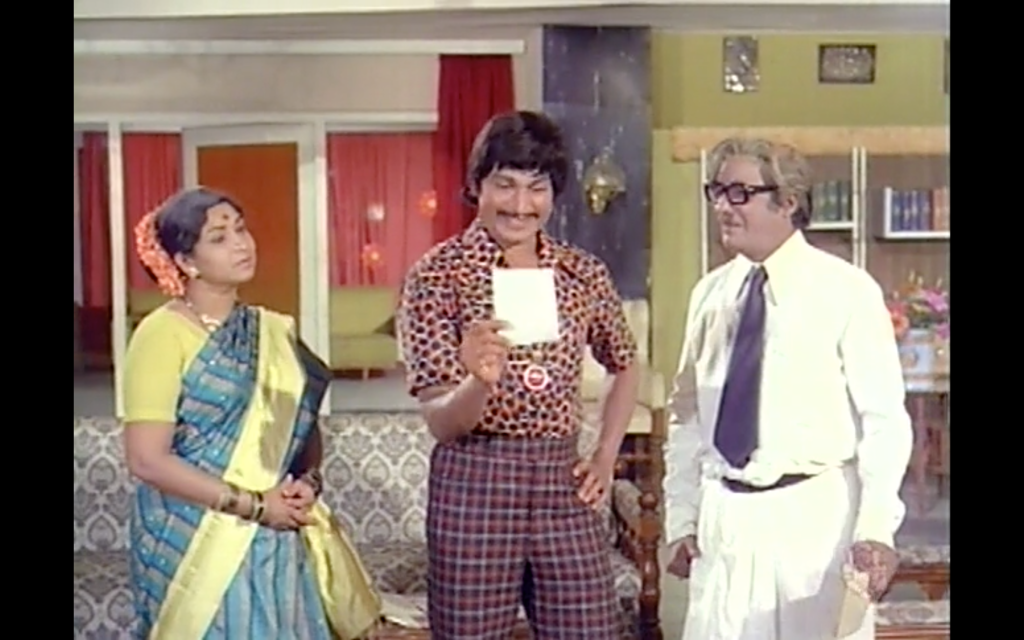
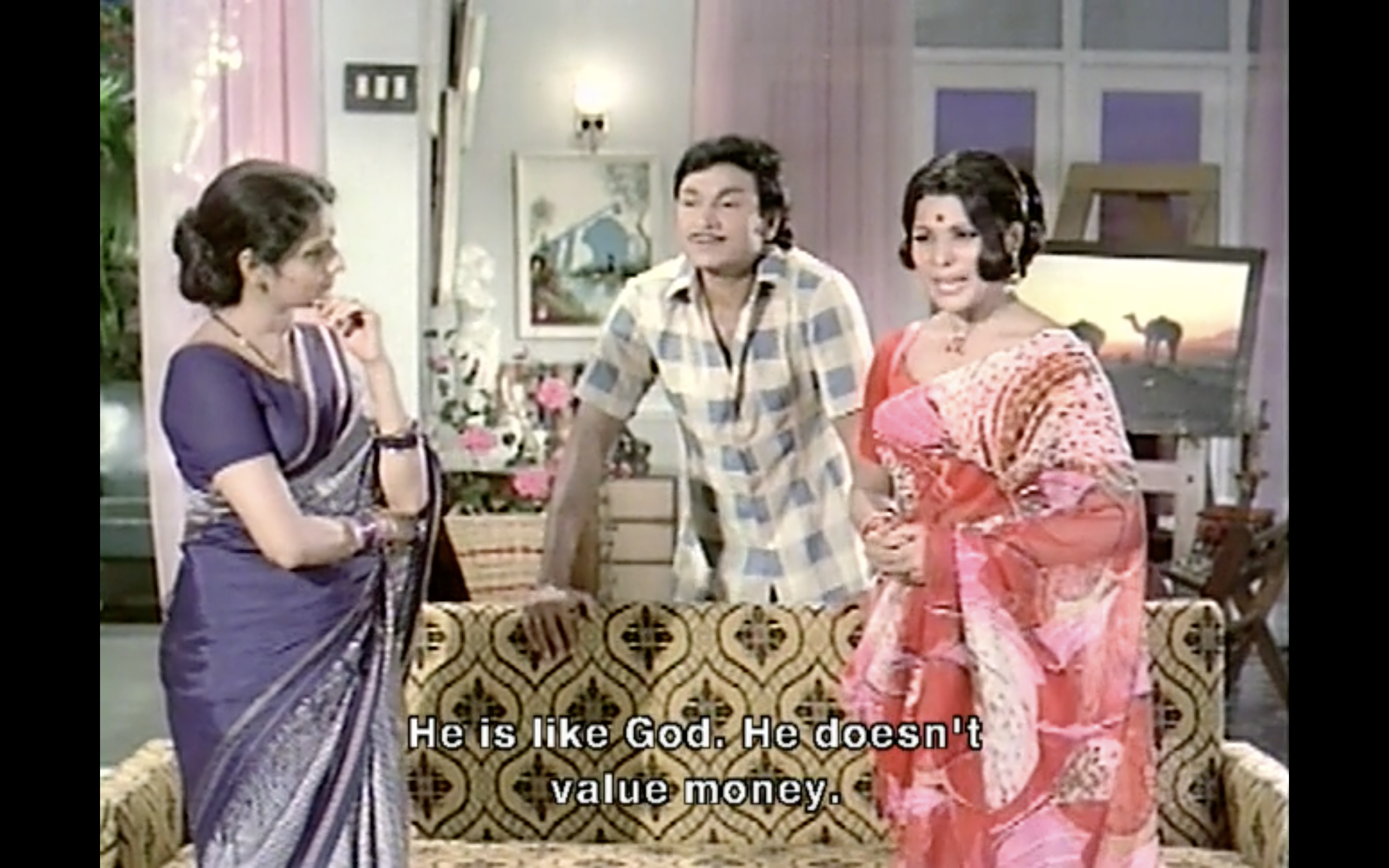
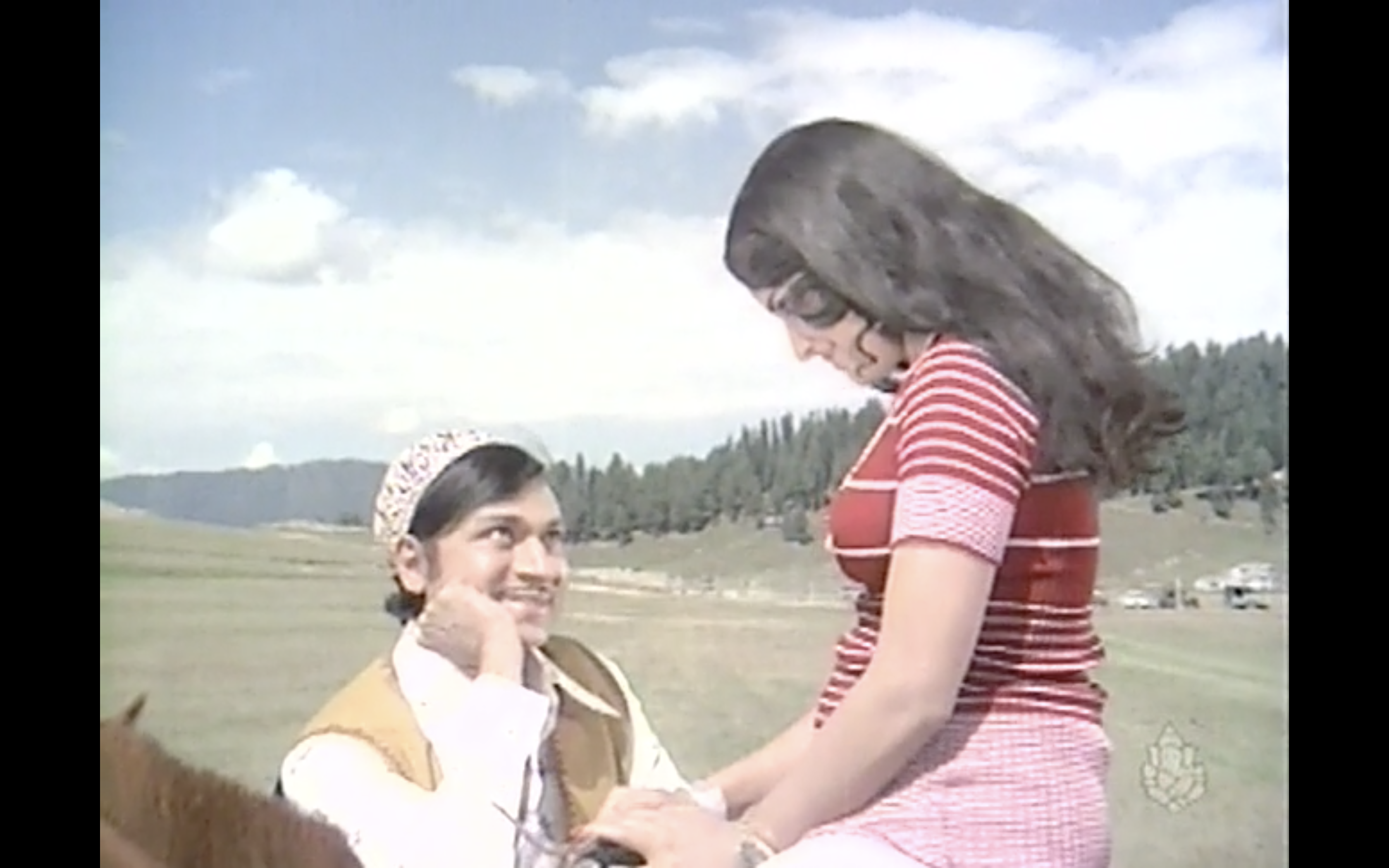
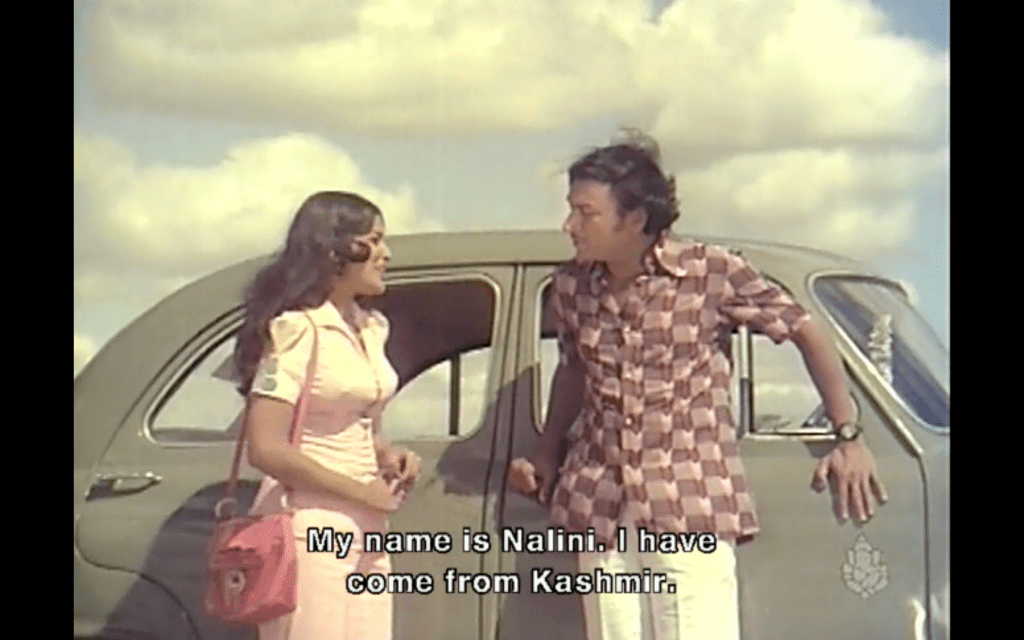
Years later, Sumati is making a living by selling paintings in Mysore while trying to persuade her son Shankar (Rajkumar) to find a job. Shankar meets Nalini (Jayamala) when he saves her from some thugs who were harassing her, and she arranges for him to go and work for her guardian Jayaraj who lives on an estate in Srinigar. At the same time, Malati (Padmapriya) is arguing with her grandfather Gurumurthy (Sampath) and refusing to get married. As a way to appease him, she decides to pretend to be married to local entertainer Guru (Rajkumar) who in reality is the son of lawyer Lakshman Rao (Balakrishna) and is in Kashmir specifically to woo Malati. Guru was sent Malati’s picture by her grandfather’s doctor, Dr Prema (Uma Shivakumar) who is his father’s sister.

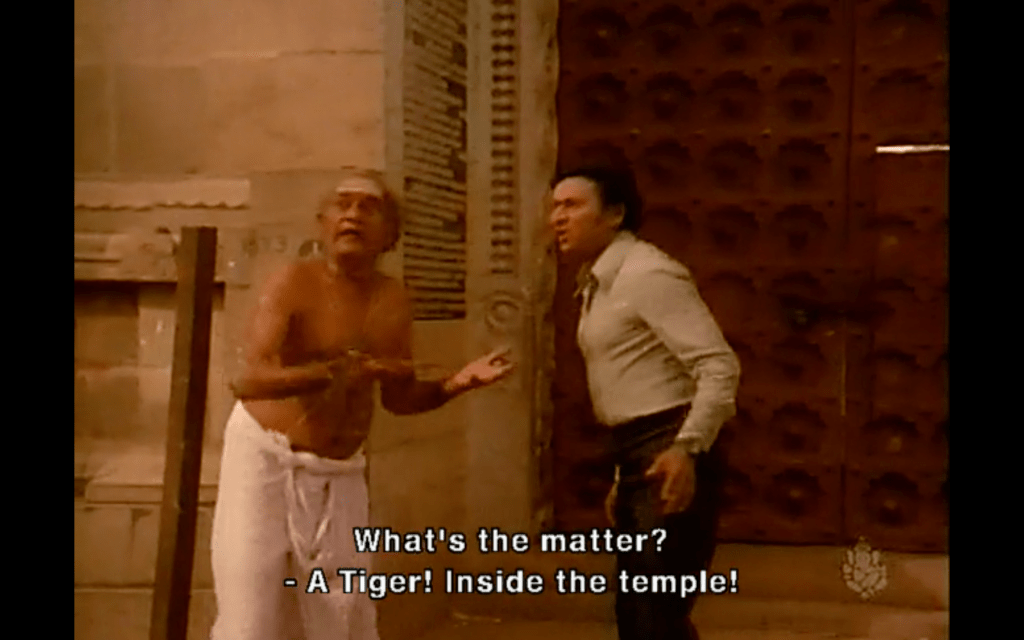
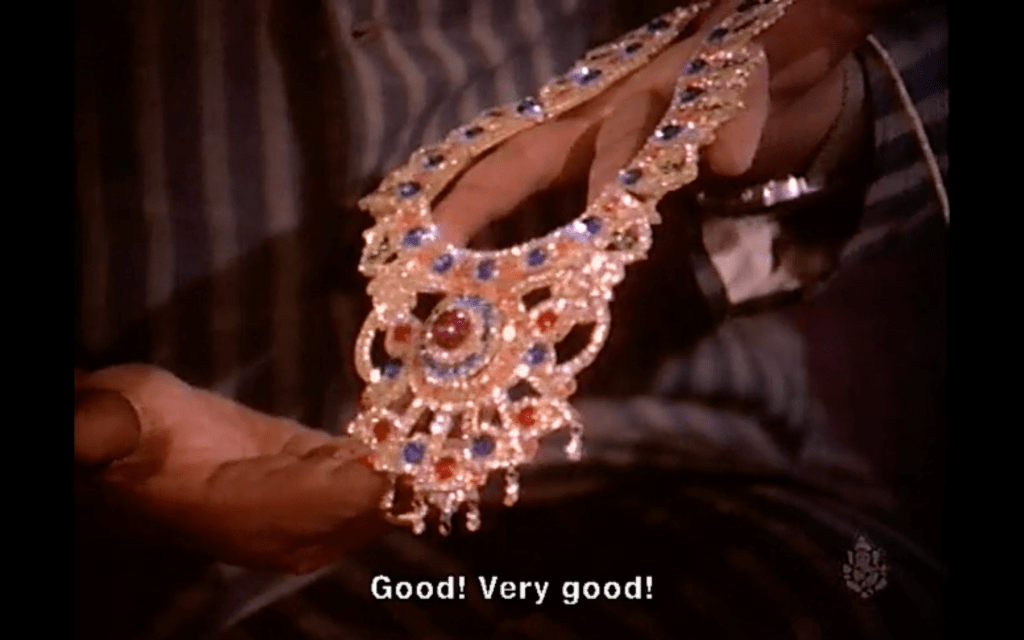
Just before Shankar heads off to Kashmir, he visits a local temple where a group of thieves use a tiger to frighten off the worshippers before stealing a valuable necklace. Photographer Prem Kumar (Vajramuni) is a friend of Nalini and her guardian, but is also in league with the thieves and he hides the necklace in some paintings by Sumati that Nalini has bought for Jayaraj. The gang is based in Srinigar, and they plot to get the necklace back from Shankar when he arrives by substituting Madanlal’s son Divakar (Chandrashekhar) as the new estate manager.
With me so far? The plot gets even more convoluted when it is revealed that Dr Prema was at the hospital when Sumati gave birth, and she actually had twins! Lakshman Rao’s son was stillborn, so Dr Prema separated the children, giving one to Sumati and one to her brother. Fans of the significant item that ultimately reunites separated lovers/brothers/other miscellaneous family members will be happy to hear that one such item does play a role in the film, and that ultimately everyone’s relationships to everyone else are explained. Although not before there is plenty more confusion!
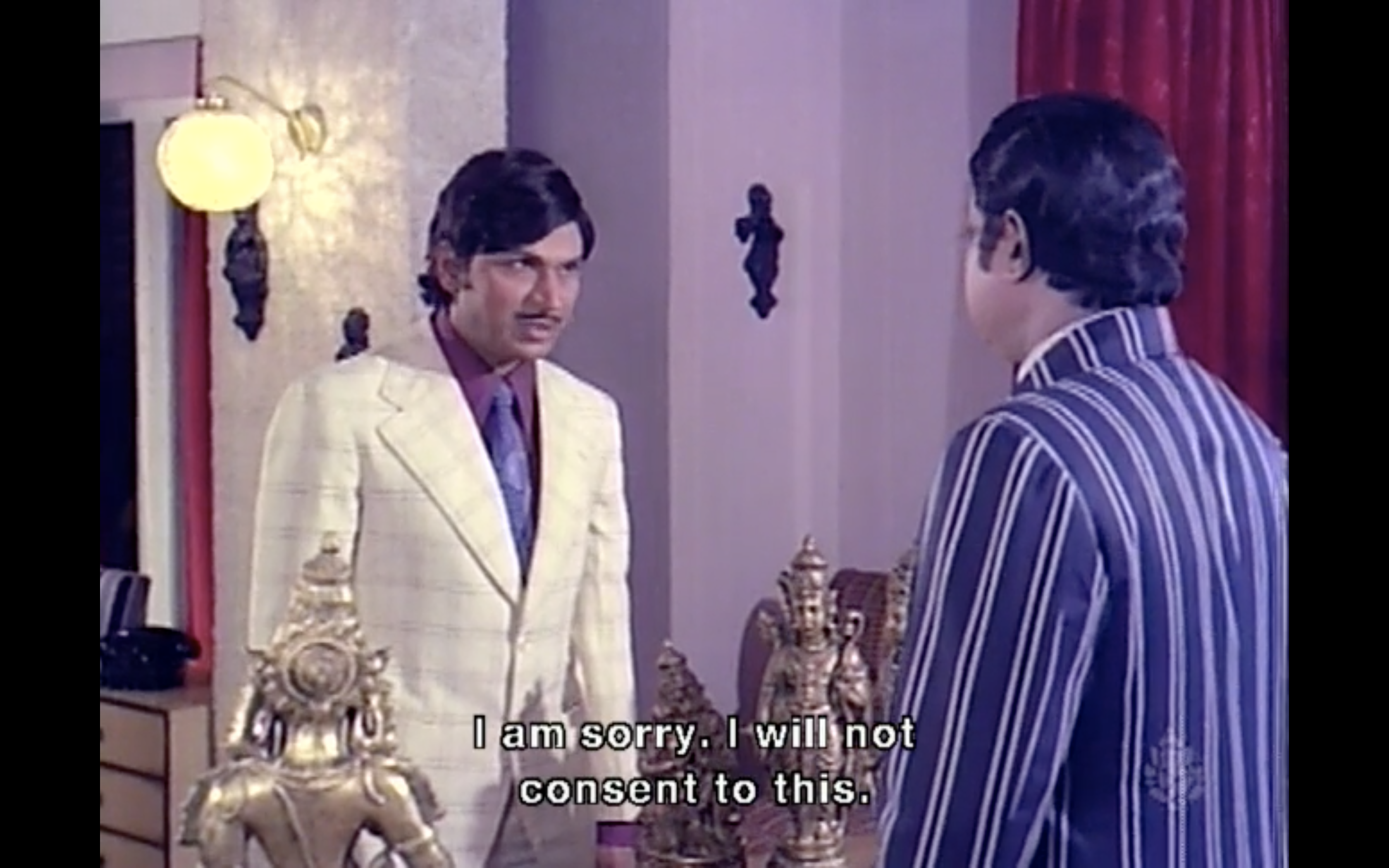
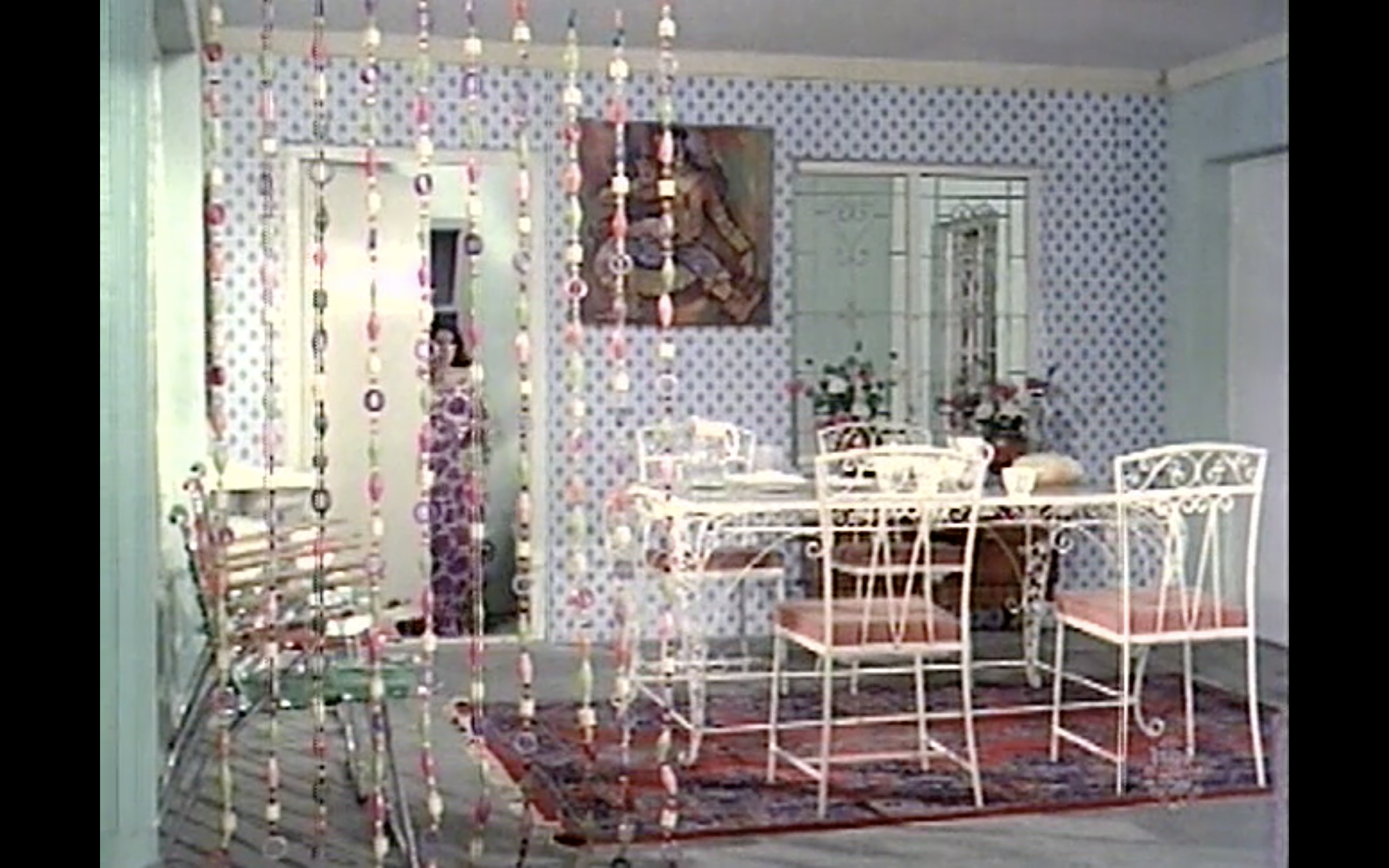
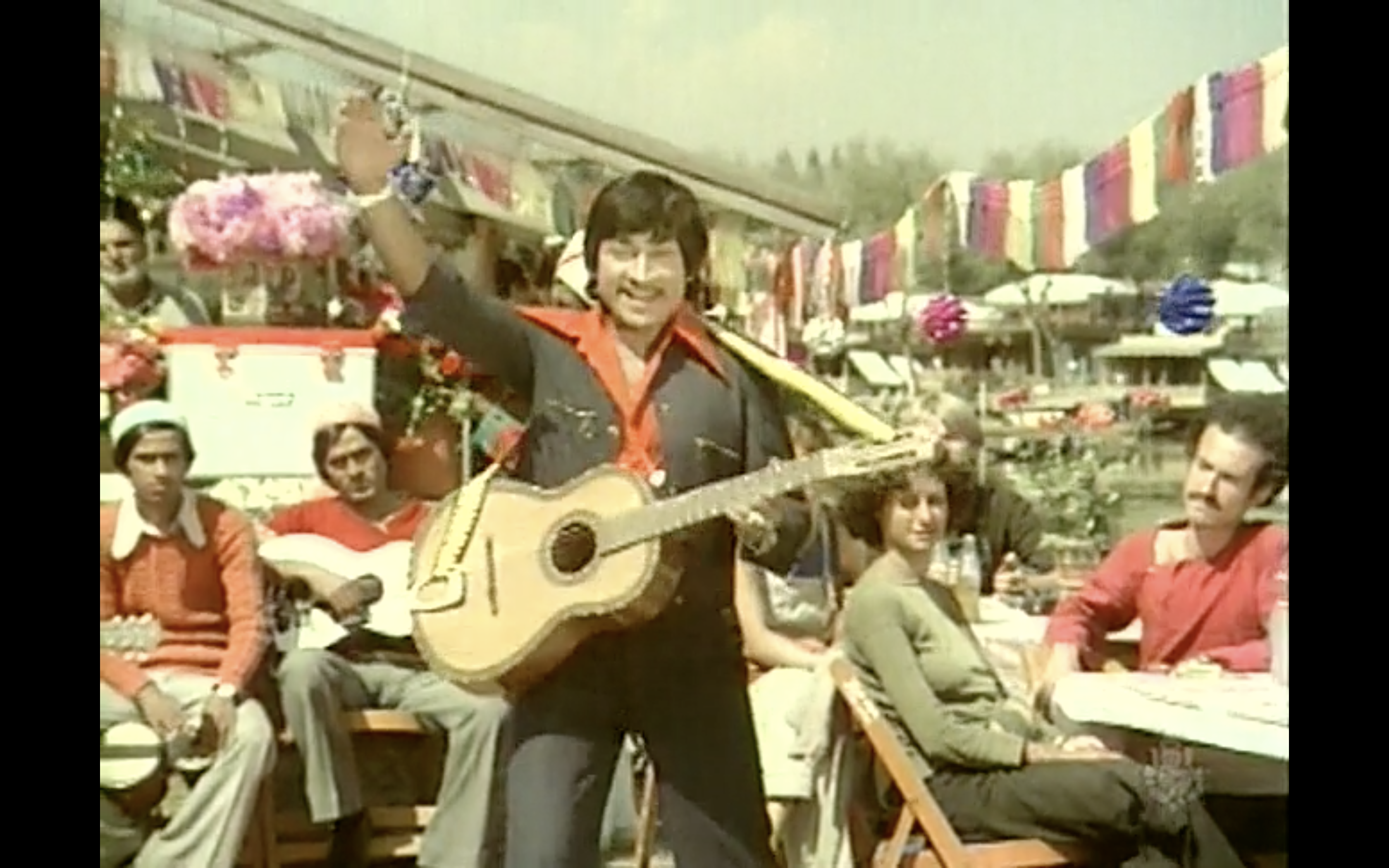
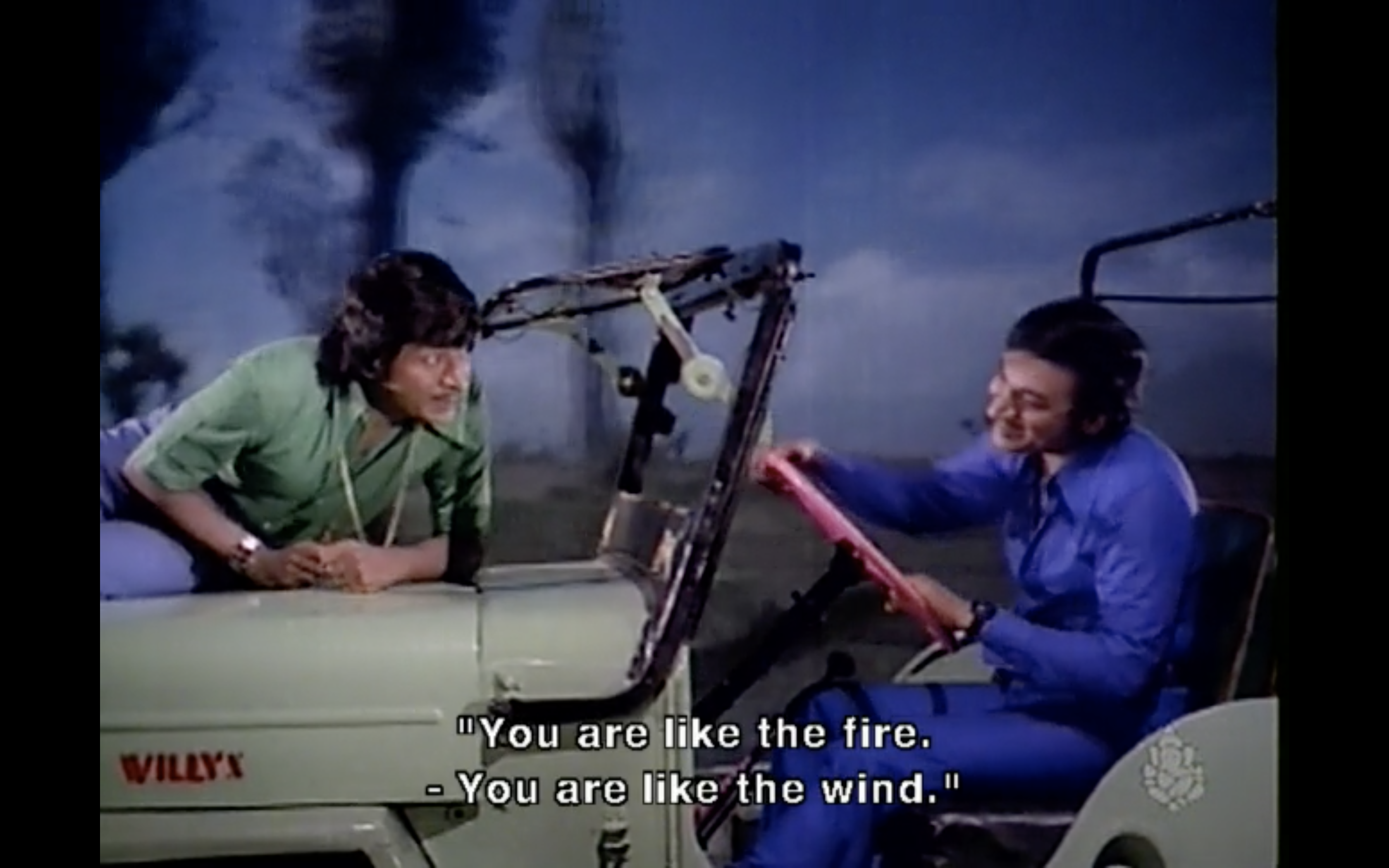
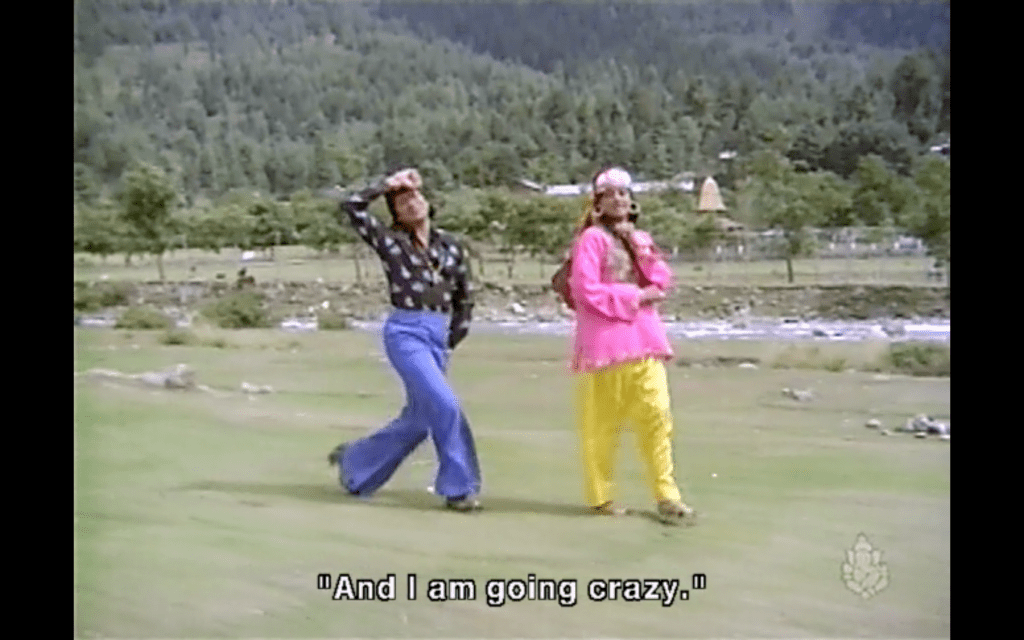
There is a lot going on here, but I found Shankar Guru less confusing than Mahaan, and the different threads are all quite easy to follow. Partly this is due to Dr Rajakumar who makes each of this three characters sufficiently different from each other that they are easy to tell apart. Rajashekhar aka Jayaraj has been devastated by the loss of his wife and despite falling on his feet he still pines for her every day. Shankar is the ‘good son’ who loves his mother and is also hot on the trail of the jewel thieves, while Guru is a typical rich man’s son whose carefree ways contrast with the more serious Shankar. The three heroines are all excellent too. Kanchana may have been abandoned by her husband, but she has made a good life for herself and her son, and is quite able to take care of herself, thank you very much! Jayamala as Nalini is charming and every inch the rich heiress with a heart of gold, while Padmapriya seems to be thoroughly enjoying her role as spoilt and demanding Malati. Note her unique hairstyle in this song and also Dr Rajkumar’s commitment to the choreography!

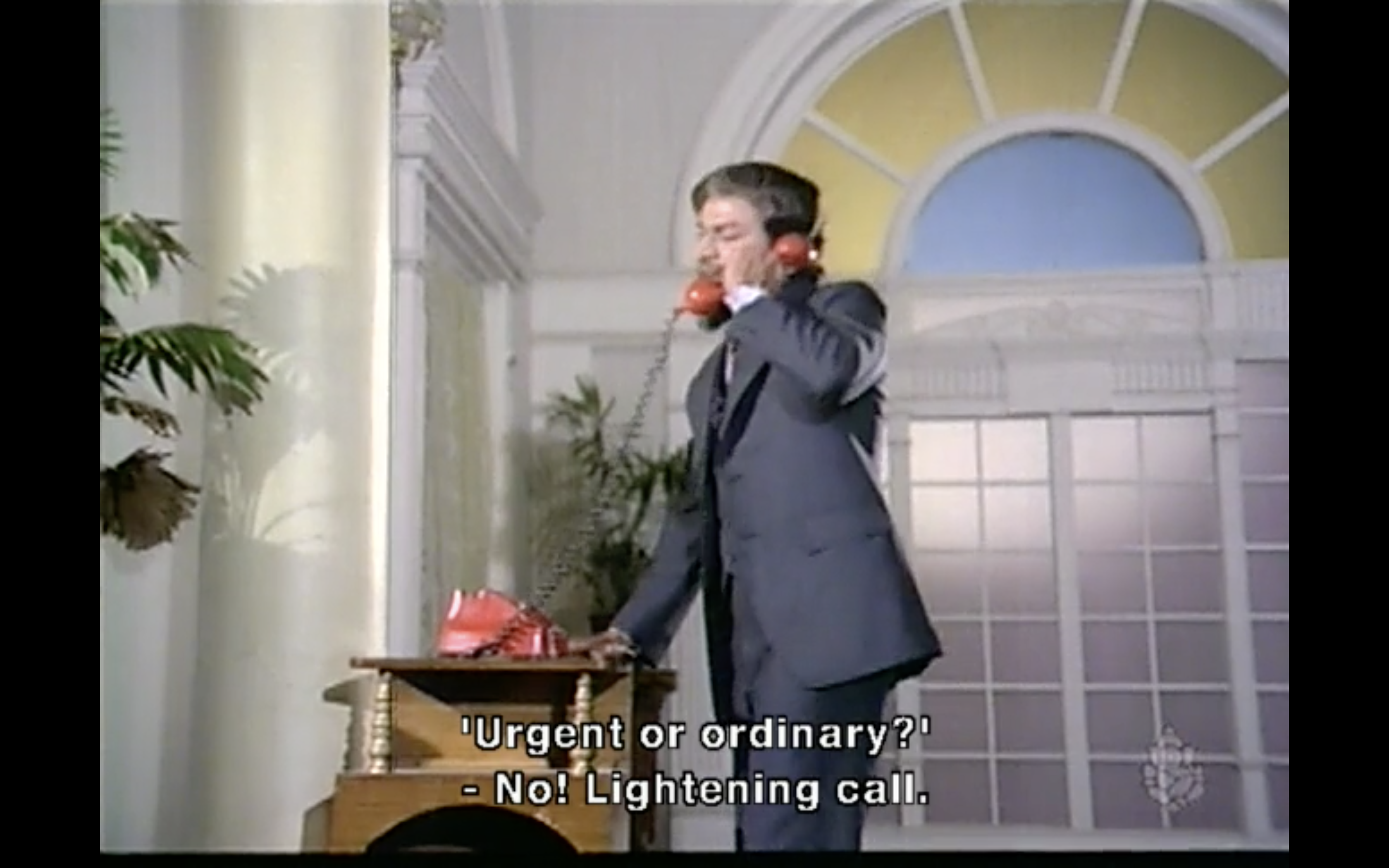
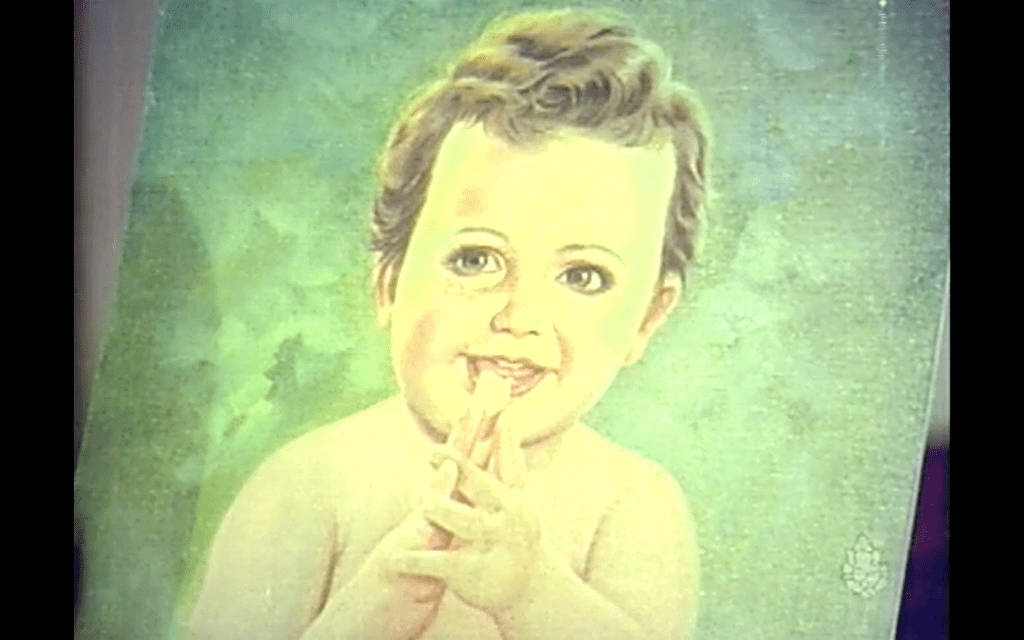
There really is a lot to enjoy in this film. From the funky psychedelic opening credits to the stunning fashion choices this film is a riot of colour and seventies style. There is OTT drama at every turn as Shankar battles the jewel thieves and Guru tries to win Malini’s love, while the most important question is whether Rajashekhar and Sumati will ever be reunited again. Other smaller issues such as why Sumati is painting terrifying pictures of babies or why there are stuffed animal heads on either side of the door at the top of Jayaraj’s stairs and what exactly a lightening call is are sadly never answered, but what is life without some mystery?
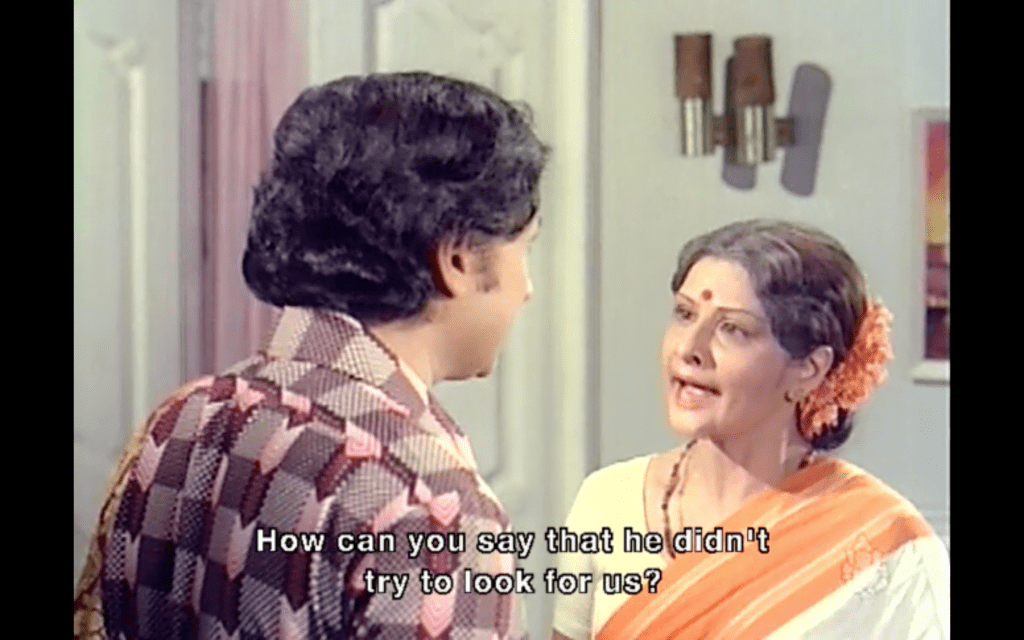
There are three main threads to the storyline and a number of smaller sideplots, but all the chaos is pulled together nicely by director V Somashekhar without losing any of the suspense. Despite this being a typical seventies masala film, the women fare rather better than expected. Although Nalini and Malati are primarily the love interests for Shankar and Guru respectively, they both have distinct personalities and make important contributions to the storyline. Sumati has the largest role of any of the three heroines and I love how her character fights back when she is taken prisoner. Sumati is definitely much more enterprising and capable than her husband who doesn’t seem to have looked very hard for his missing wife.

If you enjoy masala and convoluted plots then Shankar Guru is one not to miss! Rajkumar is fantastic in his triple role and the three heroines are all terrific. The only downside is the rather poor quality of the prints available online and occasionally dodgy subtitles. Still a great watch and well worth tracking down. 4 ½ stars!

Tughlaq Durbar

With cinemas still closed here in Melbourne. I’ve just got round to watching Tughlaq Durbar online. Advertised as a political satire, the film is based on a good initial idea but the story fails to capitalise on this as well as expected. There is plenty of comedy that works well and Vijay Sethupathi is his usual charismatic self, but overall the film fails to engage especially in the second half. 

Singaravelan (Vijay Sethupathi) aka Singam is a fanatical follower of local politician Rayappan (Parthiban) and has been since birth. In fact, he was born during one of Rayappan’s political rallies, and this seems to have imbued the young Singam with a devotion to his leader that surpasses all other ties. Singam’s mother died shortly after giving birth to his sister, Manimegalai (Manjima Mohan) and after their father also dies, the pair are brought up by the local community. However, Singam’s fanaticism causes him to be cruel and unfeeling to his sister, and as a result she stops speaking to him – although it’s not clear if Singam even notices. The worst thing to note about Singam is that he also hates dogs, something that ensures that to me his character appears as black and evil as possible for a small-time political wannabe. 

Despite the best efforts of the party faithful, who have no time for the young upstart, Singam manages to ingratiate himself with Rayappan. After various shenanigans mainly manipulating Rayappan’s right hand man Managalam (Bhagavathi Perumal), Singam manages to be nominated as the candidate for his home area. However, an argument with Managalam at a party celebration results in Singam being hit on the head, with a rather unusual result. 

Somehow the head injury brings about a split personality with a ‘good’ Singam who loves his sister, likes dogs (already he’s won me over!) and is concerned about  the community, and the ‘normal’ Singam who is only interested in keeping Rayappan happy. I loved how this is shown on screen with Singam’s shadow gradually splitting as he walks down an alley way underneath flickering overhead lights. It makes it really clear what is happening, just as Singam’s sudden appreciation of dogs makes it clear that this is a completely different personality. I also appreciated that Singam develops a left eye blepharospasm when his personality shifts, and his best mate Vasu (Karunakaran) finds this a helpful indication of just when Singam is going to do something unexpected.

Having set the scene with a great idea and a couple of excellent segments where ‘good’ Singam takes over to thwart ‘normal’ Singam’s plans, writer/director Delhi Prasad Deenadayalan seems to run out of steam. Once Singam is nominated to run on the party ticket, the film turns into a rather plodding tale of stolen money and the usual corruption associated with politicians. I couldn’t decide if Deenadayalan was trying to make a statement with some of the rambling dialogues or if he just thought that every film based on politicians should make some mention of corruption. Some of the dialogue is brilliant such as that around Rayappan’s need for an unthinking fanatical follower who will do whatever is needed, or Singam’s response to his sister being abused at her workplace. But outside of the comedy, much of the rest is rote and repetitive. 

Particularly disappointing is the sidelining of Manimegalai, especially since she is apparently one of the reasons behind ‘good’ Singam’s plans for the area and a catalyst for change. There was so much more that could have been achieved using the relationship between the brother and sister but after a good start Manimegalai becomes nothing more than the symbol of the difference between ‘good’ and ‘normal’ Singam.

There is also a rather shaky romance with Kamatchi (Raashi Khanna), the daughter of a local money lender that Singam kidnaps for ransom. It’s mostly one-sided with Kamatchi falling for Singam except for 1 song which feels rather out of place with the switch to Singam mooning after Kamatchi. As the standard love interest, the character of Kamatchi is nothing more than a reason for a fight scene, or a way for Singam to get the money he needs.  Overall, it’s the comedy that works best in the film, with the story seemingly taking second place to the set-up of these comedic skits. Vijay Sethupathi, Parathiban and Karunakaran are excellent comedic actors, and all deliver good performances but the lack of a good story means that the film drags once the set up is done. However, Govind Vasantha’s songs and background score are good, especially the more upbeat political rallying number although none are particularly memorable. The film looks good too, and the lightening in particular is superb in many of the sequences adding to the distinction between the two versions of Singam. 

This should have been a much better film, with a good cast, novel idea and good comedic dialogue. But there is no emotional heart to the film, and without a good follow-up plot, good performances aren’t enough to make this anymore than a one-time watch. It’s not terrible, but the most disappointing part is that Tughlaq Durbar could have been so much more. 2.5 stars.

Mala Aai Vhhaychy / Mimi

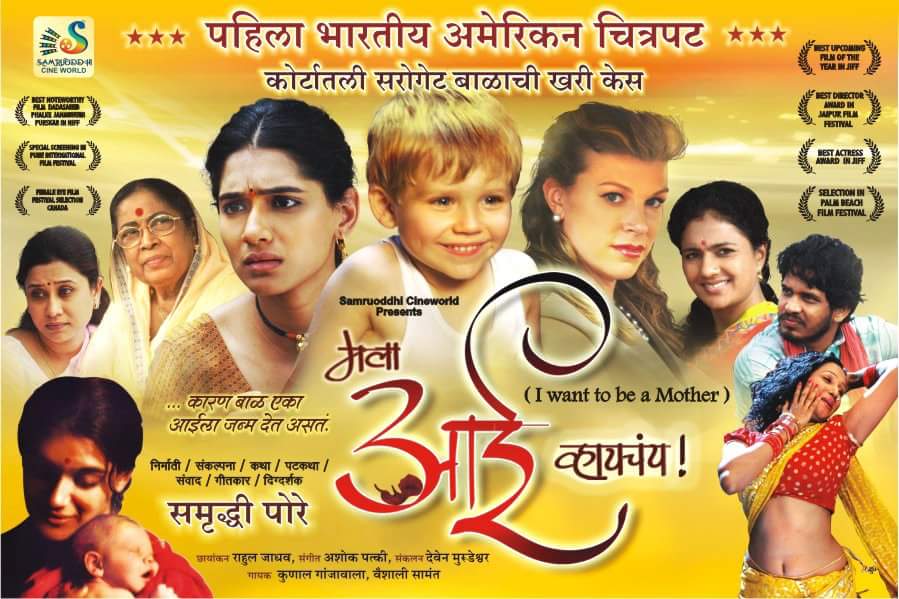
Recent release Mimi is a remake of Marathi film Mala Aai Vhhaychy, and I thought it would be interesting to watch both before reviewing. Mala Aai Vhhaychy and Mimi are based on a story about surrogacy and what happens when the biological parents don’t want the child, but the approach and therefore the overall impact is quite different. Mala Aai Vhhaychy is the more successful of the two,  winning the National Film Award for best Marathi film in 2011. The remake Mimi skips many aspects of the original story, and unsuccessfully adds more comedy, ending up as a pale although overly melodramatic version of the story. Despite problems with both films, if you have a choice, opt for the original. Umila Kanetkar is wonderful and ultimately the story has more to offer.

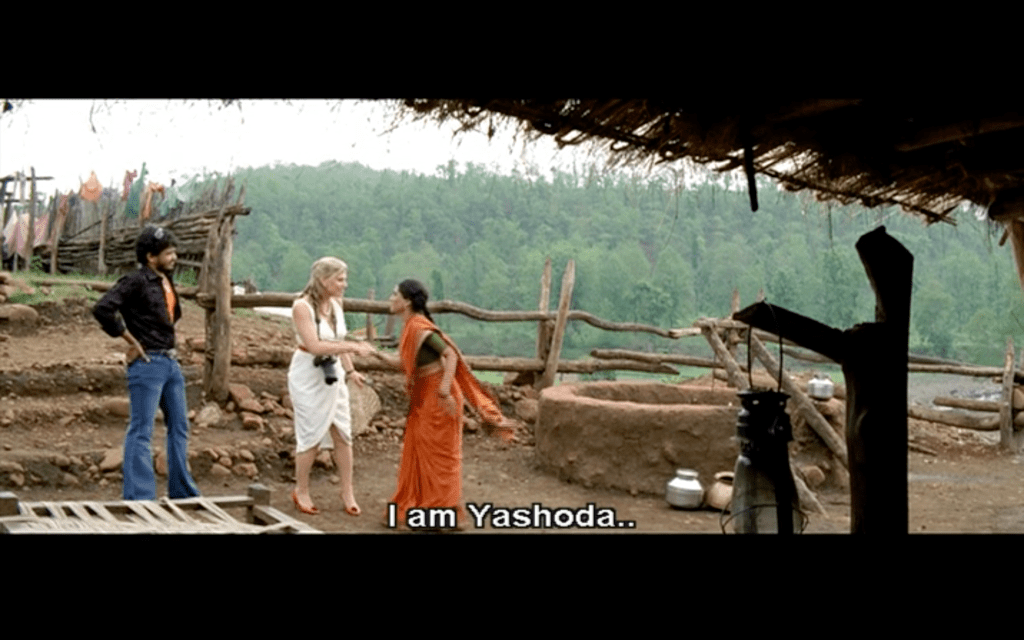
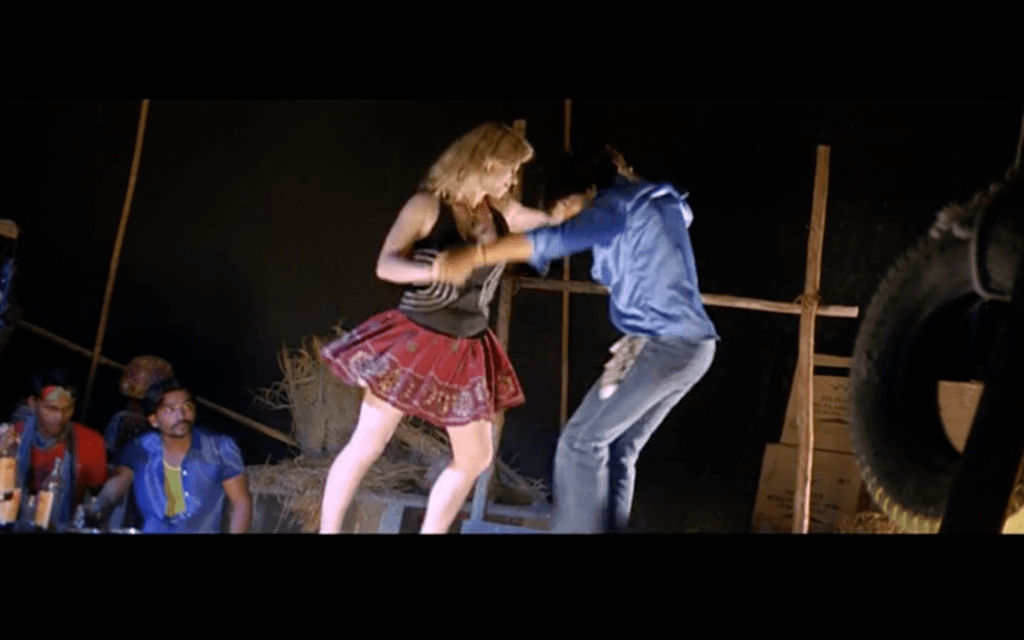
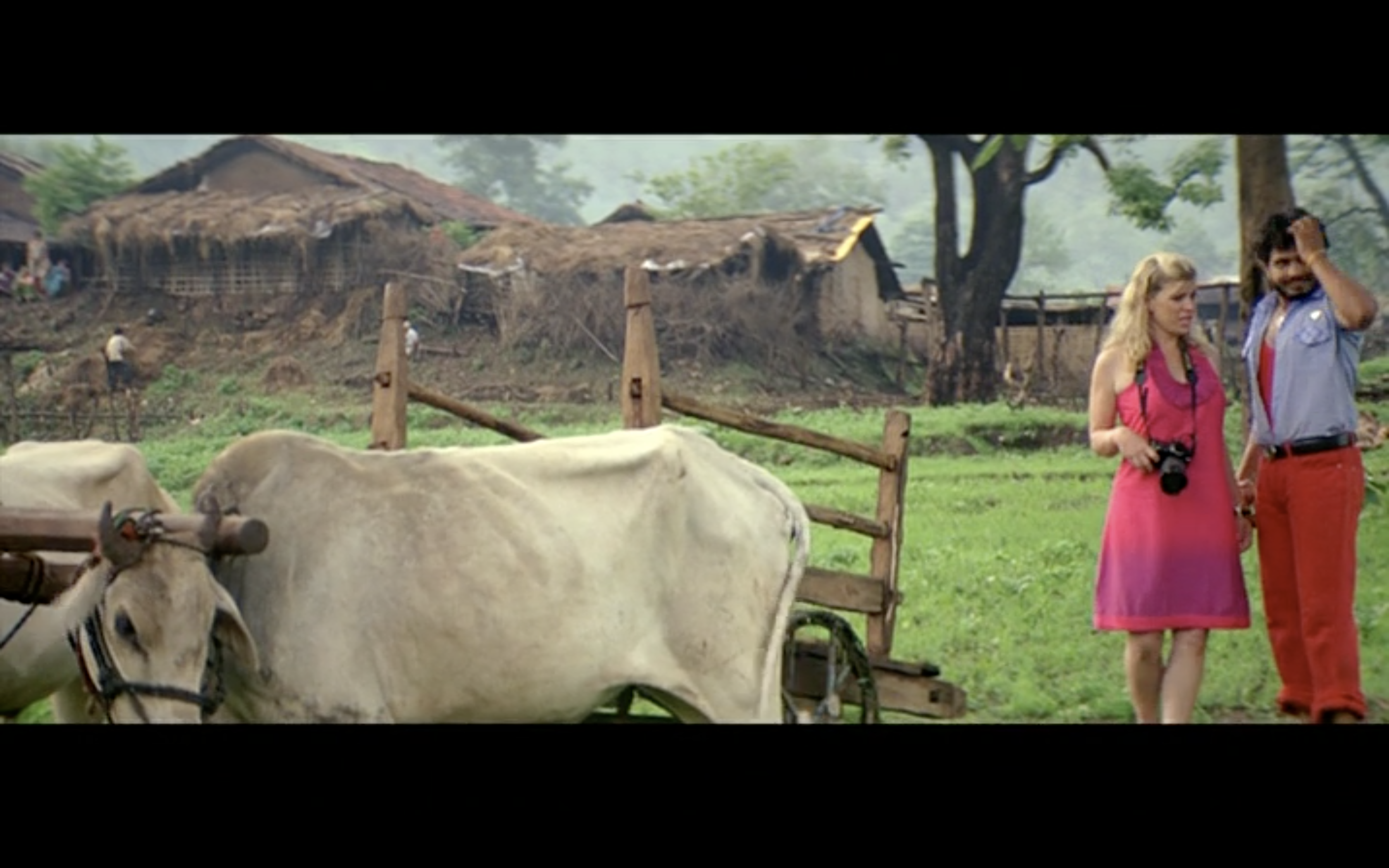
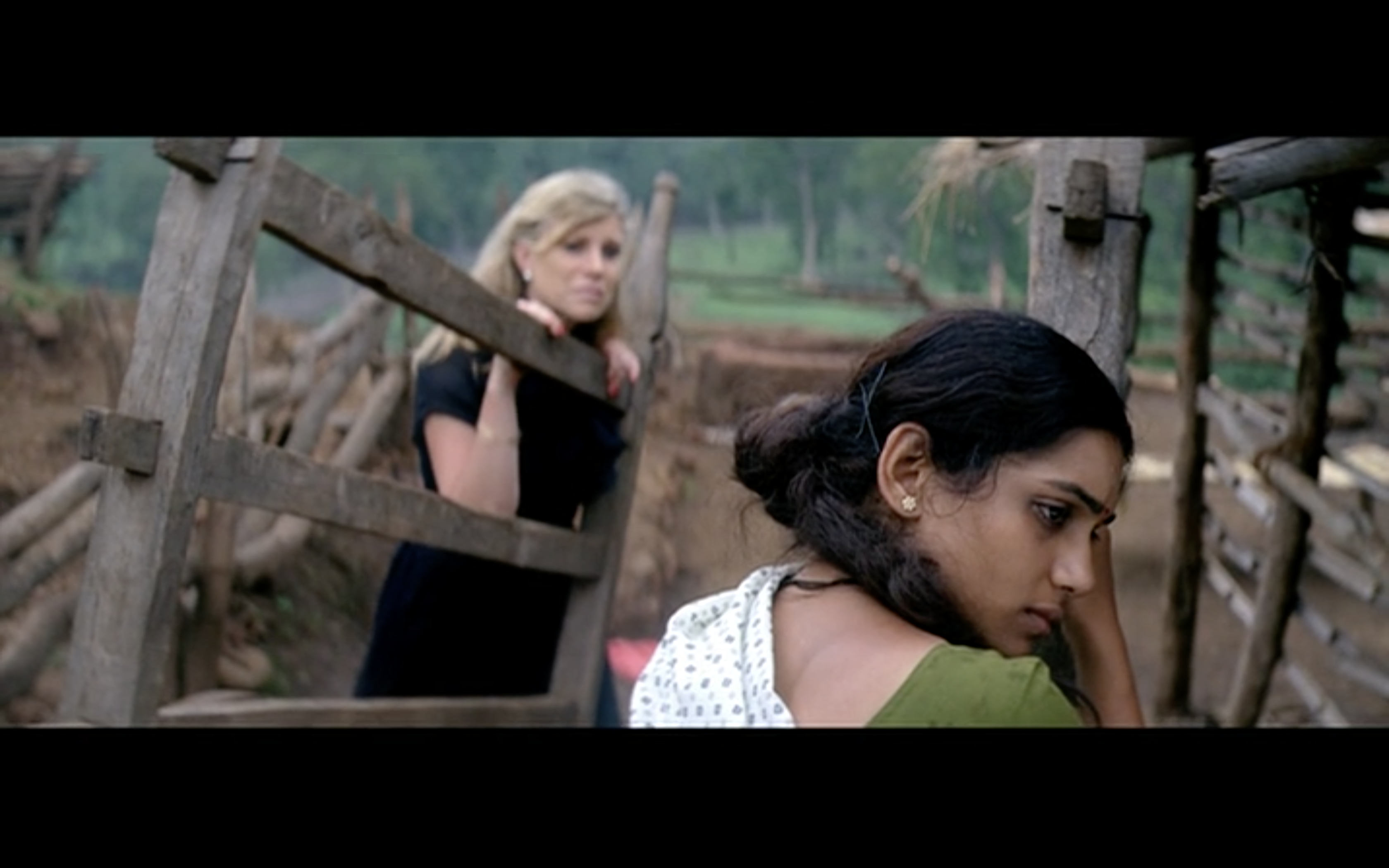
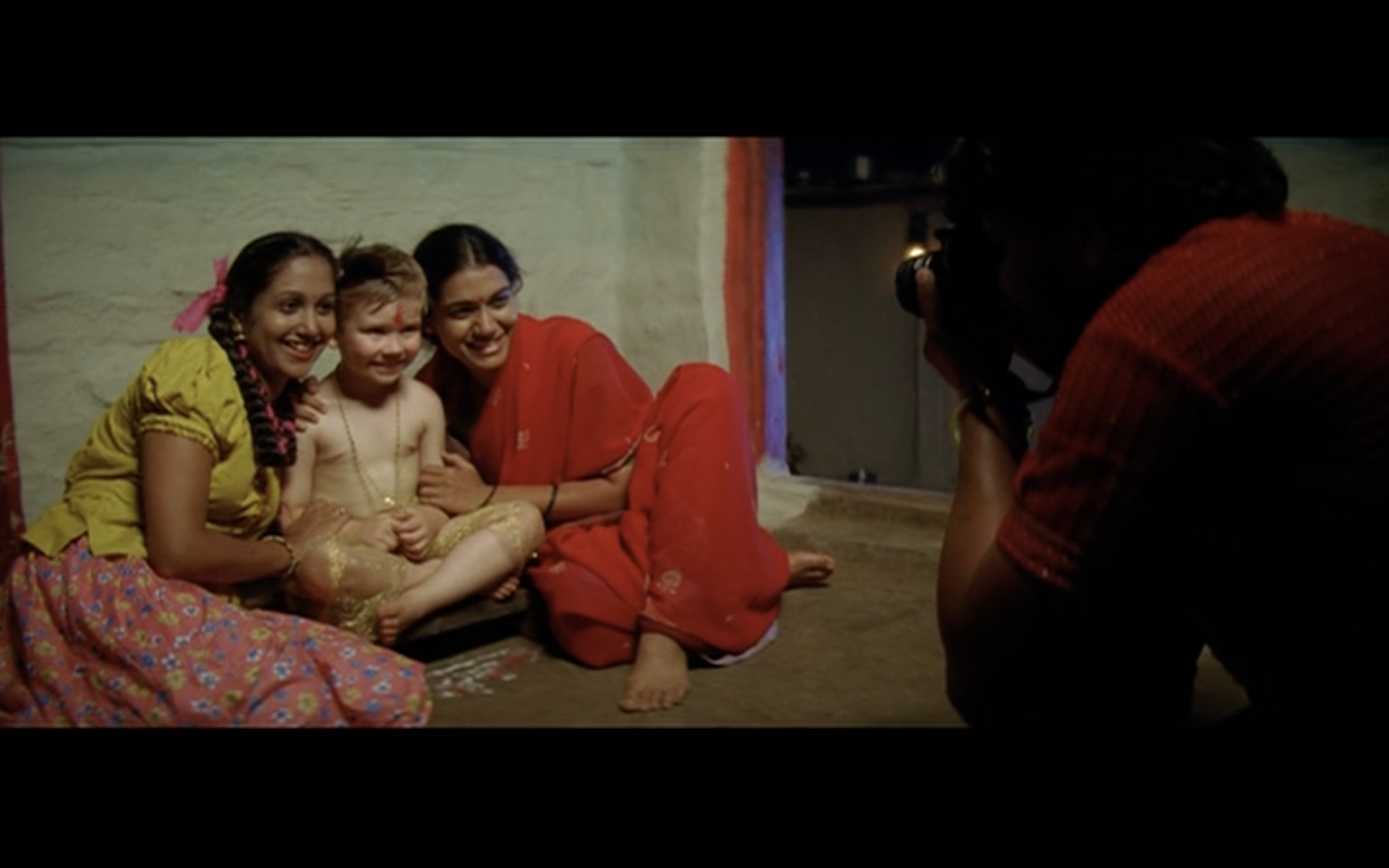
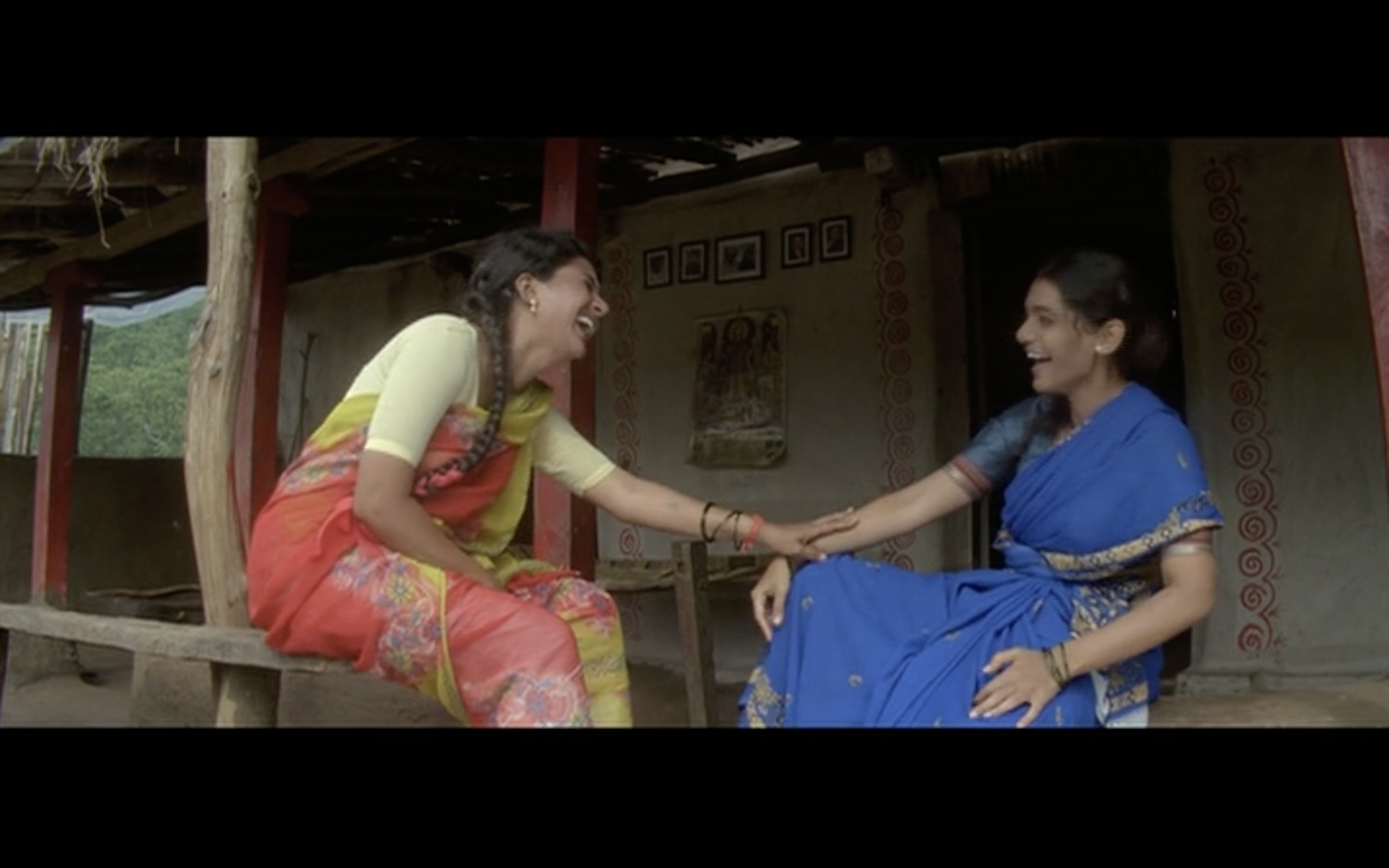
Mala Aai Vhhaychy means ‘I want to be a mother’ and the film starts with the arrival of Mary (Stacy Bee) a rich American who has travelled to India with her husband to find a surrogate for their child. Mary appears to have organised everything by herself, and although there is a brief glimpse of her husband, mostly she appears alone. The surrogate Mary has found is Yashoda (Umila Kanetkar), a farmer’s wife whose husband has vanished on a pilgrimage and left her to run their small farm by herself. Yashoda’s farm is at the edge of a small village whose inhabitants are bewildered and fascinated by the arrival of Mary in her low cut tight white dress and high heels – understandably so to be honest! Perhaps writer/director Samruoddhi Porey wanted to foreshadow Mary’s shallowness and poor character by using the familiar tactic of revealing clothing, drinking and smoking to portray a ‘bad woman’, but instead Mary comes across as simply unrealistic given the wealth of information available to foreigners arriving in India.
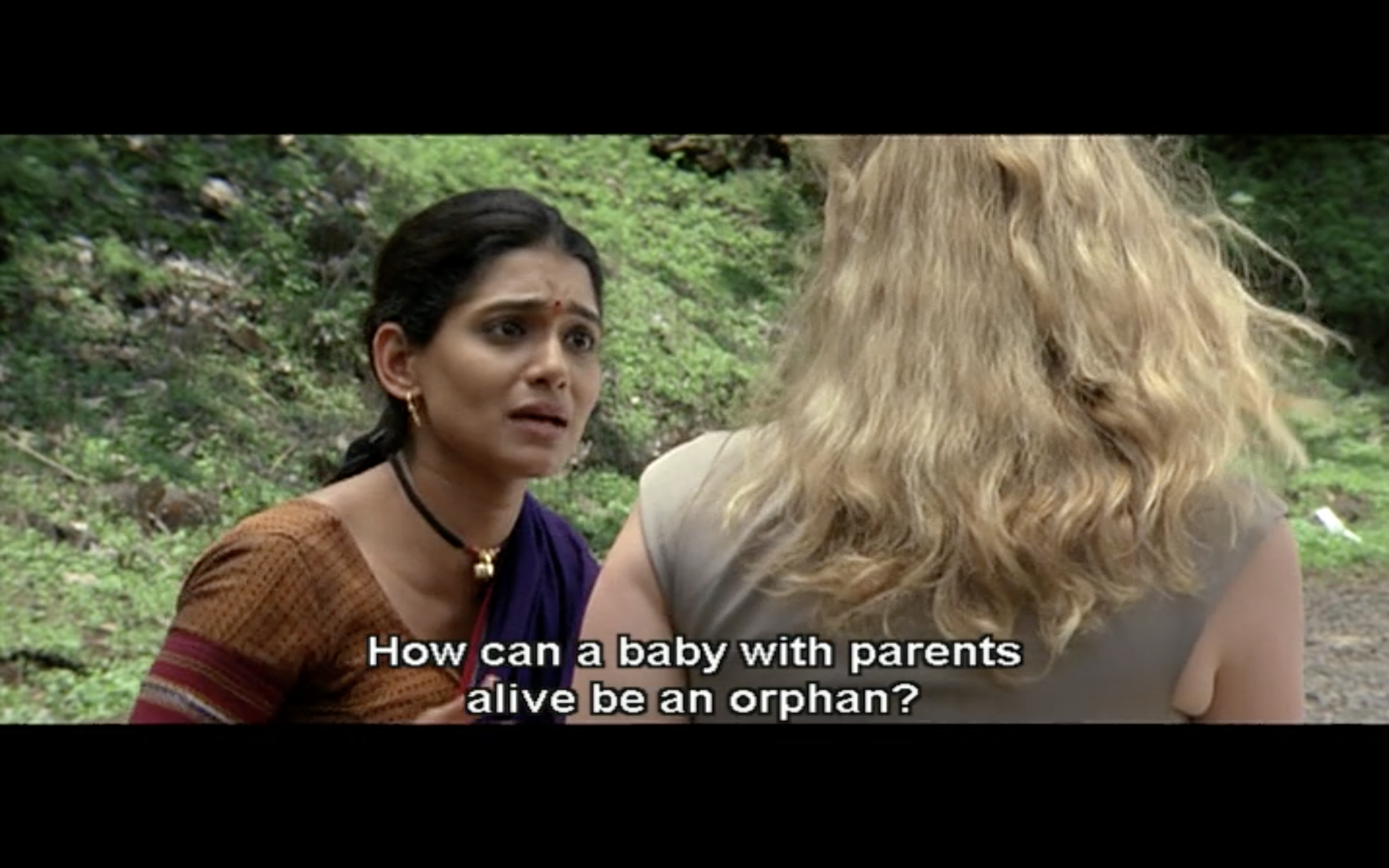
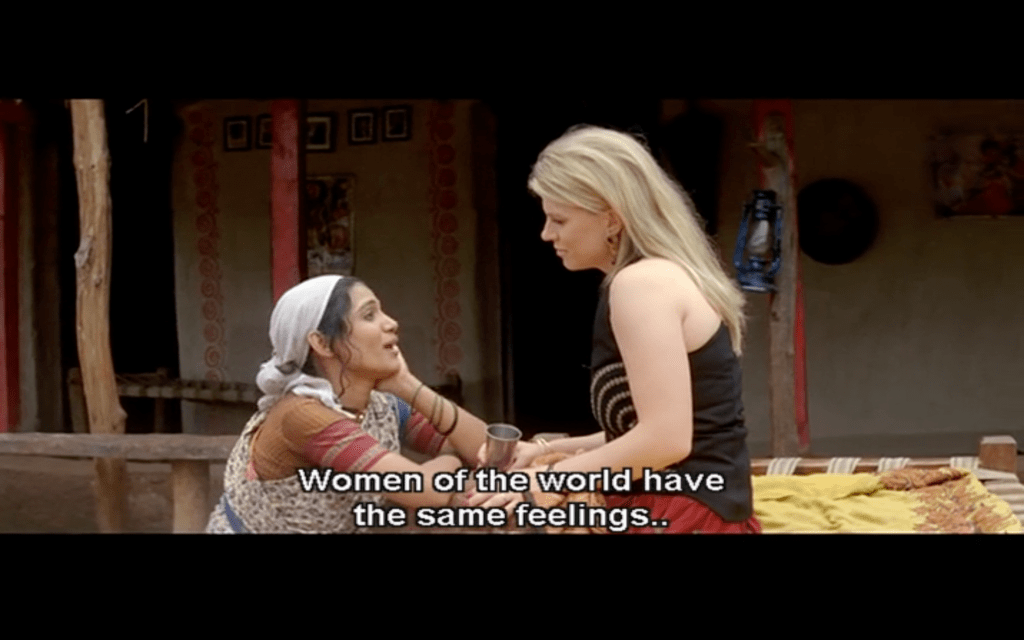
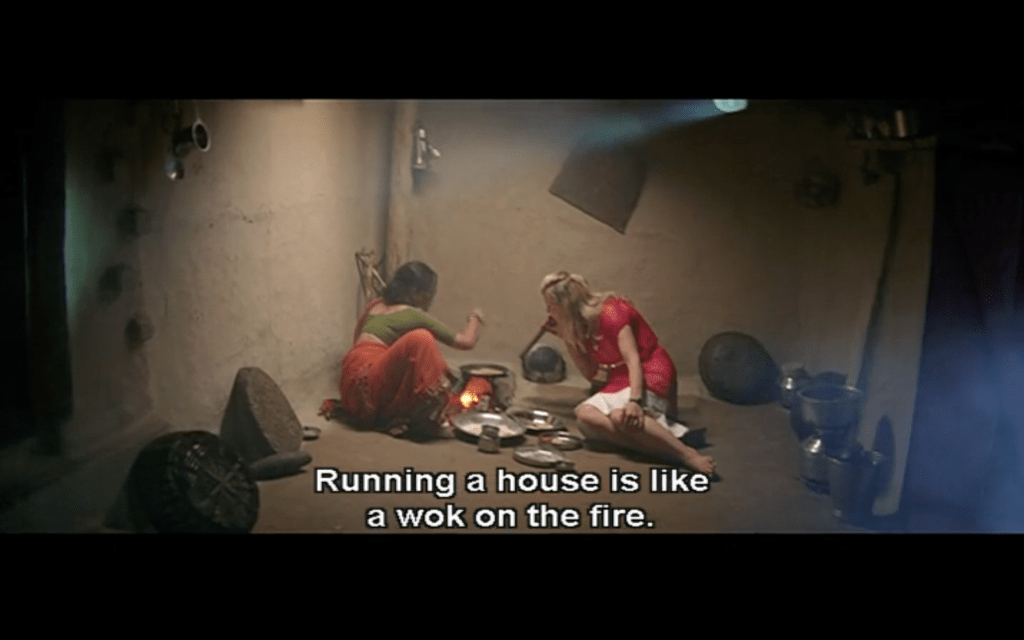
However, despite her odd choice of wardrobe and tendency to flirt with Yashoda’s brother Ganpat (Vivek Raut) Stacy Bee does make a reasonable attempt at a woman desperate for a child and taps into the many emotional shifts well. A scene where she helps Yashoda cook along with her obvious joy when Yashoda is confirmed as pregnant help to make her a more sympathetic character than first appears. Mary does seem to connect with Yashoda too and she also has a basic, if limited understanding of the difficulties Yashoda faces which again helps make her less one dimensional. 

When a medical appointment reveals that the child may be born disabled, Mary shows her lack of empathy by giving Yashoda money and telling her to leave the child in an orphanage before she leaves India. Devastated by Mary’s abandonment of her child, Yashoda decides to keep the baby and when he is born perfectly healthy treats him as if he was her own child. 

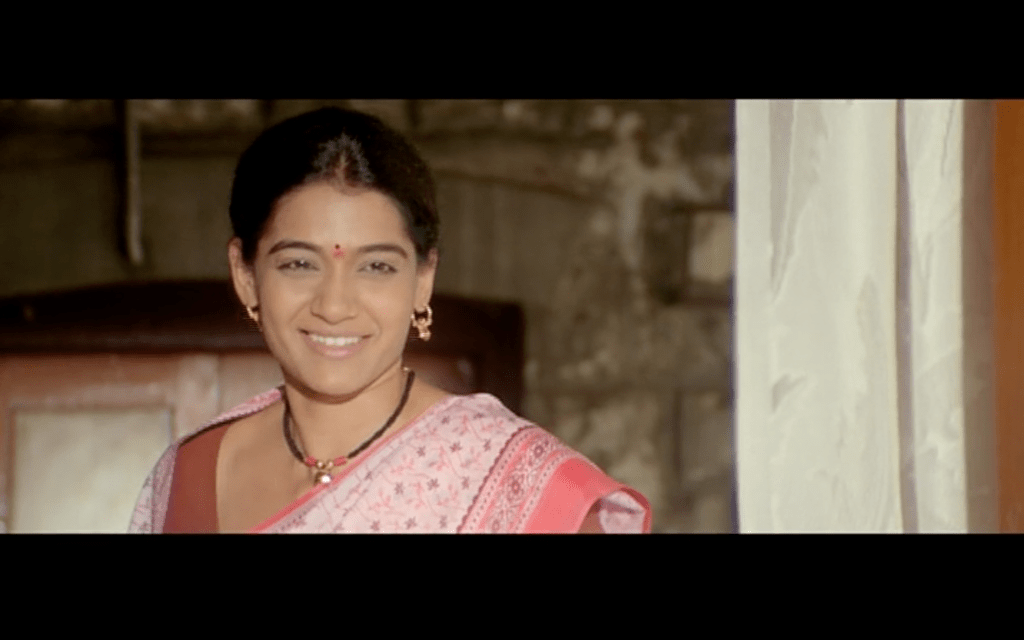
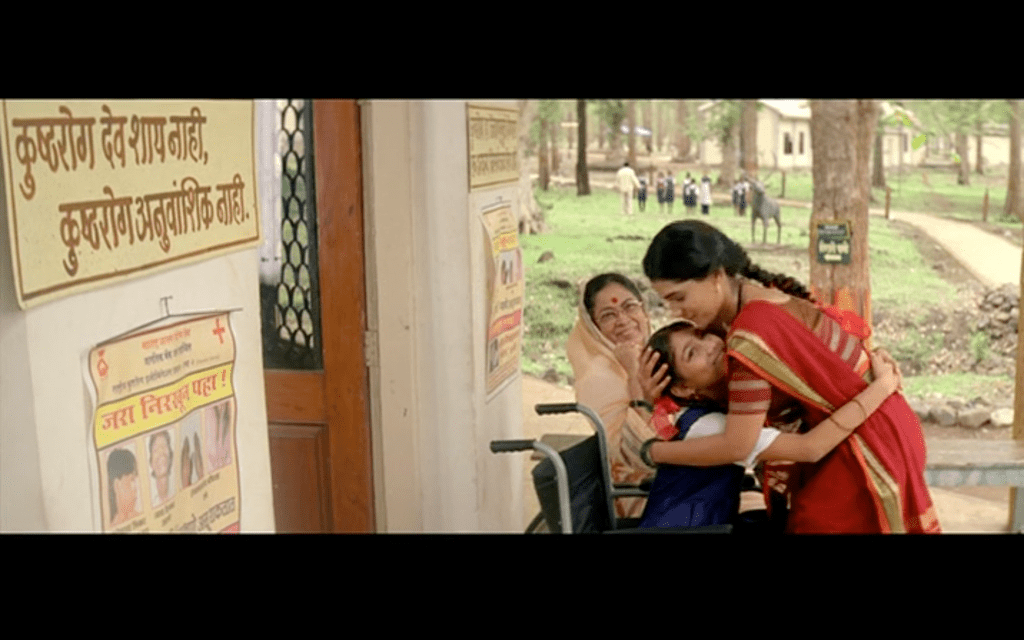
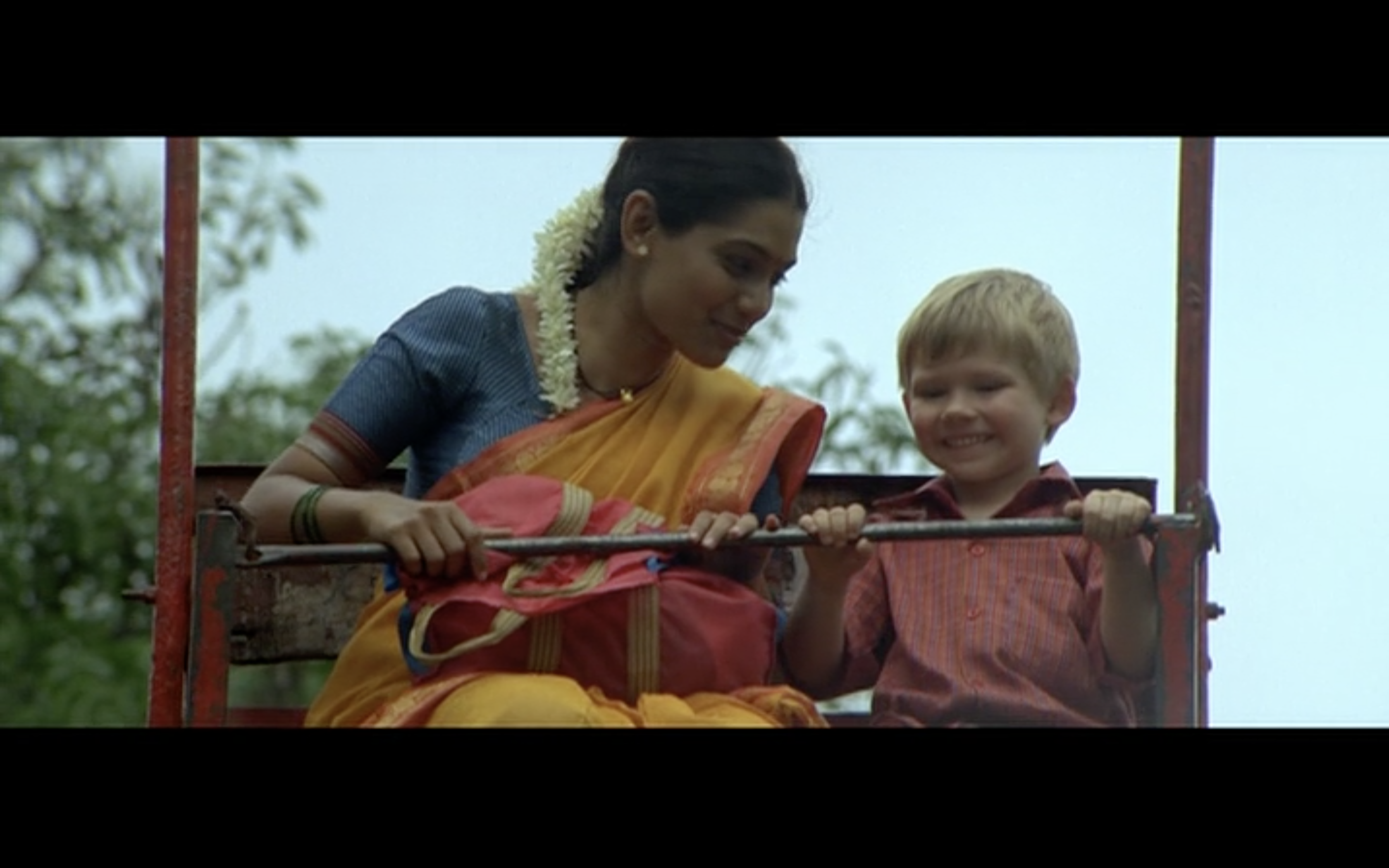
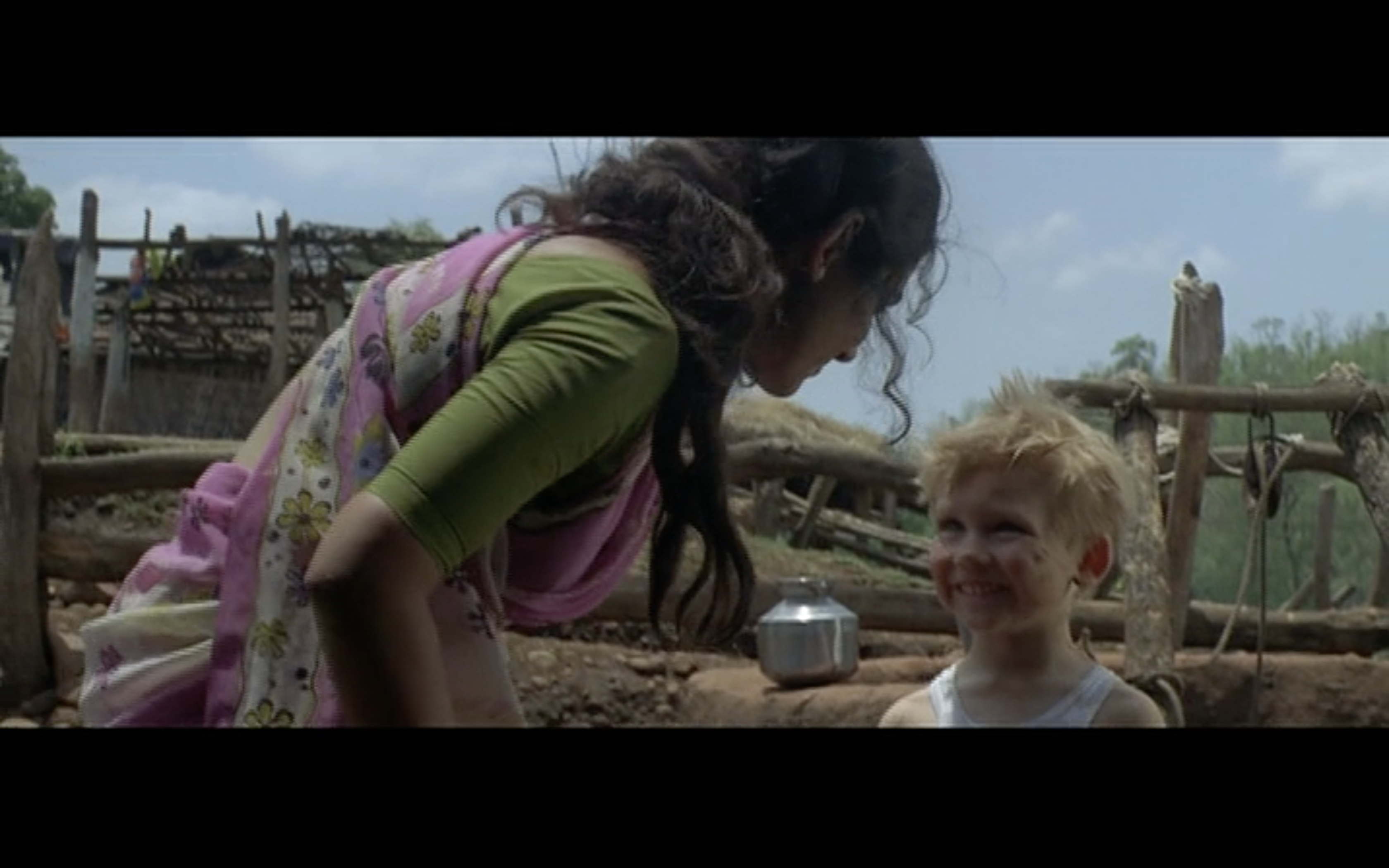
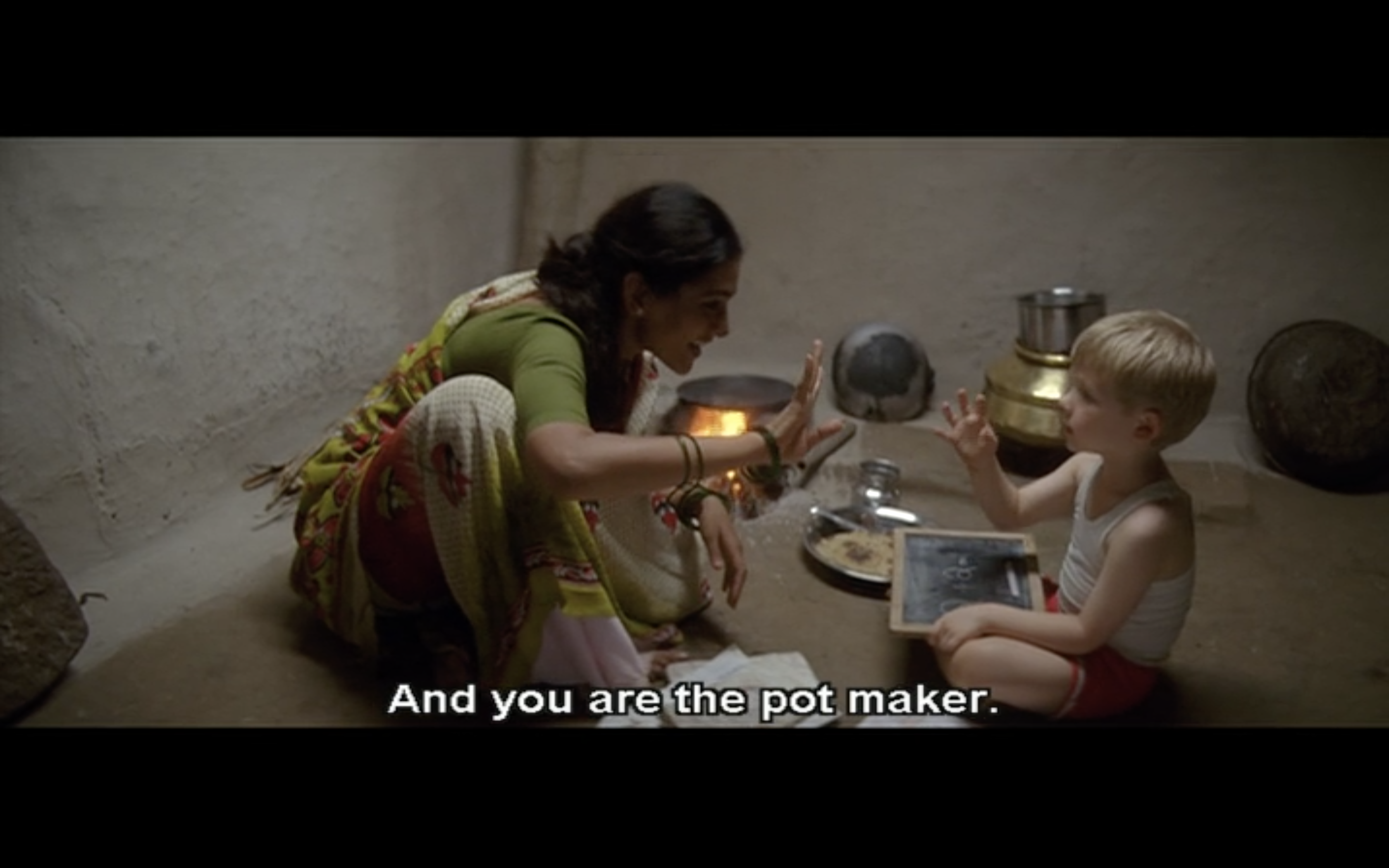
Part of why this film works well is the rationale behind Yashoda’s decision to act as a surrogate and her attitude towards Madav (Aiden Barkeley). Yashoda’s daughter Surekha has a spinal condition and is confined to a wheelchair, so Yashoda uses the money she receives to pay for an operation for her daughter. Along with shining a light on the reality of farming life and the results of poor medical access and superstition in Indian villages, the film also briefly looks at the serious issue of farmer suicide. Yashoda’s best friend Nanda (played by the director) deciding to take her own life when her situation appears hopeless and the film doesn’t shy away from the overarching patriarchy that invades every aspect of Nanda’s life. In contrast, Yashoda is portrayed as someone able to work within the confines of her society to achieve the best outcome she can in the circumstances. Umila Kanetkar is simply brilliant in the role, getting her mixed emotions across as she comes to terms with the blows fate has dealt her while simultaneously looking after her daughter and unexpected son with equal amounts of love and affection. Aiden Barkeley too is excellent, and performs well as a white child trying to understand why he looks so different from his mother.

Even though the treatment of Mary is unrealistic, the rest of the characters all fit well into their landscape and apart from some ill-advised comedy around Ganpat and his fiancée, the screenplay unfolds naturally. It’s not until the end that the film veers into melodrama, but thankfully this is brief and reasonably well supported by the previous characterisations so doesn’t feel too out of proportion to the rest of the film.

Sadly the same cannot be said for Mimi.

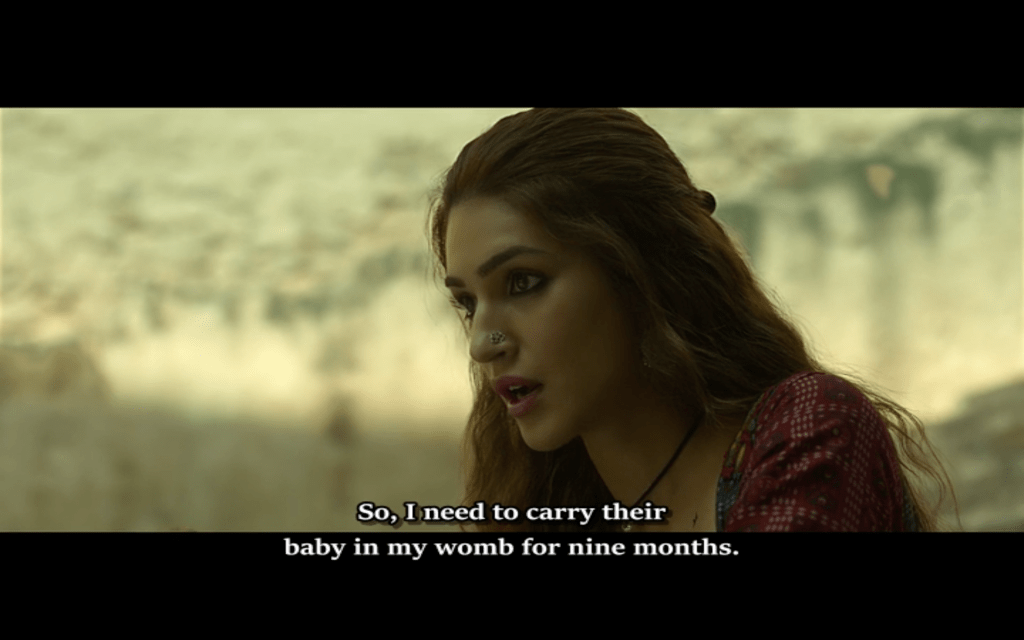
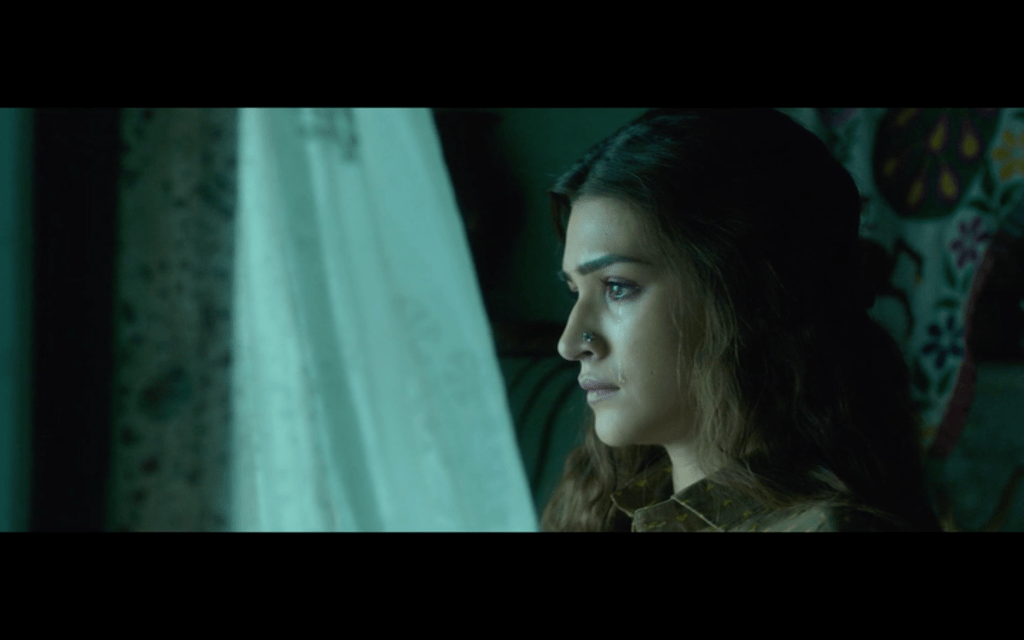
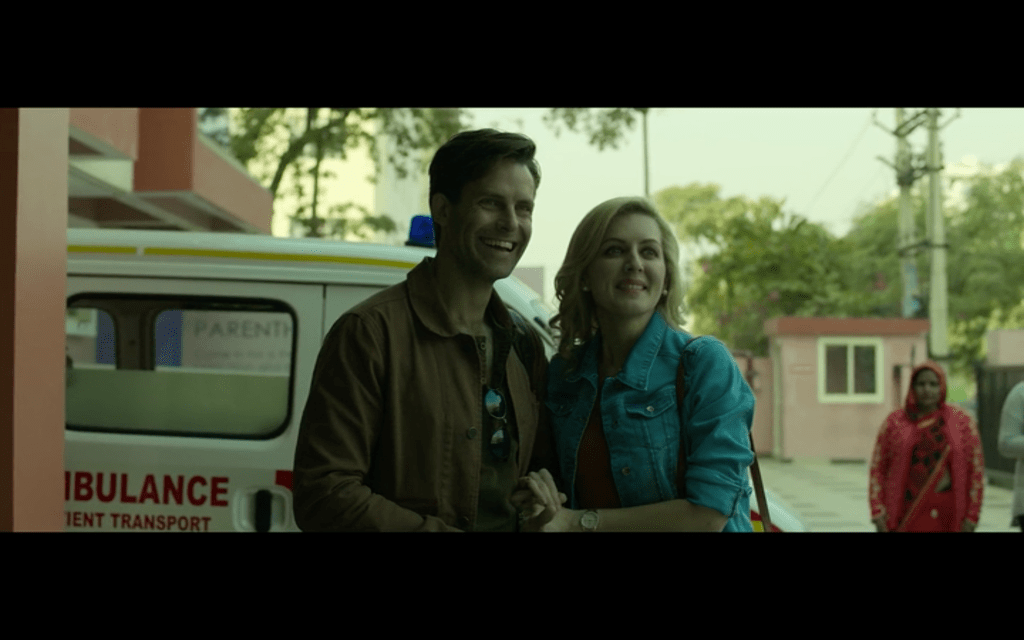
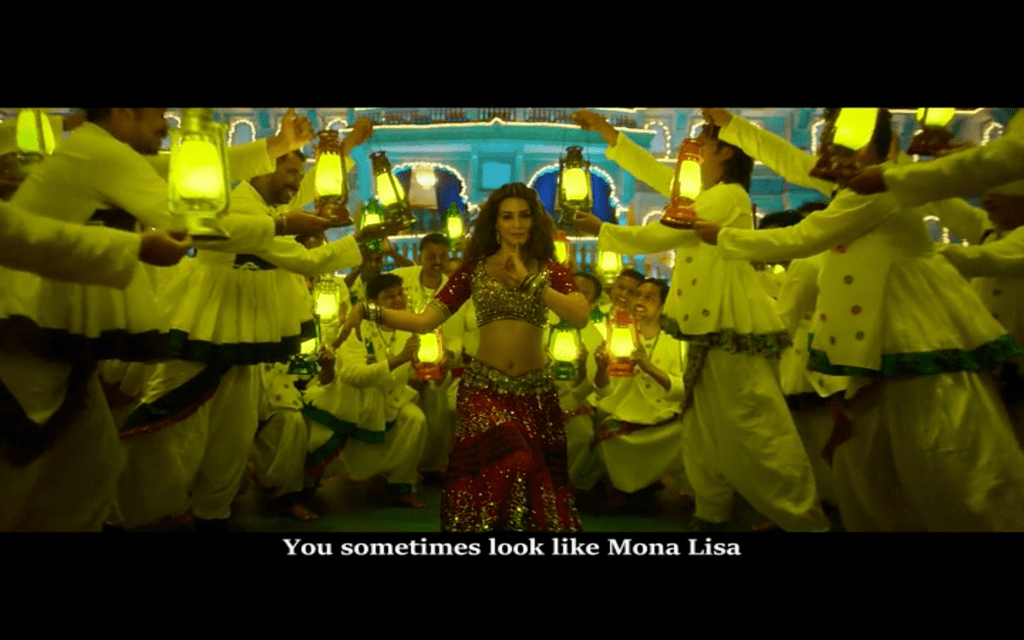
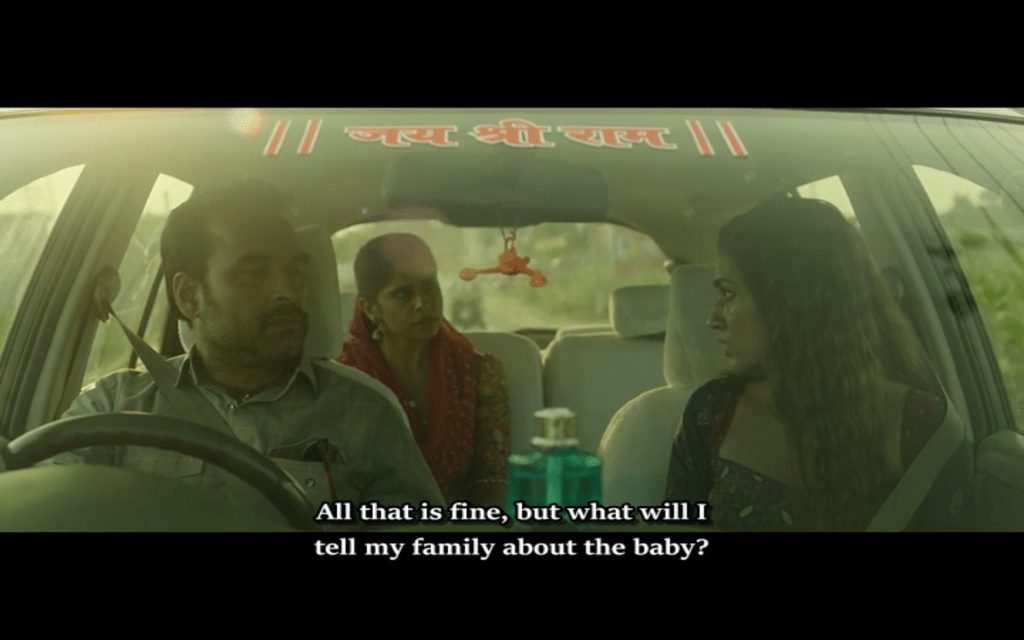
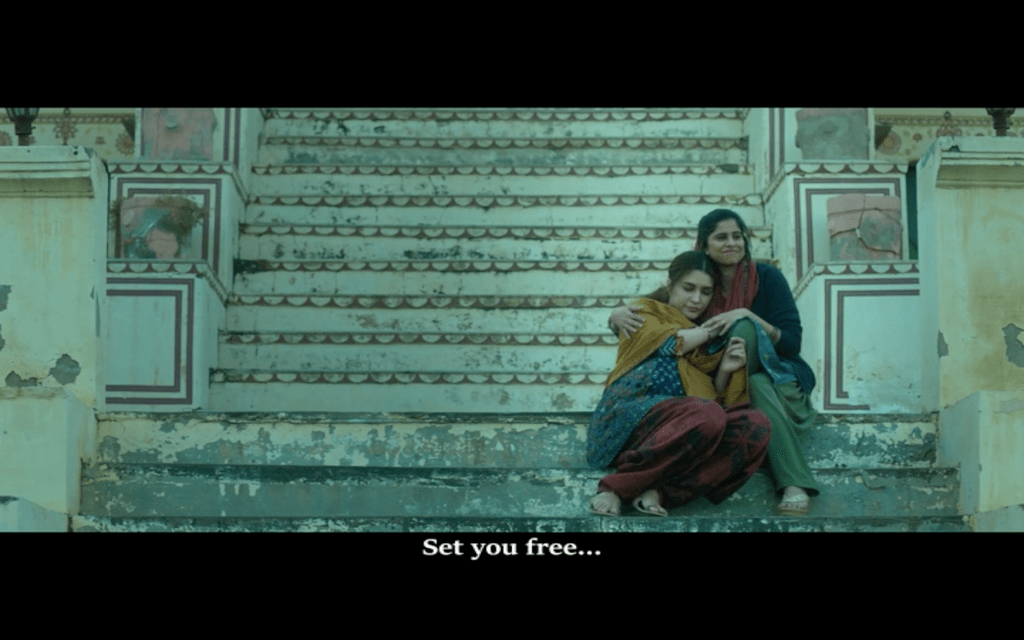
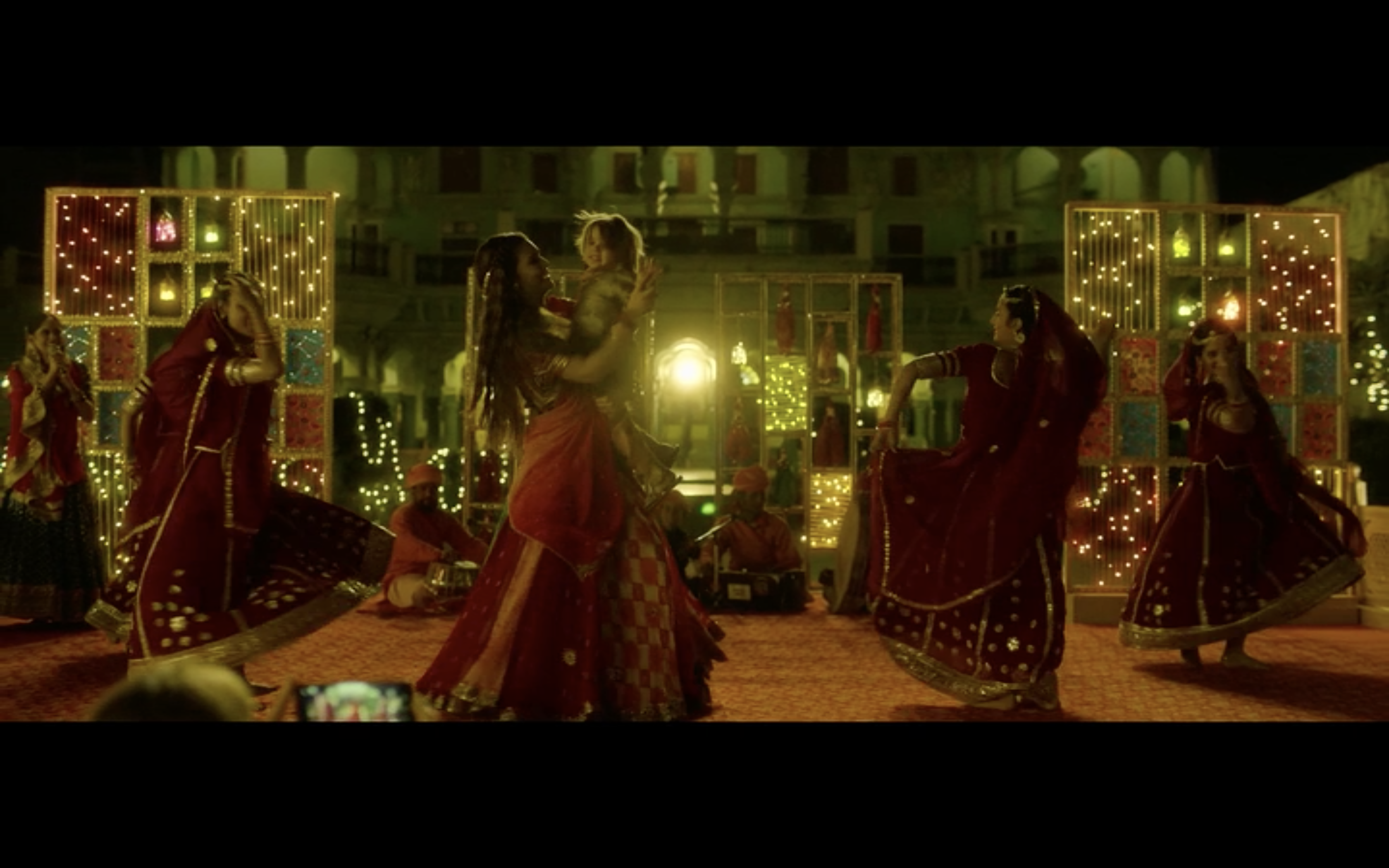
Although the remake follows the same basic plot of a young woman acting as a surrogate who is then left to bring up the child herself, the situation is far less believable. This time Summer (Evelyn Edwards) and her husband John (Aiden Whytock) present a more rational picture of an American couple looking for a surrogate, but their choice of mother is rather less successful. Mimi (Kriti Sanon) is an aspiring actress and dancer who decides to have the couple’s child to give her the necessary funds to advance her career. This is such a bizarre choice that isn’t helped by the inclusion of Bhanu (Pankaj Tripathi) as the couple’s driver who ends up staying to help look after Mimi as her pregnancy advances and then later when she is left to raise the child herself. This includes some attempts at comedy such as his being mistaken for Mimi’s husband when she is forced to return to her family for assistance, but none of this works well. Mimi’s attempts to conceal her pregnancy from her family are farcical and further attempted comedy around Mimi staying with her Muslim friend Sharma (Sai Tamhankar) also fall woefully short. 

As in the original story, the child is thought to be disabled and Summer tells Mimi to abort the baby before leaving India. This leads to a clunky scene where Mimi gives an anti-abortion speech that feels outdated and completely out of place before she declares she will go ahead and have the baby. She’s in her final trimester so even a mention of the illegality of such a late-stage abortion would have been better than this terrible attempt at anti-abortion drivel, and even Kriti Sanon looks uncomfortable at delivering such woeful dialogue. Once the baby is born, the melodrama here keeps building leading to an unsatisfactory finale that is full of emotion but no substance. People make odd choices, and excellent opportunity to discuss divorce and childlessness is completely missed when Sharma offers to look after the baby, and is completely ignored. In fact, overall Sai Tamhankar is criminally underused for such an excellent actress and the relationship between the two women is glossed over when this would actually have been a useful avenue to explore.

Kriti Sanon puts in a terrific performance that holds the film together but ultimately the screenplay has so many problems that even she can’t save the day. Moving away from the original premise hasn’t served director Laxman Utekar well, as so much of the important social aspects of the film have been completely lost. The film doesn’t even work particularly well as a general entertainer with so many missteps and diversions that the main story seems continually at risk of being completely buried.

Tackling the subject of surrogacy can be a loaded issue with several different factors playing into the topic. The issue of childlessness is often fraught while the decision to act as a surrogate is emotional on many levels. Mala Aai Vhhaychy goes some way towards capturing these undercurrents and highlights many of the social problems associated with poverty and the simple struggle to survive. Mimi misses most of this and focuses on the surrogacy issue alone, which wouldn’t necessarily be such a problem if it had stuck to the story and avoided the pitfall of too many attempts at comedy and unnecessary diversion. I give Mimi 2 stars and Mala Aai Vhhaychy 3.5