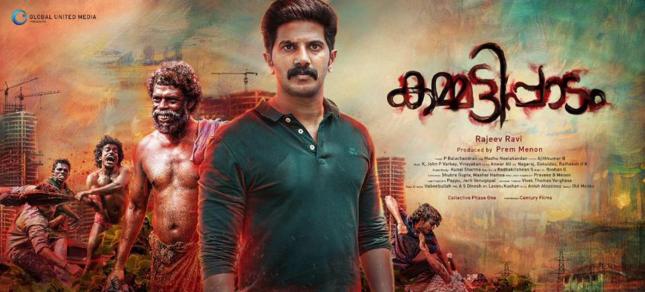
Kammatipaadam

Kammatipaadam

Rajeev Ravi’s 2016 film Kammatipaadam is a dark thriller that tells the story of an ex-gang member’s search for his estranged best friend, who has disappeared under suspicious circumstances. It’s also a stark social commentary, as the film documents the urbanisation of a rural area and shows how poor farmers were forced out to make way for high rises and shopping malls for the rich. P. Balachandran’s screenplay explores the violent world of the gangs and the harsh realities of life for the marginalised poor while adding mystery and suspense with the search for the missing Ganga. Although Dulquer Salmaan is excellent in the lead role, the film really belongs to Vinayakan and Manikandan Achari who are both outstanding as the missing Ganga and his gangster brother Balan. While the film is overlong at almost 3 hours, this is an excellent slice of gangster life, Kerala style, and impresses with a realistic, brutal storyline and gritty memorable characters.

The film starts with an injured middle-aged Krishnan (Dulquer Salmaan) flagging down a bus somewhere in Kerala. In a series of flashbacks, intercut with current events, he remembers his childhood and his life as a young man in the fields of Kammatipaadam before they vanished under the high-rises of Kochi. Krishnan and Ganga’s friendship is gradually revealed in an intricate and detailed story, painting a vivid picture of life for the poorest and most marginalised members of society, but also describing a rich and deep friendship that is enough to draw Krishnan from his settled life in Mumbai back to the dangers of his youth.

The scenes describing Krishnan’s early life are detailed and set the scene to explain why later, despite everything that has happened between them, Krishnan still responds to Ganga’s call for help. When Krishnan’s father (P. Balachandran) moves the family to Kammatipaadam, young Krishnan and Ganga become inseparable friends despite their different backgrounds – Ganga comes from a Dalit family, while Krishnan’s family are middle class and generally appear better off. However, caste is no barrier to the two boys and although Krishna’s older sister (Muthumani) seems appalled by the friendship, Krishnan’s father doesn’t seem to have any real issues with his son’s relationship with the local Dalit community. Ultimately though, it’s Ganga whose influence takes Krishnan away from his family and leads him into a life of crime.

As children, the boys witness a brutal killing when Ganga’s elder brother Balan (Manikandan R Achari) attempts to murder a local thug. This seems to set them on the path of rowdyism and as they grow older, they become part of Balan’s gang, doing odd jobs and fighting as required. What makes this part of the film so watchable is the persona of Balan. He’s charismatic and outspoken with a larger than life personality and an almost theatrical approach to defending his place in the local underworld. There is an awesome fight scene outside a movie theatre where Balan fights everyone before leaping up on a car to sell movie tickets – making his entire performance a brash advertising stunt as well as driving away his rivals in the business!

Balan runs an illegal alcohol business with local entrepreneur Ashan aka Surendran (Anil Nedumangad) Both Ganga and Krishnan eagerly join in with Krishnan acting as a driver for the smugglers. However not everyone is a fan of Balan’s style and Johnny (Shine Tom Chacko), a rival for the smuggling trade, sets out to bring Balan and his gang down.

While all this is going on there is another rivalry developing closer to home. Almost since their first meeting, Krishnan and Anitha (Shaun Romy) have fallen in love, but Ganga expects to marry his cousin and resents her attachment to Krishnan. Ganga’s path seems easier after Krishnan is sent to jail for attacking a police officer, but this is only a temporary hiccup and the two reconnect on Krishnan’s release. Dulquher and Shaun Romy have good chemistry at the start, but it’s the change to their relationship when they meet again years later that really impresses. Anitha reveals her resentment at the way Krishnan and Ganga treated her as a commodity while Krishnan has to deal with his memories and regrets. Unfortunately, Rajeev Ravi doesn’t go back to this part of Krishnan’s story, so we’re left to wonder what will become of Anitha who seems to be the loser in every respect.

Balan and his gang act as enforcers, and one of their jobs is to evict farmers from areas where the developers want to build. They don’t even seem to notice when their own land starts to be fenced off, but when Balan’s grandfather objects to his family being involved in pushing other Dalits off the land, Balan sees the error of his ways and decides to ‘retire’ from his life of crime. Balan has also become married to Rosamma (Amalda Liz)) but before he can settle down, Balan is killed and Ganga blames his childhood friend for his brother’s death. This is the final straw for Ganga and it leads to the estrangement between the two men.

However, when he is in trouble, Ganga calls his old friend, sparking Krishnan’s return to Kammatipaadam to find out what has happened.  As Krishnan searches for Ganga he is forced to face his past and come to terms with the bleakness of his friend’s life after Balan’s death. While members of the gang like Majeed (Vijay Kumar) have prospered, Ganga is still living in the past and involved in the seedy underbelly of Ernakulam. The mystery deepens when Krishnan himself is attacked and it seems as if no-one else wants to know what has happened to Ganga.

Kammatipaadam is a study of characters and each is so realistic and well-drawn that it’s easy to become involved in their lives and care about what happens to them. The film spans roughly thirty years and I was amazed at how successfully Dulquer shows his character’s aging in his mannerisms, gait and stance. As a young man, he is arrogant and cocky, with a confidence that shows in his walk and his dialogues. But when he returns to Kammatipaadam, he’s older, moves more slowly and stiffly and to some degree, thinks before he speaks. He really gets into the heart of Krishnan and his friendship with Ganga comes alive onscreen, while the small glances and covert looks are enough to convey the entirety of his romance with Anitha. However as good as Dulquer is, he is equalled by Vinayakan who puts his heart and soul into his portrayal of Ganga. Here there is loyalty and devotion. Here too, a poor man who makes his living exploiting other poor men and pisses away the profit with his drinking problem. Manikandan R Achari is also superb as Balan with his loud brash exterior hiding a man capable of greater understanding but without the wherewithal to allow his dreams free rein. These are the petty gangsters who so often make up the fodder in the big herocentric films, but this time the story is about them and their short and violent lives. The actors who portray the young Krishnan and Ganga are also excellent with Shalu Rahim in particular setting up Krishna very well for Dulquer Salmaan to smoothly take over as the character matures. But even the young kids at the start are fantastic, and again have all the same characteristics as their older selves.

The minor characters all have their own brief story arc that adds layers of complexity to the film. Krishnan’s father has his own issues, illustrated perfectly when he goes to pick up his son from prison but leaves empty-handed. Even Rosamma, Balan’s wife and surely an inconsequential character in most other gangster films, has a greater role to play than expected and turns out to be a better gangster than her husband or her brother-in-law. The story of Ganga’s disappearance and Krishnan’s search is simply the top layer that sits over the excellent character studies and underlying thread of the exploitation and eviction of the Dalits. The film also looks amazing, with excellent cinematography from Madhu Neelakantan although I would expect nothing less from Rajeev Ravi given his own work as a cinematographer in Hindi cinema. The songs too are interesting, with references to the plight of the Dalits and their lack of a permanent and safe place to live while Krishna Kumar’s background score is unobtrusive but effective in adding to the overall richness of the film.

However all of this depth of characterisation and attention to detail comes with a price. The film is overlong and does drag in places, particularly in the second half. A fight scene in the prison and one in a bus station are overly drawn out and the build up to the final scene is rather indulgent. Still, the film succeeds at drawing a picture of the violent and desperate side of life as a small time gangster, and the brilliant performances and characterisations ensure that Kammatipaadam is a film that stays with you long after the end credits roll. Fascinating, thought-provoking and a lesson in the birth of Kochi all in one – 4 stars.


Sneham Kosam

K.S Ravikumar’s film gives us double the Chiranjeevi in an outstanding dual role performance, and about three times the plot of a normal film. There is a lot going on in this convoluted tale of family strife and the meaning of friendship. The last 20 or 30 minutes alone has enough revenge, melodrama, blood, sweat, and tears for any average film. Warning: some spoilers ahead.

Chinnayya (Chiranjeevi) is the valued servant of the landlord Peddayya (Vijayakumar). Chinnayya is bossy and dramatic, as is the landlord. They have a warm relationship and the other servants enjoy their regular tiffs. Peddayya has cut off his daughter Gowri (Sithara) and son-in-law Peddabbayi (Prakash Raj) although it’s clear Gowri wants to reconcile and she tries over and over. When his youngest daughter Prabhavati (Meena) comes home, she also wants the family reunited but she has a different method in mind. She sets her cap at Chinnayya, and sets him up for an accusation of rape. Having kicked him out of the house her true feelings become clear. She blames him for the separation of her father and sister, and cannot stand to see him living comfortably in a home he ruined. And then Simhadri (also Chiru) returns after doing time for killing Prabha’s mother. Peddayya is delighted to see his old friend, the servants seem cautiously accepting, but both Chinnayya and the girls furiously reject him.

I love Chiranjeevi’s acting in both roles but I really do not like the decision making in this film. I don’t think there is a single significant life choice made that didn’t have me muttering “oh come on, you’ve got to be kidding”. Anyway, back to the plot. Simhadri took the blame for Lakshmi’s murder so as not to make Gowri the wife of a murderer. Because it is better to be married to a murderous weasel than it is to be divorced, widowed, or single? Eventually justice must be served and it is, in spades.

The Megastar stamp is all over the opening credits, but Chiru is in actor mode and delivers excellent characterisation as well as buckets of tears and adrenalin.

Chinnayya is a more typical hero role for him, and he breezes through the fights, the dances, and all the shenanigans. But there are emotional currents that run deep, and when Chinnayya confronts Prabha over her scheme to ruin him, Chiranjeevi blazes with fury.

Simhadri is both intensely lovable and kind of infuriating. He sacrifices everything for his landlord boss, everything, but never shows anger or resentment. I believed absolutely that Simhadri would do anything for his beloved friend and boss, but I didn’t need so much of the “he is our god-like benefactor, we’re nothing without him” hand-wringing over the master servant relationship. Regardless, Simhadri is such a vivid and quietly commanding presence. His feeling of guilt and responsibility was misplaced but achingly raw, and those Mega Eyes conveyed volumes. The scene where he had to sneak a glance at Chinnayya via a mirror just to see his son’s face could have been ridiculous but it works because of Chiranjeevi. I liked Chiranjeevi’s use of similar but subtly altered mannerisms and posture to convey both the resemblance and the differences. Chiru’s expression is softer and more world-weary as the father, and while Chinnayya is a chip off the old block he doesn’t have quite the same substance. And when you get Chiru emoting at Chiru, it’s just too too good.

While this is Chiranjeevi’s film, I liked that other characters were given some depth and development. Prabhavati is a bit of a nutter, and has minimal self-control when it comes to getting what she wants. She wants it NOW. Meena is screechy at times but when she needs to command attention, she does it despite all the macho chest beating going on around her. I found Prabhavati too neurotic and impulsive to be relatable but I felt the conviction in the performance. Her teary declaration that since she had no mother she wanted to be her sister’s daughter was both moving and mind-boggling. Her duplicity was breath-taking and audacious in execution. She was no passive victim, although she had been sadly misled. Meena’s rapport with Chiranjeevi was patchy but that was befitting this half fake half real love hate thing going on. They were a good match in terms of energy and commitment to the role, both in the fun scenes and the more intense moments.

And while I don’t concur with the sentiment that a man with laser eyes who can make another man’s head explode into flames is necessarily ideal husband material, her imagination was fertile and that can help a girl through some bad times.

Sithara starts out as a wet rag, crying all over the place, but in the flashbacks and the post revelation scenes she gives Gowri some spirit. Poor Gowri got a raw deal on pretty much everything. Her husband was a rat, her father disowned her for no good reason other than the rat, and she had no idea of the truth. But I liked that she kept trying to mend fences, even though she couldn’t work out what was really wrong. She was persistent and resilient. And finally, she chose doing the right thing over supporting her husband.

Vijayakumar as Peddayya is the other pillar of the drama. His petulance and dramatic flouncing is tempered by the respect and loyalty he shows his friend Simhadri and the boy Chinnayya. He genuinely treats Simhadri as a mate, scandalising his servant with hospitality and unselfconscious affection. There is not a lot of subtlety in the drama but Vijayakumar draws out some strong emotion, especially in his scenes with Chiru and with Sithara. I just couldn’t get past his willingness to let Simhadri take the fall, and also to lie to his daughter and then disown her partly because of that lie.

But his character solved most disputes with Simhadri with a song and a tickle fight so he’s not all bad.

Prakash Raj is so slimy and craven, I was itching to slap him and frequently booed as he weaselled his way around. He gives a great performance as a horrible person. Peddabbayi prefers to wheedle his way out of trouble but if that doesn’t work he flies into a rage. I’m glad they cast a good character actor in this role as if they’d gone for a comedy uncle villain, it would have sapped a lot of the energy from the quite exhausting climax.

The support cast is loaded up with comedy uncles but they are low key and their characters serve some purpose. Brahmanandam is effective as Prakash Raj’s nasty sidekick with minimal gratuitous comedy uncle shtick. MS Narayana, Babu Mohan, and Kota Srinivasa Rao are among the more heavily featured household staff and like Brahmi, are comparatively restrained. Nirmalamma is cheeky as Simhadri’s gambler mother. Sujatha makes an impression in her few scenes as the much loved and lamented Lakshmi. And poor whatsisname who played Chinnababu made it seem he may have taken after his older brother but was actually a decent boy, left devastated and jilted at the altar.

The film looks beautiful, and the few special effects are used wisely. And I think they employed all the camels in Rajasthan for one day. While it probably could do with a more assertive edit, I really enjoy almost every moment of the film. Unless I get too riled up about Simhadri assuring Gowri’s marriage to a homicidal mongrel and her father’s 15 year temper tantrum.

The Hindi dub is on YouTube with English subs, or you can do what I do and grab those subs for your Telugu copy and tinker with the timing because hearing another voice coming out of Chiru’s face is All Wrong. 4 ½ stars! (A tiny deduction for terrible decision making, and for the director’s cheesy guest appearance, another dodgy decision.)

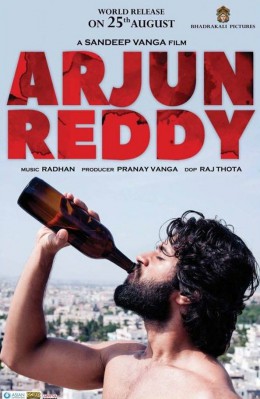
Arjun Reddy

Poster

Sandeep Vanga’s début film is epic. I don’t mean epic in the sense of Sanjay Leela Bhansali style staging (although at points it is), but rather epic in terms of story and exceptional attention to detail. It’s an all-encompassing tale of one man’s journey through love and loss, through addiction, pain and despair but still managing to survive with the support of his friends. The attention to detail in the story is exquisite and Vijay Deverakonda is outstanding as the titular character who is essentially a modern-day Devdas. But this story is so much more complicated than Devdas. It’s almost a documentary where every small facet of Arjun’s life is laid bare for the audience to pick over and examine in detail. So, we see Arjun’s family, his girlfriend and her family, college friends and enemies, work colleagues, even friends’ families who all have a role to play in the story. It’s also epic in terms of the love story where the passion is so large and so over-whelming that it bursts from the screen in waves of emotion that almost drown out everything else; where nothing else matters to Arjun and Preeti except each other and the scale of their love. This is selfishness and single-mindedness taken to the extreme and yet Sandeep Vanga somehow makes it seem plausible. And finally, it’s epic in terms of Arjun’s descent into alcoholism and drug abuse to the point where I was amazed he was still alive after his binges, let alone coherent. It’s also a little over 3 hours long – epic indeed!

Arjun (Vijay Deverakonda) is a Masters student at medical college when he first sees Preeti (Shalini Pandey), one of the new intake of first year students. He desires her as soon as he sets eyes on her and as college topper and all-round hero of the college he quickly marks her as his ‘property’. Strangely Preeti doesn’t seem too upset by Arjun taking over her life, but acquiesces to all of his demands, even when he tells her who to befriend, and she falls quickly fall into love and into Arjun’s bed without any objections. But then Arjun is popular and smart, so perhaps her instant attraction is understandable. He’s also brash and over-confident with anger management issues. He picks a fight at a football match and refuses to apologise afterwards because the fight was pretty much the whole point of the event for Arjun. Once Arjun falls for Preeti, he is completely obsessed by her and every single insult is of monumental importance, requiring instant satisfaction for which he is willing to beat the entire world to death if necessary.

It’s interesting that Preeti doesn’t have a voice until well into the narrative. Perhaps her reticence is because she’s simply over-whelmed by the attentions of the most popular guy in the college. There is the usual stalking = love trope as Arjun basically bullies Preeti into being his girlfriend, but somehow it seems possible given that Arjun is a free spirit and the normal rules don’t seem to apply. However, once Preeti falls in love, she’s just as obsessed as Arjun, to the point of following him up north when he moves away to finish his surgical residency. The love story is intense and physical with both Arjun and Preeti as single-minded as each other, and both utterly dependent on the other for their happiness.

Of course this is a story of loss and when Preeti’s family reject Arjun and marry her off to someone from their own caste, Arjun immediately sinks into despair. He quickly becomes an alcoholic and drug addict, although still manages to work as a surgeon with a devoted team of nurses who hide his drinking from management. His obsession with Preeti leads to an estrangement from his own father (Sanjay Swaroop) and the emotion in these scenes is raw and very believable. My favourite line in the entire film is when Arjun’s grandmother (Kanchana) is talking to Arjun’s brother Gautham (Kamal Kamaraju) and sums my own thoughts up beautifully by saying: ‘he wants to suffer – then let him!’

The story works because although Arjun lives life right on the very edge, his bad decisions are believable and mixed up with actions which so often are right. He’s a capable surgeon who really cares about his patients, and who all love him as a result. Ditto the other staff at the hospital who adore him. He is rather less considerate of his friends and continually abuses Shiva (an absolutely brilliant Rahul Ramakrishna) for having no ambition, even when Shiva is constantly rescuing Arjun from the consequences of his own excesses. No matter what his friends try, Arjun remains fixated on Preeti and addicted to alcohol or any other chemical that can blot out his misery for a few hours.

Sandeep Vanga conveys the fundamental selfishness of love in his story, and in his focus on Arjun succeeds in painting a realistically raw picture of despair and a broken heart. With all his flaws, Arjun is still a sympathetic character and the sheer depth of the emotion portrayed here drives a visceral response to many of the scenes in the film. Vijay Deverakonda really is incredible as Arjun and it’s a testament to the excellence of his acting skills that the character remains sympathetic despite Arjun’s many shortcomings. He ensures Arjun’s obsessive nature is sharply revealed in the early scenes and the swings between lover and addict, anger and happiness, hope and despair are amazingly powerful. This really is excellent work from Vijay and it will be interesting to see what he does next.

Also very impressive is Rahul Ramakrishna who strikes exactly the right balance as Arjun’s long-suffering friend Shiva, and his mixture of humour and concern feels true to life. His character is also very relatable, made even more so by the clever scenes with his own father that are so different to Arjun’s posturing, making Shiva my favourite character in the film. His dialogue too is clever with some great self-deprecation, but Rahul also manages to convey his hurt at Arjun’s remarks, despite knowing it’s the alcohol and drugs talking. The other friends, Kamal (Kalyan Subrahmanyam), Keerthi (Anisha Alla) and Vidya (Aditi Myakal) are also very good, as are the rest of the support cast. Radhan provides the music which suits the film well and the songs are used as backdrop while moving the story forward. No big song and dance numbers, but this is not that sort of film.

Even with the over-blown nature of Arjun’s romance and subsequent melt-down, the story feels realistic and plausible, mainly due to the excellent characterisations and honest dialogue. Arjun’s addiction is particularly well done and is an surprisingly  accurate description with his downwards spiral into self-absorption, mania, paranoia and continual pattern of pushing people away despite their attempts to help. This is good storytelling and I really hope the Telugu film industry can start to move away from current clichéd and formulaic screenplays into similarly more open and realistic films. It’s been a trend in the rest of the South for the last few years and it finally seems to be reaching Hyderabad. While Arjun Reddy may not be a film for everybody, it is an excellent watch and I enjoyed every minute – even if it’s not always a comfortable film to view. Highly recommended.