Pokiri

Pokiri is my favourite Mahesh Babu film, along with Athadu. I’ve seen the Tamil remake Pokkiri, and endured Wanted in Hindi (for completeness) and neither of them holds a candle to the original. Puri Jagannadh combines a strong story with striking visuals to make a gory, suspenseful action masterpiece. The story is set in the murky world of cashed up property developers, corrupt cops and parasitic crooks (the ‘land mafia’). Justice seems to reside outside of the legal system, but it isn’t immediately clear where.

We first see Pandu (Mahesh Babu) when he lures a gang out of their own territory and beats them to a pulp after kindly offering to leave a door in the shed open so they could run away if they got scared. He celebrates with a dance in which he beats people up. He then hooks up with the gang who he has just beaten up, including Subbaraju, employed by off shore crimelord Ali Bhai. Jyothirana as Mona shows an interest in Pandu that is not purely professional, and I can see why she might have been disappointed in his answer.
Pandu has all the typical hero attributes – the vestigial mullet hairdo, he’s invincible, he just has to break into dance and everyone around him joins in, he never gets lost or stuck in traffic and he is never stuck for a one liner. Despite his refusal to injure women and children, he will kill without remorse and his intensity in explaining how bad he is seems to indicate perverse pride in his achievements. Pandu is an anti-hero and there is no pretence made that he is really a good guy although of course he has a back story that explains much once it is revealed. Mahesh’s performance is totally committed to the crushing action scenes, and he is expressive in the emotional moments. Pandu is a baby faced killer with few if any scruples, although he seems to have caring friends (including Ajay) and occasional flashes of levity.
But I really had to question if someone who solved all their problems with such brutality would be any easier to deal with if he was motivated by love rather than anger. Dead is dead after all. But it’s Mahesh, so Pandu was never going to be left painted as a complete villain for the whole film.

Pandu is attracted to Shruthi and knows they are all wrong for each other. Oh God, what to do?

Ileana is Shruthi; young, pretty and pouty. Her storyline justifies wearing midriff-baring lycra as she is an aerobics instructor, and the sole breadwinner in her family. She still has the very flexible working hours and extensive wardrobe a film heroine needs. Slimy S.I Pasupathi (Ashish Vidyarthi in a creepy performance) hits on her and her mother, and pays rowdies to stage a fake rape to ruin her and prevent her marrying.

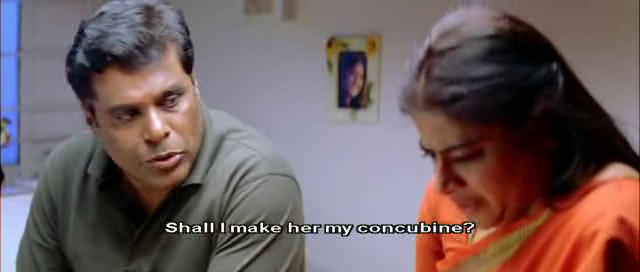
When Pandu finds out he pursues the perpetrators and none of them walk away from the encounter. But Shruthi isn’t grateful or smitten as a result – she is more fearful of her own lack of judgement in pursuing Pandu.
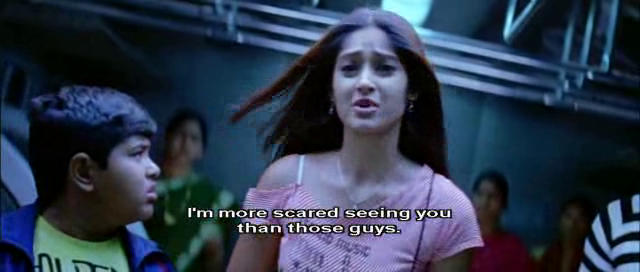
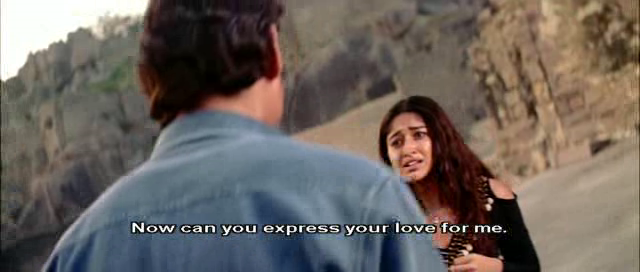
She struggles with her attraction to Pandu and her revulsion at what he does, especially following a squelchingly bloody fight set at Golconda. Ileana is given dialogue that illustrates Shruthi’s strength of character and should show this inner conflict but almost everything emerges as either a simper (I love him!) or a teary whine (he’s so mean!) and she missed the mark. Perhaps it was a question of maturity – she played Shruthi as a girl rather than a young woman which I think this needed.

The songs by Mani Sharma are highly enjoyable and so are the picturisations, possibly not always for the intended reasons. Who needs a comedy sideplot when you have those lanky pale legs in a lunghi?
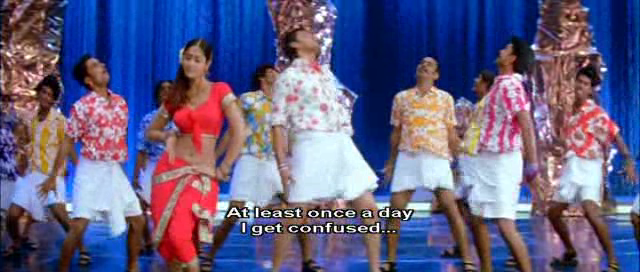
The romantic duets look less successful as I don’t think there is sufficient chemistry between the couple, or enough actual dancing in their songs together. But I love the backing guys in this.

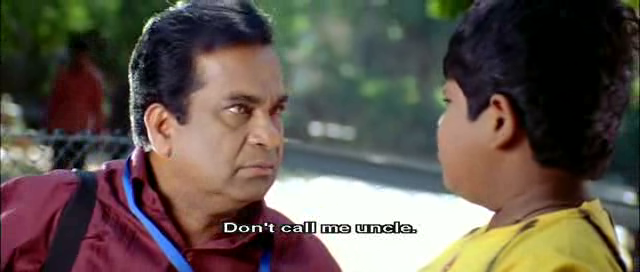
Brahmi is the neighbour who dresses 30 years too young and keeps cracking on to Shruthi. Mercifully he is mostly quarantined in a sideplot with Ali and Venu Madhav so they torture each other and I ignore it. It’s not really that bad as comedy sideplots go, but I fast forward in their scenes. I would like to suggest that comedy uncle types from all film industries should held in a secure facility on a remote island. There should be a strict ‘one in, one out’ policy that would keep their screen presence manageable. Sunil would be free to roam as he pleases because I find him funny.
Prakash Raj is the shadowy don, Ali Bhai. He is menacing from a distance, but seems less calculating and more self obsessed when he joins the mainstream of the drama. He has some fancy shirts and nasty habits that sometimes tip Ali into caricature.

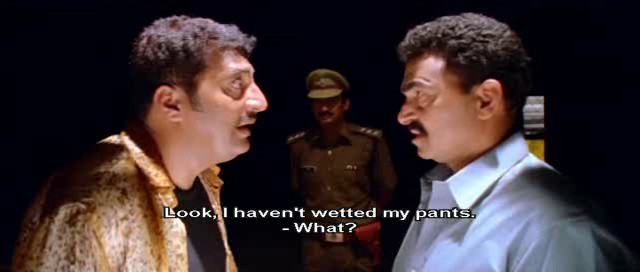
Ultimately it is Ali Bhai who drives the final showdown. He humiliates and kidnaps the daughter of the ACP to have a bargaining chip. Once again the police are shown as powerless – forced to lie about an arrest to prevent political interference – and working outside the law to deal with this criminal.

Rape is a common threat against the women in Pokiri. It is treated as something serious, although in a very filmi way.  But then Puri Jagannadh shows a rapist’s father demanding to know why his son’s reputation is being ruined. The fact that his son filmed himself raping the girl doesn’t seem to worry him as much as seeing the footage on the TV news. There is also criticism of the tabloid media who glorify and collude with criminals for the sake of sensation and ratings yet demand law and order. Mona sells the rape film to the press and Pandu asks if she is a woman to be able do that to another woman. No such question to the guys in the gang – maybe we aren’t meant to expect morals from them. And of course, that old Telugu film chestnut; if a good person kills a bad person, was it really a crime? Behind all the blood splatter and gunfire there were some interesting notions floating around but they were never going to get in the way of the action.
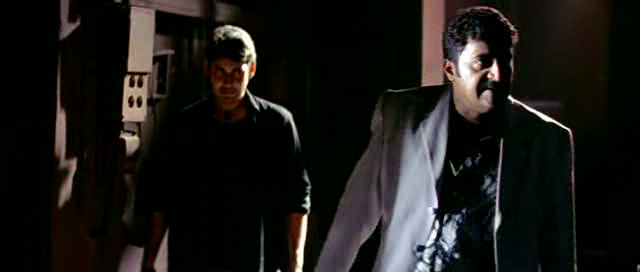
The climax is brilliant. A slight twist is revealed – when will senior policemen learn not to tell their kids about top secret operations? All the bad guys converge on Binny Mills and Pandu wreaks havoc. There are dismemberments, impalements and all manner of gore, in a beautifully choreographed and filmed sequence that takes full advantage of the location and film technologies. I think there’s a bit too much slo-mo glass smashing, but I can forgive the excited over-use of new technology toys. Vijayan created some iconic set pieces in the fights and they really are stunning.

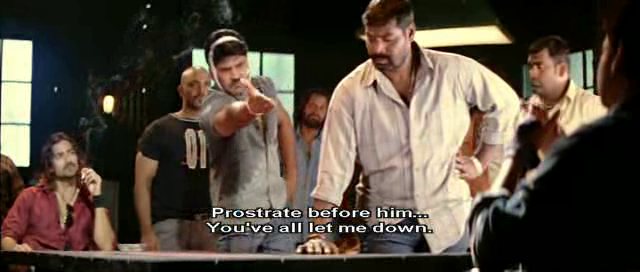
The support cast are there largely to contribute to the body count although Sudha as Shruti’s mother and Master Bharath as her little brother have some key scenes. Ajay and Subbaraju make the most of their roles and both exude menace and a dark comedic edge. Nasser has a small but crucial part in the drama. I liked Sayaji Shinde, the ACP, in his more restrained scenes. Mumaith Khan turns up too for the obligatory item number.

I think this is Puri Jagannadh at his best. He has the strong visual sense and a knack for picking up interesting concepts, which in Pokiri is meshed with an engaging story and some good performances. If you don’t mind your action bloody and unapologetic, this is for you. 4 ½ stars – a small deduction for Ileana’s snivelling.
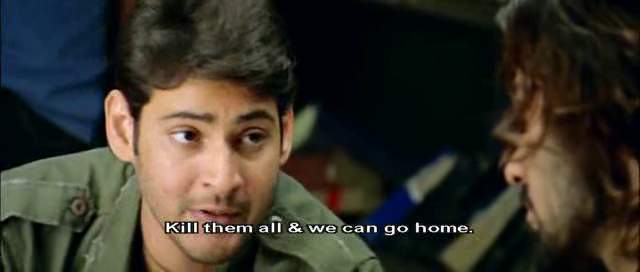
Heather says: This was my first Mahesh Babu film, and what an introduction! I think Pokiri has one of the best hero entrance scenes when, after plenty of running feet and leg shots, there is that wonderful moment when Mahesh finally bursts onto the screen surrounded by flying vegetables and chillies. Brilliant! It’s definitely one of Mahesh’s best films where his acting and the action element all come together perfectly to create the total package. I saw the Tamil version Pokkiri with Vijay first and although I think that’s also great, the original Telugu film is definitely much better.

I like the way Pandu transitions from the total action hero and baby faced killer (who is not a nice guy at all), to the devastated son later in the film. There seem to be more shades of grey in the character of Pandu than in some of Mahesh’s other roles and it makes him much more interesting – especially as the film progresses and we learn more of the back story. He does still have an astonishing ability to be able to defeat an average of 20 opponents all by himself which seems to be pretty much obligatory for any Mahesh character. And there’s nothing wrong with that at all!  Pokiri does have some excellent action and fight scenes, and some of the methods used to dispose of various villains are very clever indeed. Full marks to Vijayan for some smart action segments and memorable fight choreography. It’s not just Mahesh who excels in Pokiri though. I’m a big fan of Ajay and his presence in any film always makes it just that little bit better. He’s great here as Pandu’s friend and as usual has some wonderful expressions, particularly as Pandu and Shruthi clash.

I like Ileana here too, as she is convincing as the girl who falls in love with the bad guy despite all her reservations.  Her acting in the scenes where her family is threatened is good and although her reaction to the thugs who burst in on her is a little too weepy for me it does come across as right for her character. I enjoyed the interactions between Pandu and Shruthi although there wasn’t too much chemistry between the lead pair. I put this down to the fact that it would be hard to be very romantic with a guy who spends most of his time systematically slaughtering his way through the various gangs in Hyderabad and Shruthi’s revulsion for Pandu’s lifestyle tends to comes across more clearly than anything else. However they do look good together in the songs and the romance works well enough. The various villains are all excellent although Prakash Raj is perhaps a little too much of a caricature in his role as Ali Bhai. Ashish Vidyarthi deserves special mention for being particularly disturbing as the corrupt cop, and Sayaji Shinde was also good as the police commissioner.

The only downside to the film is the terrible comedy track, although it’s actually better here than in the Tamil version with Vadivelu. While I don’t mind Brahmi’s amorous landlord persona, the scenes with the beggars played by Ali and Venu Madhan are incredibly annoying and just slow down the action. Get rid of that and this would be as close to perfect as it gets. As it is it’s still a fantastic watch for all-out Mahesh action – 4 stars.
Vikramarkudu

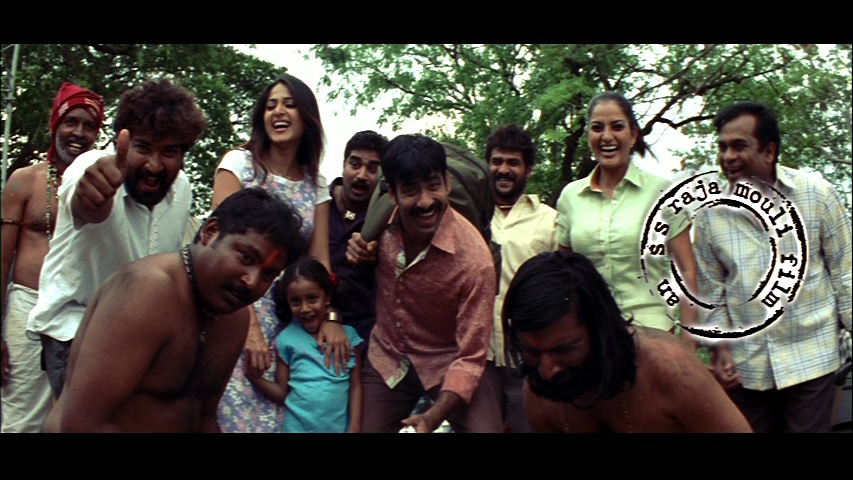
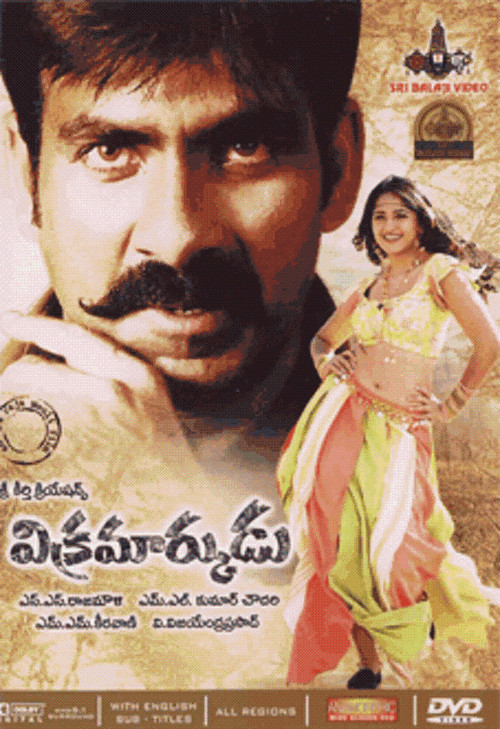
Vikramarkudu centres on ASP Vikram Singh Rathore (Ravi Teja) and his attempts to bring rural crimelord Bavuji and his evil brother Titla (Ajay) to justice. Needing to go into hiding, Vikram schemes to have his young daughter left with unknowing duplicate Athili Sathibabu (also Ravi Teja), a conman conned into caring for the child. The now familiar theme of justice being outside of the law is at the fore as even the police cannot rely on the legal system. There is suspense as the bad guys get closer and the two lookalikes cross paths in a series of action packed episodes. SS Rajamouli knows how to get a story up on screen and make it look amazing but he doesn’t have the best material to work with here. Vikramarkudu is a bit less satisfying than it should have been.

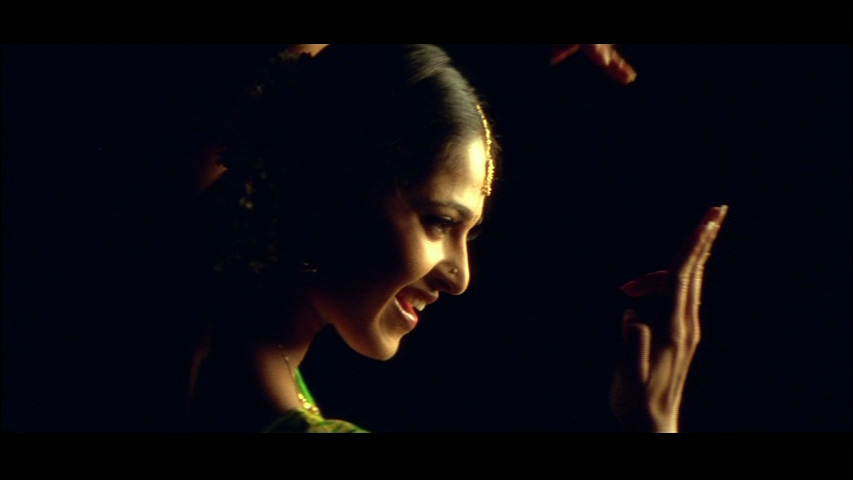
The major problem for me is the first section which sets up a very unconvincing love at first sight romance between Sathibabu and Neeru (Anushka Shetty). She acts giggly and flirty and he is sleazy and grabby. I struggle to believe Neeru would be smitten by Sathibabu. I can believe she might fall for him over time, but on sight? It wouldn’t have taken much to come up with a better story for her, but apparently no one could be bothered. Apart from the unfortunate giggling and the attempt to be a minx, Neeru was quite likeable but then she disappears until the end of the film. While it wasn’t much of an acting challenge at first (except maybe for having to gaze lustfully at Ravi Teja) Anushka did at least look like she was having fun in the songs. She got a bit more to work with later in the film, but the heroine was not pivotal to the story.

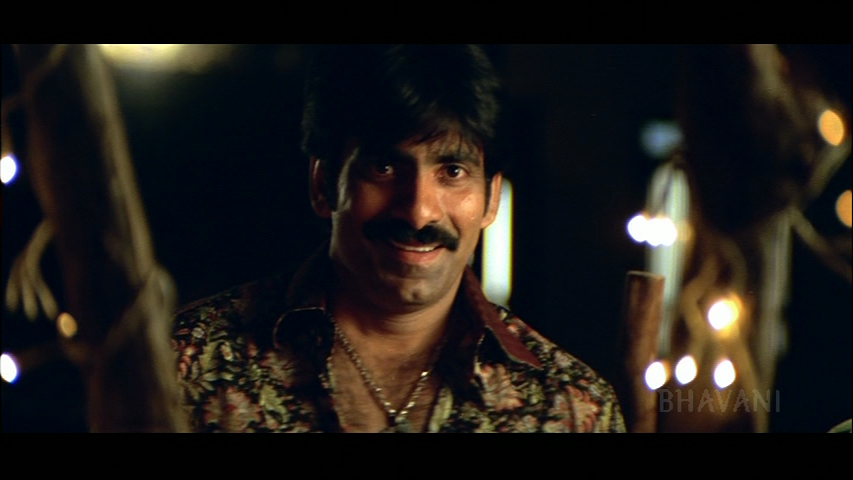
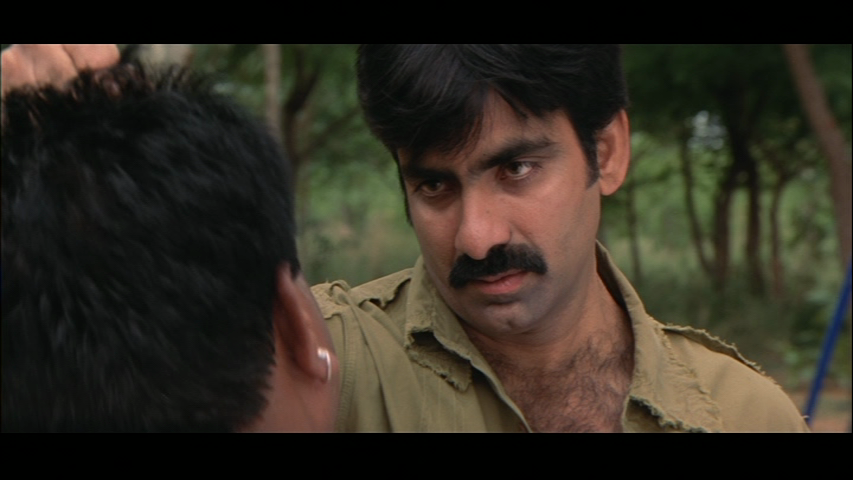
Ravi Teja is a good actor and created two very distinct characters while playing up their similarities so that while I was never confused, I could believe that the other characters might be. He gave the policeman a serious demeanour that was almost out of place in the mass madness.

The action scenes look great and Ravi Teja is up to the challenge of the scuffling, bruising fights. But most of the story is about Sathibabu whose notion of romance is slapstick sleaze.

I have a fear of Anil Kapoor’s back hair which dates from seeing Janbaaz. Oh, the rolling in the hay scene was so disturbing even without the straw woven into Anil’s furry pelt. I had post traumatic flashbacks when I saw Ravi get his shirt off with no warning.

Brahmanandam and Sathibabu live in a house they had furnished from various stolen items. It was neatly quirky, and might have been better suited to college aged guys but the set designers had fun. Ravi Teja has an upbeat energy which is very effective in the dances and he looks like he enjoys the dreaded comedy scenes. Their conman shtick was mildly amusing and I liked some of their schemes, but the heavy handed and repetitive dialogue especially by Brahmi became annoying. And I just don’t think sleazy puns and groping equates to humour.

There was more to Sathibabu than I initially expected. He was coerced into caring for a little girl (Baby Neha) who was convinced he was her father. I liked the developing affection between Sathibabu and the little girl. It didn’t seem that he was won over because she was cutesy but because he started to appreciate she was a little human being and had her own fears and likes that he could relate to. And from that initial moment of empathy came a protective affection that was endearing. It also meant that he was more invested in helping Vikram and sorting out the villains when the time came.

The bad guys play for cartoon effect but there was an edge of darker violence to some of these scenes. Bavuji is a stock baddie who leers and shouts and does a pretty good mad eye. Ajay as Titla is more striking and not just because of his height and aura of evil. He leads a gang who were possibly involved in the trial run for Magadheera costumes, and is armed with what looks like a kind of blunderbuss and a cross bow.

Ajay has the right amount of menace and silliness and he plays it to the hilt. Munna (Amit Kumar), Bavuji’s son, is flamboyantly bad but opts for a comedic approach which masks his calculating nastiness.

Their crimes include abducting women from the village for sex and killing anyone who stands up to them. Rajamouli doesn’t soften these scenes at all and, while it does make payback more cathartic, it is dark. Mind you, they still know how to party:

The supporting cast of good guys do well with the patchy script. Inspector Mahanti (Rajeev Kanakala), paralysed when they abduct his wife Pramila, is an example of what happens when good men stand by and do nothing.  Yet again I found myself wondering about how a handful of psychos can dominate a population of hundreds. His wife and kids make a strong impression and I cheered and cheered in one of her scenes. Prakash Raj makes a very small appearance as a DCP but gets to use his misty eyed Gaze of Blossomimg Bromance to good effect.  Ruthika is a tough policewoman who is handy in a fight and that is treated as kind of unremarkable which I liked. She just does her job. It didn’t stop the writers inflicting some ‘comedy’ on her though. She is drugged by Brahmi which causes a sound effect of whinnying like a horse and the terrible side effect of fancying Sathibabu. The only good thing I can say is that this song happens:

The MM Keeravani songs are fun and they provided a battlefield between the choreographers and the costume team. There is a pleasing commitment to metallic pants and that makes me happy.

The costumes are a highlight and Ravi Teja’s trousers often make a statement. Anushka seemed to get the more experimental designer but she didn’t seem too fazed. I suppose that is a benefit of knowing you could wear a hessian sack and still look stunning.

There is some excellent Only In Films Medicine I must mention. I bet you didn’t know that a temporary cure for an aneurysm is running cold water over your head.

I struggled with Vikramarkudu at first as I couldn’t see the story going anywhere and I didn’t care less about the lead pair. Once the revenge story started to dominate, the pace picked up and I found the film much more satisfying. There was some tension and characters started to become more fleshed out once the common enemy was in play. While the content and situations are unrealistic, the impact of the dramatic and action oriented scenes was surprisingly strong. By the end, as Ravi Teja made those baddies sorry they had ever been born, I cheered and laughed and occasionally winced. As for the resolution, well I question some of the logic but you know what they say; all’s well that ends well. 3 stars!

Rudraveena

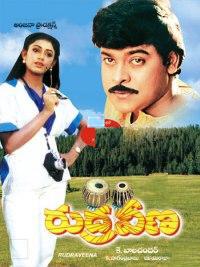
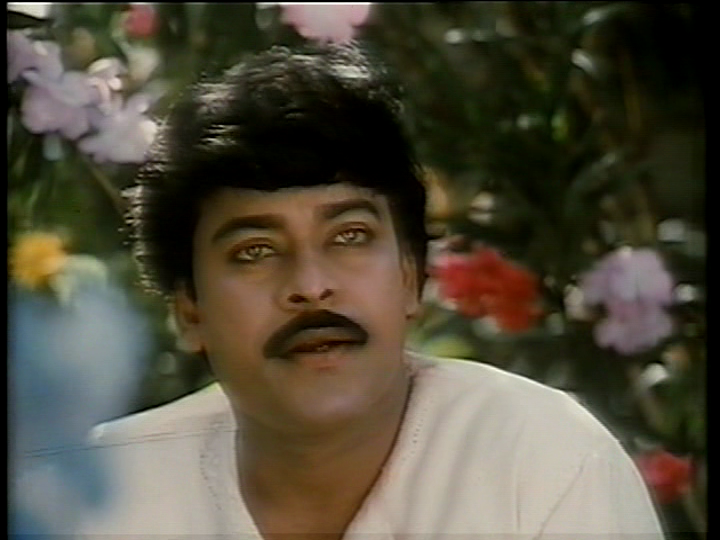
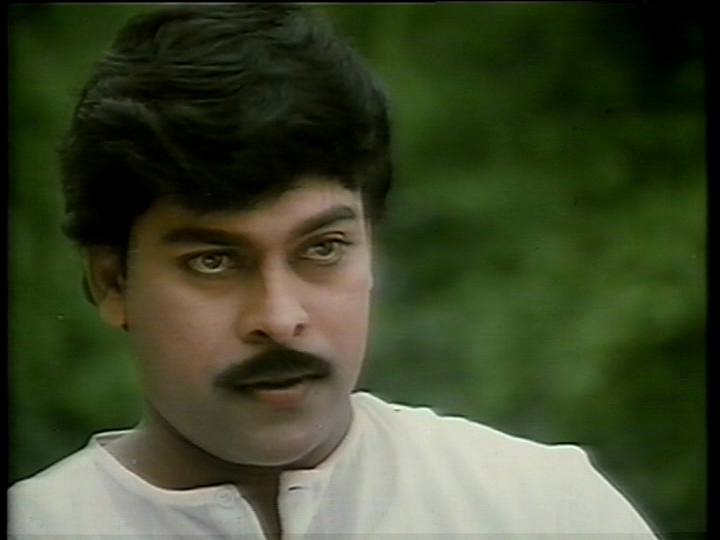
Rudraveena is a quiet contemplative film, written and directed by K Balachander, about the responsibility of the individual in matters of caste and society. Chiranjeevi must have felt strongly about making this film as he produced it. I only wish someone would release a decent quality DVD with subtitles as it is just beautiful, and I know I must have missed a lot by not understanding the dialogues. Having said that, the things I don’t fully understand are more the cultural and social aspects, and that is usually not spelt out anyway. I am torn between wanting to write about every little detail and not saying anything about the story so you can discover it for yourself. I really do love Rudraveena and think it is one of Chiranjeevi’s best performances in an engaging and intelligent story.

A man throws a banana towards a blind woman begging, and she accidentally knocks it away. A young Brahmin boy watches her struggle to find the fruit, but does nothing as he cannot touch her or the food that she has touched. He is troubled by her situation, but doesn’t act. Eventually someone does come to her aid, and he also gives the boy a lecture on the futility of mouthing a mantra if you do not act in accordance with the values contained in the prayers. This incident infuses the story, told in an extended flashback as Suryam (Chiranjeevi) shows a visiting minister around the apparently perfect village.

Suryam is that boy all grown up – the son of famed musician Bilahari Sastry (Gemini Ganesan). Suryam is a gregarious fellow, interested in what people do and how they live. He loves music and expresses his feelings through song, seeing it as a way of sharing and giving happiness.

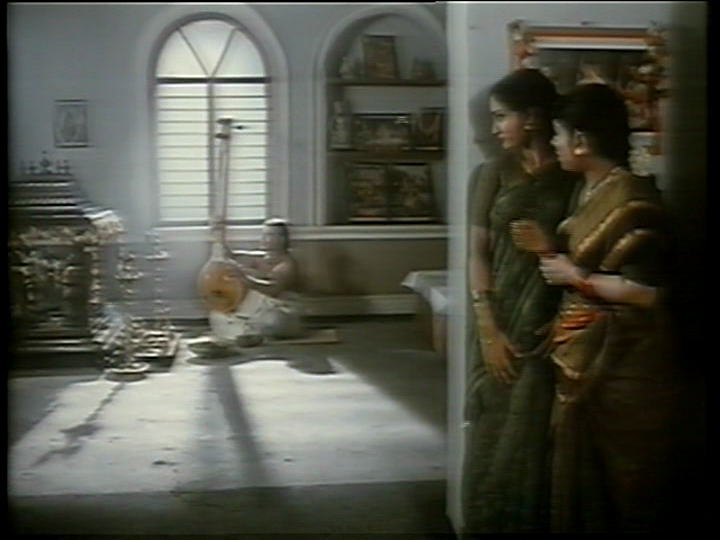
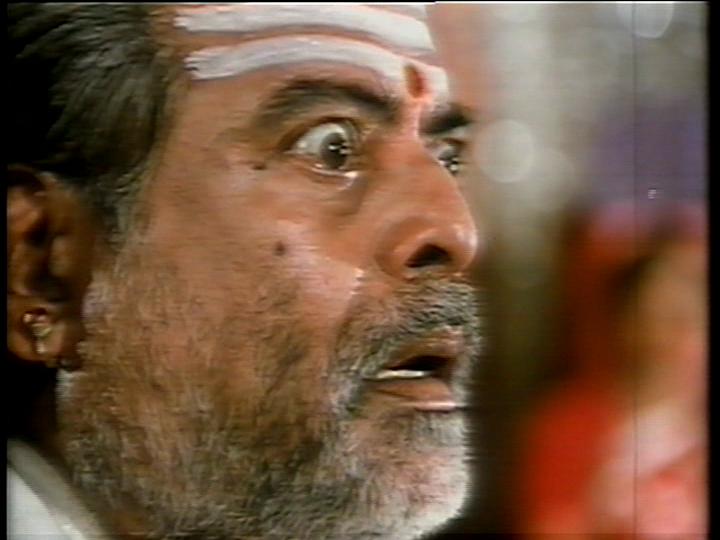
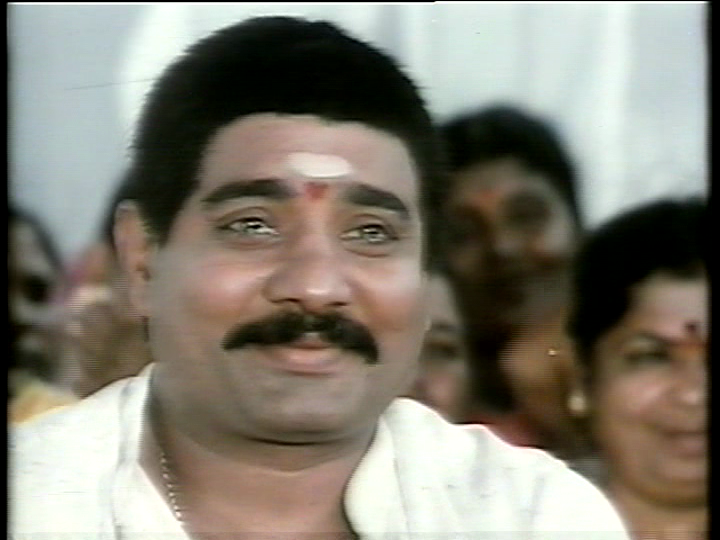
Music in the Sastry home is ceremonial, devotional and not for fun or for the people. The father is very traditional and conservative, living in strict adherence to caste rules. Bilahari Sastry raises his voice in song to drown out the pleas of someone needing help, and would rather be on time for a concert than help a dying commoner. And he pulls this face a lot:

He is a difficult man, but not a total monster. It’s obvious he has done the best he could after his wife died, and he misses her guidance or support.  There is already tension in the family purely because of the different personality types and this is heightened when Suryam meets Lalita (Shobana).

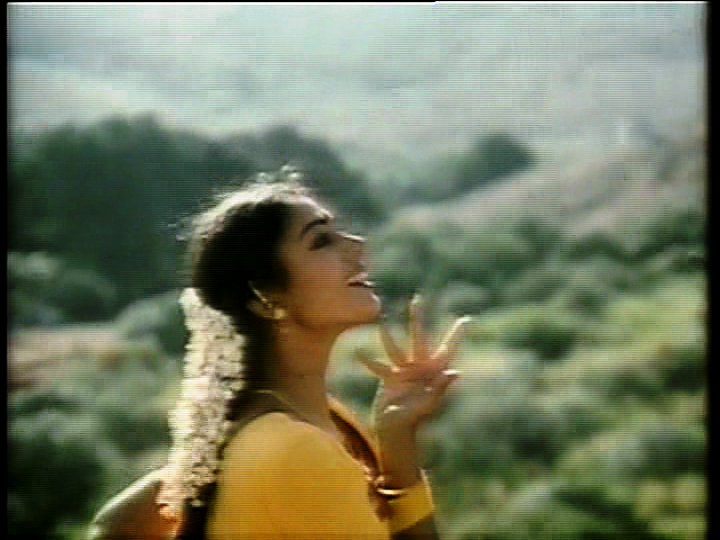
He sees her dancing on a hillside opposite a temple, ogled by men from their sacred vantage point. I think Lalita makes a point about men worshipping goddesses when women are excluded, and whatever she said it makes an impression. Suryam has a statue placed on the hilltop and is surprised to see the villagers lined up for pooja within shouting distance of a temple that didn’t include them.

Shobana has good chemistry with Chiranjeevi and although I know there is an age difference, it isn’t obvious and they look great.  Lalita isn’t a pushover to be impressed by the Brahmin boy and he doesn’t act entitled. Having the lower castes represented by the beautiful Lalita could have easily fallen more into the fairytale romance but thanks to some good writing and the excellent performance by Shobhana, Lalita is strong and individual.

Their shared love of music is another form of communication and bonding that helps this seem like a potential life partnership rather than a fluffy instant romance. Illaiyaraja’s songs are set into the narrative so they are part of the story, and the minimal dancing is in character for Lalita and Suryam so it all flows beautifully. The music is a real highlight of Rudraveena.

Their flirtation is fun as Lalita keeps Suryam guessing, which he kind of  enjoys,  and they do all those little things that are only really funny for people in the giddy stage of love. She’s not all cool and calm though, as she changes her sari five times before he arrives to visit. Lalita refuses to be cowed by Sastry’s disapproval and is clearly confident in her relationship with Suryam.

Lalita’s family are the opposite of the Sastrys. When Suryam arrives he is greeted with hugs and an extemporaneous welcome song introducing each family member and what they were doing. It’s an attractive environment for a boy who feels stifled at home.

Not that home life is all grim. Suryam confides a little in his sister-in-law about his love and she mocks him gently even as she is pleased to think he might soon marry. Prasad Babu gives an appealing performance as Suryam’s mute brother.

He is an observer of the tension in the house, and he uses music to force communication or at least momentary harmony. He is also a kind of moral compass, miming to his father that donning the trappings of religion doesn’t make you close to god if you don’t also do the right thing.

Bilahari will not tolerate what he sees as Suryam’s rebelliousness. As punishment, he takes on another student and promotes him to favoured disciple status. This guy is a fraud who pretends to be pious and dedicated but really he just wants to marry daughter Sandhya (the beautiful Devilalita). That relationship is quite nice, but the character is there more to be a contrast with Suryam who is outwardly not the ideal son but is a good and honourable man. Of course, Bilahari learns of his error eventually but he is a proud man and the damage has been done.

After yet another disagreement Suryam leaves the family home, but he doesn’t just marry Lalita and live happily ever after. Their wedding is interrupted by drunken louts out to cause him trouble, including an uncharacteristically nasty and dramatic Brahmi.

Suryam stops the ceremony rather than allow Lalita to be insulted further. He takes on a challenge to reform the village before he can marry and Lalita supports him despite her heartache. I think she is sympathetic partly because she wants to be certain that Suryam is sorted before they start a life together.

I liked that Lalita was active in the reforms, showing that a young low caste woman could be a leader too. Suryam sees that people don’t always have the motivation or resources they need, and he can help. It’s not as preachy as it sounds as he is a doer not just a talker, and is as likely to be driving a tractor as making a speech. It’s clear that he feels his position requires him to do something to raise people up rather than keeping them down. And I think there’s also a bit of wanting to show his father who was right.

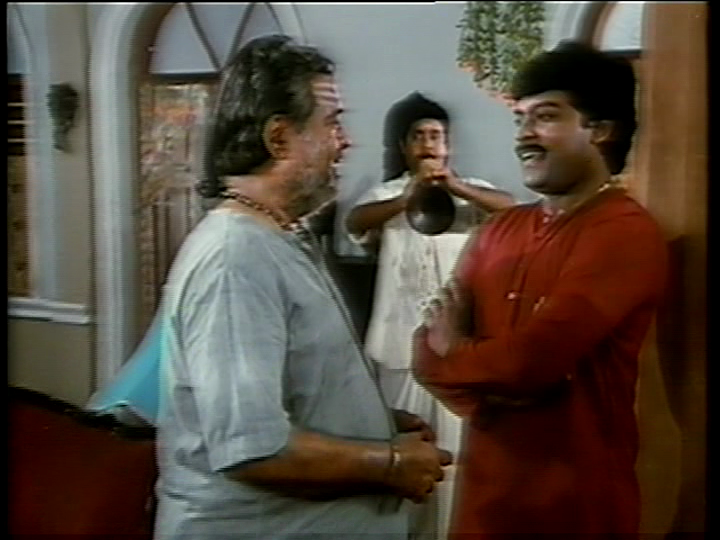
Yes it is a little heavy handed at times but the romance and more fun elements provide the necessary balance.  The ending made me a little angry at Sastry jumping on the bandwagon, but you cannot get a clearer message than this:

Rudraveena says people can create change by doing something in their own community, and it doesn’t have to be on a grand scale to achieve a great result. I like that philosophy and it is as fresh and pertinent today as it was in 1988. All that thought provoking material, and a sweet love story to boot. And really, if you can resist Chiranjeevi in this role I just don’t know what’s wrong with you. 5 stars!