Seethakaathi

Seethakaathi

Vijay Sethupathi is known for his tendency to choose rather more unconventional roles and for his 25thfilm he takes on the character of an ageing theatre actor in Balaji Tharaneetharan’s Seethakaathi. The film is a refreshing mix of theatrical performances, comedy and drama underlying a satirical look at the film industry and despite only appearing for roughly forty minutes of the almost three hour run time, Vijay Sethupathi is the heart and soul of the film. Mouli, Rajkumar and Sunil Reddy play the other major characters, perfectly blending comedy and drama as the story moves through the world of theatre, into the film industry and finally ends up in a court room. It’s a novel tale that’s difficult to discuss without revealing the core idea that makes it such a wonderfully quirky and offbeat film, but it’s well worth investing the time to watch Seethakaathi in the cinema to appreciate the attention to detail and sheer inventiveness of the story.

The film starts with a series of scenes from theatrical performances featuring acclaimed actor Ayya Aadhimoolam (Vijay Sethupathi). These begin with his early career and progress through the decades via various classical scenes before ending with the elderly actor performing the lead role of Aurangzeb. As the actor ages, the setting for the plays changes too, starting with an outdoor performance under the stars, moving to a packed house in a new theatre and finally to a sparsely attended show with the theatre hall shabby and showing its age and lack of funds. Watching from the wings is Ayya’s friend Parasuraman (Mouli), while his fellow actors revere Ayya and provide partisan support for the performances. This opening section is focused firmly on Ayya as the lead actor in each theatrical vignette and Vijay Sethupathi is simply incredible, holding the audience attention though long classical speeches and in truth being the mesmerising and captivating theatre actor he plays. The ageing process is well done too and the prosthetics and make-up ensure Vijay is convincing as an elderly man, although it’s his posture and slow, considered movements that authenticate his portrayal.

Despite his success, Ayya lives simply and uses an auto to get to and from the theatre. He is shown as caring deeply about his grandson and takes care of his extended family of actors and theatre workers too. Early on in his career when he is offered film roles, he declines saying that he prefers to work in front of a live audience, however, with the theatre becoming less popular, Ayya is convinced firstly to advertise his shows in the local paper, and then later to ‘appear’ in films. However, when he fails to show, first in Director Sundar’s (Bagavathi Perumal) film with Saravanan (Rajkumar) and then later for producer/actor Dhanapal (Sunil), Ayya and Parasuraman are drawn into a court case.

Balaji Tharaneetharan adds his quirky brand of comedy to the scenes set within the film industry and there are cameos from film directors Mahendran and Bharathiraja along with some other unexpected faces. In Balaji’s cinematic world, directors are shown as having the short end of the stick; having to pander to their lead actor’s whims while placating their producers and walking a fine line between creativity and farce. The producers on the other hand are more unethical and grasping, with profit being the only interest for most, while fame and fortune quickly corrupt even the most innocent of actors. Adding Ayya into this world produces some wonderful comedy and Sunil in particular is excellent in his début role. His comic timing is superb and with some excellent slap-stick added, he really has some of the funniest moments in the whole film.  The difference between the slowly decaying artform of the theatre and the brash and opportunistic world of cinema is used to good effect, both for comedy and drama.  Even the courtroom scenes have plenty of humour which helps to keep the action moving along, despite the overall length of the film.

The female roles here are more peripheral with Archana having little to do as Ayya’s wife Lakshmi while Ramya Nambeesan, Gayathrie and Parvathy Nair all have one or two important scenes, but then they move into the background for the rest of the film. However, on the plus side there are no unnecessary romances and none of the female roles are there solely for glamour – in fact quite the opposite, despite the setting of the film industry. A few other faces appear briefly including Karunakaran as a lawyer but the action in the second half is mainly focused on Sunil and Mouli.

The story is enhanced by Govind Vasantha’s music which fits well into the general ambience of the film and provides contrast between the worlds of the theatre and the film industry without ever being too intrusive. Cinematographer T.K. Saraskanth provides plenty of warmth and nostalgia in the theatre scenes, well-seasoned with a patina of age, while the film shoots are brighter in keeping with the more brash attitudes and modern outlook. The pace of the film changes too. The early theatrical scenes are allowed to run as they would do in a conventional theatre without any chopping and changing, but as the story moves into the present day and into the film industry the pace picks up and humour is added. Just like in any film, action moves from one location to another instead of the steady and unchanging location of the theatre. It’s another contrast that highlights the differences between the two worlds, despite both being involved with acting and the telling of stories. Another plus point are the subtitles which are grammatically correct and in beautifully visible yellow font. Thanks to Aarti Sivakumar for following in Rekhs footsteps and enhancing the dialogue by making it easily read and totally understandable.

Overall, Seethakaathi is a novel story told in an unconventional way. The early slow-paced drama eases into more commonplace action although the premise behind the plot is still unusual and one that raises further questions about the nature of art. The disappearance of the main lead so early is a bold step that pays off thanks to the good writing and accomplished performances from the rest of the cast, while Vijay Sethupathy’s performance, although short, is so amazing and incredible that the memory infuses the rest of the film. I loved every minute of this film and was surprised to realise the length as I never felt that it was dragging or that anything was unnecessary to the plot. I would have liked more Vijay Sethupathi (of course!) but the rest of the cast are simply excellent and the story works incredibly well as is, while I felt the whole point was to have the impact of the early theatrical scenes overlay the rest of the film. I haven’t seen Balaji Tharaneetharan’s earlier film Naduvula Konjam Pakkatha Kaanom as I’ve never been able to find a copy with subtitles, but I will definitely be looking out for his next release. Highly recommended for Vijay Sethupathi, the exemplary cast and an offbeat approach to an unconventional story.
2.0

2.0.jpg

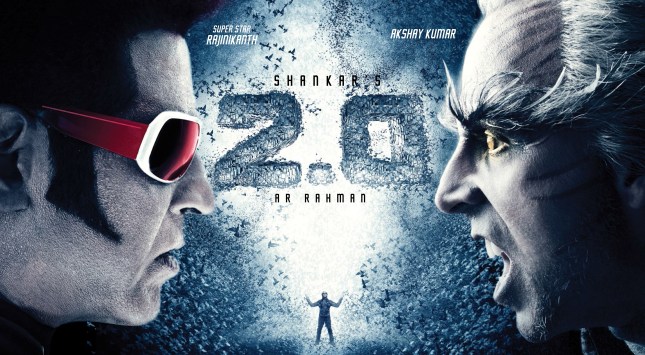
Shankar’s 2.0 is an amazing visual spectacle with incredible special effects and jaw-dropping action, but despite all the thousands of Rajinikanths, clouds of flying mobile phones and an unusually charismatic Akshay Kumar as the villain of the piece, it fails to fully impress due to a garbled and, at times, dull story. Not that the lack of a credible story really matters for a large-scale Superstar movie, but the transition between one incredible VFX scene to another really needed some sort of rationale to develop a relationship with the characters and bring in some suspense. And 2.0 just doesn’t have that connection. No matter how good Rajinikanth and Akshay Kumar are in their roles, or how truly magnificent the visual effects are, at the end of the day for me the film needs a little more soul.

The film opens with mobile phones suddenly gaining a life of their own and zooming off into the sky all over Tamil Nadu. These opening sequences are excellent as Shankar shows just how pervasive mobile phone use is, including the moment when we see an entire family all staring at their phones just as the father announces that of course he spends quality time with his family. Everyone is here – those obsessed with taking selfies, people using their phone for work, for family connections, even one man using a mobile phone as a plaything for his child, and it for a time it seems that Shankar might be making a statement about overuse of mobile phones. But it’s not that simple.

Naturally Chennai is thrown into total chaos by the “great mobile phone disappearance” but the problems are only just beginning. A massive cloud of mobile phones transforms into a bird’s talons and starts ripping cell towers out of the ground, prominent mobile carrier company owners are attacked and a gigantic bird, formed out of mobile phones starts attacking people in the streets. This is seriously inventive stuff, and Shankar has allowed his imagination free rein to create magnificent visuals that really are spectacular, while the fast-paced action just never stops.

Dr Vaseegaran (Rajinikanth) is aided this time round by an android called Nila (Amy Jackson) whose body proportions are reminiscent of a Barbie doll, but who does at least get the chance to show off her superhuman skills in the battle against the villain, Pakshi Rajan (Akshay Kumar). Pakshi Rajan is an eminent ornithologist who ends up suiciding after he fails in his attempts to stop the radiation from mobile phones killing off his beloved birds. Thanks to ‘negative energy’ and all those dead birds, he somehow transforms into an entity capable of animating mobile phones, and sets out to destroy the humans who have caused all the problems in the first place. There is a flashback sequence that paints Pakshi Rajan as an environmental hero with Akshay Kumar playing him as an old, broken man who wears baggy cardigans and weeps for a dead sparrow – so naturally he’s a more sympathetic character than the self-absorbed Dr Vaseegaran. And that’s part of the problem I have with the entire film. Dr Vaseegaran seems to simply want to bring Chitti back to life, and show off his new-fangled invention to save the day, while Pakshi Rajan has a legitimate issue and a real crusade that’s easy to support. So, when Chitti arrives on the scene, it actually appears that he’s fighting on the wrong side since Pakshi Rajan doesn’t come across as a bad guy until much later.

Thankfully when the 2.0 reboot Chitti takes over, his swagger and snappy dialogue helps lift the second half, ably helped by the excellent visuals and inventive ways that a cell phone can be used to kill. Pakshi Rajan develops a villain-worthy sneer and his casual disregard for the thousands of people who end up having to dodge bullets and large pieces of football stadium during the finale does start to make him seem a least a bit nastier. Team Chitti though has an equal disregard for bystanders and finally pulls a stunt with pigeons that’s even more vicious than all of Pakshi Rajan’s gory killings. That has the effect of making Pakshi Rajan actually seem more moral than Team Chitti despite his murderous tendencies. To try and compensate, the last scene makes some attempt to promote Pakshi Rajan’s cause while still chastising him for killing so many people, but it just doesn’t work, although the final action sequences are brilliantly done.

I’m not usually a fan of Akshay Kumar, but he is impressive here and he does an excellent job of humanising Pakshi Rajan and giving him an almost plausible reason to attack mobile phones. I also appreciated his bird-like mannerisms when he transforms into a giant birdman and his dedication to the role by using feathers for eyebrows. For the most part he simply screams at the camera in bird form, but during the flashback sequence he does display the demeanour and despair of a broken man very well.

Rajinikanth is on screen for most of the film in one or more of his different characters – Dr Vaseegaran, Chitti or 2.0. He is as charismatic as ever in every appearance, although Dr Vaseegaran is even more annoyingly self-absorbed here than he was in Endhiran. Despite playing a robot, as Chitti and his alter ego 2.0, Rajinikanth gets to display plenty of personality and each time he appears he brings life and energy to the screen. Thankfully the annoying Sana only appears as a whingey voice over the phone this time round, while the rest of the cast only appear briefly, either to be killed by Pakshi Rajan or as part of the government trying to cope with the crisis. Sudhanshu Pandey appears as Dhinendra Bohra, the son of Bohra from Endhiran, but this seems to be a real wasted opportunity and his character isn’t well utilised despite a promising start.

I’m not sure exactly what Shankar was trying to say here – if indeed he was trying to say anything at all. Could this be a film against mobile phones and the way they have come to take over our lives? Is there really an environmental message here about radiation and the dangers purportedly associated with cell towers? It’s all rather muddled and the emotional back-story for the villain doesn’t help matters either. However, as an all-out action adventure 2.0 works well enough. A.R. Rahman’s music is used sparingly throughout the film, although there is one montage song and a dance track over the end titles, which is fun. Thanks to Rekhs for the excellent subtitles (in yellow too, so very readable) and kudos to cinematographer Nirav Shah for making the regular shots just as good as the VFX. Yes, most of the money has been spent on the effects in this film, and little on the screenplay, but given the end result I’d say overall it’s money well spent. I didn’t see the 3-D version, but even in 2-D the effects are simply superb and for that alone the film really does need to be seen in the cinema. For the rest, Rajinikanth is excellent, Akshay Kumar totally nails being a murderous birdman, Amy Jackson does well as an animated robot, and best of all with this plot, no-one was using their cell-phone during the show. That’s definitely a win!

Sarkar (2018)

Sarkar

2018 seems to be the year for political movies, particularly those where the hero is an outsider deciding to run for office. After NOTA and Bharat Ane Nenu, this time it’s Sundar Ramasamy (Vijay) a self-styled ‘corporate criminal’ who decides to take on the corrupt Chief Minister during elections in Tamil Nadu. A.R. Murugadoss has added in some real-life scenarios which help add interest to a plot that otherwise features little more than a routine ‘Vijay saves the world’ storyline. After his recent films supporting education for women and rights for farmers, Sarkar seems to be Vijay’s most overt statement so far that he is considering a career in politics, although I do hope that if he ever does follow through, he has a better campaign manager than Sundar does here.

I’m not sure that being a ‘corporate criminal’, ‘monster’ or ‘the Genghis Khan of the corporate world’ are particularly desirable qualities for the CEO of a company in the USA, but that is how Sundar is described by both his rivals and his colleagues. Sundar himself seems to be more of a wealthy playboy as he runs around Las Vegas with an entourage of women and bodyguards before hopping onto a private jet back to India. Apparently we are to believe that Sundar makes this trip solely to cast a vote in the upcoming elections, which seems fairly extreme and makes him more of an environmental terrorist rather than corporate criminal. However, various CEO’s and company directors are able to breathe a sigh of relief that Sundar isn’t planning a takeover of their company, but is simply a strong believer in exercising his democratic right. Instead, after finding out that someone has already cast his vote due to the corrupt practices of the incumbent political party, Sundar turns his adversarial sights to CM Masilamani (Pala. Karuppiah) and his side-kick Malarvannan (Radha Ravi) aka Rendu.

Vijay is always excellent in these sorts of roles where he has to mix stirring speeches with action and a stern but righteous expression. He still looks incredibly young, but this time sports a salt and pepper beard, which does give him some maturity and suits the more serious situations. However, for the most part his character’s actions are not believable and many of the political issues are dealt with too simplistically to be completely engaging. Still, Vijay has plenty of charisma and is able to carry the film easily.

Sundar gives up his day job to run for office, which doesn’t ring true despite his spirited speech to an antagonist crowd about his lowly origins as a fisherman’s son. However the speech itself is excellent with a well thrown tomato is used as a metaphor for greed and the plight of humble workers. Later, Sundar uses his missed vote as a way to educate everyone about regulation 49-P and to convince his audience that every single vote is important. These are some of the best parts of the film, where Sundar motivates the masses and exposes the corruption at every level of government. When Vijay is in full speechifying mode he is very impressive but when it comes back to individual dialogue the unlikeliness of some scenarios does reduce their impact.

Both Pala. Karuppiah and Radha Ravi excel at traditional-minded, self-serving and corrupt politicians, but their conventional behaviour means that most of the confrontations between Sundar, Masilamani and Rendu follow an entirely predictable path.  As their power, prestige and ability to make millions in easy money is threatened, Rendu employs the police and multitudes of disposable minions to remove Sundar from the public eye. He never considers that every action will be recorded by the common man on his/her mobile phone, and that the media is on hand too to record every shady deal, even going as far as to walk out of a TV interview when Sundar arrives. However, Sundar’s response is also classic underdog reaction and despite all the wonderful slow-motion fight scenes and rousing rhetoric, for the most part Sundar is just as predictable as the politicians he opposes.

Perhaps to counteract this old-school predictability, Murugadoss adds another villain in the form of Komalavalli (Varalaxmi Sarathkumar), Masilamani’s daughter. This could have worked well, except for Varalaxmi’s stilted dialogue and odd expression, as if there is continually a bad smell right under her nose. I can’t understand how such a usually expressive actor is so lifeless here, but then little about her character makes sense. She tells her father not to worry, that while Sundar may be a corporate criminal she has been a criminal since birth, but there is no explanation of why. Why is Komalavalli the brains behind her father’s political career?  Why then was she in Canada instead of Tamil Nadu when the elections were being held? So many questions and absolutely no answers. Instead Komalavalli is a one-dimensional character whose sole reason to exist seems to be to cause general misery wherever she goes. While at least her presence does give Sundar an opponent with the smarts to fight back, she’s too little too late and just too shallow to be a completely worthy adversary.

Even worse though is the inclusion of Keerthy Suresh as Sundar’s love interest, Nila. Nila is Sundar’s sister-in-law, although the marriage between Nila’s sister and Sundar’s brother has broken down. Sundar and Nila restart a relationship seems to be more friendship rather than anything else apart from one dream sequence song. For most of the time Nila follows Sundar around, stands in the background, and then follows him around some more. This type of political film doesn’t need a romance, certainly not a nothing of a romance that doesn’t even deserve the word, and there really seems to be little point in including Nila or her jealous reaction when Sundar dances with someone else.

Sarkar isn’t a bad film, it’s just a surprisingly ordinary offering from a film-maker who normally delivers a more exciting and well-polished story. Vijay is excellent and the film technically looks great with well choreographed fight sequences and good use of crowd scenes. A shout-out to for the generally very good subtitles, although none of the writing (including a very long piece of text at the start of the film) was subbed. Still, good to see other groups using the same style as Rekhs and adding English idiom rather than direct and nonsensical translations. The other departments are all fine too. A.R. Rahman’s music doesn’t particularly stand out apart from Oru Viral Puratchi, but it is well placed in the film and works as a rousing to action song while the others generally blend into the screenplay without disrupting the action.

The support cast, including Yogi Babu and a large number of students, voters and election officials are all very good and the parts of the story that deal with the mobilisation and politicalisation of the ‘common man’ are well handled. It’s really the predictability of the film that brings it back to earth and the knowledge that whatever happens, Sundar will best his political foes. His path to power seems to happen very easy, and very quickly here – there are massive poll swings from 5% to 80% literally in the course of one day, and a voting result that can be swayed in just a few hours. If only it were that simple! Overall, Sarkar is a watchable and reasonably entertaining film that works fine as a political stepping stone for Vijay but just could have been that little bit better. Worth watching for Vijay, Radha Ravi and the idea of what could happen when ‘ common people’ take action!