Bhoot Bungla (1965)

Bhoot_Bungla_poster

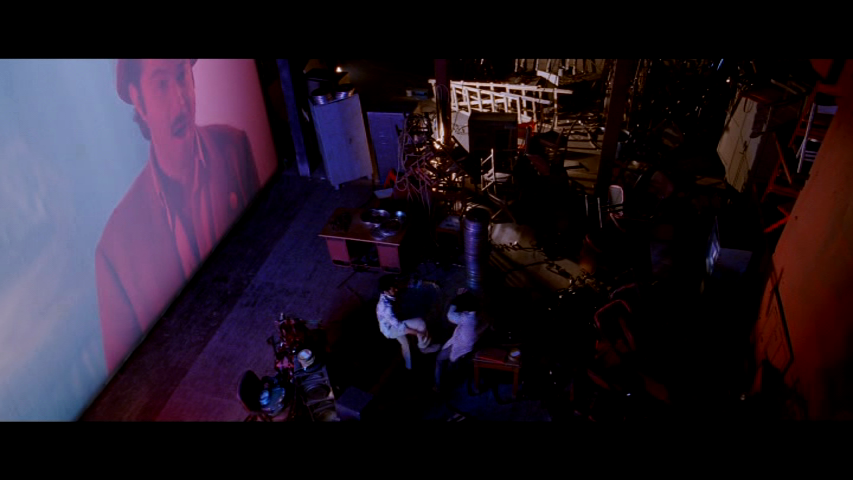
Adhering to the Scooby Doo school of horror, Bhoot Bungla is fun from go to whoa with great music, dodgy disguises, lukewarm romance, dancing skeletons and a dash of suspense. This was Mehmood’s debut as a director and he pulled out every trick in the book, and I suspect a few favours from the filmi fraternity, to make it a hugely entertaining romp.

Bhoot-Bungla-Moni Chatterjee

50 years ago Kundanlal was murdered and his wife and son disappeared from the family home. In the present day his three nephews live in the mansion. Ramlal (Moni Chatterjee) gets a telegram that his daughter Rekha (Tanuja) is coming home from Abroad. He prepares to collect her from the airport but brother Shyamlal (Nazir Husain) makes an excuse that he has to go to the office. Ramlal’s car explodes, leaving Rekha an orphan and heiress. Not long after, poor unhinged Ramu (Nana Palsikar) is found dead in a murder staged to look like suicide.

Shyamlal and Rekha move into a stylish apartment in town but can they escape the curse? Or is it a more corporeal threat? Worried that she is sad and afraid, Uncle calls Rekha’s friends to come and get her out of the house. They enter her in a singing competition at The Beach Club, where her rival is none other than Mohan Kumar (Mehmood) and his Youth Club, dedicated to Doing Good. The hi-tech Applause Meter gives Mohan the cup, but the audience is the real winner! Oh yes, hijinks ensue.

Tanuja is excellent as Rekha, sassy and sweet by turns. I really liked that the first thing Rekha did in the new flat was unpack her books while the servants dealt with the clothes and other belongings. She is smart but also raised to be obedient and good so when suspicion falls close to home, she tends to go with the dutiful response rather than a rational one. Tanuja matches Mehmood’s energy, throwing herself into the silliness with gusto. She also delivers a convincing portrayal of Rekha as someone weighed down by fear and losing confidence in their own judgement. I can think of no other explanation for her fleeing the apartment in a frothy nighty and huge fur coat (in Mumbai? Really?). The romance is a minor part of the story, and there are no sparks between Tanuja and Mehmood, but they do have nice rapport. Since the relationship is partly due to Mohan’s Youth Club commitment to helping people, it doesn’t matter that they seem more like friends than being crazy in love. There’s enough crazy to make up for it!

Mehmood’s grand entrance is riding a motorbike up Marine Drive and howling like a police siren. At first I actually thought it was just exceptionally dodgy sound effects and had grave fears for the rest of the film! There can be too much Mehmood, but in this case he gets it just about right and Mohan is wacky but always likeable and genuine. Maybe he was too busy worrying about tricky camera angles (of which there are many) to be The Star and settled for a happy camaraderie with the ensemble. Of course, restrained by Mehmood standards still includes doing drag, slapstick, encouraging children to gogo dance their fears away, and instigating a dance off with gyrating skeletons. But I knew Mohan truly loved Rekha when he shaved his moustache off to frock up, committing himself to having to draw it back on with pencil for at least one subsequent scene. That is commitment,

The music is fabulous and the songs are a real highlight. Mohan sees a blind beggar whose violin has been broken by drunk boys – so he does a West Side Story style dance number exhorting society to wake up and care. Pyar Karta Ja moves the hearts of all youth club boys and girls who were otherwise occupied in construction work. It’s not quite the barn raising scene in Witness but pleasing nonetheless, and Witness didn’t have Manna Dey. Everyone, including the special effects team, saved their best for the Bhoot Bungla song. Watch it now, and enjoy all manner of silliness with Mehmood and RD Burman dancing with skeletons and showing the ghosts who’s boss.

The support cast has lots of excellent performers although I am struggling to put names to all the faces despite the detailed opening credits. I will take a punt that Jerry played Jerry who was an imitation Jerry Lewis. I was particularly fond of Rekha’s exuberant girlfriends (including Lata Sinha). RD Burman is a hoot as Stocky, the cowardly foodie who accompanies Mohan on his ghost busting mission. It’s always good to know that someone has afternoon tea requirements under control. The creepy family retainers – Lakiya and the mysterious and toothy gardener – are perfectly cast with their spooky appearances adding to the sense of unease. Just the thought of Lakiya’s ruffles is enough to terrify me.

Bhoot-Bungla-Dedication

Apart from the fluffy entertainment value, the story is reasonably strong. Mehmood balances the various elements well and kept the suspense and laughs coming. There are some twists and red herrings, and things move along at a fair pace. I found the dedication to Guru Dutt quite touching – Mehmood seems to have been a thinker when it came to his own films.

See this for the excellent songs, the generally well balanced suspense and comedy, and the skeleton dance-off. Sure there are some things that go bump in the plot, and a couple of loopholes big enough to drive a Youth Club bus through, but nothing that detracted from the good natured fun. 4 stars!

Did someone say Twist?

Cannot. Resist. Urge. To. Dance!

Bhoot-Bungla-the end

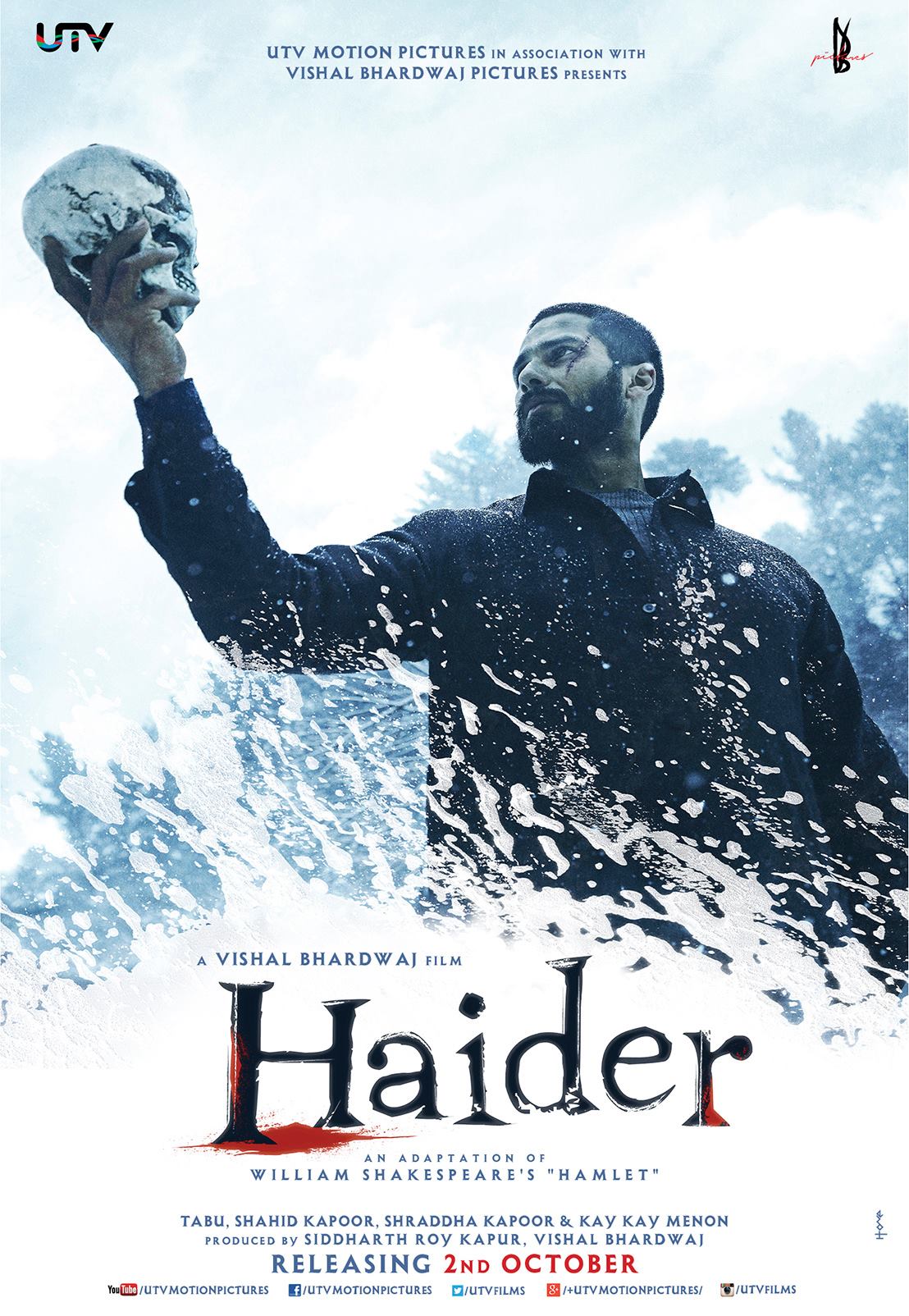
Haider

Haider

Watching Vishal Bhardwaj’s latest film Haider is a visceral and haunting experience, as the gorgeous detail of the film allows every emotion and each drop of blood to be shown in crystal clarity. The story of treachery in Denmark is transplanted to Kashmir at the height of increased militancy in the area in 1995, but still remains tragedy on a grand scale. Bhardwaj and his co-writer Basharat Peer have successfully adapted the bard’s play into more modern-day India, although the pacing is a little inconsistent in places and at times the Kashmiri issue threatens to overshadow the personal drama. The heart of the film is in the performances, and although Shahid Kapoor is excellent in probably one of the best performances of his career, the real stand-out is Tabu who is completely mesmerising in her role as a conflicted mother to Haider and disloyal wife to Dr Hilal Meer. It is compelling cinema and definitely well worth watching in the theatre to fully appreciate the stunning cinematography and spectacular beauty of Kashmir.

Haider (Shahid Kapoor) is a student, safely studying poetry in Anantnag when he learns that his father has disappeared after providing medical aid to a militant leader. Dr Hilal Meer (Narendra Jha) is taken by the army in a truly frightening scene that manages to grasp the sense of hopelessness and terror of a military raid in just a few moments. The grim method of selecting who may go and who is arrested by a balaclava-wearing man in a Jeep is chilling, as is the resignation that makes everyone line up for inspection without any word of complaint. The detail in each frame is incredible, and the performances are very natural, making the film seem almost like a news report direct from the action, rather than a fictional story.

Dr Meer’s family home is also bombed, along with the militant leader still inside, and in a few seconds his wife Ghazala (Tabu) has become a ‘half-widow’ without anywhere to live. As a result, when Haider returns he finds his mother living with his uncle Khurram (Kay Kay Menon), and he is instantly suspicious about their relationship. While rejecting his mother, Haider relies heavily on his girlfriend journalist Arshia (Ahraddha Kapoor) and two friends Salman (Sumit Kaul) and Salman (Rajat Bhagat) as he searches for his father. Since up until this point the film is unrelentingly bleak, it’s a real relief when the comedy appears, and Salman and Salman are an excellent counterpoint to the violence and despair elsewhere.

Haider’s search for his father is heart wrenchingly sad, as he is just another one of many who are searching for their own disappeared relatives. However, interspersed with his search are confrontations with his mother and uncle which fuel Haider’s anger and mistrust. The relationship between Haider and Ghazala is wonderfully nuanced and both actors capture the essence of Shakespeare’s characters and their conflicted emotions well. There is a frisson of sexual tension, heightened since Tabu looks way too young to be Shahid’s mother, but mainly the film focuses on Haider’s sense of betrayal when his mother takes up with his father’s killer. Kay Kay Menon is also effortlessly perfect, juggling Khurram’s political ambitions with his desire for Ghazala and bringing more depth to the Shakespearean character of Claudius than I seem to remember from studying the original play at school.

The romance between Haider and Arshia is also nicely developed, and Arshia has a believable character as a journalist and relatively realistic relationships with her brother Liyaqat (Aamir Bashir) and father (Lalit Parimoo). Shraddha Kapoor is good in her role, particularly in her scenes with Shahid and she’s also credible in her despair when she loses the plot after her father dies. Most of the other characters from Shakespeare’s play appear, although the role of the ghost is changed into a fellow prisoner of Dr Meer who is expertly played by Irrfan Khan.  Most impressive is the ‘play within a play’ which in is depicted as a song. The puppets are wonderful, but even just a glimpse of Tabu and Kay Kay Menon in this clip illustrates just how good they both are in conveying their characters.

Haider’s eventual descent into madness is dealt with better than the earlier scenes where Shahid sometimes appears a little too distant. But as the film progresses his emotional shifts and internal struggles are mostly well represented and he does genuinely appear to be a conflicted personality by the end. Many of the famous lines from the original Hamlet appear in Haider’s soliloquies, although they are also inserted into various conversations (and the subtitles don’t really do them justice), and there is even a brief appearance of the skull before the final, and very bloody showdown. This is passion, vengeance, despair and madness writ large and the scope of the film truly feels epic.

Haider impresses with fine attention to detail and excellent performances from the entire cast. However the shift to Kashmir means the military conflict looms large in the story and as a result the original tale of betrayal and treachery occasionally gets a little lost. The pacing is uneven, particularly in the first half, but this allows time for the complexity of the characters to fully develop so isn’t necessarily a flaw with the film. It is a bleak story and be warned that some scenes are definitely not for the squeamish as the body count piles up and cinematographer Pankaj Kumar illustrates just how well snow contrasts with blood. Overall Haider is a well crafted and novel interpretation of Shakespeare’s Hamlet and one I definitely recommend watching for excellent performances and a rather different view of Kashmir.

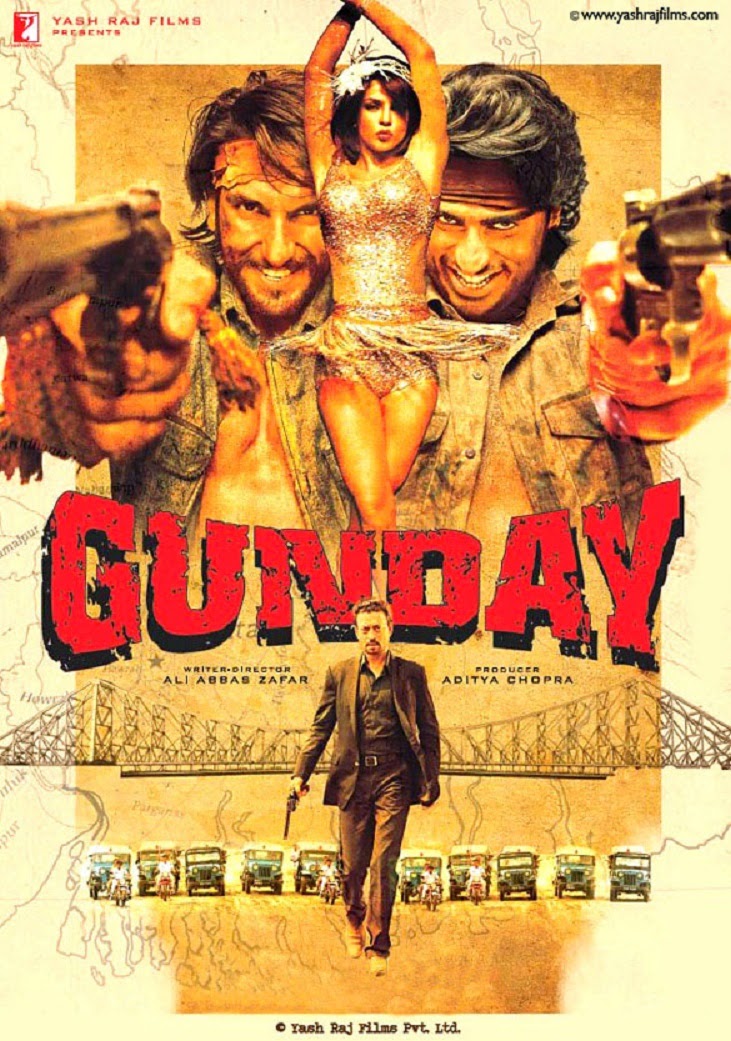
Gunday (2014)

Gunday poster

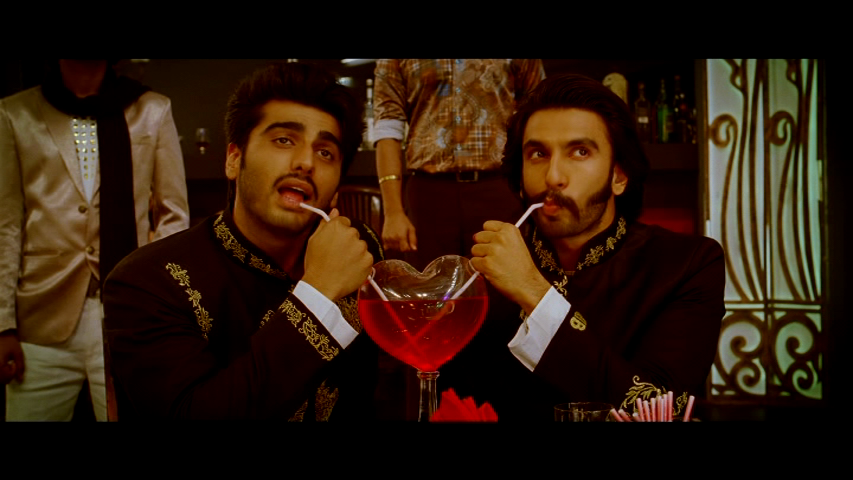
I missed Gunday in the cinema as I was in Tamil Nadu at the time of the film’s release, and it had finished its run by the time I got back to Melbourne.  It’s a film that I think would show better on the big screen to fully appreciate its boisterous lead men and riot of colourful masala, but it’s still an entertaining watch on DVD.  Ali Abbas Zafar takes us back to the buddy films of the seventies, although doesn’t quite ever manage to reach the same heights as The Shashitabh films of that era.  Still, buffed and oiled leads Ranveer Singh and Arjun Kapoor have a fine bromance while Priyanka Chopra adds glamour and style to the proceedings.  Add in some Irfan Khan and you have the recipe for a vibrant mix that is all the better for not being just another rehash of a Southern India film with a Northern twist.  There are some issues with the film; the excessive amounts of slow-mo and a bit of a lag in the second half being the major offenders, but otherwise there is plenty of colour, glamour and camaraderie to make Gunday well worth watching.

GundayGundayGundayGunday

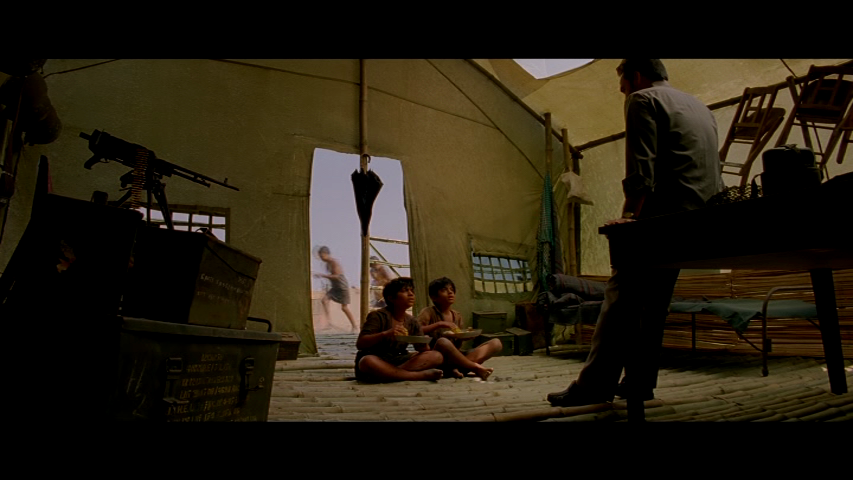
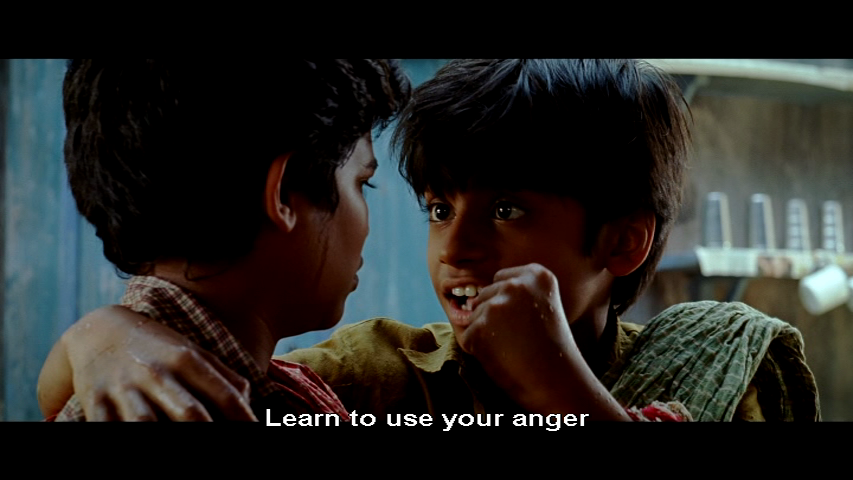
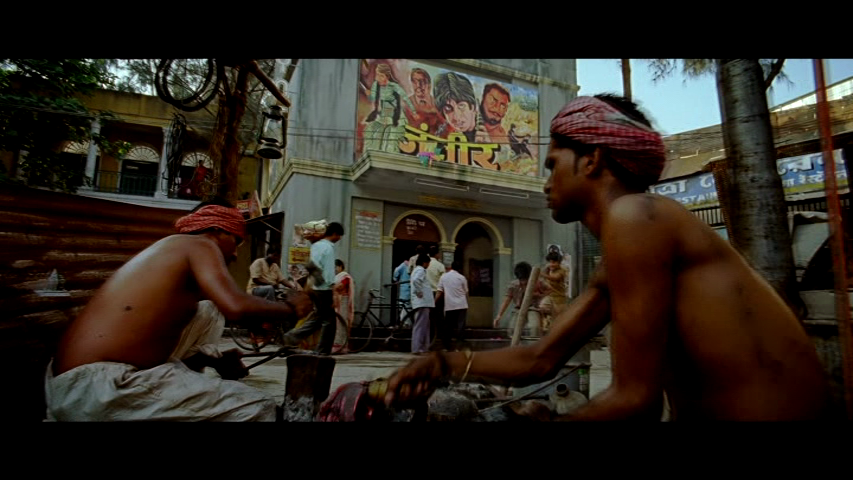
The film opens as young Bikram (Darhsan Gurjar) and equally young Bala (Jayesh V Kardak) seal their friendship in a Bangladeshi refugee camp when Bala rescues Bikram from a sleazy army guard.  The two mates have their feet set on the road to crime from an early age, acting as gun couriers in the camp and subsequently stealing and selling coal after they reach Calcutta.  Initially I thought that Ali Abbas Zafar was going to shine a spotlight on difficulties faced by Bangladeshi refugees in India, or perhaps focus the drama on child abuse, poverty or displacement due to war, but although he starts with a rejection of Bikram and Bala due to their background, apart from their own statements about the discrimination they have encountered there is little else in the film which follows this theme.  As in many seventies films, anything with the potential to be serious is glossed over and we quickly move forward a few years to the adult Bikram (Ranveer Singh) and Bala (Arjun Kapoor) and their current life of crime.

GundayGundayGundayGunday

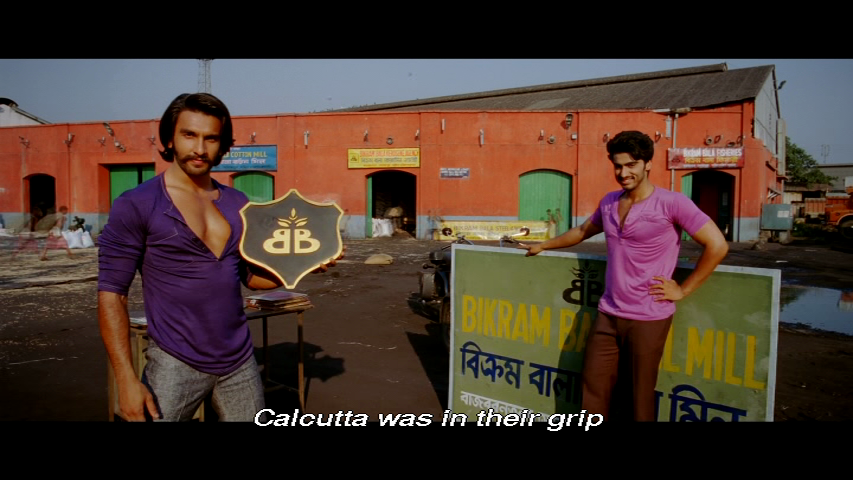
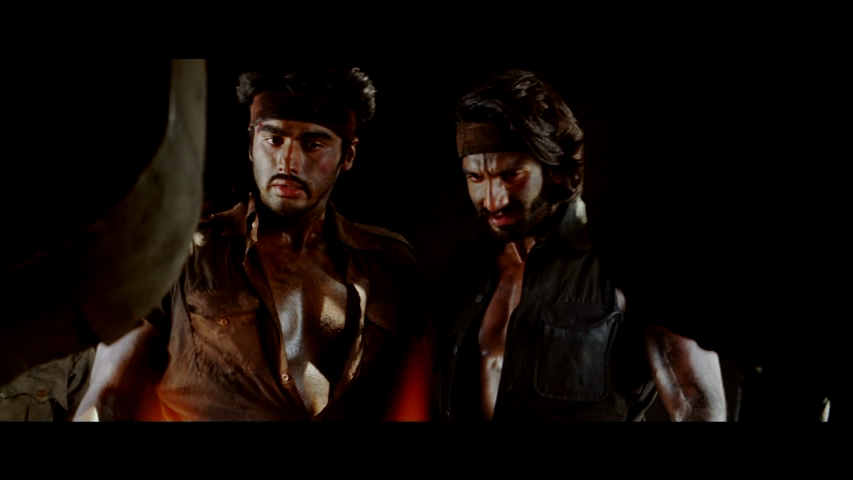
While Bikram and Bala may have started small, they have somehow worked their way up in the intervening years to become Calcutta’s biggest gangsters.  Although a gang is occasionally mentioned, their opening scenes show them working with each other to remove a local gangster and steal his coal.  There is no doubt that they are brutal killers, but as a useful side-line they finance schools and hospitals, cementing their ‘lovable rogues with hearts of gold’ personas.  The contrast is clear – dirty deeds are done covered in coal dust, while philanthropy comes courtesy of oiled chests, unbuttoned shirts and sharp white suits.

GundayGundayGundayGunday

So, having established that the friendship between Bikram and Bala is the defining feature of their lives, the scene is set for upheaval when they meet and both fall in love with club dancer Nandita (Priyanka Chopra).  But the romantic rivalry is not the only problem they face.  Assistant Commissioner of Police Satyajeet Sarkar (Irrfan Khan) is on their trail and searching for even the smallest sniff of evidence to lock the boys away for their criminal activity.  It’s a well-trodden path but mostly good performances from the cast make it a fairly enjoyable one to walk, while a few plot twists help maintain momentum.  Irrfan Khan is the standout here, and he is smooth and polished as the ACP while still maintaining a street cop vibe as he pursues Bikram and Bala.

GundayGunday

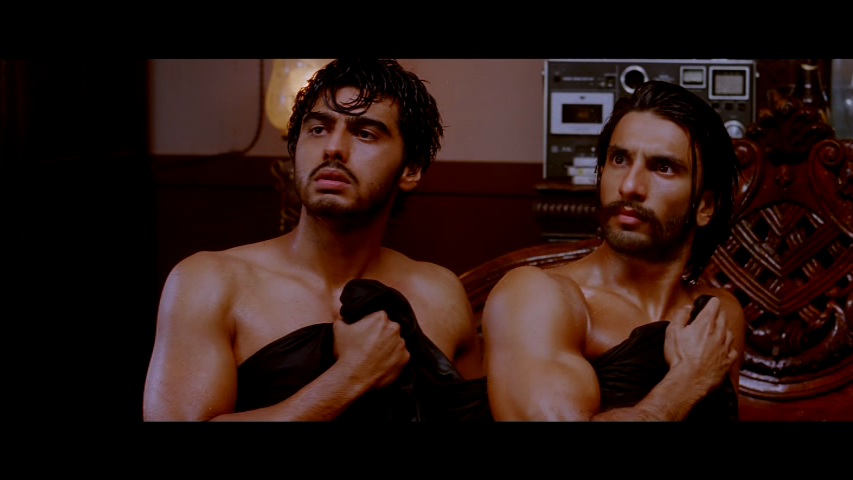
GundayGundayRanveer and Arjun have good chemistry together but individually Ranveer impresses more in his role as Bikram.  That’s partly due to Bikram’s more shaded character and Ranveer certainly has more opportunity to show off his acting skills, but he also has so much energy that he seems to explode off the screen.  It’s noticeable in the songs that Ranveer is putting in more oomph than Arjun, and the difference in energy levels causes a lull in the second half when the focus moves onto the characters as individuals rather than as a pair and attention is focused on Bala.

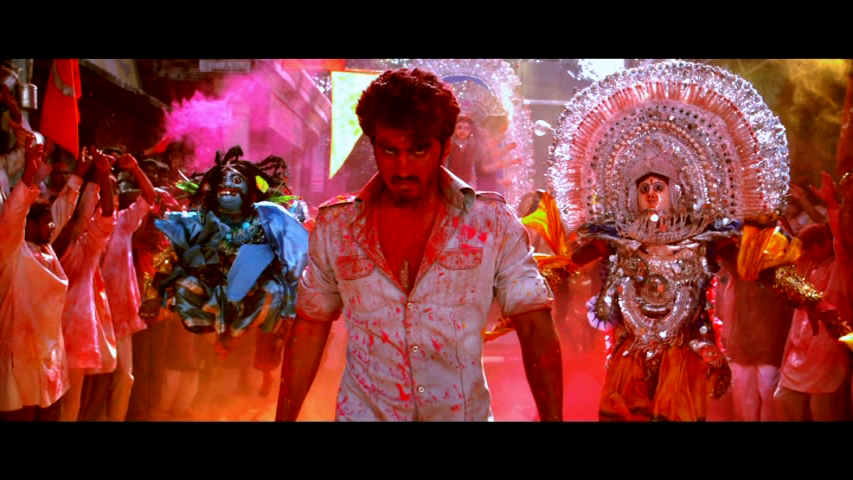
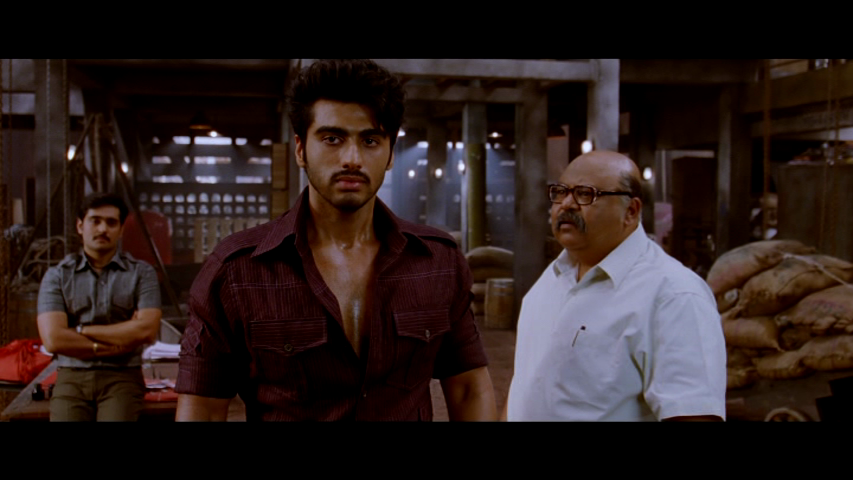
Bala is a more two-dimensional character and is limited by his depiction as headstrong and angry without a sense of burning injustice or any tempering balance to offset his constant rage.  There’s also a certain inevitability to Bala’s actions while Bikram seems to be more in control of his own destiny and frequently stops Bala from rushing off to do something stupid.  Bala comes across as just plain angry and Arjun’s performance occasionally slips into simply bratty and petulant in contrast to Ranveer’s slightly more mature and definitely more nuanced reactions.  However in the scenes with the two together, Arjun and Ranveer do make a likeable pair and the film relies on their jodi to keep the masala quotient high.

GundayGunday

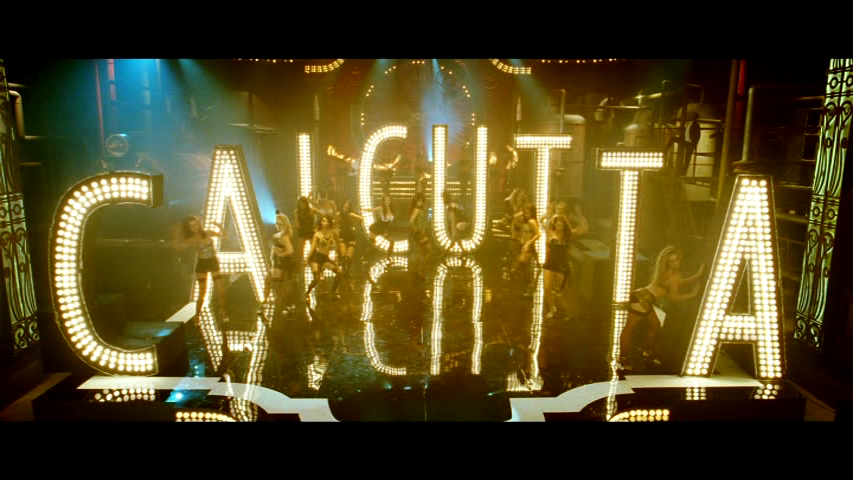
Priyanka Chopra looks amazing as the sultry singer Nandita, and Ali Abbas Zafar cleverly develops a contrast between her on stage persona and sari-clad and demure appearance when out shopping in the market.  It makes her seem more of a real person and less of a clichéd love interest although she doesn’t have much else raison d’être initially.  However as the story unfolds and she becomes more involved with Bikram and Bala there is more scope for her as an actor and she makes the most of her role in the second half.  Along with Irrfan Khan she appears as a very polished performer, while support stalwart Saurabh Shukla is effective in his small role.  The two young actors who play the gangsters as children are also impressive, hamming it up for the camera and generally fitting well into the seventies vibe.

GundayGundayGundayGunday

The masala feel of the story is enhanced by references to Sholay and Mr India, including a memorable fight scene to the backdrop of the later, while songs from Pakeezah and Disco Dancer in the background help settle the film firmly into its adopted era of the seventies.  The costumes also add to the cheesiness of the film, and Ranveer and Arjun are given plenty of opportunity to show off their manly chests in a variety of gaudy shirts.  Nothing to complain about there!

Although Gunday falls somewhat short of ‘classic’ masala it’s a good attempt to recreate the magic of seventies Bollywood and gives me hope that the genre is still alive and kicking.  Although the elements are all there, they don’t quite gel together to give the complete package despite good performances and plenty of onscreen chemistry between the main leads.  A little more depth to the characters would have helped, but Gunday is still a rollicking yarn that delivers plenty of action mixed up with a serving of dosti and betrayal – and that is plenty to be going on with. 3 stars.