Another year, another Megabirthday just around the corner! We’ll be celebrating things Chiru related during August and of course everyone is invited.
I’m still struggling to decide on a research topic for this year. So far I have the following under consideration:
Megastar, mini toga
Break dance, Shake dance, or Snake dance?
Chiru the Cowboy (aka Beth’s perennial request)
Thoughts? Suggestions?
Let me know if you post something Chiruesque and I’ll collate and publish the links. Or just watch for the #megabirthday2015 hashtag on Twitter and have a chat about all things Chiru. Like this. Ah, look at him go….and look at those ruffles.
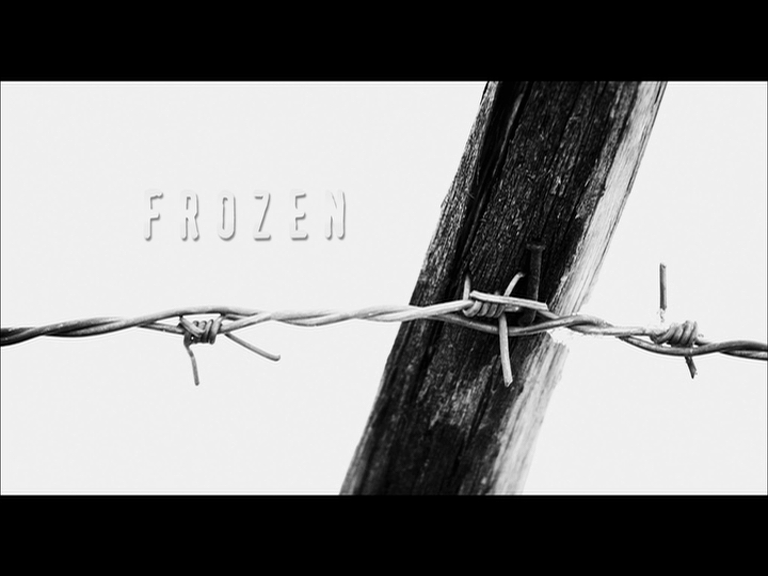
Shivajee Chandrabushan’s Frozen is a lyrical and often dreamlike film. Shot on location in Ladakh and released in black and white, it’s a story told as much through the stunning visuals as through the slightly clunky screenplay. I’ll state upfront I don’t have much of a view on the political background, and I am sure a homegrown audience would have a deeper understanding that would colour their viewing. I found the film satisfying on face value as a story about family, the effects of change, and the challenge to maintain integrity.
Karma (Danny Denzongpa) is an apricot jam maker, a widower living with his family in their ancestral home near Leh. He knows he has to try and keep up with the times, but that is easier said than done. He bought a machine to speed up his jam production but it doesn’t run reliably. He has mounting debts as his business deteriorates, loans cannot be repaid on time, and the interest is crippling. His daughter Lasya (Gauri) is wilful and an attention seeker, while Chomo (Aungchuk) is her little shadow. The siblings spend their days playing with their dog Singhe, running around in the woods, or going to visit their mother’s memorial, high on a neighbouring hillside. Lasya is growing up and Karma knows he should settle her marriage before all his debts are called in, but he resists taking any action, hoping he can keep providing for her. One day the army arrives on his doorstep to set up a camp. Their peaceful valley is suddenly full of trucks and electric lights, threats of violence by ‘the enemy’, and his land is no longer worth anything.
The pace, and price, of change is evident. The crowd at a festival is dotted with camera wielding tourists in Gore-Tex, hideous denim replaces the traditional woollen clothing, and motorbikes replace ponies. The army officers talk about the enemy and how the valley is no longer safe, but Karma only sees the place he grew up. His land is now covered in barbed wire, the silence broken by constant truck traffic. The officers also complain about how all the food in the market is being bought by ‘them’ to cause shortages, a sad situation for the jam maker who cannot sell his wares.
Danny Denzongpa is just wonderful. He doesn’t have much dialogue and manages to convey so much through Karma’s expressions, his pauses before responding, and his stillness. Karma’s Buddhist philosophy is the foundation of his character. He uses every challenge as a means of practising what he believes in, and his integrity is as substantial and present as the mountains. When Karma realises loan shark Dawa is proposing to trade Lasya in return for more money, there is a long beat before he meekly nods. Danny shows his revulsion, anger and resignation all in a flicker of expression, with no sign of any 70s masala filminess or his more recent villainous styling. I’m always happy to see Danny rock up in any film, and I particularly enjoyed this very gently shaded characterisation.
Gauri is pretty and lively, and gives Lasya a case of chronic resting bitch face which suits the character perfectly. She is starting to want more than her life in the remote homestead but it is clear she loves her father and her little brother. The local Romeo, who is actually called Romeo, (Shakeel Khan) takes a fancy to her. While she likes his attention she seems to like the opportunities to explore the world that come along with a boyfriend with a motorbike more than she likes the boy. Lasya is a typical teenager in a not so typical setting. Her energy sometimes manifests as anger, even when she doesn’t really know why. Karma does his best to teach her to guard her mind, to understand how to address her fears.
Little Chomo is the typical baby brother. He follows his big sister and lets her both bully and make a pet of him. Aungchuk doesn’t have to say a lot but he has an expressive face and droll comic timing. He is a loner, only ever hanging out with his sister or silently tagging along after his dad. I wondered about why he seemed to be on the periphery all the time and how he felt about his isolation, and liked the way his story unfolded.
Sita (Anuradha Baral) helps Karma run his house and feed his kids. She is obviously very fond of them and does her best to keep things running. Salim (Sanjay Swaraj) is in the same boat as Karma, with maxed out loans and little prospect of getting back on his feet. Colonel Shyam (Aamir Bashir) and the Rinpoche (Sonam Stobgias Gorky) are different kinds of influences in Karma’s life. The bad side of modernisation is represented by the parasitical loan sharks; sleazy Dawa (Rajendranath Zutshi) and sweary Sharma (Yashpal Sharma).
Karma and Lasya interact with lots of people but I wouldn’t say they were very close with anyone other than Sita. On a rare day out, Lasya explores a fair and it is great fun to see what she sees, and check out the crowds and entertainment, even a glimpse of the cham dancers from Thiksey Gompa. One day I’ll get there myself!
The film sometimes feels a little disjointed as it is more a series of vignettes and images, ranging from realism to more fanciful compositions. That adds to the dreamy nature as scenes shift and the focus moves from character to character. I read somewhere that Shivajee Chandrabhushan is a climber, and he certainly captured the things I love about the mountains. The landscape is both exhilarating and confining, and the vast skies and stark light often have an otherworldly effect. The environmental upheaval mirrors the turmoil in Karma’s life, and the changing seasons are a reminder of how little time he may have to protect his family. The epilogue was a bit tricksy after such a sincere story, and I would have been just as happy for the film to end without the final scene. Having said that, I liked that I was left with questions and possibilities and not just a plot tied up with a bow.
This is a film for a contemplative evening, when you can just immerse yourself in the flow of images and see where it takes you. And a rewarding film for the Danny Denzongpa fans. 4 stars!
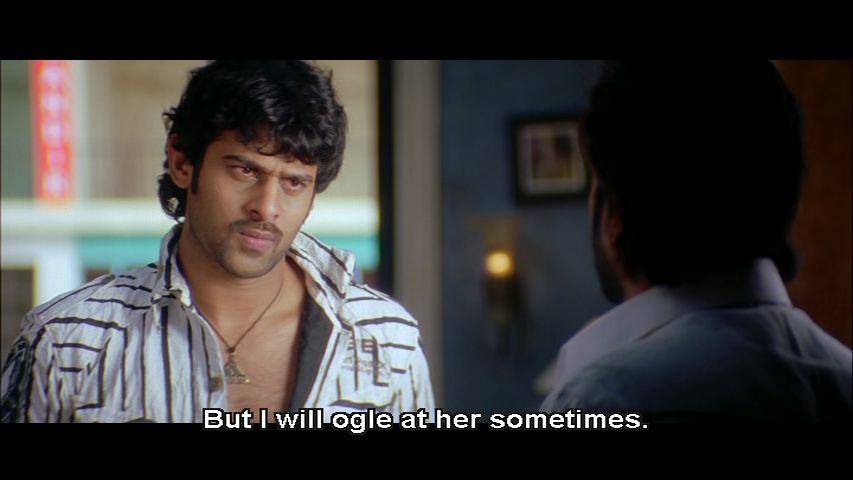
Puri Jagannadh and Prabhas are a winning combination and while Bujjigaadu lacks the wardrobe excesses of EK Niranjan, it is a fun if ludicrous film.
Little Bujji and Chitti are neighbours in Vizag, inseparable until they have a fight. Bujji always does what Chitti says and she tells him to not speak to her for 12 years, after which she will marry him. He knows he can’t stay without wanting to talk to her so he runs away. Time passes, and Chitti’s family move away. Flash forward and we see our grown hero (Prabhas) beating up goons in Chennai. As evidence of his Tamilification, Bujji is a huge Rajinikanth fan, desperate to get to the FDFS of the Superstar’s latest film. And that leads handily to a corking tribute to the man himself.
Bujji returns to Vizag after 12 years, confident that Chitti will be there waiting. He is distracted and strays into a comedy subplot which results in some jail time. While in jail he is offered 1 crore if he breaks out and kills a man. After a moment of soul searching and confirmation the target was a bad guy, he accepts. After all, he needs money to marry Chitti. Meanwhile she has returned from studying overseas to look for Bujji, only to be sent away by his folks with a flea in her ear.
The pair cross paths, each unaware of the other’s identity. Bujji’s nom de crime is Rajinikanth and apart from knowing Chitti (Trisha) is in Hyderabad, he has few leads to go on. Eventually Bujji discovers that Chitti is the sister of Sivanna (Mohan Babu), the man he was paid to kill but has since befriended. Bujji has been living in her home all along. Sivanna asked Bujji to keep his true name a secret as he knew his little sis would leave home as soon as she found her childhood love. So Bujji agrees, albeit with some conditions.
Hero and heroine under one roof with the erstwhile villain, more villains breathing down their necks, true love and secret identities…What could possibly go wrong?
Bujji and Chitti still imagine each other as they were in childhood, and their adult selves don’t really hit it off. I wondered how long they would last once they had to spend a lot more time together and the idea of a mutual destiny started to wear thin. Trisha plays Chitti as a little stuck-up, vain and intolerant, but still with some likeable characteristics. Good friend The Mahesh Fan once damned Trisha’s acting by saying she always looks a little more in love with herself than with her hero (Mahesh in that instance) and I tend to agree. Trisha and Prabhas do have an easy rapport but it never seems like a sizzling chemistry. On the other hand, when Trisha looks at herself in a mirror, all bets are off.
Prabhas is immensely likeable, and despite his slightly dorky charm he can muster up a good death stare and punch dialogue when needed. Bujji is fairly easy going but he is a Telugu film hero so there were a few moments of brain melting ‘logic’ and chauvinism. His declaration that if Chitti said she loved him he would have to kill her because she could only ever love him and she didn’t know who him was so clearly would be guilty of cheating and thus deserve to die made me wish again that every film had a Tight Slap Administrator, and that it was me.
Mind you, Prabhas does get props for his Chihuahua wrangling skills. And I love how much love Bujji has for Sivanna and his constant calling people Darling.
If we define love as mutual respect and affection with a dash of chemistry, then the strongest relationship in this story is between Bujji and Sivanna. Sivanna sits back to watch his goons take Bujji apart, but instead finds himself cradling his bloody opponent, shouting at him not to die because he loves him. Mohan Babu and Prabhas play off each other very well, and their characters seem more complex when they are together as they get down to the truth of things rather than just posturing.
Of the large supporting cast, MS Narayana is a standout as Bujji’s boozy, soft hearted dad. The scene where he recognised his runaway boy was sweet, and I really do like him in roles where he gets to act and not just be the butt of jokes. Sanjana plays Chitti’s sister Kangana and she is pretty and not completely terrible so I suppose she met the brief.
The villains are Machi Reddy (Kota Srinivasa Rao) and his two lions – Ajay and Supreet. House favourite Subbaraju is excellent as hapless third son Venkat , who seems a bit too sensible and not really hard-core enough for his dad. Sunil and Ali provide more than enough pointless comedy. Brahmaji is Sivanna’s hot headed sidekick. And Mumaith Khan does her thing as a welder/item girl.
I liked that she wore professionally appropriate gear for both her day jobs.
The fight scenes are campy and funny, with lots of flexing and posing by Prabhas. Every single breakable thing on set is utilised, and the sound effects team are given full rein on the biffo and squishy stabby noises. The finale took place on an abandoned film set so there were lots of fragile brick walls and stained glass windows, enough for everyone to have a go. Almost all the boys get to fly about either through wires or effects. I kind of love the moment when Bujji sets his foot on fire, all the better to kick the goons with. That’s commitment. I liked that Bujji could pour out his feelings in Tamil to Telugu people and in Telugu to Tamil friends and thus get to wallow in his woe while keeping his secrets. There were some zingy one liners and some mystifying subtitles, and that all adds to the fun.
The costume department made some interesting choices, and I applaud their application to the task of dressing the overseas backing dancers with only the materials commonly found in hotel rooms and budget clothing chains. And Prabhas takes denim in some unexpected directions. The songs are mostly fun (even if just for the outfits) and help you take a breather in between fight scenes.
Bujjigaadu has a hero who knows exactly how to hit all the right spots in a mass potboiler, and a director with a big budget and a sense of fun. 4 stars!





 Cinema Chaat