O Kadhal Kanmani

O Kadhal Kanmani

Mani Ratnam’s latest film is a modern take on romance that works primarily due to the charisma and energy of the two main leads. Dulquer Salmaan and Nithya Menen breathe life into their respective roles as an ambitious game developer and an aspiring architect in Mumbai, and are helped along with excellent support from Prakash Raj and Leela Sampson. The romance is light and breezy for much of the first half, but the film falters a little in the second when events seem a little too contrived. However the relationship is sweet and beautifully developed, the characters are engaging and the ‘feel good’ factor is high making OK Kanmani simply a very watchable romance that lets you leave the theatre with a smile.

The film is set in Mumbai and Aadi (Dulquer Salmaan) immediately wins support for developing a new game set in Mumbai and made specifically with the denizens of that city in mind. I do like a good idea for the opening titles and OK Kanmani has an excellent start with the credits shown over an animation based on Aadi’s game.  Aadi’s initial enthusiasm is a bit of a worry, but he soon settles down to show his zest for life balanced with genuine care and compassion when he moves in as a lodger with Ganapathy (Prakash Raj) and his wife Bhavani (Leela Samson). Initially Ganapathy allows Aadi to move in under sufferance and presents him with a confronting list of rules and conditions. However Ganapathy’s gruff exterior hides a softer heart and it’s not long before Aadi comes to respect Ganapathy and appreciate the love and tenderness he shows for his ailing wife. The relationship between Ganapathy and Bhavani is the central core of the film and becomes the yardstick against which Aadi and Tara (Nithya Menen), and ultimately the audience, measure the strength of their own relationship.

Tara is working as an architect in Mumbai but has plans to attend university in Paris to further her training. Refreshingly she has no desire to get married, although she bases this on the failure of her parent’s marriage rather than anything more radical. However she has dreams and desires that are personal goals to achieve and she doesn’t base her worth on her marriage prospects. Aadi too has no desire to get married but does want a relationship with Tara, at least until she moves to Paris and he realises his dream of moving to the USA. Again, in contrast to most SI love stories, there is no stalking required here. Tara likes what she sees of Aadi and is happy to have a relationship with him until she leaves – no strings attached, just two people enjoying each other’s company.

Mani Ratnam is careful to show that the relationship not a one-sided affair, and that Aadi and Tara have an equal attraction to each another. Both characters have reasons to act as they do, and the equal development of both the hero and the heroine is a welcome departure from many recent films with their expendable and interchangeable heroines. In addition, both Tara and Aadi have a fairly casual attitude to their romance and it’s fantastic to have a female character that isn’t afraid of declaring her desires just as loudly as her male counterpart, and act on them too. Aside from giving both characters equal voices in the romance, Mani Ratnam also perfectly captures the delight and excitement of the early stages of their affair; helped along by the excellent on-screen chemistry shared by the two actors.

Aadi and Tara are independent and both are living away from their families, which gives them the freedom and opportunity to live as they please. They decide to move in together, and given the shortage of housing in Mumbai and the fact that Tara lives in a women’s hostel that means that they have to beard the lion in his den and face Ganapathy. However Ganapathy’s initial objections are overcome by the delight he sees on Bhanvani’s face when Tara sings with her, and as easily as that he agrees to the arrangement.  Naturally Aadi’s brother and Tara’s mother are appalled when they learn of the relationship and find out that the couple are living together. The couple also have to deal with the looming separation as Aadi gets his chance to move to the States and Tara’s date to start University is finalised. Weaving through their struggles is the example set by Bhavani and Ganapathy – proof that perhaps love can be enough.

Both Nithya Menen and Dulquer Salmaan are excellent and fit easily into their roles. Dulquer is a good fit for an enthusiastic but respectful young professional and there is no hint of the obsessive man-child more often seen in Indian romances. Nithya is perfect as the fiercely independent and strong-willed architect and provides a good partner for her co-star without straying into overly glamorous heroine territory. However Prakash Raj is the absolute star performer here and he easily steals the show every time he is on-screen. His facial expressions convey more than the dialogue and he has an easy rapport with Nithya and Dulquer while maintaining a perfect relationship with his onscreen wife. Leela Sampson is also superb and completely nails the quiet confusion required from her character while still maintaining her dignity. The scenes between Ganapathy and Bhavani are some of the most moving I’ve seen in recent times and are a good counterpart to the happiness and excitement of Tara and Aadi’s relationship. This second romance is what lifts the film above most love stories and compensates immensely for the somewhat disappointing end to the film. At least for me.

Spoiler alert – stop now if you don’t want to know how the romance ends and skip down to after the next images.


What is disappointing is that the film suggests that Aadi and Tara can only be faithful to each other and maintain their long distance relationship if they are married. I find the assumption that they would drift apart without that commitment a slap in the face for all the wonderful development of their romance that has gone before. I cannot see how marriage is the answer to their problem when they could have done exactly the same thing without getting married and probably had the same outcome – especially when the rest of the film does so well at banishing stereotypes and conventional attitudes. It’s a small point, but one that I found annoying given that it seemed so unnecessary – I have more faith and belief in the characters than it appears their creator does, although I did wonder if this was perhaps just a way to get past the censors given the live-in relationship portrayed – food for thought!

End of spoiler!

Aside from my minor quibble about the end of the story, OK Kanmani is a beautiful romance that perfectly develops a balanced relationship and deals with many of the trials and tribulations of modern life for a young couple. The characters are believable, the situations generally realistic and the performances exemplary from the entire cast. Add in the upbeat and catchy soundtrack from A.R. Rahman and O Kadhal Kanmani is definitely a film I recommend and one I will watch again and again.  Just wonderful!
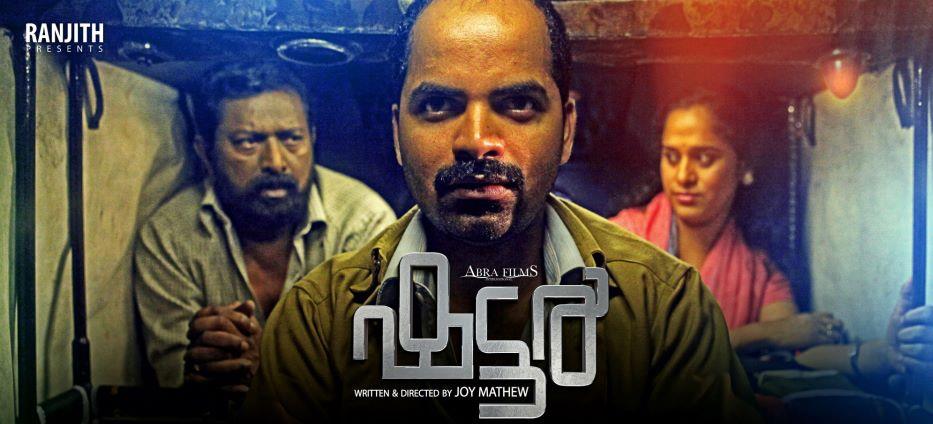
 

Shutter (2012)

Shutter poster

Shutter is an intriguing début film from noted theatre actor and playwright Joy Mathew. The story sounds simple; a married man ends up locked in his own empty shop with a prostitute for a night and a day, but Mathew has developed rich and detailed characters with a complex story that says much about society and the double standards applied to men and women. There is suspense and plenty of drama as Rasheed (Lal) has to face his own hypocrisy and struggles to deal with the possible consequences of his actions. Although the film starts slowly and does take some time to fully introduce the characters and eventual situation, it is well worth the extended set up as the film features excellent performances from Lal, Vinay Forrt, Sreenivasan and Sajitha Madathil along with the clever storyline. Shutter is an excellent slice of social commentary and one I highly recommend as a memorable and thought provoking film.

The story follows Rasheed as he visits his family in Kozhikode during a break from his work in the Gulf. In the short time he is home, he manages to upset his eldest daughter Nyla (Riya Saira) by insisting she stops her studies and gets married, and alienates his wife (Nisha Joseph) by snubbing her relatives. Not bad for just a few days! However his views are not extreme and seem fairly typical for a man of his generation. While his belief that studying is wasted on girls is one that I personally find outrageous, it’s one that seems common in India even to-day. So Rasheed’s bluster to his friends that Nyla will do as he says and get married, even though she is underage, sounds plausible and typical of an Indian father, while the half-hearted objections of his friends also ring true.

Rasheed also owns some shops which are just in front of his family home. He rents one out to an auto mechanic and is renovating another, while in the evenings he invites his friends into the empty shop for a night of drinking. While on a trip to a bottle shop with his friend Suran (Vinay Forrt), Rasheed spots a prostitute Thankam (Sajitha Madathil) and decides to bring her back to the shop when they cannot find a hotel room. Suran locks them in while he goes to find food but fails to return following series of unfortunate events which leave him with his own predicament to solve. The story then follows Rasheed’s moral dilemma as he quickly realises what he has done and what will happen if he is discovered in the shop with a prostitute. To make matters worse he can see his house from the small window, which serves as a constant reminder of his wife, his family and everything he might lose as a result of his rash decision.

While Rasheed goes through his moral crisis, Thankam is a brilliant contrast to his misery and despair. She has a relaxed, take life it as it comes attitude, and her constantly ringing phone and cheery attitude infuriate Rasheed. Naturally Thankam can’t see his problem as she just needs to keep in contact with her clients and her only difficulty is that she may have to cancel appointments if she can’t escape the shop. For Rasheed every call risks discovery and he desperately tries to silence her conversations any way he can. The difference in their attitudes is summed up when Thankam lies down for a short nap, while Rasheed paces around the increasingly claustrophobic room with tears and sweat dripping down his face. I like that Thankam isn’t yet another beaten down woman who has turned to prostitution in desperation, but rather is portrayed as a businesswoman for whom the night is just one more transaction, albeit one that doesn’t go quite to plan.

Parallel to the main story, a film director Manoharan (Srineevasan) is shown trying to tie down dates for his lead actor and secure financial backing for his next venture. Unfortunately Manoharan is having some difficulty with this and adds to his problems when he leaves his script behind in Suran’s auto. This pulls Manoharan into Suran and Rasheed’s world and the two stories blend together seamlessly. Vinay Forrt is just superb in his role as the anxious and somewhat naïve auto driver who doesn’t know how to get his friend out of a locked shop without letting the cat out of the bag too. Sreenivasan is perhaps a little too understated for much of the film, but he provides a more stable and rational character and another different viewpoint of the situation.

Glimpses of the outside world through the shutter heighten the stuffy closeness of the shop, while Suran’s travels in his auto and Sreenivasan’s conversations in a car with his friend provide a counterpoint. Despite the illusion of freedom and travel, neither can solve their problems, while Rasheed, stuck in his small room without freedom of movement can achieve self-realisation and come to terms with the issues he faces, even if his main problem is one he cannot resolve himself.

There is so much I like about this film. I love the characterisations and the depiction of ordinary, everyday people with their conventional concerns. I like the  way Joy Mathew takes a simple story and layers more and more complexity to each character to finish with a rich and satisfying plot. The underlying social issues are expertly brought into the forefront of the story and I hope raise plenty of questions and lead to discussions around the inequalities portrayed. The performances are all outstanding and Hari Nair’s excellent cinematography adds to the drama and tension without over shadowing the very human story. It’s wonderful and definitely not a film to miss. 4 ½ stars.

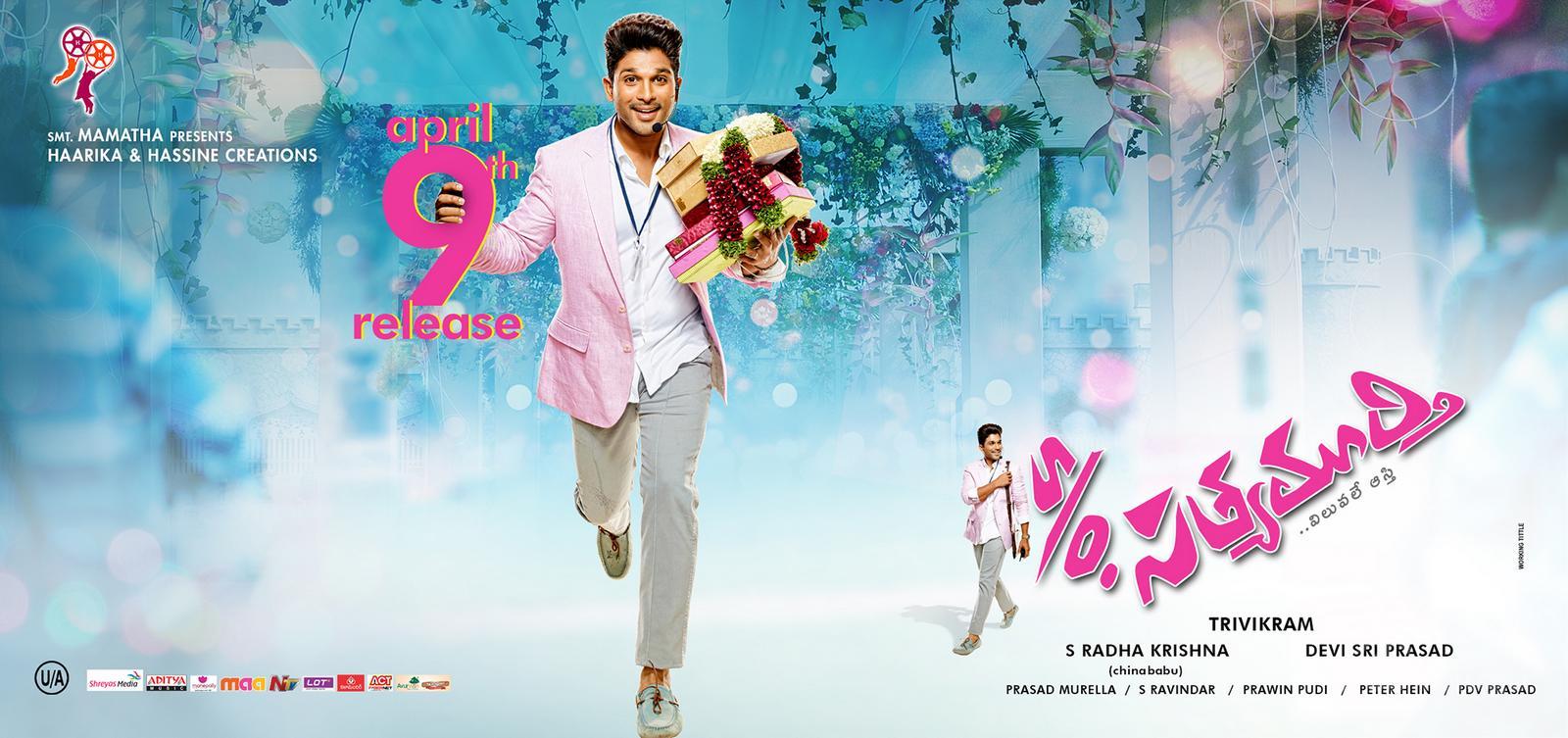
Son of Satyamurthy

Son of Satyamurthy

After their previous success with Julayi, Allu Arjun and Trivikram are back together again with Son of Satyamurthy. The film features appearances from Ali, Brahmi and most of the Telugu film industry stalwarts, but despite the plethora of comedy uncles, it strives for a more serious tone and is a more traditional family drama. Bunny puts in a restrained performance compared to his earlier films, and it appears that Trivikram has concentrated on character development rather than glitzy glamour and full-on action of most Telugu cinema. The storyline has plenty of potential and I loved the inclusion of villains who are not wholly evil but have the capacity for reformation, but there are a few misses. The film is undermined by the inclusion of a few unnecessary characters that reduce the overall impact and at times the sheer number of protagonists threatens to drown the main storyline. However the central theme of a young man determined to stick to his father’s principles stands strong and Bunny does a fantastic job in a more serious role than usual.

S/o Satyamurthy

Prakash Raj is Satyamurthy; a rich man who is happy to lend money to all and sundry without judgement or seemingly any expectation of repayment. He has strong principles and his values have been absorbed by his family even if they don’t always agree with his open-handed policies. And perhaps they had a point, since Satyamurthy’s sudden death reveals a large amount of debt. The family lose their affluent lifestyle and downsize their house, possessions and expectations when Satyamurthy’s son, Viraj Anand (Allu Arjun), refuses to default on the loans and insists on doing the right thing – as his father would have wanted.

In an odd addition, Vennela Kishore plays Viraj’s older brother who is incapacitated by his father’s death, but as his character is played mainly for laughs (which are never very funny and don’t add anything to the story), there doesn’t seem to be any real need for his inclusion. Similarly, Ali appears as Parandhamayya, some sort of assistant to Viraj in his new job, who is another character who could have been omitted without losing too much from the story. I rarely find Ali’s brand of comedy funny but here he is less slapstick than usual and generally rather muted, so while I can’t see much point to his character at least he is tolerable and occasionally amusing.

Although businessman Sambasiva Rao (Rajendra Prasad) blackballs Viraj, a friend helps by giving Viraj a job as a wedding event manager. Viraj is dumped by his own fiancée when loss of his fortune makes him less desirable as a husband, and naturally his first event is the marriage of his ex, Pallavi (Adah Sharma). This makes Viraj deal with his loss of wealth and prestige fairly early on in the film and also reinforces the contrast between his own morals and those of Pallavi’s rich but dishonest father (Rao Ramesh). In classic filmi style, Viraj manages to reconcile the various family members and in the course of events falls in love with one of the wedding guests. M.S. Narayana appears in his final film appearance here, and it is bitter-sweet to see him in one of his classic drunken uncle roles, especially when his role fits well into the storyline.

Bunny’s Viraj is a sensible and responsible young man and he does a great job of making his character principled without becoming preachy or overly moralistic. The only misstep is his tendency to invoke stories of Hindu Gods that sounds a little odd coming from someone who hadn’t previously demonstrated any evidence of a virtuous attitude. It would have made more sense to me if he’d quoted his father instead, but perhaps that is due to my lack of Telugu and reliance on the subtitles which may not have been too accurate – going by the atrocious spelling as a general guide to overall quality!

Subbalakshmi, aka Sameera (Samantha) is the wedding guest that Viraj takes a fancy to, and to her credit she immediately realises that Viraj is a keeper. In a move away from standard filmi heroines, Sameera is introduced holding a drink and a cigarette, and for some reason she is also a diabetic, although there didn’t seem to be any particular point to this other than as a brief comedy scene. I generally like Trivikram’s approach to his heroines, but he seems to lose interest once he moves on to the action and sadly Samantha disappears for much of the second half. However she is excellent in her role and has great onscreen chemistry with Arjun.  The couple look good together in the songs too, which pepper the first half and allow Bunny to demonstrate why he truly is the ‘stylish star’. There is some annoying hair discontinuity, but since the worst bouffy hair only appears in the songs it’s actually no bad thing that Bunny’s hair length is shorter for the rest of the film.

Rajendra Prasad and Upendra are the other standout performers and they both help bring the film to life. Much of the comedy is between Rajendra and Bunny, and is much funnier than the specific comedy threads with Brahmi and Ali. The two bounce lines off each other to good effect and are really much better than any of the assorted comedy uncles who fall flat in comparison. Upendra appears as the villain of the piece, and is as vicious and violent as required (per Telugu standard bad guy guidelines) but shows a different side when dealing with his wife and sister. He’s an interesting character and Upendra is excellent in the role, switching from demonic goggle-eyed evil one moment to concerned husband the next, but with so much else going on his role isn’t developed as much as I would like. Sneha is also very good as his sweet and serene wife, but Nithya Menen seems a little wasted in her role as a rival for Viraj’s affections. That’s a shame too as her character starts off well with an interesting plan of attack but it’s lost in the hodge-podge of action and Brahmi comedy that makes up the rest of the film.

There is a lot going on in Son of Satyamurthy and it does evoke films of yesteryear with the convoluted storyline, sheer number of characters and focus on honour, values and moral principles. The songs from Devi Sri Prasad aren’t too memorable, but they are well choreographed and smoothly flow into the storyline. Bunny dances better than ever and also looks amazing with Peter Hein’s fight choreography. Interestingly the fights aren’t as brutal and violent as usual (there is a hose as a weapon for instance), but the wirework and acrobatics are outstanding and very effective. I really enjoyed Son of Satyamurthy and although it would have benefitted from fewer characters and less formulaic comedy it’s an entertaining story with some excellent performances. Well worth seeing on the big screen to really appreciate Bunny’s dancing if you can.