Kirik Party

kirik-party-poster

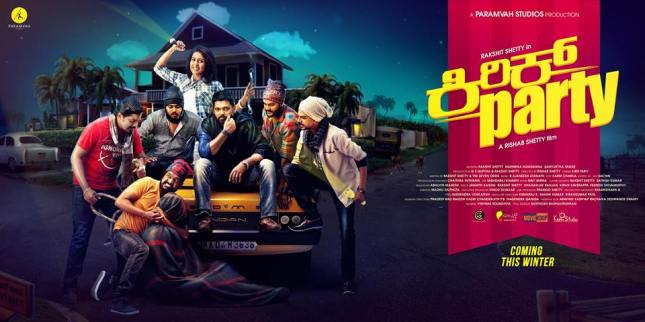
If your only resource was Kirik Party you would think that college in India is a rather different proposition compared to studying in the rest of the world. At Karna’s chosen institution in Hassan there is wide-spread harassment, bullying, plagiarism and various other activities that would see most of the so-called students thrown out after a few weeks if the college was anywhere else. In the happy land of film however, all these excesses are simply high spirits and something to be encouraged while everyone goes home with a qualification despite never appearing to study a day in their lives. I’d hoped for something different in Kirik Party but it follows the same old routine as many other previous campus-based films, even at times coming precariously close to Premam with the back to back romances. However, although many of the situations are clichéd and the students follow the usual template the film itself is reasonably enjoyable. The actors do a good job of creating sympathetic characters and the Kirik Party does manage to touch on some of the unique college experiences that don’t occur at any other time in your life.

Kirik Party begins as Karna (Rakshit Shetty) and his friends start as juniors in college. They’re mainly engineering students with a few studying IT thrown in for variety, but despite their different disciplines they form a tight-knit group of friends. Almost immediately Karna falls for senior student Saanvi Joseph (Rashmika Mandanna) who is surprisingly tolerant of his initial stalking tactics – at least they’re more amusing than usual. Karna enlists his friends as co-conspirators in his pursuit of Saanvi and the romance gradually progresses to the point where Saanvi asks Karna for help to get a pregnant sex-worker to hospital. This seems as if it’s going to be a watershed moment for Karna but at the time he seems to dismiss the incident quickly and it’s not until much later in the film that he starts to think more deeply about the situation. Sadly again this revelation is nothing new, but it’s sympathetically handled and does make Karna a more likeable character. Karna’s interest in popular student Saanvi creates friction with the senior students which allows for some good comedy as the hapless seniors run up against the more organised and ruthless junior students.

The friends indulge in the usual filmi college activities; drinking, skipping class and fighting with the seniors but they do also club together to buy a car which allows them greater freedom and more opportunities for mischief. It also introduces them to a mechanic played by Achyuth Kumar who becomes a permanent fixture in their lives as he is roped in to complete engineering projects for the group. What works best in this half of the film is the easy camaraderie shown between the students who share their love of Upendra films and cool sunglasses. The romance between Karna and Saanvi is also good with a natural progression that makes sense despite their different ages. I like too that she doesn’t immediately fall for the hero, but has to be gradually convinced that there is more to Karna than a superficial glance would suggest. Rakshit Shetty does appear too old to be successful as a junior student but the rest of the group all look suitably youthful and their behaviour is certainly juvenile enough for their supposed ages. Rashmika Bandanna is a real find and is very natural in her role, creating a warm and friendly personality for Saanvi but one who comes across as strong and confident too.

In the second half the group have returned to college as seniors, and I love that this is illustrated by the friends all having grown facial hair. There are signs and posters everywhere in the background proclaiming the desirability of beards since obviously whatever fashion the seniors follow is the only possible trend for the entire college. This is one of the things about life in college that does ring true in the film, as is the complete fixation the students have on small matters while managing to be totally blasé about anything that would imply taking responsibility for their actions. For instance, Karna happily heads off on a road trip, missing weeks of his studies, without any thought of how this will affect his future or that his friends will worry about his absence. In comparison, the outcome of elections for college president is important enough to consume the group for weeks and result in bullying and intimidation tactics to make sure Karna wins.

The tables have turned in the romance stakes too. Now its Karna’s turn to be followed by a junior student who professes her love for him. Samyuktha Hegde is excellent as the happy-go-lucky Aarya who stalks Karna and repeatedly proclaims her love for the now surly and argumentative senior. The events of the first half subtly repeat while in both romances the women are looking for the different side to Karna. Rakshit Shetty is much better in the second half as the older and (possibly) wiser Karna, and he seems to be more comfortable with the characterisation too. The resolution to his own personal dilemma is also well handled and gives Karna an opportunity to mature, just as you’d expect towards the end of college.

There isn’t much time spent on the rest of the friends but they all seem to be a typical bunch of students in film-land, while Raghu Pandeshwar is fine as the college principal. The music from B. Ajaneesh Loknath is excellent and perfectly added to the narrative so that dialogue segues into songs and back into dialogue seamlessly. The songs too are catchy and fit well into the student setting, making Kirik Party more of a true musical rather than simply a film with added song and dance numbers. The action scenes are also well choreographed and apart from one brilliantly called as a cricket game are mostly of the slappy variety that seems more natural for this style of film.

Although the story and the characters don’t break any new ground, overall the film is entertaining with plenty of comedy and enough drama to keep it interesting. I would have liked more realism in the depiction of student life, but that wouldn’t have given Karna and his friends time to indulge in their various vices and ultimately that’s the whole point of the film. Kirin Party is a good, entertaining time-pass, but don’t expect anything more from Rishab Shetty’s foray into student life.
Kapoor & Sons

kapoor-sons-poster

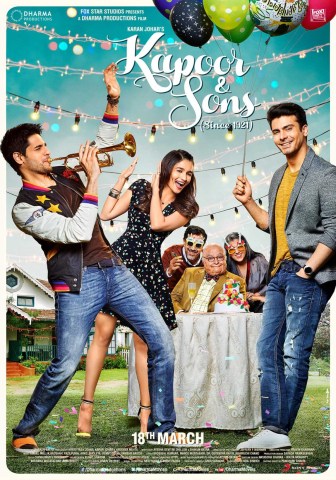
Kapoor & Sons is a refreshingly ‘un-Bollywood’ look at family and family relationships from director Shakun Batra. In conjunction with co-writer Ayesha Devitre Dhillon, Batra has produced a film that delves past the superficial public face of the Kapoor family to reveal the insecurities and arguments that lie beneath. It seems that there is something for everyone to relate to in this story – whether it’s the marriage between Harsh and Sunita that is falling apart, or the sibling rivalry between brothers Rahul and Arjun, most of the film relates to family episodes that are easily recognisable and understandable. While not everything in the story works, the relationships and characterisations do, making Kapoor and Sons a film that stays with you after the end credits have rolled.

I do love Rishi Kapoor and one of the drawcards of this film for me was watching him play the ageing patriarch of the Kapoor family. The prosthetics used to age him appropriately are fairly obvious and his character’s fixation on pornography quickly wears thin, but as the story progresses and Amarjeet Kapoor insists that all he wants as he approaches his ninetieth birthday is a happy family photograph, the character gains depth and intensity. The film starts with Amarjeet ‘practicing’ his death, obviously a common occurrence since his son Harsh (Rajat Kapoor) and daughter-in-law Sunita (Ratna Pathak Shah) pay no attention to his histrionics. The couple have their own problems and ignoring Amarjeet, or Daddu as the family call him, just seems to be part of their usual day. Harsh and Sunita have grown apart over the years of their marriage and there is a definite chill as they barely manage to speak civilly to each other. Sunita suspects that Harsh is having an affair with a previous work colleague Anu (Anuradha Chandan) and the two bicker and argue constantly. It’s a well written portrayal of a marriage gone sour where even the smallest comment can start a major argument and there no longer seems to be any common ground between husband and wife.

Their two grown up sons live overseas. Based in London, Rahul (Fawad Khan) has one successful book behind him but is falling behind his publisher’s deadline for the second. Arjun (Siddharth Malhotra) on the other hand is an aspiring writer, but is working as a bar-tender in New Jersey as he tries to find a publisher for his work. Both return to the family home in Coonoor when Amarjeet is hospitalised with a heart attack and the film follows the various relationships within the family as they are reunited under the one roof once more.

For me the most successful character is Sunita whose bitterness at her life flavours every word she says in the first few scenes. Her relationship with Harsh is perfectly portrayed and the hurt and resentment come through in each conversation. She has issues with her two sons too.  Arjun accuses her of always favouring her eldest son and although she denies it vociferously it’s obvious that she does have a definite preference for Rahul.  When she finally discovers the secret Rahul has been keeping from her she is devastated and Ratna Pathak Shah is superb in portraying her feelings of betrayal and loss mixed in with remorse and just a little guilt for some of the things she has said and done. She’s not just defined by the relationships with her husband and sons either, as her dreams of starting her own catering business allow her character to be more than just reactive. Rajat Kapoor too is excellent as the distant husband who wants to save his marriage but can’t seem to take the first step to making the necessary changes in his relationship. Although at times the bickering does seem to go on too long, to the point where I became uncomfortable watching Sunita and Harsh argue, it is true to life with every irrational and tit-for-tat response feeling genuine and realistic. There are moments of tenderness too and despite all the hostility there is a pervading hope that perhaps the two will manage to resolve their differences. The writing emphasizes the emotions of each character clearly and ensures the dialogue feels realistic and genuine.

The two sons have their problems with each other as well as with their parents. Arjun has always felt that he is the outcast in the family, particularly in comparison with Rahul, who always seems to be the perfect son. Returning home to find that his room has been taken over by his mother while Rahul’s has been left untouched immediately reinforces his feelings of alienation, further fuelled by his belief that Rahul stole the story of his first novel. Although Rahul can see the issues bedeviling the family and does his best to smooth things over, he has his own problems to work through.

During his visit home, Rahul wants to work on his latest book and also find a suitable place for an artists’ retreat. His search brings him into contact with Tia (Alia Bhatt) who is attracted to Rahul, but Arjun has already met Tia at a party and decided to make her the object of his attentions. This sets the two brothers up as potential rivals – an added friction that escalates the conflict between them. What makes it more believable though is that even with the issues between the two brothers, they still have typical sibling conversations. It’s not all arguments and fighting and the two share a good rapport that seems very natural. It’s typical family behaviour that adds to the authentic feel of the film and makes the characters more relatable. Both Fawad Khan and Siddharth Malhotra are at their best when dealing with each other, although otherwise Fawad Khan comes out the better of the two in terms of performance.

While Alia Bhatt is fine as Tia, her manic pixie-girl act is occasionally too OTT when added in to all the general angst of the Kapoor family. However, I like that Batra gives her character more depth using her friendship with Bunkoo (Aakriti Dobhal) and her dealings with cook/general handyman Kishore (Pradeep Pradhan) to bring out different aspects of her character. The romance between Arjun and Tia is also fairly standard stuff but does provide some welcome relief from all the squabbling between family members. Sukant Goel as Wasim and Fahim Shaikh as his brother Boobly also ensure there is some lightness amid all the doom and gloom as the rest of the ‘comedy’ is rather more hit and miss. Tia’s ‘jokes’ are not funny at all (although that I presume is the whole point!) while Daddu’s antics at the hospital appear too forced and falling just on the wrong side of offensive to raise anything more than the occasional smile.

Another plus for the film is the soundtrack which maybe works so well due to the number of different composers and lyricists involved. The background score by Sameer Uddin is lovely and the various songs include music from Amaal Mallik, Badshah, Arko and Tanishk Bagchi that give a good mix of different styles that each suit the flavour of the film. My favourite is Kar Gaya Chul above, but each is well placed in the narrative and complements the action. The scenery and beautiful house also give an authentic home-like atmosphere that adds to the overall realism of the film.

Although the film pacing is occasionally uneven and at times the arguments threaten to veer a little too close to farce, for the most part this is a realistic look at middle class family life. The arguments, petty disagreements and relationship flaws within the family are all explored, firstly among the family and then further secrets revealed when private disagreements are suddenly open to public view. The writing is excellent, the characters beautifully  developed and the story flows well from one excruciating argument to the next, with all the angst and self-recrimination that goes along with family fights. I thoroughly enjoyed Kapoor and Sons and recommend it for the wonderful performances, realistic dialogue, plausible situations and overall thoughtfulness that make this one of the better films from last year. 4 ½ stars.

Gautamiputra Satakarni

gautamiputra-satakarni-poster

For his latest film Krish takes inspiration from historical figure Gautamiputra Satakarni; a king who ruled in the South of India a couple of thousand years ago. Since little seems to be known about his reign, Krish is free to take the few major events that have been recorded and develop these into a plausible story, which he does reasonably well. The film follows Satakarni (Balakrishna) through a number of battles as he consolidates his rule over Southern India, and then moves north to tackle the invading Greeks. As a historical epic, there is plenty to enjoy but the film doesn’t shed much light on the man behind the warrior king despite a few diversions into his relationship with his mother and wife.

Over the opening credits, the young Satakarni declares that the only way to stop the petty wars between neighbouring kingdoms is for one man to conquer them all and thus unify the country. Needless to say, even at such a young age, Satakarni knows that he is the right man for the job and as the film begins the adult Satakarni has already embarked on his campaign. He starts off small by conquering a few neighbouring kingdoms (Milind Gunaji is good as one of the kings here) and then turns his sights towards the north, sending emissaries to King Nahapana (Kabir Bedi). Unsurprisingly Nahapana doesn’t respond well to a demand that he peacefully submits to becoming a vassal of Satakarni, and the scene is set for war!

Satakarni alienates his wife Vashishthee (Shriya Saran) when he takes his young son along to battle which allows for the development of some tension between the two. At the same time, Satakarni is shown as having great respect for his mother Gautami Balashri (Hema Malini), whom he has left to govern while he is off fighting his battles. These two relationships allow for more emotional and character-driven scenes to balance the battles that form the rest of the film. These are epically grand and give Balakrishna plenty of opportunity to make declarations (they’re much more dramatic than mere speeches) while looking imposing in armour and carrying a large sword. He has the gravitas and spectacular moustache required to play the ruler of the Satavahanan empire, although his age does seem to slow him down in the action scenes.

I enjoyed watching Balakrishna as Satakarni and this was a good choice for his 100th film. The character allows him to behave as the usual style of Telugu hero (unstoppable one-man army) but this time he does have an army to back him up. He’s also impressive in the more emotional scenes and his delivery of the epic speeches is very well done. Shriya Saran is also excellent as Satakarni’s wife and makes an impact despite her limited amount of time onscreen. There is the excitement of her reuniting with the king after time apart, their happiness together and then the shock of her young son heading into battle. Although at times she does emote just a little too much, at least the historical nature of the drama allows her to do so. The historical aspect also makes the sight of an older and portlier Balakrishna chasing Vashti around the royal bedchamber a little more acceptable, although I was reminded of portraits of the English King Henry the Eighth and his procession of younger wives. I find Shriya Saran can be a bit hit and miss, but here she is a definite hit and the relationship between her and Balakrishna works much better than expected. Hema Malini too is very good as the dowager queen, dealing with the pesky problems that crop up while her son is away subduing the realm. She does this with grace and style, looking regal and definitely projecting an aura that she is not to be trifled with.

After subduing Nahapana, the next challenge for Satakarni is the army of invading Greeks led by Demetrius. While the scenes where Satakarni plots his campaign are well delivered, the battle scenes are a little more patchy. For the most part when the camera is showing close ups of the action the battles look superb, but there are a few glitches between the CGI and staged fight scenes. These are mainly errors of perspective where there is a CGI view of massed warriors which moves in to show a smaller group of men and horses surrounded by green fields. For the most part the effects are well integrated into the live action and the battles do look good, but the few errors do divert attention away from the overall spectacle. The other problem is that a couple of the battles go on just that little bit too long. Some of this is due to repetitions of the same scene, as for example during the storming of the walls of Nahapana’s citadel but some just seem overly drawn out while Balakrishna indulges in some heroics which would mean certain death on a real battlefield.

There is plenty to enjoy in Gautamiputra Satakarni, even with the slightly uneven mix of plentiful epic battles and intermittent emotional drama. Balakrishna exudes power and authority while the appropriately grandiose costumes and palace sets seem to paint the time period well. Not that I would know if they were wrong, but judging by the paintings in museums I’ve seen while in India, this all looked pretty good! The soundtrack by Chirantan Bhatt is also excellent and to his and Krish’s credit, the songs don’t feel out of place in the narrative. However at the end of the day there is no real insight into the characters and the all too brief glimpse of Satakarni’s achievements only leads to more questions. This isn’t an attempt to detail the life of a famous ruler or to tell the story of a kingdom, but instead is a series of vignettes of what might have occurred, without delving too deeply into the why. Too, Balakrishna plays Satakarni as a regular Telugu hero with all the unlikely ability to stop an army single handedly so the story never feels quite as realistic as it should. But once the drums start beating and the swords clash that seems unimportant – the spectacle and grandeur of ancient India sweep across the screen and Gautamiputra Satakarni charges to victory!