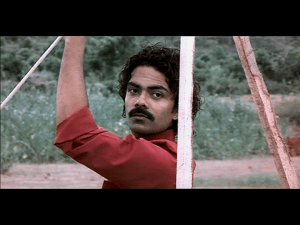
Nandanam

Nandanam

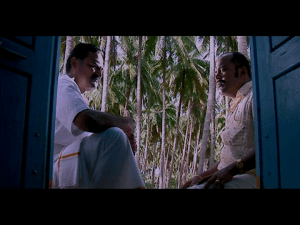
Nandhanam is based on the King Cophetua and Penelophon story and while it’s a fairly typical tale of a rich(ish) young man falling in love with the family maid and the various dramas that ensue, there are enough novel moments to make it more involving than it first sounds. The story is simply told, the characterisations are beautifully drawn and the actors all play their parts with ease. This was Prithviraj’s debut Malayalam film and he’s ably supported by some stalwarts of the industry along with a brilliant Navya Nair as Balamani. In fact it’s her performance that really lifts this film above average and it’s worth a watch just to see her character deal with the various obstacles in her path to true love.

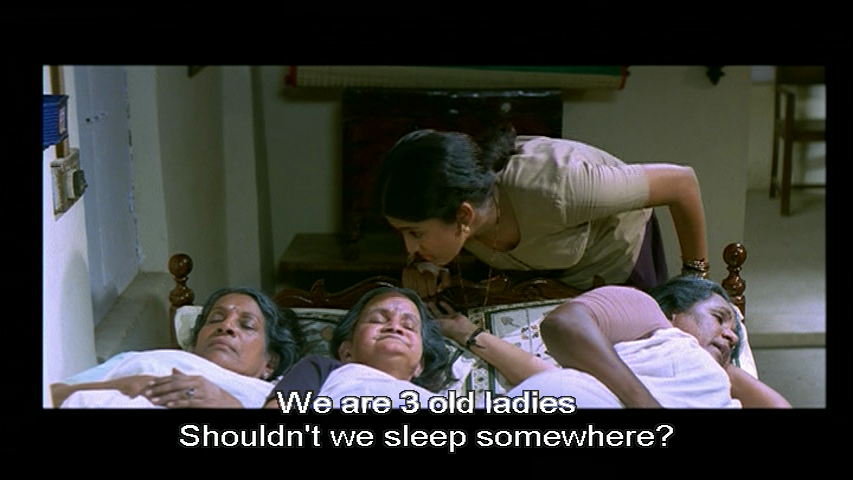
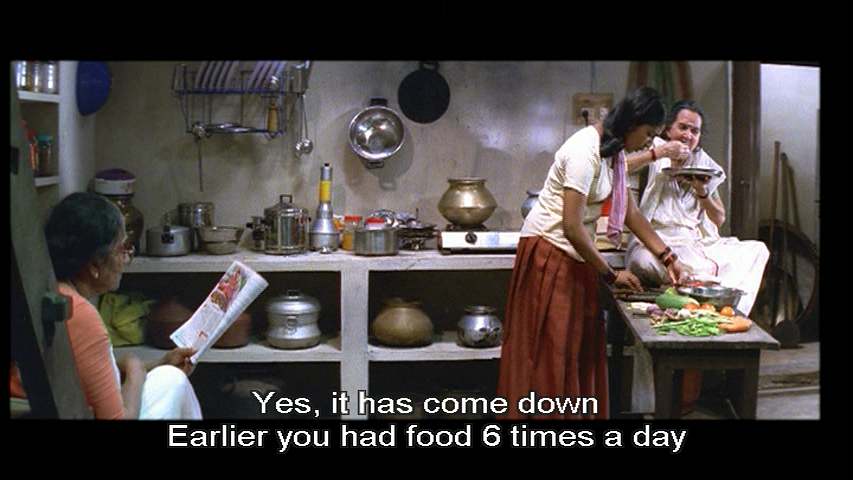
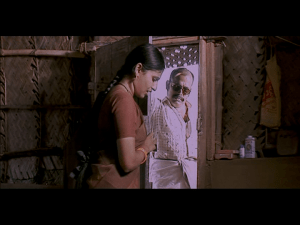
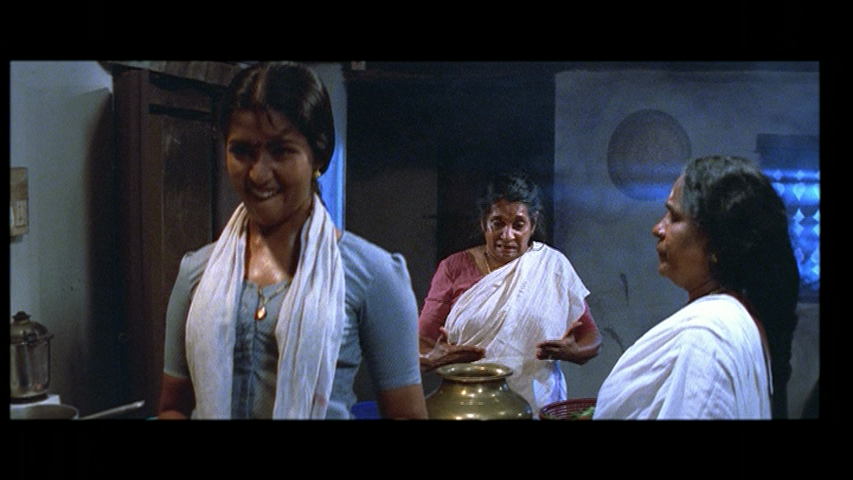
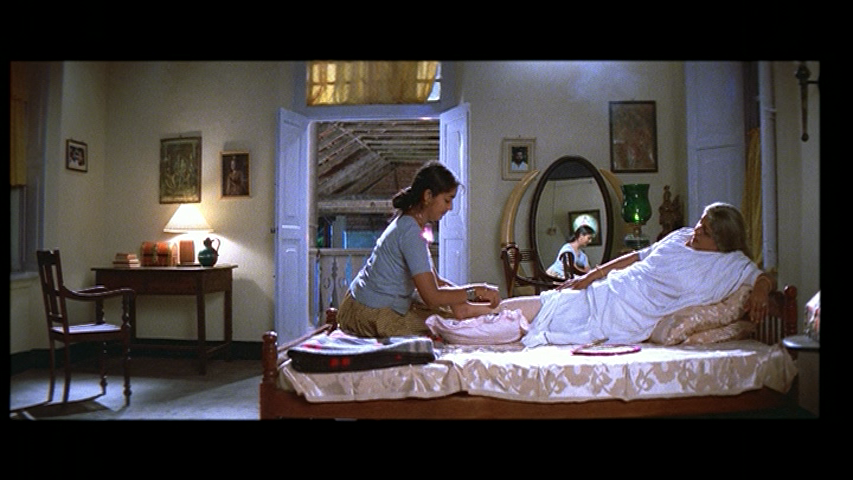
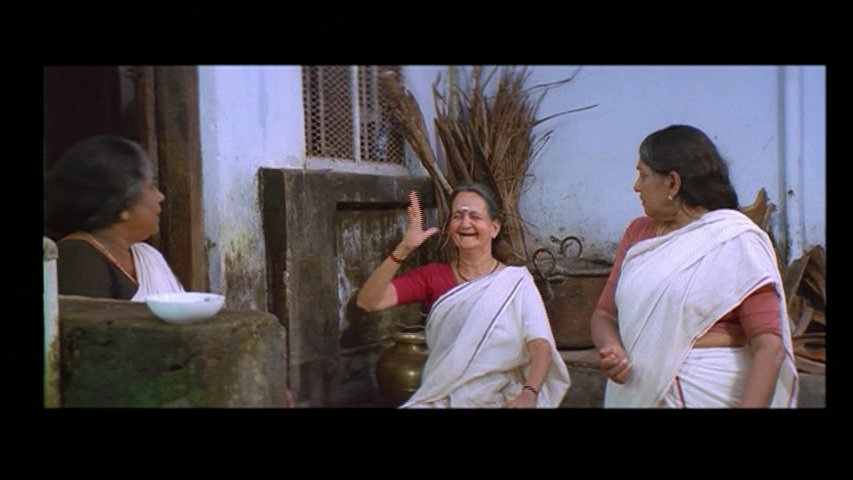
Balamani is a young orphan working as a cook and general helper to Unniamma (Kaviyoor Ponnamma) who has been incapacitated with a leg injury. Balamani is a devoted follower of Lord Krishna and her biggest problem is that since she started working for Unniamma she has been too busy to go to the local temple. It’s a recurring theme which becomes more and more important as the story progresses. She is kept hopping from the early hours of the morning by three older women who were brought to the house by Unniamma’s friend Kesavan Nair (Innocent) to act as servants but all three prefer to be waited on hand and foot by Balamani. The interactions between the three servants and Balamani are funny and cleverly scripted as Balamani looks after them and somehow fulfils all their ceaseless demands, but simultaneously pulls faces behind their backs and berates them as lazy to their faces.
NandanamNandanamNandanamNandanam

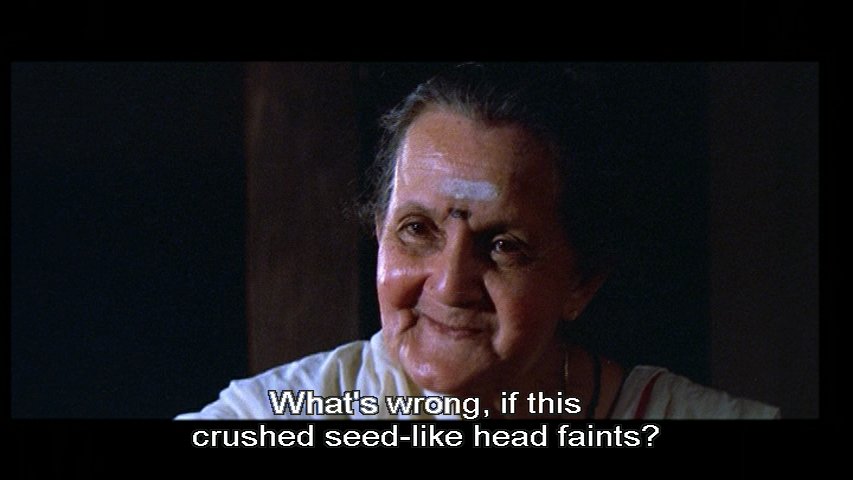
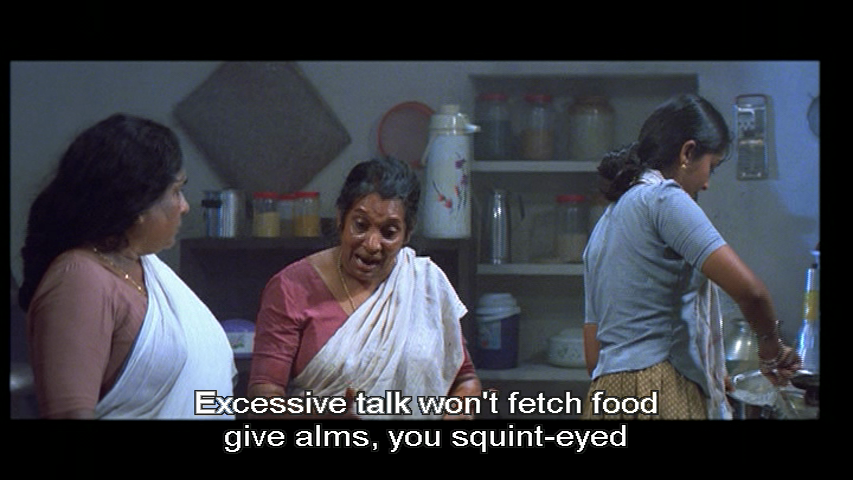
Balamani seems to have endless patience despite her grumbles and she is genuinely kind-hearted and caring in her dealings with Unniamma, and even with the other three servants. They bicker and complain continuously to each other about each other, although they never seem to either take any offence or mean any of it seriously. I love these three and they have some of the best lines in the film – although that might just be the English translations!
NandanamNandanam

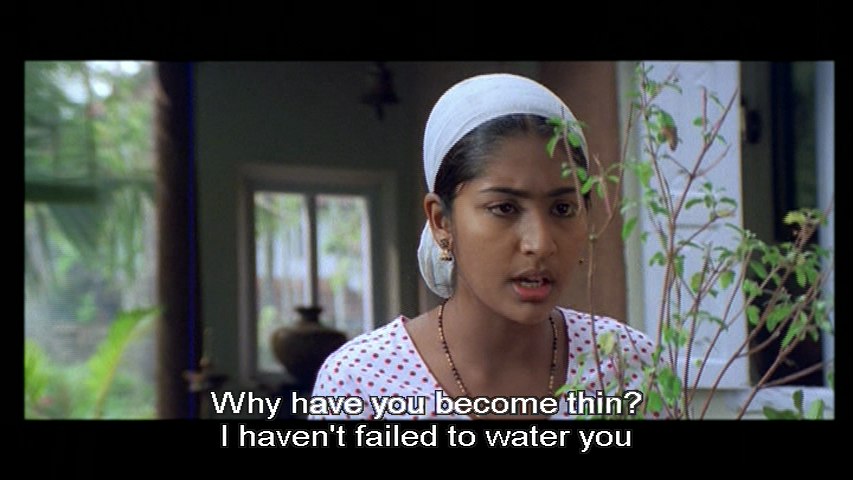
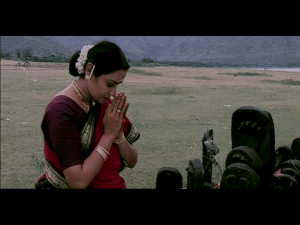
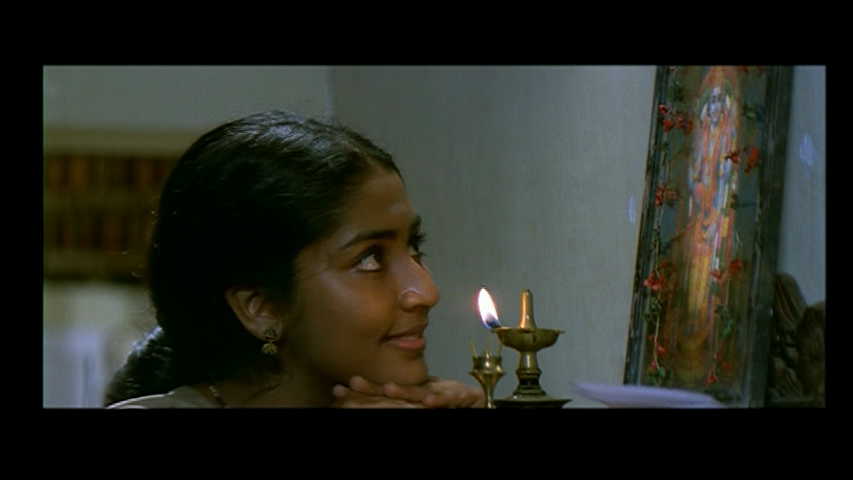
One of the best parts of the film for me is the way Balamani talks to herself and also to the picture of Lord Krishna she keeps in her room. In fact she talks to the animals she looks after, the plants she waters in the garden and anything else that seems to catch her eye. I can totally relate to this aspect of her personality and it made her a more human and sympathetic character. Her main confident in these discussions is Lord Krishna and she complains to him about not being able to go to his temple and about the amount of work she has to do, although none of it is with any rancour.

NandanamNandanamNandanamNandanam

Added in to the story are the next door neighbour Janaki (Kalaranjini) who is a friend of Unniamma’s daughter and is waiting for her son to come home on a visit. Janaki is another confidante and she tries to minimise her exploitation by the three older servants.

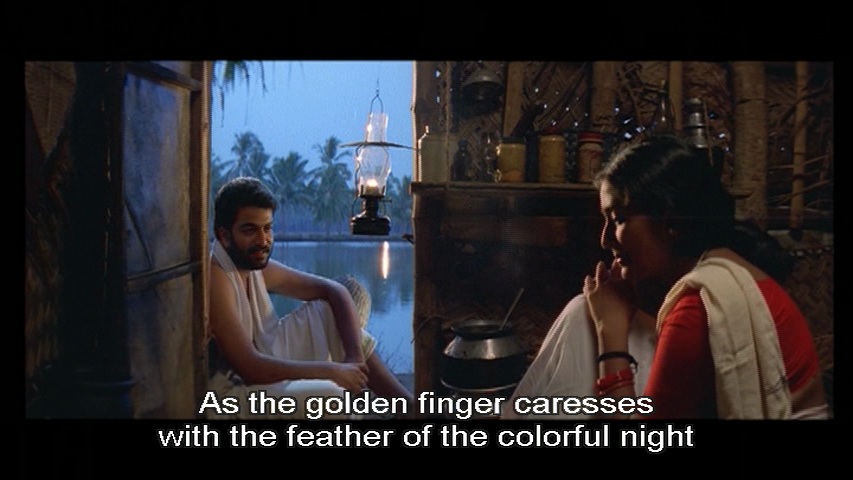
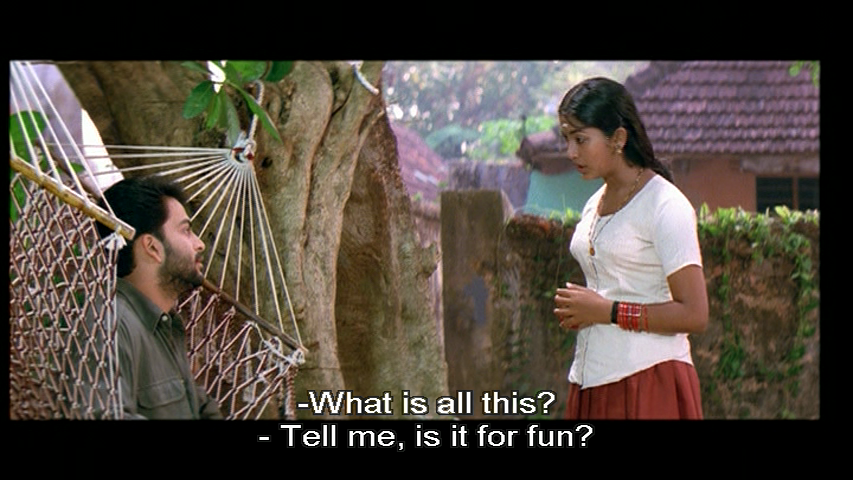
Things change when Unniamma’s grandson Mano (Prithviraj) arrives for a short stay before he leaves for work in the USA. He starts to flirt with the vivacious Balamani but before long it turns into something more serious and the two fall in love. But it’s not a straight forward filmi romance and the dialogue helps keep it realistic. Balamani asks Mano if he is really serious or if this is just a brief fling to keep him amused before he leaves the country. Mano in turn seems to be quite sincere when he answers that it started out that way, but has become something more serious. Balamani is also aware of her lowly status in comparison to Mano and is wary of the relationship, although she is obviously flattered and very much in love with Mano. Prithviraj seems subdued as Mano, compared to other roles I have seen, but it suits his character and he combines an air of experience with just enough of the mama’s boy to make Mano a believable character. Mano does seem to be a bit of a wimp and most of the problems Balamani faces are due to his lack of gumption and resolve.

NandanamNandanamNandanamNandanam

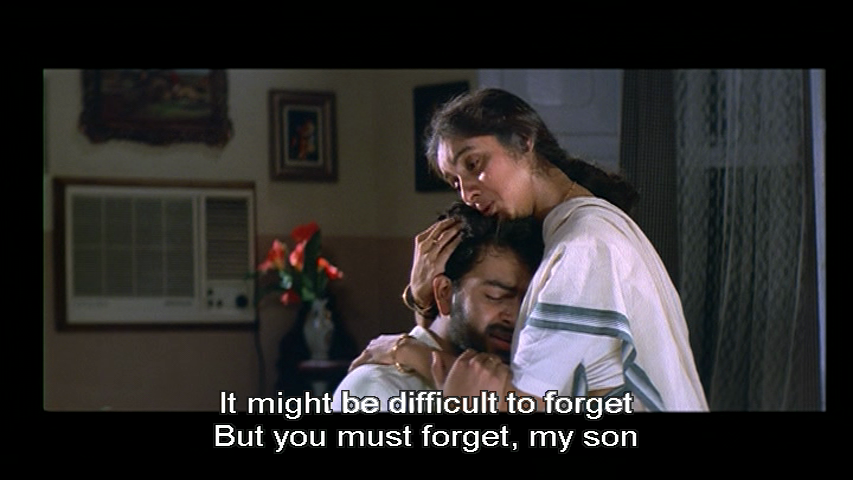
Just when things seem to be going so well, Mano’s mother (Revathy) turns up and decides to arrange his marriage before he leaves for America. Pesky details such as visas are never discussed and it seems to be no trouble to organise a wedding in just a few weeks, so obviously here is where we start to depart from real life! Thankam doesn’t discuss her plans with Mano, while Mano is slow to approach his mother about his plans to marry Balamani, with the end result that he is betrothed to the daughter of one of Thankam’s friends before he can make his wishes known. Thankam is a widow who defied her family to go to work and bring up her son alone, so she’s definitely not a soft touch and has no hesitation in telling Mano that the match will go ahead no matter what he wants.

NandanamNandanam

However Thankam is also distressed to have caused her son such unhappiness, particularly since she likes Balamani, but it’s not enough for her to upset the arrangement she has made. The family dynamics are further explored when all the relatives arrive for the engagement and wedding with many complaints about the precipitous nature of the affair. Writer/director Renjith emphasizes the solitary state of the groom compared to all the family hustle and bustle with the wedding preparations and the frantic work being carried out by the servants, including Balamani.

Meanwhile Janaki’s son has arrived – or has he? Balamani meets the person she thinks is Unnikrishnan (Aravind Akash) and is soon on very friendly terms; even confiding her innermost thoughts to him while he appears to already know her hopes and dreams. I was a bit sceptical of Aravind as Guruvayurappan at first but he did seem to embody the mischievousness nature of Krishna with a singular lack of concern about the consequences of his actions. Plus he can dance!

The addition of the divine into the narrative is cleverly done and never seems out of place, despite the generally modern feel of the rest of the story. However there is a terrible comedy side plot which is somewhat related to the main story involving Jagathis Sreekumar as a duplicitous priest. It’s never funny and most of Jagathis antics could have been left out without causing any disruption of the plot, so his inclusion does seem to be more a ‘film-making by the numbers’ rather than for any real addition to the storyline.

NandanamNandanam

Navya was perfect as Balamani and I loved her characterisation. There was enough back story to ensure that her actions reflected her personality and her mannerisms suited her youthful and innocent persona. Although the romance between Balamani and Mano doesn’t generate much heat, it is rather sweet and works in the context of their different status and the way the love story develops. There is rather more chemistry when Balamani meets Guruvayurappan, although the relationship is more one of two old friends who are comfortable with each other rather than anything romantic. Ranjith ensures that the interactions between the different characters are believable and illustrate perfectly both their personalities and their places within the hierarchy of the household. These help the film keep a sense of realism even with the addition of Lord Krishna into the mix and the rather fairy tale nature of the story
The music by Raveendran is beautiful, and of course it’s a Malayalam film so it looks stunning with wonderful cinematography by Azhagappan. Worth watching for a new take on an old story, fantastic performances, great dialogue and a scintillating performance from Navya Nair. 4 stars.
Nandanam

Darling

Darling

My motivation for watching Darling was less in the expectation of experiencing an enthralling story (although I always live in hope) and much more based on being a Prabhas fan – which in hindsight was the right attitude to take.  Although the underlying themes of friendship and father-son relationships are reasonably well dealt with, the romance between the two leads follows a fairly dull and predictable path despite the attempt at a twist at the interval.  However Prabhas and Kajal are both entertaining to watch in spite of the inevitability of the storyline and for a romantic comedy, what it lacks in passion it more than makes up for in the humour.  Especially since for a change, the comedy is part and parcel of the story rather than a separate unfunny and irrelevant track.  Best of all, there is not even a sniff of Ali or Brahmi anywhere in the proceedings. There is plenty of Prabhas instead and really, that’s enough right there to make this a film worth watching!

DarlingDarling

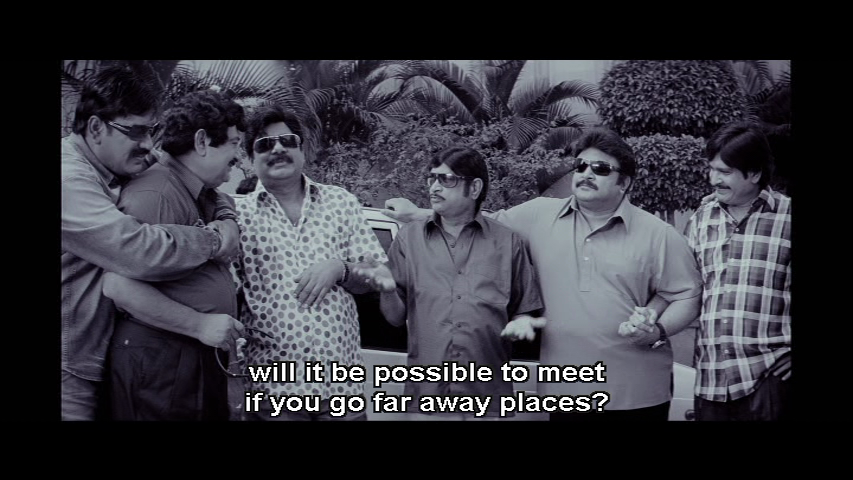
Prabhas is Prabha (why not just stick with Prabhas I wonder?), who is the devoted son of a loving father Hanumanthu (Prabhu).  The film opens with the last day of Hanumanthu’s time at college and the pledge of all the friends to meet up every 5 or 10 years to renew their friendship.  This opening section is all shot in black and white and the lack of colour ensures this section features some of the most conservative and tasteful outfits the men wear for the entire film, despite the fact that it’s set in the eighties.

DarlingDarling

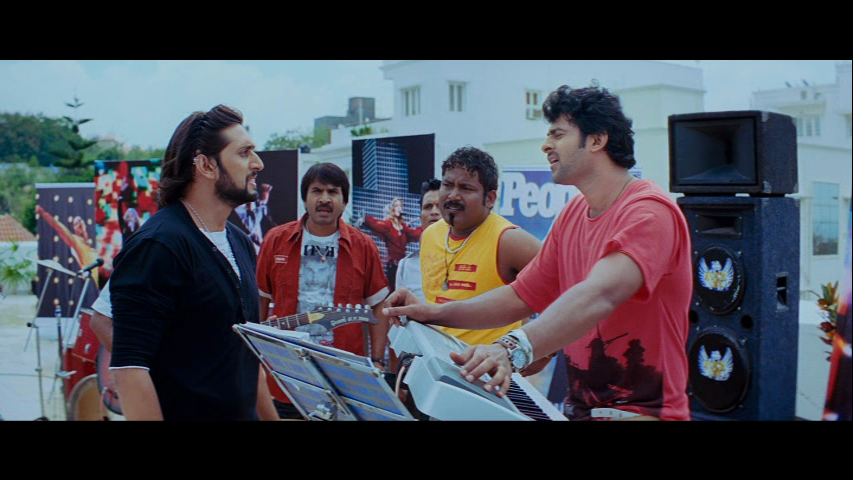
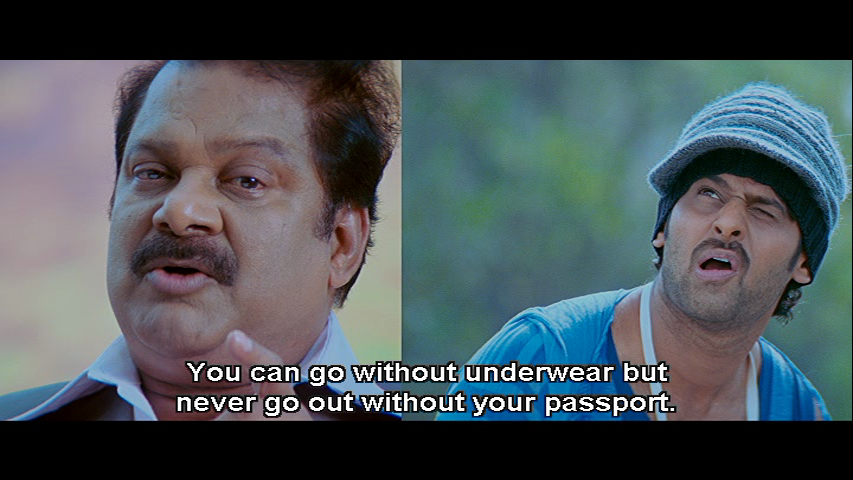
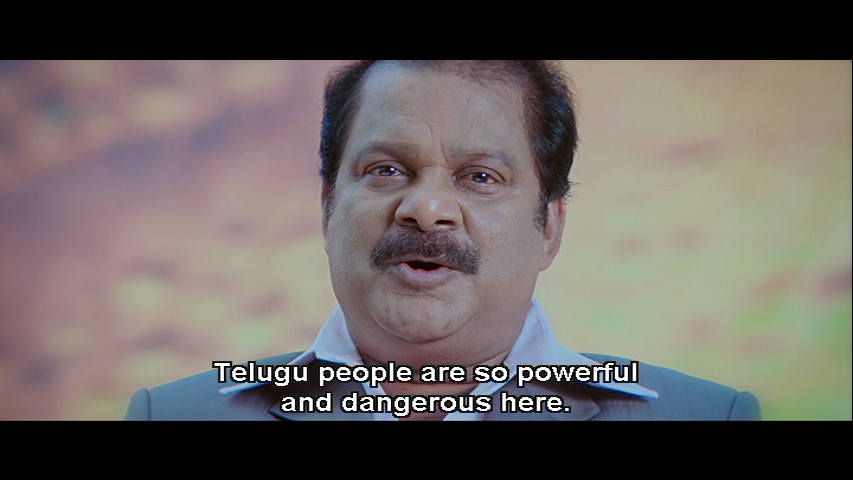
These reunions give the various families a chance to get to know each other too, and a young Prabha is smitten by Vishwanath’s daughter, Nandini.  However before love gets a chance to bloom, Nandini and her family move to Switzerland while Prabha grows up to celebrate his own last day at college with a similarly dedicated group of friends.  Although rather than vowing to meet up every few years, Prabha’s friends seem to be permanently welded to his side since they all come along for Hanumanthu’s latest big college reunion.  They all also play in a band together and seem to share Prabha’s (lack of) fashion sense (the manband!), although perhaps there is a rule that states if you are performing in a band scarves are obligatory.  The first half involves a side trip to Switzerland where amazingly everyone seems to speak Telugu, although given Dharmavarapu Subramanyam’s pronouncements that may not be quite so surprising.

DarlingDarlingDarlingDarling

Prabha is hopeful that a meeting with Nandini will be enough to restart their love story, but there is a minor complication in the form of Nisha (Shradha Das in a very brief cameo) who is in love with Prabha.  Her father (Mukesh Rishi) is a local don and he is determined to ensure that his daughter gets whatever she wants even if that means forcing Prabha at gunpoint to marry his daughter.  Despite his threatening persona, Mukesh Rishi mainly plays his character for laughs and it’s fun to see him in this type of role blending mayhem with merriment and revealing a surprisingly sensitive soul.

While the main feature of the film is the romance between Prabha and Nandini, the relationships between the various older men are actually more interesting and appear more genuine.  Sure they’re cheesy, over-simplified and even a little too dramatic at times, but these moments give the film some much needed warmth.

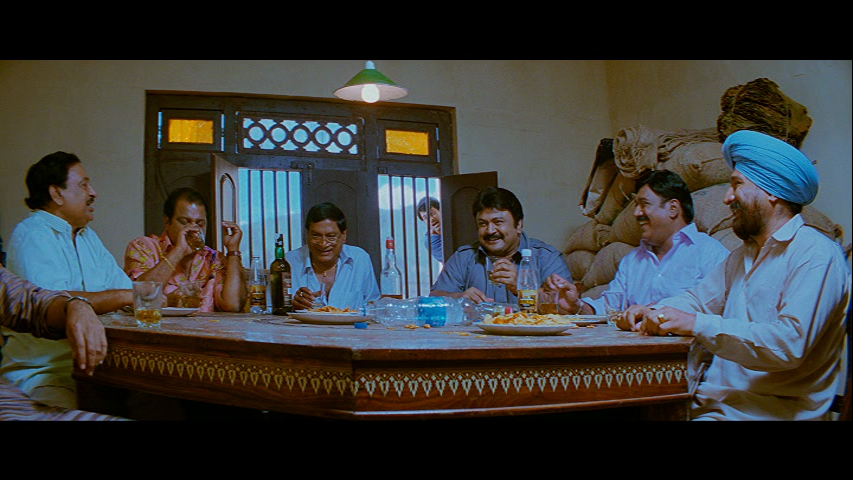
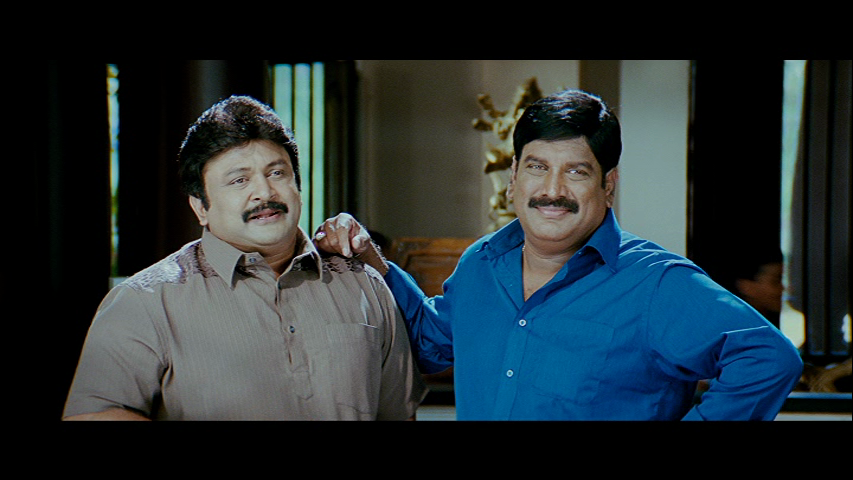
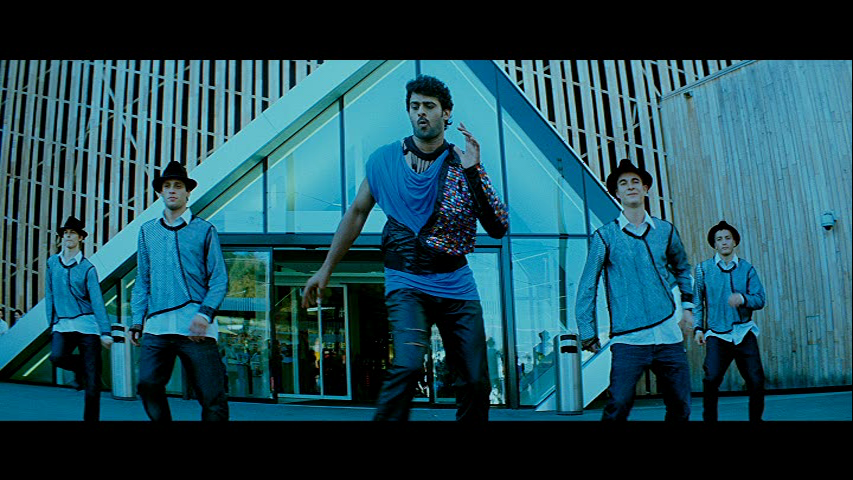
DarlingDarling Stalwarts including Aahuthi Prasad, Chandra Mohan, Dharmavarapu Subrahmanyam and M. S. Narayana all work together naturally, so that they really do all seem to be old friends catching up over a few glasses of whiskey and a cricket match.  The relationship between Prabha and his father is also nicely portrayed and both Prabhas and Prabhu bring a realistic camaraderie to their interactions.  In fact throughout Prabhas is effortlessly charming despite the succession of ridiculously baggy and shapeless t-shirts he wears.  Nothing seems to fit and he’s much too tall to look anything but scruffy in wide-necked and voluminous shirts – plus the dual layered hats, inexplicable scarves and worn-off-one-shoulder bespangled jacket.

DarlingDarlingDarlingDarling

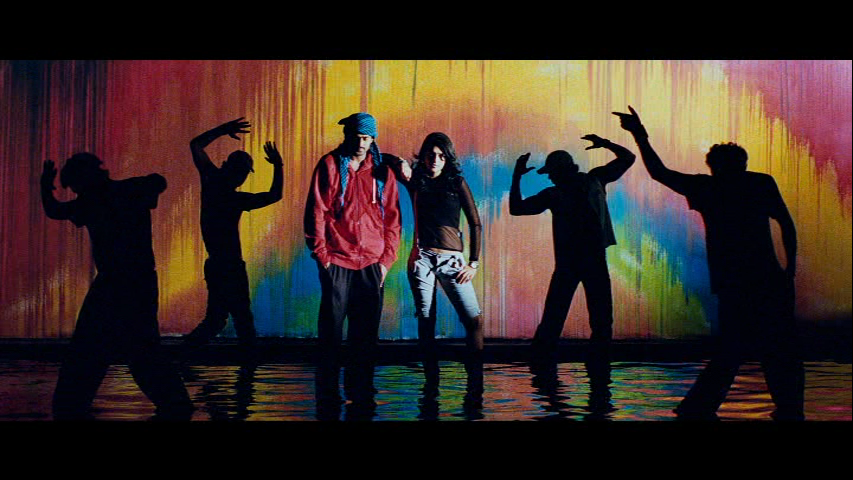
Prabhas seems to have been lumbered with a stylist that hates him, and in a complete reversal of normal, Kajal is the one who gets to wear much more reasonable outfits.  There are a few misses, after all this is Tollywood where apparently giving someone fairy wings means they are wearing a ‘holy dress’, but overall Kajal looks fantastic.  She also puts in a convincing performance although it would perhaps have made the story a little more interesting if there had been a difference in character between the dream Nadini of the first half, and the real Nandini in the second half.   Kajal throws herself into the dancing, and apart from one bizarre attempt at what I think was supposed to be Bharatanatyam (what were they thinking!!) the choreographer has stuck to her strengths and put her enthusiasm to good use.  There is plenty of hip shaking and arm waving but less actual dancing, so she looks more co-ordinated than usual.  The choreography is a little less successful for Prabhas, but then again I may just have been distracted by those hideous outfits.  This is a beautifully shot song that features the scenery of Switzerland morphing into Hyderabad and also some beautiful CGI scenes of snow, along with some of the better outfits worn by Prabhas.

Added in to the mix is an attempted suicide by Nisha which infuriated me (completely unnecessary), a side story involving Hanumanthu’s adopted father and brother and a rival for Nandini’s affections in the form of Appala Naidu’s son Rishi (Santosh).  There are a limited number of fight scenes but with Peter Hein choreographing, they all look good and generally fit into the flow of the film.  The music by G. V. Prakash is unremarkable but Andrew’s cinematography makes the most of the settings in Switzerland – if only the costumes had matched.

Overall Darling is a film that’s not too taxing to watch and is certainly less gory and more family friendly than the recent Rebel.  Director A. Karunakaran ensures good performances from all but a sharper story would have made for a better film.  Worth it for Prabhas, Kajal and the gang of older actors who looked to be having a great time. 3 stars.
Nanjupuram

Nanjupuram

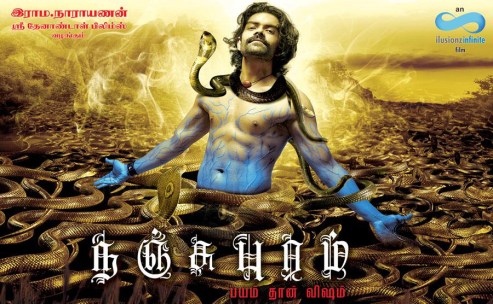
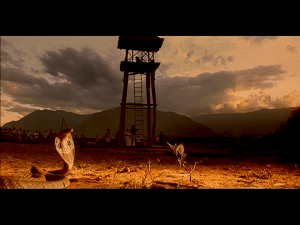
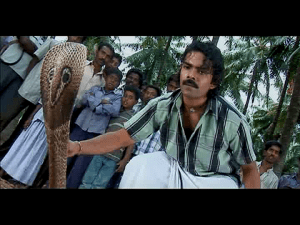
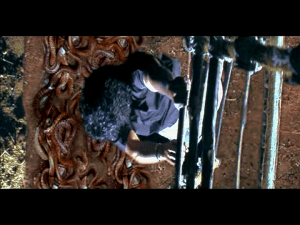
Sadly Nanjupuram doesn’t actually feature a man with raised blue veins waist deep in snakes, which is rather disappointing since I did originally pick up the film on the basis of the cover.  But what it lacks in blue-veined men, it does make up for in snakes.  Bucket-loads of snakes in fact.  There are snakes everywhere in the village where the story is set, and it’s also surrounded by a snake-infested forest which ensures that no-one ever leaves.  Or at least I think that’s the reason since this was another ‘adventure without subtitles’ and personally I’d think twice before venturing anywhere near the place!

NanjupuramNanjupuramNanjupuramNanjupuram

The story starts out with some long explanation, presumably about why the neighbourhood is such a snake haven, but does manage to convey that the locals revere the snakes and worship them rather than just moving to a more congenial neighbourhood.  Despite all the snake worship, it seems to be acceptable to kill them, just as long as they get a proper burial afterwards.  However, the big bad is to injure a snake and then let it escape.  Snakes are apparently not known for their forgiving nature and (judging by the opening scenes where a snake rips out an eye in graphic detail – awesome!) they’re pretty good at the whole eye for an eye revenge scenario.

NanjupuramNanjupuram

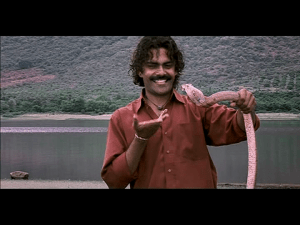
Our hero Velu (Raaghav) doesn’t seem too bothered by the ever-present snakes and even battles through the forest to get some classic witch-doctor style attention for one of the village girls when she is bitten.  There’s no real explanation as to why he takes such a different view from his father and the rest of the village, but then again logic has no place in a snake movie anyway!

NanjupuramNanjupuram

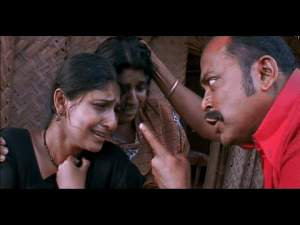
Velu is in love with Malar but since she is lower caste their romance is frowned upon by both Velu’s father (Nareyn) and Malar’s mother.  Malar’s mother sells goat meat and their skins for a living but also moonlights as the mistress of the local headman (Thambi Ramayya).  There is general tension between the upper and lower castes in the village and while the headman is happy to have a mistress from a lower caste, in public he abuses both her and her daughter.  Velu’s father has a more charitable approach but still doesn’t want his son to have anything to do with a lower caste girl.

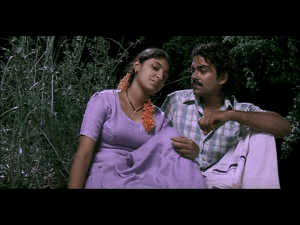
The first half of the film sets up the romance between Velu and Malar although the threat of the local snake population is never far away.  Raghaav is good as the young and somewhat reckless man in love, although his terrible hair makes him look more sleazy than romantic when he is chasing after Malar.  In fact I was prepared to hate Raghaav after the first dreadful song where he tries much too hard to be cool and raps his way through a number that has absolutely nothing to do with the story.  But as the film went on he actually won me over – terrible hair and all – so he seems to be a better actor than his choice of film would suggest.  Monica is also excellent as the somewhat naive Malar, and her role gives her a character with plenty to get her teeth into.

NanjupuramNanjupuram

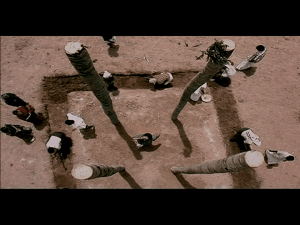
The second half of the film changes pace from romance to suspense when Velu injures a snake, and has to face the consequences of letting it escape.  Despite his apparent disbelief in such things, Velu is sent by his family to live in a hut set on top of some long poles surrounded by a deep trench, since the local pundits have decreed that if he can stay out of reach of the snake for forty days he will be safe.  The whole village is involved with some enterprising souls even selling snacks to the crowd as Velu ascends to his temporary haven.

NanjupuramNanjupuramNanjupuramNanjupuram

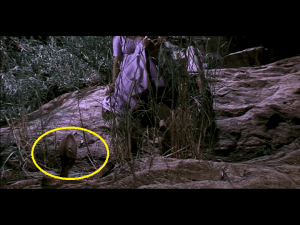
The hut is an interesting concept but seems doomed to failure since Velu keeps popping back to ground level to meet up with Malar and the ever-present snake stalking the couple seems to ensure that we’re not heading for a happy ending.  One of the more entertaining aspects of the film is to spot the lurking snake which is nearly always there somewhere!

Spying Snake

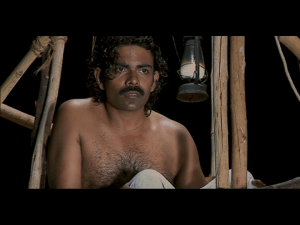
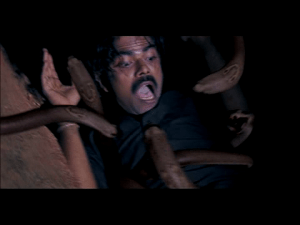
Velu starts to hallucinate snakes everywhere which to be honest probably wasn’t really necessary since we’ve already seen that there actually are snakes absolutely everywhere in the village.  However Raghaav is impressive and believable as a man slowly starting to mentally disintegrate although the reason for his breakdown isn’t at all clear.  I’m assuming that the impetus was the strain of his prohibited relationship with Malar and the threat of snaky revenge which only hit when he lost his protective talisman but it seemed to be completely opposite to all the character development in the first half of the film.

Real or hallucinations?Nanjupuram

vlcsnap-2012-08-14-00h30m59s123NanjupuramNot content with acting in the film Raghaav was also the music director and composed some of the music.  Apart from the first song which doesn’t fit the film at all, the rest suit the village flavour and are generally well placed in the narrative, although none are particularly memorable.  The film tries to mix social commentary with psychological thriller but ultimately fails to connect with either genre, despite the best efforts of director Charles and good performances from all the cast.  The physical threat of the snakes which started off so well loses impact when they become more illusionary and conversely all the tension that builds up with the hallucinations is lost when real snakes start attacking again. It’s never particularly thrilling despite the presence of an apparently unending supply of snakes and by the end I was hoping that the injured snake would finally catch up to Velu and exact some spectacular revenge.  Sadly that wasn’t the case, but I do think that a few good snake bites and Velu turning blue-veined and snakey would have improved the climax immensely.

NanjupuramNanjupuram

The caste issue probably would have worked better if I had been able to understand the dialogue, but it seemed to be the standard rich boy, poor girl and parental opposition.  There were a few new twists, particularly in the development of Velu and Malar’s relationship that did make the romance more realistic and in particular made Malar’s character appear more natural, but the story still seems clichéd and predictable.   Even with the addition of snakes!

NanjupuramNanjupuramNanjupuramNanjupuram

Overall a film worth watching if you like your snake movies with a dash of realism (but only a small dash) and prefer to see plenty of snakes au naturel rather than morphing into human avatars to seek their revenge.  It’s not terrible, and the performances are good, but a bit more attention to the story development would have helped.  I give this film 2 ½ stars but will add an extra star just for the sheer number of snakes and the fact that writer/director Charles managed to get a snake into almost every scene! 3 ½ stars.
Nanjupuram