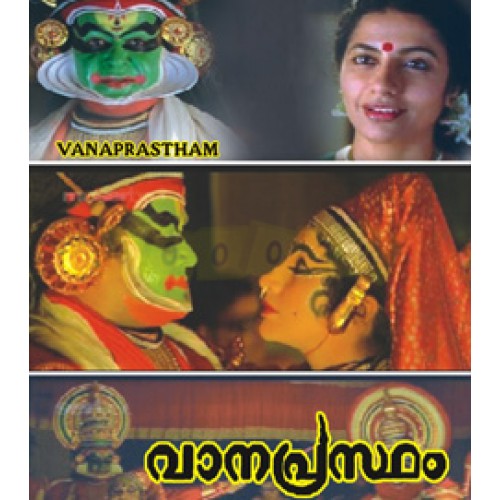
Vanaprastham (1999)

Vanaprastham

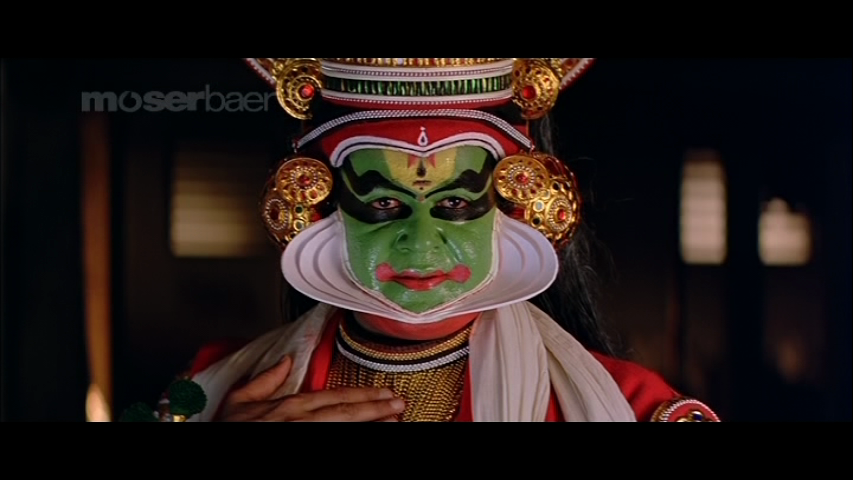
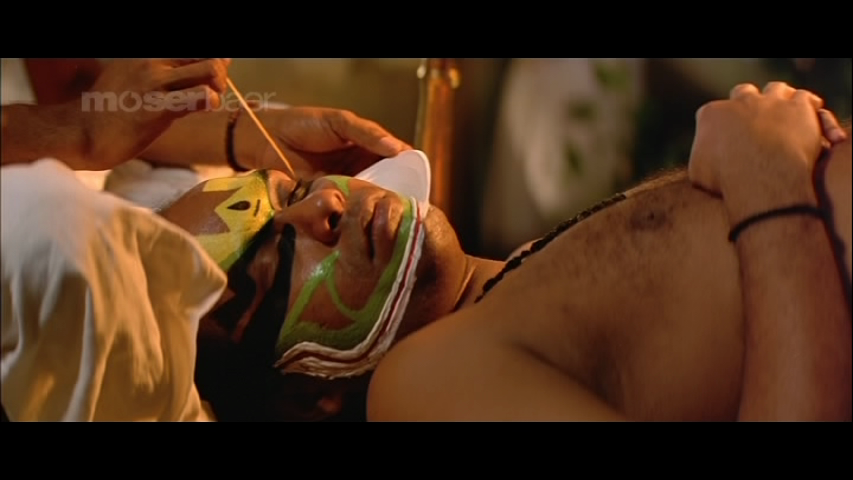
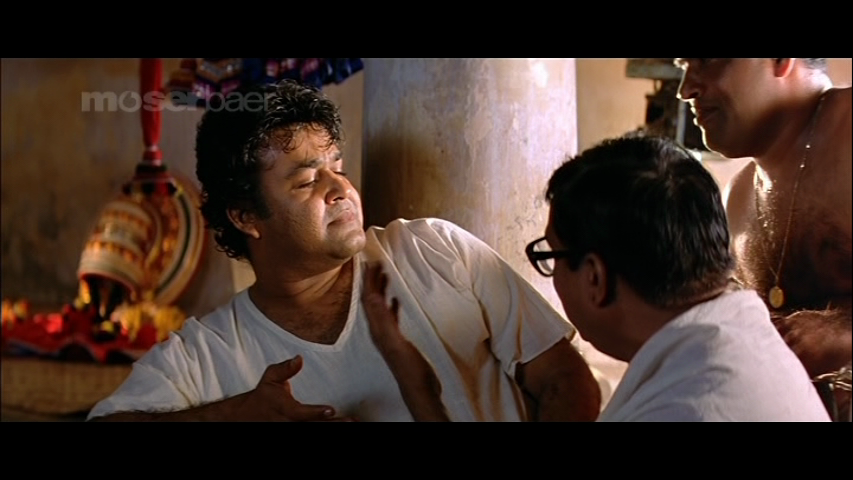
When I asked for recommendations for Mohanlal films some time ago, Vanaprastham was mentioned a number of times, and now I understand why so many people suggested it.  I think this is the best performance by Mohanlal I’ve seen, and it has whetted my appetite for more of his films.  Although Vanaprastham is a simple story about a Kathakali performer set in the middle of the last century, Mohanlal’s performance brings depth and intensity to the role and he is mesmerising.  Presumably due to the fifties era, there is plenty of repressed emotion and the reliance of the Kathakali performer on facial movement transfers directly as Kunhikuttan (Mohanlal) doesn’t say much but rather lets his expressions and in particular his eyes,  speak for him.  It’s a sad film, but it’s beautifully shot with gorgeous costumes and, as ever in Malayalam cinema, stunning cinematography.  Like the previous Shaji Karun directed film I watched (Kutty Srank), there is much about the story that is untold and left to the imagination, although the drama does proceed more linearly here.  Just in case anyone needs any more motivation to watch, Vanaprastham (aka The Last dance or Pilgrimage) screened in the Un Certain Regard section of the Cannes film festival when it was released in 1999, and won accolades at other international festivals as well as a number of National awards.
VanaprasthamVanaprasthamVanaprasthamVanaprastham

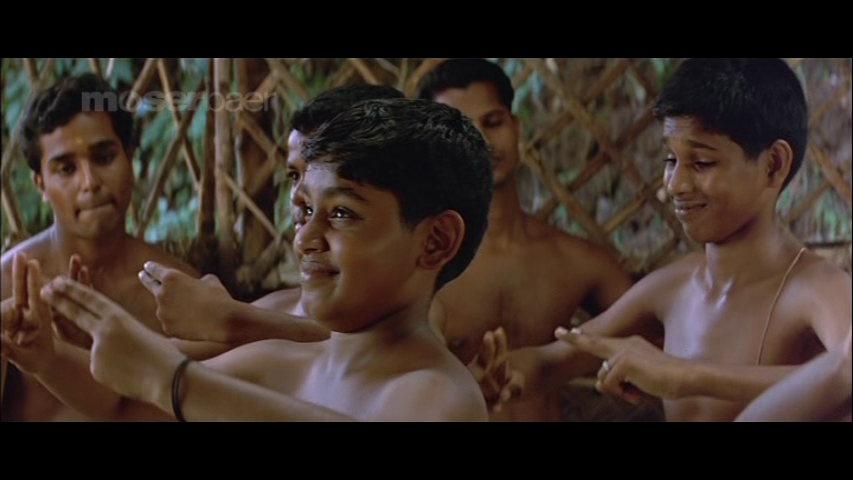
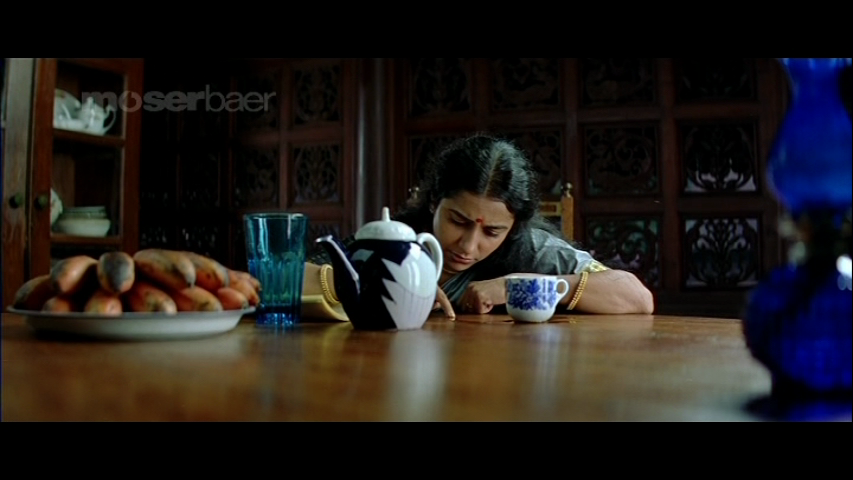
Kunhikuttan is introduced by a series of brief images interspersed between the opening credits which suggest that he is a lazy man who drinks, is looked after by his mother, disliked by his wife and adored by his daughter who is desperately trying to get his attention. And while that does sum him up on a purely superficial level, there is much more to Kunhikuttan.  A flashback shows his acceptance into dance classes as a child in the thirties, and reveals that he has never had any contact with his nobleman father.  This is a loss which he feels throughout his life and it appears to at least partly explain some of his reactions to subsequent events.  There is a lovely connection here between the scenes of the dance school with Kunhikuttan as a child and then again as an adult, where the same background of the temple elephants being dressed in their finery is unchanged despite the changes in Kunhikuttan. I also love the young Kunhikuttan’s expressions as he dances, particularly compared to the more rigid faces of the other boys.

VanaprasthamVanaprasthamVanaprasthamVanaprastham

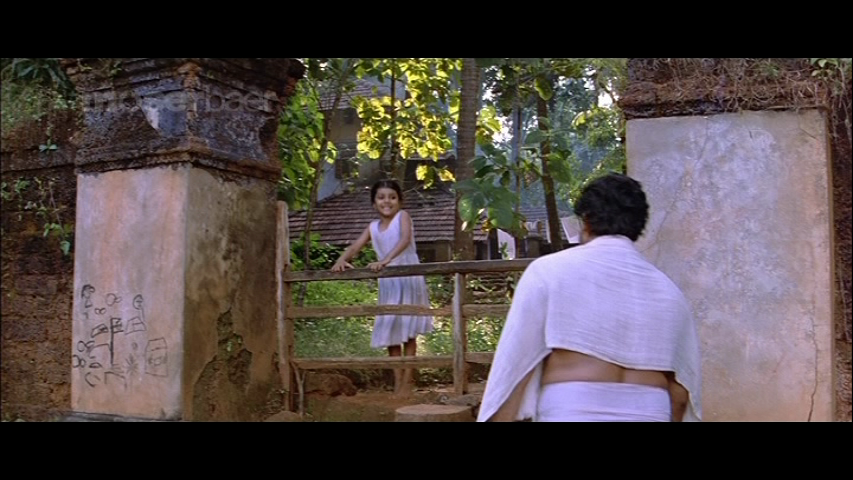
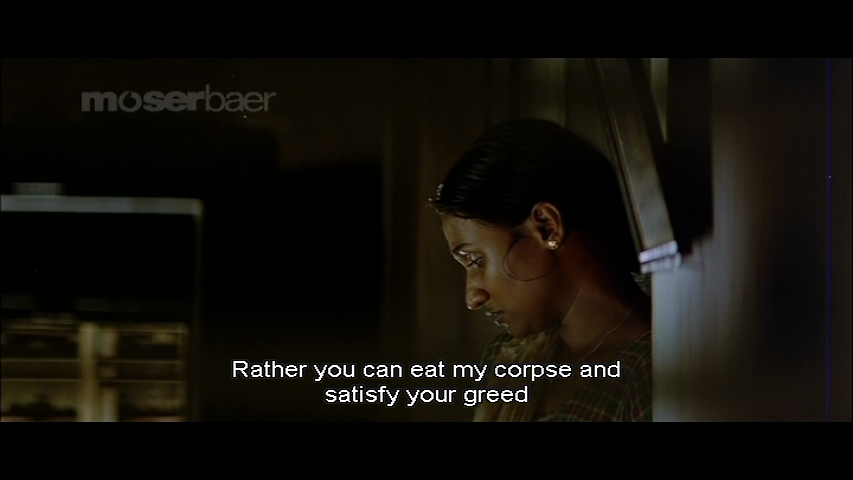
Kunhikuttan has an unhappy arranged marriage and his wife Savithri (Kukku Parameswaran) seems to despise him and his performance career.  Her antipathy towards her husband is one of the ’things that are never explained’, and there didn’t appear to be any obvious reason behind her animosity. Kunhikuttan’s daughter on the other hand adores him, and she is the one bright spot in his life outside of his stage performances.

VanaprasthamVanaprasthamVanaprasthamVanaprastham

At the start of the film, Kunhikuttan has just reached the point in his career where he is able to play male roles, and he takes on the part of Arjuna in a performance which is seen by the niece of the Diwan, Subhadra (Suhasini).  Her character is at first only glimpsed as a hand at the window of the women’s viewing area, and this seems to be a foretelling that she is a private and somewhat hidden persona. Although one with excellent taste in jewellery.

VanaprasthamVanaprastham

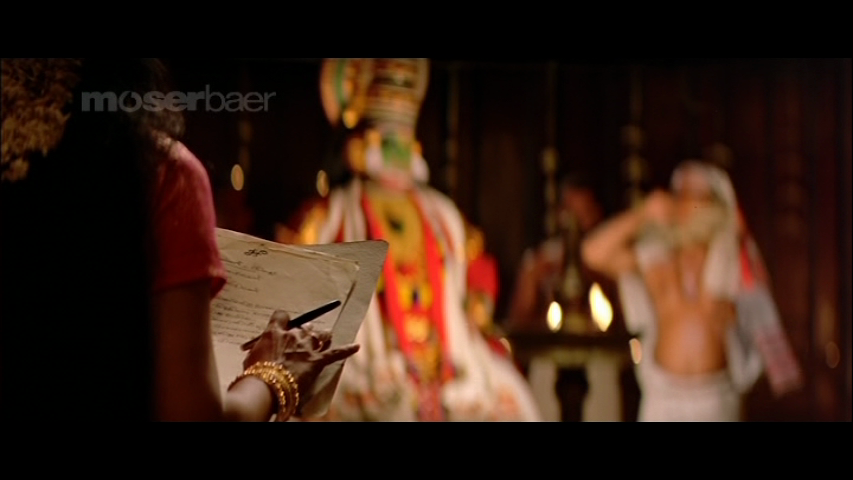
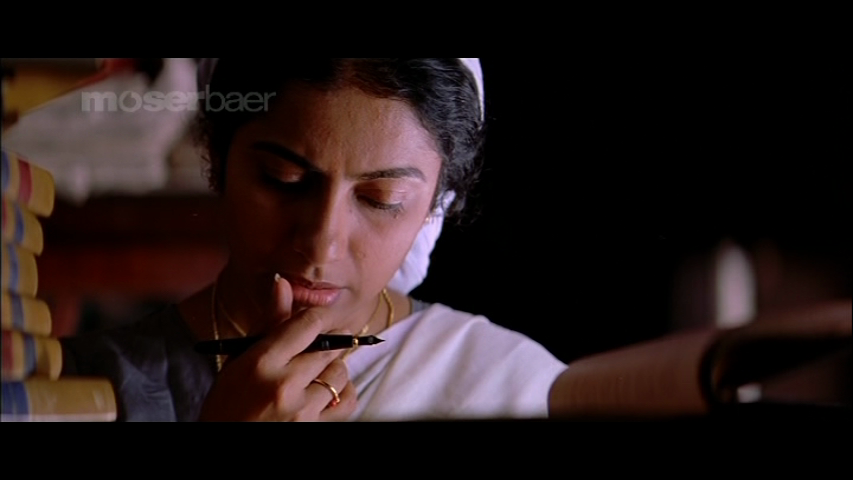
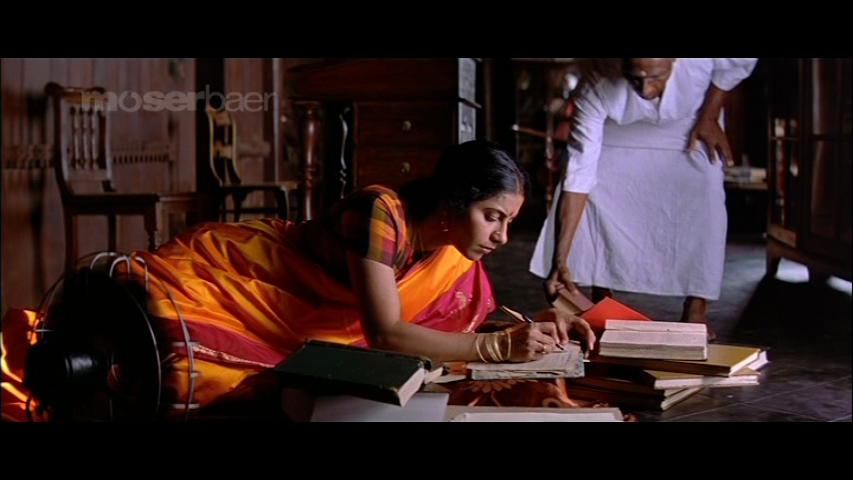
Subhadra is always alone and lives in a large house with only two elderly servants for company. She is mainly depicted as always writing, sometimes even during the performances, and she seems a rather pitiable character who is lost in her own dreams and fills her days with illusions.  She falls in love with Kunhikuttan but it is immediately apparent that she is obsessed with Arjuna the character rather than Kunhikuttan the man.  All her writing is put to good effect though as she writes a version of the Arjuna/ Subhadra story which she persuades Kunhikuttan to perform.
VanaprasthamVanaprasthamVanaprasthamVanaprastham

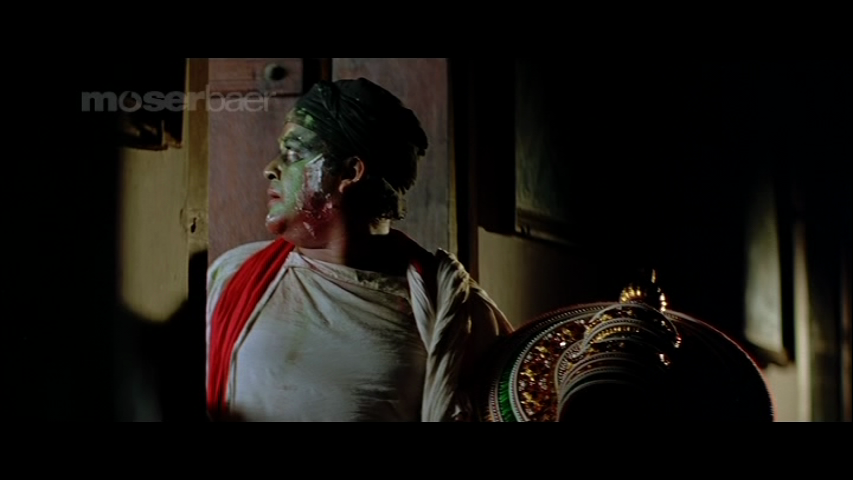
Subhadra’s obsession is clear in the scene after the two have made love.  Subhadra seems to revel in the smears of make-up on her face and looks ecstatic, while Kunhikuttan sneaks out of the room, guiltily carrying his costume and immediately goes to bathe.

VanaprasthamVanaprastham

Subhadra has no time for Kunhikuttan the man and when she has his child she allows him to meet his son briefly and then explains that she will have nothing more to do with him.  Kunhikuttan yearns to be with his son, particularly since he never knew his own father, but he is denied the opportunity to be a part of his son’s life. This is just one more pain for Kunhikuttan to deal with, along with his continual poverty, his unhappy home life and the looming illness of his friend.

VanaprasthamVanaprasthamVanaprasthamVanaprastham

Mohanlal expresses his emotions perfectly, showing restraint and sincerity throughout.  His easy camaraderie with his fellow performers, his obsession with his son and the deteriorating relationship with his wife are all brought clearly to life.  Suhasini is also excellent as Subhadra and is particularly good in her scenes with Mohanlal when she is obsessing about Arjuna.  At times the film does get a little confusing, and the occasionally obtuse nature of the subtitles in my DVD copy didn’t help.  Kunhikuttan’s friend who is one of the singers is called Namboothiri, but I think that Kunhikuttan also uses this term (which I believe means Lord) to refer to his father.  Kunhikuttan goes to Kasi to perform rituals which I thought were for his friend, but later seemed to be for his father.  The ageing effect is also not terribly obvious, and it is only because Kunhikuttan’s daughter grows up that I was able to work out a significant amount of time had passed.

VanaprasthamVanaprasthamVanaprasthamVanaprastham

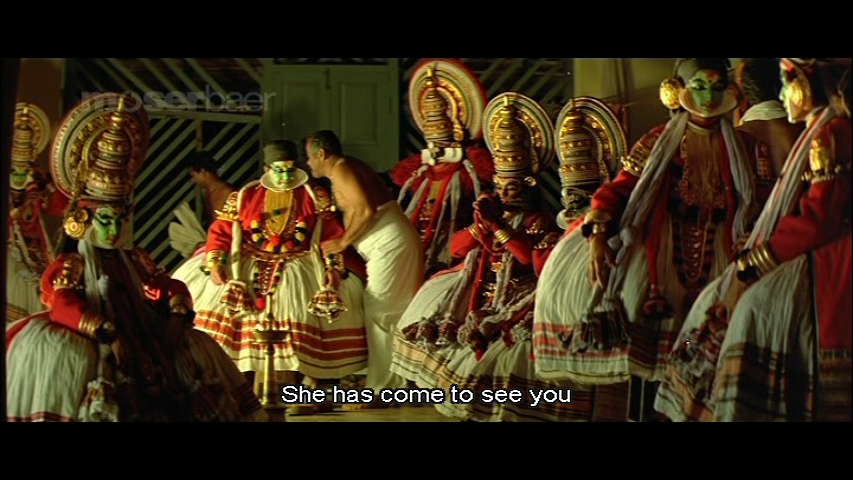
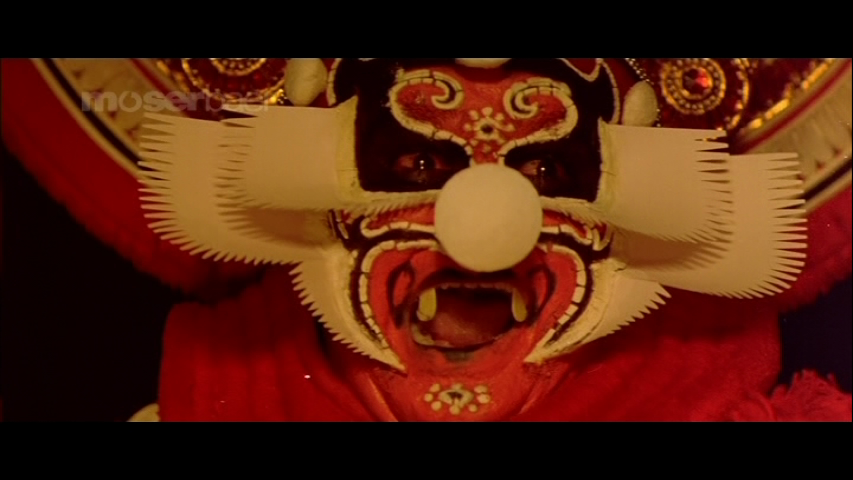
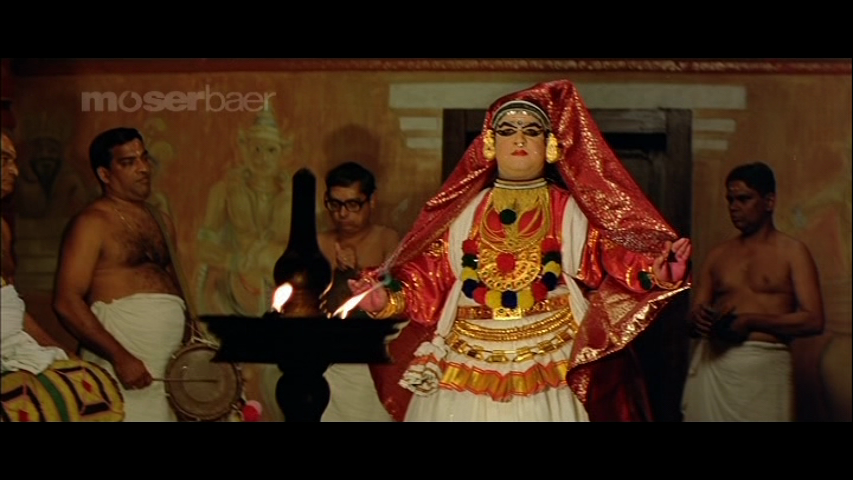
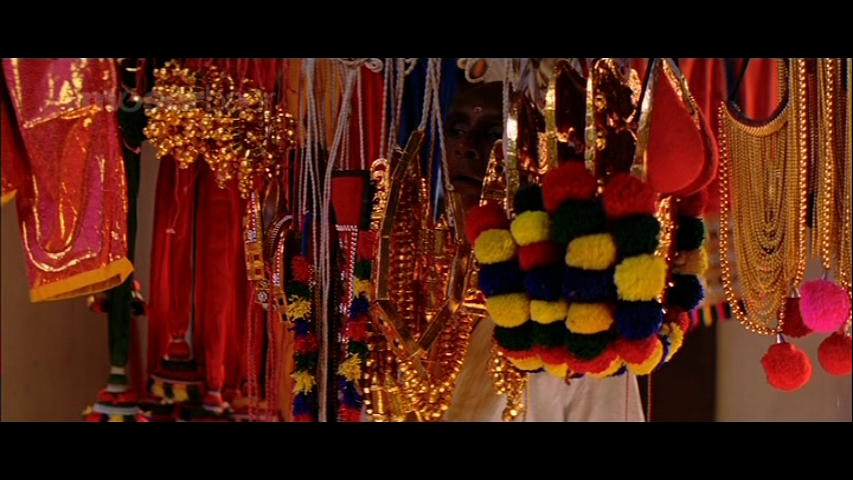
The cinematography by Santosh Sivan and Renato Berta is simply stunning.  The natural world is cleverly contrasted with the artificial world of performing and every image is full of detail.  The art-form of Kathakali is showcased with beautiful images of the performances as well as glimpses into backstage life.  It’s a visual feast and at times I needed to rewind to fully grasp the action as I was distracted from reading the subtitles by the quality of the imagery.
VanaprasthamVanaprasthamVanaprasthamVanaprastham

I was impressed by Mohanlal’s dancing, particularly since he isn’t a classically trained dancer and yet as far as I could tell, he held his own against the professional dancers in the cast.  I found it surprising that the dancers were all living in poverty despite the apparent recognition of their skills and I wonder if this is still the case to-day.  The costumes certainly all look expensive and they must go through truckloads of make up for each performance too!

Vanaprastham is full of symbolism, from the title referring to the stage of life where spiritual concerns take over from the day-to-day responsibilities, to the parallels between the story of Arjuna and Kunhikuttan’s life and I’m sure that there are many more details I missed. The performances are excellent, the background music by Zakir Hussain blends with the traditional songs and the story which seems so simple initially has plenty of complexity and depth.  It’s an absolute must watch and I thoroughly recommend it! A full 5 stars.

Baadshah (2013)

Baadshah

Time for another adventure without subtitles – this time the latest Jr NTR release Baadshah.  There was a surprising new innovation at the cinema too – the addition of a queuing system! No free-for-all crush to get in and grab a seat!  This meant less conversation outside, but more time for discussions inside as it took quite a while for the trickle of people to slowly fill up the cinema.  Needless to say there were still plenty of chants and cheers (and a lot of seat swapping) as the cinema was full for the first night show.

Not understanding Telugu turned out to be not too much of a problem this time since Baadshah closely resembles director Srinu Vaitla’s last venture, Dookudu – even including a similar convoluted scam as the comedy track.  Despite the air of déjà vu, there was still plenty to enjoy with well-choreographed action scenes, awesome dancing from Tarak and (judging from the audience response anyway) some entertaining dialogue.

Baadshah

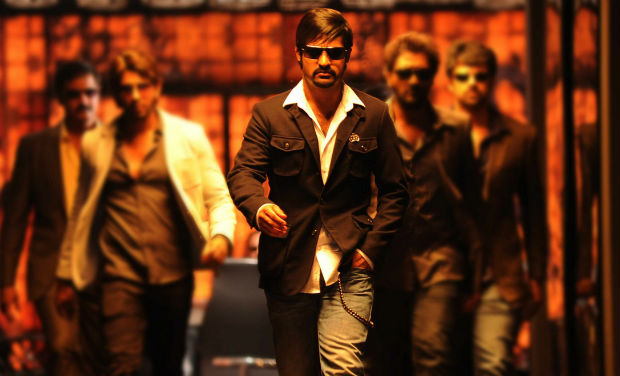
The film opens with a voice-over from Mahesh Babu, who is the first of a number of guest artists to appear in the film, although there is a large and impressive support cast too.   Tarak is Baadshah, the son of gangster Ranjan (Mukesh Rishi) who successfully runs a casino in Macau.  Ranjan works for international crime lord Sadhu Bhai (Kelly Dorji) and the first half sets up the inevitable struggle between young upstart Baadshah and the established boss.  Sadhu Bhai does have a rather swish Asian inspired lair, with a very shiny black table but otherwise Kelly Dorji’s villain is fairly routine.  I do wish he would cut his hair though – it’s too wispy to be effective as an evil crime lord look!  Sadhu Bhai has the assistance of Crazy Robert (Ashish Vidardhi) and Violent Victor (Pradeep Rawal) who both do their best to eliminate Baadshah and his father which keeps the body count relatively high in the first half.  There is also some painfully bad violin playing, which even Kajal attempts to my horror!

Baadshah

Baadshaah ends up in Milan in time for the first excellent dance number, and this gives him the opportunity to meet Janaki (Kajal Agarwal).  After the usual misunderstandings – she thinks he’s trying to commit suicide while he fails to mention any of his gangster affiliations – the two get together for a romantic song in the snow.  This would have been much better without the addition of some dreadful female backing dancers who looked out of place and uncomfortable wearing jeans under their saris and clomping around in Ugg boots while sliding around in the snow.  They did make Kajal look like a professional dancer in comparison though, so perhaps that was the whole point?

Baadshah

Janaki just happens to be the daughter of the Commissioner of Police Jai Krishna Simha (Nasser) and once back in Hyderabad is supposed to be getting married to another police officer Aadi (Navadeep).  I’m not sure if Navadeep was trying to portray angry and forceful for his character here, but he didn’t make it past mildly petulant and mainly just looked as if he had smelt something bad.  Siddharth on the other hand puts in a good performance in his brief guest appearance as Baadshah’s brother.  By the start of the second half, not only does Baadshah have to deal with the threat of Sadhu Bhai and his evil plans to blow up most of India, but he also has to get rid of Aadi and deal with the police if he wants to get the girl.

Baadshah

While the comedy in the first half comes from M. S. Narayana as a spoof film director, Brahmi appears in the second half and his character Padmanabha Simha takes over the comedy proceedings, and most of the action as well. Although the humour was mainly dialogue based there was plenty that made me laugh even as a non-Telugu speaker.  The audience loved it judging by the response, but the biggest cheer of the night went to a dance by Janaki’s female relatives at the Sangeet ceremony.

Baadshah

The film depends heavily on Tarak’s screen presence and thankfully he delivers on every scene, whether it’s action, comedy or in the dance sequences, although he is somewhat side-lined by Brahmi in the second half.  It was great to see some better choreography, without so much emphasis on ‘trick’ steps, although the item numbers weren’t up to the same level.

Kajal is good as Janaki, but she looks almost subdued in a number of sensible outfits and I thought her make-up made her look tired.  However she did seem to get some good dialogue, and at least she had a meatier role than usual for a ‘love interest’ character.  The support actors in general were reprising roles they have done many times in the past although most didn’t have a lot to do.  I was delighted to see Ajay back on screen as a gang member, even if only for a short time!

Baadshah

Baadshah follows a predictable path, but it’s entertaining with plenty of variety and it’s not quite as gore-soaked as Dhammu or Oosaravelli.  I loved the action sequences and Tarak’s dancing was an absolute stand-out in the first half, but for me the second half dragged due to the more dialogue driven comedy scenes.  The film could also have done without two item numbers, neither of which were particularly impressive. But overall this was a fun film to watch and I’m looking forward to the DVD where I can work out all those references to old NTR films.

Varudu (2010)

Varudu

It seems to be an appropriate time to celebrate all things Allu Arjun – recent wedding anniversary, 10 years in the movie business and his upcoming birthday – so I thought I’d take a look back at Varudu. Not one of his more successful films in terms of the box office, but still one of my favourites since it not only stars Bunny, but Arya (another favourite) turns up in one of the most ridiculously over dramatic roles that I’ve seen outside of eighties Bollywood. And yet, this is a good thing! The film is overly romantic and slow to get going with a ridiculous story and dreadfully pretentious dialogue, but despite all these obvious flaws there is still a lot to enjoy in Varudu.

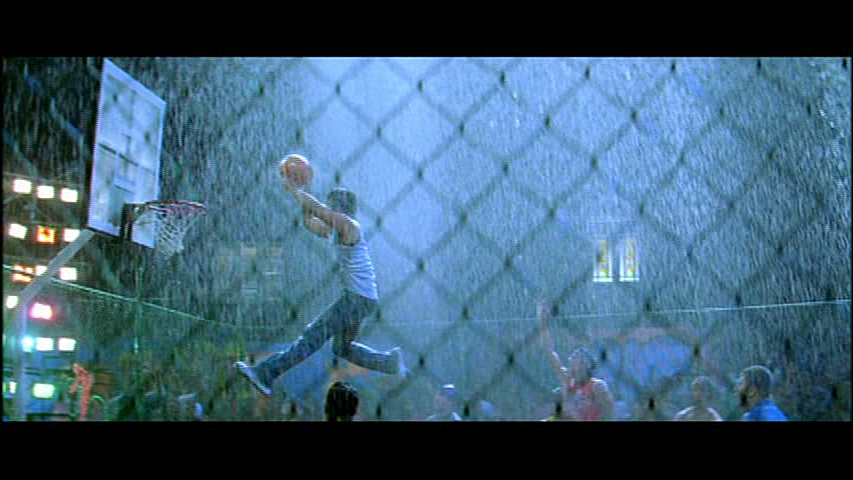
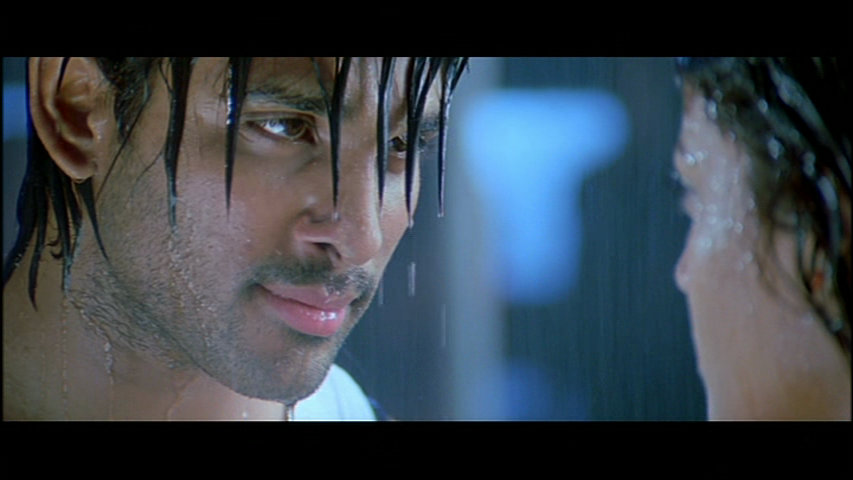
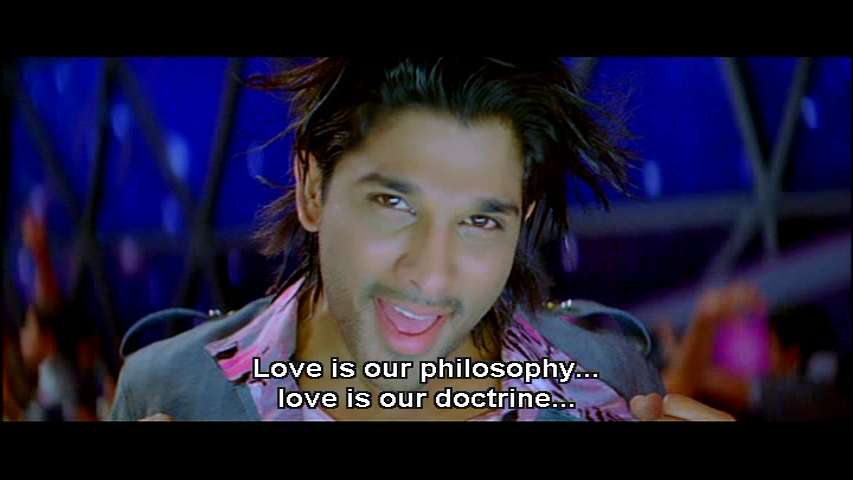
The opening scenes have nothing much to do with the rest of the film with Nisha (Sneha Ullal) attempting a dreadful Dhoom2-style Aishwarya Rai impression while Bunny demonstrates his skills on a motorbike and then on the basketball court. At least the rain makes Bunny’s hair look great, but otherwise it’s a clichéd hero introduction that leads into a rather disappointing song.  This is after all a Bunny film, so my expectations for excellent choreography and great dance moves are high but the first song doesn’t make it in terms of either the music or the dancing.  Thankfully though, both pick up considerably later.

Varudu - NishaVarudu

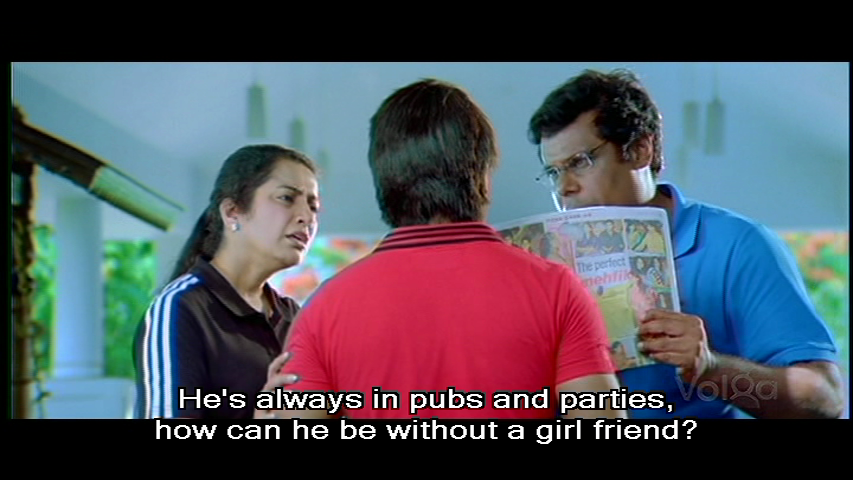
VaruduVaruduThe first half of the film describes how Sandeep (Allu Arjun) wants a traditional arranged marriage even though the initial scenes show him happily helping out an elopement by his friends and complimenting his parents on their successful love marriage.  The dialogue wants us to believe that he has just never found the right woman, although women are flinging themselves at him all the time, but these first scenes make him appear as if he’s just having too good a time to settle down and commit to one person.  However moving overseas to start work is apparently the best time to decide to get married, so Sandy happily acquiesces to his family’s suggestion that he tie the knot before he goes.

VaruduVarudu

Not content with foisting the whole decision making process onto his parents, he then insists that he wants a full traditional 5 day wedding just like his grandparents, and has no desire to even see the girl is he is to marry. In fact he reminds me more of a sixteen year old girl with his declarations about love and excitement about a five day wedding rather than a mature and sensible man about to head off to start work in the US.  However this is the least ridiculous part of the story (really!) and the build up to the wedding is actually rather sweet.  Sandeep has a good relationship with his mother (Suhasini) and father (Ashish Vidyarthi) and their scenes together, and those with the rest of the family feel comfortable and generally realistic.  There is a brief appearance by Brahmi as Dilip Raja, a marriage broker, but otherwise Varudu is fairly comedy uncle free with only a brief appearance by Ali later during the wedding song.

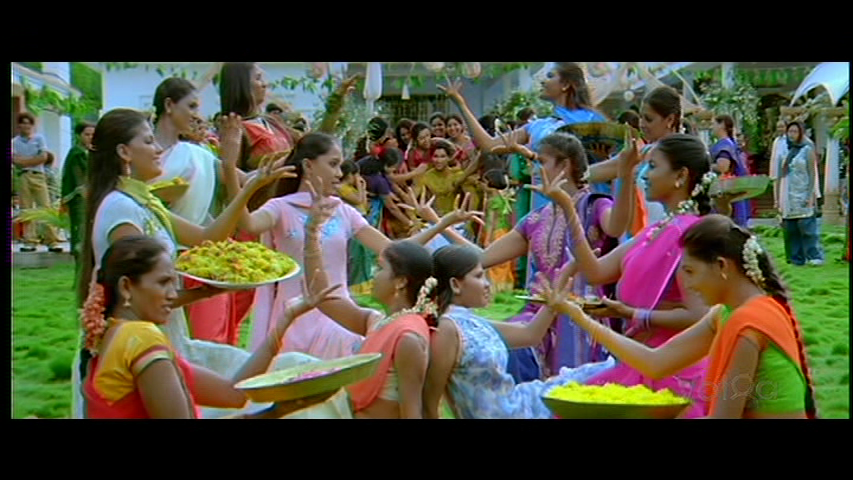
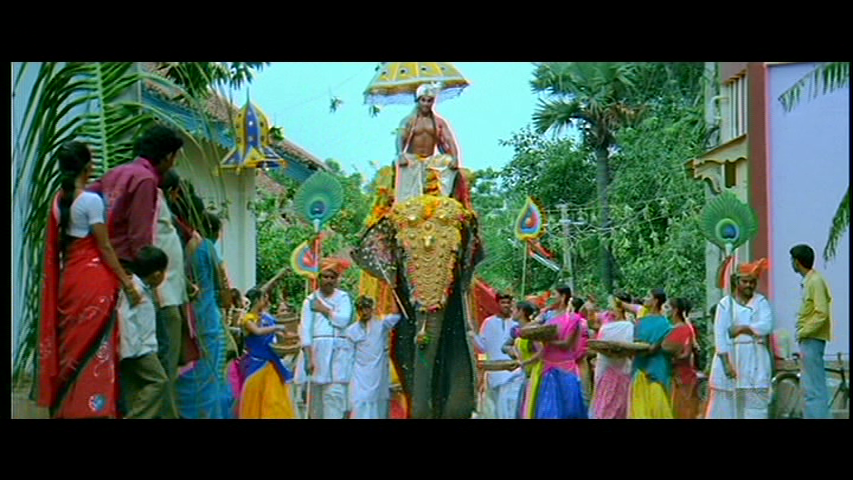
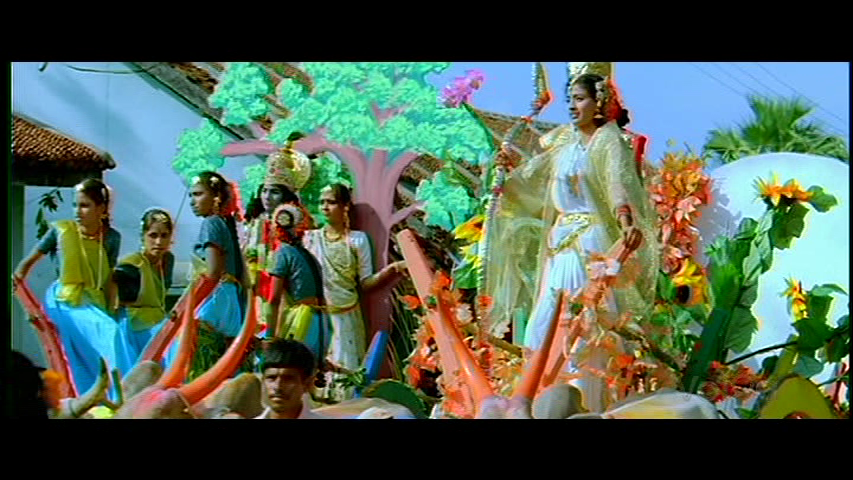
The various wedding ceremonies, including the wonderfully colourful parade of the groom to the bride’s family, are pictured during a song.  It’s rather long, but definitely well worth a watch for an insight into the wedding preparations and rituals. Besides which there is possibly the best form of wedding transport and some great costumes in the crowd as everything gears up for the big day.

VaruduVaruduVaruduVarudu


The costumes and jewellery for the wedding scene are superb even though the scenery relies heavily on CGI.  We get to see the bride at the same time as Sandeep and although Deepthi (Bhanu Sri Mehra) doesn’t get very much screen-time (and even less dialogue), she does get some amazingly beautiful costumes. Although she is perhaps still just a little upstaged by Bunny in this song.

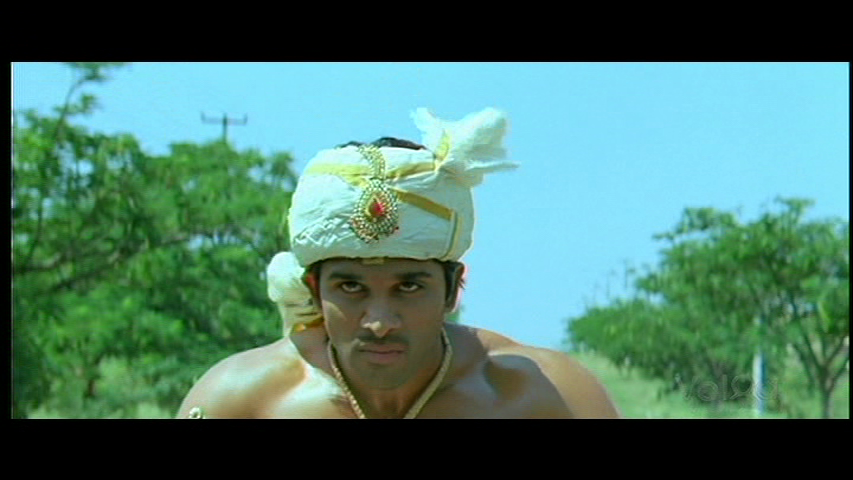
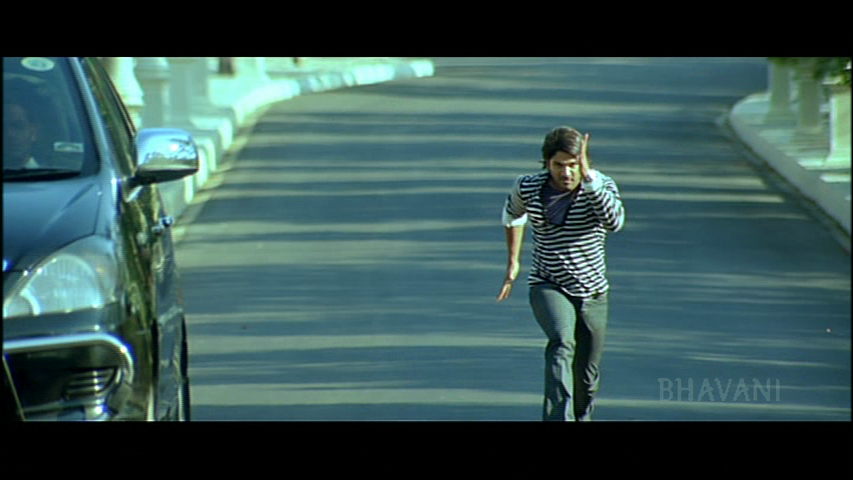
After all the romance and slow development of the first hour culminating in the the dream wedding, there is a sudden change of pace in the second half.   There is a disaster at the ceremony just before Sandeep ties the sacred thread and in the ensuing confusion the bride goes missing.  Within the space of 3 minutes there is classic hero-style running, a bike chase (kudos to the wardrobe department as Bunny never loses his wedding turban) and an exploding petrol truck.  It only gets more insane from here.

VaruduVarudu

Sandeep goes in search of Deepthi aided by the police force, but even with the top brass Comissioner Ahmed Khan (Nasser), Inspector Umesh Gupta (Brahmaji) and the Home Minister (Sayaji Shinde) involved they don’t appear to be making any headway.  Sandeep has more luck chasing random black cars and dodging truck drivers who seem to be on a mission to drive him off the hunt.  Finally his persistence pays off and there is a brief flashback to explain who has Deepthi and why.  Not that it makes any sense, particularly when this is the villain’s introduction.

VaruduVarudu


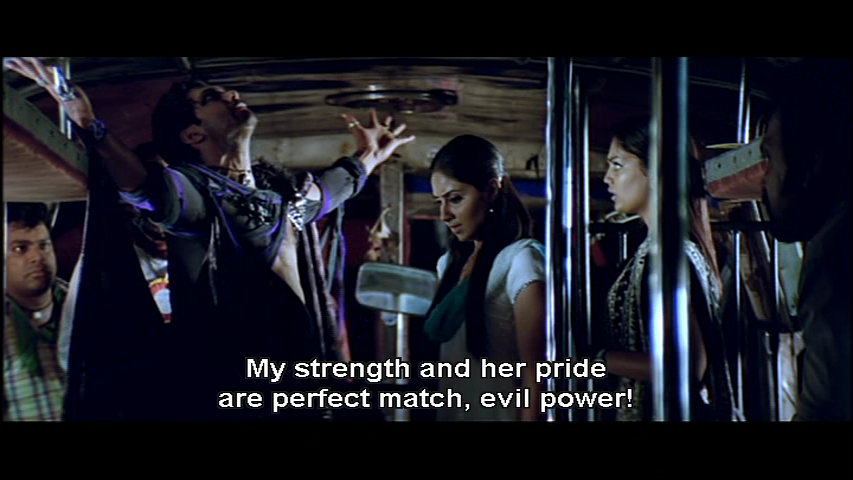
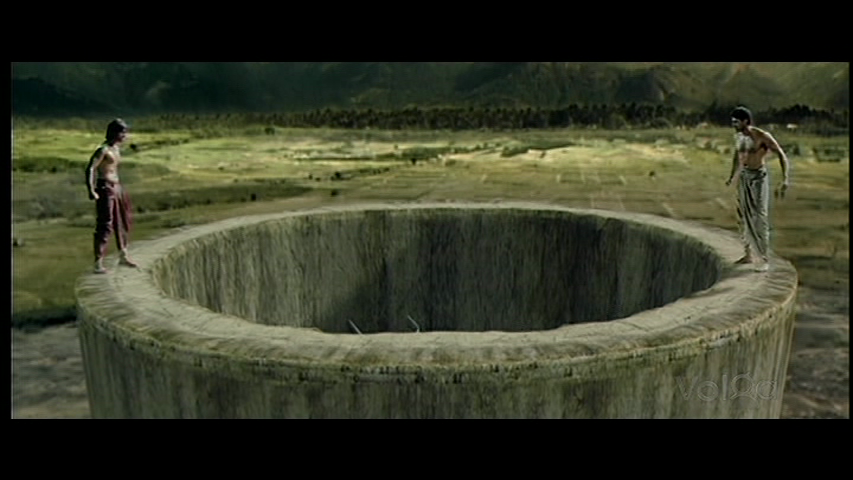
Arya is Diwaker, one half of the ‘Kings from Hell’ brothers, and completely immersed in his life of drama as he lives out his psychotic fantasies cheerily calling out his catchphrase ‘Evil Power’ at random moments to emphasize his craziness.  From his introduction the film careers even more off the rails as Arya hams it up for all he is worth as Diwaker and Sandeep declares his undying love for a girl he has barely met in some incredibly corny dialogue.  There are a few good moments though.  Sandeep proclaims (he doesn’t do anything as mundane as just speak by this stage) that Deepthi is his wife no matter what has happened to her during her ordeal.  It’s a more modern touch that makes Sandeep’s character more appealing, although the shocked reactions of the family are rather less attractive.  There are also some great chase sequences including some wonderful filmi medical magic and a ‘prisoner exchange’ on a bridge which allows director Gunasekhar to throw in lots of split screen moments.  The final showdown is completely over the top and utterly nonsensical, but since it involves a shirtless Bunny and Arya fighting on top of giant cooling towers I’m not complaining!

VaruduVaruduVaruduVarudu


New heroine Bhanu Sri Mehra doesn’t really get much of a chance to make an impact.  Her role is largely non-speaking and even when she does have something to say it tends to be a repetition of something Sandeep has earlier declaimed.  I do like that she made an attempt to fight back when abducted, but quite frankly I’m disappointed that in all her time locked in a room she hadn’t made any attempt to barricade the door or fashion a better weapon.  But at least she doesn’t just sit and whine and the make-up team did a good job making her look haggard after her experiences. The rest of the cast are all capable and do well in their roles, but ultimately the film is all about Bunny, and to a lesser extent Arya, so no-one else really gets much of a look in.

The music by Mani Sharma does improve after the first song and overall I like the soundtrack.  This song is my favourite, partly due to good choreography but also, who can resist random bouncing?  Plus I admire Bunny’s dedication in dancing even when he is injured, seen here with his hand in a rather excellently bedazzled cast.

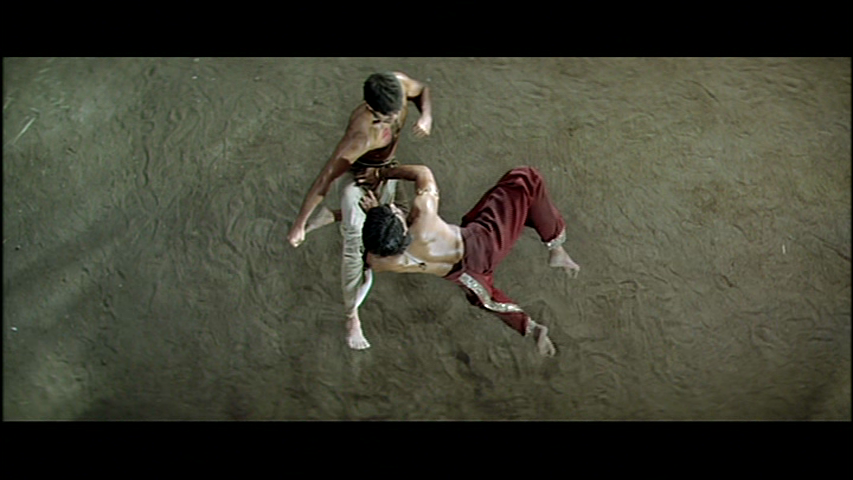
Varadu is self-indulgent, unashamedly melodramatic and has massive plot holes big enough to swallow a small planetoid.  But despite that it’s heaps of fun and let’s be honest, I’m shallow enough to admit that Bunny and Arya are the major reasons why I enjoy this film.  I’d love to watch some out-takes as I’m quite sure they struggled to keep their faces straight for most of their scenes together.  I give Varudu 2 stars for the story but a full 5 stars for ensuring both Bunny and Arya spent as much time as possible without their shirts!