Bahu Begum (1967)

Bahu Begum-title

M Sadiq’s Bahu Begum opens with a happy song, featuring prettily dressed girls playing on swings in a rain drenched courtyard. But it stars Meena Kumari so you know things won’t stay on the bright side for long.

Melodramas are not always my cup of tea, but I like Ashok Kumar a lot and the lovely soundtrack has enduring appeal. And Bahu Begum places a heroine who lives a secluded and blameless life in a moral dilemma, and then pushes her out the door to see what might be. It’s not an uplifting girl power story at all, but there is a charm in the tone and the respect between key characters.

Yusuf (Pradeep Kumar) visits his friend Achchan (Johnny Walker) but his ulterior motive is to see the lovely Zeenat (Meena Kumari). Her family is not as wealthy as they once were and her father Nawab Mirza Sultan (D.K.Sapru) has rented half the house to Achchan. Achchan and Zeenat’s friend Bilqis (Zeb Rehman) help young love as much as they can. Bilqis is less theatrical than Achchan, but they both get results. Yusuf and Zeenat are flowery and poetic, and have more of an idealised love rather than a passionate attraction.

One fateful day Nawab Sikander Mirza (Ashok Kumar) accidentally sees Zeenat’s face and cannot help but look his fill. Sikander Mirza sends his man to present a proposal and at the same time Achchan asks Yusuf’s uncle to send a proposal. The uncle says yes but has no intention of surrendering his control over the estate or of marrying Yusuf off without a big dowry. He sends Yusuf away on a bogus business trip, timing his return for after Zeenat’s wedding. Zeenat only finds out about her wedding when her trousseau arrives, and no one thinks to mention the groom. All overheard conversations point to Yusuf so she assumes it has been fixed, and he himself is sure he is the one.

Bilqis breaks the news to Zeenat on her wedding day. Zeenat gets Bilqis to cover for her and slips away to where Yusuf should be waiting for her. The qawali sung in the dargah seems to be a direct challenge to her to face the tribulations but she cannot comprehend that her true love is not there. Zeenat passes out, regaining consciousness well after the wedding formalities have taken place. An empty palanquin was sent to the Nawab, and there is no bridge left unburned. Some time later Zeenat is found unconscious (again), this time by Naziranbai (Lalita Pawar) and one of her girls (Helen). They take her to the brothel (or whore house as my subtitles have it) as they would not abandon a stranger in need.

Zeenat hears Helen singing about straying from her intended path (the lyrics by Sahir Ludhianvi seem to be very well linked in with the drama) and is drawn to the sadness in the song. It is not until a male guest sees her and waves a fan of banknotes that the penny drops about her current abode. Naziranbai throws the vulgar fellow out and the ladies bond over their miserable histories and a good cry. Zeenat asks for shelter in the brothel and Naziranbai promises to protect her so at worst I guess she would be a virgin prostitute (you know, the ones who only ever dance).

Sikander Mirza asks Naziranbai to send him a plausible fake wife so he can get his little sister Suraiya (Naaz) engaged. Of course, Zeenat is the only girl who can pass for decent. She and her ‘husband’ finally talk about what happened and it is a genuine conversation. I liked that when he asked her why she went to the brothel, meaning why did she throw her honour away, she was firm but polite saying she didn’t take herself there but the brothel that offered her refuge when no one else would. Suraiya guilt trips her fake sister-in-law into staying longer but once she is married, there is no reason for Zeenat to stay. Except that the Nawab loves her, and asks her to remain in his house for their shared honour if not for mutual affection. So of course Yusuf turns up because it is very important that he tell her all about his feelings. What will she do?

Meena Kumari is the tragedy queen, and Zeenat is like the Typhoid Mary of Tears. The longer people are around her, the more they cry. Everyone, at some stage, turns into a soggy mess. Well, except Helen.

Zeenat’s father loses the plot after one of her teary fits, Suraiya goes from manic pixie to weeping wreck. Even pragmatic businesswoman Naziranbai has a sob when proximity to Zeenat finally wears her down. I admired Meena’s ability to cry prettily without getting blotchy or running at the nose, and her makeup artist must have been on call around the clock. She does have some chemistry with Ashok Kumar but I think he could portray rapport with a cabbage so I am not sure who deserves the credit.

Bahu Begum-Ashok Kumar

Ashok Kumar plays Sikander Mirza with regal poise and excellent eyeliner. While the character is obsessed with honour, it is mostly in relation to ensuring his little sister has the opportunity for a good marriage and a happy life. He is not so blinded by his own prestige that he fails to consider Zeenat’s position and desires. There is a bit going on under the surface and Kumar shows the inner turmoil through beautifully judged facial expressions and the pauses and beats in his dialogue delivery.

I liked that the film showed a small space between being married and not, between doing what was right and maybe doing what you wanted. Even though Zeenat was unlikely to deviate from the norms, she could have. And to see her and Nawab Sikander Mirza thoughtfully considering that she had options was quite lovely, especially in the midst of so much heightened emotion and melodrama.

Pradeep Kumar has the charisma of a limp lettuce leaf but since Yusuf, like Zeenat, is more likely to recite a couplet than actually do anything I suppose that is a good fit. Once he learns of Zeenat’s betrayal he goes a bit Devdas, wallowing in self-pity and dramatic eye shadow.  Zeb Rehman is delightful as Bilqis, Zeenat’s mildly rebellious friend. Naaz is afflicted with a character that is either giggling or sobbing so she must have been exhausted at the end of every days shooting. And any film that gives Helen some lovely songs and pretty costumes is doing something right. Johnny Walker has a significant role in the drama but still manages to drag in the comedy sideplot complete with cock jokes and pratfalls.

The opulent sets and costumes give Bahu Begum a timeless quality as does the beautiful soundtrack by Roshan. I have no idea when the story is supposed to have taken place. I think Johnny Walker did slip into some Hinglish in one of his rants but other than that the dialogue is in Hindi and Urdu. I loved the house furnishings, the soft light streaming through draperies and screens and the measured way of life.

I have my issues with the way women are segregated and dismissed, but since this is a vintage film and possibly set in ye olden days I could step back from that a little. But if someone had just asked Zeenat if she wanted to get married and to who, the movie could have been over in one tear sodden hour and had room for a couple more songs. 3 stars!

O Kadhal Kanmani

O Kadhal Kanmani

Mani Ratnam’s latest film is a modern take on romance that works primarily due to the charisma and energy of the two main leads. Dulquer Salmaan and Nithya Menen breathe life into their respective roles as an ambitious game developer and an aspiring architect in Mumbai, and are helped along with excellent support from Prakash Raj and Leela Sampson. The romance is light and breezy for much of the first half, but the film falters a little in the second when events seem a little too contrived. However the relationship is sweet and beautifully developed, the characters are engaging and the ‘feel good’ factor is high making OK Kanmani simply a very watchable romance that lets you leave the theatre with a smile.

The film is set in Mumbai and Aadi (Dulquer Salmaan) immediately wins support for developing a new game set in Mumbai and made specifically with the denizens of that city in mind. I do like a good idea for the opening titles and OK Kanmani has an excellent start with the credits shown over an animation based on Aadi’s game.  Aadi’s initial enthusiasm is a bit of a worry, but he soon settles down to show his zest for life balanced with genuine care and compassion when he moves in as a lodger with Ganapathy (Prakash Raj) and his wife Bhavani (Leela Samson). Initially Ganapathy allows Aadi to move in under sufferance and presents him with a confronting list of rules and conditions. However Ganapathy’s gruff exterior hides a softer heart and it’s not long before Aadi comes to respect Ganapathy and appreciate the love and tenderness he shows for his ailing wife. The relationship between Ganapathy and Bhavani is the central core of the film and becomes the yardstick against which Aadi and Tara (Nithya Menen), and ultimately the audience, measure the strength of their own relationship.

Tara is working as an architect in Mumbai but has plans to attend university in Paris to further her training. Refreshingly she has no desire to get married, although she bases this on the failure of her parent’s marriage rather than anything more radical. However she has dreams and desires that are personal goals to achieve and she doesn’t base her worth on her marriage prospects. Aadi too has no desire to get married but does want a relationship with Tara, at least until she moves to Paris and he realises his dream of moving to the USA. Again, in contrast to most SI love stories, there is no stalking required here. Tara likes what she sees of Aadi and is happy to have a relationship with him until she leaves – no strings attached, just two people enjoying each other’s company.

Mani Ratnam is careful to show that the relationship not a one-sided affair, and that Aadi and Tara have an equal attraction to each another. Both characters have reasons to act as they do, and the equal development of both the hero and the heroine is a welcome departure from many recent films with their expendable and interchangeable heroines. In addition, both Tara and Aadi have a fairly casual attitude to their romance and it’s fantastic to have a female character that isn’t afraid of declaring her desires just as loudly as her male counterpart, and act on them too. Aside from giving both characters equal voices in the romance, Mani Ratnam also perfectly captures the delight and excitement of the early stages of their affair; helped along by the excellent on-screen chemistry shared by the two actors.

Aadi and Tara are independent and both are living away from their families, which gives them the freedom and opportunity to live as they please. They decide to move in together, and given the shortage of housing in Mumbai and the fact that Tara lives in a women’s hostel that means that they have to beard the lion in his den and face Ganapathy. However Ganapathy’s initial objections are overcome by the delight he sees on Bhanvani’s face when Tara sings with her, and as easily as that he agrees to the arrangement.  Naturally Aadi’s brother and Tara’s mother are appalled when they learn of the relationship and find out that the couple are living together. The couple also have to deal with the looming separation as Aadi gets his chance to move to the States and Tara’s date to start University is finalised. Weaving through their struggles is the example set by Bhavani and Ganapathy – proof that perhaps love can be enough.

Both Nithya Menen and Dulquer Salmaan are excellent and fit easily into their roles. Dulquer is a good fit for an enthusiastic but respectful young professional and there is no hint of the obsessive man-child more often seen in Indian romances. Nithya is perfect as the fiercely independent and strong-willed architect and provides a good partner for her co-star without straying into overly glamorous heroine territory. However Prakash Raj is the absolute star performer here and he easily steals the show every time he is on-screen. His facial expressions convey more than the dialogue and he has an easy rapport with Nithya and Dulquer while maintaining a perfect relationship with his onscreen wife. Leela Sampson is also superb and completely nails the quiet confusion required from her character while still maintaining her dignity. The scenes between Ganapathy and Bhavani are some of the most moving I’ve seen in recent times and are a good counterpart to the happiness and excitement of Tara and Aadi’s relationship. This second romance is what lifts the film above most love stories and compensates immensely for the somewhat disappointing end to the film. At least for me.

Spoiler alert – stop now if you don’t want to know how the romance ends and skip down to after the next images.


What is disappointing is that the film suggests that Aadi and Tara can only be faithful to each other and maintain their long distance relationship if they are married. I find the assumption that they would drift apart without that commitment a slap in the face for all the wonderful development of their romance that has gone before. I cannot see how marriage is the answer to their problem when they could have done exactly the same thing without getting married and probably had the same outcome – especially when the rest of the film does so well at banishing stereotypes and conventional attitudes. It’s a small point, but one that I found annoying given that it seemed so unnecessary – I have more faith and belief in the characters than it appears their creator does, although I did wonder if this was perhaps just a way to get past the censors given the live-in relationship portrayed – food for thought!

End of spoiler!

Aside from my minor quibble about the end of the story, OK Kanmani is a beautiful romance that perfectly develops a balanced relationship and deals with many of the trials and tribulations of modern life for a young couple. The characters are believable, the situations generally realistic and the performances exemplary from the entire cast. Add in the upbeat and catchy soundtrack from A.R. Rahman and O Kadhal Kanmani is definitely a film I recommend and one I will watch again and again.  Just wonderful!


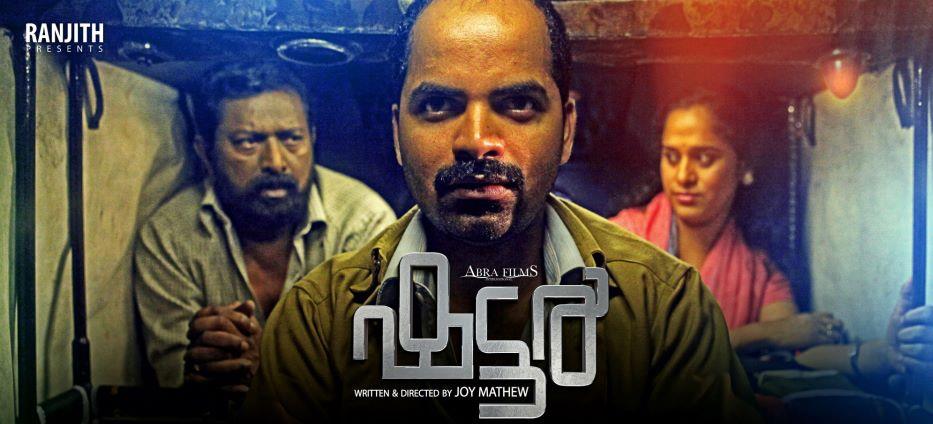
Shutter (2012)

Shutter poster

Shutter is an intriguing début film from noted theatre actor and playwright Joy Mathew. The story sounds simple; a married man ends up locked in his own empty shop with a prostitute for a night and a day, but Mathew has developed rich and detailed characters with a complex story that says much about society and the double standards applied to men and women. There is suspense and plenty of drama as Rasheed (Lal) has to face his own hypocrisy and struggles to deal with the possible consequences of his actions. Although the film starts slowly and does take some time to fully introduce the characters and eventual situation, it is well worth the extended set up as the film features excellent performances from Lal, Vinay Forrt, Sreenivasan and Sajitha Madathil along with the clever storyline. Shutter is an excellent slice of social commentary and one I highly recommend as a memorable and thought provoking film.

The story follows Rasheed as he visits his family in Kozhikode during a break from his work in the Gulf. In the short time he is home, he manages to upset his eldest daughter Nyla (Riya Saira) by insisting she stops her studies and gets married, and alienates his wife (Nisha Joseph) by snubbing her relatives. Not bad for just a few days! However his views are not extreme and seem fairly typical for a man of his generation. While his belief that studying is wasted on girls is one that I personally find outrageous, it’s one that seems common in India even to-day. So Rasheed’s bluster to his friends that Nyla will do as he says and get married, even though she is underage, sounds plausible and typical of an Indian father, while the half-hearted objections of his friends also ring true.

Rasheed also owns some shops which are just in front of his family home. He rents one out to an auto mechanic and is renovating another, while in the evenings he invites his friends into the empty shop for a night of drinking. While on a trip to a bottle shop with his friend Suran (Vinay Forrt), Rasheed spots a prostitute Thankam (Sajitha Madathil) and decides to bring her back to the shop when they cannot find a hotel room. Suran locks them in while he goes to find food but fails to return following series of unfortunate events which leave him with his own predicament to solve. The story then follows Rasheed’s moral dilemma as he quickly realises what he has done and what will happen if he is discovered in the shop with a prostitute. To make matters worse he can see his house from the small window, which serves as a constant reminder of his wife, his family and everything he might lose as a result of his rash decision.

While Rasheed goes through his moral crisis, Thankam is a brilliant contrast to his misery and despair. She has a relaxed, take life it as it comes attitude, and her constantly ringing phone and cheery attitude infuriate Rasheed. Naturally Thankam can’t see his problem as she just needs to keep in contact with her clients and her only difficulty is that she may have to cancel appointments if she can’t escape the shop. For Rasheed every call risks discovery and he desperately tries to silence her conversations any way he can. The difference in their attitudes is summed up when Thankam lies down for a short nap, while Rasheed paces around the increasingly claustrophobic room with tears and sweat dripping down his face. I like that Thankam isn’t yet another beaten down woman who has turned to prostitution in desperation, but rather is portrayed as a businesswoman for whom the night is just one more transaction, albeit one that doesn’t go quite to plan.

Parallel to the main story, a film director Manoharan (Srineevasan) is shown trying to tie down dates for his lead actor and secure financial backing for his next venture. Unfortunately Manoharan is having some difficulty with this and adds to his problems when he leaves his script behind in Suran’s auto. This pulls Manoharan into Suran and Rasheed’s world and the two stories blend together seamlessly. Vinay Forrt is just superb in his role as the anxious and somewhat naïve auto driver who doesn’t know how to get his friend out of a locked shop without letting the cat out of the bag too. Sreenivasan is perhaps a little too understated for much of the film, but he provides a more stable and rational character and another different viewpoint of the situation.

Glimpses of the outside world through the shutter heighten the stuffy closeness of the shop, while Suran’s travels in his auto and Sreenivasan’s conversations in a car with his friend provide a counterpoint. Despite the illusion of freedom and travel, neither can solve their problems, while Rasheed, stuck in his small room without freedom of movement can achieve self-realisation and come to terms with the issues he faces, even if his main problem is one he cannot resolve himself.

There is so much I like about this film. I love the characterisations and the depiction of ordinary, everyday people with their conventional concerns. I like the  way Joy Mathew takes a simple story and layers more and more complexity to each character to finish with a rich and satisfying plot. The underlying social issues are expertly brought into the forefront of the story and I hope raise plenty of questions and lead to discussions around the inequalities portrayed. The performances are all outstanding and Hari Nair’s excellent cinematography adds to the drama and tension without over shadowing the very human story. It’s wonderful and definitely not a film to miss. 4 ½ stars.